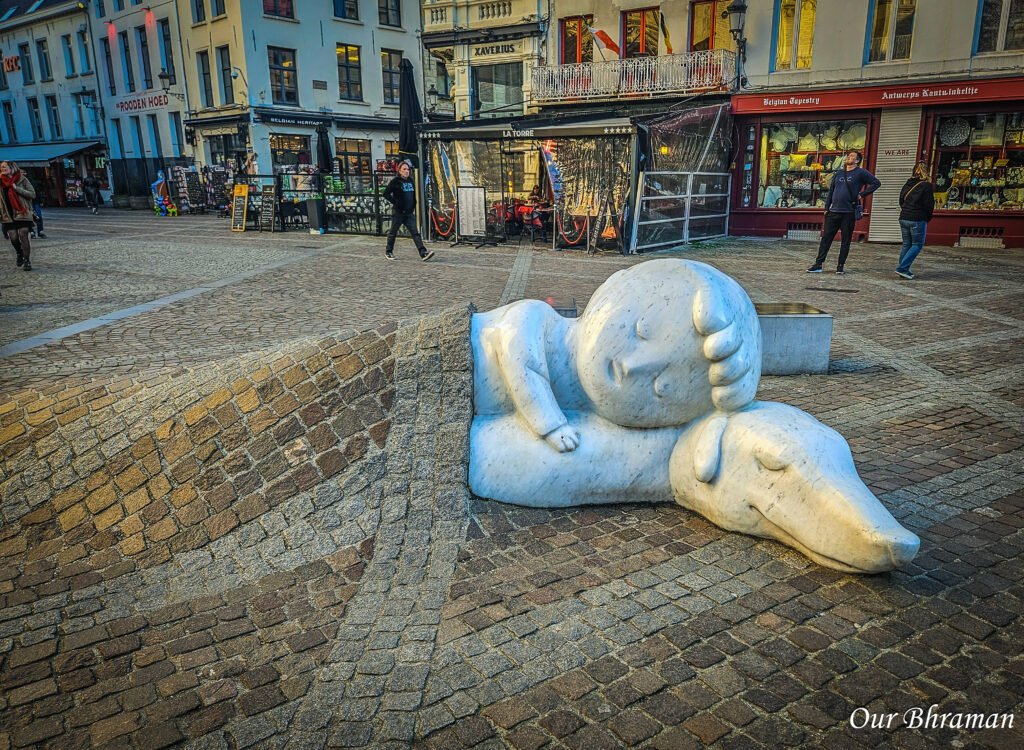
One of the things we didn’t expect to enjoy so much during our Belgium trip was the street culture. We came to Belgium for medieval squares, historic churches, castles, canals, and beautiful architecture, but while walking through Antwerp, Ghent, and Brussels, we kept discovering another side of the country—one painted across walls, tucked into narrow streets, and sometimes hiding in plain sight.
What we liked most was that we didn’t have to search very hard for it. We weren’t following a dedicated street-art tour. We would simply be walking toward our next destination when a colorful mural, interesting graffiti, or unexpected piece of public art would catch our attention. It made our walks feel less like following an itinerary and more like discovering the city one corner at a time.
 Antwerp: Street Art Among the Historic Streets
 Antwerp: Street Art Among the Historic Streets
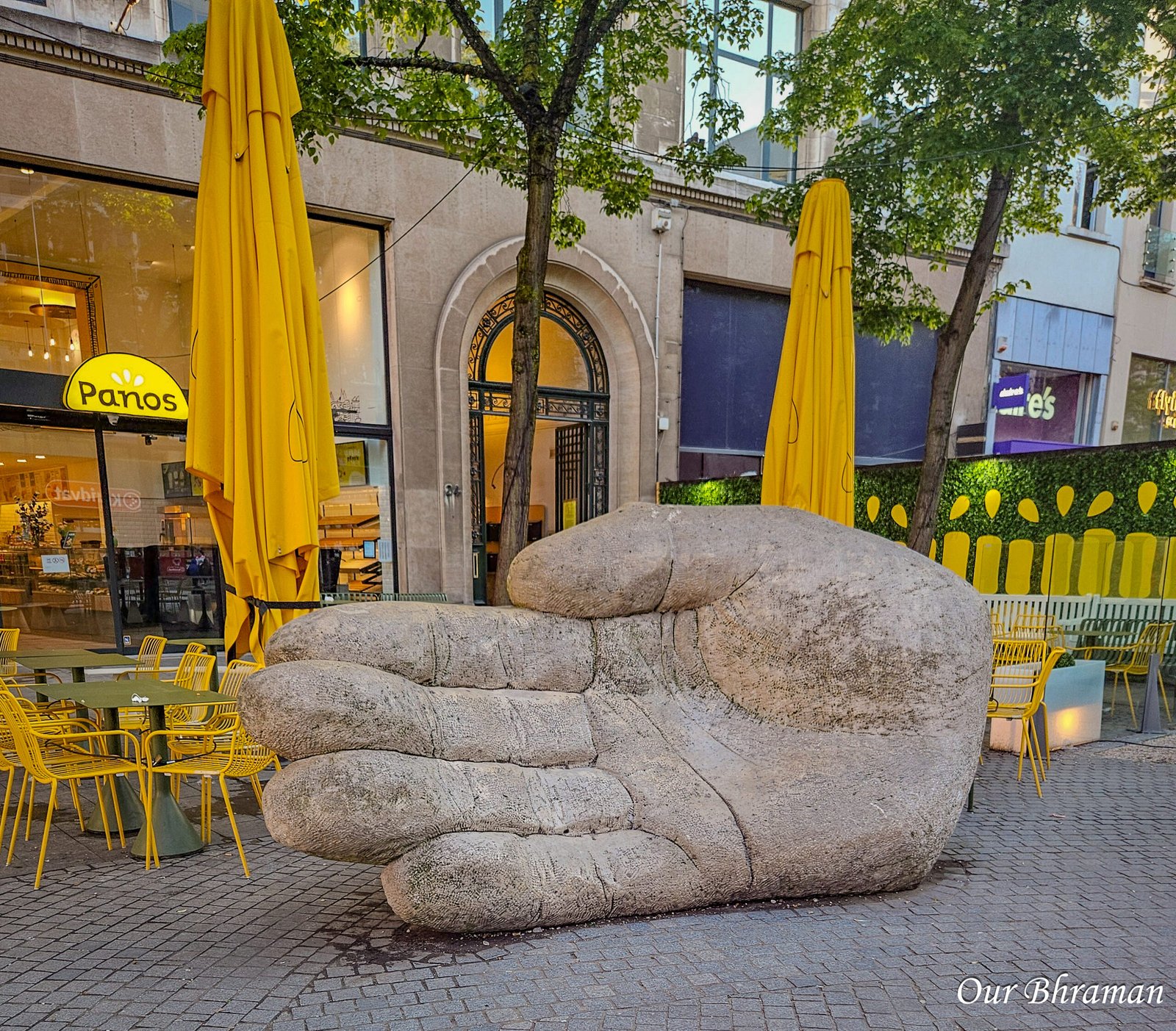
In Antwerp, street art felt like another layer of the city. The historic center already has plenty to look at, but between the grand buildings and busy streets, we occasionally came across colorful murals and contemporary artwork.
That contrast was part of what made it interesting. One moment we were looking at centuries-old architecture, and the next we were standing in front of something completely modern. It reminded us that Antwerp isn’t simply a city preserved in the past—it is a living city that continues to change.
As we walked through areas around the historic center, the street itself became part of the experience. We didn’t stop to photograph every piece we saw, but the ones that caught our eye became unexpected photo stops along the way.
Ghent: Medieval History Meets Street Art
If there was one city where the contrast between old and new stood out the most to us, it was Ghent.
 Walking through Ghent, we could move from medieval churches, canals, and cobblestone streets into an alley covered with colorful graffiti within minutes. The city has actively embraced street art and is considered graffiti-friendly, with designated areas and a constantly changing collection of works.
One of the things we enjoyed was discovering the artwork naturally rather than making it the main purpose of our walk. We might be looking for a historic landmark and suddenly notice a mural on a nearby wall.
Ghent even has a free Sorry, Not Sorry street-art map covering more than 250 works, with two walking routes of about four kilometers each. We didn’t follow the entire route, but knowing that the city has created space for this kind of art made us appreciate what we were seeing even more.
 One mural that particularly caught our attention was the Children Rights mural by Ghent artist Jamz. The artwork focuses on children’s rights and ideas such as safety, love, food, play, and the opportunity to grow. It was a good reminder that street art can be more than decoration—it can also communicate an idea or tell a story.
Brussels: Where Comics Take Over the Streets
Brussels gave us a completely different experience. Here, street culture is closely connected with the country’s famous comic-book tradition.
As we walked through the city, we began noticing large murals featuring familiar comic characters. Brussels has a dedicated Comic Strip Trail, with more than 80 comic-related works decorating walls around the city. Tintin, the Smurfs, Lucky Luke, Asterix, Corto Maltese, and other characters have all found their way onto Brussels’ streets.
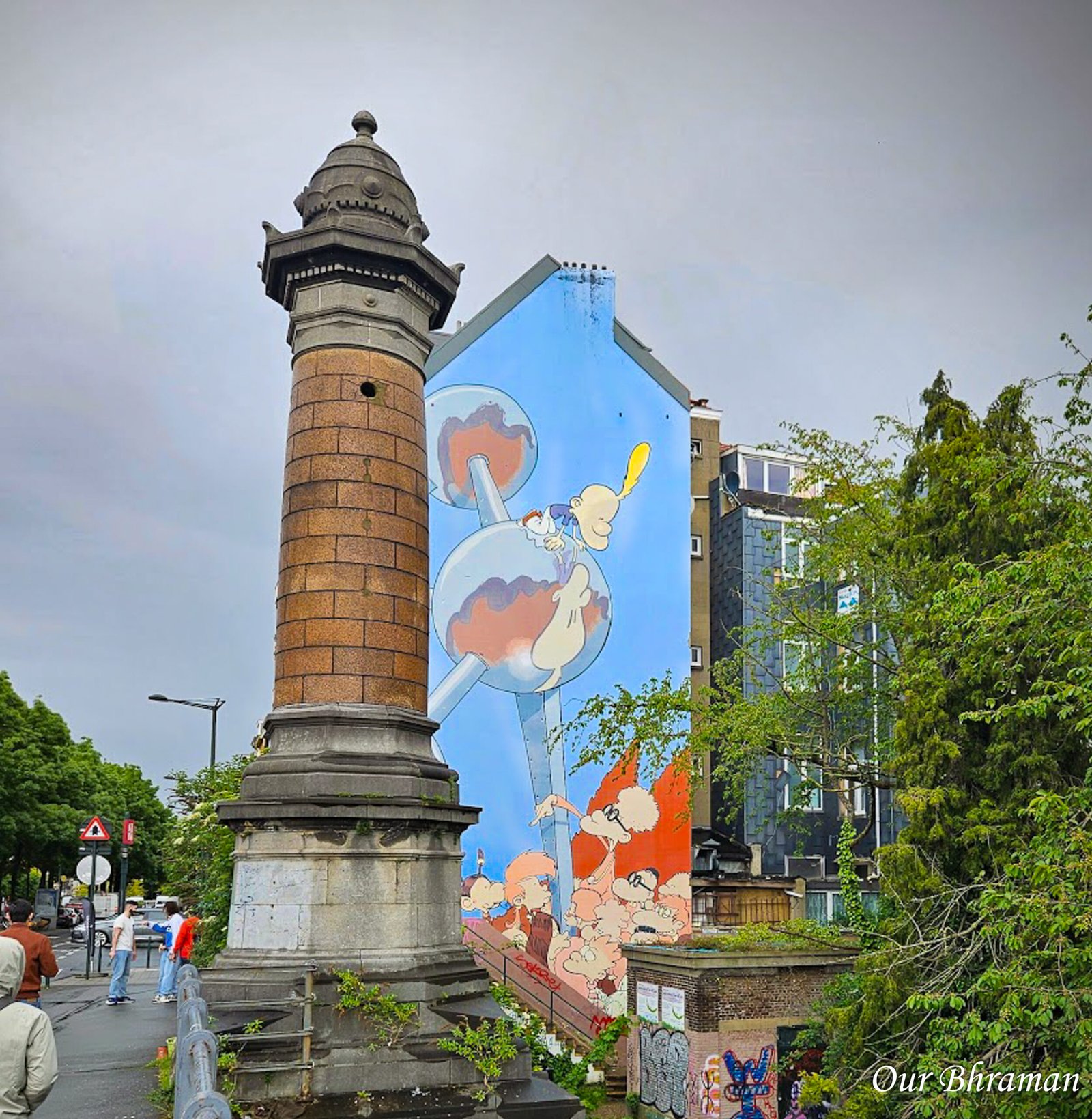 What makes these murals especially interesting is that they don’t feel separated from the city. They are part of the streets themselves. You can be walking toward a historic square or passing an ordinary building and suddenly find an enormous comic scene painted across a wall.
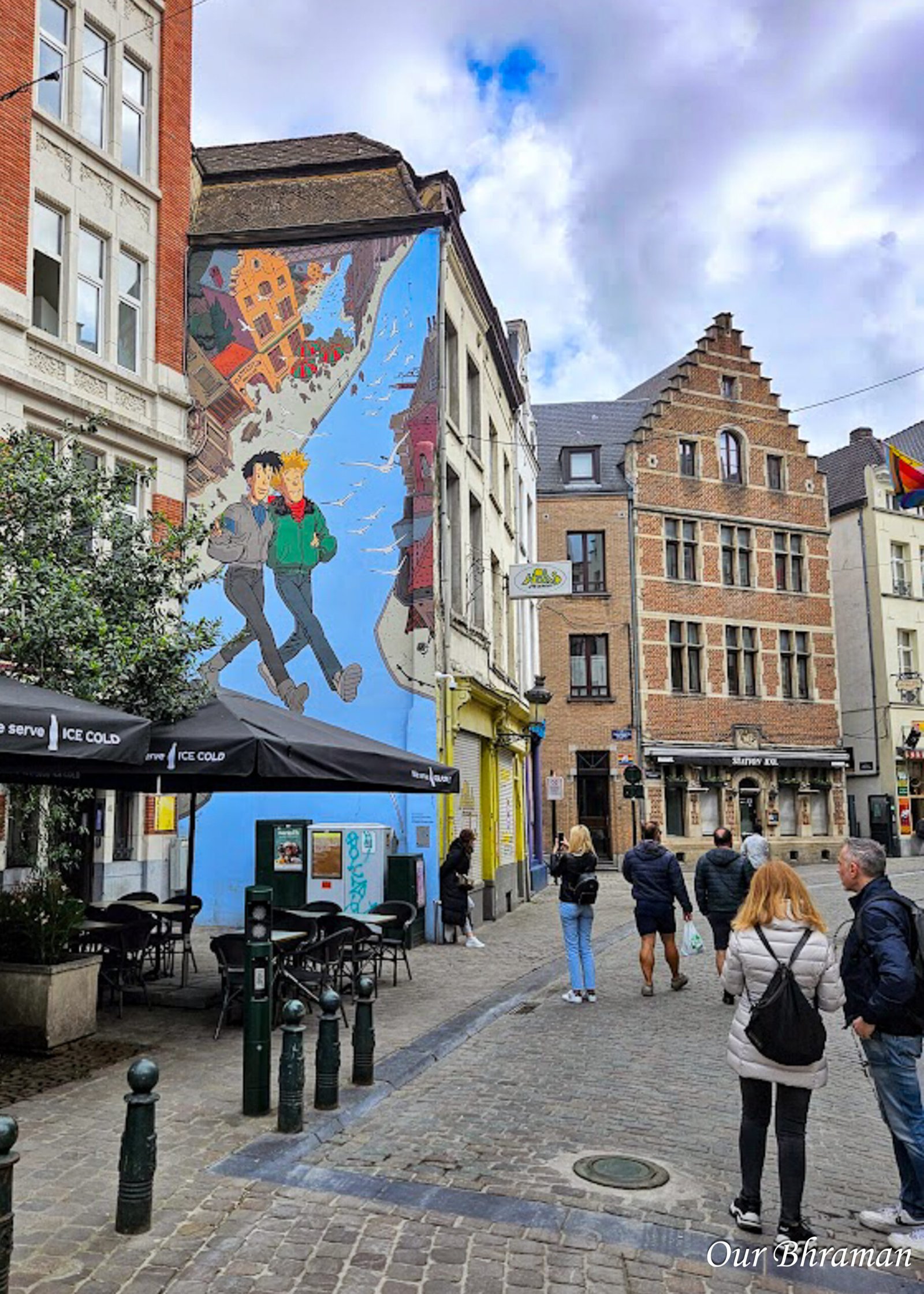 But Brussels’ street culture goes beyond comics. The city also has dedicated contemporary street-art trails featuring murals, sculptures, drawings, collages, and installations by Belgian and international artists. Even the city’s metro stations have become an underground gallery, with more than 90 works spread across the network.
More Than Just Graffiti
Before this trip, I probably would have thought of street art mainly as graffiti and colorful murals. After walking through these three cities, I started seeing it differently.
Street art can be playful, political, historical, humorous, or simply beautiful. Sometimes it tells you something about the neighborhood. Sometimes it celebrates local culture. And sometimes it is simply there to make an otherwise ordinary wall a little more interesting.
That is what made discovering Belgium’s street culture so enjoyable for us. We didn’t have to plan for it. We simply had to keep our eyes open.
Our Takeaway
If you’re visiting Antwerp, Ghent, or Brussels, don’t spend all your time looking at the attractions listed on your itinerary. Look up, look down, and occasionally take the less obvious street.
Some of our favorite discoveries weren’t places we had planned to visit at all. They were the things we happened to notice while walking between the places we had planned to see.
And perhaps that’s the best part of street culture—it doesn’t ask you to buy a ticket or enter a museum. You just have to walk past it with your eyes open.