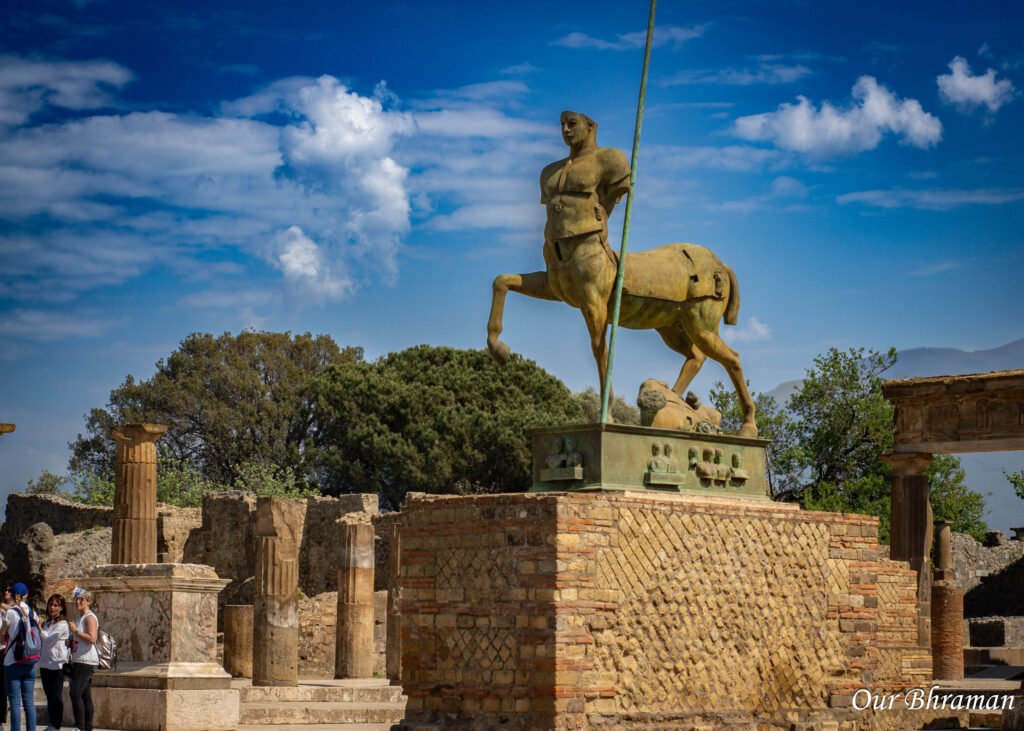
Walking Through a City Frozen in Time
Our journey through southern Italy took us from Rome toward Sorrento, but we decided not to make the trip in one stretch. Instead, we planned a stop at Pompeii, one of the most fascinating archaeological sites in Italy. We arrived early in the morning, around 9:00 a.m., which turned out to be a great decision. Pompeii is enormous, and we wanted enough time to explore without having to rush through the ruins.
Since we were traveling directly from Rome to Sorrento, we had all of our luggage with us. Rather than dragging our suitcases through the archaeological site, we stored our larger bags at the Pompeii train station and carried only the essentials in our backpacks. We packed plenty of water, and we were very glad we did. Even though we started early, the temperature rose quickly as the morning progressed. Much of Pompeii is completely exposed, with very little shade, and walking across the ancient stone streets under the Italian sun can become exhausting.
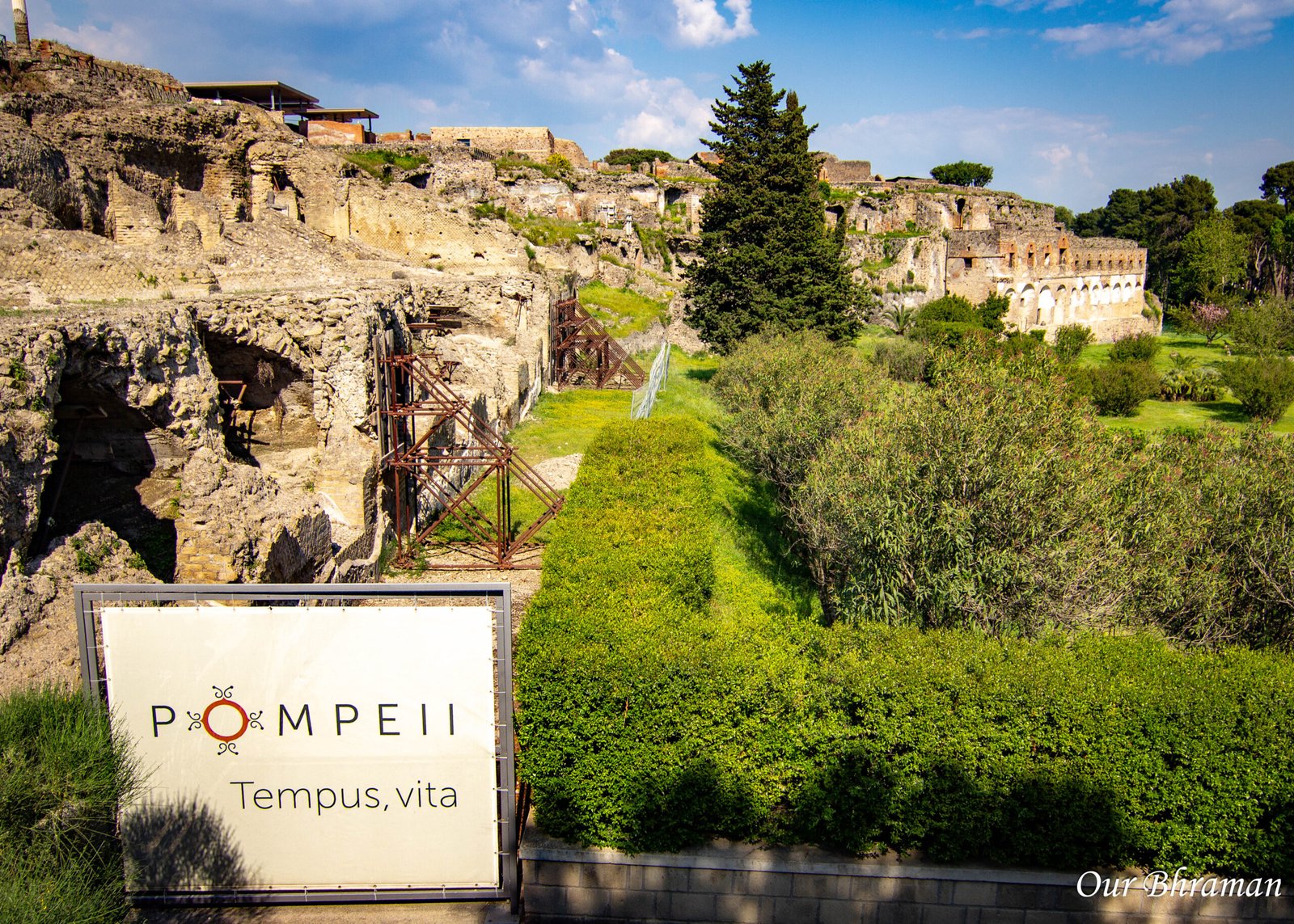
A City Buried by Mount Vesuvius
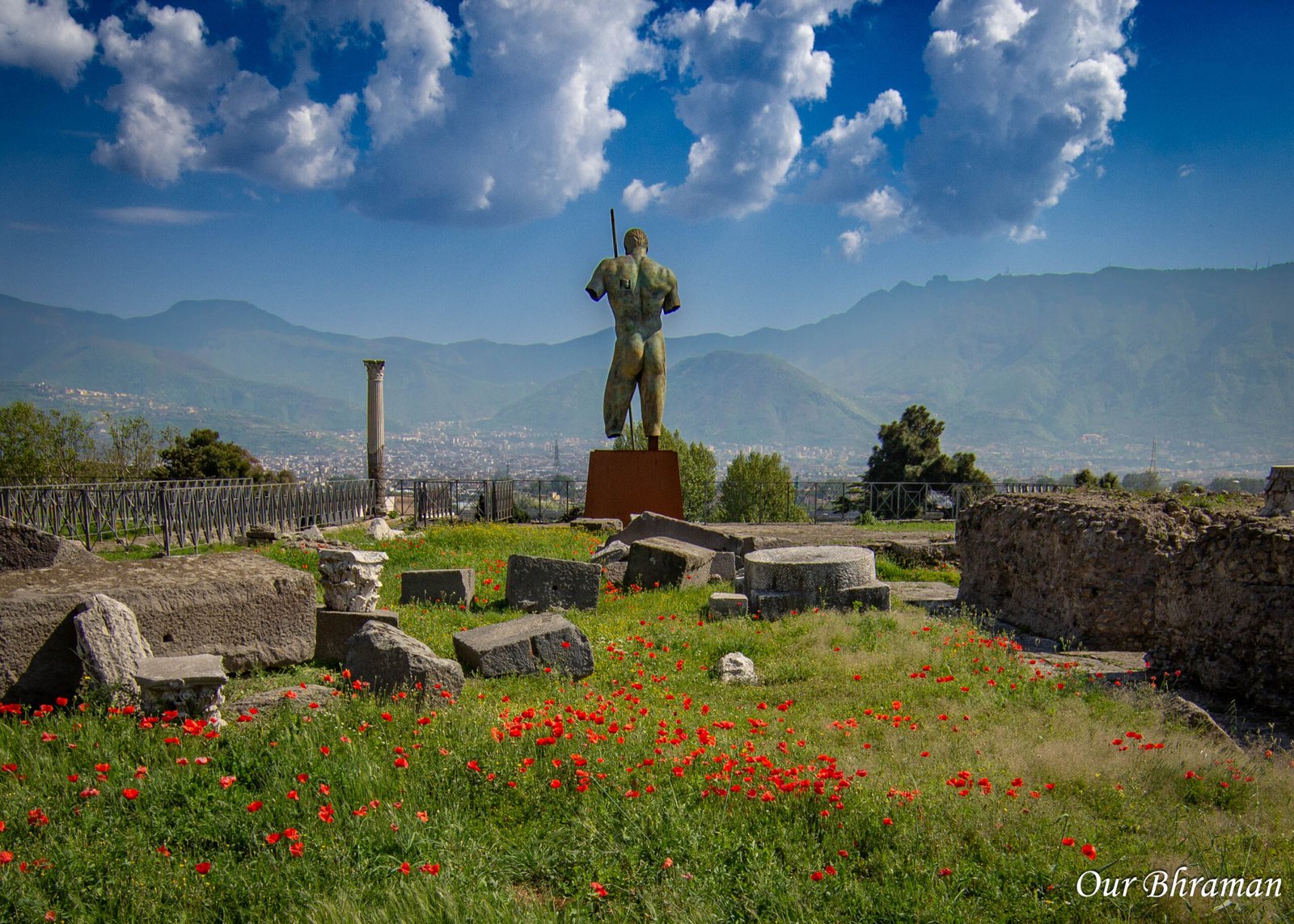
What makes Pompeii so extraordinary is that you aren’t simply visiting a collection of ancient ruins. You are walking through an entire Roman city that was suddenly buried by the eruption of Mount Vesuvius in AD 79.
Before the eruption, Pompeii was a thriving city with homes, shops, restaurants, temples, public baths, theaters, and busy streets. The eruption covered the city in layers of ash and volcanic material, preserving buildings, objects, streets, and even traces of everyday life. According to the Archaeological Park of Pompeii, the ancient city covers approximately 66 hectares, with around 44 hectares excavated and roughly 1,500 buildings and monuments brought to light.
Walking through the ruins, it is easy to forget that you are looking at a city nearly two thousand years old. The streets still have raised sidewalks, buildings still reveal their original layouts, and in many places you can see the marks of daily life left behind by the people who lived there.
What struck us most was how personal Pompeii felt. Instead of looking at isolated artifacts behind glass, we could walk directly into ancient homes, stand inside shops, cross Roman streets, and imagine what daily life must have been like before the eruption changed everything.
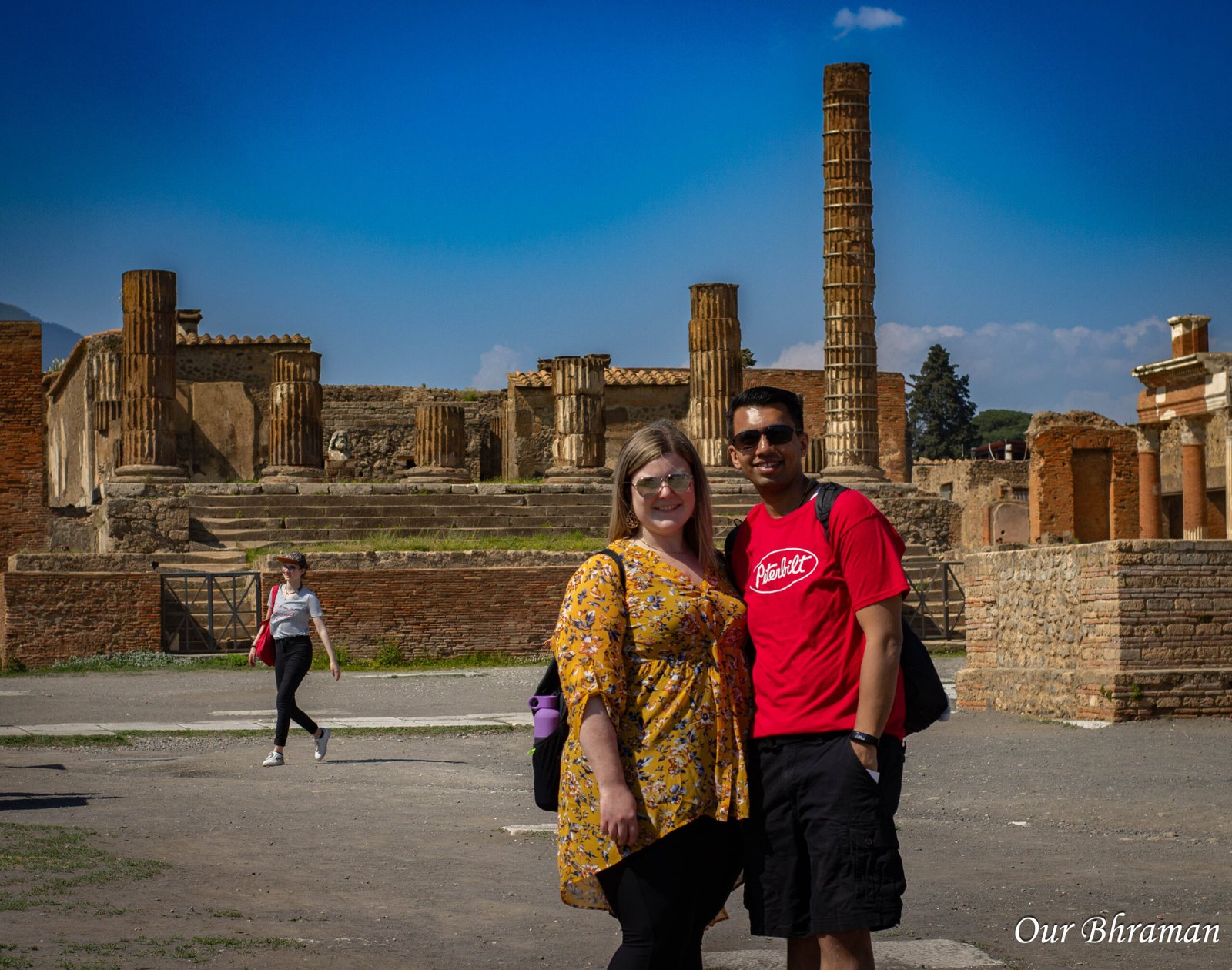 What Can You See at Pompeii?
There is an incredible amount to see, and you could easily spend an entire day exploring the site. Some of the highlights include ancient villas and homes decorated with elaborate frescoes and mosaics, public buildings, temples, shops, restaurants, theaters, baths, and the city’s famous amphitheater. To make the experience more informative, we used an audio guide as we explored the different sites, learning about their history, significance, and stories along the way.
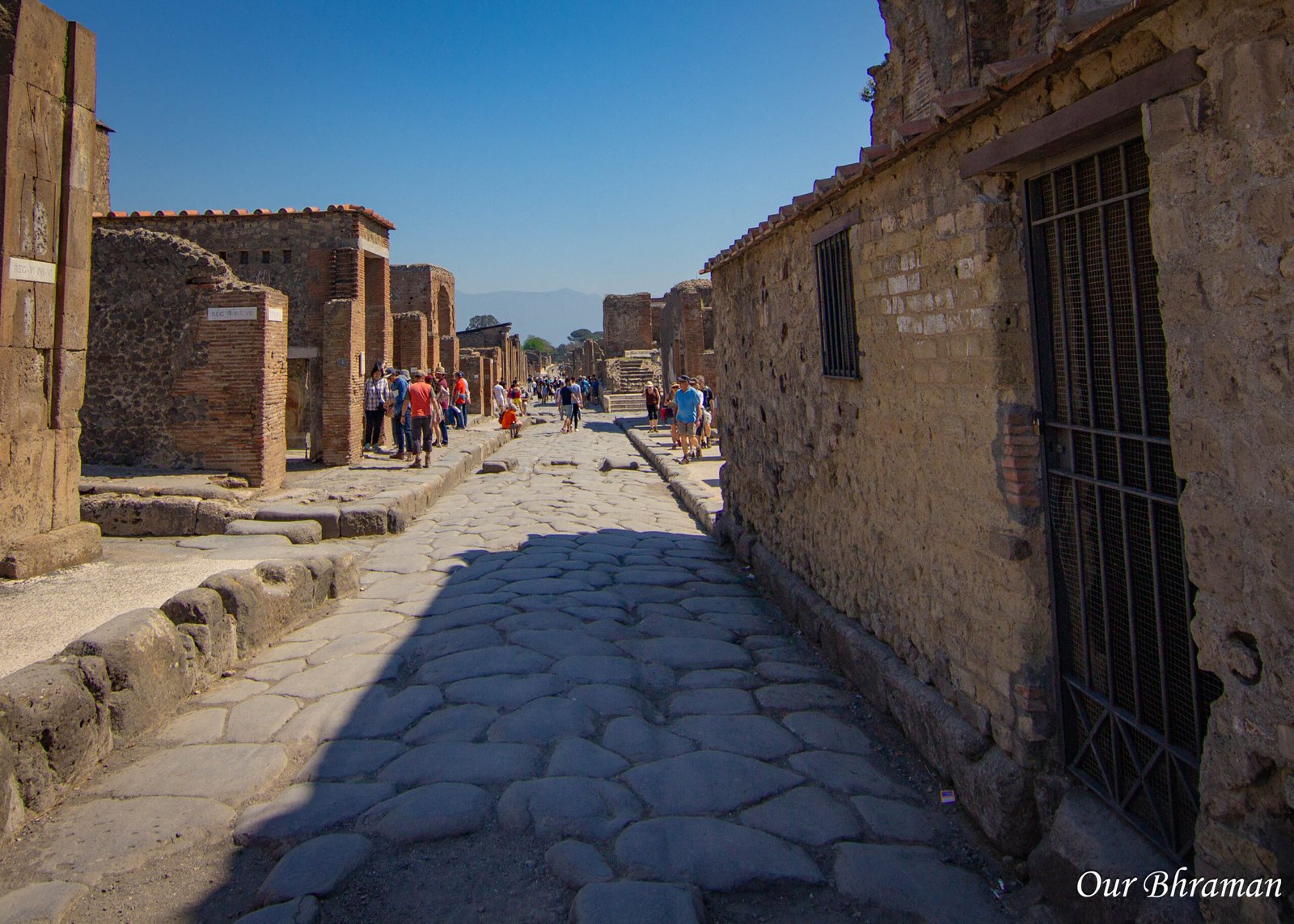 One of the most interesting areas for us was simply walking along the ancient streets. The large stone paving blocks and raised sidewalks made it possible to understand how people moved around the city almost 2,000 years ago. You can also see stepping stones placed across some streets, allowing pedestrians to cross without stepping directly into the roadway.
Pompeii covers roughly 66 hectares, so exploring everything in a single visit is nearly impossible. With limited time, we focused on some of the site’s most important and fascinating highlights.
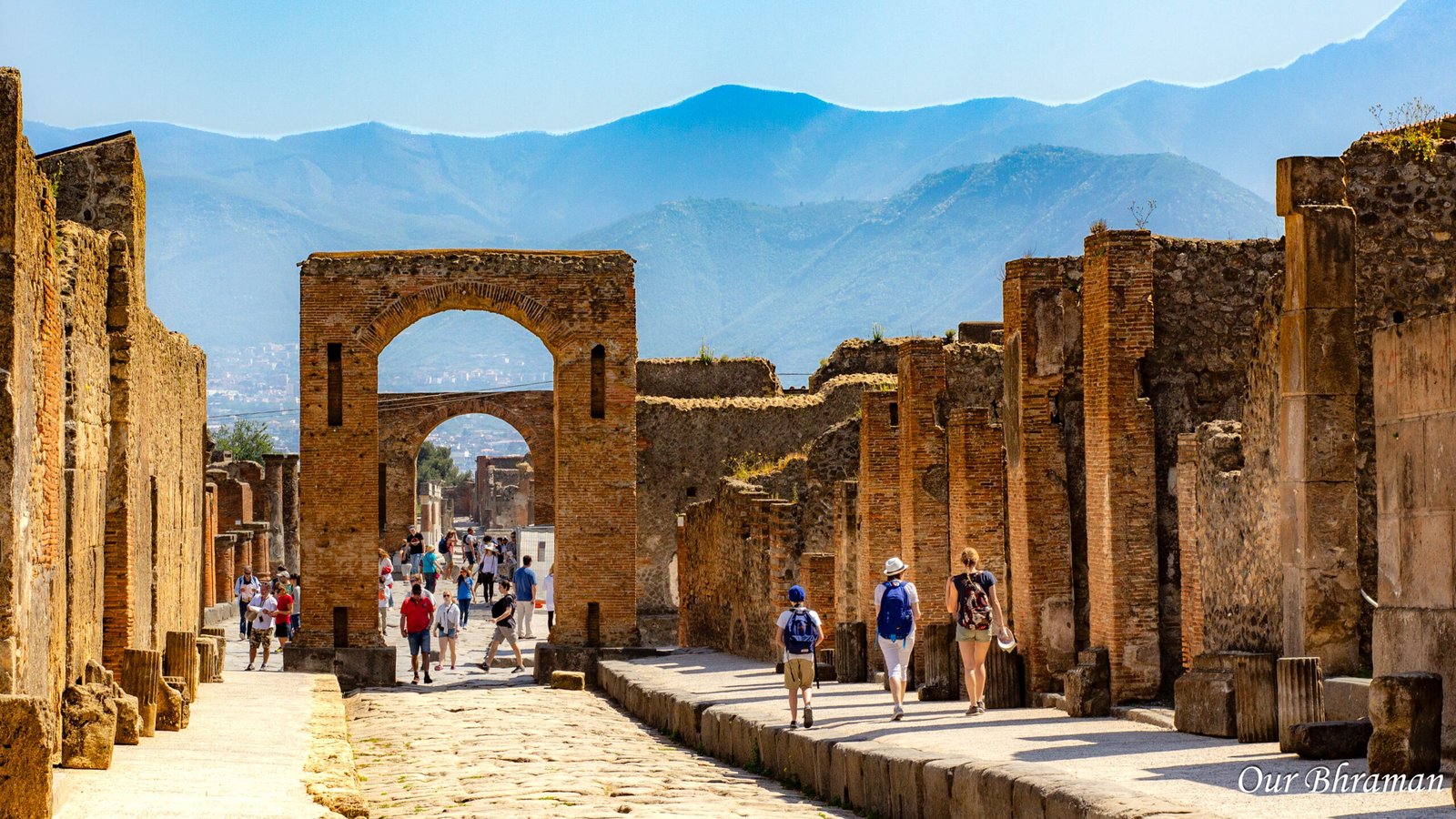
We explored Pompeii’s highlights with an audio guide, which helped bring each site to life as we walked through the ancient city. We started at the Forum, the center of political, religious, and commercial life, followed by the Temple of Apollo and the impressive Amphitheatre, built more than a century before Rome’s Colosseum.
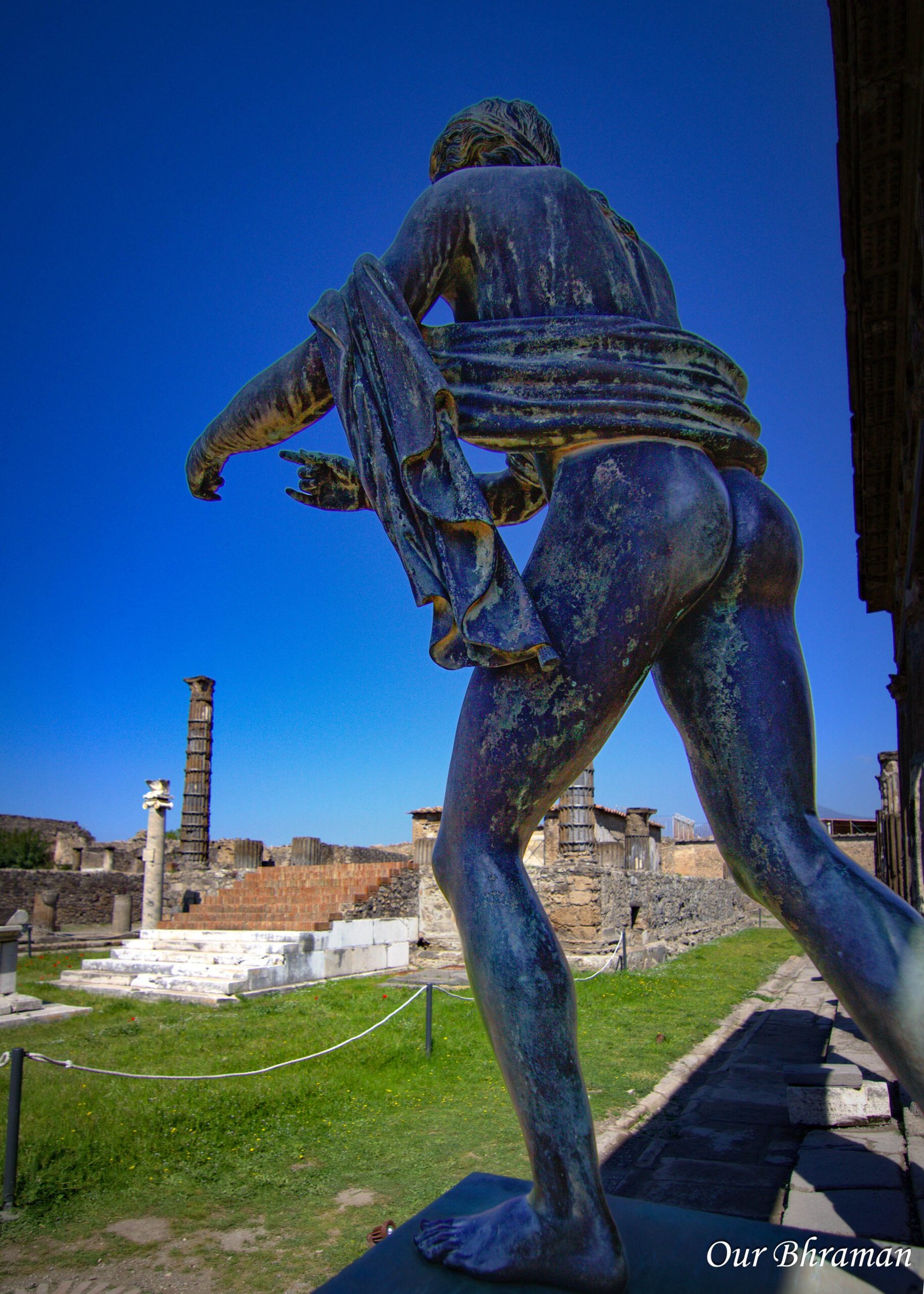
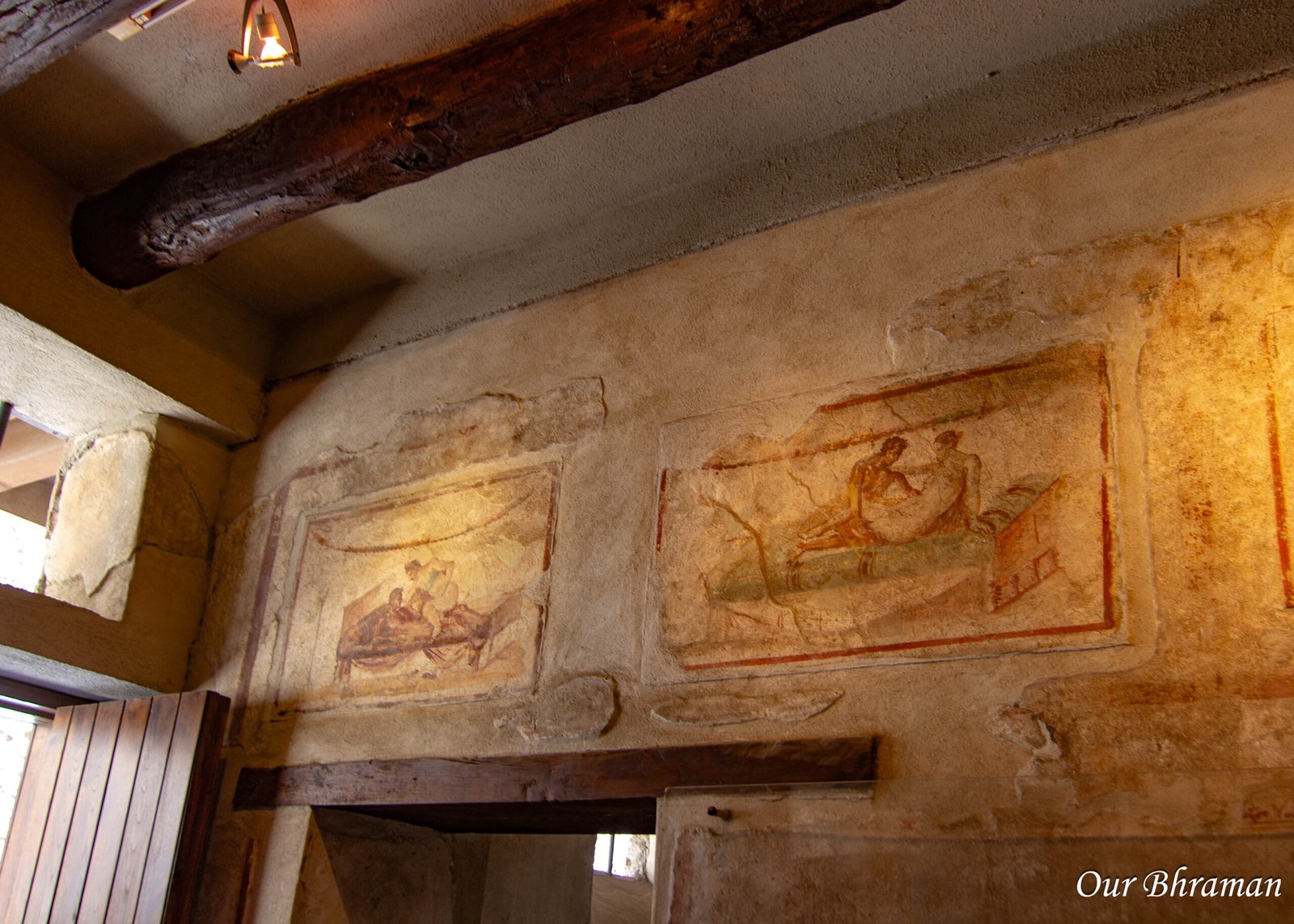
We then wandered through the lavish House of the Faun and House of the Vettii, gaining a glimpse into the lives of Pompeii’s wealthy residents, before visiting the Lupanar, where preserved graffiti offers a surprisingly personal look at ancient life.
At the Garden of the Fugitives, the plaster casts of eruption victims served as a sobering reminder of the tragedy that destroyed the city. The Stabian Baths revealed another side of daily Roman life, while the Villa of the Mysteries, with its striking frescoes, provided a memorable finale to our exploration of Pompeii.
Pompeii Tickets and Visiting Information
Ticketing and entry rules can change, so it is worth checking the official Archaeological Park of Pompeii website before your visit. As of 2026, the park recommends purchasing tickets in advance, with online sales handled through Vivaticket. The park also uses timed entry periods and has a daily limit of 20,000 visitors, with the larger share of admissions allocated to the morning period.
 There are multiple entrances, including Porta Marina, Piazza Anfiteatro, and Piazza Esedra, so check the entrance shown on your ticket when planning your route. The official site also offers different ticket options depending on which archaeological areas you want to visit.
If you want more historical context while walking through the ruins, official audio guides are also available inside the archaeological park.
Was Pompeii Worth the Stop?
Absolutely.
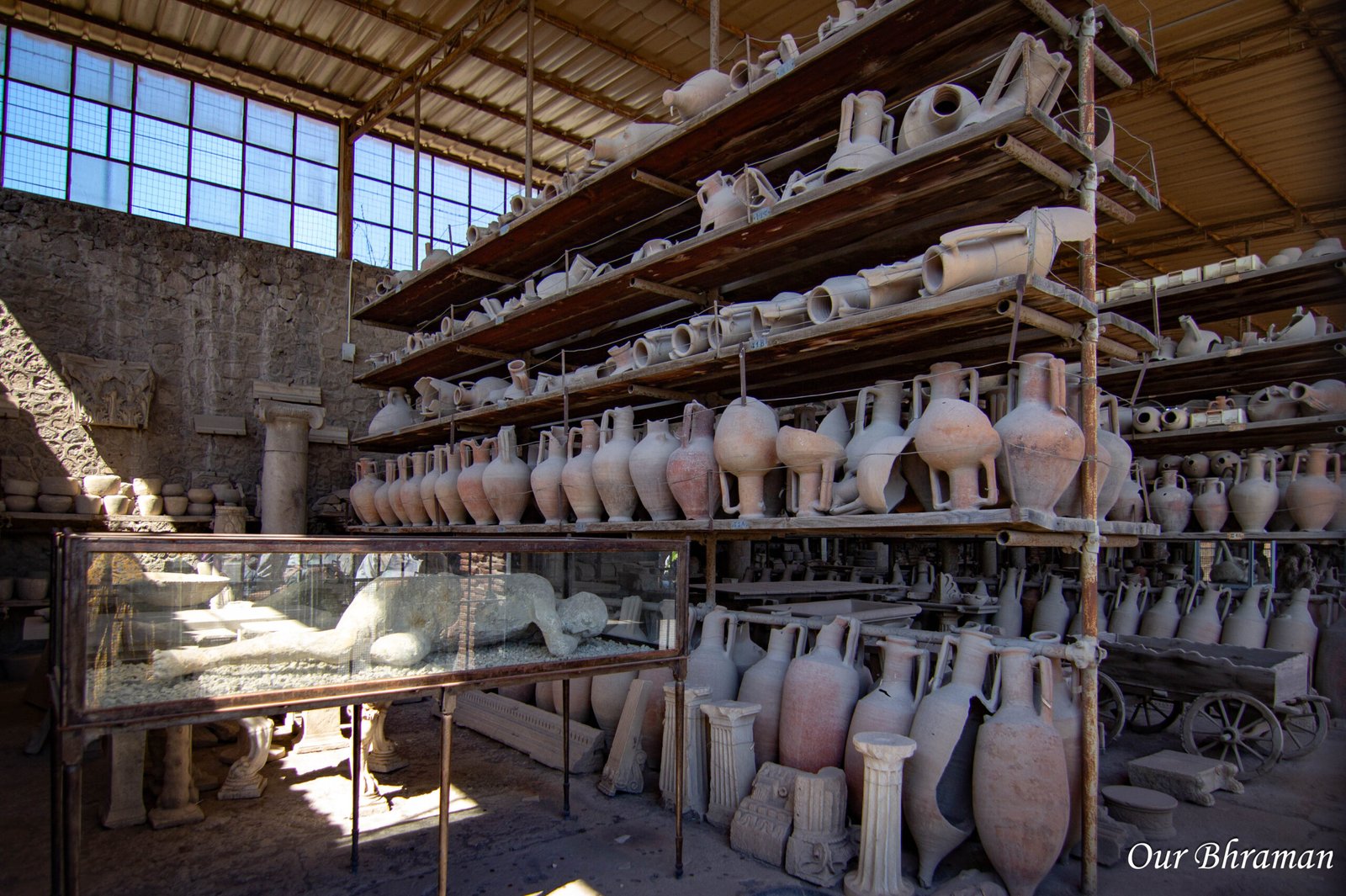 Our stop in Pompeii was more than just a convenient break between Rome and Sorrento. It became one of the most memorable historical experiences of our Italy trip. There is something incredibly powerful about walking down a Roman street, entering a home, looking at ancient paintings, and realizing that people were living ordinary lives in exactly the same place nearly 2,000 years ago.
The fact that the city was preserved so suddenly makes the experience even more remarkable. Pompeii isn’t simply a place where you learn about Roman history—you can walk through it.By the time we finished exploring, we were hot, tired, and more than ready for a refreshing break. But as we collected our luggage and continued toward Sorrento, we couldn’t help thinking about what we had just experienced.

In the morning, we had walked through a city frozen in time. By afternoon, we were heading toward the beautiful Amalfi Coast and the next chapter of our Italian adventure.