A Day Exploring Florence: The Duomo, Historic Streets & Sunset on the Arno
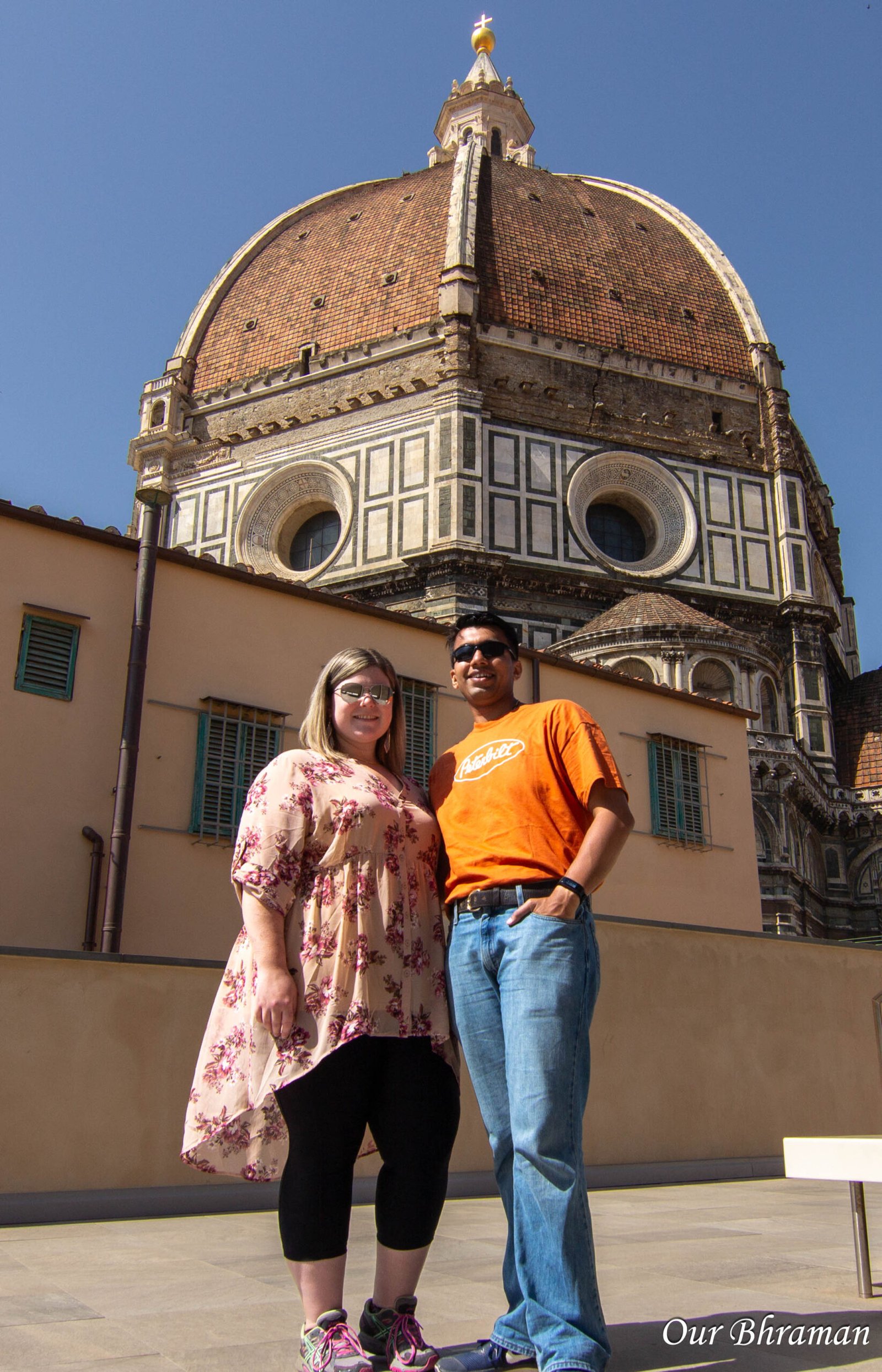
Our day in Florence began early, with the magnificent Cathedral of Santa Maria del Fiore, better known as the Duomo, as our first stop. Standing in front of its enormous red-tiled dome and beautifully detailed marble façade, it was easy to understand why Florence is considered one of the great cultural treasures of Italy. The cathedral’s combination of white, green, and red marble made an unforgettable first impression. After admiring the cathedral, we continued exploring the Duomo complex, including Giotto’s Bell Tower. The elegant tower stands beside the cathedral and is one of Florence’s most recognizable landmarks. From the surrounding Piazza del Duomo, we took some time to appreciate the incredible detail of the buildings before continuing deeper into the historic center.
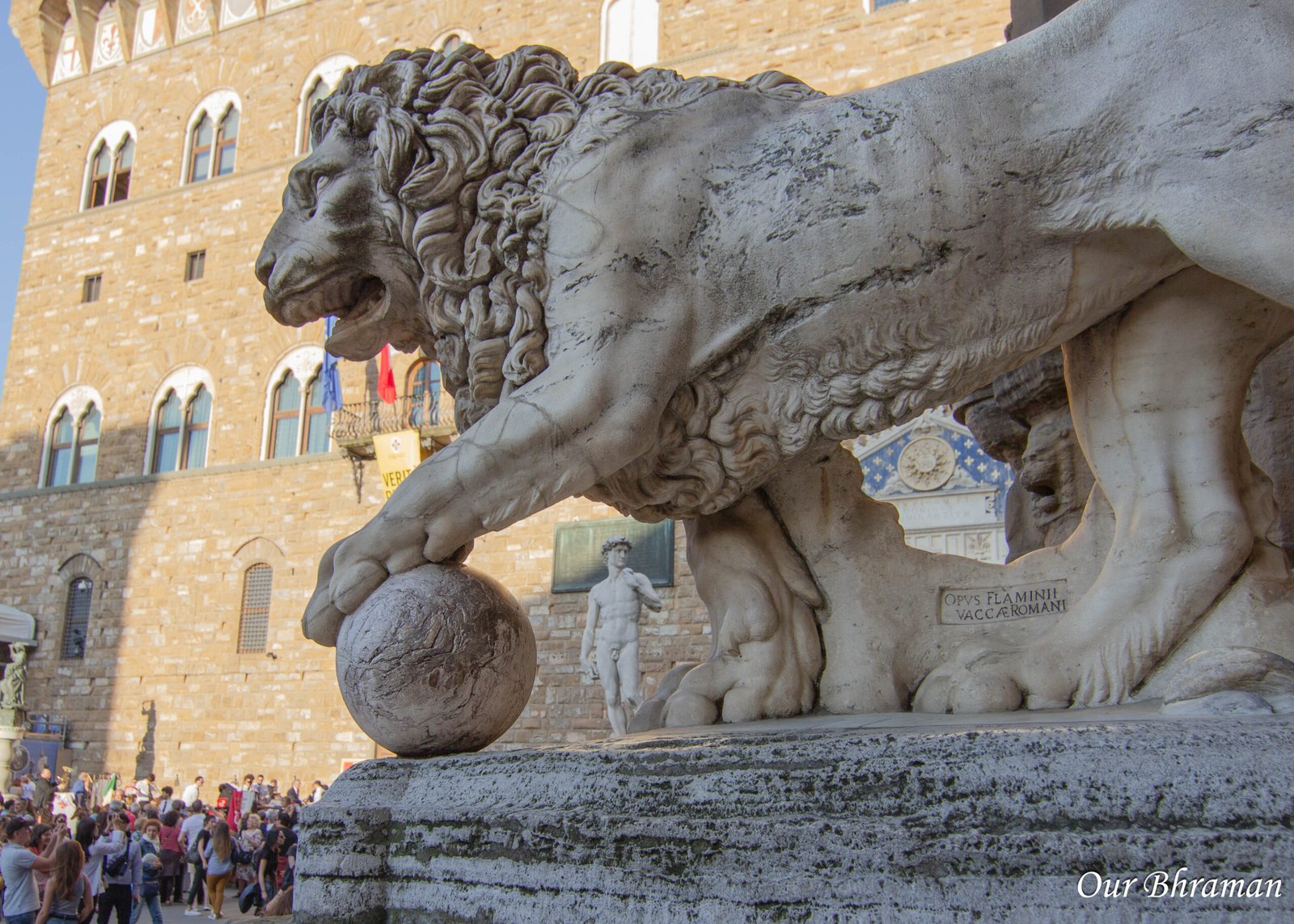
From the Duomo, we simply followed the streets toward Piazza della Signoria, one of the most important squares in Florence. The square felt like a natural outdoor gallery, surrounded by impressive historic buildings and sculptures. Dominating one side is Palazzo Vecchio, Florence’s historic town hall, whose distinctive tower has become one of the city’s most recognizable landmarks.
Right beside the square, we discovered the Loggia dei Lanzi, also known as the Loggia della Signoria. Originally designed as a covered public meeting space, the elegant structure is now essentially an open-air museum. Its three enormous arches are supported by groups of columns topped with Corinthian capitals, creating a dramatic setting for the sculptures displayed underneath.
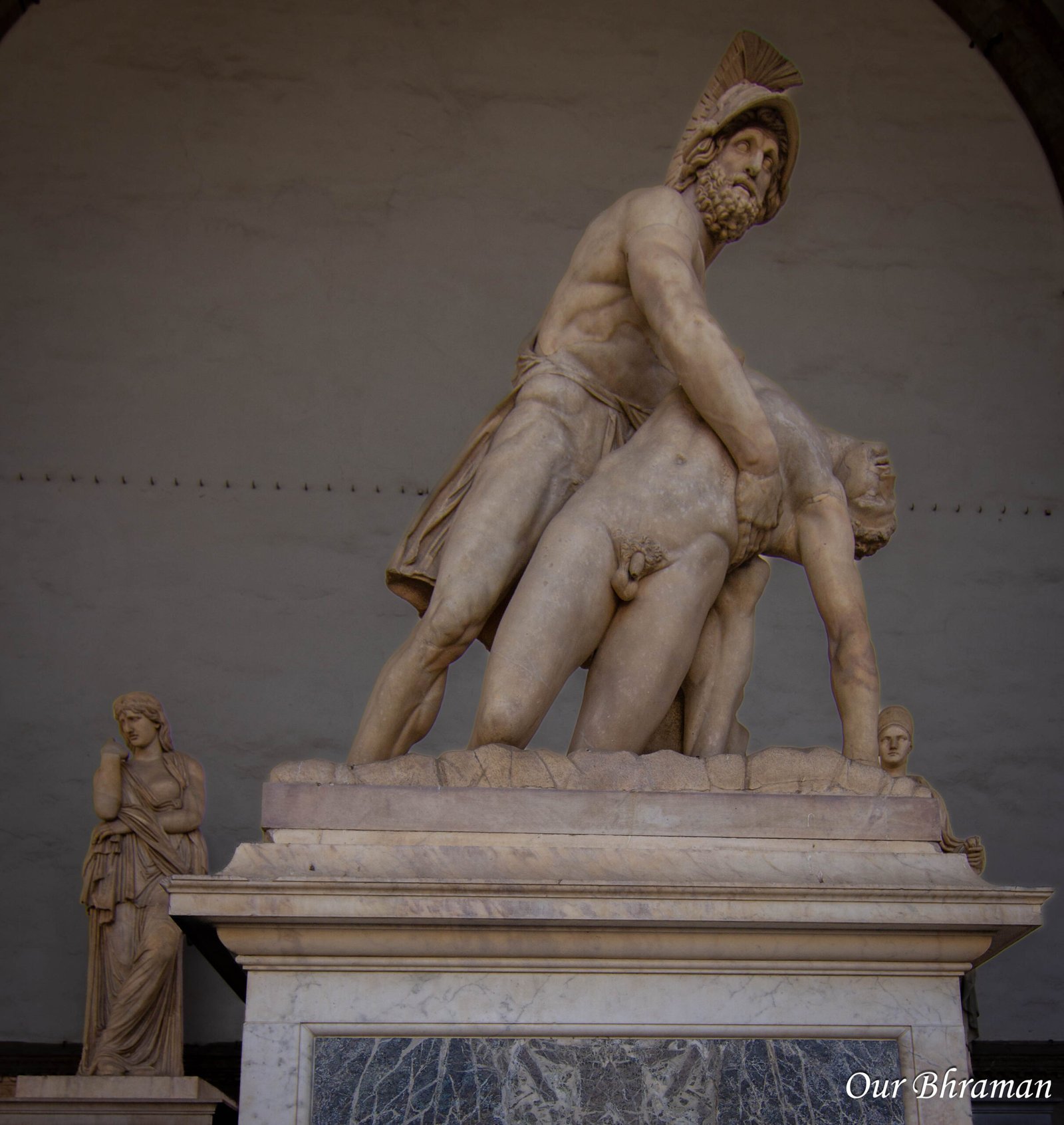
Among the sculptures, one that caught our attention was Menelaus Carrying the Body of Patroclus, a marble representation of the Trojan hero Menelaus carrying his fallen companion. Walking through the loggia and seeing these monumental works surrounded by Florence’s historic architecture made the experience feel like we had wandered into a museum without ever entering a building.
From Piazza della Signoria, we continued our walk toward the Mercato Nuovo, also known as the Straw Market. Located in Florence’s historic center, this covered market has a long trading history and takes its name from the traditional straw products once sold here. Even today, the market remains a lively place to browse souvenirs, leather goods, and other local products.
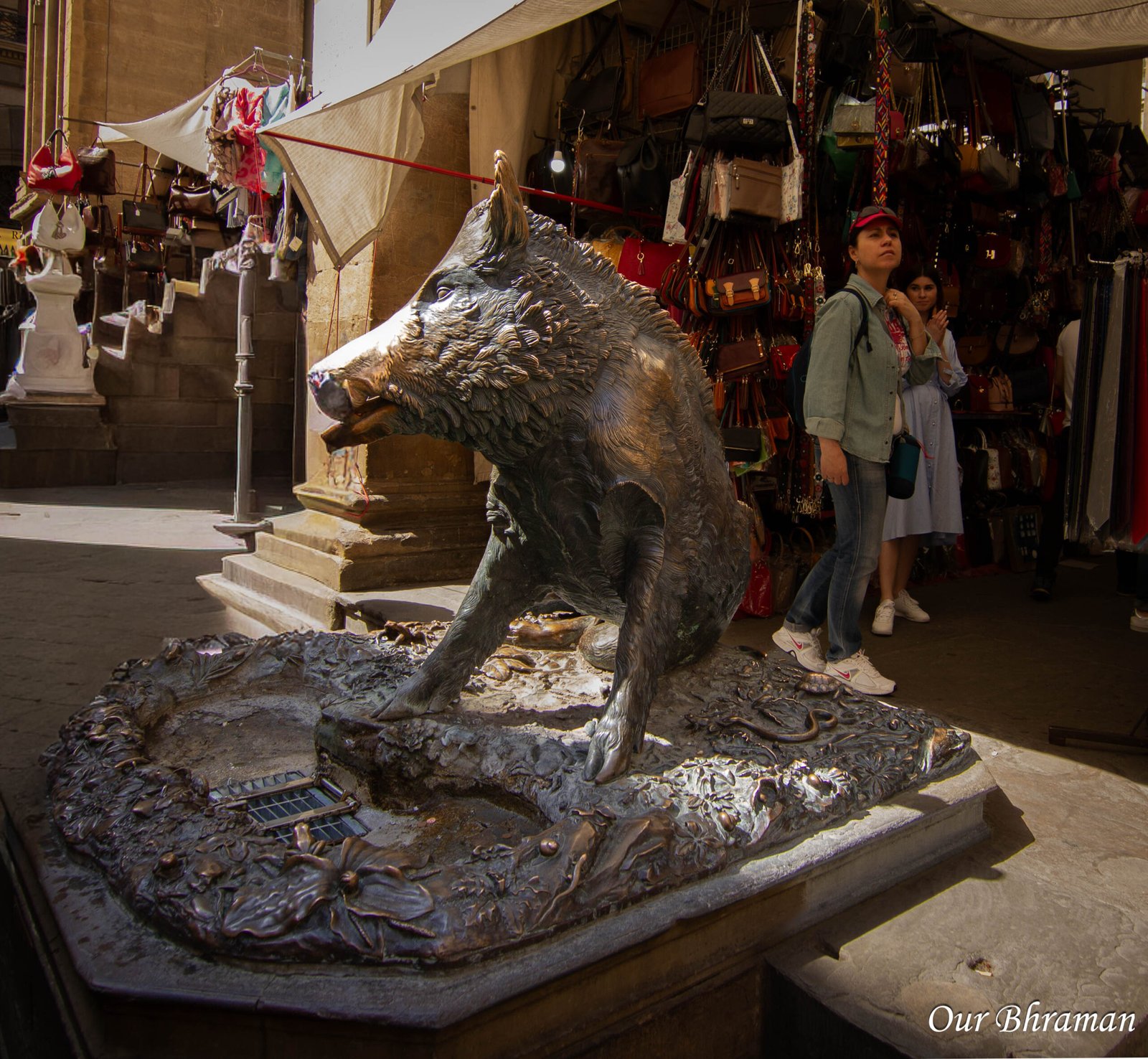
The market’s most famous attraction, however, is not a shop—it is the Fontana del Porcellino, the bronze statue of a wild boar created by Pietro Tacca. According to local tradition, rubbing the boar’s shiny nose brings good luck. Visitors can also place a coin in its mouth and let it fall through the grate below; if the coin rolls through successfully, legend says your wish will come true. Naturally, we had to take part in the tradition before moving on!
As we continued wandering through the city, we also made our way toward Florence’s Central Market, where the atmosphere became even more lively. The market offered a glimpse into everyday Florentine life, with stalls filled with fresh produce, local specialties, meats, cheeses, and prepared foods. It was a great place to pause, explore, and experience a different side of the city beyond its famous monuments.
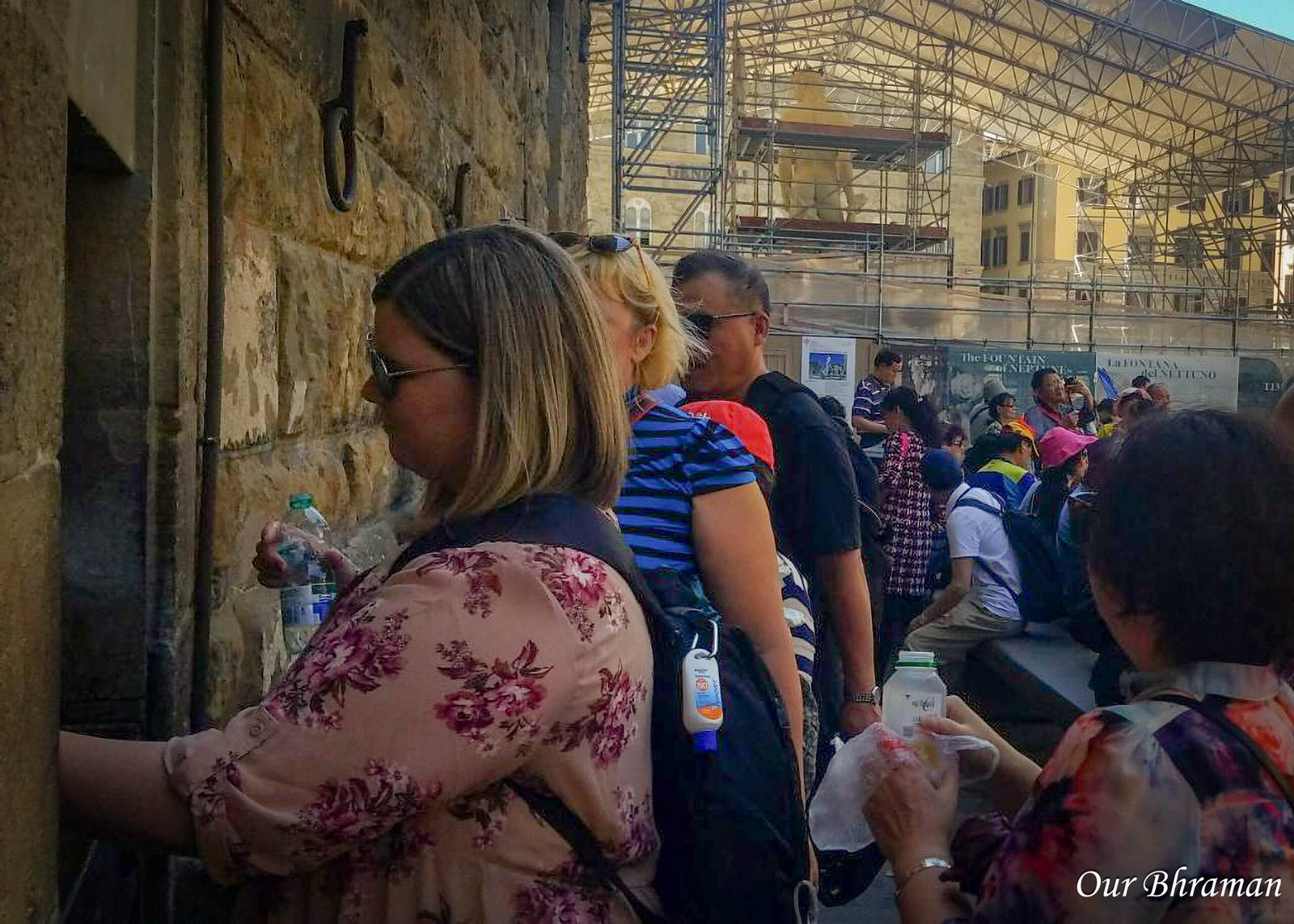
One small detail that became an unexpected part of our Florence experience was finding places offering free sparkling water. After walking for hours, being able to refill with cold, refreshing sparkling water felt like a simple luxury—and certainly helped us keep going.
Ponte Vecchio: Florence’s Iconic Old Bridge
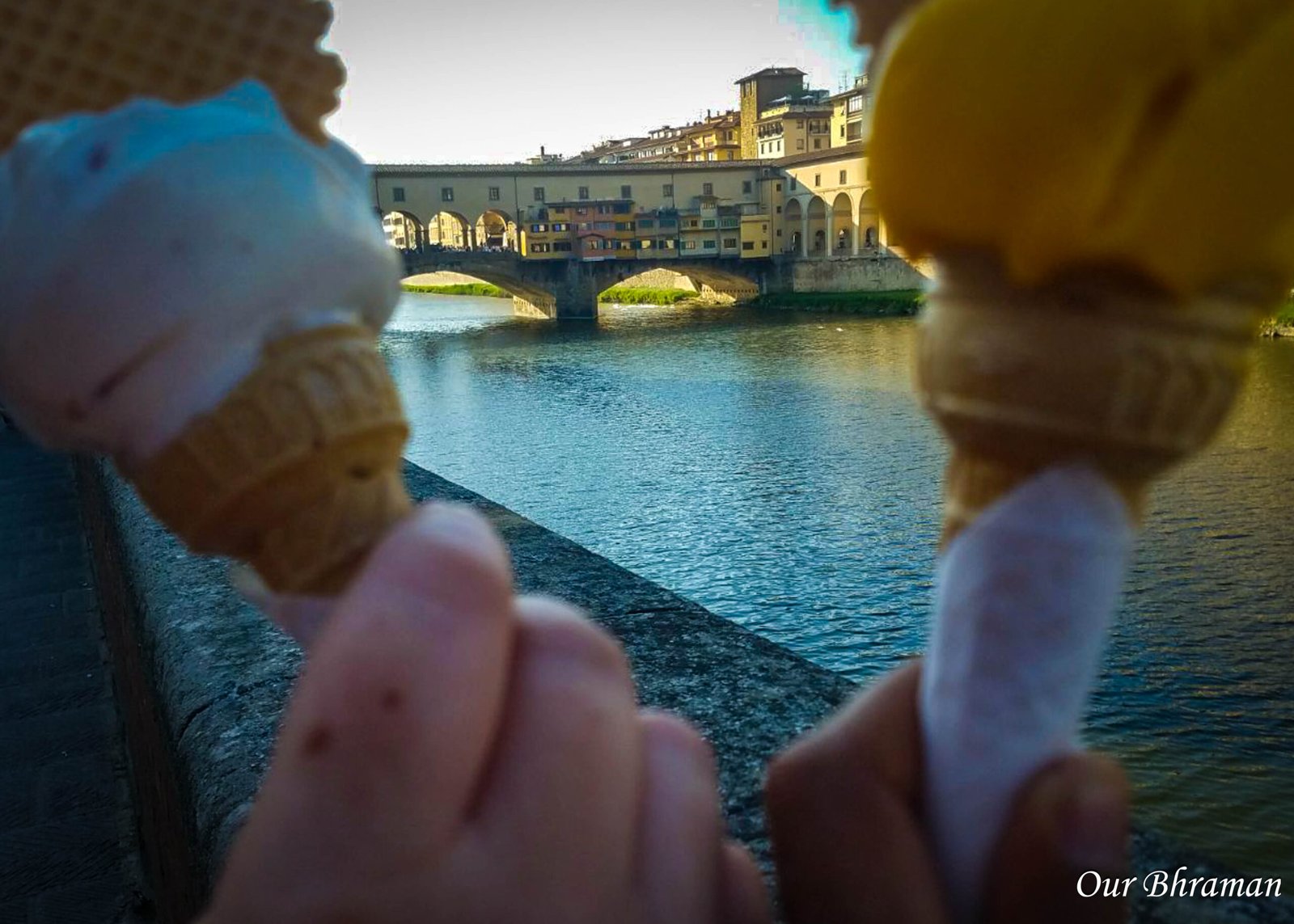
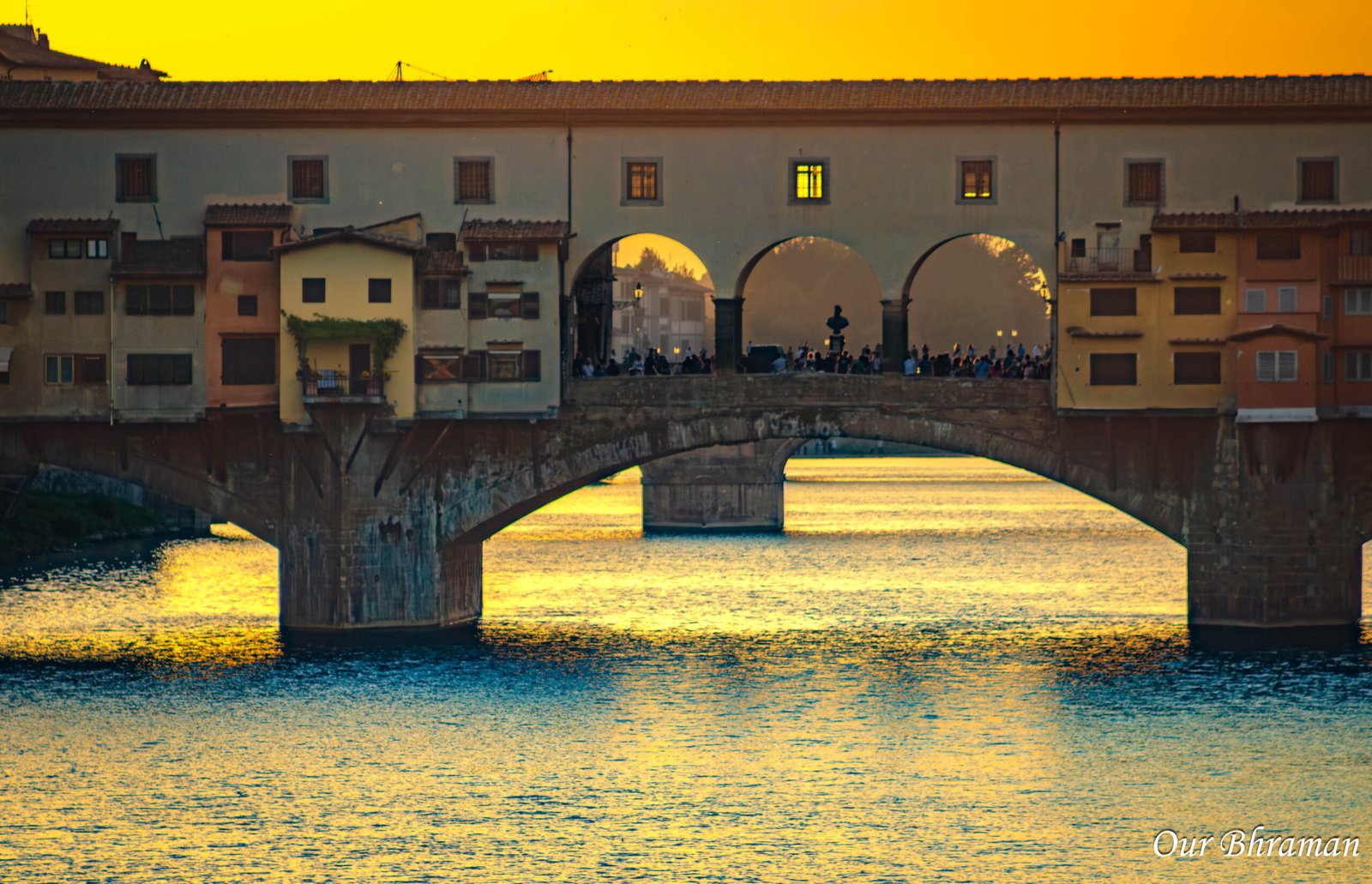
No visit to Florence feels complete without walking across the Ponte Vecchio, or “Old Bridge,” one of the city’s most recognizable landmarks. The bridge stands at the site of a Roman-era crossing of the Arno River, while the bridge we see today was built in 1345, following the destruction of an earlier bridge in the devastating flood of 1333. Its distinctive design includes three large arches and rows of small shops built along both sides.
Originally, these shops were occupied by butchers and fishmongers, but in 1593 they were replaced by goldsmiths and jewelers. Today, the bridge is lined almost entirely with jewelry stores, giving Ponte Vecchio its unmistakable character. Above the shops runs the famous Vasari Corridor, built in 1565 for the Medici family so they could travel between Palazzo Vecchio and Palazzo Pitti without having to move through the crowded streets.
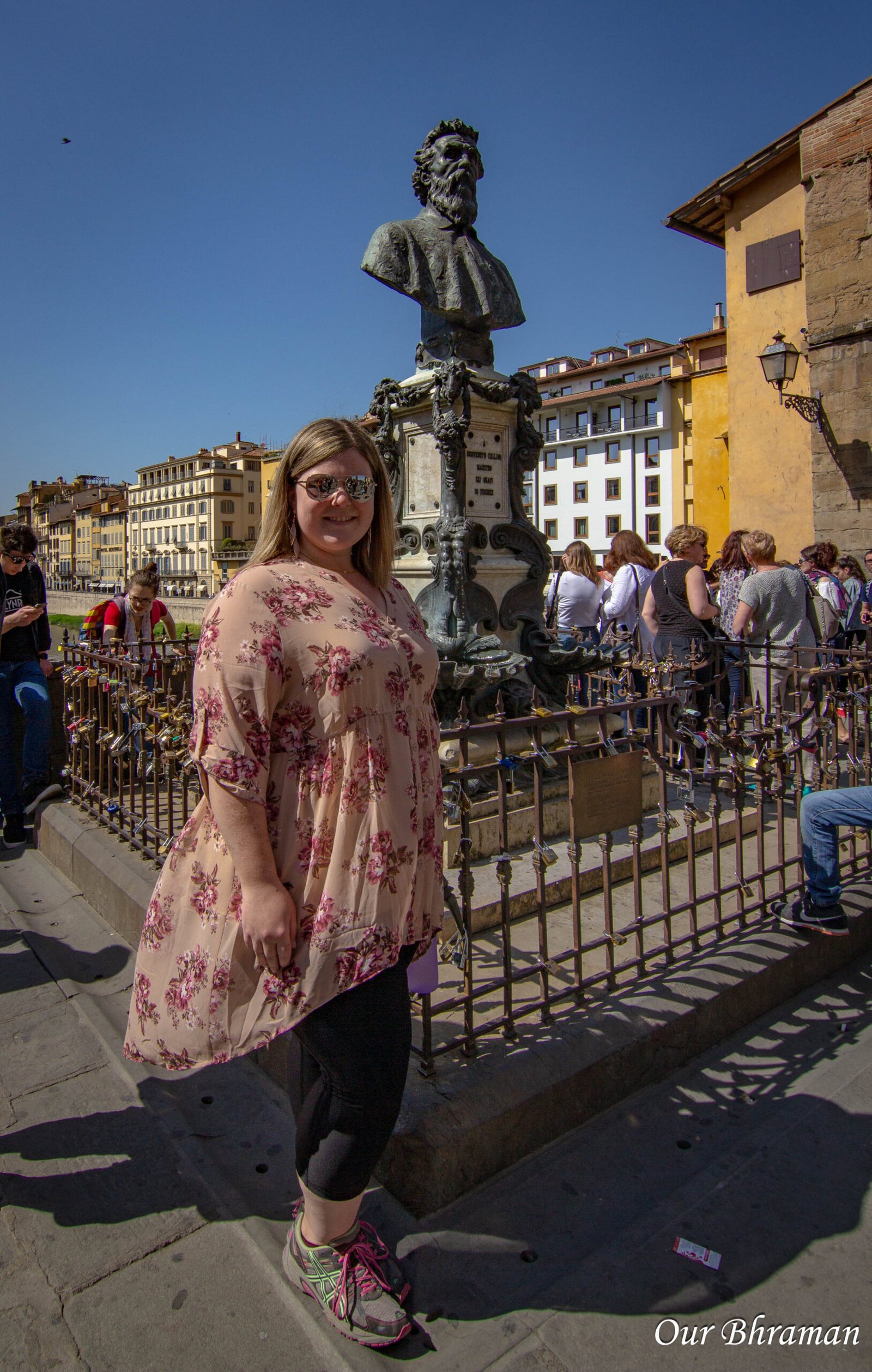
When we visited, the bridge was incredibly busy. Tourists stopped to browse the jewelry stores and take photographs, while locals continued to use it as a convenient way to cross the Arno. Moving through the crowd wasn’t always easy, so we kept a close eye on our bags and belongings. If you’re lucky, you may also encounter street musicians performing along the bridge, adding music to the already lively atmosphere.
One of the best moments comes when you reach the middle of the bridge. Three large openings provide beautiful views along the Arno, and we stopped there to watch the river flowing beneath us and admire Florence from a different perspective.
Ponte Vecchio also carries an important chapter of Florence’s World War II history. During the Nazi retreat in August 1944, the other bridges across the Arno in Florence were destroyed, while Ponte Vecchio was spared. A plaque on the bridge honors Gerhard Wolf, the German consul in Florence, and credits him with playing a decisive role in its preservation. The exact circumstances surrounding the bridge’s survival have been debated, but there is no doubt that Ponte Vecchio emerged from the destruction as the only Florentine bridge left intact.
Walking across Ponte Vecchio was therefore more than simply crossing a historic bridge. Between its medieval architecture, centuries-old shops, views of the Arno, lively crowds, and remarkable wartime history, it felt like a small journey through Florence’s past—all while standing over the river that has shaped the city for centuries.
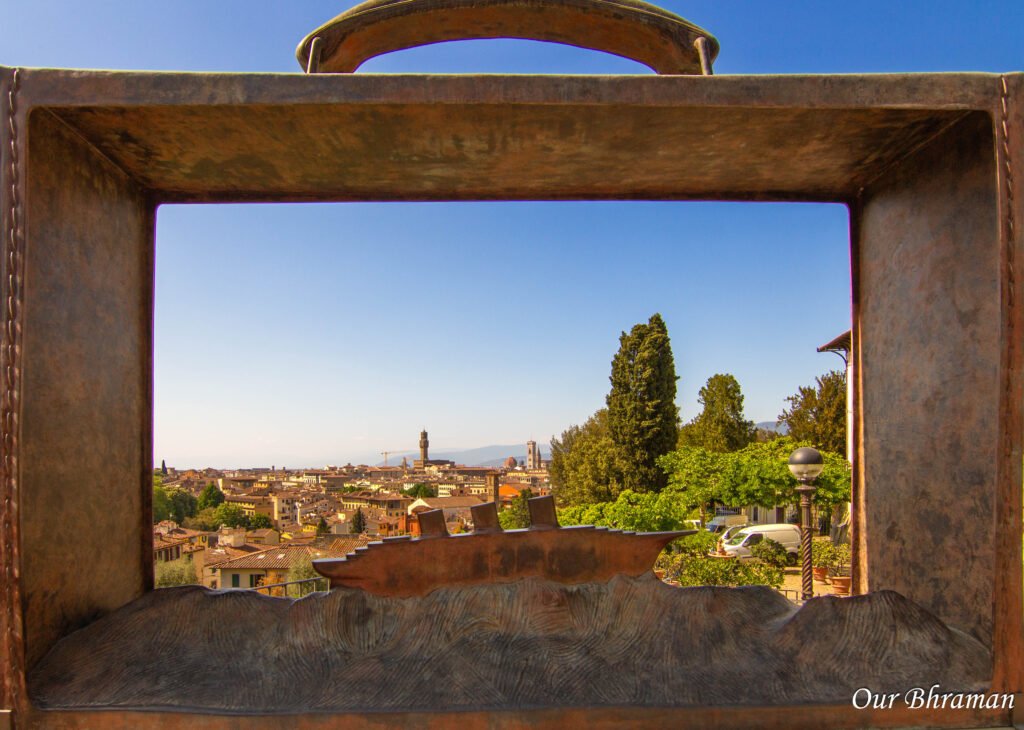
Our journey then took us uphill toward the Giardino delle Rose, a peaceful garden in the Oltrarno district. After the crowds and busy streets of the historic center, the garden offered a welcome change of pace. From its hillside position, we could look back toward Florence, with the city’s rooftops and surrounding hills stretching into the distance.
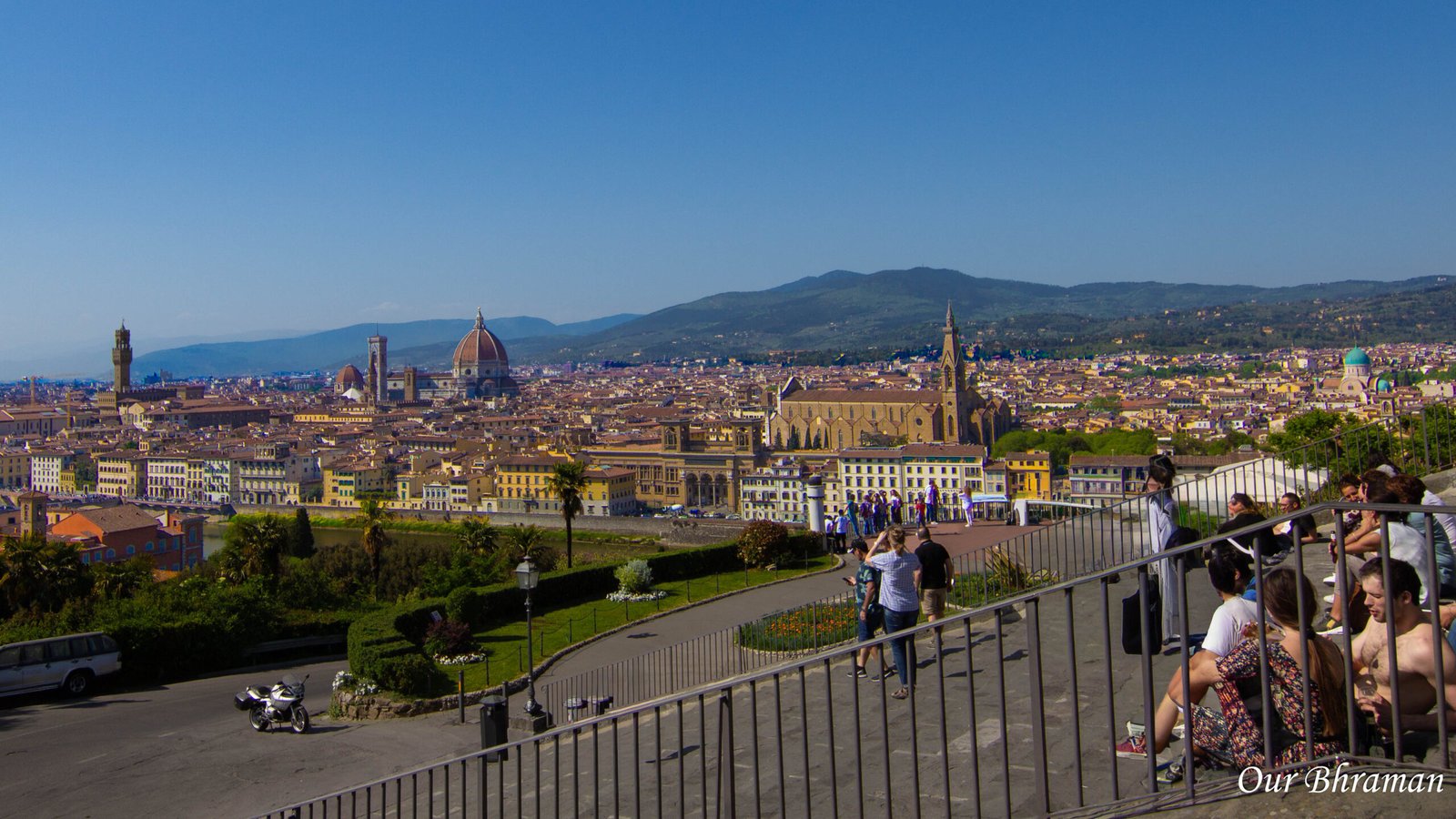
We continued upward to Piazzale Michelangelo, one of Florence’s most famous viewpoints. From here, the entire historic center seemed to unfold below us. The Duomo and Brunelleschi’s dome, Palazzo Vecchio, the Arno River, and the surrounding Tuscan hills created one of the most spectacular panoramas of the city. After spending the morning walking among Florence’s historic buildings, seeing the same landmarks from above gave us a completely different perspective.
By evening, we made our way back toward the river, where we had one more special experience waiting for us. We attended a concert at Palazzo Vecchio, surrounded by centuries of Florentine history. Listening to live music in such a historic setting was an experience we hadn’t expected when we started our day. The combination of the architecture, history, and music made the evening feel particularly memorable.
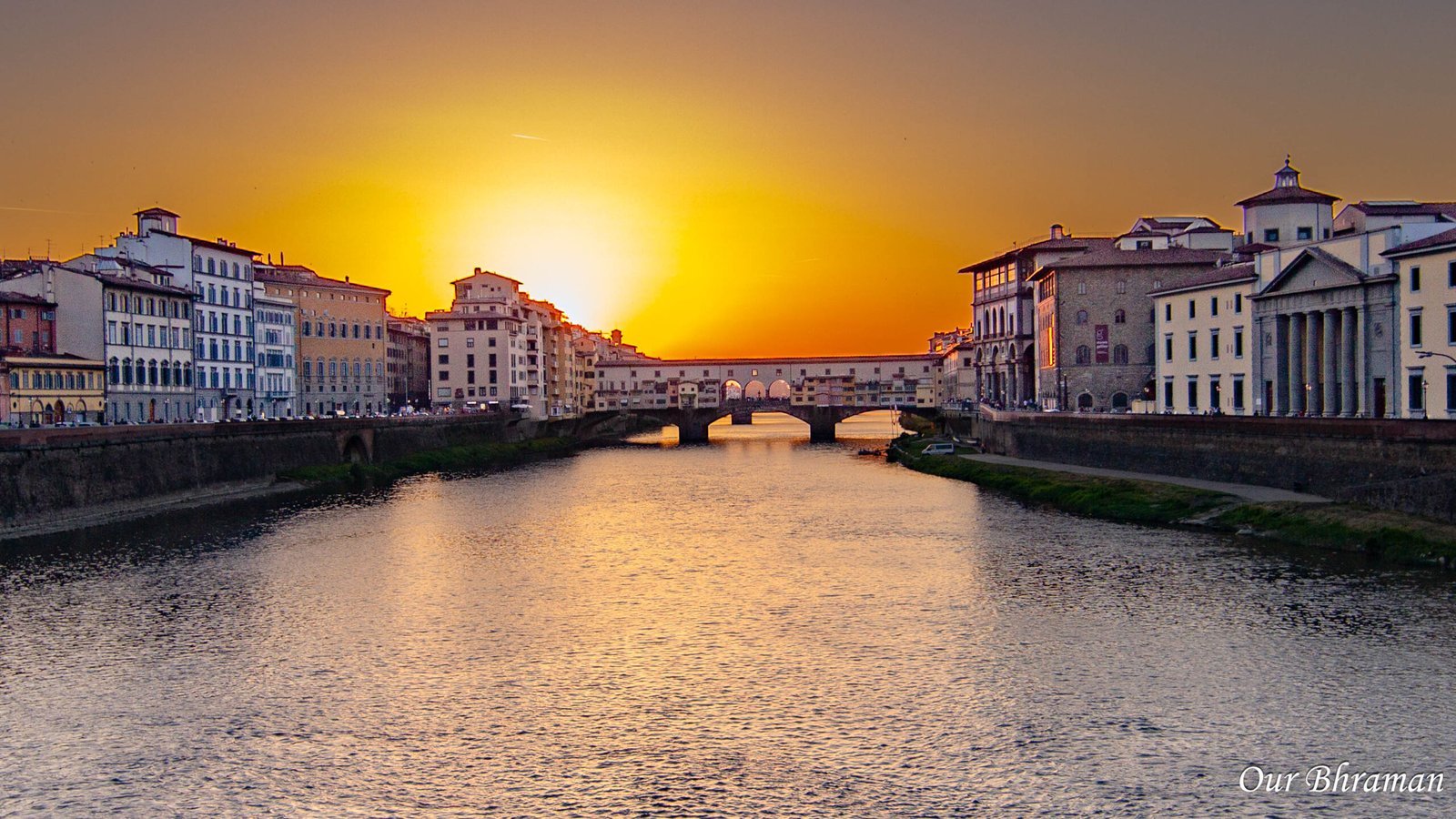
After the concert, we headed toward Ponte Vecchio once again. This time, the bridge looked completely different. The setting sun had transformed the sky into brilliant shades of orange and gold, with the historic bridge standing in silhouette against the glowing Arno River. We stopped to take in the view and enjoy the quiet beauty of Florence at the end of the day.
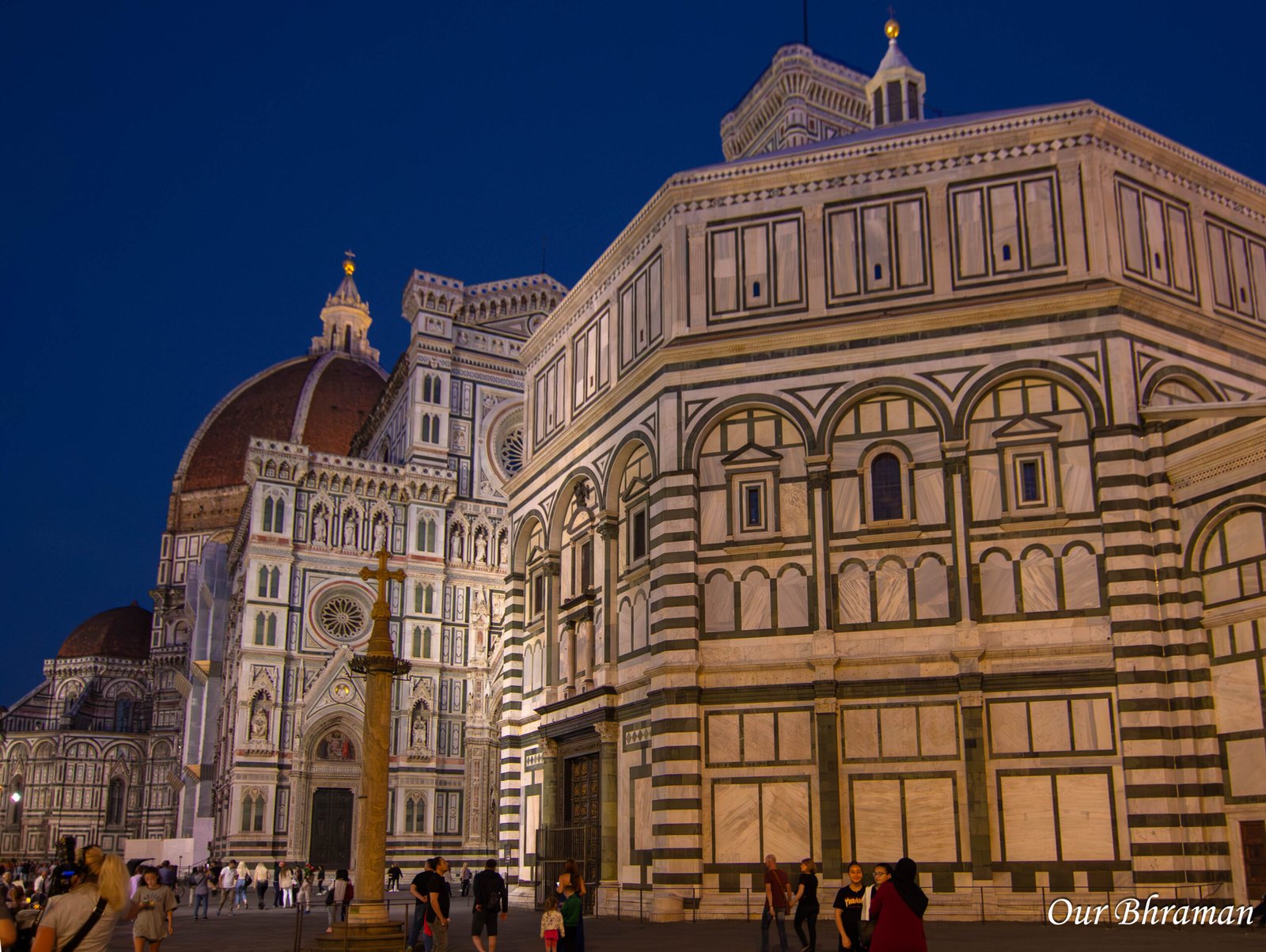
We finished our Florence adventure back at the Duomo, now beautifully illuminated against the evening sky. The red-and-white marble façade and Brunelleschi’s enormous dome looked almost magical under the lights. Starting our morning beneath the Duomo and ending the day there again felt like the perfect full circle.
Florence had given us a little bit of everything in one day—Renaissance architecture, historic squares, open-air sculptures, bustling markets, local traditions, panoramic views, live music, and a spectacular sunset. More than anything, though, it was the simple experience of walking through the city and discovering something interesting around every corner that made Florence so memorable.