Florence Duomo: Following the Footsteps of the Medici
The first time we stepped into Piazza del Duomo, Florence felt like it was breathing history. Our fascination with the Florence Duomo started long before we arrived in Florence. After watching the Netflix series Medici, we became fascinated by the Medici family, Renaissance Florence, and the incredible story of how art, architecture, politics, and ambition shaped the city. The Duomo appeared repeatedly in the history we were learning about, and seeing it in person eventually became a must-visit for us.
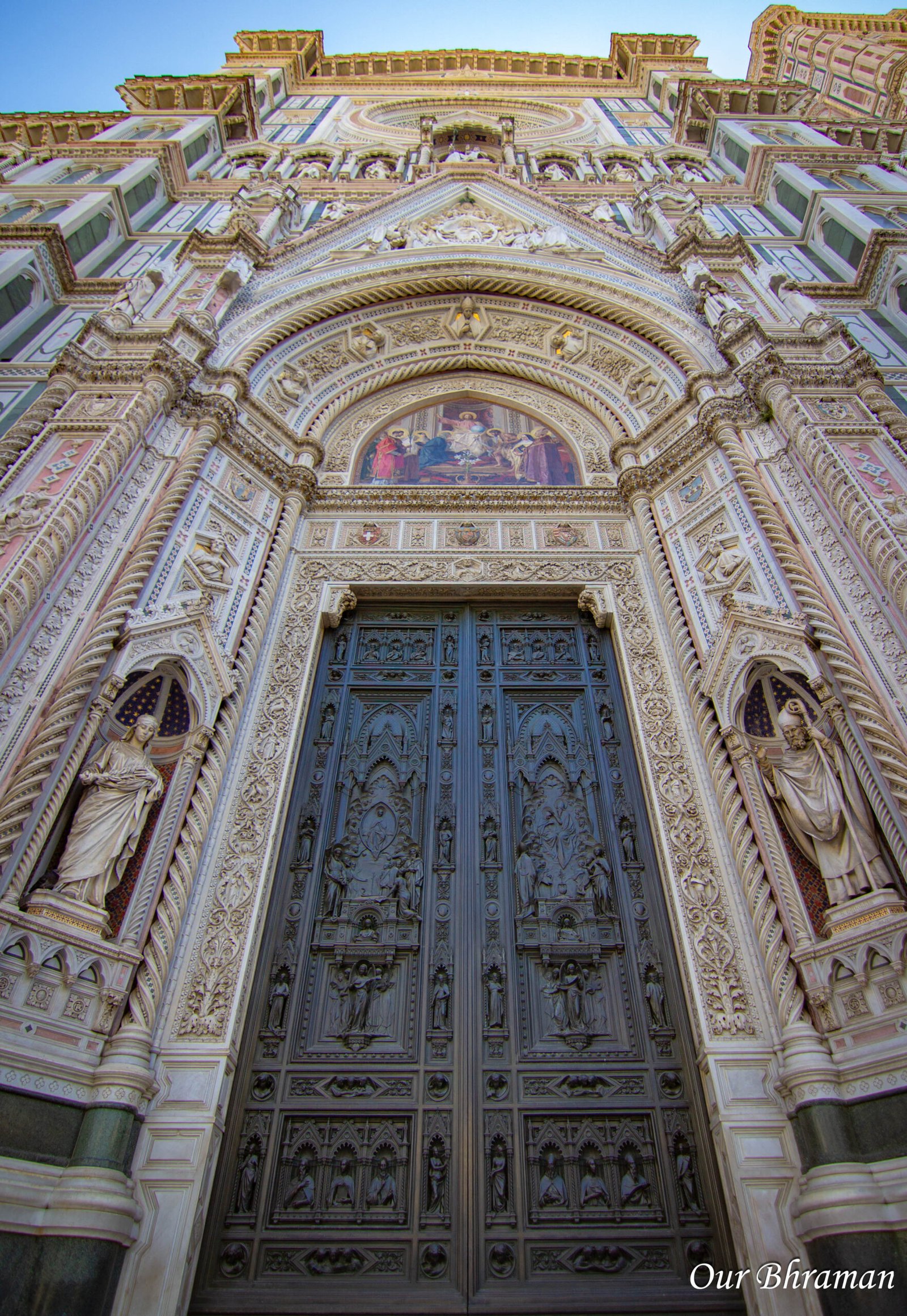
The moment we arrived at Piazza del Duomo, the scale of the cathedral was impressive. The Cathedral of Santa Maria del Fiore, commonly known as the Florence Duomo, dominates the square with its enormous red-tiled dome and striking white, green, and red marble façade. Construction began in 1296, and the cathedral was finally consecrated in 1436—nearly 150 years later. What made the story even more fascinating was that the cathedral remained unfinished for decades because no one could figure out how to build the enormous dome.
That challenge was eventually taken on by Filippo Brunelleschi, whose innovative engineering transformed Florence. Completed between 1420 and 1436, his dome was the largest in the world at the time and remains one of the defining achievements of Renaissance architecture. Standing beneath it, we could appreciate why the Duomo had become such an important symbol of Florence and the Renaissance.
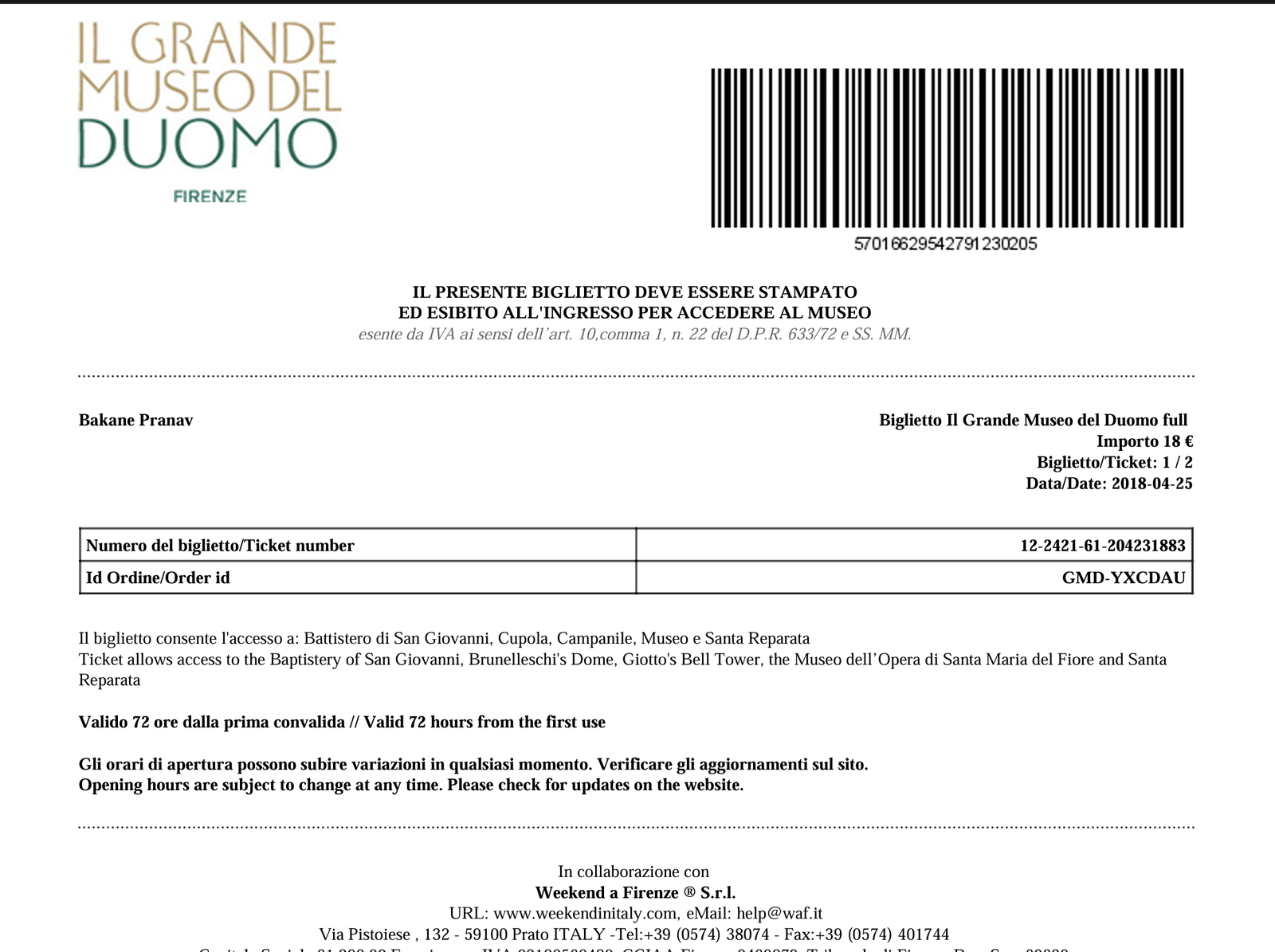
When we planned our visit to Florence, we decided to purchase the Grande Museo del Duomo ticket because it gave us access to several of the city’s most important landmarks with one pass. Our ticket included Brunelleschi’s Dome, Giotto’s Bell Tower, the Baptistery of San Giovanni, Santa Reparata, and the Opera del Duomo Museum. For us, it was a convenient way to experience the heart of Florence’s religious and artistic heritage without having to purchase separate tickets for each attraction.
Starting Early: The Best Way to Experience the Duomo
Because the Duomo is one of Florence’s most popular attractions, we knew we wanted to start our visit early. The crowds can build quickly as the day progresses, especially around the cathedral and dome entrance. More importantly, the dome climb requires a reserved time slot, so this was one part of our visit we didn’t want to leave to chance.
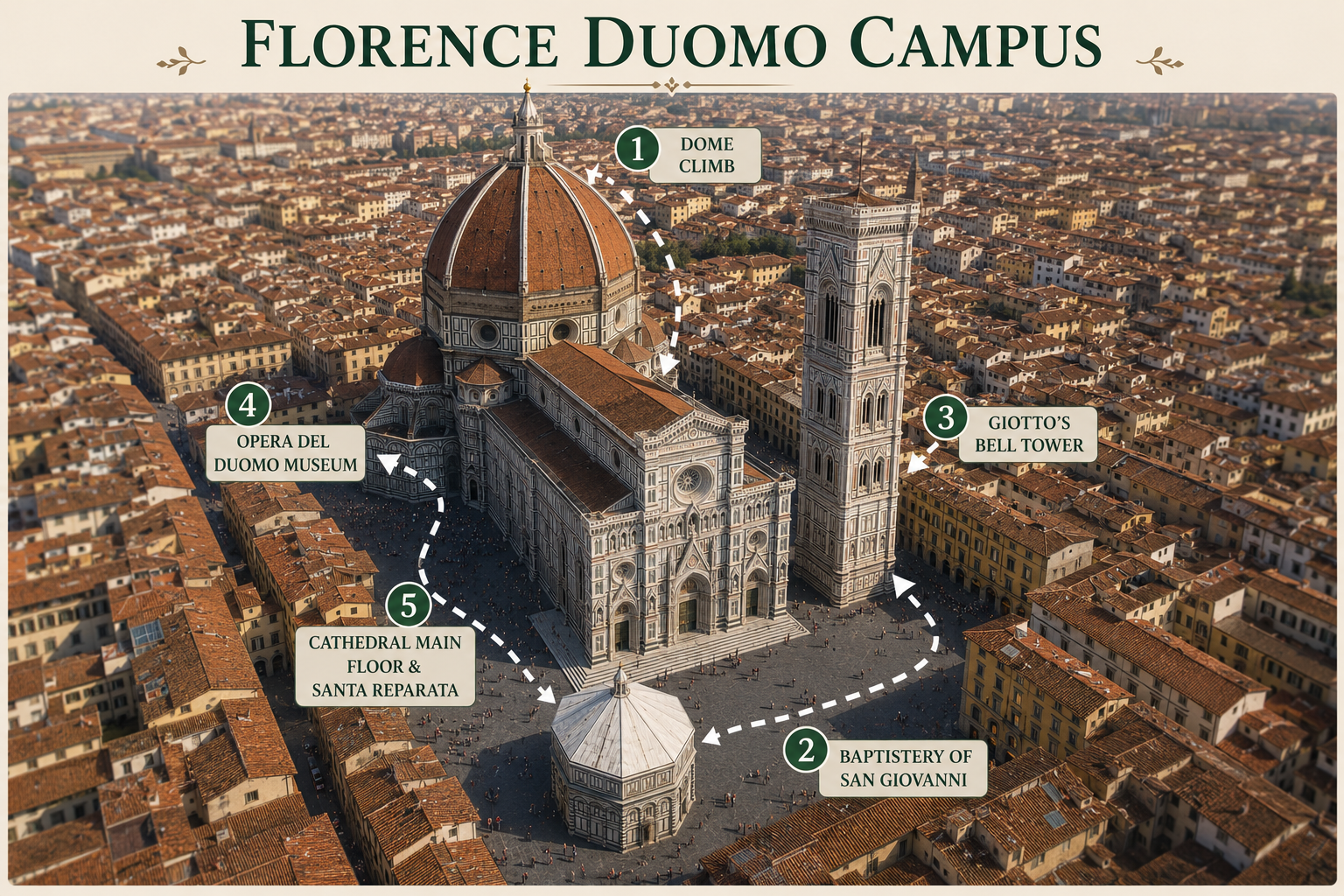
 Starting early also gave us more time to explore the complex without feeling rushed. The monumental complex includes the cathedral itself, Brunelleschi’s Dome, Giotto’s Bell Tower, the Baptistery of St. John, Santa Reparata, and the Opera del Duomo Museum. If you have only limited time, the dome and Baptistery are two experiences we would prioritize.
Climbing Brunelleschi’s Dome
The highlight of our Duomo visit was undoubtedly the Dome climb. With our reserved time approaching, we entered through the designated entrance and began the ascent.
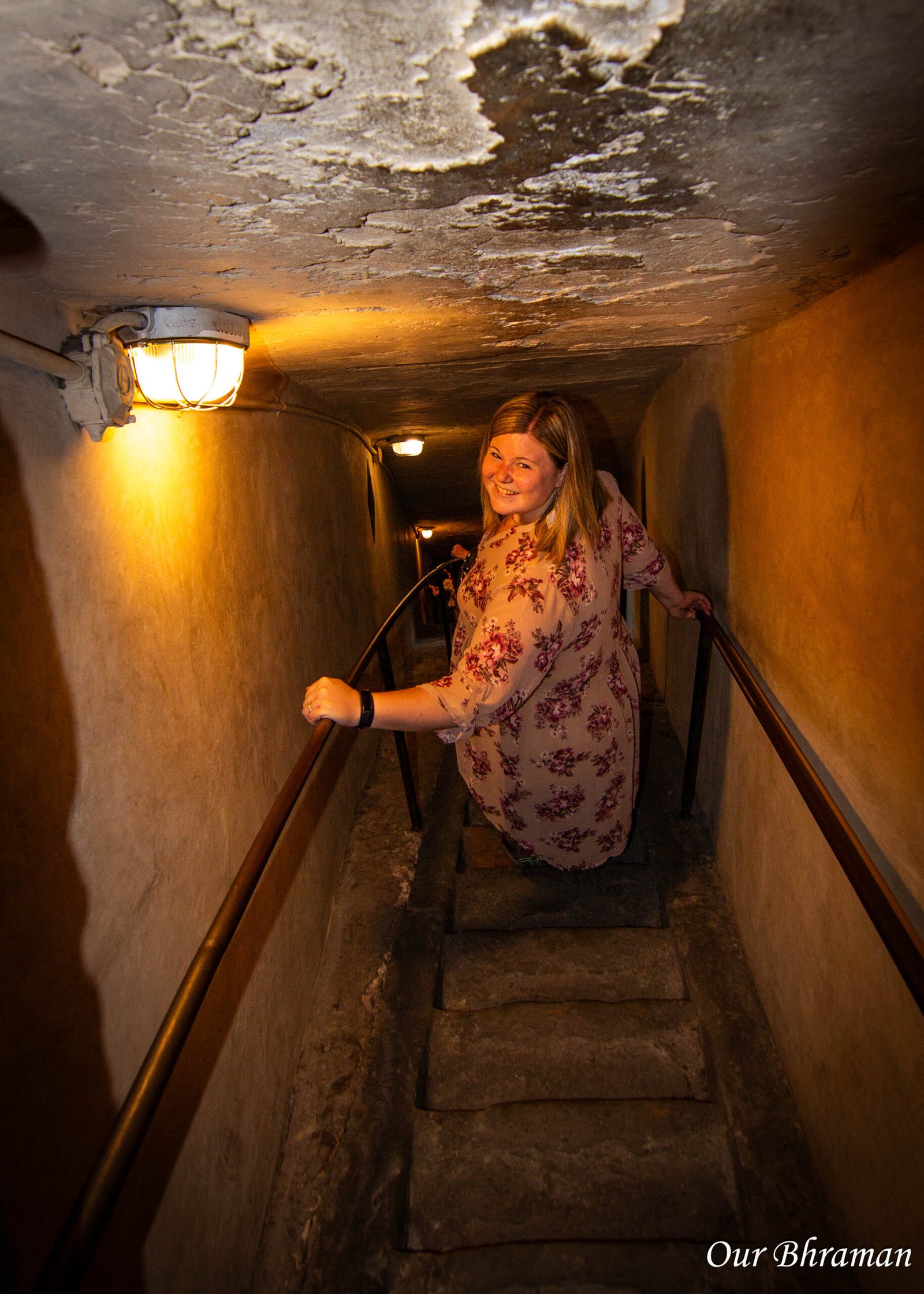
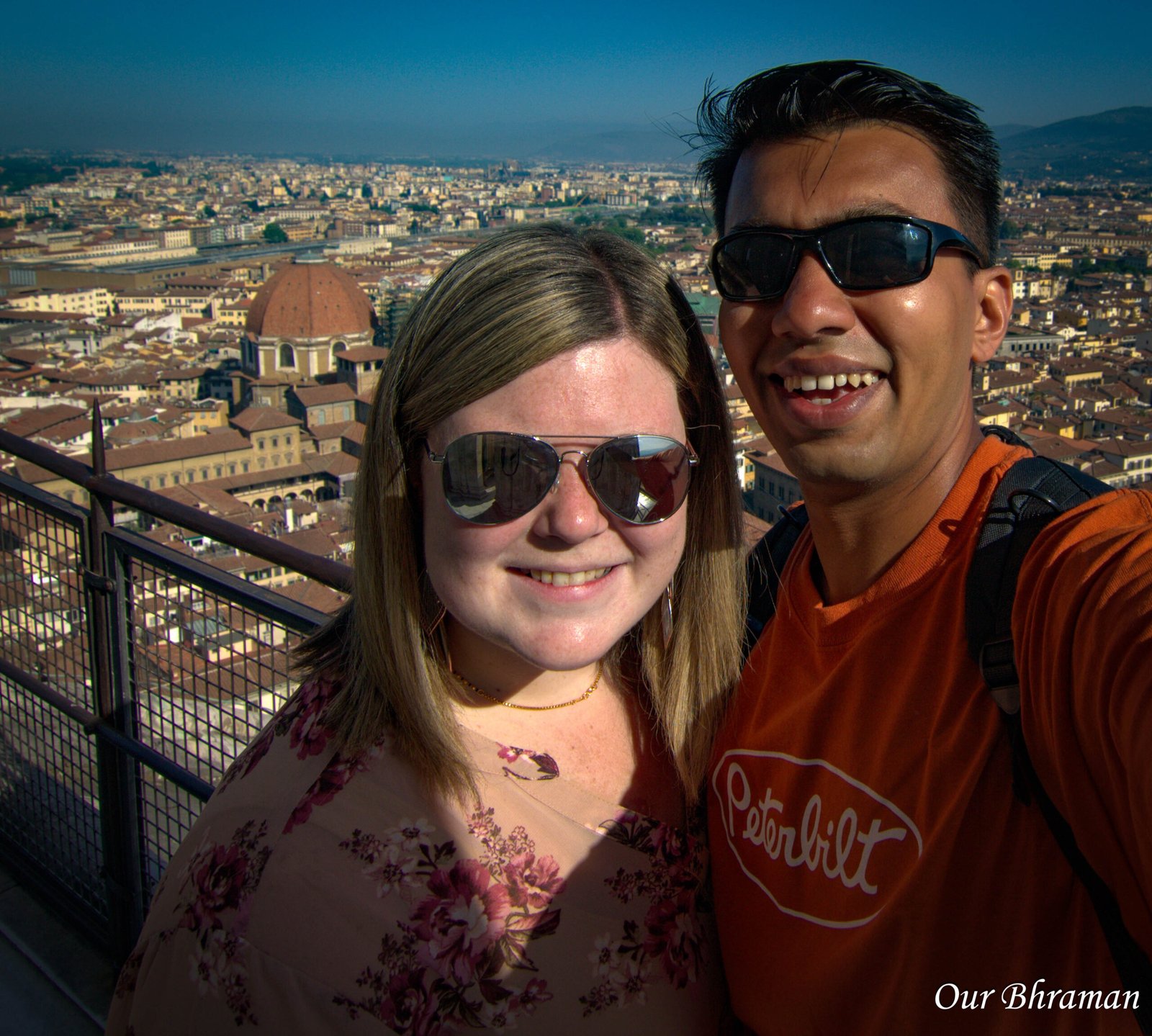 There are 463 steps to reach the top, and there is no elevator. The staircase alternates between narrow spiral passages and wider sections, with the walls of the massive dome surrounding us as we climbed higher.
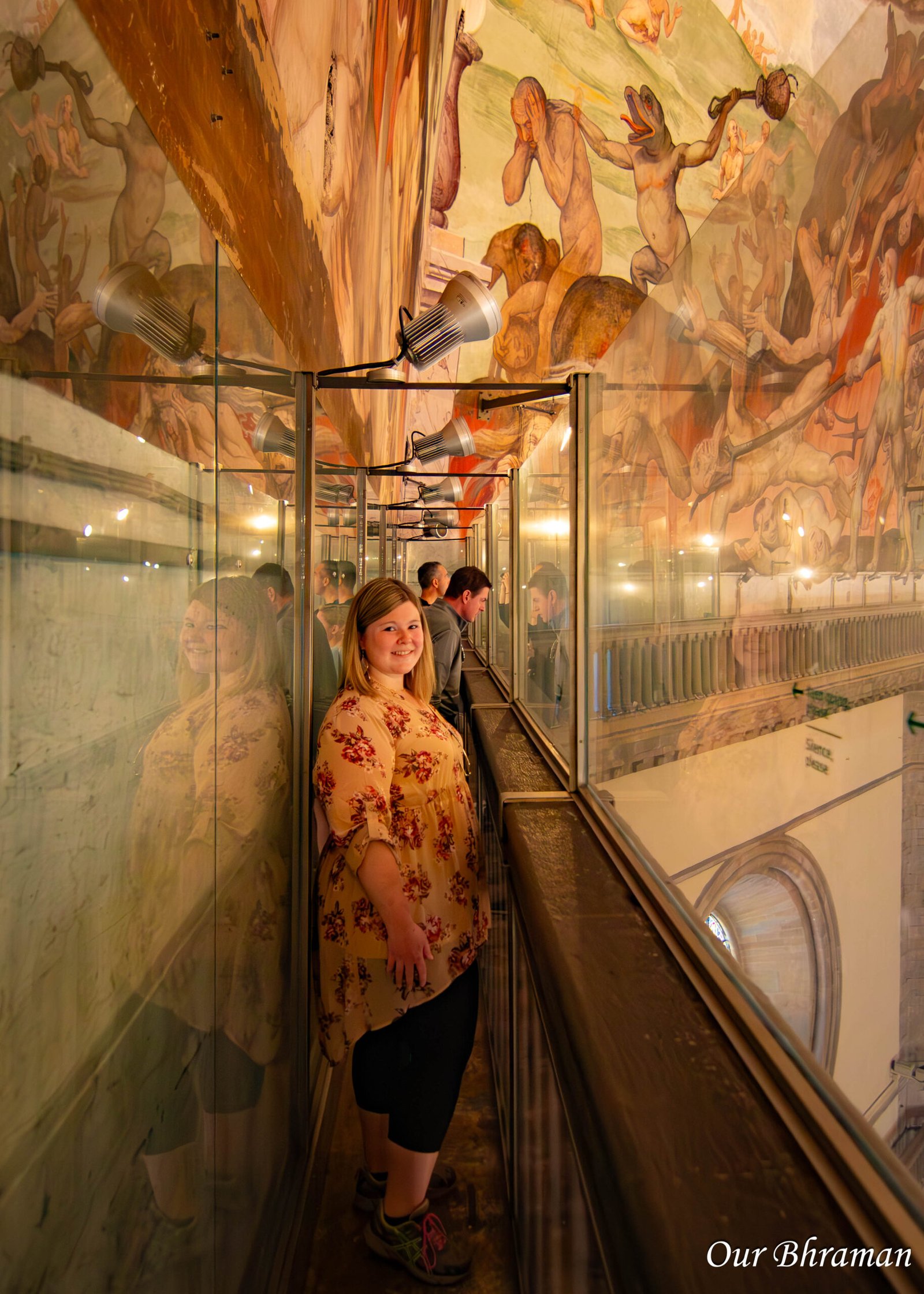
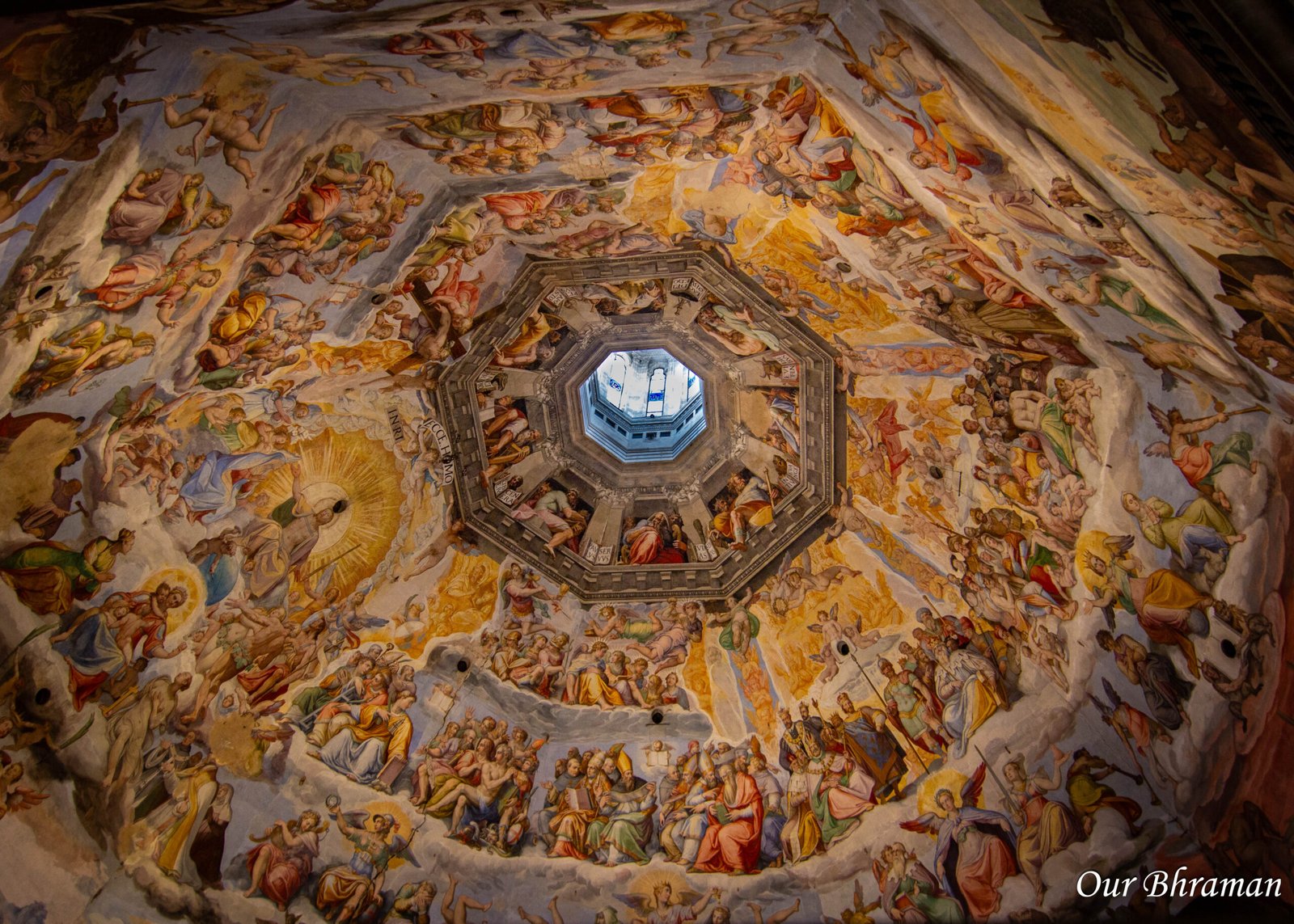
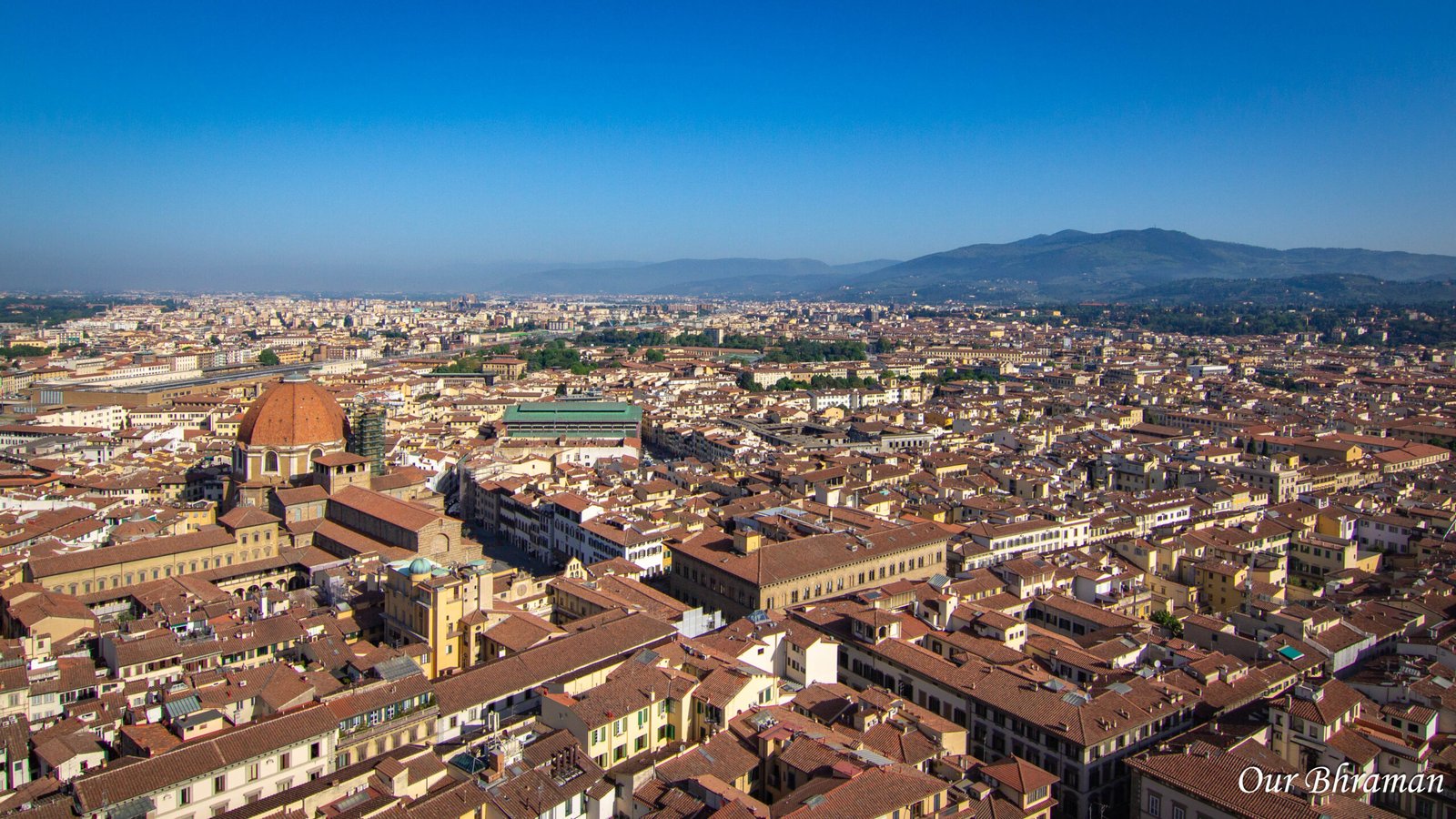 About halfway up, the staircase opens onto a walkway where you can get remarkably close to the Last Judgment frescoes. From this perspective, the paintings felt completely different from viewing them from the cathedral floor. We could see the incredible detail while also appreciating the enormous scale of the artwork.
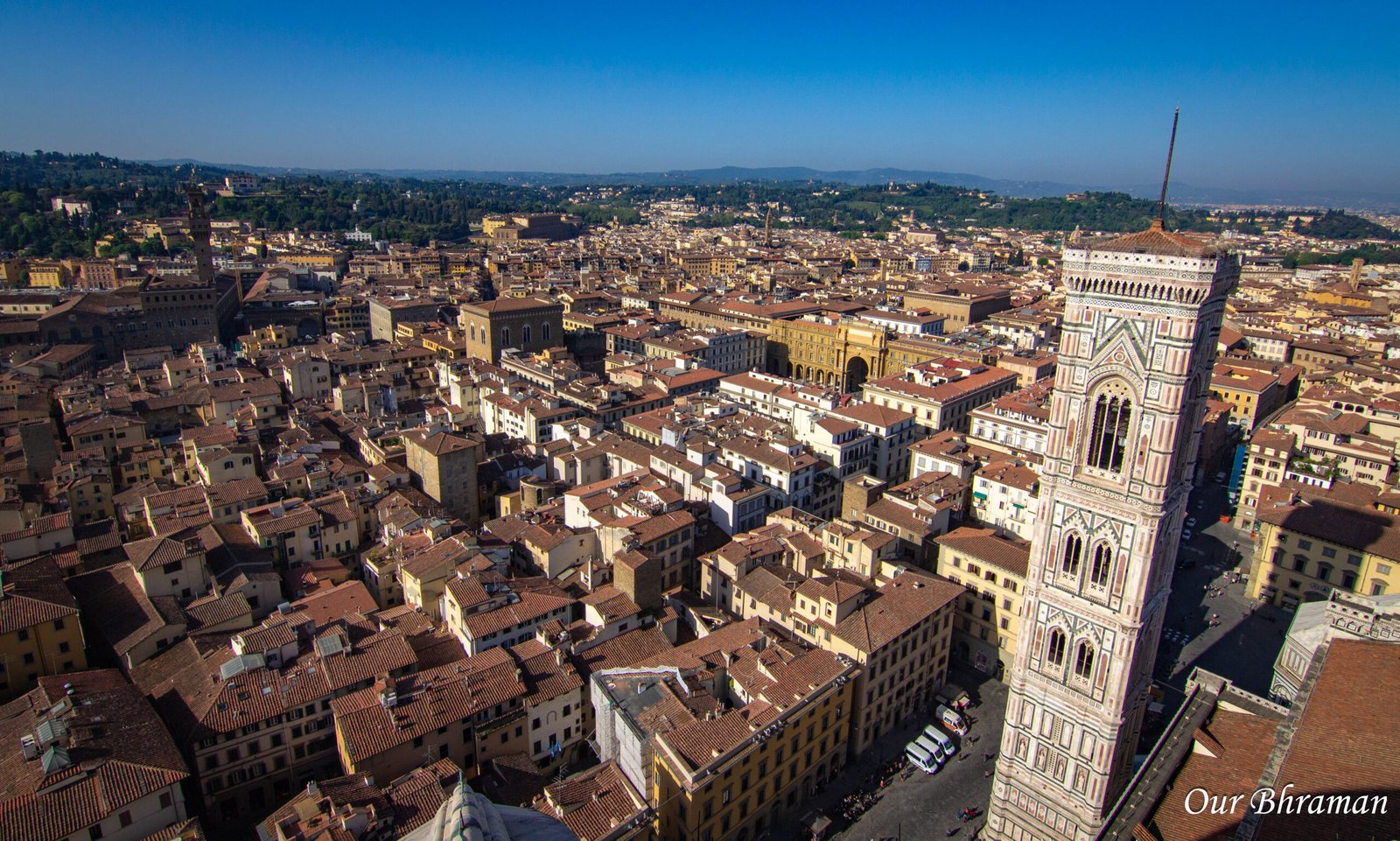 Then came the final stretch. The passages became narrower, but knowing that the panoramic view was waiting above kept us moving. When we finally reached the top, Florence opened up around us.
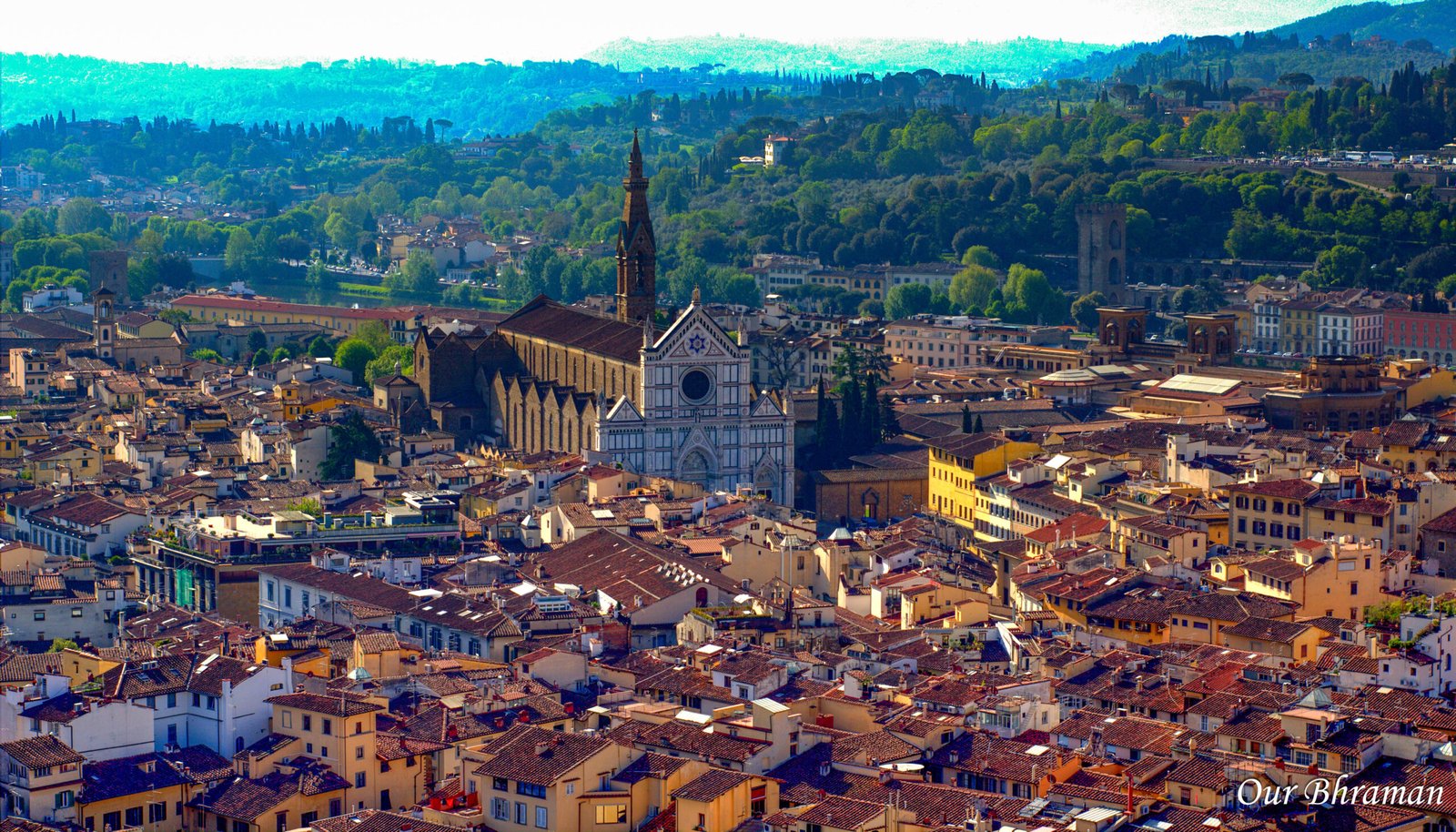 From the summit, we could see the city’s historic rooftops, the Arno River, Giotto’s Bell Tower, Palazzo Vecchio, and the surrounding Tuscan hills. After learning about Brunelleschi’s incredible engineering challenge, standing on top of the dome made the achievement feel even more remarkable.
We spent a good amount of time up there, simply enjoying the view and taking photographs before making our way back down.
Giotto’s Bell Tower
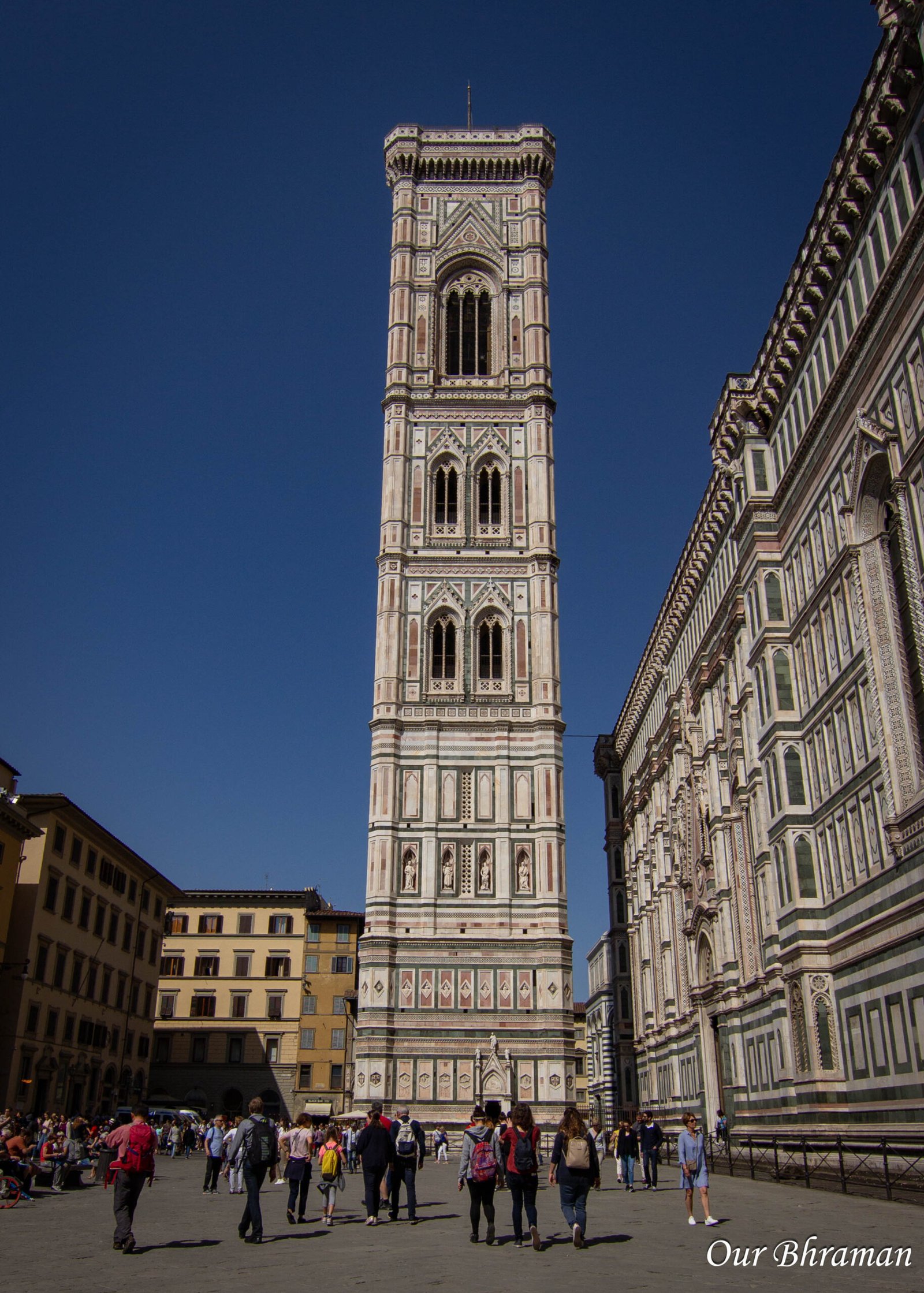
After experiencing the dome, we continued exploring the Giotto’s Bell Tower, or Campanile, which stands directly beside the cathedral. The tower was designed by Giotto beginning in 1334 and completed after his death by Andrea Pisano and Francesco Talenti.
The tower offers another excellent elevated perspective of Florence. The climb involves 414 steps, but unlike the dome, there are several levels where you can pause along the way.
What makes the view particularly interesting is the opportunity to see Brunelleschi’s dome from a different angle. Instead of looking out over Florence from the dome itself, here the magnificent dome becomes the centerpiece of your photograph.
The Baptistery: A Golden Surprise
Across from the cathedral stands the Baptistery of St. John or Baptistery of San Giovanni, one of the oldest buildings in Florence. Built between the 11th and 12th centuries, it actually predates the present cathedral.
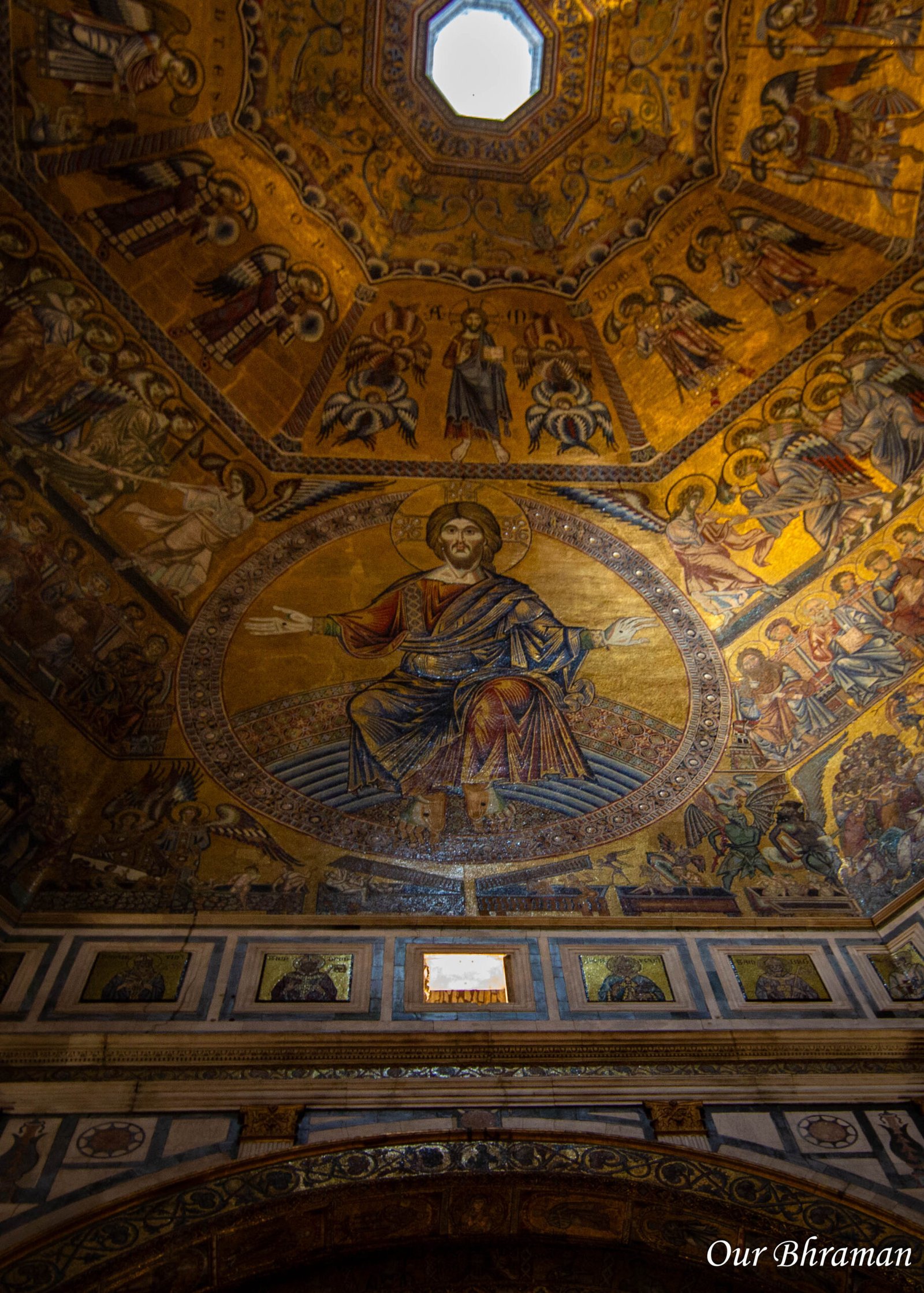
We were especially impressed when we stepped inside and looked up at the golden mosaic ceiling. The interior felt dramatically different from the cathedral, with the shimmering mosaics creating an almost otherworldly atmosphere.
The Baptistery is also famous for its bronze doors, particularly Lorenzo Ghiberti’s eastern doors, known as the Gates of Paradise. The original doors are now preserved in the Opera del Duomo Museum, while replicas remain on the Baptistery.
The visit doesn’t take long—around 15 to 20 minutes—but it is one of those places we would definitely recommend making time for.
Opera del Duomo Museum
If you have additional time, the Opera del Duomo Museum is another worthwhile stop. We almost skipped it, but it provides valuable context for everything surrounding the Piazza del Duomo.
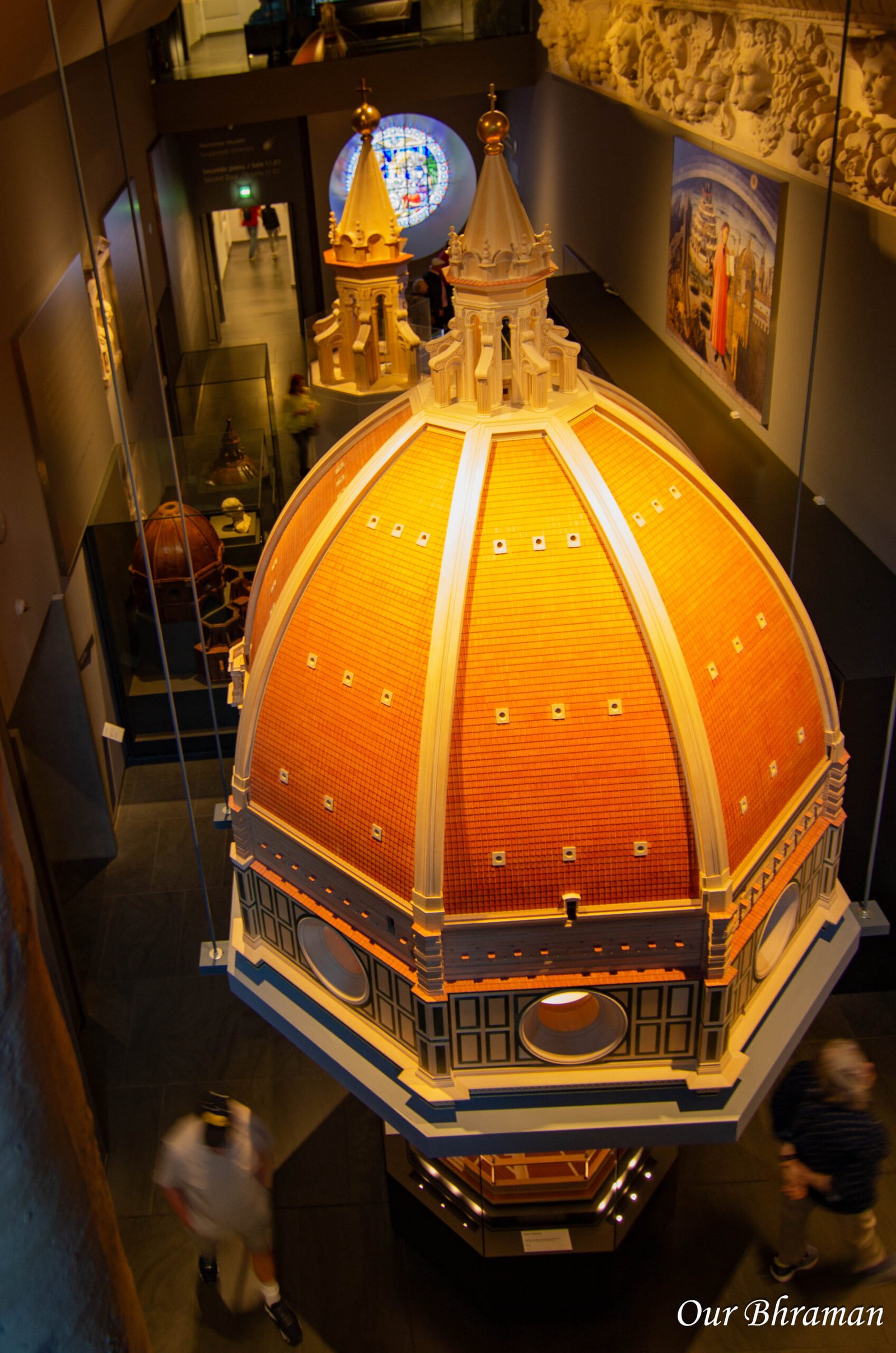
The museum houses original works removed from the cathedral complex for preservation, including Ghiberti’s original Gates of Paradise. There are also exhibits explaining the construction of Brunelleschi’s dome, which helped us better understand the engineering and creativity behind what we had just experienced.
Seeing the original artwork inside the museum after seeing the replicas and buildings outside gave us a deeper appreciation for how much artistic history is concentrated in this small part of Florence.
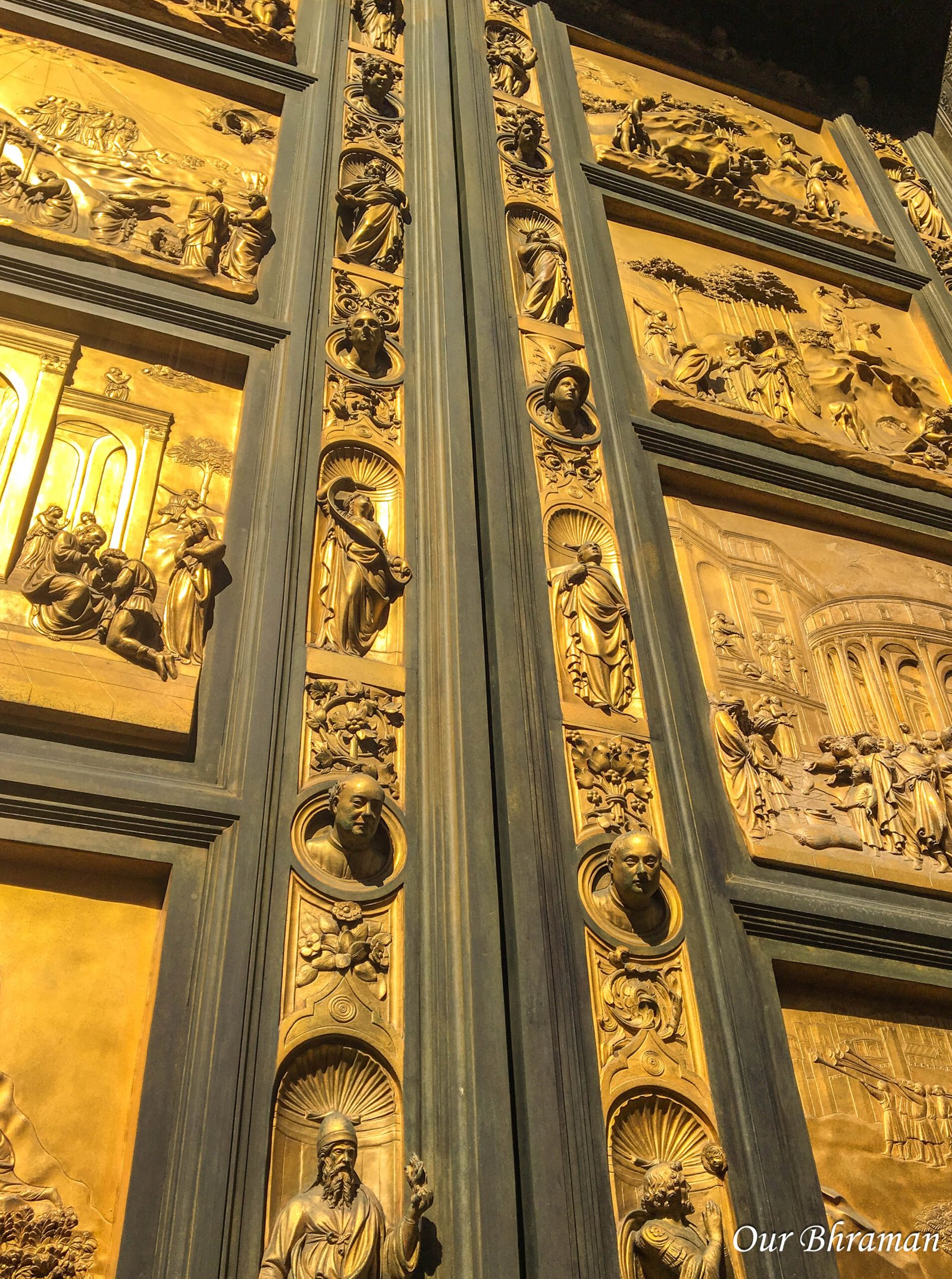
Main Floor of Florence Cathedral
We began our visit by exploring the main floor of Florence Cathedral, and stepping inside felt surprisingly different from the experience outside. After admiring the incredibly elaborate marble façade and massive dome, the interior initially seemed simple and spacious. But looking upward quickly changed that impression. The cathedral was begun in 1296 under architect Arnolfo di Cambio and took nearly 150 years to complete before its consecration in 1436.
The highlight was the enormous Last Judgment fresco covering the interior of Brunelleschi’s dome. Its scale is difficult to appreciate from photographs; standing beneath it, we could see layer upon layer of figures and scenes stretching across the massive surface. The cathedral also contains beautiful stained-glass windows, paintings, and other works of art that reward a closer look.
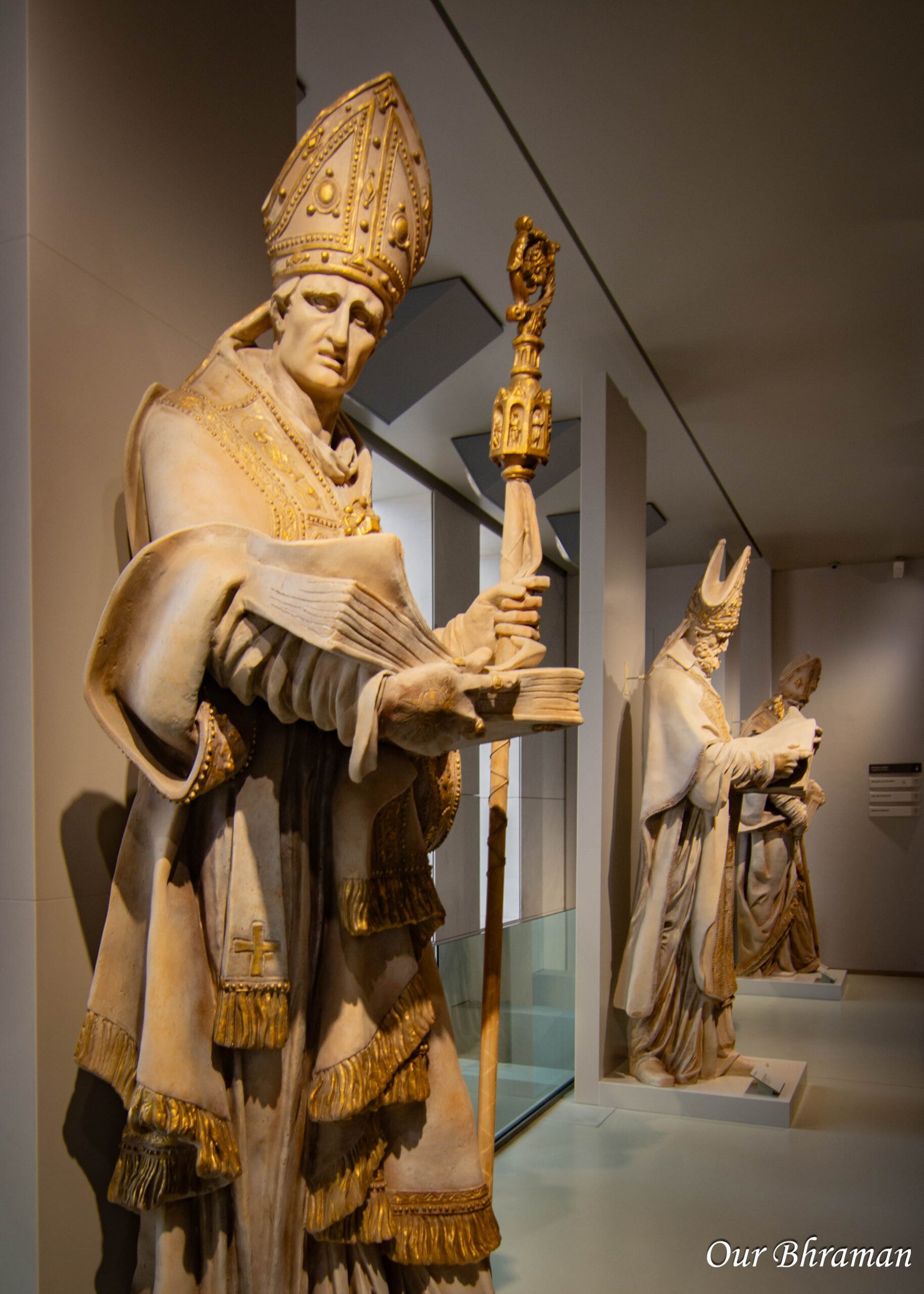
 Before leaving, we noticed an unusual 24-hour clock above the main entrance, designed by Paolo Uccello. Its Roman numerals and counterclockwise movement make it easy to overlook, but discovering details like this added another layer of history to our visit.As we explored the Duomo complex, we came across an impressive collection of religious sculptures depicting saints and biblical figures. The detailed robes, expressive faces, and intricate craftsmanship gave us a glimpse into the artistic and religious traditions that shaped Florence. Seeing these monumental works up close also helped us appreciate how art and faith were deeply connected to the history of the cathedral and the Renaissance.As we explored the Duomo complex, we came across an impressive collection of religious sculptures depicting saints and biblical figures. The detailed robes, expressive faces, and intricate craftsmanship gave us a glimpse into the artistic and religious traditions that shaped Florence. Seeing these monumental works up close also helped us appreciate how art and faith were deeply connected to the history of the cathedral and the Renaissance.
 Beneath the cathedral lies Santa Reparata, the remains of the earlier church that once stood on this site. Excavations uncovered the church along with Roman-era remains, offering a glimpse into the much older layers of Florence’s history. If you have extra time, it is worth adding to the visit, although for us, the dome, Baptistery, and other highlights of the Duomo complex were the experiences that stood out most.
A Journey Through the Renaissance
What made our Duomo visit even more meaningful was understanding the history behind what we were seeing. Florence wasn’t simply another beautiful Italian city; it was one of the places where the Renaissance took shape, shaped by powerful families such as the Medici and by ambitious artists, architects, and thinkers who transformed European culture.
Our earlier days in Rome had introduced us to the grandeur of the ancient Roman world—the Colosseum, Forum, temples, and ruins that reflected the power of an empire. Florence felt completely different. Instead of primarily looking at the remains of an ancient civilization, we were surrounded by the buildings, art, and ideas of a cultural rebirth. Rome showed us the power of the ancient world; Florence showed us the creativity of the Renaissance.
That contrast made the Duomo even more special for us. After being inspired by the Medici series, standing beneath Brunelleschi’s magnificent dome felt almost like stepping directly into a chapter of the history we had watched on screen. And even after spending the day exploring the complex, we weren’t quite ready to say goodbye.
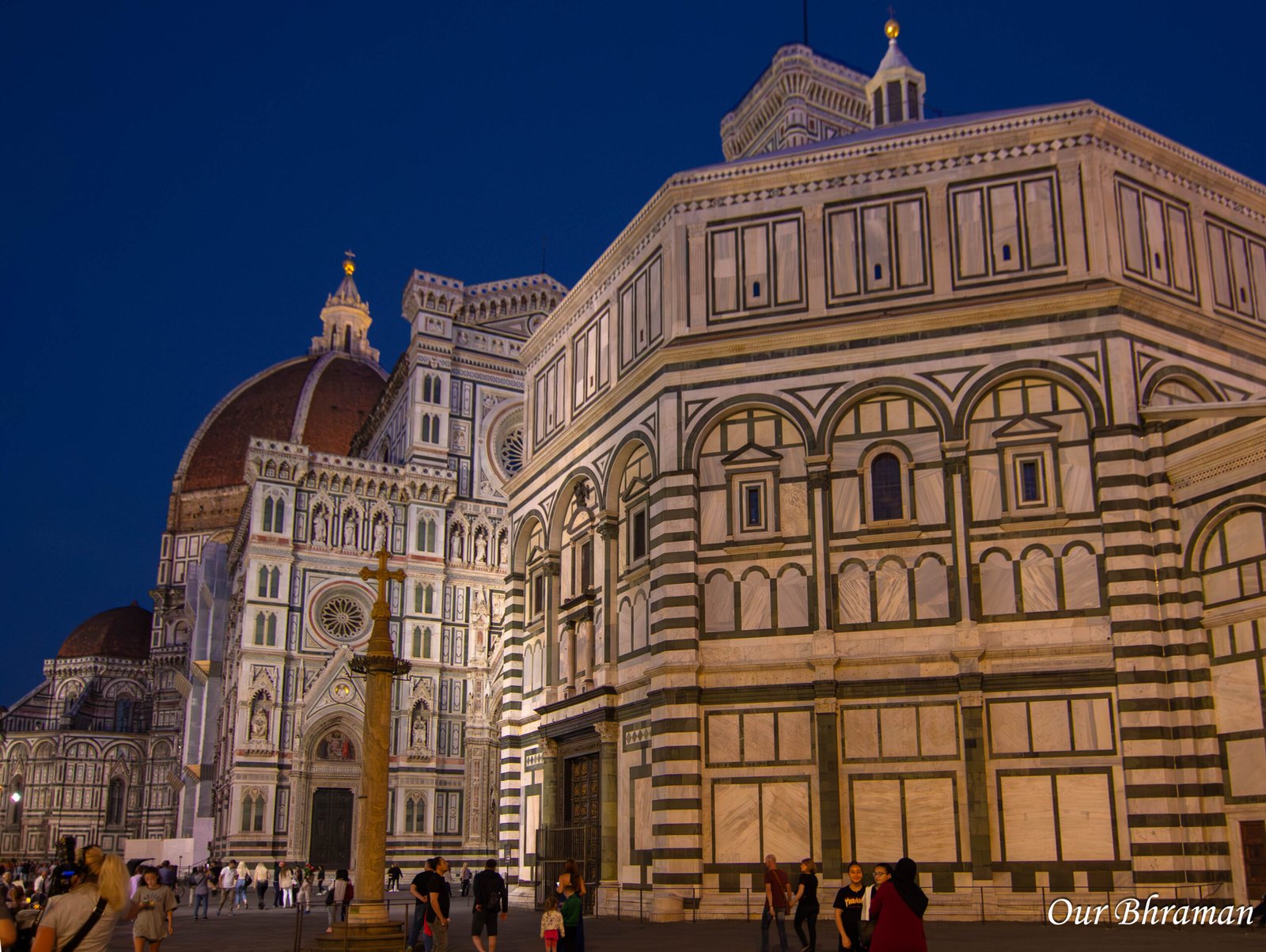
Although our daytime visit was complete, we made a point of returning to the Duomo at night to see it illuminated. The evening lights transformed the cathedral, marble façade, and enormous dome, giving the familiar landmark an entirely different character. Seeing it again under the night sky offered a completely new perspective and became a beautiful way to end our Duomo experience.