What Is Vatican City?
Vatican City is the world’s smallest independent country, covering just 49 hectares (121 acres) and home to fewer than 500 people. It became an independent city-state in 1929 through the Lateran Treaty between the Holy See and Italy and is governed by the Pope. Although it is a separate country, visitors generally do not need a passport to enter.
 The three major highlights of a visit are the Vatican Museums, Sistine Chapel, and St. Peter’s Basilica. The Vatican Museums and Sistine Chapel are visited together on the same ticket, while St. Peter’s Basilica and St. Peter’s Square form a separate area. Entry to the basilica is free, although visitors must pass through security, and the lines can become very long during the middle of the day. For an additional fee, visitors can also climb to the top of St. Peter’s Dome, which offers spectacular panoramic views across Rome.
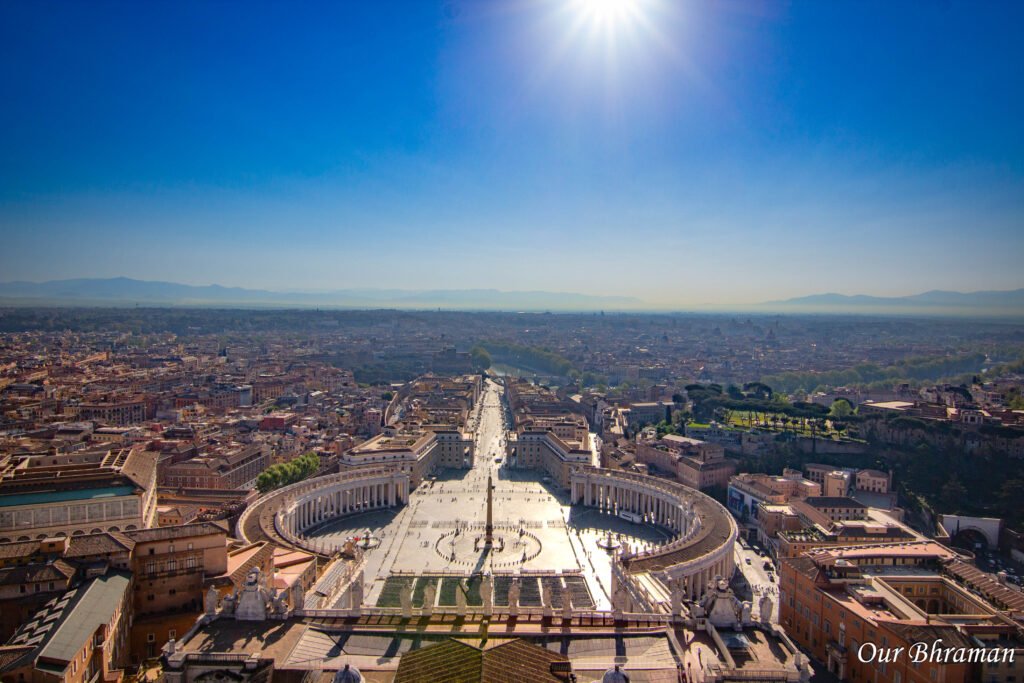
Climbing St. Peter’s Dome: Our Vatican City Adventure
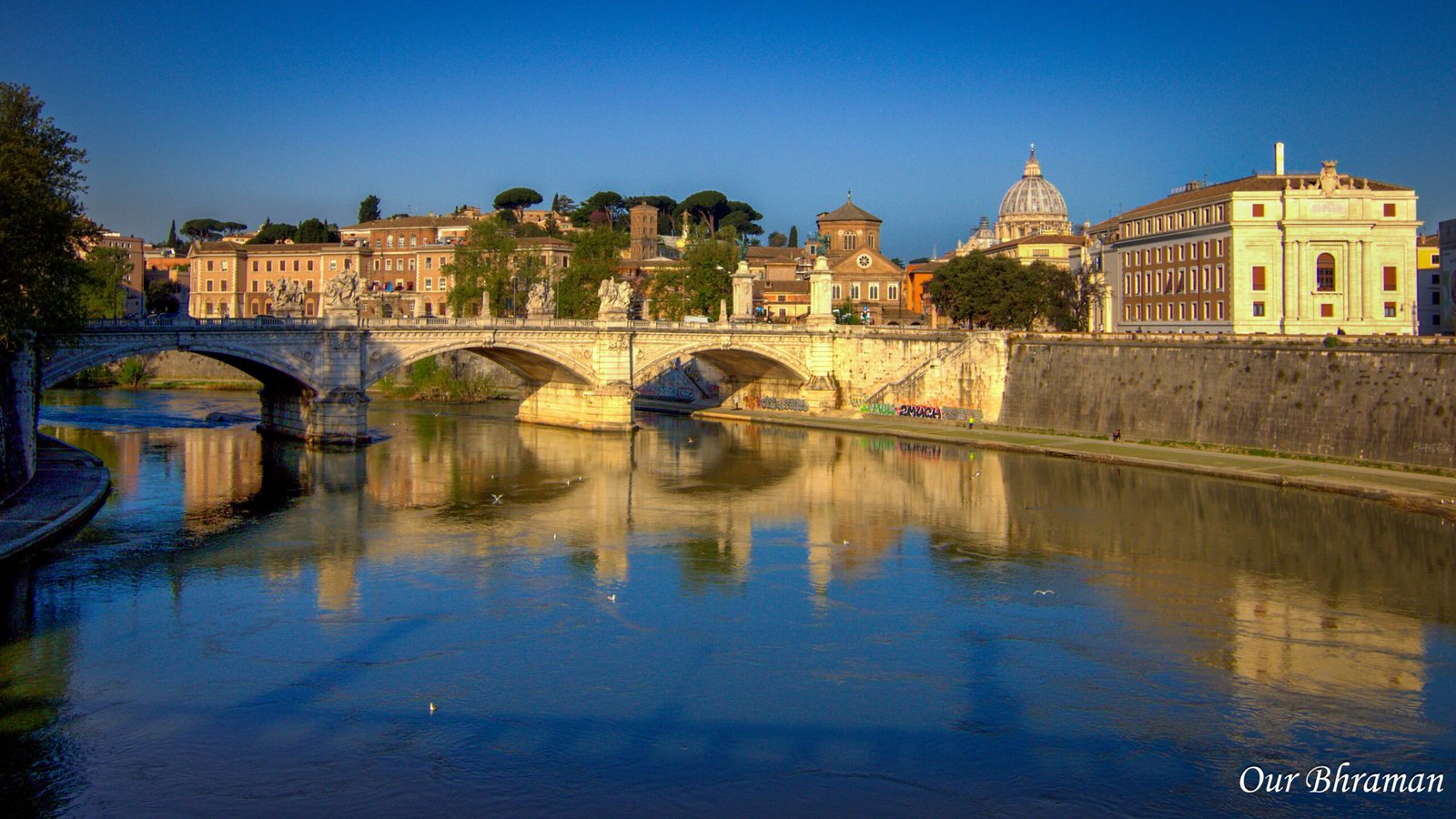 Our day in Vatican City began with a simple 10–15 minute walk from our hotel, which brought us toward St. Peter’s Basilica. Since we had started early, the streets were still relatively quiet, and there were very few crowds. We quickly realized that arriving early was going to be one of the best decisions of the day.
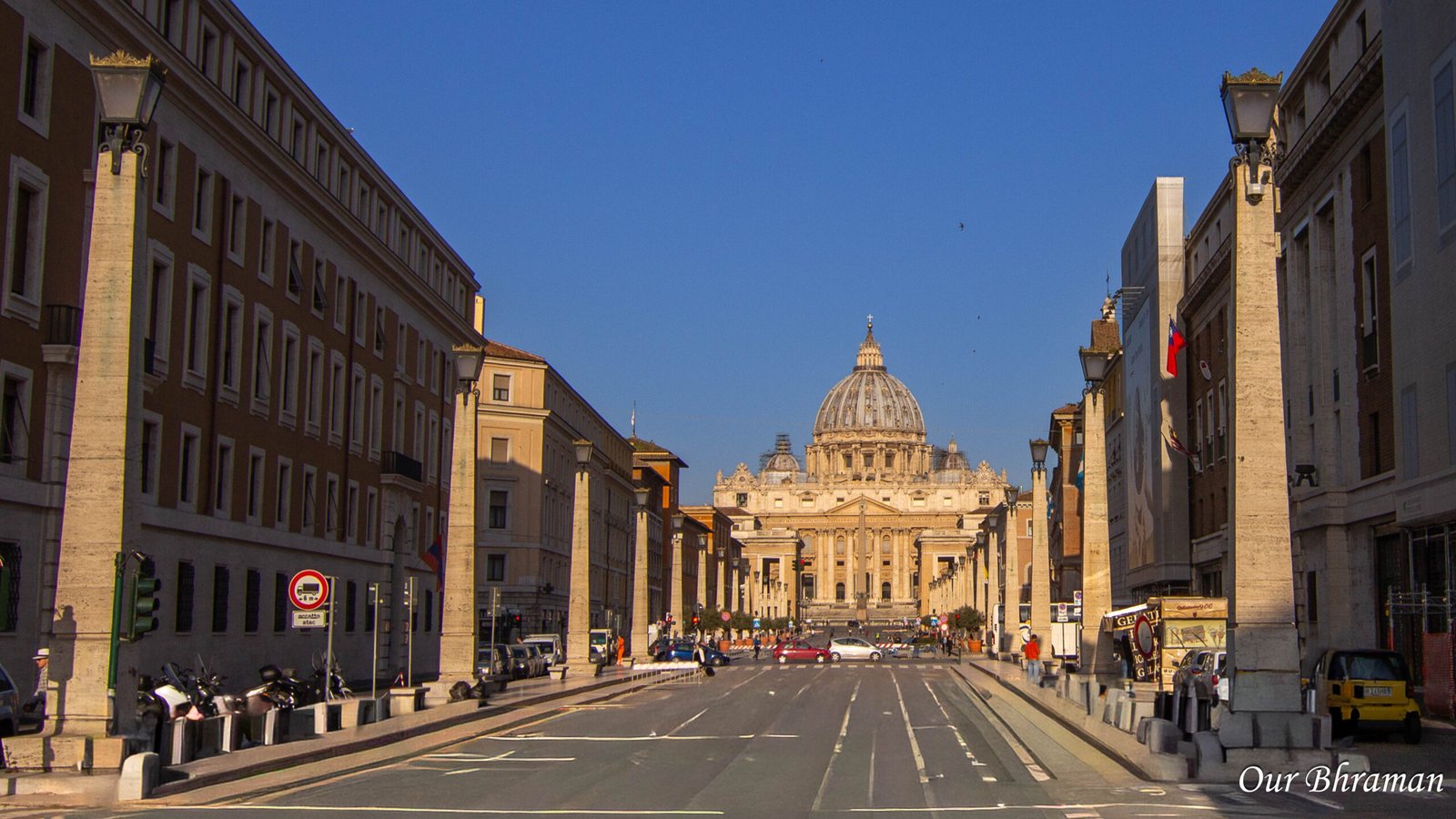 We decided to make St. Peter’s Dome our first destination. If you plan to climb the dome, we recommend reserving your time in advance and arriving early. Starting with the dome also turned out to be a great way to get our morning workout out of the way!
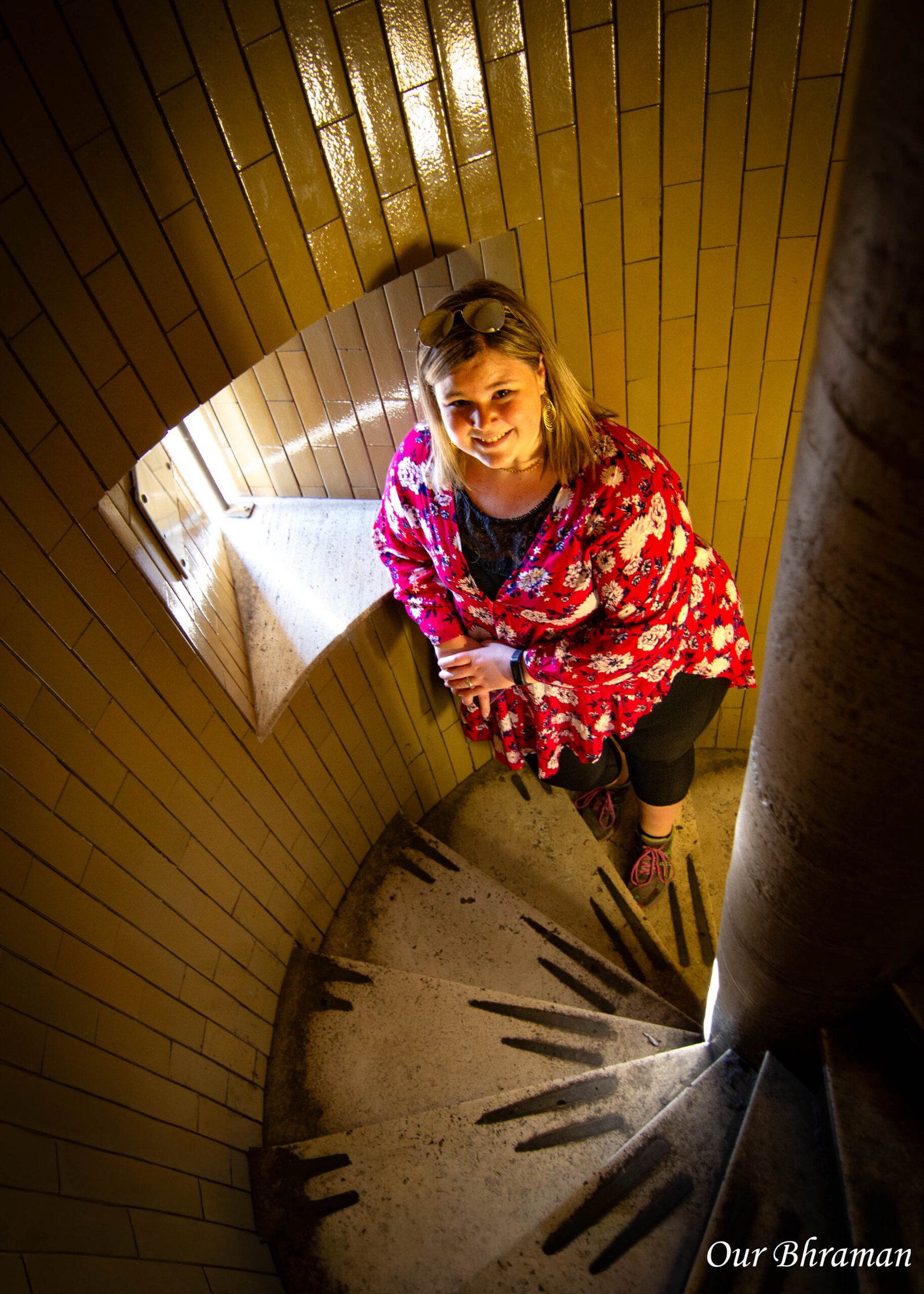
The climb itself was an experience. As we made our way upward, the staircase became increasingly narrow, steep, and winding, following the curves of the enormous dome. At certain points, the walls seemed to lean around us as we climbed through the remarkable structure. There is no elevator all the way to the top, so reaching the summit requires some effort.
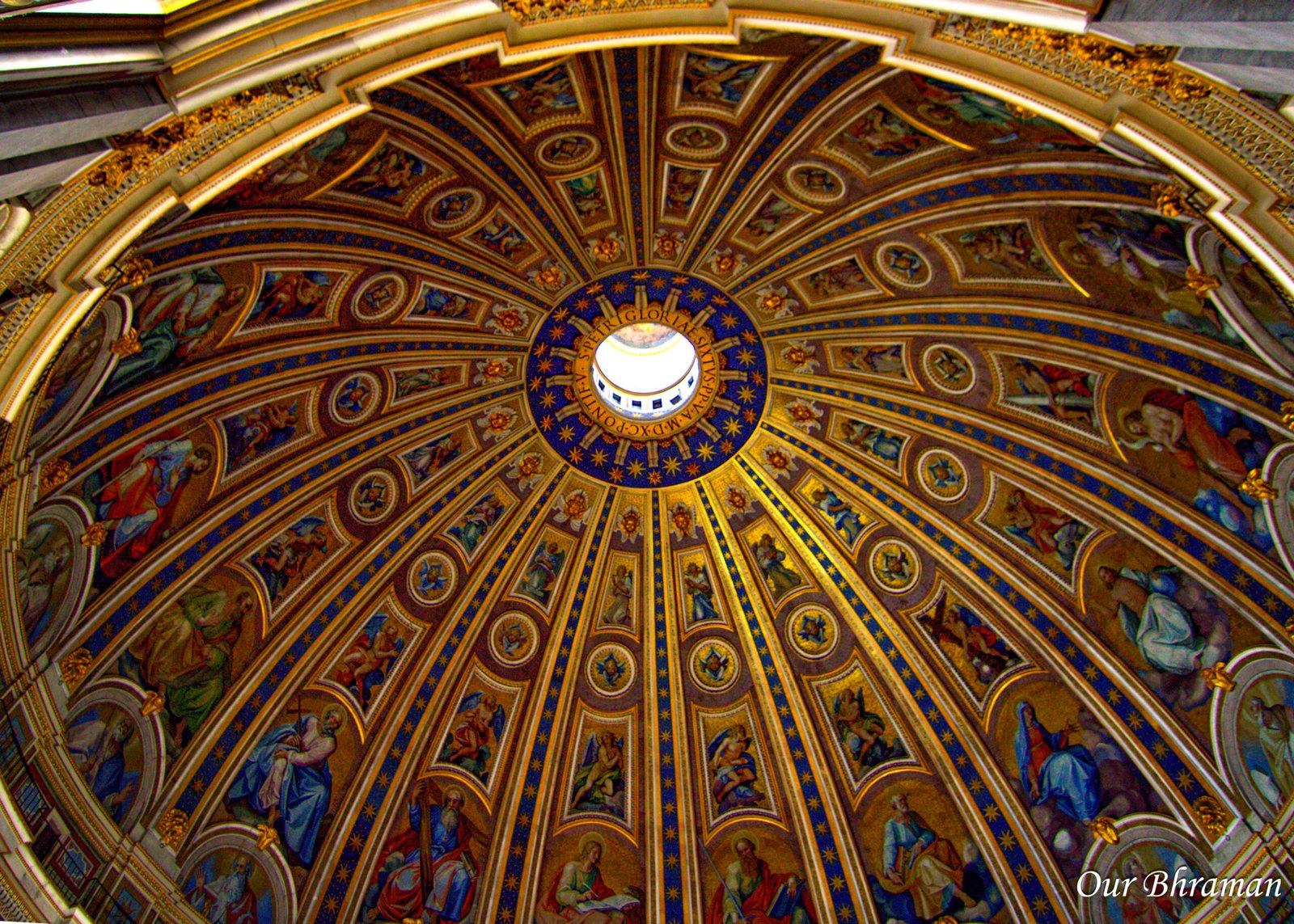
The dome was designed by Michelangelo, who developed the overall concept and structure before his successors Giacomo della Porta and Domenico Fontana completed it in the late 16th century. The dome uses a remarkable double-shell design, with a space between the inner and outer shells that forms part of the route used during the climb.
One of the most fascinating parts of the climb was getting close to the interior mosaics of the dome. From the upper levels, we could see the intricate golden mosaics decorating the enormous cupola, including angels, saints, Christ, Mary, apostles, and other biblical figures. The scale and detail were much easier to appreciate from this close vantage point than from the floor of the basilica.
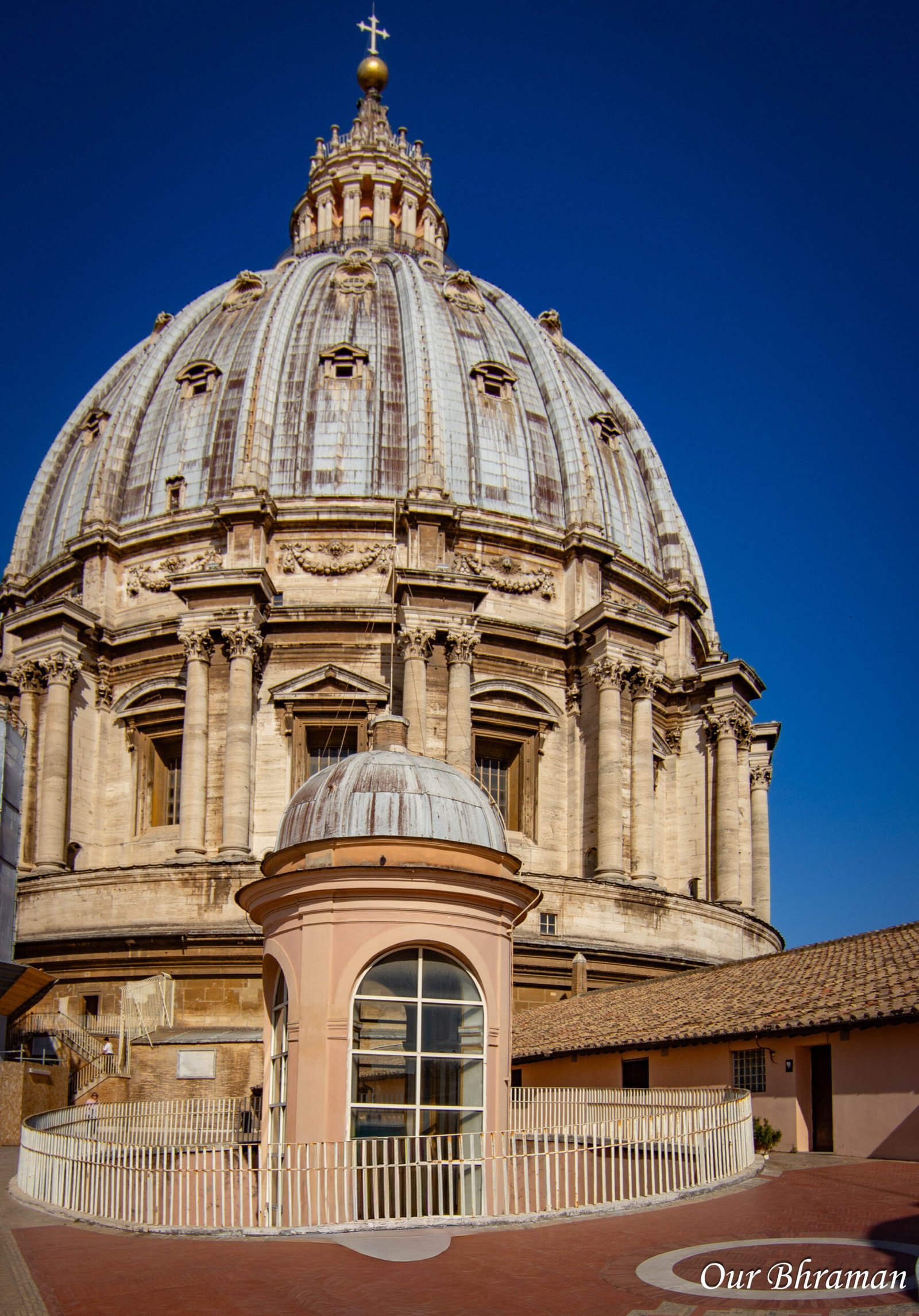
After continuing upward through the final sections of the staircase, we eventually reached the lantern and exterior viewing area. From here, we could appreciate the remarkable architecture of Michelangelo’s dome, including its enormous curved structure, the lantern above us, and the gilded bronze sphere and cross crowning the top.
The View from St. Peter’s Dome
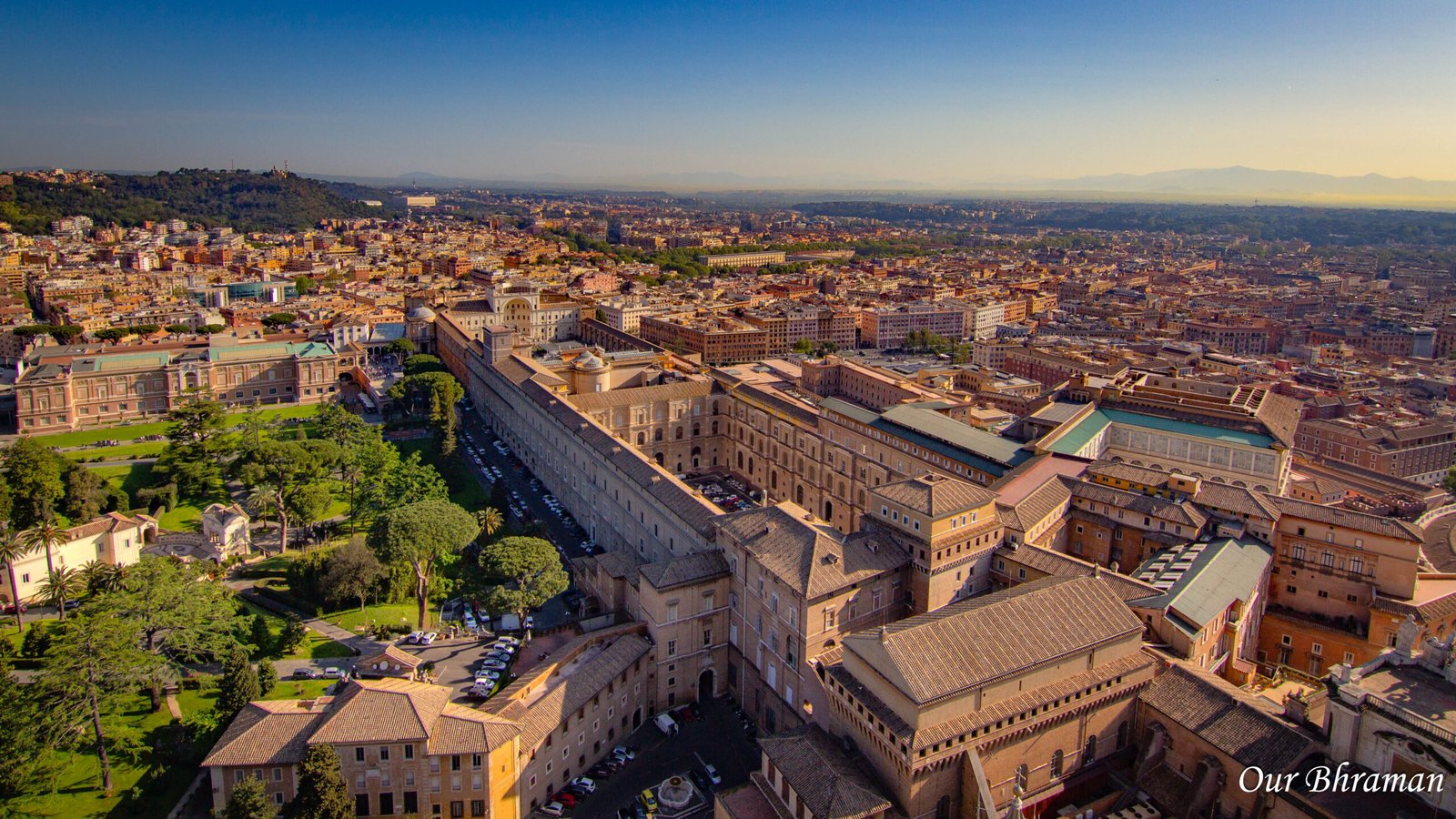
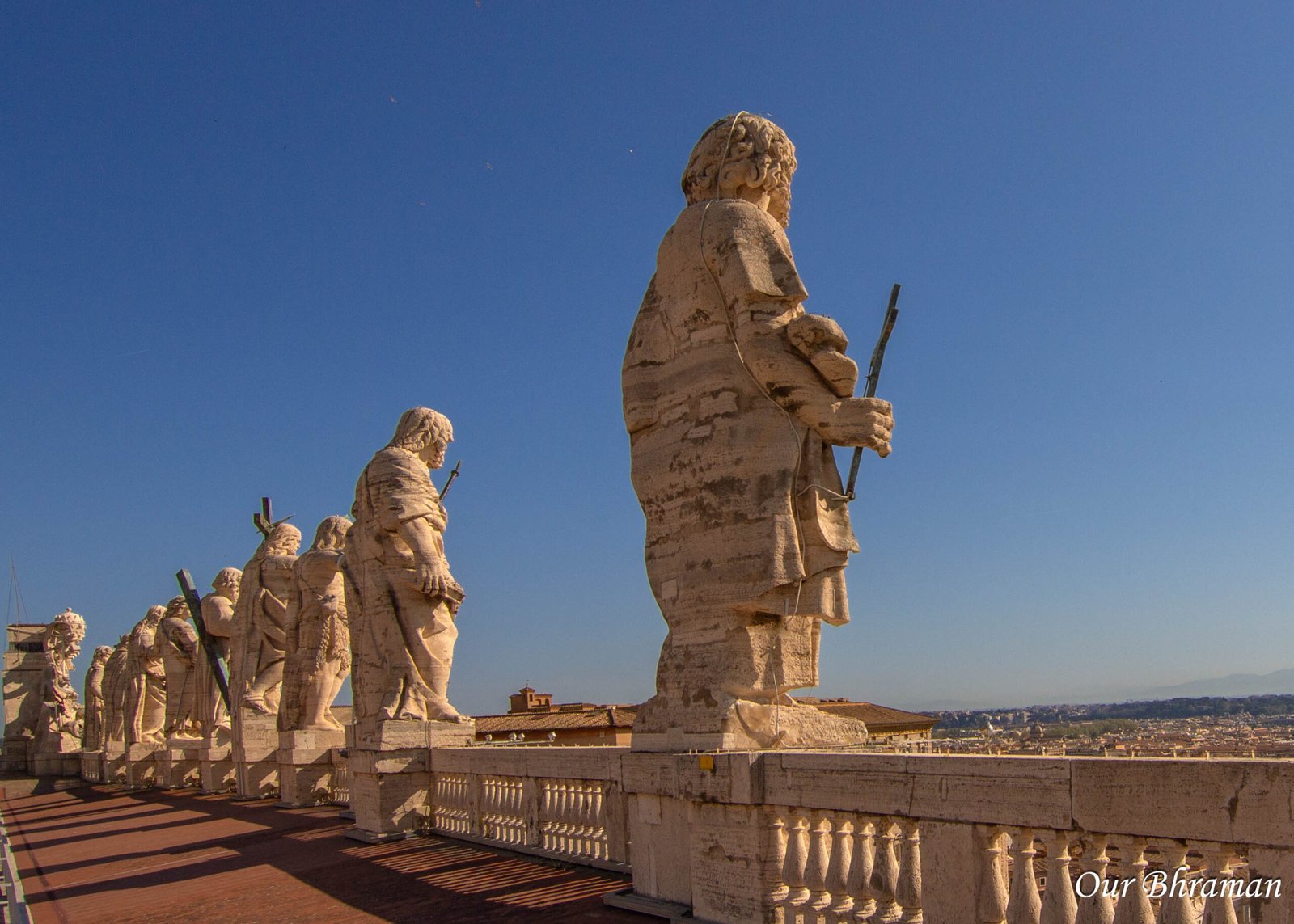
And then came the reward for the climb—the spectacular panoramic view of Rome. Looking down, St. Peter’s Square and Bernini’s famous sweeping colonnades spread out beneath us. Beyond the square, we could see Castel Sant’Angelo, the Tiber River, and the historic center of Rome stretching toward the horizon.
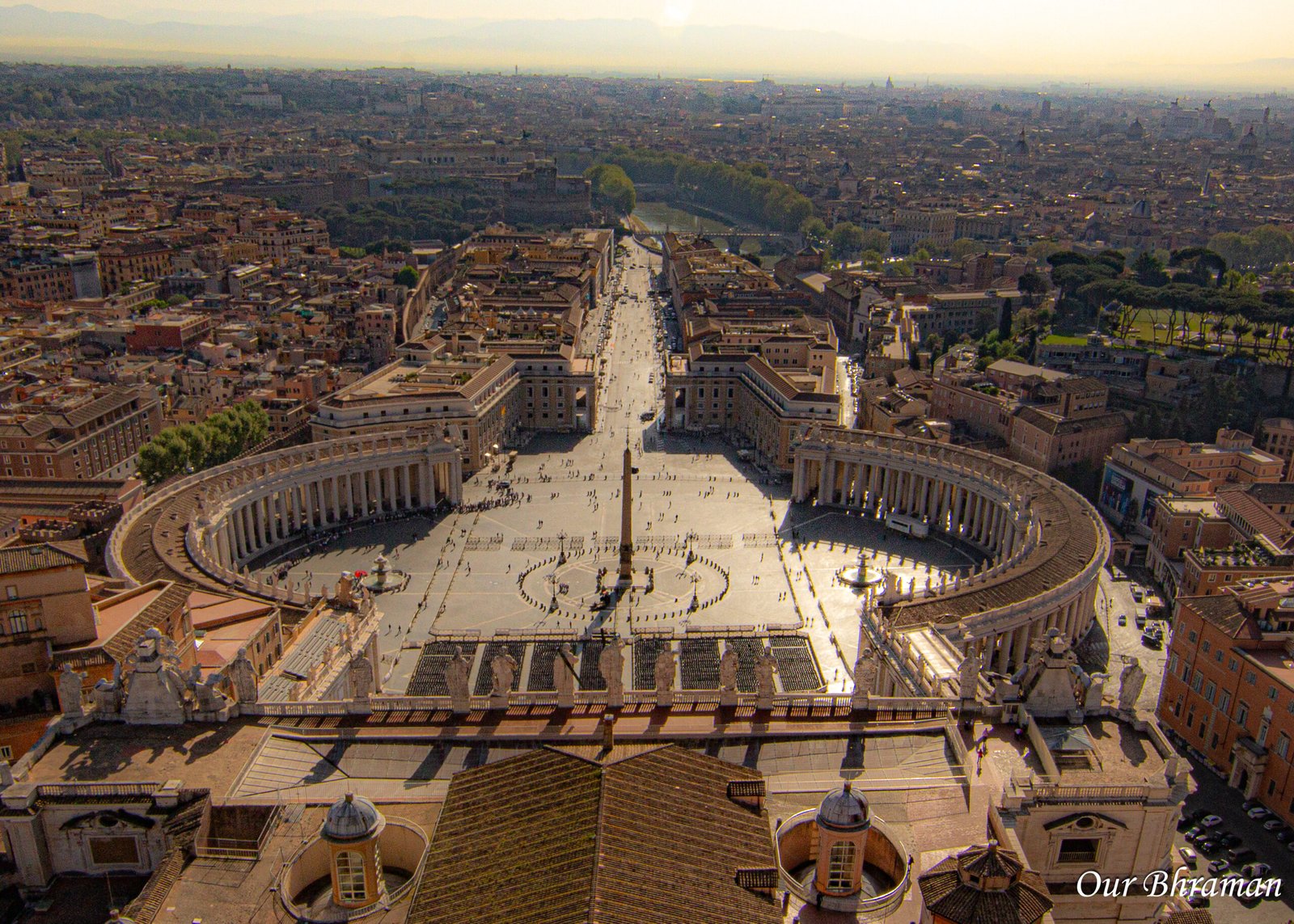 Standing high above the city gave us a completely different perspective of Rome. The streets and buildings that had seemed so large from the ground suddenly looked small, while the dome and surrounding architecture reminded us just how enormous St. Peter’s Basilica really is.
The dome reaches approximately 136.6 meters (448 feet) from the basilica floor to the top of the cross, making it one of the most recognizable architectural landmarks in Rome.
We spent some time at the top simply enjoying the view, taking photographs, and catching our breath before beginning the descent.
Why We Recommend Going Early
For us, starting the Vatican visit with the dome was the perfect choice. We beat the crowds, got our morning workout out of the way, experienced the incredible architecture up close, and started the day with one of the best views in Rome.
The Dome is currently open from 7:00 AM to 6:00 PM during the summer season (March 29–October 25, 2026) and 7:30 AM to 5:00 PM during the winter season. Opening hours can change because of religious celebrations or other circumstances, so it is worth checking the official schedule before your visit.
Our tip: If climbing the Dome is on your list, book ahead and choose an early time slot. It gives you a better chance of enjoying the climb and views before the crowds become heavier, while also leaving the rest of your day free to explore St. Peter’s Basilica, St. Peter’s Square, the Vatican Museums, and the Sistine Chapel.
After spending a couple of hours climbing and exploring St. Peter’s Dome, we made our way back down and decided it was time to explore the interior of St. Peter’s Basilica. We had first arrived early in the morning when the area was relatively quiet, but by around 10 AM, the atmosphere had changed completely. The basilica was much busier, with tour groups arriving from different countries and visitors filling the vast interior. Even with the crowds, stepping inside was awe-inspiring—the sheer scale of the space, combined with centuries of art and architecture, made us stop and take it all in.
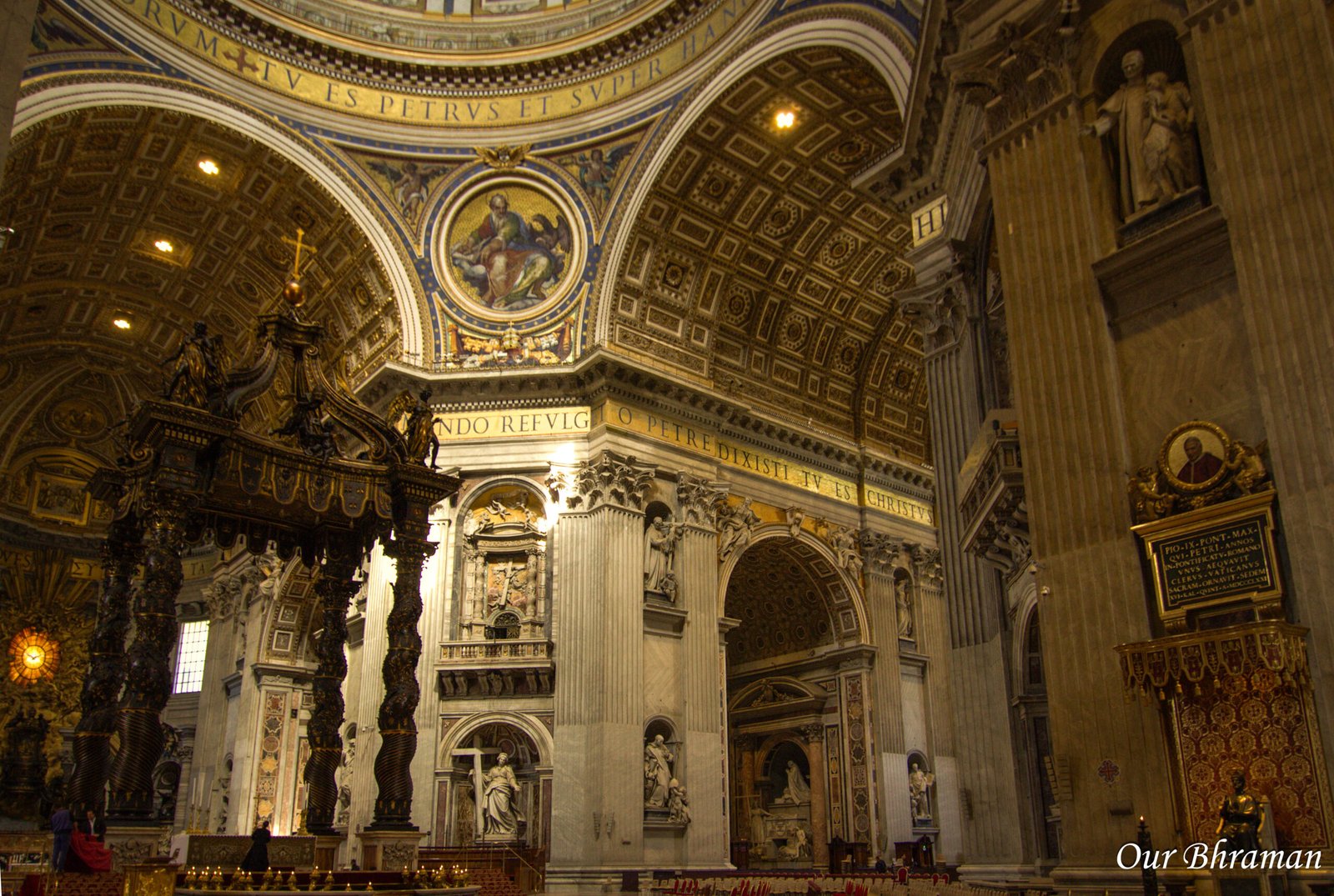 St. Peter’s Basilica is considered one of the largest churches in the world and is a masterpiece shaped by some of history’s greatest architects and artists, including Michelangelo, Gian Lorenzo Bernini, and Donato Bramante. As we walked through the basilica, we focused on a few highlights that stood out to us.
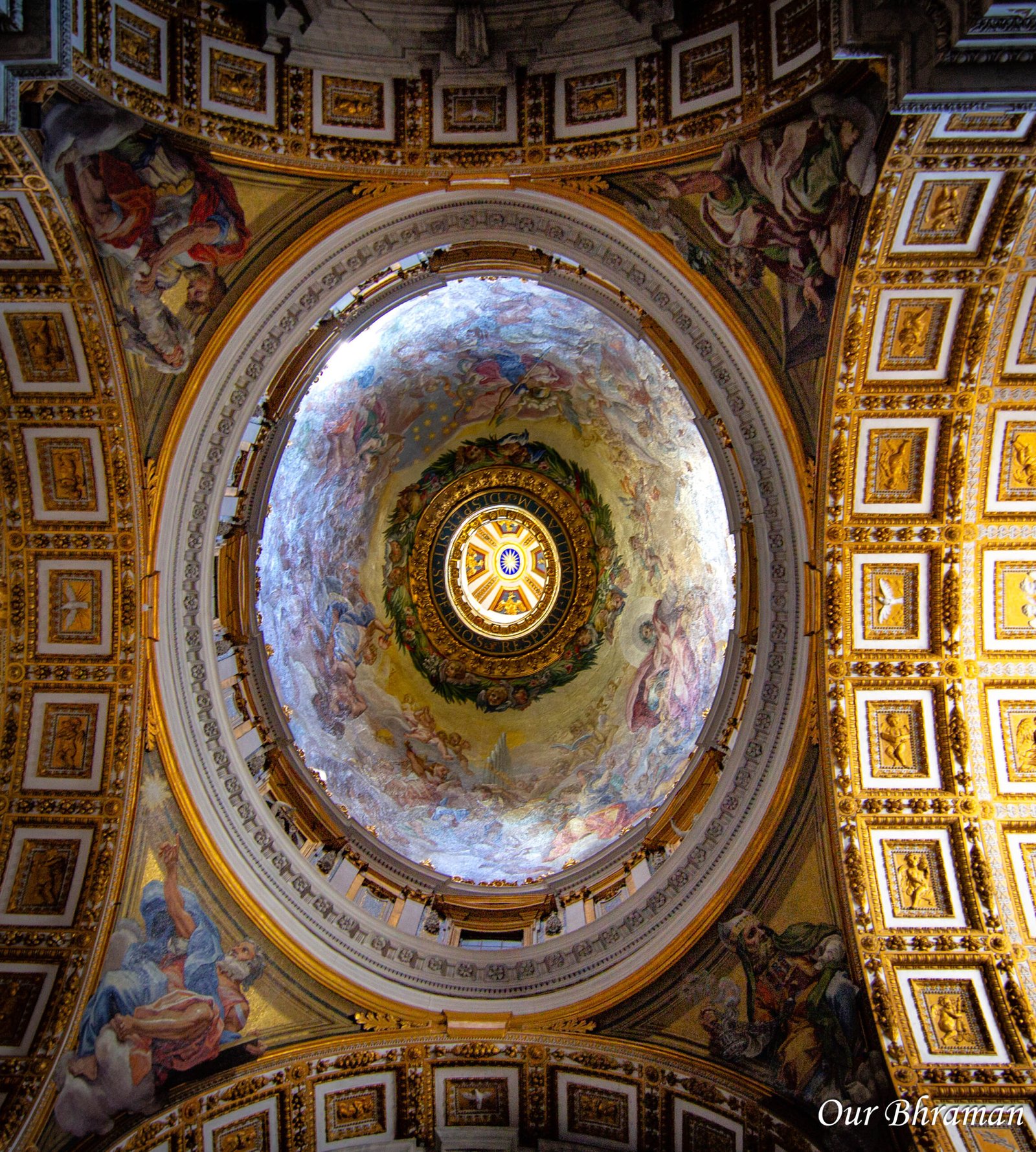
The Dome: Having just climbed to the top, seeing the dome from inside gave us an entirely different perspective. Michelangelo designed the magnificent dome, drawing inspiration from the Pantheon and Brunelleschi’s dome in Florence. Looking upward from the basilica floor, its enormous scale and intricate golden mosaics were incredible.
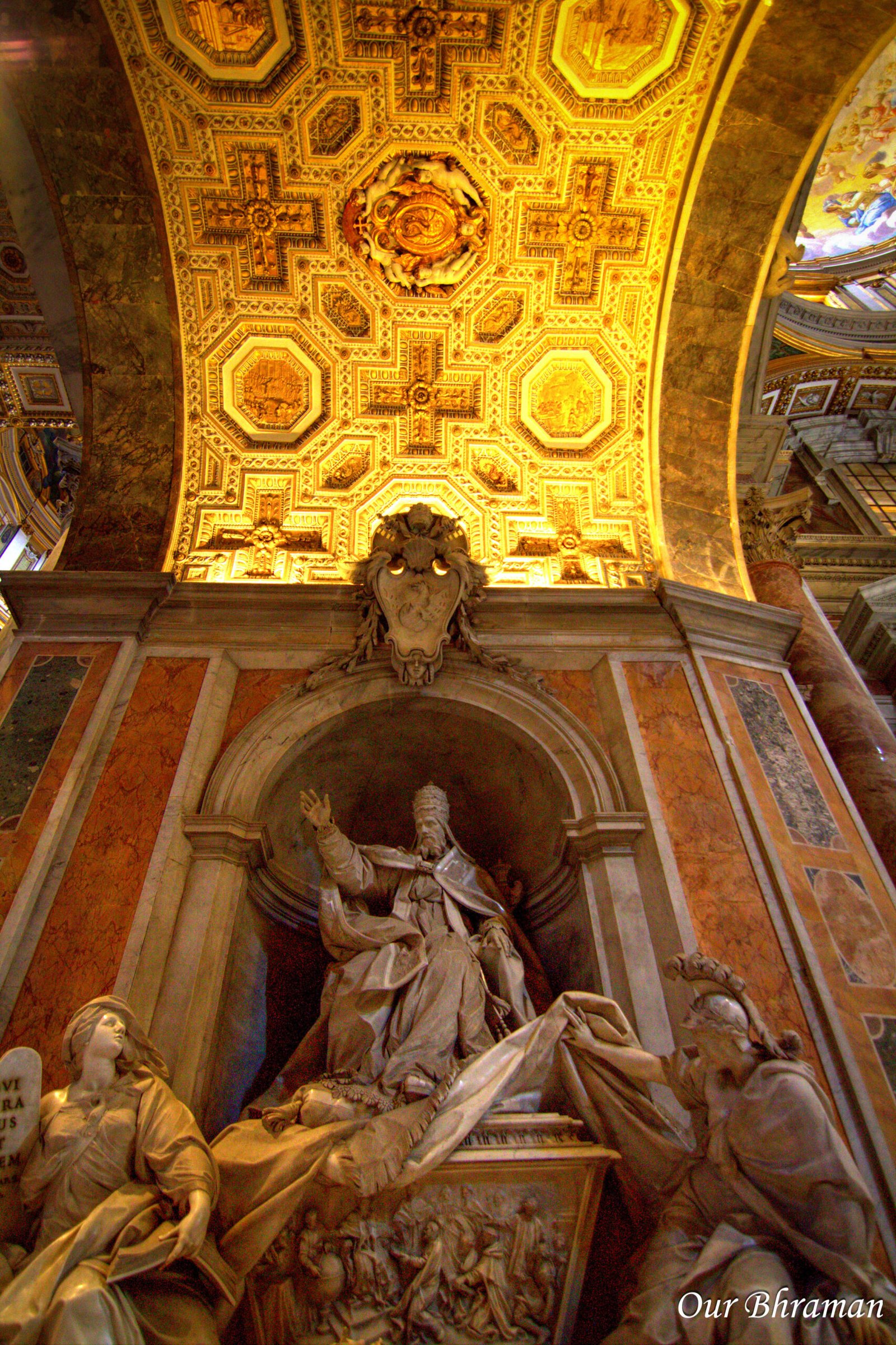 The Papal Altar & Baldacchino: Directly beneath the dome stands the Papal Altar, covered by Bernini’s spectacular Baldacchino. The enormous bronze canopy, decorated with gold accents and supported by four twisted columns, immediately draws your attention. Standing beneath the dome and looking at the Baldacchino gave us a sense of just how monumental the basilica really is.
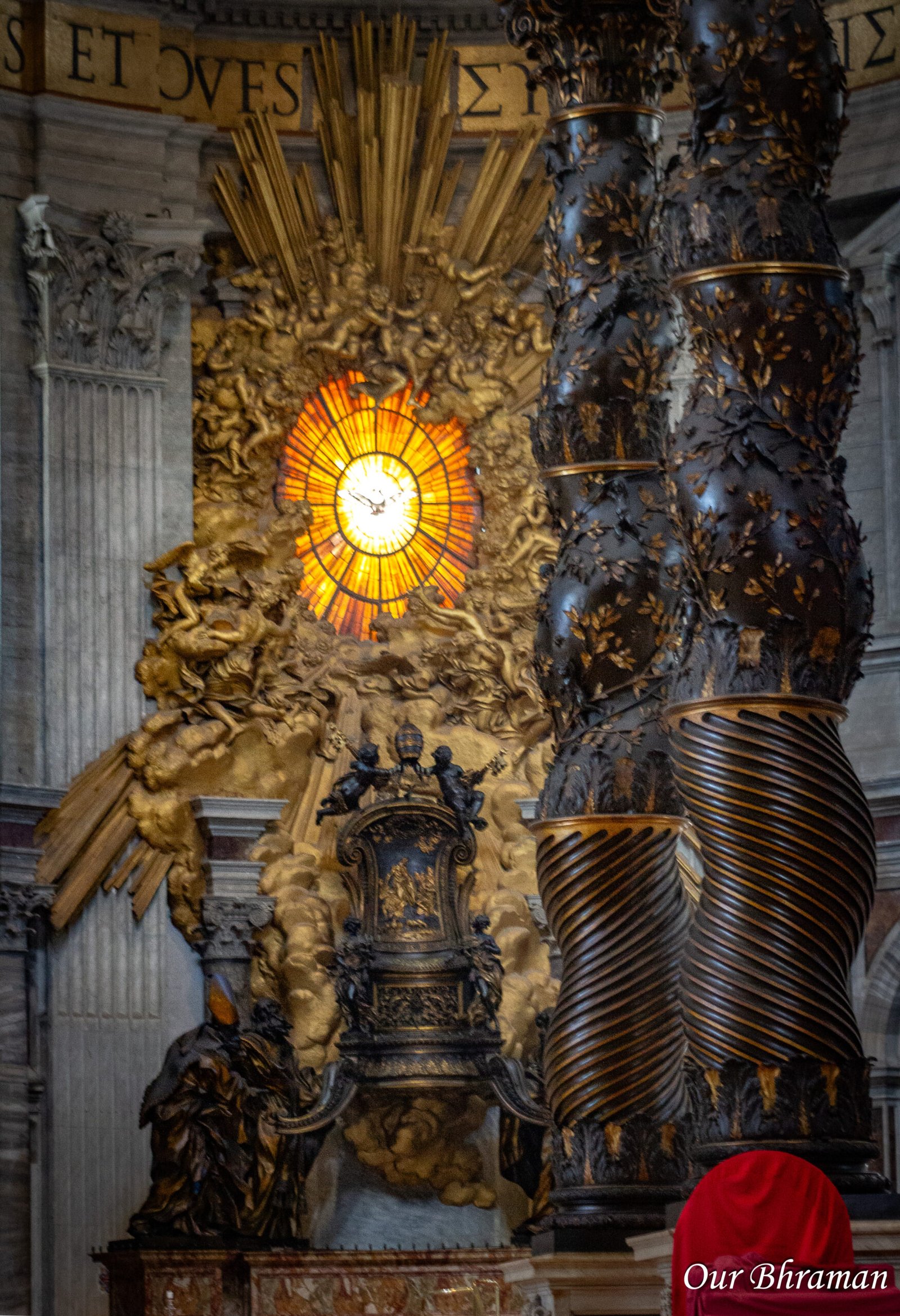 St. Peter’s Chair: We continued toward the Chair of St. Peter, also known as the Throne of Saint Peter. The ancient wooden chair is enclosed within an elaborate bronze composition designed by Bernini. Surrounded by sculpture and light, it was another striking example of how art and religious symbolism come together throughout the basilica.
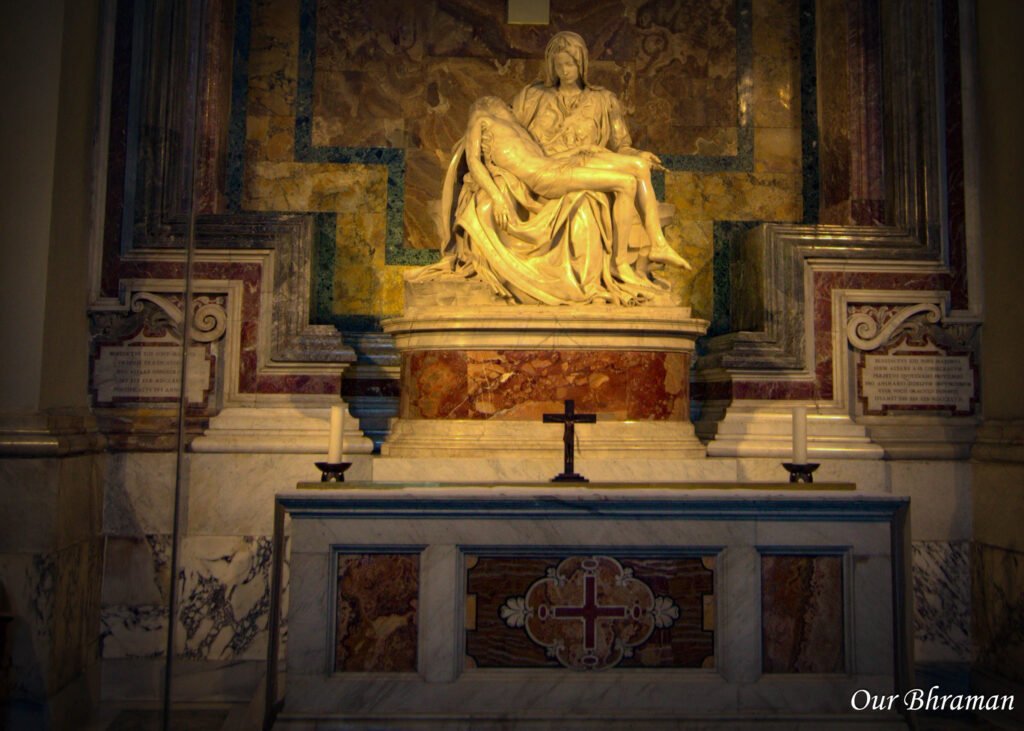
Michelangelo’s Pietà: One of the moments we were most looking forward to was seeing Michelangelo’s Pietà. Michelangelo was only 23 when he created this extraordinary sculpture of Mary holding the body of Jesus. Seeing the marble work in person allowed us to appreciate details that photographs simply cannot capture. The sculpture is also famous for being the only work Michelangelo ever signed, with his name carved across Mary’s sash.
 Treasury Museum: We also visited the Treasury Museum, located within the basilica. It contains religious artifacts and objects collected throughout the centuries, offering another perspective on the long history of St. Peter’s and the Catholic Church. There is a separate admission fee, and photography is restricted. For us, it was an interesting addition, particularly because of the historical artifacts and the plaster cast of Michelangelo’s Pietà, although we would consider it more worthwhile for visitors with a particular interest in the basilica’s history.
By the time we finished exploring the basilica, we had spent several hours surrounded by an incredible combination of architecture, sculpture, art, and religious history. What started as an early-morning climb to the top of the dome had turned into a much deeper exploration of one of Rome’s most remarkable landmarks.
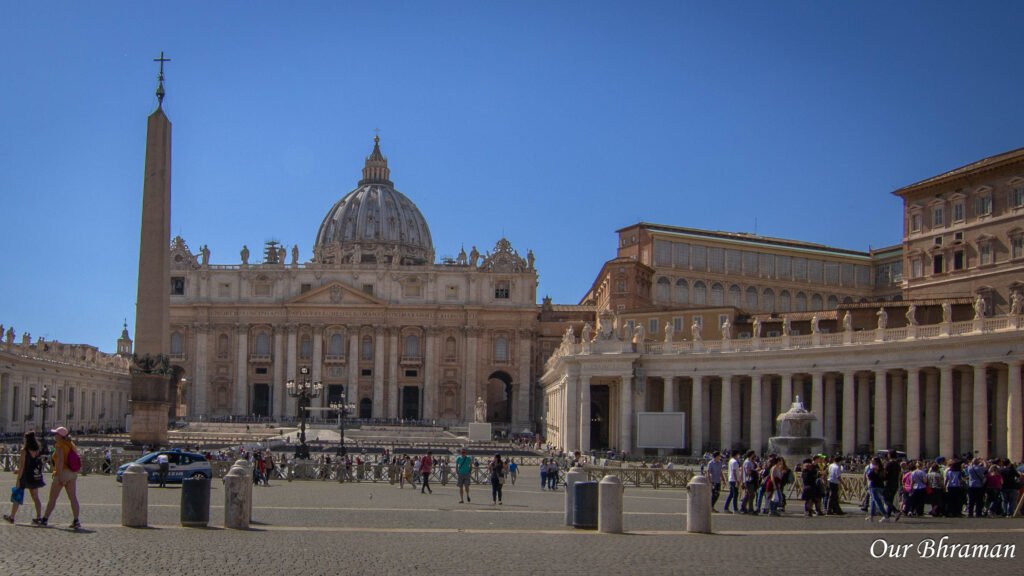
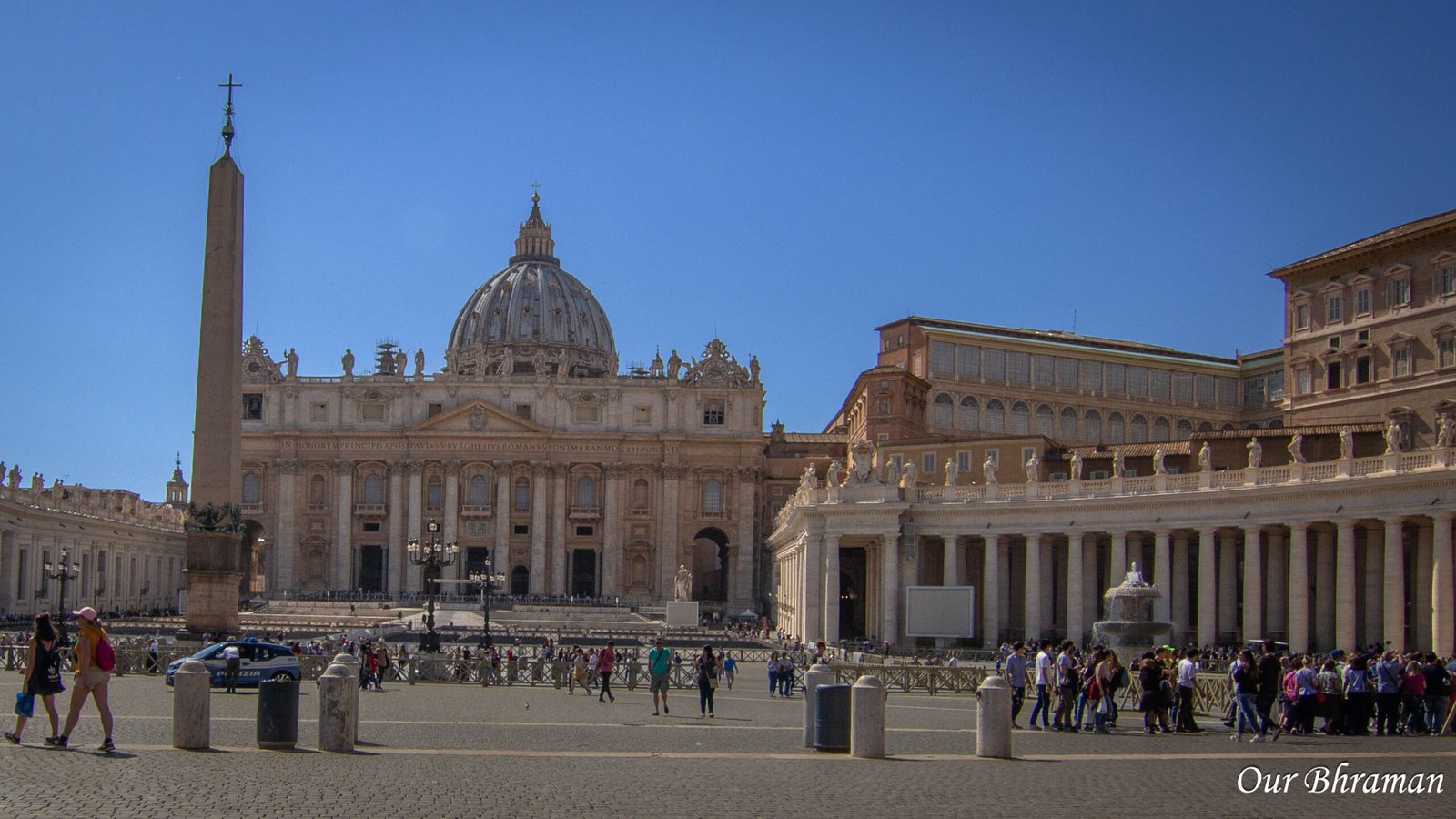
After exploring St. Peter’s Basilica, we stepped outside into the magnificent St. Peter’s Square, one of the most recognizable public spaces in Rome. The square’s distinctive elliptical design and sweeping colonnades were created by Gian Lorenzo Bernini between 1656 and 1667. The colonnades feature 284 columns and 88 pilasters, arranged in four rows, creating the impression of arms embracing visitors as they approach the basilica.
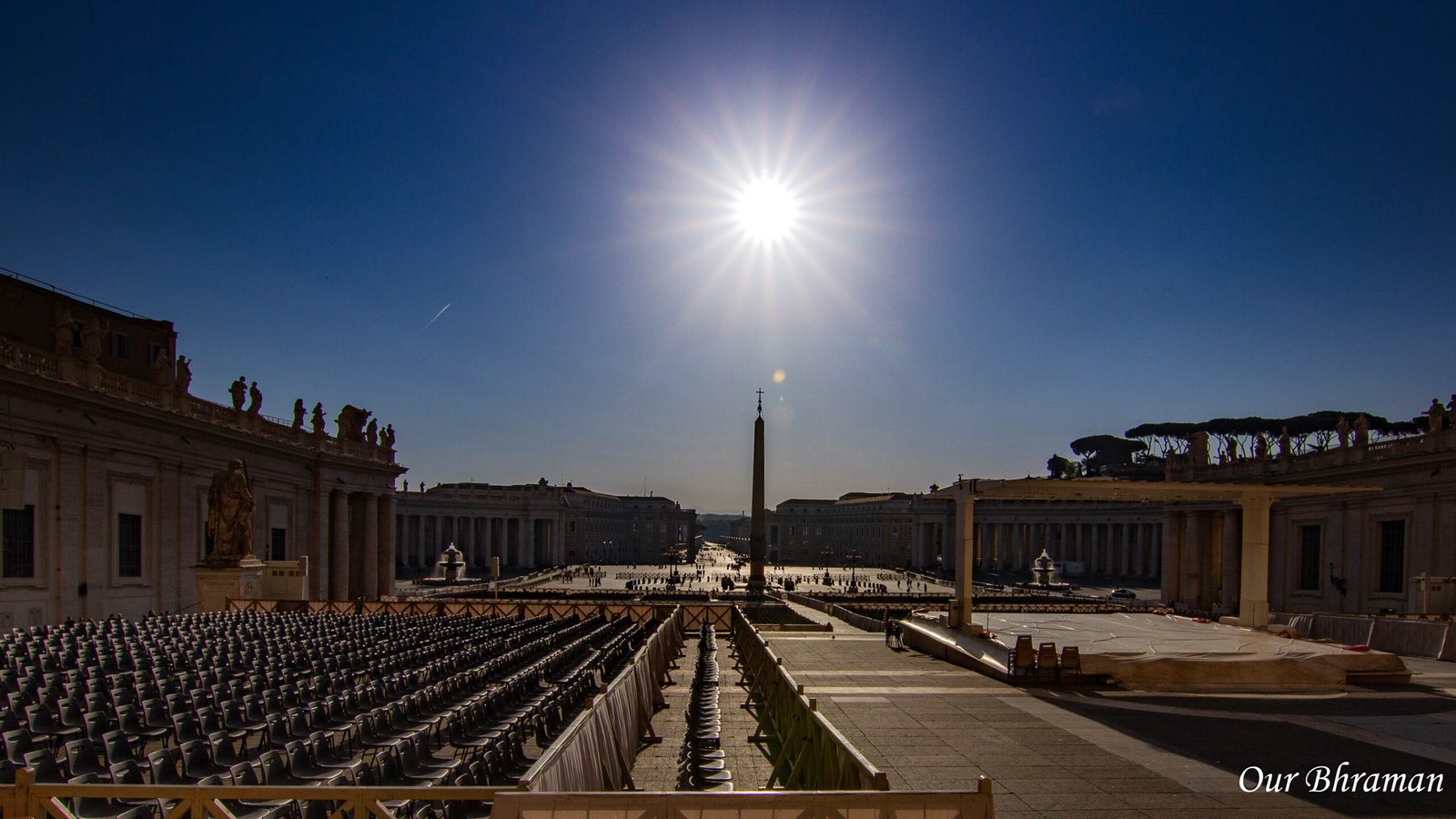 At the center stands the ancient Vatican Obelisk, a massive red-granite Egyptian obelisk that was brought to Rome during the Roman period and moved to its present location in 1586. Two elegant fountains flank the obelisk, adding balance and symmetry to the enormous square. The original fountain was redesigned by Carlo Maderno in 1614, while Bernini later created the matching fountain on the opposite side.
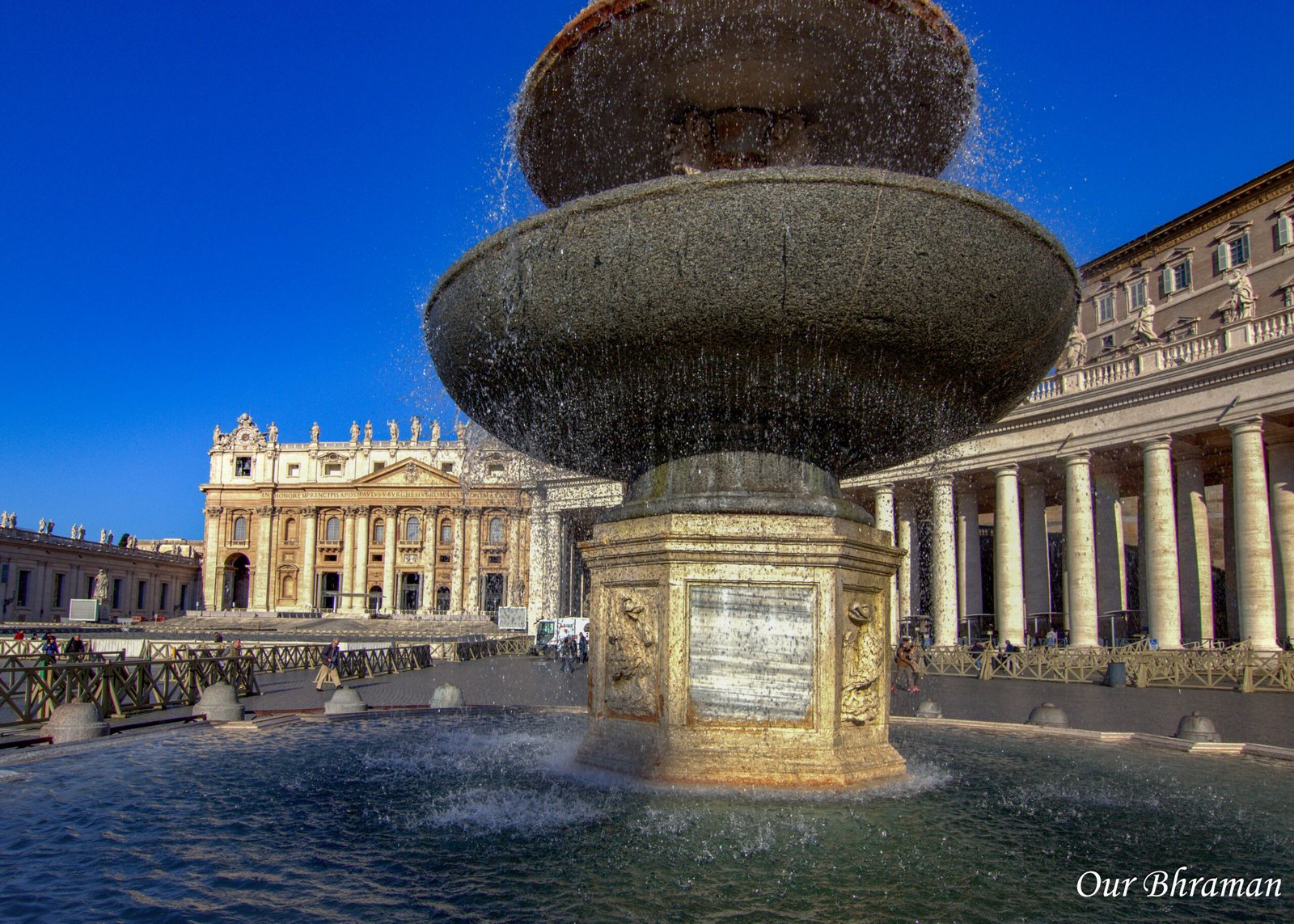 After spending the morning climbing the dome and exploring the basilica, we took some time to simply walk around the square, admire the architecture, and take in the atmosphere. Standing beneath the vast colonnades with St. Peter’s Basilica rising behind us made us appreciate how beautifully history, art, and architecture come together in this extraordinary space.
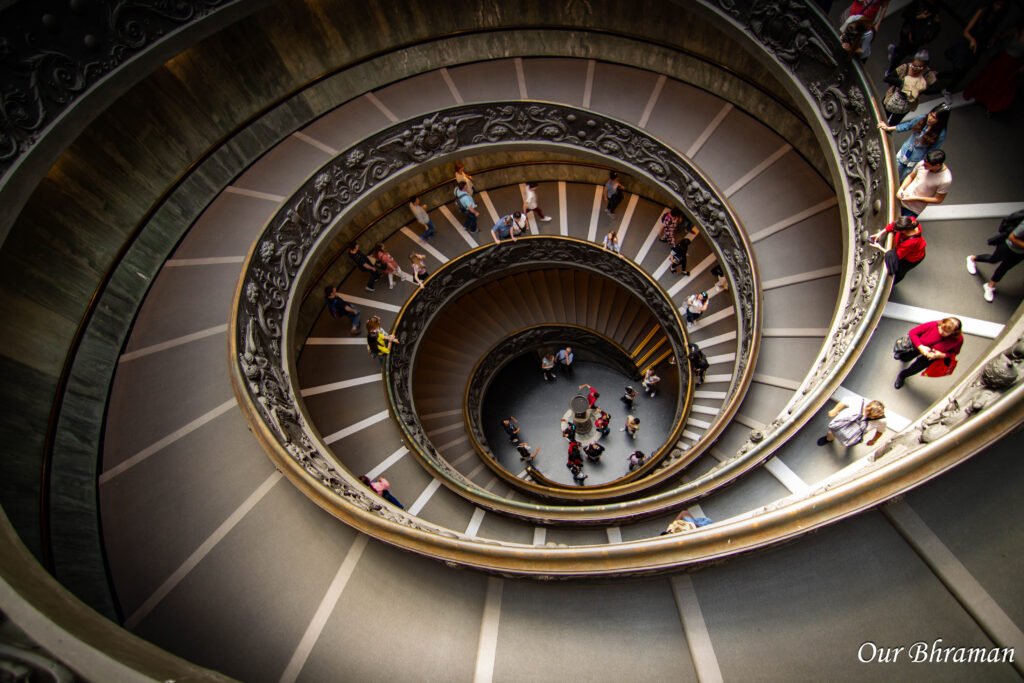
After exploring St. Peter’s Square, we walked about 15 minutes to the Vatican Museums. It was an easy walk and a nice transition from the grand square to the incredible collection of art and history inside the museums. Walking into the Vatican Museums feels like stepping into a living timeline of art and history.
We explored the Vatican Museums on our own using an audio guide, which gave us the freedom to move at our own pace while learning about the artwork and history along the way. The museum felt almost like walking through a giant IKEA—you move from one room or gallery to another, and each space has its own identity, style, and collection. With thousands of works spread across countless rooms, it would be impossible to see everything in one visit.
We quickly learned that pacing ourselves was important. At first, every sculpture, painting, ceiling, and hallway felt exciting, but after walking through several galleries, the sheer amount of artwork could become overwhelming. Rather than trying to see everything, we focused on the major highlights and allowed ourselves time to appreciate each section.
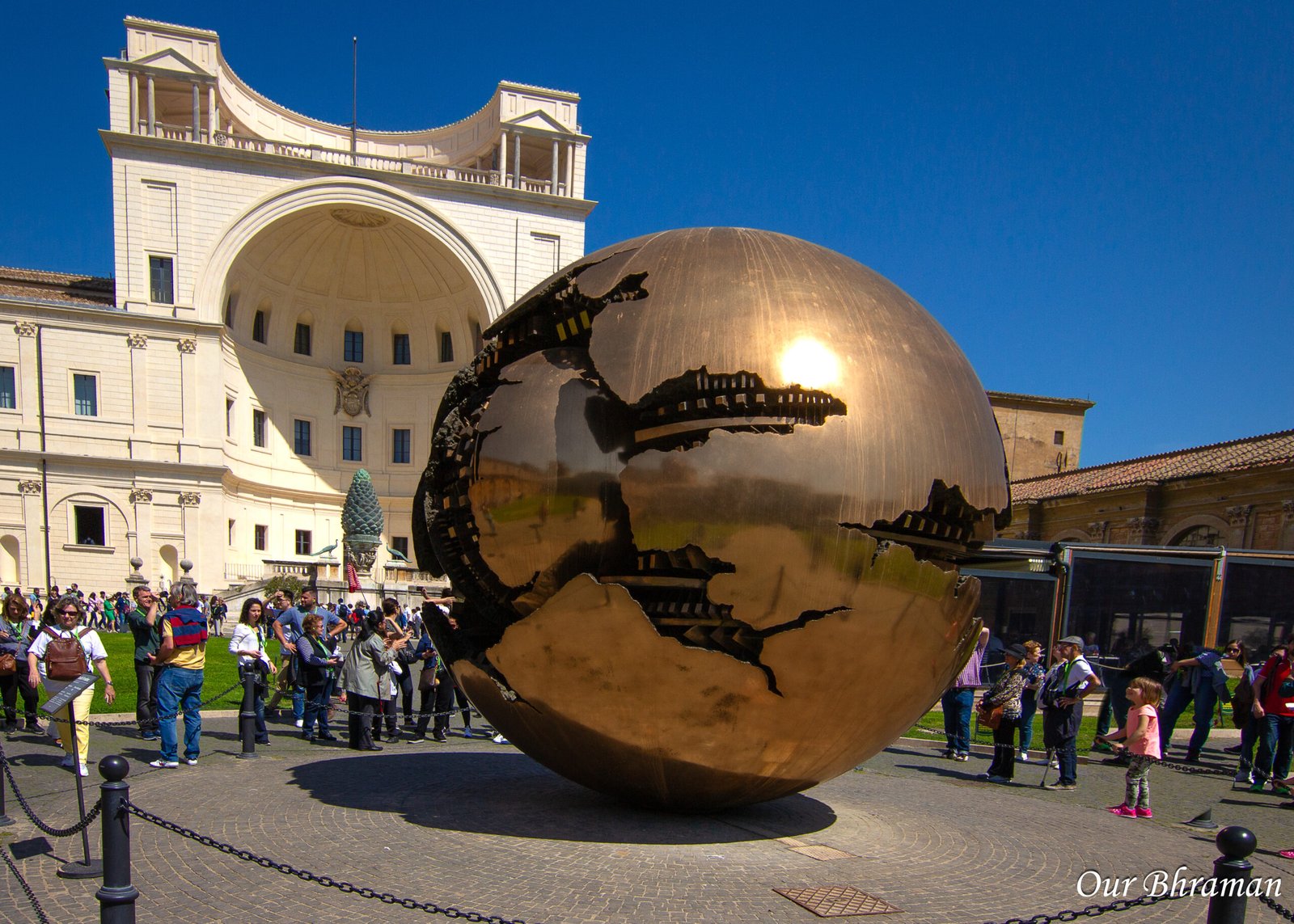 Near the top of the escalator, we entered the Pinecone Courtyard, an open space with several interesting features. The courtyard gets its name from the enormous bronze pinecone displayed there, while another major attraction is Sphere Within a Sphere, the striking modern sculpture by Italian artist Arnaldo Pomodoro. From the courtyard, we could also catch a beautiful view of the dome of St. Peter’s Basilica in the distance. It was a nice open-air break before continuing deeper into the museums.
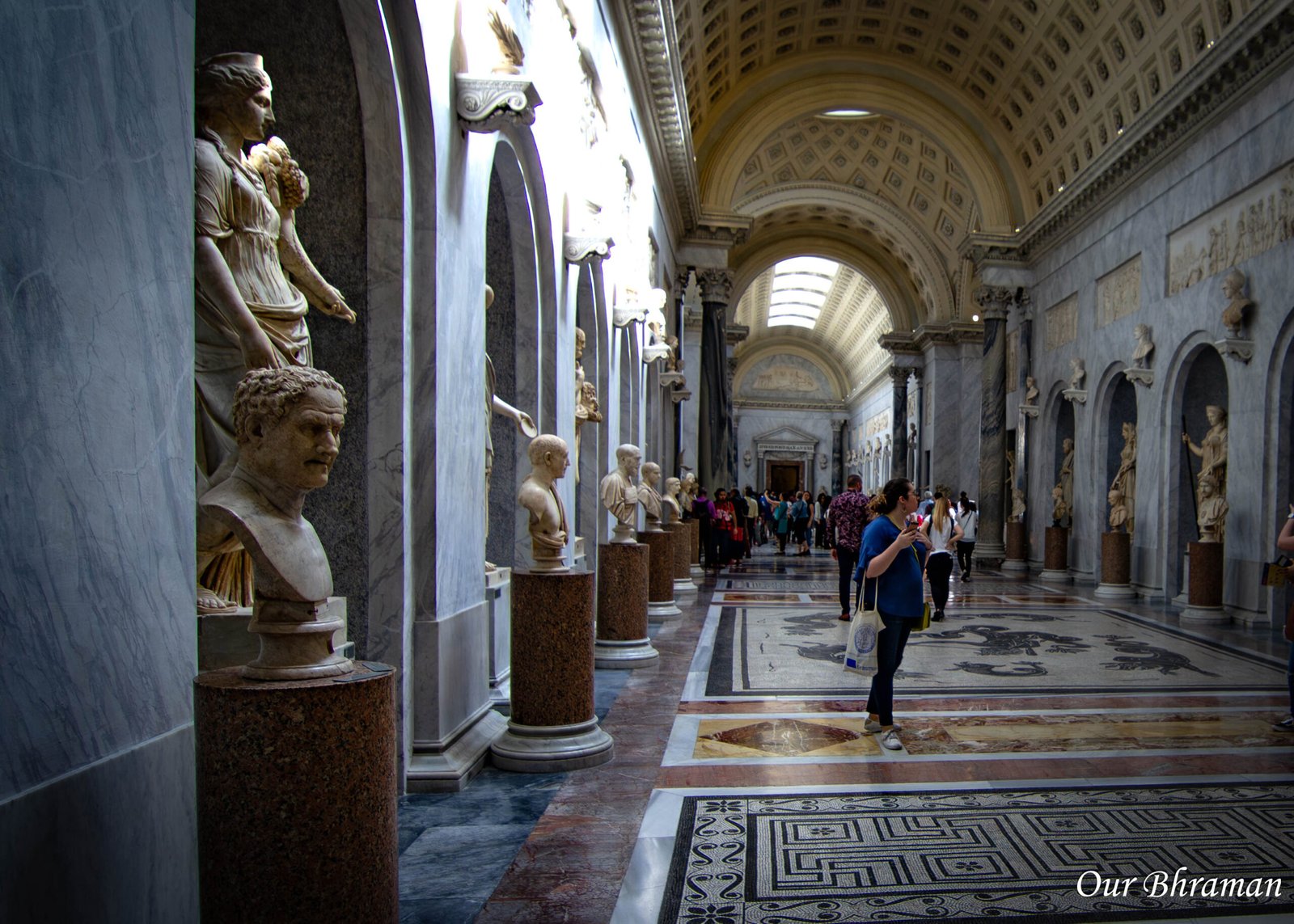
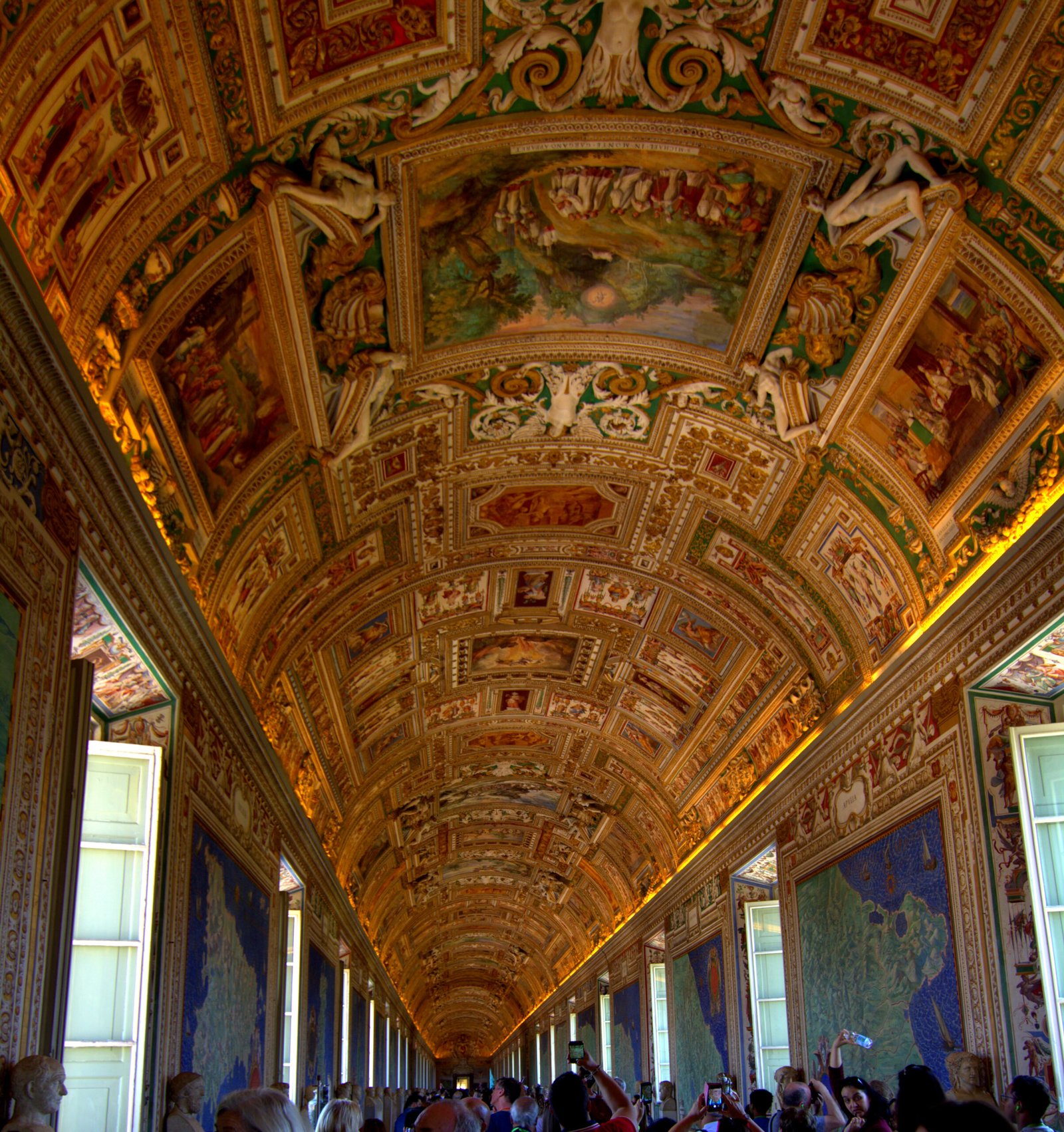 We then walked through the Gallery of Maps, one of the most impressive corridors in the museums. Its walls are covered with huge painted maps of Italy created in the late 16th century, while the richly decorated ceiling adds even more detail. It was fascinating to walk through and compare these historic maps with the Italy we had just been exploring.
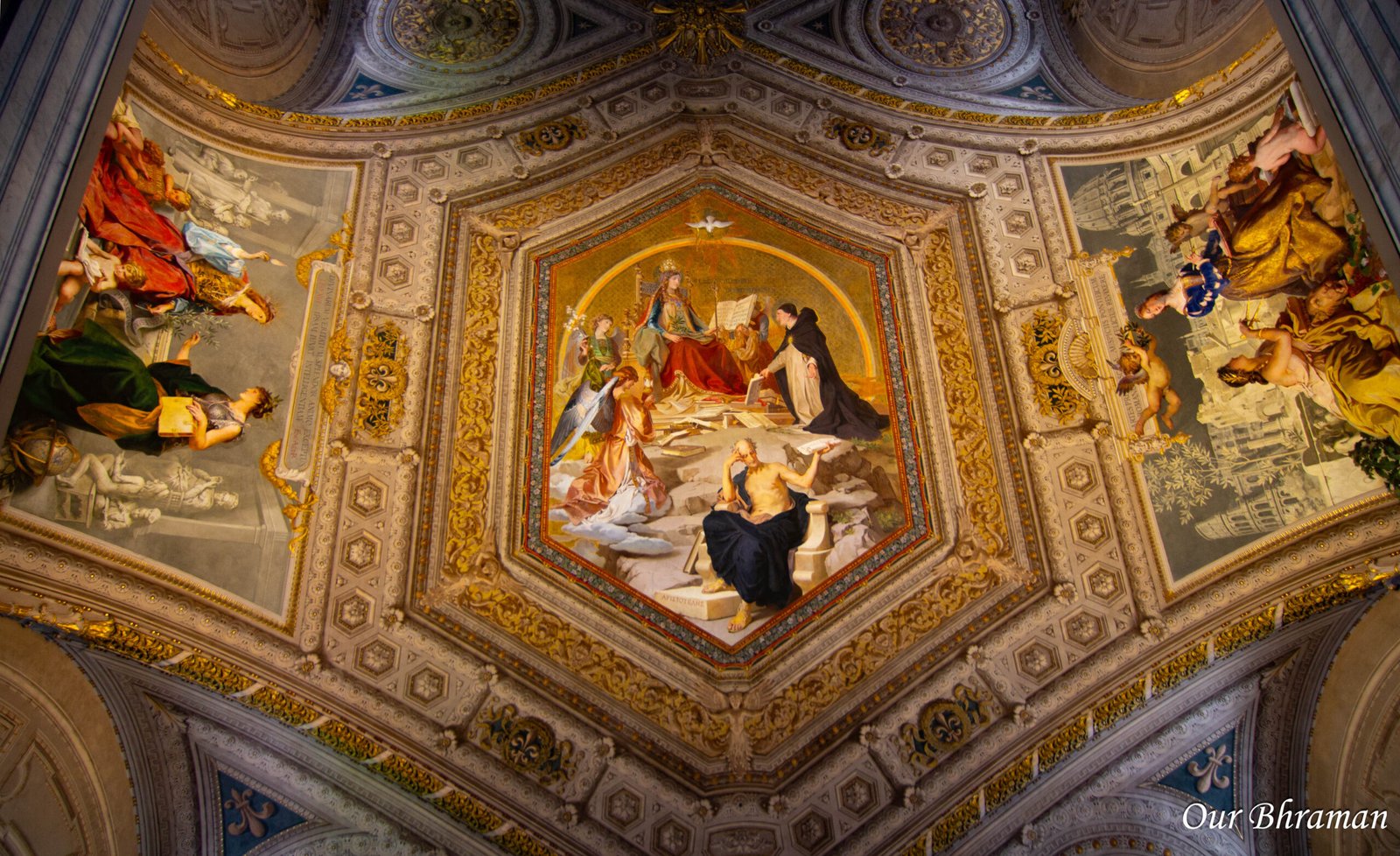
 From there, we continued through the Gallery of Tapestries, where enormous and beautifully detailed tapestries covered the walls. We also passed through the Gallery of the Candelabra, filled with ancient sculptures and decorative artwork.
  And then to Sala della Biga in the Vatican Museums, a neoclassical gallery showcasing ancient Roman sculptures, including a striking marble group depicting athletic competitions and circus games.
 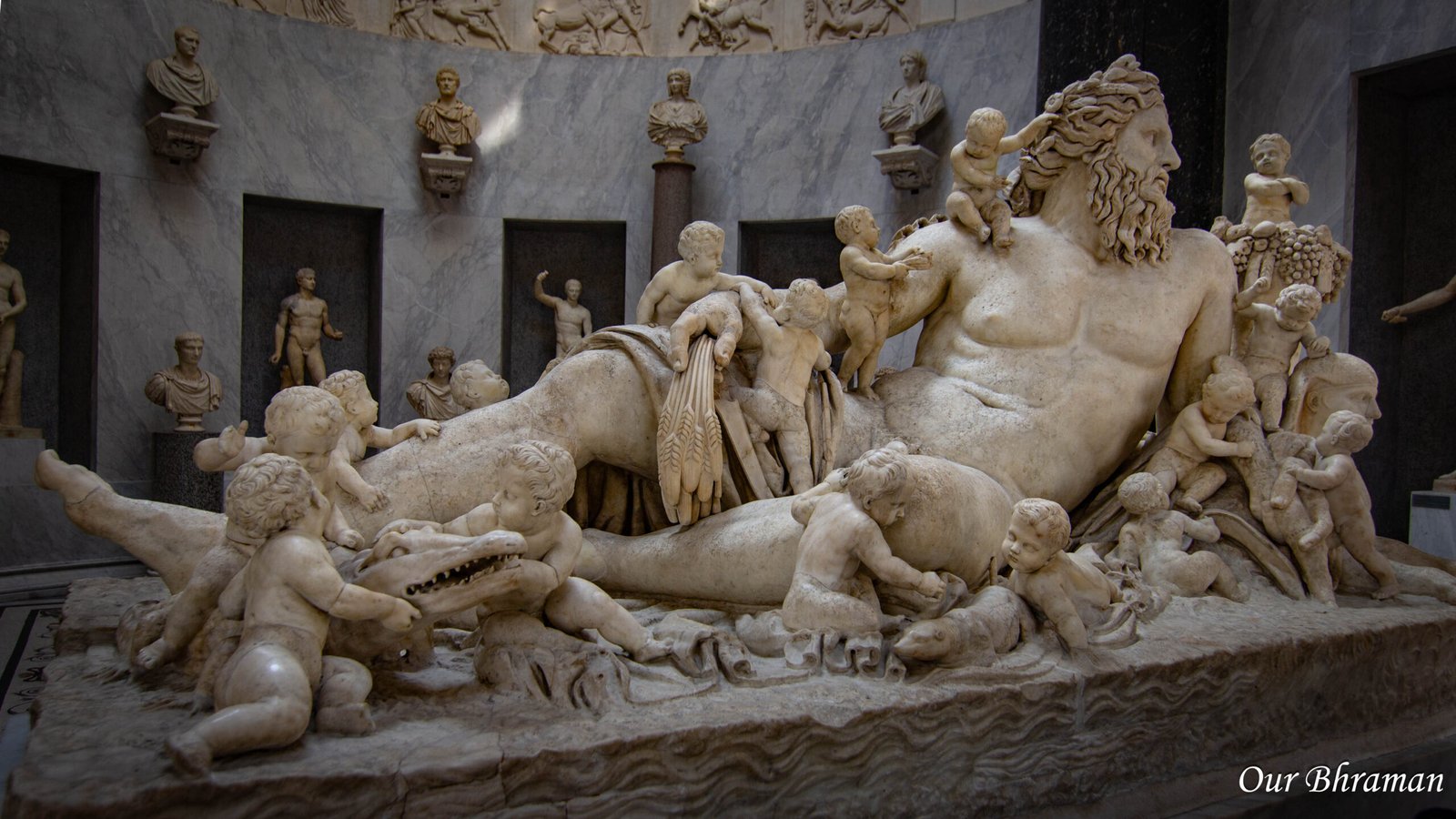 We then came across the Marble Statue of the Nile River in Room I of the Braccio Nuovo (New Wing), a Roman copy of a Hellenistic original depicting the reclining river god surrounded by playful children, symbolizing the Nile’s life-giving floods.
 Our journey eventually took us to the Raphael Rooms, where we came face-to-face with some of Raphael’s greatest masterpieces, including the famous School of Athens. We also encountered famous ancient sculptures such as the Laocoön and Apollo Belvedere, reminders of the Greek and Roman artistic traditions that influenced Renaissance artists.
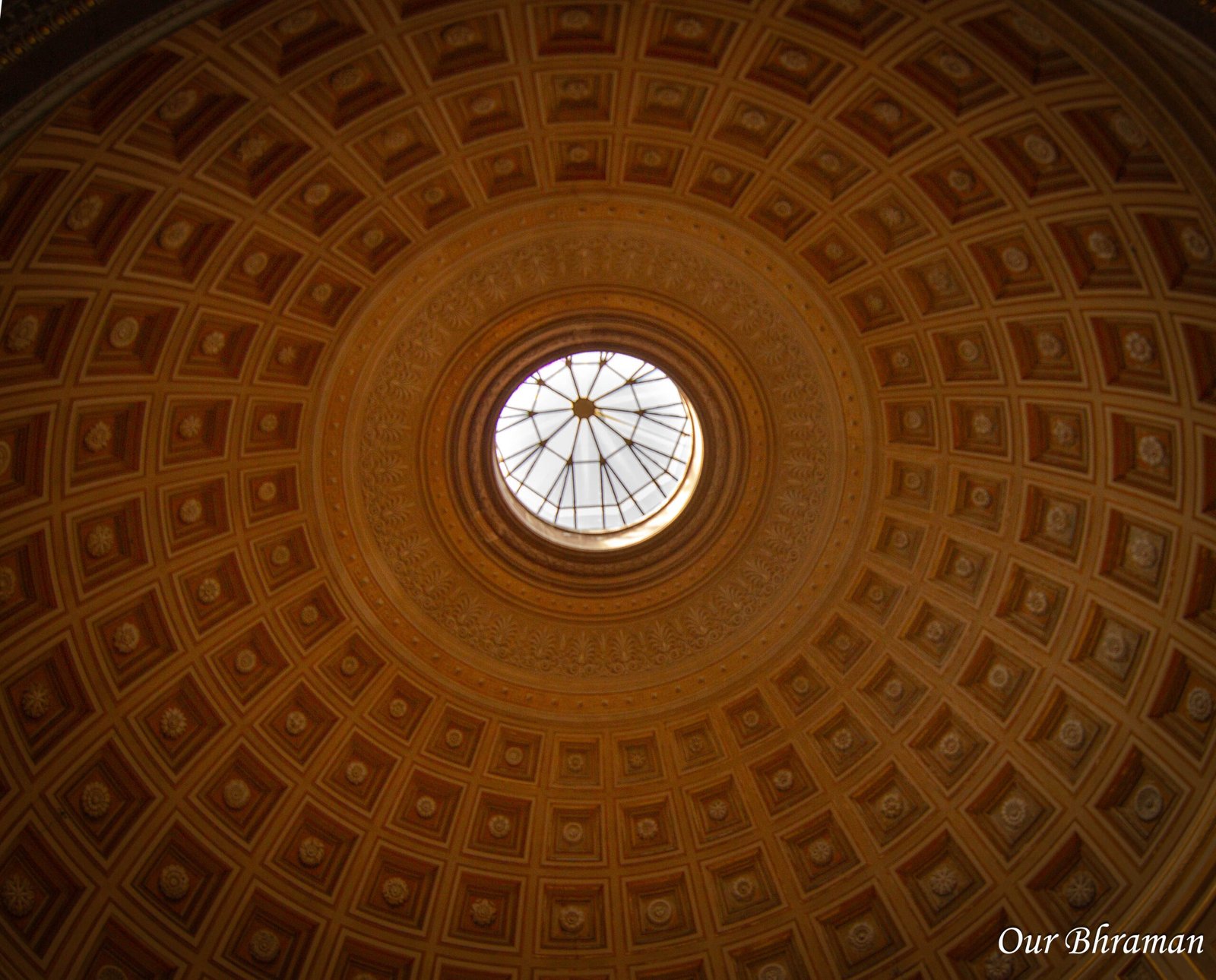
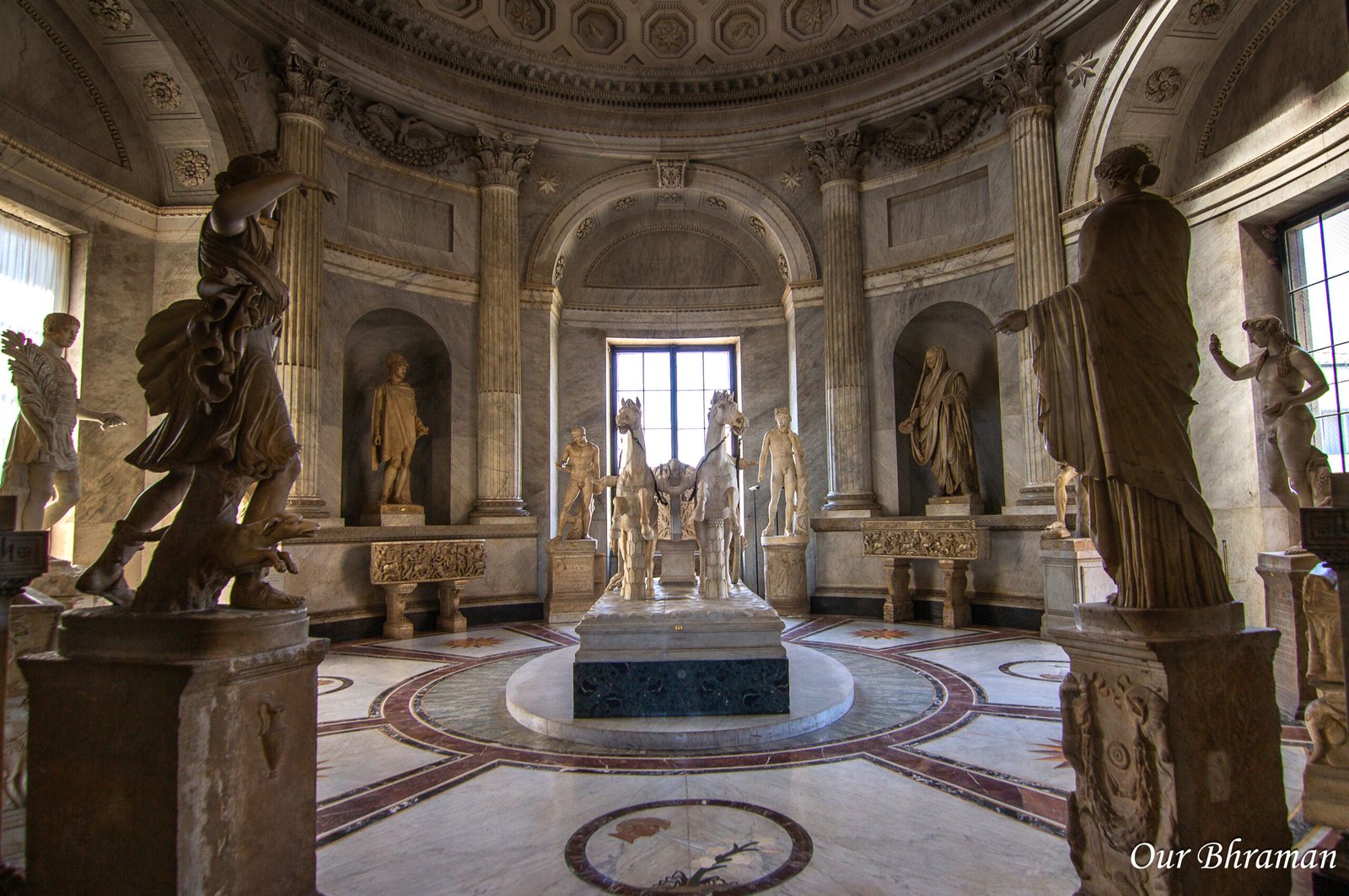
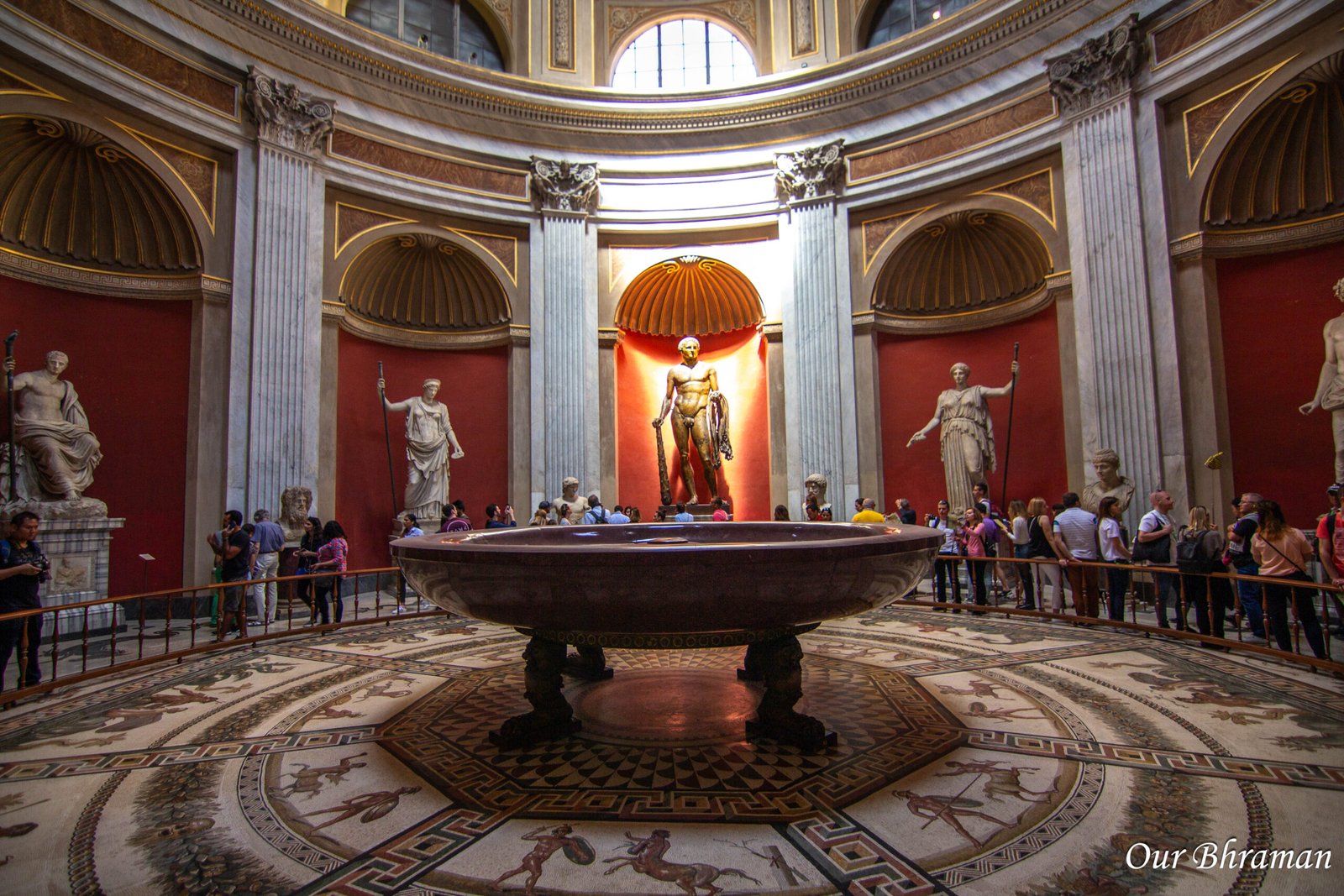
As we stepped into the Sala Rotonda in the Museo Pio-Clementino, it immediately felt like we had entered a miniature version of the Pantheon. The grand, domed hall was breathtaking, with its enormous red porphyry basin at the center, colorful ancient mosaics beneath our feet, and monumental classical sculptures lining the walls. It was one of those rooms where we naturally slowed down, taking a moment to look around and appreciate the sheer scale and beauty of the ancient world.
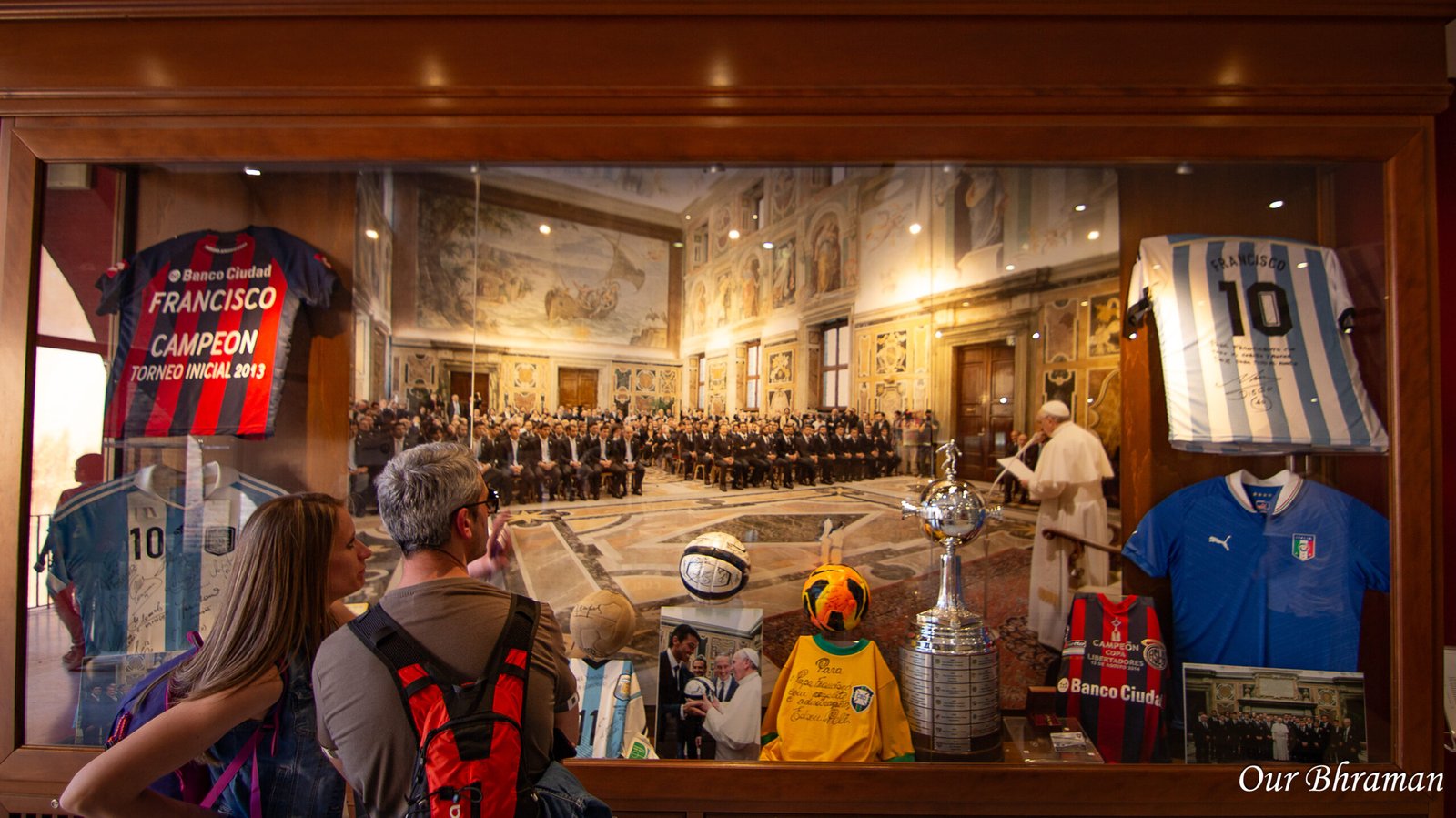
The late Pope Francis, a lifelong soccer enthusiast and devoted supporter of Argentine club San Lorenzo, amassed an impressive collection of soccer memorabilia during his papacy, much of it housed at the Vatican. It was amazing to see this unique display and glimpse a more personal side of the beloved pope.
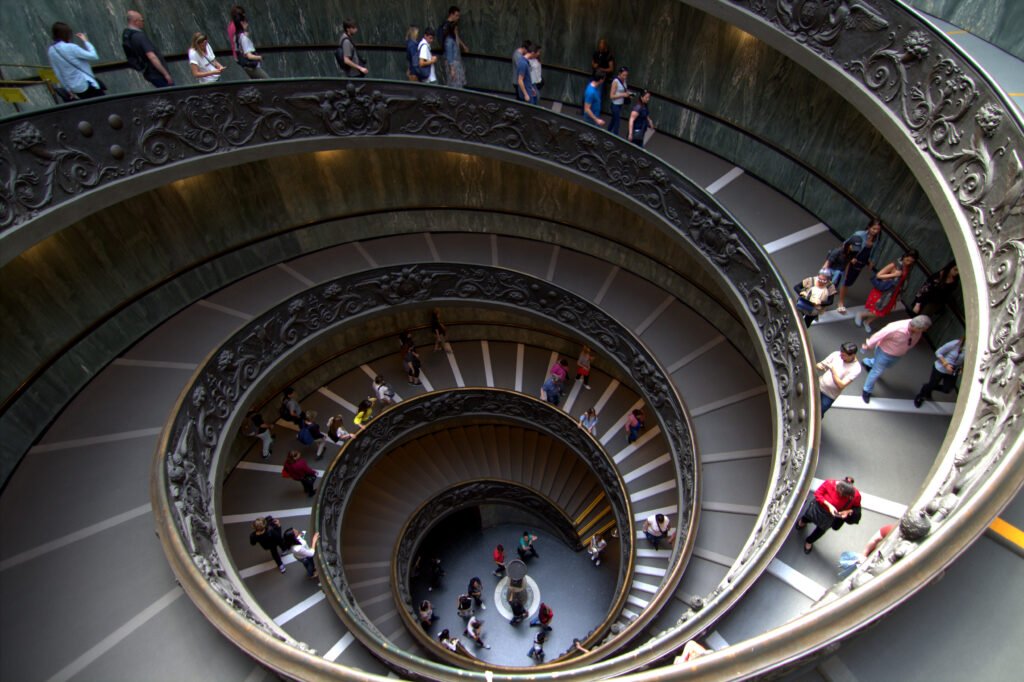
The Vatican Museums are not a place you can casually walk through in an hour. The galleries can be crowded, especially around popular masterpieces and along the route to the Sistine Chapel, with large tour groups moving through the museum throughout the day.
For us, the entire visit took about 3.5 hours, and even then, we had to keep moving rather than stopping at every artwork that caught our attention. If you love art, history, architecture, or photography, you could easily spend much longer here. The key is to accept that you simply cannot see everything—focus on the sections that interest you most and enjoy the experience rather than checking off every masterpiece.
What makes the journey so fascinating is that the artwork is spread throughout the entire museum. We moved through grand halls, courtyards, sculpture galleries, tapestries, frescoes, and beautifully decorated ceilings, with each section offering something new. By the end of the journey, the route naturally leads toward the Sistine Chapel, bringing this incredible Vatican Museums experience to a memorable conclusion.

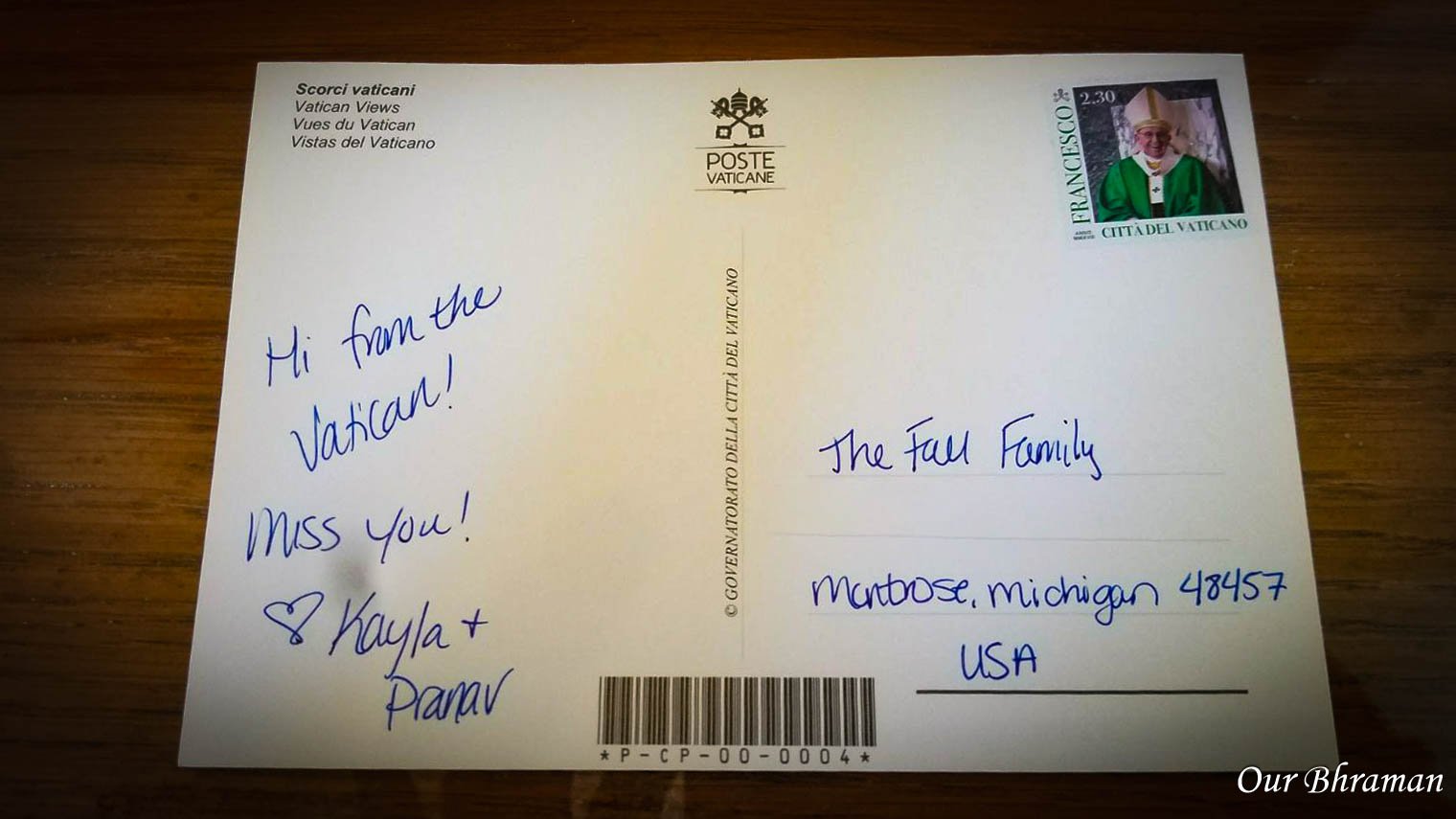
One of the little memories we wanted to bring home from our Vatican visit was more than just a photograph—we decided to send a postcard from Vatican City to our family back home.
We picked out a Vatican postcard, wrote a simple message—“Hi from the Vatican! Miss you!”—and mailed it with a Vatican City stamp. It was such a small gesture, but it made our trip feel even more special. Knowing that a little piece of our Vatican experience was making its way home to our family was a memory we will always cherish.