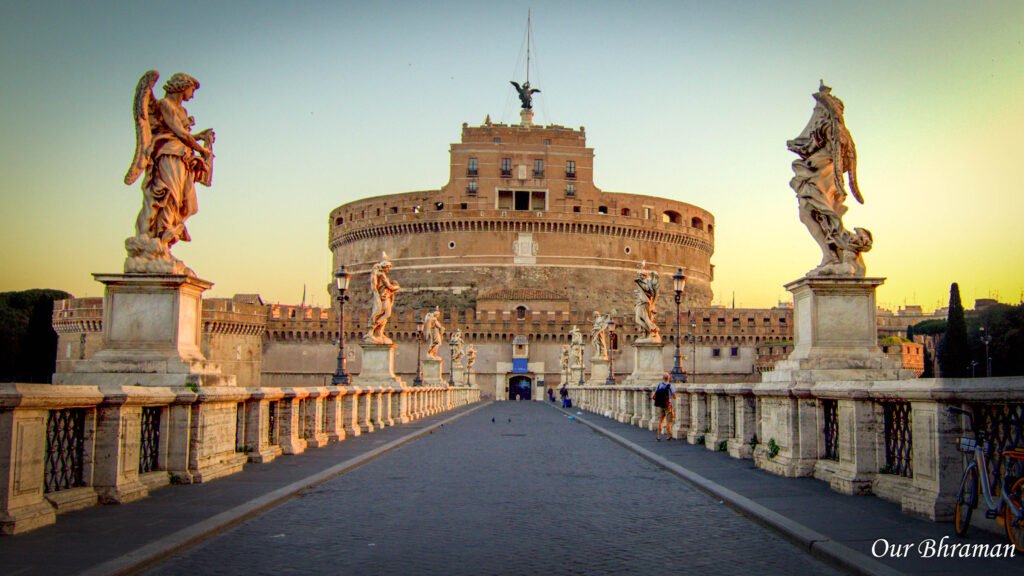
Our Rome adventure began early in the morning from The Wesley Rome Hotel, located near the Tiber River and within walking distance of many of the city’s historic landmarks. Rather than relying on taxis or public transportation, we decided to explore Rome largely on foot.
That turned out to be one of the best decisions of the day. Rome is the kind of city where the journey between attractions can be just as interesting as the attractions themselves. A short walk can take you past a centuries-old church, a monumental government building, a busy piazza, or a Roman ruin.
Our plan for the day was ambitious: Colosseum, Palatine Hill, Roman Forum, Piazza Venezia, the Pantheon, Piazza Navona, Trevi Fountain, and the Spanish Steps. It would become a long day of walking—but also one of our most memorable days in Rome.
Morning: Walking Toward Ancient Rome
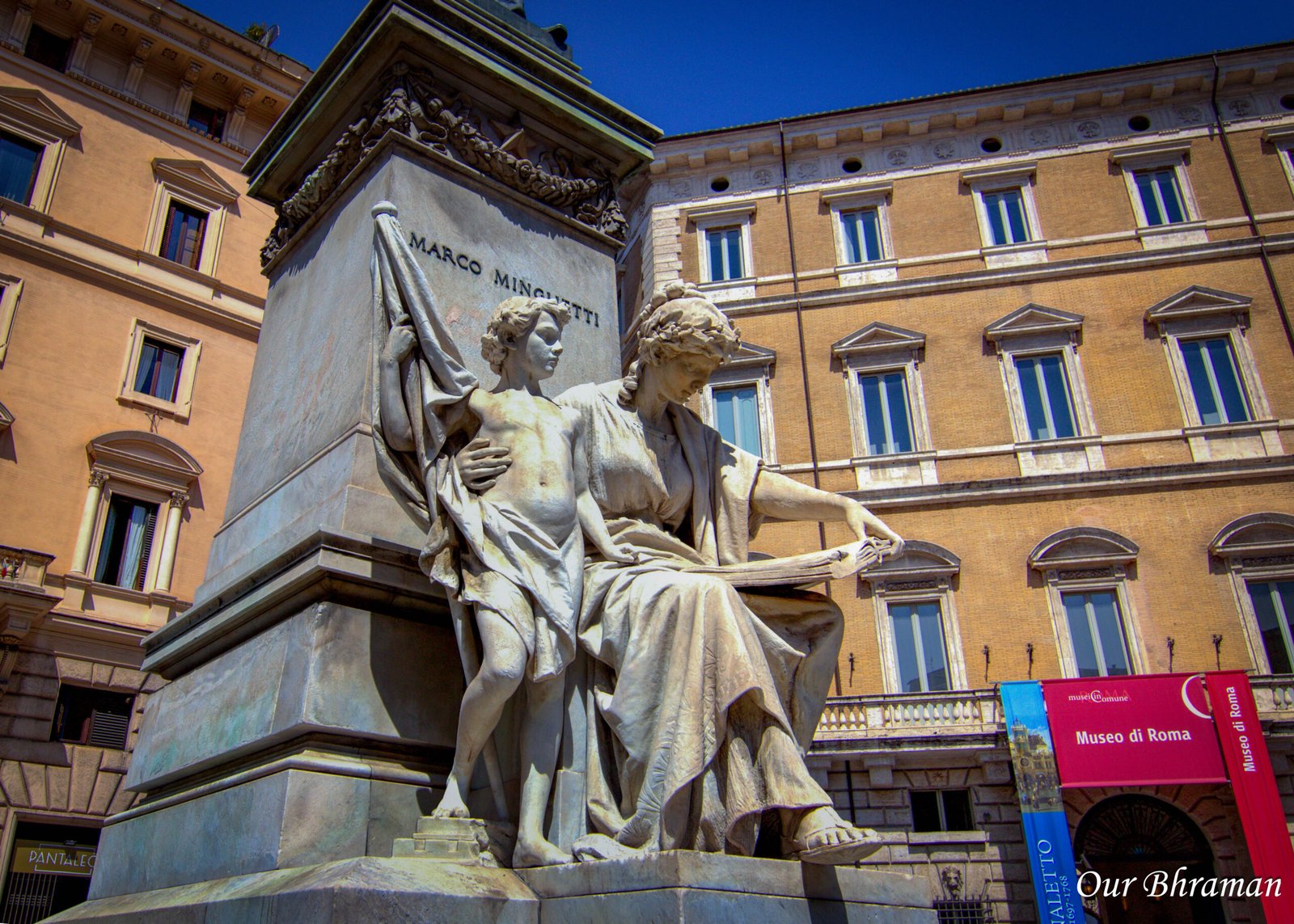 We left the hotel and headed toward Corso Vittorio Emanuele II, one of the major streets crossing central Rome. Our first brief stop was Piazza di San Pantaleo, where we came across the Monument to Marco Minghetti.
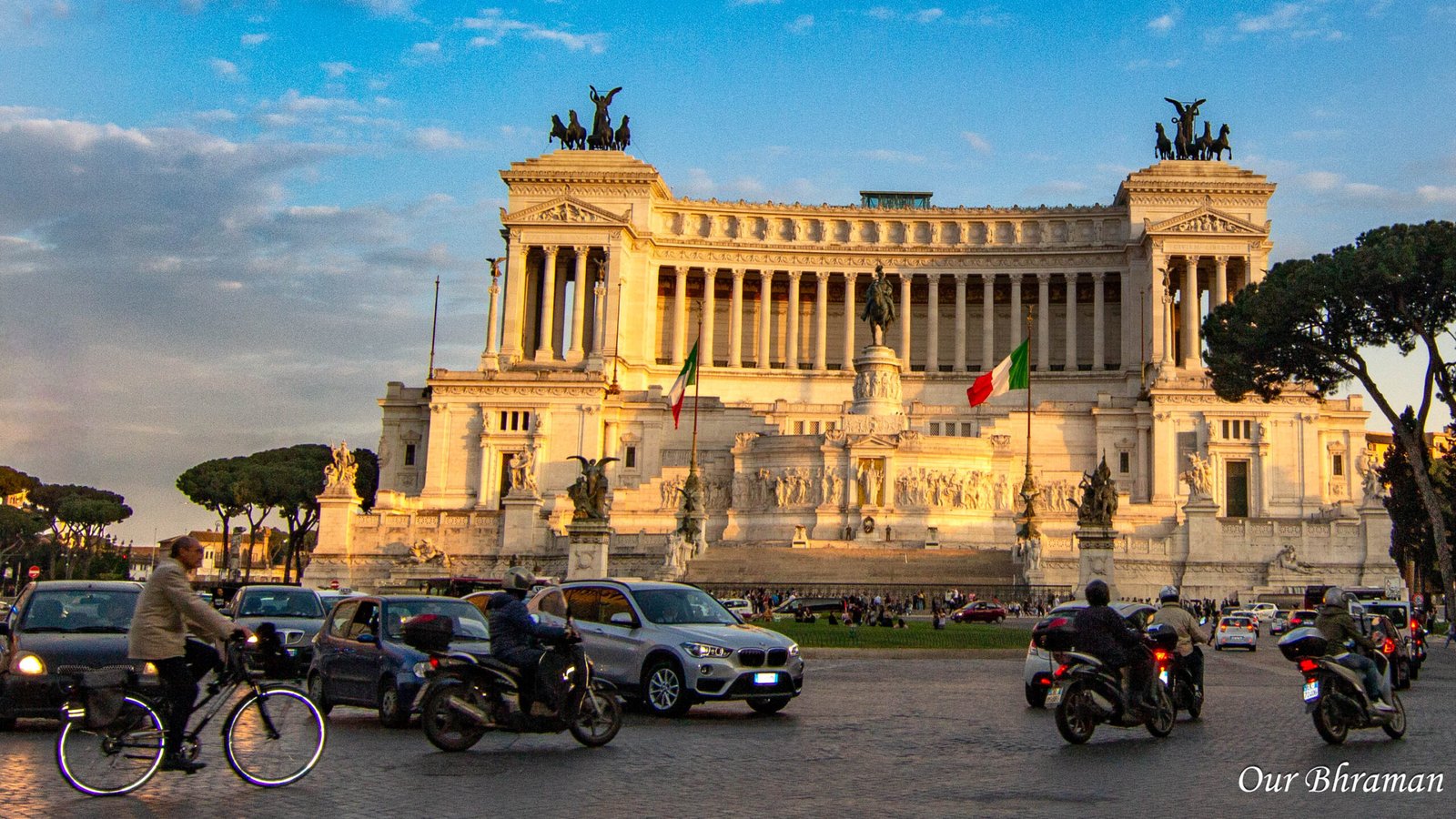
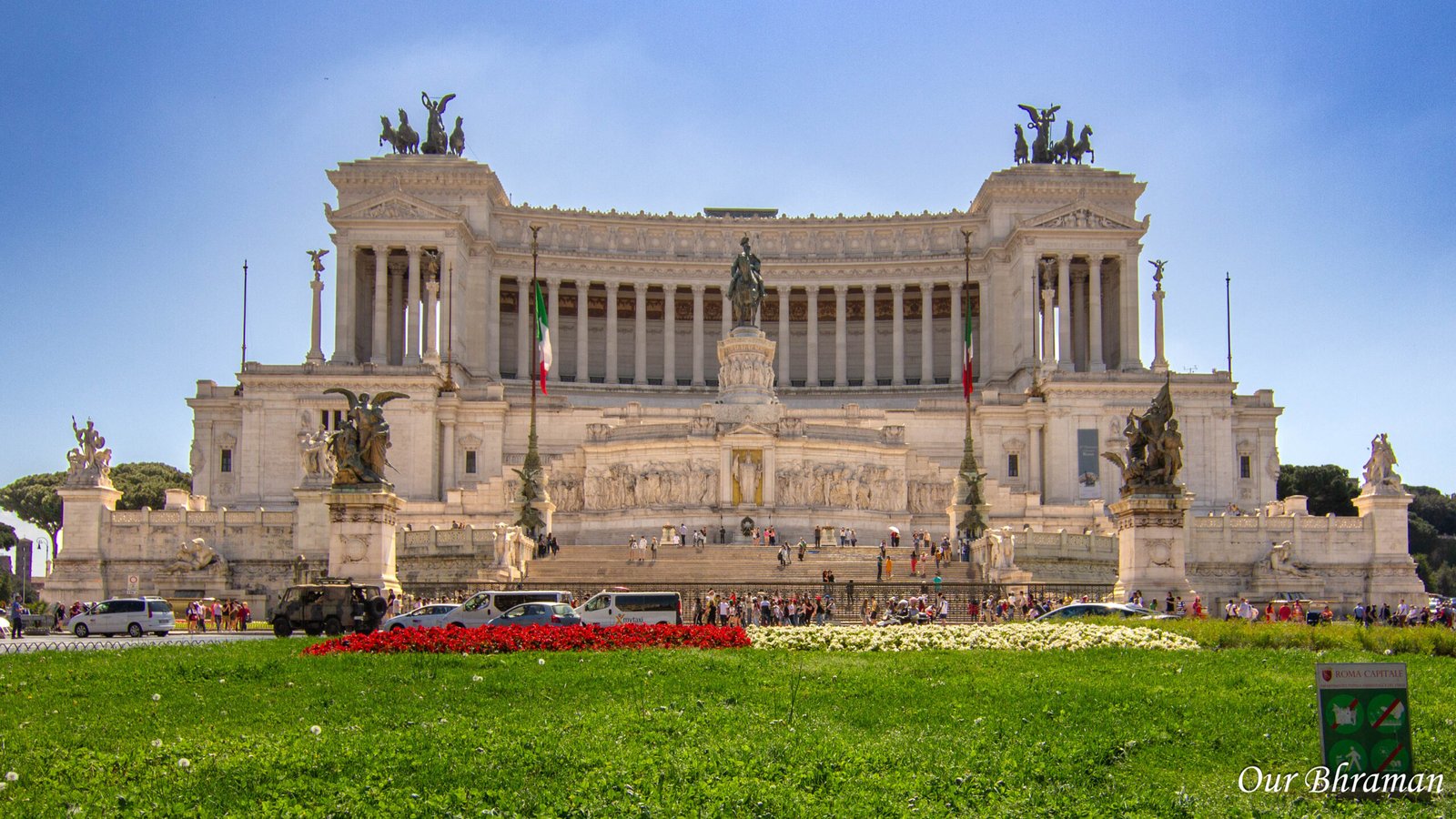 From there, we continued toward Piazza Venezia. As we made our way into the heart of Rome, we soon arrived at Piazza Venezia, one of the city’s busiest and most recognizable crossroads. Located at the foot of Capitoline Hill, the square felt like a place where modern Rome and ancient Rome came together.
Traffic moved in every direction around us as several major streets converged here, including Via del Corso and Via dei Fori Imperiali. Yet, despite the constant movement, it was difficult not to look beyond the traffic and notice the remarkable history surrounding us.
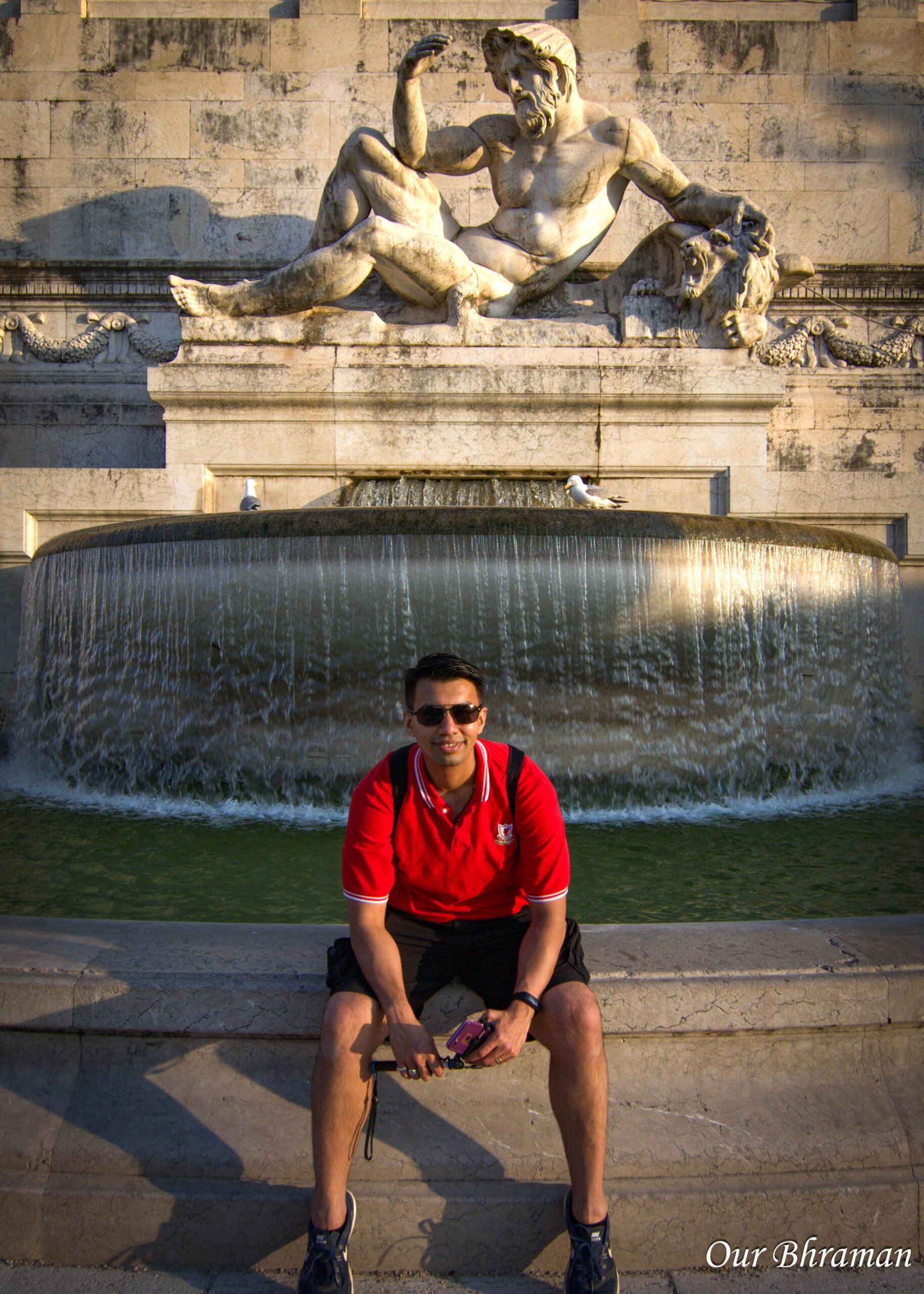
From Piazza Venezia, Rome seemed to open up in every direction. The imposing Vittoriano, also known as the Altare della Patria, dominated one side of the square, while the road toward the Roman Forum and Colosseum stretched away from us. Just beyond, Capitoline Hill reminded us that we were standing in a part of the city where layers of Roman history have accumulated for thousands of years.
As we approached the square, Rome began to feel increasingly monumental. The enormous Altar of the Fatherland, officially the Monument to Victor Emmanuel II, dominates the area with its brilliant white marble. The monument was completed in 1911 and later became home to the Tomb of the Unknown Soldier.
Via dei Fori Imperiali
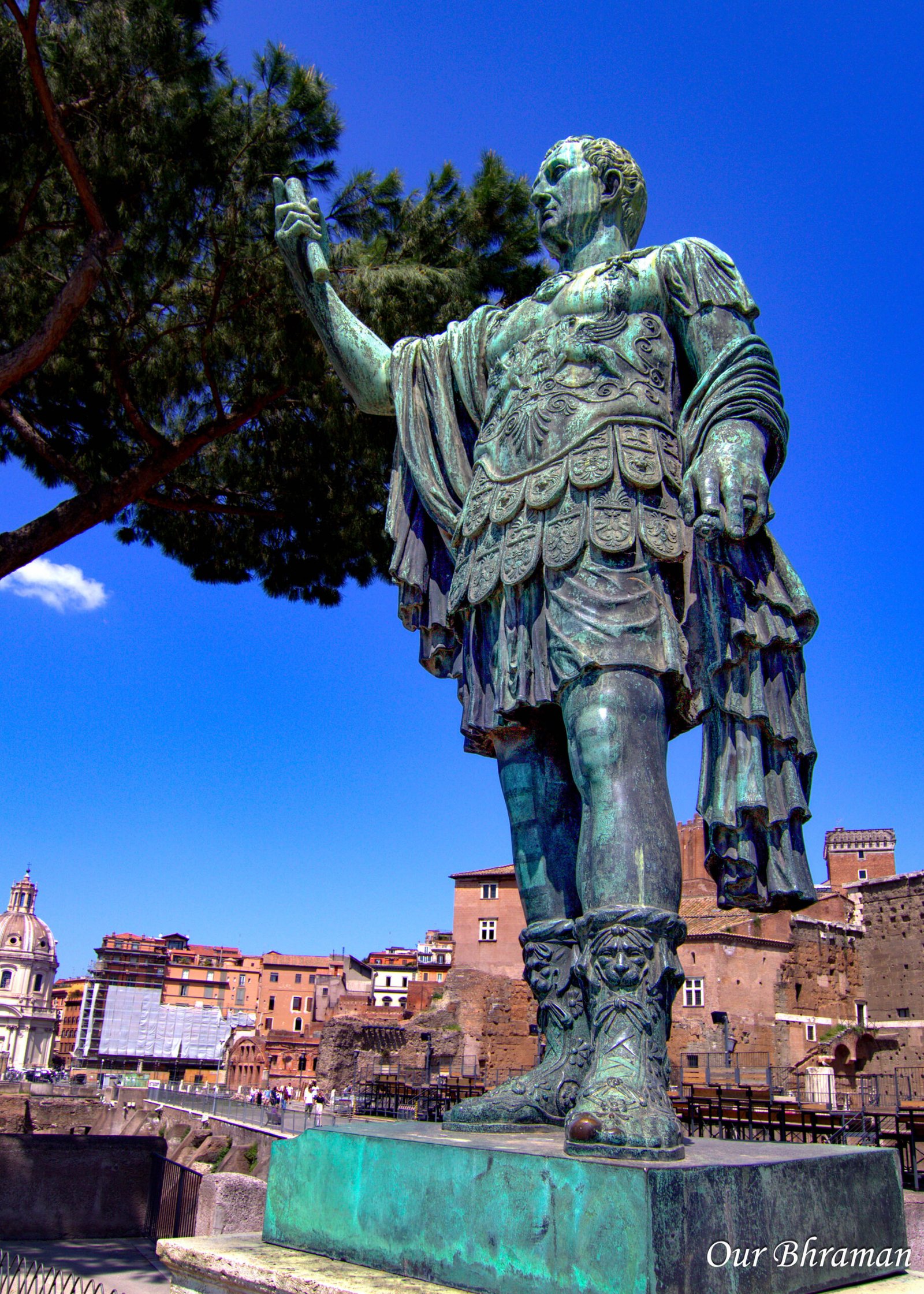
From Piazza Venezia, we turned onto Via dei Fori Imperiali, the grand avenue leading directly toward the Colosseum. This was an exciting moment because the Colosseum gradually comes into view at the end of the long avenue. The road itself is surrounded by archaeological remains from Rome’s Imperial period, including the forums of Caesar, Augustus, Nerva, and Trajan.
Walking this stretch felt almost like entering a different era. The modern city was around us, but on both sides were the remains of an empire that had shaped Western history.
Colosseum: Stepping Into Ancient Rome
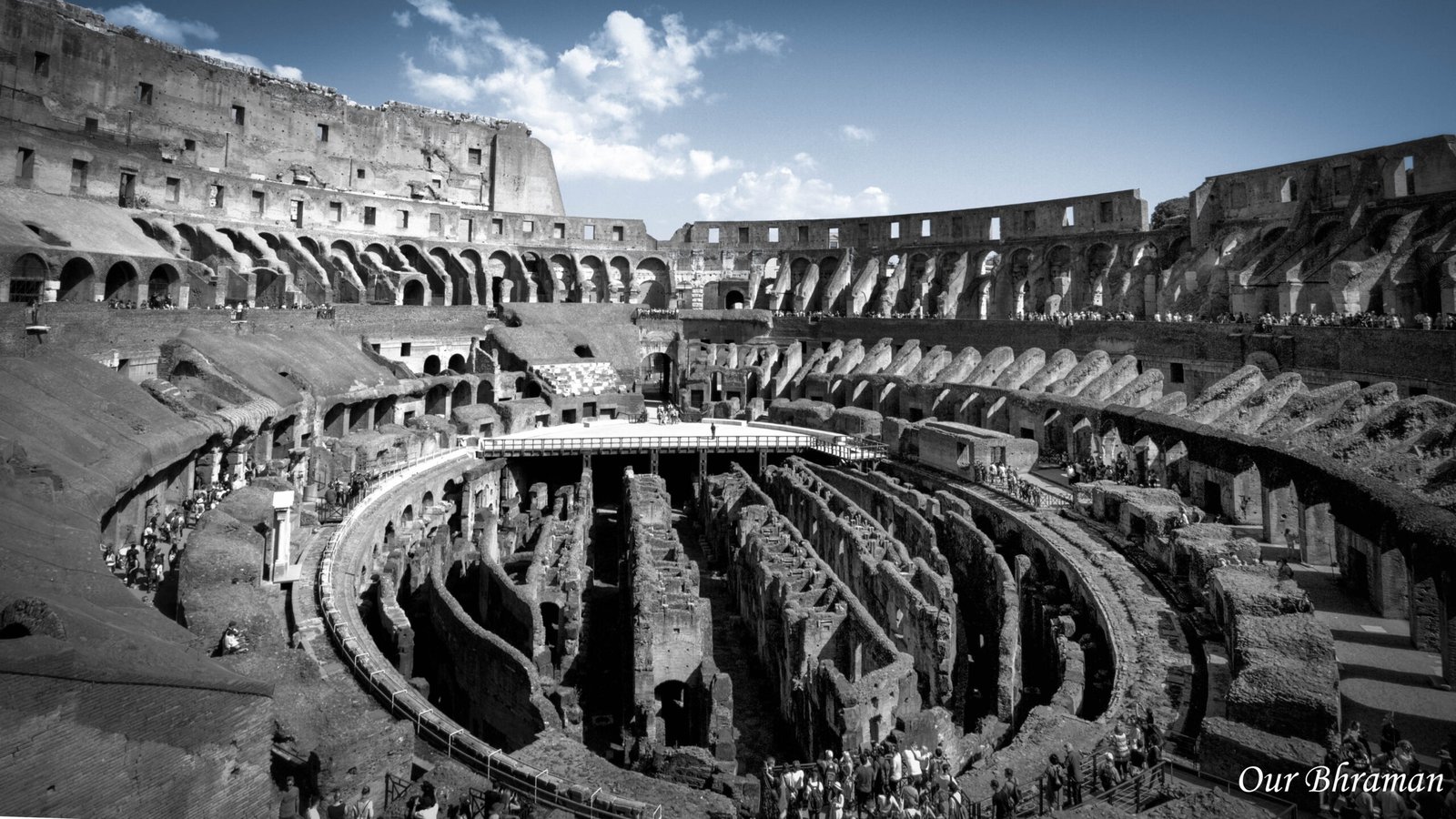
Our first major attraction of the day was the Colosseum.
The massive Flavian Amphitheatre was begun under Emperor Vespasian around 70 AD and completed under his son Titus around 80 AD. It became the setting for gladiatorial contests, animal hunts, public spectacles, and other events that entertained enormous Roman crowds.
Seeing it in person was very different from seeing photographs. The sheer scale of the structure is difficult to appreciate until you are standing beside it. We had arranged a tour, which made the visit much more meaningful. Instead of simply walking through an ancient building, we were able to understand how the arena functioned and what life might have been like for the people who once filled its enormous seating areas.
After spending time inside the Colosseum, we continued into the archaeological area surrounding it.
Palatine Hill: Where Rome’s Story Began
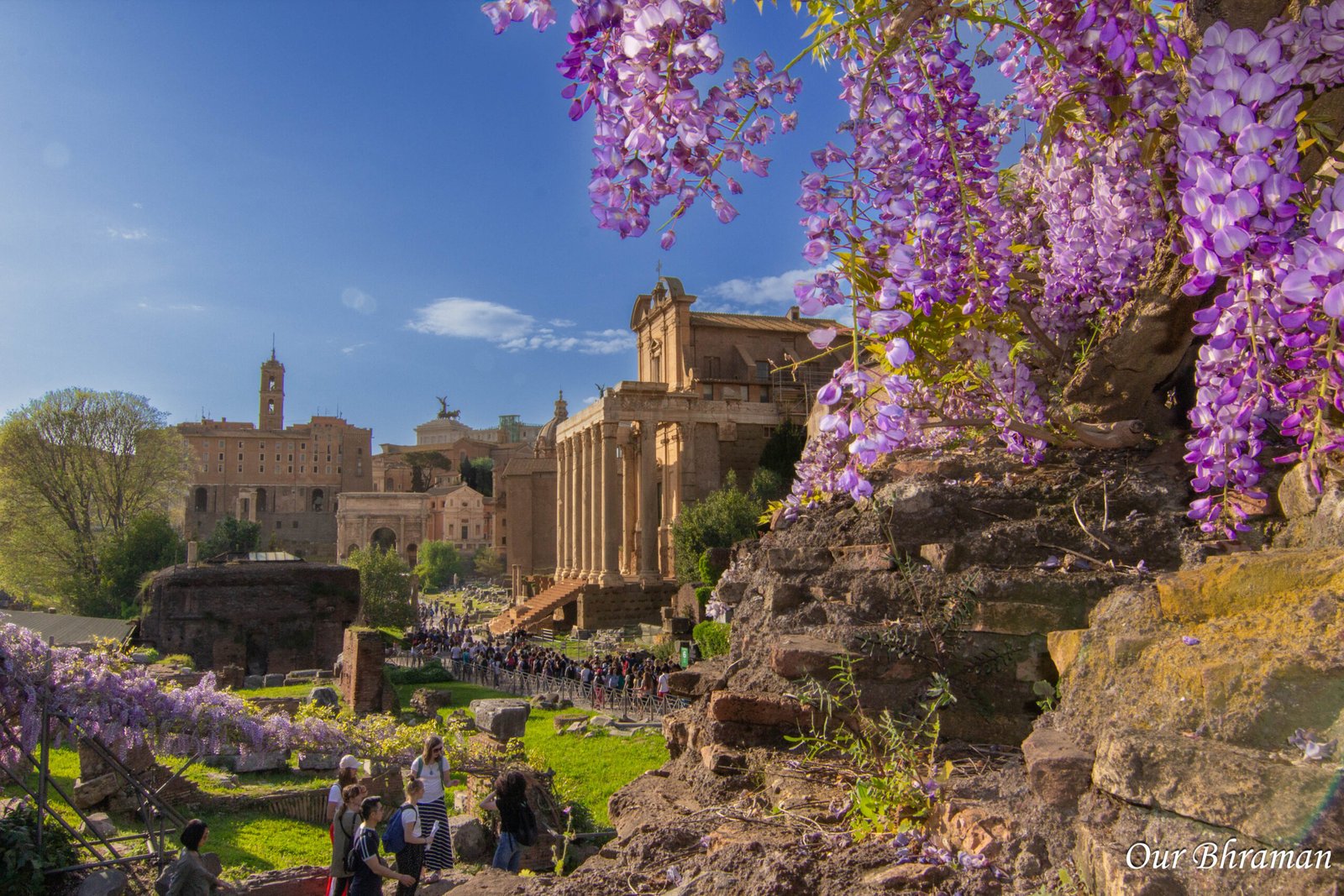 From the Colosseum, we made our way toward Palatine Hill. According to Roman tradition, the Palatine was associated with Romulus and Remus and the legendary founding of Rome. Archaeological evidence also shows that the hill was home to very early settlements and later became one of the most desirable areas for Rome’s aristocracy and emperors.
Walking through Palatine Hill was a completely different experience from the Colosseum. Instead of one enormous monument, we were surrounded by ruins, gardens, pathways, and remnants of imperial residences. The elevated position also provided beautiful views across the Roman Forum. For us, this was one of those places where stopping for a few minutes and simply looking around was as important as seeing the individual ruins.
Roman Forum: The Heart of Ancient Rome
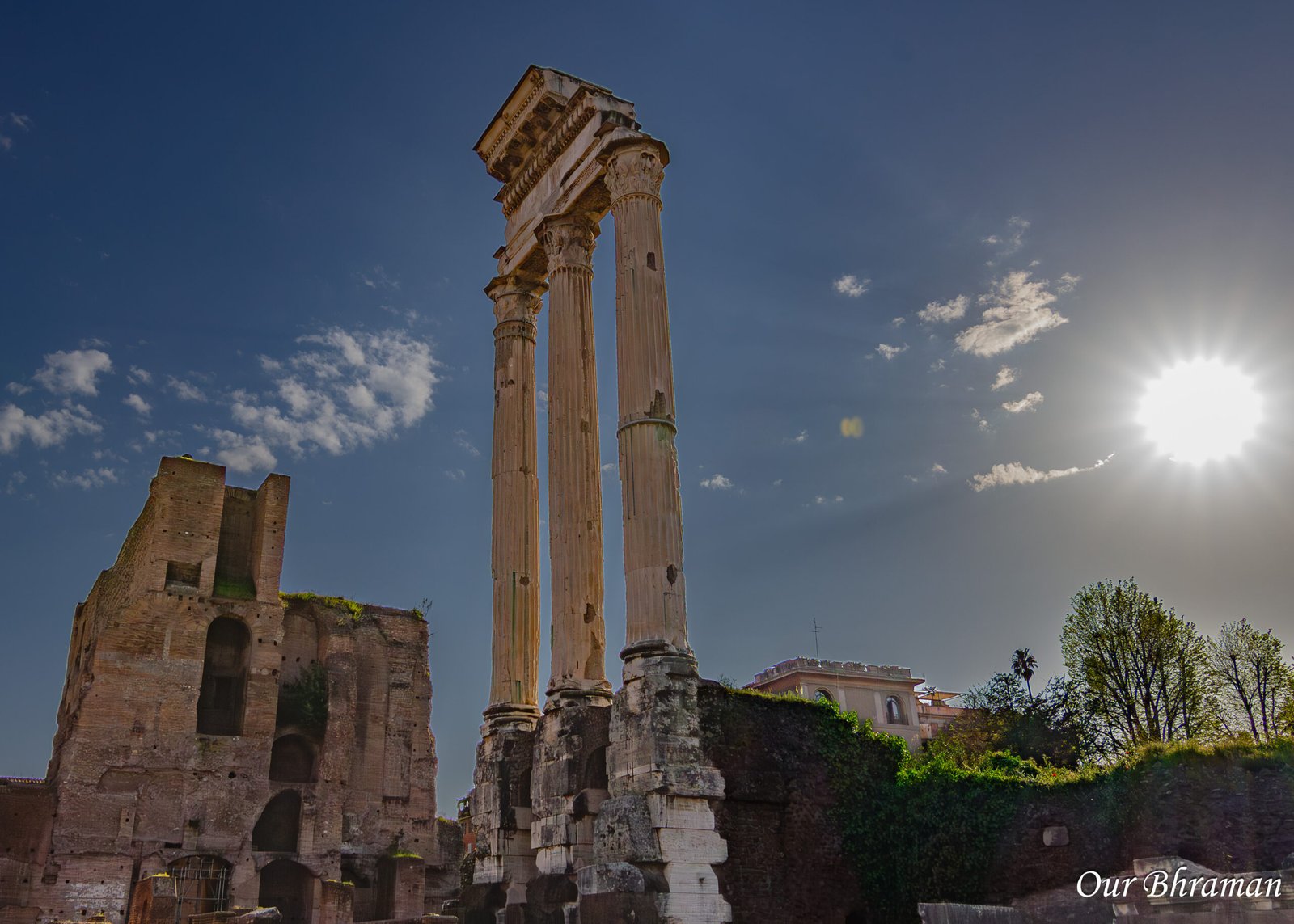
From Palatine Hill, we continued down into the Roman Forum. This was once the center of Roman public life for more than a thousand years. Political decisions were made here, religious ceremonies took place here, and commercial and administrative activities filled the area.
Today, only fragments remain—columns, temples, arches, basilicas, and foundations—but walking among them gives you a sense of how extraordinary this area must once have been.
We passed ancient structures including the Arch of Septimius Severus, temples, and the remains of the great basilicas. The experience connected everything we had seen earlier. The Colosseum showed us Rome’s entertainment. Palatine Hill showed us where emperors and aristocrats lived.
And the Roman Forum showed us where the business of ancient Rome happened. Together, they created a remarkable picture of the ancient city.
Afternoon: Piazza Venezia and the Imperial Forums
 After leaving the archaeological area, we returned toward Piazza Venezia. This time, we appreciated the area differently. Having just spent hours walking through ancient Rome, we could see how the modern city had been built directly around its ancient past.
We also explored the area around the Imperial Forums, including the remains associated with Trajan’s Forum.The Imperial Forums expanded the original Roman Forum as Rome’s political and administrative needs grew. Trajan’s Forum was among the later and most ambitious additions, accompanied by Trajan’s Markets and the famous Column of Trajan.
It was fascinating to see how many layers of Roman history were concentrated within such a relatively small area.
A Break From Ancient Rome
By this point, we had already covered a significant distance on foot. Rome had given us ancient monuments, archaeological ruins, hills, piazzas, and monumental architecture—all before the day was even halfway over.
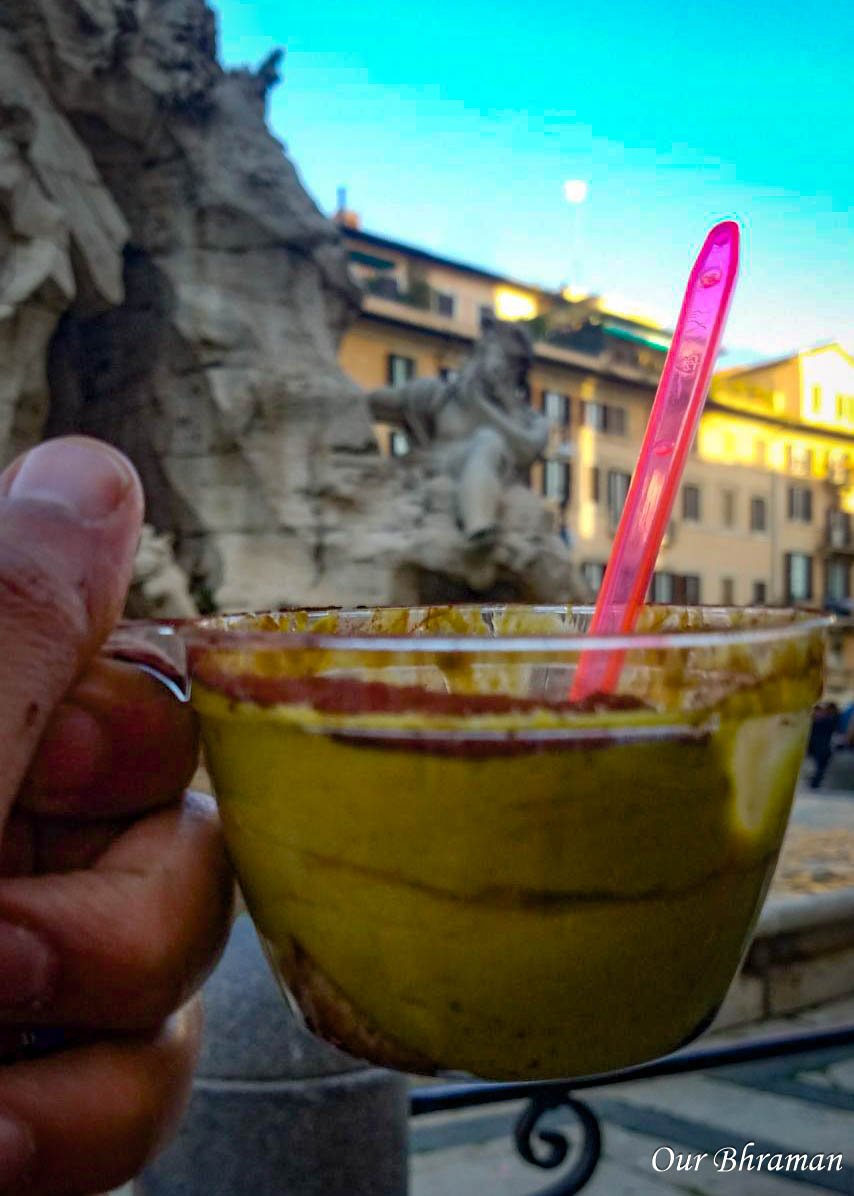
We decided to slow down for a while. One thing we quickly learned about exploring Rome is that there is no need to rush from one attraction to the next. Some of the best moments happen while sitting down for a drink, enjoying a gelato, or simply watching people move through the piazzas. After our break, we continued toward the historic center.
Pantheon: From Ancient Temple to Church
Our next major stop was the Pantheon in Piazza della Rotonda.
After walking through the open archaeological landscape of the Forum, entering the Pantheon’s massive interior was another impressive change of scenery.
The building’s enormous dome and famous central opening, the oculus, remain its defining architectural features.
Standing beneath the dome made us appreciate just how advanced Roman engineering was.
Outside, Piazza della Rotonda was equally enjoyable. The Pantheon wasn’t simply a monument to visit—it was part of a lively neighborhood filled with cafés, restaurants, and people enjoying the square.
 Piazza Navona: Rome’s Baroque Beauty
 Piazza Navona: Rome’s Baroque Beauty
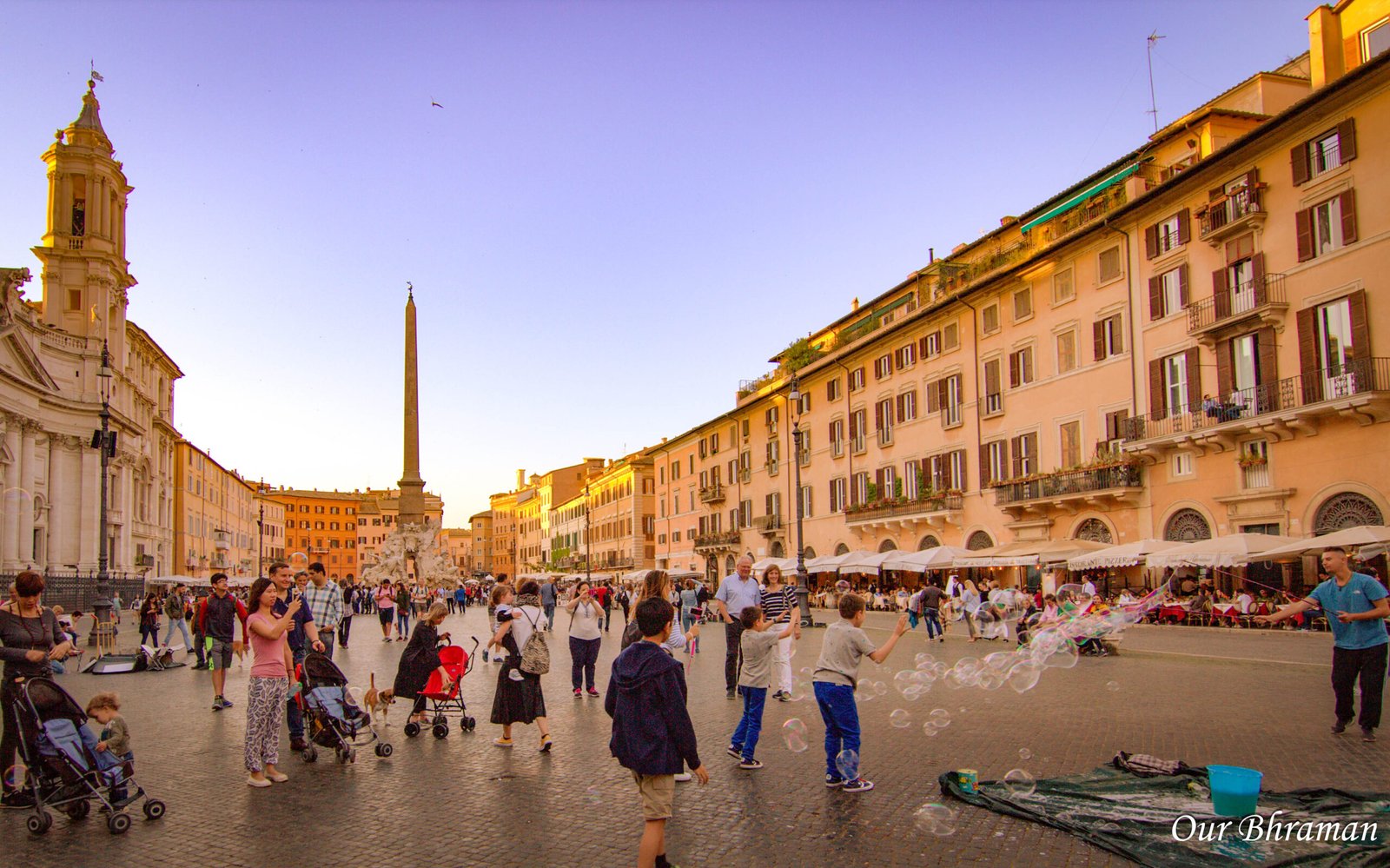
From the Pantheon, we continued on foot toward Piazza Navona. The atmosphere changed again. Where the morning had been dominated by ancient ruins, Piazza Navona felt distinctly Baroque.
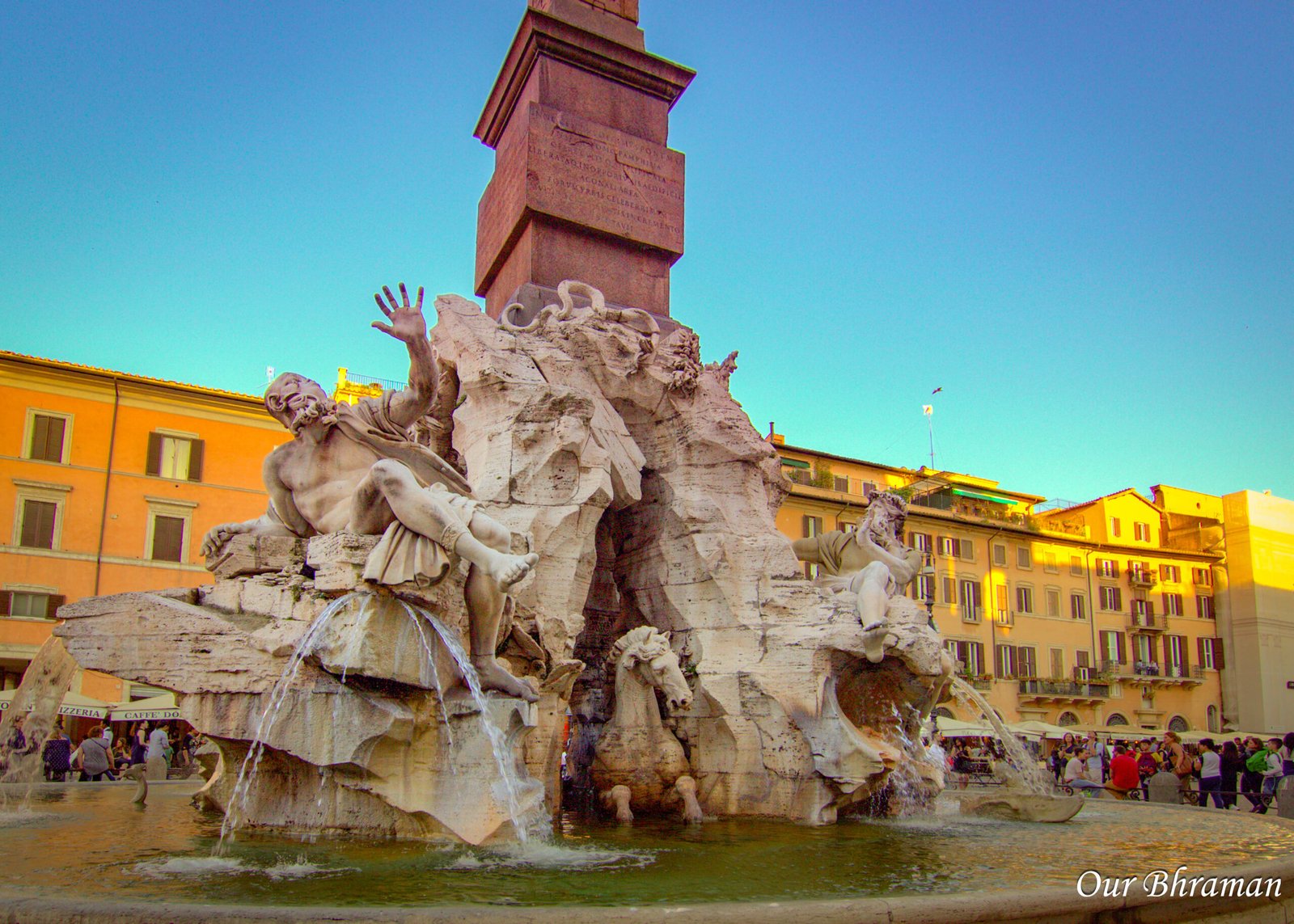
The long, elegant piazza is famous for its three fountains, including Bernini’s Fountain of the Four Rivers, located at its center. The fountain represents four major rivers associated with the continents known to Europeans at the time: the Danube, Ganges, Nile, and Río de la Plata. We walked around the square, taking in the fountains, architecture, street performers, artists, and cafés. It was another reminder that Rome isn’t just a collection of monuments. The city itself is the attraction.
Evening: Trevi Fountain
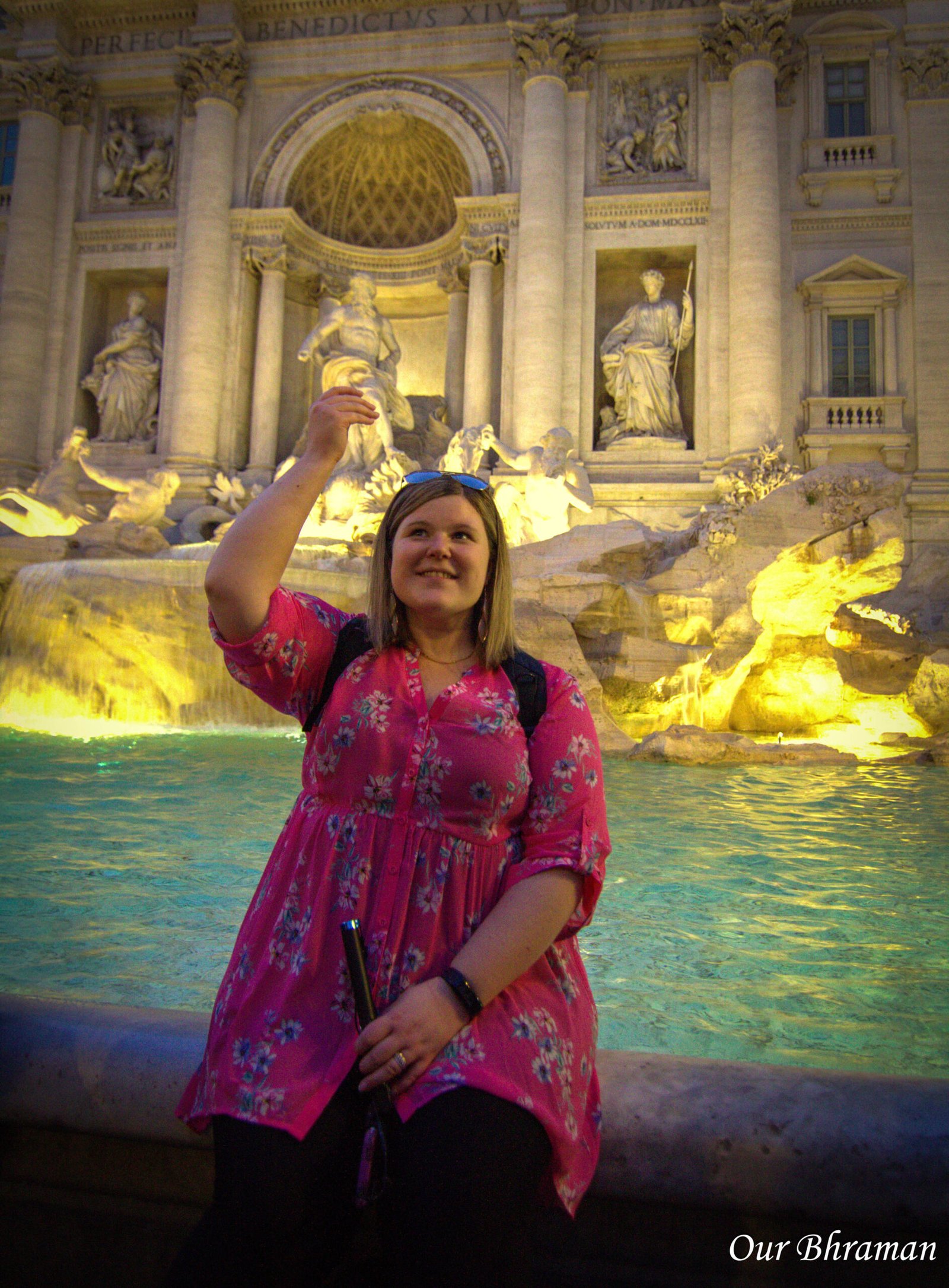
As the afternoon faded into evening, we continued toward Trevi Fountain. We approached through the narrow streets of central Rome, and suddenly the fountain appeared almost unexpectedly at the end of the street.
The contrast was striking. After spending the morning among enormous ancient structures, we were now standing in front of one of Rome’s most celebrated Baroque fountains. The fountain was designed by Nicola Salvi and completed in the 18th century. And, of course, we couldn’t leave without participating in the famous tradition of throwing a coin into the fountain.
The idea is simple: throw a coin and you will return to Rome. Whether you believe in the tradition or not, it was one of those small travel moments we wanted to be part of.
The Spanish Steps: A Grand Stairway Through Rome
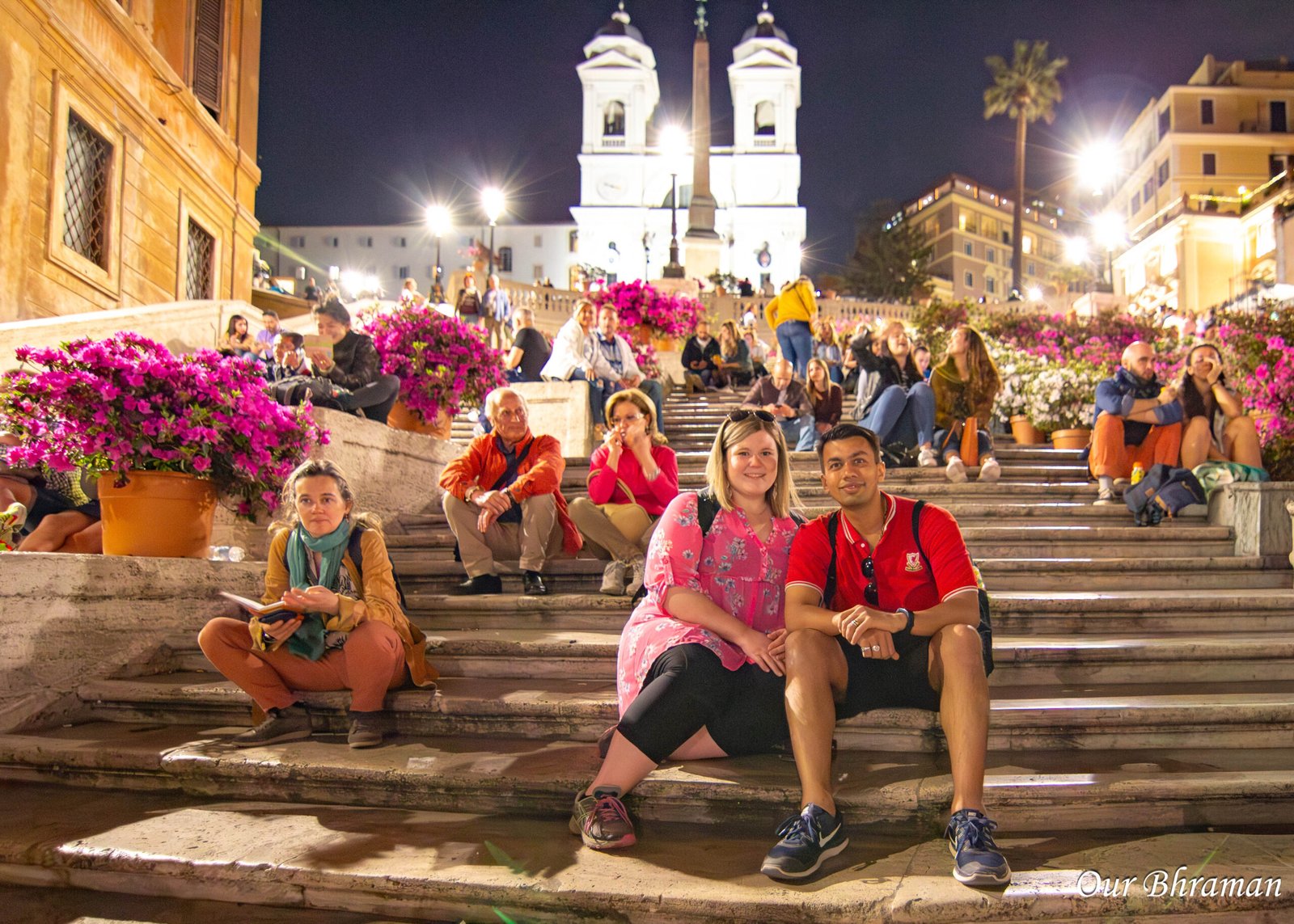
From the busy streets of Rome, we made our way to Piazza di Spagna, where the famous Spanish Steps came into view. Standing at the bottom, we could see the beautiful Trinità dei Monti church at the top of the staircase. The steps were built between 1723 and 1726 and designed by Francesco De Sanctis to connect the piazza with the church above. Over the years, they became one of Rome’s most popular gathering places for locals, artists, and travelers.
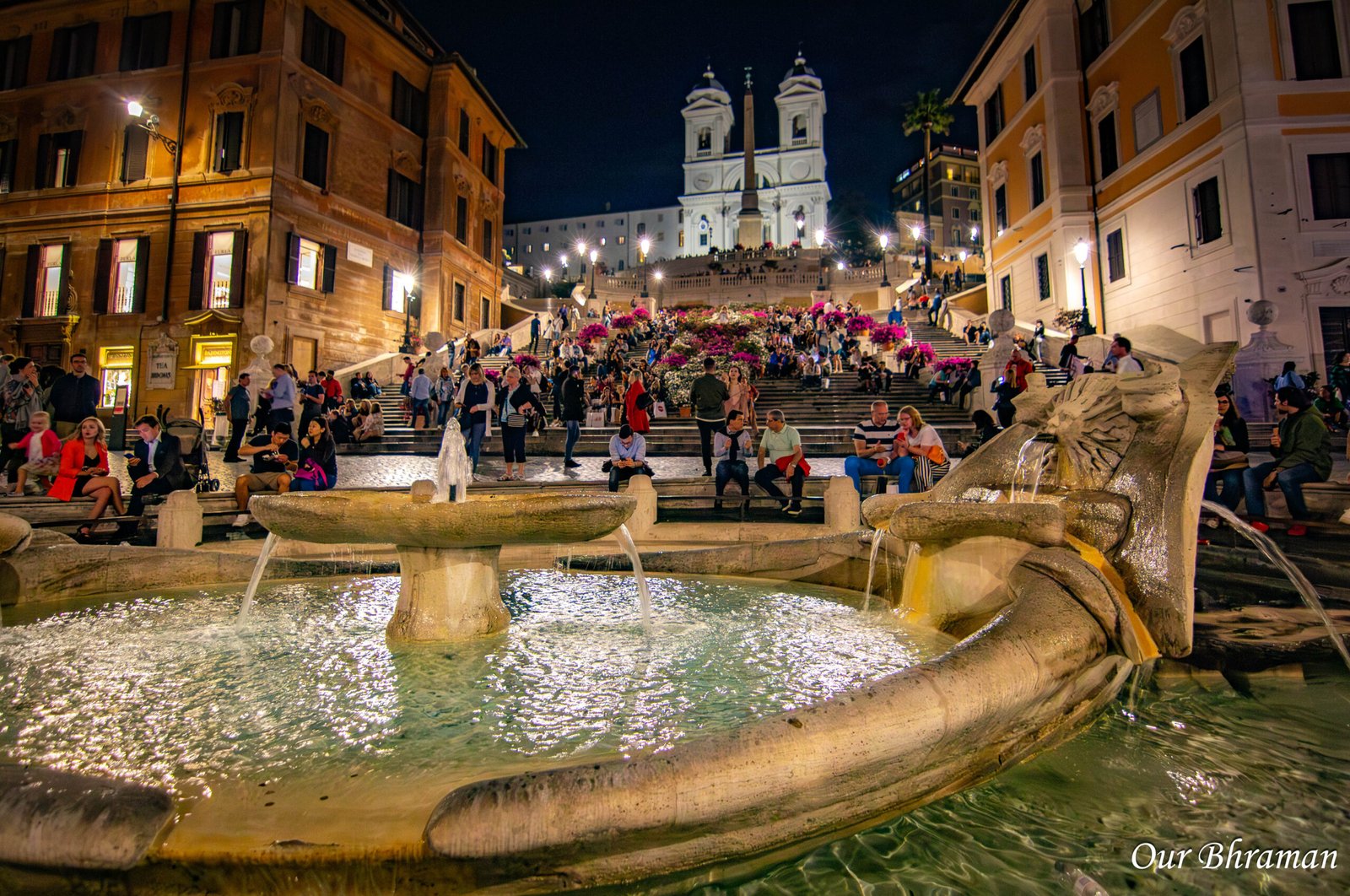 Before climbing the steps, we stopped at the Fontana della Barcaccia, the boat-shaped fountain at the center of the piazza. Created by Pietro Bernini in the 1620s, its unique design was influenced by the area’s low water pressure. We then climbed the steps, stopping along the way to enjoy the views and watch the activity around us. From the top, we looked back toward Piazza di Spagna and the streets of Rome stretching into the distance.
For us, the Spanish Steps were more than just another landmark. They were a beautiful place to slow down, take in the atmosphere, and experience another side of Rome and conclude day of exploration!!!
From our hotel in the morning, we had walked through several centuries of Roman history:
Piazza Venezia → Via dei Fori Imperiali → Colosseum → Palatine Hill → Roman Forum → Trajan’s Forum → Pantheon → Piazza Navona → Trevi Fountain → Spanish Steps.
It was an ambitious itinerary, but walking between the attractions made the day feel like one continuous journey rather than a series of disconnected sightseeing stops.