This day began with checking out of The Freezer Hostel, as we set our sights on Kolugljúfur Canyon. Google Maps offered us two main routes: one looping through Reykjavík and another following the coast. Although the longer Reykjavík route promised a faster travel time, we were drawn to the shorter, more adventurous coastal road—and we’re so glad we trusted our instincts.
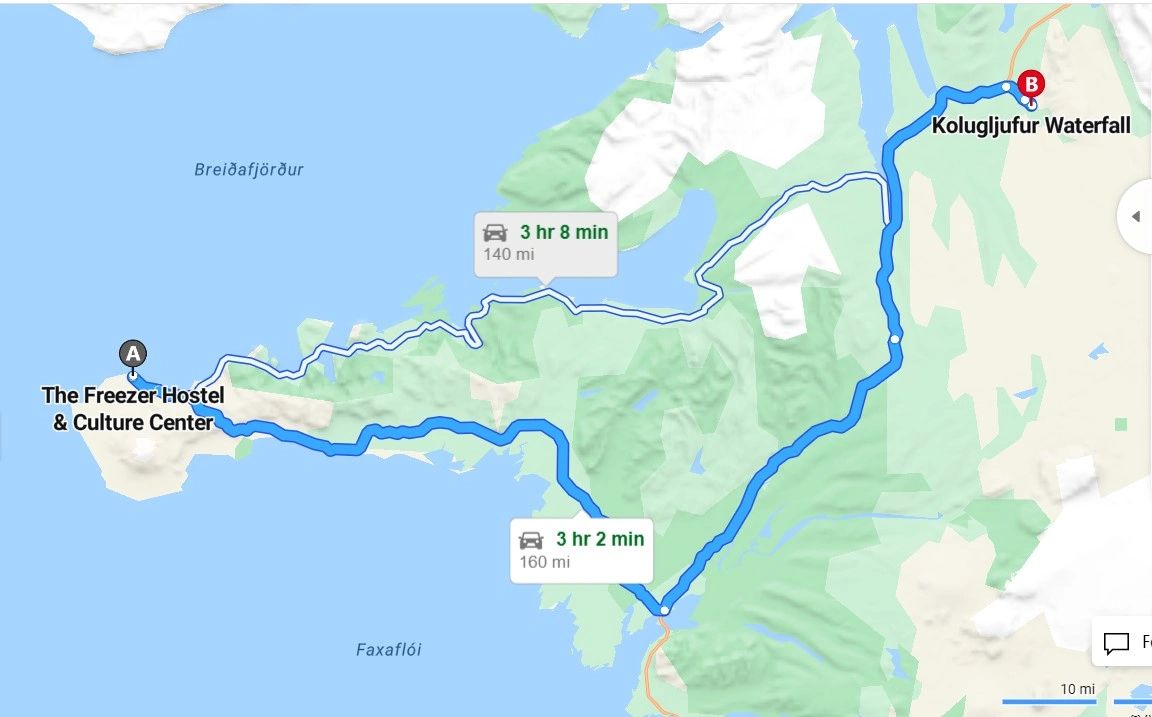
The off-the-beaten-path route was a little rough in places, but it turned out to be one of those spontaneous choices that reveal Iceland’s hidden magic. We passed through quiet villages, windswept plains, and dramatic seascapes — the kind of scenery that makes you stop the car just to take it all in. It might not have been the quickest way, but it offered a side of Iceland most travelers miss. Sometimes, the road less traveled really does make all the difference.
Kolugljúfur Canyon
The weather wasn’t exactly in our favor when we arrived at Kolugljúfur Canyon — thick clouds hung low, and a fine drizzle quickly turned the trail into a muddy obstacle course. But somehow, the grey skies and cold mist gave the place an even deeper sense of drama, like Iceland itself was leaning into the legend.
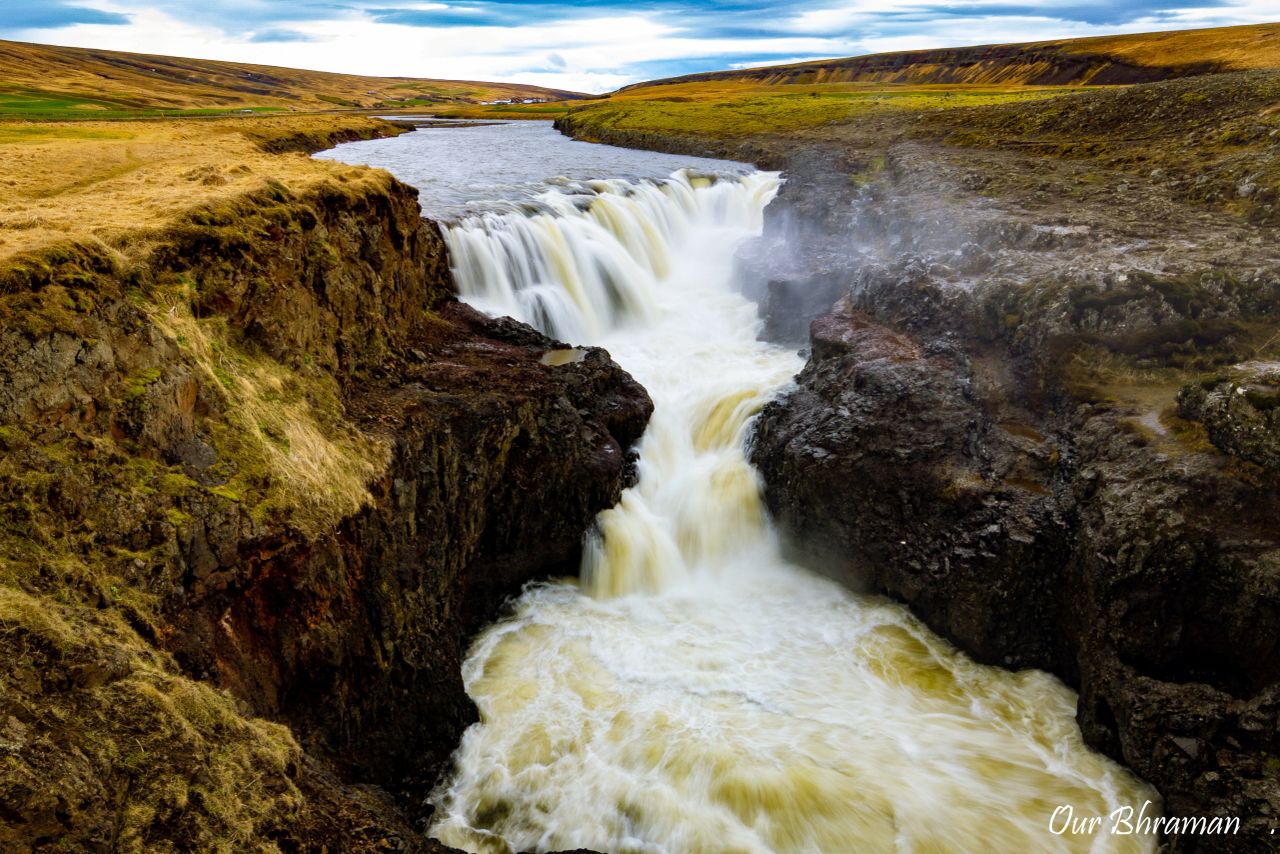
The roar of the Kolufossar Falls echoed louder under the low-hanging clouds, blending with the sound of the rushing Víðidalsá river below. The canyon, with its sharp drops and darkened rock faces slick from the rain, looked wild and alive. Every step on the wet ground demanded caution, but that only made the journey feel more raw and real — no perfectly paved path, just nature in its true, untamed form.
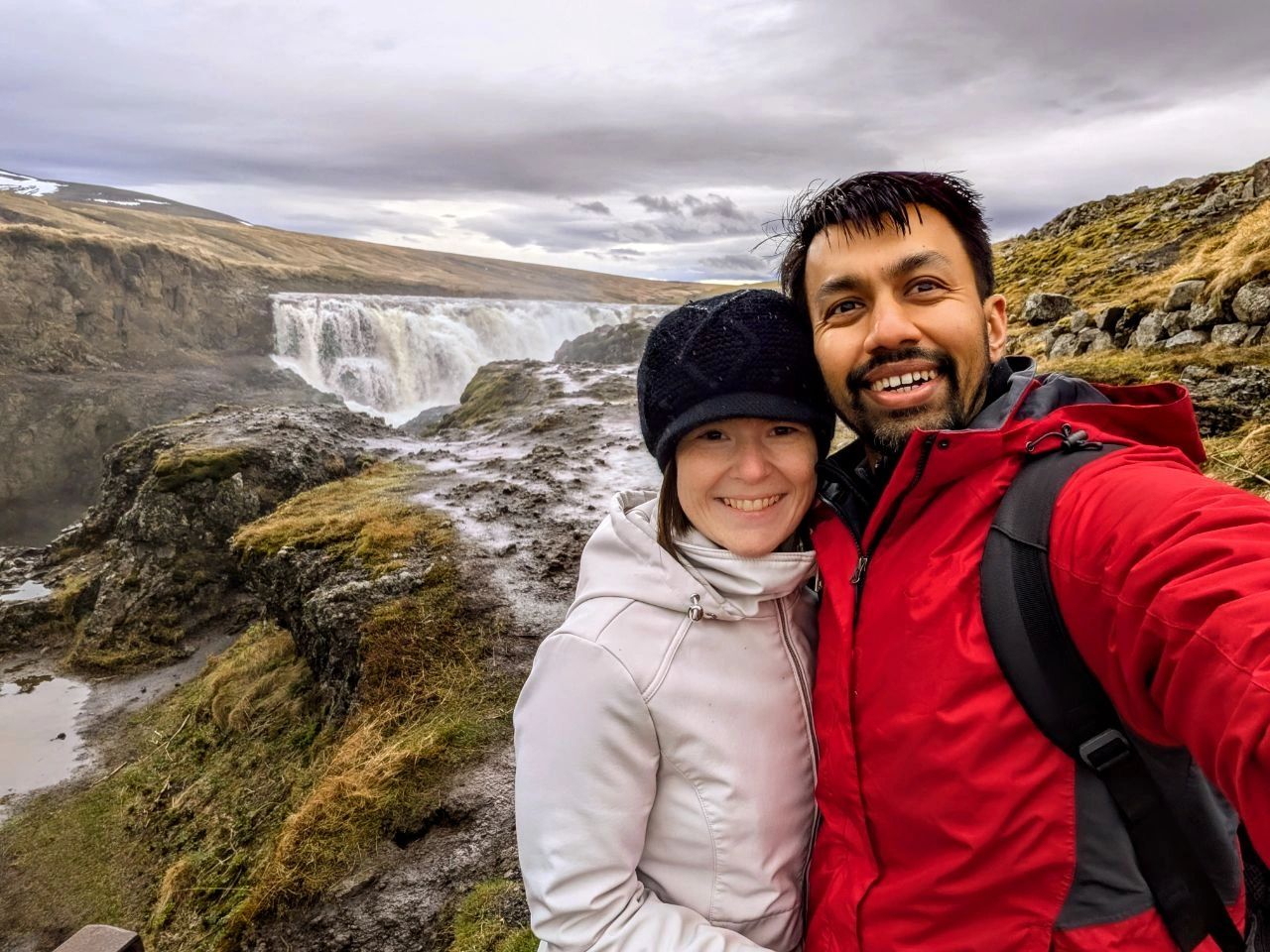
Legend has it this canyon was once the home of Kola, a giantess known to roam these valleys under the cover of darkness. Stories say she would sit by the canyon’s edge, calmly fishing salmon out of the river with her bare hands before tossing them into a nearby hot spring to cook — Iceland’s original slow food movement, maybe? On that rainy afternoon, surrounded by mist and echoing water, the story didn’t seem all that far-fetched
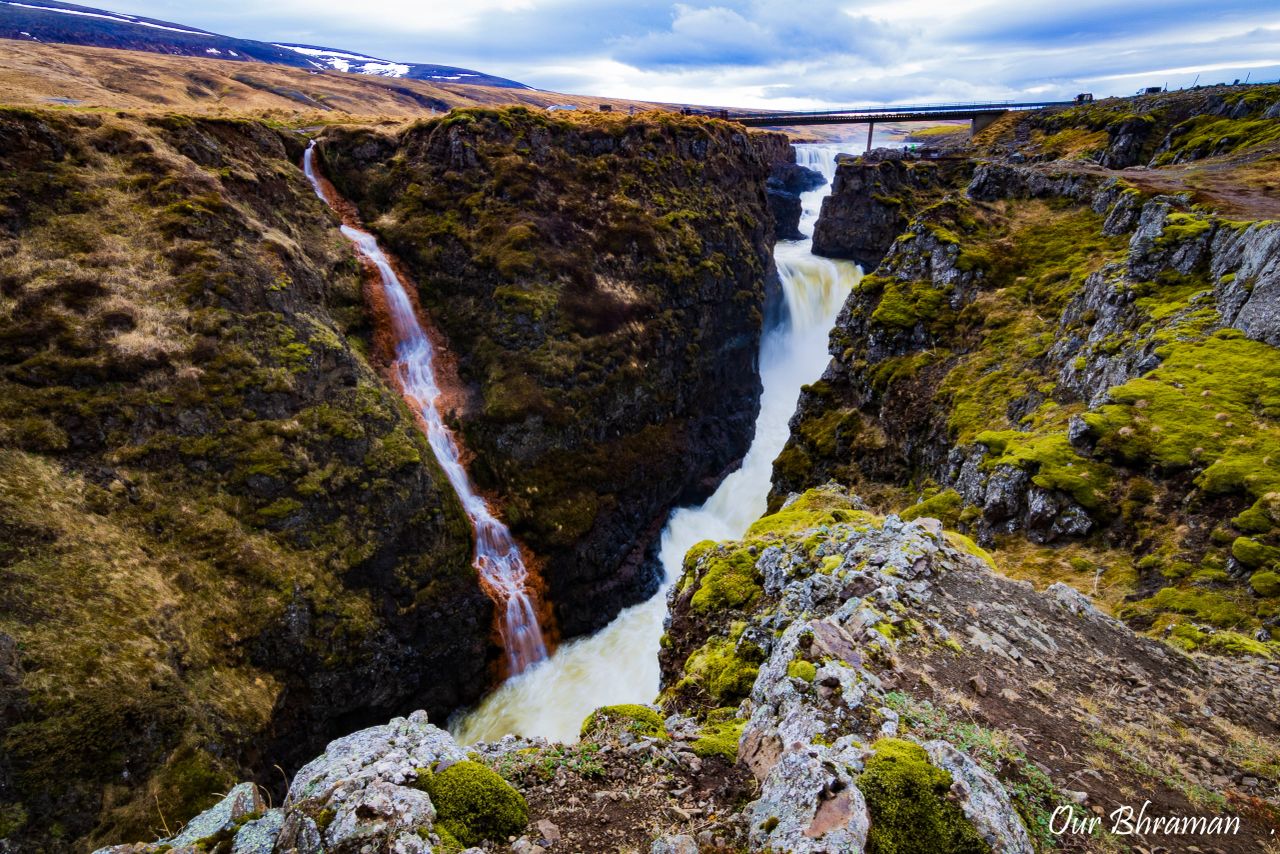
Across the canyon lies Kolurúm, or Kola’s bed — a rocky ledge shaped just enough like a giant’s resting place to stir the imagination. Even through the rain, it was easy to imagine her massive form stretched out there after a long night of salmon hunting.
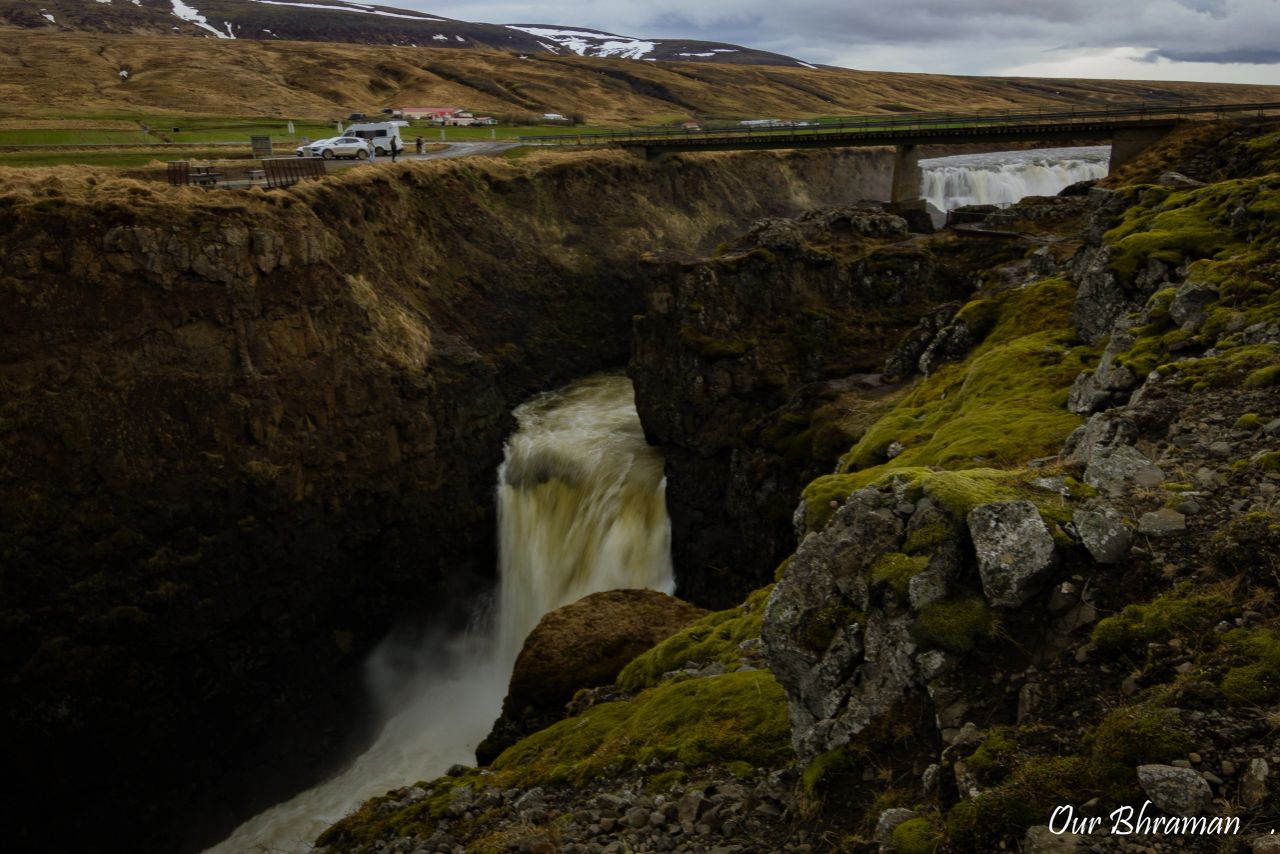
We reached the viewing platform, grateful for the solid ground and railings. From that vantage point, the muddy struggle was rewarded with a view straight out of an epic saga — waterfalls tumbling in white ribbons into the deep canyon, framed by lush greens and moody greys. The mist clung to everything, softening the edges and making it feel like the landscape itself was breathing.
Despite the weather — or maybe because of it — Kolugljúfur gave us one of our most unforgettable experiences. Not every hike needs sunshine. Some places, like this one, reveal their true magic when the skies are heavy, and the legends feel just a little bit more alive.
Hvitserkur — The Road, the Horses, and the Legend
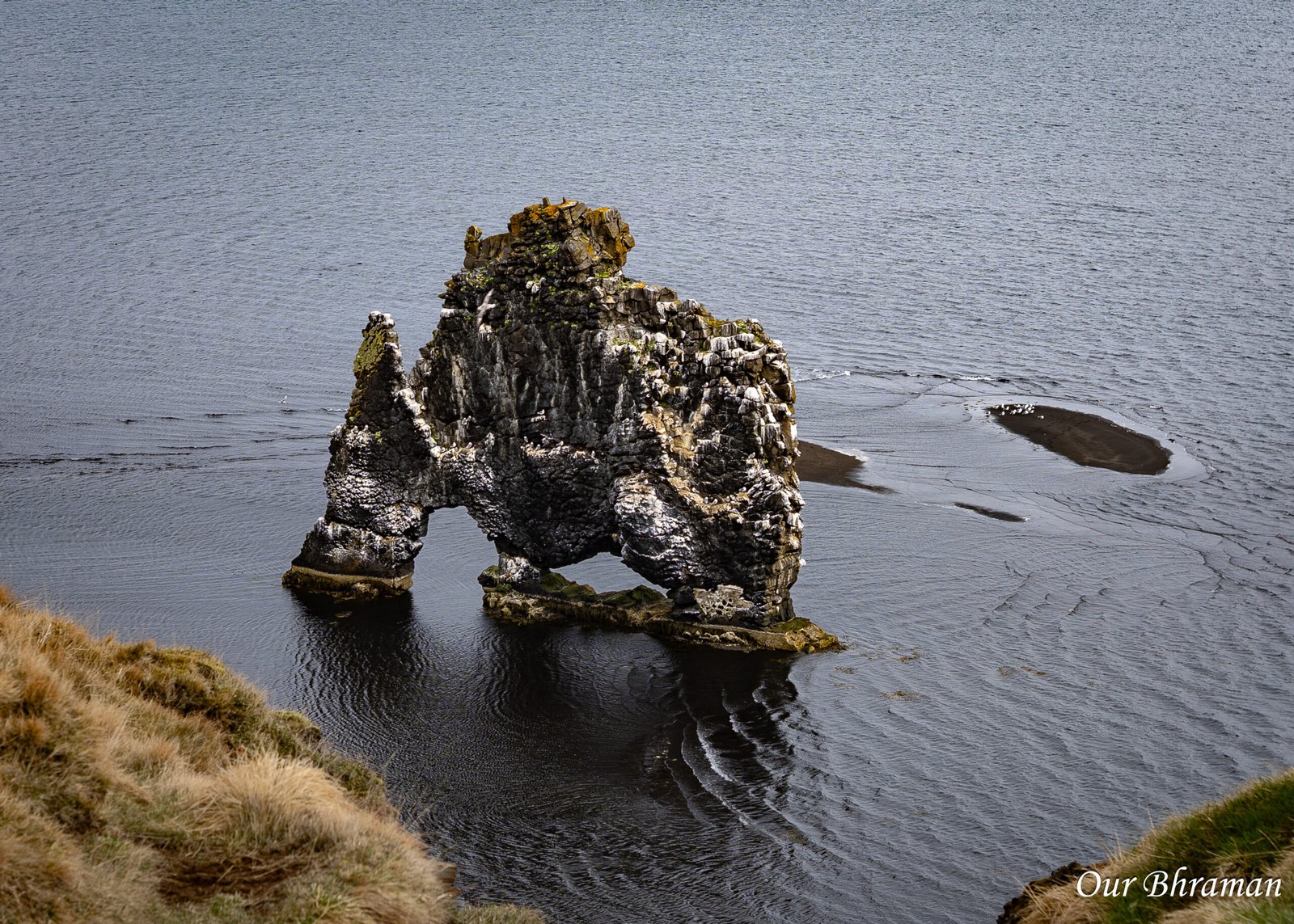
After winding our way through Iceland’s remote northern roads, we arrived at Hvitserkur — a 15-meter-tall basalt rock stack jutting dramatically from the sea. Shaped by centuries of wind and waves, it stands like a prehistoric creature frozen mid-motion, rising dramatically from the water.
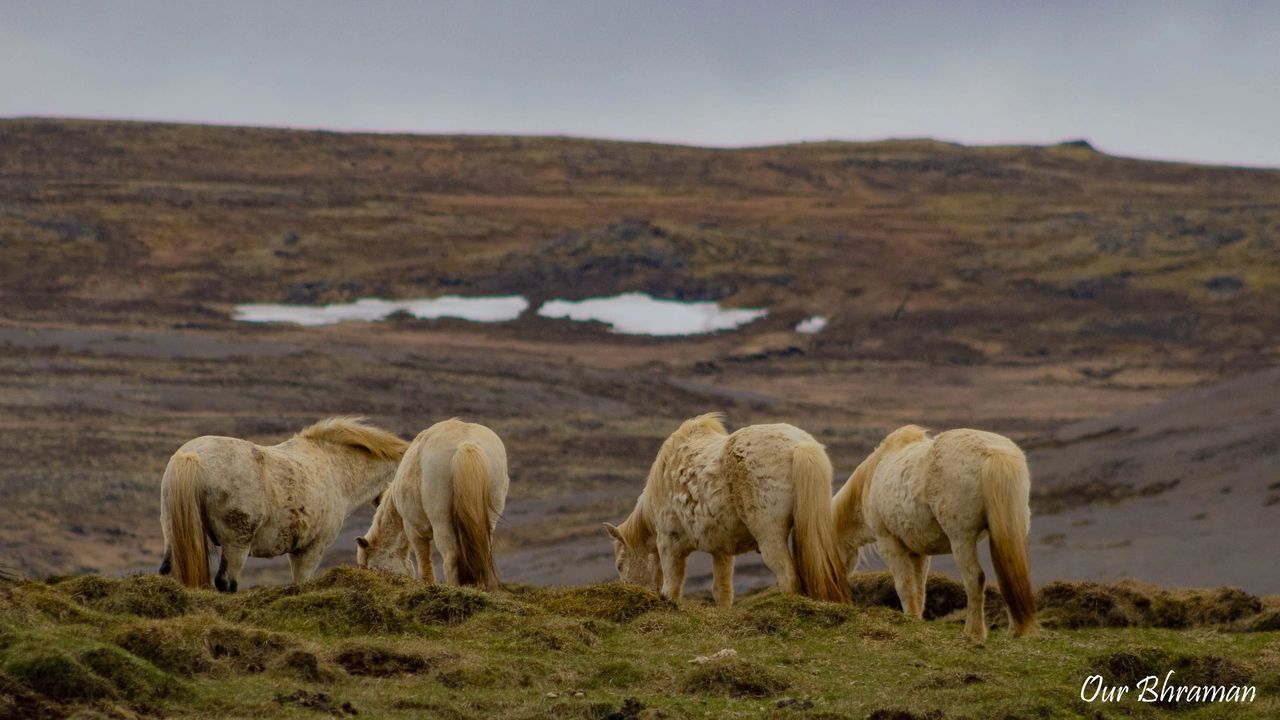
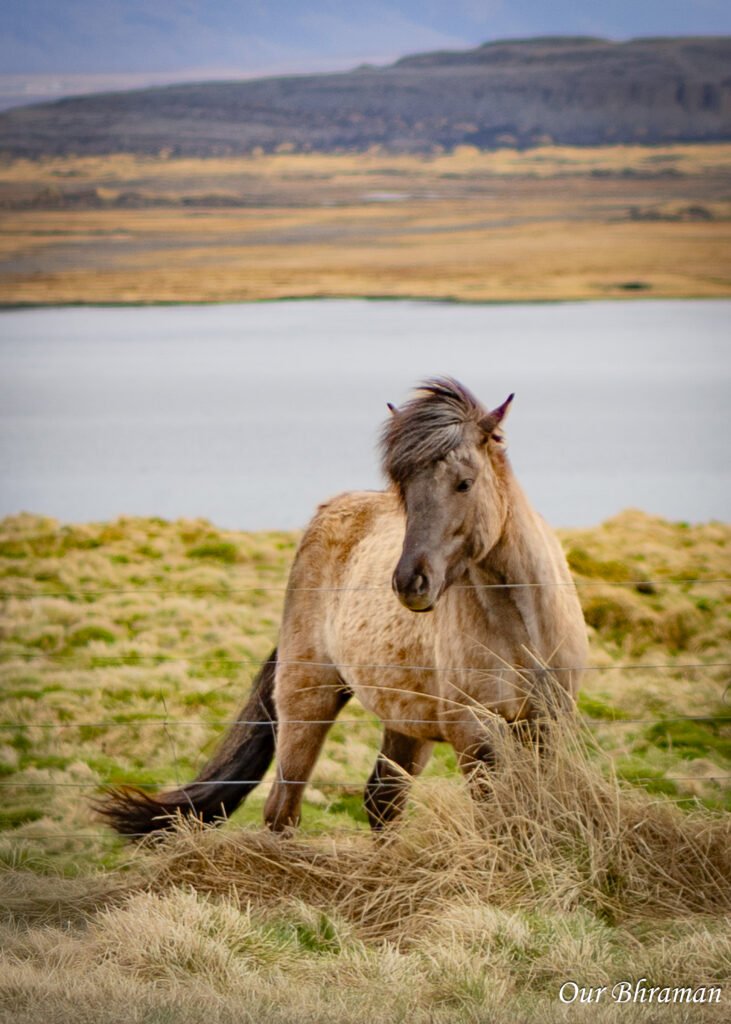
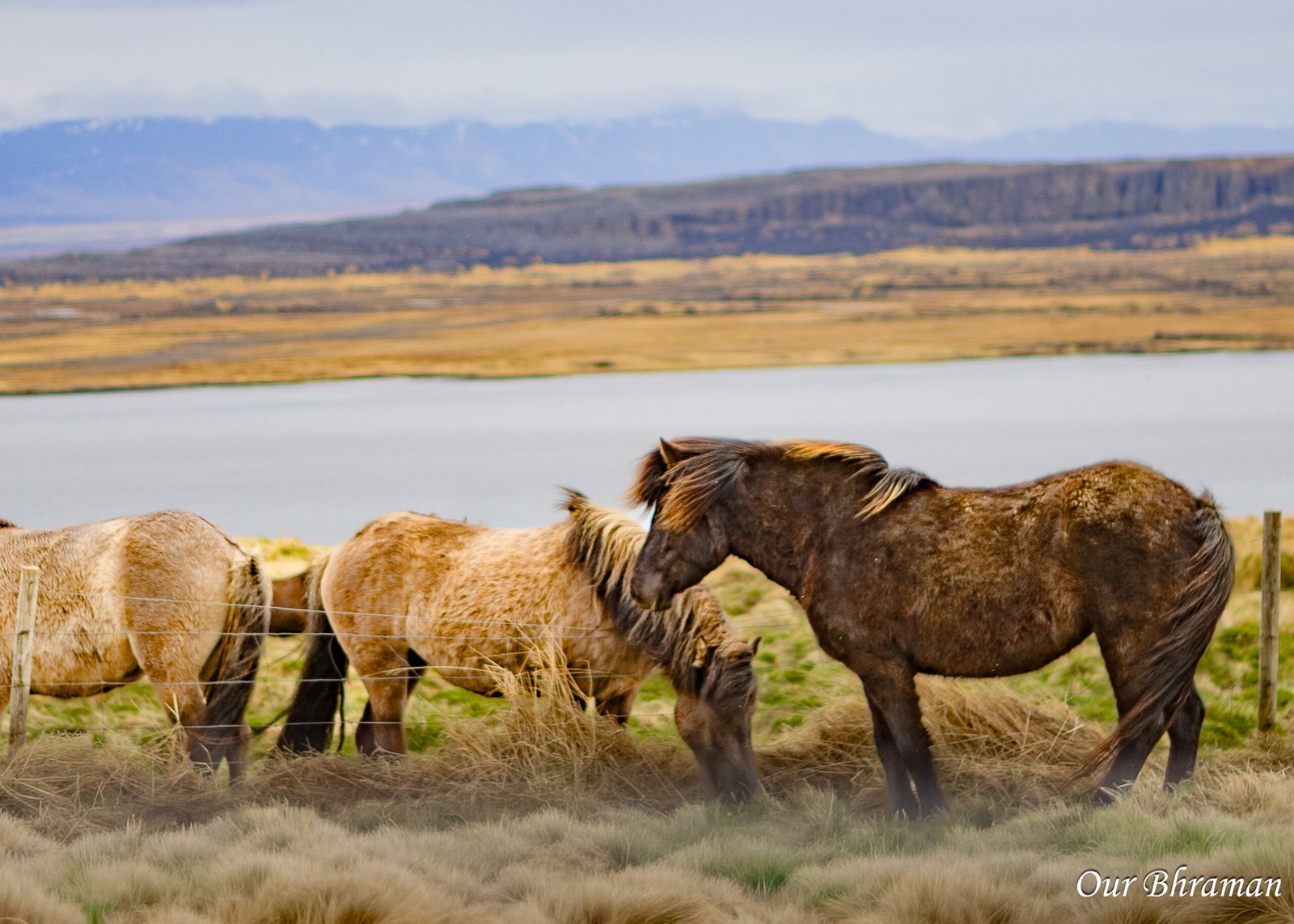 The journey to Hvitserkur was an adventure in itself. Once we left the main road, the paved highway gave way to a rough gravel road, and the landscape immediately felt more remote. Along the way, we passed Icelandic horses roaming within fenced pastures, some standing surprisingly close to the roadside and watching us as we drove by. There seemed to be horses everywhere, scattered across the green countryside, adding another memorable layer to the drive.
The gravel road also came with a price—dust everywhere. By the time we reached Hvitserkur, our car had picked up a noticeable coating of fine Icelandic dust. But that was a small price to pay for reaching such a remote corner of the peninsula.
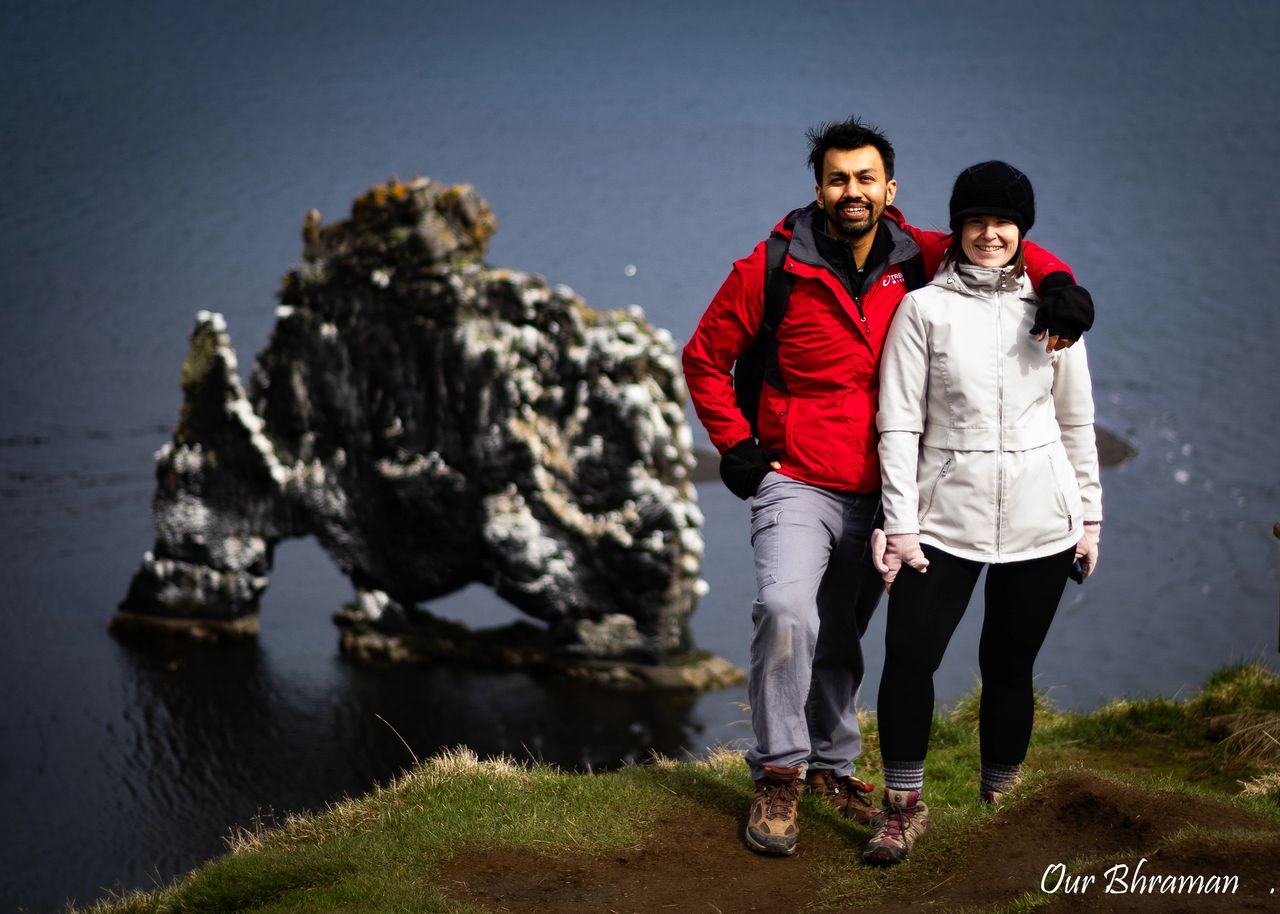
From a distance, Hvitserkur resembles a dragon or a troll hunched over the water, drinking from the sea. And, in true Icelandic fashion, there is a legend to explain its strange appearance. According to local folklore, Hvitserkur was once a troll who stayed out past sunrise and was turned to stone by the morning light.
Standing at the cliff-top viewpoint, we could see why such stories have survived for generations. Surrounded by crashing surf, nesting seabirds, and dark volcanic shores, Hvitserkur feels like more than a geological formation—it feels like a monument to Iceland’s deep connection with myth and mystery.
On the moody, overcast day of our visit, the rock seemed even more alive. Its unusual silhouette almost made us feel as though it might shift, move, or blink when we weren’t looking.
We had originally planned to walk down toward the beach for a closer look. However, recent rain had changed the conditions, and the road and surrounding terrain did not feel safe to us. Rather than take an unnecessary risk, we decided to skip the descent.
For visitors who choose to make the walk when conditions are dry and safe, the beach offers a completely different perspective. From sea level, Hvitserkur appears much larger and more imposing, with waves crashing around its base and the openings in the basalt creating dramatic shapes against the sky. The black sand shoreline brings you close enough to appreciate the enormous scale of the formation and the power of the sea that has shaped it over centuries.
Even though we didn’t make it down to the beach, we were happy with our decision. Iceland’s weather and road conditions can change quickly, and sometimes the adventure is knowing when to stop and enjoy what is safely in front of you.
For us, Hvitserkur was memorable not only because of the spectacular rock formation, but because of everything surrounding it—the winding gravel road, horses grazing beside our route, the dust covering our car, the dramatic weather, and the ancient legend that seemed to come alive in the landscape. It was one of those Icelandic places where geology and folklore seem to tell the same story.
After a day of scenic stops, we checked into our hotel in Akureyri, the charming capital of the north. Still recovering from the long adventure the day before, we initially planned to take it easy and simply explore the town. But after a rejuvenating cup of coffee, we caught a second wind.
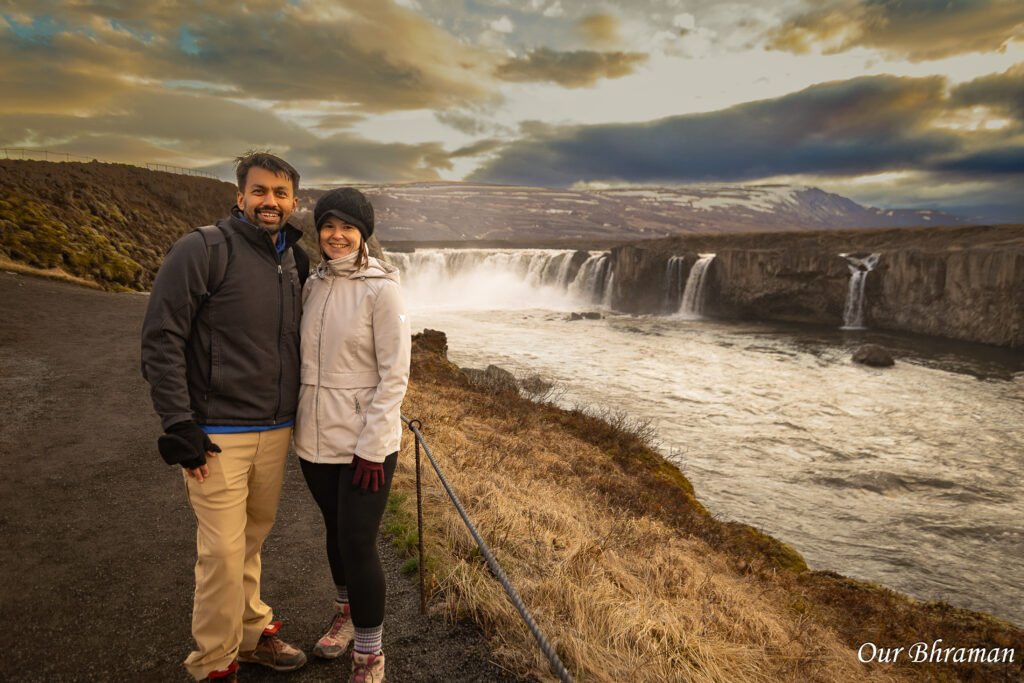
The original plan was to visit Goðafoss the following day, but with the sun shining and the promise of a waterfall sunset calling to us, we spontaneously rearranged our itinerary. A quick tip for future travelers: avoid the toll road when heading to Goðafoss. We accidentally took it and ended up paying an unexpected $32 — an expensive but memorable lesson! That minor hiccup aside, it was so worth it. We spent a spectacular evening at Goðafoss, soaking in golden-hour views and capturing some unforgettable shots of the waterfall as the sun dipped behind the horizon.
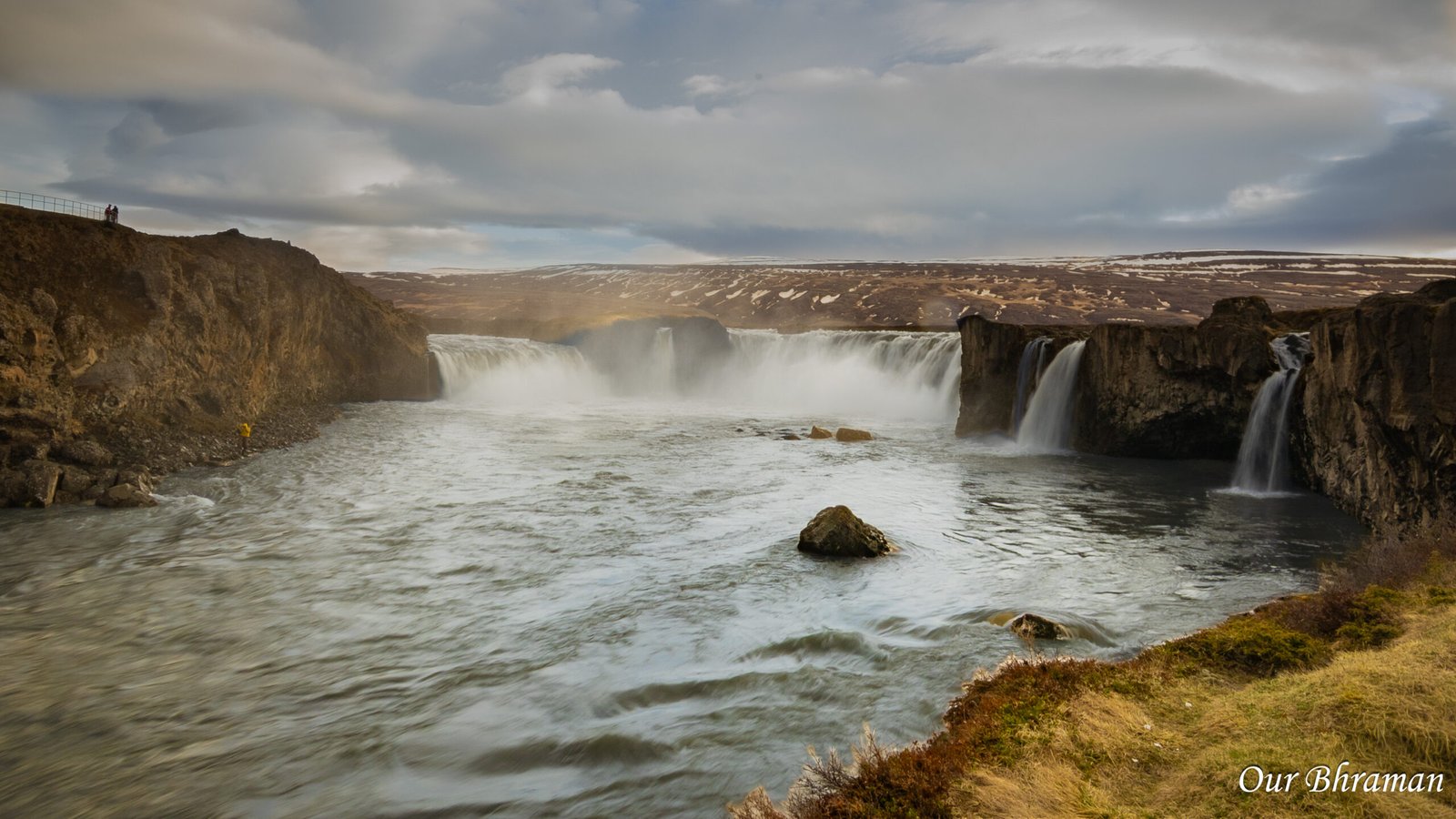
Goðafoss at Sunset
Goðafoss, meaning “Waterfall of the Gods,” is one of North Iceland’s most spectacular waterfalls.
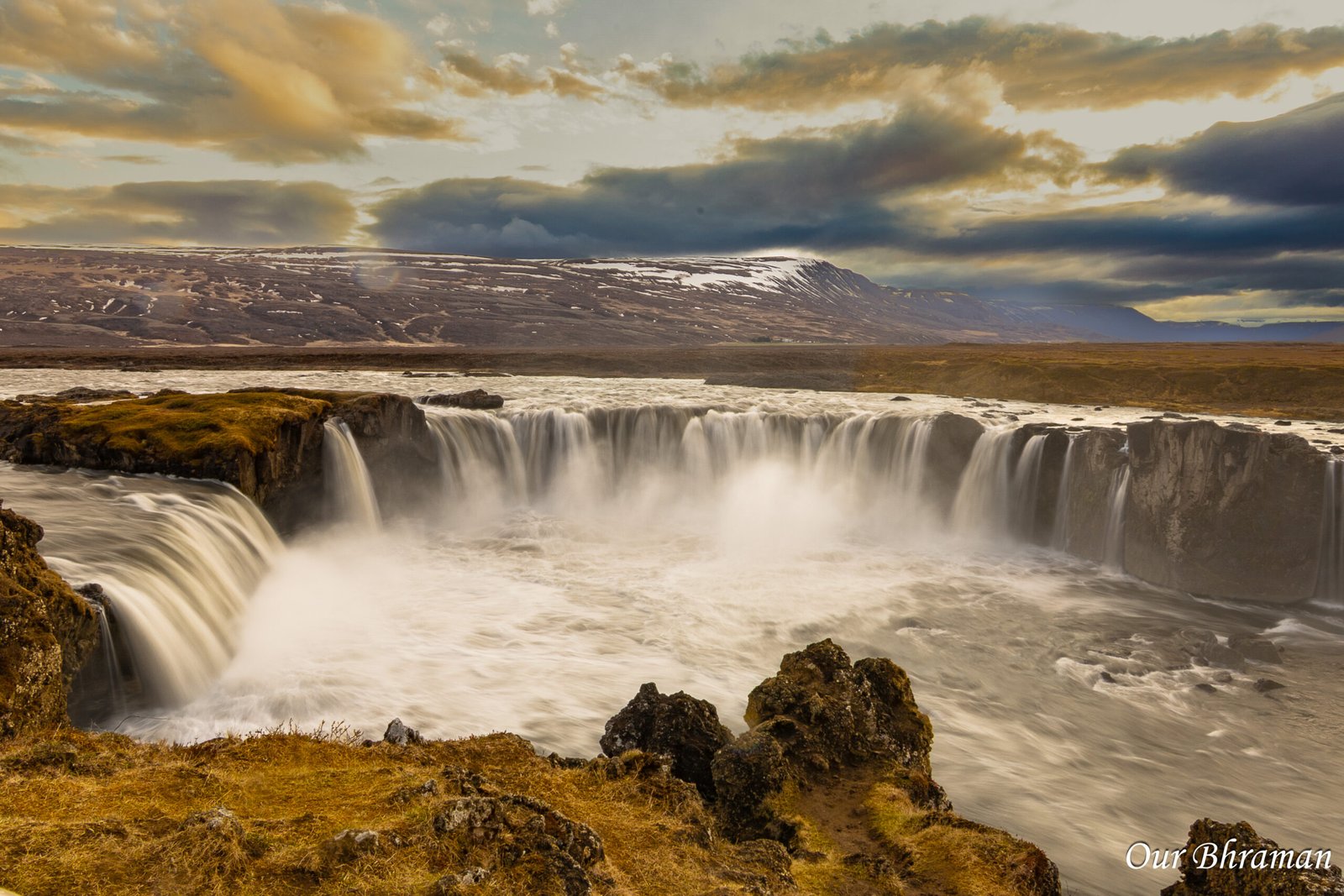
The falls are located along the Skjálfandafljót River, where the river plunges over a broad horseshoe-shaped basalt formation, creating several powerful cascades. The surrounding landscape is distinctly Icelandic—dark volcanic rock, open terrain, and the rushing glacial river cutting through the countryside.
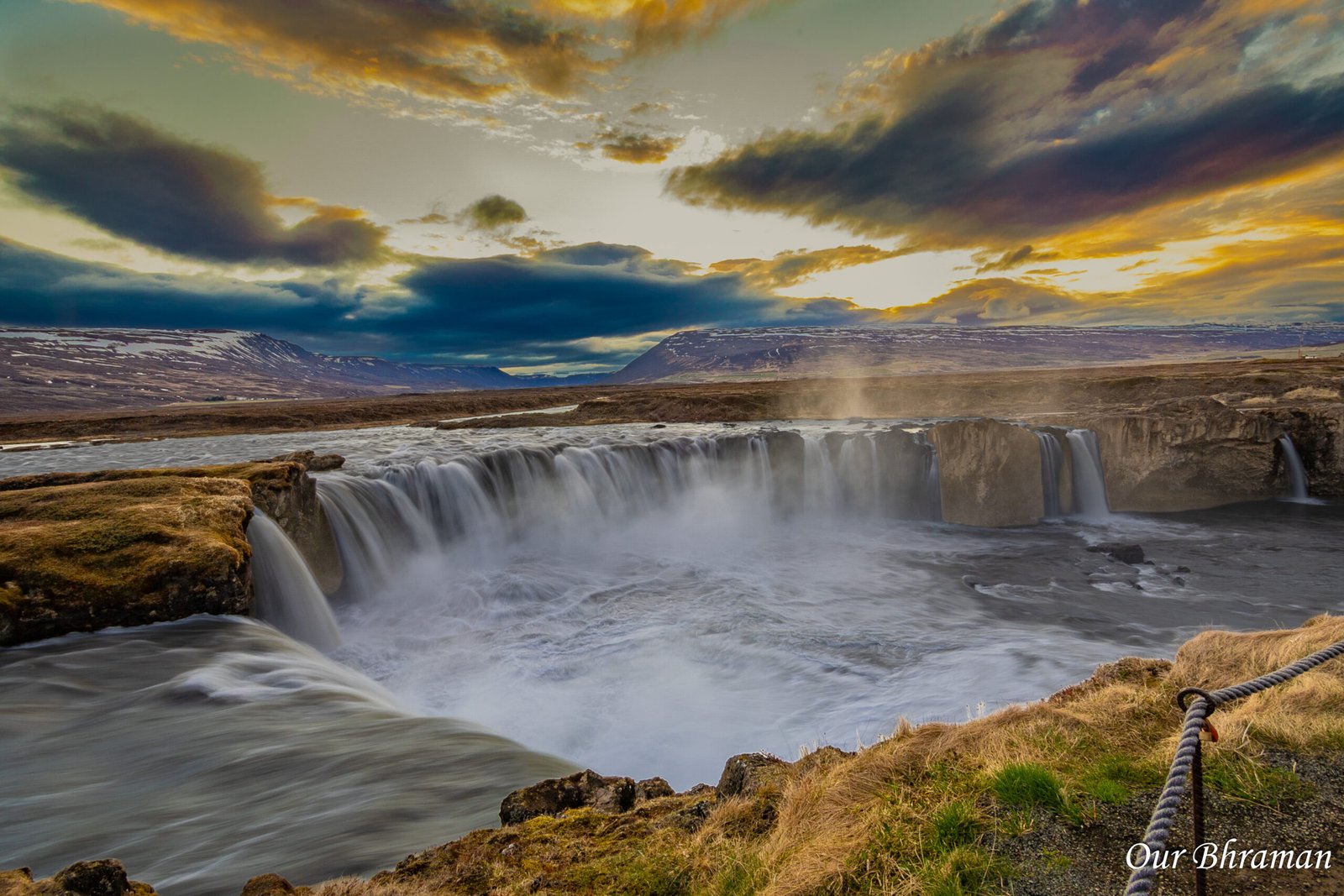 The waterfall also carries an important piece of Icelandic history. According to tradition, around the year 1000, the lawspeaker Þorgeir Ljósvetningagoði decided that Iceland would adopt Christianity. After making this decision, he is said to have thrown his pagan idols into the waterfall, giving Goðafoss its enduring name, Waterfall of the Gods.
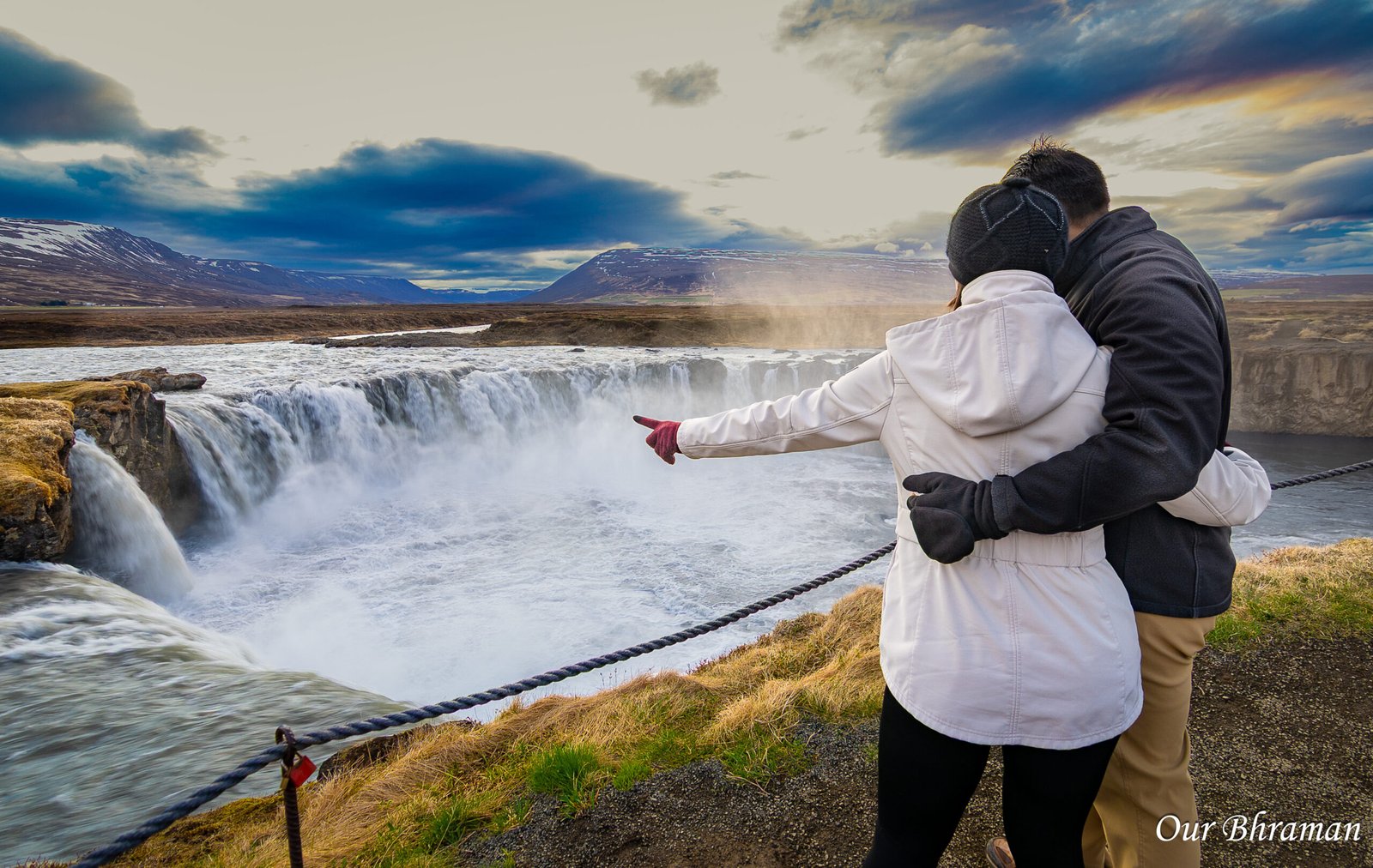
Seeing Goðafoss from Every Angle
We parked on one side of the falls and walked across the road to explore the other viewpoint. From above, we could appreciate the full scale of Goðafoss—the river spreading across the rocky ledge before tumbling into the gorge below.
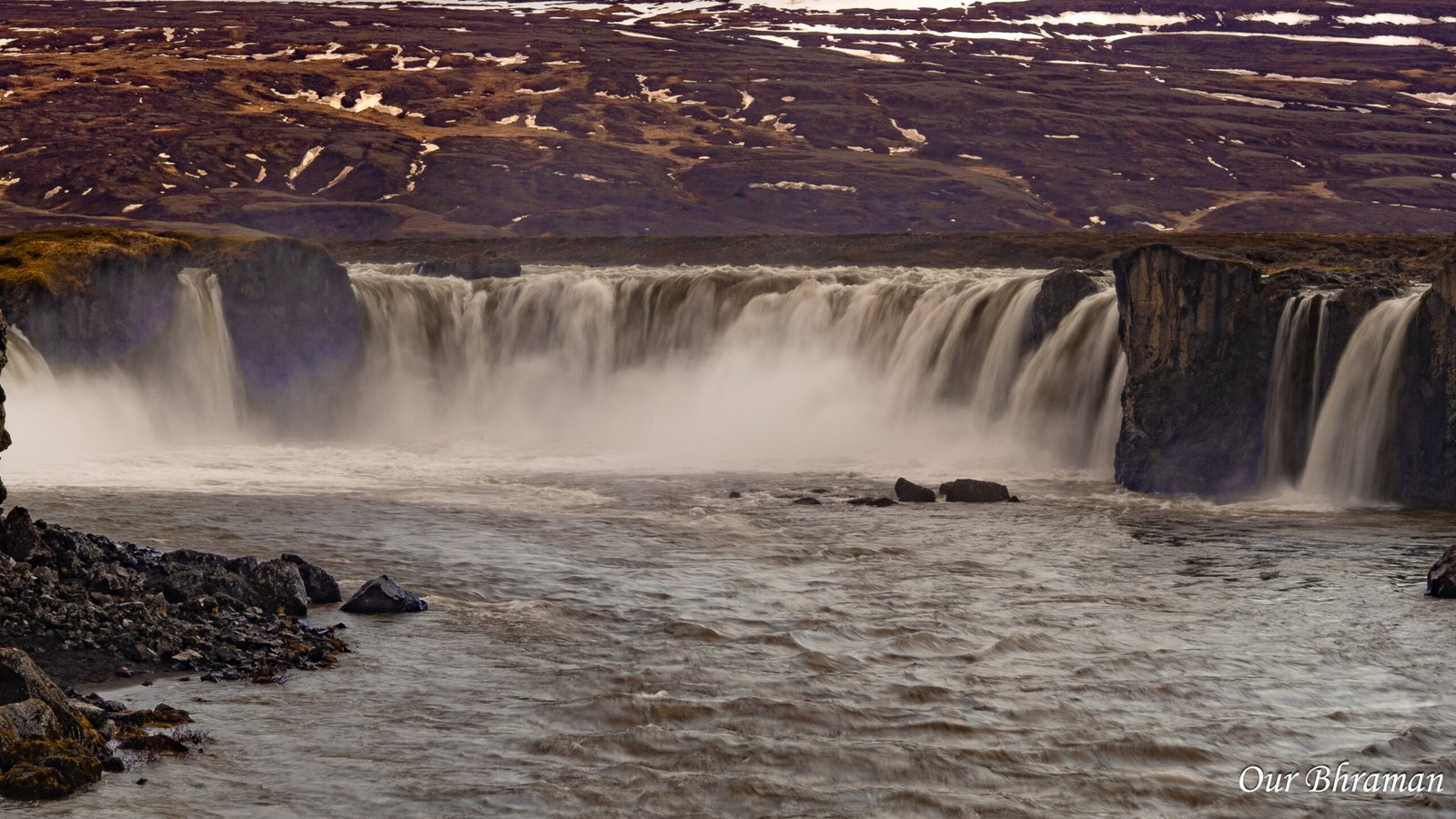 But we didn’t stop at the viewpoints.
We followed the path down toward the river to experience the waterfall from ground level. Standing close to the rushing water gave us a completely different perspective. The sound was louder, the spray was in the air, and the immense power of the river felt much more immediate.
And then came one of those wonderfully simple travel moments: dipping our toes into the icy Icelandic water. The water was unbelievably cold, but standing there beside one of Iceland’s most beautiful waterfalls made it completely worth it.
We were fortunate to experience Goðafoss in the evening, when the softer light began to transform the landscape. As the sun moved lower toward the horizon, the surrounding volcanic rocks and rushing water took on warmer tones, creating a beautiful contrast with the cool blue of the river.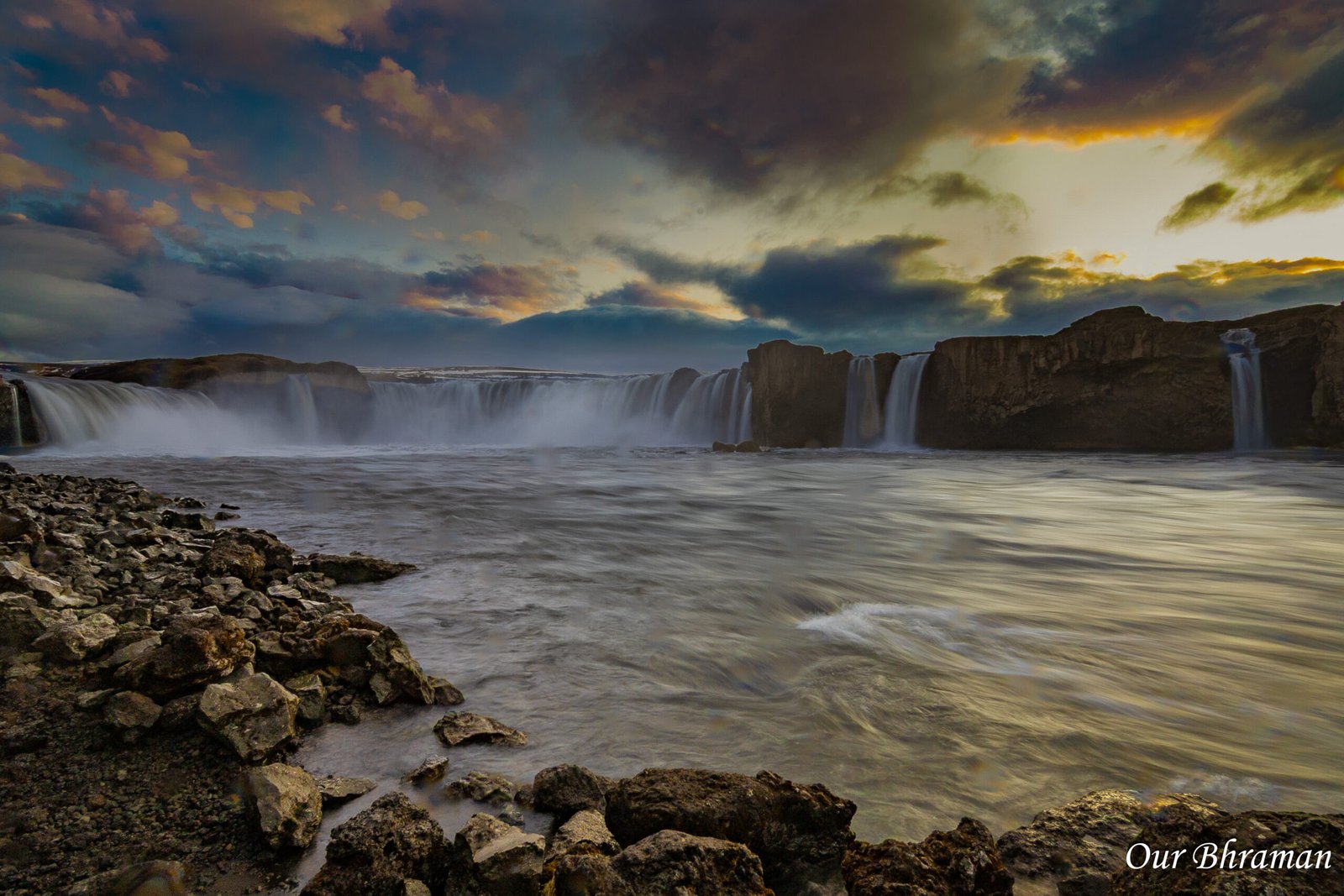
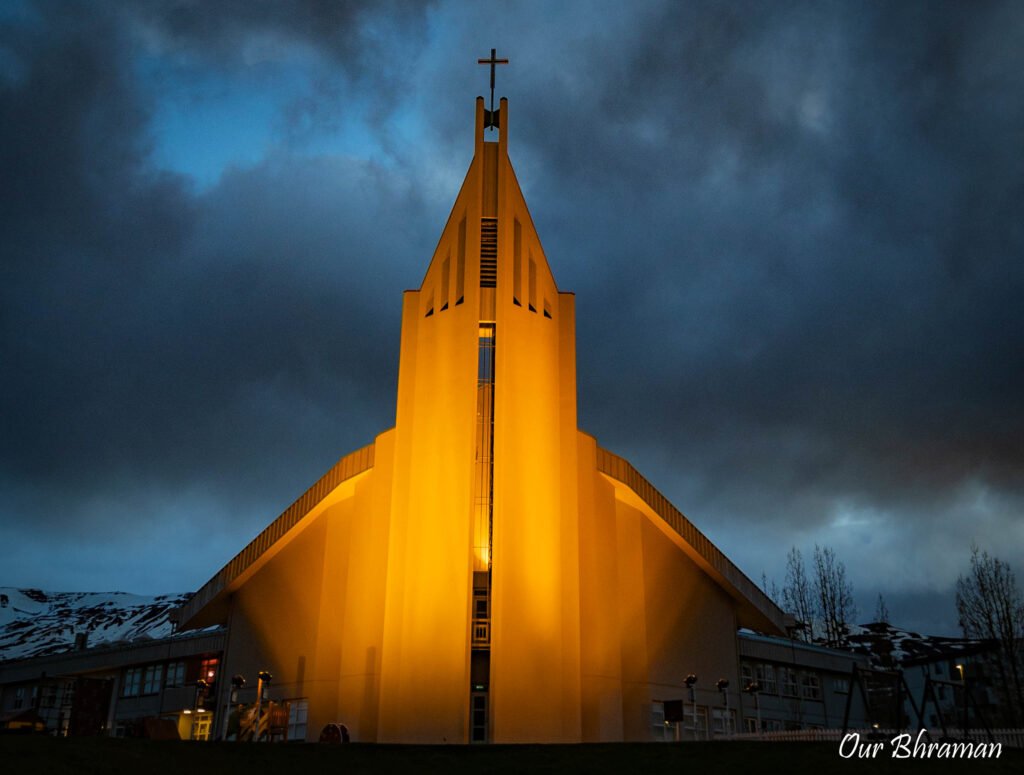
As night fell, we made one final stop at Glerarkirkja, a beautifully lit church that stood quiet and majestic under the night sky. On our way back to the hotel, we decided to take a different route — this time intentionally avoiding the toll road that had surprised us earlier. The alternate road offered a completely new perspective of the surrounding landscape and the city itself.
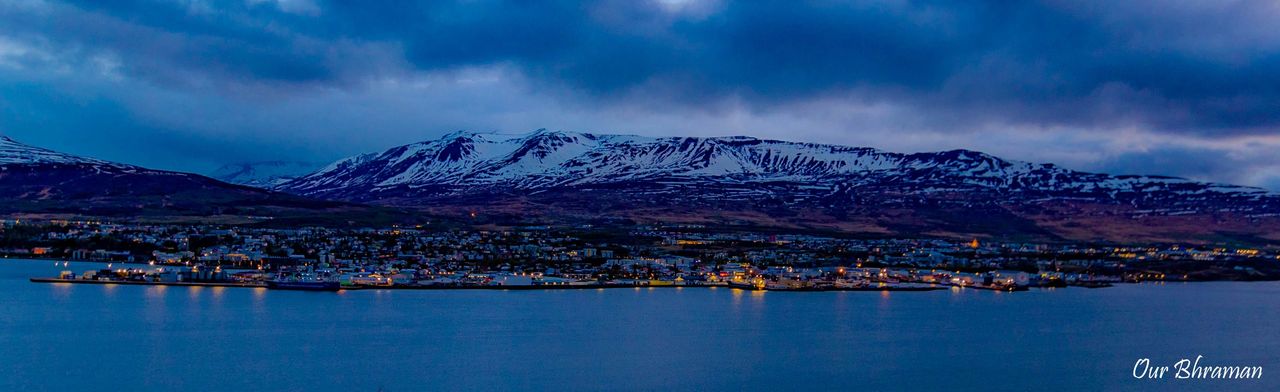
As we were driving back into Akureyri, one building immediately stood out from the road—Glerárkirkja Church. Even from a distance, its bright illumination made it easy to spot. The church seemed to glow against the dark evening sky, its modern shape standing out almost like a beacon. For a moment, it felt as if the church was quietly watching over the town. It was such a peaceful and unexpected sight that we decided to turn around and take a closer look.
Up close, Glerárkirkja was even more striking. Its tall, angular design looked completely different under the warm orange lighting, which highlighted the clean lines of the façade and gave the building an almost golden glow. What fascinated us most wasn’t necessarily the history of the church, but simply seeing its modern architecture illuminated against the deep blue Icelandic night.
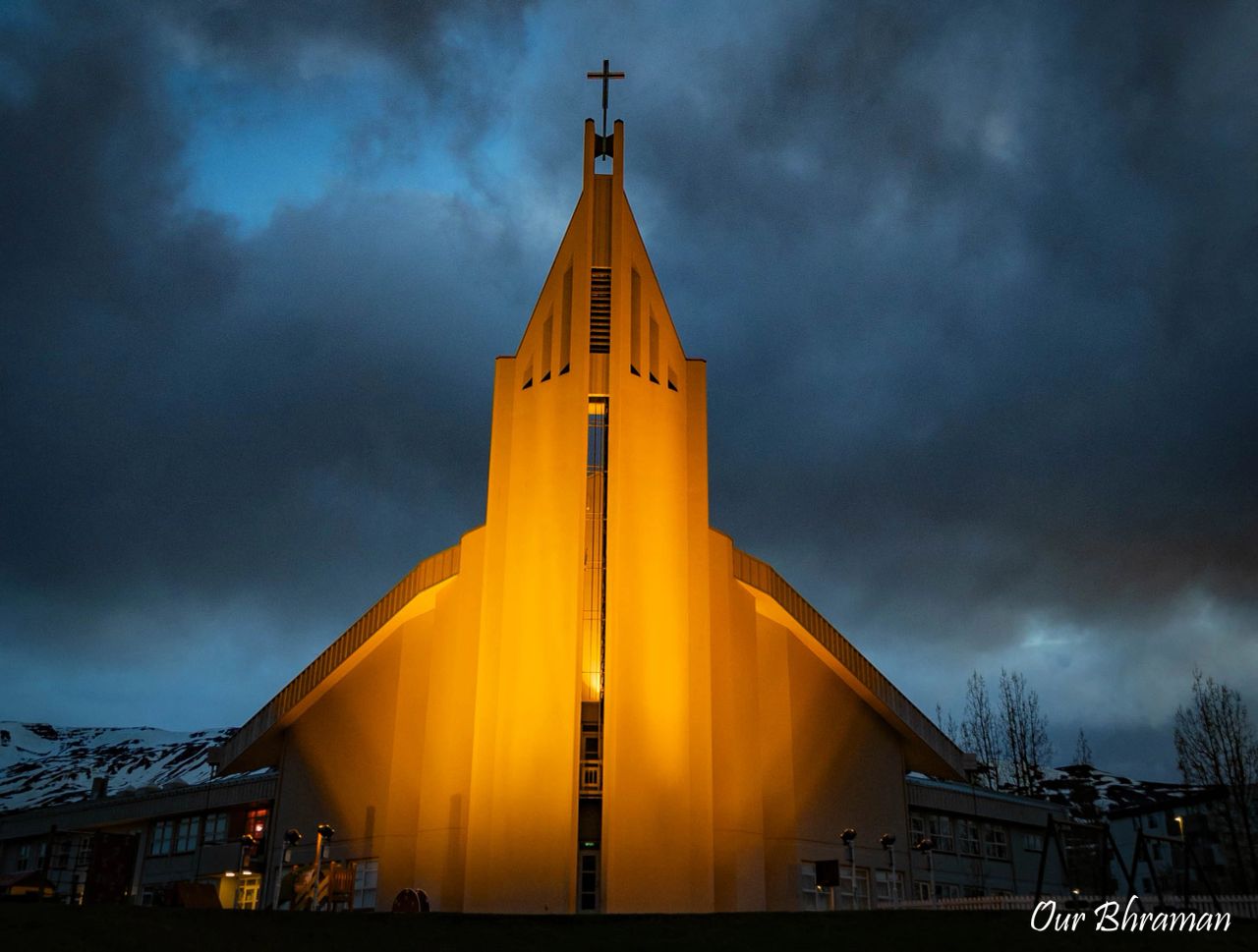
Behind the church, the snow-covered mountains added another beautiful layer to the scene. The contrast between the warm light of the building, the dark sky, and the rugged mountains made the setting feel uniquely Icelandic. As photographers, these are the moments we love most—an unexpected scene that we hadn’t planned to photograph but couldn’t simply drive past.
It was also almost 10 p.m., and the area was remarkably quiet. There were hardly any cars in the parking lot, making it easy to park and explore the surroundings without feeling rushed. With almost no one around, we could take our time walking around the church, looking for different angles, and watching how the illuminated building changed against the surrounding landscape.
Standing there in the quiet of the night, with the glowing church in front of us and the mountains rising behind it, Glerárkirkja felt less like a planned sightseeing stop and more like one of those unexpected discoveries that make a road trip memorable.