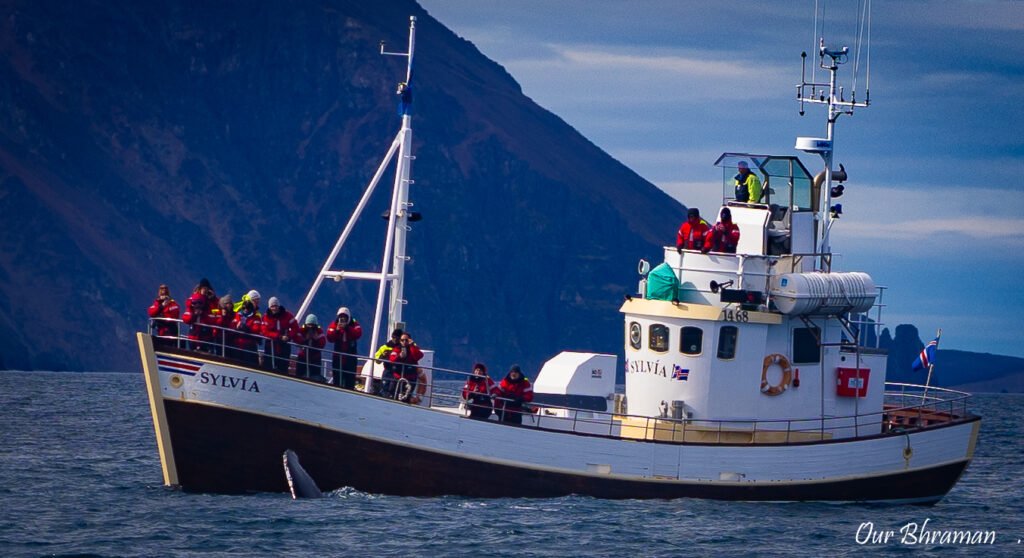
Our main plan for the day was the Húsavík whale watching tour, something we had been looking forward to. We purposely booked an afternoon tour, hoping the sunnier weather would make the boat ride more comfortable and less chilly out on the open water.
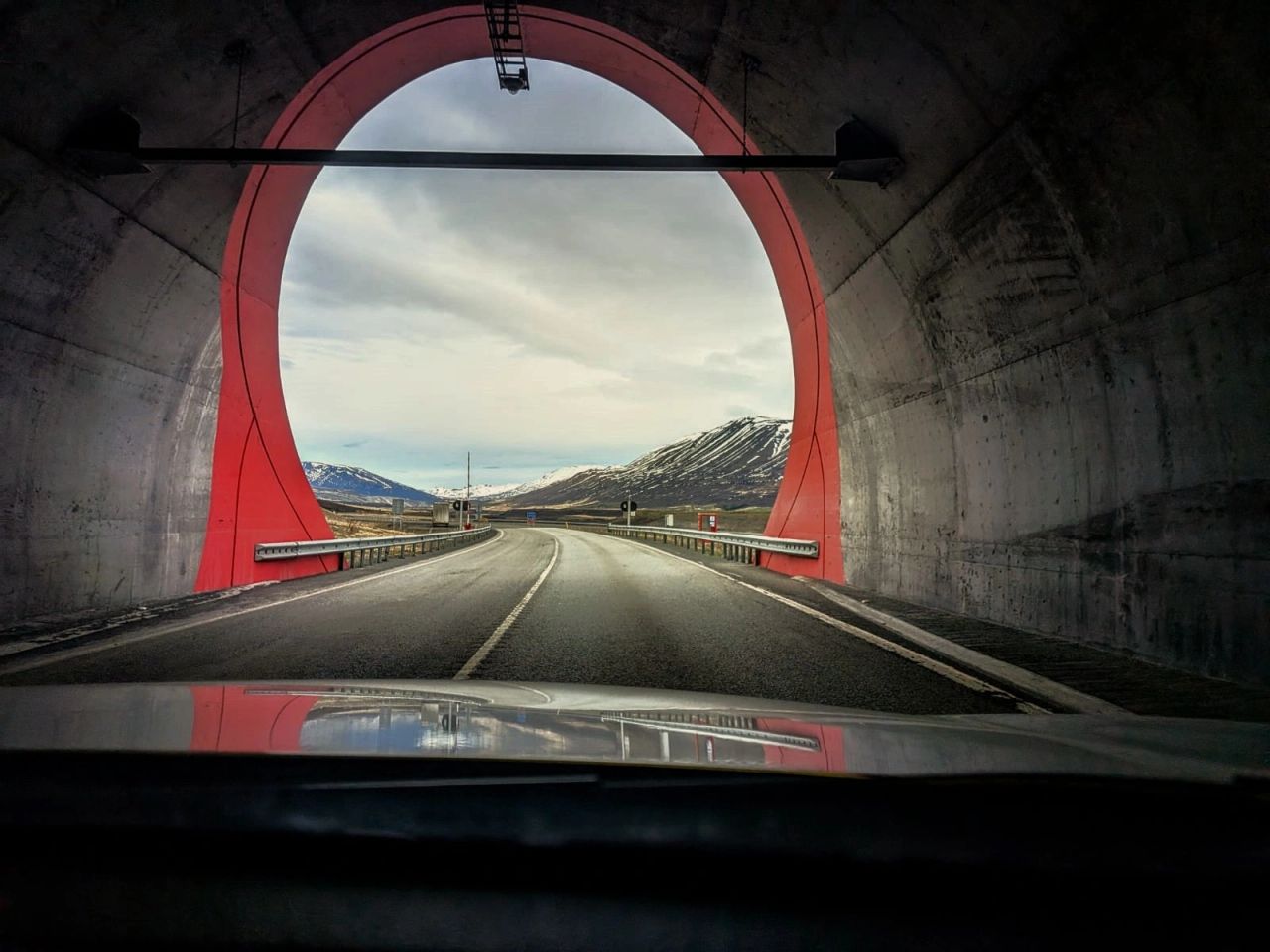
The drive from Akureyri to Húsavík takes about an hour, so we left around 10 AM, giving ourselves plenty of time to arrive early and explore a bit before our whale watching tour. This time, we were a little more prepared — we had already paid for the second leg of the toll road, so we actually got to enjoy the drive through the tunnel without stressing about extra fees. Still, we couldn’t help but feel a little sting from the night before when we accidentally took the wrong toll road and ended up paying way more than we planned. Lesson learned — but at least now we were laughing about it.
Exploring Húsavík Before Our Whale-Watching Tour
Our goal was to explore the town of Húsavík before the tour without feeling rushed. We arrived with enough time to spare, so instead of heading straight to the harbor, we decided to take a leisurely stroll through the charming town.
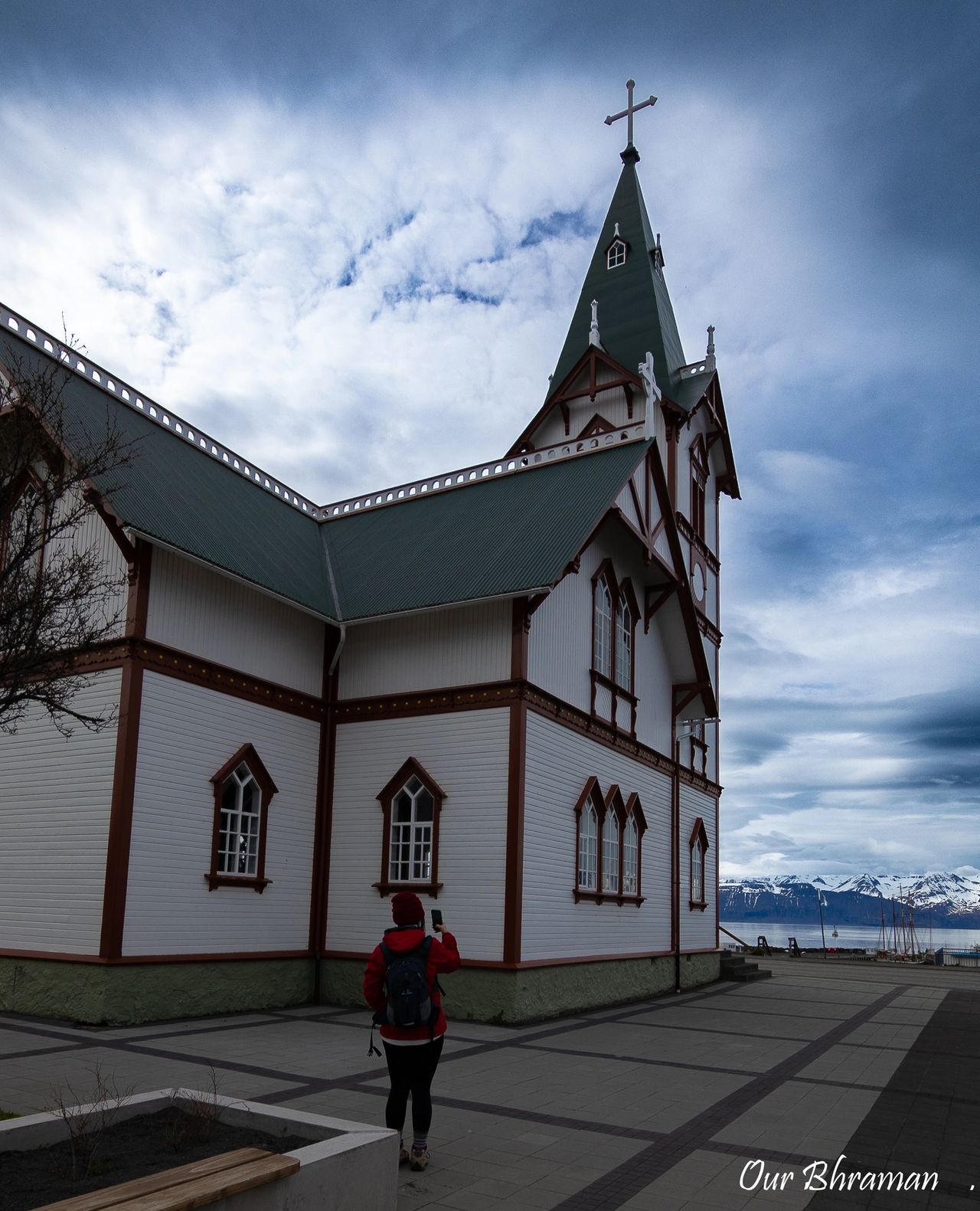
Our first stop was Húsavíkurkirkja, the town’s iconic wooden church with its beautiful green roof and white façade. Set near the harbor, it looked almost like something out of a storybook. The simple design and peaceful surroundings made it a wonderful place to begin our exploration of Húsavík.
After visiting the church, we continued our walk through the town. With colorful houses, local shops, and quiet streets framed by mountains and sea, Húsavík had a calm and welcoming vibe. It was the kind of place where time seemed to slow down just enough for us to really take it all in.
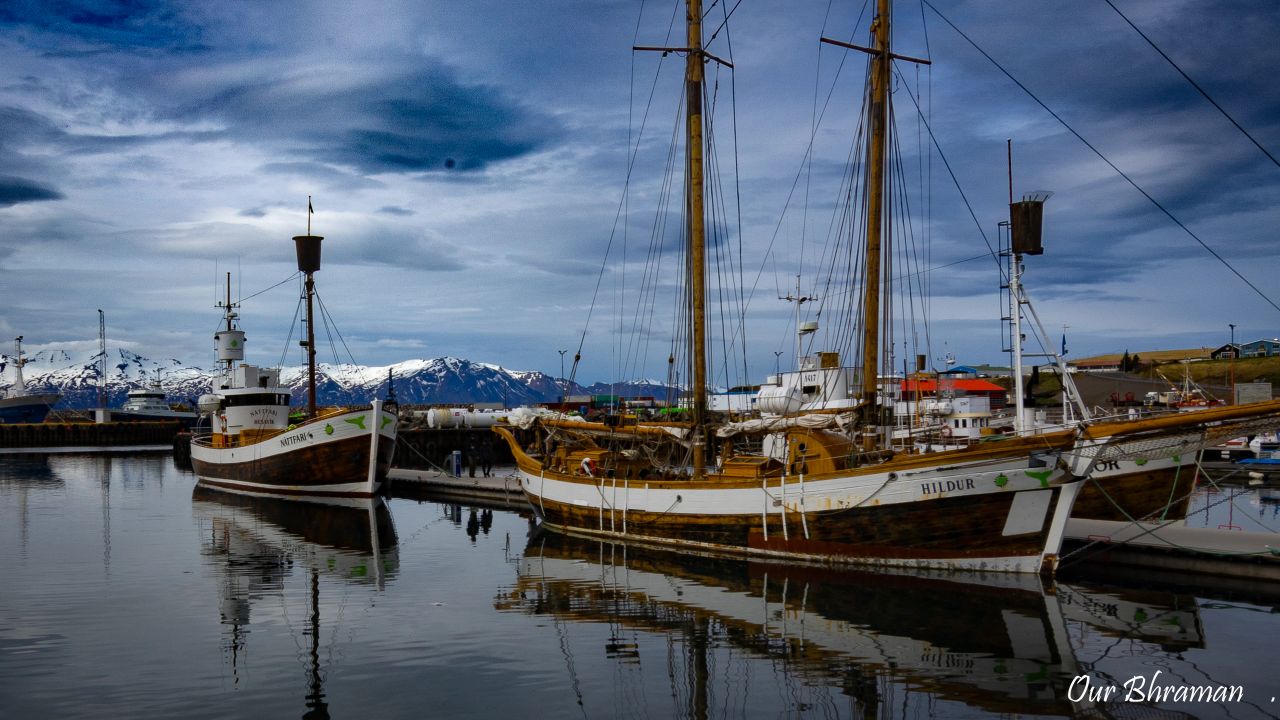
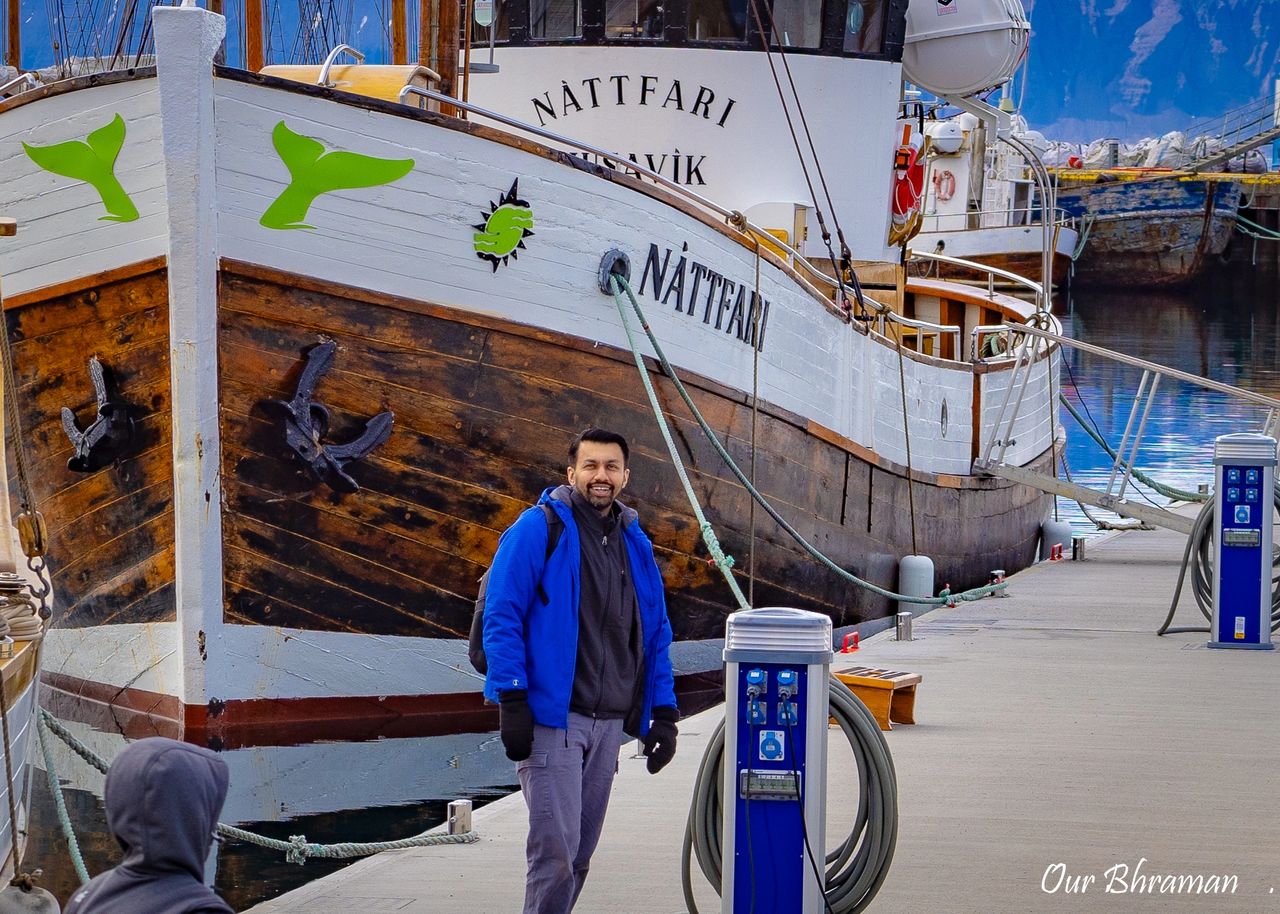 Eventually, our walk brought us toward Húsavík Harbor, the heart of the town and the starting point for our whale-watching adventure. The atmosphere here was completely different. Boats were lined up along the waterfront, and the bay opened up toward the mountains in the distance. Knowing that we would soon be heading out onto those waters made the harbor feel even more exciting.
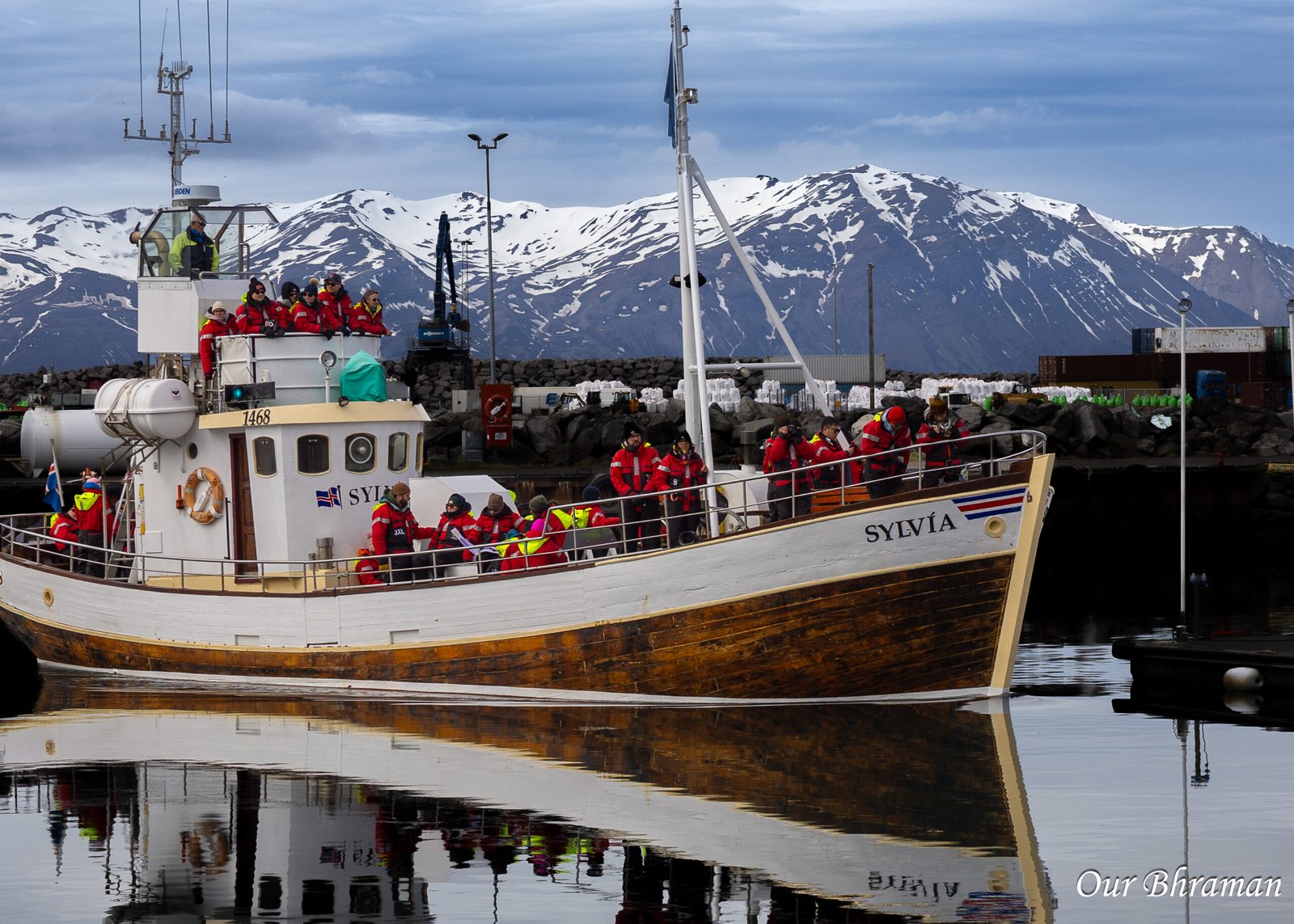 For photography, the church and harbor were especially rewarding. Within a relatively short walk, we could capture the town’s colorful buildings, fishing and whale-watching boats, the waters of Skjálfandi Bay, and the mountains beyond. We didn’t need to search for complicated viewpoints—the scenery seemed to unfold naturally as we walked.
If you have some extra time before your whale-watching tour, the Húsavík Whale Museum is another option worth considering. We didn’t visit the museum during our time in Húsavík because we wanted to spend our limited time exploring the town and harbor before our tour. However, if your schedule allows, the museum can be a great way to learn about the whales found in Skjálfandi Bay before heading out on the water. Its whale skeletons and exhibits can also give you a better introduction to the animals you may encounter during the tour.
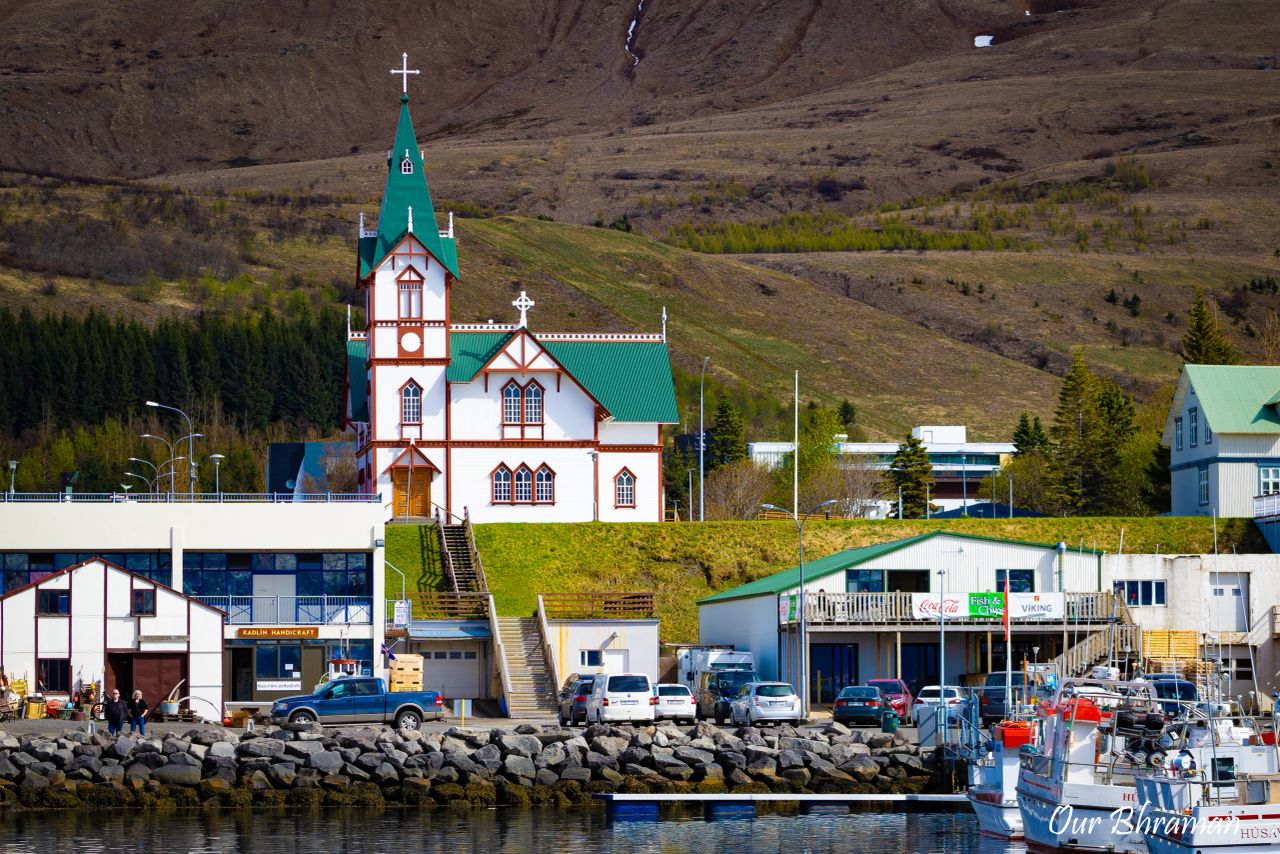 With our little exploration complete, we made our way back toward the harbor for our whale-tour check-in. One thing we appreciated about Húsavík was how easy it was to explore without worrying about being too far from the departure point. Most of the highlights are concentrated around the town and harbor, making it possible to enjoy a relaxed walk before the boat trip.
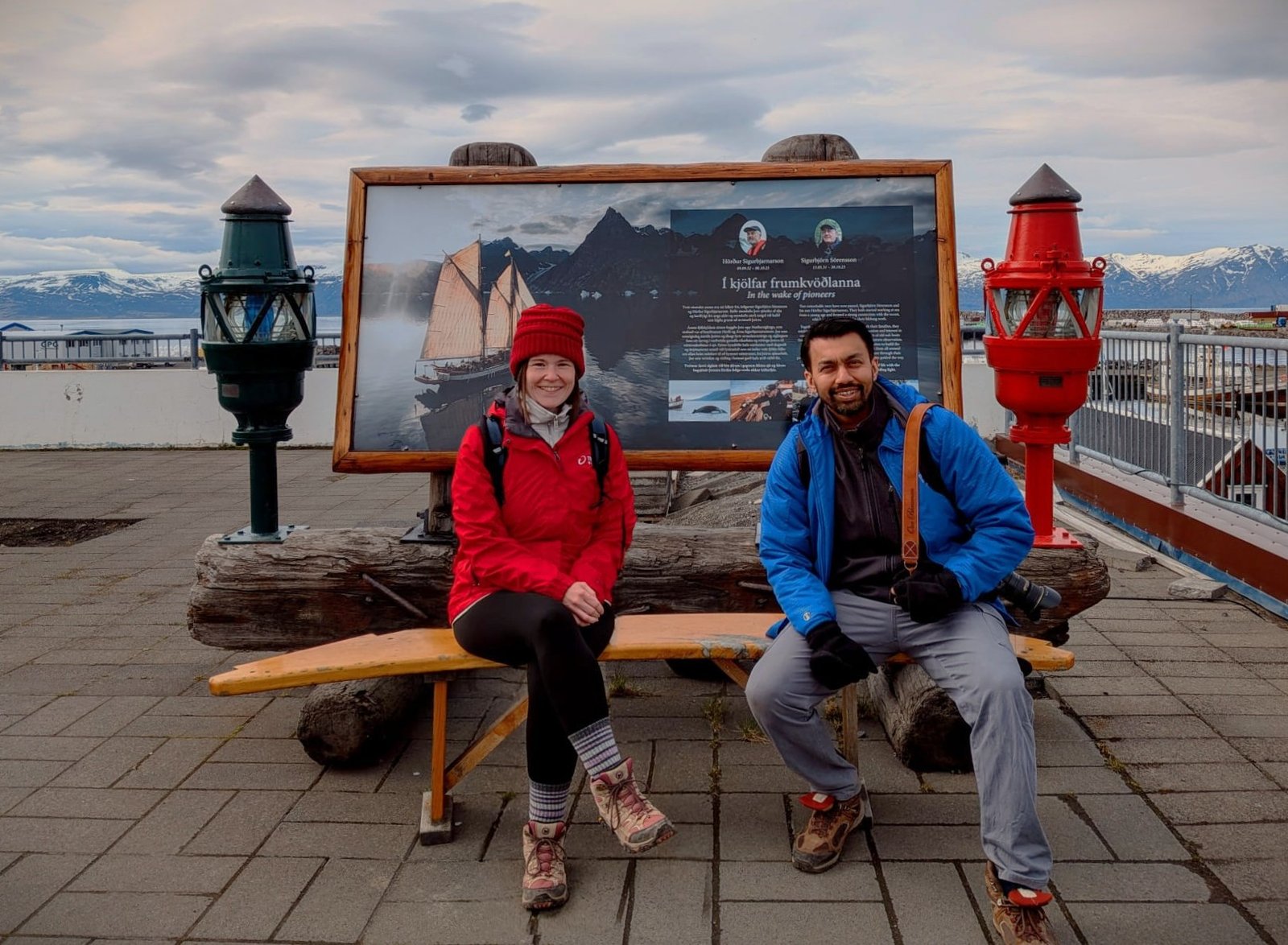 For us, Húsavík wasn’t simply a place to catch a whale-watching boat. The town itself became part of the experience—a beautiful wooden church, colorful houses, quiet streets, a lively harbor, and the growing excitement of knowing that our real adventure was about to begin.
Our North Sailing Whale-Watching Experience
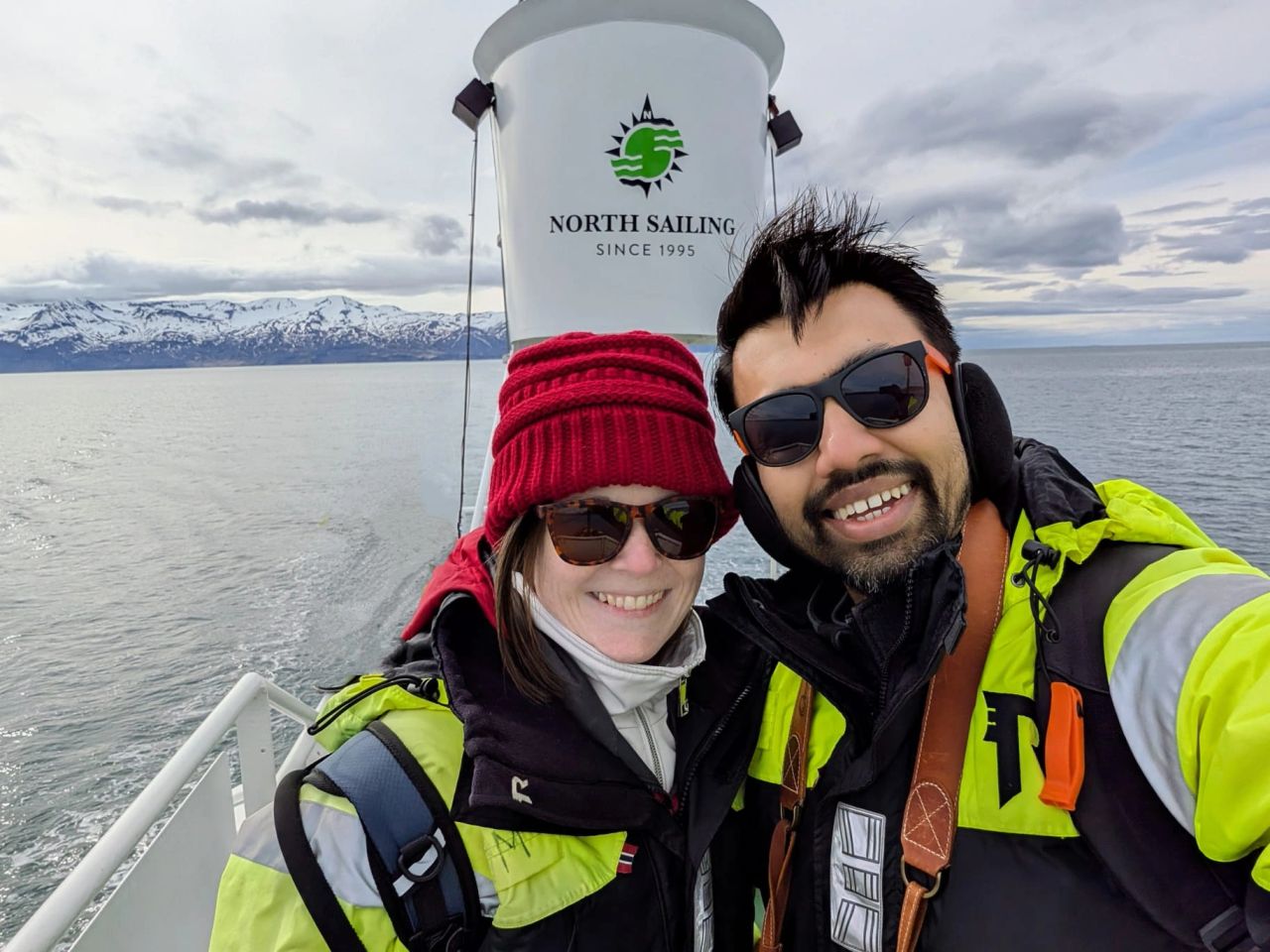
We were finally ready for the highlight of the day—our whale-watching tour with North Sailing, one of Iceland’s best-known and longest-established whale-watching operators. Húsavík is often called the whale-watching capital of Iceland, and standing at the harbor, we were excited to find out why.
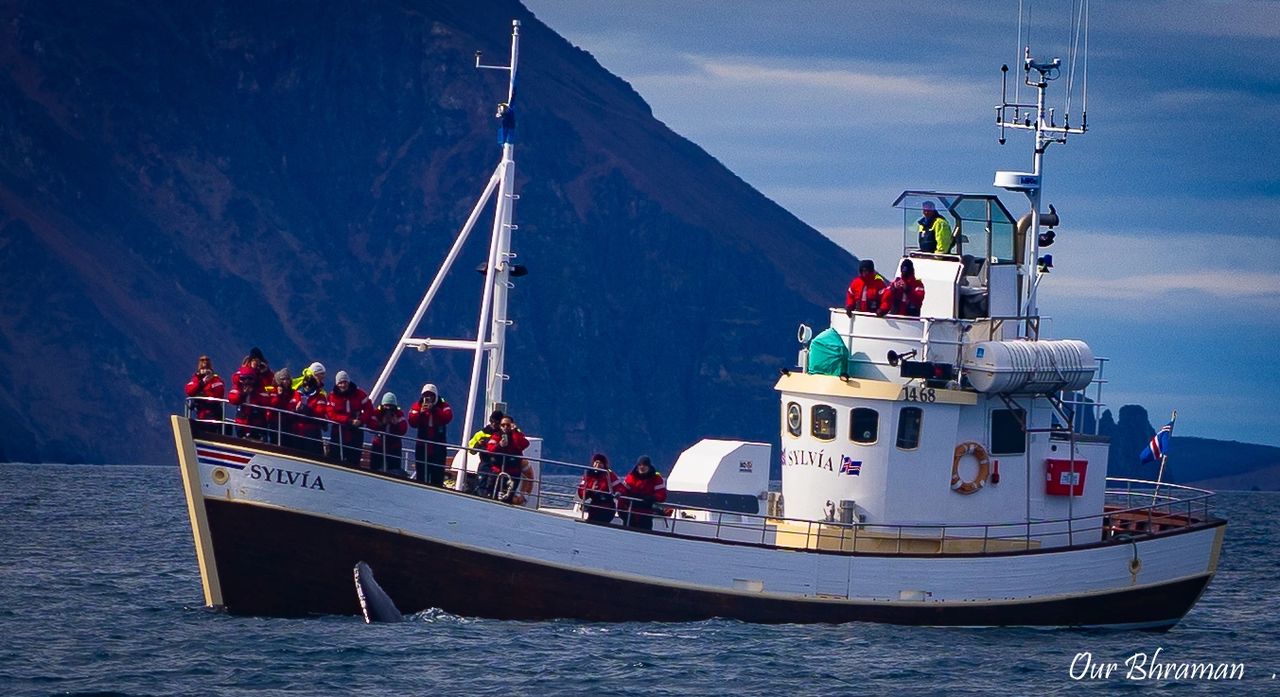
We boarded Náttfari, a beautiful traditional Icelandic oak boat that immediately gave the experience a special character. Instead of feeling like we were simply boarding a modern sightseeing vessel, stepping onto this classic wooden boat made the journey feel like part of the adventure itself.
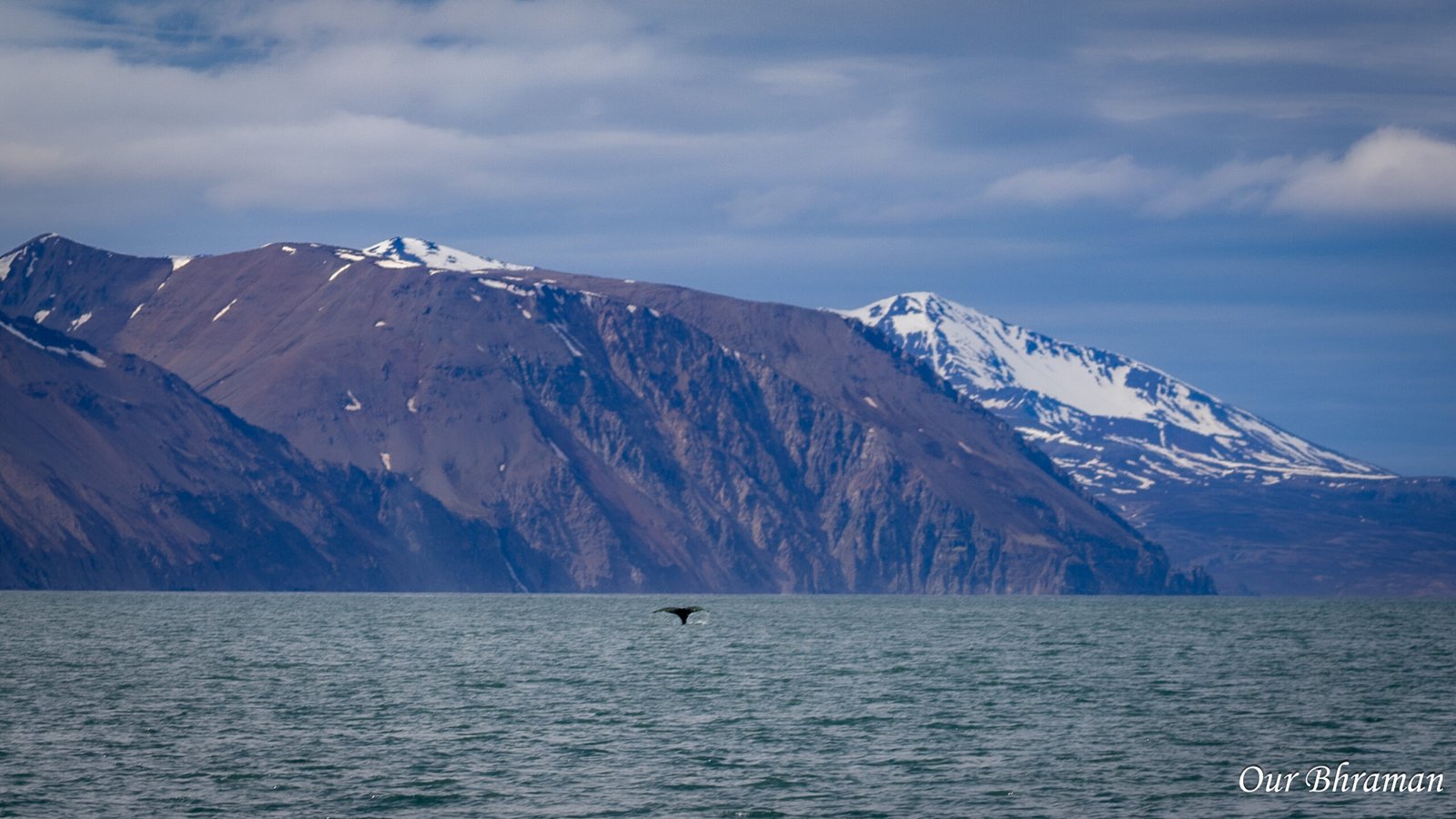 As we left Húsavík Harbor and gently sailed into the vast, peaceful waters of Skjálfandi Bay, it felt like we had stepped into another world. The mountains loomed in the distance, the sea was calm, and the air was crisp—a perfect setting for what was to come. Húsavík slowly disappeared behind us as we sailed farther into the bay, surrounded by mountains, open water, and endless sky.
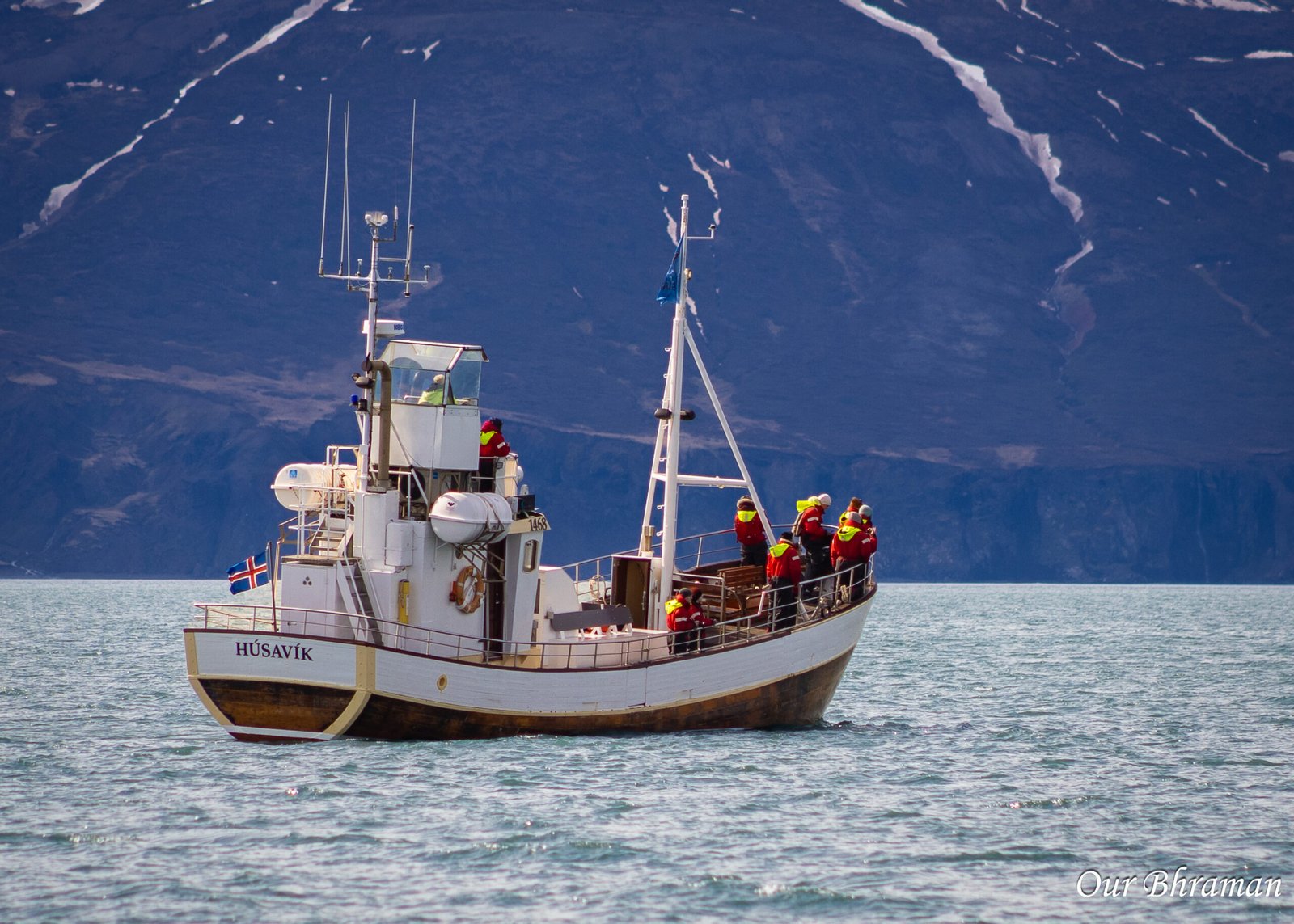 The further we traveled from shore, the more we realized that the journey itself was part of the experience. We weren’t simply heading somewhere to see whales; we were becoming part of this incredible landscape. The cool Arctic air, the sound of the water against the wooden boat, and the mountains surrounding the bay created a peaceful atmosphere that made it easy to forget everything happening back on land.
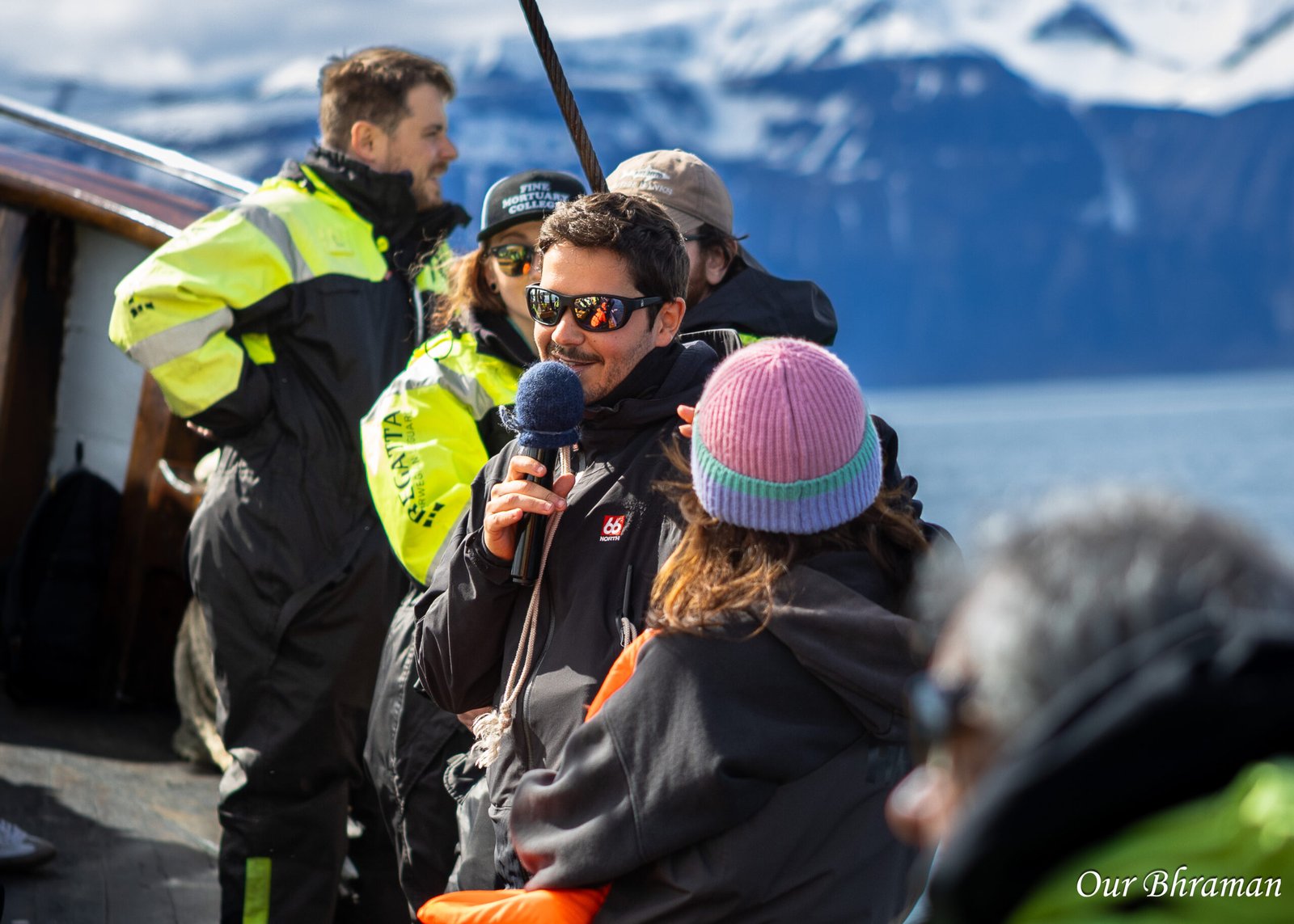 Our guide was knowledgeable and passionate, helping us understand more than simply where to look for whales. Along the way, they pointed out seabirds and shared information about the wildlife and the fragile marine ecosystem surrounding us. It gave us a deeper appreciation for the environment we were floating through.
And then, just when we were settling into the rhythm of the waves, there they were.
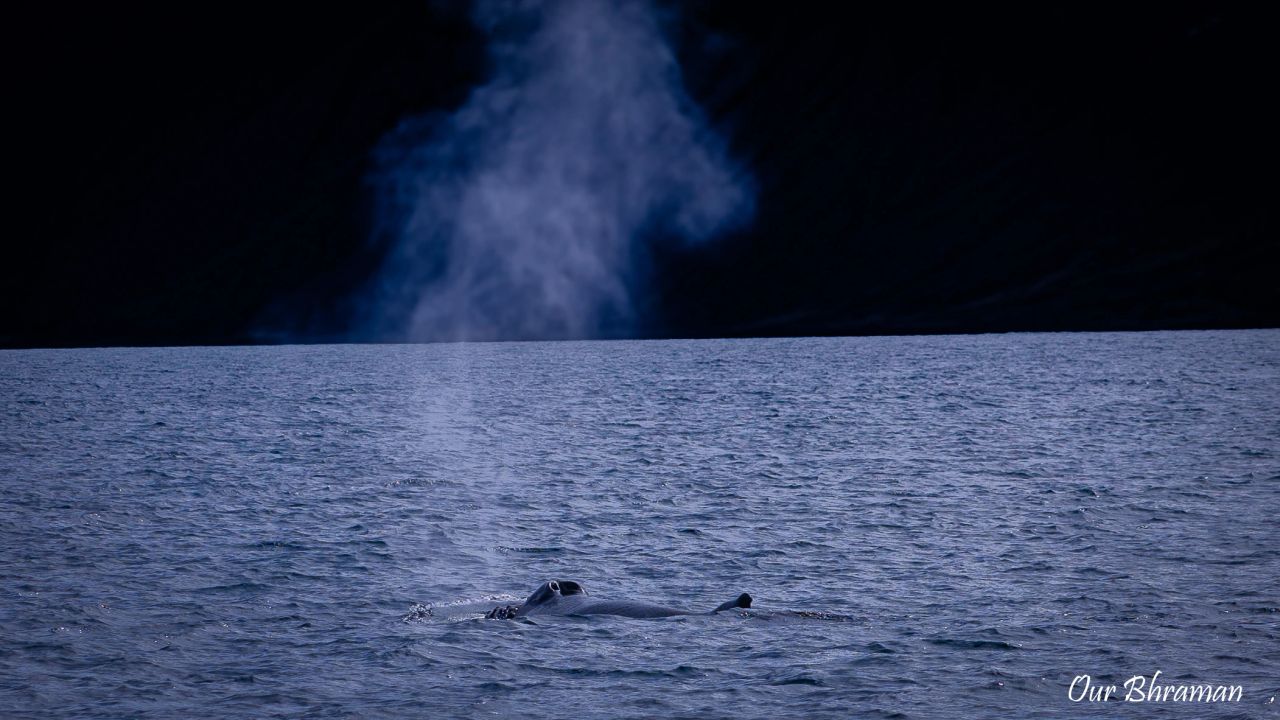
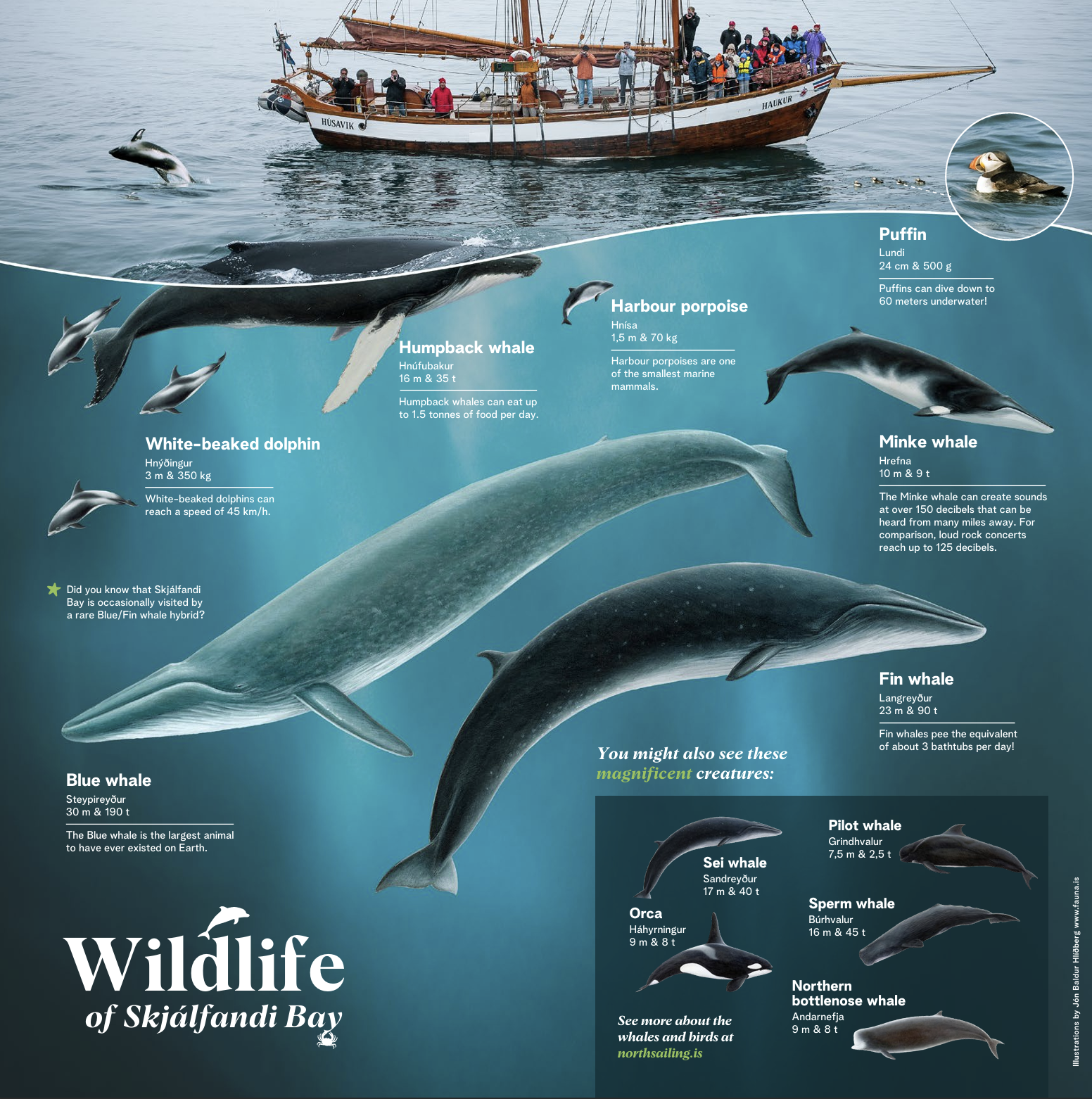 A whale surfaced gracefully near our boat, followed by another in the distance. Suddenly, everyone was looking in the same direction, cameras came up, and the quiet anticipation turned into excitement. Watching a whale rise from the water, take a breath, and disappear beneath the surface was completely different from seeing one on a screen.
We also spotted playful dolphins, gliding effortlessly through the water. Their movements were quick and energetic, and seeing them traveling through the open bay was another unexpected highlight.
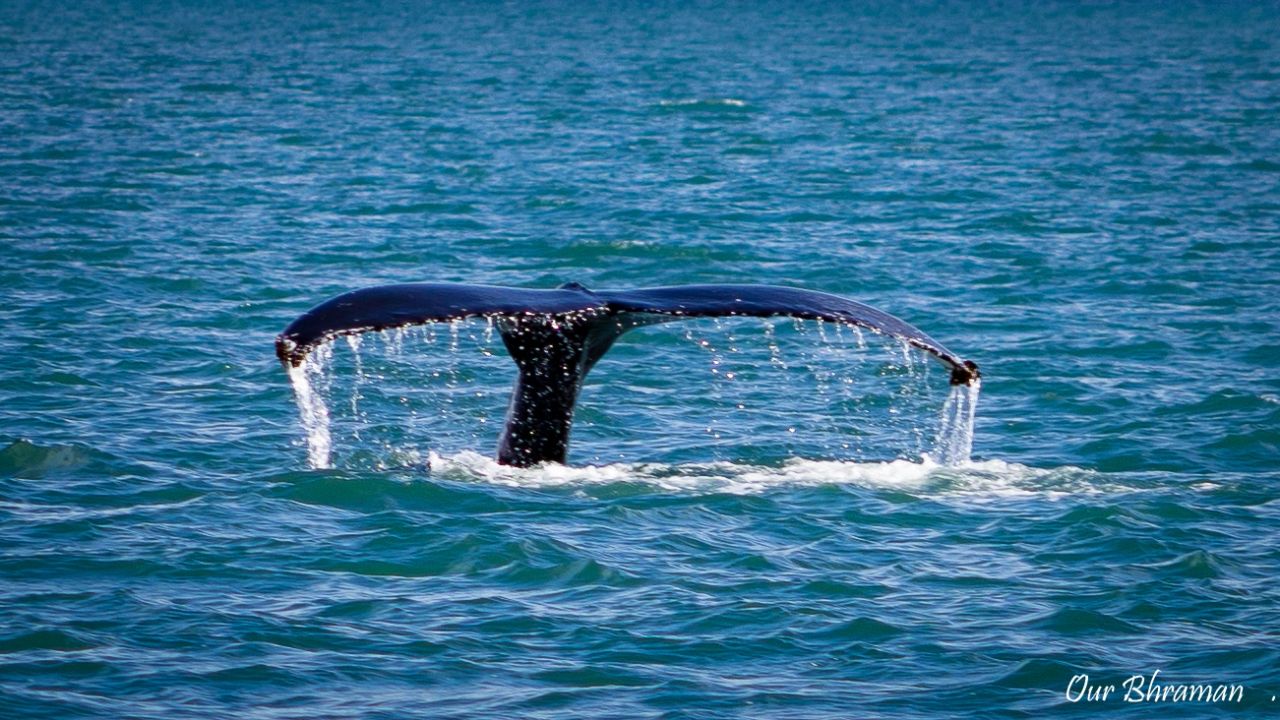 There is something magical about seeing these creatures in their natural habitat. No screens, no crowds, no enclosure—just us, the wooden boat, and the vast Icelandic ocean. You never know exactly when an animal will surface or where it will appear next, and that uncertainty makes every sighting feel even more special.
 Making the Most of the Experience
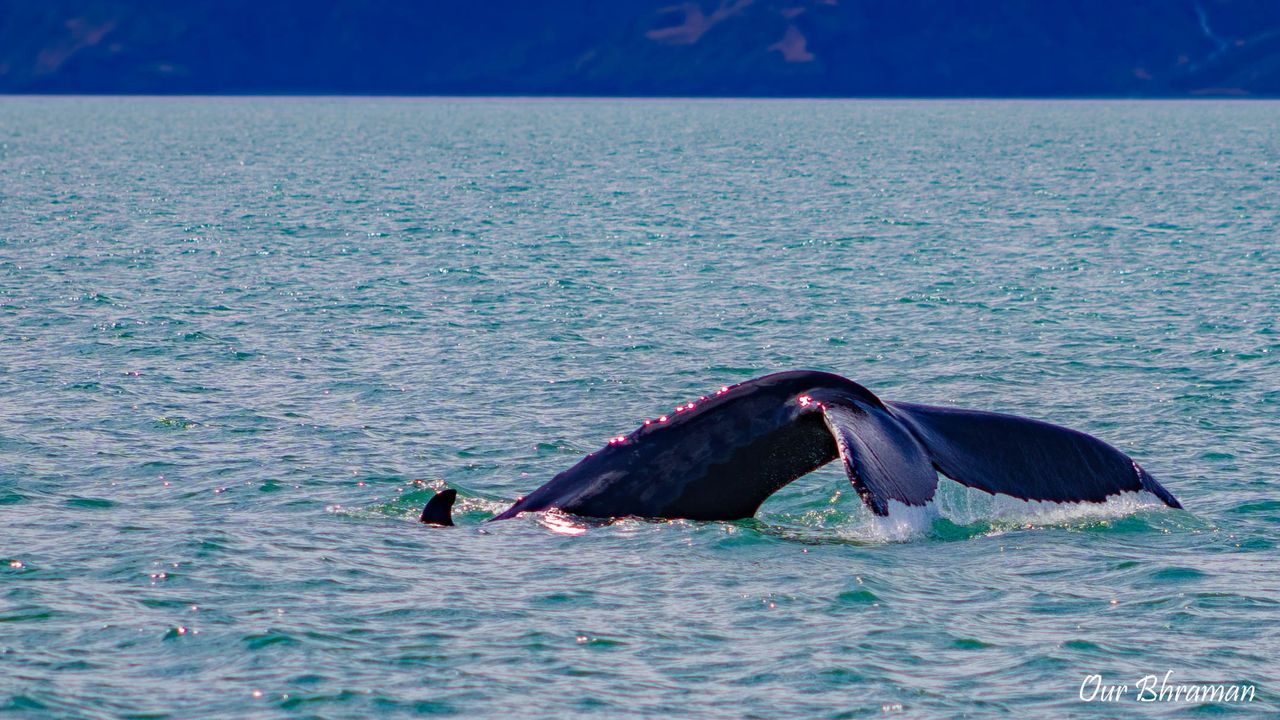 Making the Most of the Experience
April reminded us that whale watching in Iceland is definitely not a warm-weather boat ride. Even if the weather feels comfortable in Húsavík, conditions can feel much colder once you’re out on the water. Dressing in layers, with warm socks, gloves, and a hat, made the experience much more comfortable.
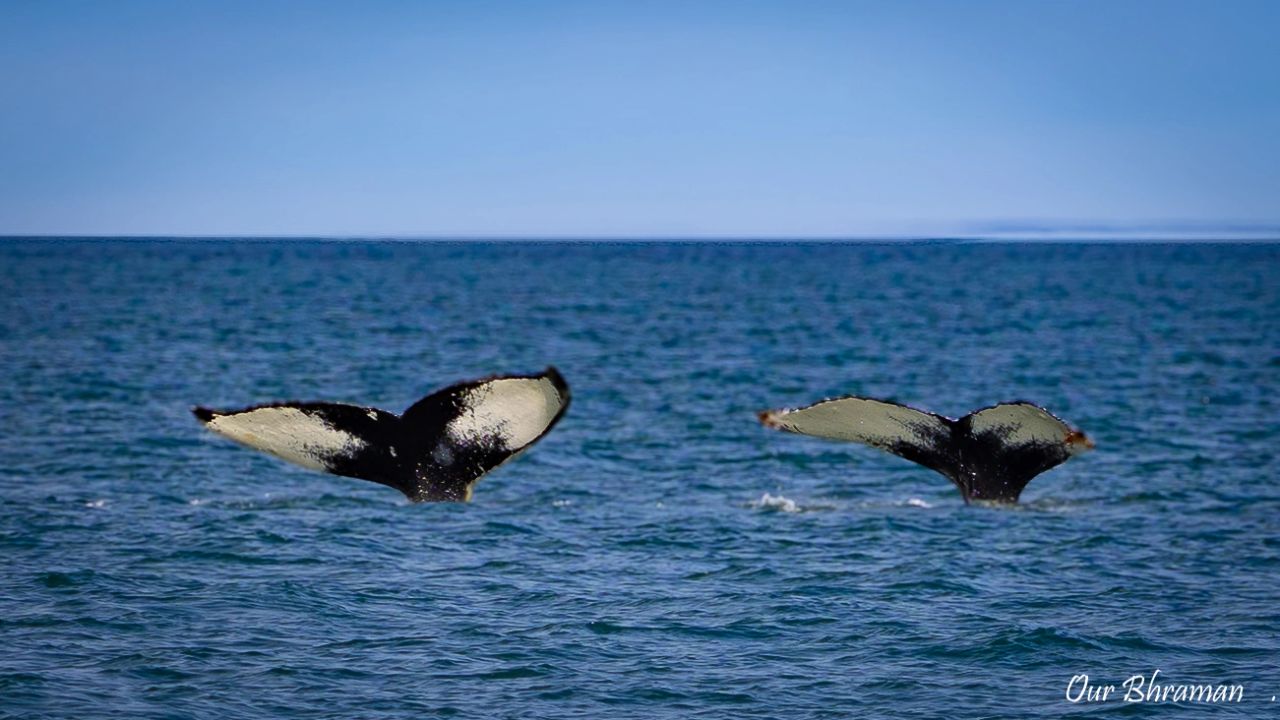 If you’re bringing a camera, keep it ready, but don’t spend the entire tour looking through the viewfinder. A whale can surface and disappear within seconds. A telephoto lens is useful for wildlife photography, while a wider lens is perfect for capturing the boat, mountains, coastline, and enormous landscape around you.
 And most importantly, be patient. Whale watching is wildlife watching, not a performance. The animals decide when and where they appear. Let the crew guide you, keep scanning the water, and enjoy the scenery between sightings.
Eventually, it was time to turn back toward Húsavík. After several hours in the cool Icelandic air, we were more than ready for something warm.
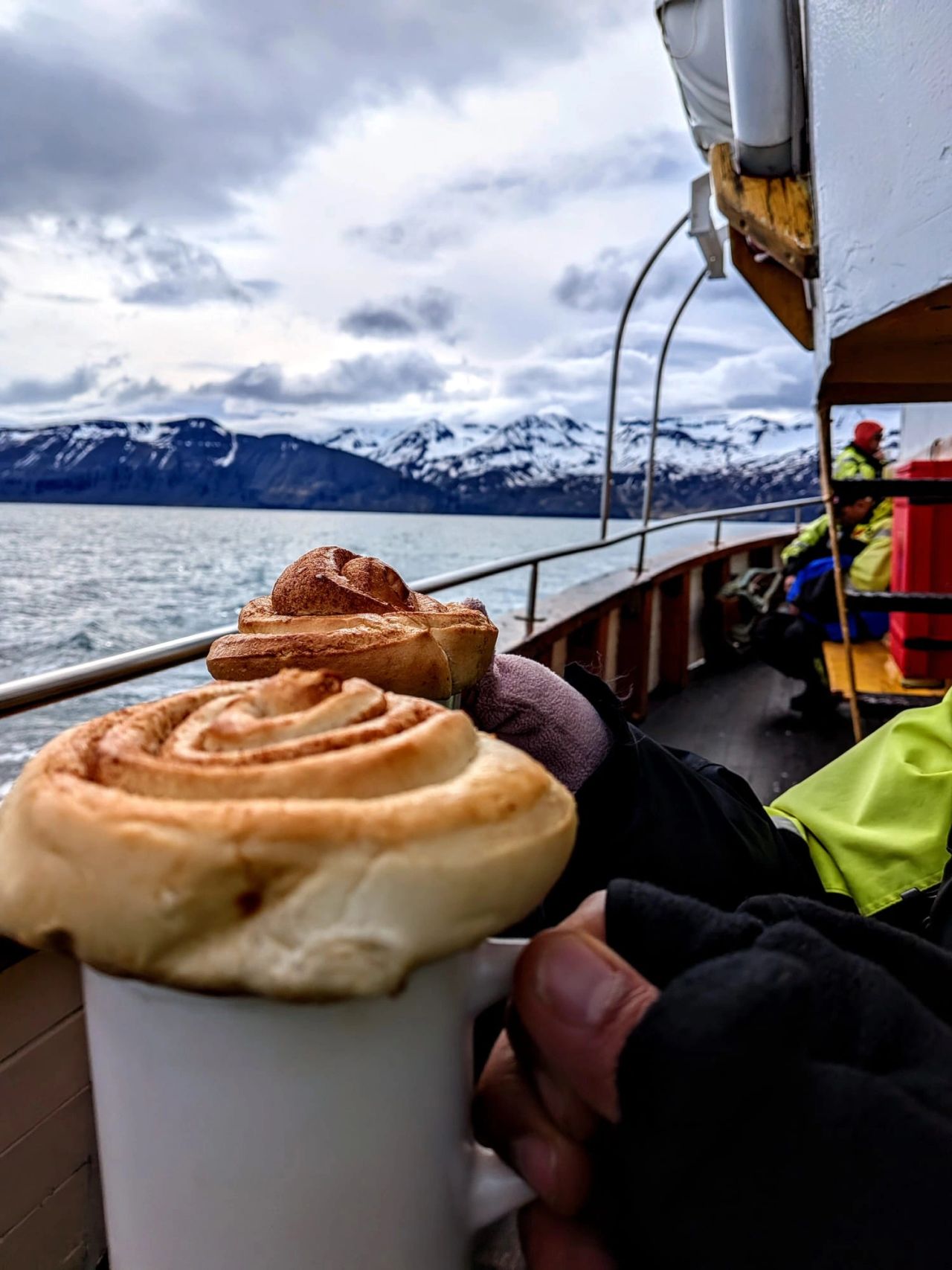
The tour wrapped up with a cozy treat: hot chocolate and Icelandic cinnamon buns served on board as we cruised back toward the harbor. It was the perfect way to end the trip—warm hands, full hearts, and big smiles all around.
Looking back, our North Sailing experience was about much more than seeing whales. It was the combination of sailing aboard a traditional Icelandic boat, watching the mountains from the sea, learning about the wildlife from our guide, spotting whales and dolphins, and simply being present in one of Iceland’s most remarkable natural environments.
We went out hoping to see whales. We came back with a memory of the entire ocean.
If you’re ever in North Iceland, this is one adventure you won’t want to miss — just don’t forget to bundle up!
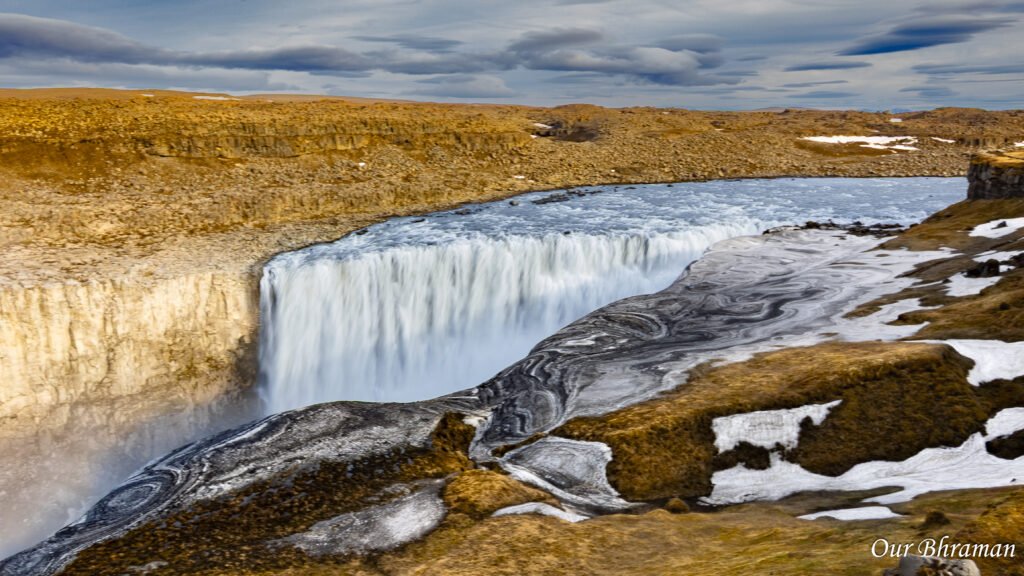
Dettifoss, Selfoss & Hafragilsfoss — Chasing Iceland’s Most Powerful Waterfalls
Our adventure into Vatnajökull National Park took us deep into Iceland’s rugged northeast, where the powerful Jökulsá á Fjöllum river cuts through the dramatic Jökulsárgljúfur canyon. Fed by meltwater from the mighty Vatnajökull glacier, the river has carved an extraordinary landscape of cliffs, canyons, and waterfalls before eventually flowing toward the Arctic Ocean.
Three waterfalls—Dettifoss, Selfoss, and Hafragilsfoss—are among the highlights of this area. We set out hoping to experience all three, but as we quickly learned, Iceland’s weather and seasonal conditions would have a say in how much we could explore.
Starting Our Waterfall Adventure
We approached the waterfalls from the west side, which was the more accessible option for our trip. From Route 1, the Ring Road, the drive toward the parking area was smooth and paved, making the approach relatively easy.
After parking, we began the roughly 800-meter walk toward Dettifoss. The trail started easily enough, with a mostly downhill walk, and we were excited to finally see the waterfall we’d been looking forward to.
Then the wind and spray made sure we knew we were in Iceland.
 Dettifoss — Feeling the Power of Iceland
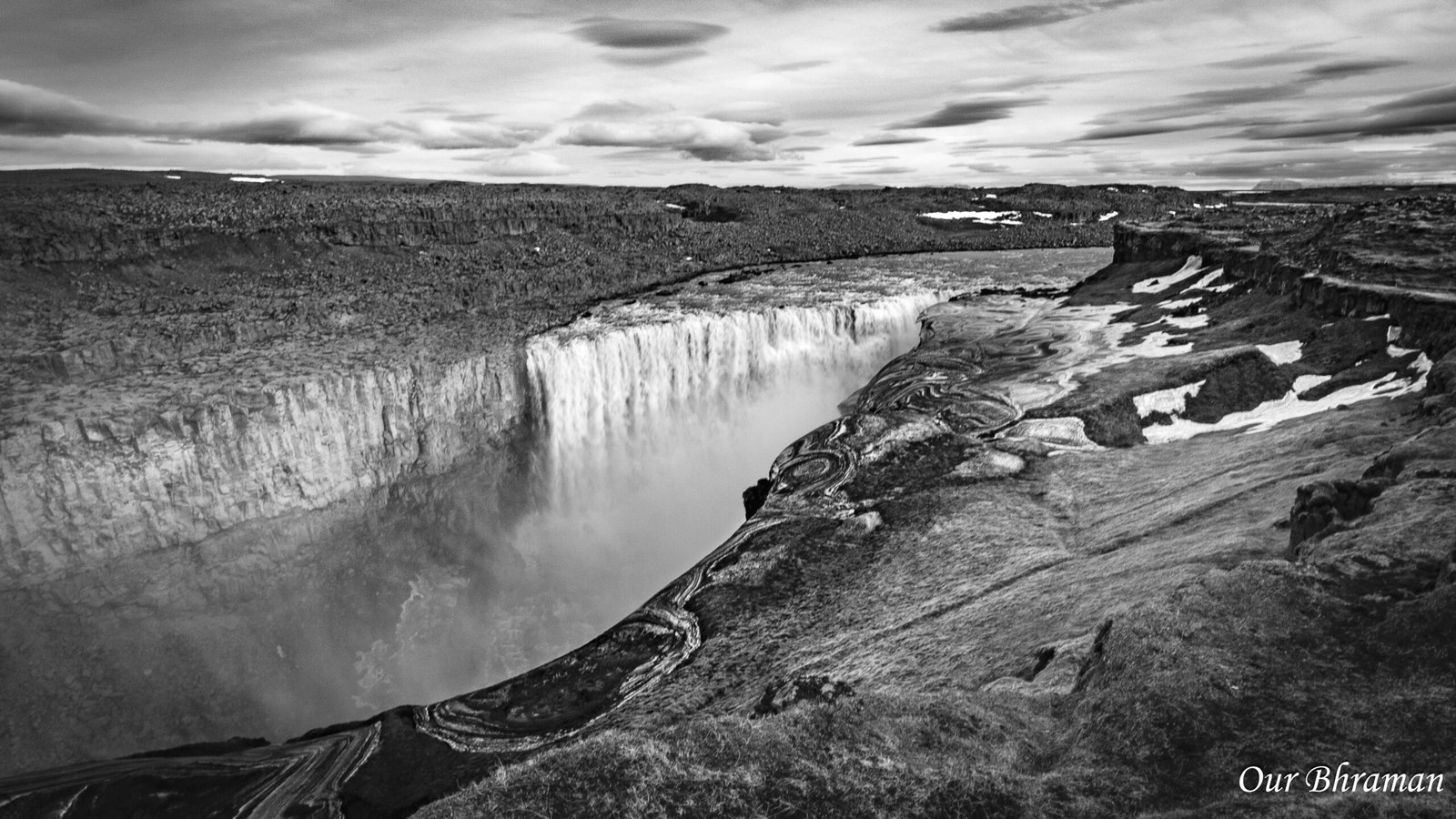 Dettifoss — Feeling the Power of Iceland
Our first glimpse came from the upper viewpoint of Dettifoss. The waterfall was already impressive from there, but the conditions made it difficult to stay for long. Heavy spray was blowing across the area, and within minutes, we were soaked—and so was our camera gear.
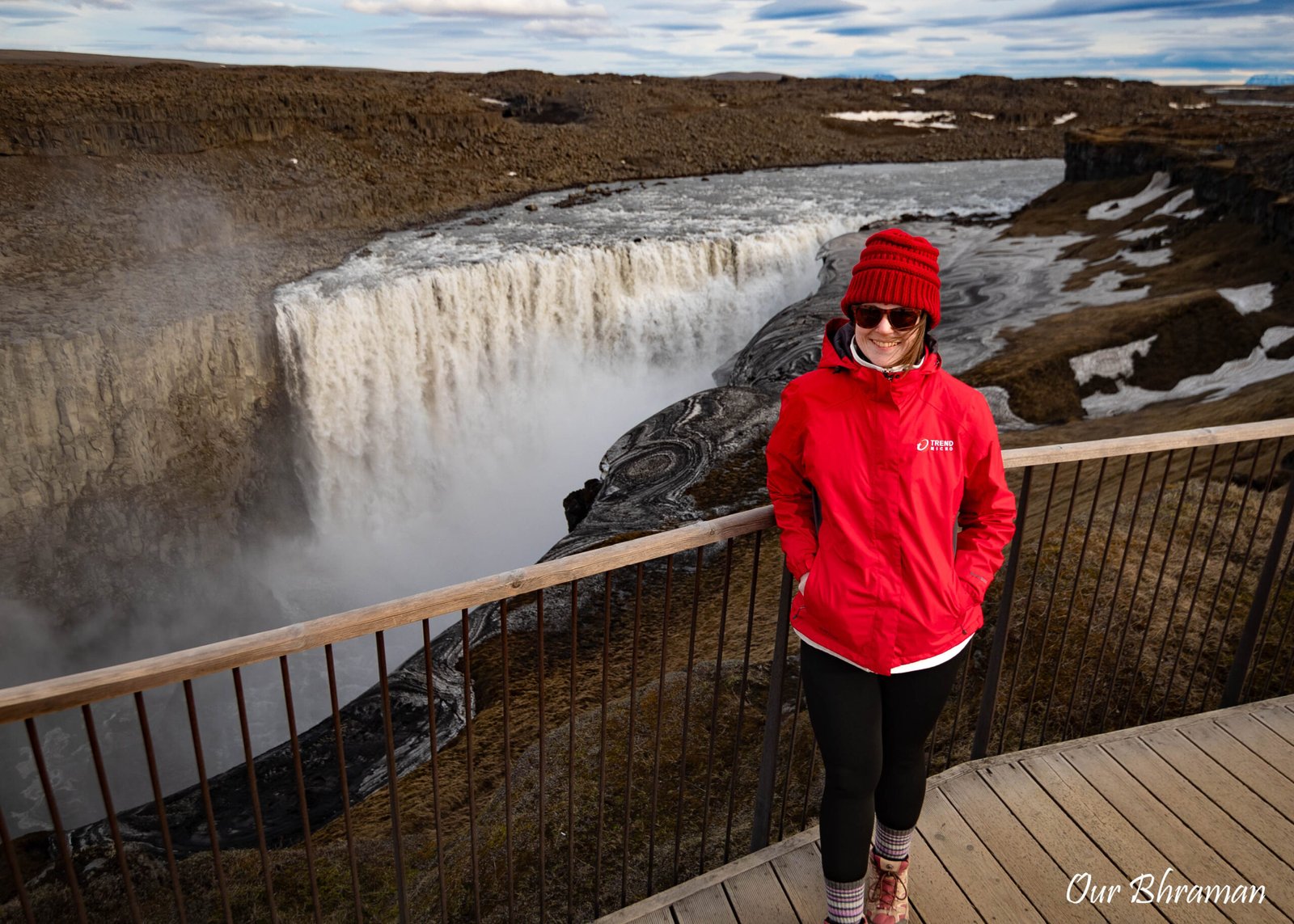 The wind was another challenge. At times, it was so strong that we had to hold onto our tripod to keep it from tipping over. Trying to compose a photograph while simultaneously protecting the camera from spray and keeping the tripod upright became an adventure of its own.
For us, the upper viewpoint wasn’t the best place to linger. On a calmer day, it may be more enjoyable, but with the conditions we experienced, we were ready to move on quickly. And that turned out to be a good decision. We continued toward the lower viewpoint, and the experience changed completely.
Standing closer to the base of Dettifoss, we could feel the immense force of the water. The roar was almost deafening—less like listening to a waterfall and more like hearing the Earth itself growl.
Dettifoss is famous for being one of Europe’s most powerful waterfalls, and standing beside it gave us a much better understanding of why. You don’t simply see the power of Dettifoss—you feel it. The ground seems to vibrate beneath your feet, the spray fills the air, and the enormous volume of water rushing through the canyon is almost overwhelming. It was beautiful, wild, and humbling all at once.
 Walking to Selfoss
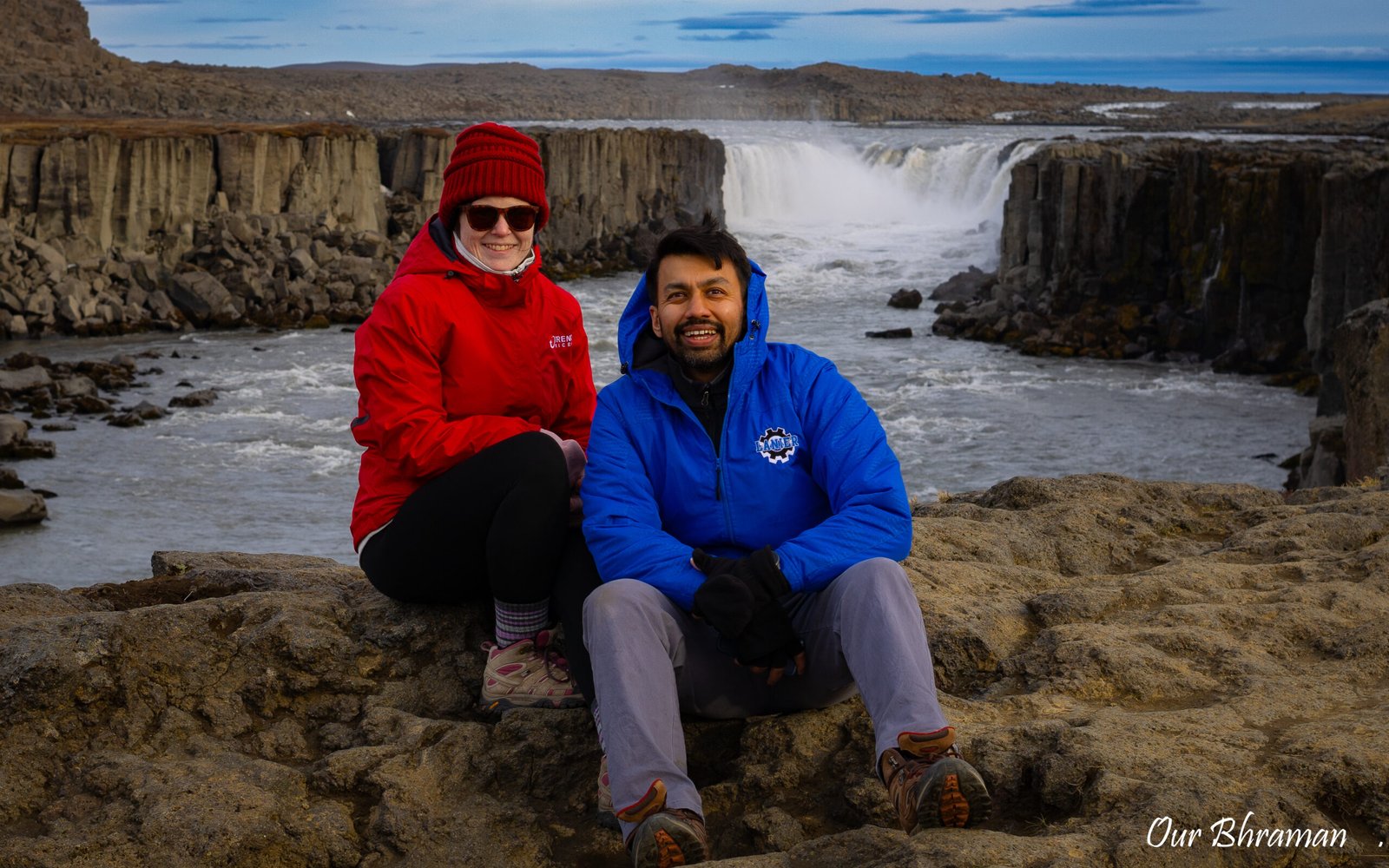 Walking to Selfoss
From Dettifoss, we followed the trail along the river toward Selfoss. The approximately 1-kilometer trail was rocky and uneven in places, so we took our time rather than rushing.
Selfoss felt completely different from Dettifoss.
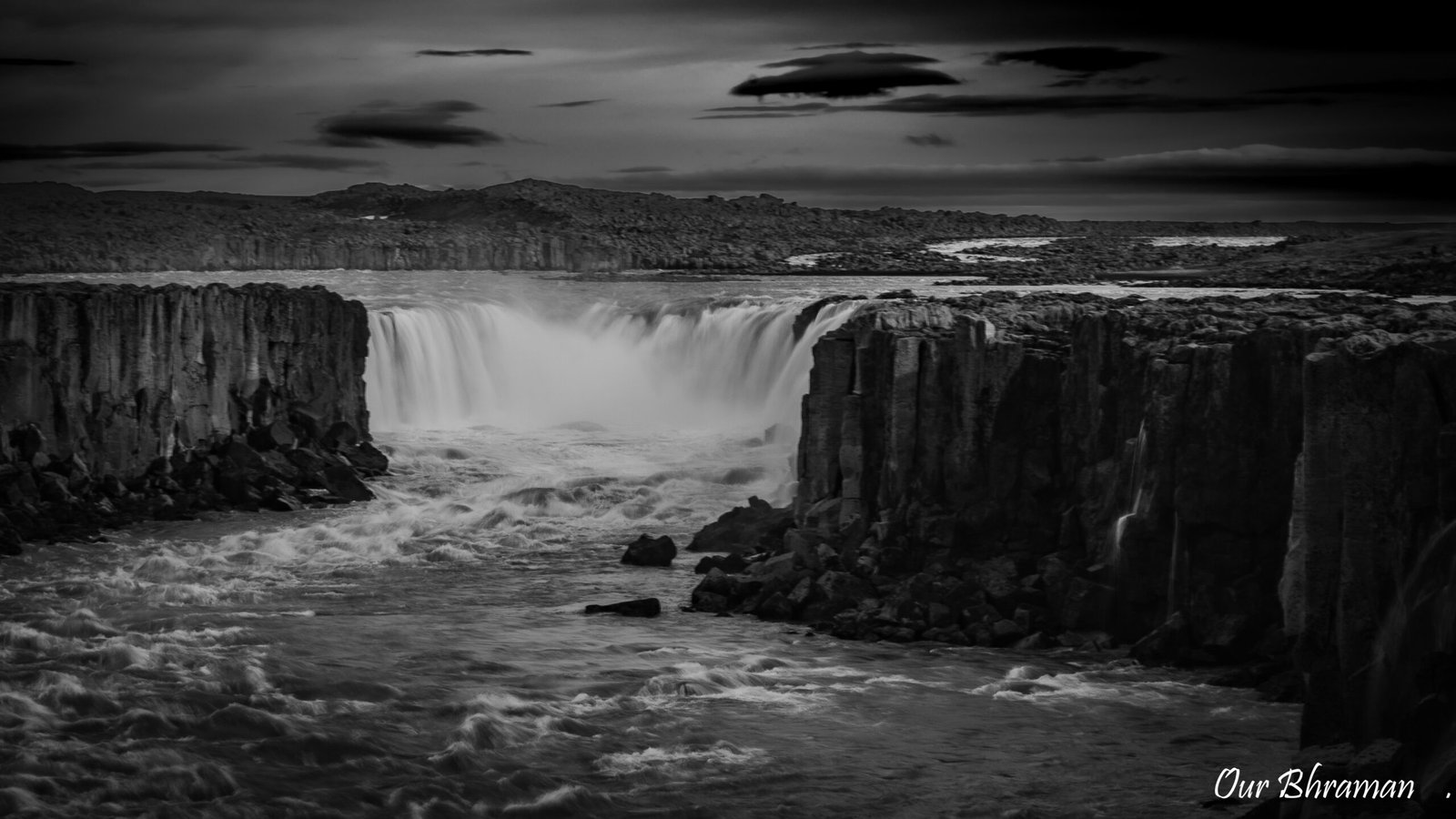
Instead of one enormous wall of water crashing through the canyon, Selfoss spreads across the river in a series of smaller cascades. The result is much gentler and more elegant. After the raw power and noise of Dettifoss, arriving at Selfoss felt almost peaceful.
From the west side, the view of Selfoss is somewhat limited, but we were still able to get close enough to appreciate the individual cascades and the dramatic volcanic surroundings.
It felt like we had moved from Iceland’s raw power to its artistic side in just a short walk.
Hafragilsfoss — The One We Had to Skip
 Hafragilsfoss — The One We Had to Skip
We had hoped to complete our waterfall adventure by visiting Hafragilsfoss, the third major waterfall along this stretch of the Jökulsá á Fjöllum river.
Unfortunately, seasonal road conditions meant we couldn’t access it during our visit. We were disappointed to miss it, especially after already seeing the first two waterfalls, but Iceland doesn’t always let you follow the itinerary exactly as planned.
Instead, we took it as another reason to return.
Sometimes a place you miss becomes part of the reason you want to come back.
Grjótagjá Cave — The Hidden Blue Geothermal Cave
Before checking into our hotel, we had one more stop to cover—Grjótagjá Cave, a hidden geothermal cave near Lake Mývatn.
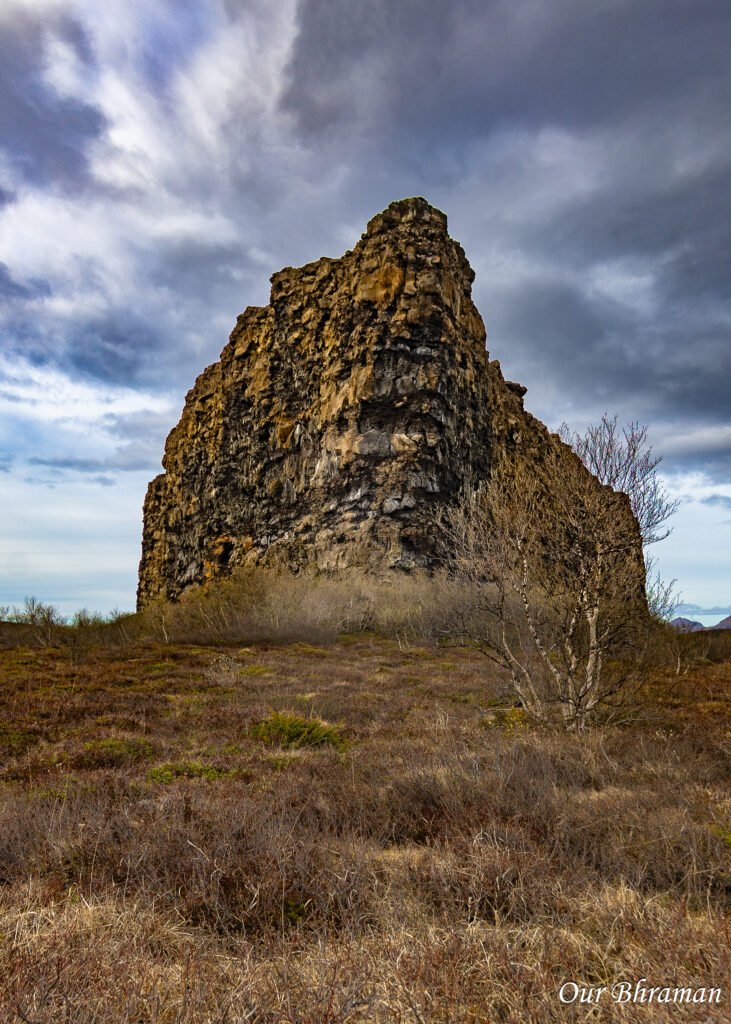
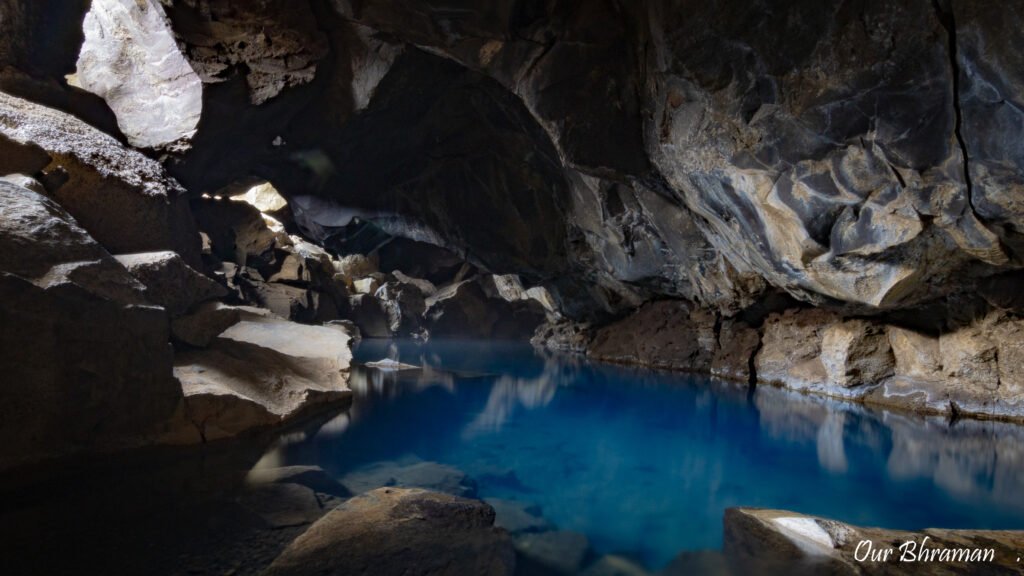
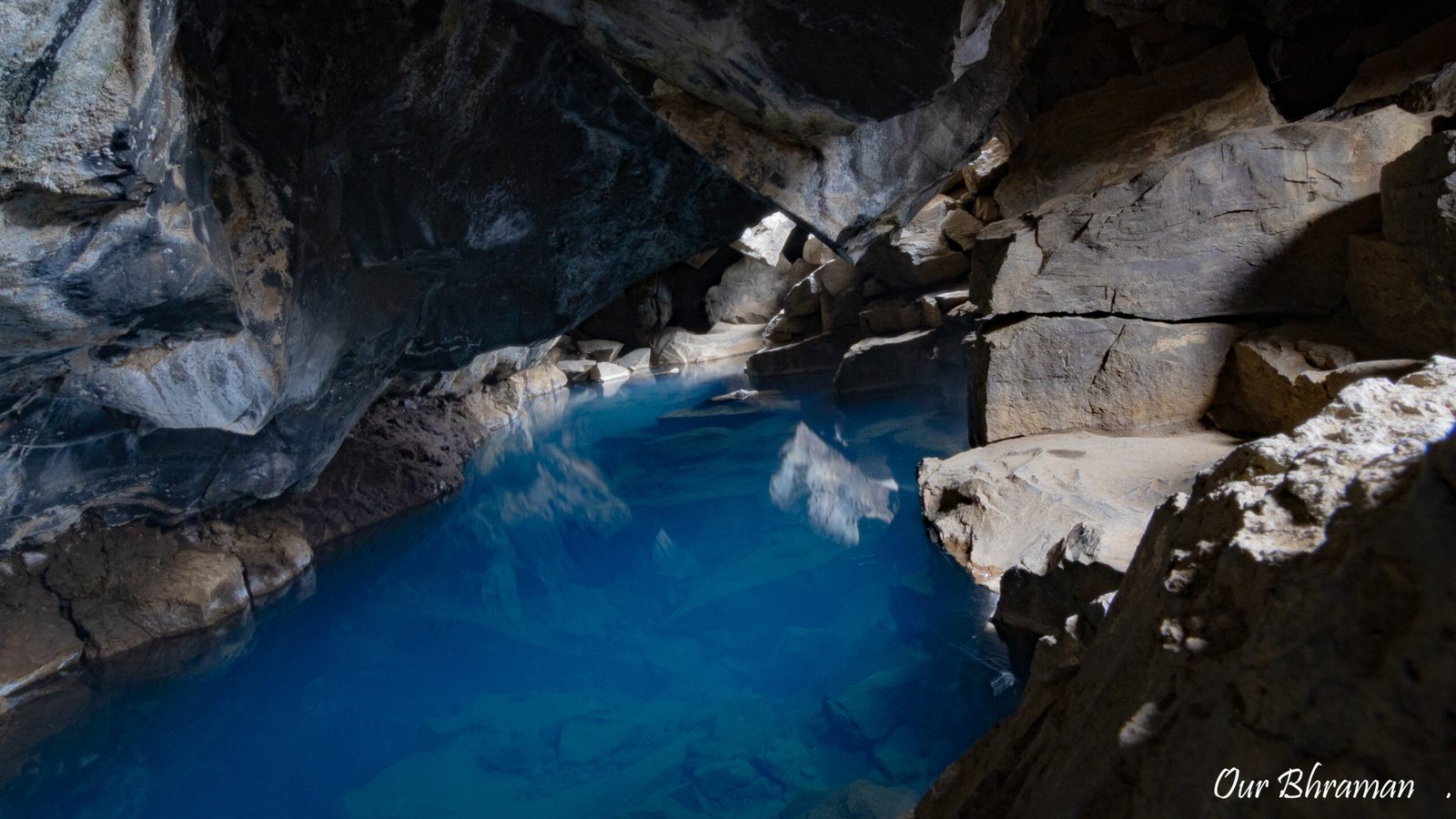
Tucked into a rugged lava field, Grjótagjá doesn’t look particularly impressive from the outside. At first, it almost seems like nothing more than a rocky opening in the ground. But peer inside, and the scene changes completely. Deep beneath the dark lava walls sits a pool of striking blue geothermal water, creating a scene that feels almost unreal.
Grjótagjá was once a popular bathing place for locals, but volcanic and geothermal activity between 1975 and 1984 caused the water temperature to rise significantly. It has been too hot for bathing ever since, so today the cave is a place to admire rather than a place to take a dip.
For us, the contrast was what made the cave so fascinating—the bright blue water against the dark volcanic rock made it feel like something from a fantasy movie. Even though we couldn’t enter the water, simply looking down into the cave was worth the stop.
And if you’re a Game of Thrones fan, Grjótagjá may look familiar. The cave was used for the memorable Jon Snow and Ygritte scene in the series. Standing there, it wasn’t difficult to understand why this unusual little cave made such a memorable filming location.
Our visit was relatively short, but Grjótagjá was exactly the kind of stop we enjoy on a road trip—a place that doesn’t require hours of hiking to appreciate. A short detour, an unusual landscape, and a little Icelandic geology and history all in one stop.
 After exploring the cave, we were ready to finally head toward our hotel and call it a day.