Banff National Park: A Day of Sunrise, Golden Larches & Turquoise Lakes
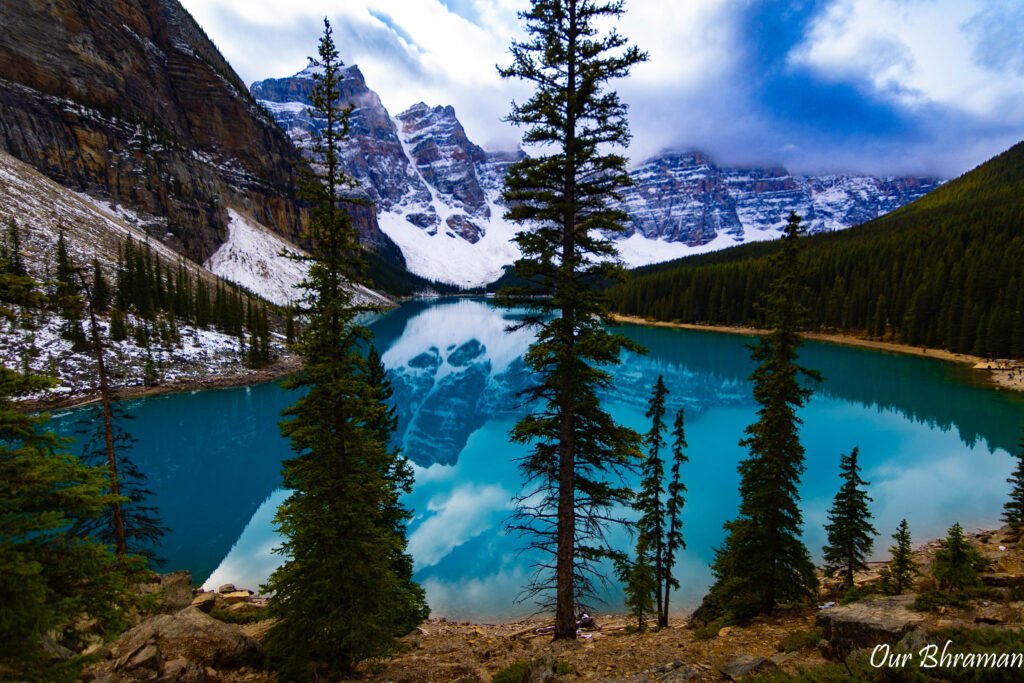
There are places in the world that look beautiful in photographs, and then there are places that make you stop in your tracks when you finally see them in person.
Banff National Park is one of those places.
Nestled in the Canadian Rockies of Alberta, Banff is Canada’s oldest national park and one of the most spectacular mountain landscapes we’ve ever experienced. Towering snow-capped peaks, turquoise glacial lakes, massive glaciers, alpine meadows, and winding mountain roads seem to stretch endlessly in every direction.
But Banff isn’t just about seeing the mountains.
It’s about getting up before sunrise to experience them in silence. It’s about hiking until your legs are exhausted, waiting in the freezing cold for the first rays of light, and discovering that the view you’ve seen a hundred times in photographs somehow feels completely different when you’re standing there.
And that’s exactly how our day began.
Lake Moraine
Few places in the Canadian Rockies have achieved the almost legendary status of Moraine Lake. Its brilliant turquoise water, dramatic backdrop of the Valley of the Ten Peaks, and postcard-perfect setting have made it one of the most recognizable landscapes in Canada. It has appeared in countless photographs, travel guides, documentaries, and social media posts—and for many visitors, like us, seeing Moraine Lake in person is at the very top of their Banff bucket list.
But getting there isn’t as simple as putting the lake into your GPS and driving.
Moraine Lake Road is closed to personal vehicles year-round. This means visitors cannot drive their own car directly to the lake or park at the Moraine Lake parking lot. For us, this meant marking at Lake Louise and taking the Parks Canada Shuttle to Lake Moraine.
Travel Tip
Book Your Moraine Lake Shuttle in Advance
Moraine Lake Road is closed to personal vehicles year-round. Visitors cannot simply drive to the lake and park.
Access is currently limited to:
- Parks Canada shuttles
- Licensed commercial operators with a Moraine Lake Road Licence of Occupation
- Registered guests, staff and contractors of Moraine Lake Lodge
Parks Canada requires reservations for its regular shuttle service. The Alpine Start service currently operates with early departures specifically designed for visitors who want to experience Moraine Lake in the early morning.
For 2026, Parks Canada lists Alpine Start departures at 4:00 AM and 5:00 AM, with service operating June 1 through October 12.
Book early. These early departures are highly sought after, especially during peak summer and larch season.
The 3:30am Wake-up call
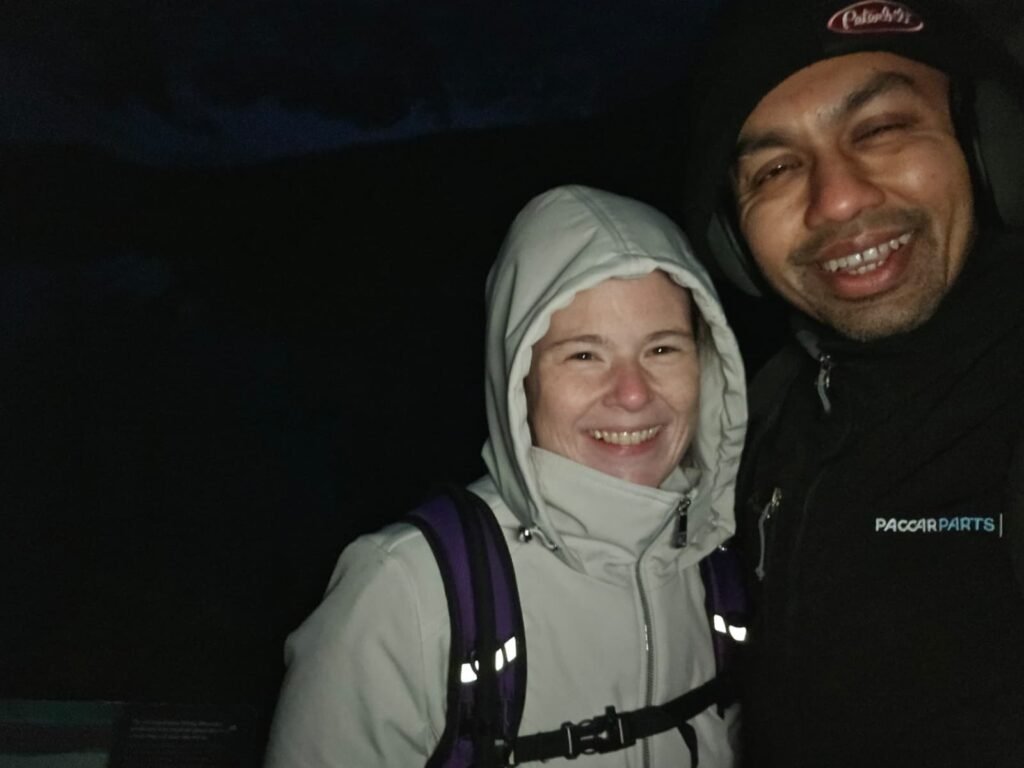
Our alarm went off at 3:30 in the morning, and for a brief moment, we seriously questioned our life choices. Most people were still sleeping. We were pulling on layers, grabbing our camera gear, and preparing to head out into the darkness for one of the most anticipated experiences of our Canadian Rockies trip: sunrise at Moraine Lake.
We had been fortunate enough to secure seats on the Alpine Start shuttle from Lake Louise to Moraine Lake, and we knew this was an opportunity we didn’t want to waste. The early morning air was absolutely freezing. Stepping outside at that hour was a definite shock to the system, especially when all you really want to do is crawl back underneath the hotel blankets. But the excitement won.
Once we climbed aboard the warm, cozy shuttle, we settled in for the ride and started to wake up a little. The bus was filled with other sleepy adventurers, photographers, and hikers who had all made the same decision we had: Sleep could wait. Moraine Lake couldn’t.
The Rockpile Trail — The Famous "Twenty Dollar View"
The ride from Lake Louise was surprisingly short. Before long, the bus pulled into the Moraine Lake area. And then came the slightly comical part. It was still completely dark. We climbed off the shuttle with our headlamps and phones, trying to figure out exactly where we were supposed to go. Reading trail signs in the darkness isn’t nearly as easy as it sounds.
Eventually, we noticed a group of other hikers heading in a particular direction. So naturally…we followed them. Thankfully, our accidental caravan was heading toward the Rockpile. And that turned out to be exactly where we wanted to be.
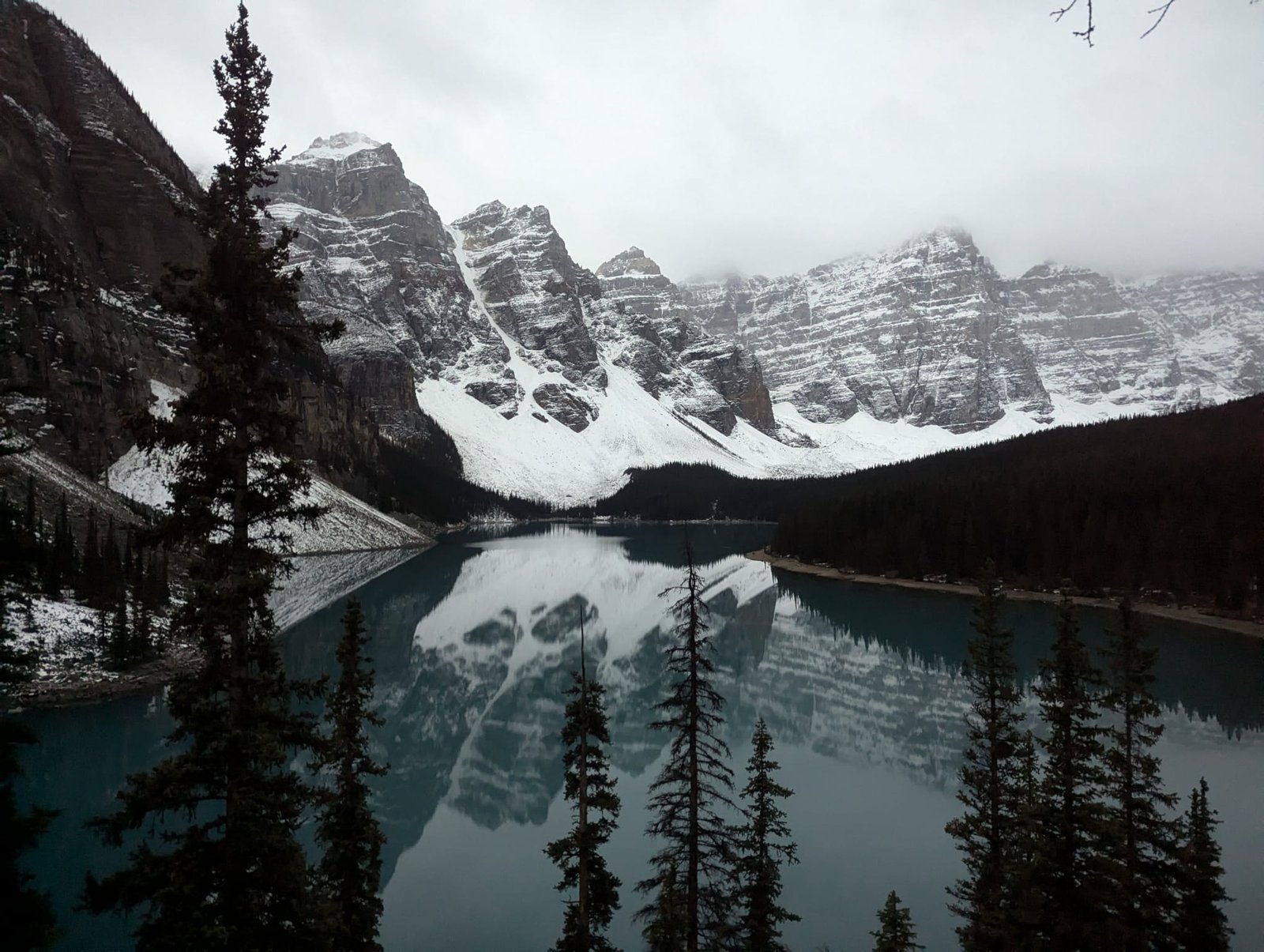
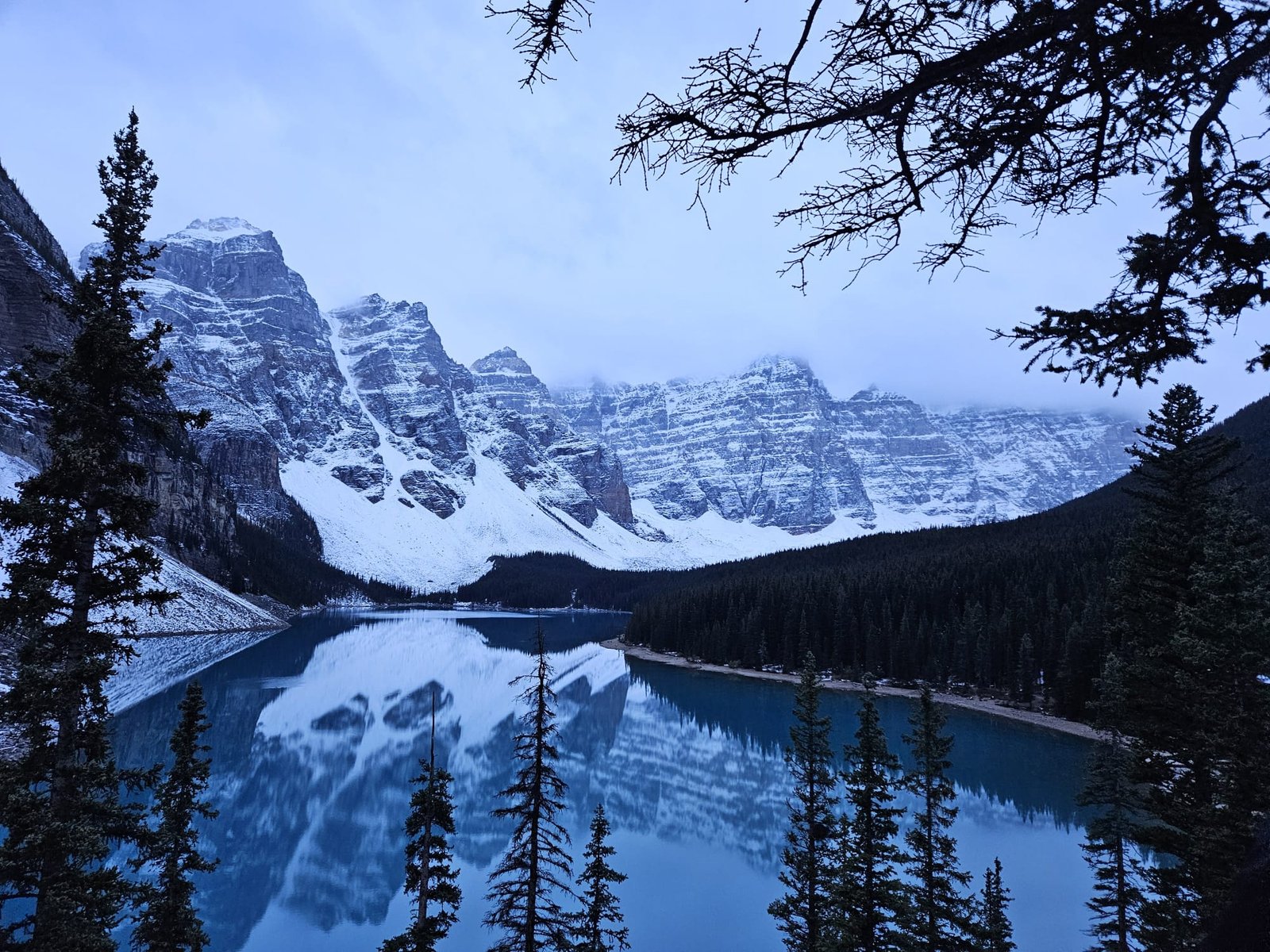
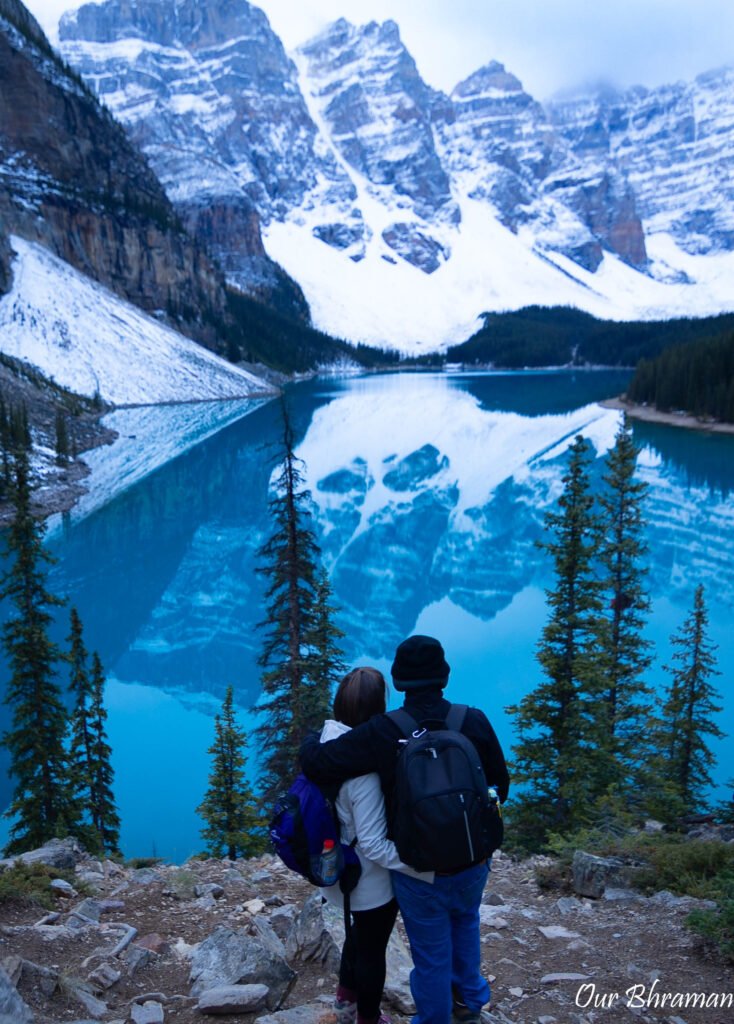
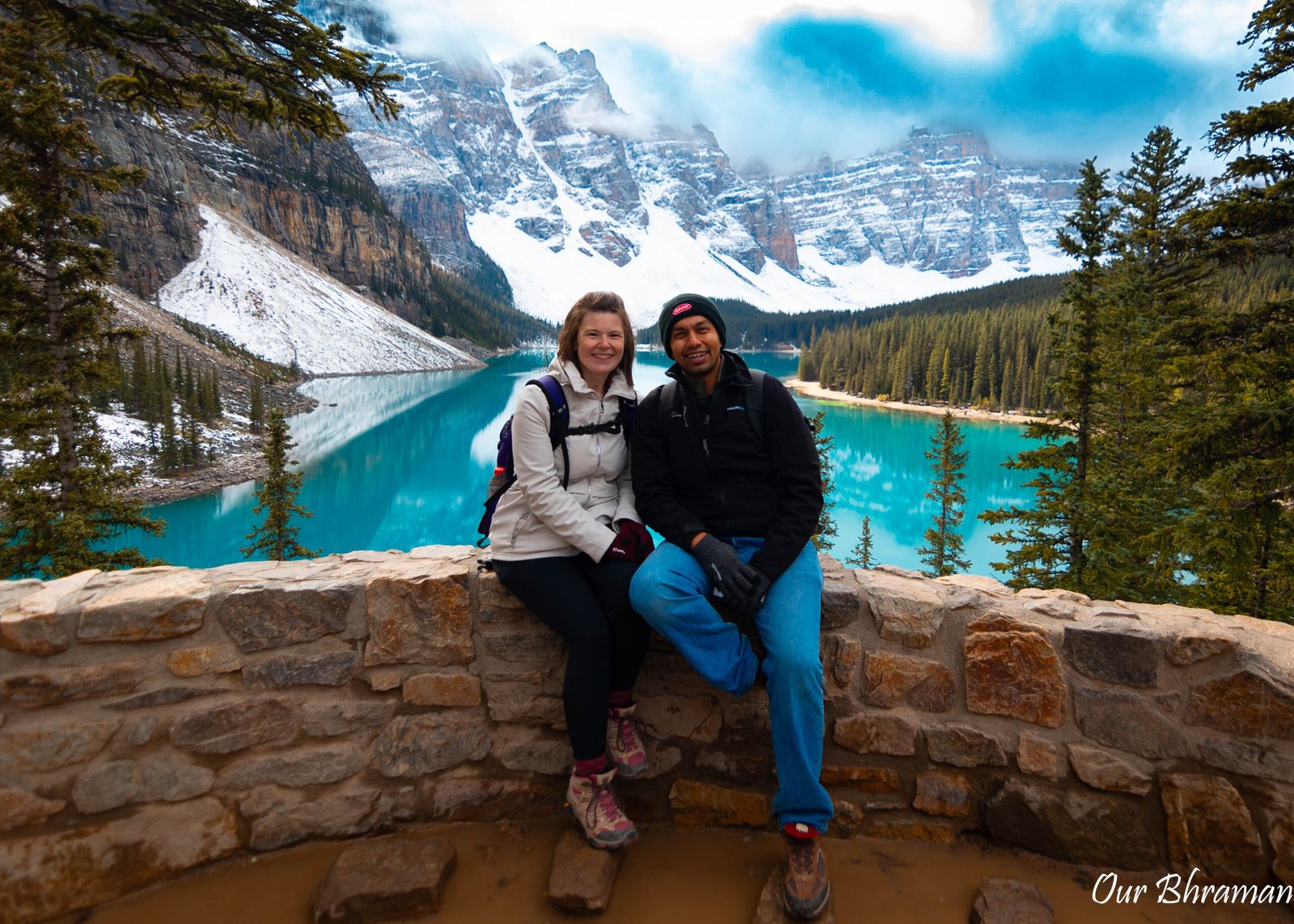
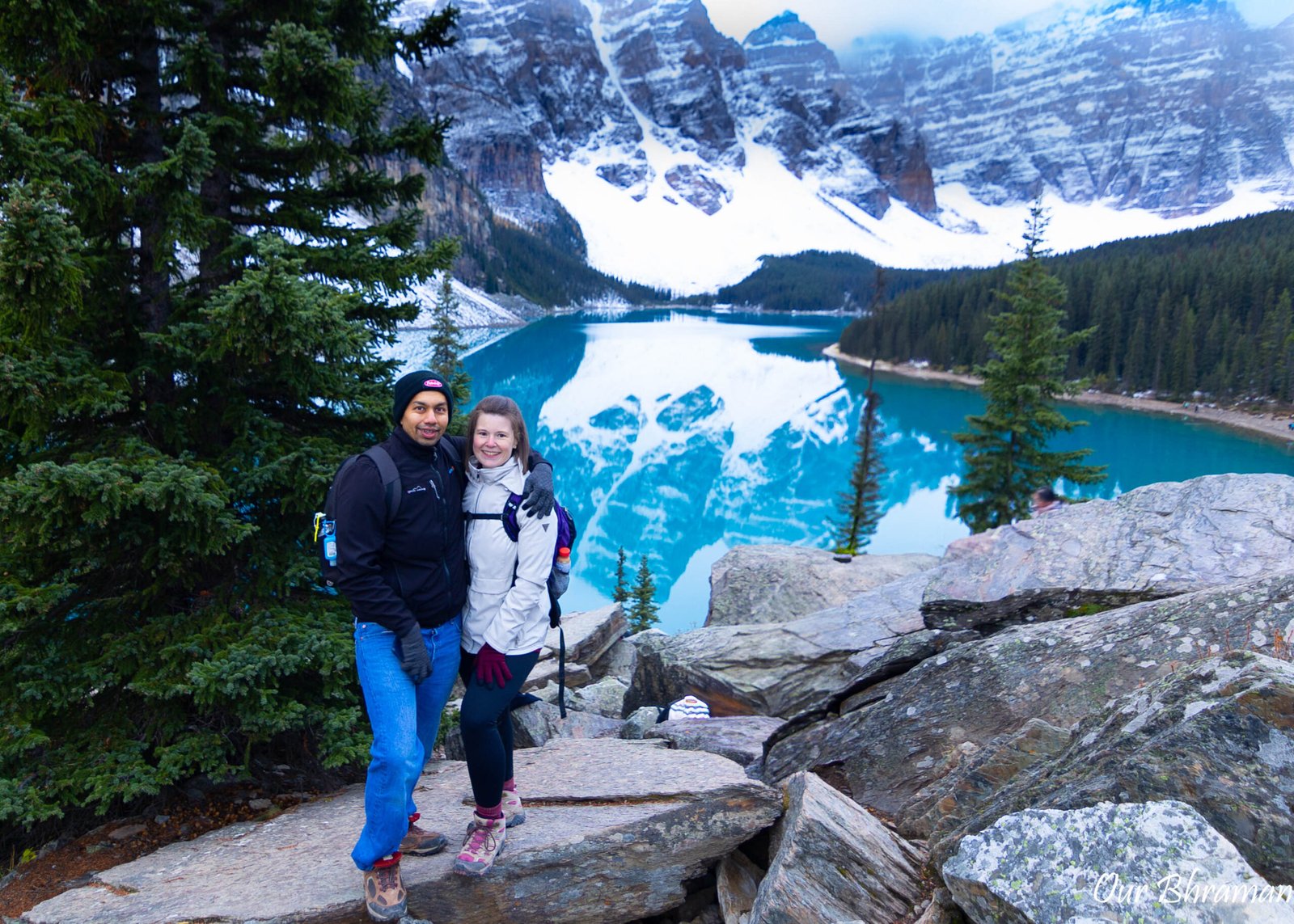
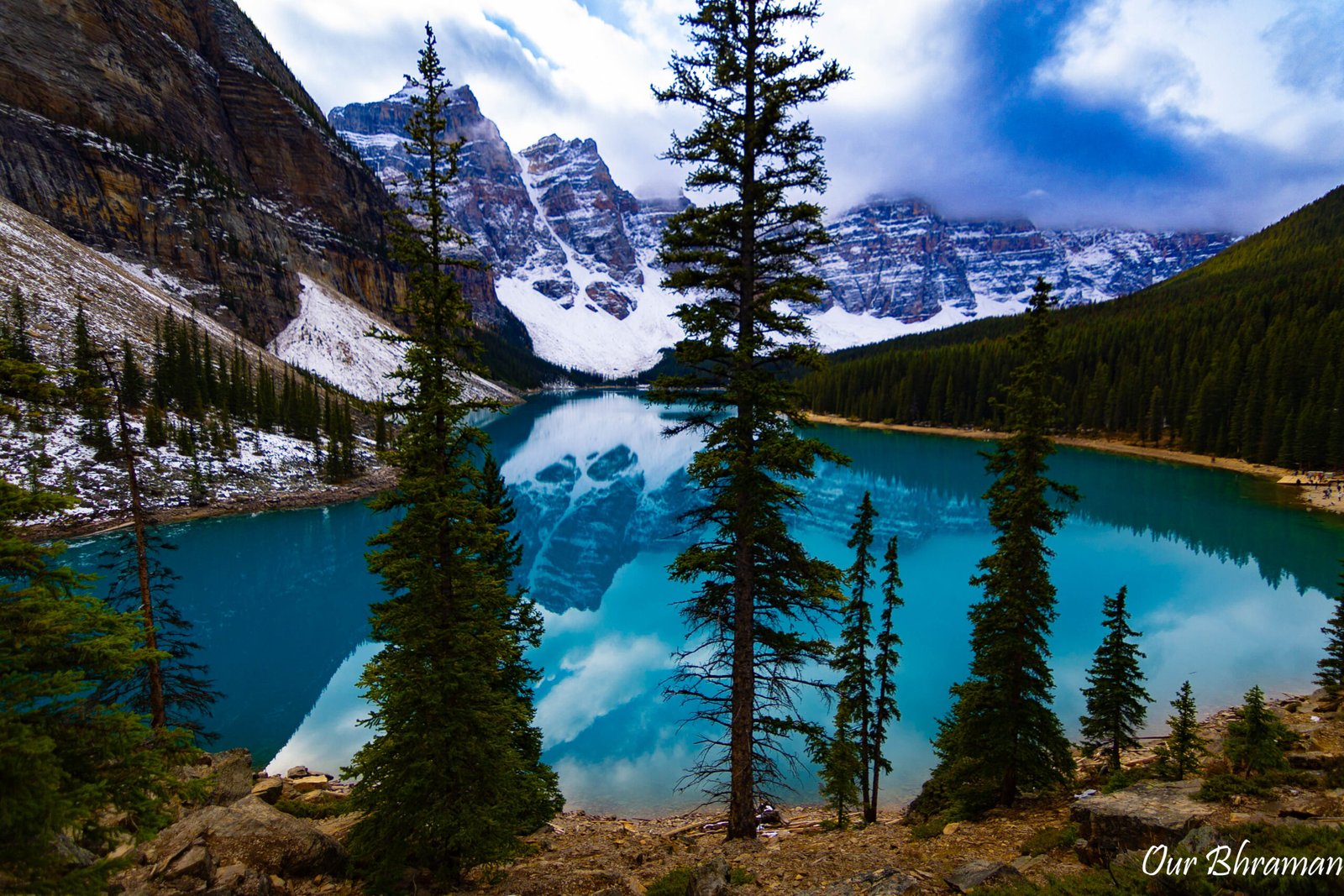
The Rockpile Trail is one of the shortest hikes in Banff National Park, but the view from the top is anything but small. The trail climbs over the natural rockpile at the end of Moraine Lake and provides the iconic view that has become synonymous with the Canadian Rockies. It’s sometimes called the “Twenty Dollar View” because the scene was featured on Canada’s former $20 banknote.
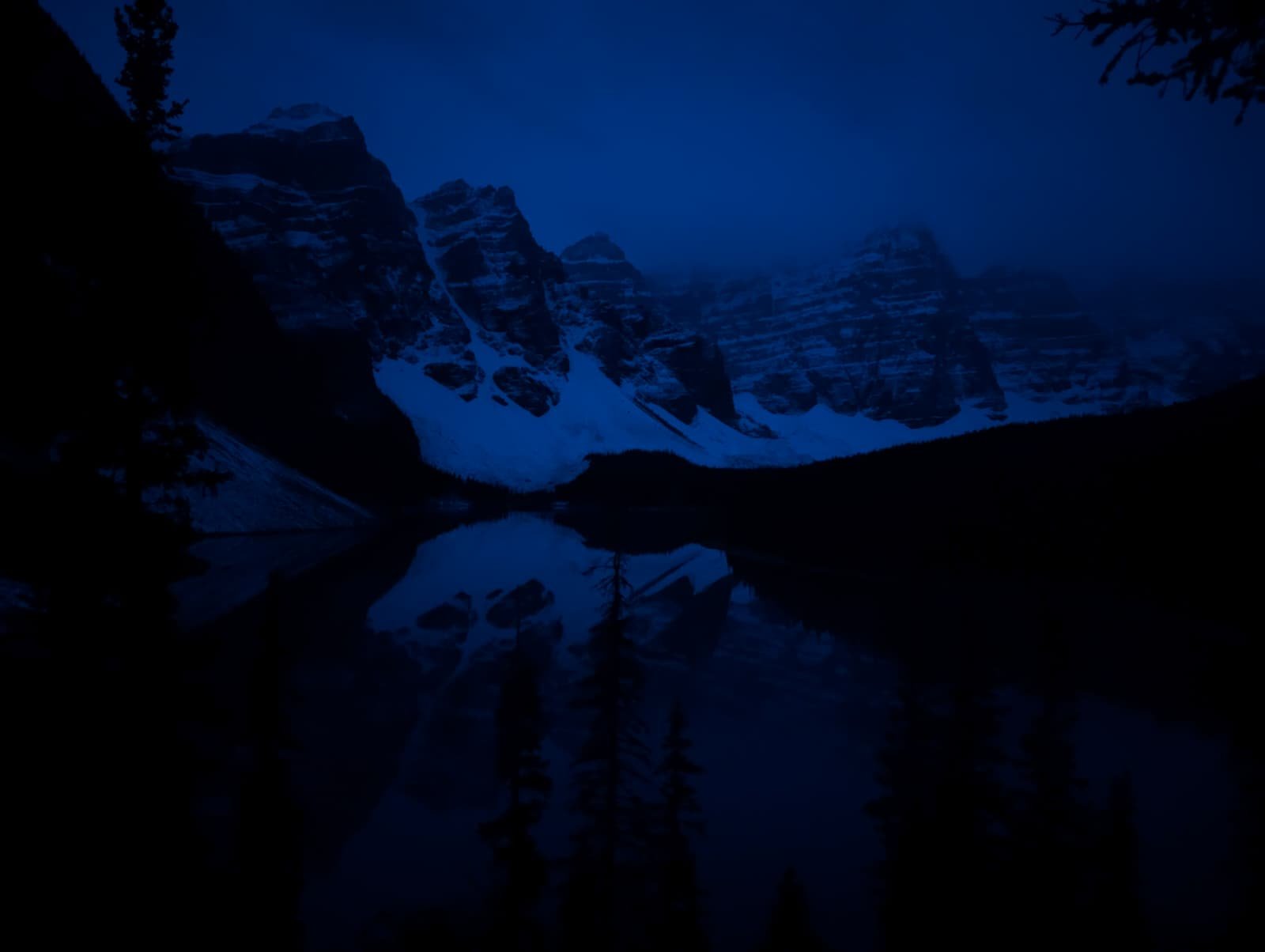
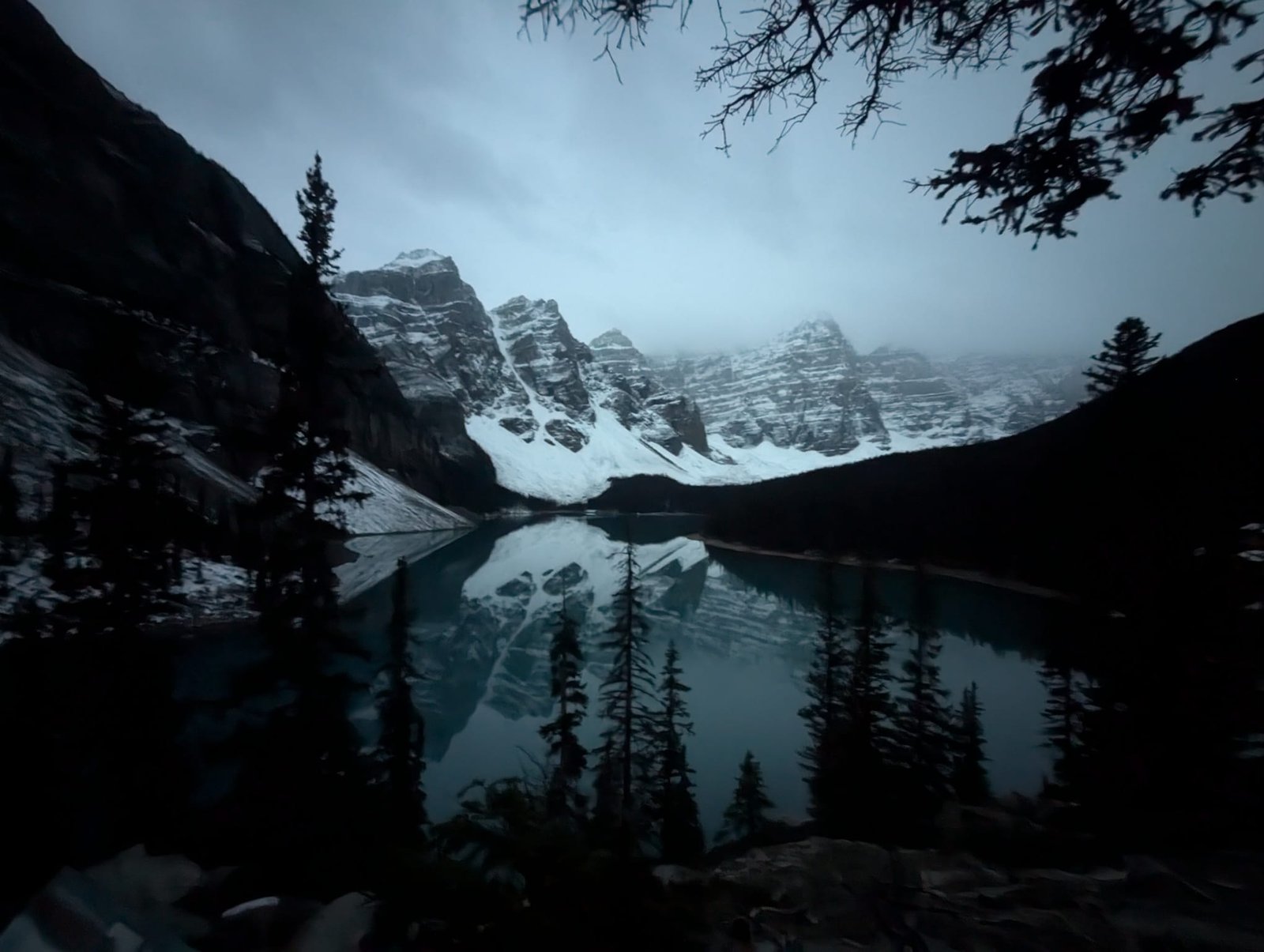
The trail itself is short and relatively easy, winding upward along the rocky moraine. Stone and log steps make the climb manageable, and it took us only about 5–10 minutes to reach the viewpoint. Normally, this would be an incredibly easy little hike. At 5:00 in the morning, in the dark, wearing layers and carrying camera equipment? It felt like an adventure. But as we reached the top, the darkness began to reveal faint outlines of the surrounding mountains. We had arrived. Now all we had to do was wait.
Sunrise at Lake Moraine
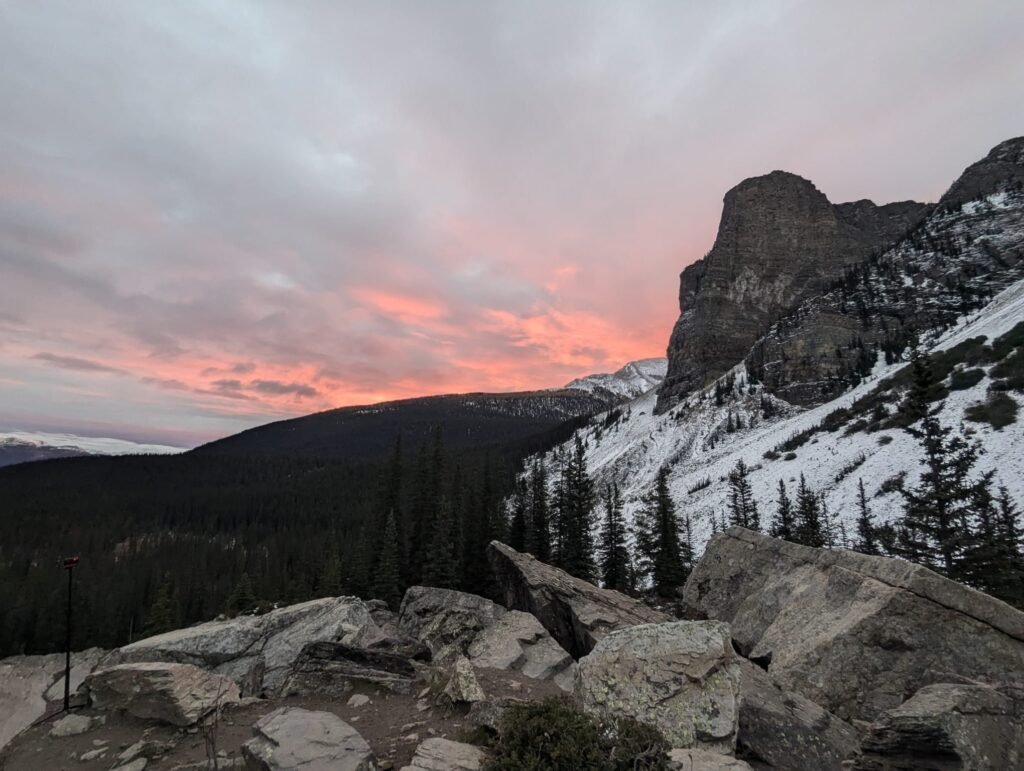
We reached the viewpoint at approximately 5:45 AM. Sunrise was still roughly an hour and a half away. And did I mention it was cold? Very cold. The goal was not to freeze, but to secure our photography spot to get optimal viewing for the infamous postcard view. We found a spot overlooking the lake and settled in, trying our best to stay warm while watching the sky slowly change. We had layer upon layer on and found ourselves doing squats and other leg exercises just to keep the blood flowing so that we were not ice statues by the time sunrise came.
This is one of those moments in travel that photographs rarely capture. The waiting. The anticipation. The quiet conversations between strangers. The thoughts of “are we crazy?” The sound of camera shutters. The occasional movement of people searching for the perfect composition. Everyone was there for the same reason. We were waiting for the mountains to wake up.
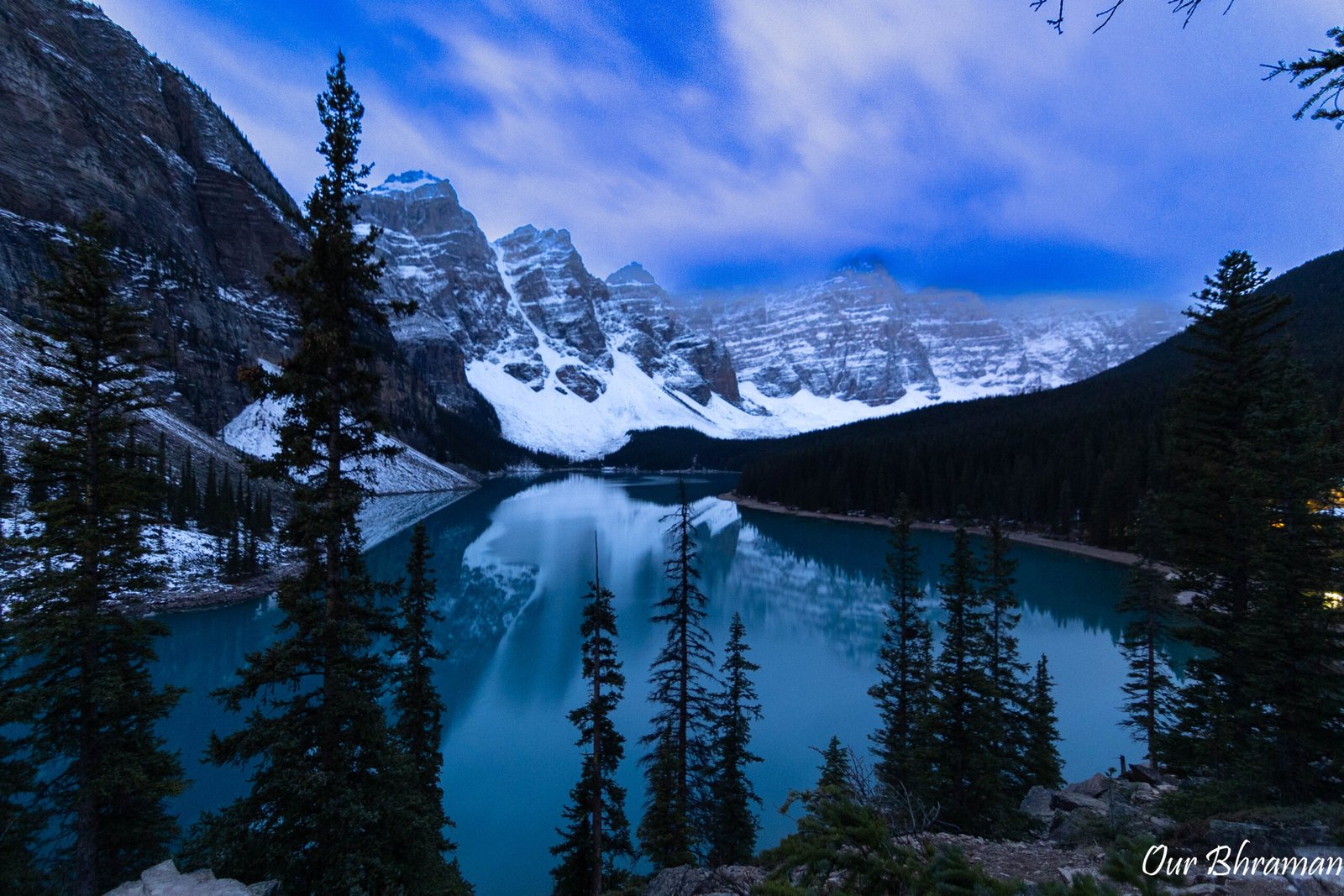
And then, almost imperceptibly, the darkness began to lift. A soft glow appeared behind the mountains. The lake slowly emerged from the shadows. The Ten Peaks became more defined. And then the first light touched the landscape. It was one of those moments where nobody really needed to say anything. We just watched.
The Ten Peaks Come Alive
As the sun climbed higher, the scene transformed. The deep blue-green waters of Moraine Lake began to glow, surrounded by the enormous peaks of the Valley of the Ten Peaks. The mountains seemed to rise directly out of the lake. Every few minutes, the light changed. Blue turned to purple. Purple became pink. The mountains slowly caught the warm morning glow while the lake remained a deep, almost surreal turquoise. We took photograph after photograph, knowing that no camera could quite capture the feeling of standing there. This was the moment we had gotten out of bed at 3:30 AM for. And suddenly, the early wake-up didn’t seem quite so crazy.
Photography Tips
If you’re visiting Banff primarily for photography, early morning is absolutely worth the effort.
Moraine Lake
- Arrive before sunrise for the best chance at soft morning light.
- The Rockpile provides the classic elevated composition.
- Bring a tripod if you plan to photograph before sunrise.
- A wide-angle lens is useful for capturing the Ten Peaks.
- A telephoto lens can isolate individual peaks and compress the landscape.
- Bring extra batteries — cold temperatures can drain them quickly.
- Don’t forget a headlamp for navigating before sunrise.
Larch Valley: Hiking Through a Golden Alpine Forest
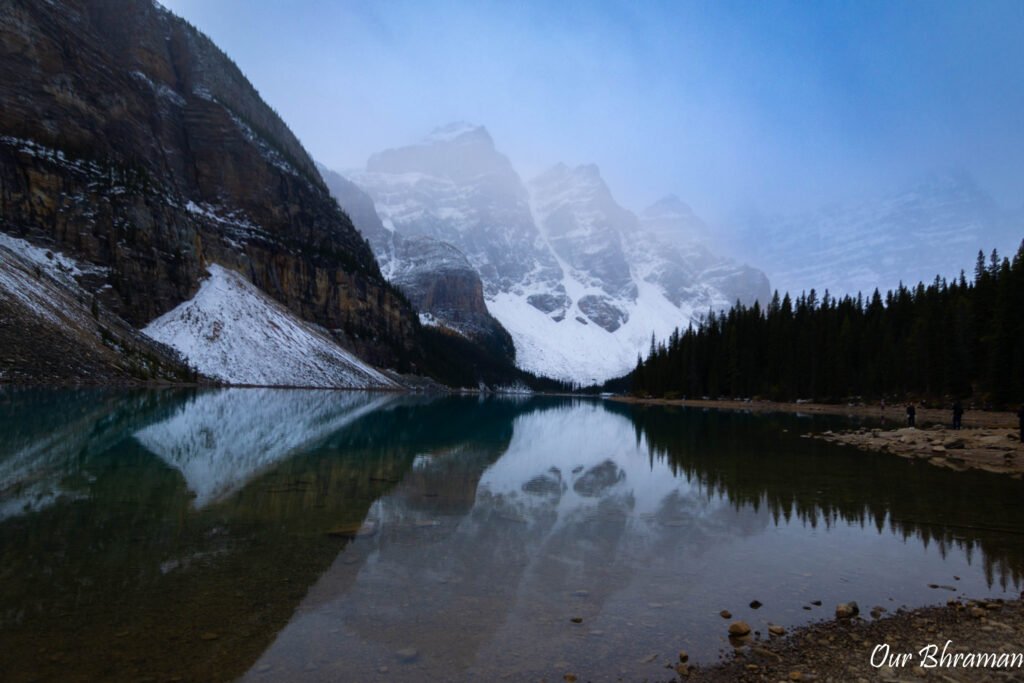
Once we had soaked in enough of the sunrise, it was time to trade our cameras for hiking shoes. We scrambled down the other side of the rock pile and down to the shores of Lake Moraine where we would be met with the head of the Larch Valley Trail.
For this trail, we couldn’t have picked a better time to do it. We were visiting during larch season, one of the most magical times to experience the Canadian Rockies. For a short period each fall, the alpine larch trees turn brilliant shades of gold before dropping their needles for winter. Against the backdrop of the Ten Peaks, the combination is almost surreal.
Hiking the Larch Valley Trail
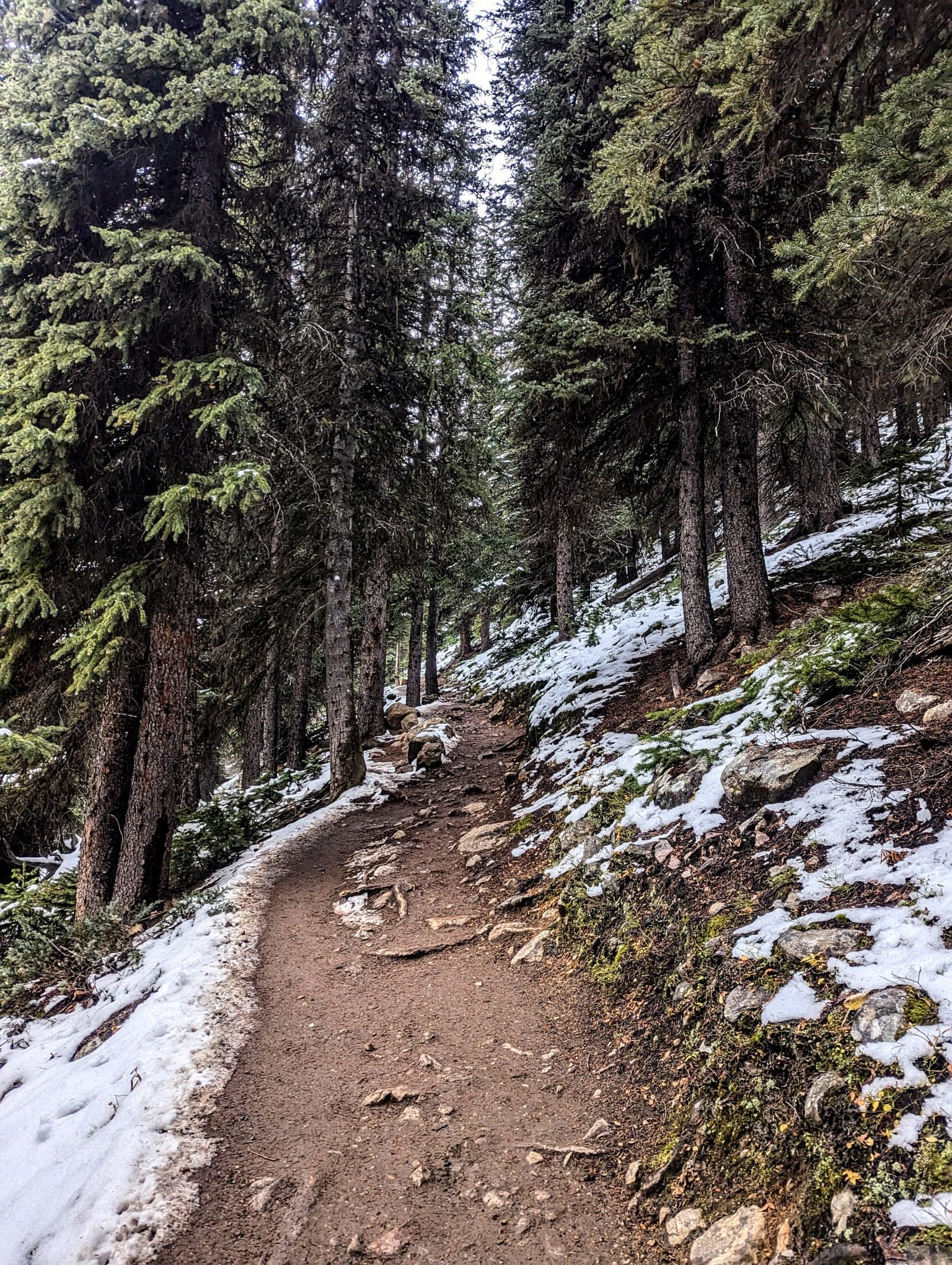
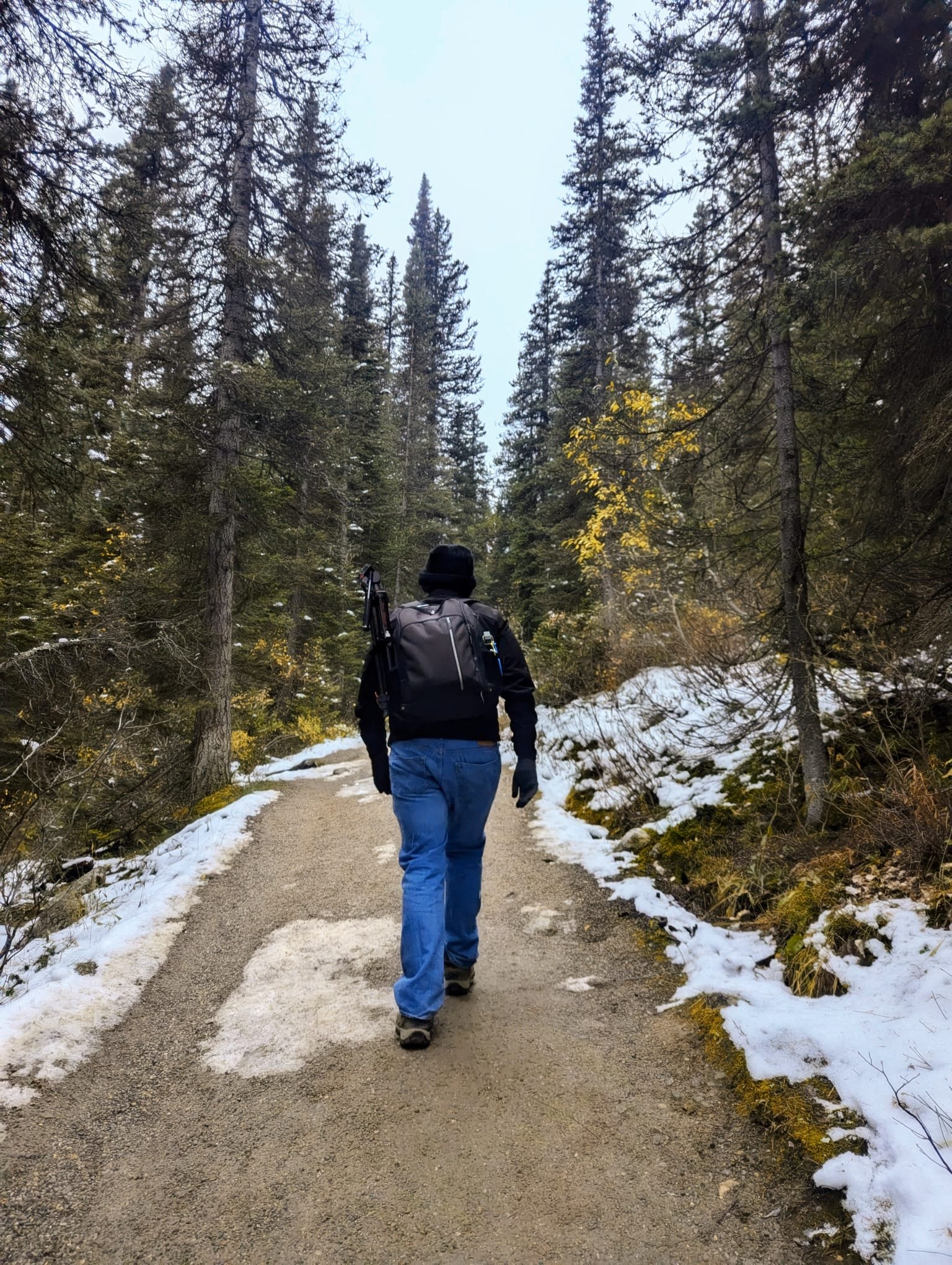
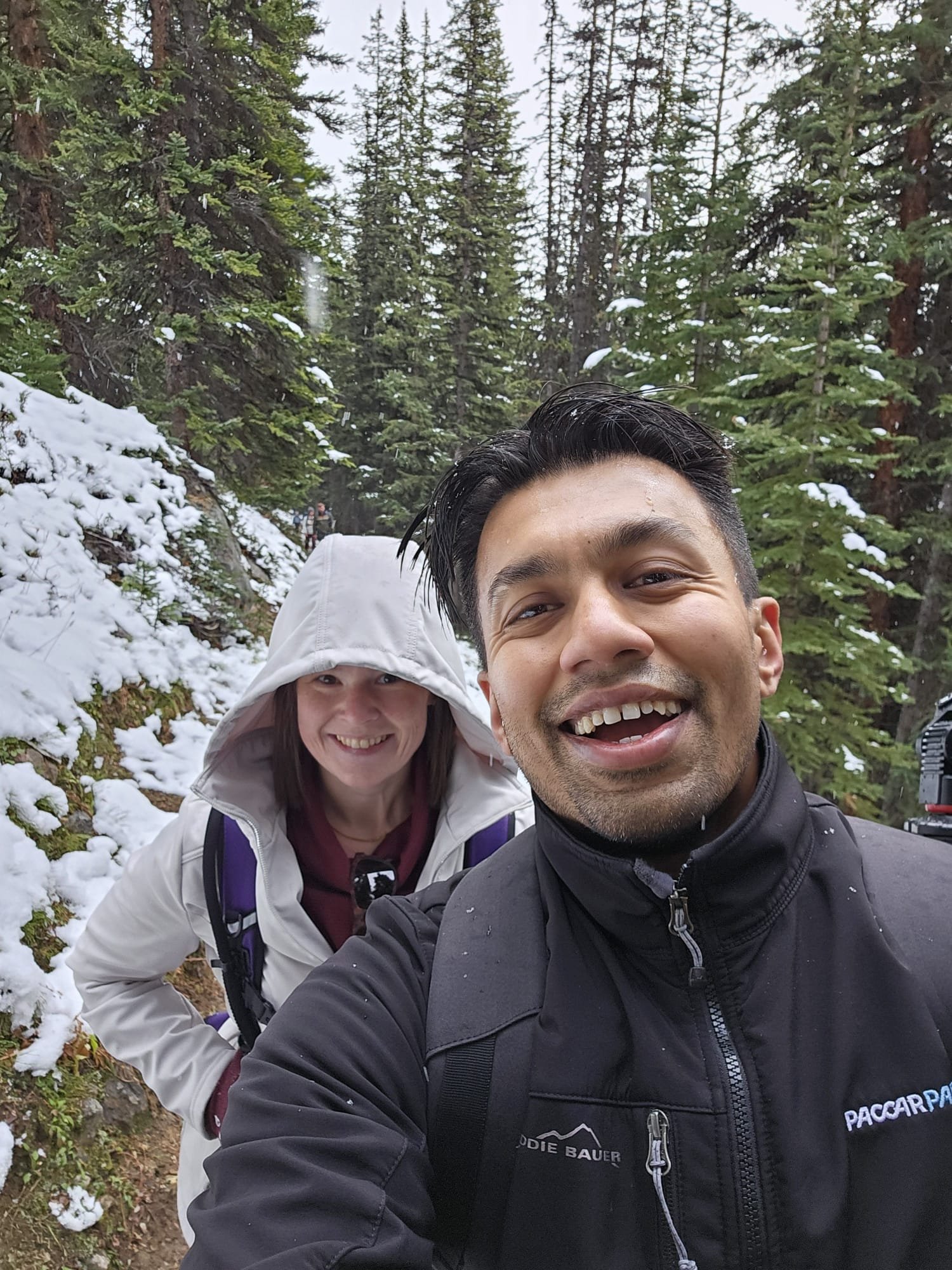
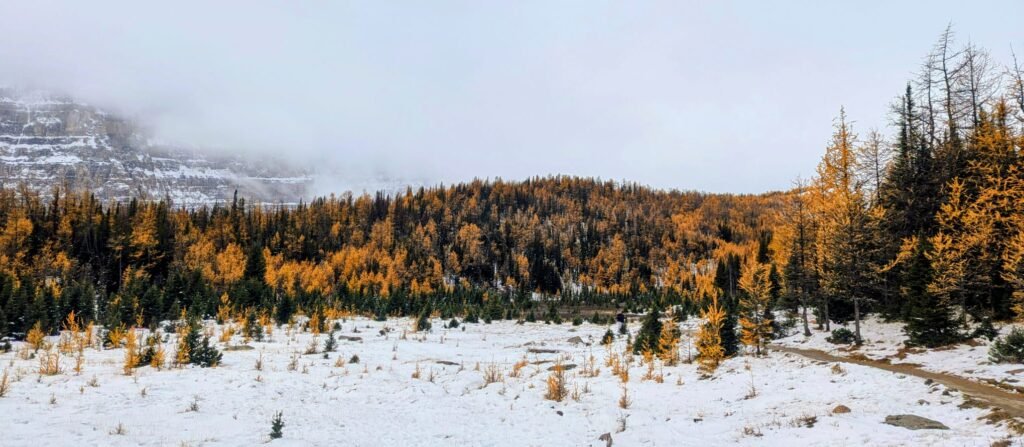
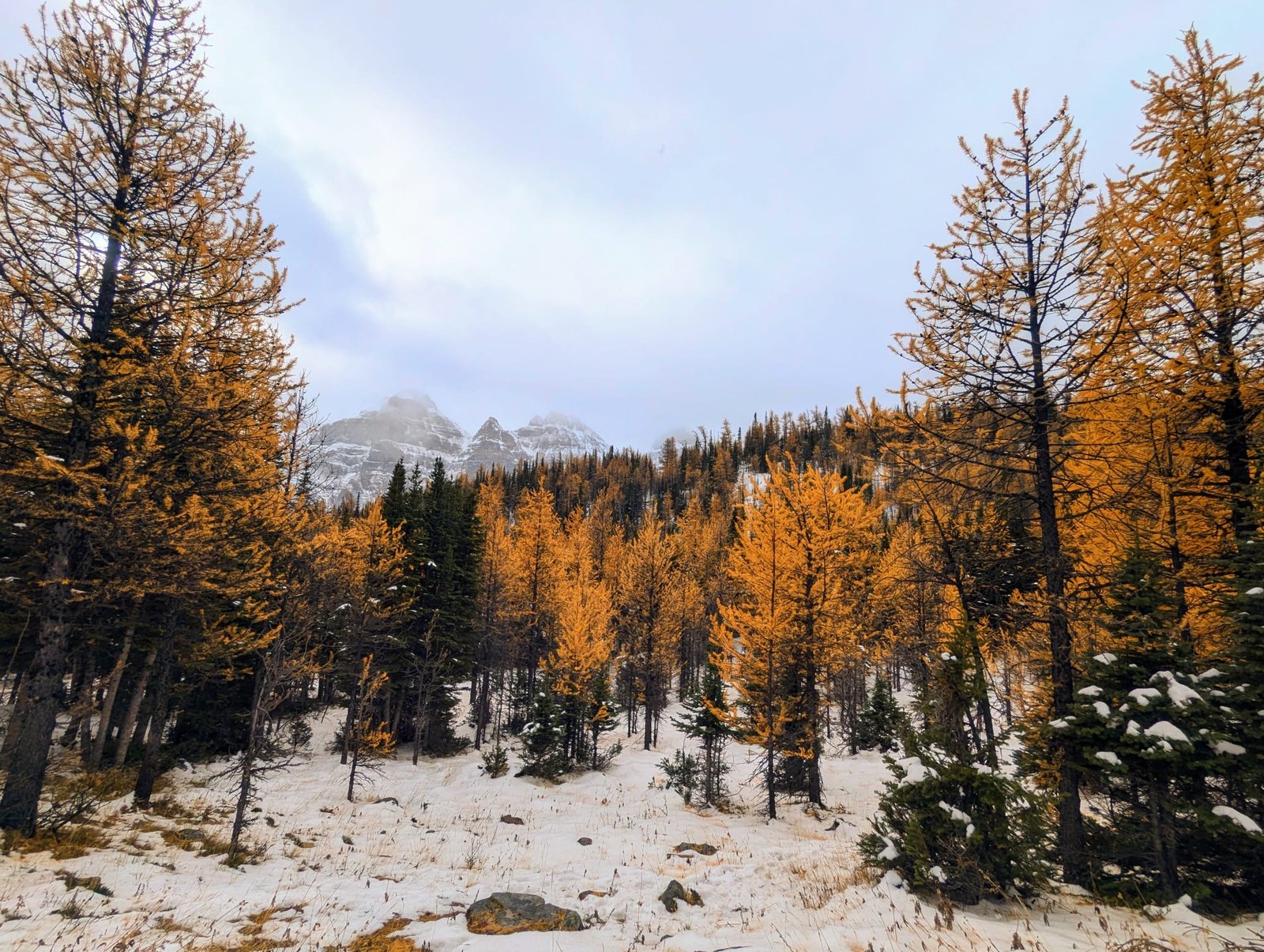
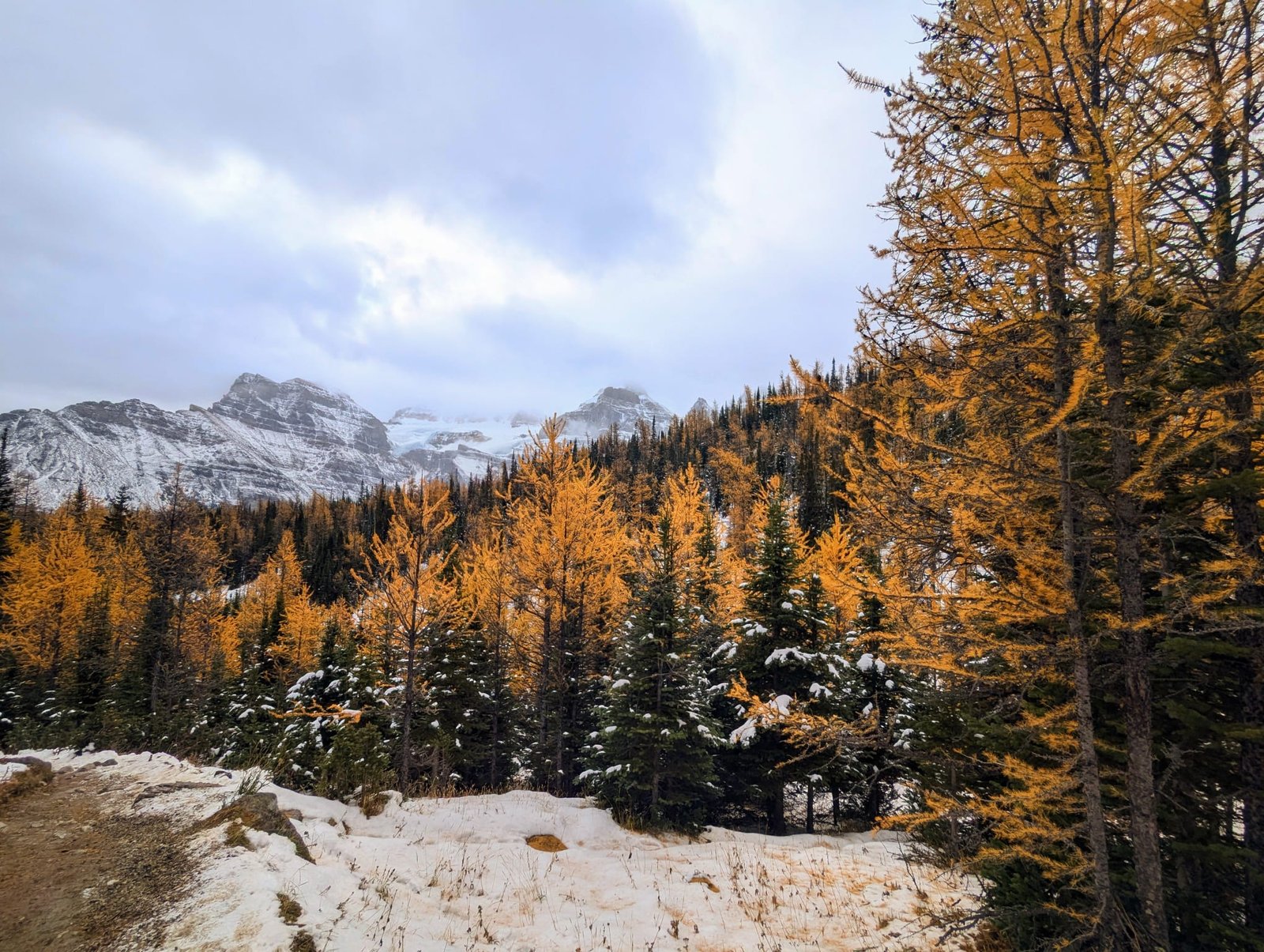
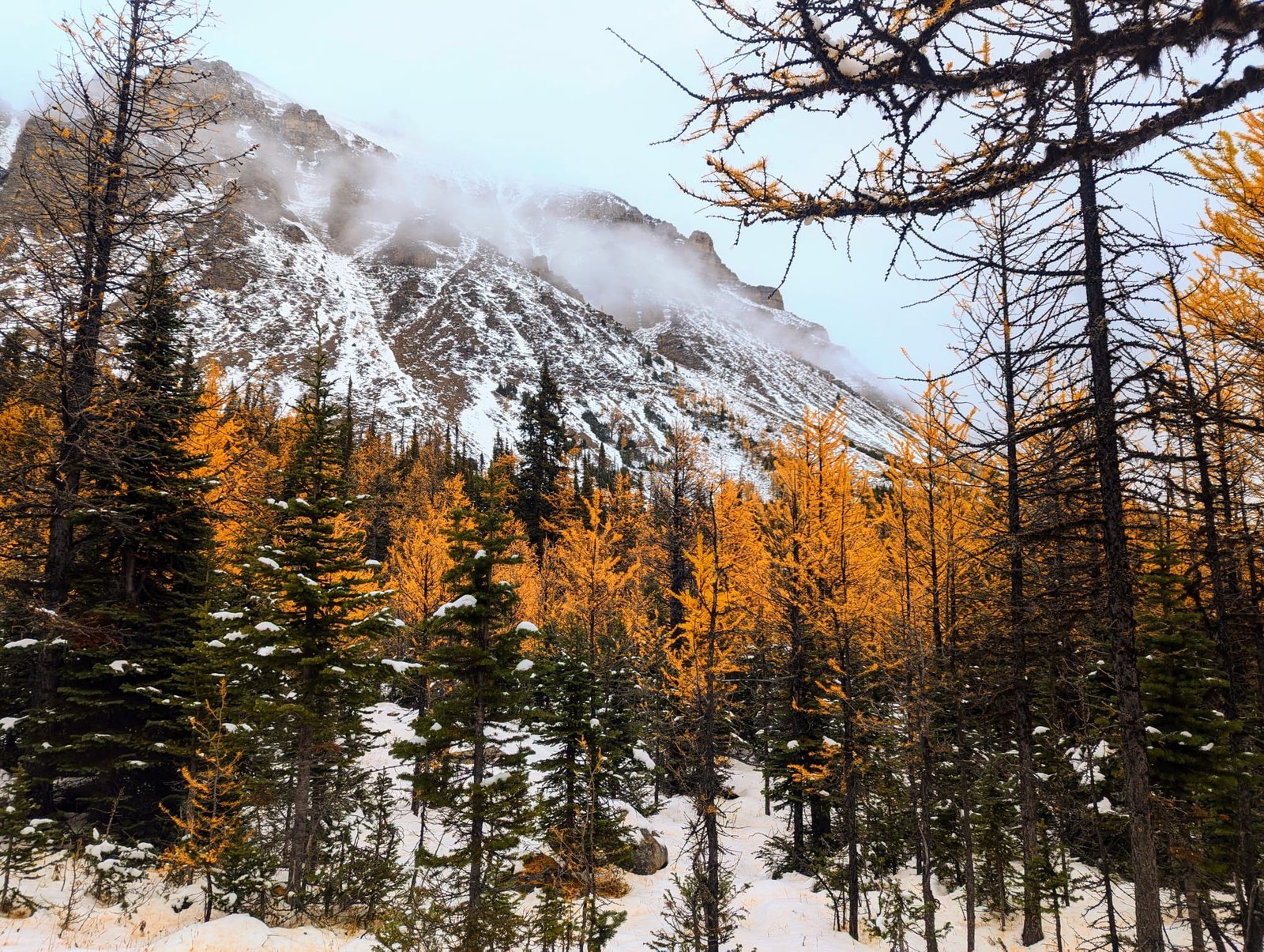
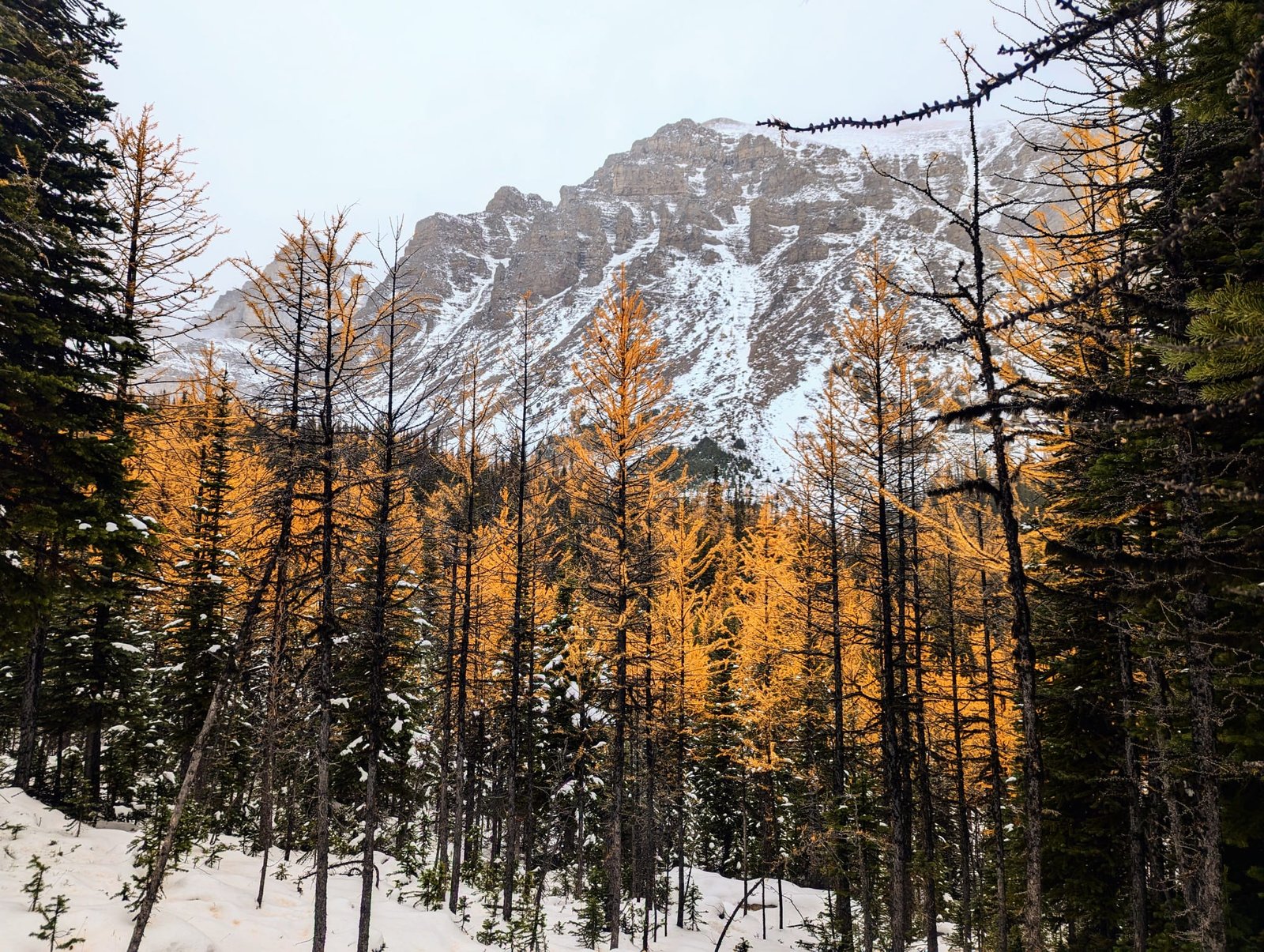
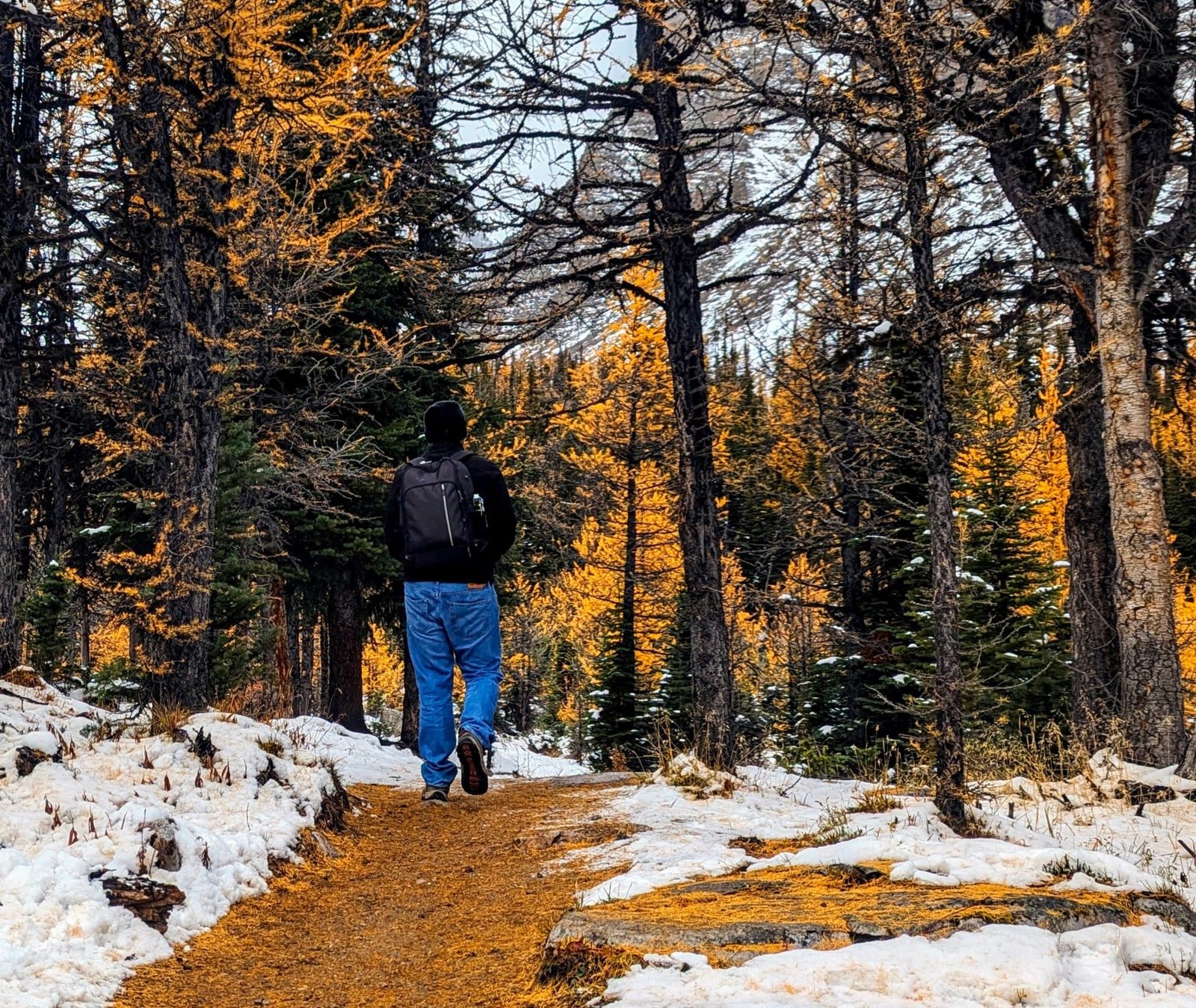
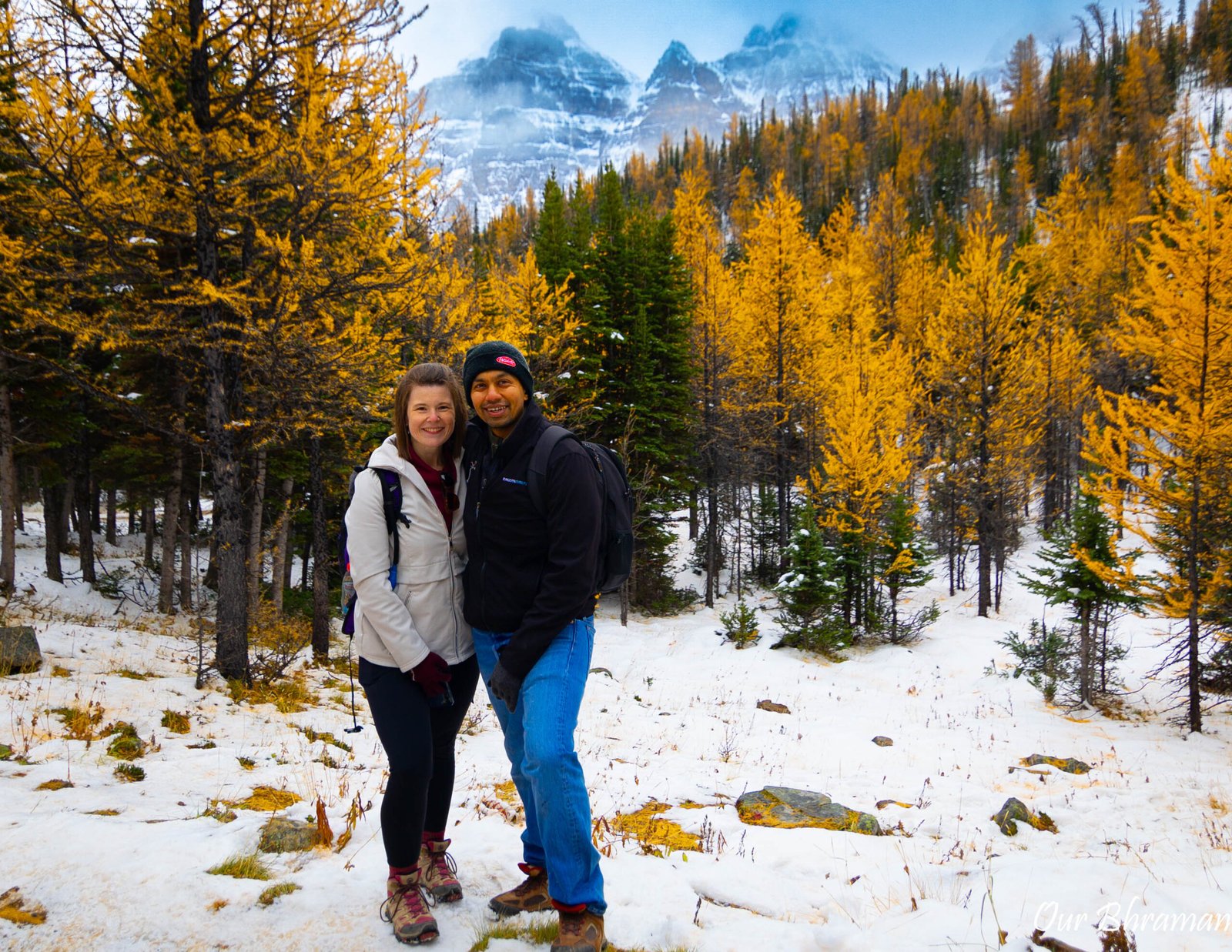
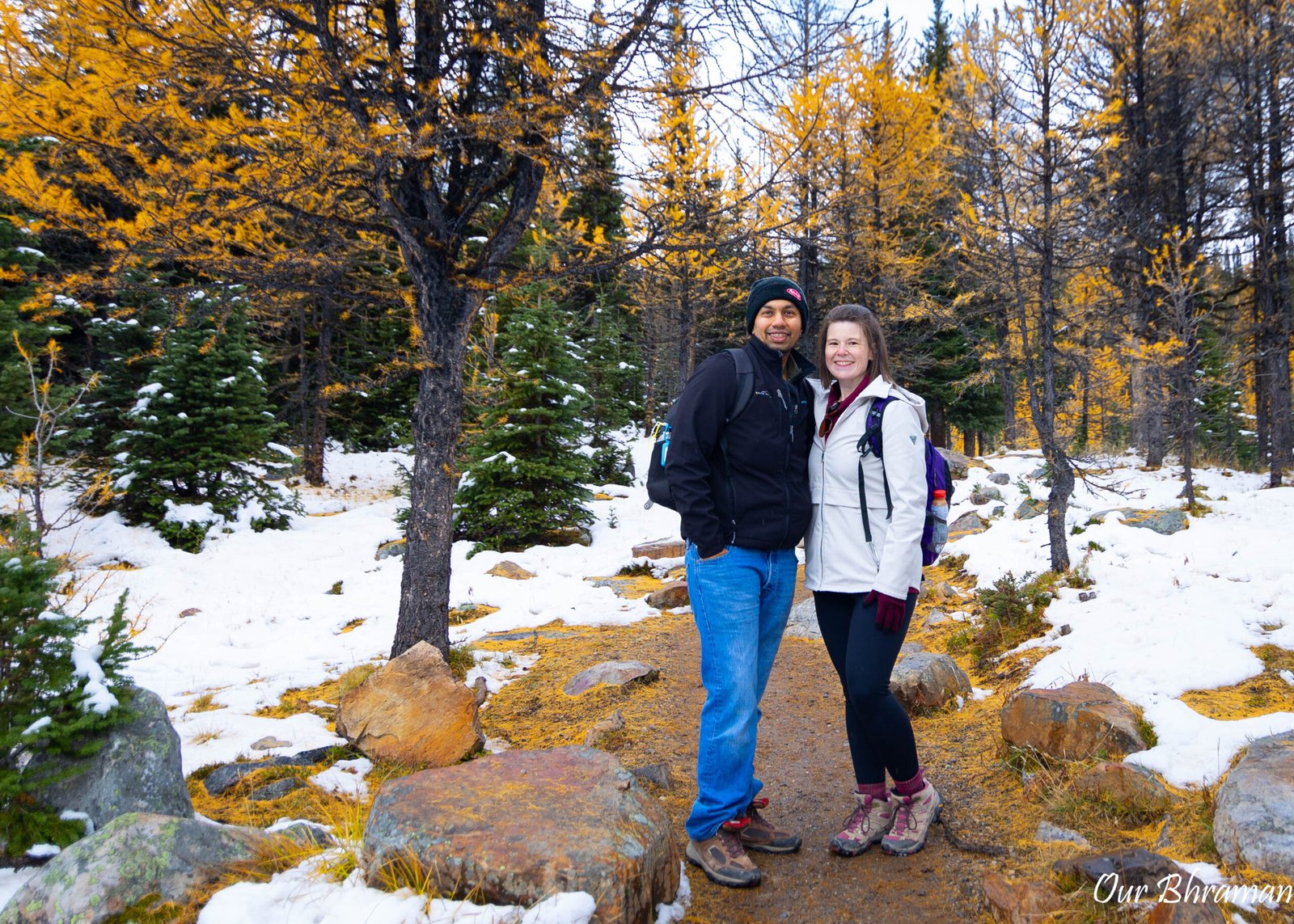
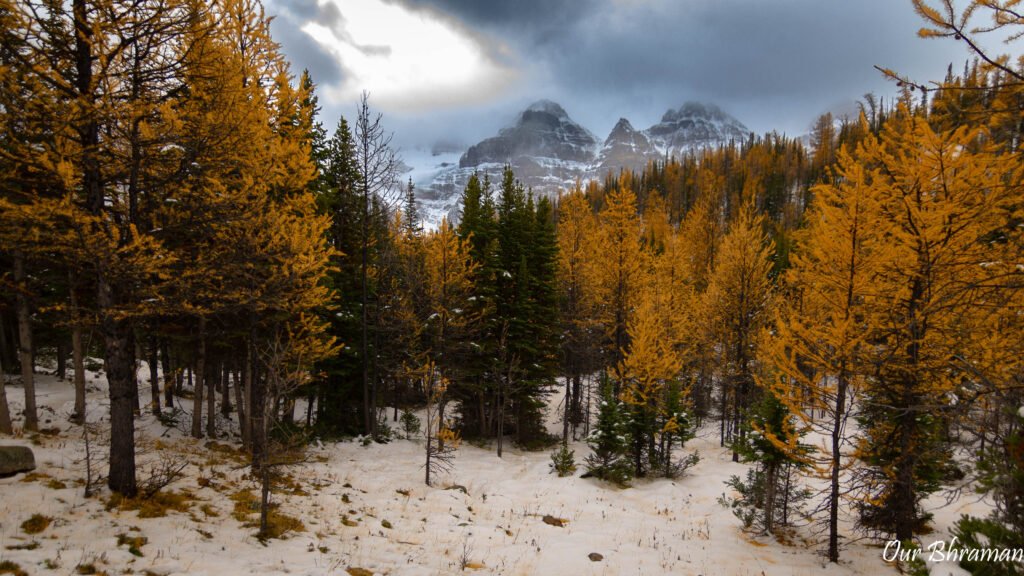
The trail begins near the shores of Moraine Lake and wastes little time gaining elevation. The first section climbs steadily through a series of switchbacks. There are moments when the trail feels steep, especially after already being awake for several hours, but every time we stopped to catch our breath, the scenery gave us a reason to keep going. And gradually, the landscape began to change. The trees around us became increasingly golden. Then the forest opened, snow was visible and suddenly, we were surrounded by a sea of brilliant yellow larches with towering Rocky Mountain peaks rising behind them.
It felt almost unreal. The golden trees seemed to glow against the grey sky, while the snow-covered peaks created the perfect backdrop. This is one of those hikes where the destination is spectacular, but the journey is just as memorable. Every switchback revealed another view. Every clearing offered another reason to stop. And every time we turned around, Moraine Lake seemed to get smaller and more beautiful below us.
Hiking info
Difficulty: Moderate
Distance: 4.5 km one way / 9 km round trip
Distance in miles: 2.8 miles one way / 5.6 miles round trip
Elevation Gain: 570 m / 1,870 ft
Estimated Time: 3.5–4 hours round trip
Trail Type: Out and back
Trailhead: Moraine Lake
When the Trail Turned to Ice
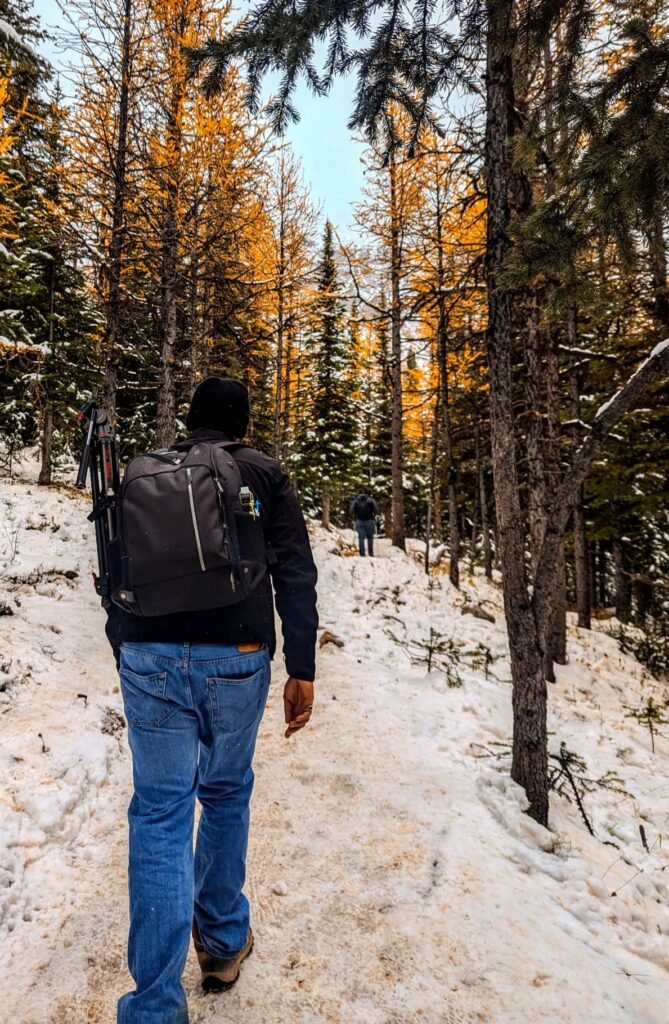
The Larch Valley hike wasn’t quite the straightforward alpine adventure we had imagined. As we climbed higher, we began encountering stretches of trail that were completely covered in ice. What looked like an ordinary section of trail from a distance could quickly turn into a slippery obstacle course.
At times, we found ourselves having to detour through the surrounding snowbanks just to make it up the hills. The packed ice was so slick that trying to walk straight up the trail sometimes felt completely pointless—one step forward could turn into a five-foot slide backward.
We quickly learned to look for patches of snow along the edges of the trail where we could get better traction. It wasn’t the most efficient way to climb, but it was far better than repeatedly sliding backward!
This was definitely one of those hikes where we found ourselves wishing we had packed microspikes or snowshoes, or at the very least, hiking poles. We noticed plenty of other hikers who had come prepared with traction devices and poles, and by that point, we understood exactly why.
Hiking Tip
Travel Tip: Don’t assume that a fall hike in the Rockies means clear, dry trails. Conditions can change dramatically with elevation, and shaded sections can hold onto ice and snow even when the lower portions of the trail are clear. If you’re hiking Larch Valley later in the season, microspikes and hiking poles are worth carrying in your pack. You may not need them for the entire hike, but when you do need them, you’ll be very glad you brought them.
We made it to a point of getting to see several larch trees in their glowing beauty. The train continued on, but we were limited. After a certain point it was just ice and we were doing more slipping and honestly not making headway in distance. At this point, we decided it was better to turn back, soak up what we did see and start the hike back down.
Sometimes the best part of the hike isn’t reaching the next viewpoint. It’s realizing that you’re standing somewhere you once only dreamed about seeing.
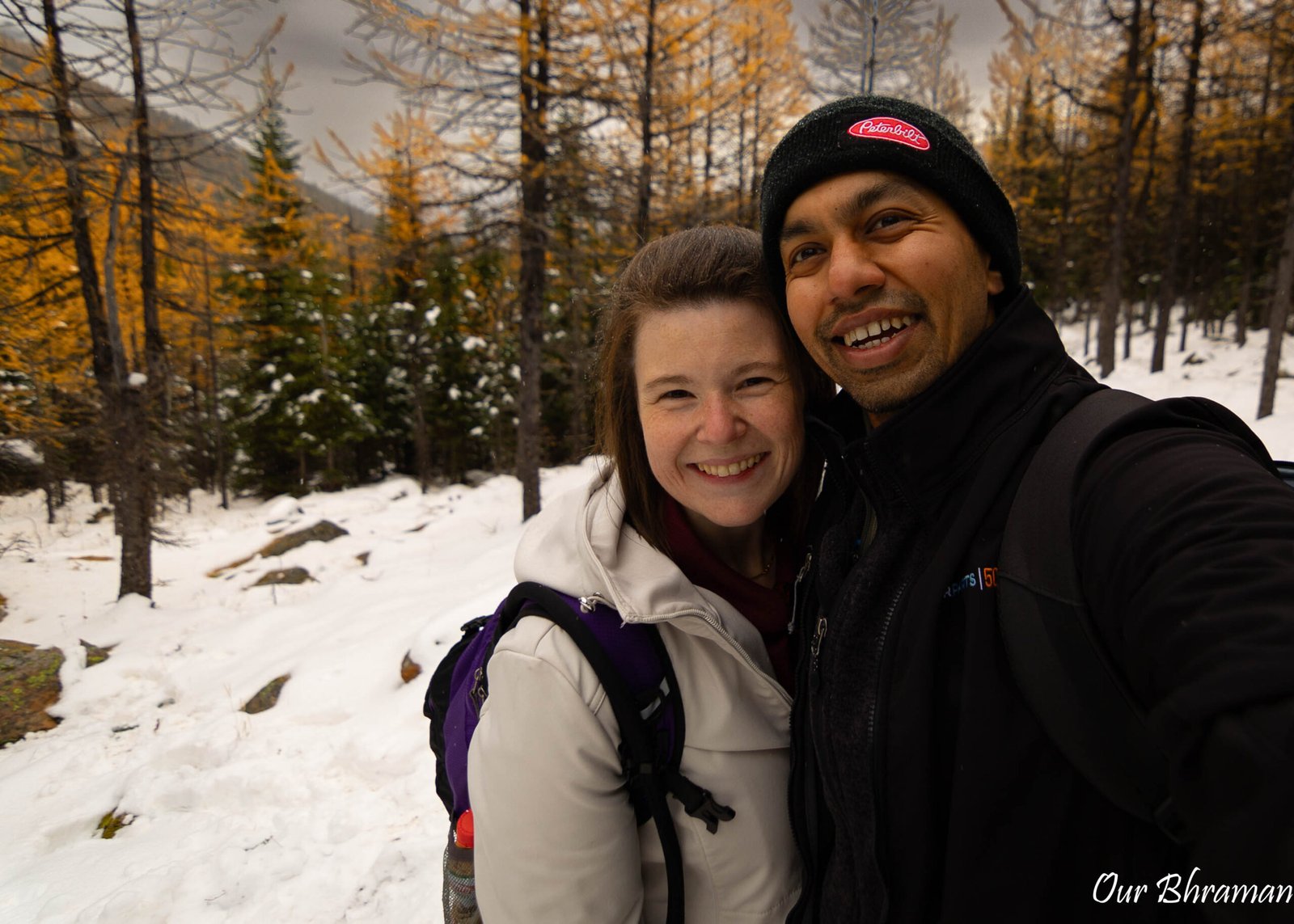
The hike back down took us 1.5 hours. Thankfully it was all downhill, but felt even more dangerous with the ice on all the switchbacks, where one wrong slip and you could have tumbled down the side of the mountain. We reached the bottom by noon and our early start was catching up to us. We sat near the lake, enjoyed a snack and of course Pranav had to touch the freezing cold water.
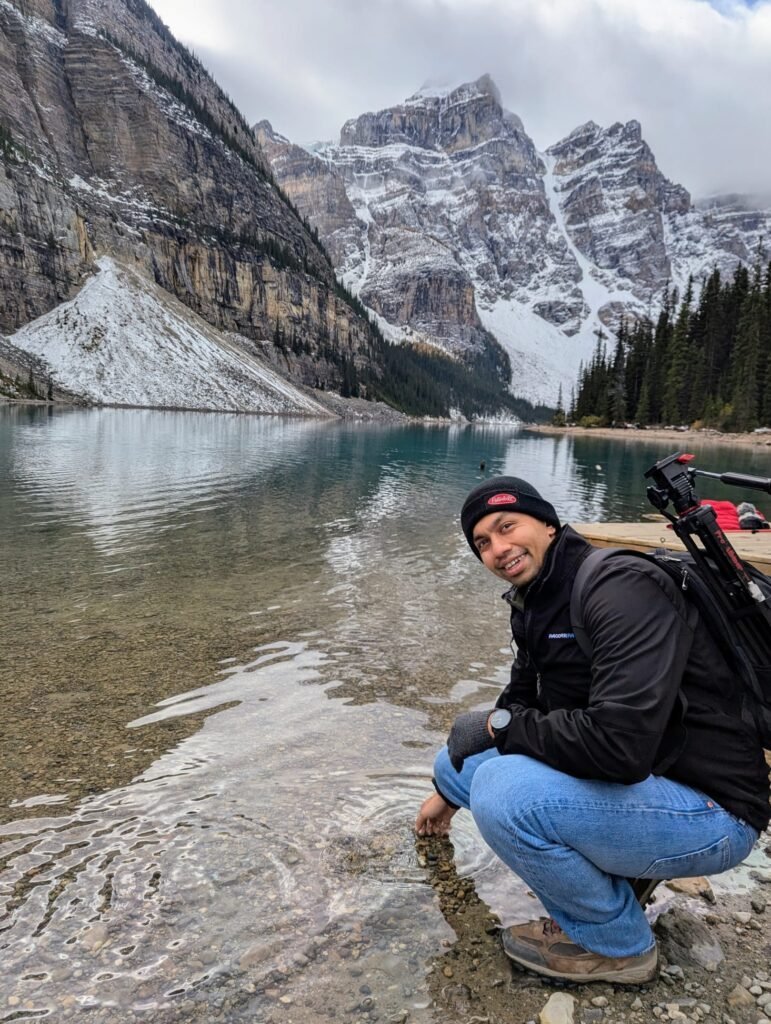
As we were about to head back to the shuttle, we decided to be greedy and climb the rockpile one more time for one last view of the iconic lake. We had to take a chance that the lighting had changed and would provide an even different view than what we saw early in the morning. Of course, this time, there were a lot more people, full of energy, compared to our 5:45AM crew.

The Long Day Catches Up With Us
By around 2:00 PM, after several hours on the trail, we were exhausted. We caught the shuttle back toward the Lake Louise area and made our way to the car. At this point, the original plan was simple: Go back to the hotel. Take a nap. We had been awake since 3:30 AM and had already hiked more than 15 miles with approximately 2,000 feet of elevation gain. A hotel bed sounded incredible. But then we remembered something. Parking at Lake Louise is not exactly something you want to give up casually. Once you’ve secured a parking spot, leaving means you may have to fight for another one later. So we made a compromise. We stayed in the car. And somehow, sitting there with the seats reclined, we managed to fall asleep for about 20–30 minutes. It wasn’t glamorous. It wasn’t particularly comfortable. But that little nap was exactly what we needed. We woke up feeling like entirely different people. And there was still one more lake waiting for us.
Lake Louise: One More Adventure
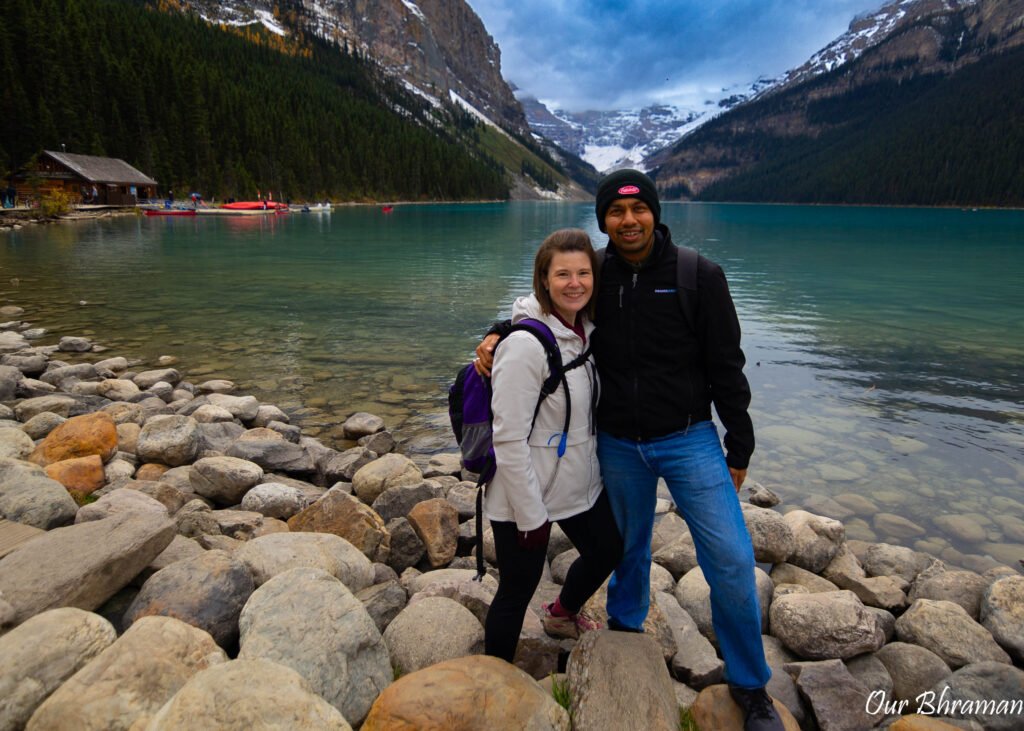
Our final stop of the day was Lake Louise.
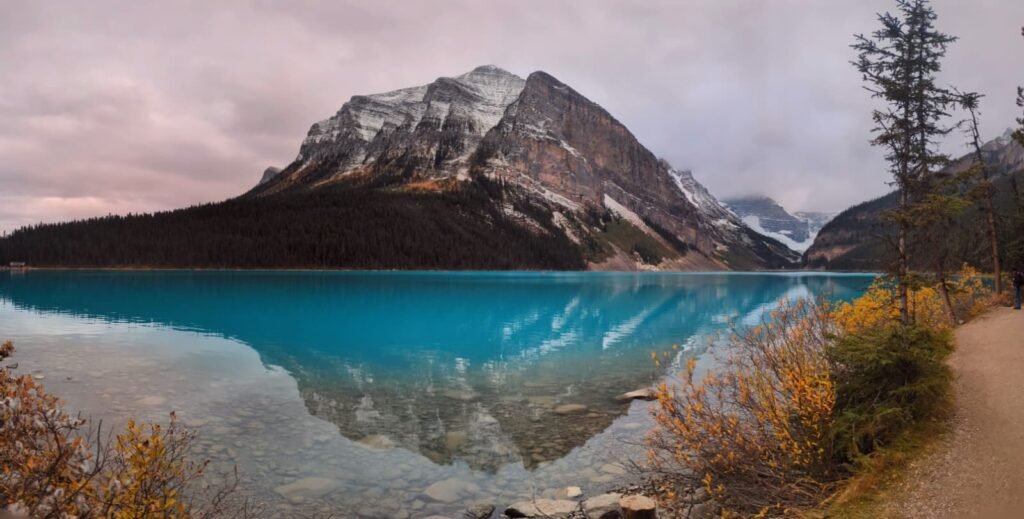
After everything we’d already experienced, it would have been easy to call it a day. But we’re not particularly good at doing that. So we decided on something much more relaxed: a walk along the Lake Louise Lakeshore Trail. And after the strenuous hike through Larch Valley, the flat lakeshore trail was exactly what our tired legs needed. The scenery was immediately spectacular. Turquoise water stretched toward the mountains, with the enormous Victoria Glacier rising at the far end of the lake. The surrounding peaks reflected across the calm surface, creating what looked almost like a painting. After spending the morning chasing elevation, we finally slowed down.
Hiking info
Difficulty: Easy
Distance: 2.3 km one way / 4.6 km round trip
Distance in miles: 1.4 miles one way / 2.9 miles round trip
Elevation Gain: Minimal
Estimated Time: Approximately 1 hour round trip
Trail Type: Out and back
Trailhead: Lake Louise Lakeshore
The Quietest Moment of the Day
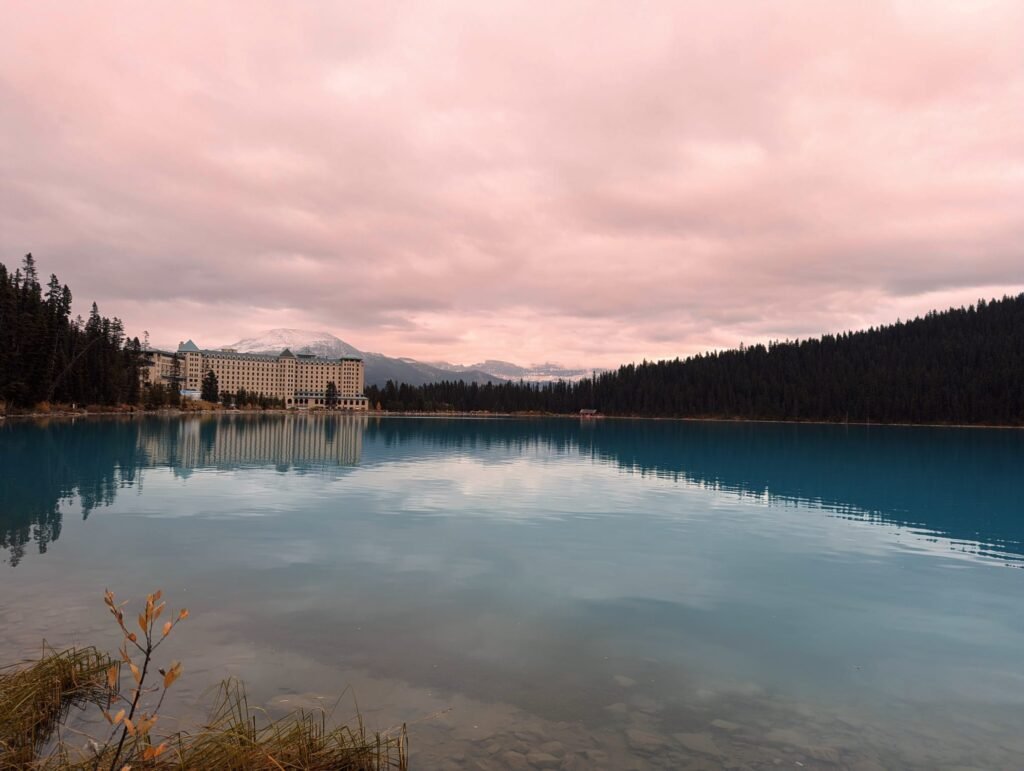
We walked along the lakeshore, listening to the water gently lap against the shoreline. The Fairmont Chateau Lake Louise stood proudly beside the lake, adding another layer of history and character to the landscape. But eventually, we stopped walking. We found a bench along the shore and simply sat. No hiking. No rushing. No checking the trail map. No worrying about what viewpoint came next. Just sitting. After a day that had started before dawn, it felt like the perfect ending. We watched the light begin to change as the afternoon slipped toward evening. The lake remained impossibly blue. The mountains towered above us. And for a few minutes, we didn’t need to do anything except appreciate where we were.
Our final stop of the day was Lake Louise.
Photography Tips
The lakeshore offers plenty of easy photography opportunities, particularly when the water is calm.
Walk farther along the shoreline rather than photographing only from the main viewpoint. You’ll find different perspectives of the lake, Victoria Glacier and surrounding peaks.
Final Thoughts
Banff National Park has a way of making you feel very small. Standing beneath the Ten Peaks, surrounded by golden larches, or sitting beside the turquoise waters of Lake Louise, it’s impossible not to feel humbled by the scale of the landscape.
But what we’ll remember most isn’t simply the scenery.
It’s the experience:
- The 3:30 AM alarm.
- The freezing morning air.
- The sleepy shuttle ride.
- Following strangers through the darkness because we couldn’t read the trail signs.
- Watching the first light touch Moraine Lake.
- Hiking through a golden forest.
- Taking a 20-minute nap in our car.
- And finally sitting quietly beside Lake Louise as the day came to an end.
It was exhausting. It was beautiful. And it was completely worth waking up at 3:30 AM.
Some places are worth losing sleep over. Banff National Park was one of them.