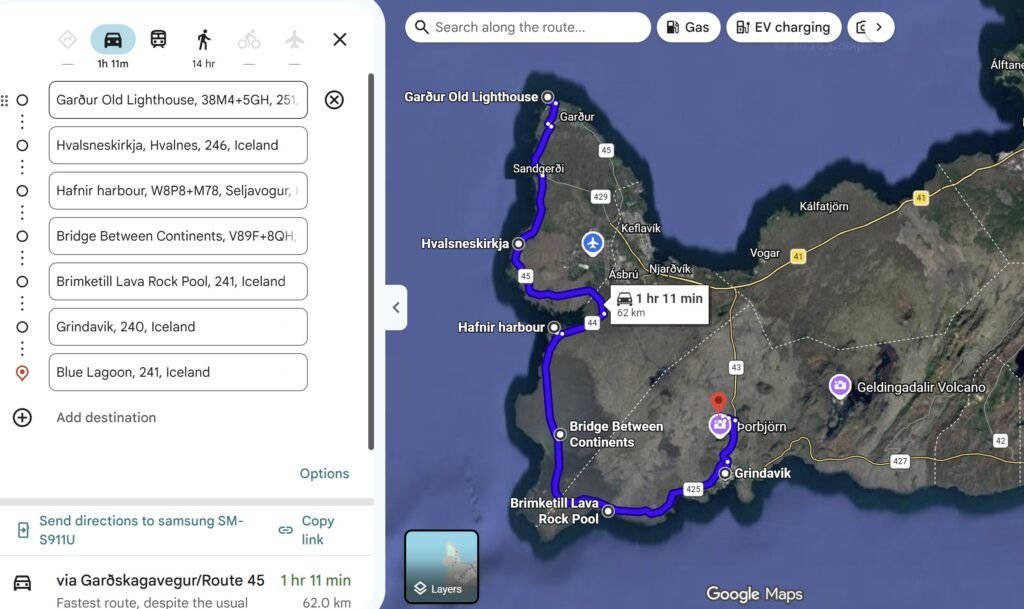
Garðskagi Lighthouse — A Quiet Corner of Reykjanes
Our visit to Garðskagi Lighthouse took us to one of the quieter corners of Iceland’s Reykjanes Peninsula. After spending so much time exploring waterfalls, geothermal areas, and dramatic volcanic landscapes, it was refreshing to arrive somewhere where the main attraction was simply the lighthouse, the ocean, and the wide-open Icelandic sky.
What makes Garðskagi especially interesting is that there are two lighthouses standing near each other. The older lighthouse dates back to the late 19th century, while the taller lighthouse was built later to replace it. Standing beside both of them, we couldn’t help but wonder about the generations of sailors who depended on these lights while navigating Iceland’s often rough coastline.
The taller lighthouse immediately grabs your attention. Its simple shape stands out against the surrounding flat coastal landscape, and the open horizon makes the area feel much bigger than it first appears. There is something wonderfully Icelandic about the scene—little vegetation, rugged shoreline, cold Atlantic water, and a lighthouse standing against a constantly changing sky.
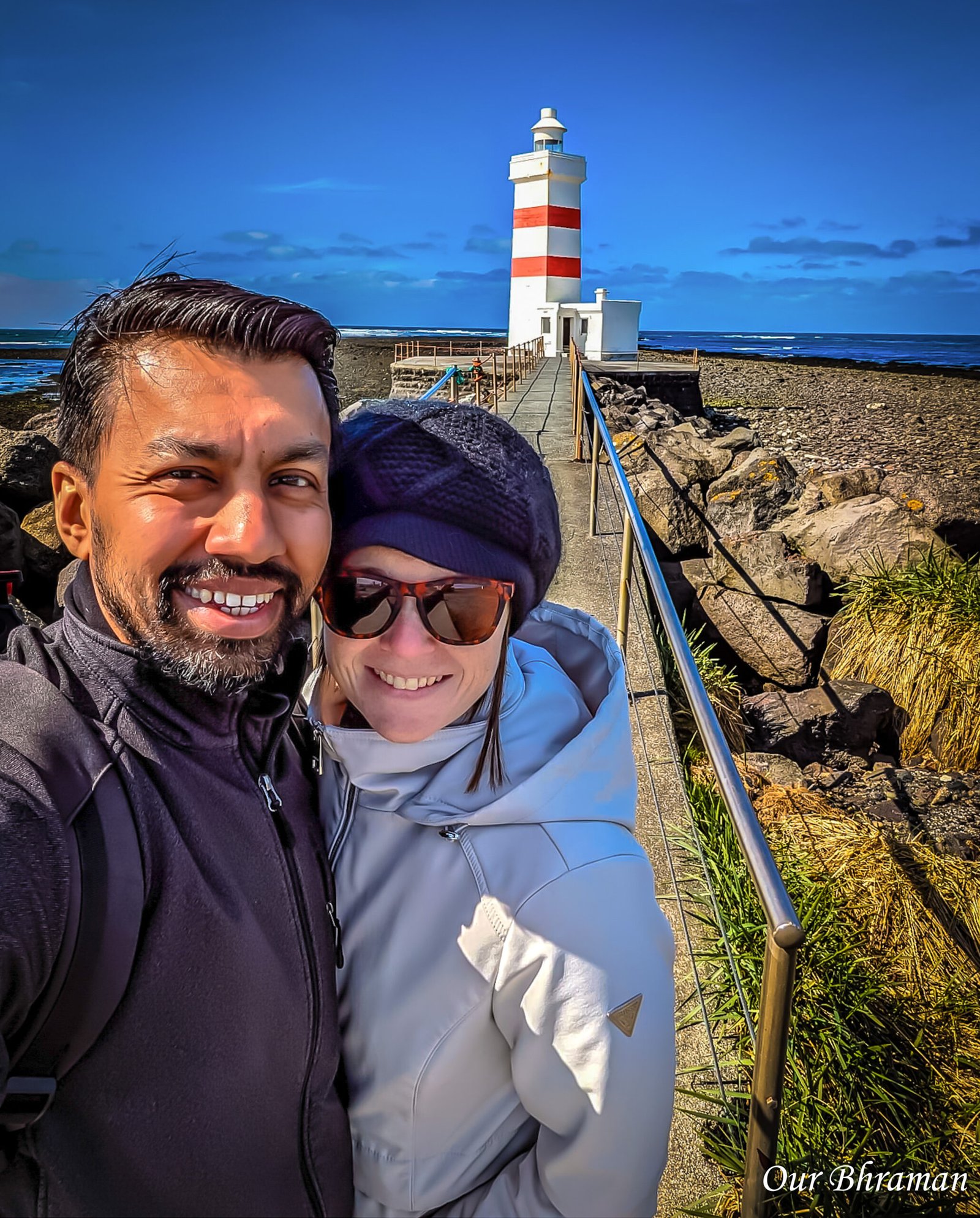 We spent some time walking around the area rather than simply stopping for a quick photograph. The coastline here is part of the experience. The sound of the waves, the strong ocean breeze, and the feeling of being surrounded by nothing but sea and sky made this a surprisingly peaceful stop.
Garðskagi is also known for its birdlife, making it an interesting place for anyone who enjoys photography. Depending on the season, seabirds can be seen around the coastline, and the open landscape provides plenty of opportunities to photograph birds, waves, and the lighthouse together.Sometimes, after days of chasing Iceland’s biggest attractions, a quiet lighthouse at the edge of the sea is exactly what you need.
Garðskagi reminded us that Iceland isn’t always about the biggest or most dramatic sight. Sometimes, it’s about finding a quiet place, looking toward the horizon, and letting the landscape speak for itself.
 Gardur Folk Museum
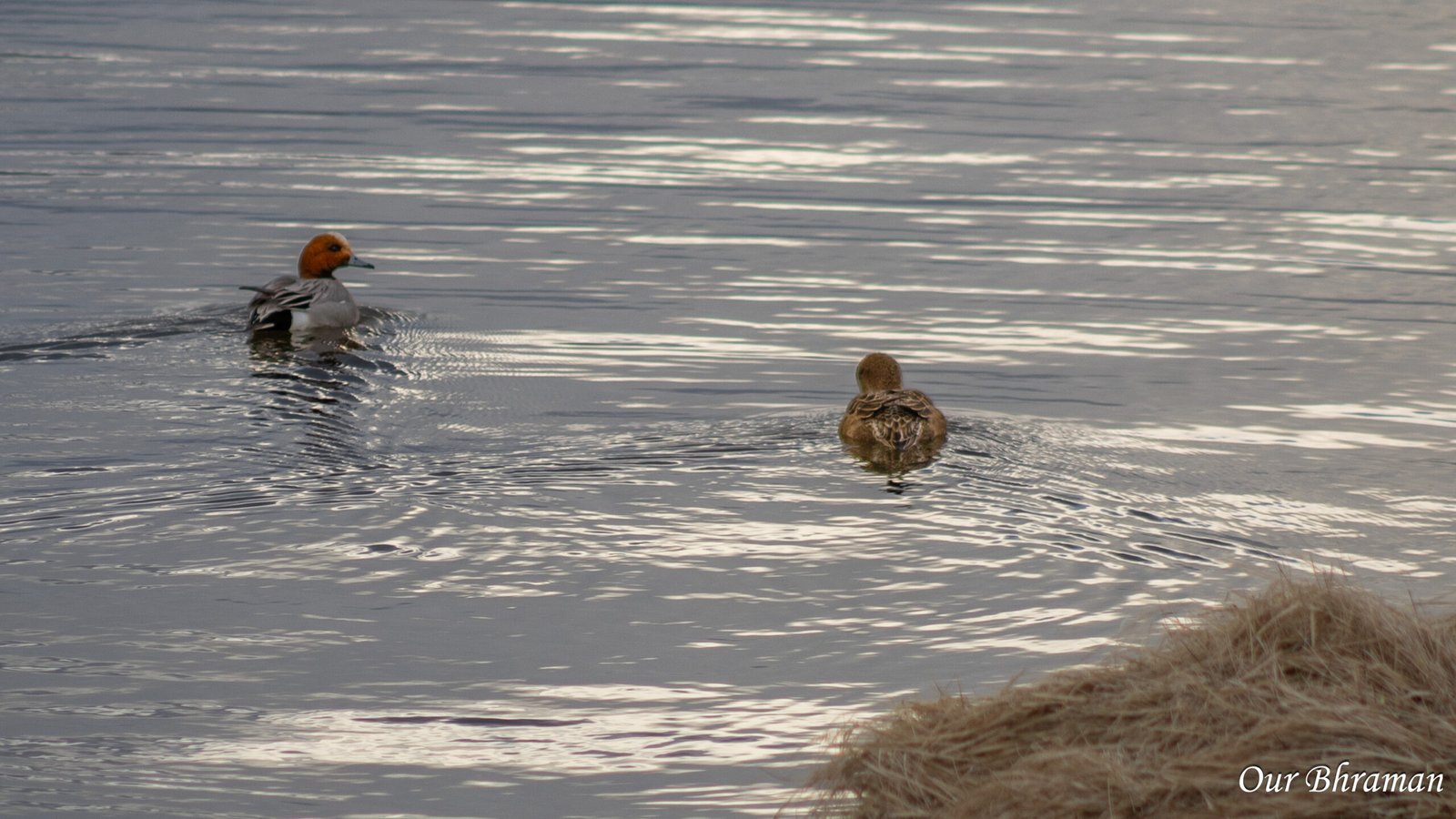 Gardur Folk Museum
We wandered into the local visitors center, where a friendly guide gave us far more than just a map. She shared fascinating history about the town, including how some of the houses here were built from wood salvaged from the Jamestown shipwreck, and even sprinkled in a few mythical tales about trolls said to roam the region. Then the conversation turned to recent events — she described how lava had emerged through a fissure after a volcanic eruption near Grindavík in April 2025, the disruption it caused to the town, and the resilience of the people there.
After spending over 40 minutes chatting at the visitor center, it was suddenly close to our check-in time. We settled into our hotel around 3 p.m., grabbed a cup of coffee, and began getting ready for the main highlight of the night — the Blue Lagoon. But instead of heading straight there, we decided to follow a few extra tips we’d picked up from the local guide.
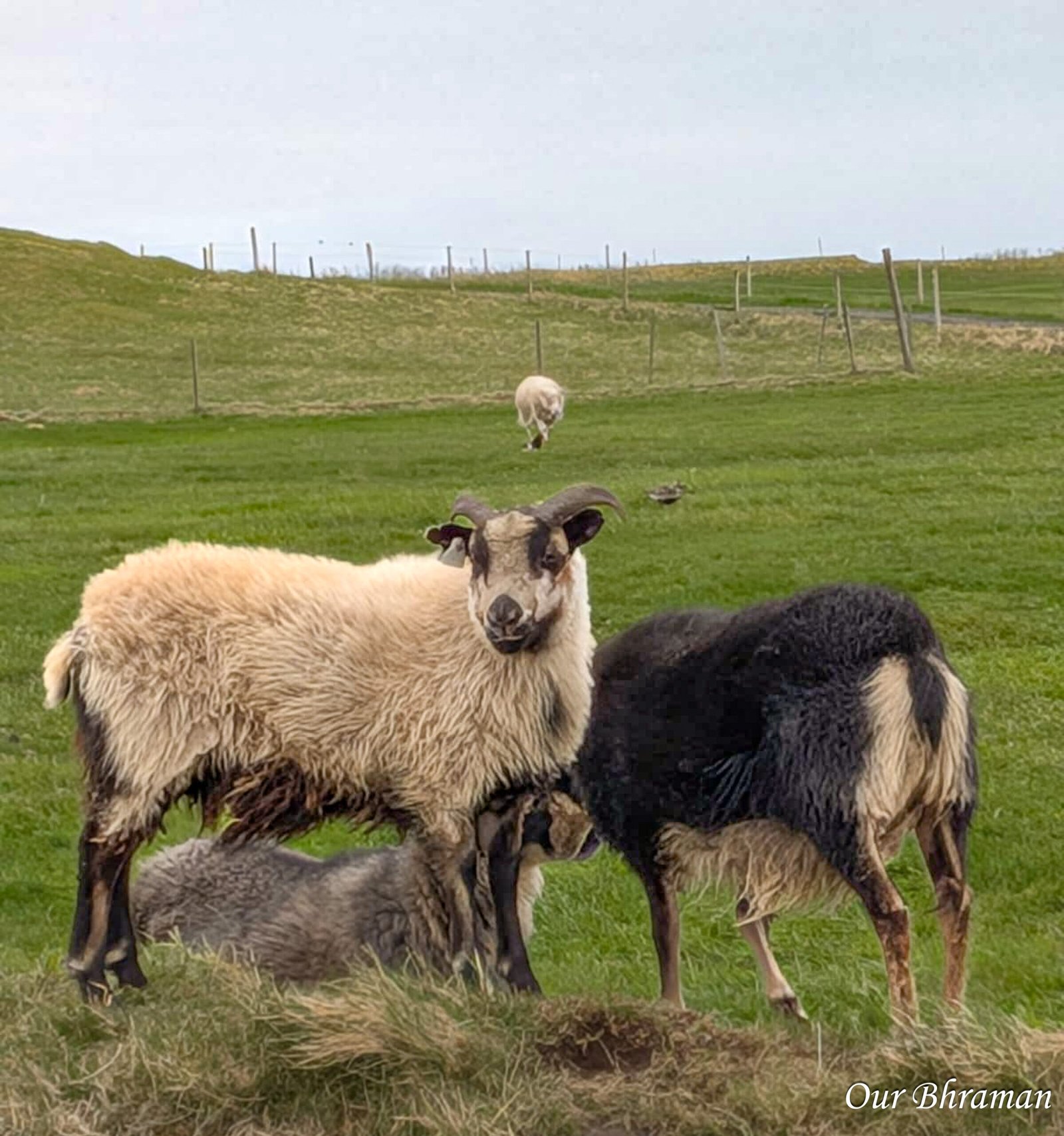
Hvalsneskirkja — A Brief Stop
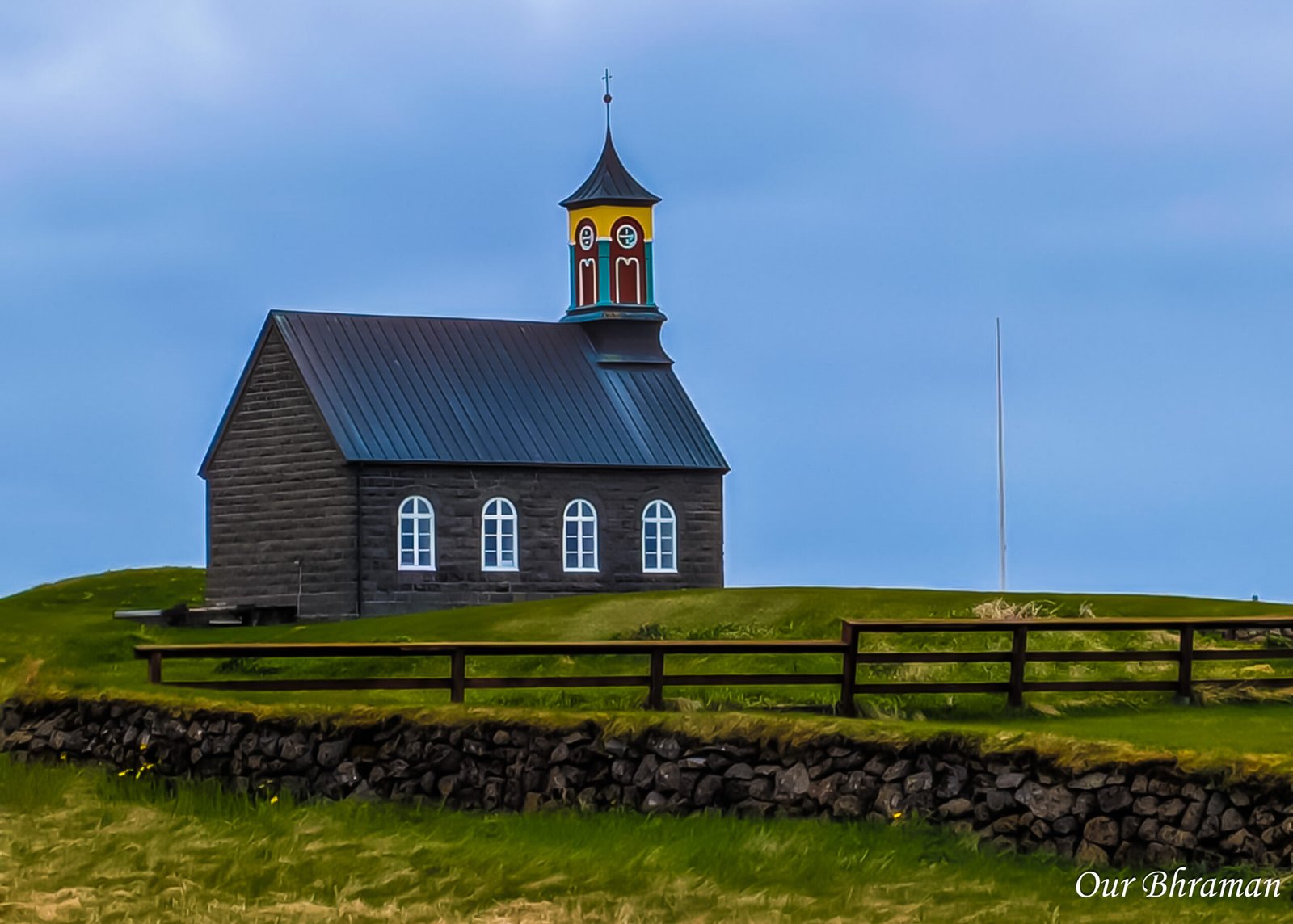
Our next stop was Hvalsneskirkja, a small historic church on the Reykjanes Peninsula. We didn’t spend much time here—just about five minutes—but the church caught our attention as we passed by, standing quietly against the open Icelandic landscape.
Rather than going inside, we simply stopped to admire it from a distance and take in the peaceful surroundings. Its simple stone construction and isolated setting gave it a charming, almost storybook feel.
It was a quick stop, but sometimes that’s all you need to appreciate a place. We took a few photographs, enjoyed the quiet atmosphere, and continued on our journey through Reykjanes.
Hafnir Harbour & the Jamestown
Our next stop was Hafnir, a small and peaceful fishing village on the Reykjanes Peninsula. With its quiet harbor, fishing boats, and rugged coastline, it felt far removed from the busier tourist spots.
Hafnir has an unusual piece of history. In 1881, the American sailing ship Jamestown ran aground off the coast, carrying a huge cargo of timber. Much of the wood was salvaged by local residents and became valuable building material for the surrounding communities. An anchor from the Jamestown is still preserved in Hafnir today.
We spent some time wandering around the harbor, enjoying the peaceful scenery and imagining the village as it must have looked when fishing was at the heart of everyday life. It was a quick stop, but one that gave us a glimpse into a quieter and more historic side of Iceland.
 Bridge Between Continents — Where Two Plates Meet
 Bridge Between Continents — Where Two Plates Meet
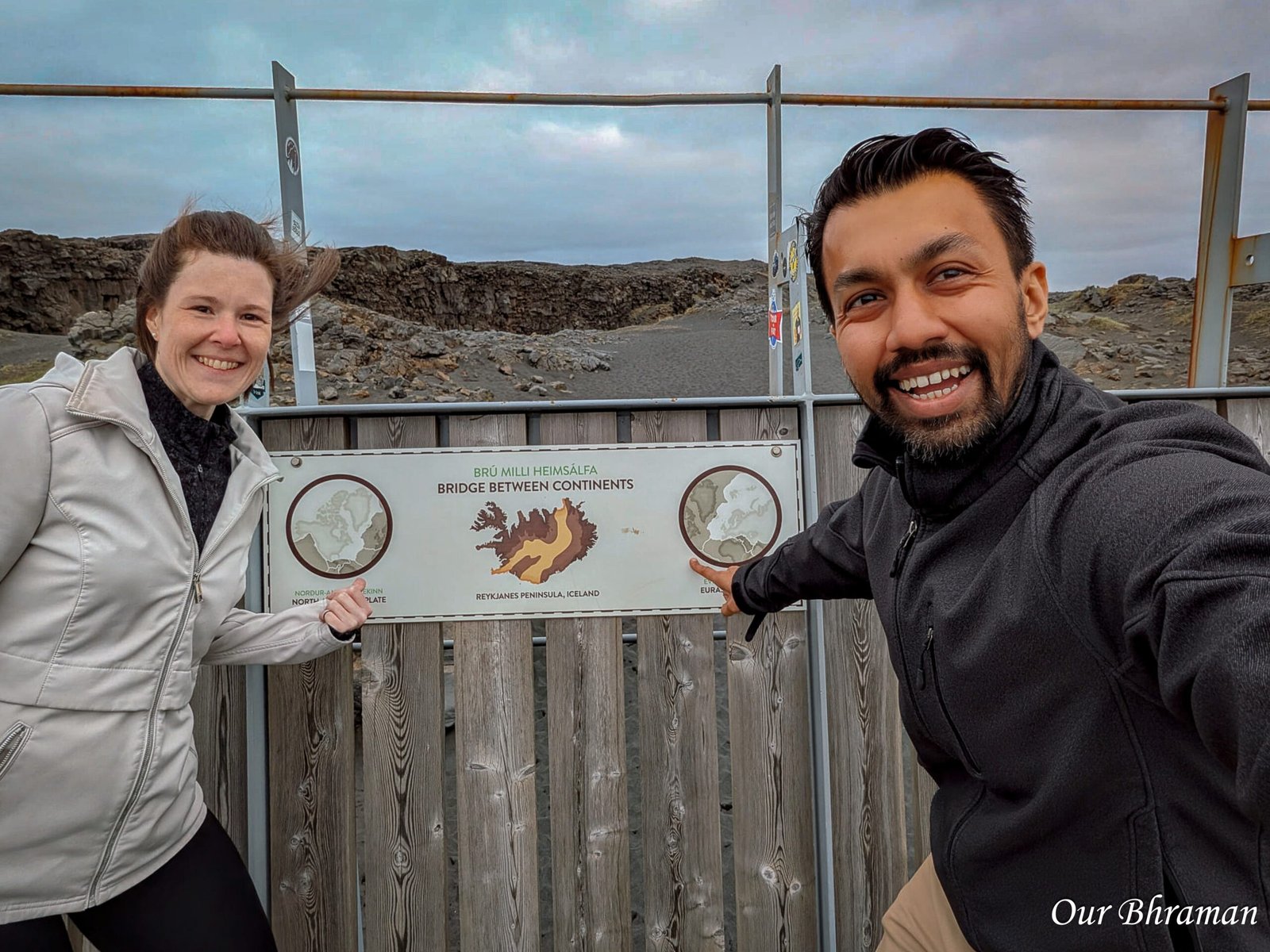
Standing at the Bridge Between Continents, it’s hard to believe that beneath your feet, two enormous tectonic plates are slowly moving apart. The bridge sits along the Mid-Atlantic Ridge, where the North American and Eurasian Plates are gradually separating at roughly 2.5 centimeters per year. As the plates pull away from each other, magma rises from below to fill the gap—one of the geological forces responsible for Iceland’s volcanoes, earthquakes, and ever-changing landscape.
Iceland is one of the rare places where this enormous underwater ridge rises above sea level, allowing us to actually see and walk across part of the rift. We crossed the small bridge spanning the gap, knowing that it isn’t literally a passage from one continent to another, but rather a symbolic representation of this incredible geological boundary.
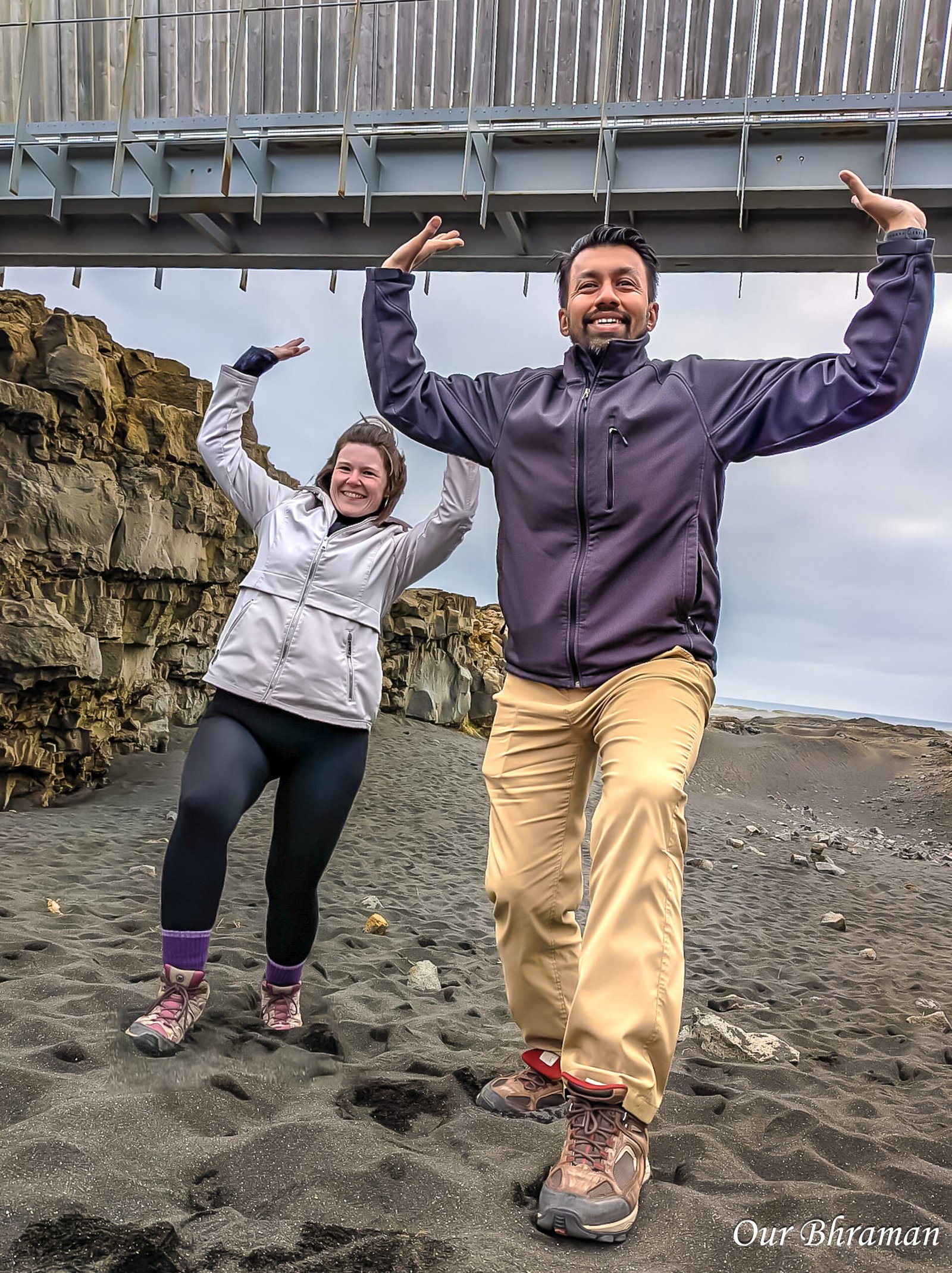 After traveling across Iceland and seeing its volcanoes, lava fields, geothermal areas, and dramatic landscapes, this stop suddenly connected many of those experiences. The ground beneath us wasn’t just scenery—it was part of an ongoing geological process that continues to shape Iceland today.
Two tectonic plates. One small bridge. And a reminder that the Earth beneath us is never truly still.
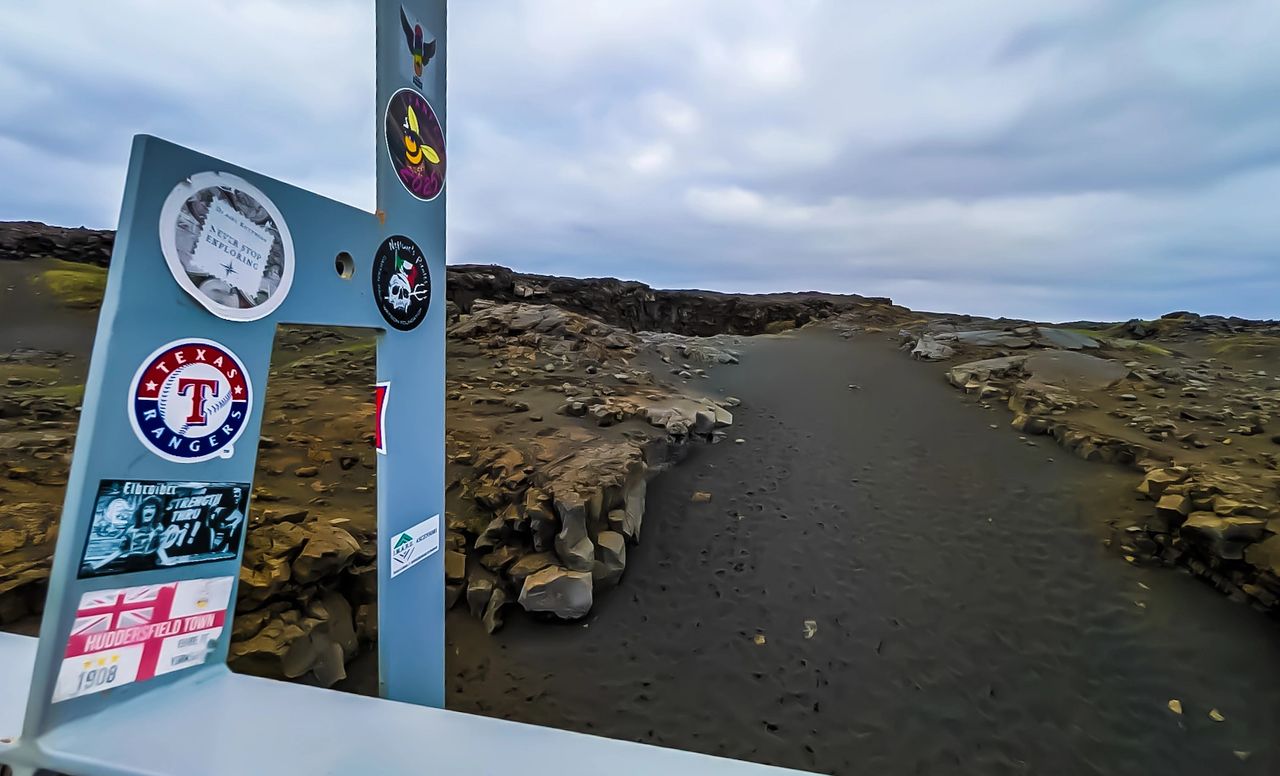
I’m not advocating graffiti or putting stickers on landmarks, but I have to admit — seeing a Texas Rangers sticker on the bridge gave us a little unexpected taste of home. It was a funny reminder that no matter how far you travel, the world has a way of scattering little pieces of familiarity in the most unexpected places.
Brimketill
Continuing our drive, we came across another striking natural wonder: Brimketill. The view there was absolutely breathtaking. Golden sand met pitch-black lava rocks, while the vast blue ocean stretched endlessly beyond, creating a dramatic contrast. Standing on the edge of the cliffs, we watched the waves crash with incredible force, pounding against the lava rocks before spilling into the natural pool and draining back out again.
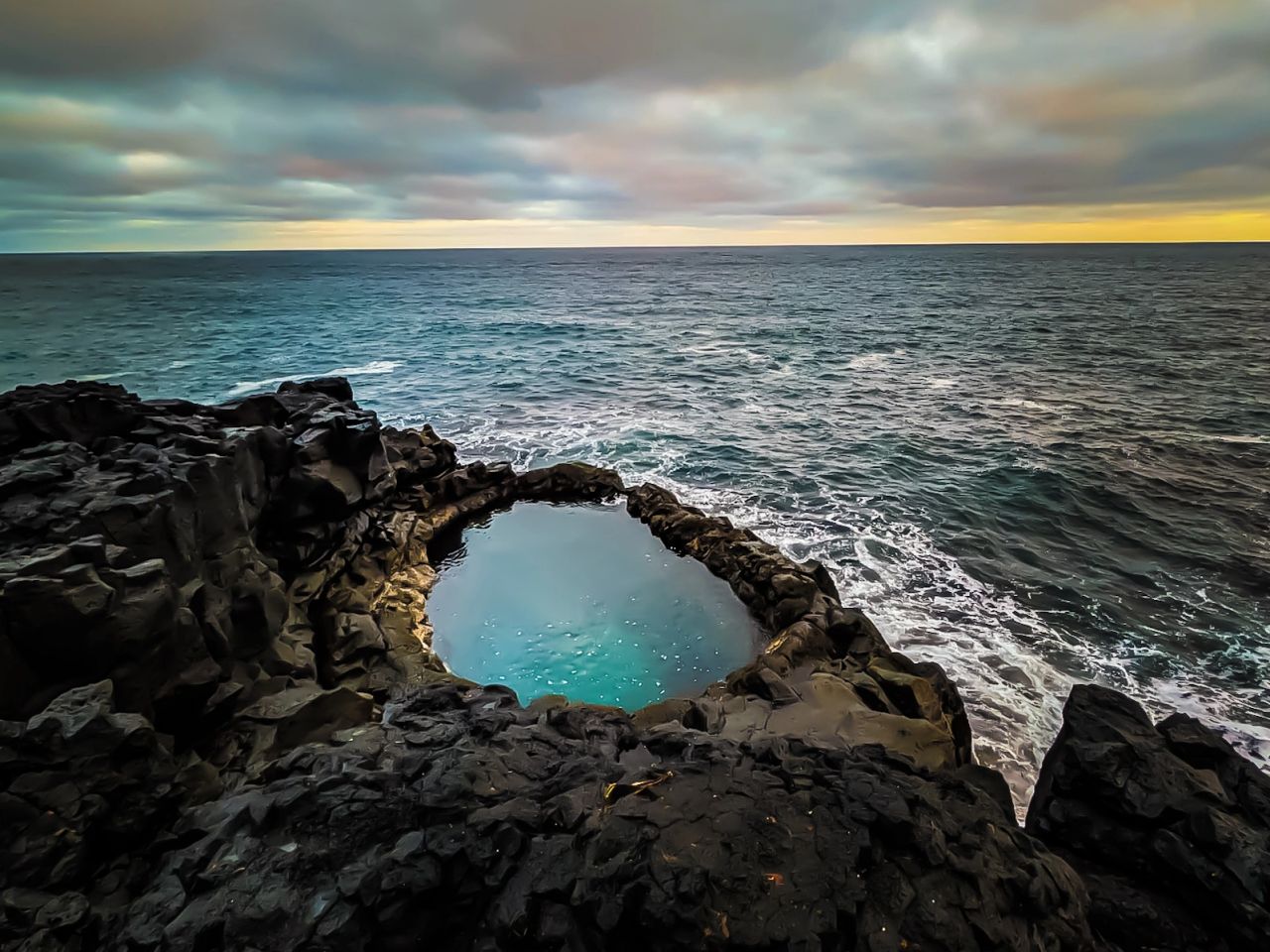
Brimketill was easy to explore, with an observation platform just a few steps from the parking lot. We spent about 15 minutes taking in the dramatic coastline and enjoying the views before moving on to our next stop. But this time, we weren’t heading toward just another beautiful Icelandic landscape. We were about to visit an area that had experienced a volcanic eruption just 20 days before our arrival.
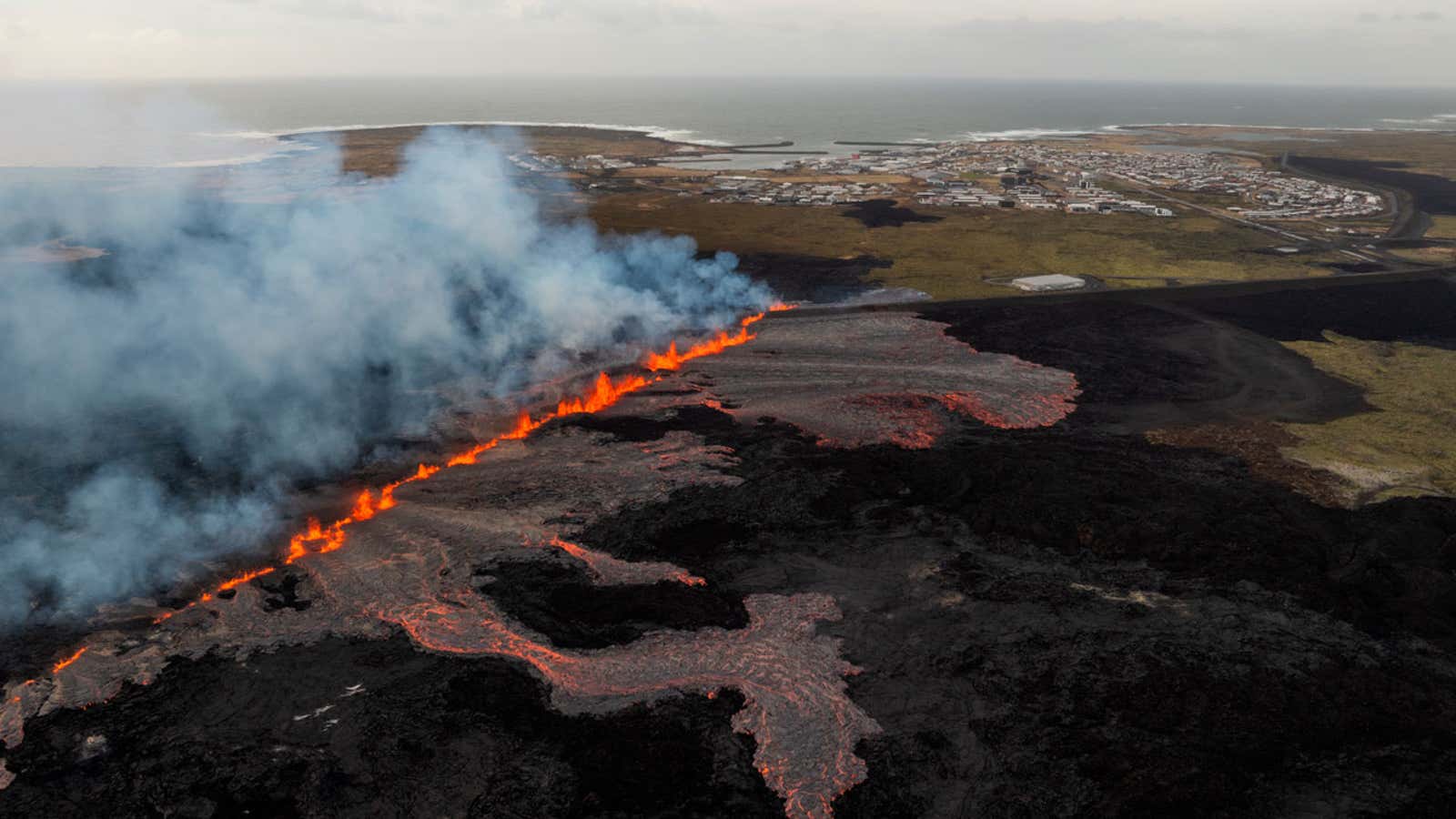
On April 1, 2025, the Reykjanes Peninsula was shaken by a powerful earthquake swarm before a fissure opened near the Sundhnúkur crater row, sending lava and smoke into the air. The eruption prompted evacuations in nearby Grindavík and at the Blue Lagoon, once again reminding us that in Iceland, the landscape can change while you’re still planning your trip.
Grindavík
Just 20 days earlier, another volcanic eruption had shaken the area around Grindavík, forcing evacuations once again. As we drove into the town, it felt strangely like a place frozen in time. Houses stood empty with their windows dark, and there were hardly any cars or people in sight. Some roads were cracked and crumbled, while hardened black lava and jagged volcanic rocks surrounded parts of the town.
The silence was almost unsettling. There was no normal bustle of a town—only the wind sweeping through the empty streets and across the rough black landscape. Seeing ordinary homes, empty driveways, damaged roads, and fresh volcanic scars all around us made Iceland’s raw and unpredictable power feel very real. The black lava fields were no longer just something beautiful to photograph; we were looking at a landscape that had changed only days before our visit, and at a town whose landscape—and people’s lives—had been deeply affected by the volcanoes.