Takakkaw Falls
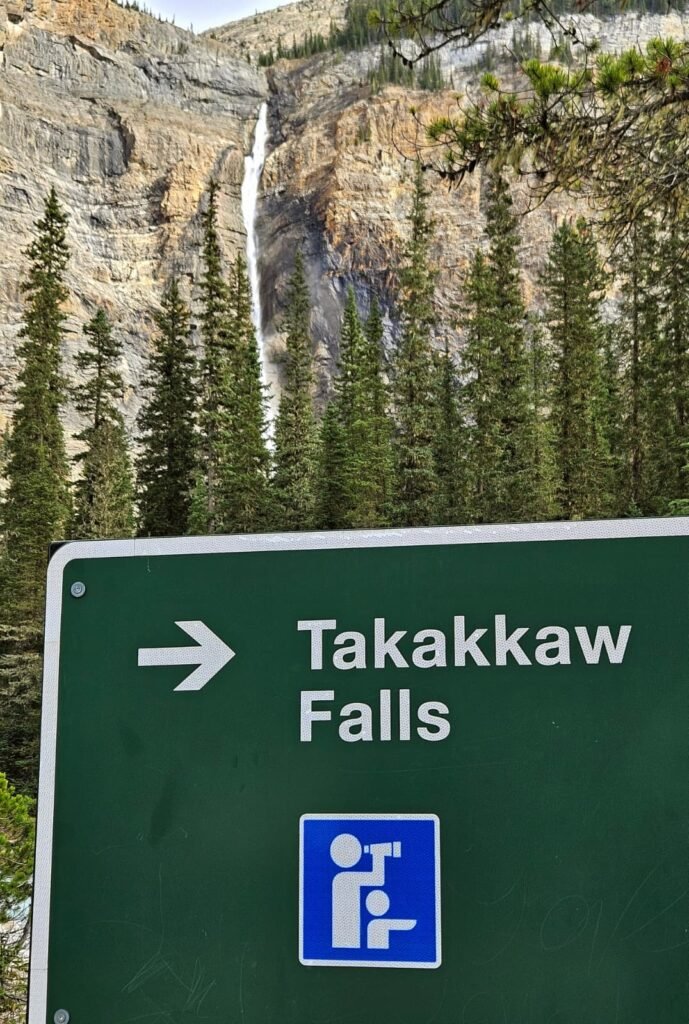
If there is one place in Yoho National Park that immediately makes you feel insignificant, it’s Takakkaw Falls. And its name couldn’t be more fitting. In the Cree language, Takakkaw means “wonderful.”
Standing in front of this waterfall, it is easy to understand why. At approximately 384 meters (1,260 feet) tall, Takakkaw Falls is one of Canada’s highest waterfalls and is often described as the second-highest waterfall in Canada after Della Falls on Vancouver Island. The waterfall has two distinct drops, with the lower drop plunging approximately 254 meters before crashing onto the rocks below. And you don’t even have to hike to see it. You can actually catch glimpses of Takakkaw Falls through the trees from the parking area. But naturally, we wanted to get closer.
1.3
Length (kilometers)
Out & back
Route Type
36
Elevation Gain (meters)
easy
Difficulty
The walk to the base of Takakkaw Falls is relatively easy. The main trail begins as a wide, paved path, making it accessible for most visitors. Along the route you’ll find picnic tables, outhouses, informational signs, and several places where you can stop to admire the falls. The walk from the parking lot to the base of the waterfall is approximately 1.3 km one way, depending on where you measure the route. It’s an easy trail, but the scenery makes it feel like much more of an adventure.
The walk to the base of Takakkaw Falls is relatively easy. The main trail begins as a wide, paved path, making it accessible for most visitors. Along the route you’ll find picnic tables, outhouses, informational signs, and several places where you can stop to admire the falls. The walk from the parking lot to the base of the waterfall is approximately 1.3 km one way, depending on where you measure the route. It’s an easy trail, but the scenery makes it feel like much more of an adventure.
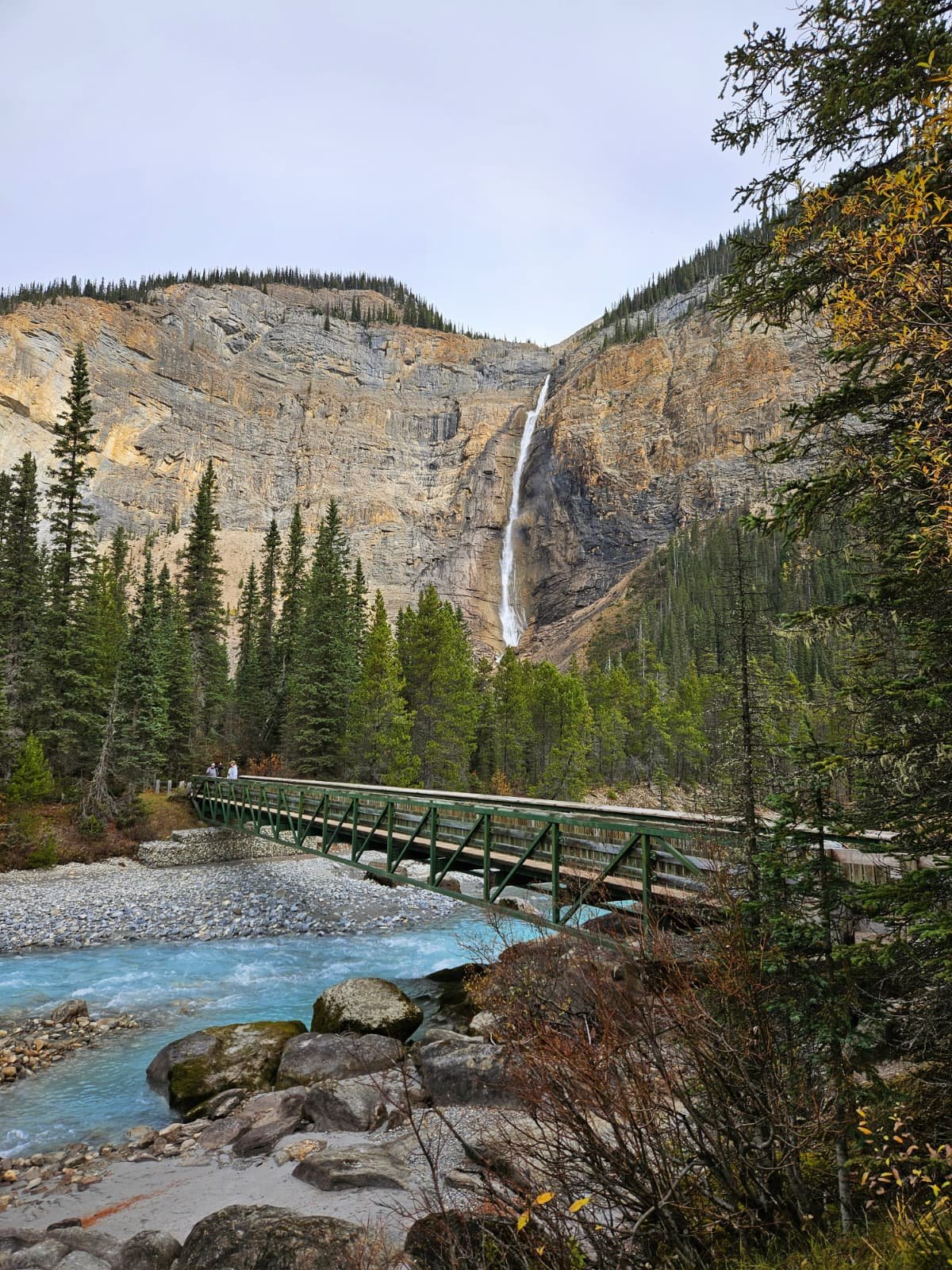
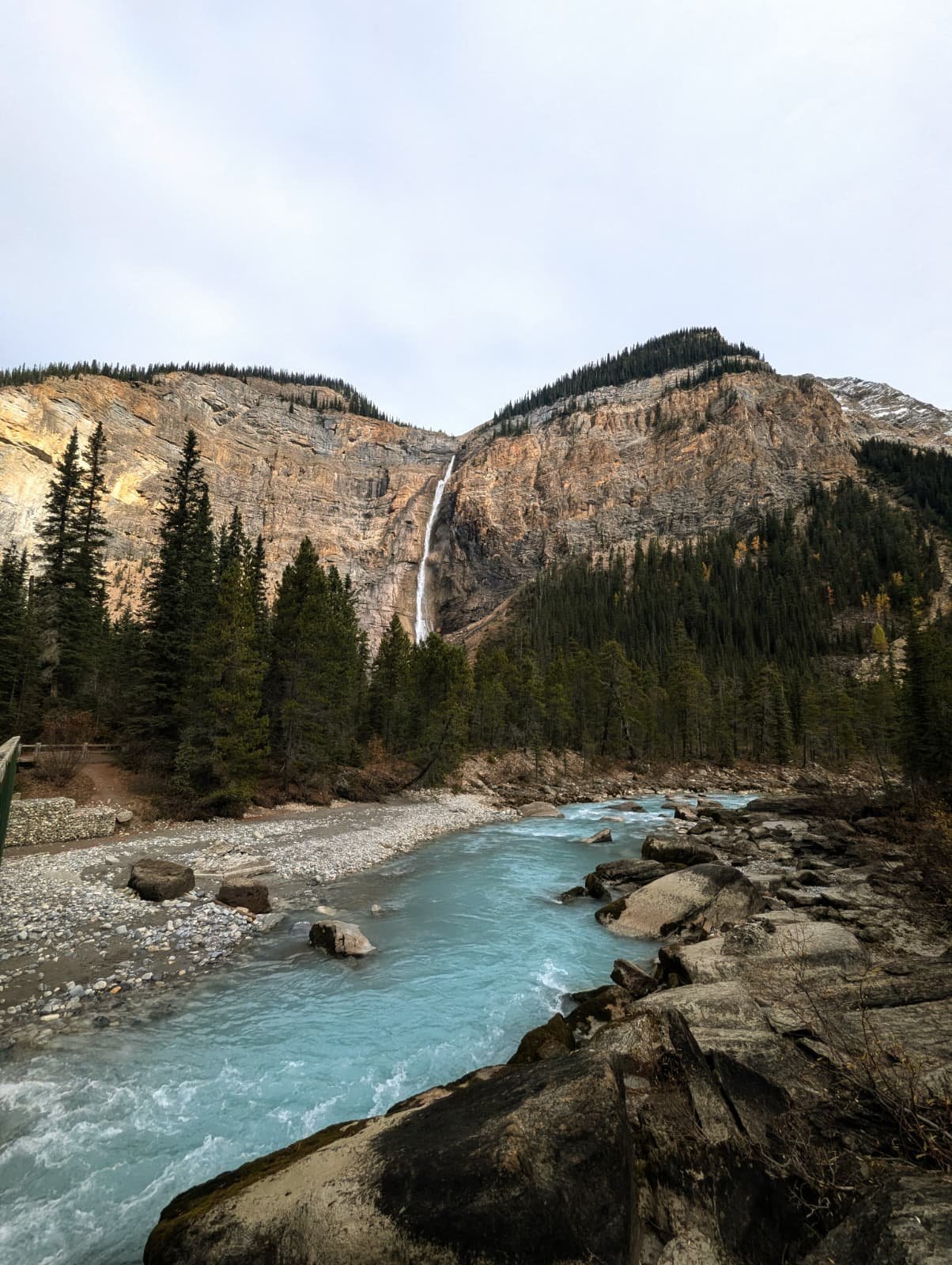
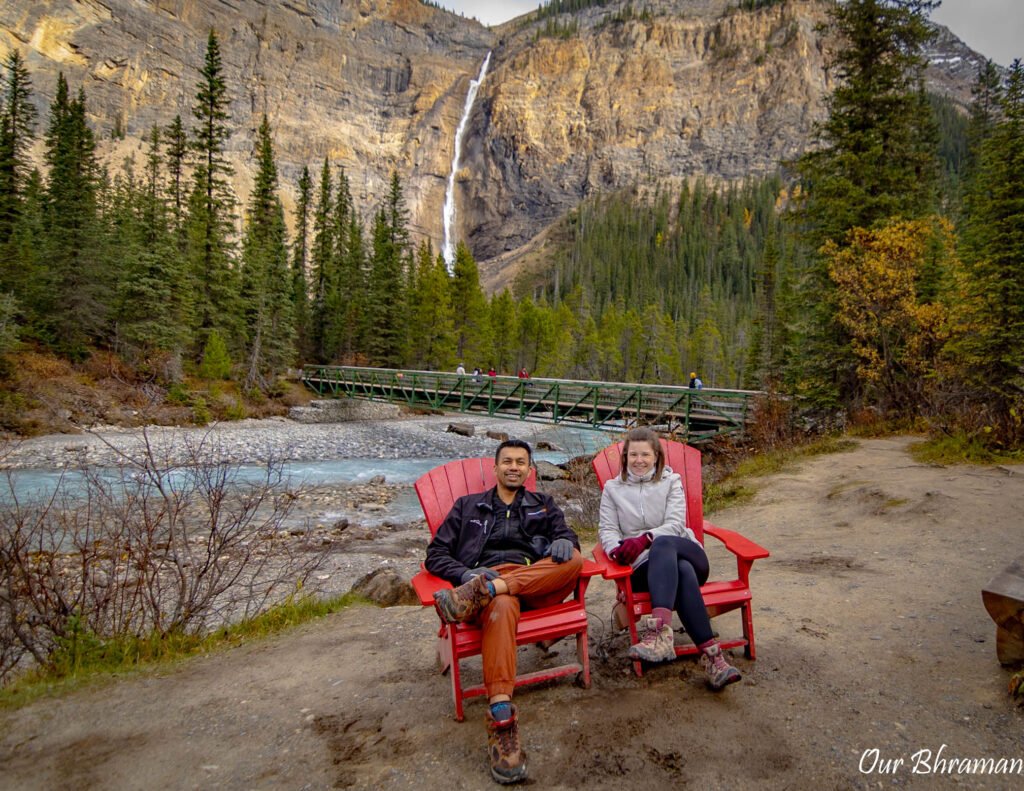
One of the first memorable features along the trail is the bridge crossing the icy-looking river. The water rushing beneath the bridge looked absolutely freezing. And then we spotted one of Parks Canada’s iconic red chairs. Of course, we had to stop. The red chairs have become a fun feature at scenic locations throughout Canada’s national parks, giving visitors a designated place to sit, relax, and take in the surroundings. We took a couple of photographs before continuing. It was one of those little moments that didn’t take much time but became part of the memory of the hike.
As we continued toward the waterfall, the sound of rushing water became louder. And then came the mist. The closer we got, the more powerful the waterfall felt. Water thundered down the rock face, hitting the rocks below with enough force to send a refreshing spray across the surrounding area. Eventually, we reached the point where our cameras—and our jackets—were telling us we’d gotten close enough. The spray gets intense! You can continue toward the falls as far as you’re comfortable, but be prepared to get wet.
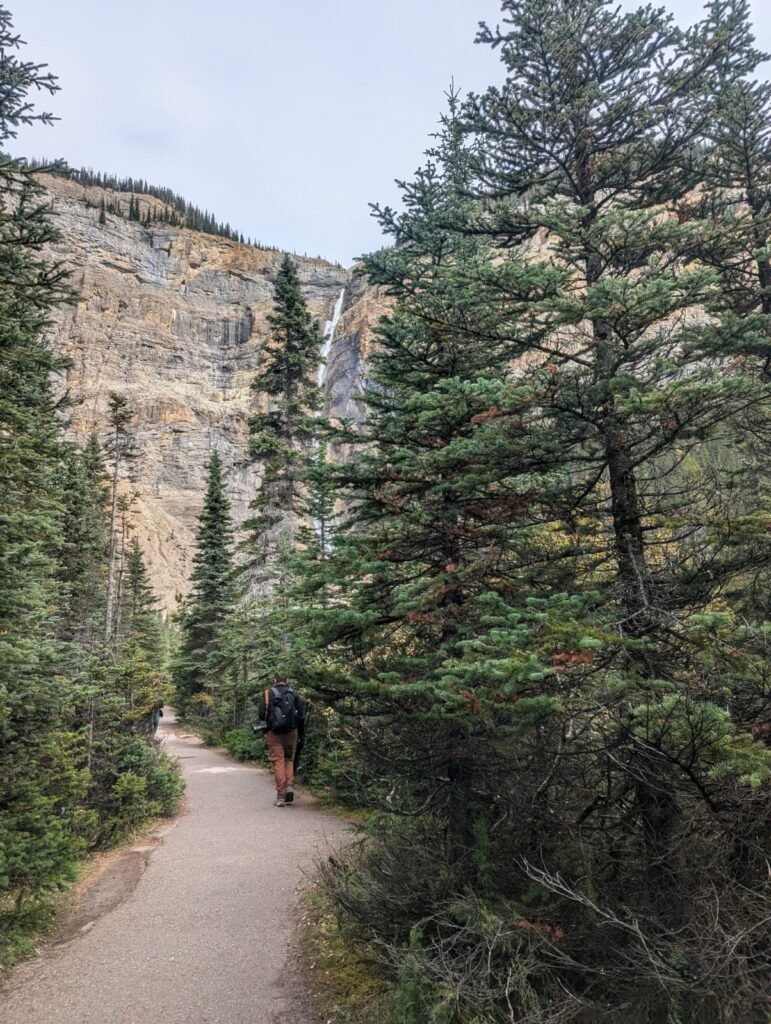
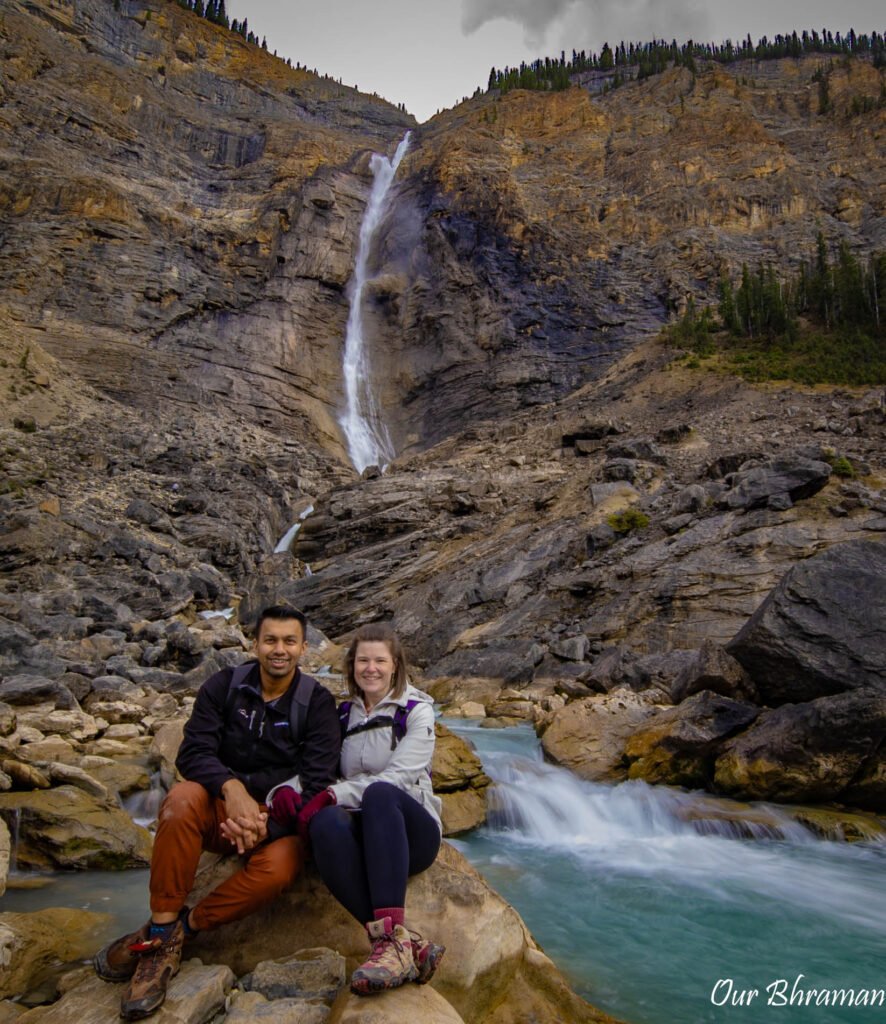
Standing there beneath a waterfall nearly 400 meters tall was an incredible experience. You can hear the roar. You can feel the mist. And you can see the enormous volume of water cascading down the mountain. It’s one thing to know the statistics. It’s another thing entirely to stand beneath it.
One of the most interesting things about Takakkaw Falls is that its flow is heavily influenced by glacial meltwater. The waterfall is fed by meltwater from the Daly Glacier, which is part of the enormous Waputik Icefield. That means the waterfall’s volume can change significantly depending on the season.
Photography Tips
A wide-angle lens is your friend here.
You want to capture both the enormous waterfall and the surrounding mountains.
For a different perspective, experiment with foreground elements such as trees, rocks, the river, or people.
Travel Tip
Best Time to See the Waterfall
Mid-June through summer is generally an excellent time to see Takakkaw Falls at its most powerful, as warmer temperatures increase glacial meltwater.
We visited during the first week of October and were still fortunate to see an impressive amount of water flowing over the falls. Our timing was especially lucky.
The road to Takakkaw Falls typically closes for the winter in mid-October, and just a couple of days after our visit, the road was closed for the season. Talk about perfect timing.