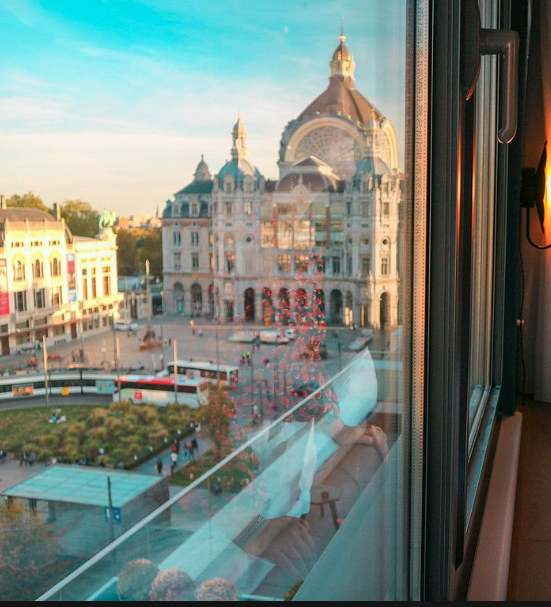
Hotel Indigo Antwerp
Our one-day visit in city began with the check in Hotel Indigo Antwerp – City Centre. It’s a good hotel in middle of the city center hustle and bustle. Hotel check in person gave a choice to have a quite side or street side (with some noise). It was hard to say no to the view of the city from hotel top floor, so we chose the front side. Its amazing to sit-down and relax do some crowd watching.
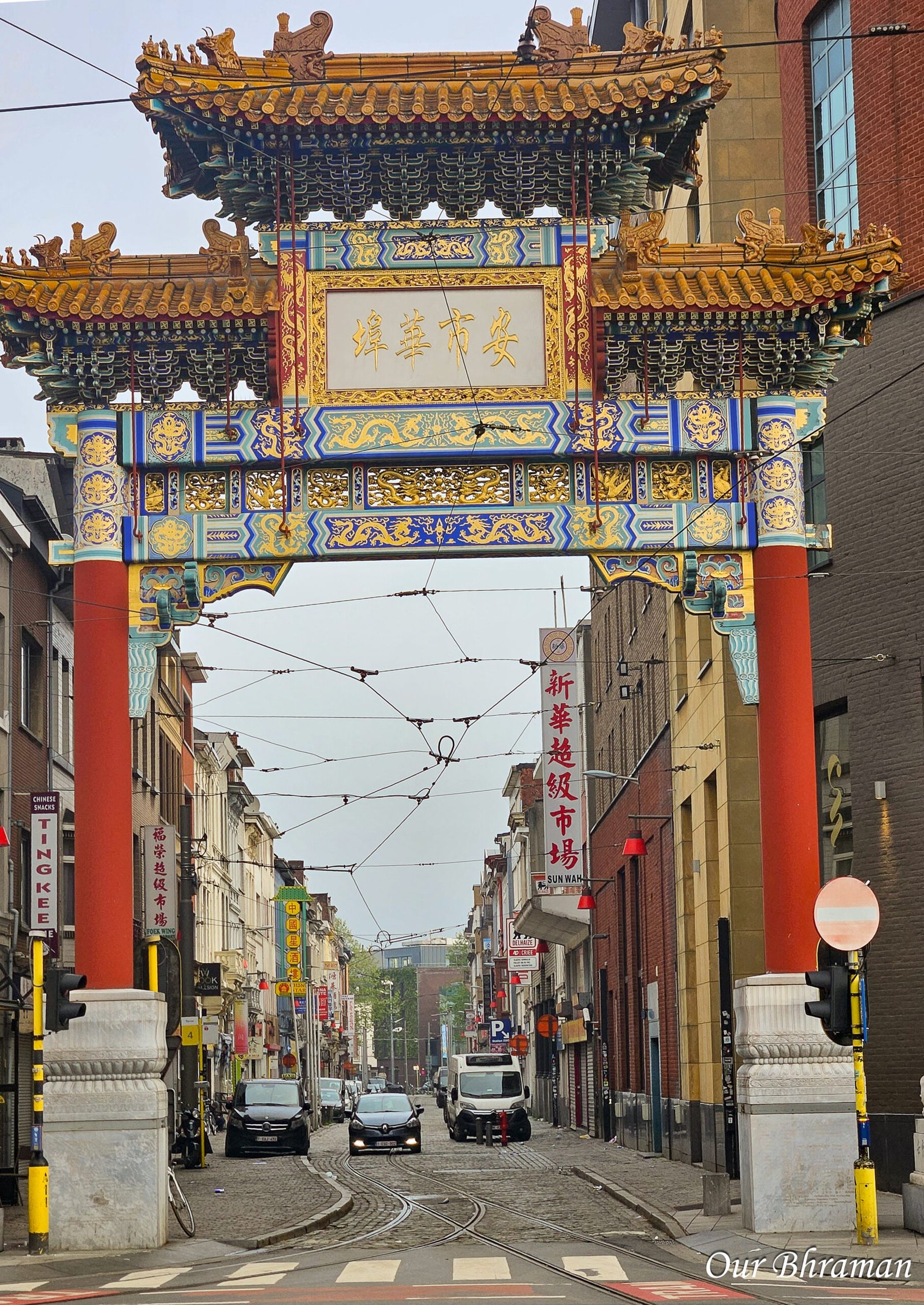
Chinatown Antwerp
Since our hotel was close to Antwerp’s Chinatown, we decided to take a little time to wander through the neighborhood before heading out to explore the rest of the city. Located just across from Antwerp Central Station, Chinatown is filled with Chinese shops, restaurants, bakeries, and other Asian businesses.
We didn’t have a specific plan or destination in mind. We simply walked around for a while, taking in the colorful signs, storefronts, and different atmosphere of the neighborhood. It was a nice way to start our day—just wandering and getting a feel for another side of Antwerp before continuing toward the city’s main attractions.
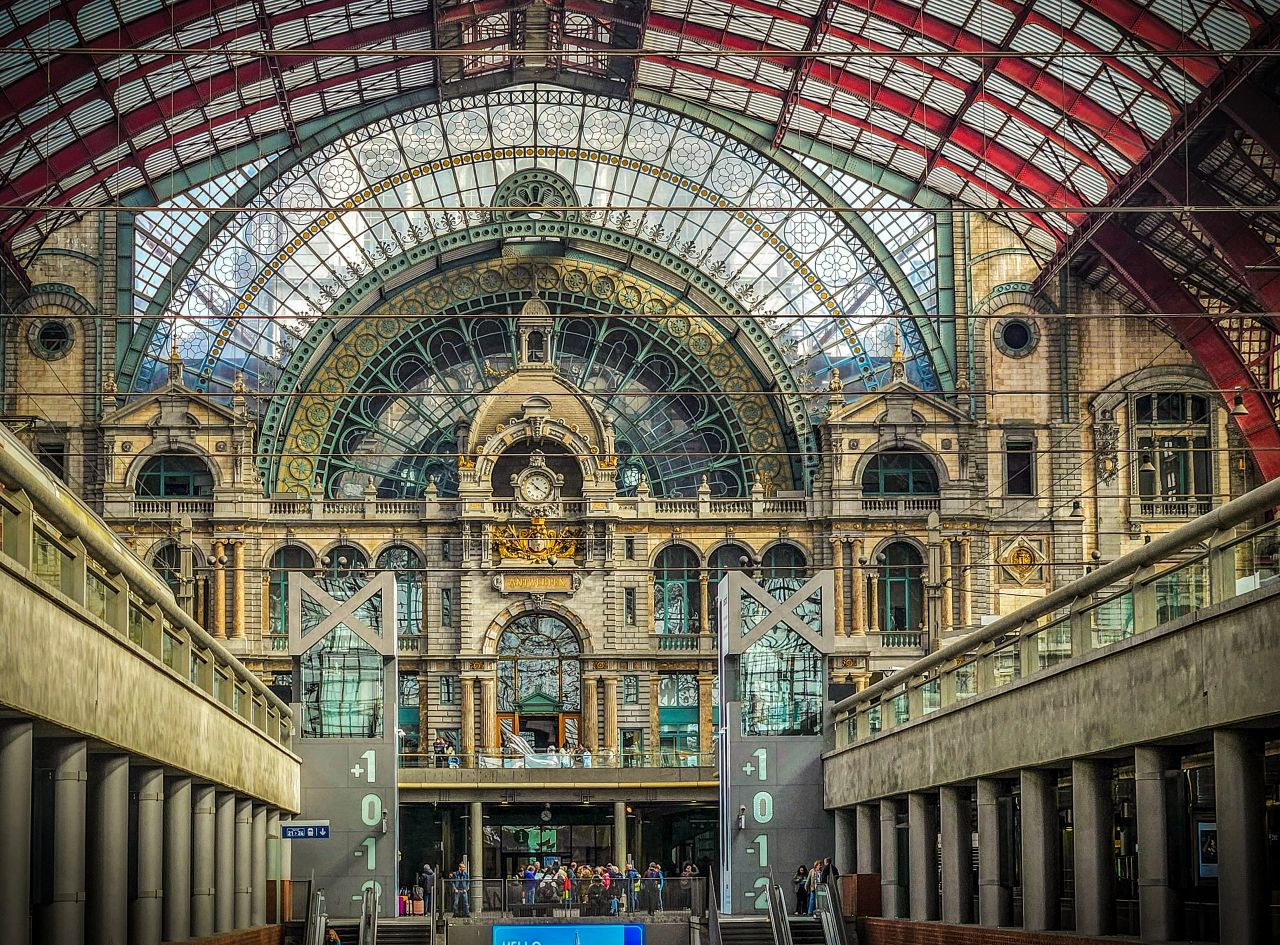
Antwerp Central Station
As part of exploration we started with Antwerp Central Station, also known as Antwerpen-Centraal, is one of the most significant railway stations in Belgium and Europe. Its importance stems from several factors: Antwerp Central Station is renowned for its stunning architecture. Built in eclectic style with influences from Art Nouveau and Neo-Baroque, it’s often referred to as the “Railway Cathedral” due to its grandeur. The station’s dome and intricate facade make it a landmark of Antwerp.
The station has a rich history dating back to the 19th century. It played a crucial role in facilitating transportation during the industrial revolution, connecting Antwerp to other major Belgian cities and international destinations. Antwerp is a vital economic hub in Belgium and Europe, especially for its port. Antwerp Central Station serves as a crucial transportation hub, linking the city to various domestic and international destinations, including Amsterdam, Paris, and Brussels. As one of the busiest railway stations in Belgium, Antwerp Central serves millions of passengers annually. It provides connections to high-speed trains, regional trains, and international services, making it a crucial node in Belgium’s rail network.
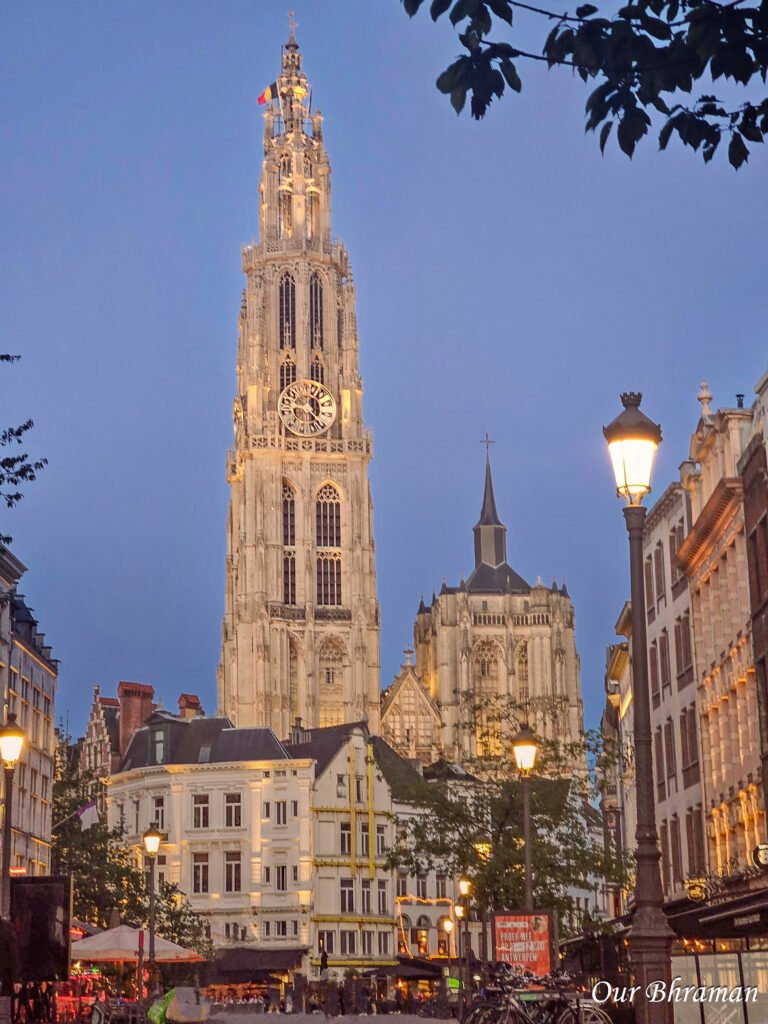
Antwerp is a beautiful city that beckons exploration on foot, with its charming streets buzzing with energy from the diverse crowd. After indulging in a delectable dinner at Takumi Ramen, brimming with rich and authentic flavors, we embarked on a leisurely stroll through the city towards the iconic Grote Markt.
Nello & Patrasche Statue
While strolling through Antwerp, we came across a touching marble statue of Nello and Patrasche lying together in the shadow of the Cathedral of Our Lady. At first, it looked like a simple sculpture of a boy and his dog, but the story behind it made the scene much more meaningful.
Nello and Patrasche are the main characters of A Dog of Flanders, a novella written in 1872 by British author Ouida. The story follows Nello, a poor boy living with his grandfather in Hoboken, and Patrasche, a mistreated dog whom Nello takes care of. The two eventually become inseparable companions.
Nello dreams of becoming an artist and greatly admires Peter Paul Rubens. The story has a heartbreaking ending when Nello and Patrasche, exhausted and without hope, die together inside Antwerp Cathedral, in the shadow of Rubens’ paintings.
The statue we saw was created by Belgian artist Batist Vermeulen and installed on Handschoenmarkt in 2016. I especially liked the way the sculpture blends into its surroundings—the cobblestones of the square appear to cover Nello and Patrasche like a blanket.
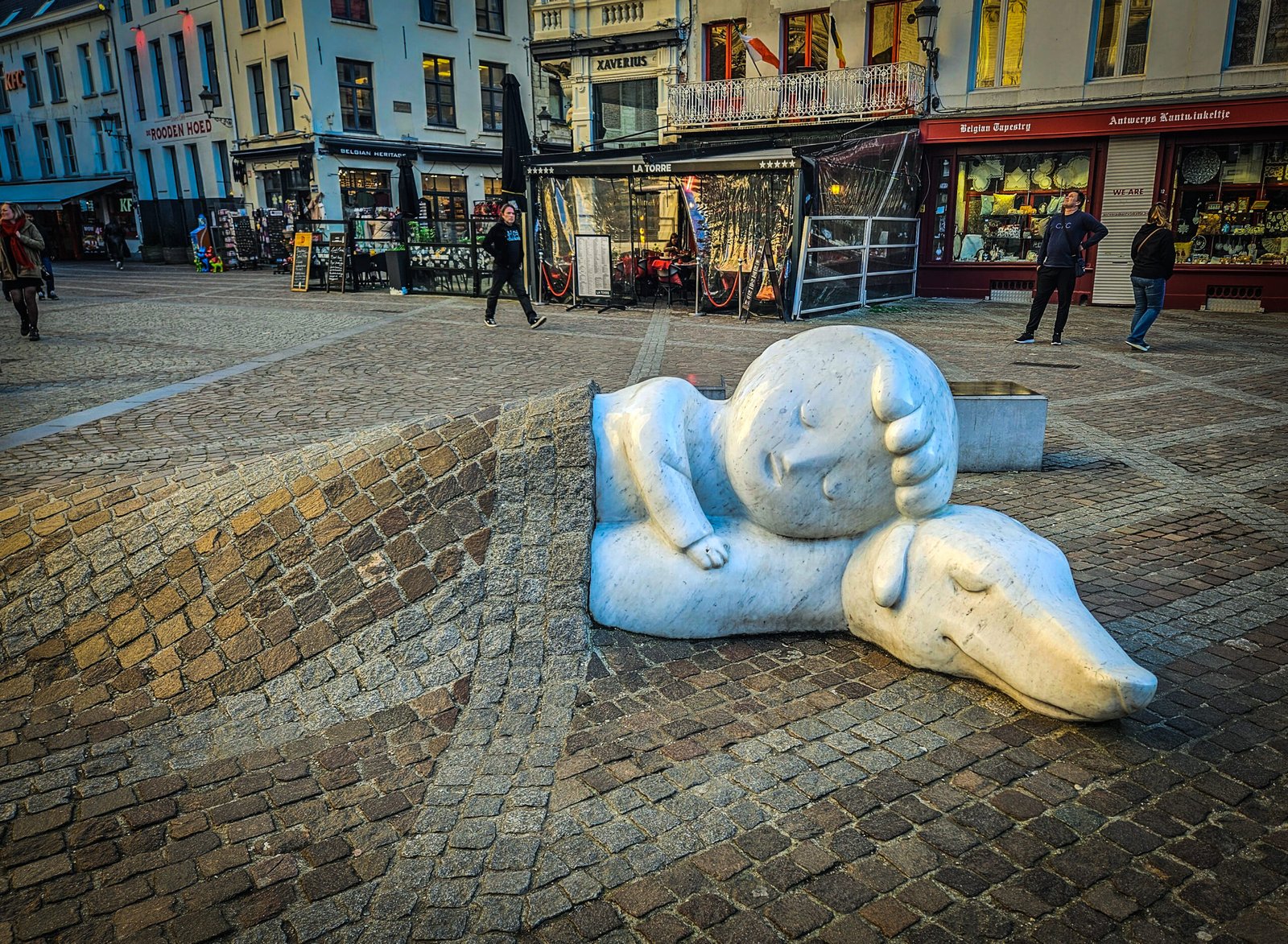 What makes the story even more interesting is its connection with Japan. A Dog of Flanders became hugely popular there after being translated into Japanese in 1908, and its popularity grew even further after a 1975 animated series. Today, the story remains an unusual cultural connection between Antwerp and Japan.
For us, it was one of those unexpected discoveries while exploring Antwerp. We stopped to photograph a small statue, but ended up discovering a touching story about friendship, loyalty, art, and the bond between a boy and his dog.
Grote Markt – The Heart of Antwerp
Our walk through Antwerp eventually brought us to Grote Markt, the historic heart of the old city. Surrounded by some of Antwerp’s most impressive architecture, the square immediately felt different from the quieter streets we had been wandering through. It was lively and energetic, with people moving between cafés, restaurants, and the surrounding historic buildings, yet there was still something timeless about the setting.
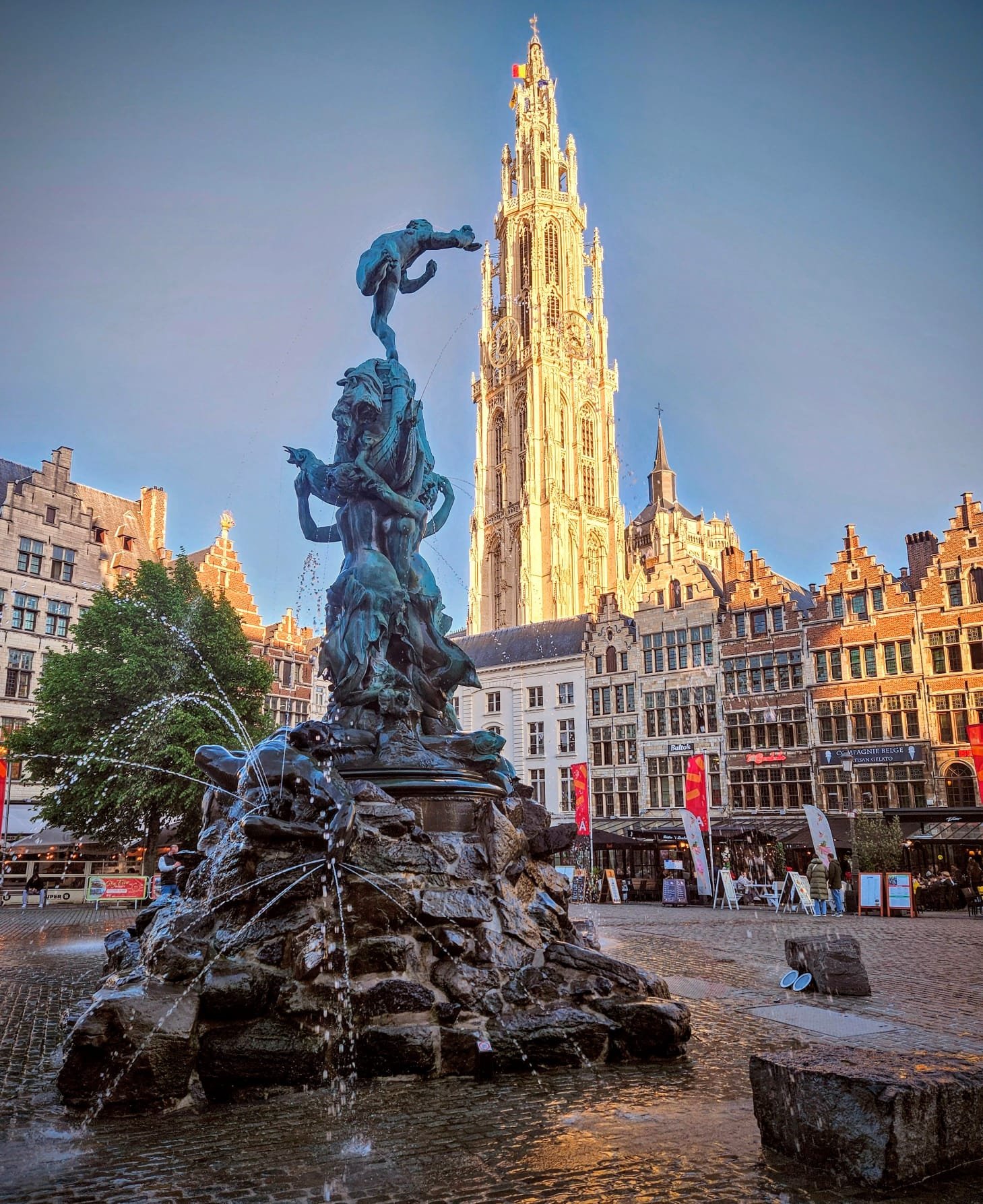 At the center of the square stands Antwerp City Hall, an impressive Renaissance building dating back to the 16th century. Its elaborate façade reflects the wealth and ambition of Antwerp during the city’s Golden Age, when it was one of Europe’s major centers of trade and commerce. Surrounding the square are the beautifully restored guildhalls, each with its own ornate façade, stepped gables, statues, and decorative details. These buildings once belonged to the city’s powerful merchant and craft guilds and are a reminder of the important role Antwerp played in European trade.
What makes Grote Markt especially enjoyable is the contrast between its grand history and its everyday atmosphere. Historic buildings form the backdrop while outdoor cafés and restaurants fill the square with conversation and activity. We took some time to simply wander around, looking up at the details of the façades and taking in the square from different angles. It was one of those places where there wasn’t really a need to rush—the architecture itself gave us plenty to stop and look at.
In the middle of the square, the Brabo Fountain adds another layer to Antwerp’s story. The statue depicts Silvius Brabo, the legendary figure associated with the city’s name. According to the local legend, a giant named Antigoon demanded a toll from ships entering the Scheldt River and cut off the hands of those who refused to pay. Brabo defeated the giant and threw his severed hand into the river. The legend is often connected to the Dutch name Antwerpen, commonly interpreted as “hand throwing.” Whether taken as history or folklore, the story gives the square another fascinating piece of Antwerp’s identity.
 For us, Grote Markt was less about visiting a single attraction and more about experiencing the character of Antwerp. Standing in the middle of the square, surrounded by centuries-old buildings while modern city life carried on around us, made it easy to appreciate how the old and new coexist here.
St. Charles Borromeus Church
Just a short walk from Grote Markt, we came across one of Antwerp’s most striking Baroque landmarks, the St. Charles Borromeus Church. As the evening light fell across its façade, the elaborate carvings, columns, statues, and decorative details seemed to glow against the deep blue sky. Built by the Jesuits in the early 17th century, the church reflects the grandeur of the Baroque period and has a strong connection to Peter Paul Rubens, who was involved in its artistic decoration.
 What caught our attention was not just the size of the building, but the incredible amount of detail packed into the façade. Every section seemed to have something different to look at. We stopped for a while, taking photographs and simply looking up at the architecture. With the cobblestones, the warm evening light, people passing by, and a bright red scooter parked in front, the scene felt less like a historic monument and more like a living part of Antwerp.
Along the Scheldt – Monument for the Fallen Sailors
From St. Charles Borromeus Church, we continued toward the Scheldt River, leaving the busy historic center behind and gradually discovering a quieter side of Antwerp. As we explored the waterfront at Tavernierkaai, we came across the Monument for the Fallen Sailors, dedicated to Belgian sailors who lost their lives during the two World Wars.
Built in 1930, the monument has several maritime elements, including a ship-shaped base facing the river and a bronze sailor looking toward the Scheldt. Its location feels especially meaningful, considering how closely Antwerp’s history and prosperity have been tied to the river and its port.
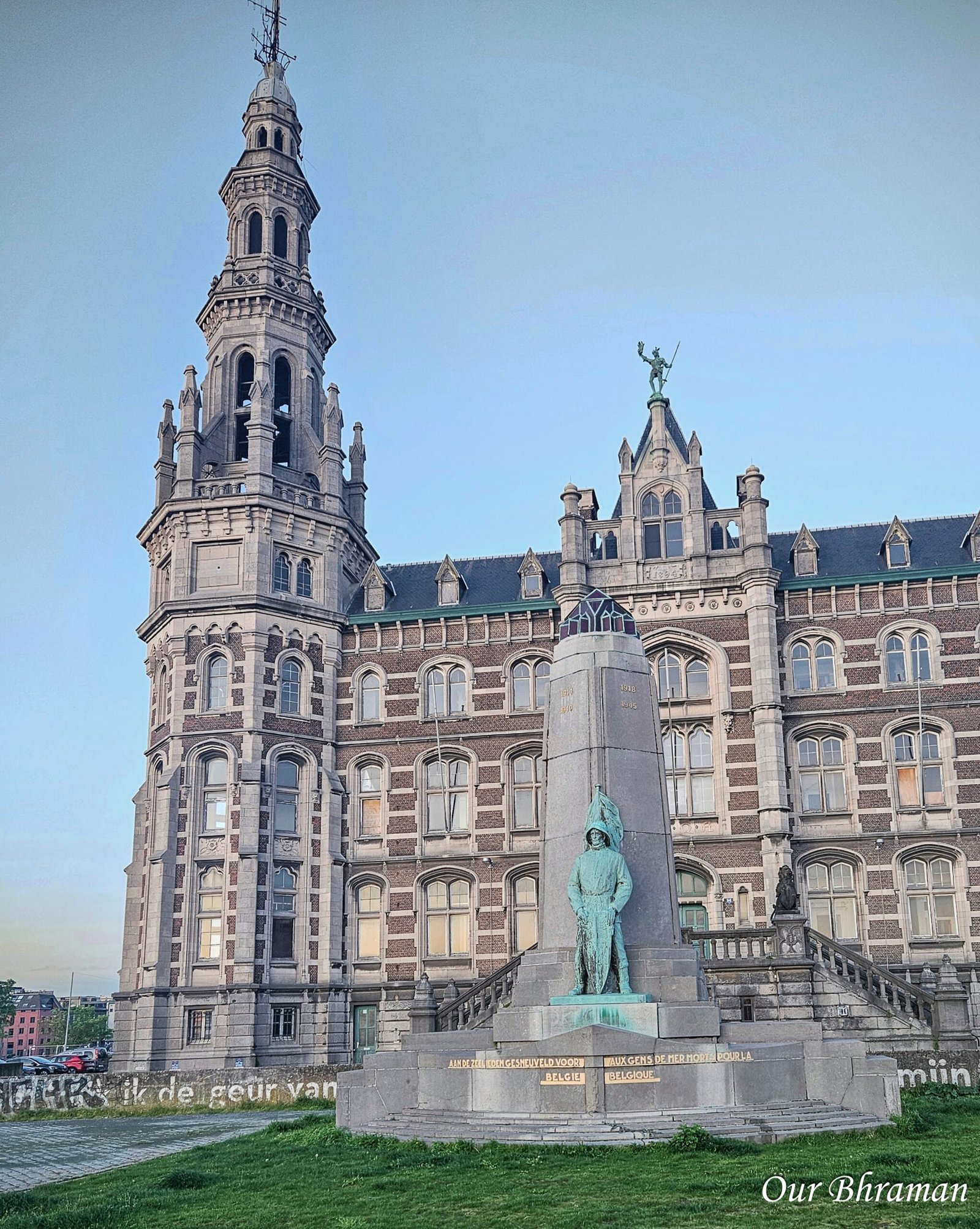 We spent a little time taking in the monument and the surrounding waterfront before continuing our walk. It was another unexpected discovery along the way—a reminder that sometimes the most interesting parts of a city are found simply by wandering beyond the main attractions.
Walking Toward Het Steen
We continued our walk through Antwerp, letting the streets lead us toward our next stop, Het Steen. After spending the day exploring the city’s historic buildings, monuments, and waterfront, it felt natural to finish our walk along the Scheldt. Walking through the old streets, we enjoyed the mix of medieval architecture, small shops, cafés, and the everyday energy of the city.
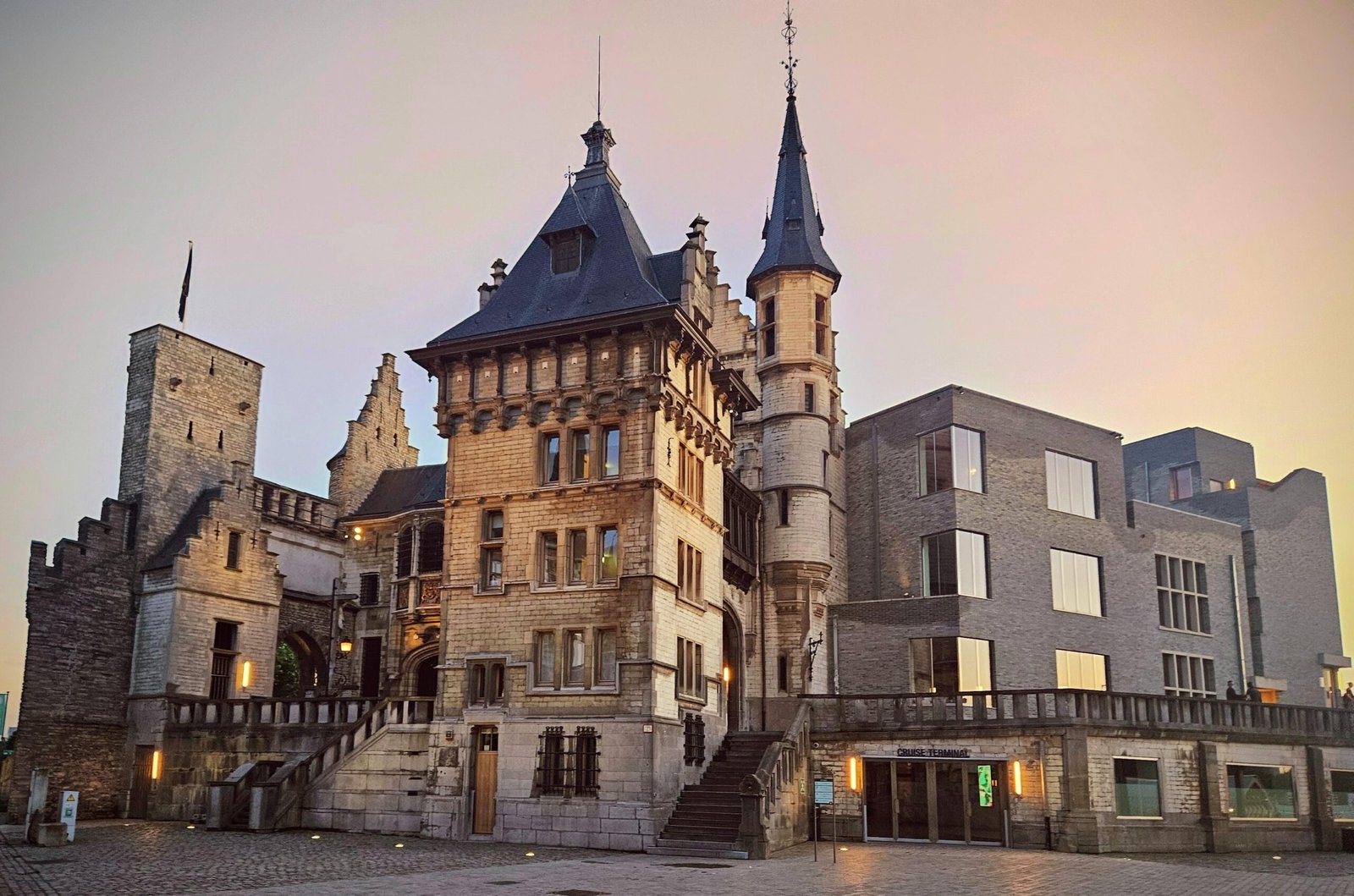 As we got closer, the medieval walls of Het Steen began to stand out against the riverfront. This historic fortress is considered Antwerp’s oldest preserved building, with its earliest stones dating back to the 11th century. Over the centuries, it served different purposes, including as a fortress and prison, and later became a museum. Today, Het Steen serves as a visitor center and an important starting point for discovering Antwerp.
By the time we reached Het Steen, it was getting toward evening. We didn’t have enough time to explore the interior, so instead we walked around the pier and the area surrounding the castle. With the Scheldt River beside us, we took in the waterfront views, photographed the castle, and enjoyed the calmer atmosphere of the river as the day began to wind down.
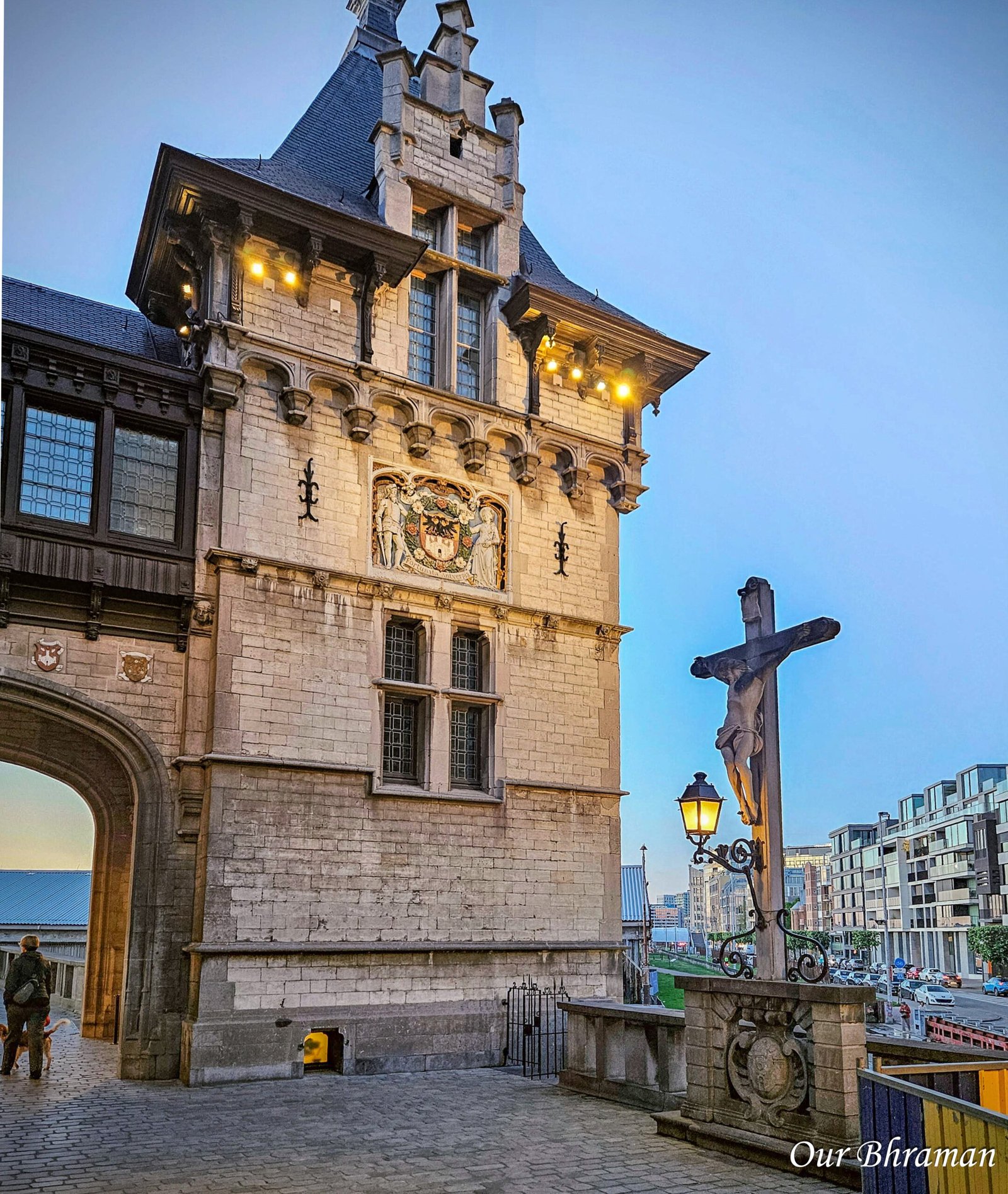 Het Steen also turned out to be our last major stop before heading back to our hotel. But our walk back gave us one more chance to experience Antwerp after dark.
Grote Markt at Night
On our way back, we passed through the Grote Markt, and the square had a completely different personality than it had earlier in the day. It was bustling with people, while cafés, restaurants, and bars brought more energy to the historic center. Antwerp’s historic center is known for its narrow streets, cafés, restaurants, and lively evening atmosphere.
The Brabo Fountain, which we had seen earlier, also looked different under the evening lights. The illuminated statue against the surrounding historic buildings gave the square a completely different appeal and made us stop for a few more photographs.
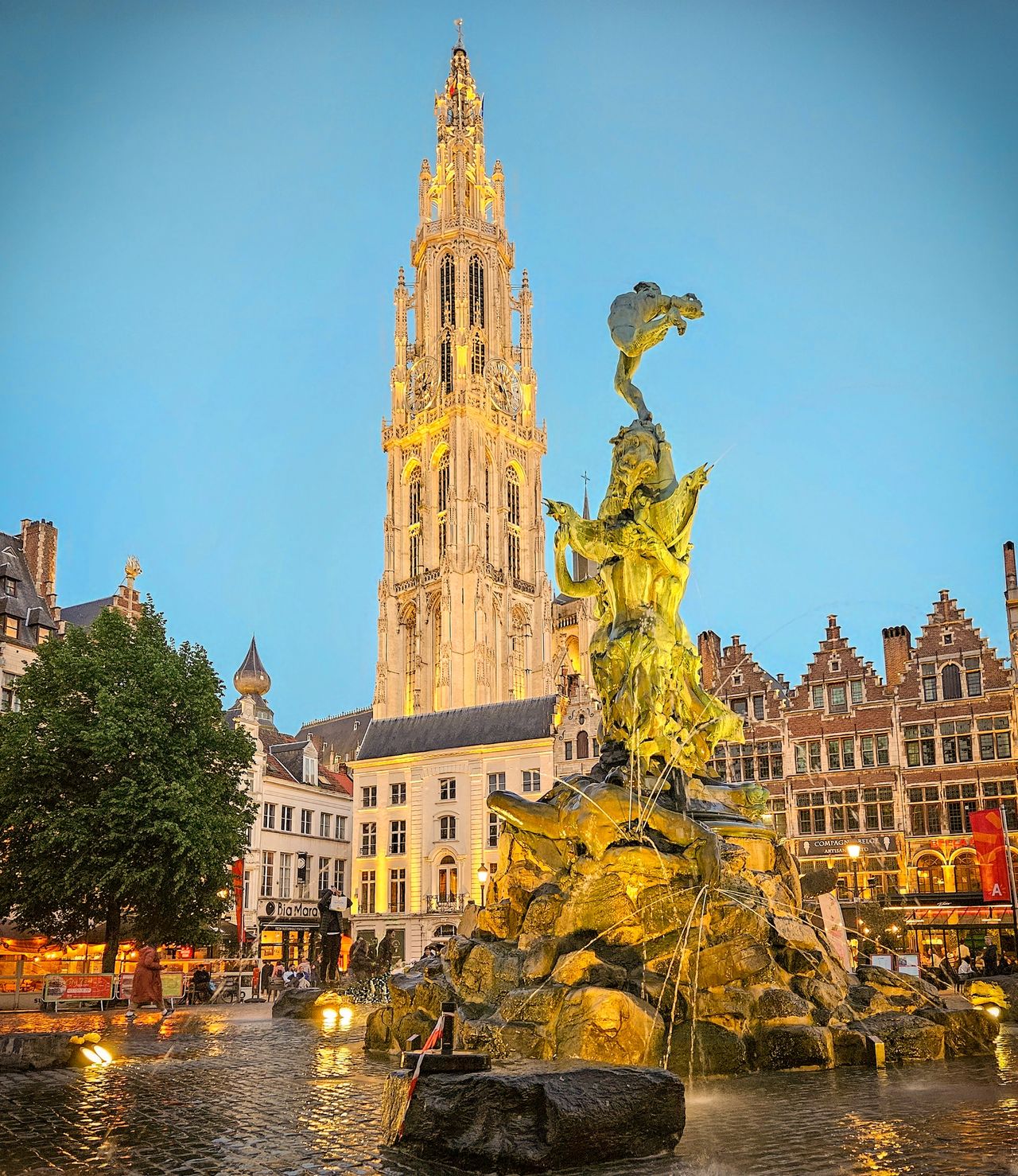 Looking back, this was probably one of our favorite things about exploring Antwerp—we didn’t have to rush from one attraction to another. By simply walking, we experienced the city at different times of the day, from its historic streets and monuments to the lively atmosphere that came alive after sunset.