
Exploring Downtown Amsterdam: Canals, Crowds and the Character of the City
Our Amsterdam adventure began almost as soon as we landed. Instead of taking a taxi, we headed to the train station at Amsterdam Airport Schiphol and took the train toward Amsterdam Centraal. The journey was quick, and before long we were stepping out of the station and into the middle of Amsterdam. The train is one of the easiest ways to reach the city center, with frequent services connecting Schiphol and Amsterdam Centraal.
We didn’t have a strict plan for the day. We wanted to walk, explore the canals, see the downtown area, and experience the atmosphere of Amsterdam for ourselves. And once we started walking, it was hard to stop.
 First Impressions of Amsterdam
 First Impressions of Amsterdam
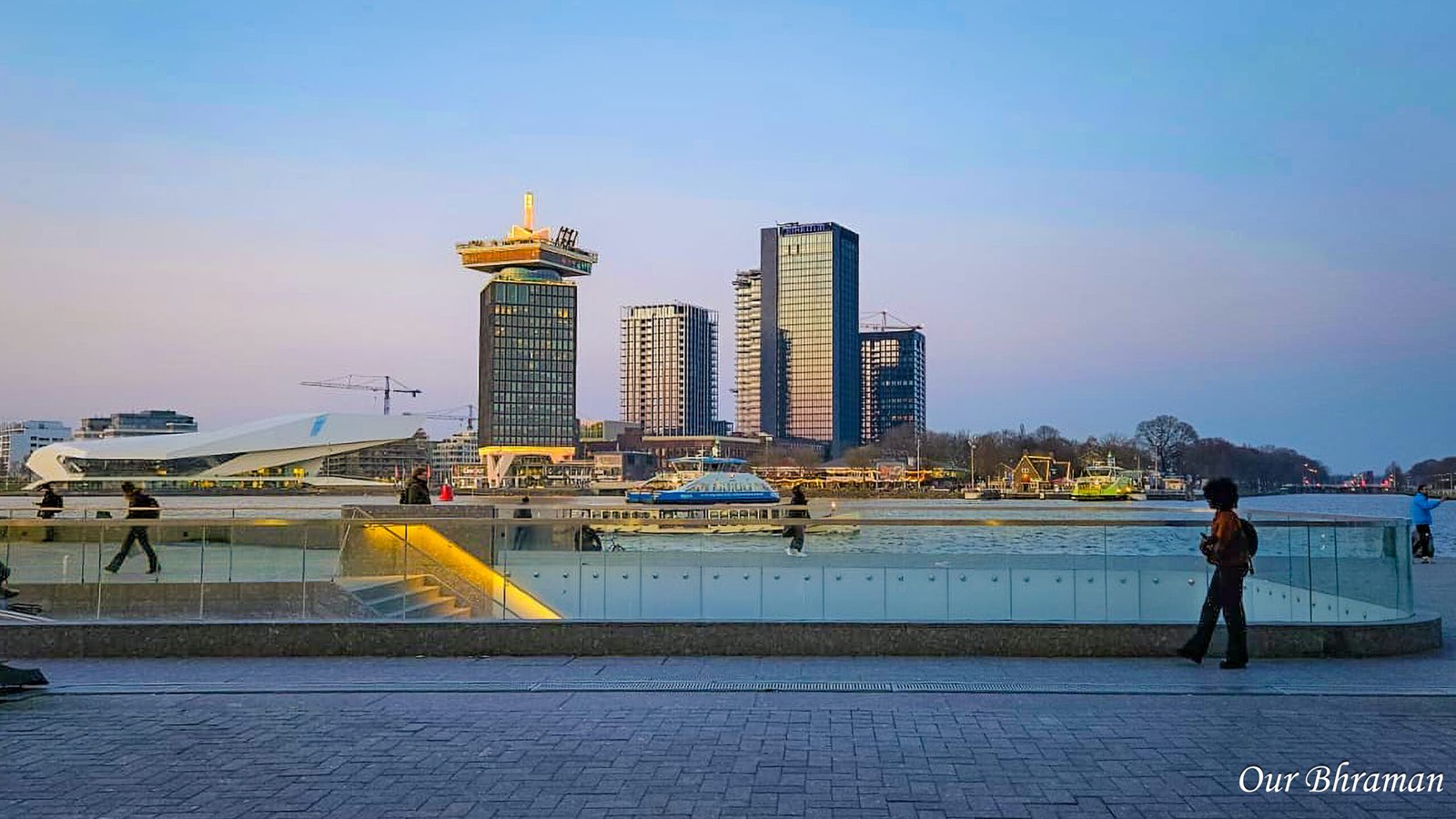
As soon as we stepped out of Amsterdam Centraal, we were greeted by water. In front of us was the waterfront, with the impressive Basilica of Saint Nicholas rising just beyond the station and the modern A’DAM Tower standing across the IJ. It was an interesting first glimpse of Amsterdam—historic architecture on one side and a much more modern skyline on the other.
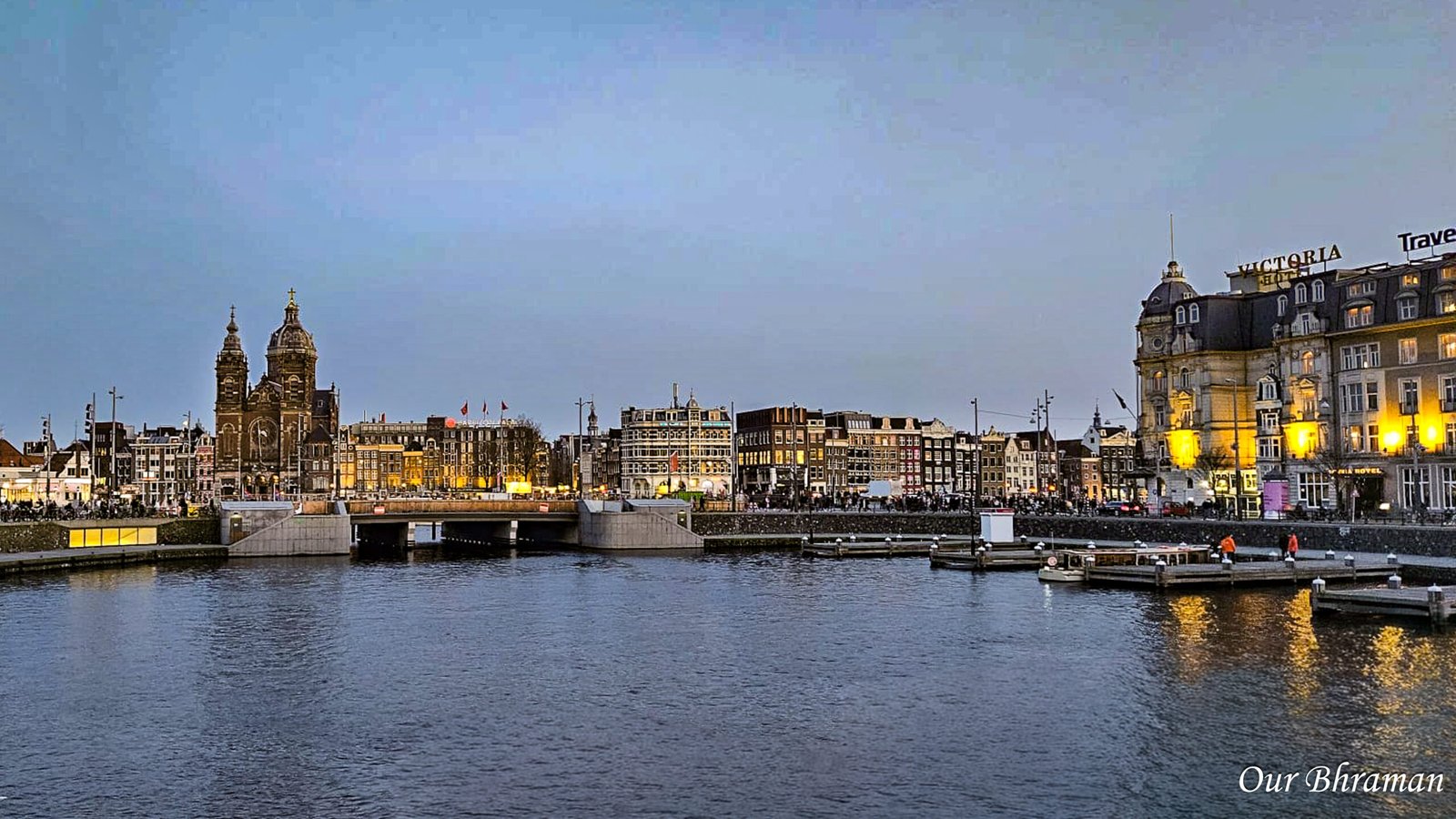 We stopped for a few photographs before starting our walk. The water immediately became part of the experience. Boats moved across the IJ, bicycles passed around us, and people came and went from the station. It felt like we had arrived right at the point where Amsterdam’s history, transportation, and everyday life all came together.
As we walked farther into the city, canals seemed to appear everywhere, separating streets and buildings while giving Amsterdam a completely different character. The water reflected the surrounding buildings, bridges, boats, and evening lights. Narrow historic houses lined the canals, many with their distinctive tall and sometimes slightly leaning façades. Every bridge seemed to offer another photograph.
Amsterdam’s historic center is essentially a network of closely connected canals, streets, squares, shops, restaurants, and neighborhoods, making it particularly enjoyable to explore on foot.
And then there were the bicycles.
 Basilica of Saint Nicholas – A Landmark Along Our Walk
 Basilica of Saint Nicholas – A Landmark Along Our Walk
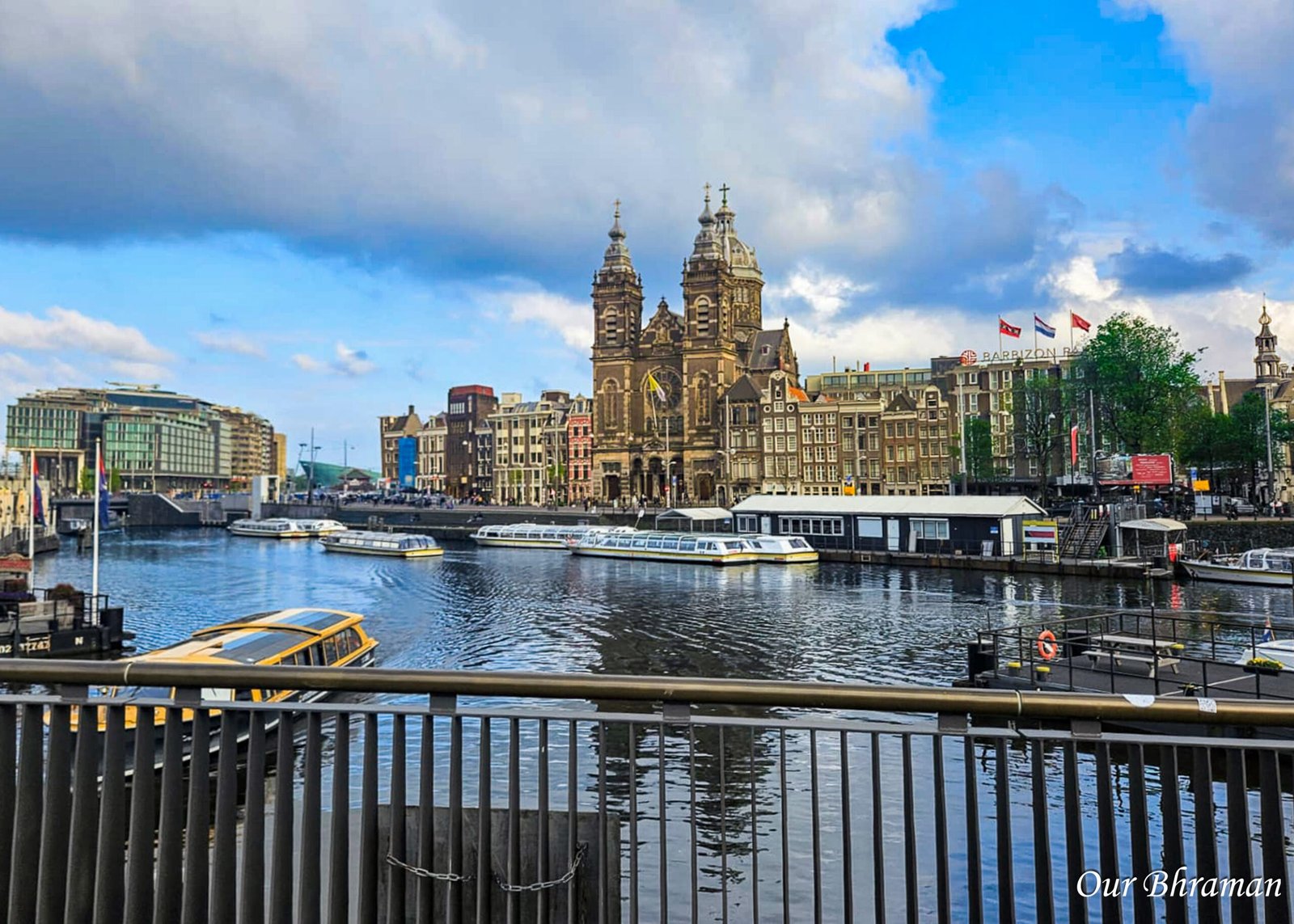
One thing we noticed while walking through Amsterdam was how often the Basilica of Saint Nicholas appeared in the distance. We first saw its impressive dome and twin towers as soon as we stepped out of Amsterdam Centraal.
As we continued walking, the basilica kept appearing from different streets, bridges, and along the canals. Sometimes it stood clearly above the rooftops, while other times we caught only a glimpse between the historic buildings.
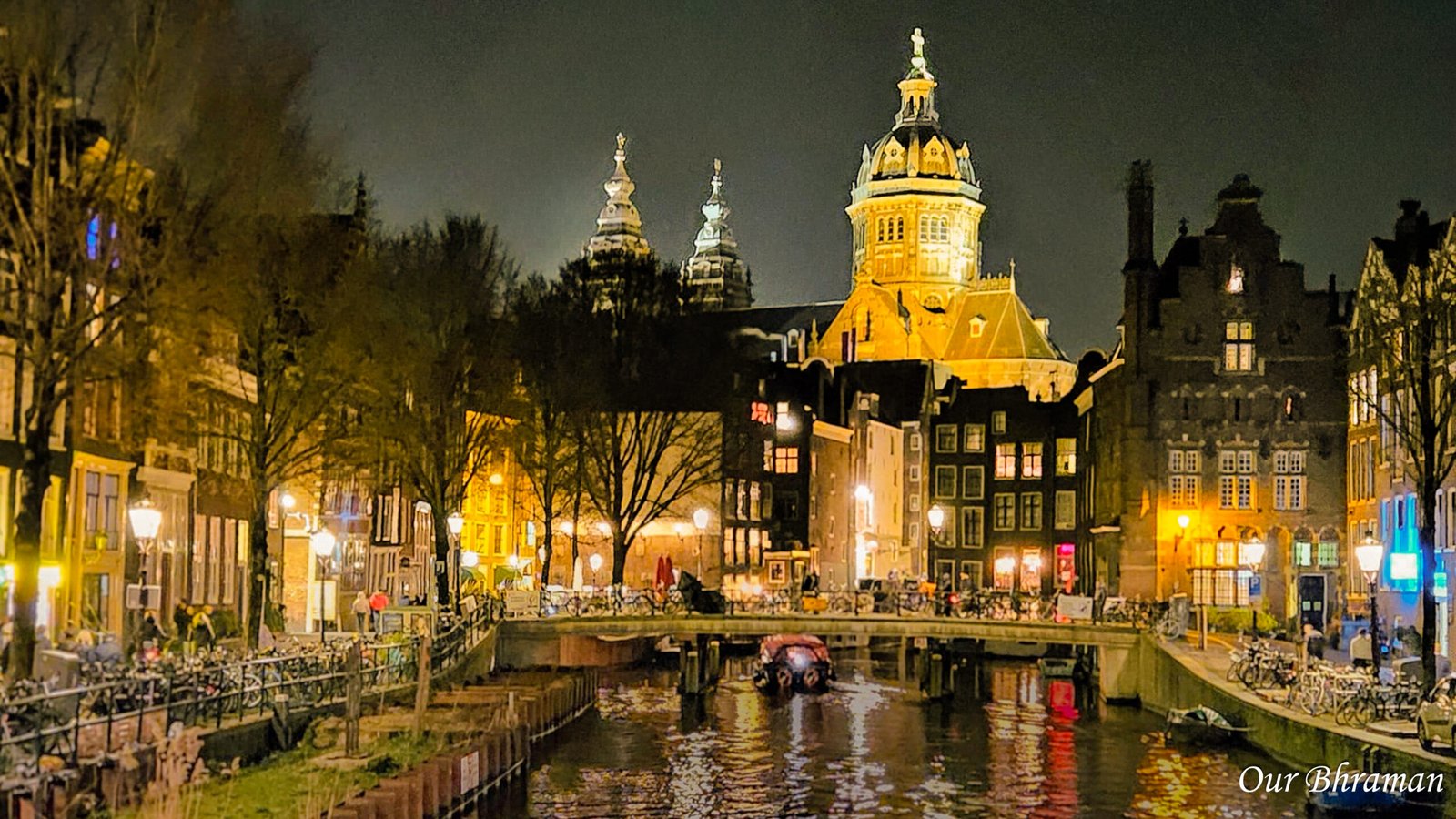 It almost became a familiar landmark during our walk, appearing again and again as we explored different parts of the city. That was one of the things we enjoyed about Amsterdam—you never quite know what familiar landmark might appear around the next corner.
Amsterdam and Its Bicycles
You quickly realize that bicycles aren’t simply a way for people to exercise in Amsterdam—they are part of everyday life.
People rode past us constantly, sometimes seemingly appearing from nowhere. Bikes moved through the streets with a confidence that made us visitors very aware that we needed to pay attention!
Walking around Amsterdam meant constantly sharing the streets and paths with cyclists, pedestrians, cars, trams, and the occasional boat. Yet somehow it all seemed to work together.
For a photographer, bicycles also became part of the scenery. Parked beside canals, lined up along bridges, or passing through the frame at just the right moment, they added another layer to almost every photograph.
Walking Along the Canals
 Walking Along the Canals
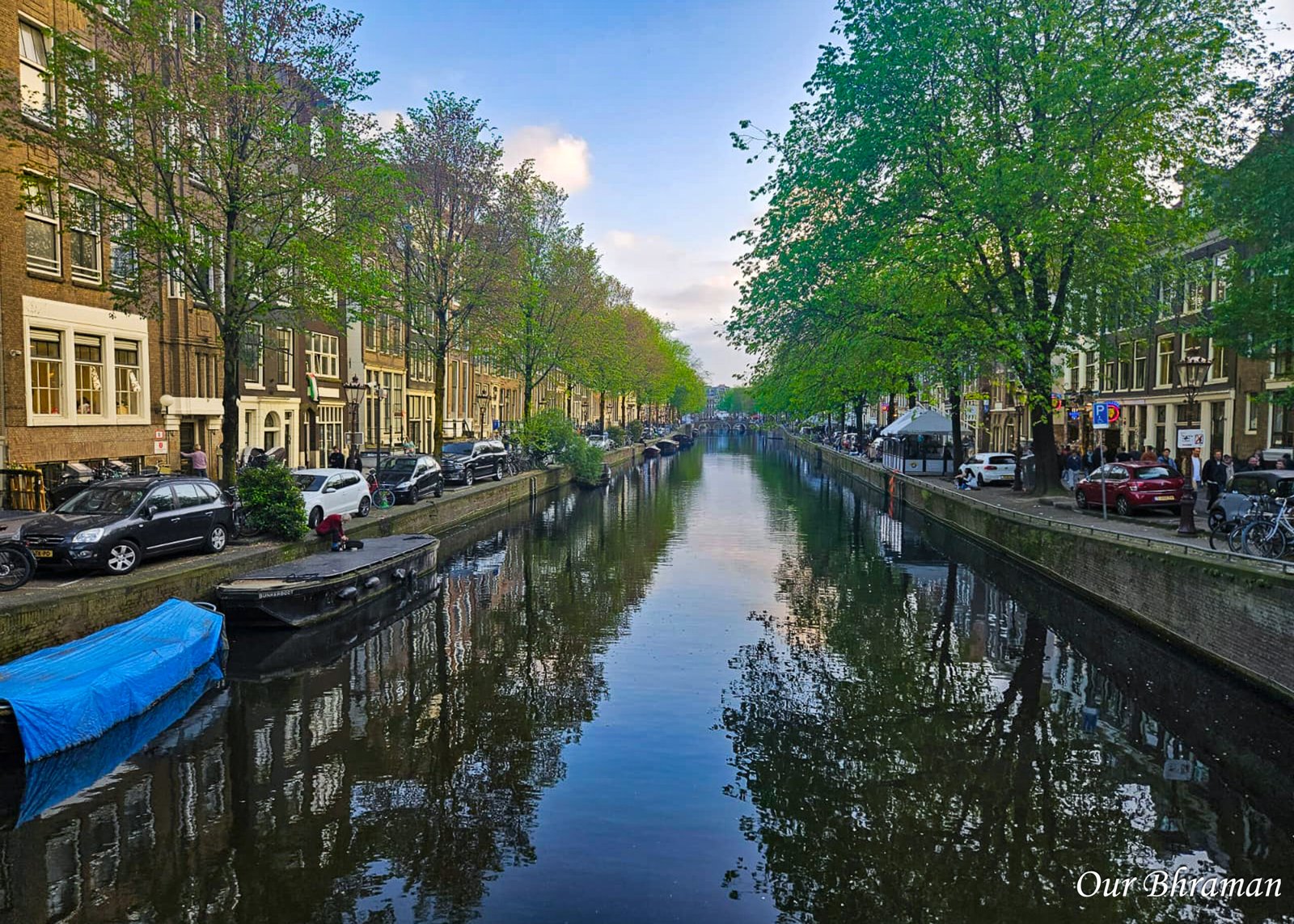
As we continued deeper into downtown, the canals became the natural guide for our walk.
Sometimes we followed the water. Other times we crossed a bridge simply because the view on the other side looked interesting. We stopped frequently for photographs, especially where the canal reflected the buildings and trees.
During the day, the canals felt peaceful. Trees framed the water, boats rested along the edges, and people sat outside cafés. Later, as evening arrived, the same canals completely changed.
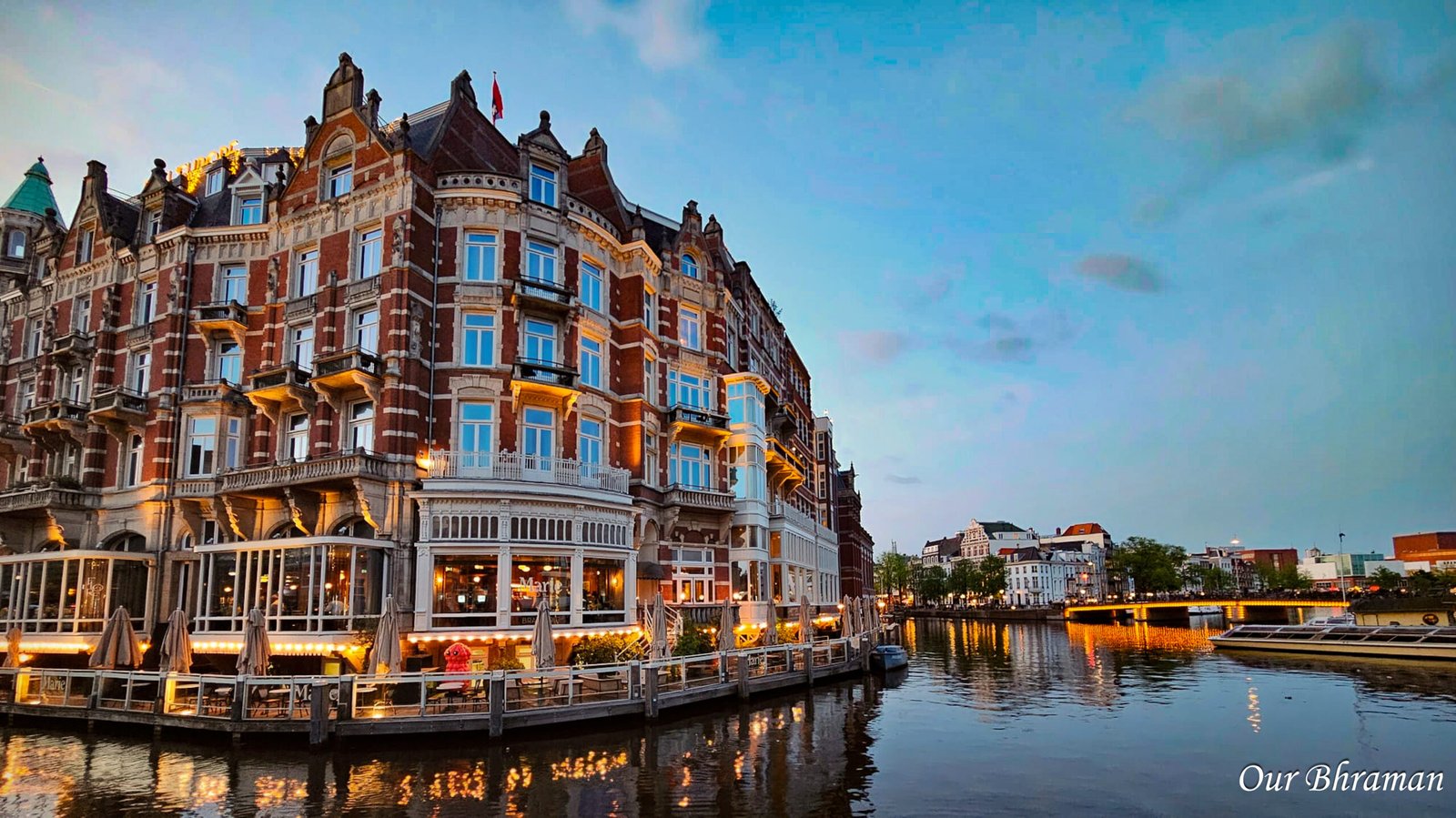
The reflections of streetlights and colorful signs began appearing on the water, while restaurants and bars became busier. Amsterdam seemed to have two personalities—the relaxed daytime city and the energetic city that appeared after dark.
Downtown Amsterdam – Where Everything Comes Together
The closer we got to the heart of downtown, the more crowded the streets became.
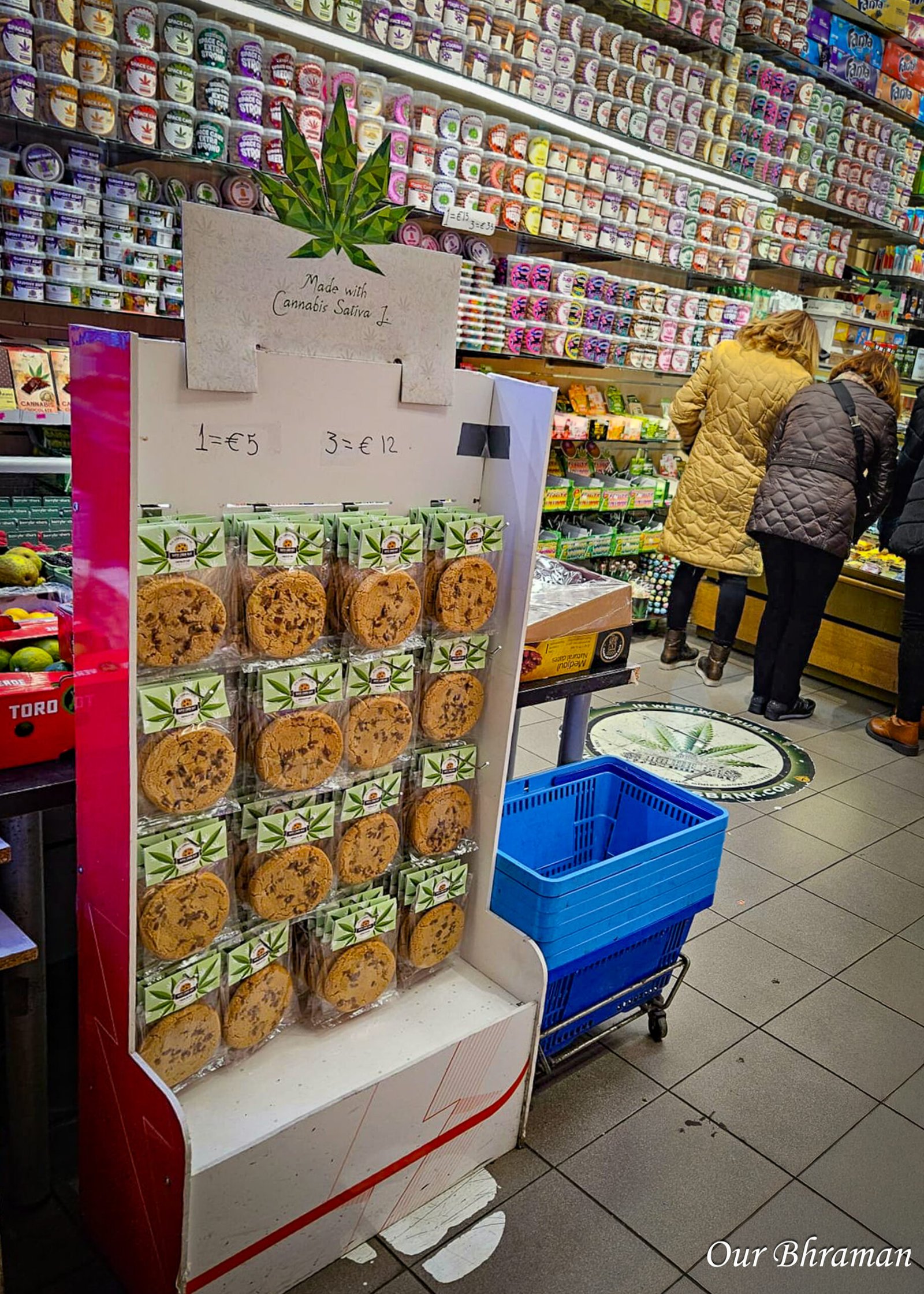
There were tourists taking photographs, people shopping, cyclists weaving through the streets, street performers, restaurants filled with customers, and bars beginning to fill up for the evening.
This was one of the things we enjoyed about Amsterdam. You didn’t necessarily have to enter an attraction to experience the city. Simply standing on a bridge and watching people go by could be entertaining.
We passed souvenir shops filled with everything from traditional Dutch decorations to oversized wooden shoes. Of course, we couldn’t resist stopping for a photograph with the giant clogs!
It was touristy, but sometimes being a tourist is part of the fun.
The Canals After Dark
 The Canals After Dark
As daylight faded, Amsterdam became even more photogenic.
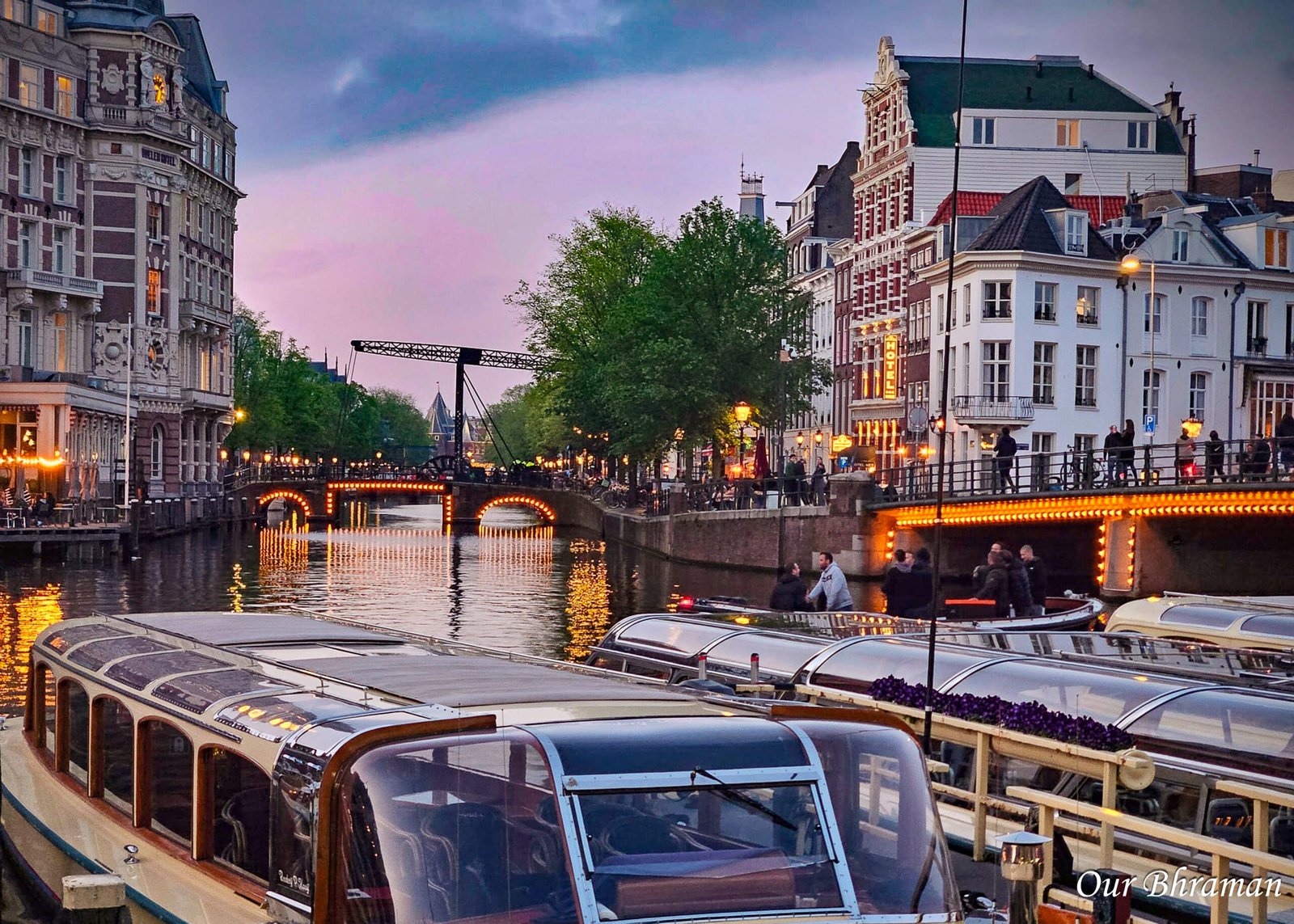
The warm lights from restaurants, bars, hotels, and street lamps reflected across the canals. Bridges glowed against the darker water, while people continued walking along the narrow streets.
One of our favorite things about photographing Amsterdam at night was the reflection. The water became almost like another version of the city—lights stretched across the surface and moved with every ripple.
The canals that had looked calm and green during the day suddenly became darker, colorful, and full of atmosphere.
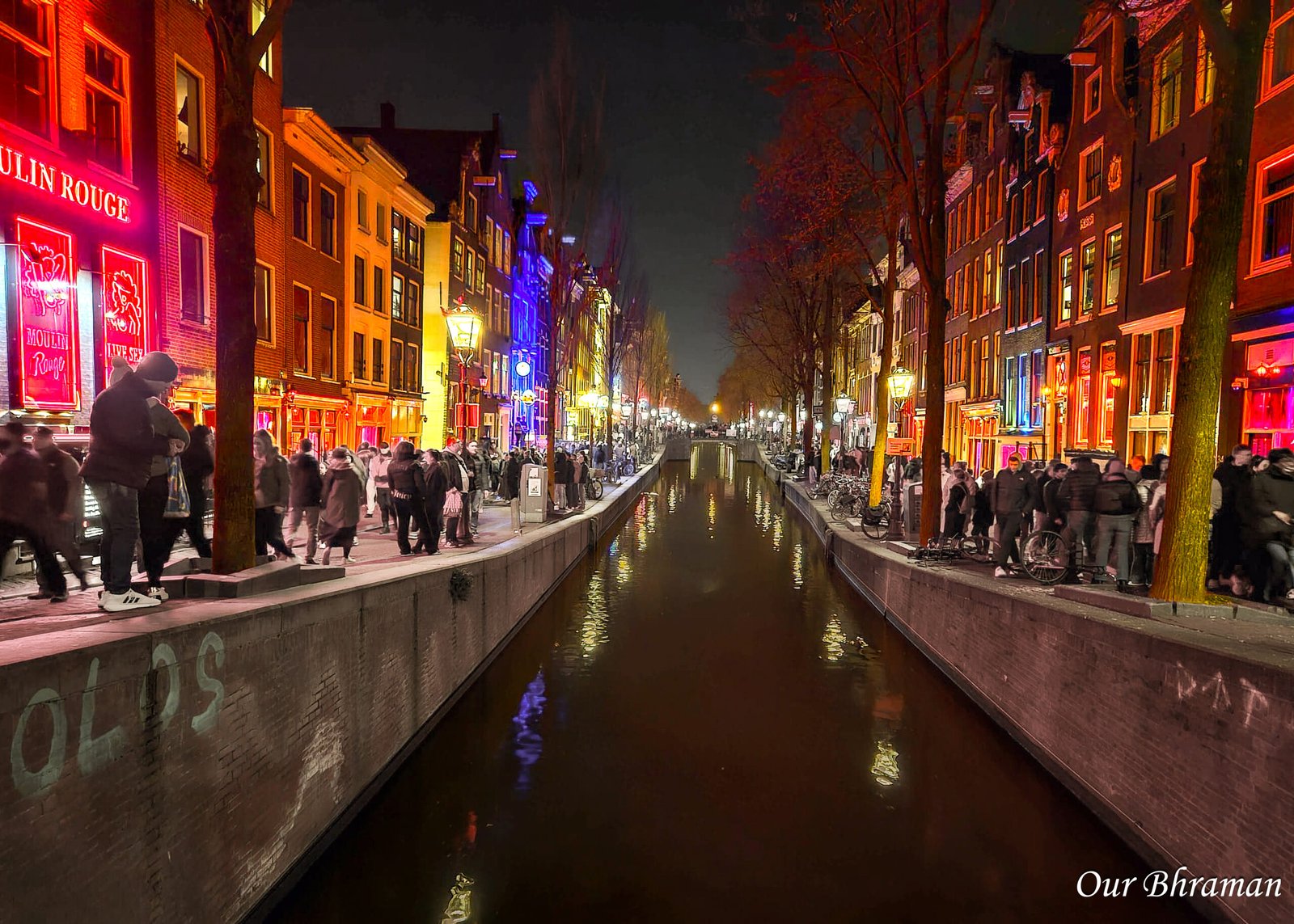
Exploring the Red Light District
Eventually, our walk took us into De Wallen, Amsterdam’s famous Red Light District.
This was probably the biggest change in atmosphere during our walk. The streets were crowded, particularly in the evening, with visitors moving between bars, restaurants, shops, and the area’s famous windows.
But De Wallen is more than what its reputation suggests. It is also one of Amsterdam’s oldest neighborhoods, with historic canal houses, narrow streets, old buildings, restaurants, pubs, and cultural attractions mixed together.
Walking through the area gave us a glimpse of a very different side of Amsterdam. It was busy, colorful, loud, and sometimes a little overwhelming.
One thing that stood out was how quickly the surroundings could change. You could be standing beside a beautiful historic canal one moment and then turn into a crowded street filled with bright signs and nightlife the next.
For us, it was less about any particular attraction and more about experiencing the atmosphere and seeing another side of the city.
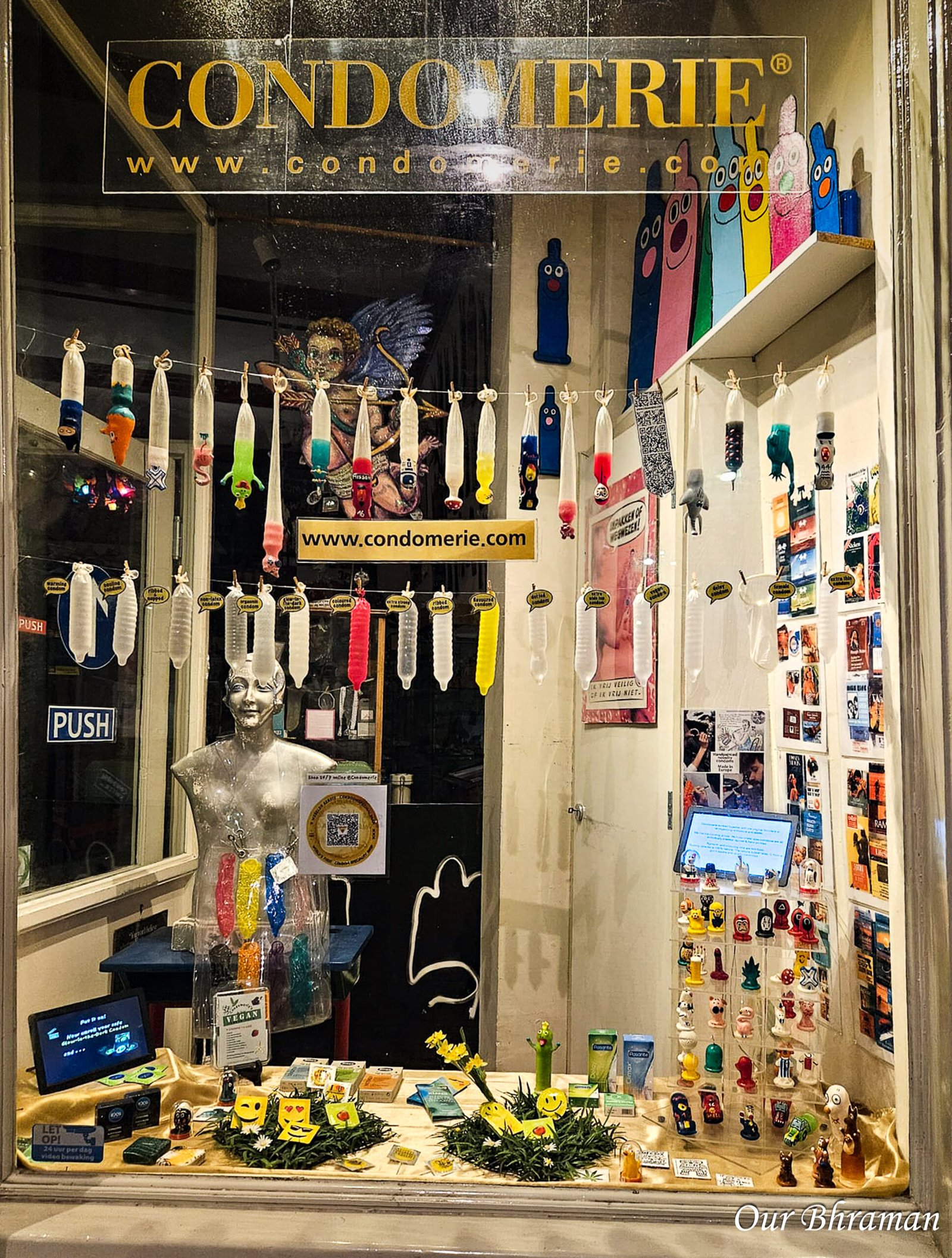
People, Bars and Amsterdam After Dark
As evening arrived, Amsterdam became even more lively. Bars and restaurants filled with people, friends gathered in the streets, cyclists continued weaving through the crowds, and music and conversation spilled out from open doorways.
Yet, just a few minutes away, the busy streets could give way to a quiet canal or a beautifully lit bridge. We simply kept walking, enjoying the city without worrying too much about where we were going next.
That became one of our favorite parts of Amsterdam. While the famous attractions and museums are worth seeing, much of our experience happened between those places—canal reflections, historic buildings, passing cyclists, crowded streets, quiet corners, funny souvenir shops with giant wooden shoes, and eventually the colorful energy of the Red Light District after dark.
Amsterdam seemed to change with every turn, and exploring it on foot allowed us to experience those changes naturally.
Our Takeaway
Our Amsterdam visit wasn’t about following a perfect itinerary. We arrived by train from Schiphol, walked into the heart of the city, and simply allowed Amsterdam to reveal itself one street, bridge, and canal at a time.
What stayed with us was the contrast. Quiet canals and crowded streets. Historic buildings and modern nightlife. Peaceful daytime walks and colorful evenings. Tourists and locals. Boats and bicycles.
Amsterdam seemed to bring all of these things together without losing its identity.
And for us, that was the best way to experience it—not by rushing from one attraction to another, but by walking, watching, photographing, and letting the city become the destination itself.