A Quick Stop at La Boqueria
After finishing our early-morning visit to Park Güell, we made our way back toward the center of Barcelona. From Lesseps, we took the metro on L3 to Liceu, followed by a short walk to La Boqueria, the famous market on La Rambla.
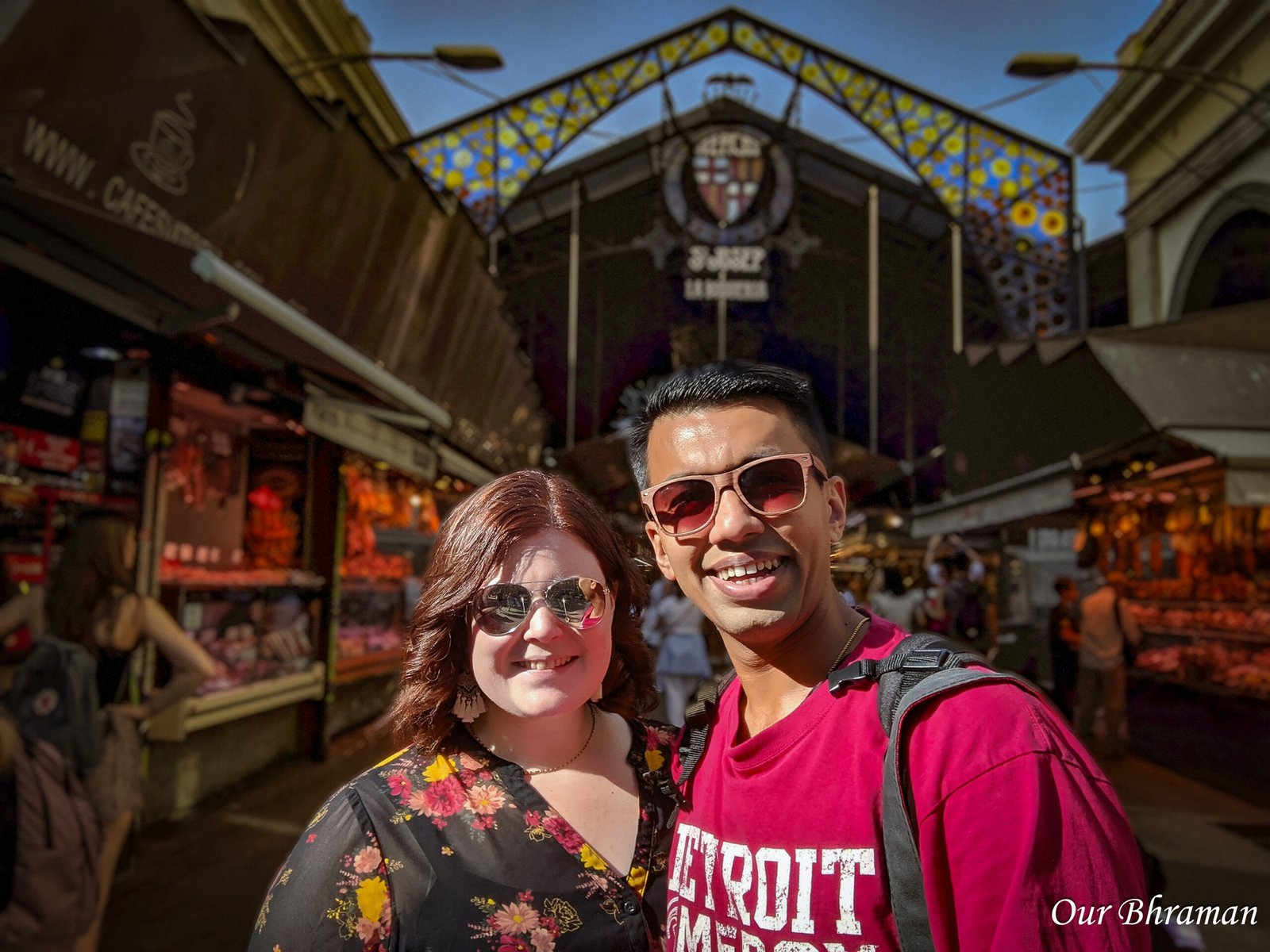 By then, we were hungry. We had left our hotel around 5 AM to get to Park Güell before sunrise, so La Boqueria turned out to be the perfect place for a 30–45 minute break and a quick breakfast.
 Why La Boqueria Is So Famous
 Why La Boqueria Is So Famous
Officially known as Mercat de Sant Josep, La Boqueria is much more than a place to grab a quick bite. Its history goes back centuries. Records document meat stalls in this area as early as 1217, when farmers and traders from the surrounding villages came to sell their goods in an open-air market along La Rambla.
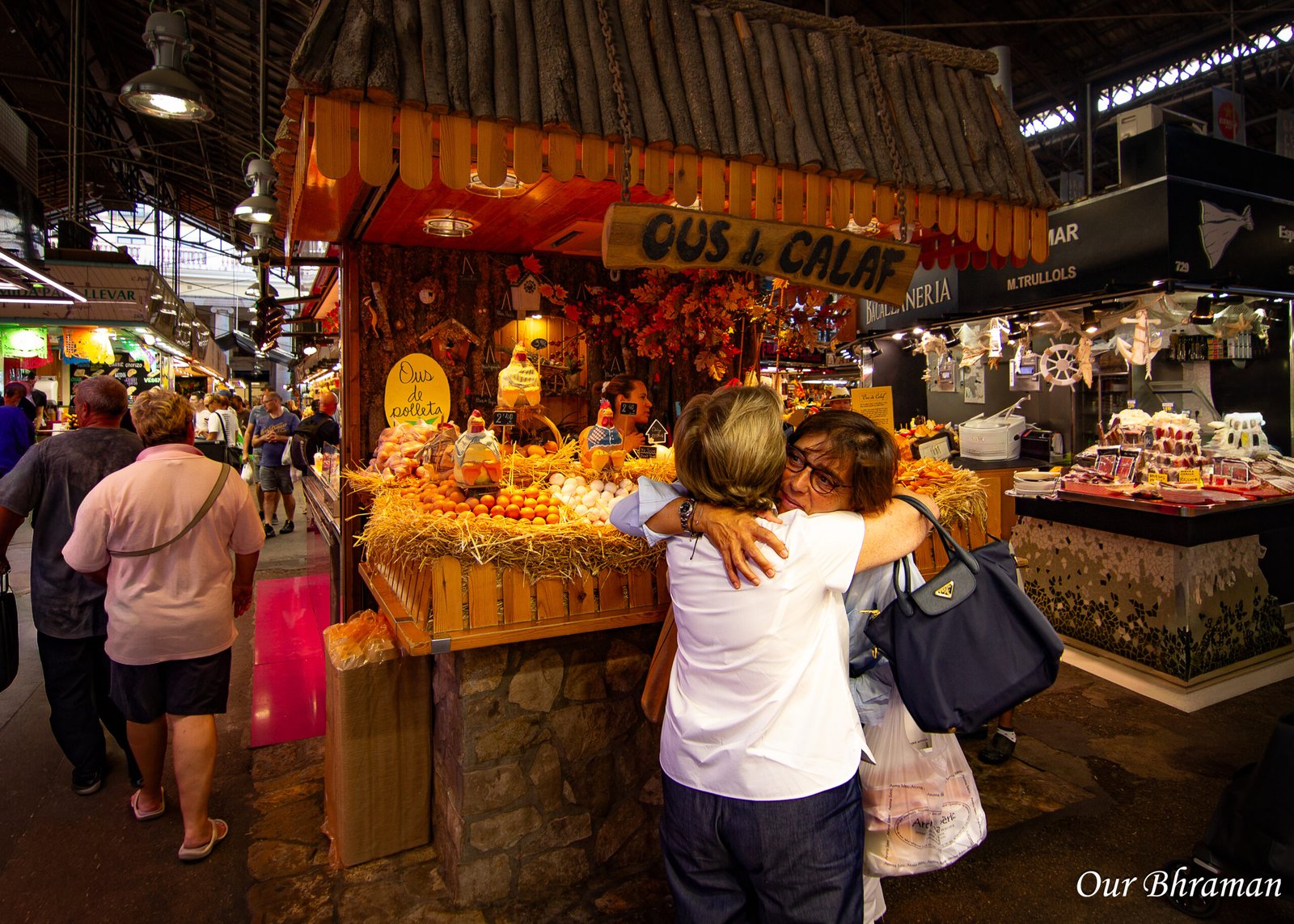 The market moved to its current location after the Convent of Sant Josep was destroyed in 1835, and the market officially opened there in 1840. The distinctive metal-and-glass roof was added in 1914, giving the market much of the character we see today.
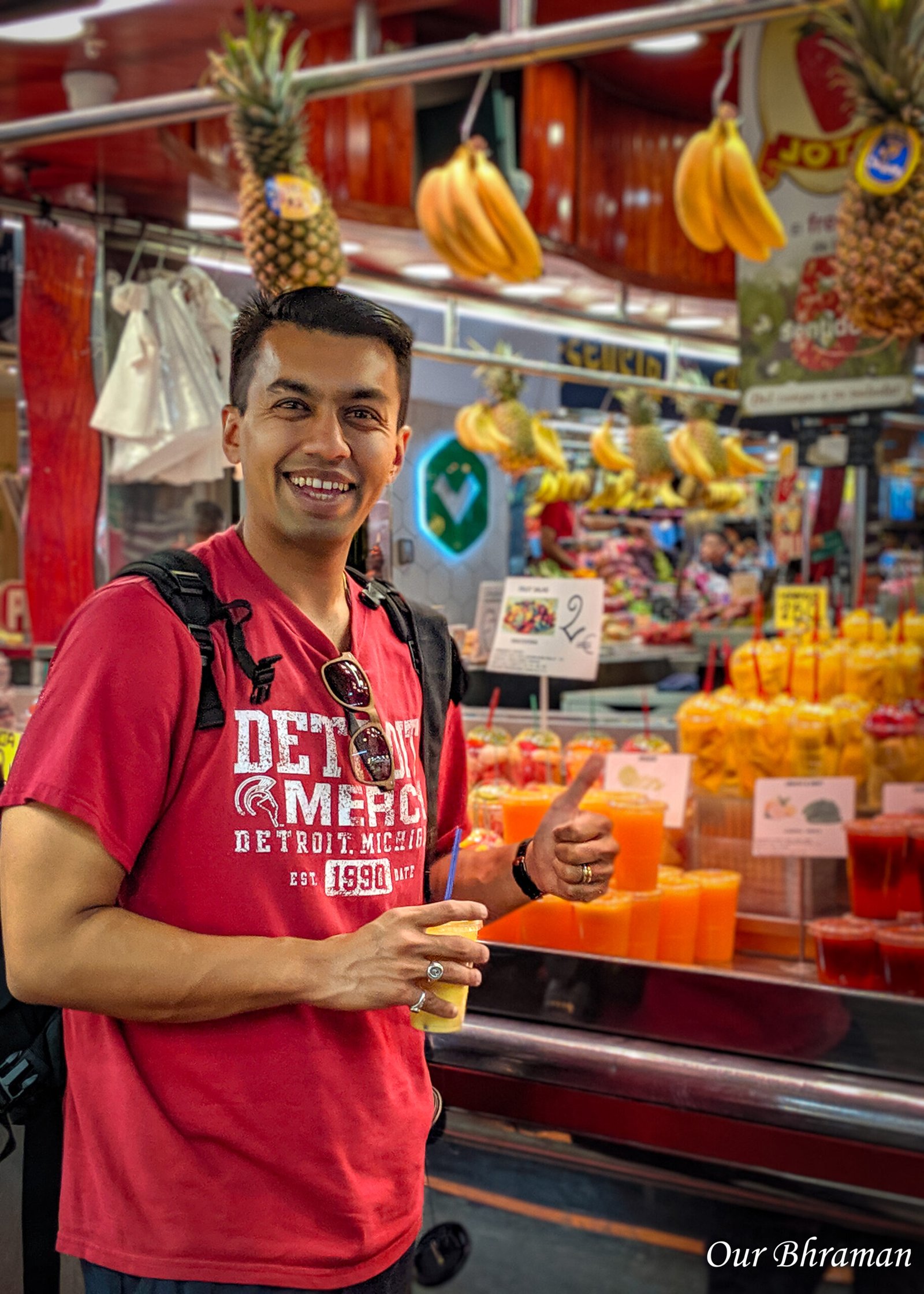
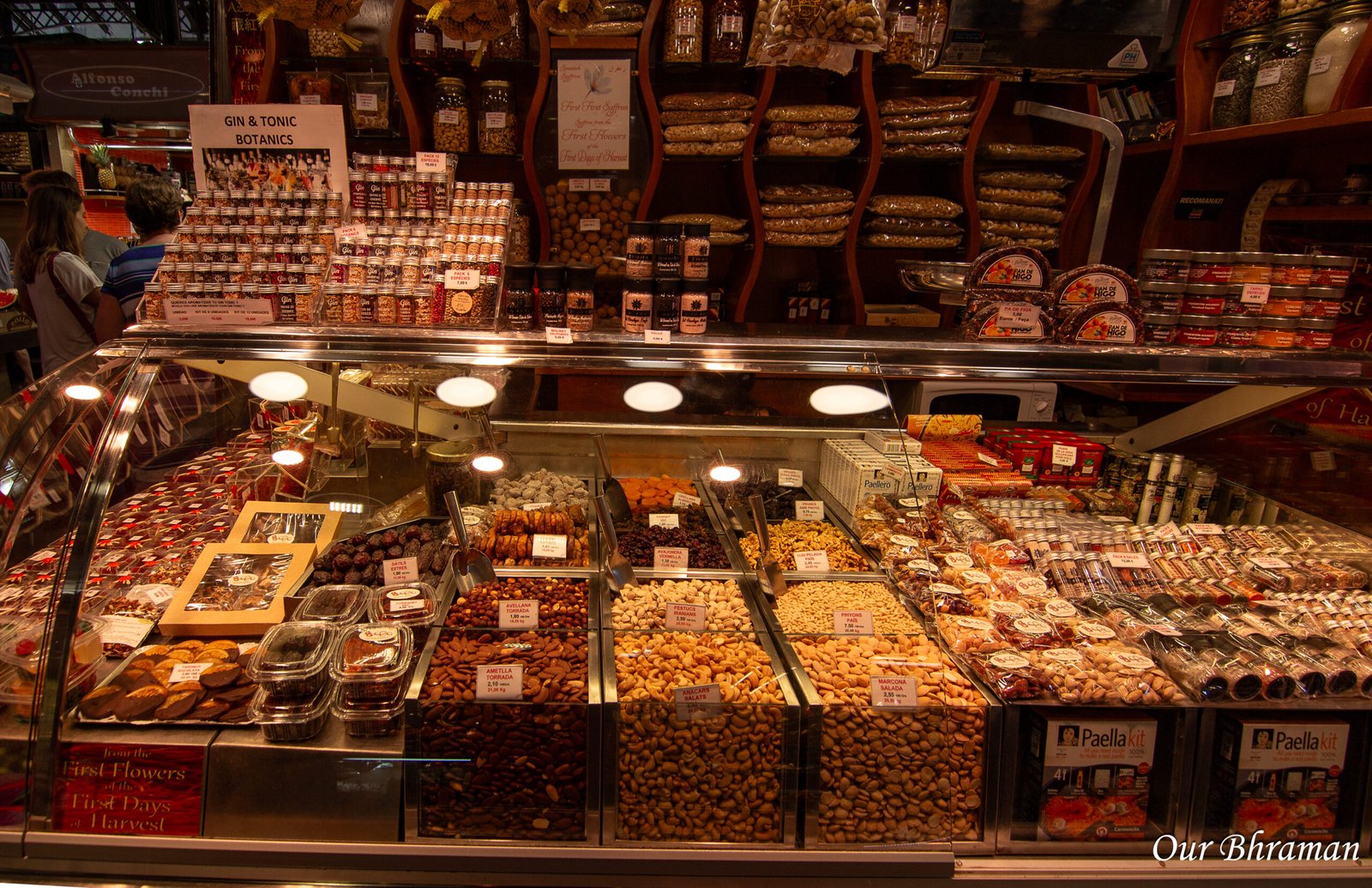
Walking inside, the first thing that catches your attention is the color, variety, and sheer amount of food. The stalls are filled with fresh fruits and vegetables, meats, seafood, cheeses, olives, nuts, spices, sweets, cured meats, and other local and international products. There are also juice stalls, prepared foods, tapas, and places where you can sit down for a quick meal.
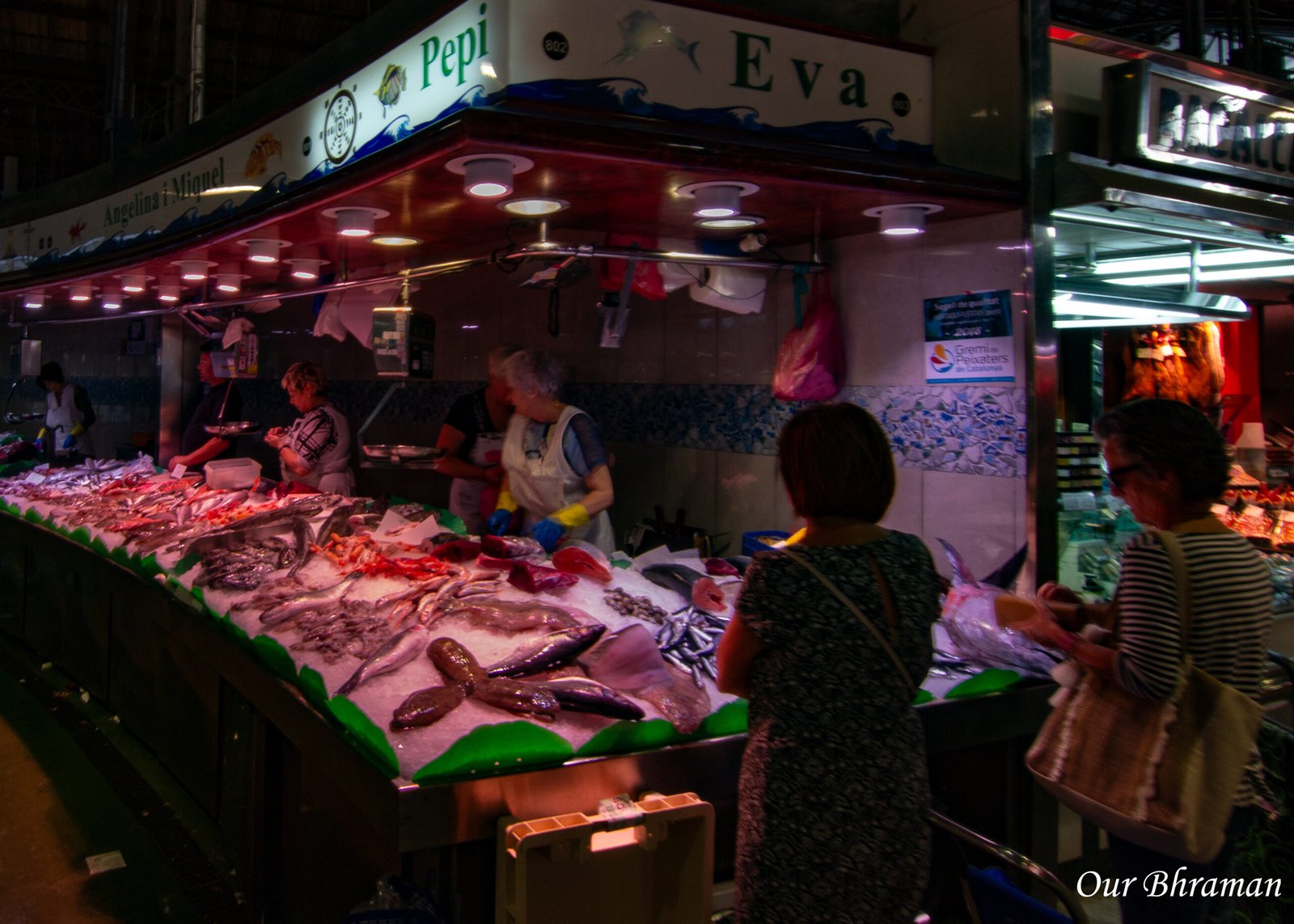 For us, the market was exactly what we needed at that moment. After being up since early morning and spending hours exploring Park Güell, we weren’t looking for a formal breakfast—we just wanted something quick, fresh, and filling. We grabbed a bite, wandered through the colorful stalls, and enjoyed watching the market come alive around us.
With its long history, beautiful iron-and-glass structure, colorful displays, and incredible variety of food, La Boqueria has become one of those places where the market itself is part of the Barcelona experience.
 After our short break, we continued to Plaça Reial, just a couple of minutes away, for the next part of our day—the Runner Bean Gaudí Architecture Tour.
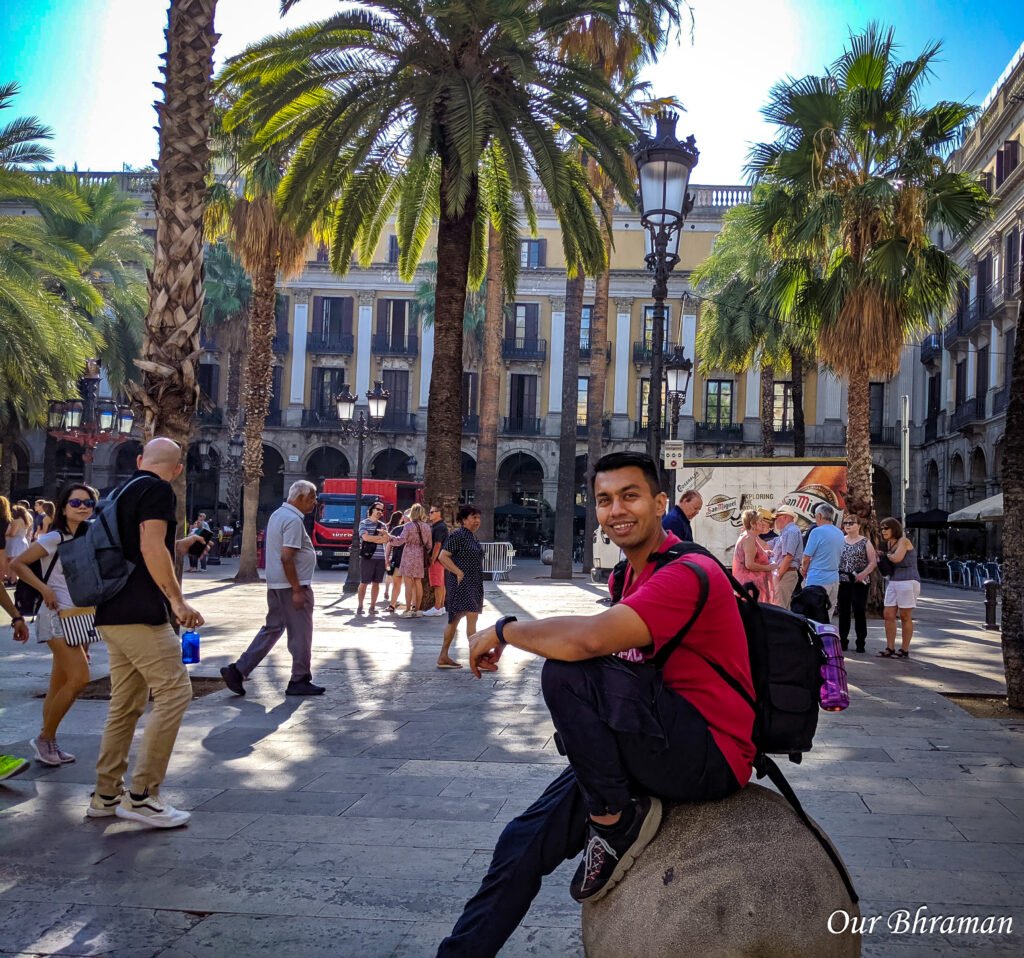
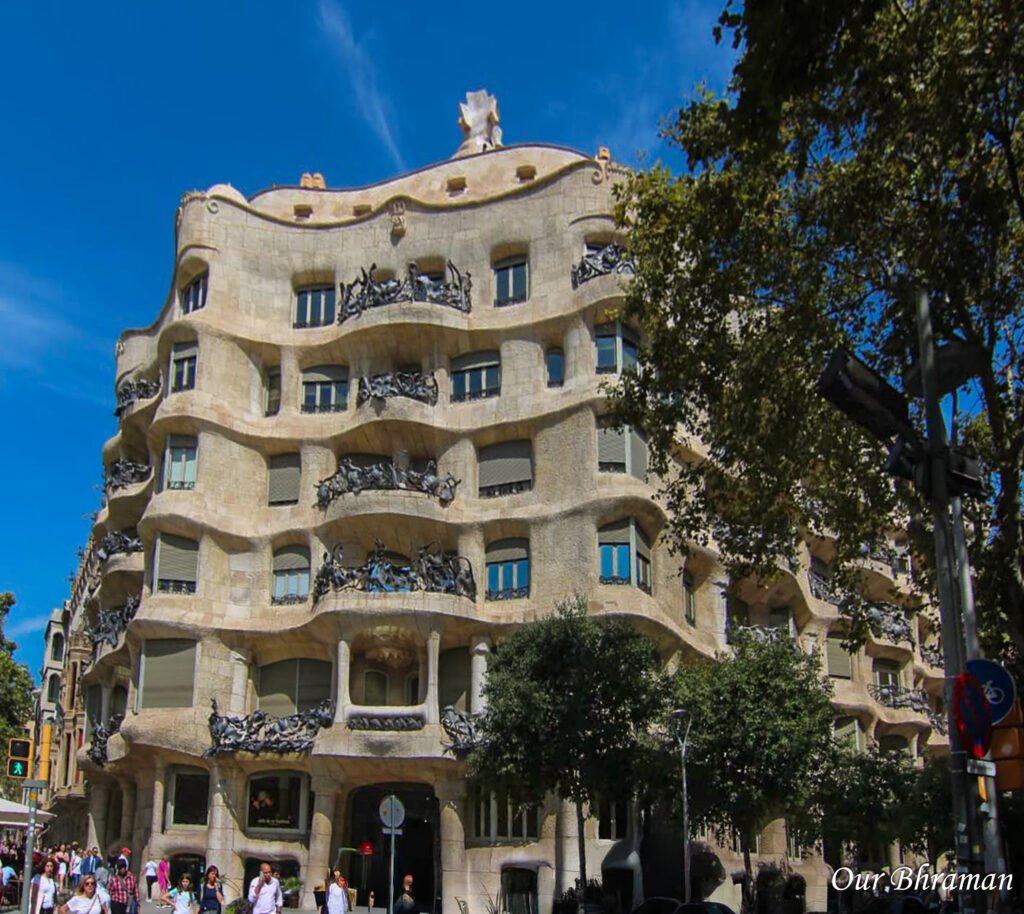
After our quick stop at La Boqueria, we walked over to Plaça Reial for our next adventure—the Runner Bean Gaudí Architecture Tour. Our tour started at 11:00 AM, right beside the fountain. The guide was easy to spot, wearing a bright green vest and holding a large green umbrella with the company’s logo.
The tour lasted about 2½ hours and took us through several of Barcelona’s most important Gaudí landmarks. We visited Palau Güell, the Block of Discord, Casa Batlló, Passeig de Gràcia, Casa Milà (La Pedrera), and finished at the Sagrada Família. Because these places are spread across the city, we also took two short metro rides during the tour.
Starting with Palau Güell
 Starting with Palau Güell
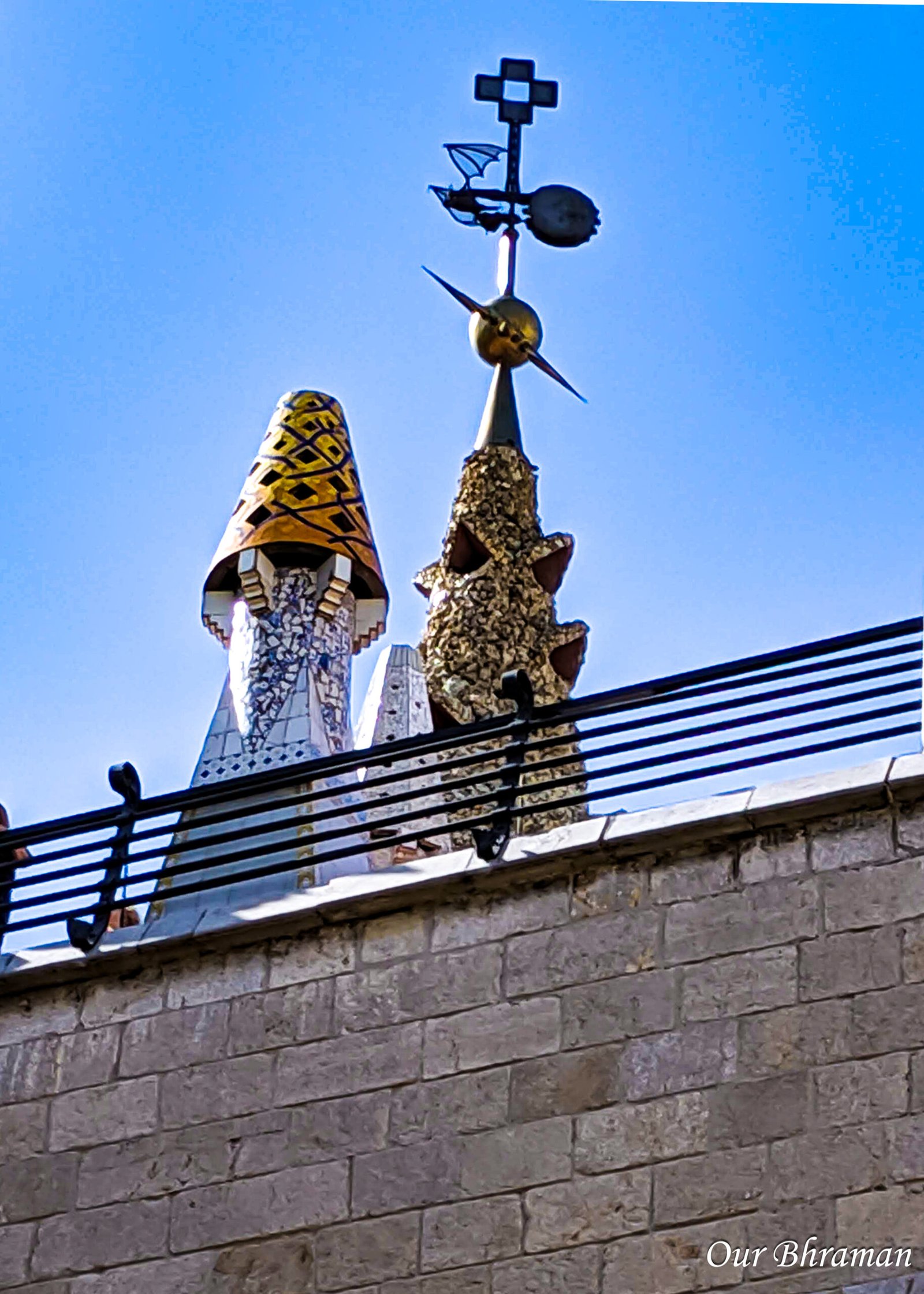
Our first major stop was Palau Güell, one of Gaudí’s earliest important commissions for Eusebi Güell. The mansion was built between 1885 and 1890, and our guide explained how different it was from the colorful Gaudí buildings we would see later in the day.
From the outside, Palau Güell can look surprisingly restrained, especially compared with Casa Batlló or Park Güell. But that was part of what made it interesting. The building was designed around a central hall, with the interior intended to accommodate both the Güell family’s private life and their social gatherings.
The Block of Discord
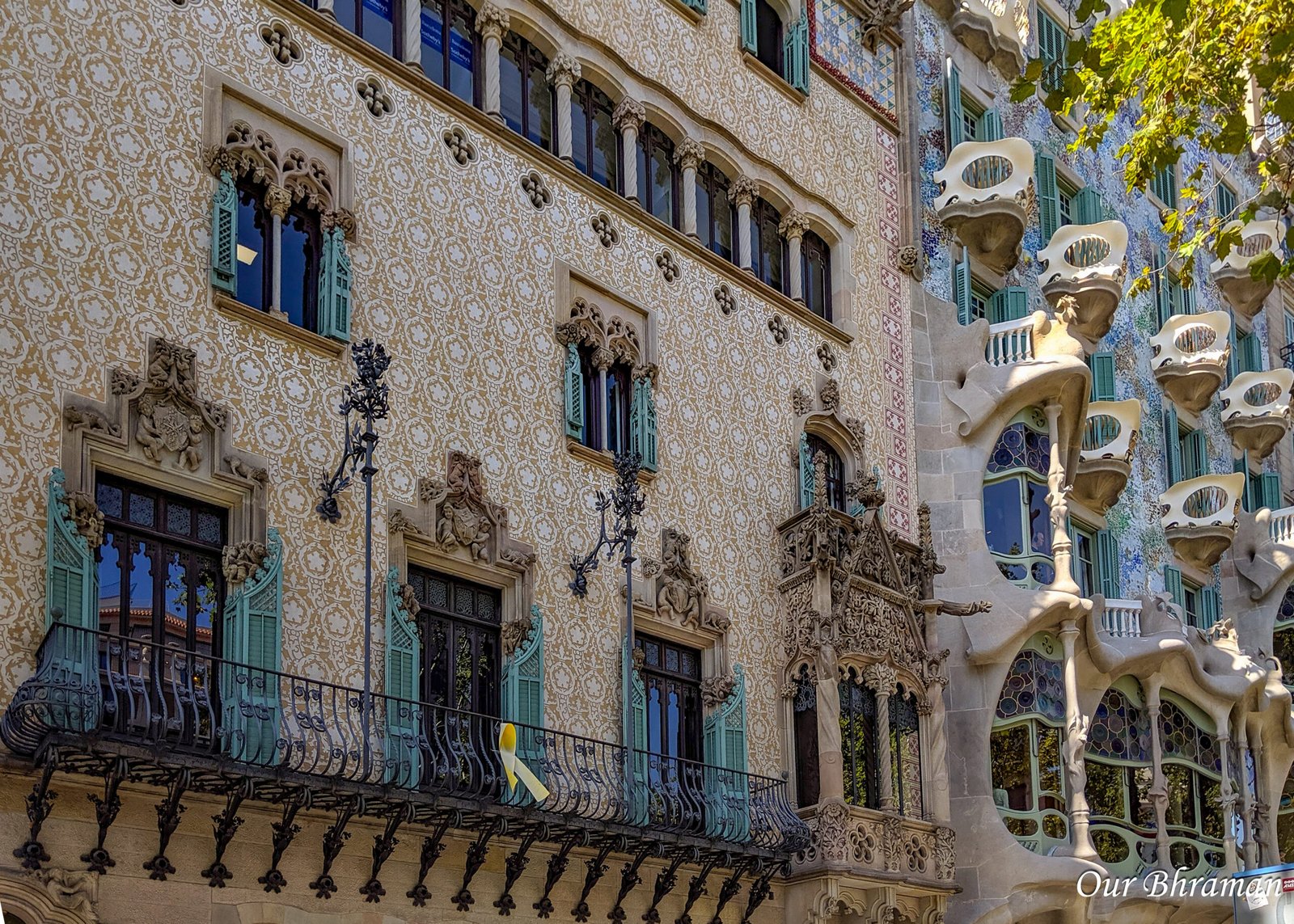
From Palau Güell, we continued toward Passeig de Gràcia and the famous Block of Discord (Manzana de la Discordia). This was one of the most interesting parts of the tour because several neighboring buildings were redesigned by different architects, each with a very different interpretation of Catalan Modernisme.
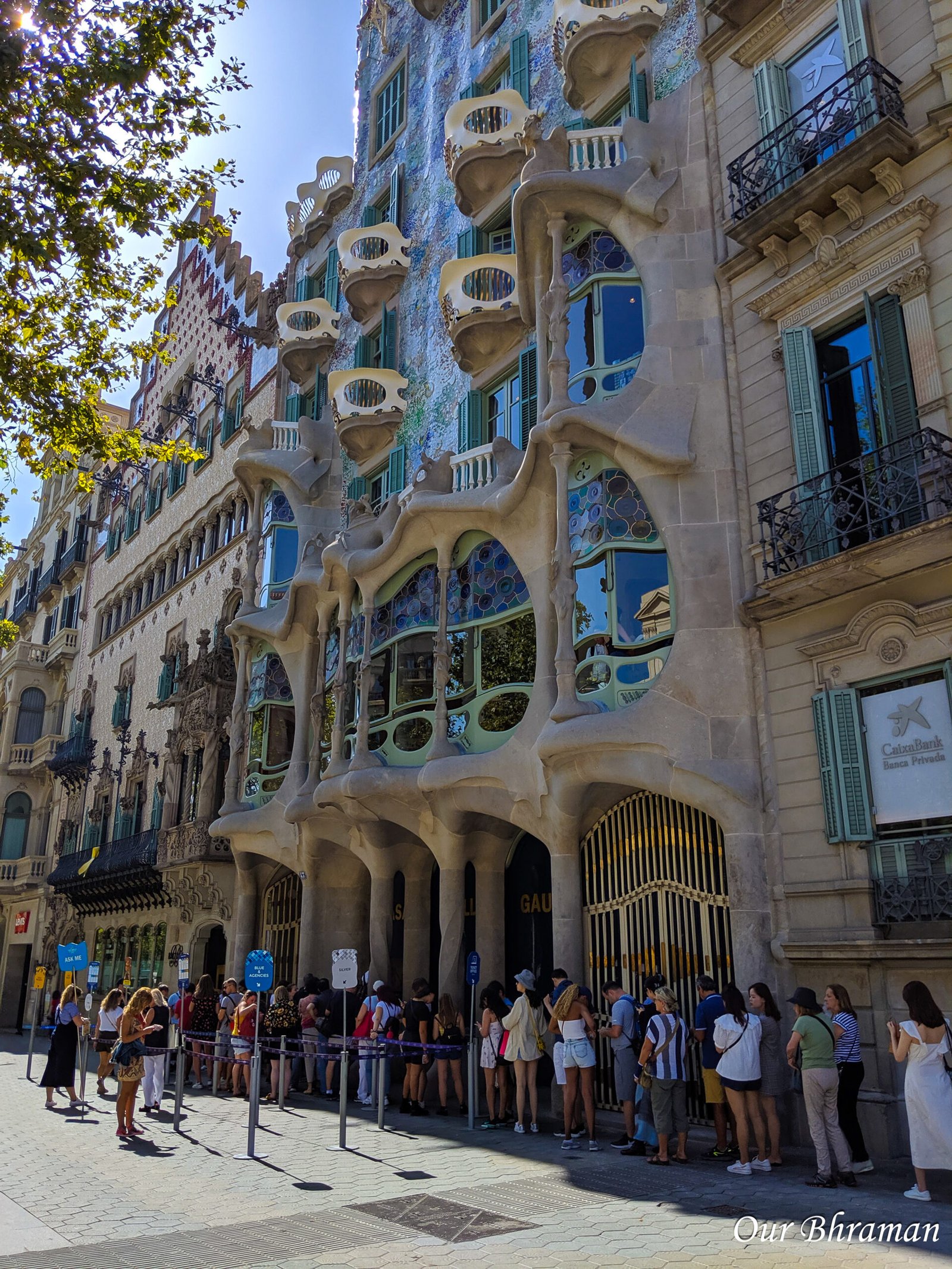
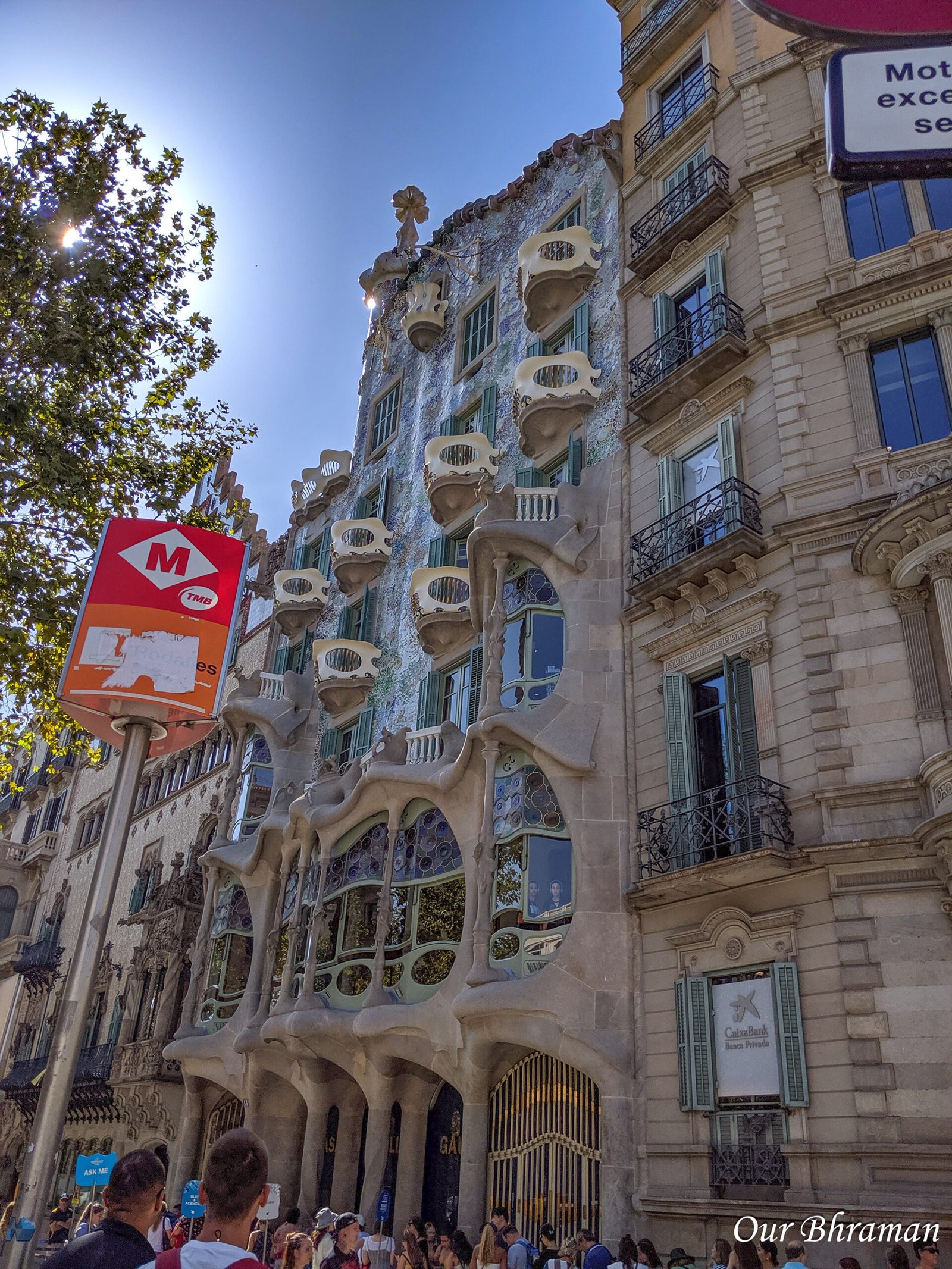
Our guide encouraged us to look at the buildings side by side rather than seeing Casa Batlló on its own. Casa Batlló, designed by Gaudí, stands alongside works by architects including Josep Puig i Cadafalch and Lluís Domènech i Montaner. The result is almost like an architectural competition along one city block.
 Casa Batlló – Gaudí’s Imagination on a City Street
 Casa Batlló – Gaudí’s Imagination on a City Street
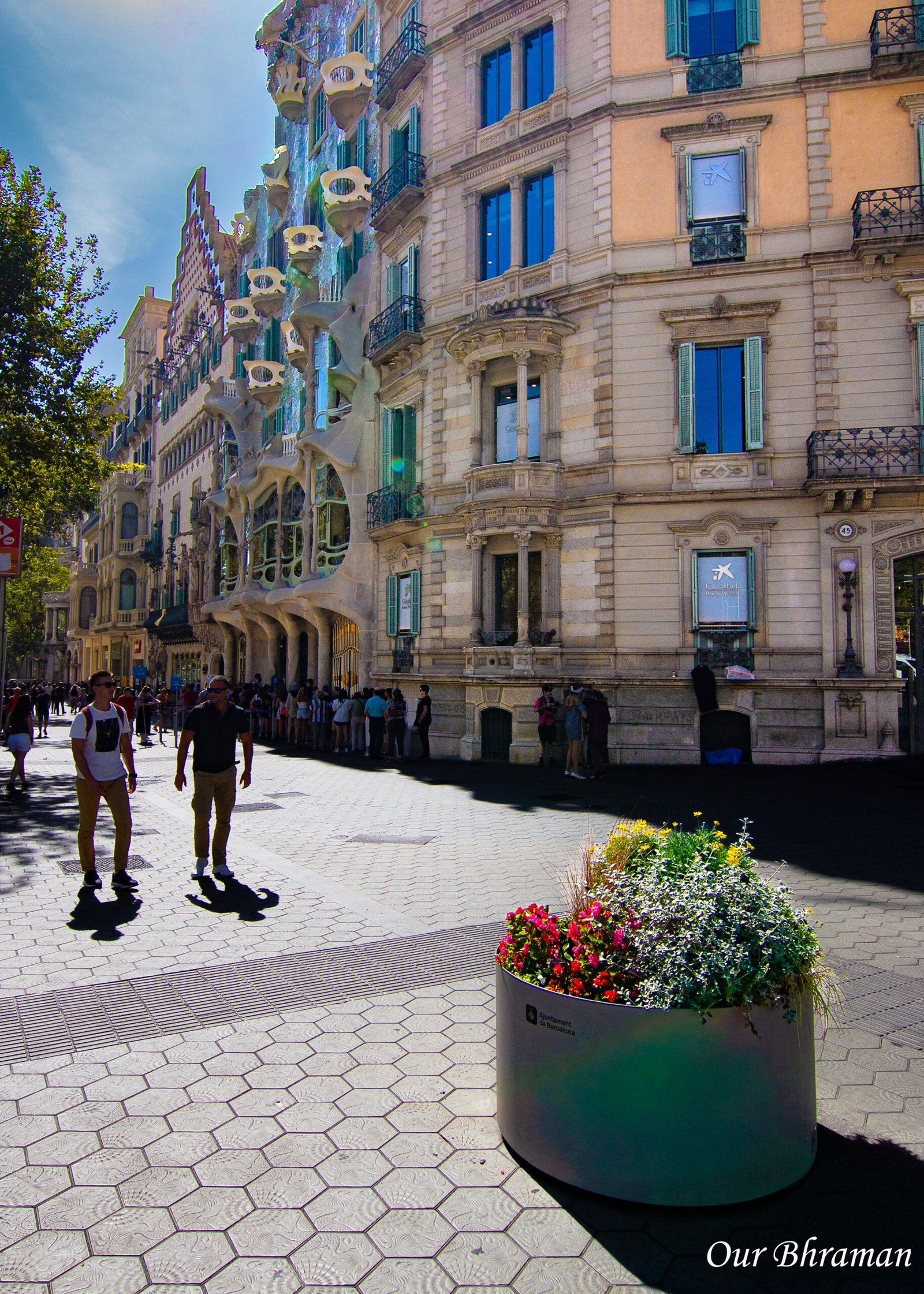
Casa Batlló was particularly fascinating because Gaudí did not start with an empty lot. The original building was constructed in 1877, and when textile businessman Josep Batlló acquired it, he hired Gaudí to completely transform the existing structure rather than simply build a new one.
Between 1904 and 1906, Gaudí redesigned the façade, interior spaces, light well, and other elements of the building. Our guide helped us notice details that could easily be missed when simply walking past it—especially the unusual shapes, colors, balconies, and almost skeletal appearance of the façade.
 Passeig de Gràcia and Eixample
 Passeig de Gràcia and Eixample
Walking along Passeig de Gràcia also gave us a chance to understand the neighborhood itself. The Eixample was part of Barcelona’s major 19th-century expansion, planned by urban planner Ildefons Cerdà. The wide streets and distinctive grid layout created a completely different setting from the narrow streets of the older city.
This helped put Gaudí’s buildings into context. They weren’t isolated works of art—they were part of a rapidly growing Barcelona where wealthy families competed to create impressive homes along one of the city’s most fashionable avenues.
Museu Tàpies — Another Modernist Gem
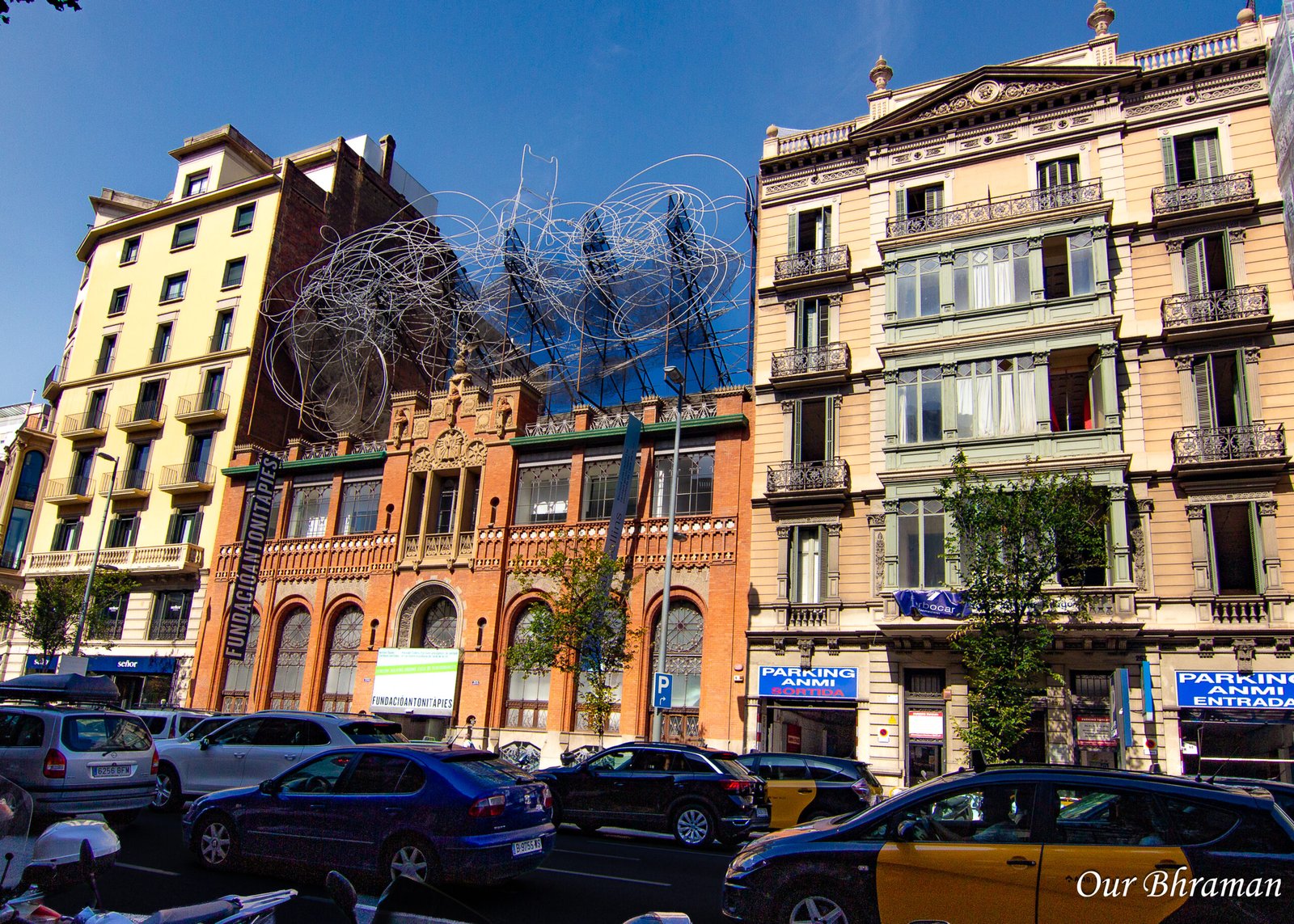 Museu Tàpies — Another Modernist Gem
As we continued our walk through Barcelona, we came across the Museu Tàpies, housed in a striking Modernist building that was originally the headquarters of the Montaner y Simón publishing house. The building was designed by Lluís Domènech i Montaner, another major figure of Catalan Modernisme and a contemporary of Antoni Gaudí. Built in the early 1880s, its exposed brick, ironwork, and unusual façade give it a very different character from Gaudí’s more organic style.
What made this stop especially interesting was how close it was to the Gaudí buildings along Passeig de Gràcia. Within just a short walk, we were seeing the work of two of the architects who helped define Barcelona’s Modernist architecture. It was a good reminder that the city’s architectural story is much bigger than Gaudí alone.
 Casa Milà – La Pedrera
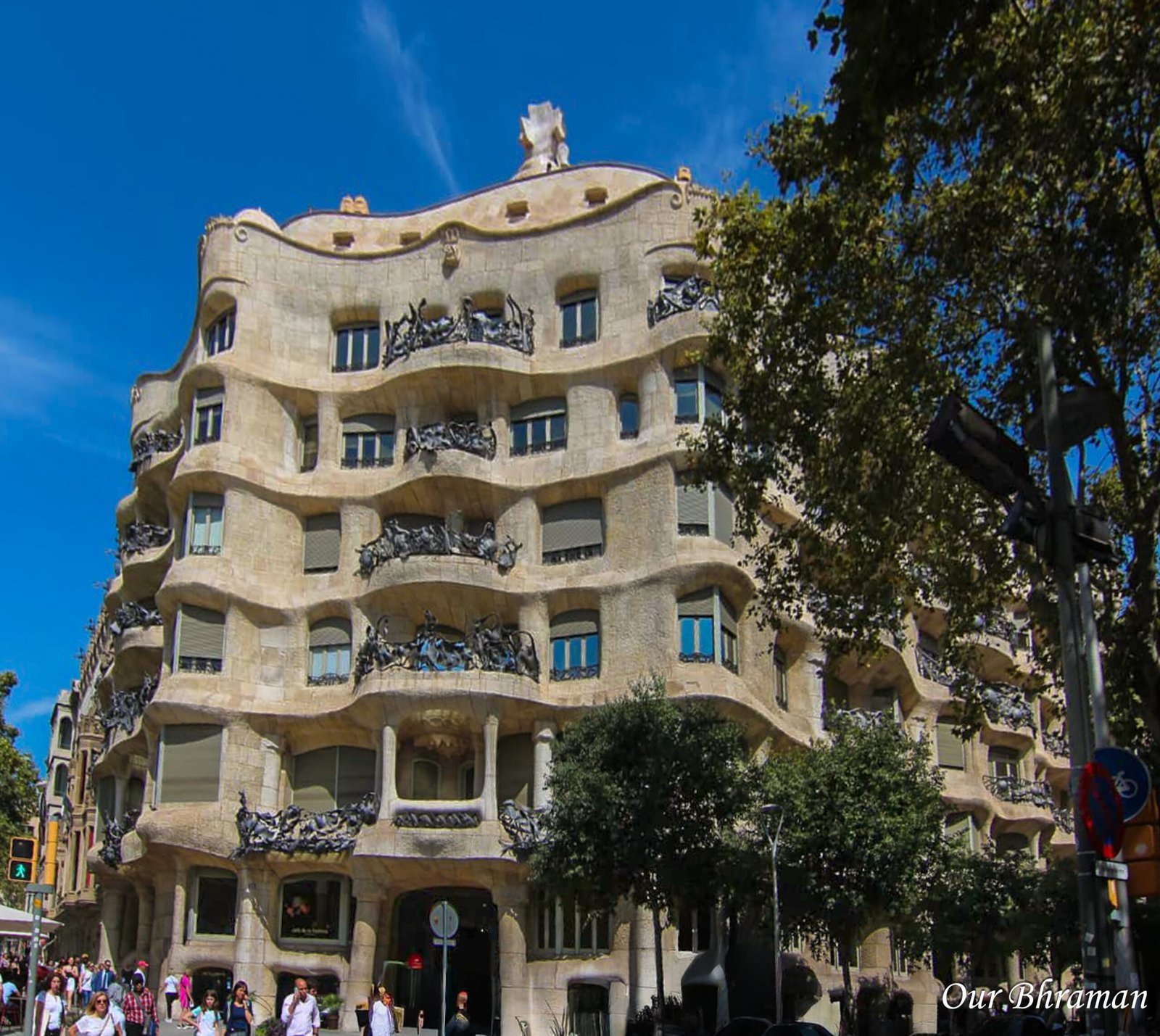 Casa Milà – La Pedrera
Our next major stop was Casa Milà, better known as La Pedrera. Even from the street, it is hard to mistake it for an ordinary apartment building. The undulating stone façade and unusual wrought-iron balconies make the building look almost as if it were carved rather than constructed.
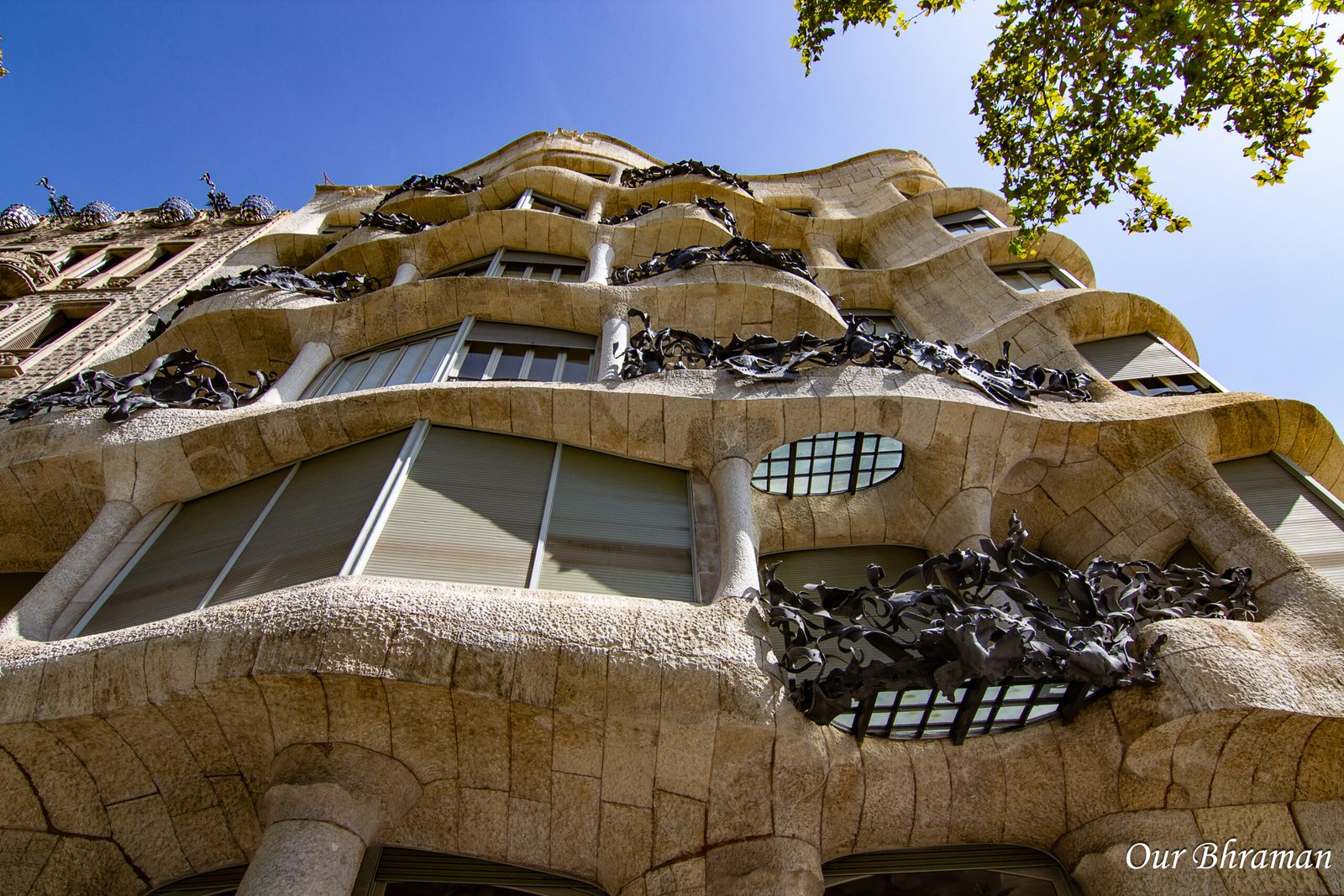 The guide also shared some of the controversy surrounding the building and its original owners. The project became a difficult commission, involving disagreements and legal disputes. That history made the building even more interesting—it wasn’t universally appreciated when it was first created.
Look Down: Gaudí Under Our Feet
During our Gaudí tour, our guide pointed out something we could easily have walked past without noticing—the sidewalk beneath our feet. These distinctive hexagonal tiles along Passeig de Gràcia were based on a design created by Antoni Gaudí in 1904, originally intended for Casa Batlló. They were eventually used at Casa Milà, or La Pedrera.
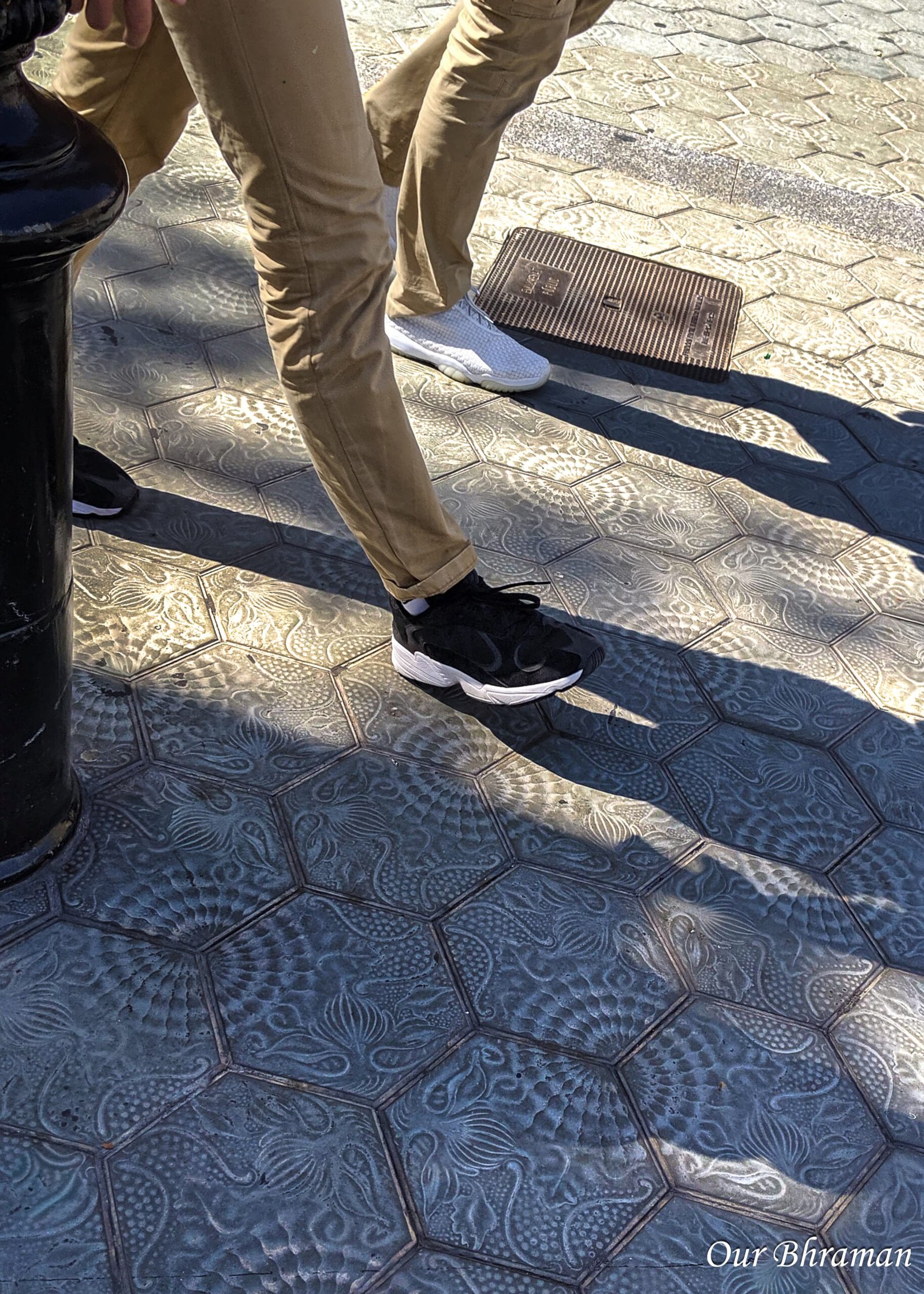 The raised patterns are inspired by nature and the sea, with forms interpreted as starfish, shells, algae and other marine shapes. Even the simple hexagonal geometry reflects Gaudí’s fascination with natural forms and patterns.
The pavement we see today is actually a 1997 outdoor re-edition created as a tribute to Gaudí, with the relief reversed to better withstand the constant wear of the street.
It was one of those small details that made the walking tour worthwhile. We weren’t just looking at Gaudí’s famous buildings—we were discovering that his design was literally under our feet.
That last sentence is especially good for Our Bhraman because it turns a small architectural detail in
Ending at the Sagrada Família
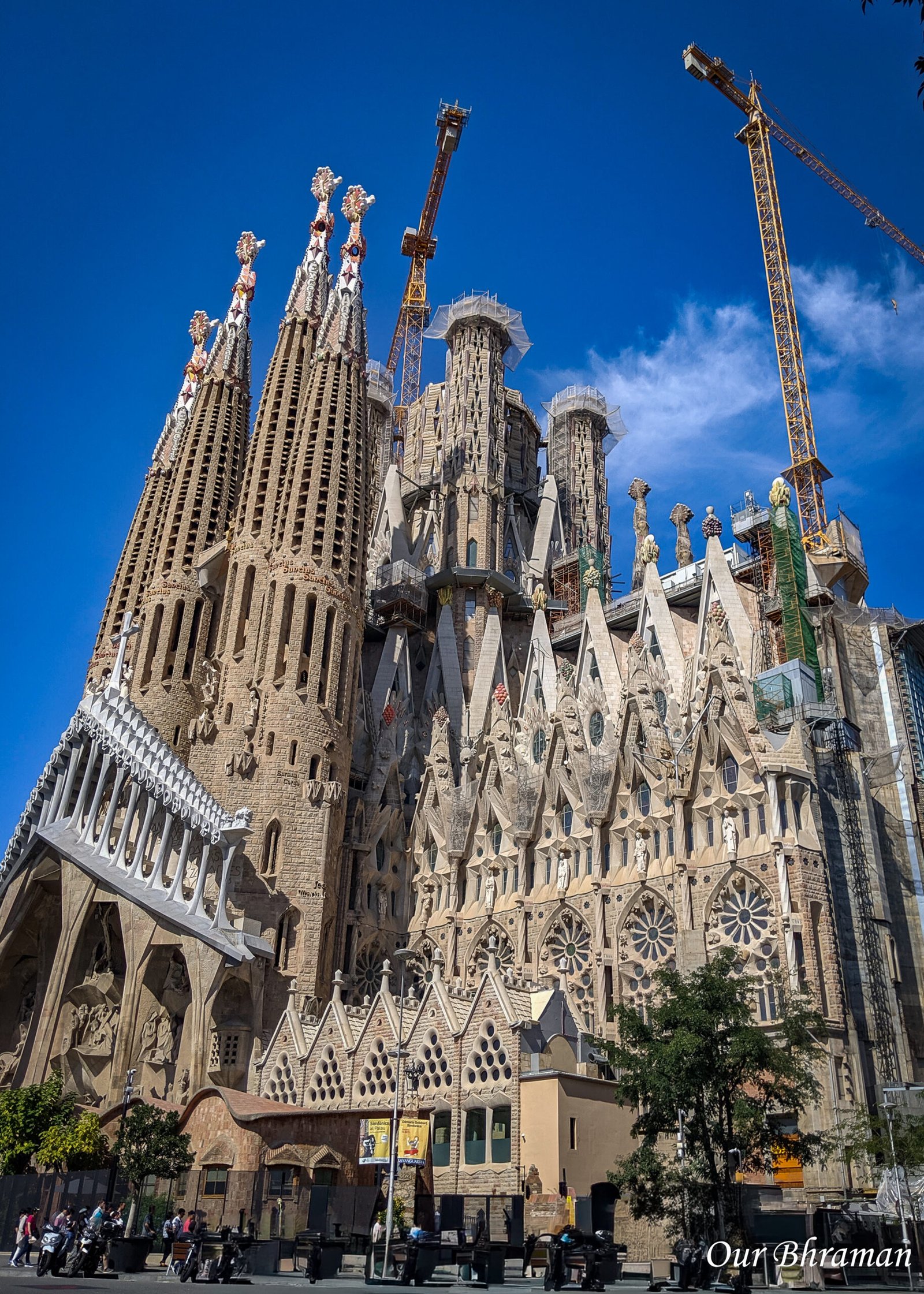 Ending at the Sagrada Família
The tour ended at the Sagrada Família, which felt like a fitting conclusion after seeing Gaudí’s work develop across Barcelona. By this point, we had already visited Park Güell earlier that morning, so seeing the Sagrada Família again after learning more about Gaudí gave us a different perspective.
Instead of looking at each building as a separate attraction, we could start to recognize some of the ideas that connected his work—nature-inspired forms, unusual geometry, light, color, symbolism, and a willingness to experiment with traditional architectural ideas.
The tour also helped us understand that Gaudí’s buildings were not simply designed to look unusual. There was a great deal of thought behind the shapes, structures, materials, and way people would experience each space.
Our Takeaway
Since we had already spent the morning exploring Park Güell, this tour worked especially well for us. Park Güell had allowed us to experience Gaudí’s architecture and landscape firsthand, while the walking tour gave us the broader story behind the architect and his work across Barcelona.
One of the biggest advantages of the tour was having a guide point out details that we probably would have walked past without noticing. With several photographs from the day, we now look at these buildings differently—not just as beautiful Barcelona landmarks, but as pieces of a much larger story about Gaudí, Modernisme, and the transformation of the city.