A Glimpse of Barcelona Life
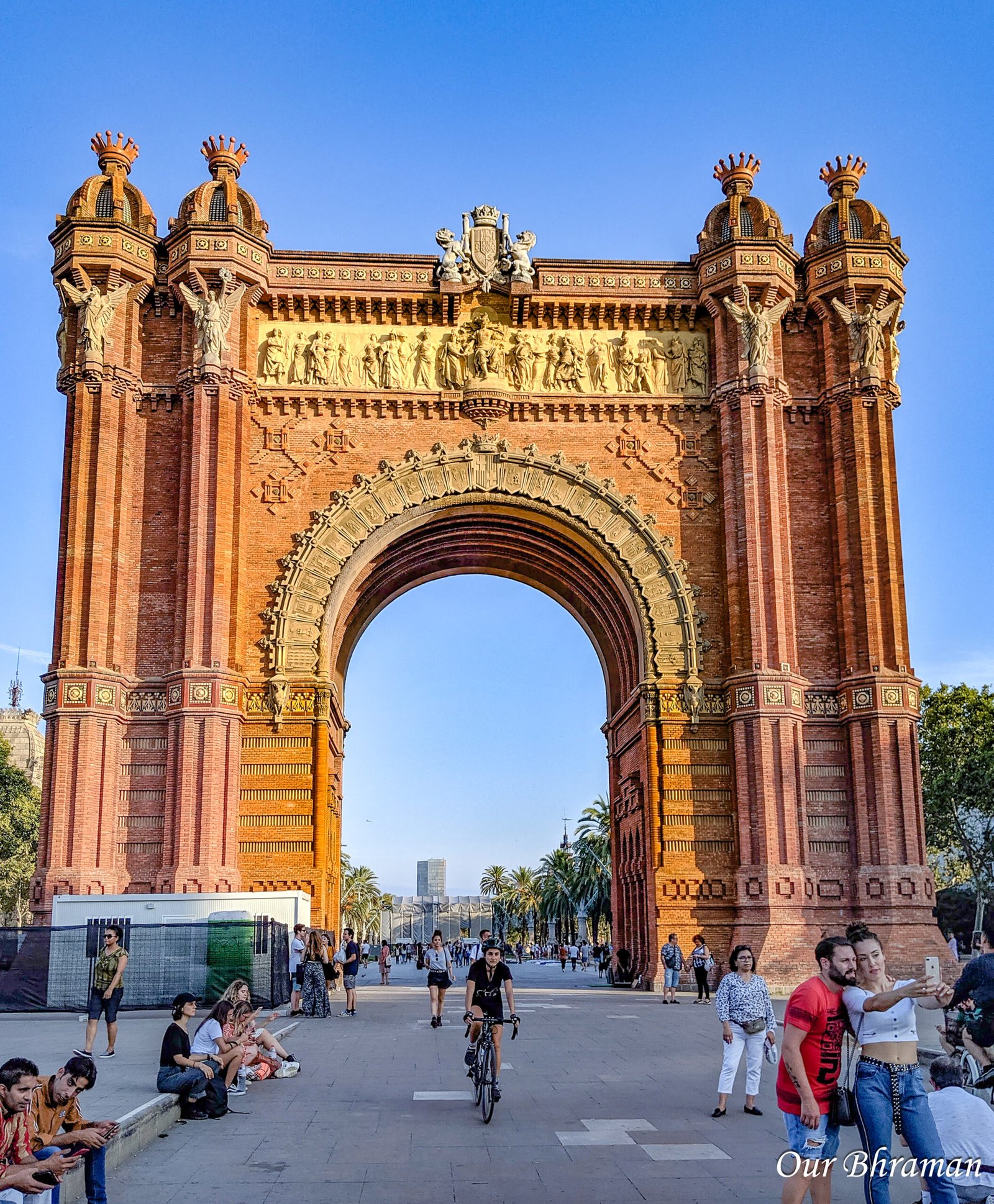
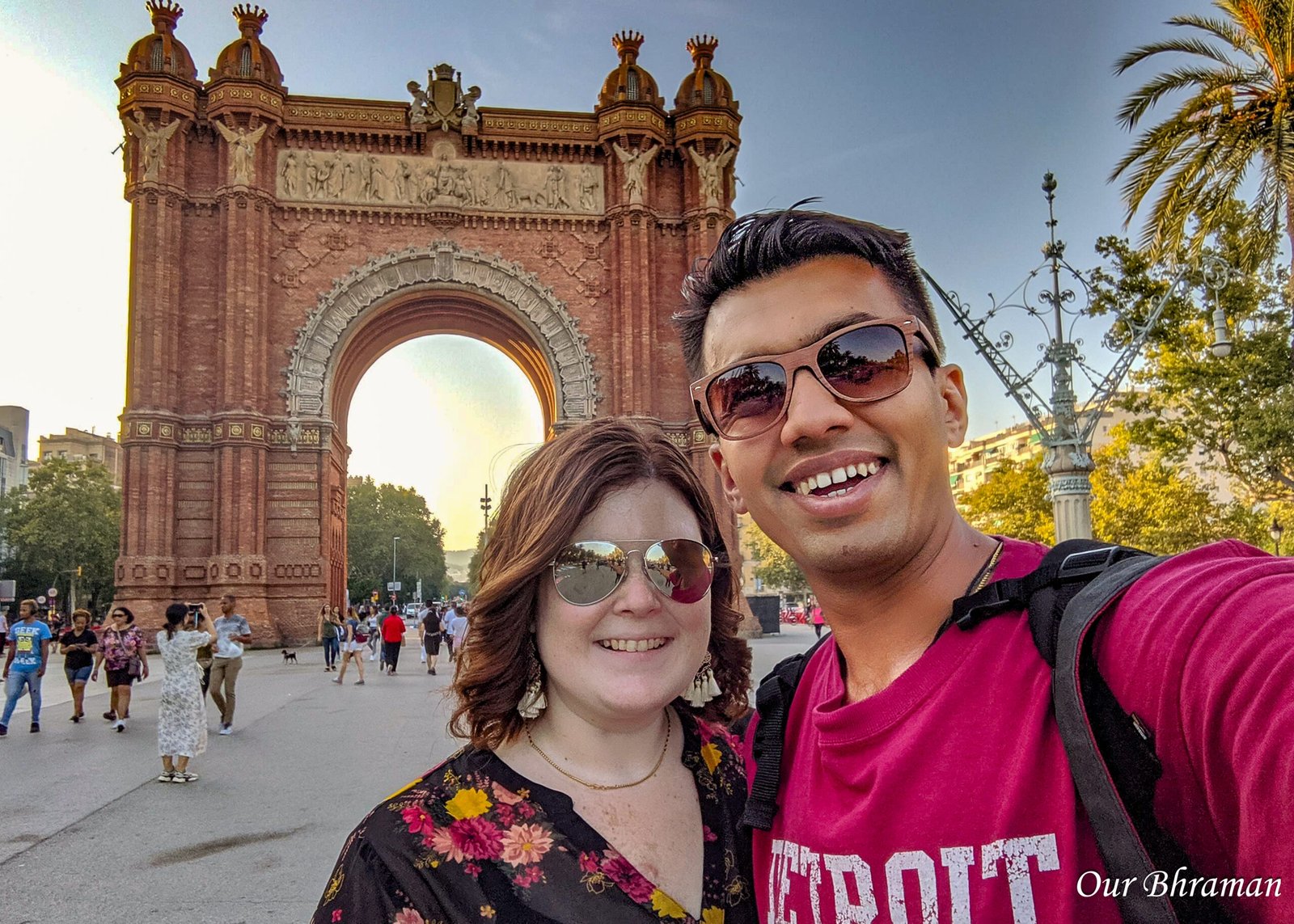
After finishing our visit to the Sagrada Família, we continued walking toward our next destination, the Arc de Triomf. Built by architect Josep Vilaseca i Casanovas as the main entrance to Barcelona’s 1888 Universal Exhibition, the red-brick arch stands at the end of the wide Passeig de Lluís Companys, which leads toward what is now Parc de la Ciutadella.
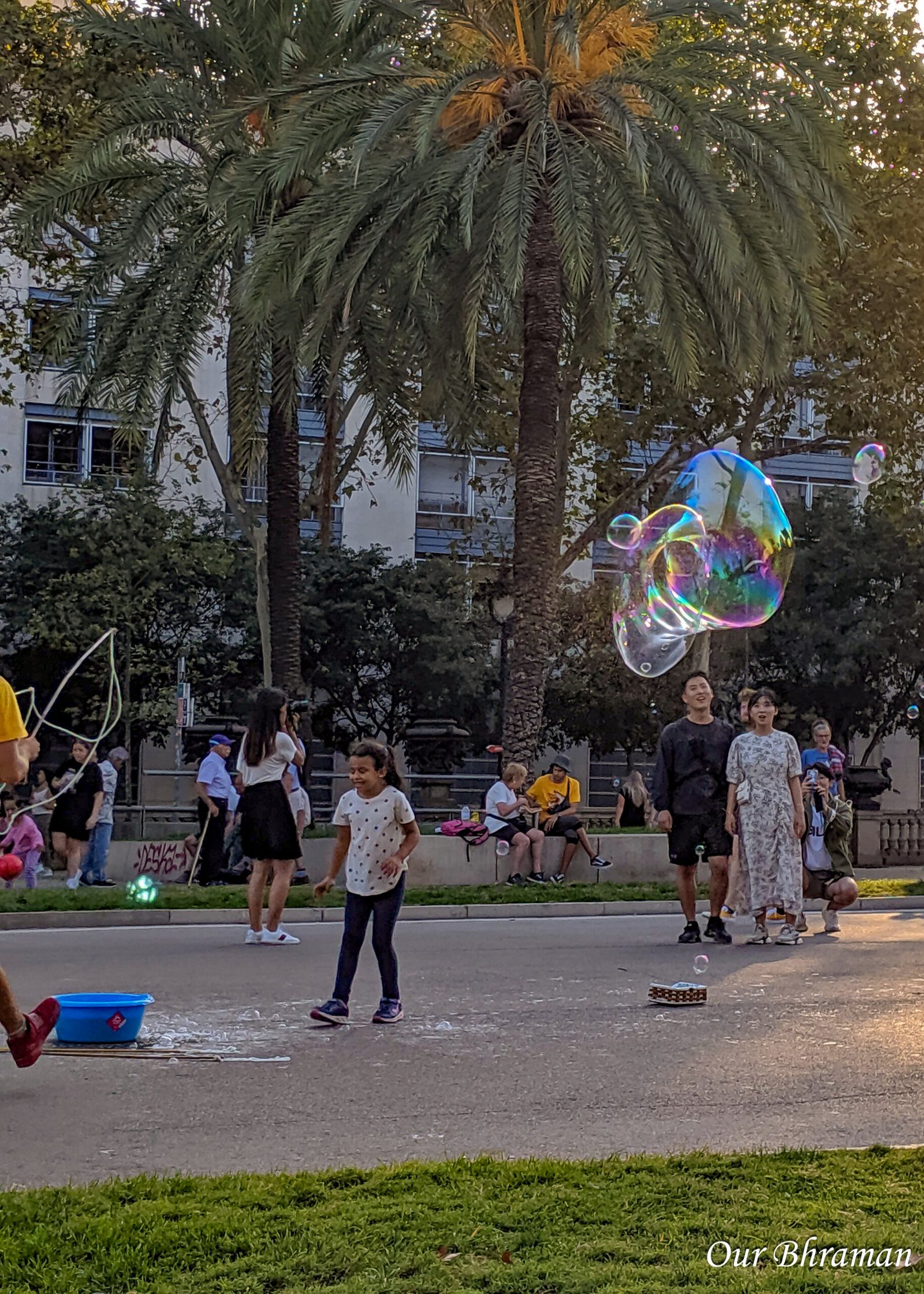
 But what made this stop memorable for us wasn’t just the monument itself. The area around the Arc de Triomf had a wonderful lively, everyday Barcelona atmosphere. Families were out with their children, kids were chasing and playing with bubbles, street artists were performing, and we even stopped to watch an impressive Cyr Wheel routine, with the performer spinning and moving inside the large metal wheel. The whole promenade felt energetic and full of life.
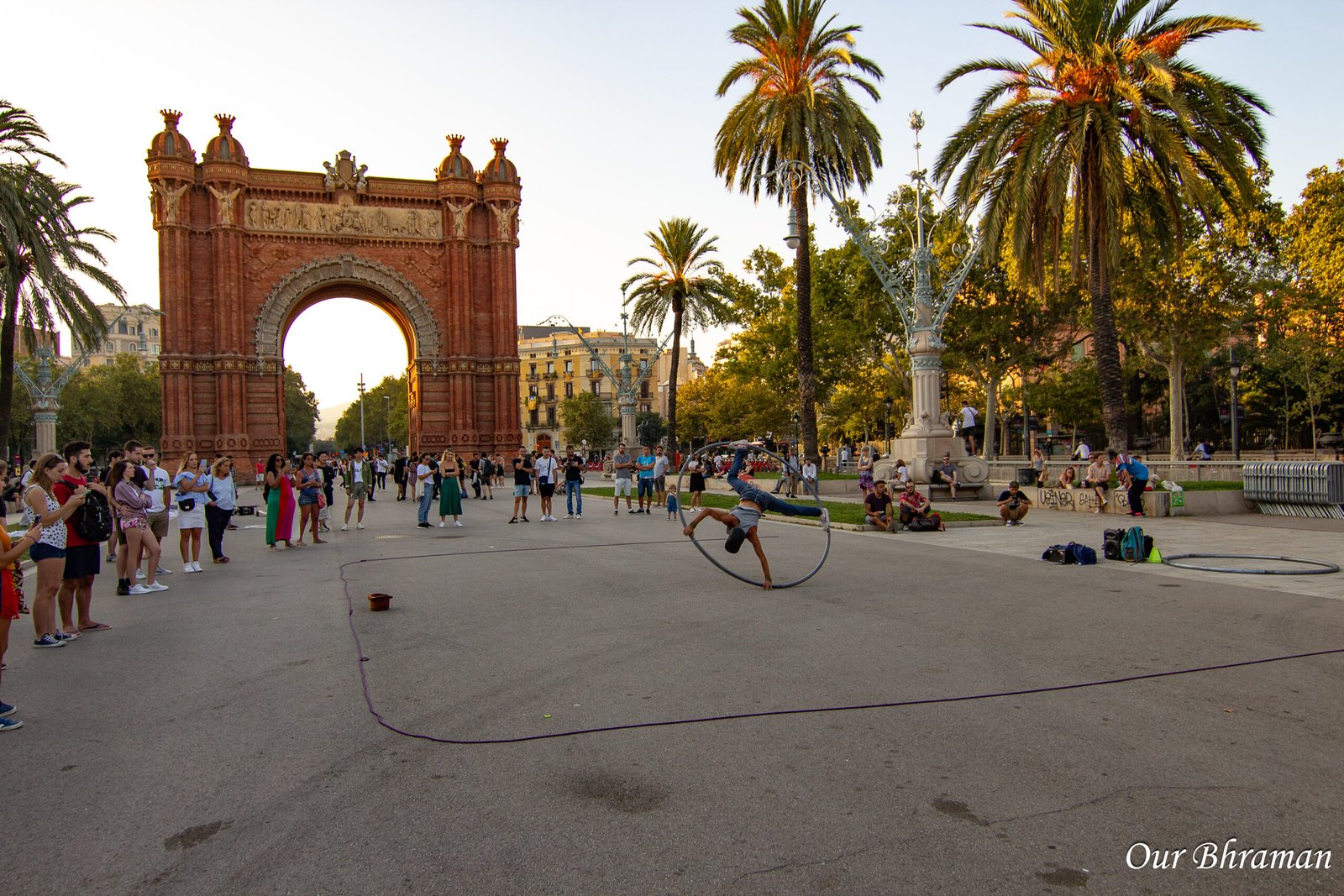
We enjoyed this side of Barcelona just as much as the famous landmarks. Instead of simply looking at another historic monument, we were watching people enjoy their city—families spending time together, children playing, and performers entertaining the crowds. For us, it was a small but memorable glimpse of everyday life in Barcelona, and a reminder that sometimes the moments happening around an attraction can be just as interesting as the attraction itself.
Discovering Barcelona’s Historic Streets
As we continued wandering through Barcelona, we found that some of our favorite discoveries were the places we could easily have walked past without noticing. Away from the famous Gaudí buildings, the city revealed another side of Barcelona through narrow streets, old churches, hidden courtyards, and buildings with centuries of history.
 The Mysterious Bridge on Carrer del Bisbe
 The Mysterious Bridge on Carrer del Bisbe
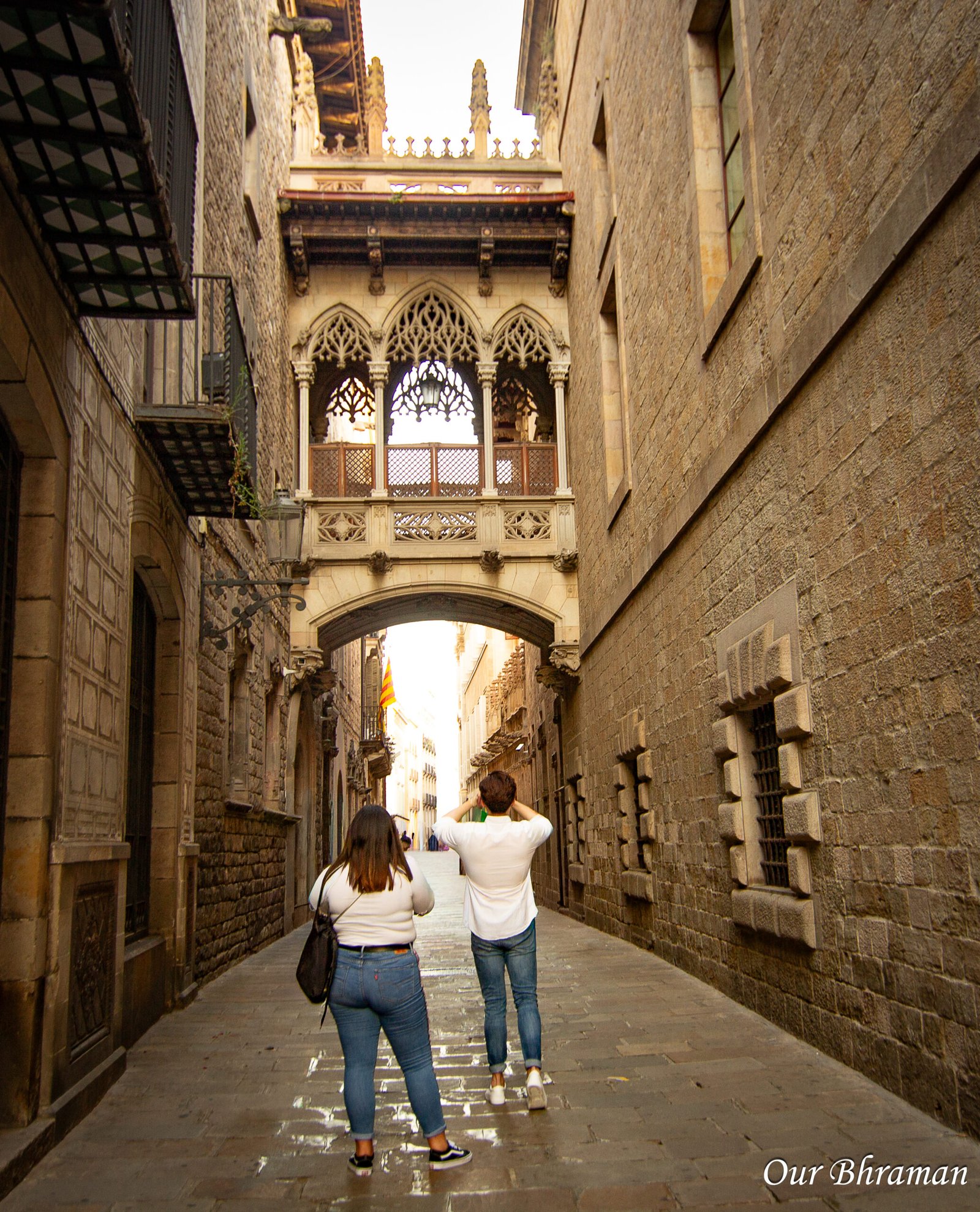
One of the most recognizable sights is the Pont del Bisbe, or Bishop’s Bridge, connecting the Palau de la Generalitat with the Casa dels Canonges. Its Gothic appearance makes it look centuries old, but there is an interesting twist—the bridge was actually built in 1928 by architect Joan Rubió i Bellver in a Neo-Gothic style.
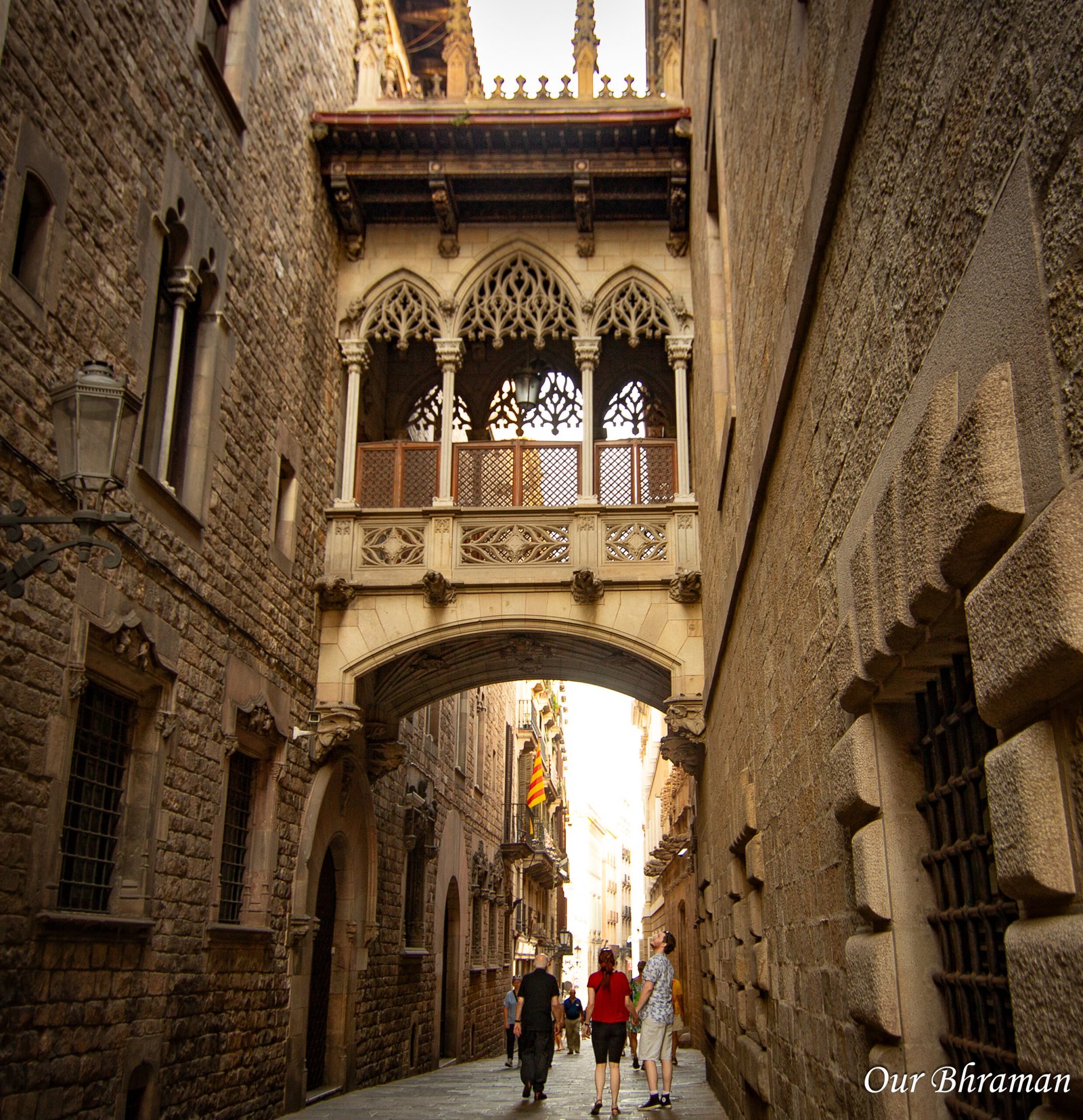 What caught our attention were the strange carvings underneath the bridge, especially the skull pierced by a sword. Like many places in the Gothic Quarter, the bridge has collected its own legends. One popular story says that if you see the skull, you must touch the nearby turtle sculpture to avoid a terrible fate. There is no historical evidence behind the legend, but that almost makes it more fun. Walking through Barcelona, we found ourselves looking more carefully at the buildings around us, wondering what other stories might be hiding in plain sight.
 Carrer de Ferran
 Carrer de Ferran
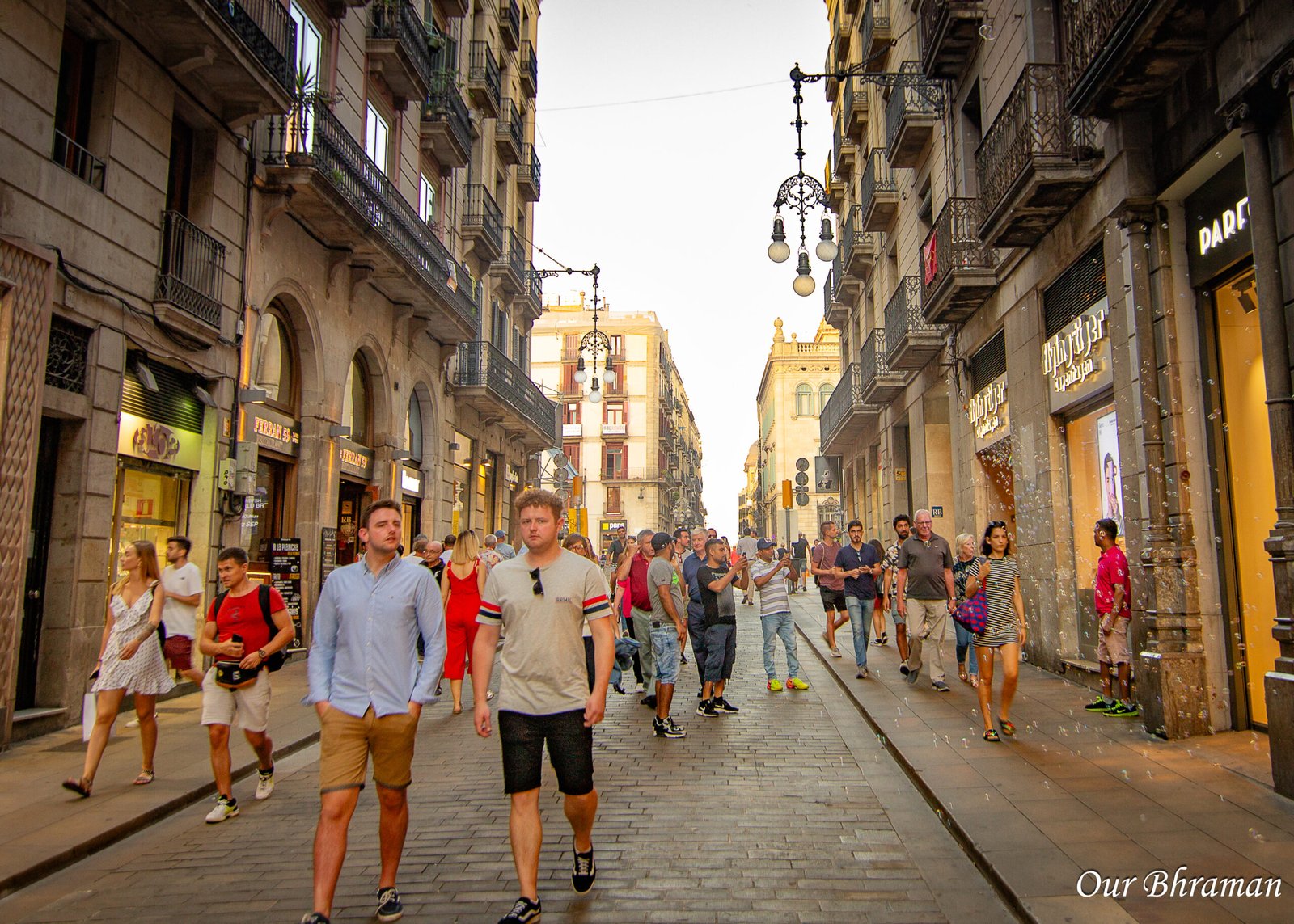
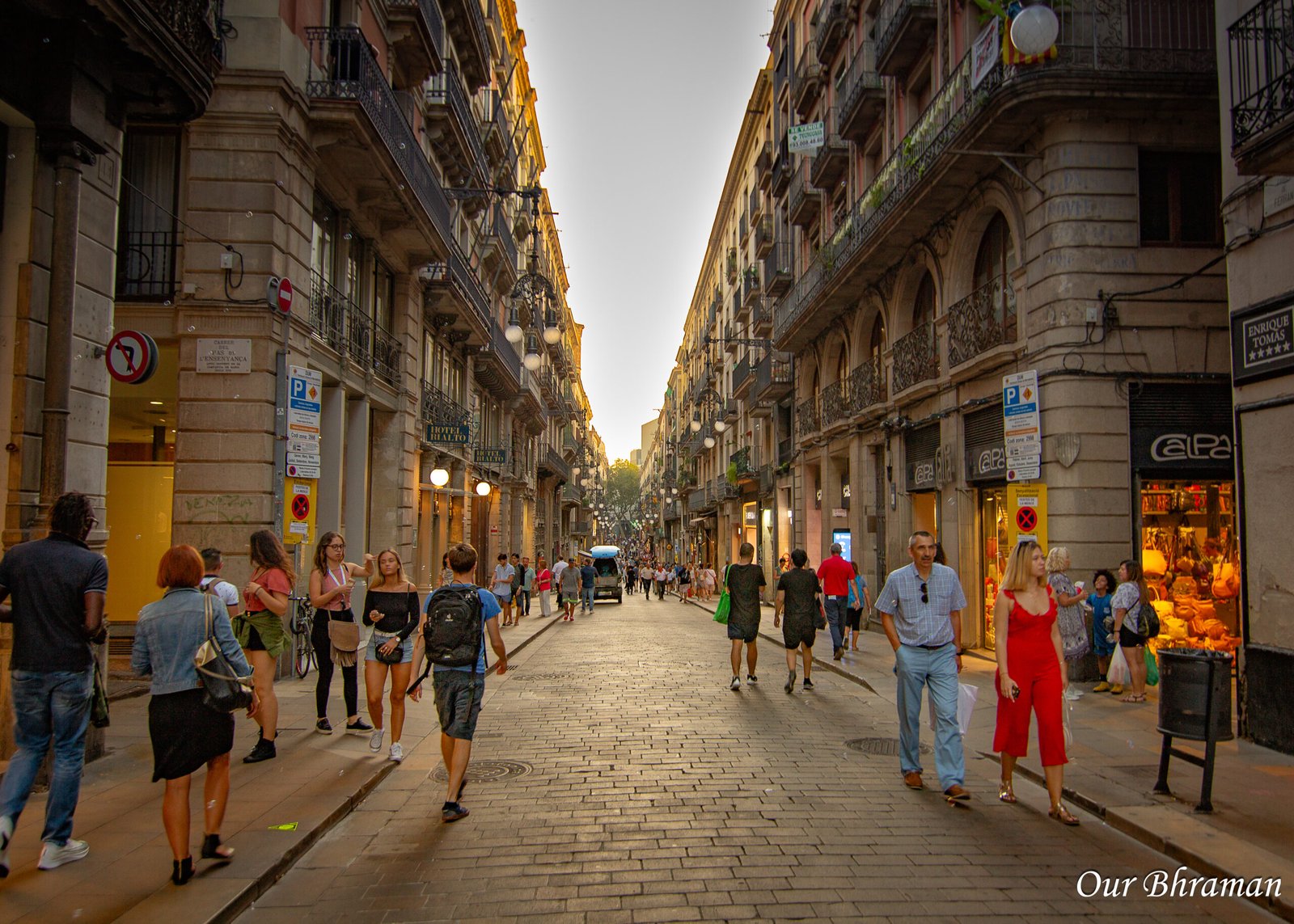
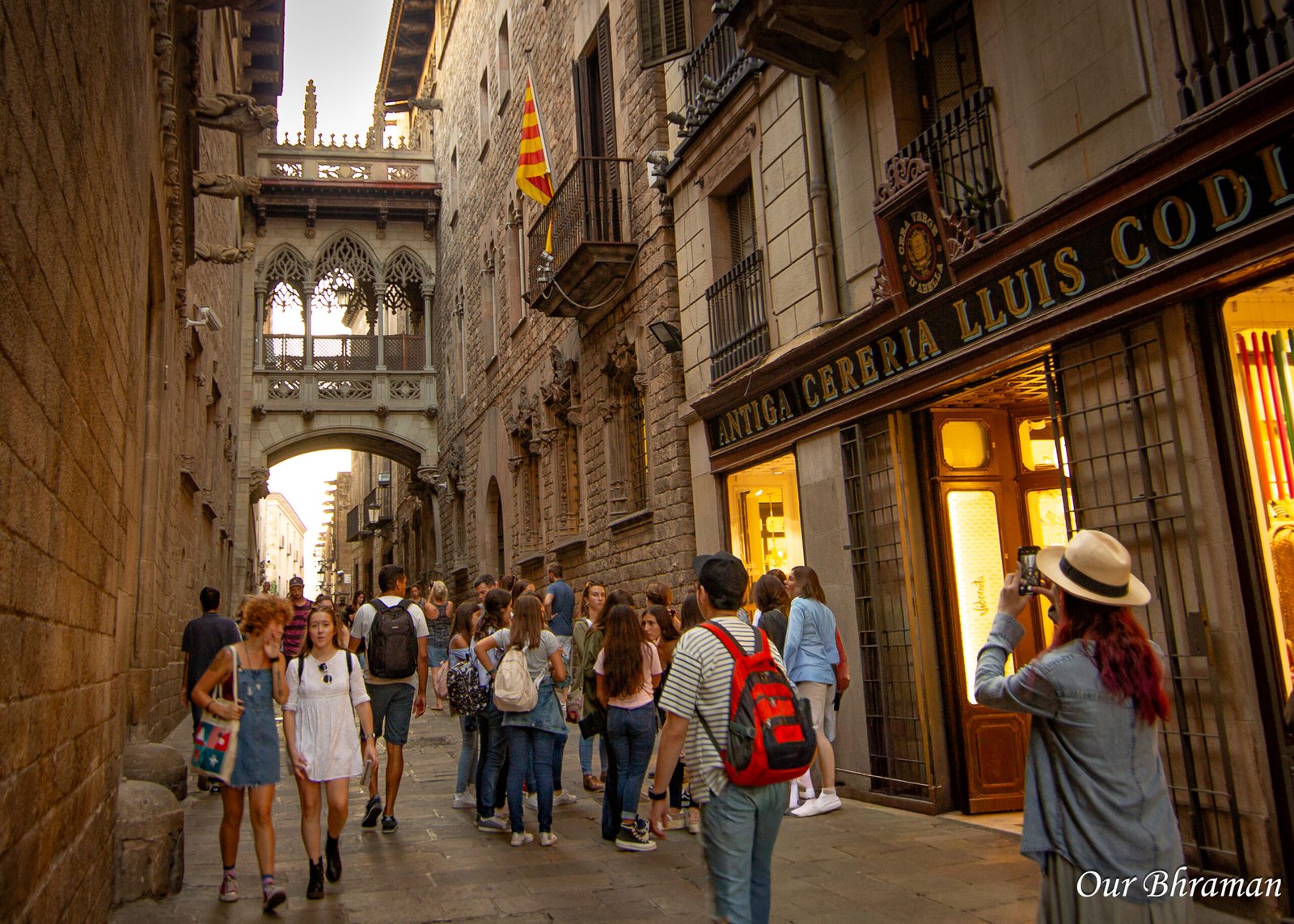
We also spent time walking along Carrer de Ferran, one of the main streets through the Gothic Quarter. Unlike the narrow, winding medieval streets surrounding it, Carrer de Ferran is remarkably straight. It was opened in the 19th century, connecting La Rambla with Plaça de Sant Jaume and cutting through the older medieval street pattern.
Today, it is a lively pedestrian-friendly street filled with shops, cafés, restaurants, and people moving between some of Barcelona’s most historic squares. For us, it was another reminder that Barcelona isn’t frozen in its past—the old and the everyday exist side by side.
 Convento de Sant Agustí Vell
 Convento de Sant Agustí Vell
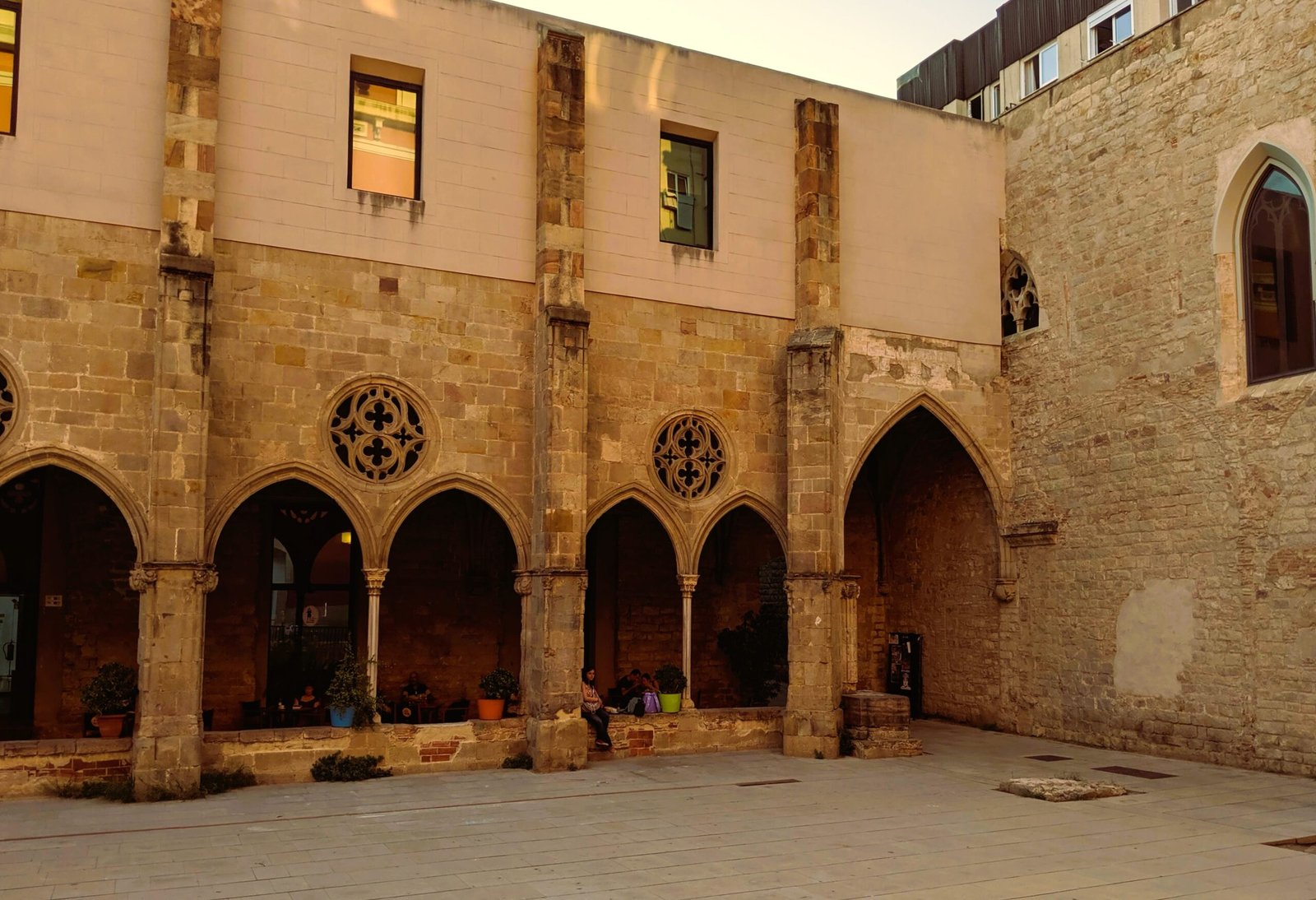
Another interesting stop was the Convento de Sant Agustí Vell in Barcelona’s historic Ribera/Born area. The Augustinian order established itself here in 1309, while construction of the church began in the 14th century and continued for more than a century. Much of the original complex was later destroyed, particularly during the conflicts surrounding the construction of the Ciutadella, but portions of the old Gothic convent still remain.
Standing among the surrounding streets, it was fascinating to see how little pieces of medieval Barcelona have survived alongside much newer buildings. The remaining Gothic elements don’t necessarily announce themselves as a major attraction—they are simply part of the neighborhood, waiting for someone to slow down and notice them.
A Roman Temple Hidden Among Modern Buildings
One of the biggest surprises of our walk was discovering the remains of the Temple of Augustus. Built at the end of the 1st century BC, the temple once stood in the forum of the Roman city of Barcino. Today, only four columns remain, rising dramatically from a small courtyard surrounded by later buildings.
What fascinated us was the idea that these Roman columns had survived while an entire city grew and changed around them. Looking at them, it was hard not to imagine how different Barcelona must have looked more than 2,000 years ago.
 Barcelona Cathedral
 Barcelona Cathedral
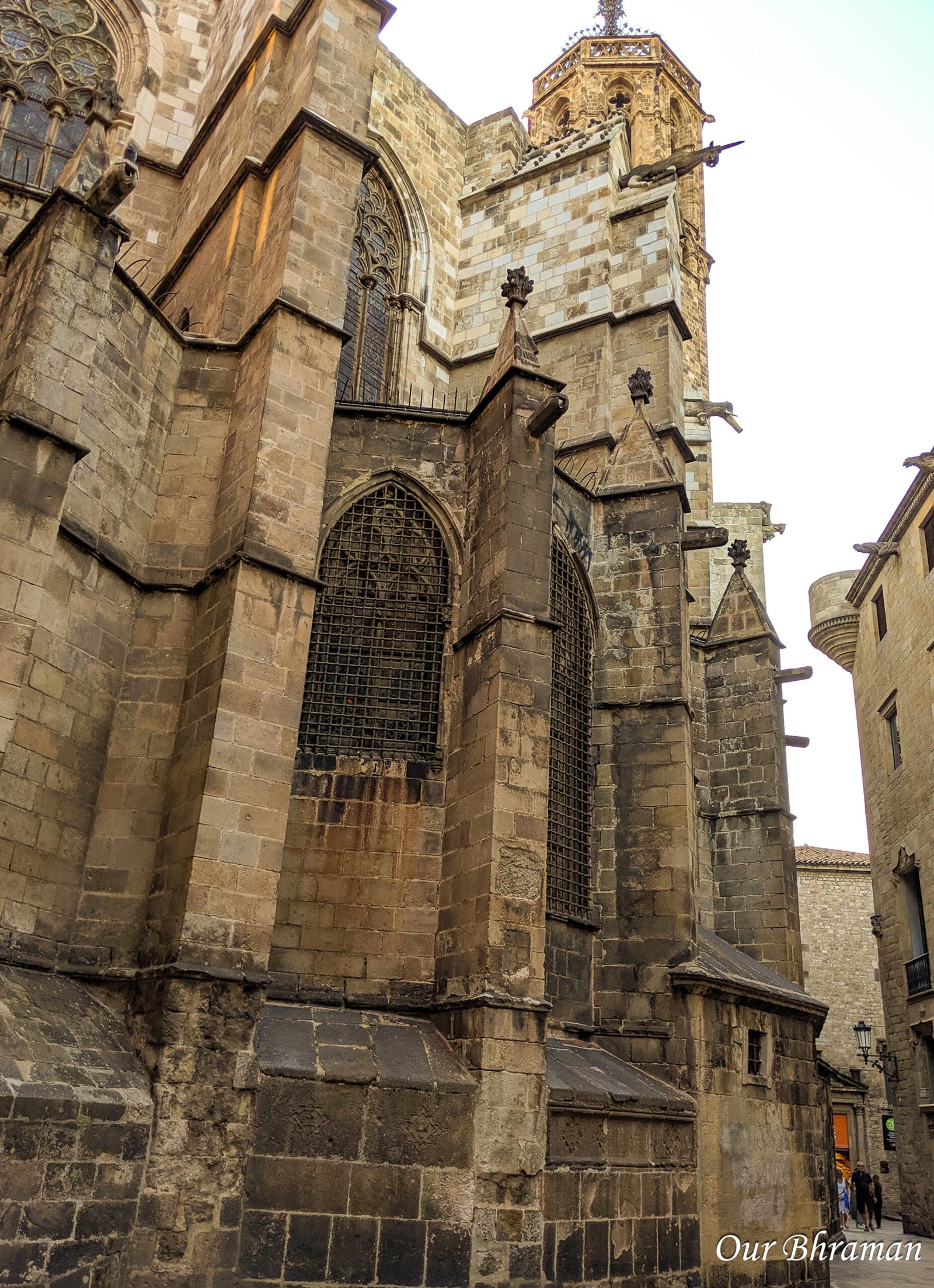
We continued toward Pla de la Seu, where the Barcelona Cathedral dominates the square. The Gothic cathedral was constructed primarily between the 13th and 15th centuries, although the impressive façade we see today was completed much later in the 19th and early 20th centuries.
That contrast was interesting to us. From the outside, the cathedral feels like one complete medieval building, but looking more closely reveals the different periods that have shaped Barcelona over time.
Plaça del Rei and the Palau Reial Major
 Plaça del Rei and the Palau Reial Major
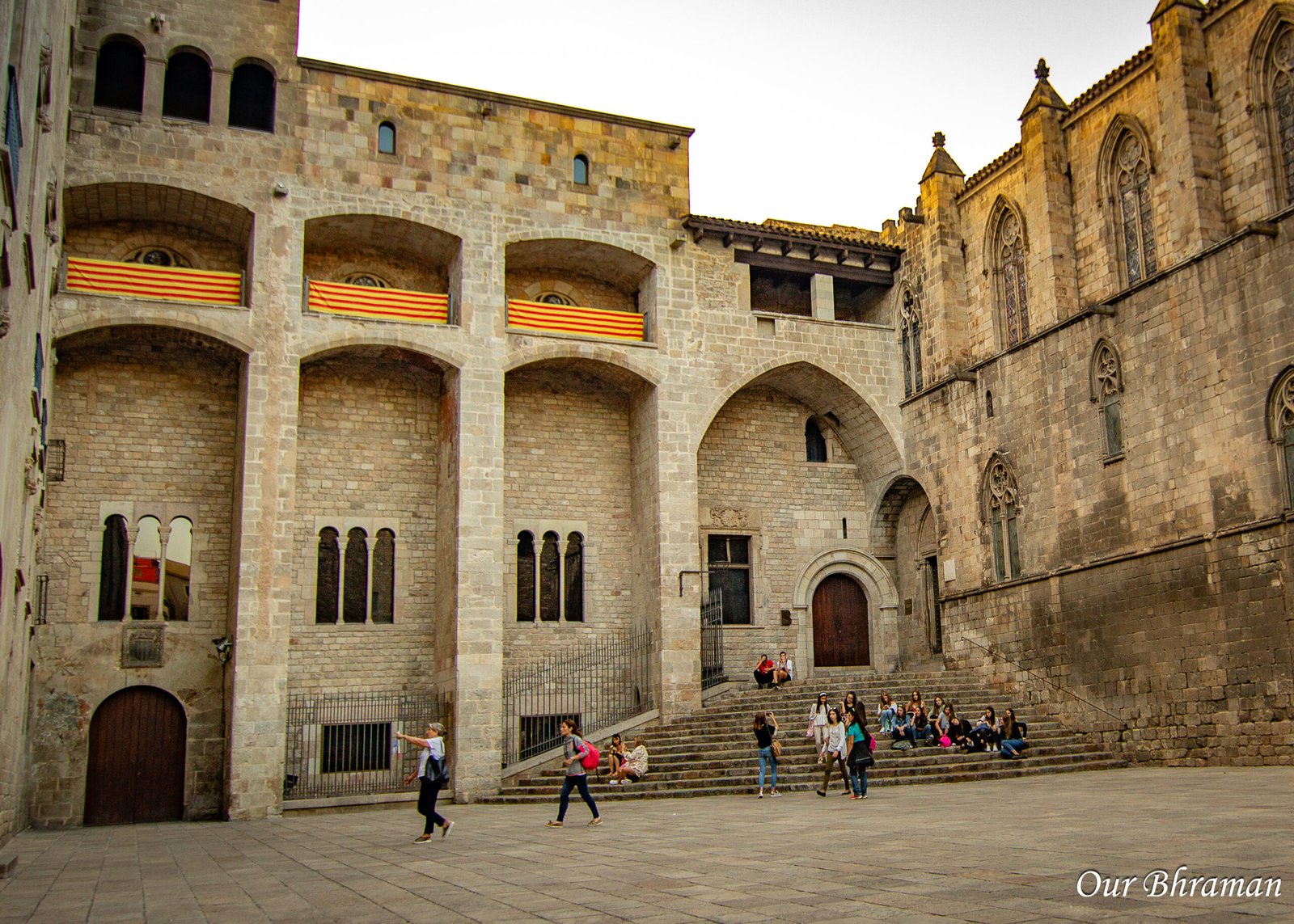
Our walk also took us to Plaça del Rei, one of the most atmospheric corners of the historic center. The square is surrounded by buildings associated with the former Palau Reial Major, which served as a residence of the counts of Barcelona and later the kings of Aragon.
For us, this was one of those places where simply standing in the square was part of the experience. The stone buildings surrounding us created a feeling very different from the modern streets we had walked through earlier in the day.
More Than Just Famous Landmarks
What we enjoyed most about exploring these parts of Barcelona was that we didn’t always know what we were going to find next. A bridge overhead, a Roman column hidden behind a courtyard, an old convent, a historic street, or a strange carving could suddenly become the next thing that caught our attention.
We weren’t simply checking famous attractions off a list. We were walking, looking around, and letting Barcelona reveal its layers to us. Sometimes those unexpected discoveries ended up being the moments we remembered most.