Starting at Puerta del Sol
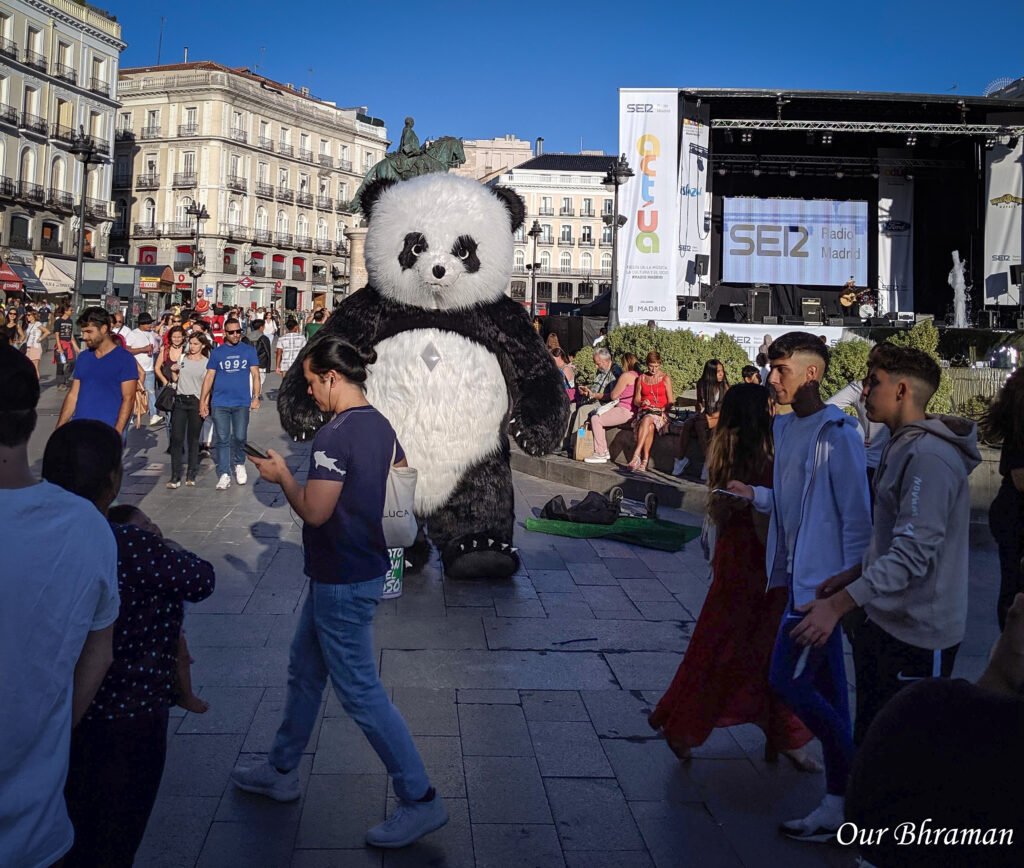
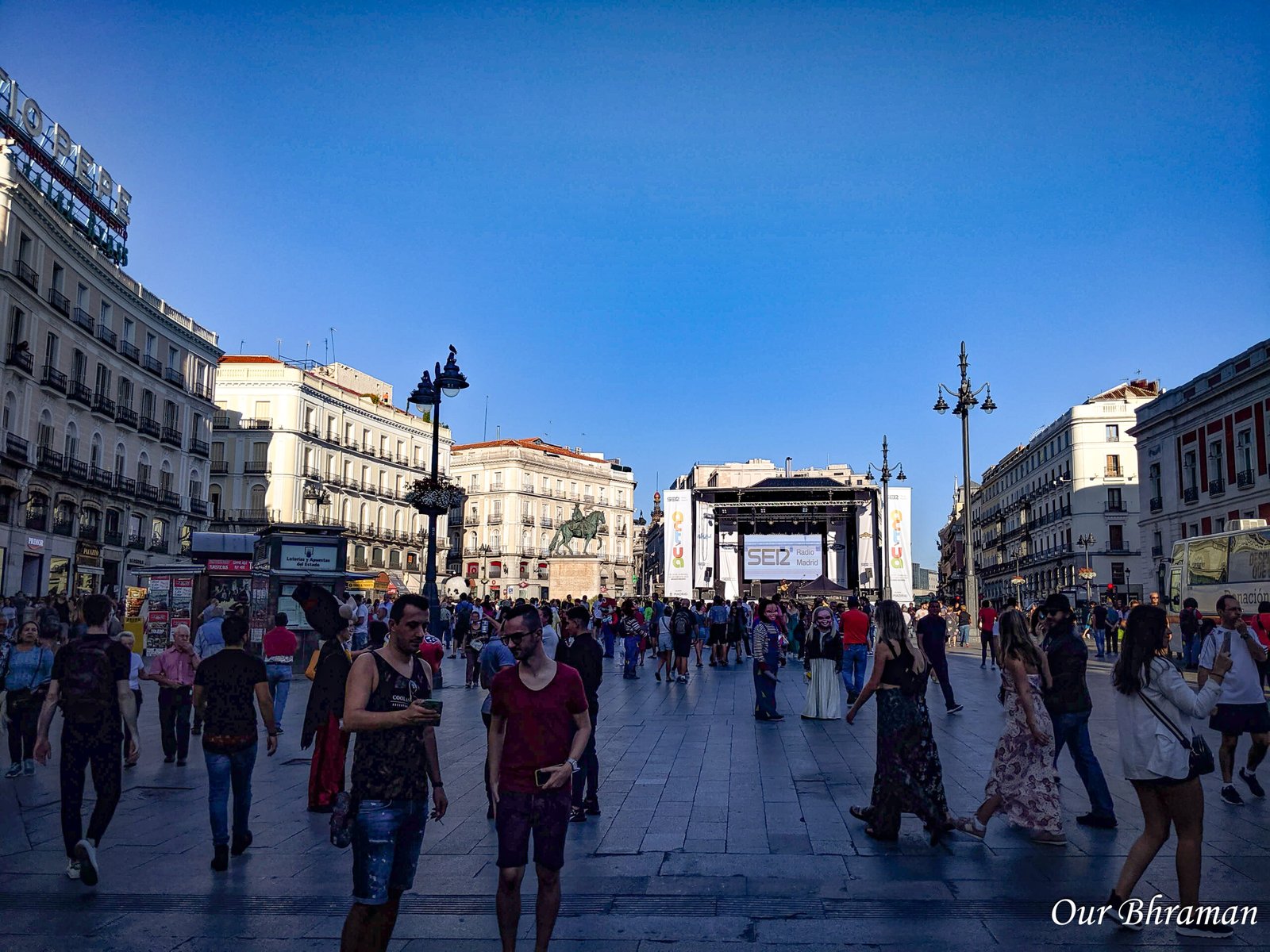
We began at Puerta del Sol, one of Madrid’s most famous and busiest squares.
The semicircular plaza sits at the center of the city, where several important streets meet, including Calle Mayor, Calle del Arenal, Calle de Alcalá and Calle de Preciados. It is also home to several of Madrid’s familiar symbols — the Real Casa de Correos and its famous clock, Kilometre Zero, the Bear and the Strawberry Tree, La Mariblanca and the equestrian statue of Charles III.
But what caught our attention wasn’t just the landmarks.
It was the energy of the people.
There were people everywhere — walking across the square, meeting friends, shopping, taking photographs and simply spending time in the middle of Madrid.
We didn’t realize it at the time, but Puerta del Sol would become one of the most memorable parts of our Madrid visit.
Círculo de Bellas Artes and Calle de Alcalá
From Sol, we continued toward Calle de Alcalá, taking in Madrid’s architecture as we walked.
One of the buildings that caught our attention was the Círculo de Bellas Artes, one of Madrid’s major cultural institutions. Founded in 1880, it has long been associated with the city’s artistic and cultural life.
We didn’t go inside. Instead, we appreciated the building from the street and continued our walk.
That became something of a theme for this afternoon.
We weren’t trying to see everything inside every building. We were simply enjoying Madrid as an open-air experience.
Plaza Mayor — The Grand Square of Madrid
Our walk continued toward Plaza Mayor, the grand central square in Madrid’s historic Habsburg district.
The square is surrounded by uniform historic buildings with balconies overlooking the open plaza. Its history goes back centuries, and the space has hosted markets, public celebrations, bullfights, ceremonies and other events over the years.
Standing there, it was easy to understand why Plaza Mayor has remained such an important gathering place.
We walked around, looked up at the surrounding architecture and took photographs before continuing through the older streets of Madrid.
For us, it wasn’t about checking another famous attraction off a list.
It was about walking through the story of the city.
Plaza de la Villa — A Glimpse of Old Madrid
From Plaza Mayor, we continued toward Plaza de la Villa.
The atmosphere changed almost immediately. Compared with the large, open Plaza Mayor, this square felt smaller and more intimate.
Plaza de la Villa is one of Madrid’s best-preserved historic squares and was an important center of the medieval city. Three historic buildings surround it: the Lujanes House and Tower from the 15th century, Casa de Cisneros from the 16th century, and the former Casa de la Villa from the 17th century.
We explored the square from outside, taking time to look at the buildings and their details.
It was one of those places that reminded us why walking can be such a good way to experience a historic city.
You don’t always have to be looking for the next major attraction.
Sometimes, you just turn a corner and find yourself standing somewhere that has been part of the city for hundreds of years.
 Almudena Cathedral
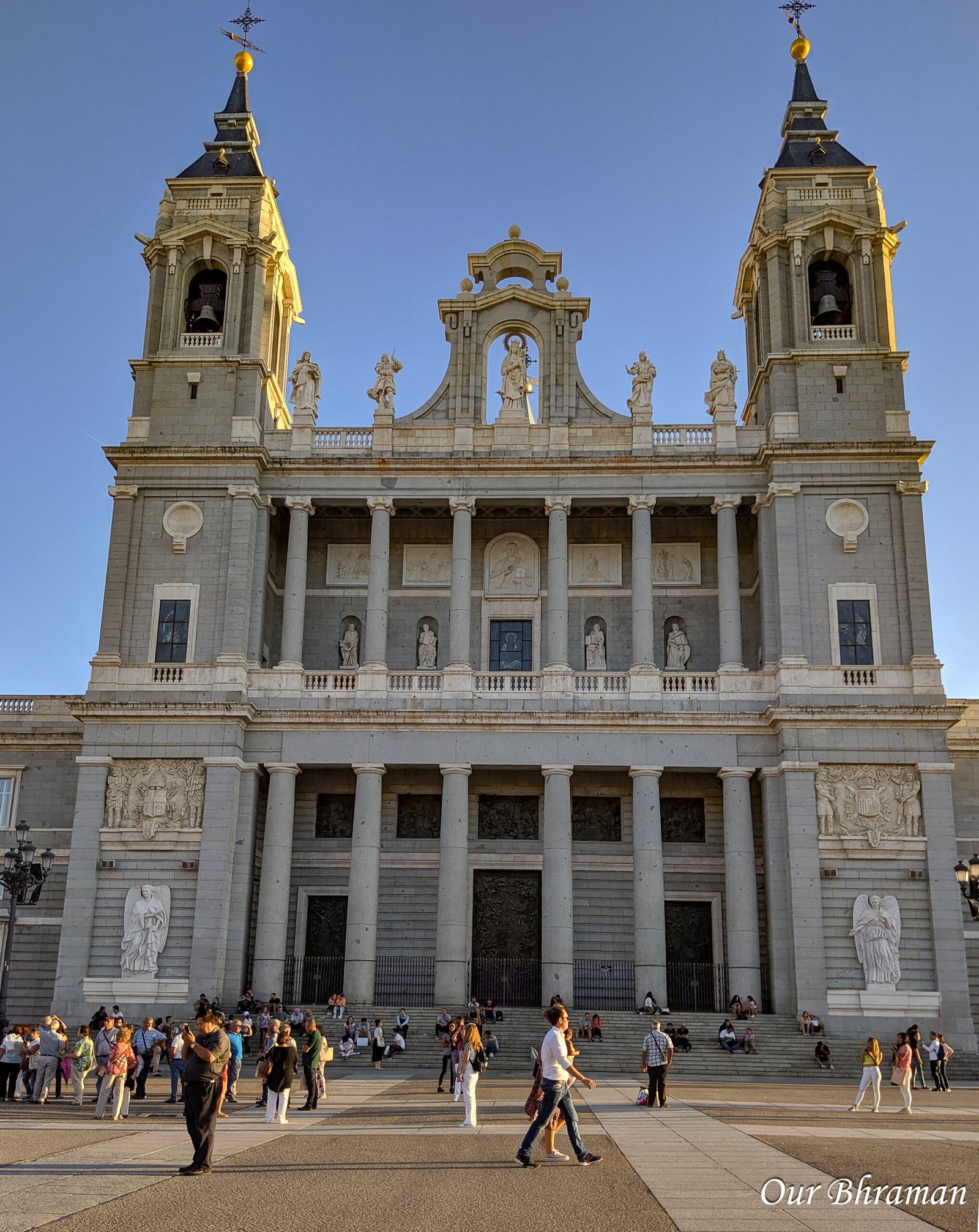 Almudena Cathedral
From Plaza de la Villa, we continued toward Almudena Cathedral.
The cathedral stands beside the Royal Palace and is one of the most prominent landmarks in this part of Madrid. Its architecture is particularly interesting because its exterior combines different influences, giving it a character quite different from many older European cathedrals.
We mostly admired it from outside during our walk.
Its size and position beside the Royal Palace make the two buildings feel like part of one enormous historic setting.
And just beyond them was our next stop.
 The Royal Palace of Madrid
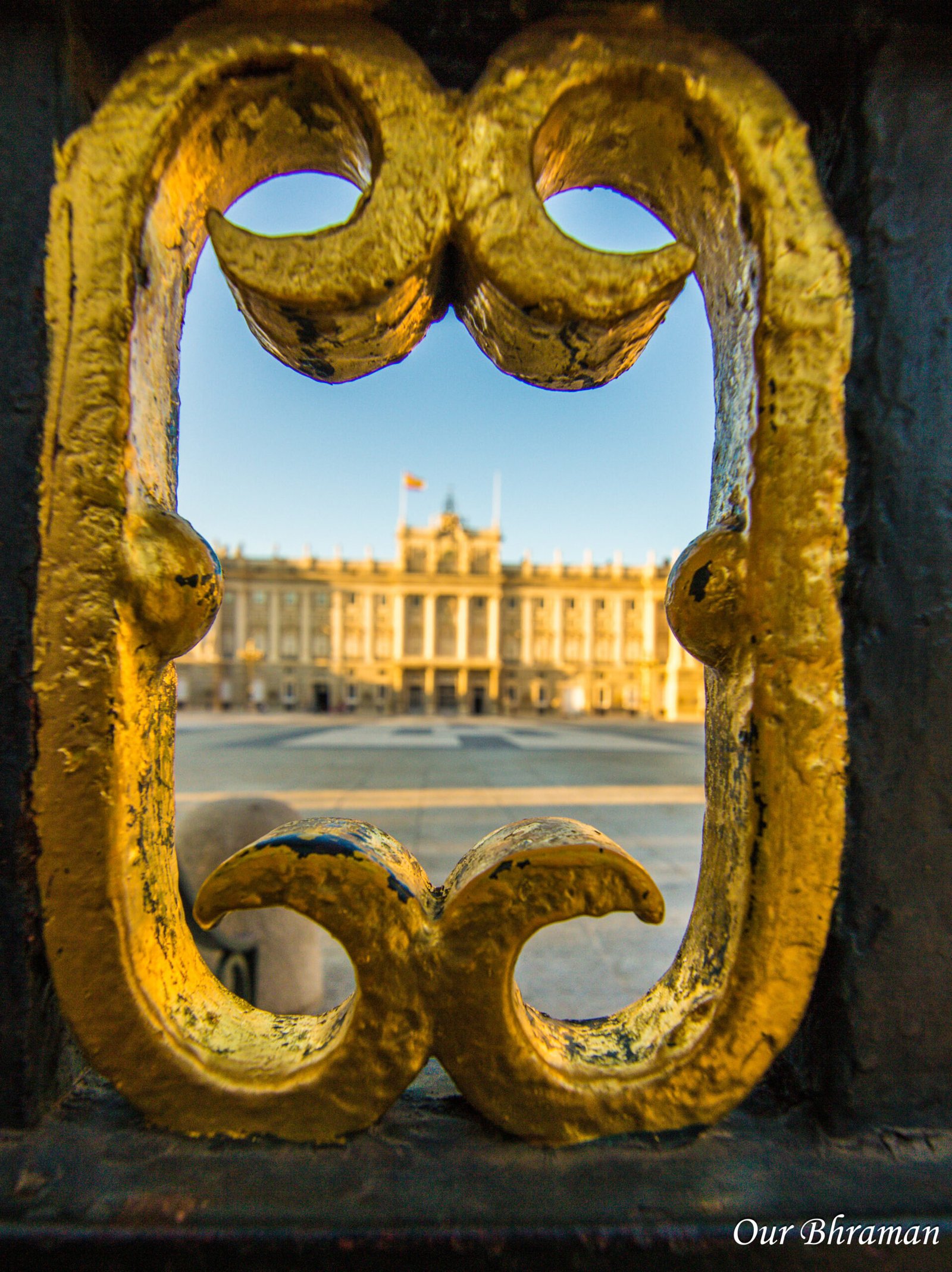 The Royal Palace of Madrid
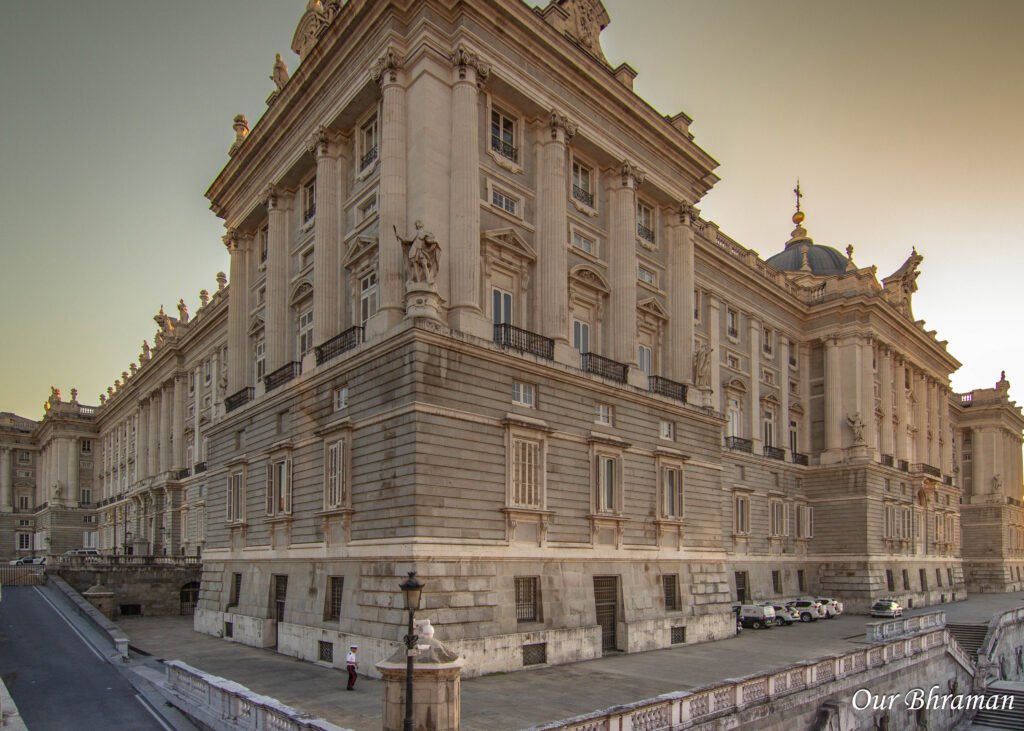
The Royal Palace of Madrid was one of the most impressive buildings we encountered that afternoon.
Even from the outside, the scale is hard to miss. The palace is enormous, with long symmetrical façades, columns, sculptures and elaborate architectural details.
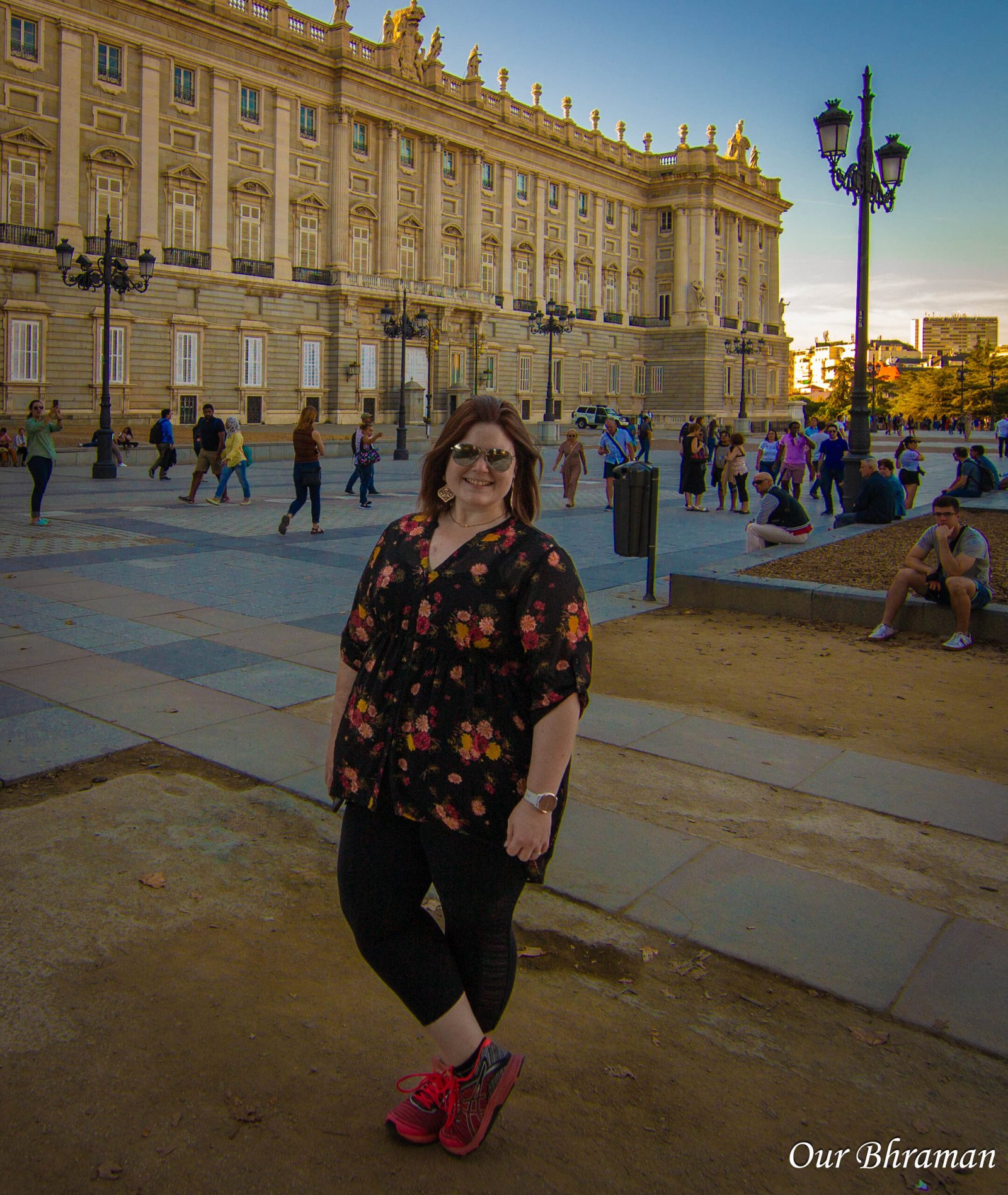 The Royal Palace is the official residence of Spain’s monarch for ceremonial purposes and is one of the largest royal palaces in Western Europe.
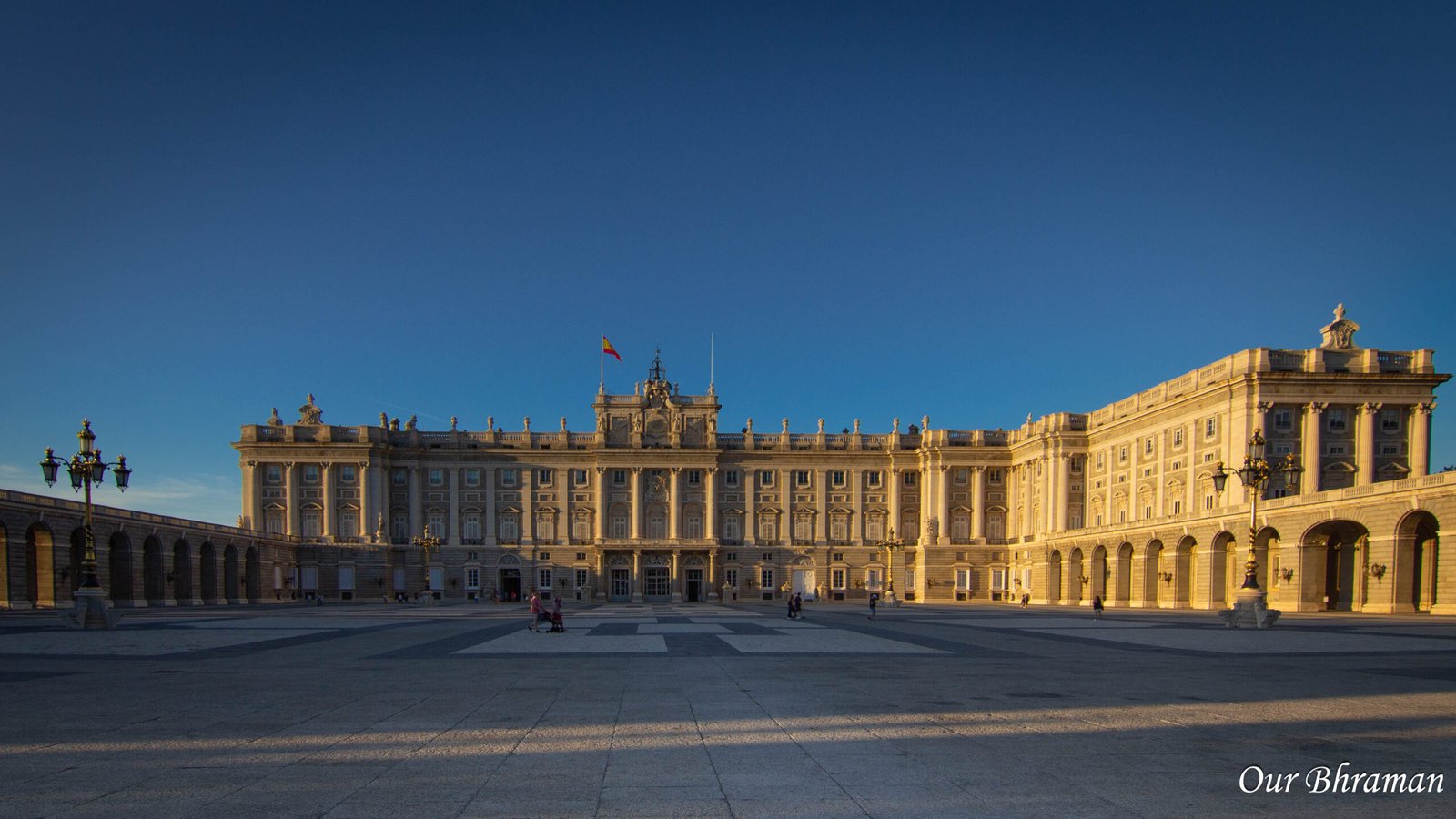
We decided to admire the building from the outside, taking our time to walk around and appreciate its architecture.
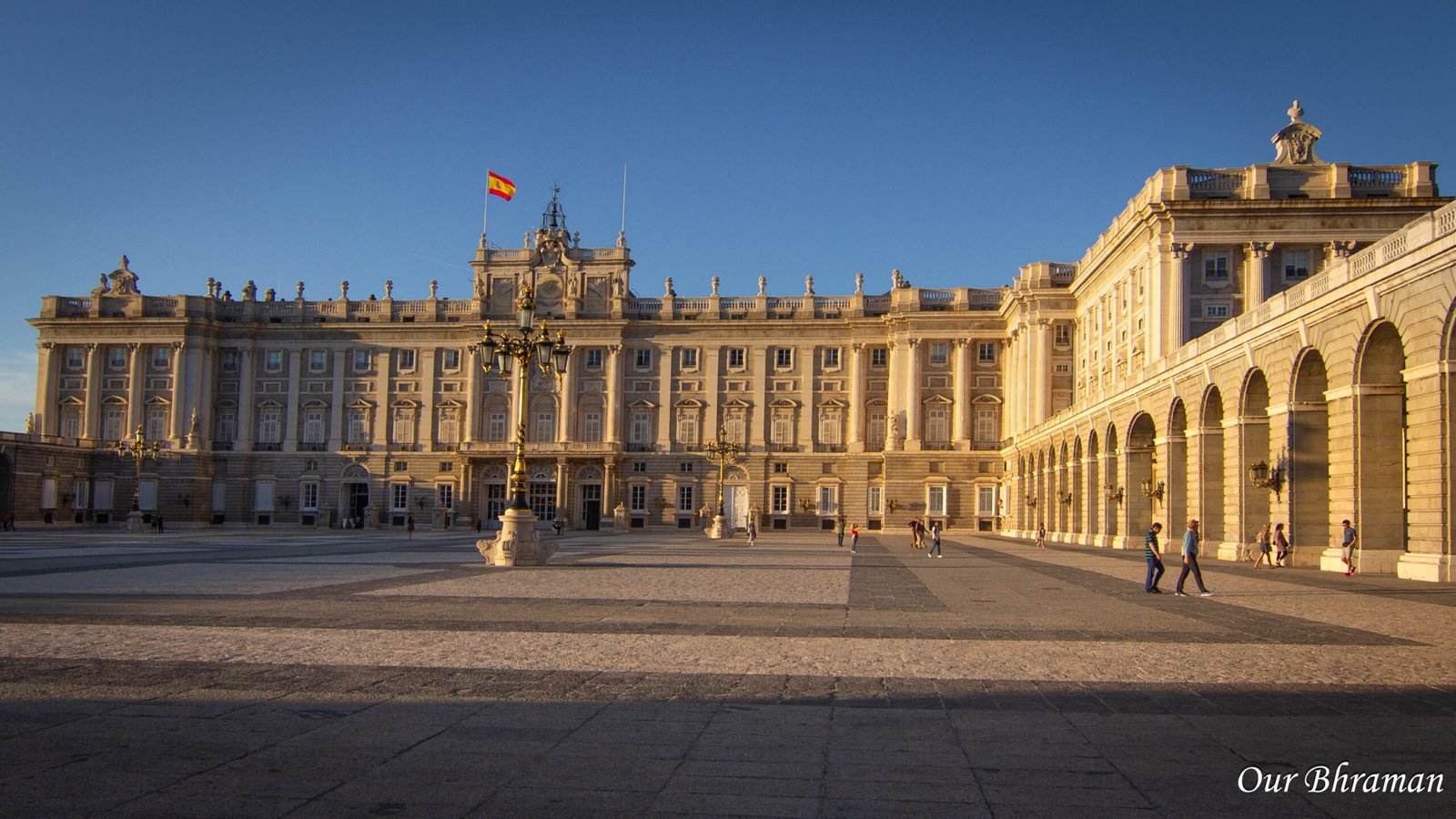 Sometimes a building this grand doesn’t need much explanation.
You simply stand there and look.And our photographs became our way of remembering that moment.
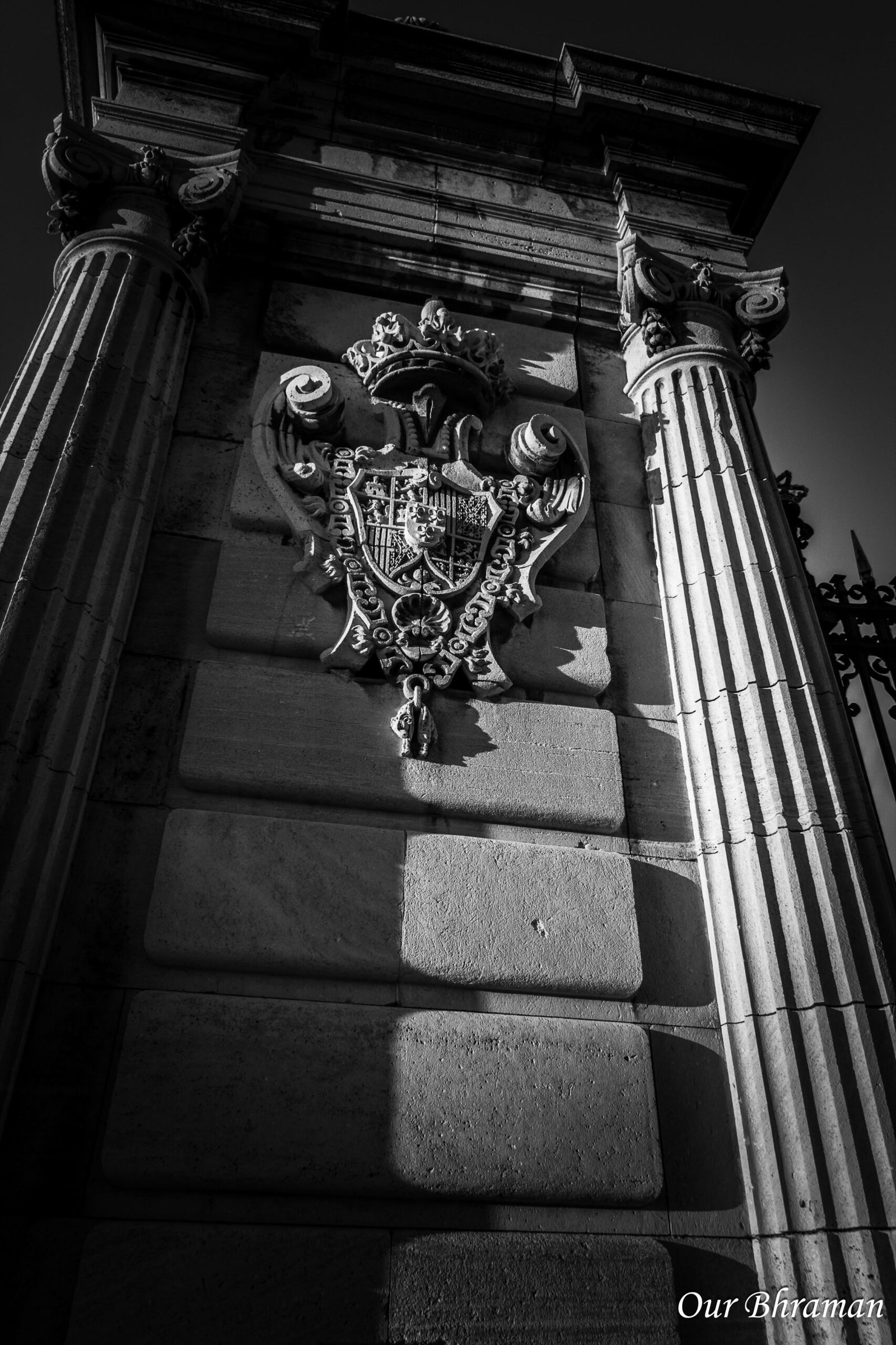
Jardines de Sabatini — A Quiet Corner Beside the Palace
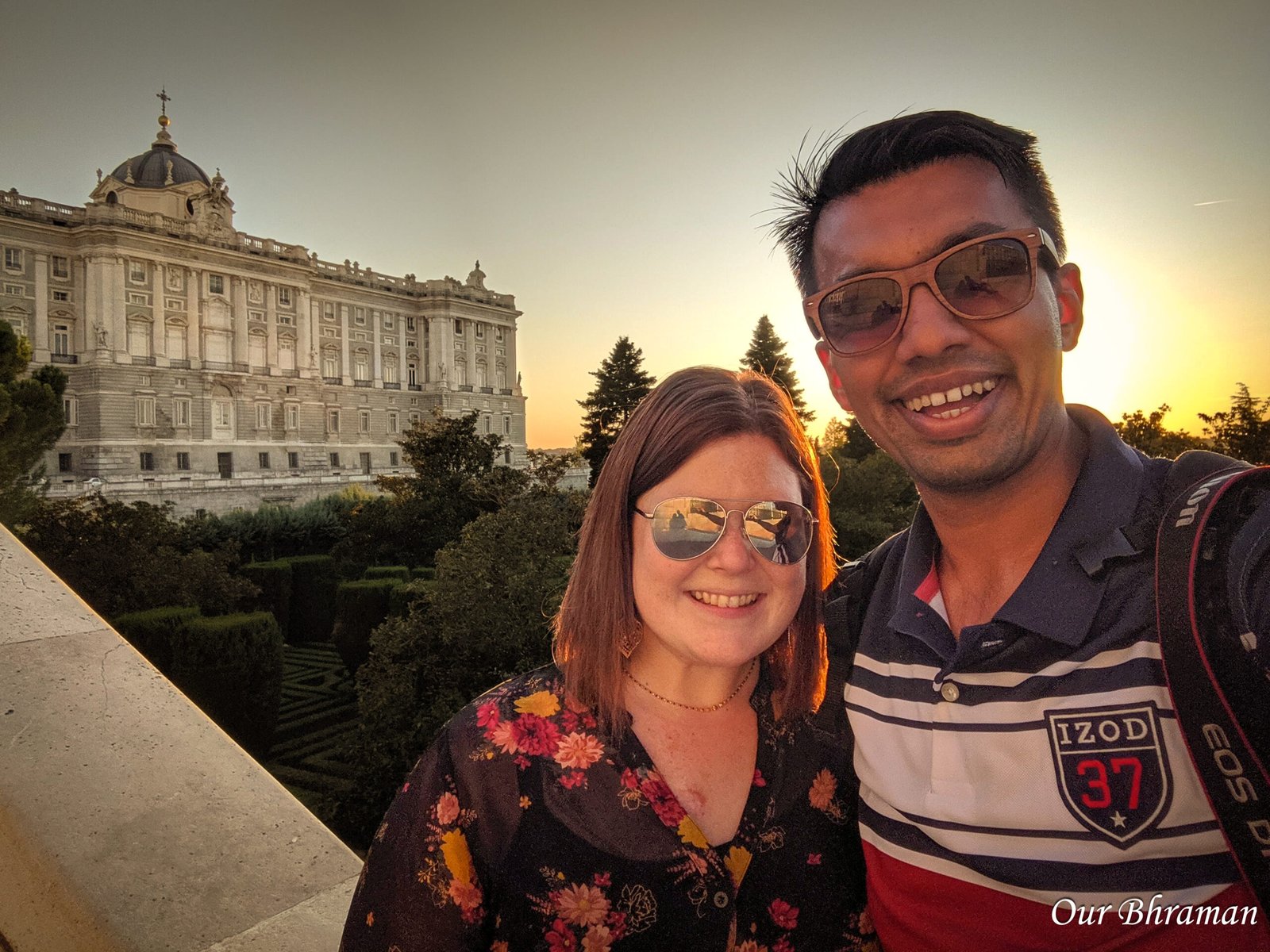
After exploring the exterior of the Royal Palace, we continued toward the Jardines de Sabatini, the elegant gardens located directly beside the palace.
The gardens offered a completely different atmosphere from the grand scale of the Royal Palace. Carefully arranged hedges, trees, fountains and sculptures created a more peaceful setting, while the palace remained visible beyond the greenery.
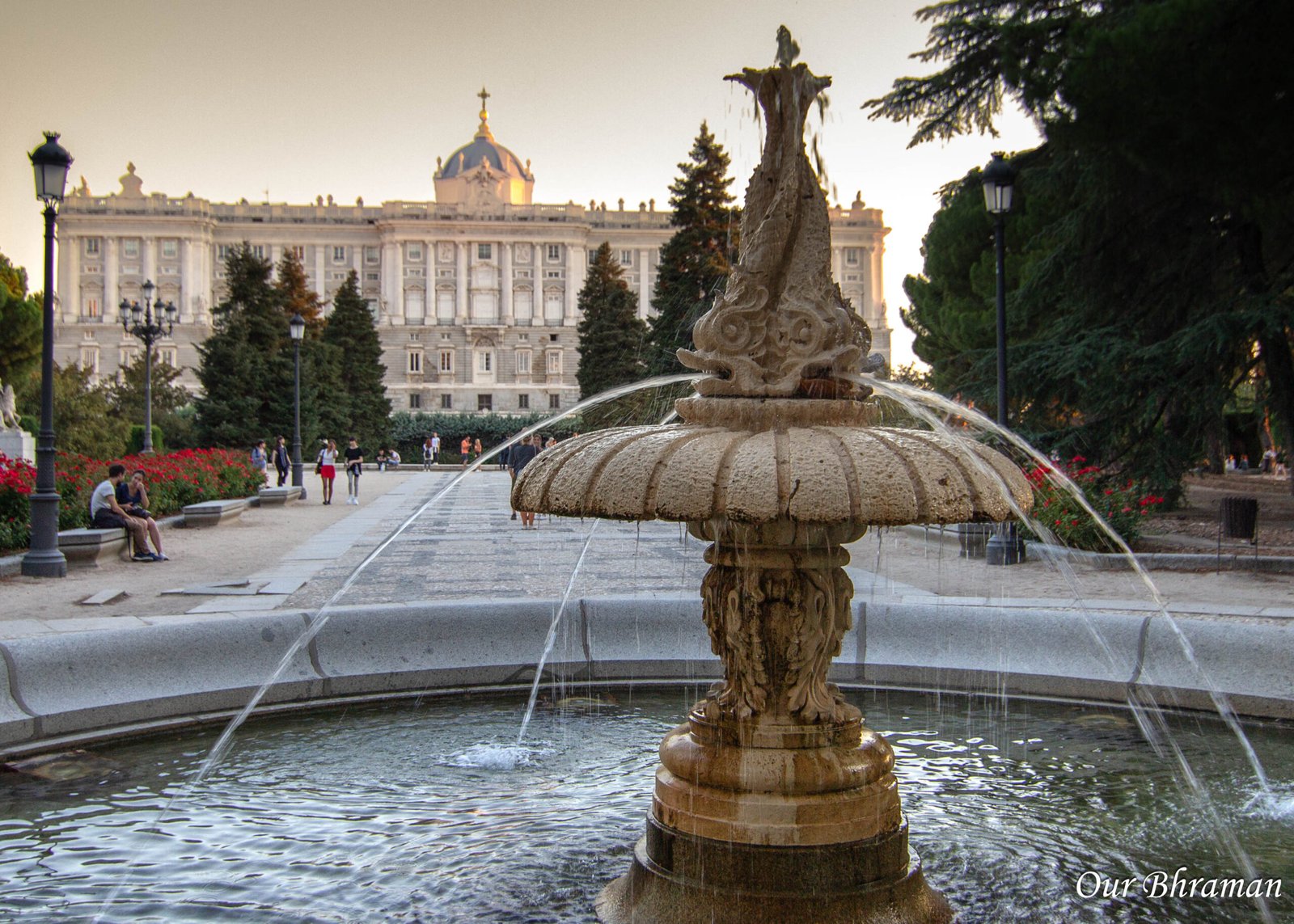
The gardens were built on the site of the former Royal Stables and are designed in a formal, neoclassical style. Their name honors Francesco Sabatini, the Italian architect who worked extensively for the Spanish royal court.
We didn’t spend a great deal of time here, but walking through the gardens gave us a chance to slow down after the busy streets of central Madrid.
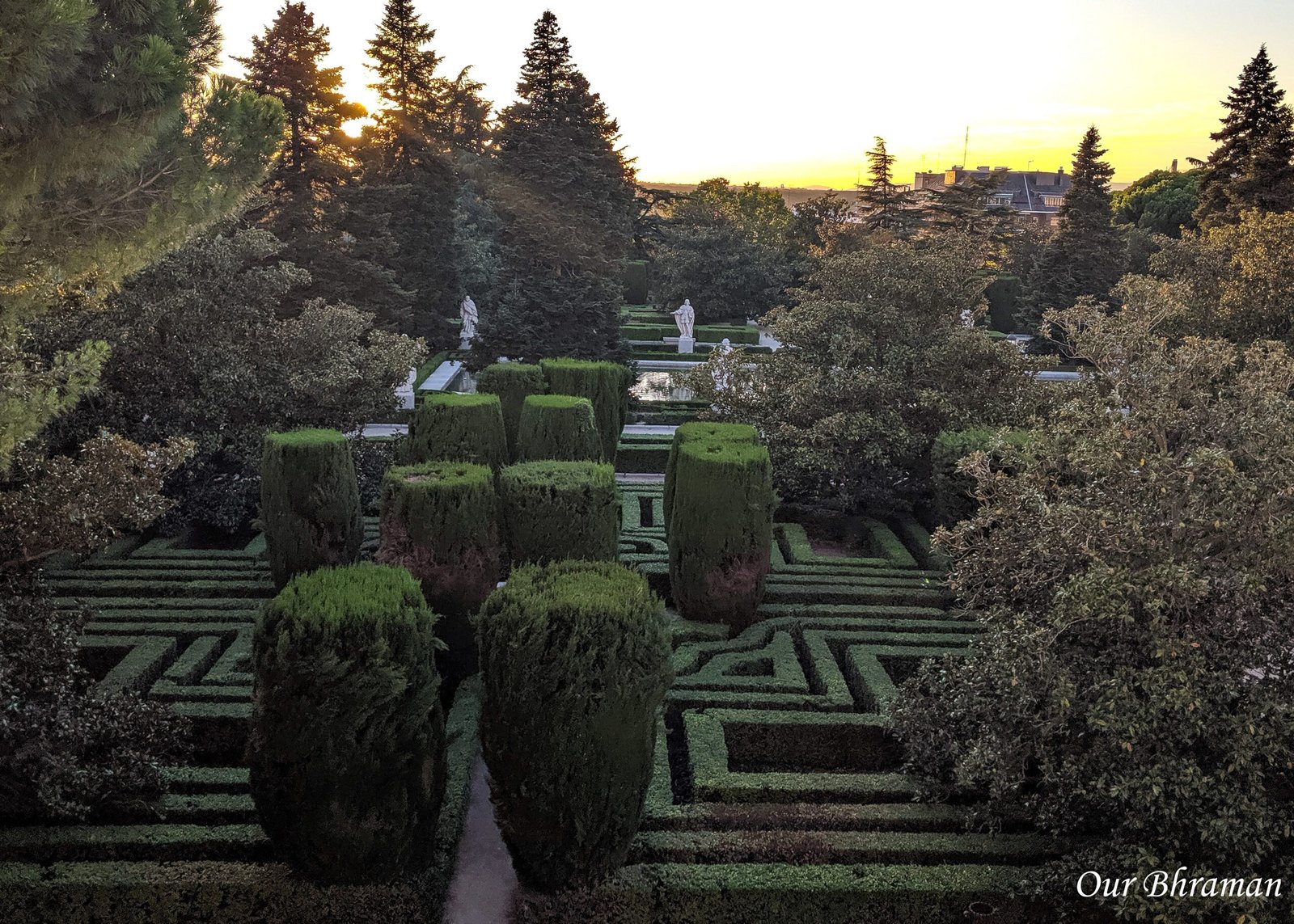 One of the things we enjoyed most was the contrast — the massive Royal Palace on one side and the calm, geometric gardens on the other.
It was also a beautiful place to look back toward the palace and appreciate its scale from a different perspective.
Plaza de Oriente and the Monument to Felipe IV
From the Sabatini Gardens, we continued toward Plaza de Oriente, the open space on the eastern side of the Royal Palace.
At the center of the plaza stands the Monument to Felipe IV, an impressive equestrian statue of the 17th-century Spanish king. The monument dates to the 19th century, although the statue itself was created much earlier, based on a design by Pietro Tacca.
What makes the statue particularly interesting is its unusual construction. The horse appears to be supported mainly by its two hind legs, with the tail providing additional support. This was an important technical achievement for its time. The sculptor Galileo Galilei is traditionally associated with the mathematical calculations that helped make the design possible.
Surrounded by gardens and other sculptures, the monument creates a strong focal point in the middle of Plaza de Oriente, with the Royal Palace rising behind it.
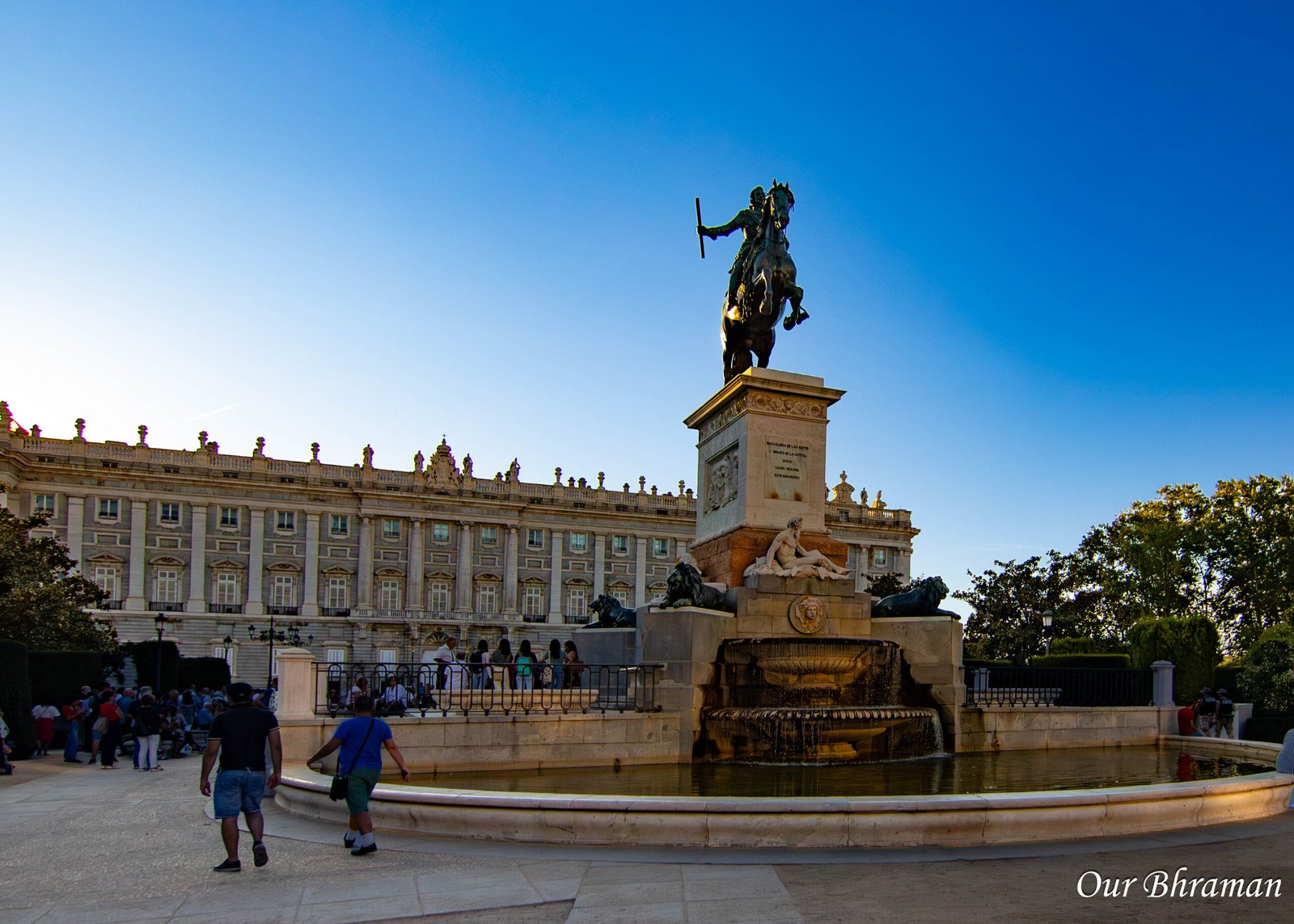 We stopped here to take a closer look and photograph the statue before continuing our walk.
A Walk Through Madrid, Not a Checklist
Looking back at our route, what stands out isn’t one particular monument.
It’s how quickly the scenery changed.
We moved from the crowded energy of Puerta del Sol, through historic streets and the grand scale of Plaza Mayor, into the quieter character of Plaza de la Villa, past Almudena Cathedral and the Royal Palace, and finally into the gardens and fountains of Plaza de Oriente.
And because we were walking, we experienced the spaces in between as well.
That was perhaps the best part.
Madrid wasn’t just the places we had planned to see. It was everything happening between them.