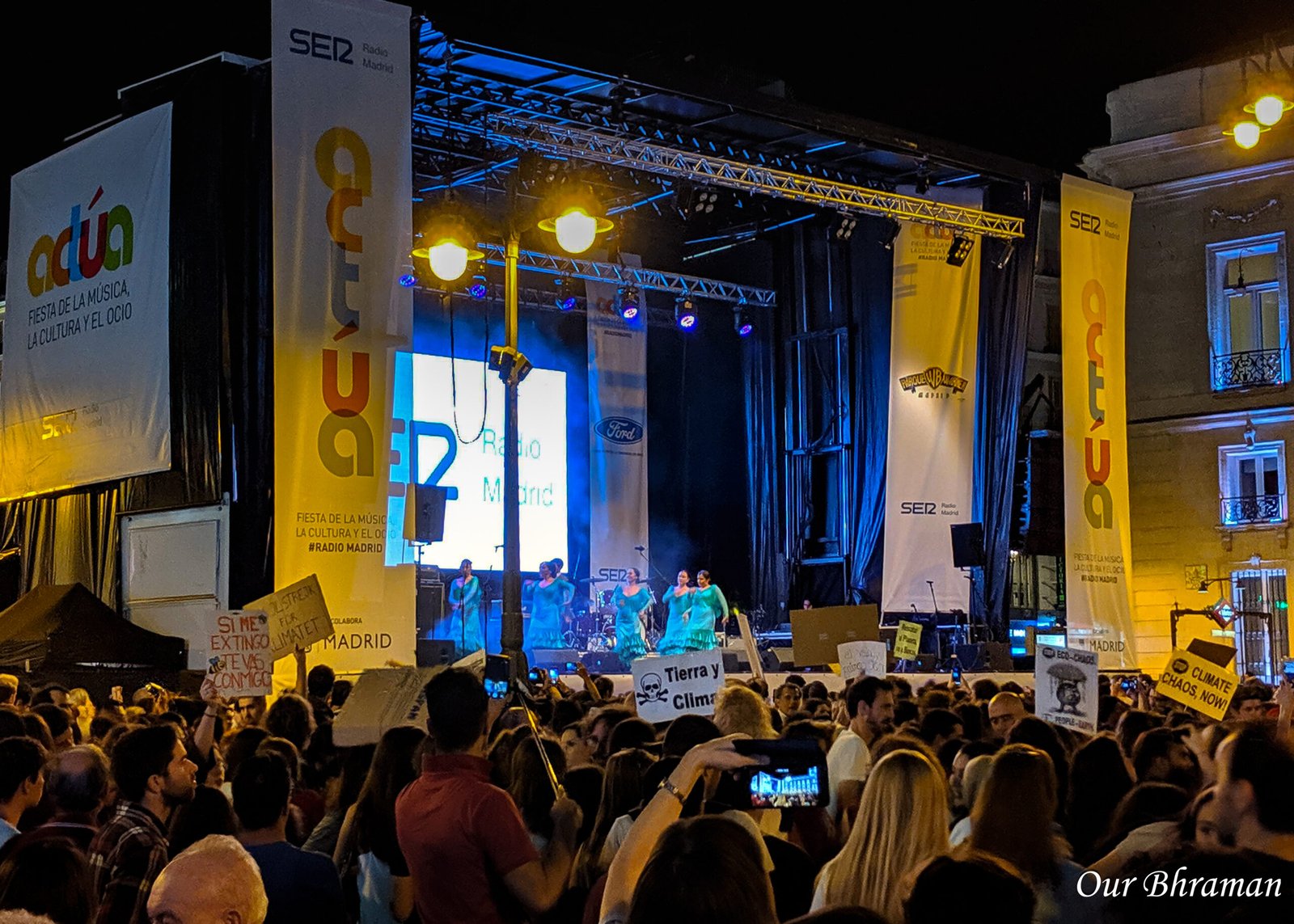
And Then Came the Music
We were lucky to be in Puerta del Sol on the day of Actúa 2019, a festival organized by Radio Madrid celebrating music, culture and the arts. The 2019 edition brought more than 200 groups and artists to the square, with performances ranging from music and urban art to different forms of dance, including flamenco, urban and classical dance.
We had no plans to see a performance that evening. We were simply exploring Madrid when we began to notice the crowd gathering around a stage.
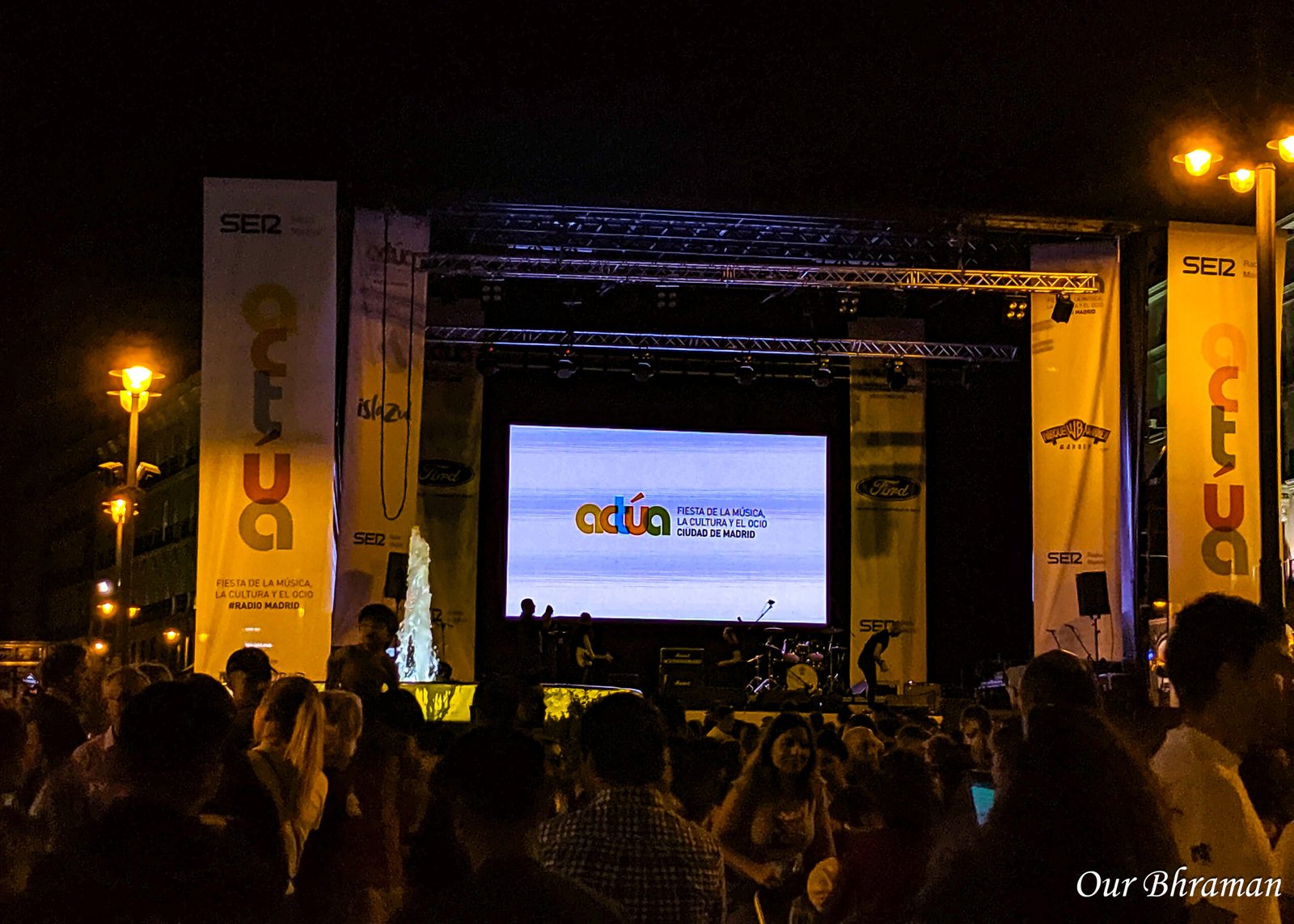 People stood shoulder to shoulder, phones were held above the crowd, and music filled the square. Then the dancers appeared, dressed in colorful flamenco dresses, and suddenly our evening of exploring Madrid turned into something completely unexpected.
Flamenco — More Than a Dance
What makes flamenco fascinating is that it is not simply a dance. It is a form of artistic expression built around music, rhythm, movement and emotion. Traditionally, flamenco brings together singing (cante), guitar playing (toque) and dance (baile), with each element responding to the others.
Watching the dancers, it felt as though they were telling a story without saying a word. The movement of their arms, the turns of their bodies, the striking of their feet against the floor and the dramatic pauses all became part of the performance. Their colorful dresses added another layer, flowing and moving with every spin and step.
There was something special about seeing this traditional Spanish art form performed so openly in the middle of Madrid.
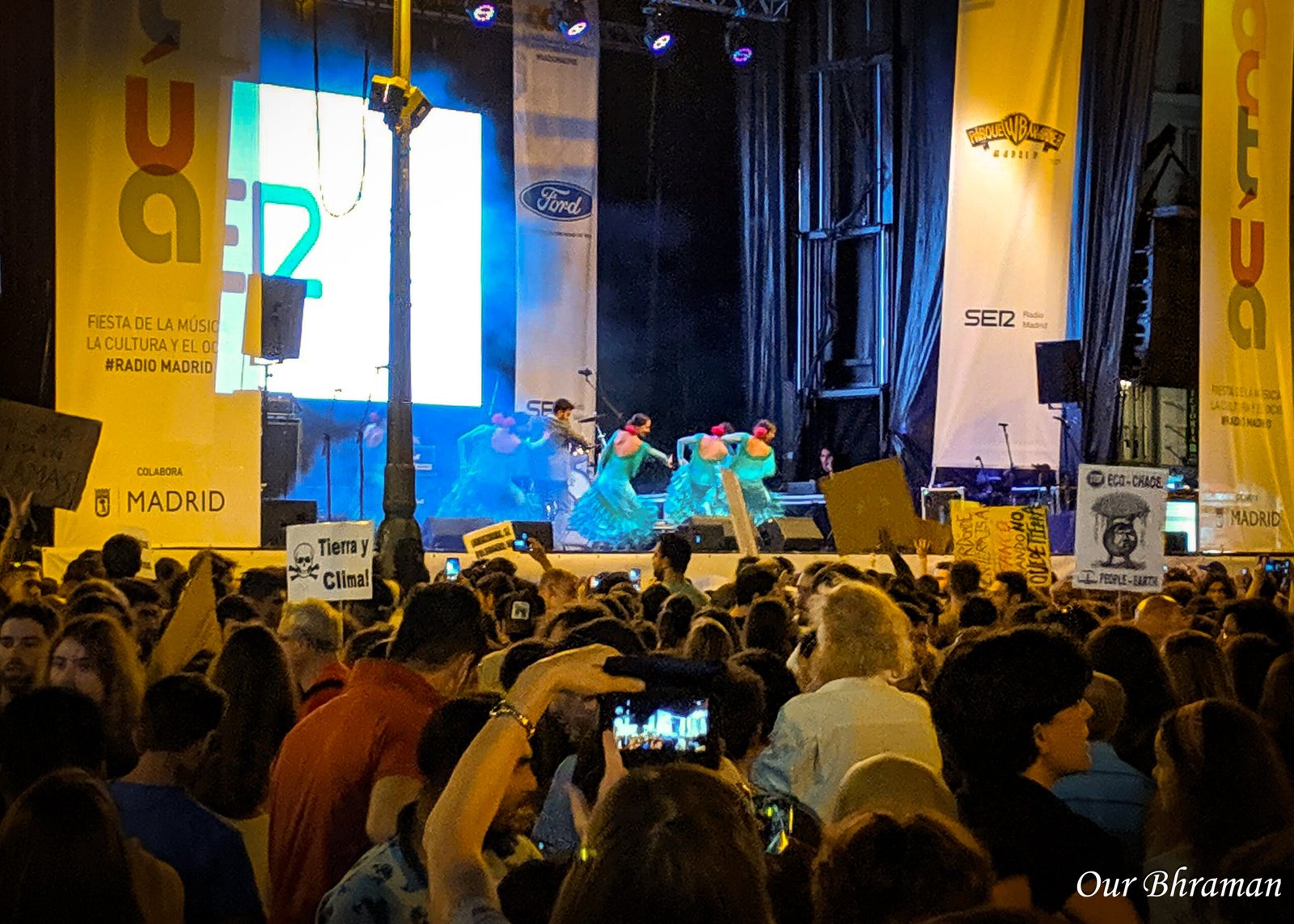
Flamenco wasn’t something we were experiencing behind the doors of a theater or museum. It was happening right in the middle of the city, surrounded by everyday Madrid.
The rhythm, expressions and movements made it easy to understand why flamenco is so closely associated with passion and emotion. Even without knowing the story behind the performance, the dancers seemed to communicate through movement.
And perhaps that was what made the experience memorable for us. We had come to Madrid expecting to explore its streets, architecture and historic places. Instead, we unexpectedly found ourselves standing in a crowded square, watching a piece of Spanish culture unfold right in front of us.
Against the backdrop of Madrid’s historic buildings, flamenco made the city feel less like a collection of places to visit and more like a living place — where art, history and everyday life can come together without warning.
We hadn’t planned to attend a performance.
We had simply come to explore Madrid — and Madrid gave us a show.
That is probably what stayed with us most about Puerta del Sol.
We weren’t simply looking at a famous square.
We were watching Madrid happen around us.