Our National Mall & Tidal Basin Adventure
Sometimes an adventure doesn’t require a full itinerary or several days off—it just takes a little time, some comfortable shoes, and a willingness to explore.
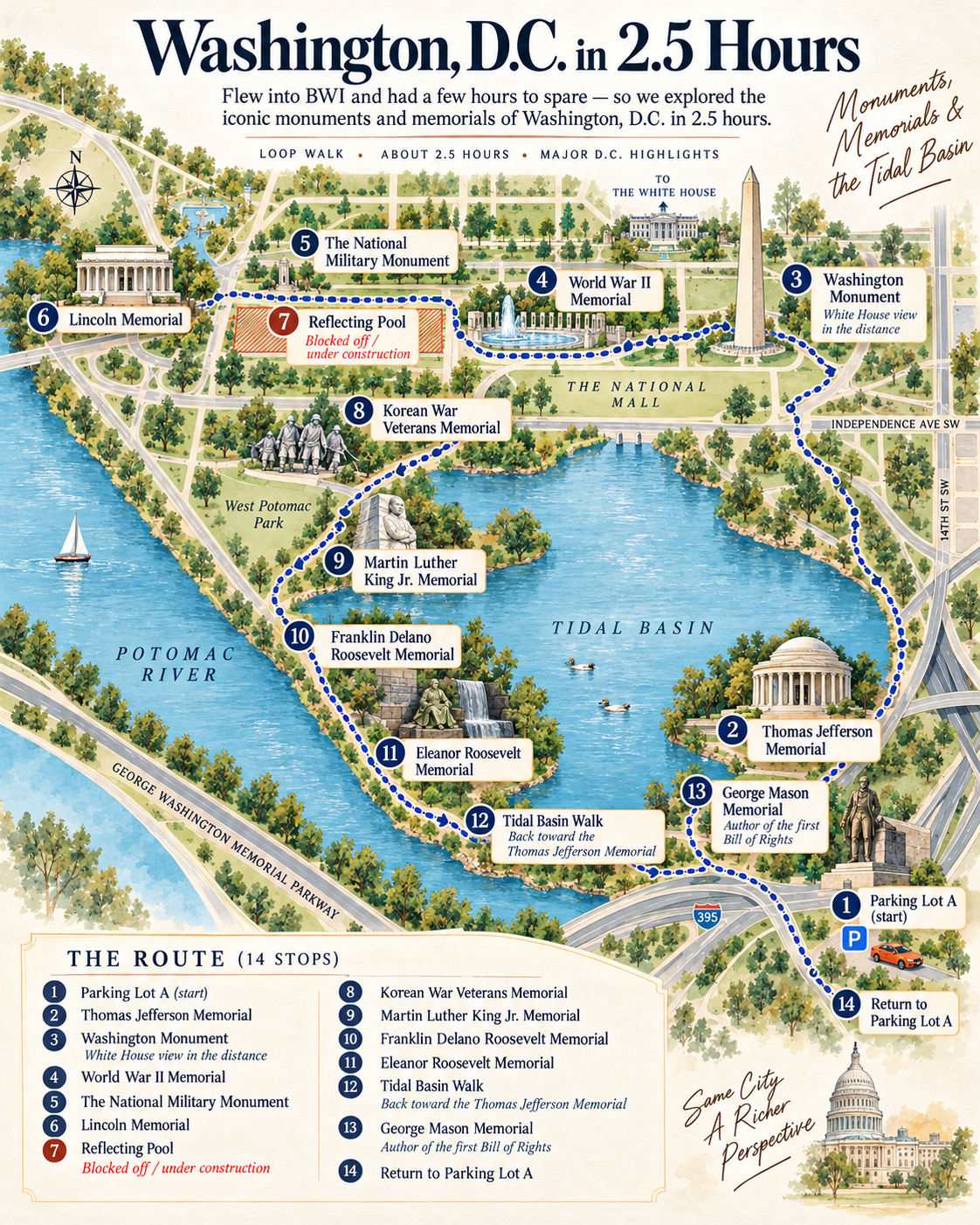
If you ever find yourself near Washington, D.C., even for just a few hours, don’t pass up the opportunity to experience it. The city is filled with layers of American history, iconic landmarks, and incredible views, and you can see quite a bit without needing an entire day. With a little planning, a roughly 4-mile loop around the National Mall and Tidal Basin can take you past some of D.C.’s most recognizable sights. In about 2.5 hours, there is enough time to walk, take photos, soak in the history, and still keep moving.
It’s definitely more of a “let’s see how much we can fit in” adventure than a slow, leisurely afternoon—but sometimes those quick adventures are the ones that make a trip even more memorable. So, if your travels ever put you within reach of Washington, D.C., make the detour. A few hours can go a surprisingly long way when you’re surrounded by this much history.
The easiest way to make the most of a short visit was to park in Parking Lot A near the Tidal Basin, just off Ohio Drive SW. It made a convenient starting point for the loop and put several of D.C.’s most iconic memorials within walking distance.
From there, it was time to lace up, grab the camera, and start exploring. The route would wind around the Tidal Basin, across the National Mall, and past some of the most recognizable landmarks in the city before eventually bringing us back to the car.
With only a few hours to work with, there was no time to waste. Shoes on, camera ready, adventure underway.
Thomas Jefferson Memorial
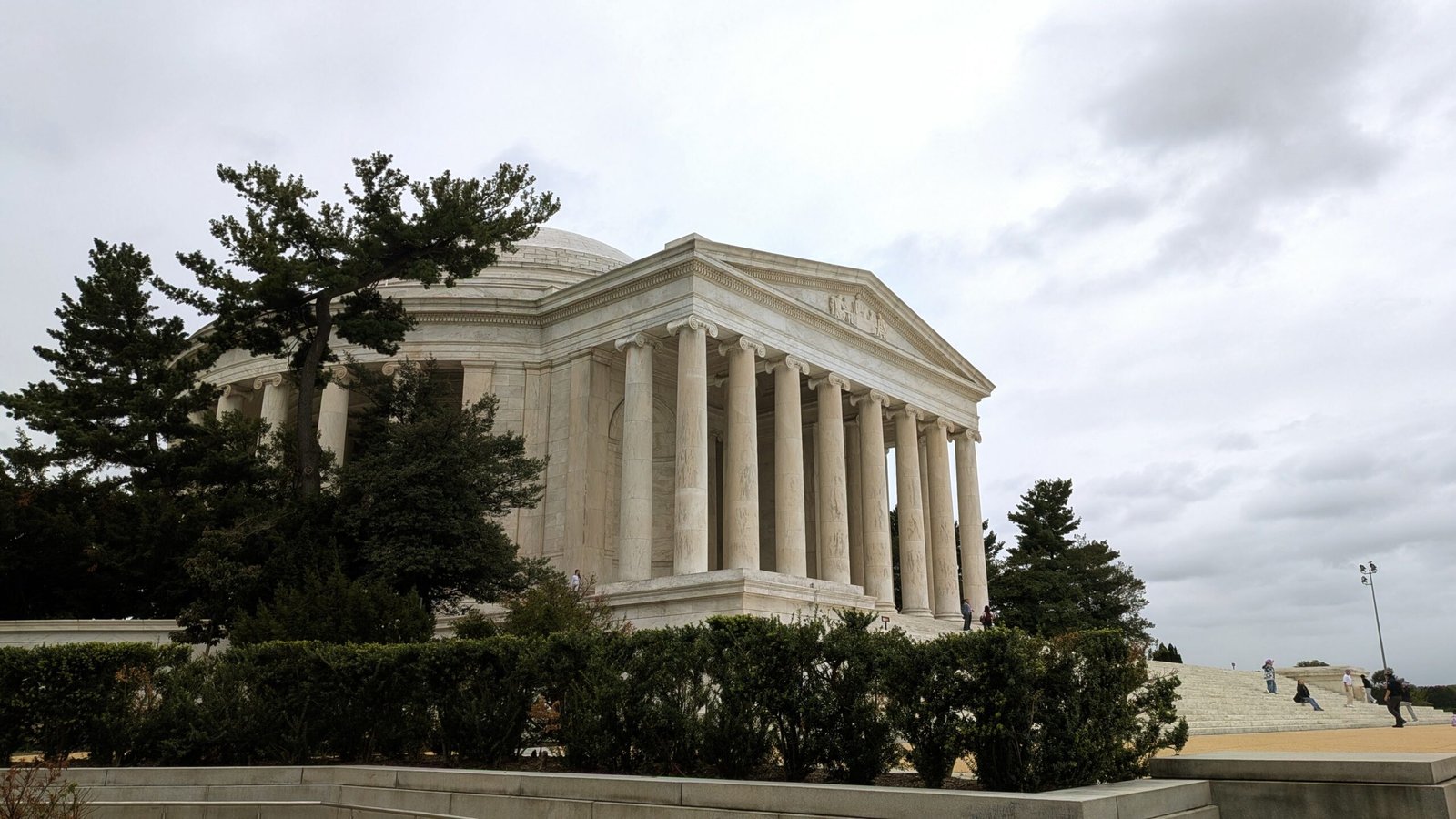
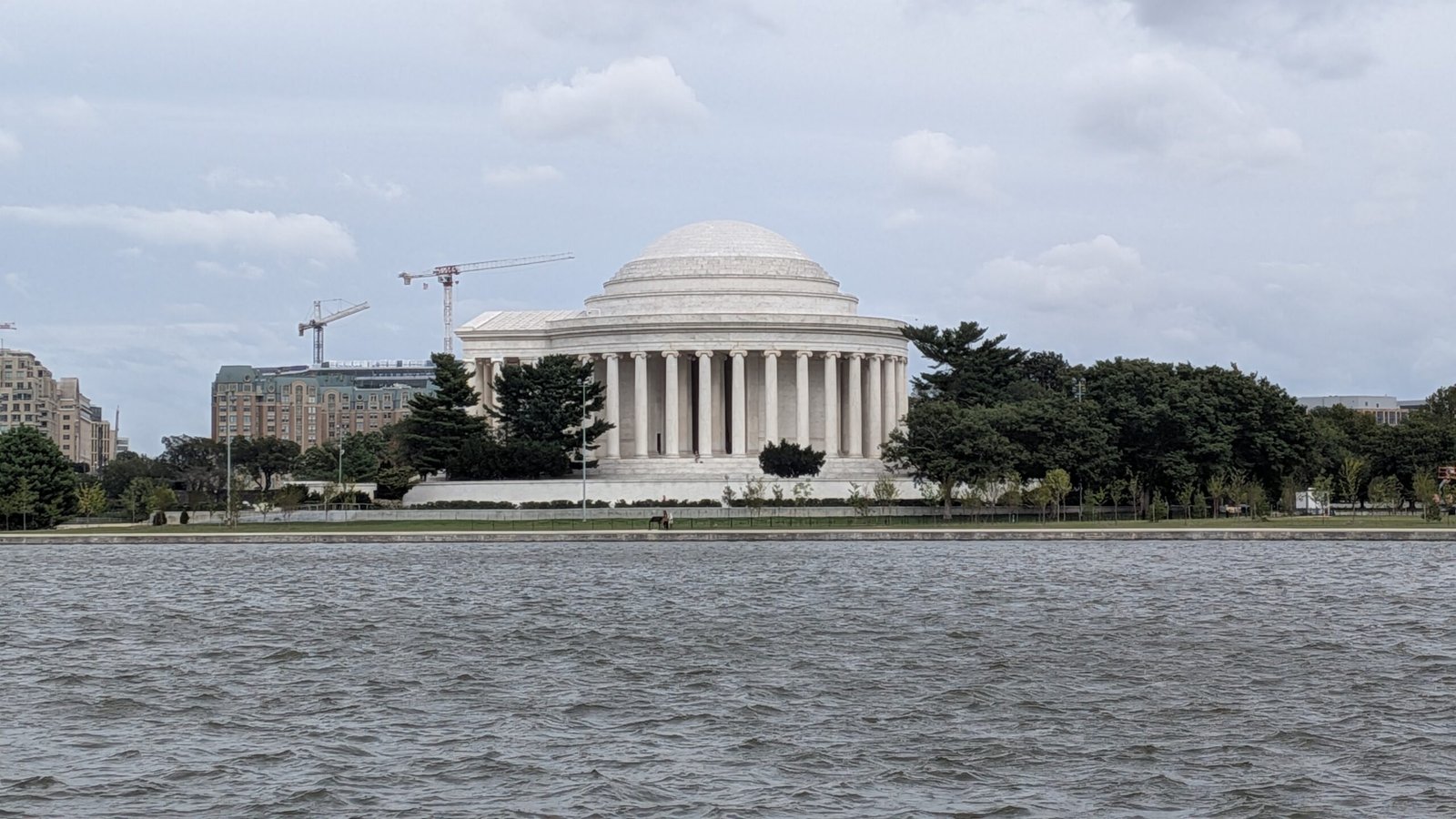
The first stop on the adventure was the Thomas Jefferson Memorial, sitting beautifully along the Tidal Basin. With its sweeping white columns, domed roof, and reflection in the water, it is one of those D.C. landmarks that feels even more impressive when you see it in person.
The building was designed in the neoclassical style, drawing inspiration from the Pantheon in Rome—a fitting choice for a memorial honoring Jefferson, who was deeply influenced by classical architecture and ideas from the ancient world. Construction began in 1939, and the memorial was dedicated in 1943.
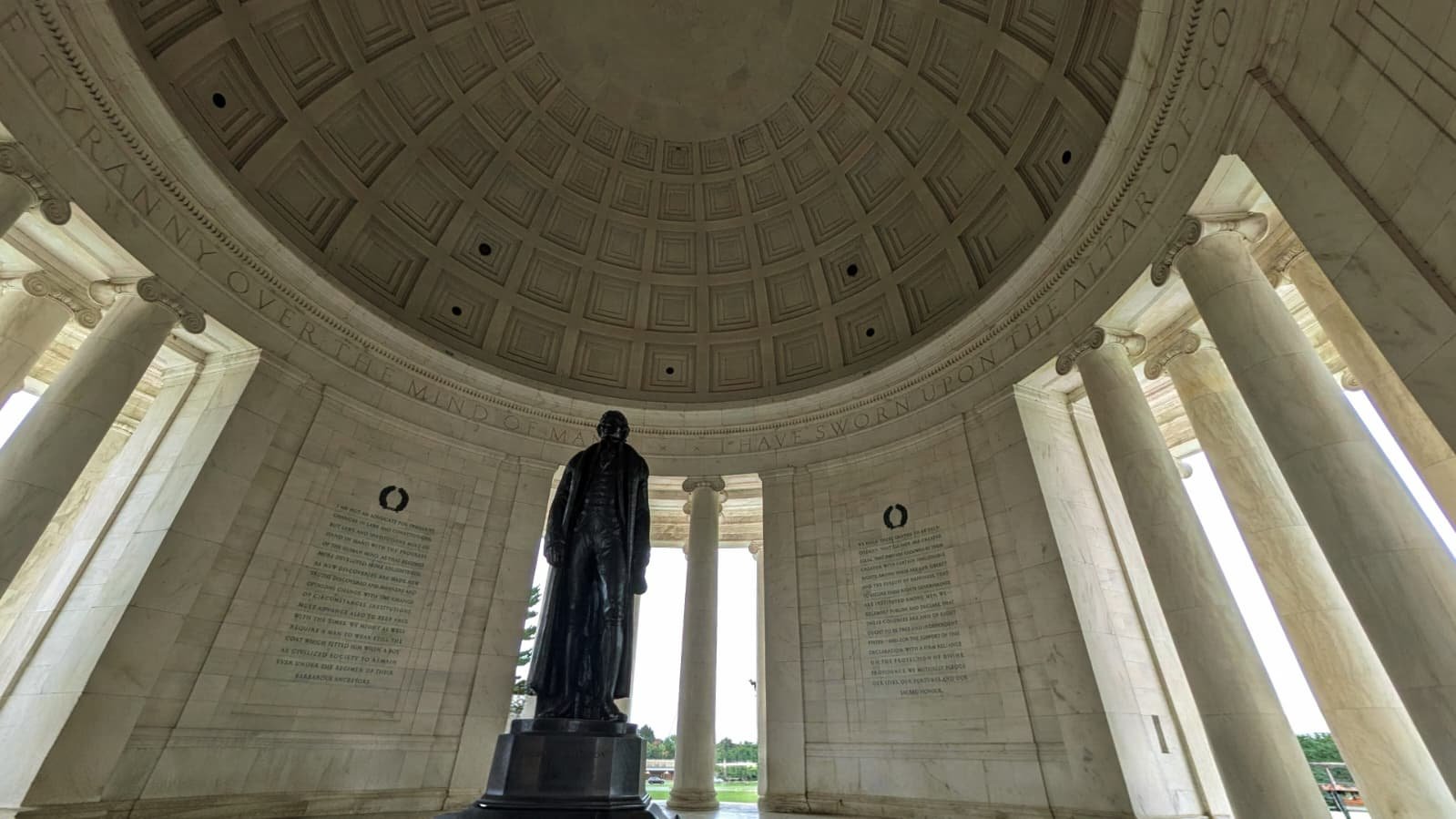
Step inside and you’ll find a towering bronze statue of Jefferson beneath the dome, standing nearly 19 feet tall. Surrounding him are excerpts from some of his most well-known writings, including passages from the Declaration of Independence and his thoughts on liberty, government, and individual rights.
One interesting detail to notice is that the words on the walls aren’t simply decorative quotes. They give a glimpse into the political philosophy that shaped Jefferson’s thinking—and, in turn, became part of the story of the United States.
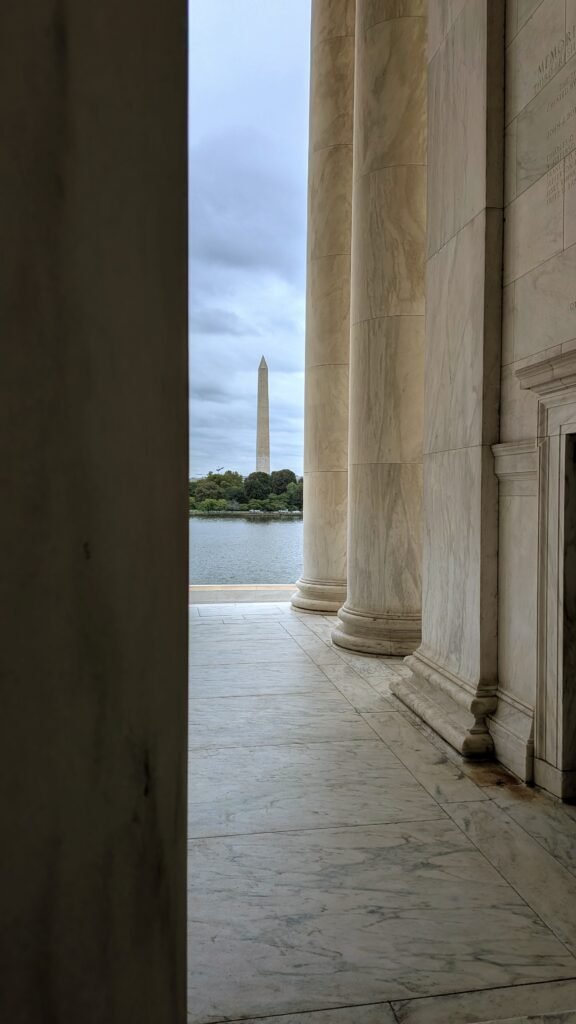
And then there’s the view. Looking outward from the memorial, the Washington Monument rises across the Tidal Basin, creating one of those classic D.C. scenes that practically begs for a photo. The combination of water, architecture, and monuments makes this a pretty memorable place to start exploring.
Not bad for the first stop—and a reminder that in Washington, D.C., you can learn a surprising amount of history simply by walking from one landmark to the next.
Washington Monument
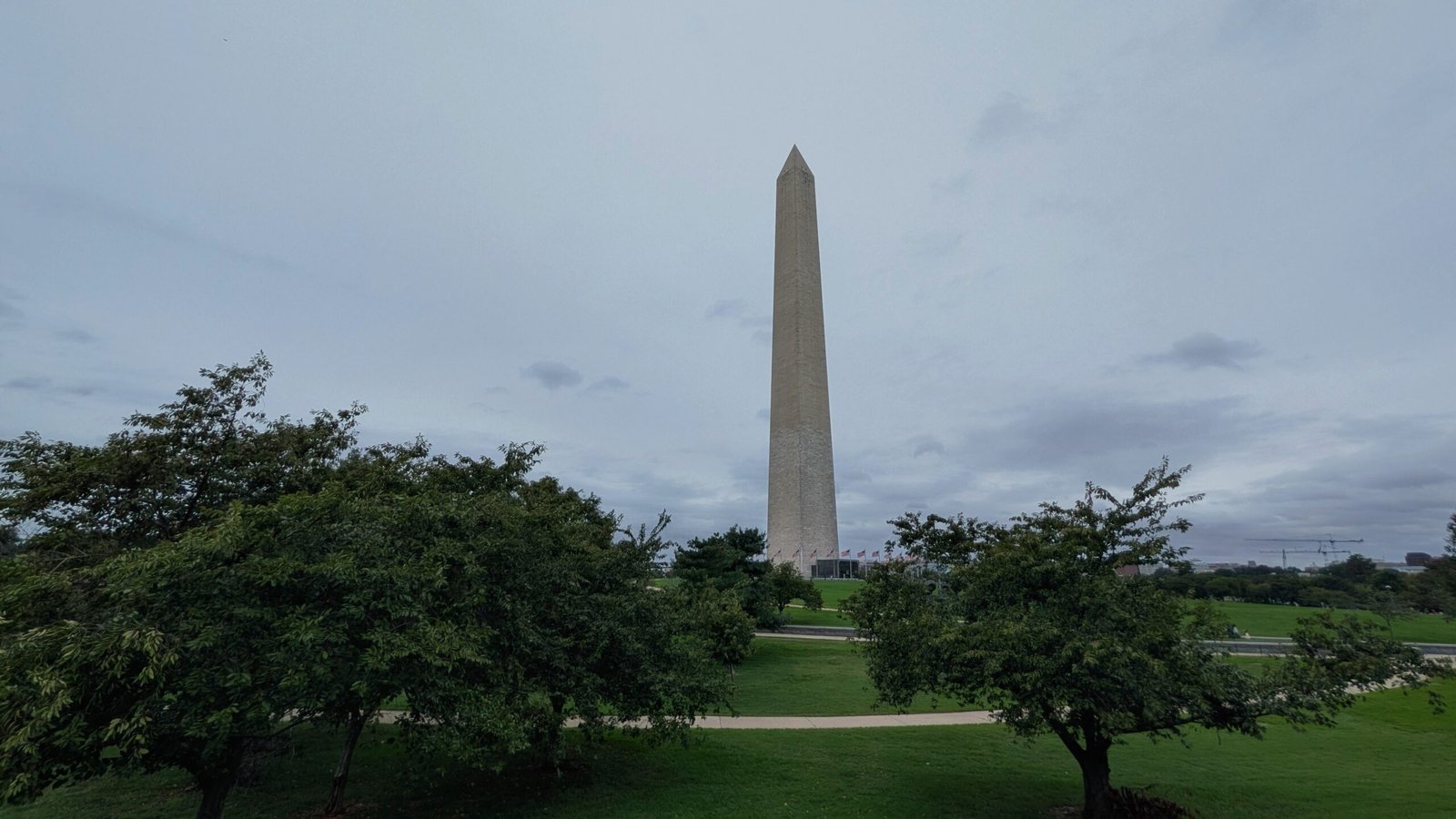
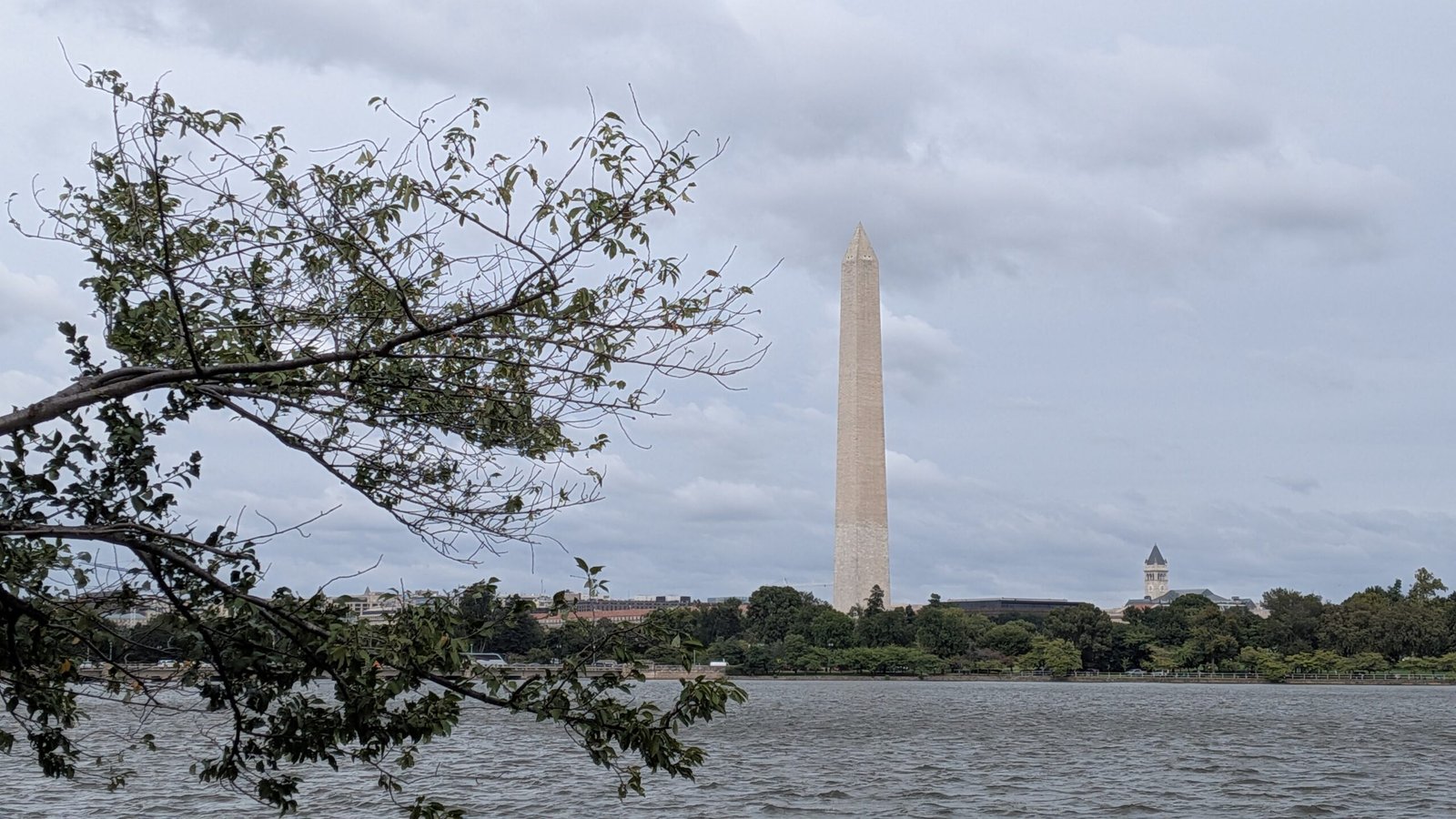
From Jefferson, the route continued toward one of the most recognizable landmarks in the entire city—the Washington Monument. At 555 feet tall, the towering obelisk is hard to miss and has been a defining part of the D.C. skyline for generations.
The monument honors George Washington, the nation’s first president and commander of the Continental Army during the American Revolution. Even from a distance, its simple design makes quite an impression, but there’s a little more history hiding in those seemingly uniform walls.
Construction began in 1848, but the project came to a halt for nearly two decades because of funding issues and the Civil War. When construction finally resumed in 1877, the stone available from the original quarry was no longer usable, so a different source was chosen.
Look closely about one-third of the way up, and you can actually see the change in the color of the stone. That subtle line is essentially a built-in timeline—a visual reminder that the monument was constructed in two very different chapters.
And just like that, a quick walk past the monument turns into a little history lesson. Sometimes the best travel details are the ones you notice simply by looking a little closer.
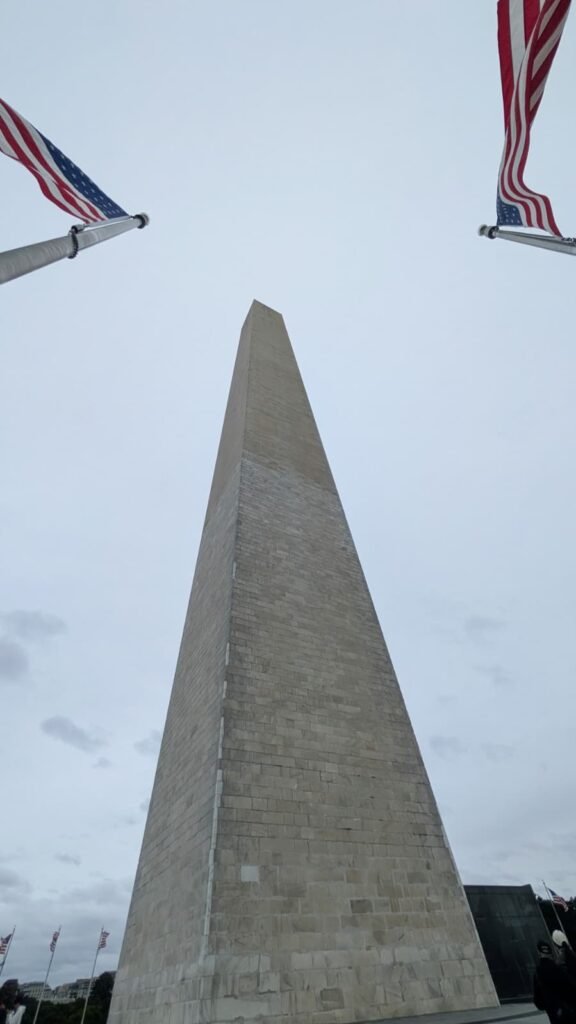
The Washington Monument also provided a fun little bonus during the walk: a view toward the White House. From the right spot, the White House can be seen in the distance, making it possible to check another famous D.C. landmark off the list without adding another stop.
Efficiency matters when you only have 2.5 hours!

World War II Memorial
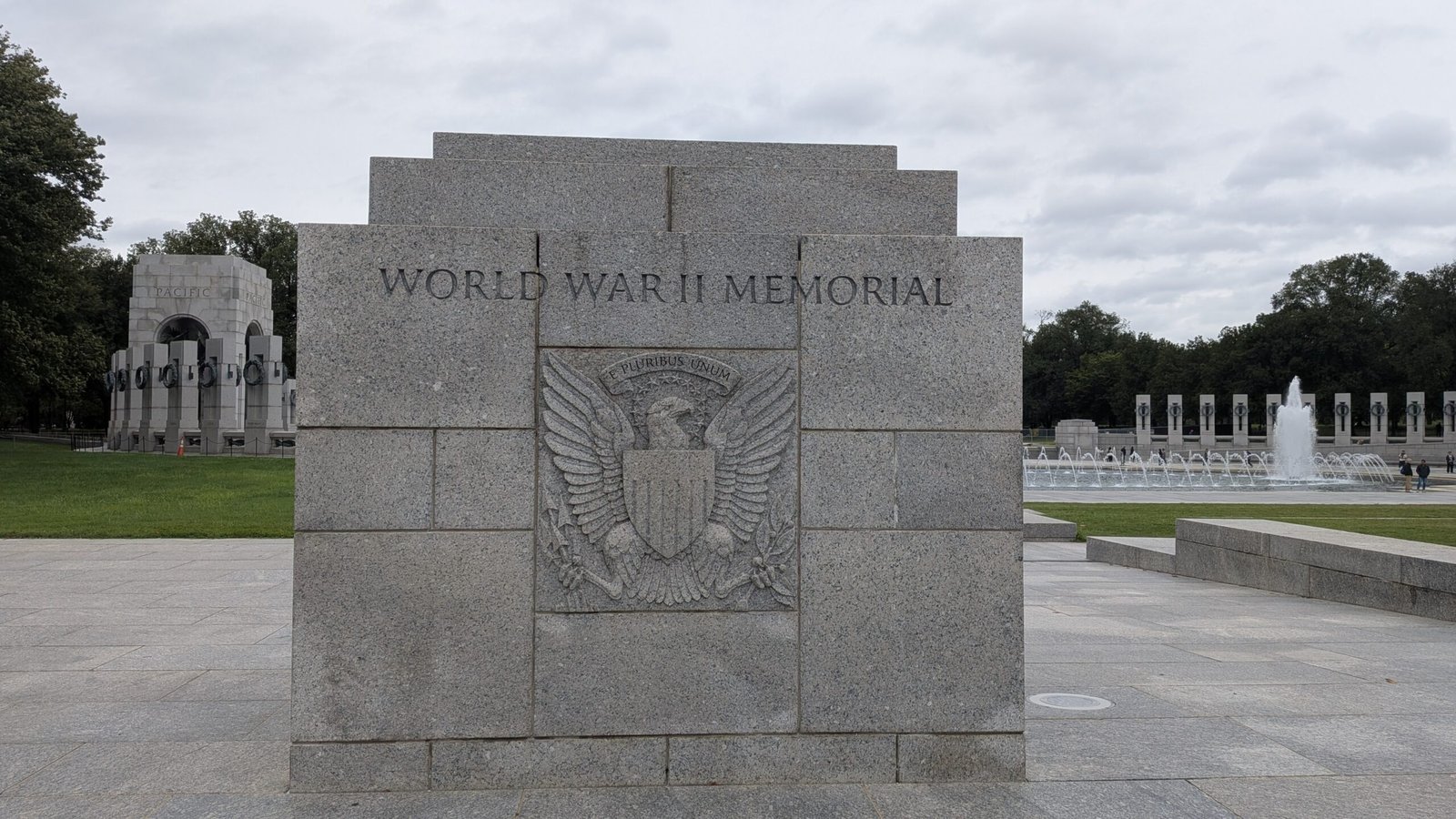
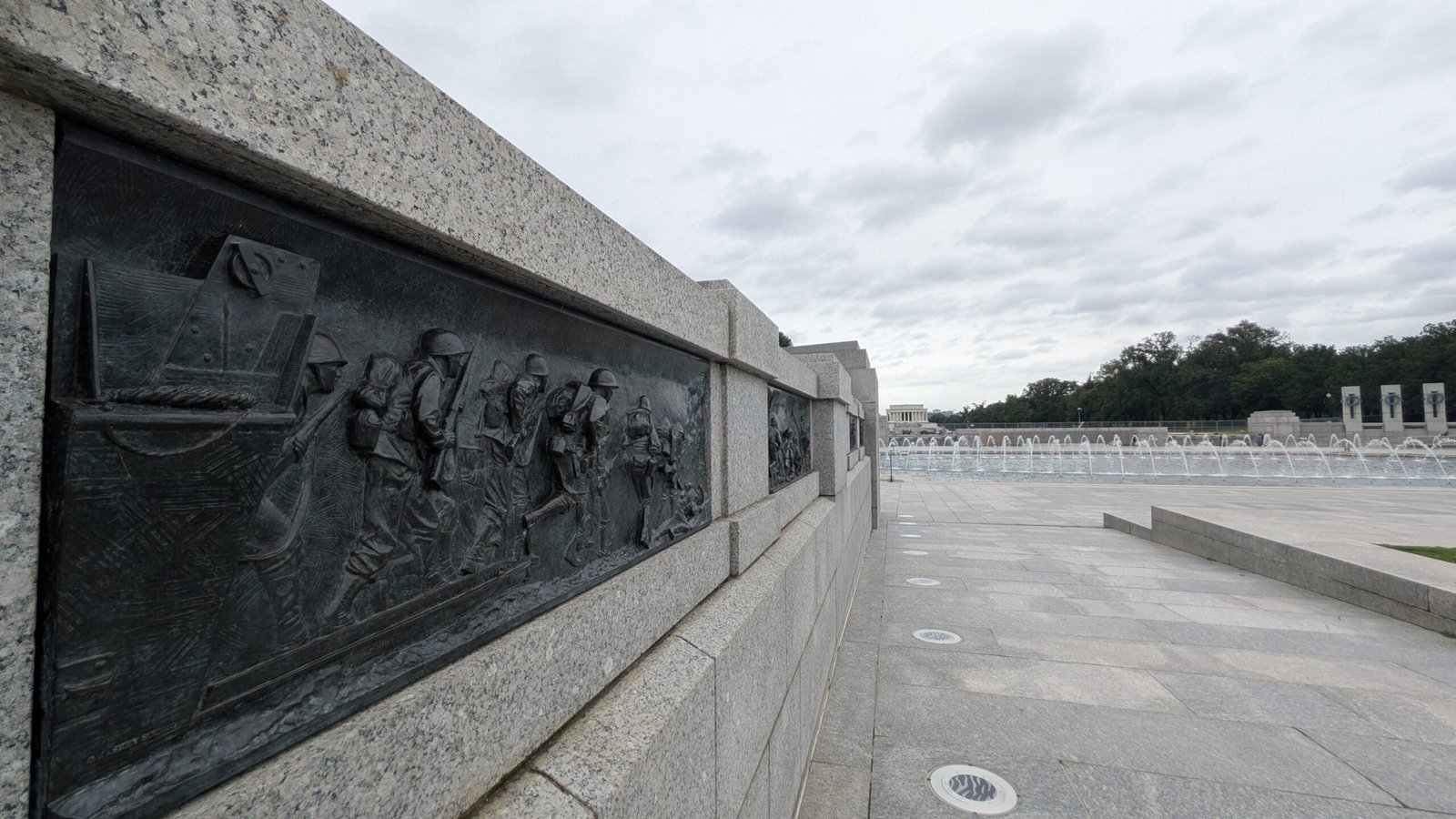
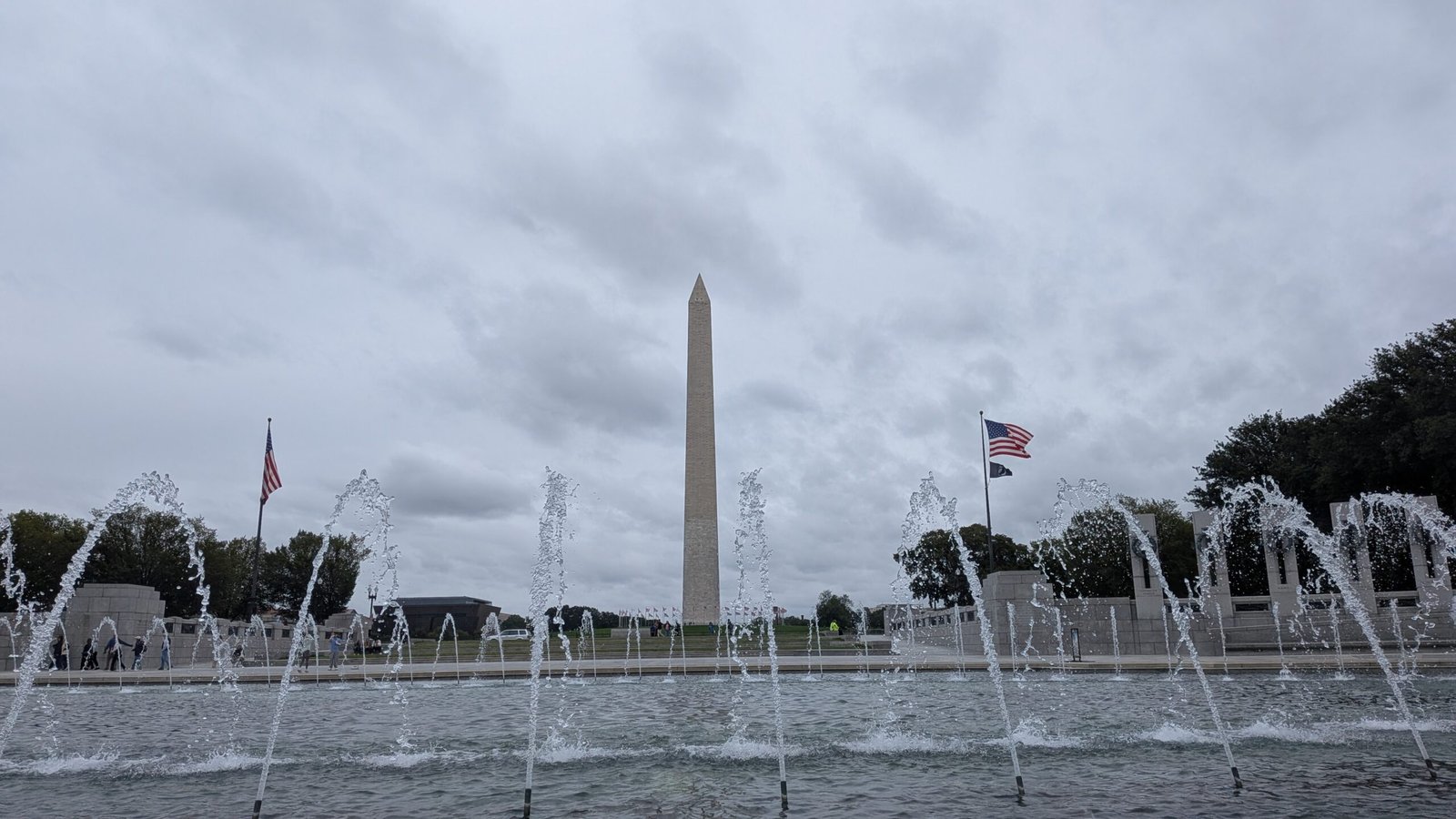
From the Washington Monument, the route continued toward the World War II Memorial, positioned along the National Mall between the Washington Monument and the Lincoln Memorial.
This memorial is one of those places where you can take in quite a bit of history just by walking through it. It honors the more than 16 million Americans who served in the U.S. armed forces during World War II, along with the millions of civilians who supported the war effort from home.
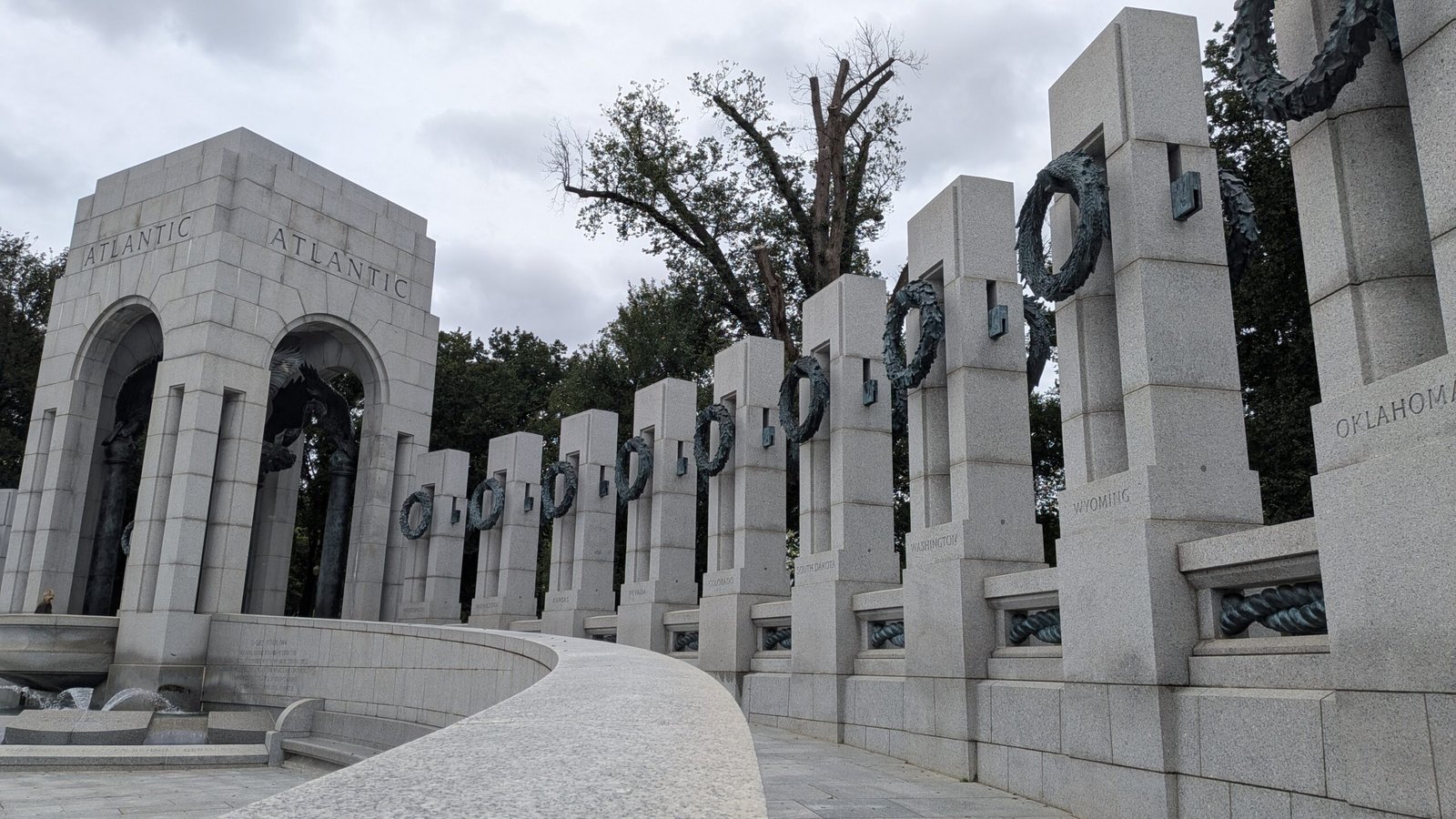
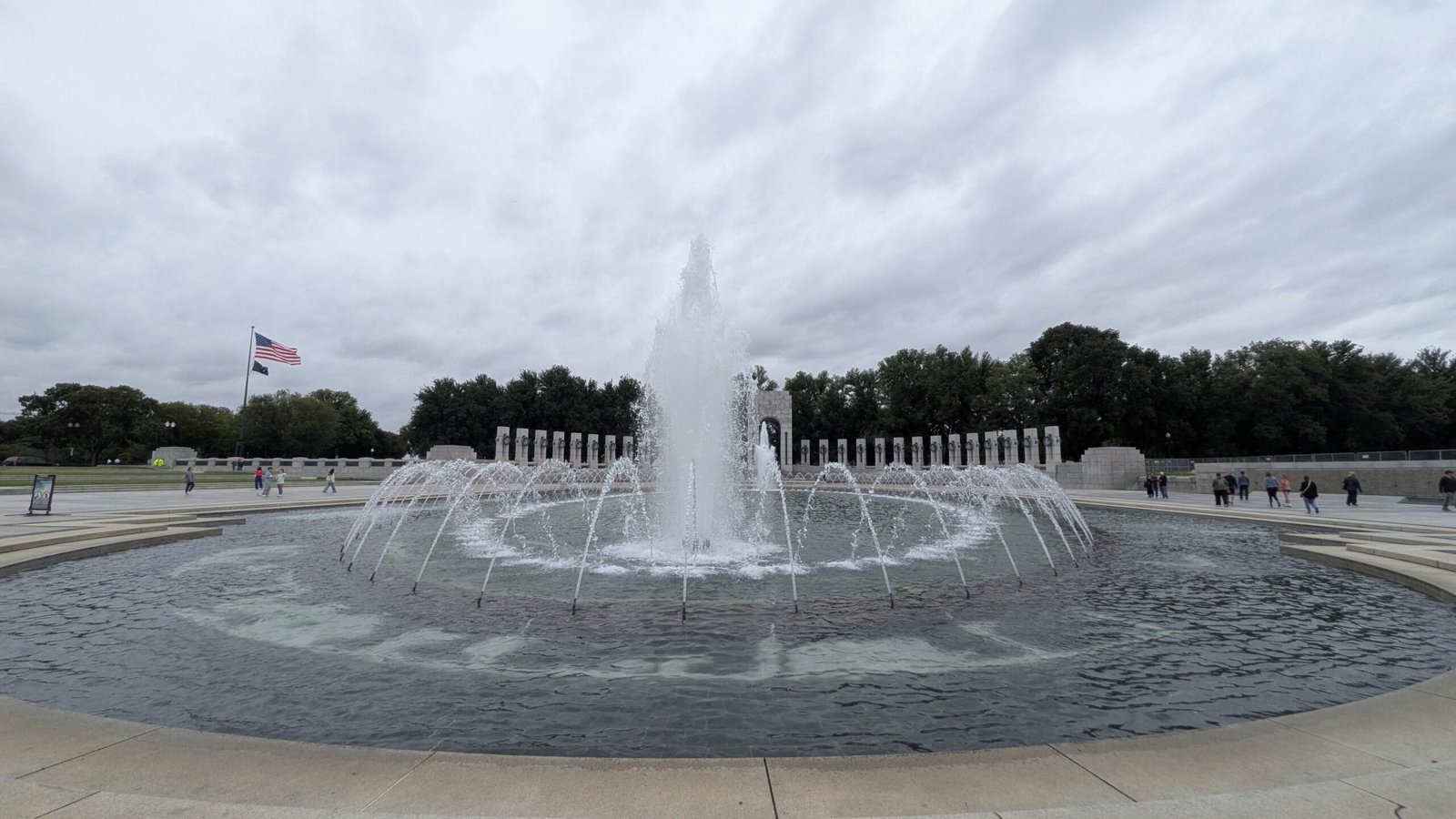
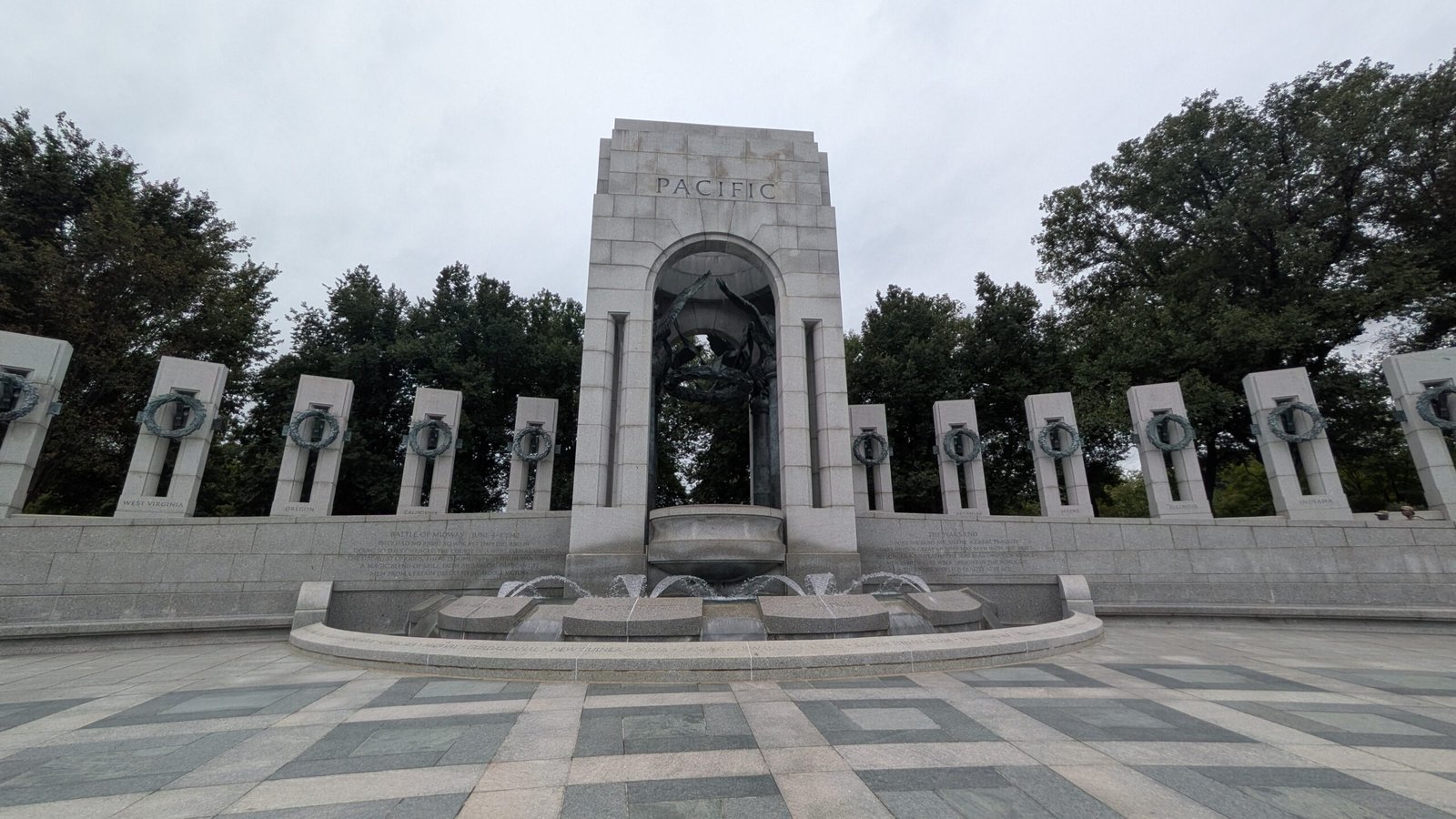
As you walk around the memorial, the details start to tell the story. Fifty-six granite pillars represent the states, U.S. territories, and the District of Columbia as they existed during the war. At opposite ends, two enormous arches—Atlantic and Pacific—represent the two major theaters of the conflict. At the center, a large fountain brings the whole space together. Surrounding it are inscriptions, bronze details, and scenes depicting different aspects of the war effort.
What makes the memorial especially interesting is how much symbolism is packed into the design. Even on a quick visit, there are plenty of small details worth pausing for—and a reminder that the history represented here involved not just those who served overseas, but an entire nation working toward a common goal at home.
Reflecting Pool
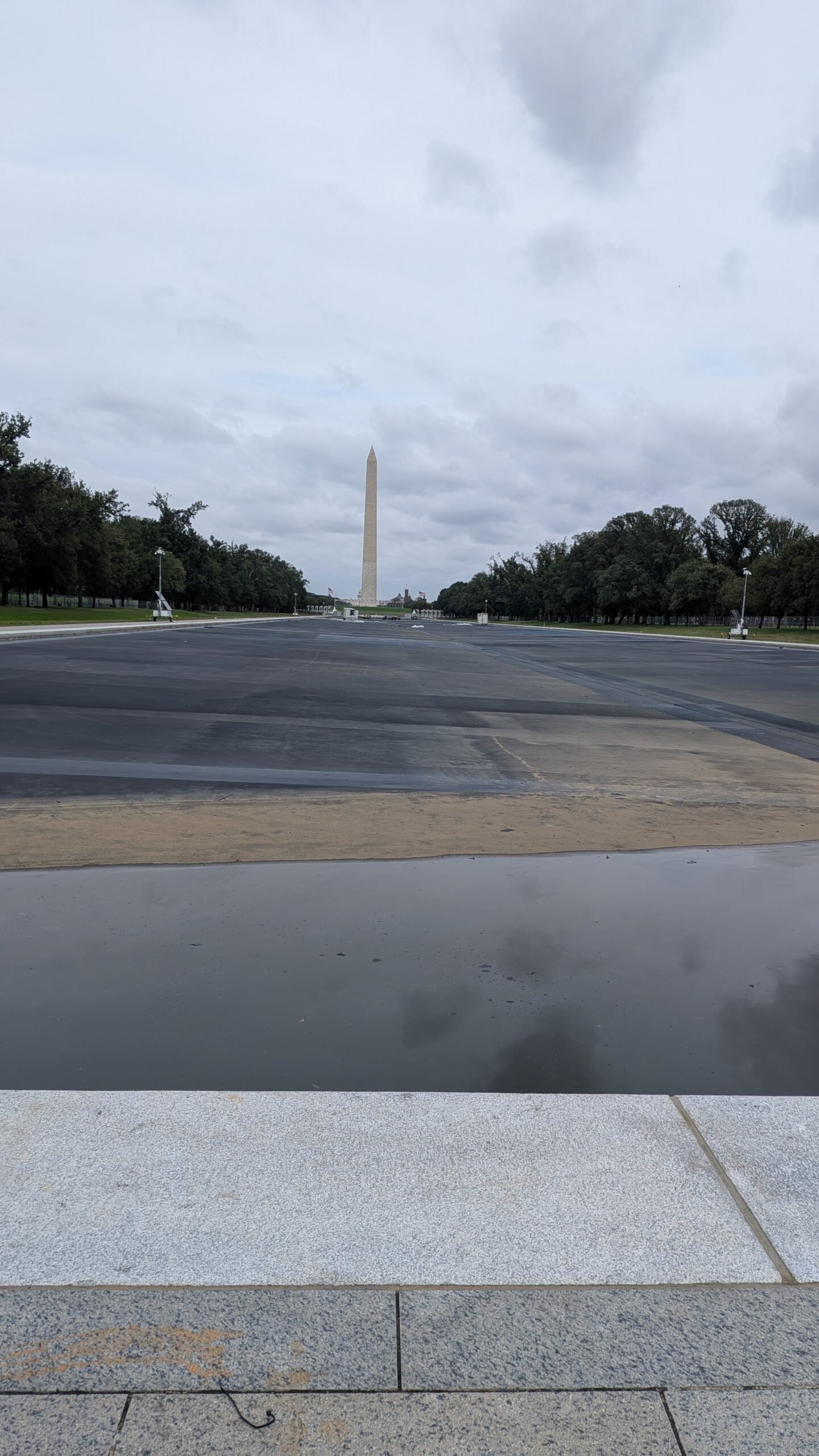
From the World War II Memorial, the route continued toward the Lincoln Memorial, following what would normally be the iconic path alongside the Reflecting Pool. This stretch is one of those quintessential D.C. walks, with the long pool, the Washington Monument rising in the distance, and the Lincoln Memorial waiting at the other end.
There was just one small problem: construction. During the visit, this section of the walkway was barricaded, meaning the picture-perfect stroll along the Reflecting Pool wasn’t quite in the cards.
But that’s travel for you. Sometimes you get the postcard view, and sometimes you get construction barriers and closures. The important part is to keep moving and make the most of what you’ve got.
Because the best adventures don’t always go exactly as planned—and sometimes “under construction” becomes part of the story.

The National Military Monument
As the route continued toward the Lincoln Memorial, there was an unexpected stop along the way: the National Military Monument, a temporary installation honoring more than 41 million Americans who have served in the U.S. military from the Revolutionary War through the present day.
The installation is on display in Washington, D.C., from July 28 through November 12, 2026, making it one of those unique sights that happens to be there for a limited time.
The centerpiece is hard to miss—a large, waving American flag made from hundreds of LED screens. As the display moves, the names of nearly 41 million service members scroll across the screens, connecting the present moment with generations of Americans who have served.
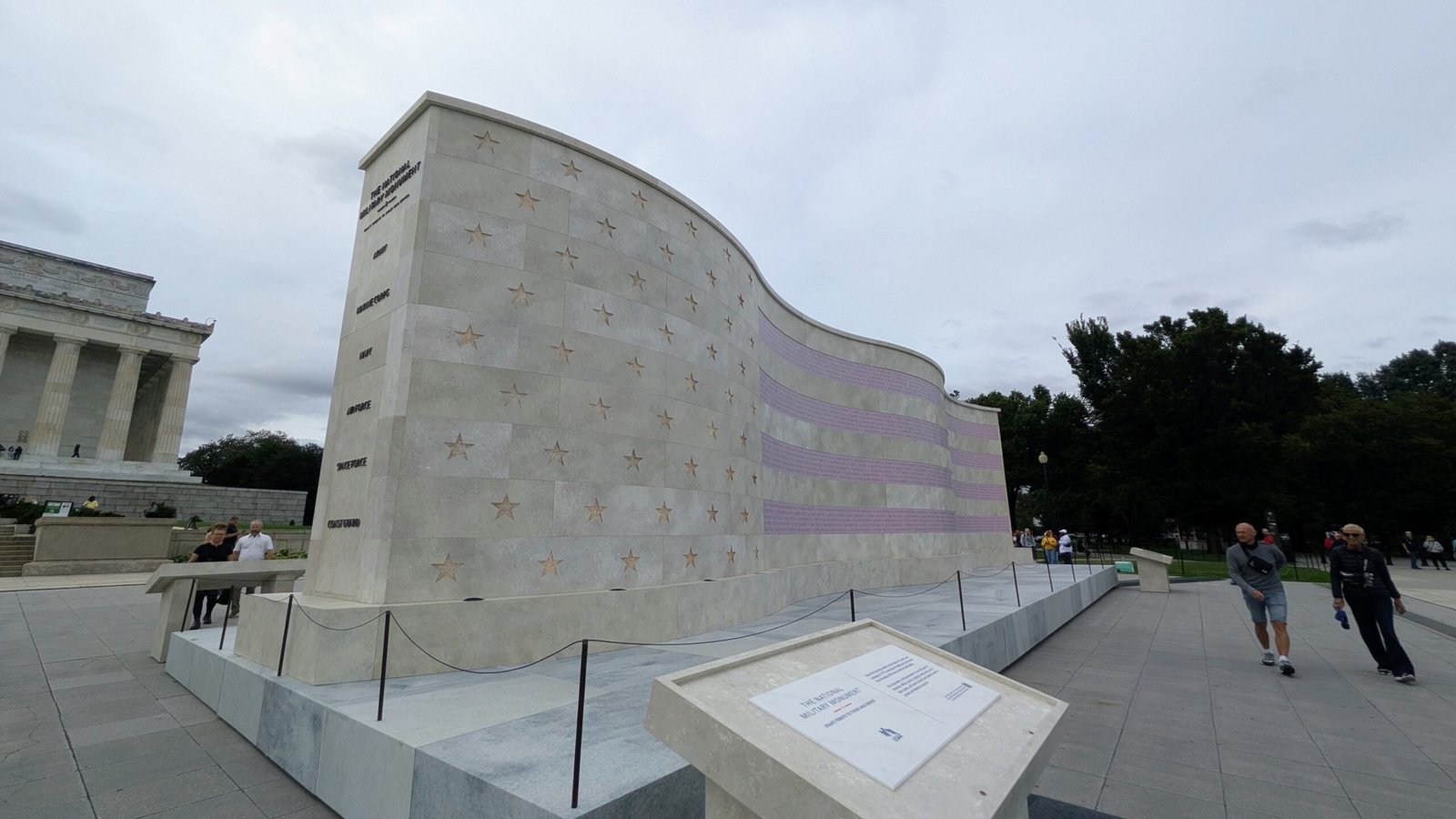
One of the most interesting features of the monument is its interactive search. Visitors can use the on-site kiosks or scan a QR code to search for a specific service member and have their name appear live on the monument.
With military service woven into her family history, Kayla decided to take a moment and search for her great-grandfather, who served during World War II. There was no expectation that this quick search would turn into anything more than a passing moment of curiosity.
Then, to her surprise, his name appeared in the database.
For a few minutes, the busy sightseeing route became something much more personal. Among millions of names representing generations of American military service was a name that belonged to her own family.
It was an unexpected connection—and one of those travel moments that reminds you that history isn’t always something you simply read about. Sometimes, you discover that you’re part of the story, too.

Lincoln Memorial
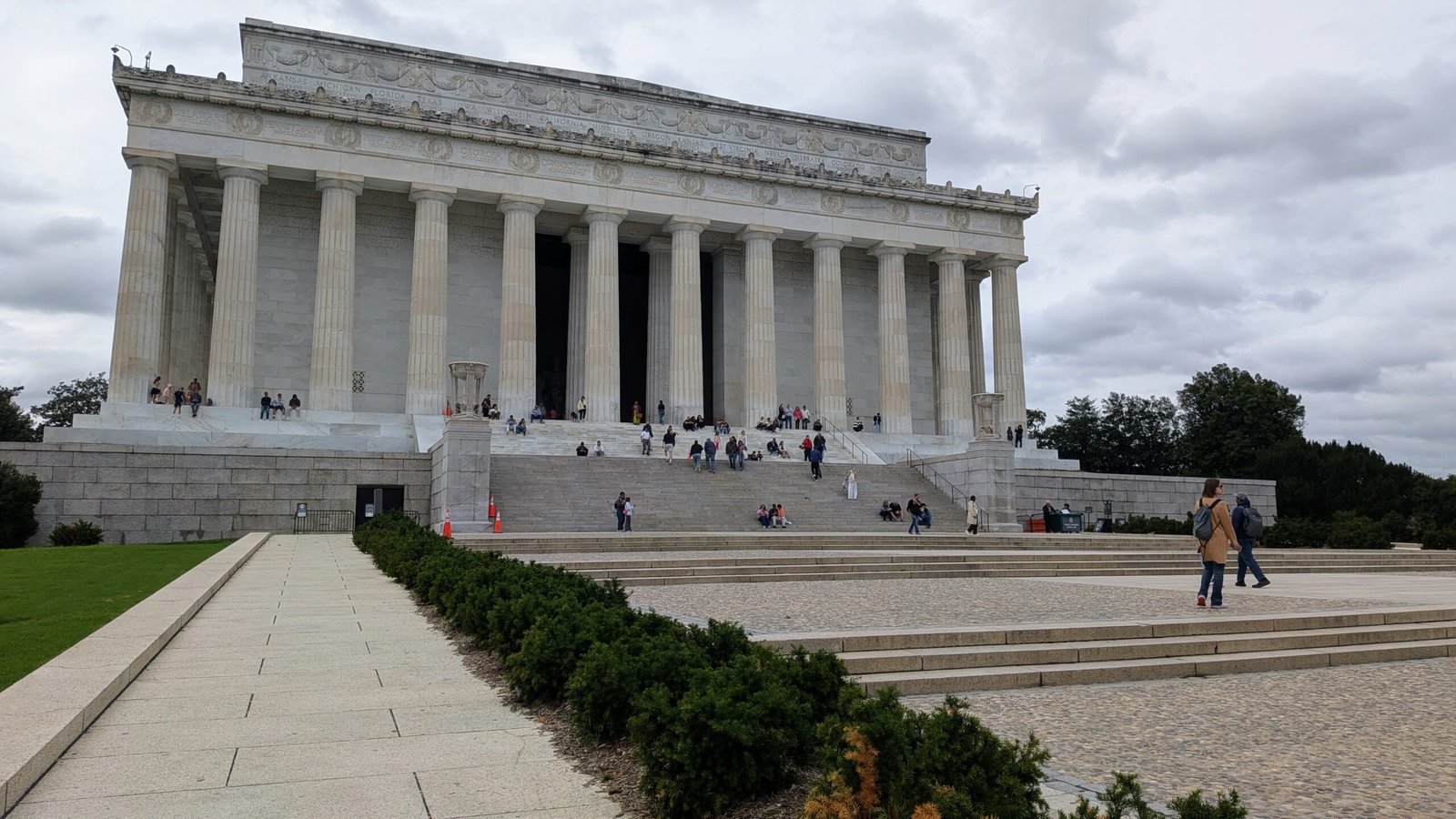
Finally, the route reached one of the biggest highlights of the day: the Lincoln Memorial.
Standing at the western end of the National Mall, the massive Greek-inspired structure is hard to miss. Climb the steps and you’re greeted by the iconic seated statue of President Abraham Lincoln, quietly overlooking the Mall.
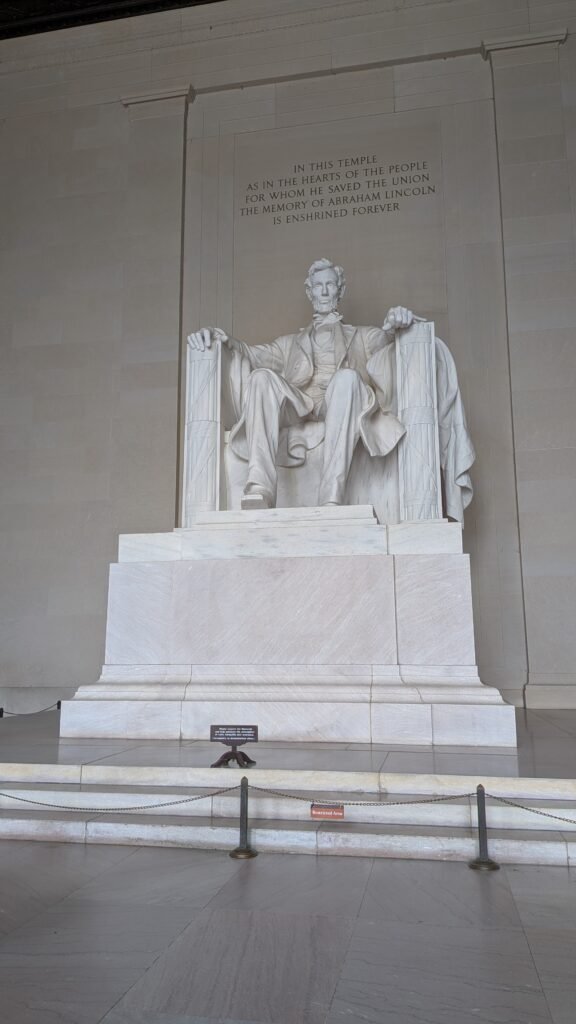
There’s more to the memorial than the famous statue, though. Inside, the walls feature the words of two of Lincoln’s most important speeches—the Gettysburg Address and his Second Inaugural Address. Even on a quick visit, it’s worth taking a moment to look beyond the statue and notice the words surrounding it.
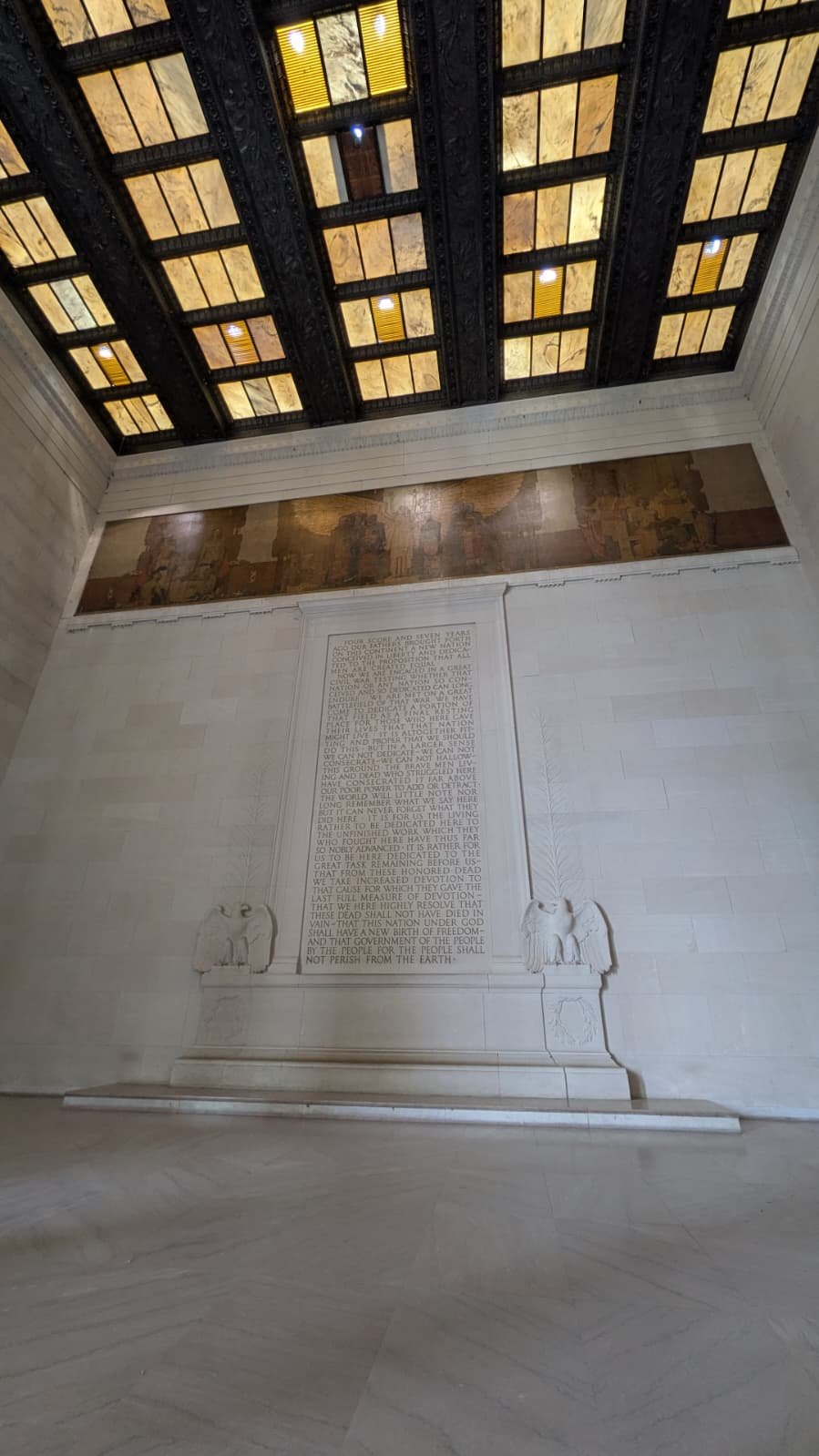
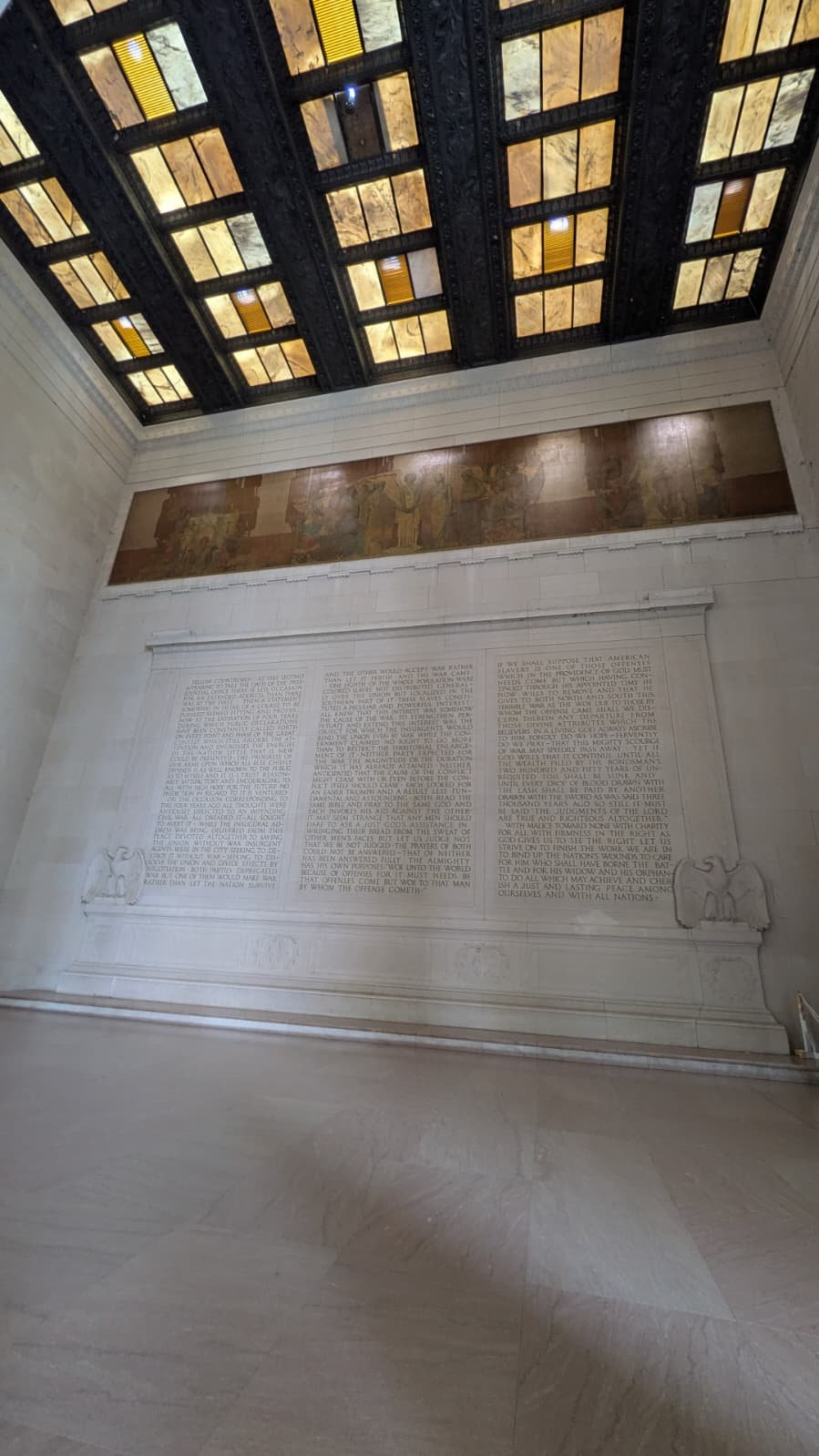
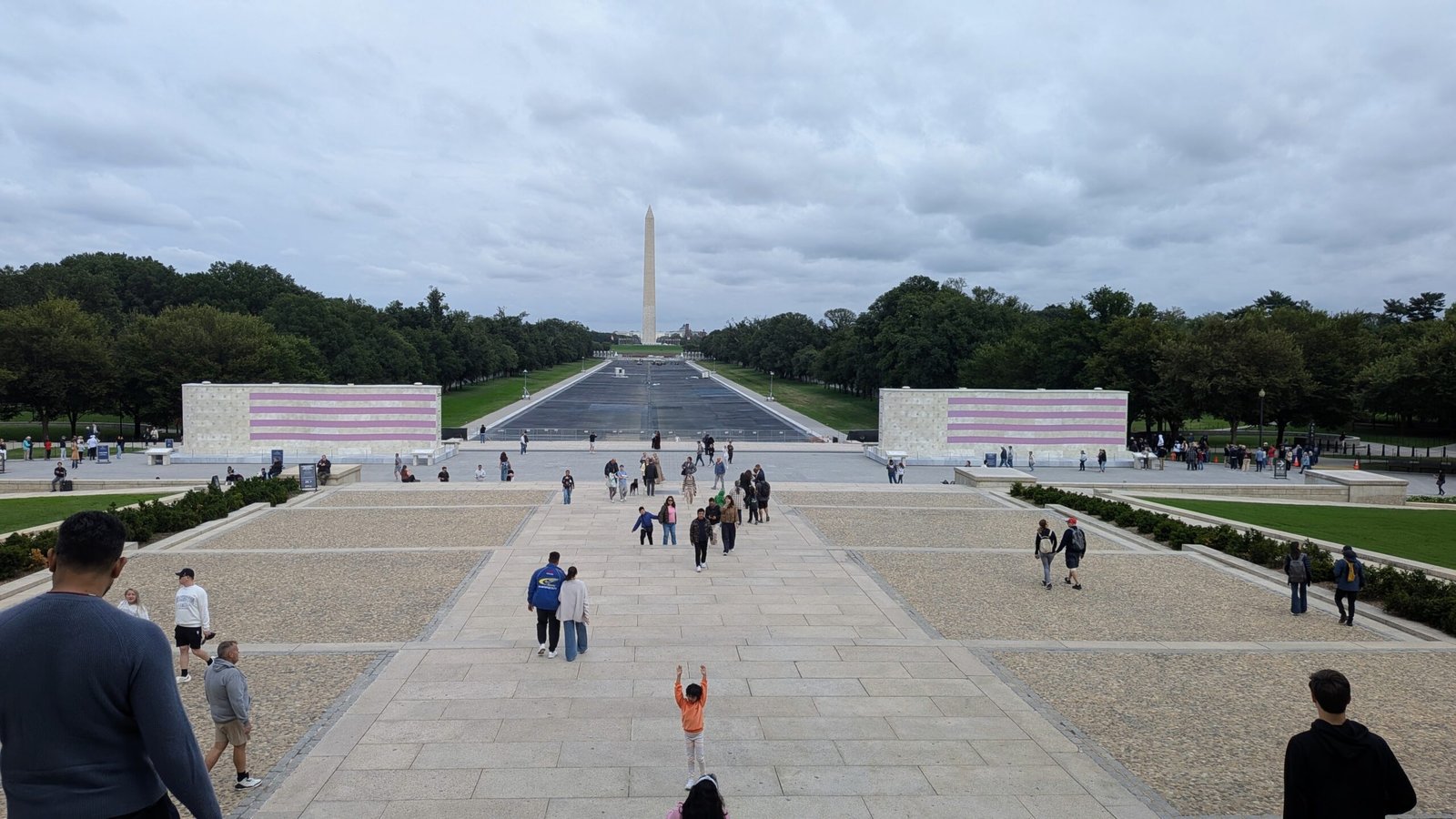
And, of course, there’s the view. From the steps of the memorial, the Reflecting Pool stretches toward the Washington Monument, creating one of the most recognizable scenes in Washington, D.C.
After several stops and plenty of history along the way, it was a fitting place to pause, take in the view, snap a few photos, and appreciate just how much of the country’s story is packed into this one stretch of the National Mall.
Korean War Veterans Memorial
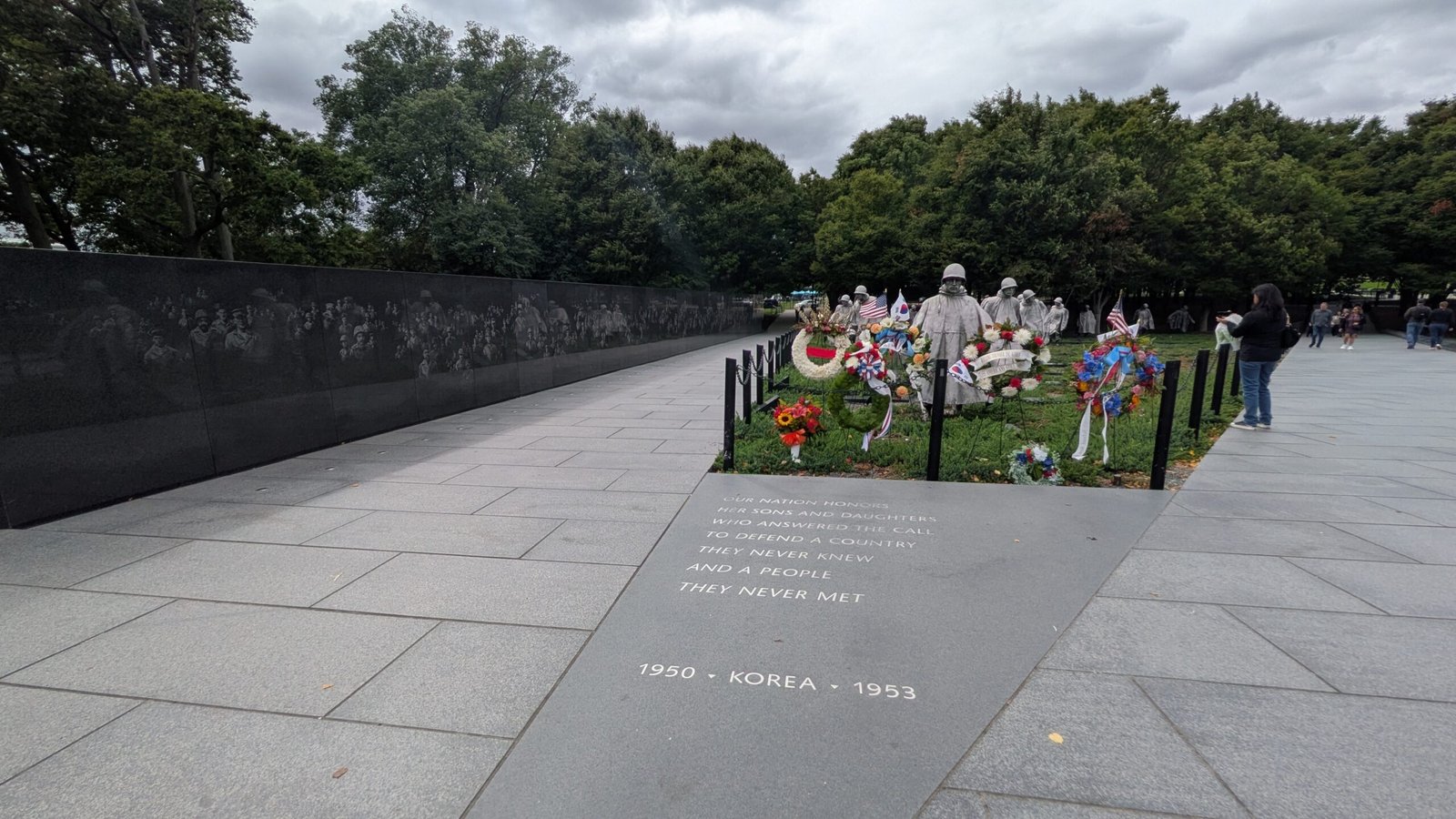
From the steps of the Lincoln Memorial, the route continued along the National Mall toward the Korean War Veterans Memorial. It was an easy addition to the loop and another chance to experience a completely different style of memorial just a short walk from where the journey had started.
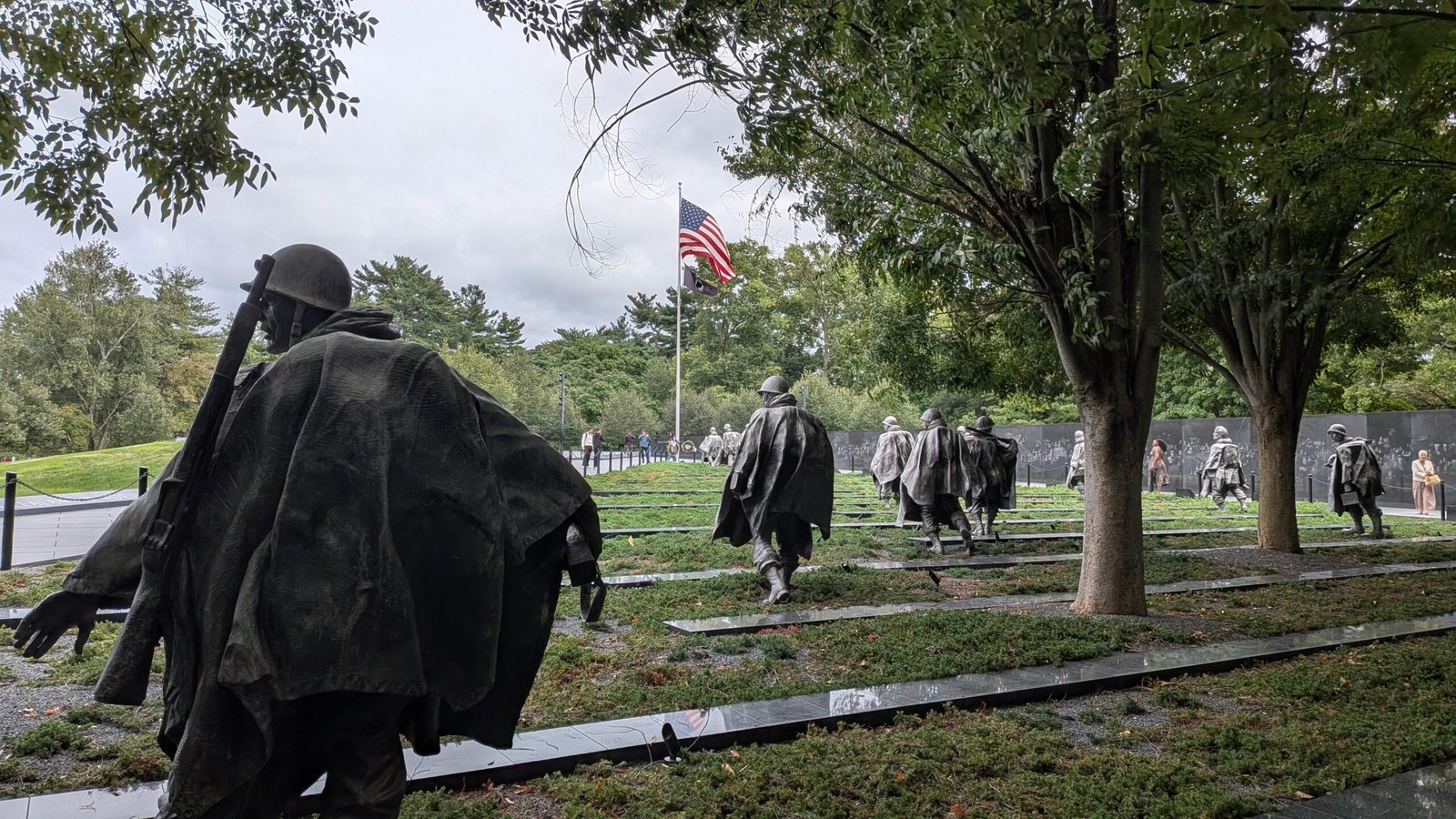
The first thing that catches your attention is the group of 19 stainless-steel soldiers, positioned as if they are moving through a Korean landscape. Each figure carries military equipment and wears ponchos, with their faces and expressions remarkably detailed.
As you walk alongside them, the statues almost seem to move with you. Their realistic appearance makes this memorial feel less like a traditional monument and more like a frozen moment in time.
The memorial honors those who served in the Korean War, a conflict often referred to as the “Forgotten War” because it received less public attention than World War II and the Vietnam War.
Nearby, a polished granite wall features etched images of service members, creating an interesting contrast between the reflective wall and the three-dimensional figures.
Martin Luther King Jr. Memorial
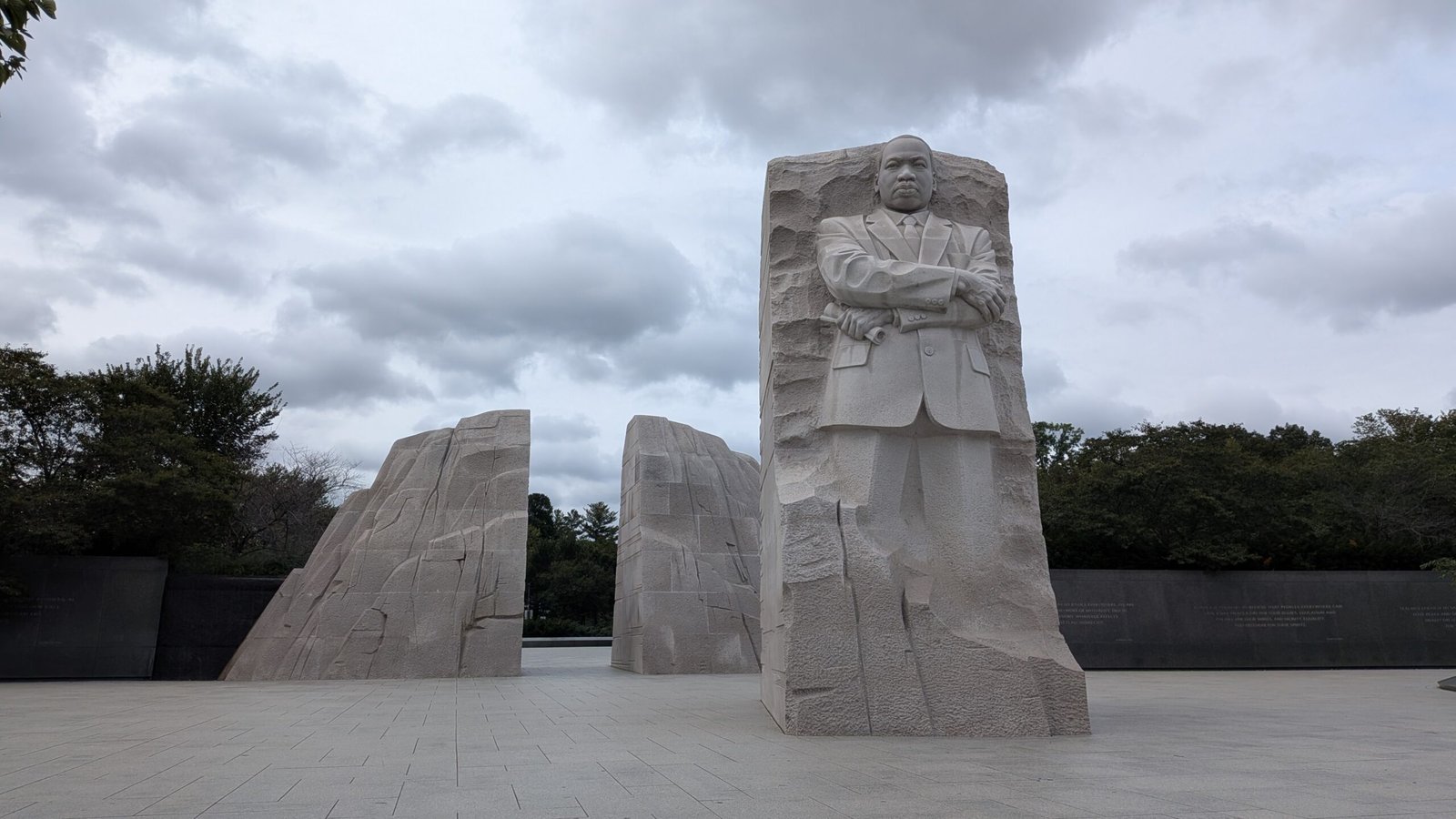
From the Korean War Veterans Memorial, the route continued back toward the Tidal Basin and the Martin Luther King Jr. Memorial. It was a natural part of the loop and offered a completely different perspective from the military memorials along the way.
The centerpiece is a striking 30-foot-tall statue of Dr. Martin Luther King Jr., emerging from the Stone of Hope. The design was inspired by a powerful line from his famous “I Have a Dream” speech: “Out of a mountain of despair, a stone of hope.”
As you walk around the memorial, quotes from Dr. King’s speeches and writings are carved into the surrounding granite. The words focus on themes of equality, justice, freedom, and service, giving the memorial much more to explore than just the sculpture itself.
The setting along the Tidal Basin adds another layer to the stop. From here, you can look across the water toward the Jefferson Memorial, connecting several of the landmarks already seen along the route.
By this point, the loop had covered quite a bit of ground—and quite a few chapters of American history. And there was still more to see before making it back to the car.
Franklin D. Roosevelt Memorial
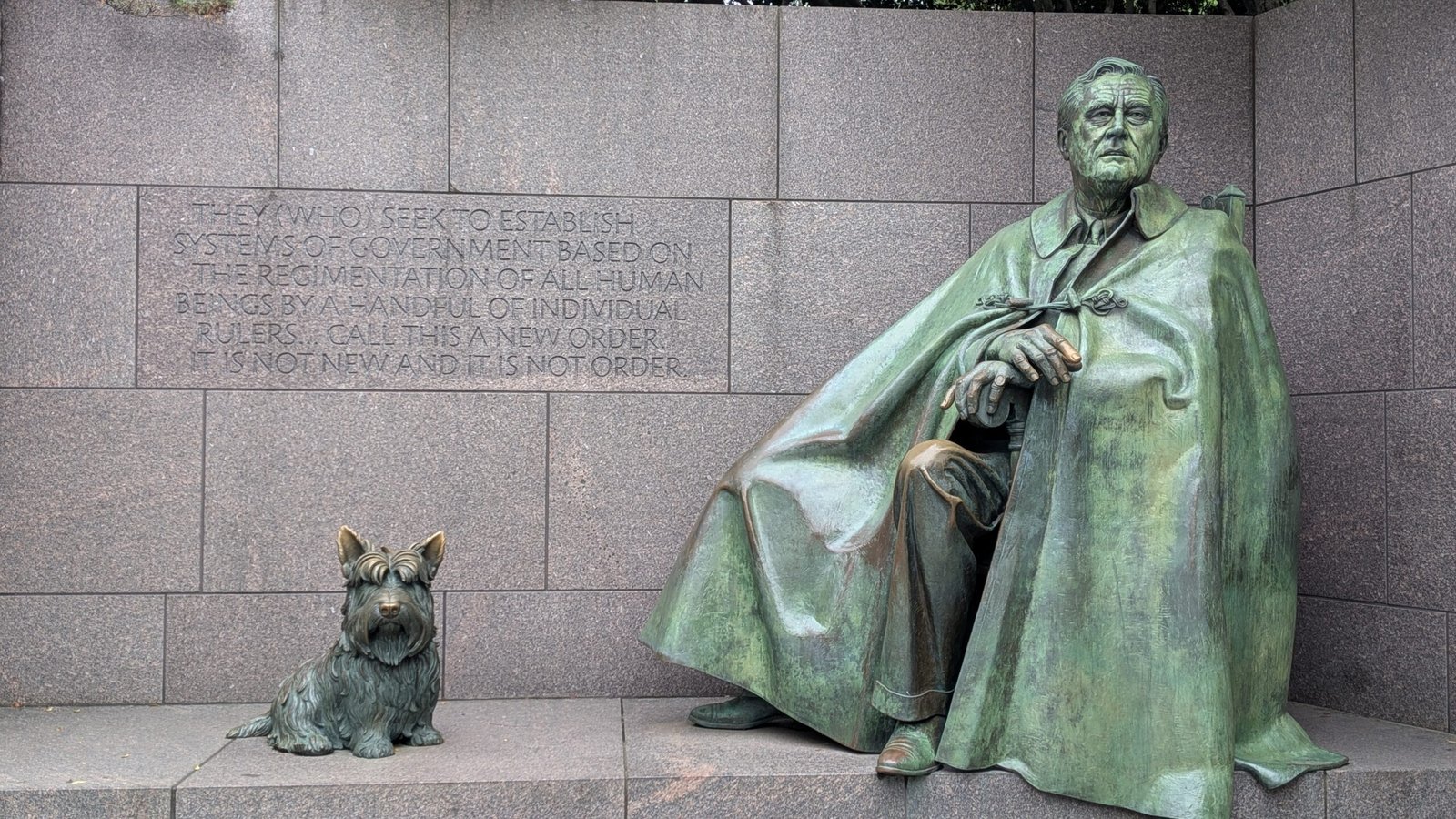
Continuing around the Tidal Basin, the route naturally led to the Franklin Delano Roosevelt Memorial. After the more traditional memorials earlier in the loop, this one felt different from the moment we arrived.
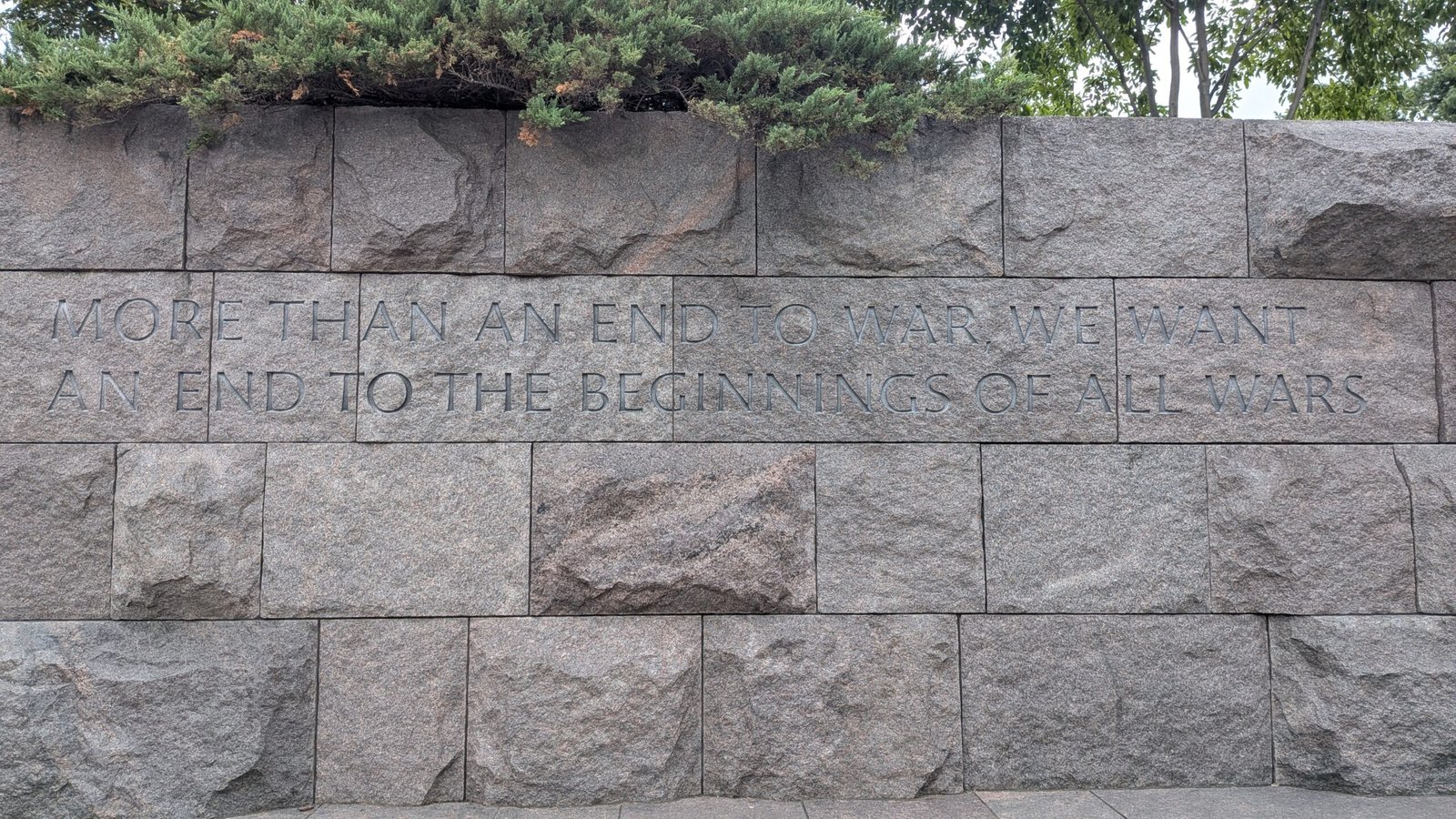
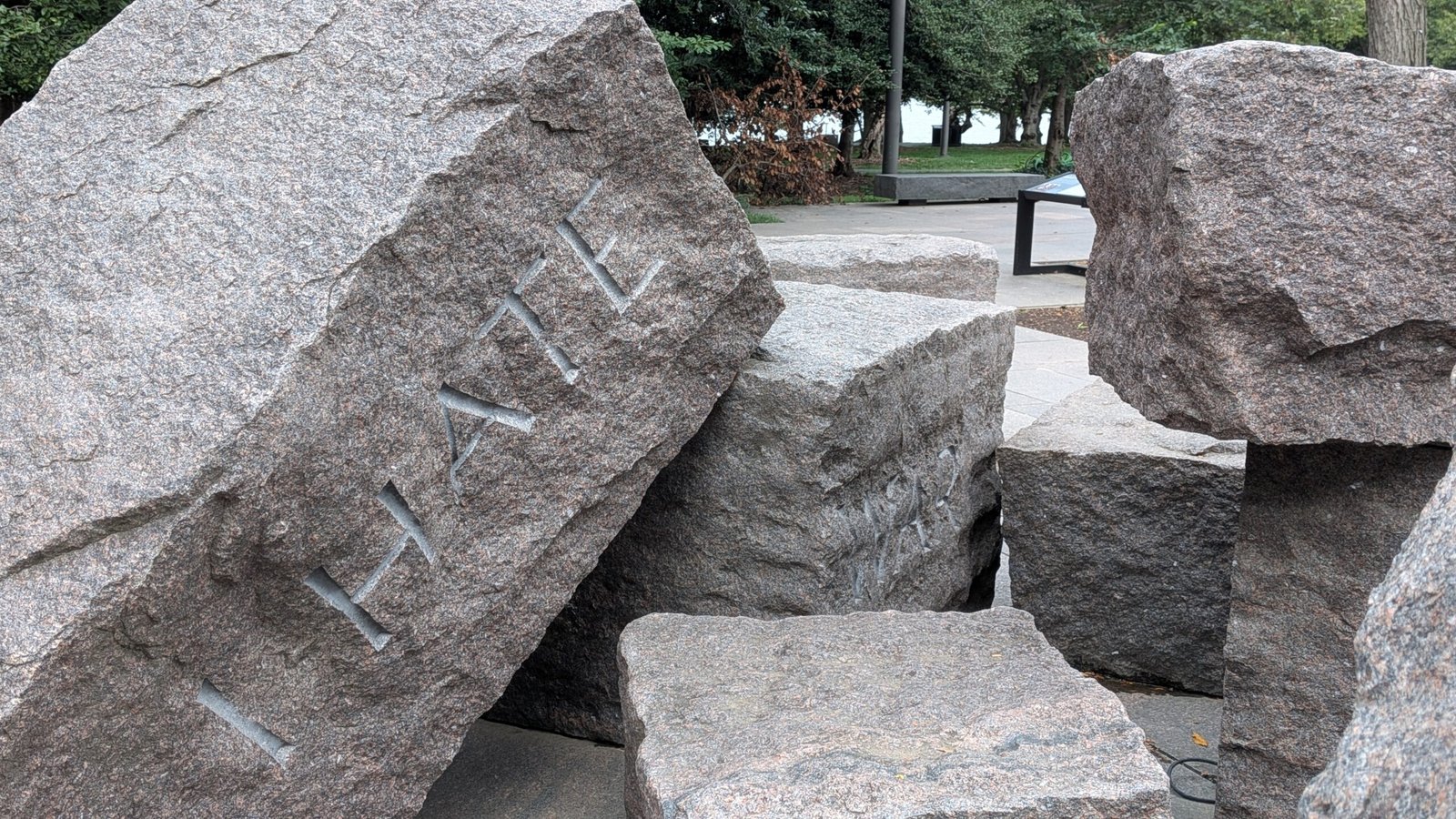
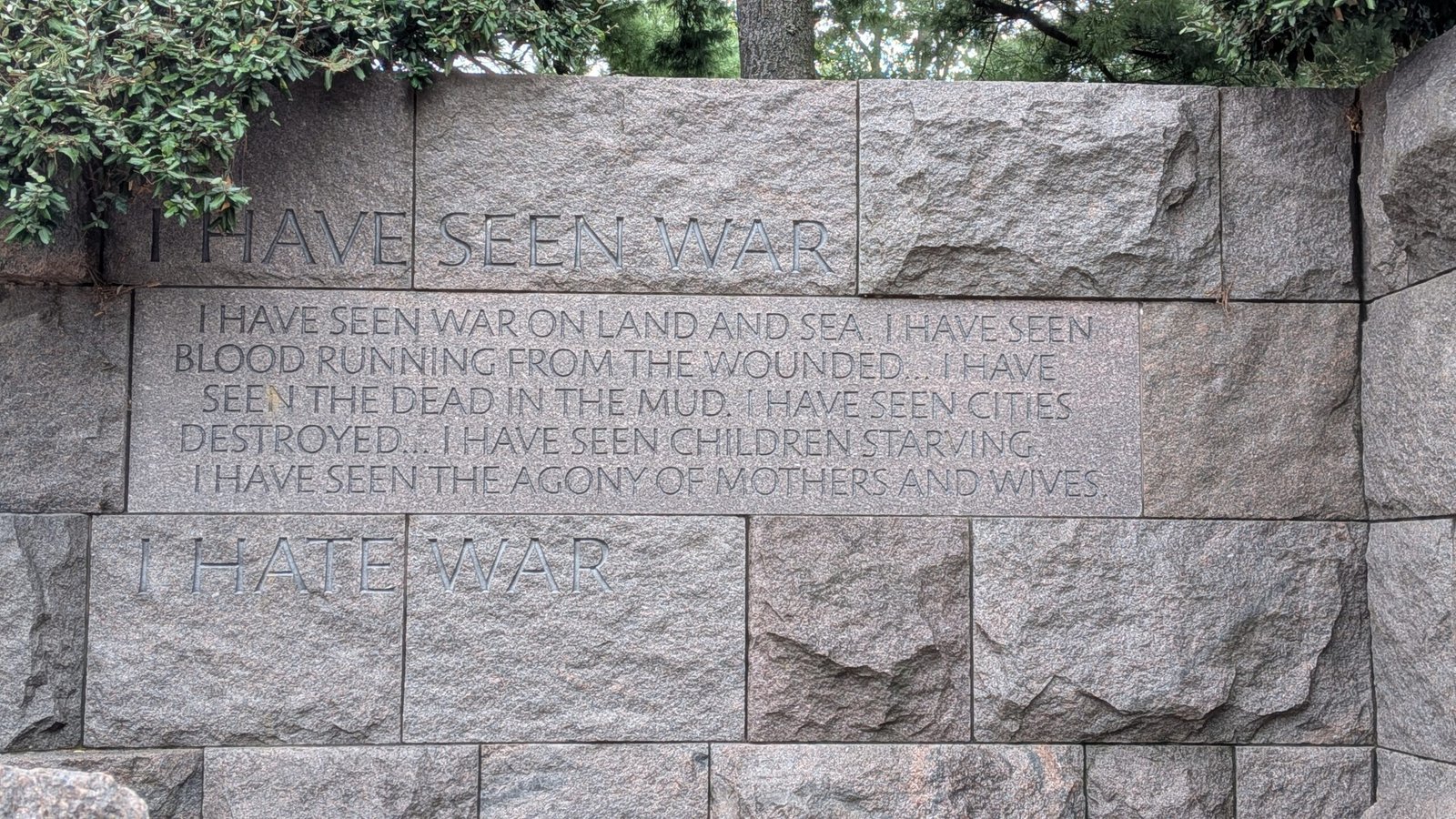
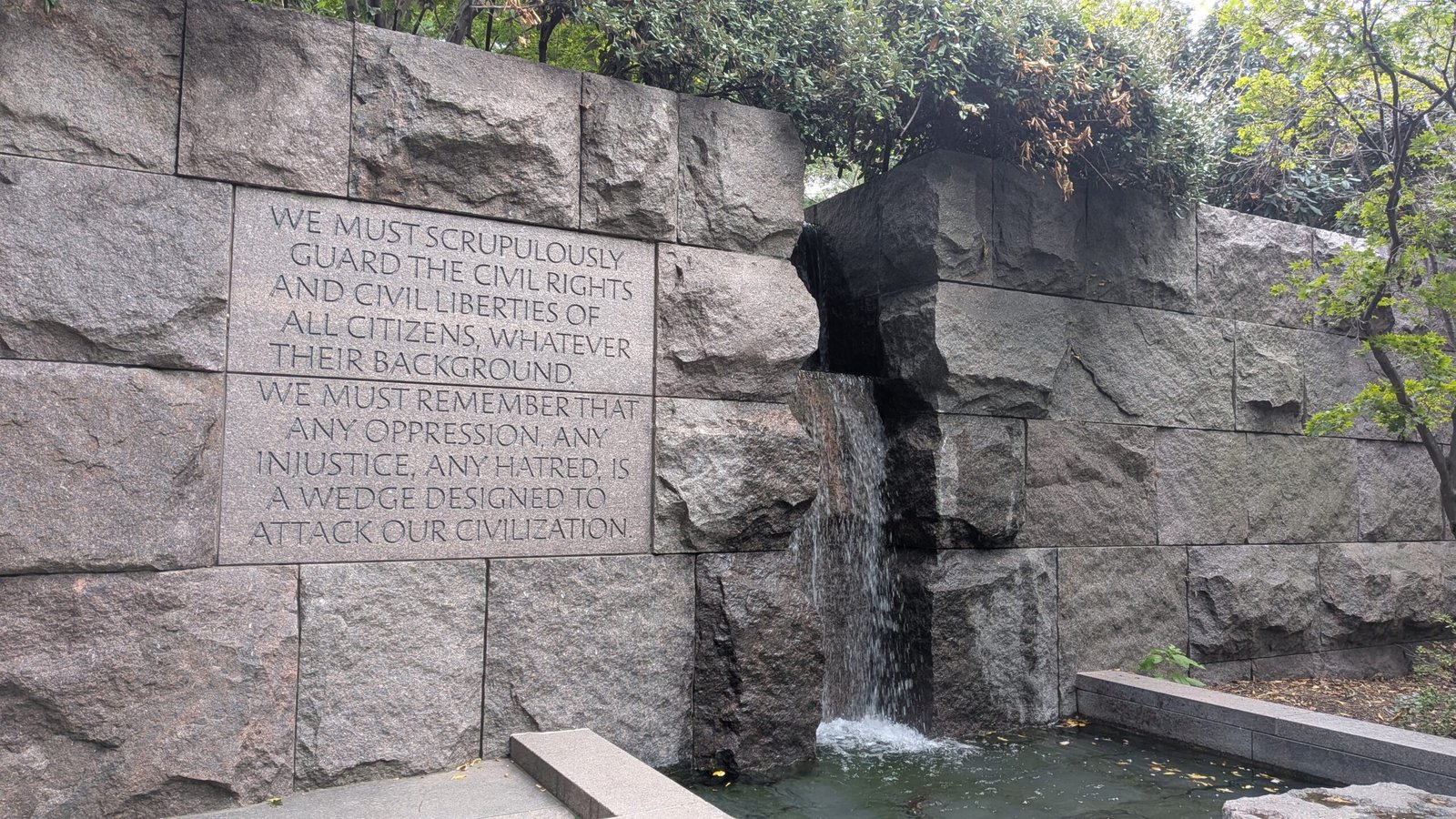
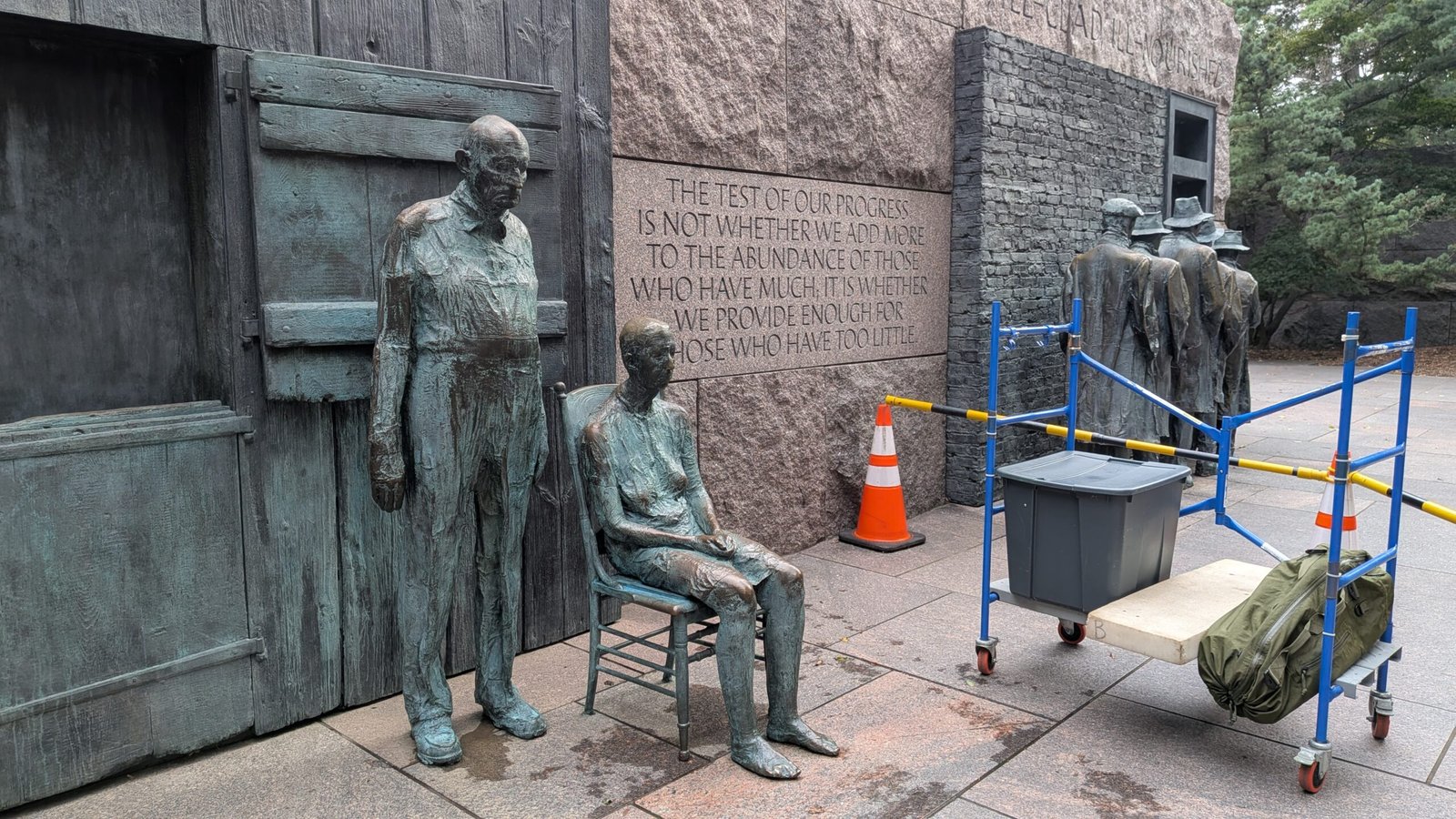
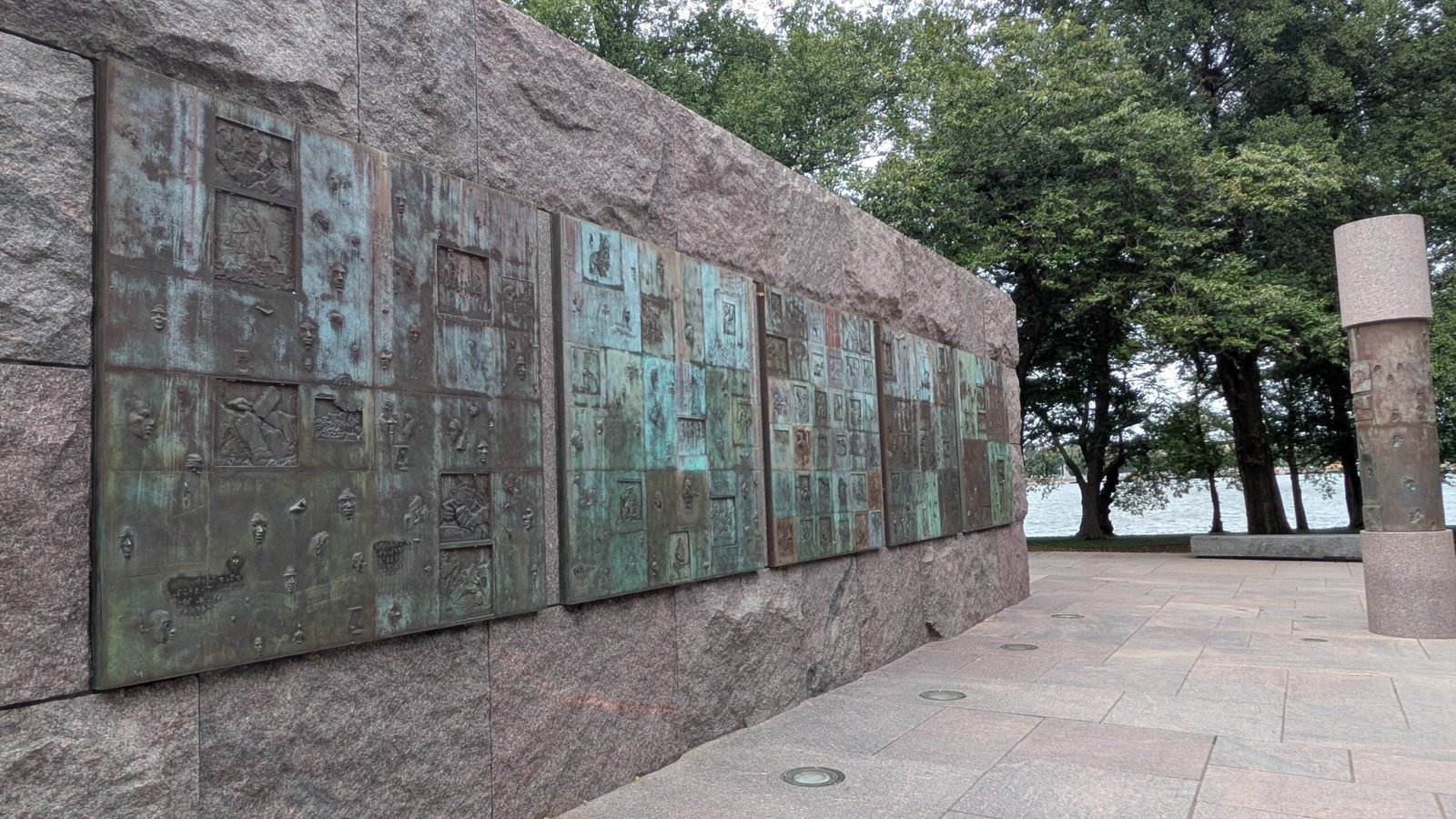
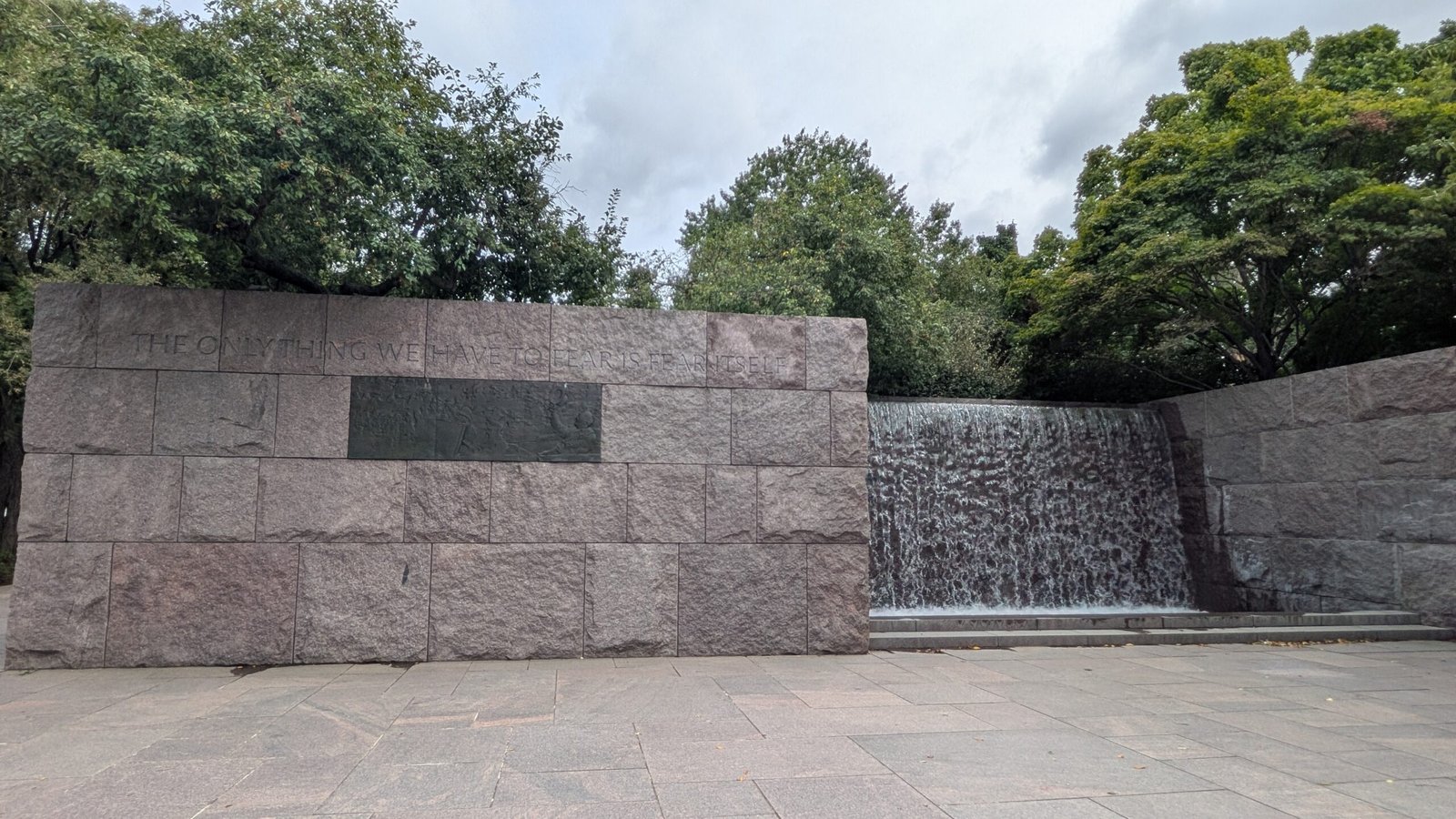
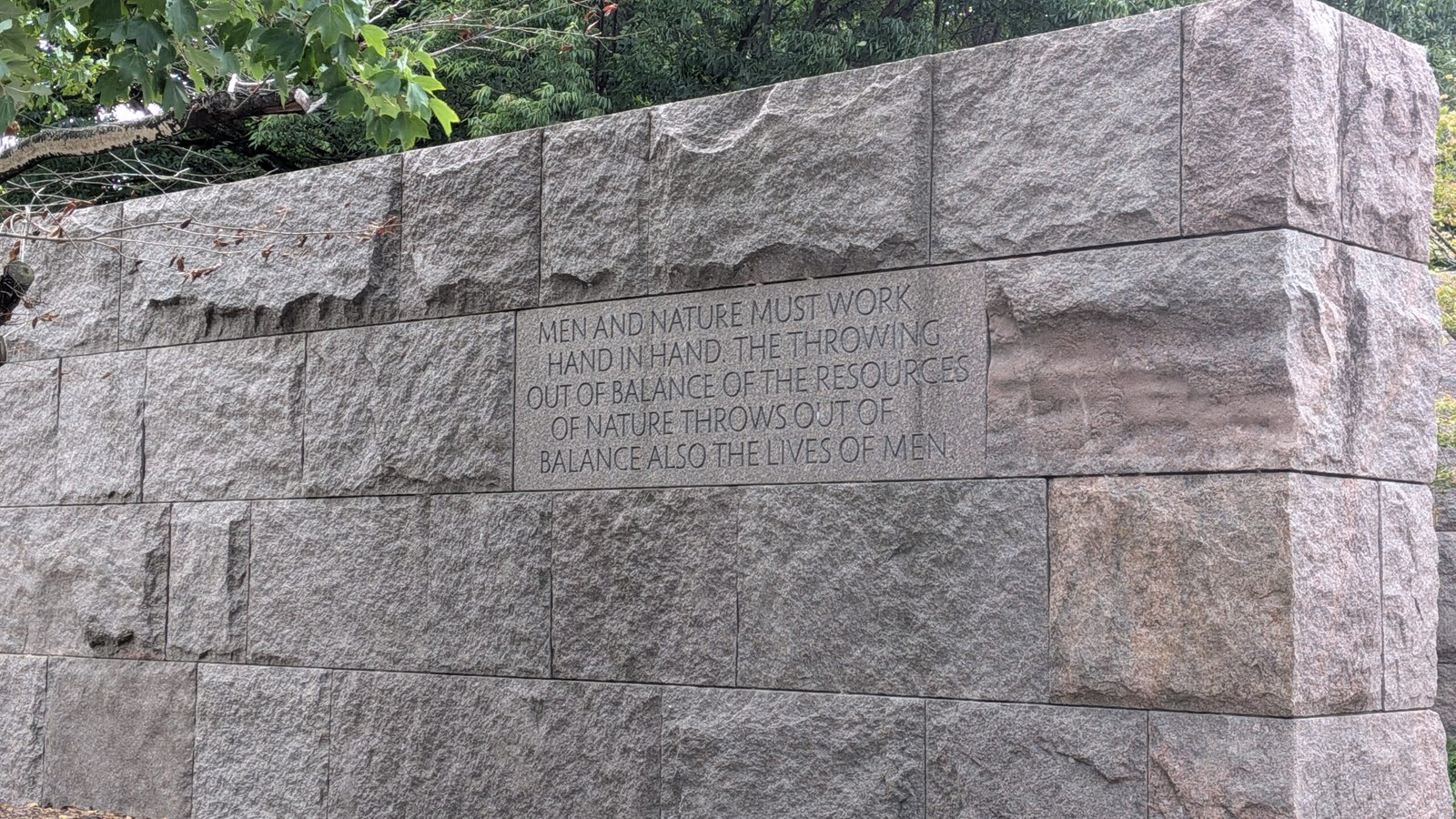
Spread across more than seven acres, the memorial is designed less like a single monument and more like a walk through history. The different sections represent periods of Franklin D. Roosevelt’s presidency, including the Great Depression and World War II, using massive stone walls, sculptures, waterfalls, and excerpts from his speeches to tell the story.
There are plenty of details to discover along the way. One section depicts the hardships of the Great Depression, while another incorporates imagery from World War II. The memorial also acknowledges Roosevelt’s disability and his use of a wheelchair—something that was largely kept out of public view during his presidency.
Rather than simply arriving at a statue, taking a photo, and moving on, this stop invites you to walk through the story. Each section adds another piece to the timeline, making it easy to spend much longer here if you have the time.
Eleanor Roosevelt Memorial
Just beyond the FDR Memorial, the route continued around the Tidal Basin to a smaller but equally interesting stop—the Eleanor Roosevelt Memorial.
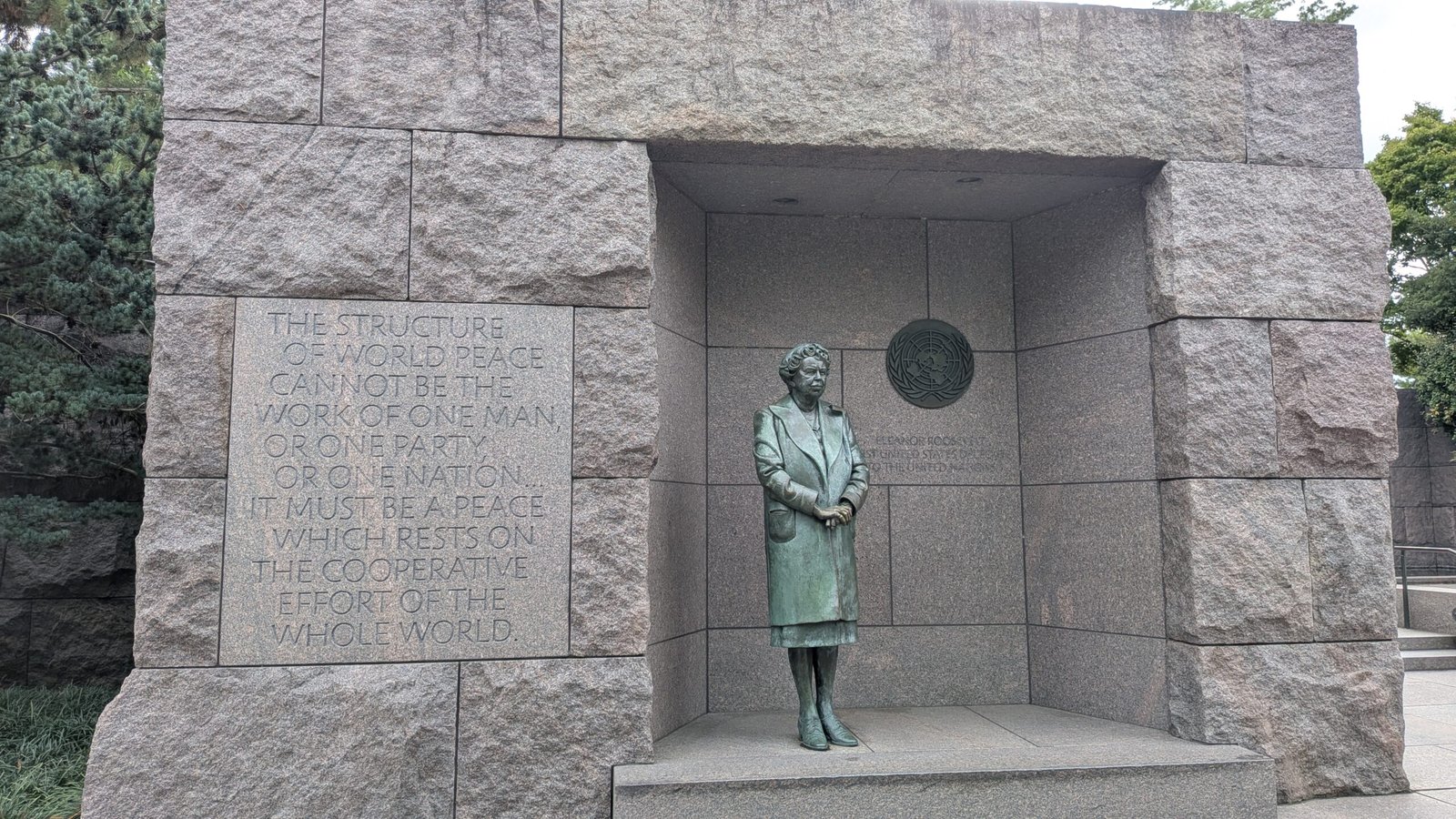
After the expansive FDR Memorial, this one feels much more intimate. The centerpiece is a bronze statue of Eleanor Roosevelt, standing beside a stone inscribed with a passage from the Universal Declaration of Human Rights.
There’s an interesting piece of history behind that connection. Following World War II, Eleanor Roosevelt played an important role in the development of the declaration and served as chair of the United Nations committee that helped draft it.
It’s easy to overlook this memorial when there are much larger and more famous landmarks nearby, but that’s part of what makes it a fun addition to the route. As the loop continued around the Tidal Basin, it offered another opportunity to discover a piece of history that might otherwise have been missed.
Around the Tidal Basin
From the Eleanor Roosevelt Memorial, the route continued around the Tidal Basin, gradually bringing us back toward the Thomas Jefferson Memorial where the loop had begun.
This stretch of the walk was almost as enjoyable as the memorials themselves. The Tidal Basin naturally connects several major landmarks, and the scenery keeps changing as you make your way around the water. A monument that looked one way from the National Mall can take on a completely different feel when viewed from across the basin.
It was also a nice chance to slow down for a few minutes, take in the waterfront views, and look back at just how much ground the route had covered. Several major pieces of American history had come together within a relatively short walking loop.
A Quick Stop for George Mason
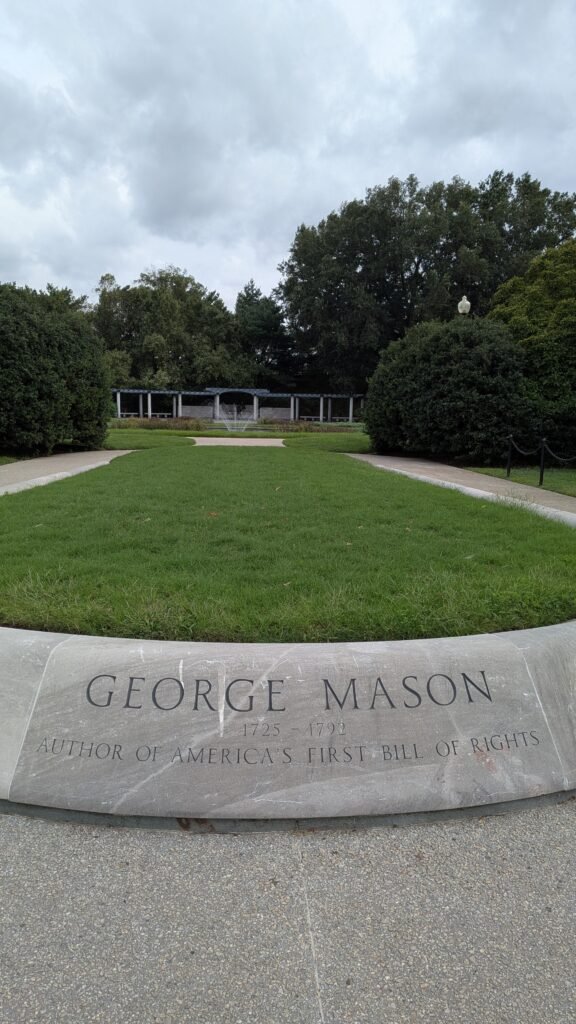
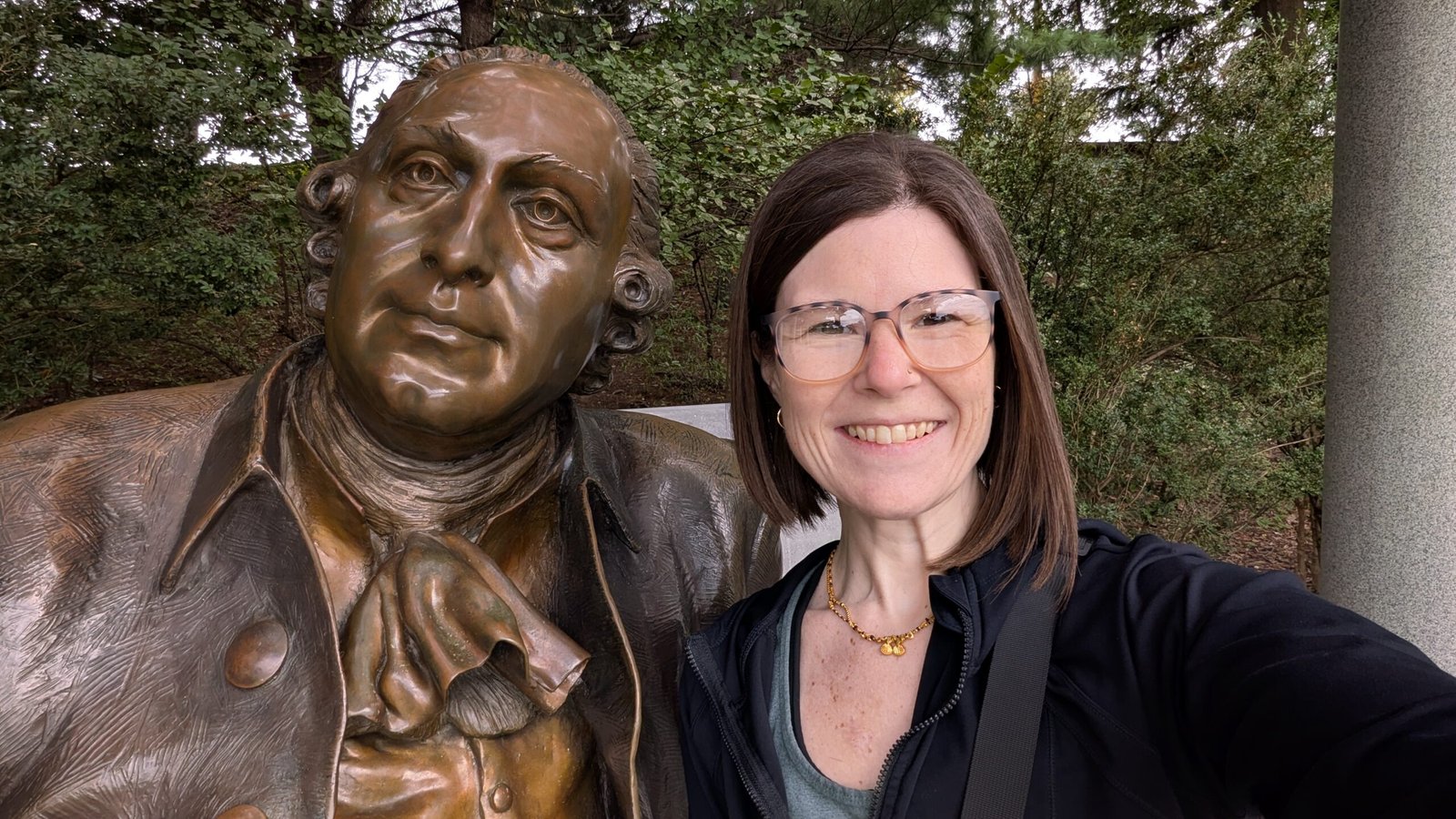
Before making the final walk back to the car, the route included one last stop at the George Mason Memorial.
George Mason may not have the same instant name recognition as Jefferson, Washington, or Lincoln, but his influence on the early ideas of American government is worth discovering. Mason was the principal author of the Virginia Declaration of Rights, adopted in 1776, which helped shape the thinking that would eventually influence the U.S. Bill of Rights.
The memorial itself is tucked into the landscape near the Tidal Basin, making it an easy addition to the route without adding much extra walking. After seeing some of the country’s most famous monuments, it was interesting to finish with someone whose name might not immediately ring a bell—but whose ideas had a lasting impact.
And just like that, the loop had come full circle. A few miles, a couple of hours, plenty of photos, and far more American history than you might expect to fit into a quick stop.
4 Miles, 2.5 Hours & A Lot of American History
All together, the loop came out to roughly 4 miles, covering an impressive collection of Washington, D.C.’s most recognizable landmarks without ever needing to move the car.
In just a few hours, the route took us from the Thomas Jefferson Memorial and Washington Monument, past the World War II Memorial, and on to the Lincoln Memorial. Along the way, there was the unexpected discovery of the National Military Monument—and an even more unexpected family connection when Kayla found her great-grandfather’s name among the millions of service members honored there.
From the Lincoln Memorial, the route continued to the Korean War Veterans Memorial, Martin Luther King Jr. Memorial, Franklin Delano Roosevelt Memorial, Eleanor Roosevelt Memorial, and finally the George Mason Memorial before completing the loop back near the Tidal Basin.
Was 2.5 hours enough to truly experience all of these places? Definitely not. Washington, D.C. has enough museums, monuments, memorials, and historic sites to fill days—or even multiple trips. But was it enough to get a fantastic introduction to the city and see an incredible number of highlights? Absolutely.
The key was keeping the route moving and treating it as a sightseeing adventure rather than a deep dive into every landmark. There was time for photos, quick explorations, interesting historical tidbits, and plenty of those “Wow, this is even more impressive in person” moments.
For anyone who finds themselves near Washington, D.C. with a few hours to spare—whether it’s part of a road trip, layover, conference, or simply an unexpected opportunity to explore—this 4-mile walking loop is a great way to experience a lot without constantly getting back in the car.
Wear comfortable shoes, bring some water, keep an eye on the clock, and leave a little room for the unexpected. Because as this adventure proved, sometimes the best part of a quick sightseeing stop isn’t even the landmark you planned to see.
And remember: the map may say it’s close. Your feet might have a slightly different opinion.