
One Day in Geneva
We spent one full day exploring Geneva, starting at the United Nations and eventually making our way to the Old Town. Along the way, we walked through colorful neighborhoods, visited the Red Cross Museum, took a boat ride on Lake Geneva, and discovered a few places we hadn’t expected to find.
Geneva is one of those cities that is easy to explore without a car. During our stay, our hotel provided us with a free Geneva Public Transport Card, which made getting around much easier. Geneva’s public transportation network, UNIRESO, connects trams, buses, trains, and the small yellow lake boats known as Mouettes. Having the card meant we could move around the city easily without worrying about buying a separate ticket for each local journey.
For our day in Geneva, we wanted to combine some of the city’s best-known landmarks with history, architecture, lake views, and plenty of time to simply walk and see where the streets took us. Rather than rushing from one attraction to another, we let the day unfold as we explored Geneva on foot and by public transportation.
 Broken Chair — A Powerful Welcome to Geneva
 Broken Chair — A Powerful Welcome to Geneva
Our first stop was the Broken Chair, located directly across from the Palace of Nations.
At first glance, the giant wooden chair is hard to miss. Standing about 12 meters high, the sculpture has one broken leg and was created by Swiss artist Daniel Berset and carpenter Louis Genève. It weighs approximately 5.5 tons.
But the Broken Chair is more than an unusual piece of public art. It was created as a symbol against landmines and cluster bombs, making its location in front of the United Nations especially meaningful.
Standing beneath the enormous broken leg, we could immediately see why this sculpture has become one of Geneva’s recognizable landmarks. It is simple, striking, and carries a message much larger than the sculpture itself.
Don’t Miss: Take a moment to look beyond the sculpture. The Palace of Nations is directly across the street, making this an easy stop to combine with a visit to the United Nations.
 United Nations — A Look Inside International Geneva
 United Nations — A Look Inside International Geneva
Palais des Nations — The Heart of International Geneva
From the Broken Chair, we continued toward the Palais des Nations, the European headquarters of the United Nations. Geneva has long been associated with international diplomacy and humanitarian work, and seeing the enormous complex in person gave us a better sense of the city’s role on the world stage.
We explored the area around the Palais des Nations from the outside and did not take the guided tour. Even from outside, the scale of the complex and the international atmosphere made this an interesting stop along our walk.
If you want to explore the interior, guided tours are available and provide access to some of the building’s important meeting rooms, exhibits, and artworks. Visitors should enter through the Pregny Gate at 14 Avenue de la Paix, and a passport or valid identification is required. Security screening is also part of the visit, so allow extra time if you plan to take the tour.
For us, simply standing outside was enough to appreciate the significance of the place. Together with the Broken Chair, the Palais des Nations made a memorable start to our Geneva day.
Visitor Tip: If you are interested in taking the guided tour, check the current schedule, admission requirements, and security procedures before your visit, as these can change.


After the more serious side of Geneva, it was time for something completely different.
We headed toward the Les Grottes neighborhood, near Geneva’s main train station, to see one of the city’s most unusual architectural sights—the colorful Smurfs Buildings, also known as Schtrumpfs.
Located around Rue Louis-Favre, these apartment buildings look almost as though they belong in a cartoon.
The colorful facades, unusual shapes, curved balconies, and mixture of architectural styles make them stand out from the more traditional buildings around Geneva. The buildings were designed by three architects who wanted to create something unconventional, and they certainly succeeded.
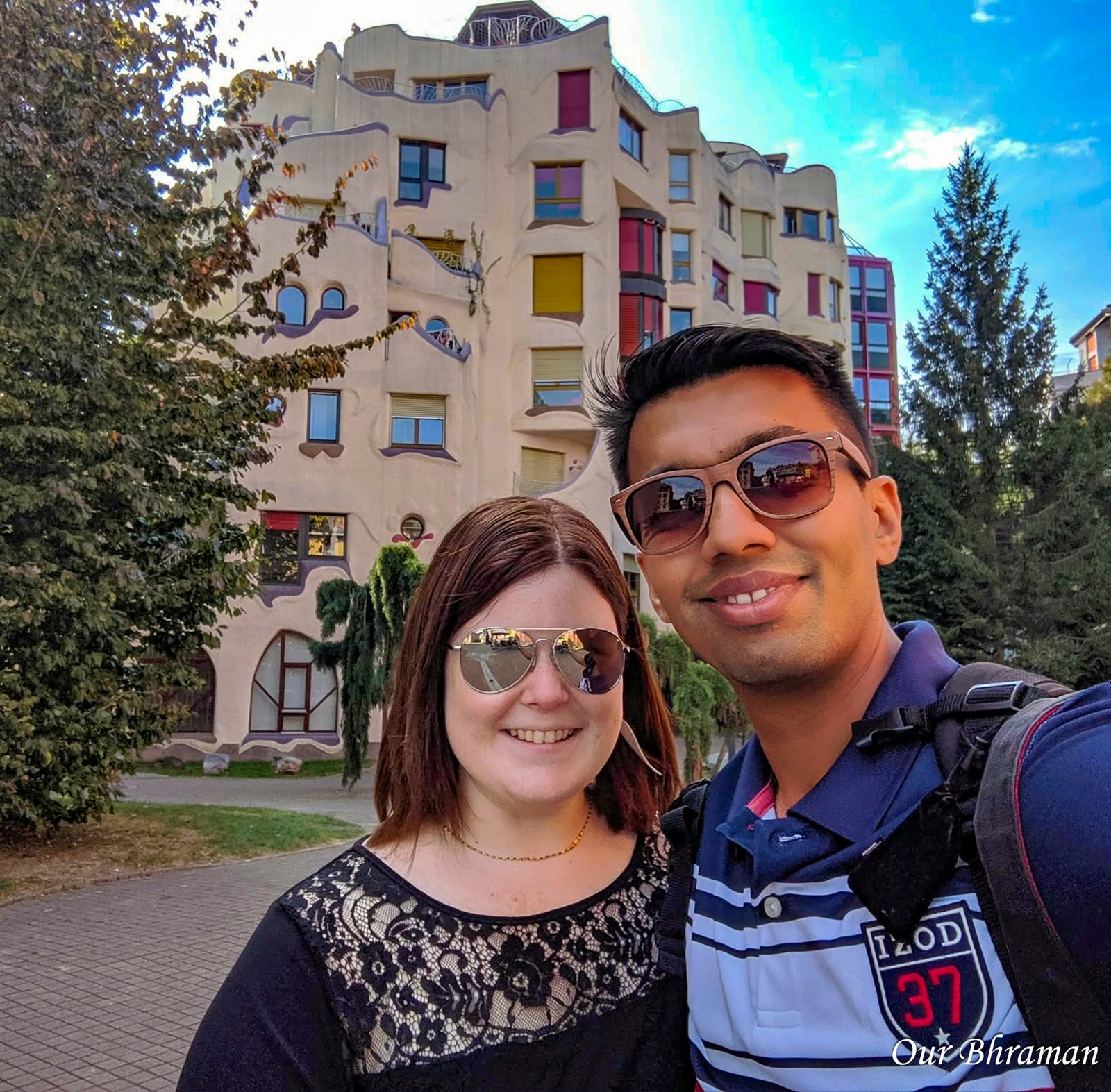 This was one of those stops that reminded us why we enjoy exploring cities on foot. You don’t always need a famous monument to make a place interesting. Sometimes, a strange and colorful apartment building tucked away in a neighborhood can be just as memorable.After exploring Geneva’s most colorful neighborhood, we headed toward the lake for a completely different view of the city.

From Les Grottes, we continued toward the lake.
As we approached Pont du Mont-Blanc, the city began to open up, and the views changed completely. The buildings gave way to the water, mountains, boats, and one of Geneva’s most recognizable sights—the Jet d’Eau.
Along the way, you will also find operators offering boat trips on Lake Geneva. If you have extra time, a short lake cruise can be another way to experience the city from the water.
For us, simply walking toward the bridge was part of the experience. Geneva felt different here—more open, more relaxed, and with the lake constantly drawing our attention.
Jet d’Eau — Geneva’s Famous Watermark
The Jet d’Eau is probably the most recognizable symbol of Geneva.
The enormous fountain sends water approximately 140 meters (459 feet) into the air above Lake Geneva. It has become such an important part of the city’s skyline that it is difficult to imagine Geneva without it.
But the fountain wasn’t originally created as a tourist attraction.
The Jet d’Eau began in 1886 as a technical solution to release excess pressure from a hydraulic power system. People became fascinated by the enormous jet of water, and the fountain was eventually moved to its present location on the lake.
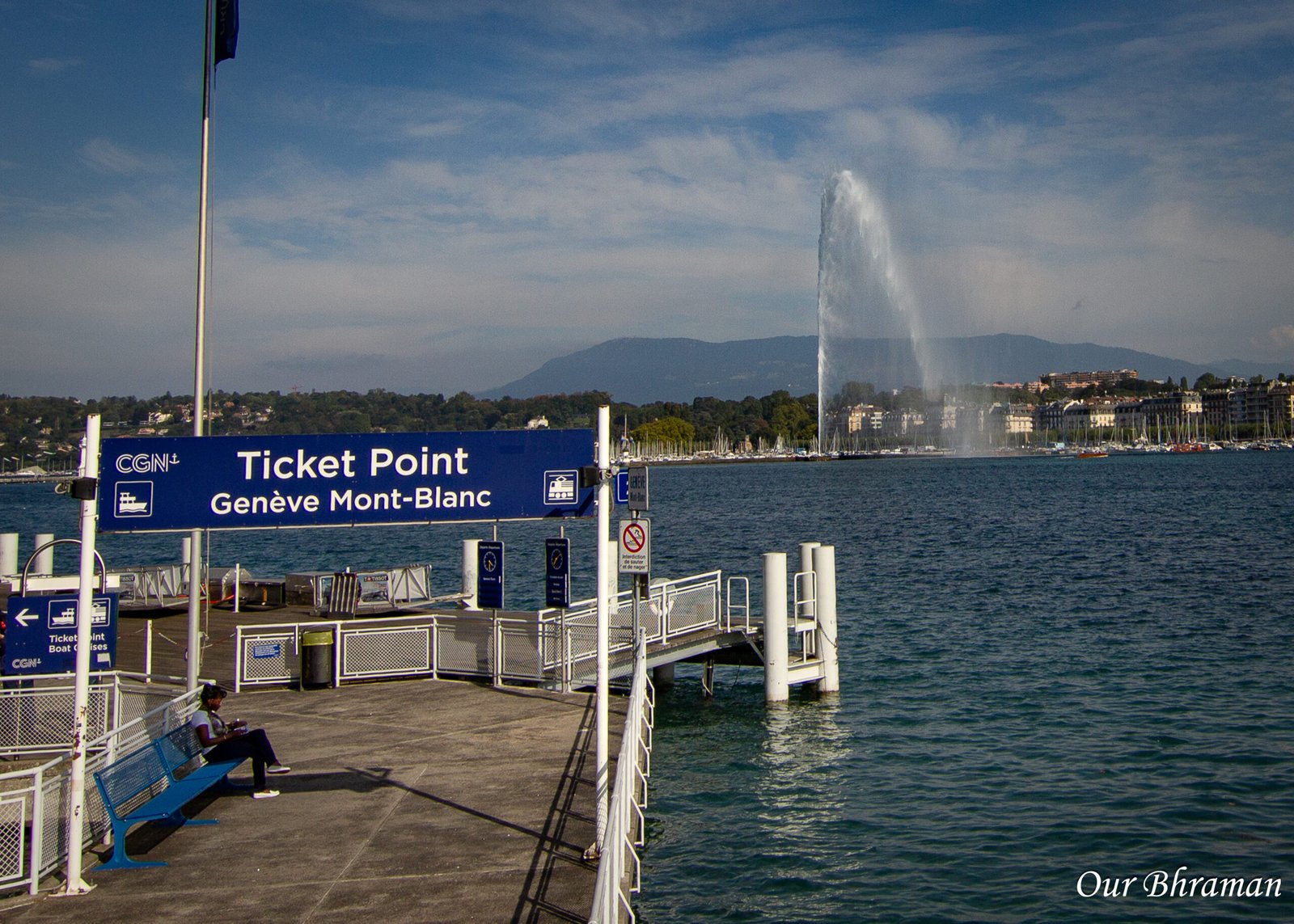
Today, water shoots from the nozzle at an incredible speed, creating the tall plume that has become one of Geneva’s most photographed sights.
Depending on the wind and weather, you may even feel some of the mist from the fountain.
Photography Tip: The Jet d’Eau looks different from different parts of the waterfront. Don’t rush to take just one photograph. As you walk along the lake, look for views that include the fountain, boats, bridge, and city skyline together.
Pont du Mont-Blanc — Crossing the Lake
We continued across Pont du Mont-Blanc, one of the main bridges connecting the two sides of Geneva.
The bridge gives you another perspective of the lake and the Jet d’Eau. Looking back toward the water, you can see how closely Geneva’s city center is connected to the lake.
If you are tired from walking, this is also a good point to consider using public transportation—or simply taking a short break and enjoying the view.
One of the nice things about Geneva is that you don’t have to constantly rush from one attraction to another. Some of our favorite moments came simply from walking between the places we had planned to visit.
 Cruising Lake Geneva
 Cruising Lake Geneva
From Pont du Mont-Blanc, we decided to take a boat ride on Lake Geneva. Because we had a Swiss Travel Pass, our boat ride was covered, so we decided to experience Geneva from the water.
 Once we were out on the lake, Geneva looked completely different from the water. We passed the Phare des Pâquis, the historic lighthouse standing at the end of the Pâquis jetty, with colorful windsocks stretching across the sky. Looking back toward the city, we could see Pont du Mont-Blanc, the waterfront, and the grand buildings lining the shore. The Jet d’Eau, Geneva’s most recognizable landmark, was another highlight of the lake views.
As the boat moved farther along the waterfront, we enjoyed the combination of blue water, the Geneva skyline, distant mountains, and the Swiss flag waving from the boat. It was a relaxing change from walking through the city and gave us a chance to see some of Geneva’s most familiar sights from a completely different perspective.
For us, the boat ride wasn’t really about getting somewhere—it was about slowing down and enjoying Geneva from the water. And since it was covered by our Swiss Travel Pass, it was an easy experience to add to our day.

Geneva and Helvetia Statue
After coming back from our cruise, we continued exploring the area around Lake Geneva. One of the first things we noticed was the National Monument, standing in the middle of a flower-filled square near the waterfront. The bronze monument features two women—representing Geneva and Helvetia—standing side by side with swords and shields. It commemorates Geneva’s joining the Swiss Confederation in 1814, an important moment in the city’s history.
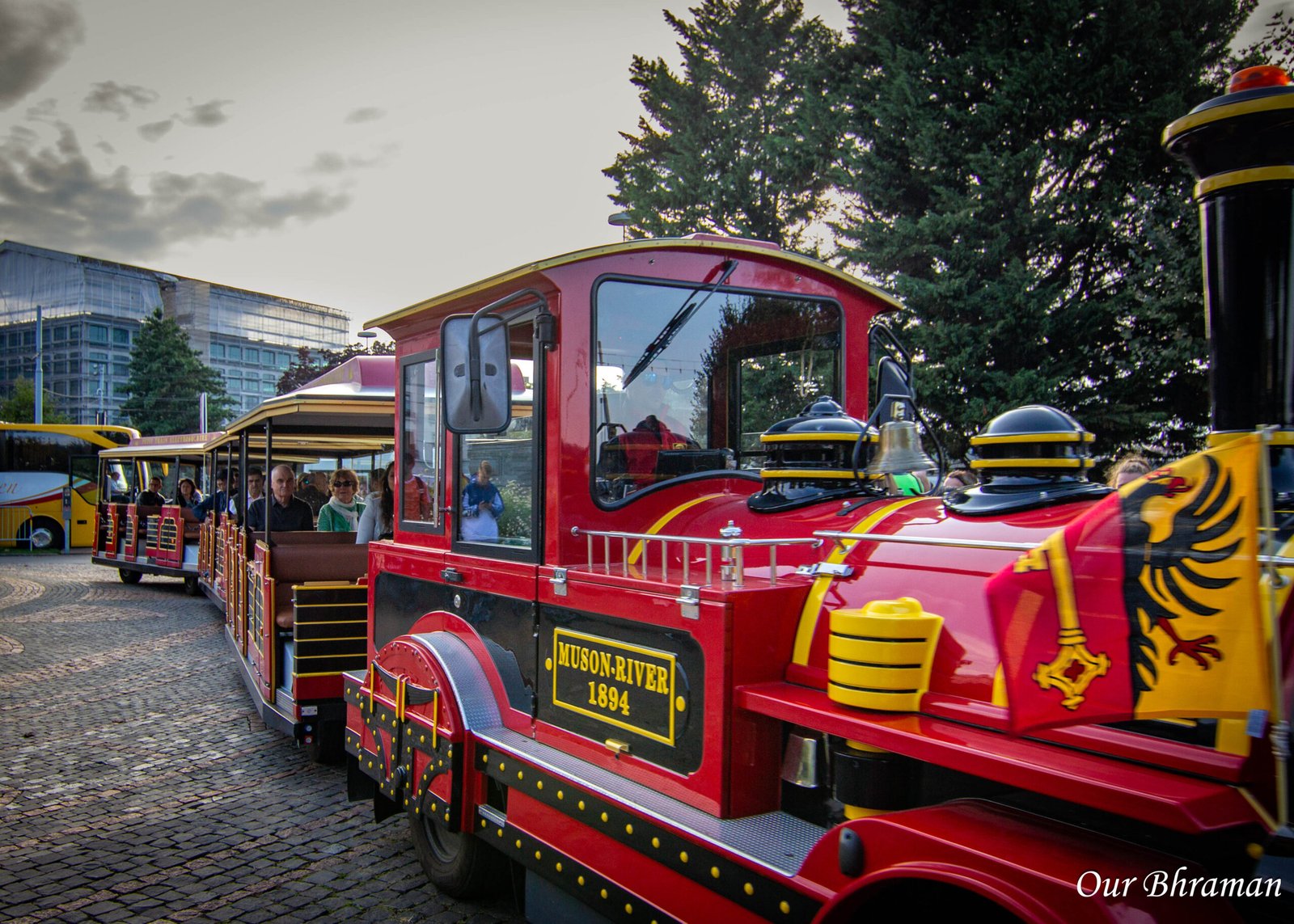
 Just nearby, we spotted something much more playful—a colorful miniature sightseeing train waiting to take passengers around the lakeside area. With its bright red-and-yellow design, it looked like the kind of attraction that could appeal to both children and adults. After spending time on the water, seeing families enjoying the little train added a completely different energy to our afternoon. It was a simple but fun sight as we continued our walk along the lake before moving on to the next stop.

After crossing the bridge, we continued toward the Jardin Anglais and L’Horloge Fleurie, Geneva’s famous Flower Clock.
Geneva is internationally known for its watchmaking tradition, so creating a clock made entirely from flowers feels like a perfect tribute to the city.
The Flower Clock was created in 1955 and quickly became one of Geneva’s most recognizable attractions.
What makes it especially interesting is that it isn’t exactly the same throughout the year. Because the clock is made with seasonal flowers, its appearance changes as different plants bloom.
It is a small stop, but an easy one to include while walking through the city center.
Don’t Miss: Look closely at the flowers and landscaping around the clock rather than treating it as just a quick photo stop.

Place du Molard — A Historic Square in the Heart of Geneva
From the Flower Clock, we continued walking toward Place du Molard, a lively square in the heart of Geneva. During the day, the square was surrounded by cafés, restaurants, shops, and people going about their day, making it a nice place to simply walk through and take in the atmosphere.
One detail we noticed was the unusual cobblestone pavement, which gives the square much of its character. The stones are decorated with words connected to peace and welcome in different languages, reflecting Geneva’s international identity and its role as a meeting place for people from around the world.
We visited during the daylight, so we didn’t get to see the square’s nighttime transformation. After dark, hundreds of small lights embedded in the pavement illuminate the cobblestones, creating the appearance of a starry sky beneath your feet. If you have extra time in Geneva, it would be worth passing through Place du Molard again after sunset to see this different side of the square.
From Place du Molard, we made our way deeper into Geneva’s Old Town, where the streets became narrower and more historic. Along the way, we came across L’Ancien Arsenal on Grand-Rue. This former arsenal is easy to miss, but it features several old cannons and colorful mosaics depicting military scenes. It isn’t a large attraction, but it was an interesting little discovery as we wandered through the Old Town.

Our walk eventually brought us to Place du Bourg-de-Four, one of the oldest and most recognizable squares in Geneva. Surrounded by historic buildings, cafés, and terraces, it is a natural gathering place in the heart of the Old Town. From here, the streets begin to lead uphill toward St. Pierre Cathedral and the Promenade de la Treille.
Promenade de la Treille — When the Steps Started Winning
 Promenade de la Treille — When the Steps Started Winning
From the Old Town, we continued uphill toward the Promenade de la Treille and the famous Banc de la Treille. By this point, we had already spent much of the day walking around Geneva, and the uphill steps were starting to catch up with us.
 Kayla’s expression in our photo pretty much tells the whole story. 😂 After hours of exploring, those steps suddenly felt a lot longer than they looked.
Promenade de la Treille
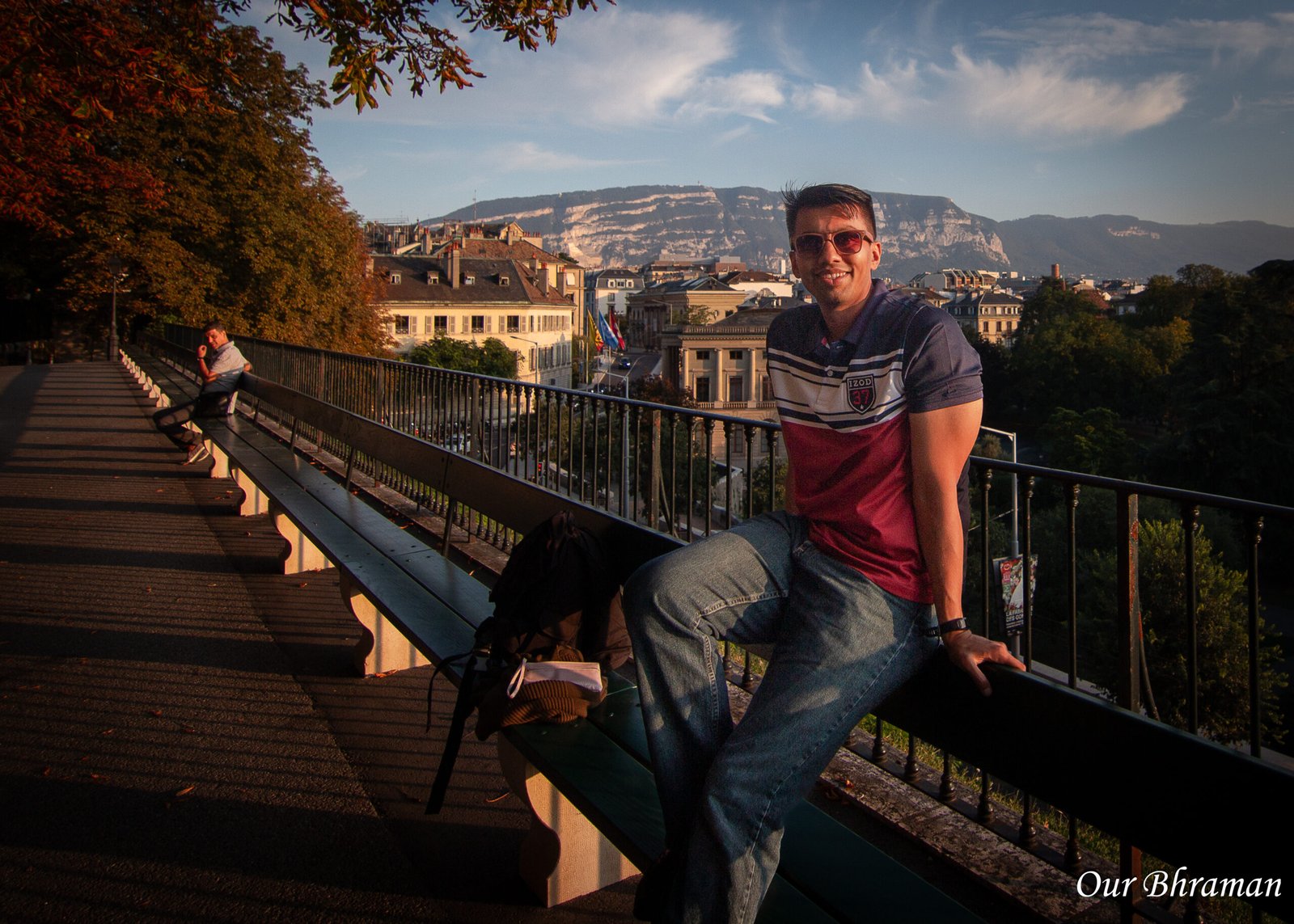
At the top, we finally reached the Promenade de la Treille and its famous Banc de la Treille. At 120 meters (394 feet) long, it is recognized as the world’s longest wooden bench and stretches along much of the promenade. The historic bench was built in 1767 using 180 wooden planks, making it an interesting piece of Geneva’s history as well as a convenient place to rest.
After all the walking and those uphill steps, we were more than happy to take advantage of it. We sat down, caught our breath, and enjoyed the views toward Parc des Bastions and Mont Salève. The tree-lined promenade made it feel like a natural pause in our Old Town walk.
For us, this became another reminder that travel isn’t always about how many places you can squeeze into one day. Sometimes the best moments come after the walking, when you finally find a place to sit, catch your breath, laugh about how tired you are, and appreciate where you are.

After exploring Geneva’s Old Town, we headed toward the Viaduc de la Jonction, one of the city’s most interesting spots for photography. The viaduct overlooks the place where the Rhône and Arve rivers meet, and the view is surprisingly dramatic. From above, you can clearly see two rivers flowing together while still keeping their distinct colors for a while.
 The difference in color isn’t just an optical effect. The Rhône has clearer, more turquoise-colored water, while the Arve carries more sediment and appears much cloudier or grayish. The two rivers come from different places and have different flows, so when they meet, the contrast creates a natural dividing line that is especially easy to see from the viaduct.
What also caught our attention was the graffiti along the viaduct and surrounding structures. Against the concrete and industrial setting, the colorful artwork gave the area a completely different character. It felt less polished than the historic center of Geneva, but that was part of what made it interesting.
We were there around sunset, and the changing light added another layer to the scene. The warm evening light reflected off the water and surrounding trees while the sky slowly changed color. With hardly anyone around, the area felt surprisingly quiet and peaceful. It was hard to believe we were still in a city like Geneva.
 Standing there and watching the two rivers come together, with the graffiti, evening light, and almost complete silence around us, was one of those unexpected travel moments we didn’t really plan for. Sometimes the places that stay with you aren’t the famous landmarks—they’re the quiet corners where you simply stop and look around.