
Mount Rainier National Park is one of Washington’s most recognizable natural landmarks. Dominated by the towering presence of Mount Rainier, the park brings together mountain views, alpine landscapes, old-growth forests, rivers, waterfalls, and scenic roads. There is plenty to explore, and seeing it all in one visit can be a challenge.
We have visited Mount Rainier twice, in 2017 and again in 2024, but the two trips were quite different.
 Our first visit in 2017 was a dedicated one-day road trip. We started early and spent the day driving through different sections of the park, stopping at scenic viewpoints, hiking among enormous old-growth trees, exploring a deep canyon, and visiting waterfalls. We tried to cover as much ground as possible, although a few places had to be left for another time.
In 2024, Mount Rainier was a stop on our drive back from the Canadian national parks to Seattle, where we were catching our flight home. With only about four to five hours available, we focused on a couple of familiar highlights: Reflection Lakes and Narada Falls.
Looking back, these two visits gave us different ways to experience the park. The first was about exploring as much as we could; the second was about returning to a few places that had stayed with us.
1. Our First Visit in 2017: Exploring Mount Rainier in One Day
We started bright and early for the approximately two-and-a-half-hour drive to Mount Rainier National Park. The drive took us through small towns and along winding mountain roads. As we got closer to the park, cell service became unreliable, and the scenery gradually became more interesting.
Skookum Falls: Our First Stop
Our first stop was Skookum Falls. It was the dry season, and there was no visible waterfall during our visit. Still, we made the most of the stop with a little photo session before continuing toward the park.

Entering Through White River and Heading Toward Sunrise
We entered the park through the White River Entrance. At the time, the entrance fee was $25 per vehicle. As we continued along the winding road toward Sunrise, we came across a small roadside pullout that offered our first impressive views of Mount Rainier.
It was one of those moments when you naturally reach for your camera. We stopped, took photographs, and spent some time appreciating the mountain before moving on.
Sunrise Visitor Center: Mountain Views and a Starting Point for Exploration
Our next major stop was the Sunrise Visitor Center, located at an elevation of 6,400 feet. It is the highest point in Mount Rainier National Park that visitors can reach by vehicle. The first thing that stands out here is the incredible mountain scenery. On a clear day, you can enjoy impressive views of Mount Rainier, Emmons Glacier, and the surrounding Cascade Range.
 We also took a short walk toward Sunrise Lake. It was a nice opportunity to get away from the visitor center and see the mountain from different viewpoints along the trail. The walk was relatively easy and did not take too much time, making it a good addition to our stop at Sunrise. The trail eventually leads to a beautiful alpine lake surrounded by evergreen trees. We spent a little time enjoying the blue-green water and forest scenery before heading back.
 Sunrise offers several hiking options, from short nature walks to more challenging trails. Even if you are not planning a long hike, the visitor center area itself offers plenty of beautiful views and is worth spending some time exploring.
 Grove of the Patriarchs: Walking Among Giant Trees
 Grove of the Patriarchs: Walking Among Giant Trees
From the Sunrise area, we continued toward the Stevens Canyon side of the park. One of the places we were especially glad to visit was the Grove of the Patriarchs.
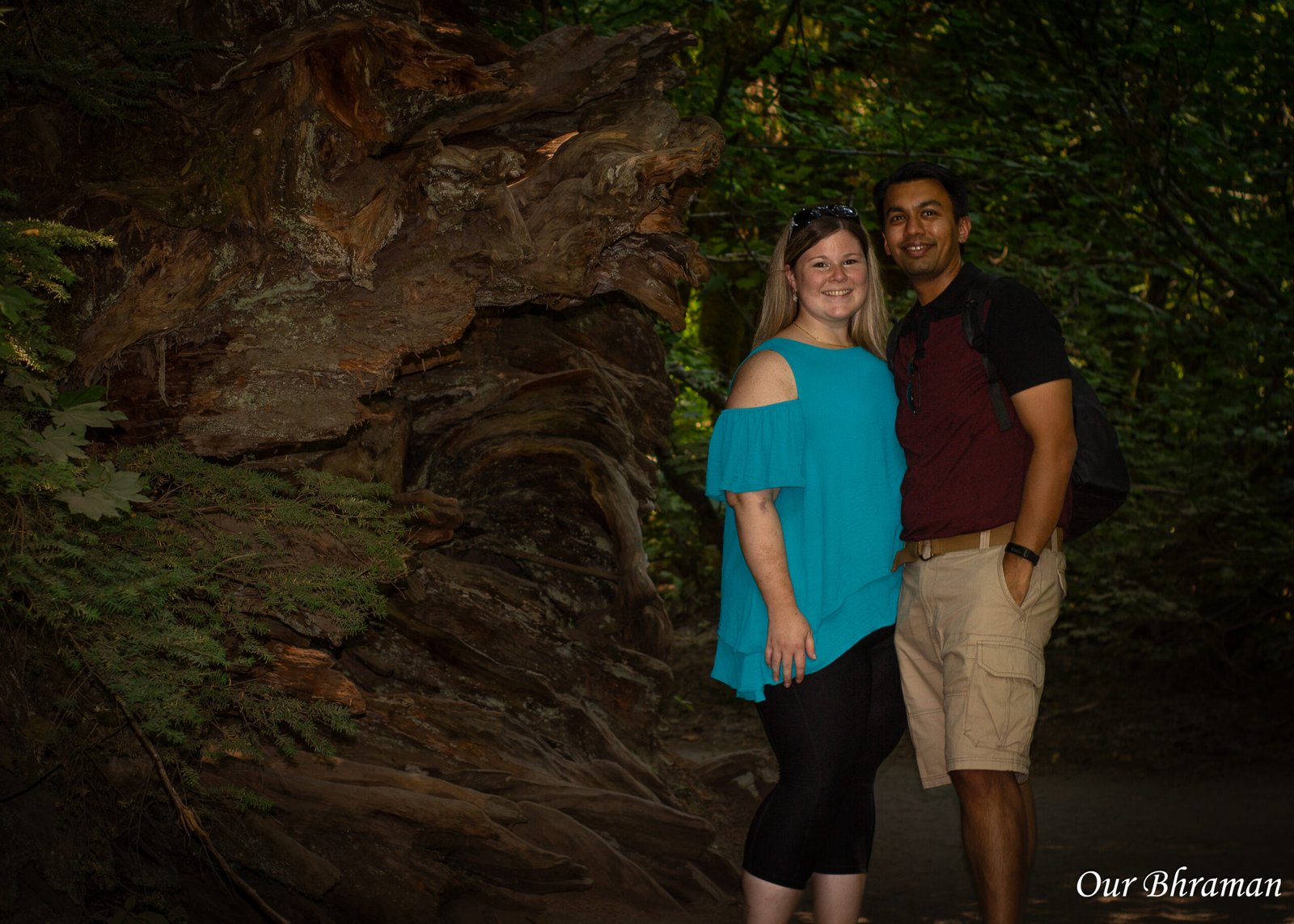
This was one of our favorite trails from the day. The moment we entered the forest, the surroundings felt different from the open mountain viewpoints we had visited earlier. We were surrounded by enormous old-growth trees, some of the largest we had seen at that point. Walking beneath their towering trunks and through the quiet forest made us feel quite small in comparison. The peaceful atmosphere and the sheer size of these trees made this walk particularly memorable.

The trail traditionally followed a short route through the forest, crossing a suspension bridge over the Ohanapecosh River to reach a small island filled with ancient Douglas firs, western red cedars, and western hemlocks. Boardwalks and dirt paths allowed visitors to walk among these impressive trees while learning about the old-growth forest.
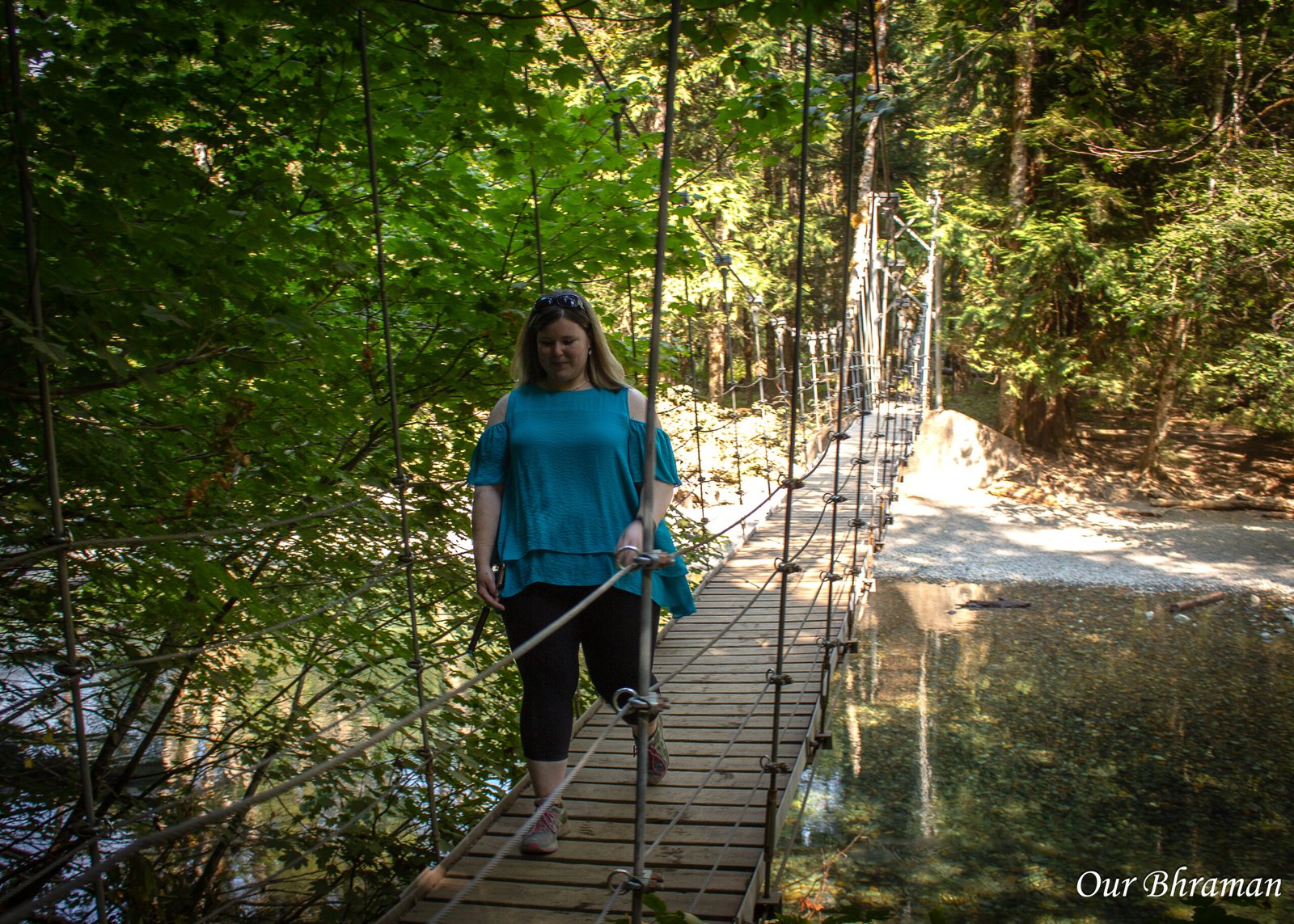
Unfortunately, this trail is no longer accessible to visitors. Severe flooding in November 2021 damaged the suspension bridge, which was the only safe access to the grove. The National Park Service subsequently closed the area to protect visitors. As of November 2026, the Grove of the Patriarchs remains closed, with bridge replacement and trail reconstruction planned for the 2027 and 2028 construction seasons.

Although visitors can still explore other nearby trails when they are open, they cannot currently access the ancient trees on the island. We feel fortunate that we had the opportunity to experience this special place before the closure. It remains one of the most memorable walks from our first visit to Mount Rainier.

Box Canyon: A Deep Natural Gorge
Our next stop was Box Canyon, another interesting spot along Stevens Canyon Road. After spending time among the giant trees at Grove of the Patriarchs, this was a completely different landscape.
Box Canyon is a narrow gorge carved by the Muddy Fork of the Cowlitz River. What makes it fascinating is how deep and narrow the canyon is. At its narrowest point, the gorge is only about 13 feet wide but approximately 115 feet deep. The river below continues to cut through the rock, carrying glacial meltwater down from Mount Rainier.
One of the best views is from the historic Box Canyon Bridge, built between 1950 and 1952. Looking down from the bridge, you can see the river rushing through the narrow rocky passage far below. The contrast between the deep canyon, steep rock walls, and surrounding green forest makes this a great spot for photographs.
 There is also a short, approximately half-mile loop trail that takes you around the canyon. The paved path follows the canyon edge, crosses a small wooden footbridge, and brings you back toward Stevens Canyon Road. There are a few steps along the western side, but it is a relatively short walk. Along the way, you can get a different perspective of the gorge and notice the smooth, glacier-polished rocks surrounding the trail.
We found Box Canyon to be a worthwhile stop during our drive through the park. It does not require a long hike or much time, but it offers an interesting look at how water and glaciers have shaped the landscape of Mount Rainier.

Reflection Lakes: A Scenic Roadside Photo Stop
As we continued along Stevens Canyon Road, we reached Reflection Lakes, one of the most photographed spots in Mount Rainier National Park. Unlike some of the park’s attractions that require a hike, this is an easy roadside stop where you can park your car and enjoy beautiful views of Mount Rainier.
The lakes sit in a scenic subalpine setting, surrounded by evergreen trees and mountain slopes, with Mount Rainier rising in the background. As the name suggests, the lakes are known for reflecting the mountain on their surface. When the water is calm, the reflection can create a beautiful mirror image of Mount Rainier, making it a favorite spot for landscape photography.
We stopped here to take photographs and enjoy the view. Even from the roadside, the scenery offers plenty of opportunities to capture the mountain, the surrounding forest, and its reflection in the water. It is the kind of place where you can take a short break from driving, step out with your camera, and simply enjoy the landscape.

Reflection Lakes is also a starting point for longer walks and hikes, including the Lakes Trail and the Pinnacle Peak Trail. But if you are short on time, even a brief stop at the roadside viewpoint is worthwhile. Just remember that the famous reflection depends on the conditions; calm water and still air, often found in the early morning, offer the best chance of seeing it.
Paradise: A Stop We Had to Skip
Paradise was next on our list, but by the time we arrived, the parking area was extremely crowded. We drove around looking for a place to park, but with daylight running out and several stops still behind us, we decided not to spend more time waiting.
We even wondered, after seeing so much of the mountain already, how different the views at Paradise could be. Looking back, it is one of the places we would have liked to explore more thoroughly, but sometimes a road trip requires a few compromises.
 Narada Falls: A Short but Steep Hike to a Different Perspective
 Narada Falls: A Short but Steep Hike to a Different Perspective
After leaving the Paradise area, we continued along the road. Somewhere along the way, we even found ourselves driving through a campground before getting back on track toward Narada Falls.
Narada Falls was one of the stops we were glad we didn’t miss. You can see the waterfall from the roadside viewpoint, but we decided to take the trail down for a closer look. The hike is relatively short, but don’t let the distance fool you. The trail is steep, and the walk back uphill takes some effort.
As we made our way down, the view of the waterfall gradually changed. From the upper viewpoint, you get a wider look at the falls and the surrounding landscape. Further down, you begin to appreciate the height and force of the water as it cascades over the rocky cliff. Getting closer gives you a completely different perspective, with the rushing water and mist making the waterfall feel much more impressive.
For us, the walk was worth the effort. Narada Falls offered a nice change from the mountain viewpoints and forest trails we had explored earlier in the day. It was a beautiful stop and one of the highlights of our first visit to Mount Rainier.
 Longmire Museum and Kautz Creek: The Final Stops
 Longmire Museum and Kautz Creek: The Final Stops
We continued toward Longmire and planned to visit the Longmire Museum. Unfortunately, it was closed by the time we arrived, so we could only pass by the historic area.
Our final stop inside the park was Kautz Creek, located about three miles east of the Nisqually Entrance along SR 706. It was a quieter stop at the end of a long day, and I took some time for a little photo session before we headed out.
We had entered through the White River Entrance that morning and now exited through the Nisqually Entrance, completing a drive across the park.
It had been a full day of driving, short hikes, viewpoints, and unexpected stops. We did not manage to see everything on our list, but the variety of landscapes we experienced made the trip memorable.

Returning in 2024: A Fall Drive Through Mount Rainier
Our second visit to Mount Rainier came in 2024, under very different circumstances. We were driving back toward Seattle after spending time exploring the Canadian national parks, with our flight home approaching. It was also fall, and the changing colors along the roads added another reason to enjoy the drive.
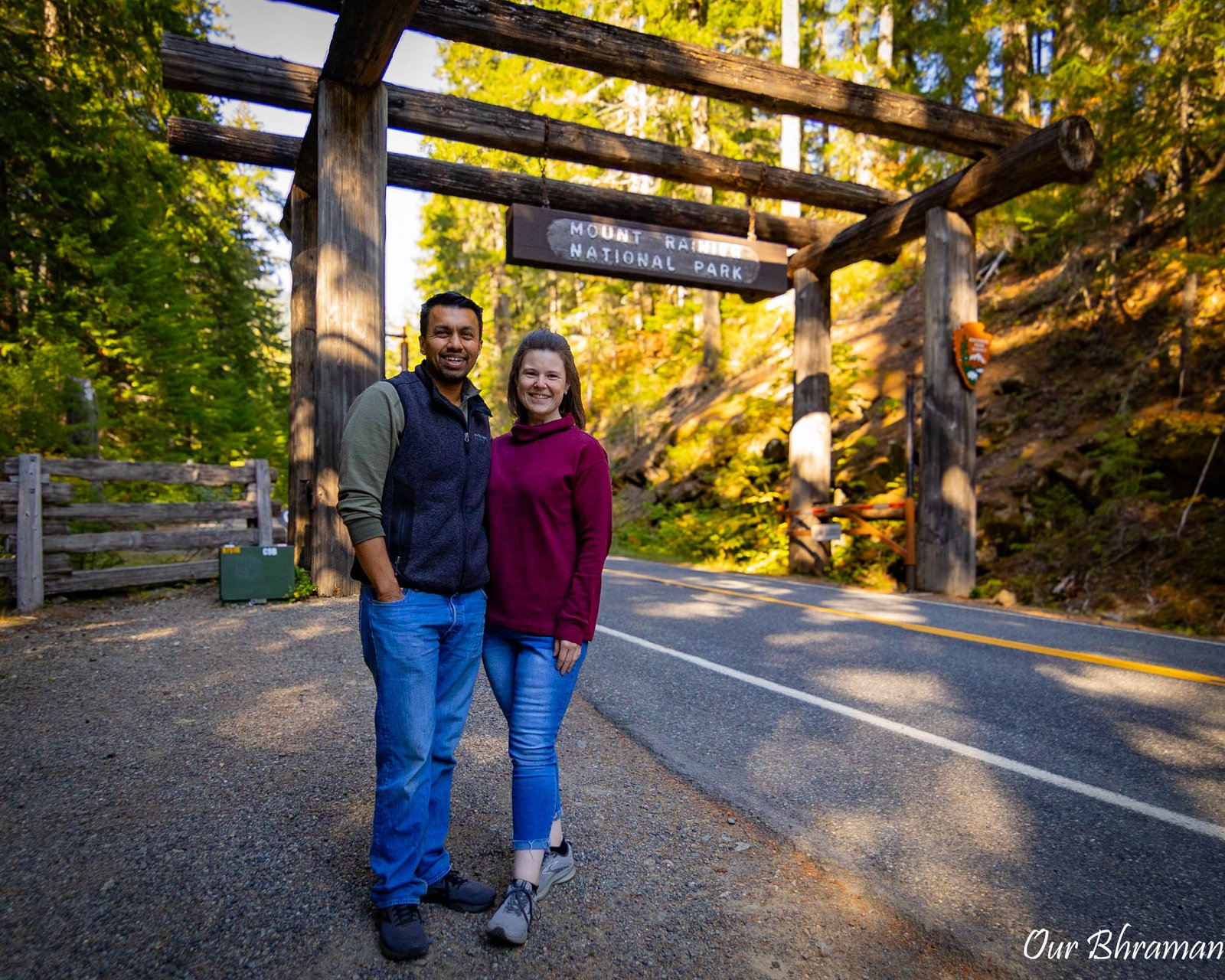 Unlike our first visit in 2017, when we had a full day to explore the park, this time we had only about four to five hours. We decided to make the most of our limited time by revisiting a couple of familiar places and enjoying the mountain scenery along the way.
 Reflection Lakes
 Reflection Lakes
 was one of the highlights of our 2017 visit, so returning here brought back some familiar memories. We stopped to take in the views of Mount Rainier and the surrounding landscape.
 One thing we enjoy about revisiting national parks is seeing how the same place can feel different on another trip. The mountain was still there, but the season, light, and surrounding colors had changed. With fall arriving, the landscape offered a different perspective from what we remembered.
 Narada Falls: A Short but Steep Hike
 Narada Falls: A Short but Steep Hike
Our next stop was Narada Falls. We remembered this waterfall from our first visit and wanted to see it again. Reaching the lower viewpoint involved a short but steep hike, but it was worth the effort.
After spending some time enjoying the waterfall, we made our way back to the car and continued toward Seattle. With limited time and a flight to catch, we couldn’t explore as much as we had in 2017, but these familiar stops made the detour worthwhile.
 Our 2024 visit was brief, but it gave us another opportunity to experience Mount Rainier in a different season. Sometimes, a return visit doesn’t need a long itinerary. A few familiar places, changing fall colors, and time together on the road can make the journey just as memorable.
Final Thoughts
Mount Rainier is a park where the journey between attractions is just as rewarding as the destinations. From mountain viewpoints and reflective lakes to forests and waterfalls, every area offers something different.
Our 2017 visit gave us a full day to explore, while our 2024 return was a shorter stop on the way back from Canada. Both experiences were different, but equally memorable.
Even after two visits, we still have more to explore, particularly around Paradise and its hiking trails. Perhaps that is part of Mount Rainier’s appeal: there is always another reason to return.

Mount Rainier is a large park with several entrances and developed areas. Planning your route is important because some roads and entrances are seasonal and may close during winter.
Park Entrances and Main Areas
White River Entrance: Northeast entrance providing access to Sunrise and White River.
Stevens Canyon Entrance: Connects Stevens Canyon Road, Box Canyon, and the Paradise area.
Nisqually Entrance: Southwest entrance, generally open year-round, providing access to Longmire, Narada Falls, Reflection Lakes, and Paradise.
Sunrise: The highest vehicle-accessible area in the park, open seasonally.
Check road conditions before your visit, as seasonal closures can affect access between different areas.
Driving Around the Park
Driving is a major part of exploring Mount Rainier. Roads are winding and can be slower than expected, so allow plenty of time between stops.
During our 2017 visit, we entered through White River, explored Sunrise and Stevens Canyon, and eventually exited through Nisqually. This route allowed us to experience several parts of the park in one day.
Download an offline map before entering the park, as cell service is limited in many areas.
Entrance Fees and Passes
During our 2017 visit, we paid $25 per vehicle. The standard private vehicle entrance fee is now $30, covering the vehicle and its passengers for seven consecutive days.
If you plan to visit multiple national parks, consider the America the Beautiful annual pass. Check the official NPS website for current fees and pass details.
Best Time to Visit
July and August are popular months, offering better access to seasonal roads, trails, and visitor facilities. Spring and fall bring beautiful scenery, but weather and snow can affect accessibility.
During summer, arrive early, especially if visiting popular areas such as Paradise, Sunrise, and Reflection Lakes.
How Much Time Do You Need?
A few hours: Focus on one area and a couple of nearby attractions.
One full day: Visit several major viewpoints and attractions, with limited time for longer hikes.
Two or more days: Explore different areas, enjoy longer hikes, and experience the park at a more relaxed pace.
Our visits illustrate the difference. In 2017, we spent a full day exploring multiple areas, while our 2024 return gave us just four to five hours to revisit a few familiar places.

A Few Tips Before You Go
Check park road conditions and alerts before leaving.
Plan around seasonal road openings and closures.
Arrive early during busy months to find parking.
Download offline maps before entering the park.
Carry water, snacks, and extra layers; mountain weather changes quickly.
Allow extra driving time between attractions.
Avoid squeezing too many hikes and viewpoints into one day.

Official planning resources: