
Starting Our Olympic National Park Adventure
We started early in the day from Renton and headed toward Aberdeen, our gateway to Olympic National Park. As we left the Seattle area behind, the drive itself became part of the adventure. Along the way, we crossed a bridge in Aberdeen featuring a large welcome sign that read, “Welcome to Aberdeen – Gateway to the Olympics.” Located at the southern edge of the Olympic Peninsula, Aberdeen is a historic port town whose economy was traditionally built around logging, lumber mills, fishing, and shipbuilding. Today, these industries continue alongside manufacturing, seafood processing, and tourism.

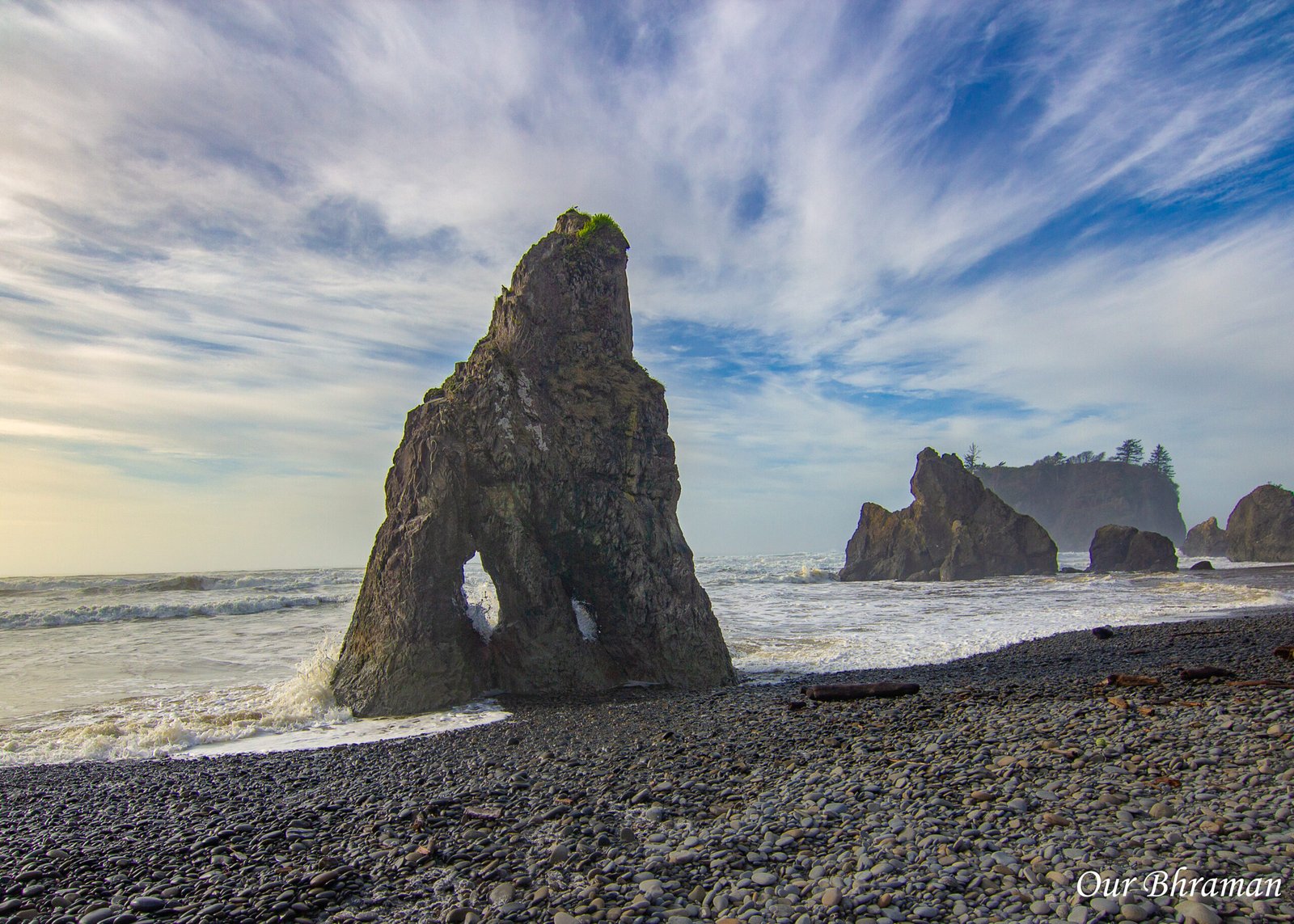
By the time we reached Olympic National Park, it was still early in the morning. We decided to make Ruby Beach our first stop of the day. Known for its dramatic sea stacks, driftwood-covered shoreline, and rugged Pacific coastline, it seemed like a perfect place to begin our exploration of this park’s incredible variety of landscapes, from coastal scenery and temperate rainforests to mountain views.
 As we continued toward the park, we also came across the familiar National Park Service entrance signage welcoming visitors to Olympic National Park. Unlike some national parks with a single main entrance, Olympic has several access points, so the entrance signs and surroundings can vary depending on which part of the park you visit

Ruby Beach: A Rugged Pacific Coastline
Our first stop was Ruby Beach, one of the most recognizable coastal destinations in Olympic National Park. Known for its dramatic ocean views, reddish sand, enormous driftwood logs, and towering sea stacks rising from the Pacific Ocean, Ruby Beach has a rugged character quite different from the typical sandy beaches we might imagine.
 Getting to the Beach
 Getting to the Beach
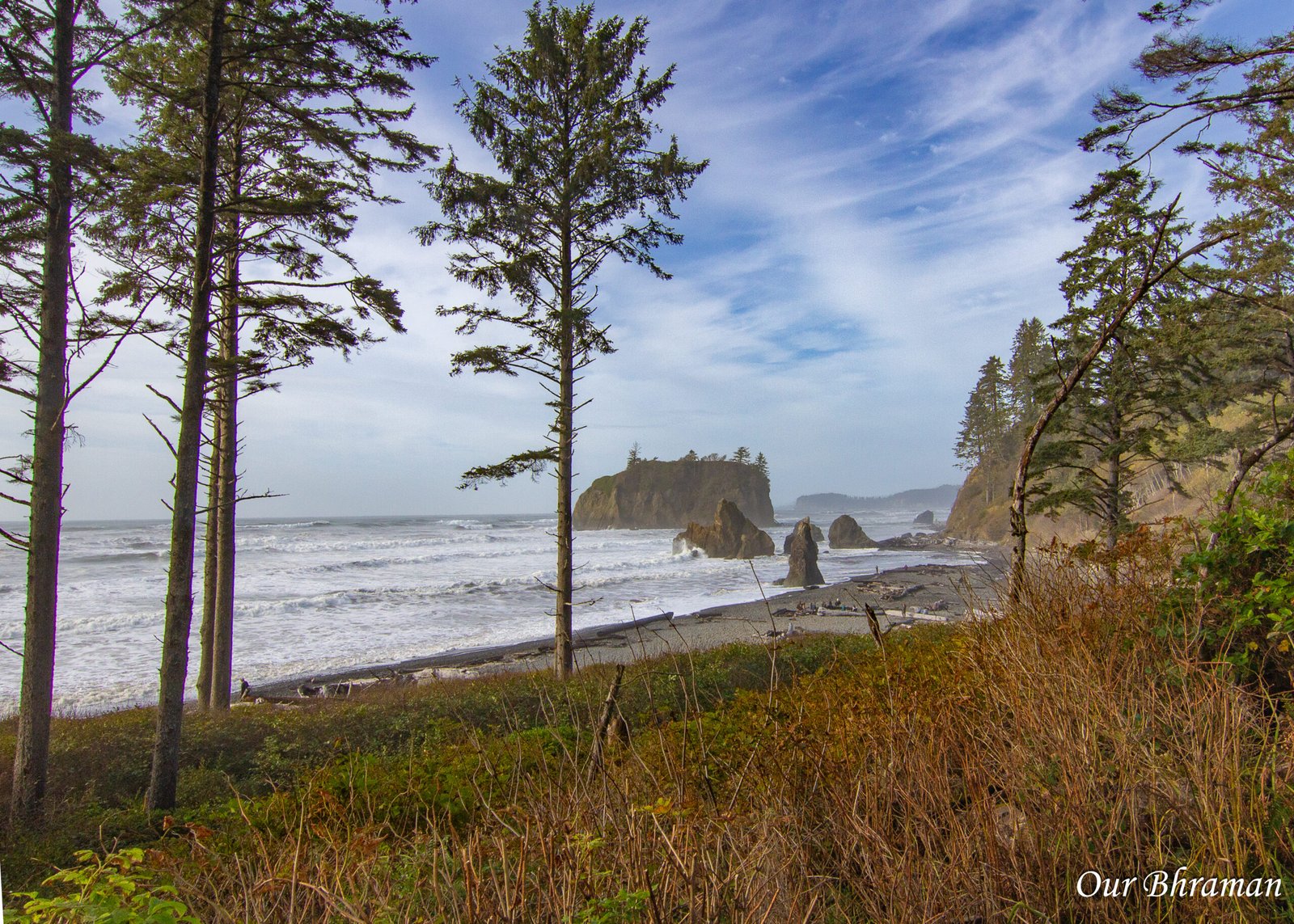
Ruby Beach is a popular destination, and although there is a sizable parking lot, it can fill up quickly. We recommend arriving early to find parking. There is also a vault toilet and a bulletin board displaying tide information near the parking area.
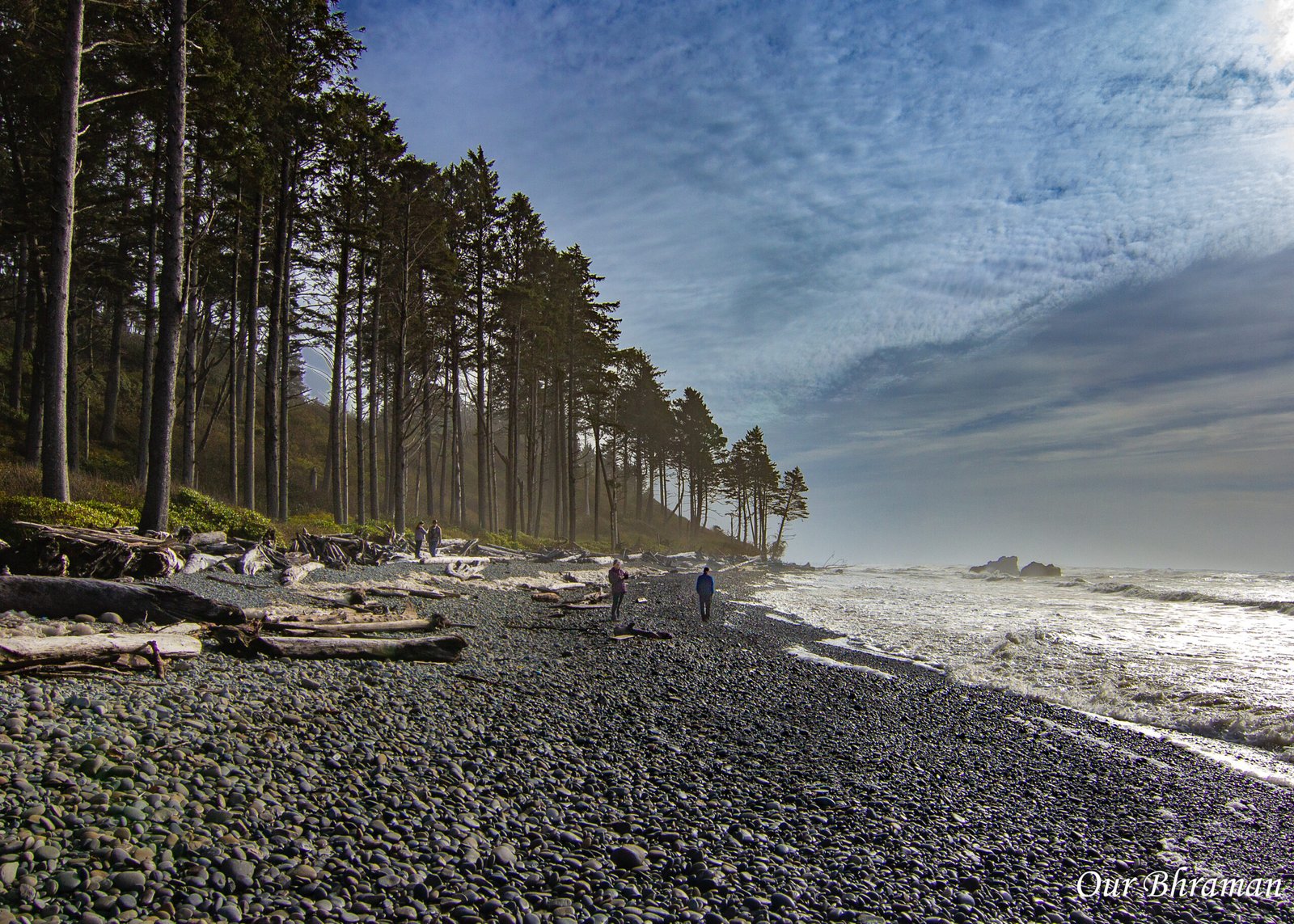 From the parking lot, a short walk of approximately a quarter mile takes you down to the beach. As you approach the shoreline, the landscape gradually opens up, revealing waves rolling onto the beach, massive pieces of driftwood scattered along the shore, and sea stacks standing against the horizon. You will need to carefully navigate over or around some of the large driftwood logs to explore different sections of the beach, so take your time and watch your footing.
Our Experience at Ruby Beach
 Our Experience at Ruby Beach
We visited in October and were fortunate to have some mild sunlight, which was a welcome sight along the coast. However, don’t let the sunshine fool you. It is hard to imagine just how cold it can feel on this beach until you are actually standing there. Even with the sun out, the coastal air was chilly, and having a warm jacket was essential.
 One thing that makes Ruby Beach particularly interesting is the enormous collection of driftwood along its shoreline. As waves crash against the beach, water moves around and between these massive logs. On our visits, we noticed that the arrangement of the driftwood seemed different each time, giving the beach a slightly different character. The logs are fascinating to explore and photograph, but they can be extremely slippery, so be careful when climbing over them.
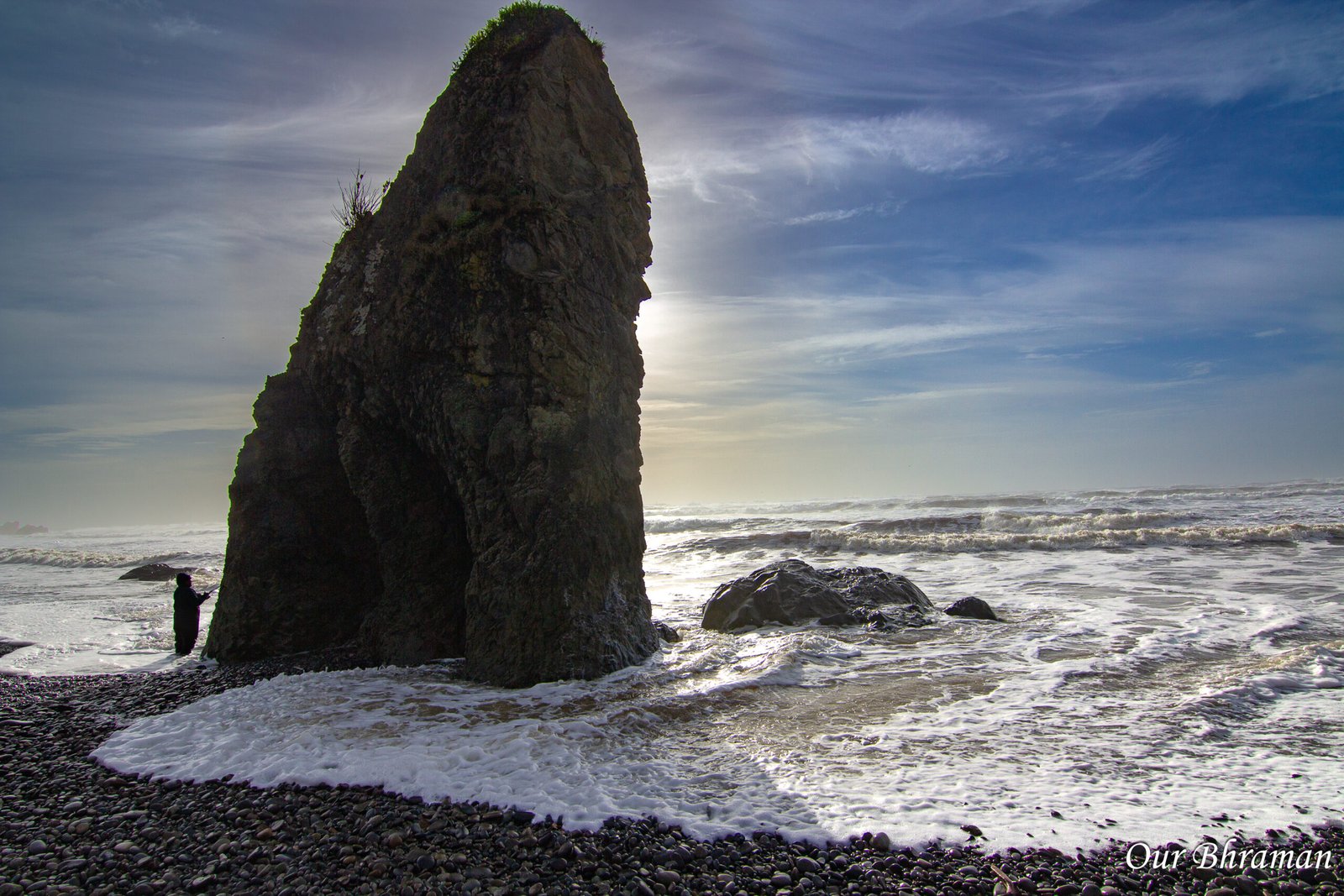
For photography enthusiasts, Ruby Beach offers plenty of opportunities to experiment with coastal compositions. The driftwood and rocks provide interesting foreground elements, while the sea stacks create beautiful subjects in the distance. The changing coastal light also adds a different mood to the landscape, making it a wonderful place to slow down and enjoy photography.
 Things to Do at Ruby Beach
 Things to Do at Ruby Beach
There is more to Ruby Beach than simply enjoying the views. You can spend time exploring the shoreline, looking for interesting natural features, or watching the waves roll in.
Beachcombing: Walk along the shoreline and look for interesting stones, shells, and other natural treasures washed in by the tides.
Tide Pooling: During low tide, explore the small pools and discover marine life such as sea stars, green anemones, and other fascinating creatures. Remember to tread carefully and leave everything as you found it.
Photography: The combination of sea stacks, enormous driftwood logs, coastal rocks, and changing light makes Ruby Beach a wonderful place for landscape photography.
Wildlife Watching: Keep an eye out for coastal wildlife, including eagles and otters, which may occasionally be spotted in the area.

Can You Swim at Ruby Beach?
You can swim at Ruby Beach, but we wouldn’t recommend it unless you are prepared for very cold water. Pacific Ocean temperatures along Washington’s coast generally range from around 40–60°F depending on the season. Even on a sunny day, the water can be surprisingly cold.
One practical tip is to check the tide chart before your visit. Low tide offers the best opportunity to explore tide pools and see more of the shoreline.
Whether you visit on a sunny day or under cloudy skies, Ruby Beach has a beauty of its own. For us, it was a wonderful way to begin exploring Olympic National Park. It is a place to slow down, walk along the rugged shoreline, watch the waves, and appreciate the natural beauty of Washington’s Pacific coast.
Rialto Beach: Another Beautiful Stretch of the Pacific Coast
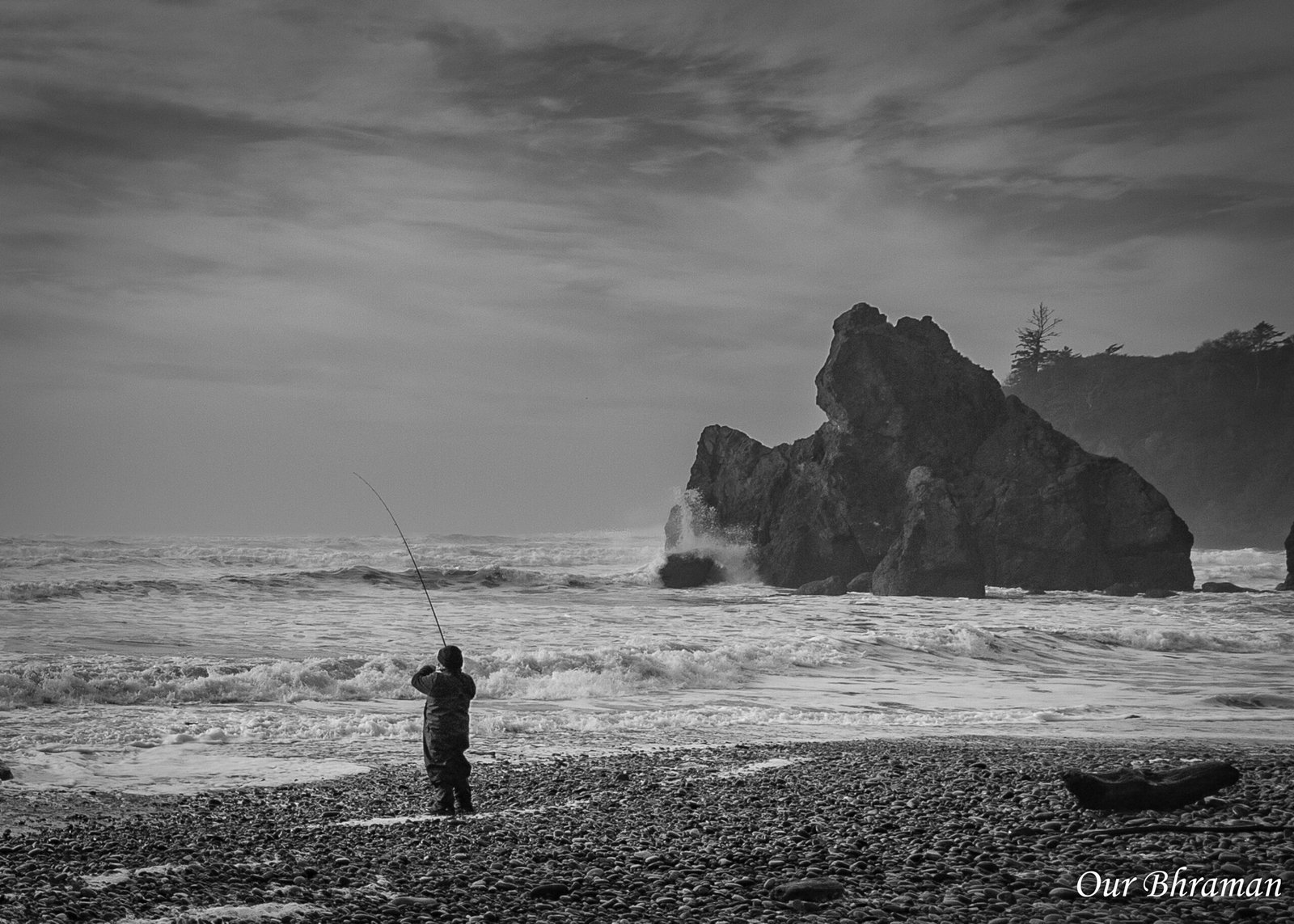 Rialto Beach: Another Beautiful Stretch of the Pacific Coast
If you have more time to explore Olympic National Park’s coastline, consider adding Rialto Beach to your itinerary. From Ruby Beach, you can drive north along Highway 101, then follow the signs toward Mora and Rialto Beach. The drive is approximately 35–40 miles and takes around an hour, depending on road conditions.
Rialto Beach offers a different coastal experience, with a rugged shoreline, enormous driftwood logs, rocky formations, and sea stacks rising from the Pacific Ocean. One of its most famous attractions is Hole-in-the-Wall, a natural rock arch located about 1.5 miles along the beach. Reaching it requires a walk along the rocky shoreline, but the unusual formation and surrounding coastal scenery make it a rewarding destination. Be sure to check tide conditions before attempting the walk, as high tides can make parts of the route impassable.
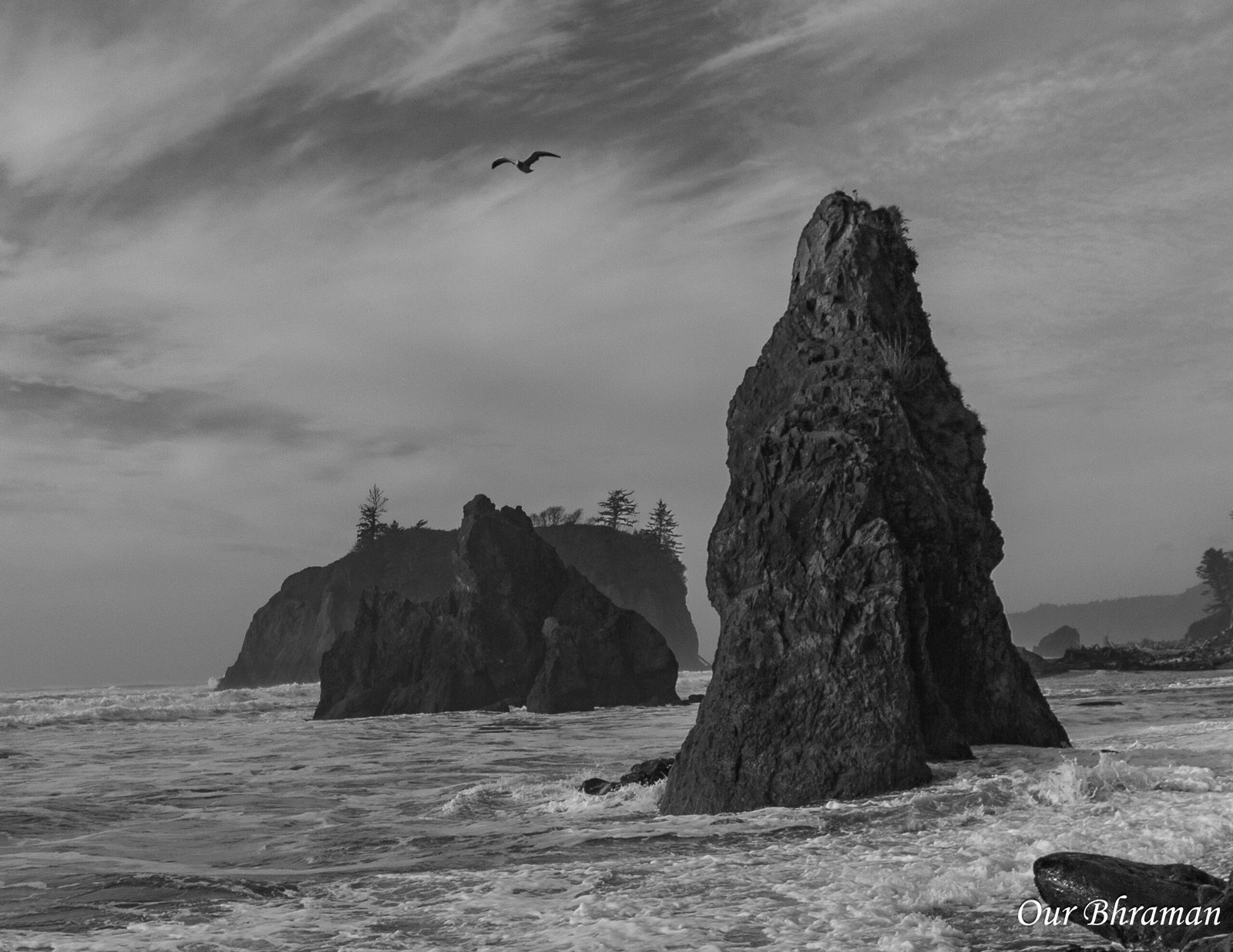
Ruby Beach vs. Rialto Beach: Is It Worth Visiting Both?
While exploring the Olympic National Park coastline, you will likely come across two popular destinations: Ruby Beach and Rialto Beach. Both offer beautiful views of the Pacific Ocean, dramatic sea stacks, and rugged shorelines, but each has its own character.
Ruby Beach is relatively easy to explore, with a short walk from the parking area leading to a beautiful stretch of coastline filled with driftwood and sea stacks. Rialto Beach, on the other hand, offers a more rugged experience, with rocky formations, crashing waves, and the famous Hole-in-the-Wall natural arch.
If you have enough time, visiting both is worthwhile. However, if you are working with a tight itinerary, I would prioritize Ruby Beach for its easy access and beautiful coastal scenery. Rialto Beach is worth adding if you have extra time to explore the shoreline and walk to Hole-in-the-Wall.
 With so much to see across Olympic National Park, it is important to balance coastal stops with the park’s rainforests, waterfalls, and hiking trails. Rather than rushing through every attraction, I would recommend choosing the experiences that interest you most and giving yourself enough time to enjoy them.

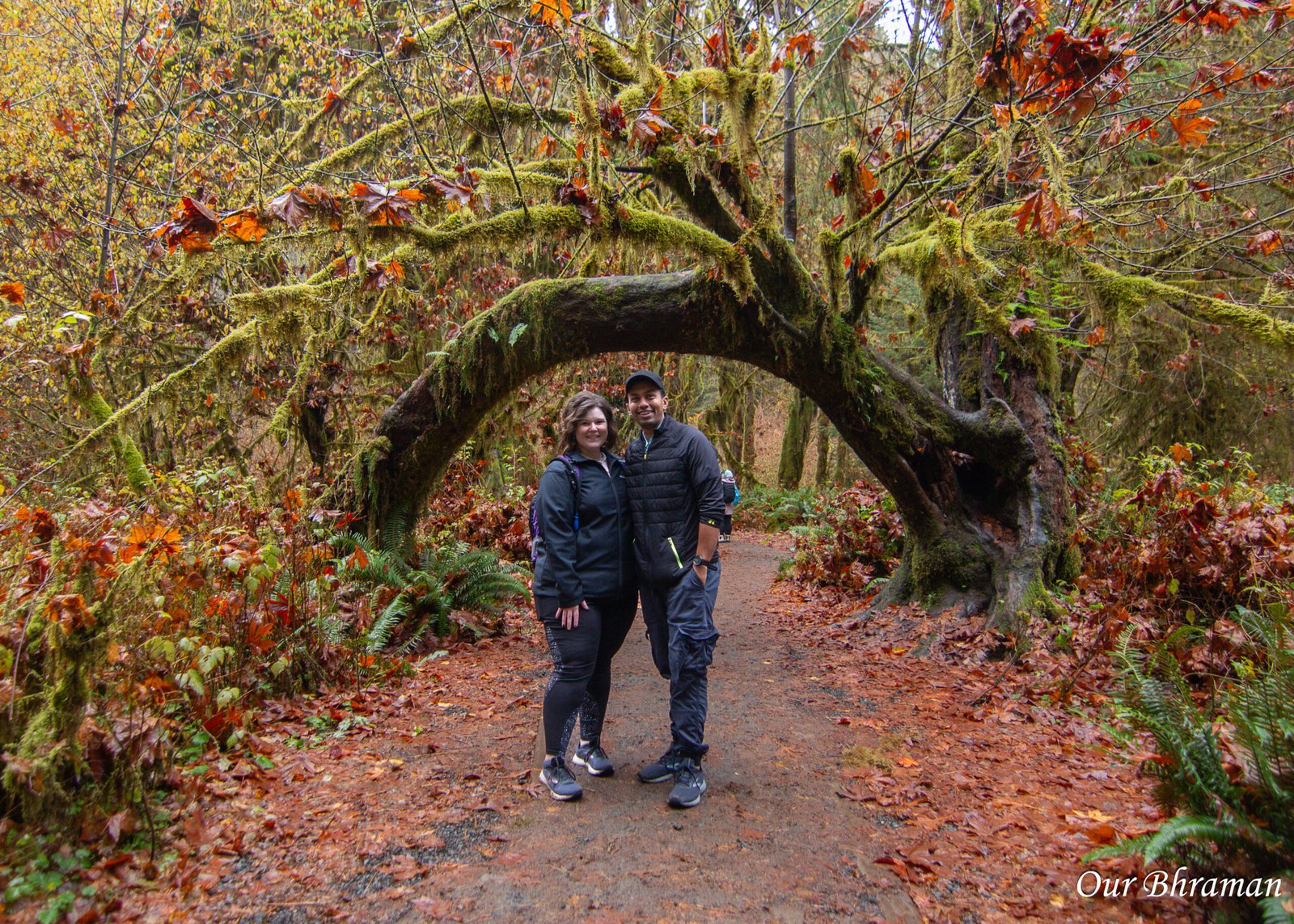
From Rialto Beach to the Hoh Rain Forest
After spending time exploring the Pacific coastline at Rialto Beach, we continued our drive toward the Hoh Rain Forest, one of the most famous attractions in Olympic National Park. The drive took us away from the open coastline and deeper into the Olympic Peninsula. It was fascinating to see how quickly the surroundings changed. The bright coastal scenery gradually gave way to a dense forest, where towering trees, thick vegetation, and moss-covered branches created an entirely different atmosphere.
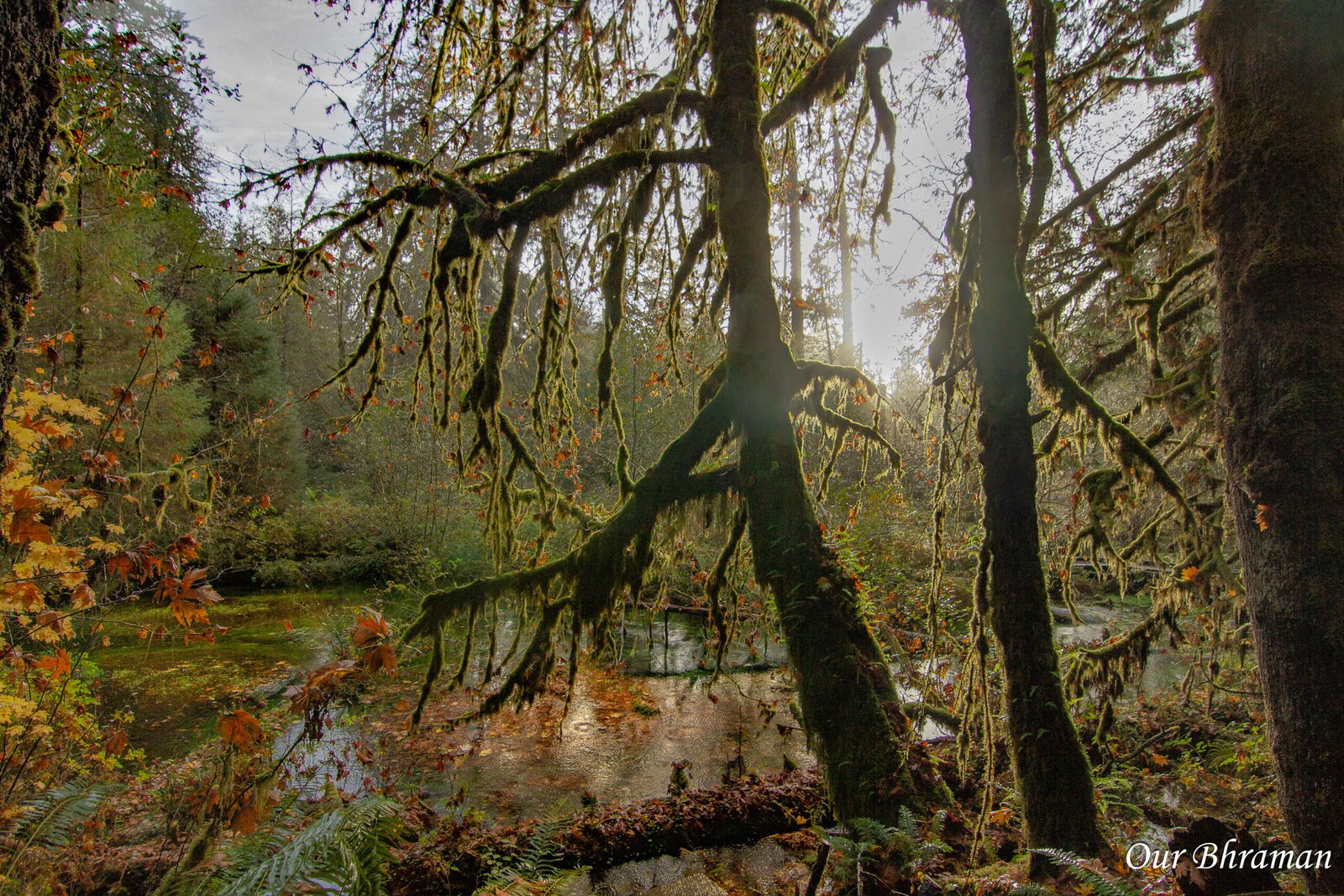 The Hoh Rain Forest is one of the finest examples of a temperate rainforest in the United States. With abundant rainfall throughout the year, the forest supports an incredible ecosystem of mosses, ferns, and enormous old-growth trees. As we entered the forest, the surroundings felt darker and quieter, with the thick canopy allowing very little sunlight to reach the forest floor.
Hall of Mosses: Walking Through a Green Wonderland
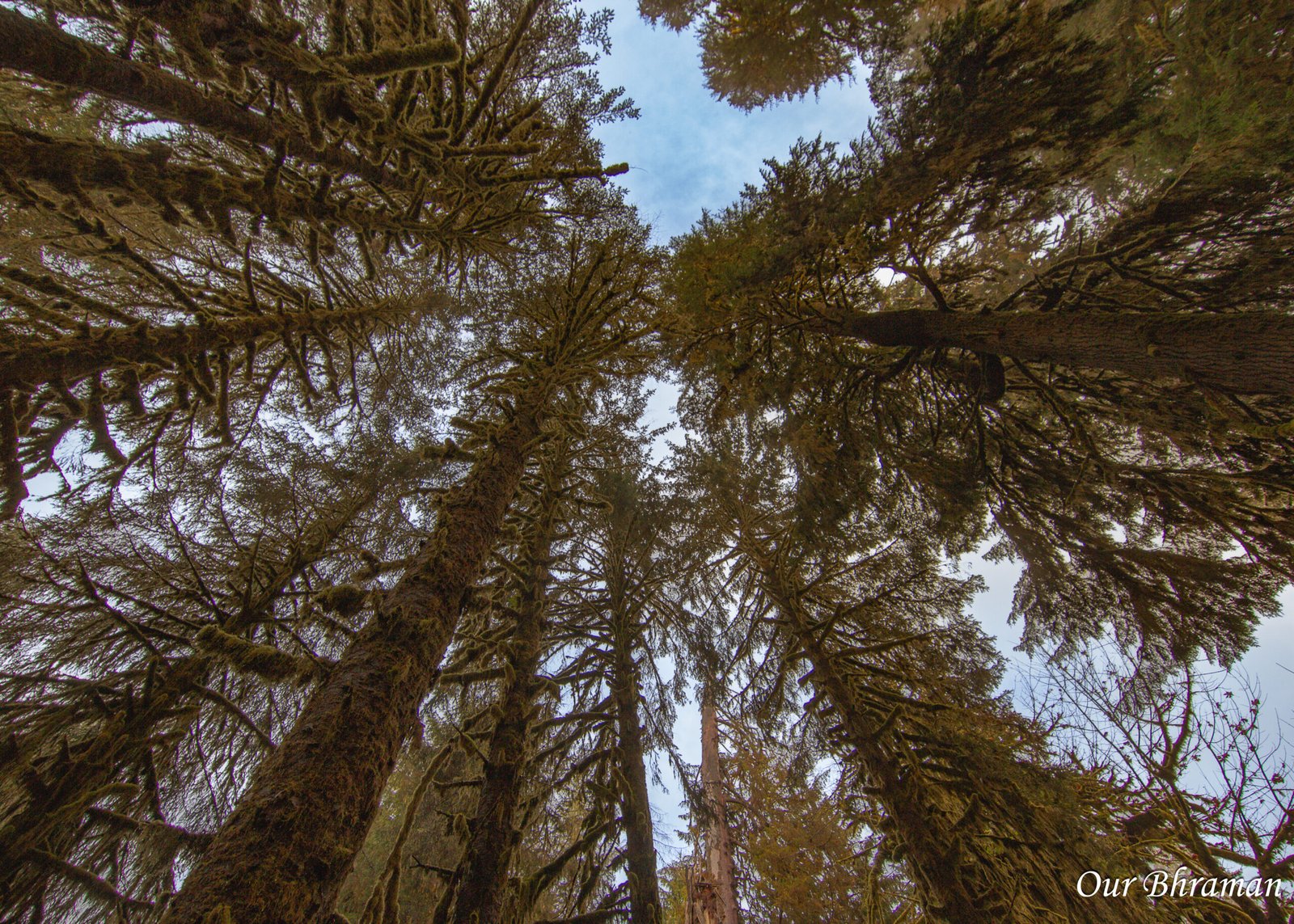 Hall of Mosses: Walking Through a Green Wonderland
Our main attraction here was the Hall of Mosses Trail, one of the most popular and recognizable hikes in Olympic National Park. This relatively short 0.8-mile loop takes visitors through an old-growth forest filled with enormous trees, moss-covered branches, and lush green vegetation.
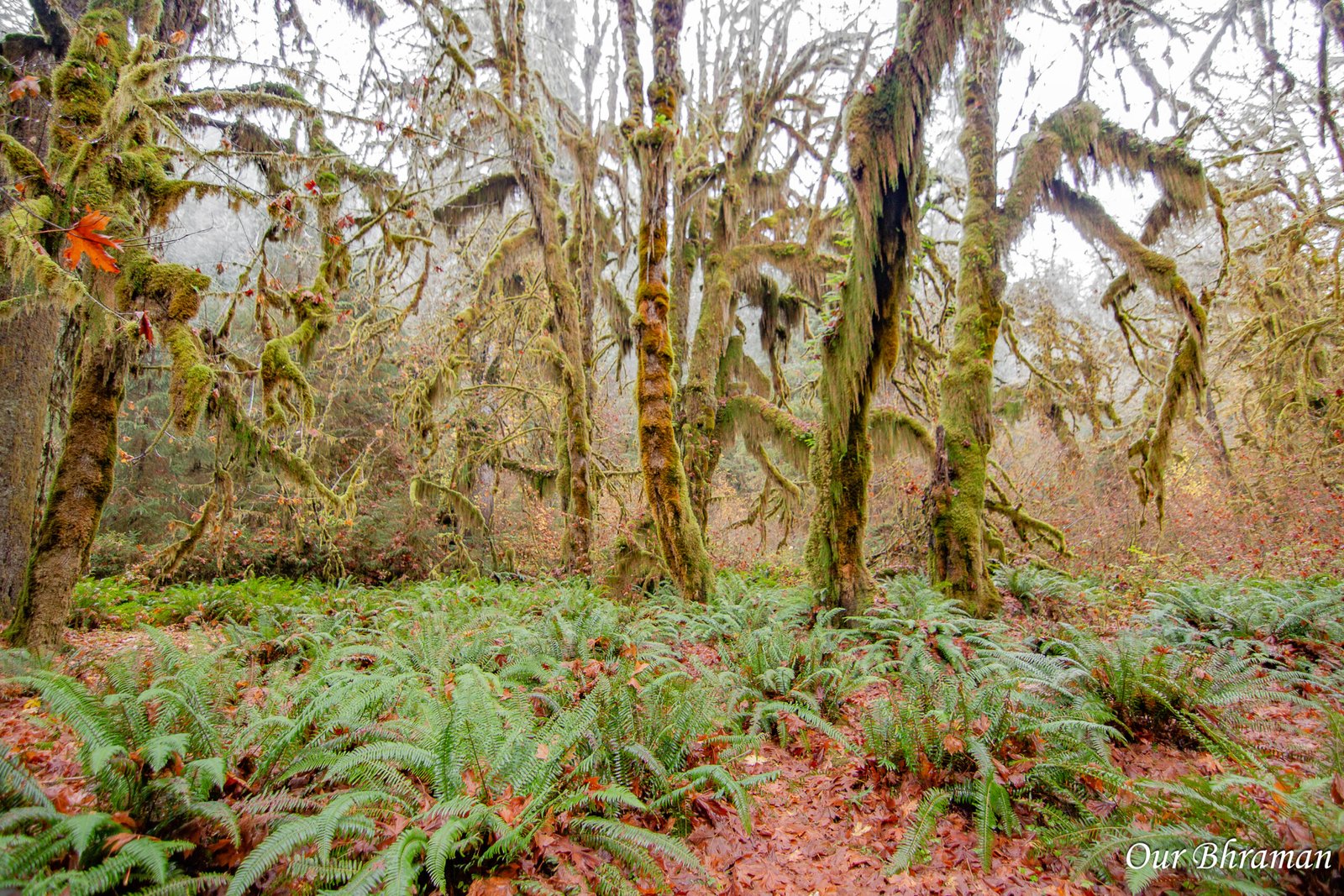
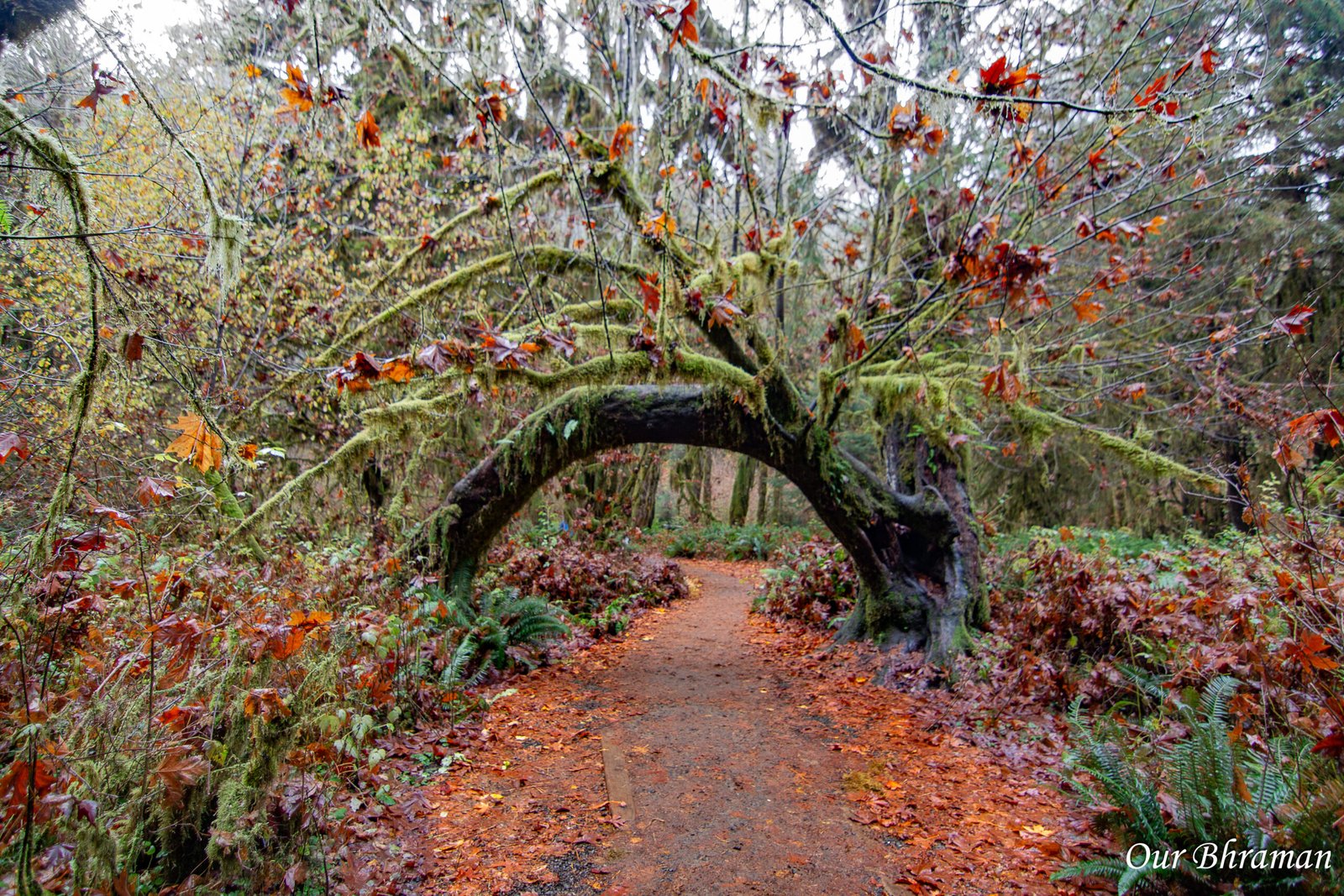 Walking along the trail feels like stepping into another world. Some of the trees are covered so completely in moss that their branches almost disappear beneath the greenery. The forest has a unique atmosphere, with towering trees creating a natural canopy overhead and ferns covering much of the forest floor.
 If you have additional time, the nearby Spruce Nature Trail is another excellent option. This 1.2-mile loop takes you through a combination of old-growth and younger forest, following sections of Taft Creek and the Hoh River. The Hoh River Trail is also accessible from the same visitor area for those interested in a longer hike.
From the Rainforest to Lake Crescent
 From the Rainforest to Lake Crescent
After exploring the rainforest, we continued our journey east toward Port Angeles, where we planned to spend the night. Rather than making the drive directly to the hotel, we decided to make one more scenic stop along the way: Lake Crescent.
The change in scenery continued as we left the rainforest behind. Lake Crescent offered a completely different landscape, with its deep blue waters surrounded by forested mountains. After spending time beneath the dense rainforest canopy, the open views of the lake were a refreshing change.
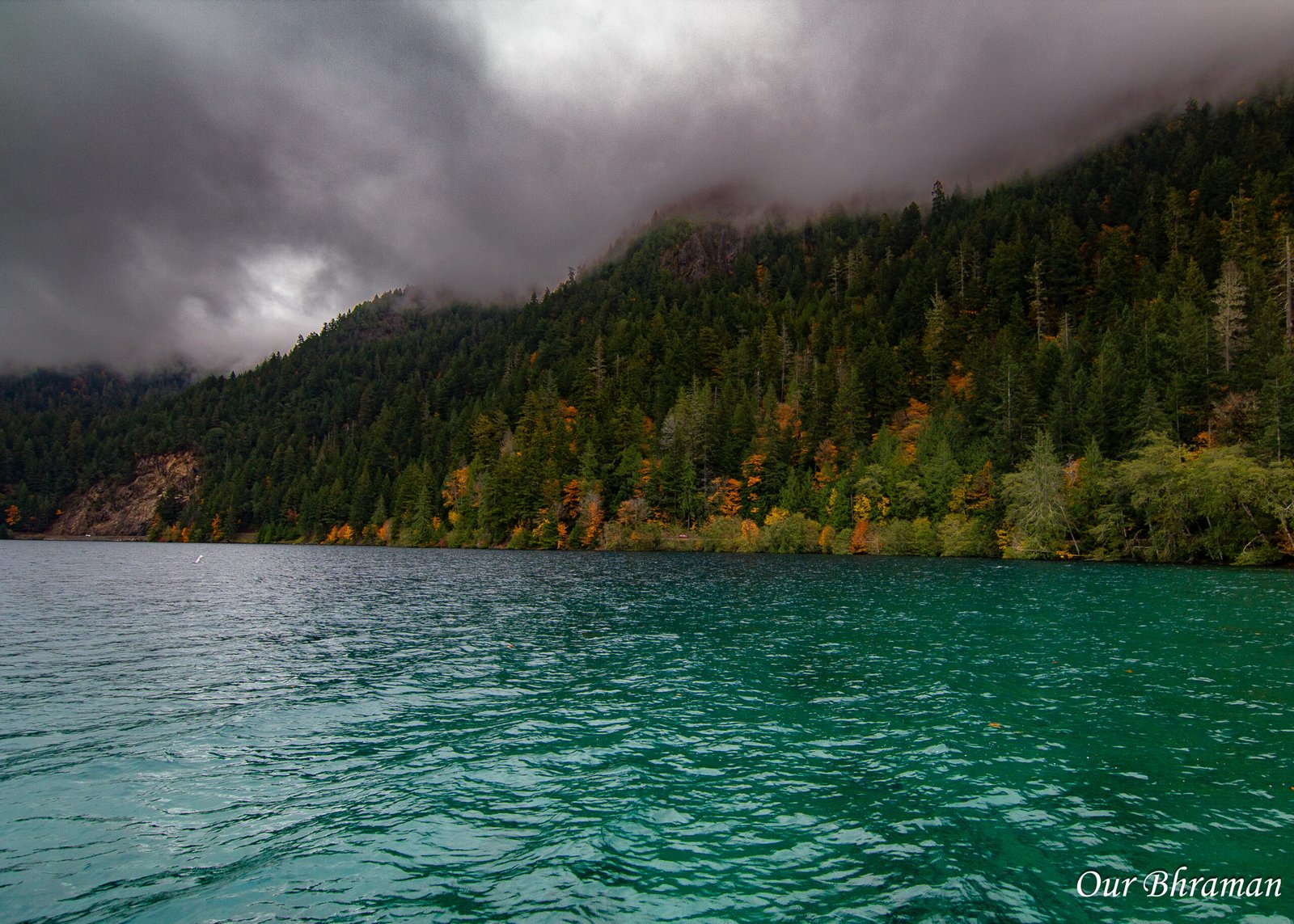 Lake Crescent is one of the most beautiful natural attractions in Olympic National Park. Depending on how much time you have, there are several places to explore around the lake, including scenic viewpoints, lakeside areas, and hiking trails. Popular nearby attractions include Marymere Falls and Devil’s Punchbowl, both worth considering if your schedule allows.
After a full day of exploring beaches, rainforest trails, and scenic landscapes, Lake Crescent was a wonderful final stop before continuing to our hotel in Port Angeles. It was a fitting way to end a day that had shown us just how diverse Olympic National Park can be.

After a day of exploring Olympic National Park’s beautiful coastline, we started our second day with a different kind of adventure. Our plan was to visit two of the park’s well-known waterfalls: Marymere Falls and Sol Duc Falls.
The weather had changed overnight. Unlike the previous day, when we were lucky to enjoy pleasant weather along the coast, Day 2 was cloudy and rainy. The rain added to the atmosphere of the forest, but it also made the trails wet and slippery. We began with Marymere Falls before continuing toward Sol Duc Falls.
Marymere Falls: A Walk Through the Forest
Marymere Falls is a beautiful waterfall tucked inside an old-growth forest near Lake Crescent. The hike begins near the Storm King Ranger Station and follows a forest trail surrounded by towering trees, moss-covered branches, and lush vegetation.
 The trail is approximately 1.8 miles round trip. Although it is not a particularly long hike, the rainy weather made walking more challenging. Wet roots, muddy sections, and slippery surfaces meant we had to watch our footing along the way.
Marymere Falls drops approximately 90 feet and is a lovely destination for anyone who enjoys forest hikes and waterfalls. However, if you are short on time, this is one stop you could consider skipping, especially if you would rather spend more time exploring other parts of the park.
Sol Duc Falls: A Waterfall Worth the Walk
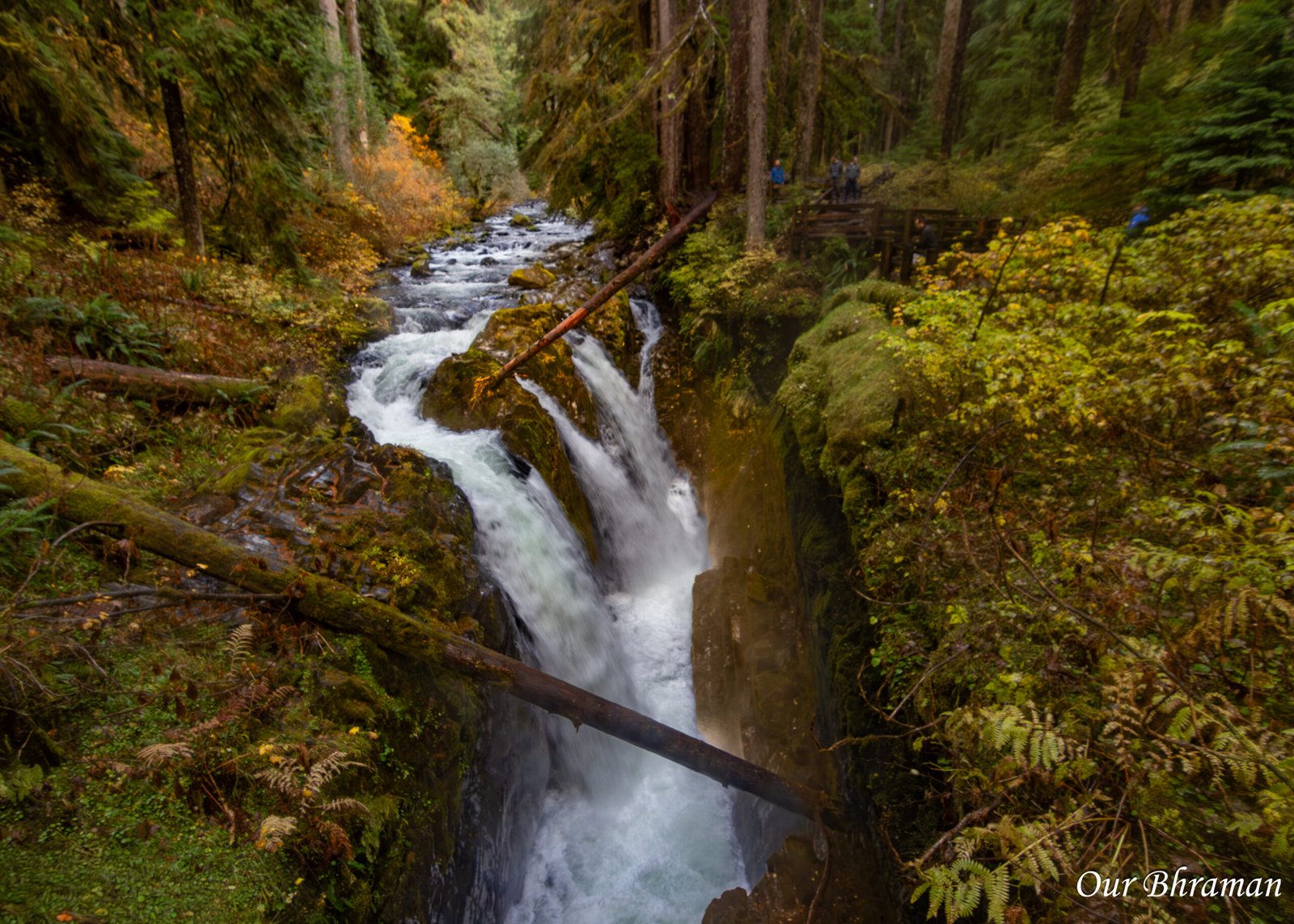 Sol Duc Falls: A Waterfall Worth the Walk
Our next stop was Sol Duc Falls, another popular waterfall in Olympic National Park. The trail takes you through a beautiful forest, with tall trees and thick greenery surrounding the path.
The hike is approximately 1.6 miles round trip and is relatively gentle compared with many longer trails in the park. The waterfall is especially interesting because the water flows through a narrow rocky canyon, creating several cascading streams.
The rainy conditions made the trail slippery, so we took our time and watched our steps. Even with the rain, the forest setting and the sound of flowing water made this a memorable stop.
Hiking Tips for a Rainy Day
 Hiking Tips for a Rainy Day
Olympic National Park is known for its rainforests, so rain can be part of the experience even when the forecast looks promising. We were fortunate to have nice weather during our coastal visit the previous day, but Day 2 was a reminder to be prepared for changing conditions.
If you plan to hike Marymere Falls or Sol Duc Falls, wear good hiking shoes with reliable traction. Rain can make roots, rocks, and muddy sections slippery, so proper footwear makes a real difference. Take your time, watch your footing, and don’t feel pressured to complete every hike if conditions are uncomfortable.
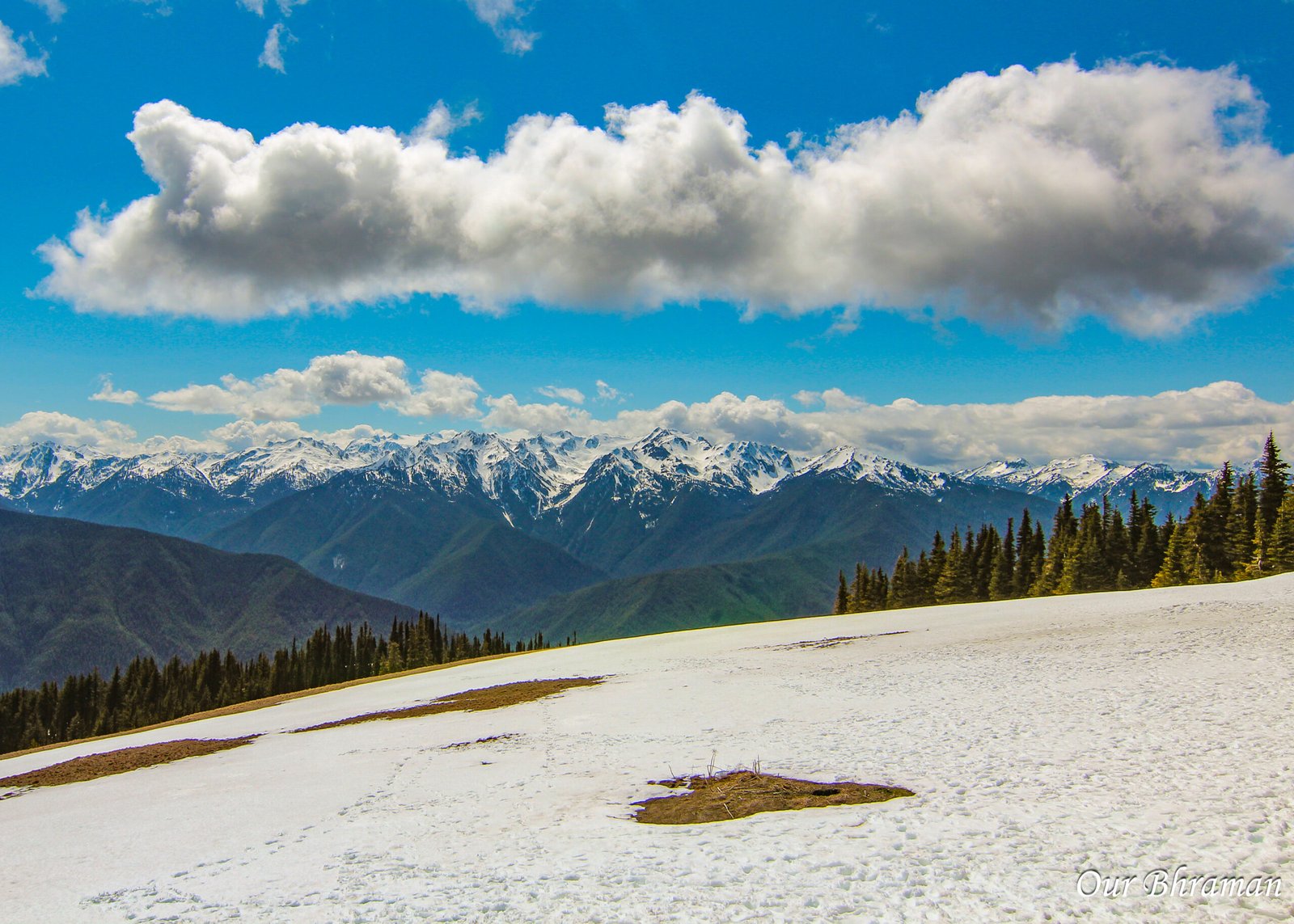
Hurricane Ridge: A Mountain View to End Our Olympic Adventure
After visiting Sol Duc Falls, we headed toward Hurricane Ridge, our final destination in Olympic National Park.
The drive was especially beautiful during our fall visit. The trees along the winding mountain road were filled with autumn colors, with shades of golden yellow and orange standing out against the deep green evergreen forest. In some stretches, the colorful trees formed a natural frame around the road, making the journey just as enjoyable as the destination itself.
 We were also lucky to spot deer along the roadside, a lovely surprise that made us slow down and enjoy the moment. As we continued toward Hurricane Ridge, patches of blue sky began appearing through the clouds, giving us hope for better mountain views after a rainy morning.
 Thankfully, the weather started improving as the day progressed. After a cloudy and rainy morning, the skies began to clear, giving us a chance to see the snow-covered Olympic Mountains. The changing weather made the views even more rewarding, especially after spending much of the day walking through wet forest trails.
 Hurricane Ridge offers several ways to explore the mountain landscape. If you have more time and enjoy hiking, you can choose from shorter walks near the visitor center or longer trails that take you farther into the alpine scenery. Popular options include the short Hurricane Hill Trail, which offers expansive mountain views, and the easier Big Meadow and Cirque Rim trails near the visitor center.
 After a full day of hiking and driving, we decided to keep things easy. Instead of taking on another long hike, we explored the area around the Hurricane Ridge Visitor Center and enjoyed the mountain views from nearby viewpoints. Seeing the snow-covered peaks after the rainy start to the day was a wonderful way to finish our Olympic National Park adventure.
Looking back, these two days gave us a little taste of everything Olympic National Park has to offer—from rugged Pacific beaches and moss-covered rainforests to waterfalls and mountain scenery. It is a park where the landscape changes dramatically as you travel from one area to another, and that variety is what made the journey so memorable.