What We Learned Before Ordering Our First Maß
Before our trip to Munich, we knew one thing about German beer—there would be plenty of it! But we quickly realized that German beer culture was much bigger than simply ordering a giant mug at Oktoberfest.
 So, like we usually do before traveling, we did a little research. We wanted to know what beer we would find at Oktoberfest, what we should try, what a Maß actually meant, and what beer culture was like outside the festival.
 Beer at Oktoberfest
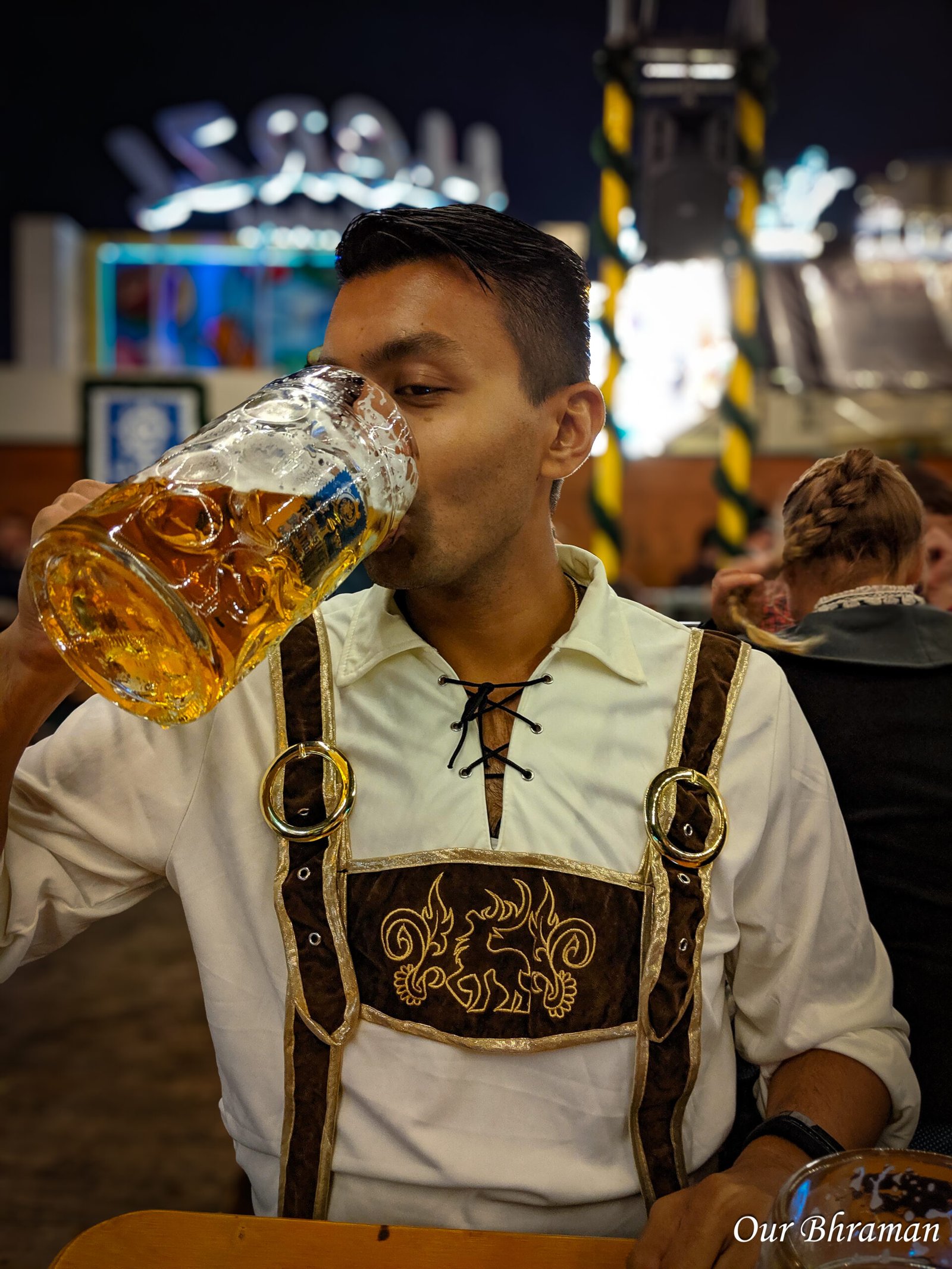 Beer at Oktoberfest
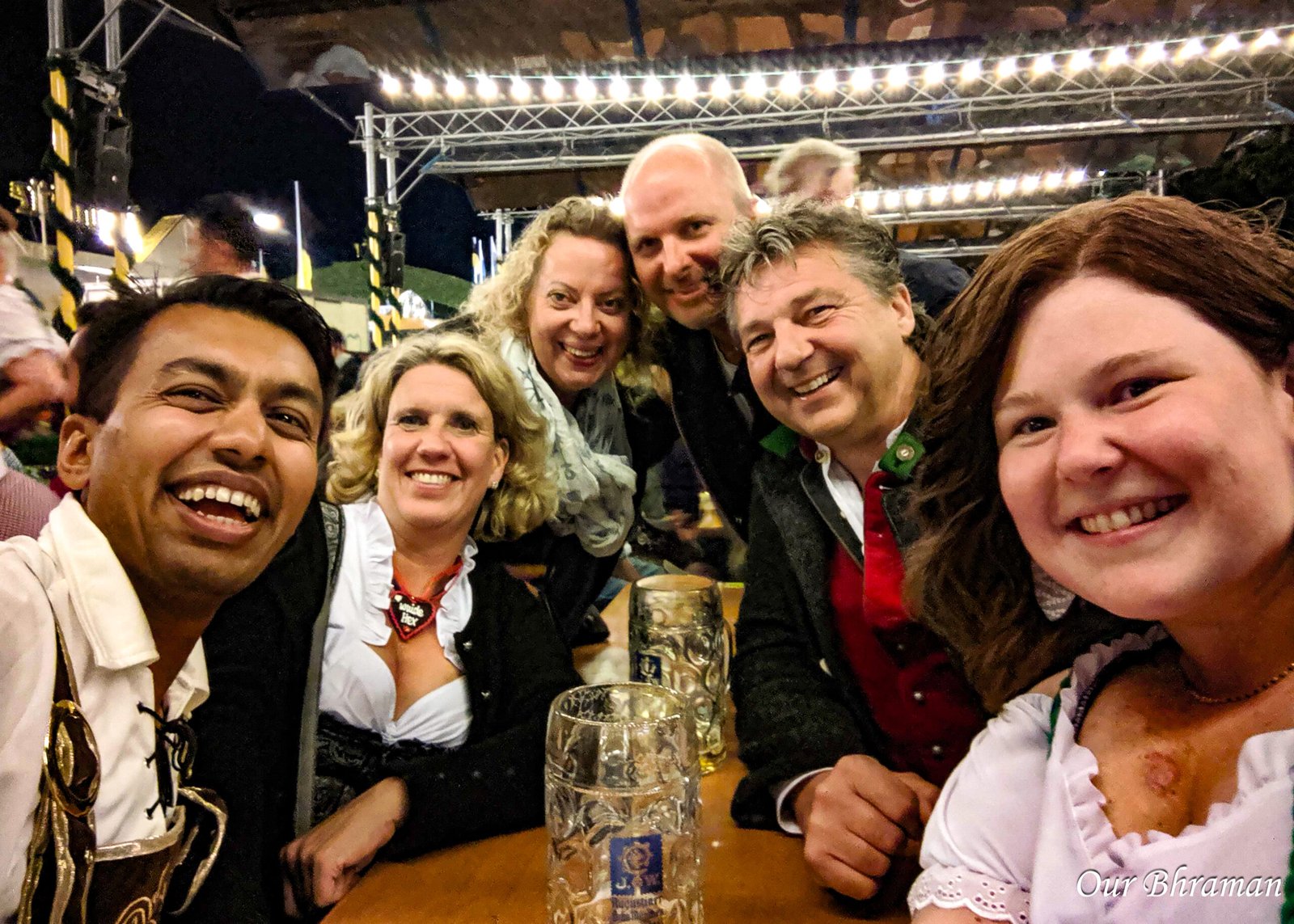
Our first surprise was that you don’t walk into an Oktoberfest tent and choose from dozens of German beers. Oktoberfest has its own tradition, with beer from six Munich breweries:
Augustiner, Hacker-Pschorr, Hofbräu, Löwenbräu, Paulaner and Spaten.
The main beer served in the large tents is Oktoberfestbier, or Festbier—a golden, smooth lager that is usually around 6% ABV.
And then there is the Maß.
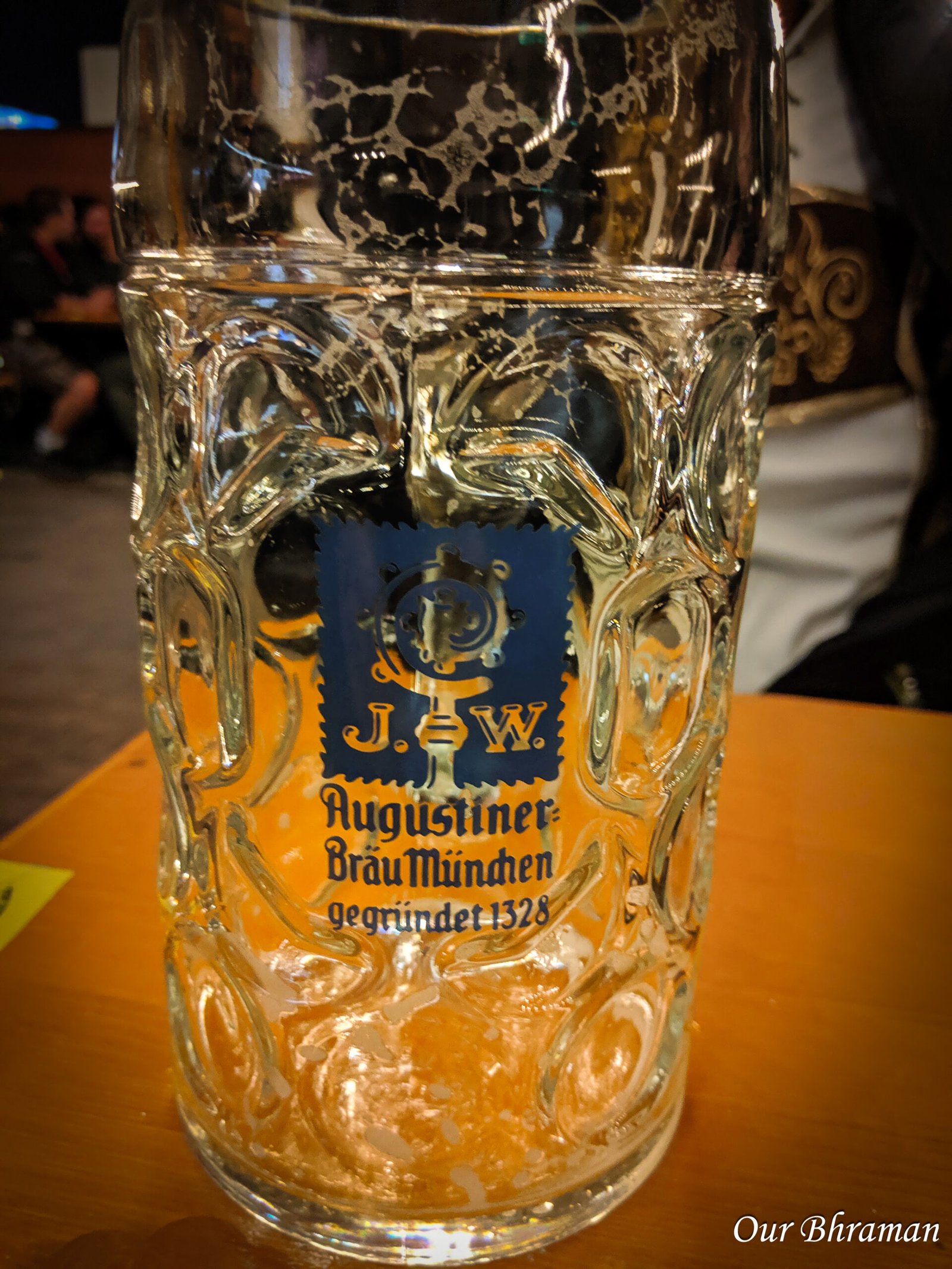
A Maß is a one-liter mug of beer. Yes, one full liter!
After learning that, we quickly understood why Oktoberfest isn’t really about rushing through your beer. One Maß is something to enjoy slowly, especially when combined with food, music and several hours of walking around the festival.
Which Beer Will You Find in the Tents?
As we researched the festival, we discovered that different tents are associated with different Munich breweries.
Augustiner — Augustiner-Festhalle and Fischer-Vroni
Hacker-Pschorr — Hacker-Festzelt and Bräurosl
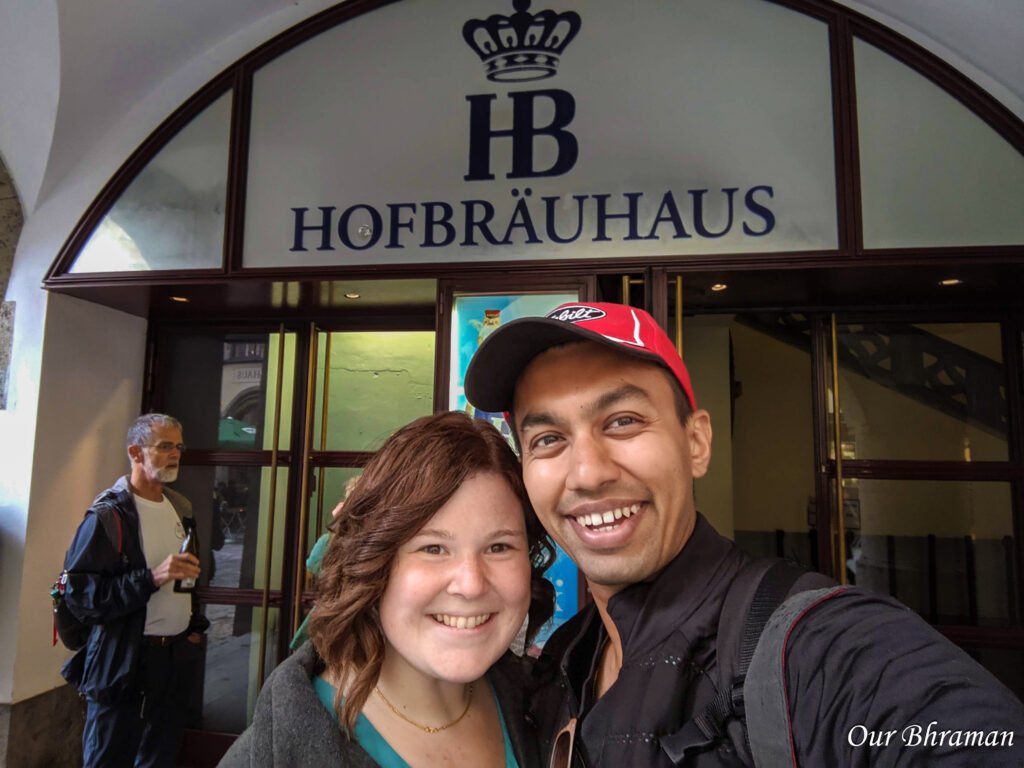
Hofbräu — Hofbräu-Festzelt
Löwenbräu — Löwenbräu-Festzelt and Schützen-Festzelt
Paulaner — Paulaner-Festzelt, Armbrustschützen-Festzelt and Käfer Wiesn-Schänke
Spaten — Schottenhamel, Marstall and Ochsenbraterei
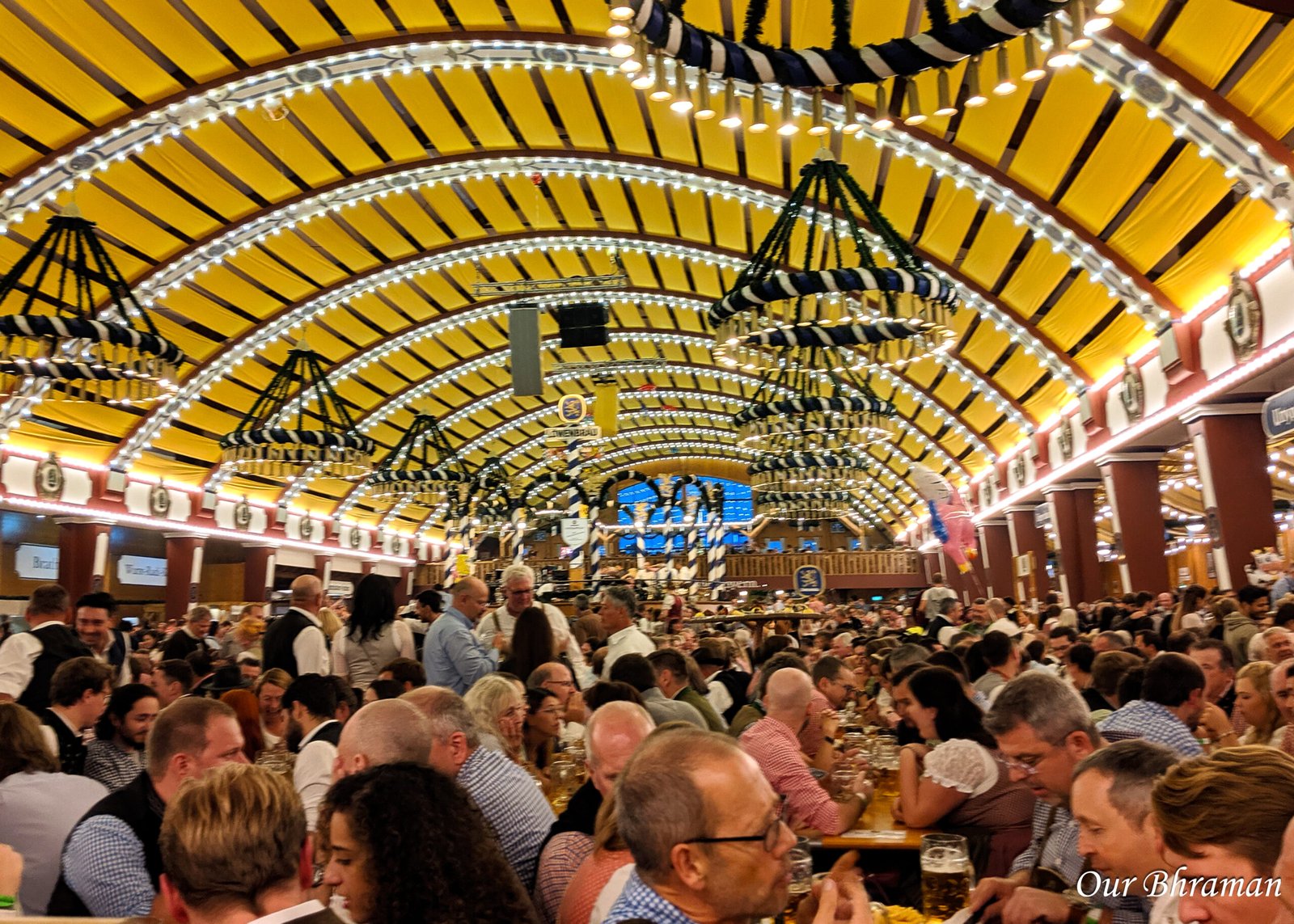
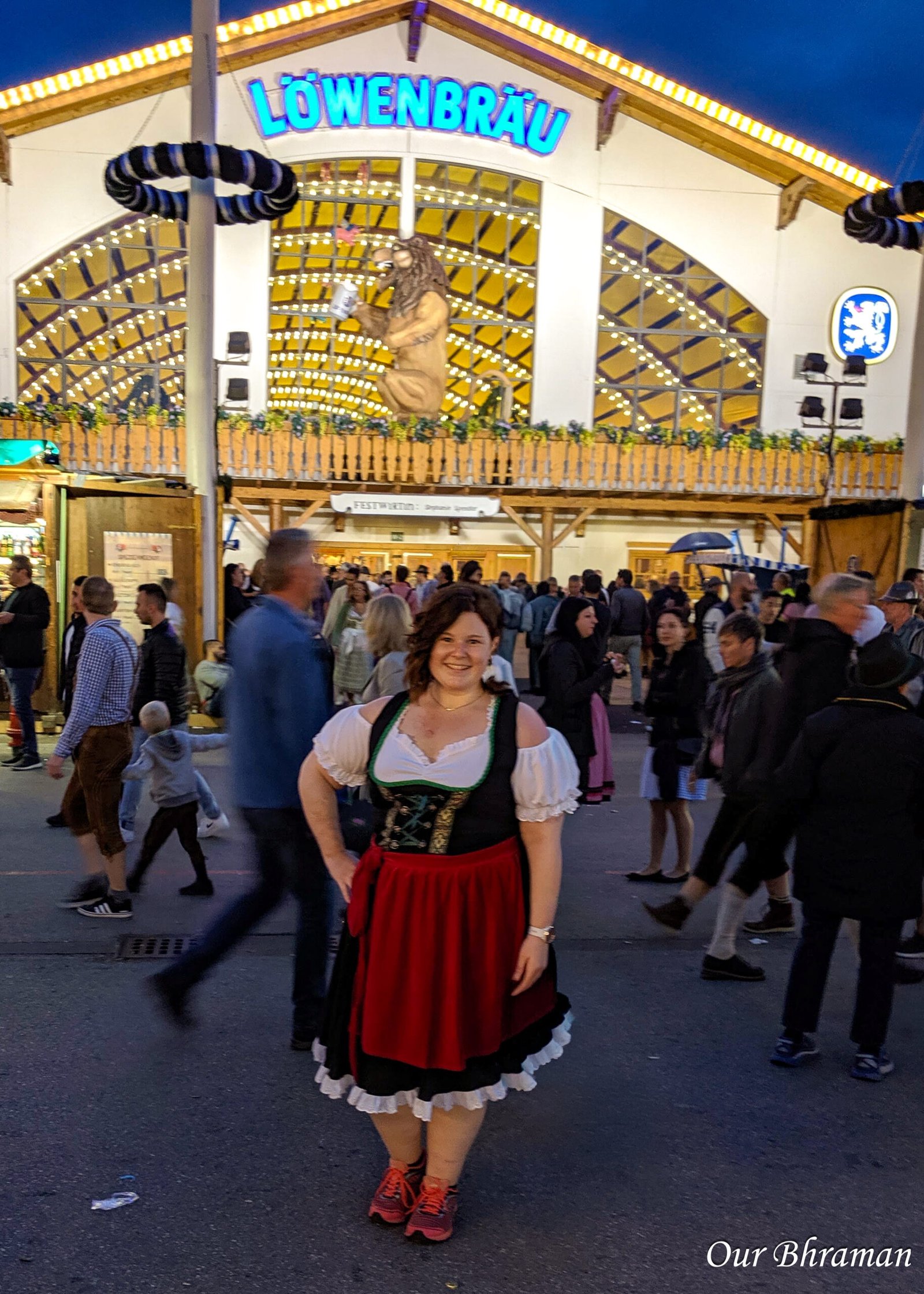
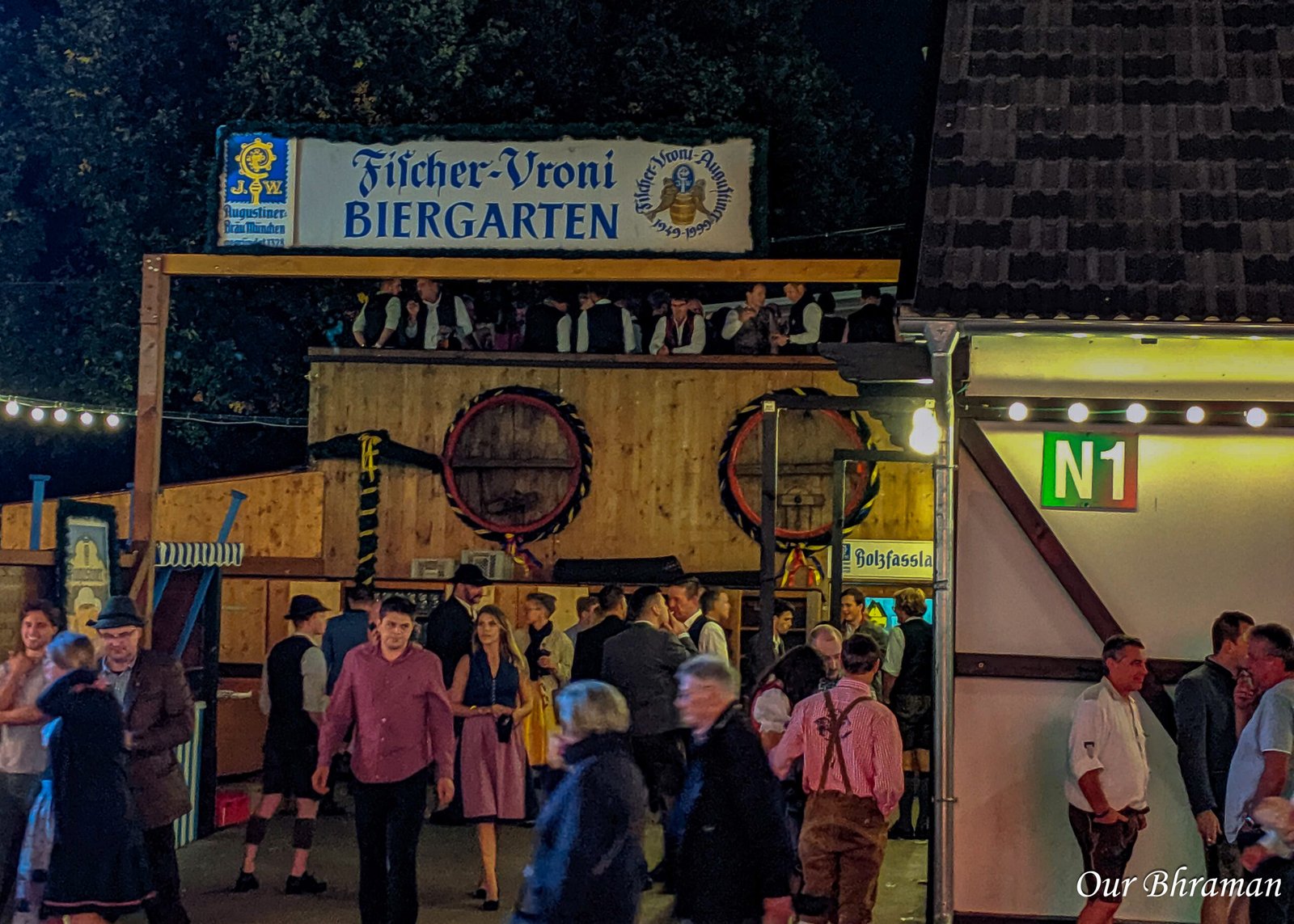
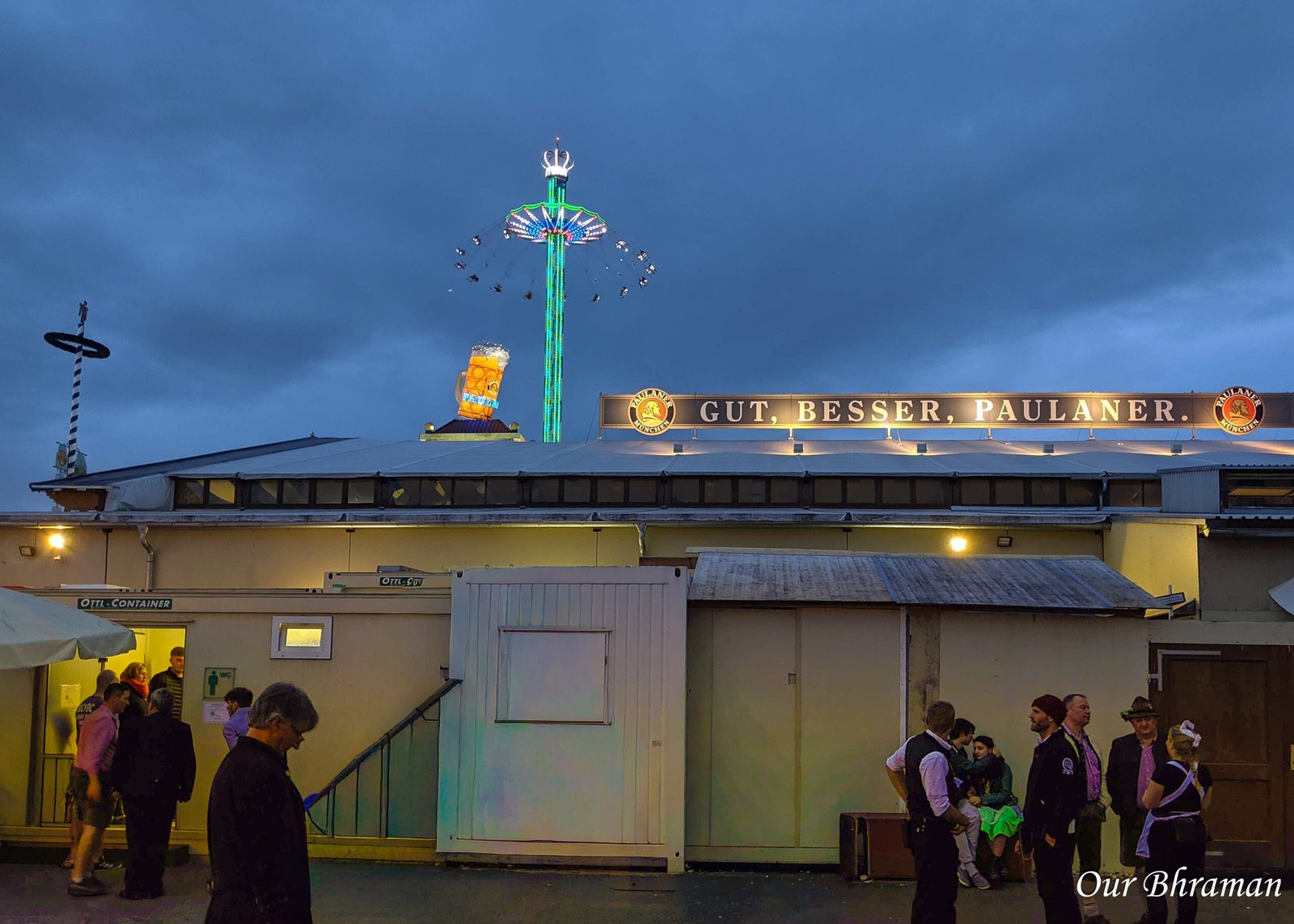
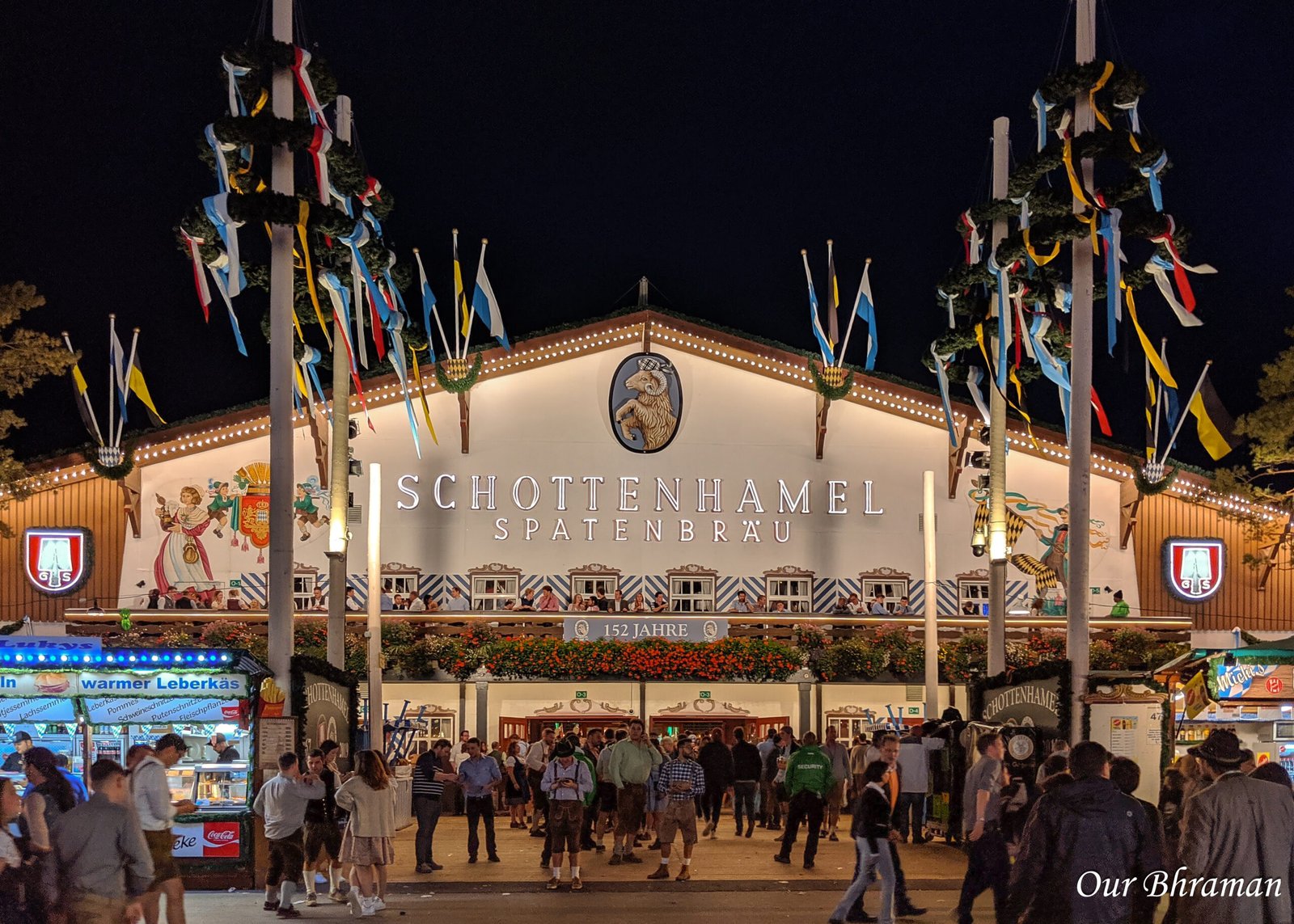
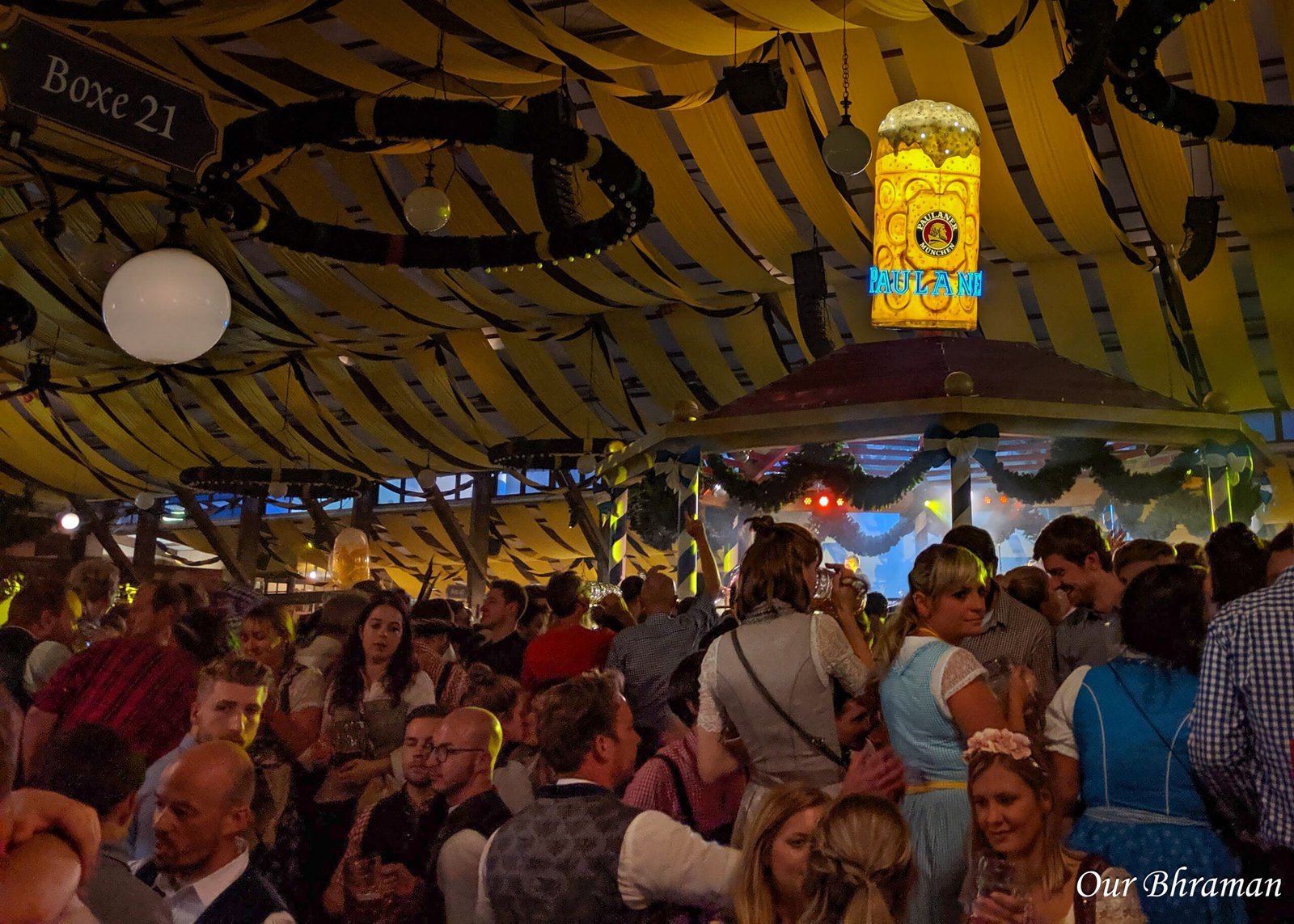
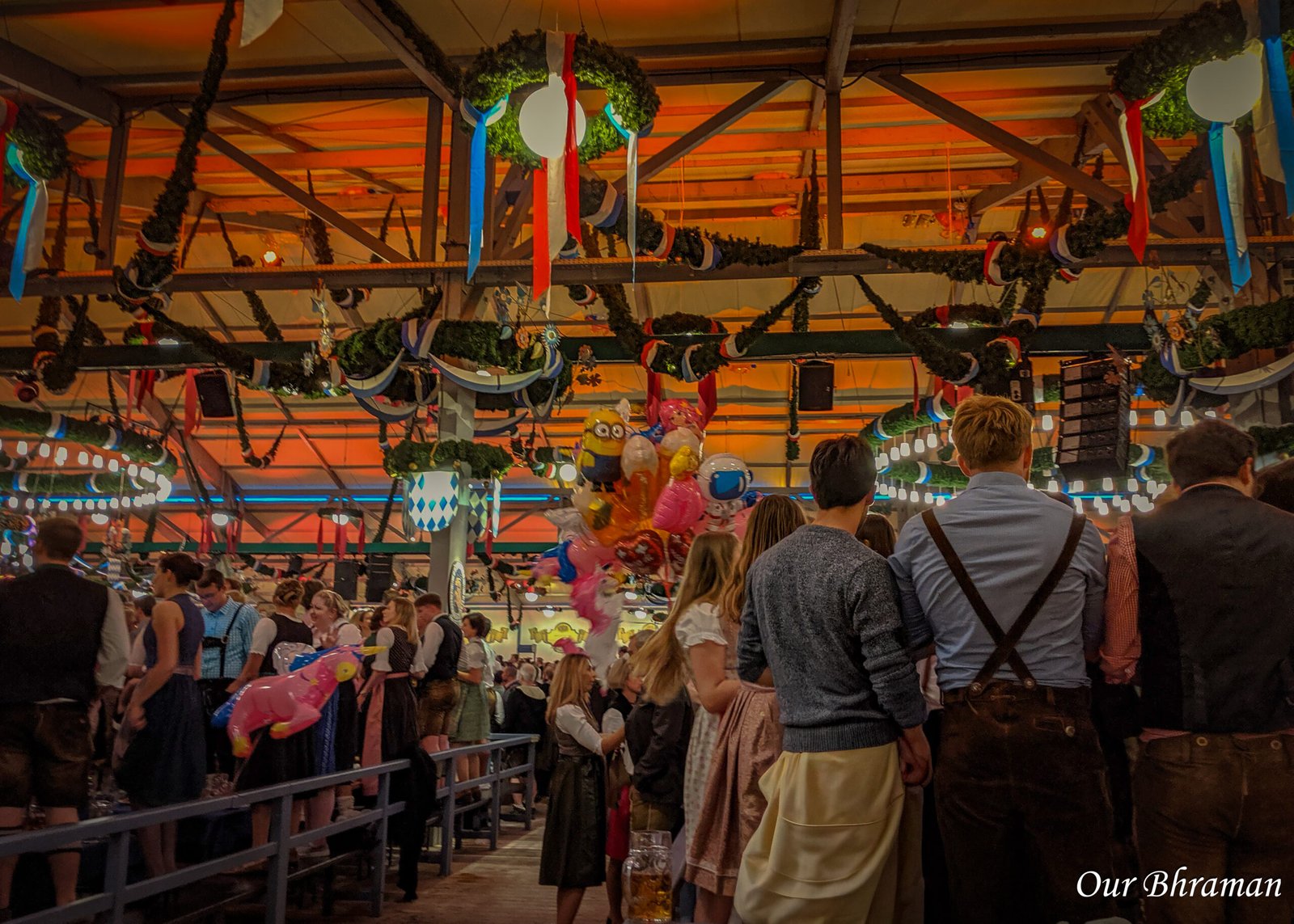
That gave us an easy way to decide where to go. Instead of worrying about finding the “perfect” beer, we could simply experience the brewery associated with whichever tent we were visiting.
And Then There Was the Food
Our research also made one thing clear: beer and food are meant to go together in Munich.
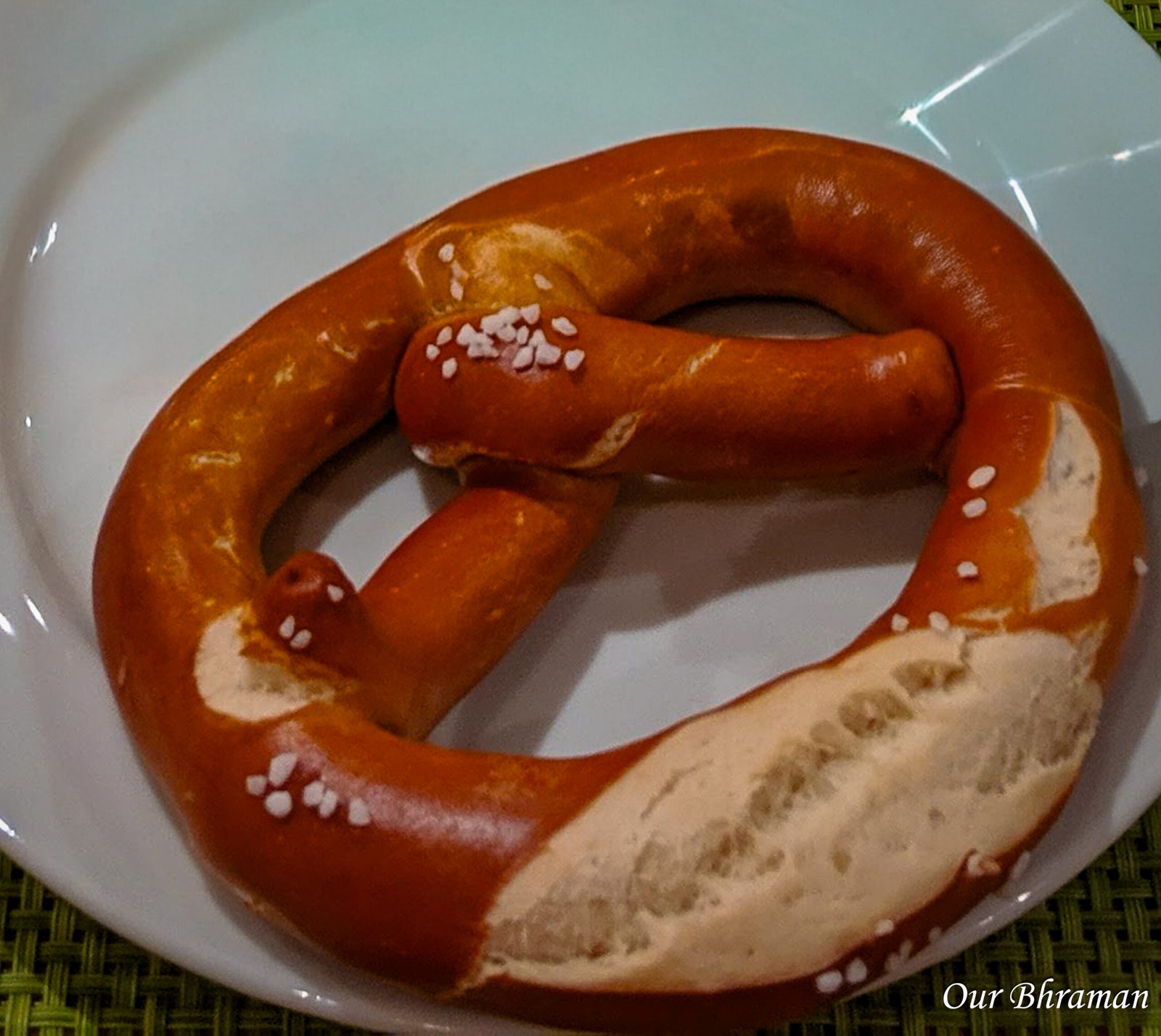
At Oktoberfest, you’ll see people enjoying their Maß with giant pretzels, roast chicken, sausages and Schweinshaxe, the crispy roasted pork knuckle.
For us, the giant Bavarian pretzel was an easy choice. Add some Obatzda, a creamy Bavarian cheese spread, and you have a simple combination that works surprisingly well with beer.
And if you’re spending several hours drinking, eating isn’t just part of the experience—it is a good idea.
 Munich’s Beer Garden Culture
 Munich’s Beer Garden Culture
But Oktoberfest isn’t the only place where Munich celebrates beer.
One of the things we wanted to experience was the beer garden culture. Beer gardens are a much more relaxed side of Munich’s beer tradition. Instead of the huge festival crowds, you can sit outside under chestnut trees, enjoy a Maß and take your time over a meal or conversation.
Beer gardens are often just as much about socializing and slowing down as they are about the beer.
You’ll see locals, families, friends and visitors sharing long tables. Depending on the beer garden, you may even bring your own food while purchasing drinks there—a tradition known as Brotzeit.
That relaxed atmosphere felt very different from the energy of Oktoberfest, but both experiences showed us the same thing: beer in Munich is as much about being together as it is about what’s in the glass.
Beyond Oktoberfest
Outside the festival, we also wanted to try some of Munich’s other traditional beers.
Helles is the classic Munich lager—light, crisp and easy to drink.
Weissbier, or wheat beer, is another Bavarian favorite, with a cloudier appearance and a fruity, slightly spicy character.
And if you prefer something darker, Dunkel offers a richer, maltier flavor.
So our research gave us a simple plan:
Oktoberfest → try Festbier.
Beer garden → try a Munich Helles.
Traditional Bavarian meal → try Weissbier or Dunkel.
We didn’t need to become beer experts before visiting Munich. We just wanted to know enough to make the experience more meaningful.
Our Takeaway
What we discovered was that Munich’s beer culture is much bigger than Oktoberfest.
Oktoberfest is loud, colorful and energetic. A beer garden is slower and more relaxed. A traditional beer hall brings its own atmosphere.
But the common thread is the same: good food, good beer, long tables and people enjoying time together.
For first-time visitors, our advice is simple—don’t just drink the beer; experience the culture around it.
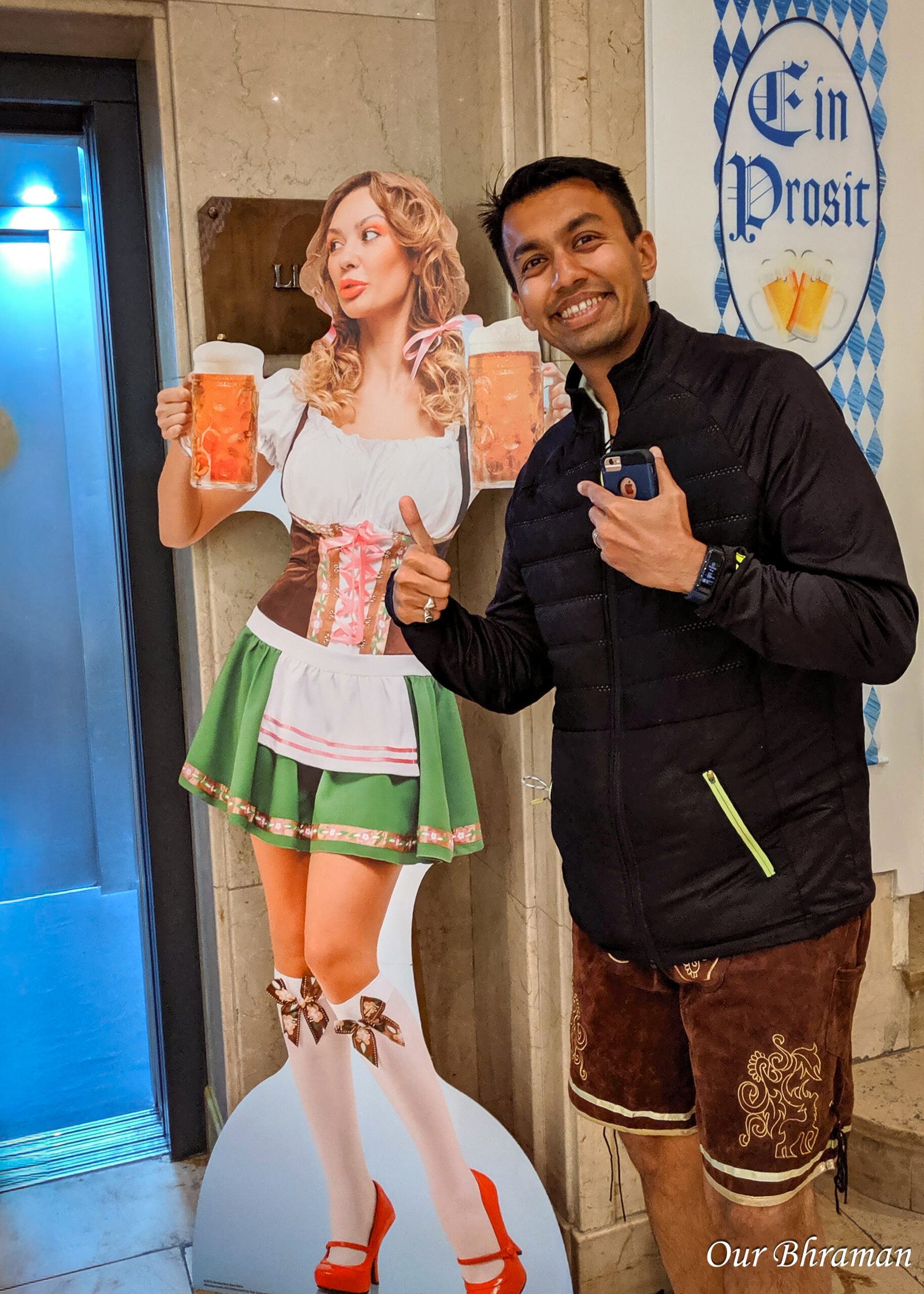
And when someone raises their Maß and says “Prost!”, raise yours and join in.