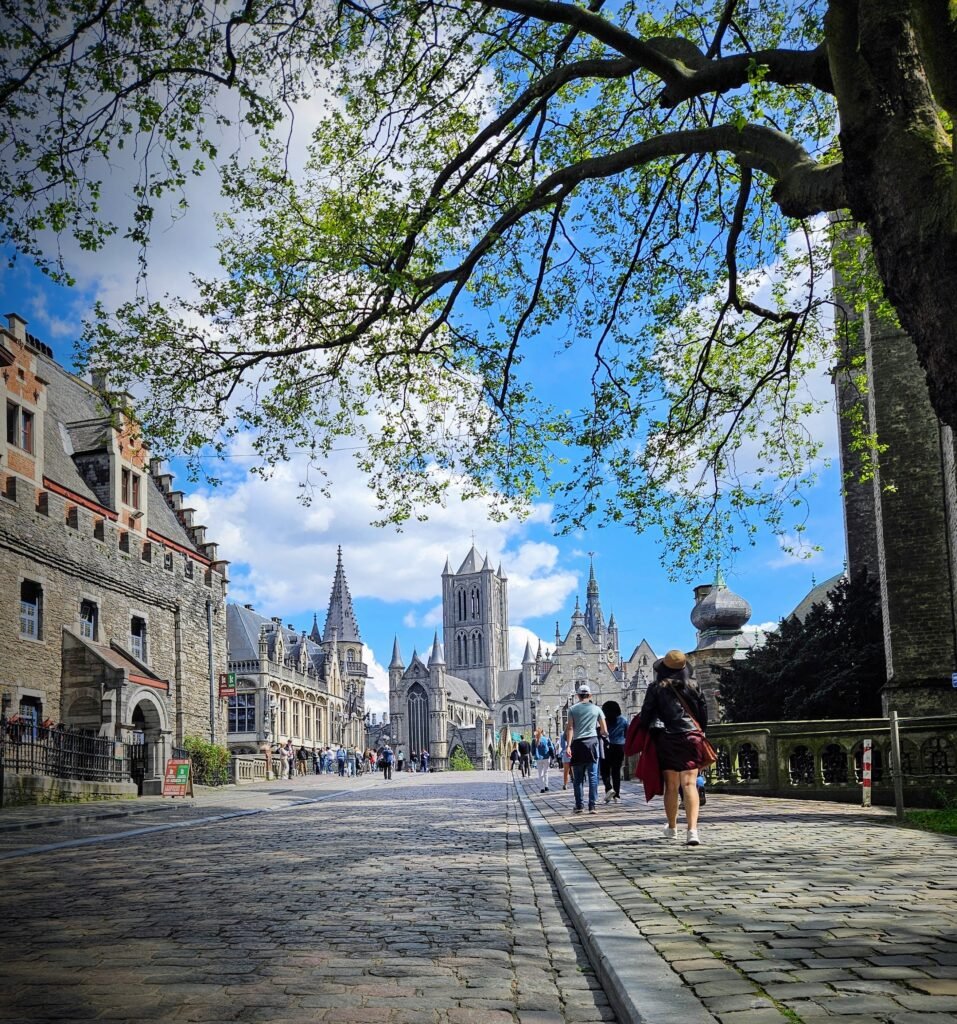
Walk Around Ghent
One of the things I really enjoyed about Ghent was how easy it was to explore on foot. Give me a city with plenty of pedestrian areas, and I’m happy—don’t even get me started on how much I like pedestrian-friendly cities! Instead of following a strict plan, we decided to simply walk and see where the city took us.
Vrijdagmarkt- Ghent’s historic squares
We started our exploration after parking the car in a parking garage near Vrijdagmarkt, one of Ghent’s historic squares. As soon as we stepped out, we found ourselves surrounded by a large open square, historic buildings, cafés, and plenty of activity. At the center stood a statue of Jacob van Artevelde, one of the most important figures in Ghent’s medieval history.
Artevelde was a wealthy wool merchant and political leader who played an important role during the Hundred Years’ War in the 14th century. Ghent’s textile industry depended heavily on English wool, and Artevelde helped restore the city’s access to these imports. His efforts helped revive Ghent’s cloth industry and made him a hero in the city. His bronze statue has stood in Vrijdagmarkt since 1863, with his outstretched arm pointing toward England—the country that played such an important role in his story.
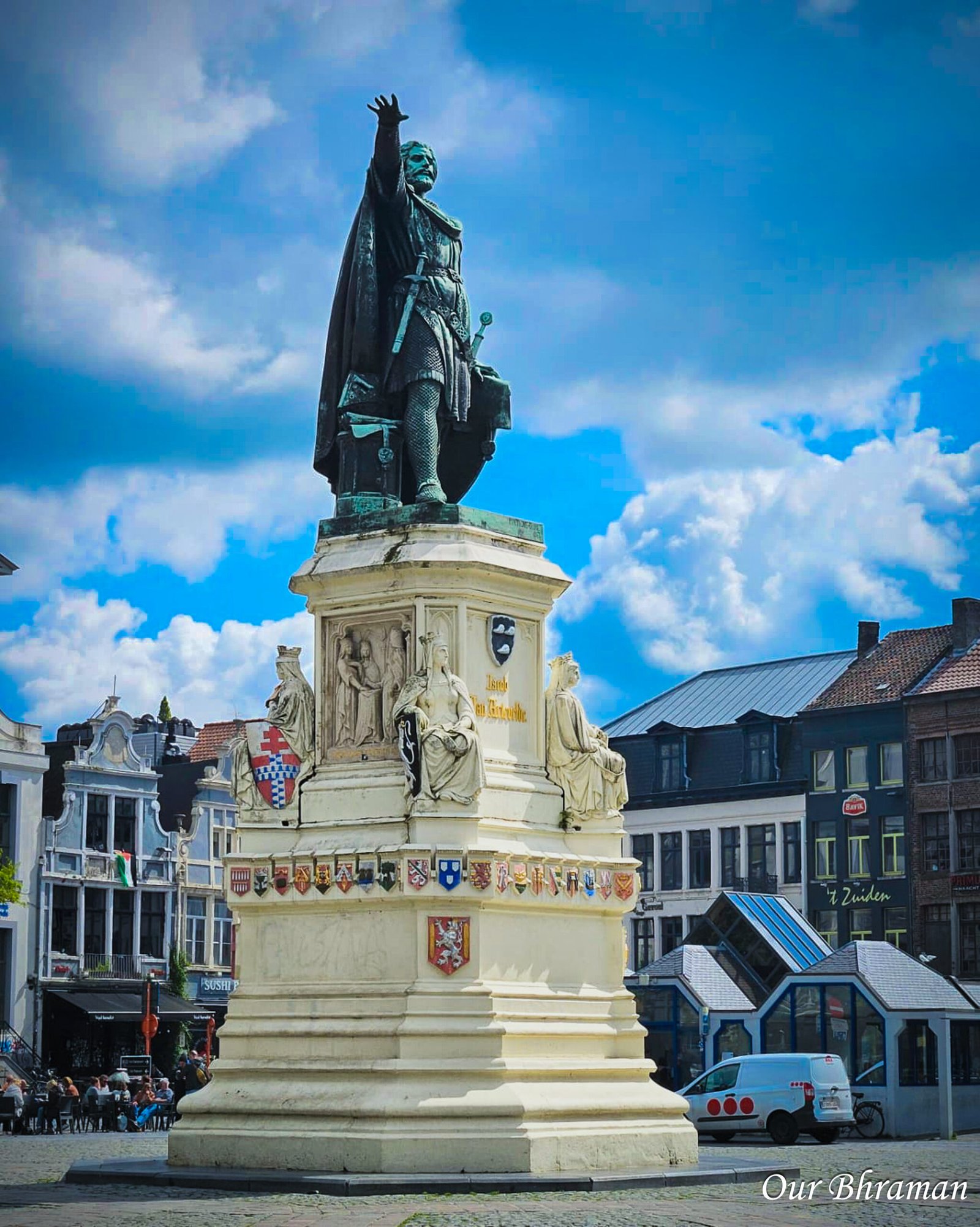 The square itself has witnessed centuries of Ghent’s public life. Royalty were once officially welcomed here, celebrations and political gatherings took place here, and, on a much darker note, public executions were also held here. Today, the atmosphere is much more relaxed, with cafés, restaurants, terraces, and people enjoying the open space. The historic Toreken, or “Little Tower,” is another interesting building to look for around the square, along with the imposing Ons Huis building associated with Ghent’s socialist movement.
We didn’t come to Vrijdagmarkt specifically to study its history—we had simply parked nearby and were ready to start exploring. But that’s what I liked about walking through Ghent. Even before we reached the major landmarks, the city was already giving us little pieces of its history. From Vrijdagmarkt, we left the square and continued wandering through the historic streets of Ghent. We weren’t trying to follow a perfect route or check landmarks off a list. We simply kept walking, and before long, the buildings opened up to reveal the River Leie.
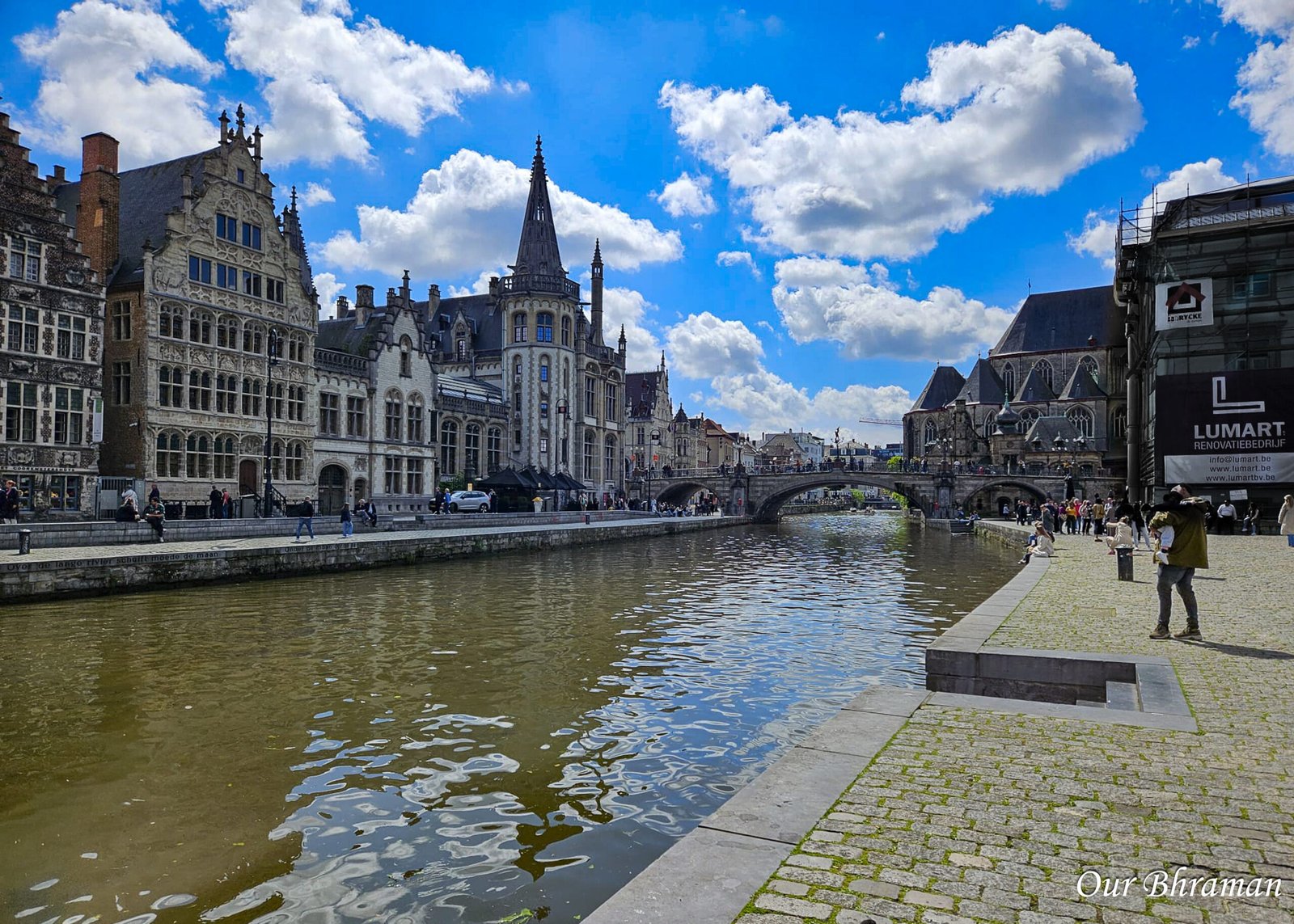
Vleeshuisbrug and the River Leie
As we continued walking through Ghent, we crossed Vleeshuisbrug, another small but scenic bridge over the River Leie. From the bridge, we could look along the water and see the historic buildings lining the river, with boats slowly making their way through the heart of the city. After spending so much time among Ghent’s medieval streets and buildings, it was nice to pause and enjoy the city from the water’s edge.
The bridge itself has a long history. Vleeshuisbrug was first mentioned as Gravenbrug in 1274, and over the centuries it has been rebuilt and renamed several times. Its present bridge replaced an earlier wooden swing bridge in 1988.
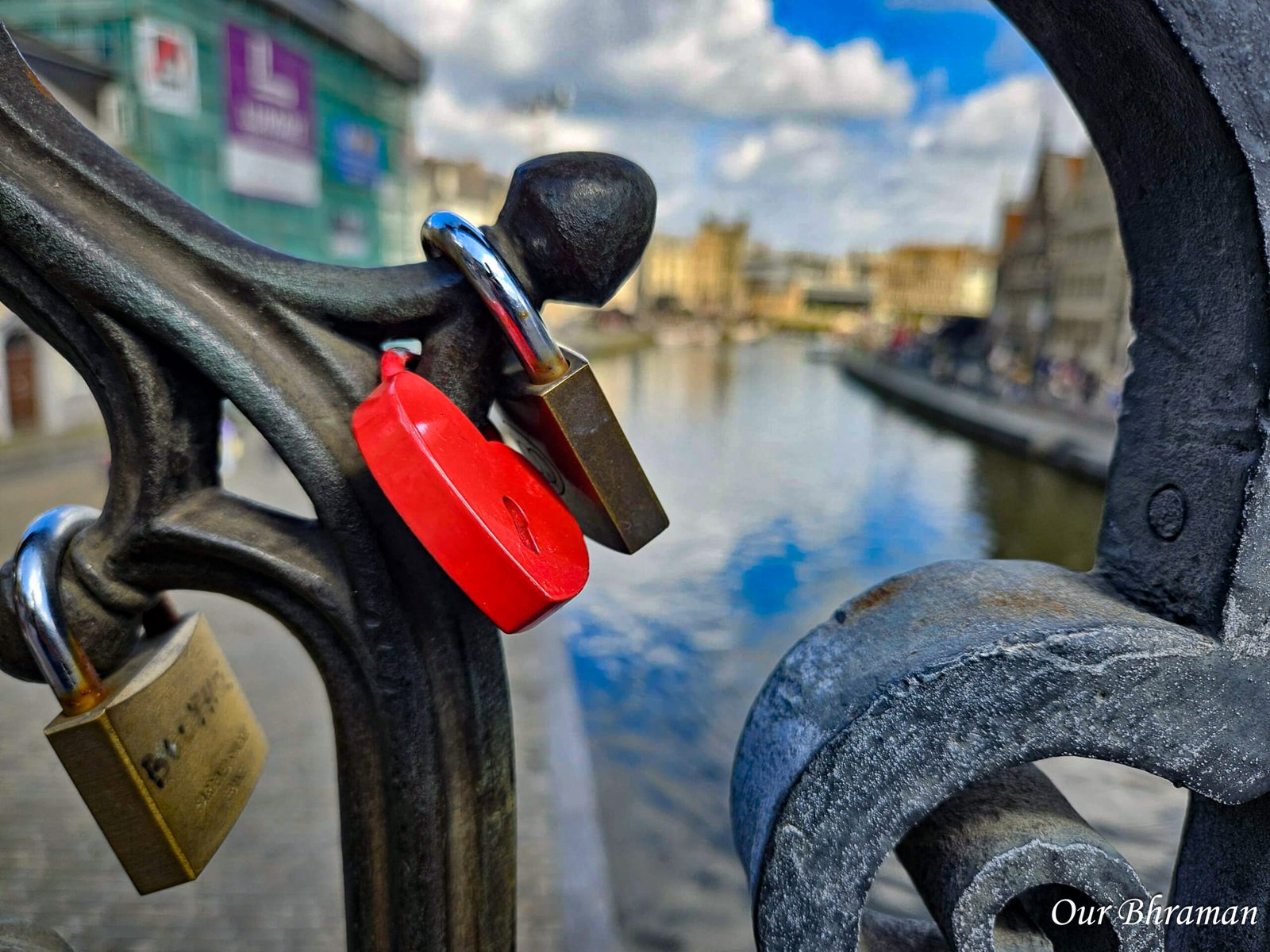 For us, the view from the bridge was less about a specific landmark and more about experiencing Ghent as a city built around water. The Leie has been part of Ghent’s story for centuries, with ships docking along the nearby Graslei and Korenlei as early as the 11th century. Today, the river is just as much a part of the city’s character, with sightseeing boats, cafés, historic façades, and people enjoying the waterfront.
After spending a few minutes enjoying the river, we continued along the waterfront. The historic buildings and narrow streets gradually gave way to something much more imposing. Ahead of us was Gravensteen Castle, looking like it had come straight out of a medieval movie.
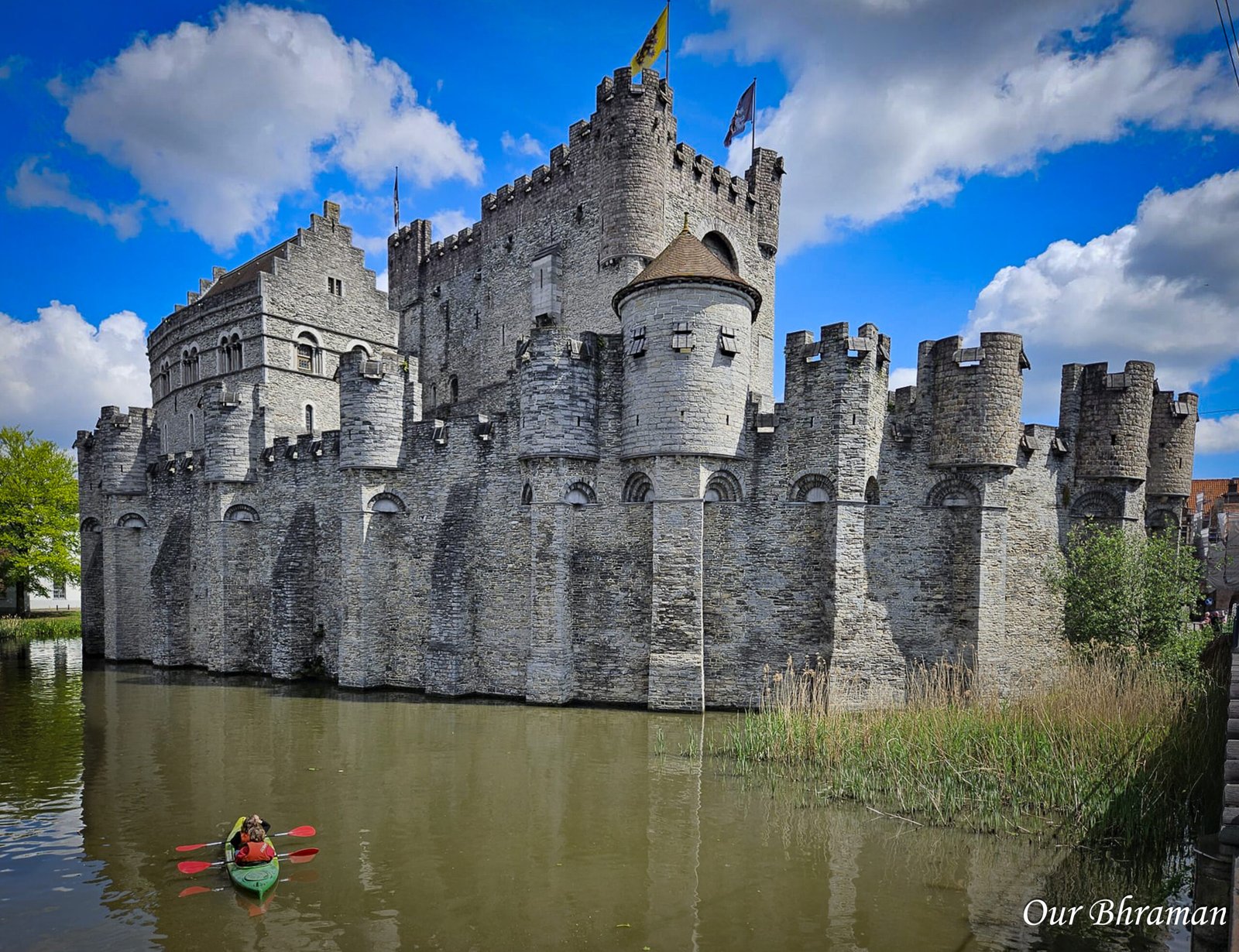
Gravensteen Castle
While exploring Ghent, we eventually made our way to Gravensteen Castle, one of the city’s most impressive landmarks. The castle we see today dates to 1180, when Count Philip of Alsace built the fortress as a powerful symbol of the Counts of Flanders. With its stone walls, towers, battlements, and surrounding moat, it certainly looks the part.
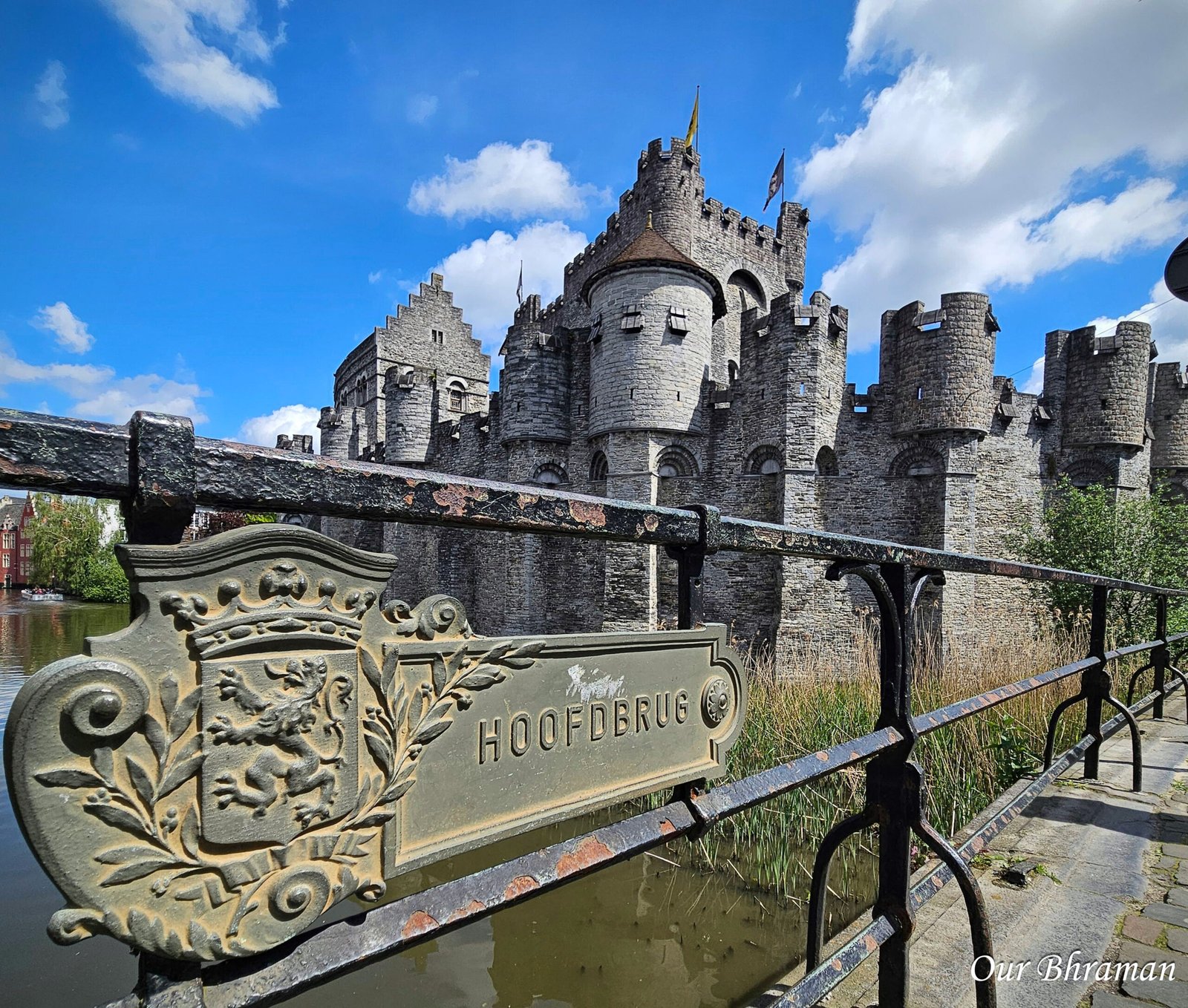 Unfortunately, we were short on time and couldn’t go inside, so we decided to make the most of what we could see from the outside. We walked around the castle, taking in the massive stone walls, towers, battlements, and moat from different angles.
Standing there, it was easy to imagine how intimidating this fortress must have been centuries ago. It was built to project the power of the Counts of Flanders, and even today, its imposing architecture makes quite an impression.
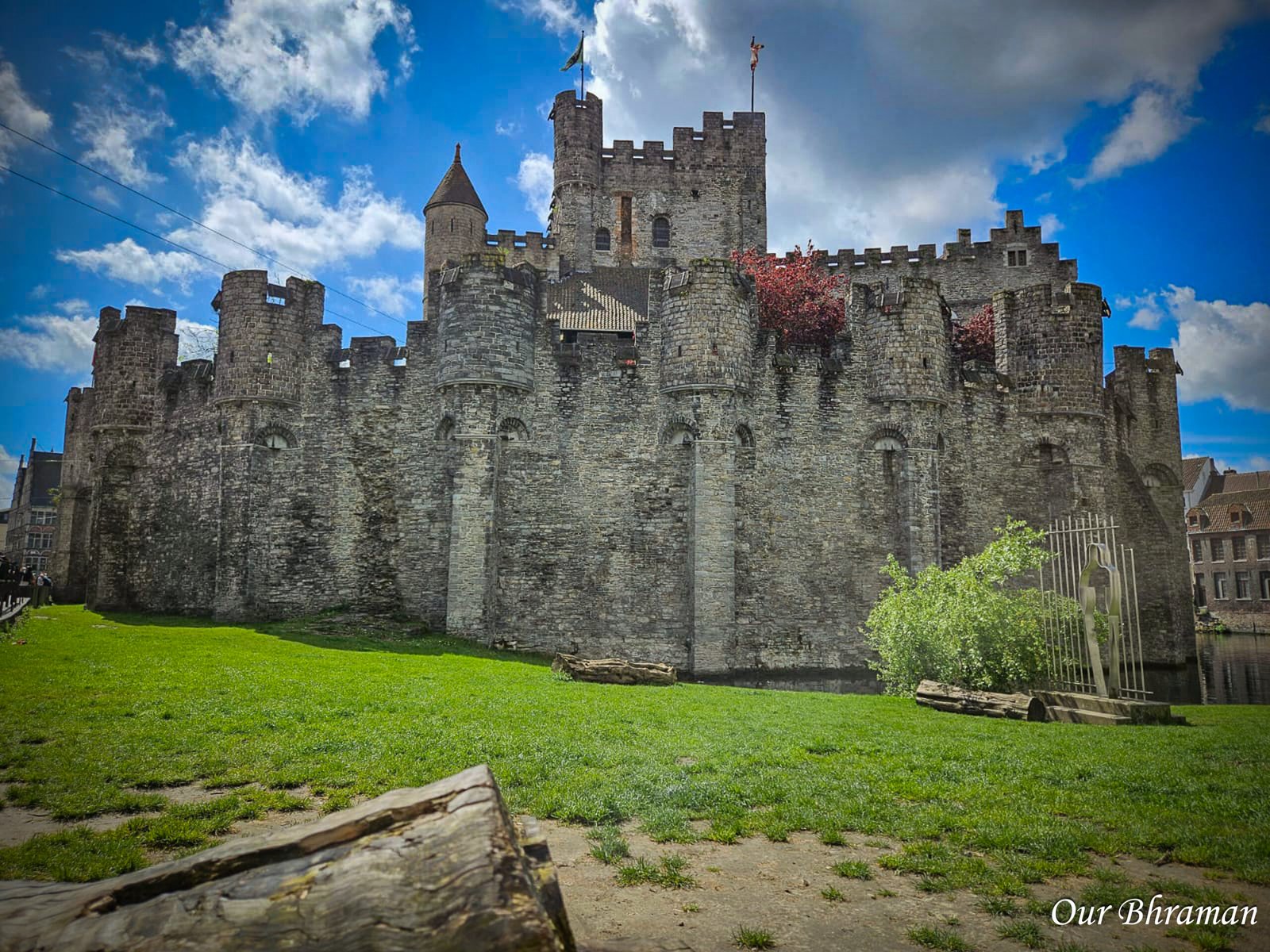 We were a little disappointed that we couldn’t explore the interior, but that’s sometimes the reality of traveling when you’re trying to see as much as possible in limited time. Instead of dwelling on what we missed, we took a few photographs and enjoyed the castle from the outside before continuing our walk.
Our Tip: If you have enough time in Ghent, go inside Gravensteen. We didn’t have that luxury during our visit, but even the exterior deserves a place on your walking route through the historic center.
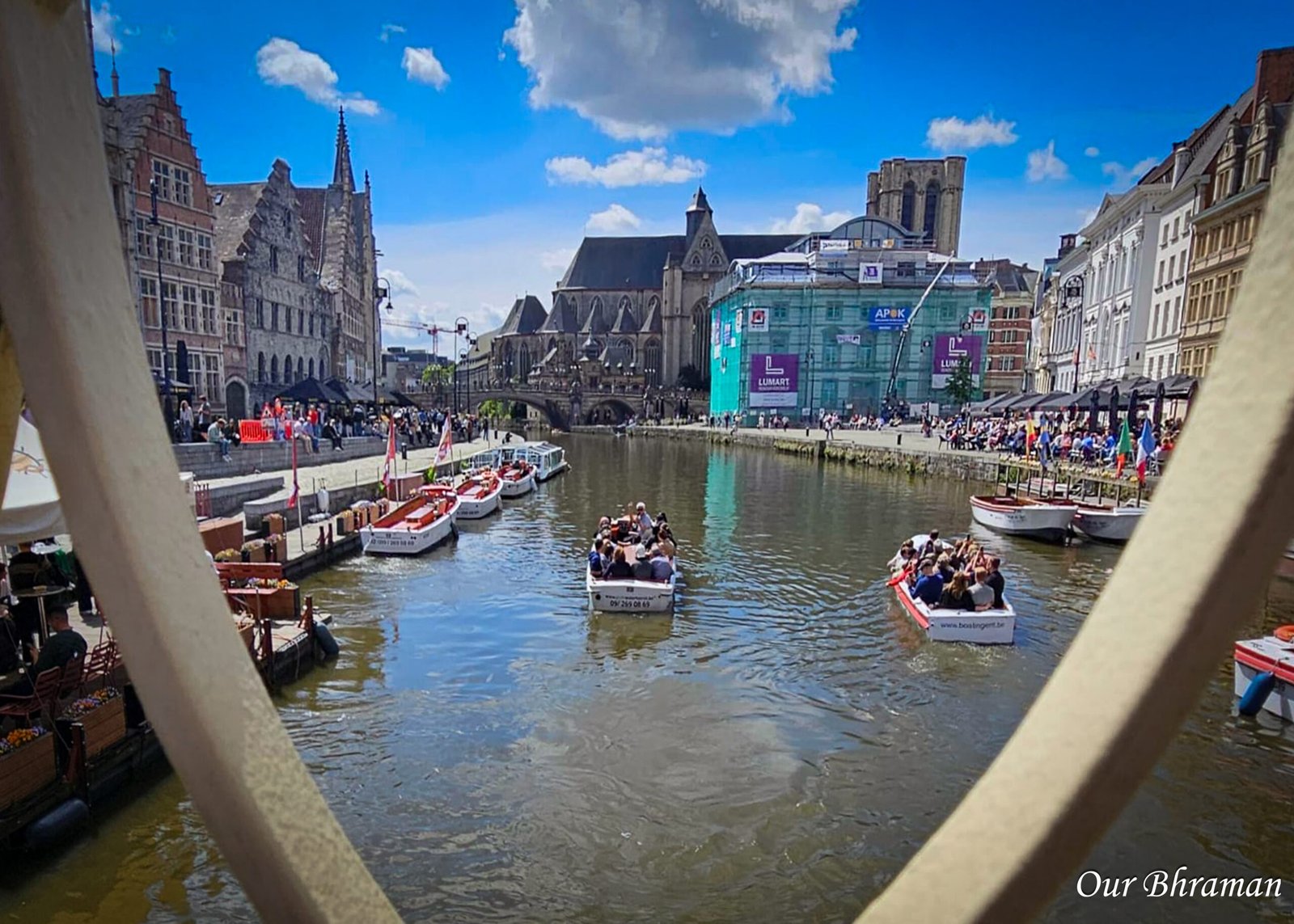
After taking in the castle, we continued walking through the surrounding streets. The massive stone walls of Gravensteen gradually disappeared behind us, and once again we found ourselves near the River Leie. This time, we reached Grasbrug, where the atmosphere changed from medieval fortress to one of Ghent’s most picturesque waterfront scenes.
Grasbrug and the River Leie
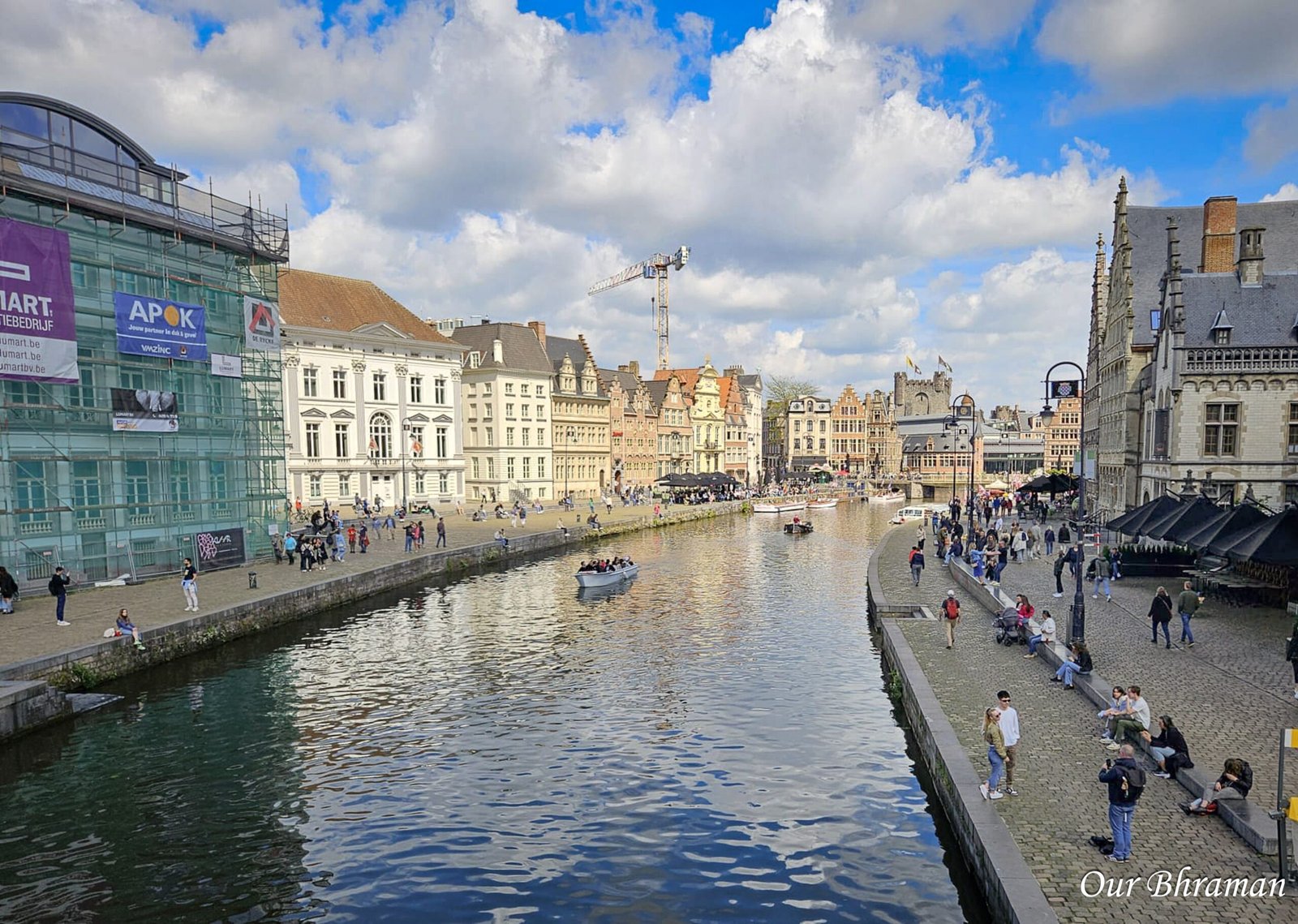
This is a small historic bridge crossing the River Leie near the famous Graslei and Korenlei. From the bridge, we had a beautiful view along the river, with boats resting along the quays and rows of historic buildings reflected in the water.
The Leie has been at the heart of Ghent for centuries. Ships were already docking along these quays as early as the 11th century, when Graslei and Korenlei formed an important part of the city’s medieval trading port. Today, the atmosphere is much more relaxed, with sightseeing boats, cafés, terraces, and people enjoying the waterfront.
For us, Grasbrug was another one of those places where simply walking through Ghent became part of the experience. We stopped for a few photographs, watched the boats move along the river, and took in the historic façades around us. After spending some time by the river, we continued toward the heart of Ghent. The quiet waterfront gradually gave way to a much livelier atmosphere, and before long we found ourselves at Korenmarkt.
Korenmarkt
As we continued walking through Ghent, we eventually arrived at Korenmarkt, one of the busiest and most lively squares in the historic center. The atmosphere here was noticeably different from some of the quieter streets we had walked through. Cafés and restaurants lined the square, people gathered around outdoor terraces, and the impressive historic façades created a beautiful backdrop wherever we looked.
Korenmarkt has been an important part of Ghent for centuries. Almost a thousand years ago, grain arriving along the Scheldt and River Leie was traded here, helping the square develop into an important commercial center during the Middle Ages. Today, the trading has disappeared, but the square remains one of the social and commercial hearts of the city.
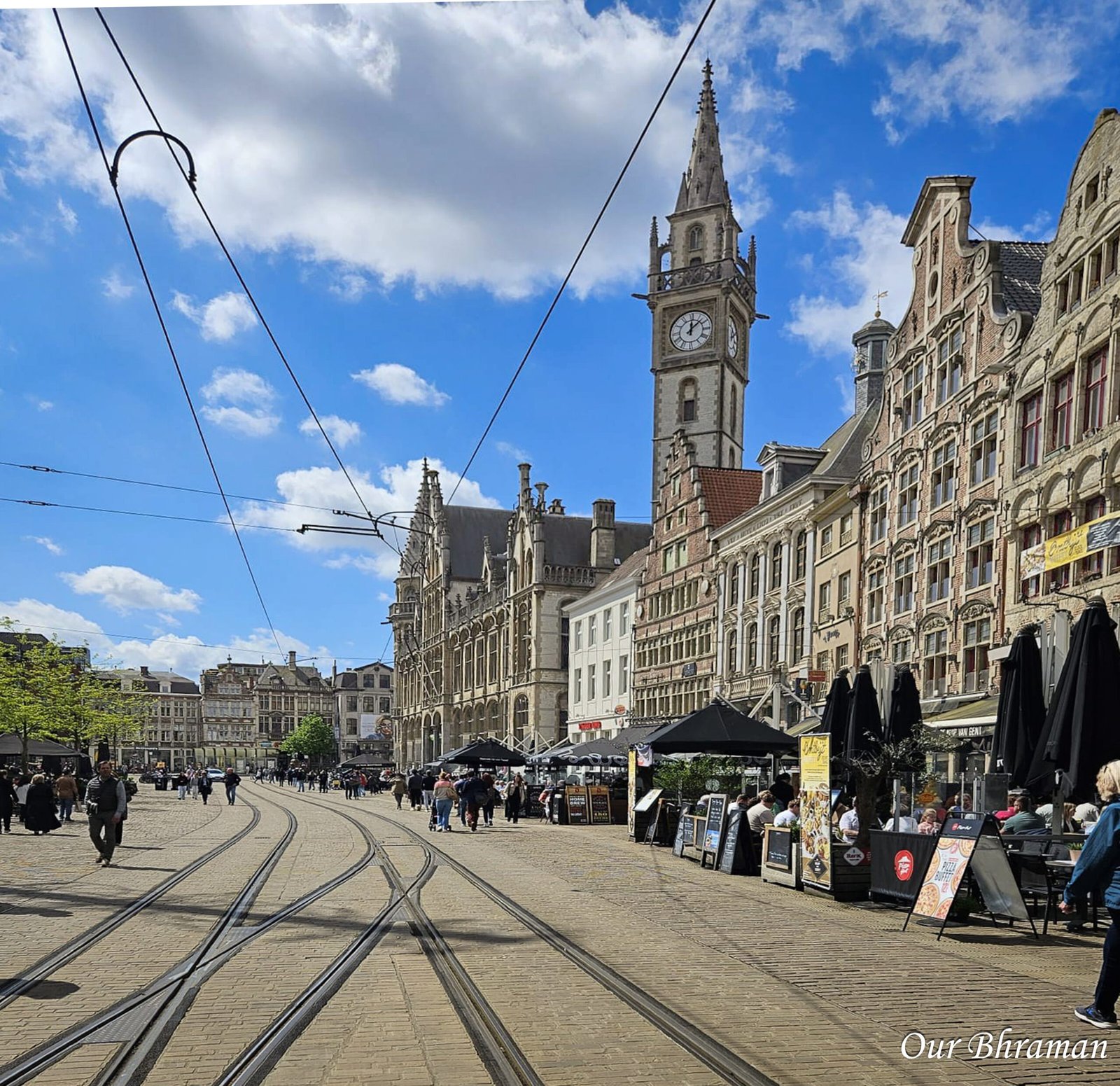 One building that immediately caught our attention was the former post office, with its elaborate façade and distinctive clock tower. Built in the early 20th century, the building now houses shops, a hotel, and places to eat and drink. Nearby, St. Nicholas Church rises directly beside the square, adding another impressive landmark to the scene.
For us, Korenmarkt was less about stopping at one particular attraction and more about enjoying the energy of Ghent. It was a place to pause, look around, take a few photographs, and watch the city go by. From here, it was also easy to continue toward Graslei and Korenlei, St. Michael’s Bridge, or the shopping streets around Veldstraat.
What to expect: a lively historic square, beautiful architecture, cafés and restaurants, plenty of people, and trams moving through the area. If you’re exploring Ghent on foot, Korenmarkt is almost impossible to miss—and definitely worth slowing down for.

St. Nicholas Church
As we continued exploring the historic center of Ghent, St. Nicholas Church was one of the first landmarks that caught our attention around Korenmarkt. Its tall tower and distinctive Gothic architecture added another impressive feature to Ghent’s medieval skyline.
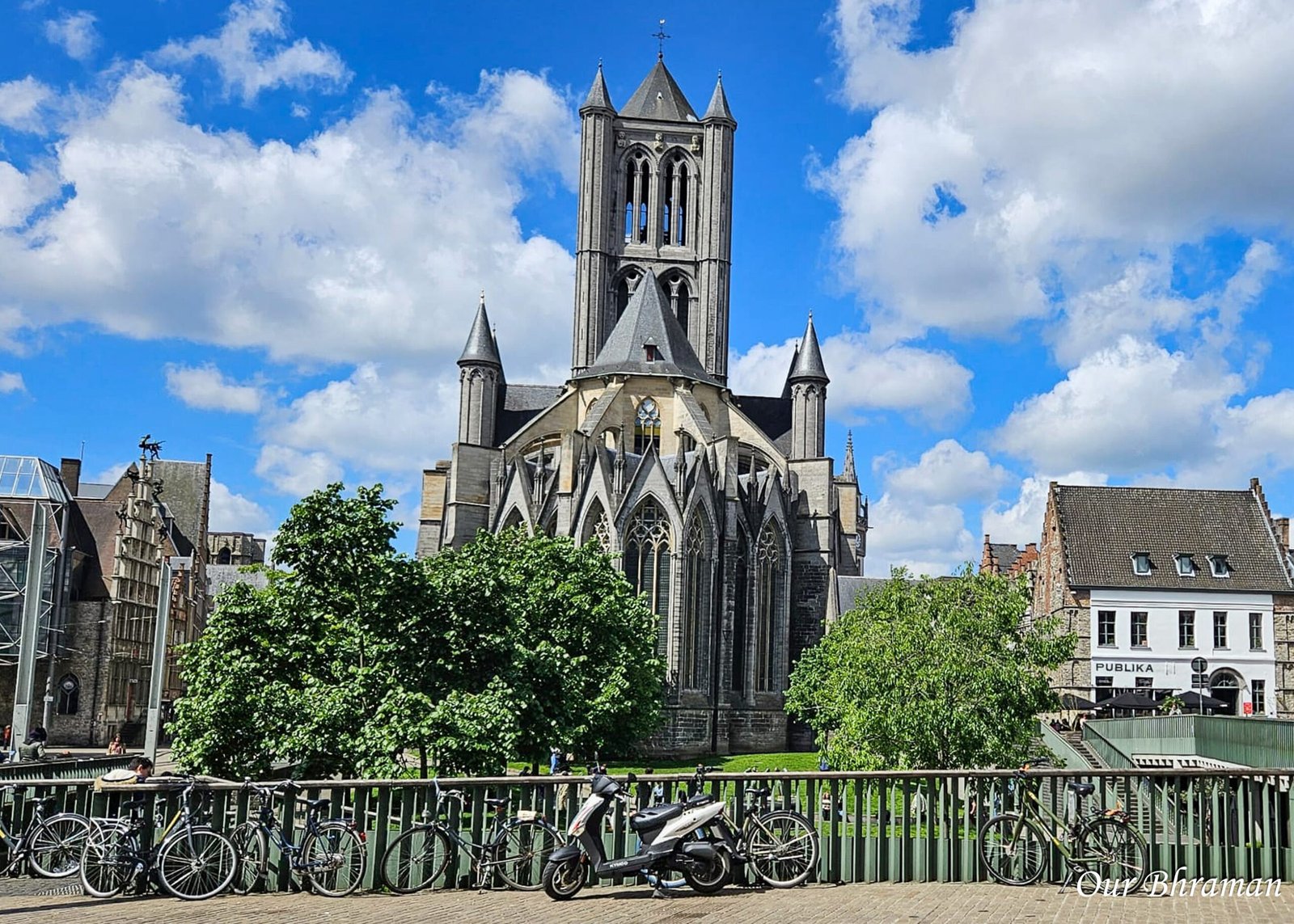 Built largely in the Scheldt Gothic style using blue-gray Tournai stone, the church dates back to the 13th century. What makes it especially interesting is the unusual position of its main tower. Instead of rising above the entrance, the tower stands over the crossing of the nave and transepts, allowing light to enter the church like a natural lantern.
The church was closely connected to Ghent’s merchants and tradespeople, which makes sense given its location near the city’s historic commercial center. Even from the outside, its architecture gives you a sense of the wealth and importance Ghent once held as a medieval trading city.
For us, it was another beautiful discovery along our walk. We stopped for a few photographs, admired the tower rising above Korenmarkt, and then continued toward the next landmark.
Belfry of Ghent
We didn’t have to walk far before another tower came into view—the Belfry of Ghent. Standing between St. Nicholas Church and St. Bavo’s Cathedral, the Belfry forms the middle tower of Ghent’s famous medieval skyline.
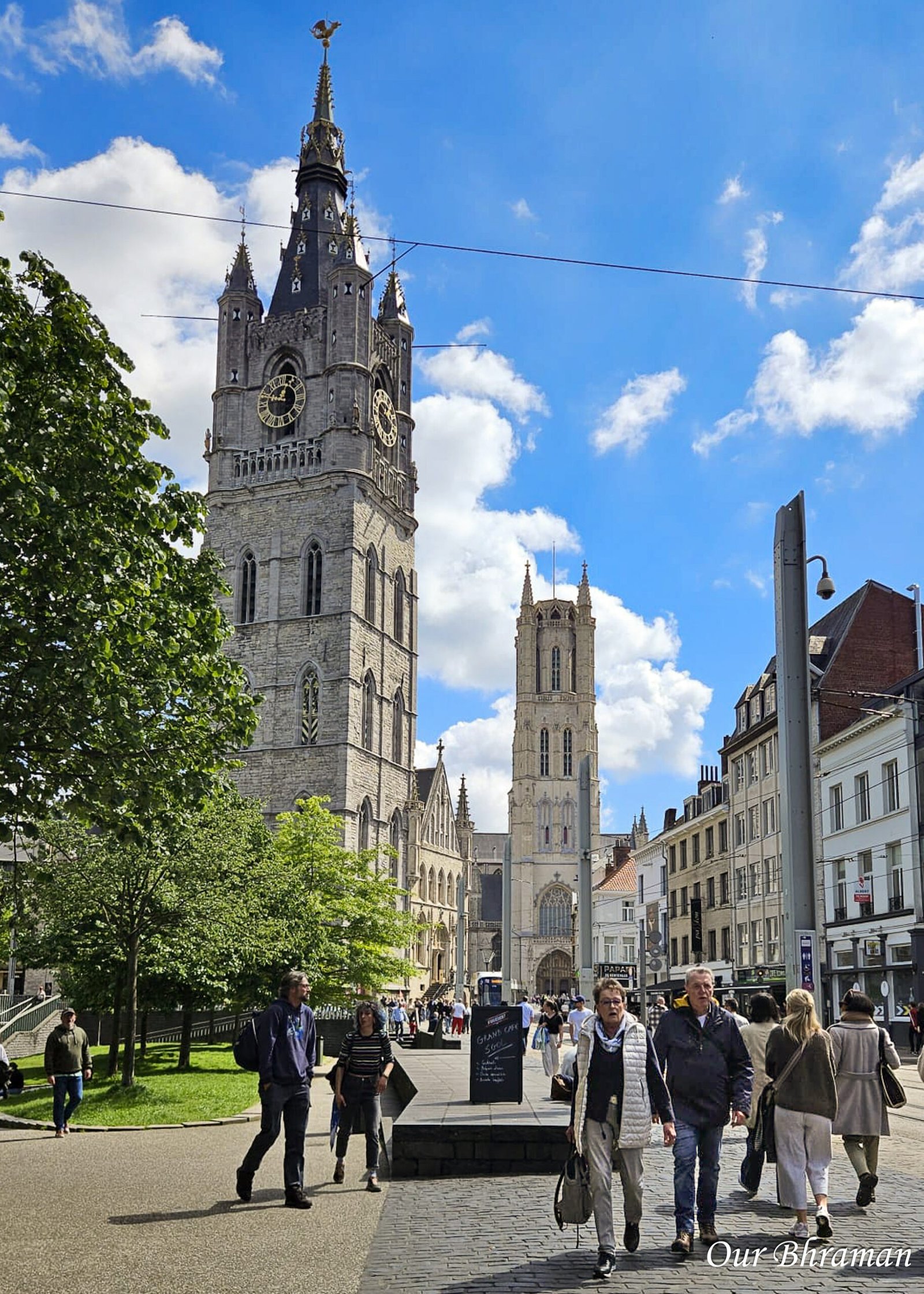 The Belfry has long been a symbol of Ghent’s independence and prosperity. A dragon has stood at the top since 1377, serving as the city’s symbolic guardian. The tower also protected important city privileges and documents, while its bells were used to warn and protect the people of Ghent. The Belfry is now recognized as a UNESCO World Heritage site.
We didn’t go up the tower, but we enjoyed seeing it from the square and taking in the architecture from the outside. What caught our attention was how close everything was. St. Nicholas Church was behind us, St. Bavo’s Cathedral was just ahead, and the three towers were beginning to make sense as one continuous part of Ghent’s skyline.
St. Bavo’s Cathedral
Just beyond the Belfry stood St. Bavo’s Cathedral, completing the trio of towers we had been seeing throughout the historic center.
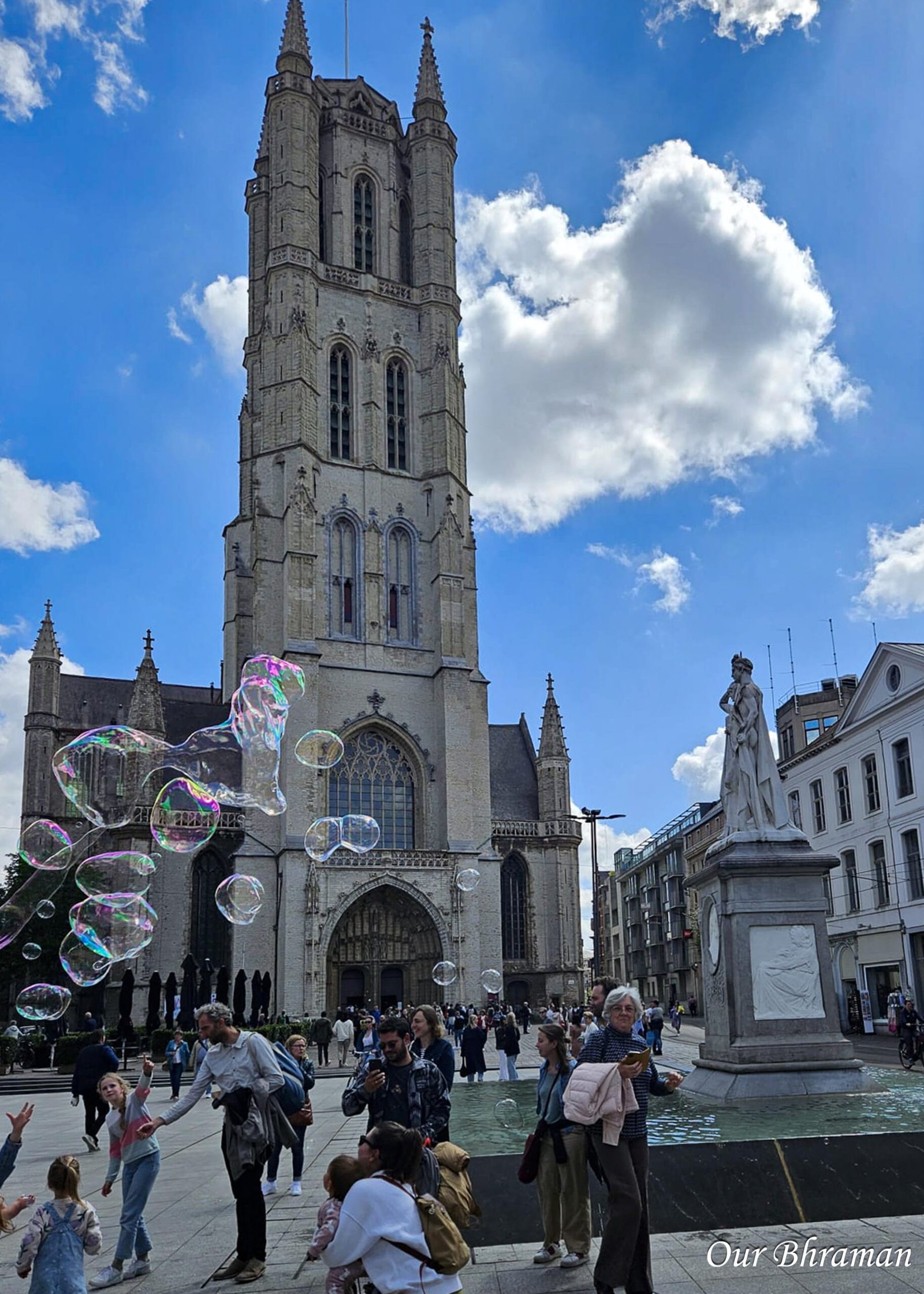 We didn’t go inside, but even from the outside, the cathedral was impressive. Its towering Gothic architecture, detailed stonework, and grand façade made it one of the most imposing buildings we encountered during our walk.
The cathedral stands on the site of earlier churches dating back to the 10th century and was transformed into the Gothic structure we see today during the 15th and 16th centuries. It is also famous for being home to the Ghent Altarpiece, or Adoration of the Mystic Lamb, one of Belgium’s most celebrated works of art.
For us, it was another one of those moments when simply walking through Ghent revealed something impressive. We stopped outside for a few photographs, admired the architecture, and then continued exploring.
 Street Art While Exploring Ghent
 Street Art While Exploring Ghent
What I particularly enjoyed about walking through Ghent was that the historic architecture wasn’t the only thing competing for our attention. Between the medieval churches, towers, canals, and cobblestone streets, we would occasionally come across something completely different—street art.
We weren’t following a street-art tour or specifically looking for murals. We were simply walking from one attraction to another when colorful walls and large-scale artwork started catching our attention.
One mural that really stood out to us was the Children Rights mural on Sint-Martensstraat. Created by Ghent artist Jeremiah Persyn, also known as Jamz, the mural was commissioned by tZitemzo, a Ghent nonprofit focused on children’s and young people’s rights. The artwork explores ideas such as the right to feel safe, be loved, have enough to eat, play, grow, and be treated fairly.
 Knowing the story behind the mural made it much more meaningful than simply seeing it as a colorful wall. It was a reminder that Ghent’s art isn’t limited to museums and historic buildings—it can also be found right on the streets.
That was one of the things we enjoyed most about walking through the city. You could be surrounded by centuries-old architecture one moment and then suddenly find yourself standing in front of a completely modern piece of art.
St. Michael’s Bridge and Ghent’s Iconic Three Towers
After seeing St. Nicholas Church, the Belfry, and St. Bavo’s Cathedral individually, we eventually reached the place where their relationship became clear—St. Michael’s Bridge.
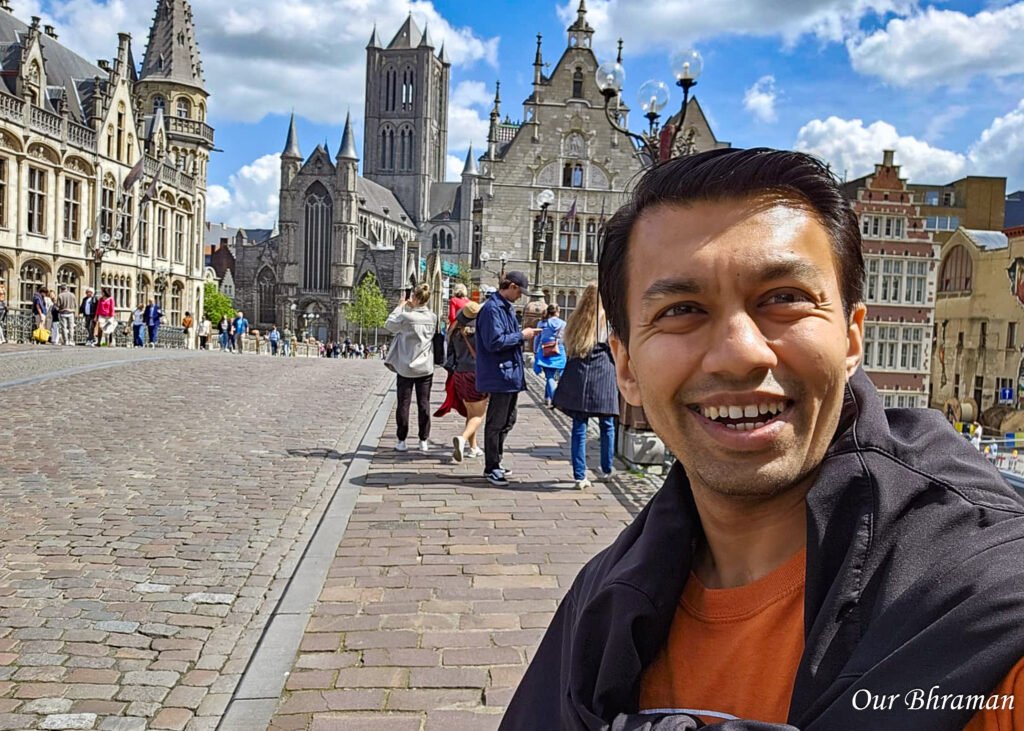
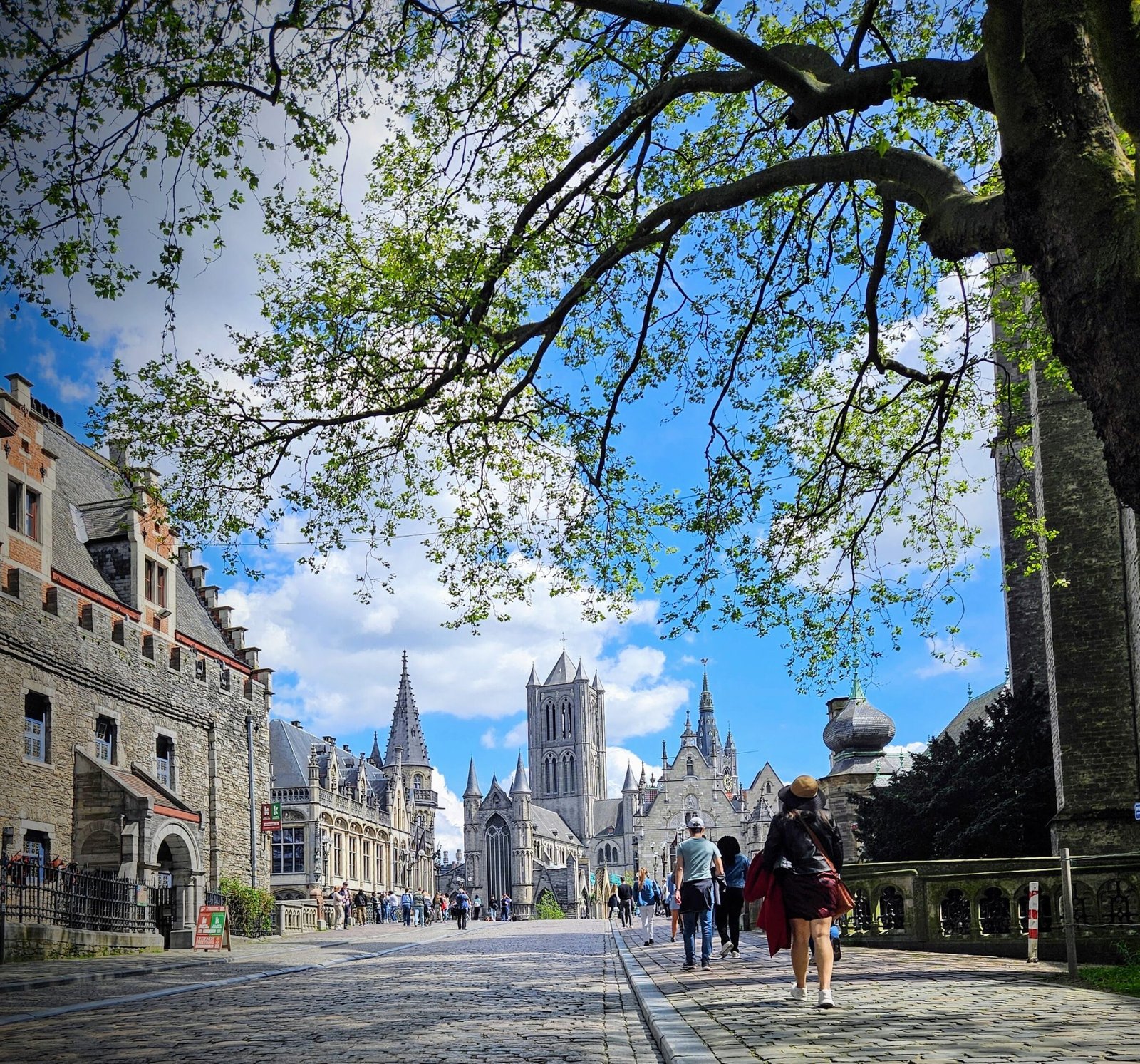 This turned out to be one of our favorite views of Ghent. Standing on the bridge, we could finally see all three towers lined up almost perfectly: St. Nicholas Church, the Belfry, and St. Bavo’s Cathedral. This is the classic medieval skyline of Ghent, and St. Michael’s Bridge is the famous viewpoint where all three can be captured in a single photograph.
The current stone bridge replaced an earlier flat swing bridge in the early 20th century. It was designed by architect Louis Cloquet, and its design helped create the monumental view that we see today. A central lantern with a bronze statue of St. Michael adds another interesting detail to the bridge itself.
What made the view so impressive for us was not just the three towers, but everything surrounding them. Gothic churches, historic façades, the River Leie, cobblestone streets, and old buildings all came together in one scene. After walking past these landmarks individually, seeing them together finally gave us a better sense of how closely connected the historic center of Ghent really is.
For us, this was more than just another photo stop. We paused on the bridge, looked around, and took in the view before moving on. Sometimes a city doesn’t reveal its full character until you step back and see how all the individual pieces fit together.
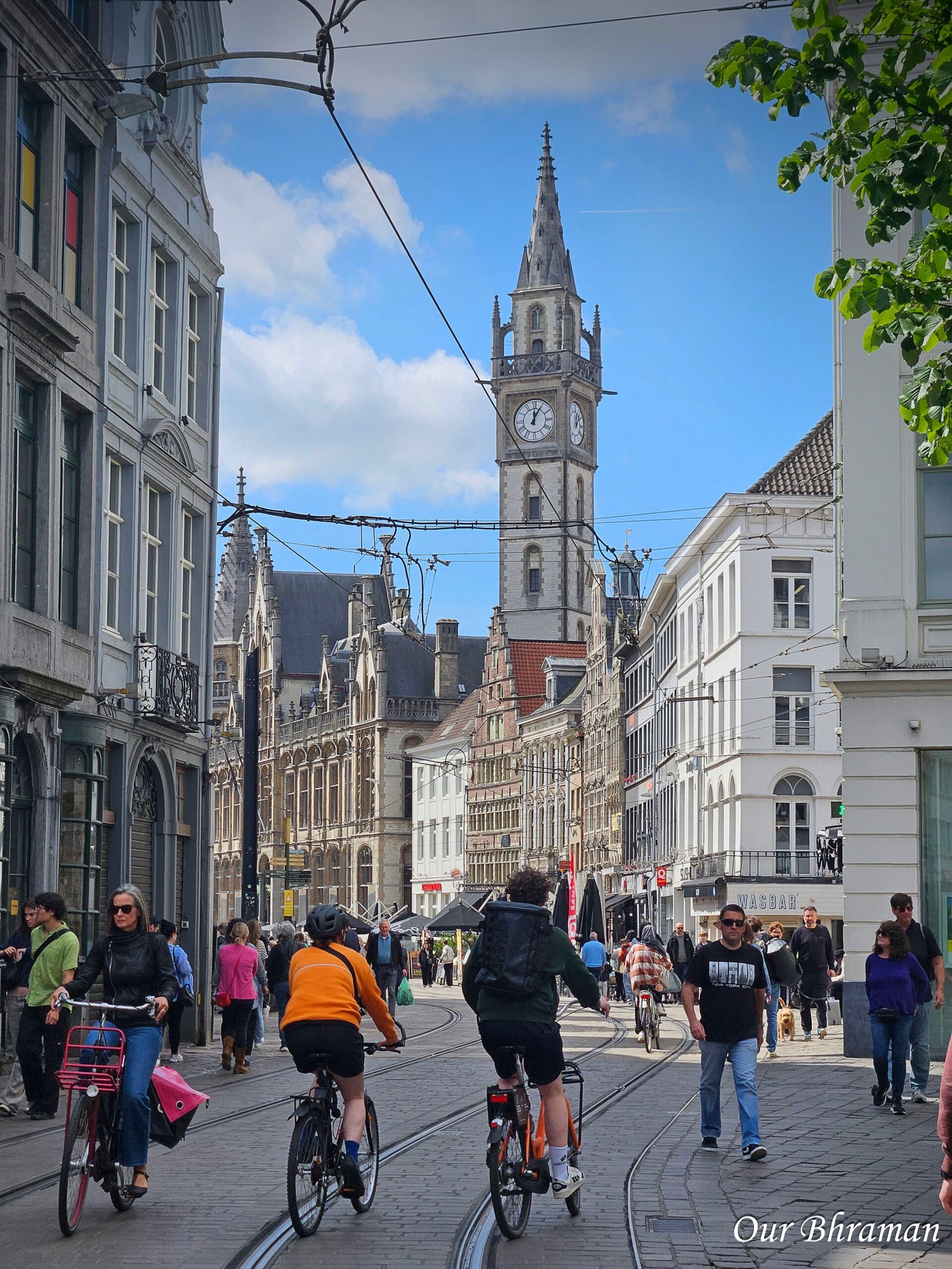 Photography Tip: If you’re exploring Ghent with a camera, don’t rush across St. Michael’s Bridge. Take a moment to look around and find your composition. This is one of those places where the city itself becomes the backdrop, and having all three towers lined up in front of you makes for a pretty memorable travel photograph.