We started the next day with one of the most satisfying breakfasts of our trip. Sel Hotel truly impressed us—the variety was the best we had seen so far, with everything from fresh bread and fruit to warm Icelandic comfort food. With full stomachs and hot coffee in hand, we were ready to take on another day of exploring northern Iceland.
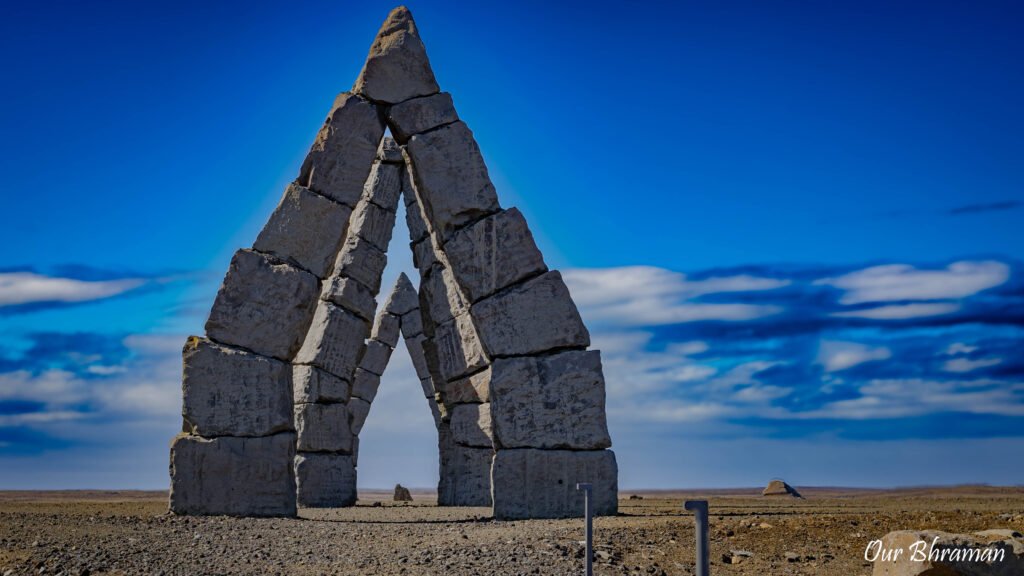
Our first stop was something completely different from the waterfalls, canyons, and volcanic landscapes we had been exploring—Arctic Henge, often called the “Stonehenge of the North.”
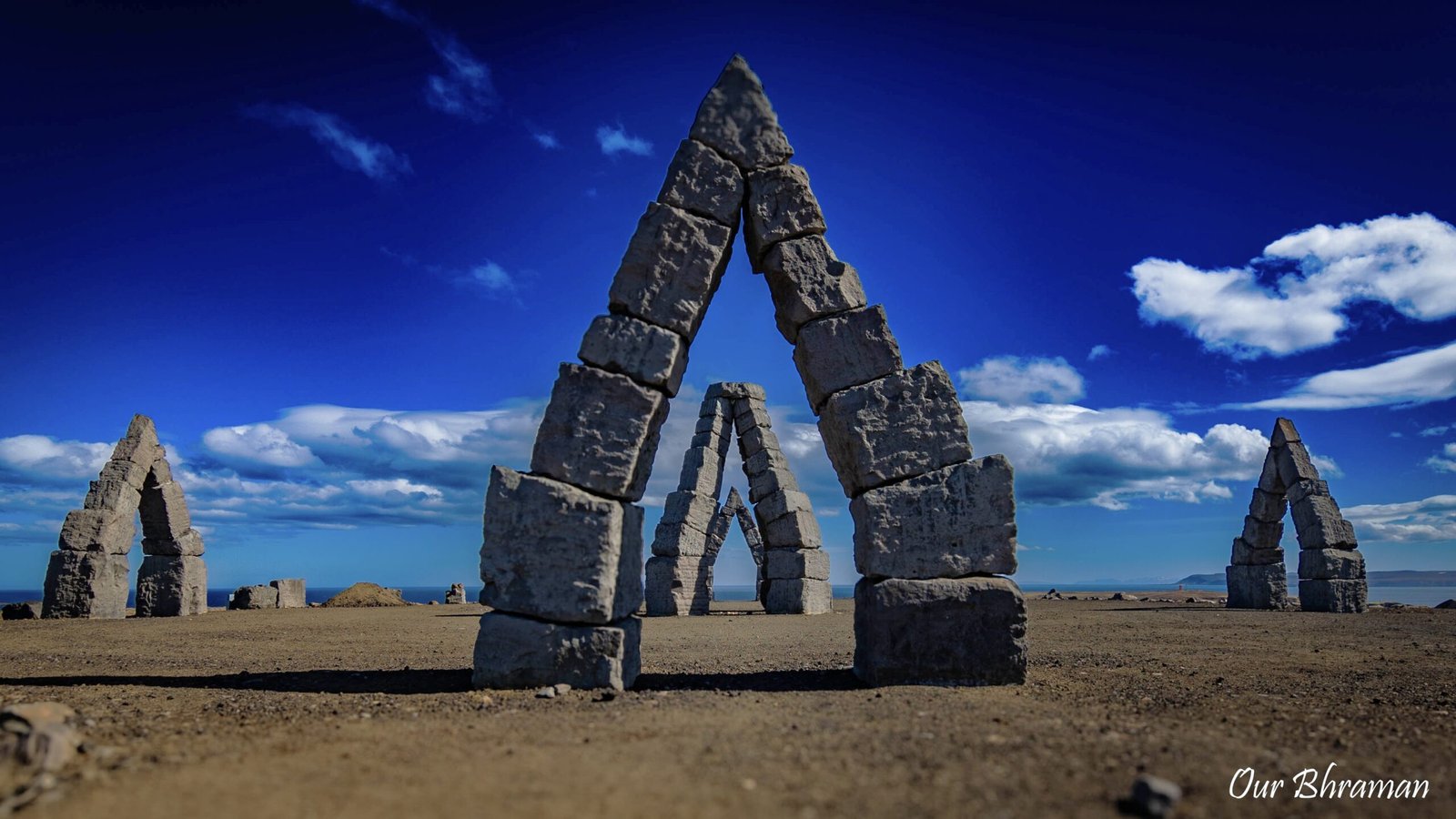
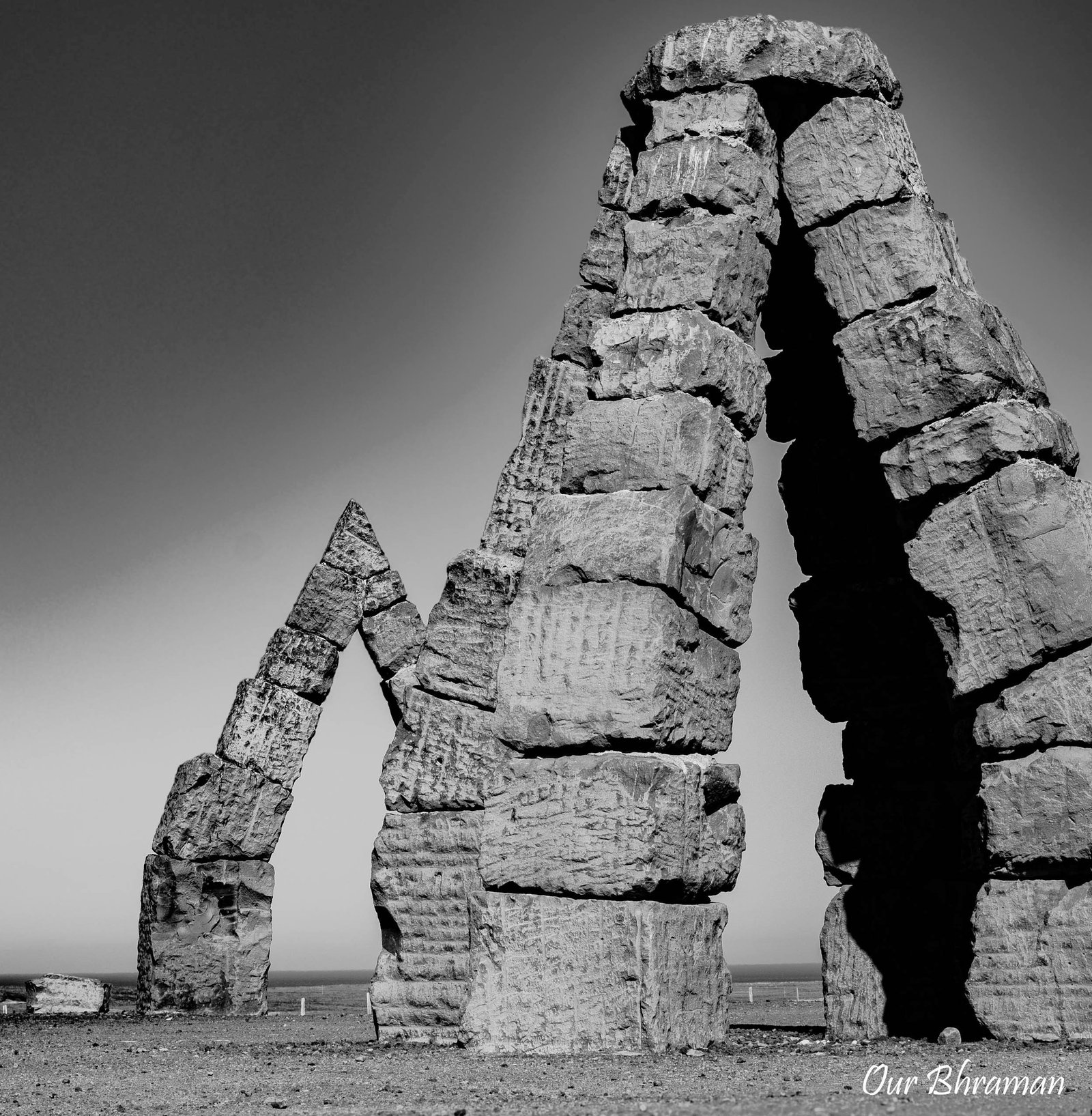
Located near the remote town of Raufarhöfn, one of Iceland’s northernmost communities, Arctic Henge is a large modern stone monument inspired by Norse mythology, astronomy, and the movement of the sun. Unlike Iceland’s natural attractions, this is a place deliberately designed to connect mythology, celestial movements, and the surrounding landscape.
 Almost Having the Place to Ourselves
 Almost Having the Place to Ourselves
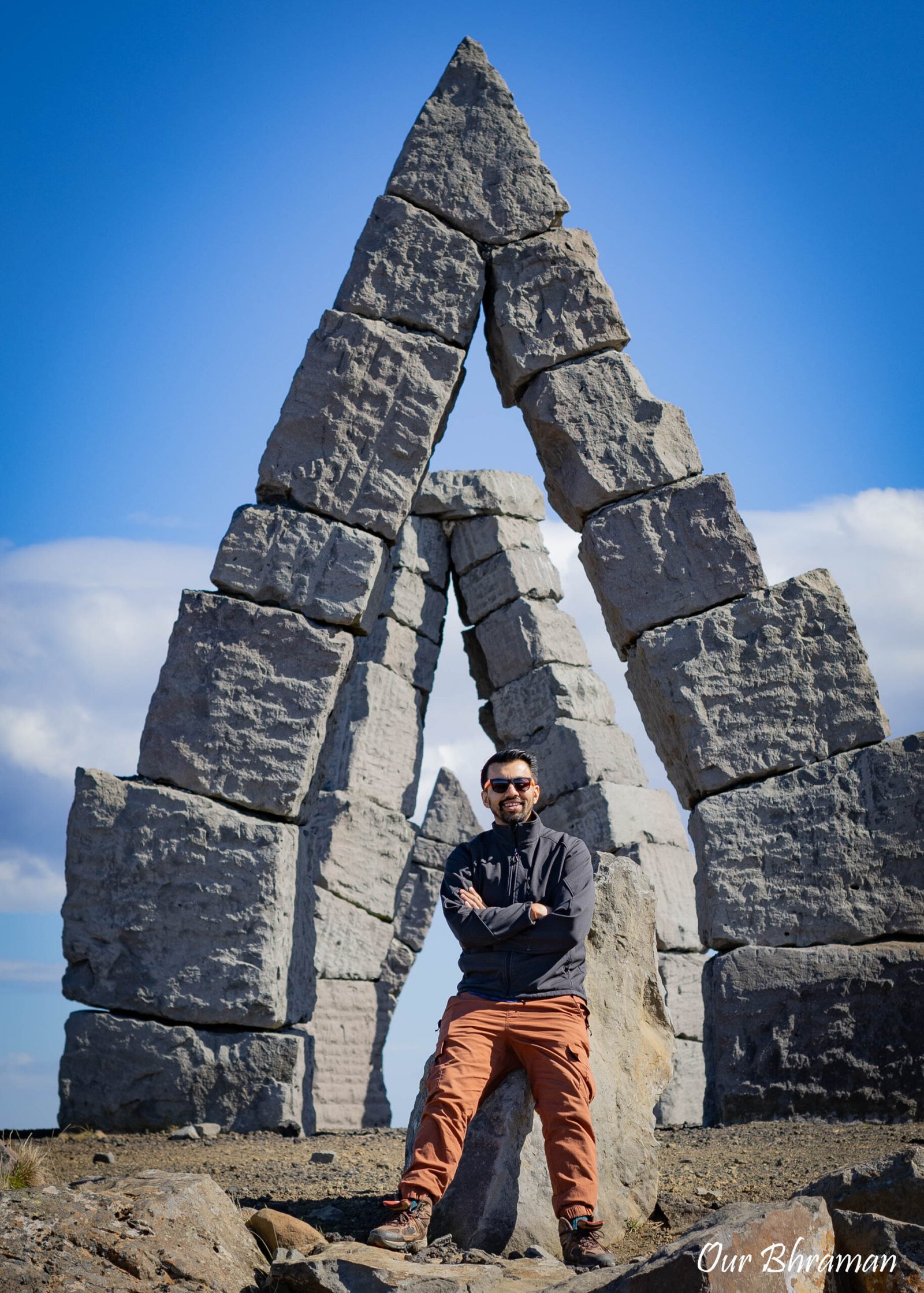
When we arrived, there was hardly anyone around.
Just the quiet wind, the enormous open landscape, and the sound of our footsteps as we walked among the towering stone structures. After visiting some of Iceland’s more popular attractions, having such a unique place almost entirely to ourselves made the experience feel even more special.
The monument looked particularly striking against the wide northern landscape. The enormous stone arches seemed almost mysterious against the open sky, and the remoteness of Raufarhöfn added to the atmosphere.
There was something about standing there with nothing but wind, stones, and an endless horizon that made the place feel almost otherworldly.
 The Mythology Behind Arctic Henge
 The Mythology Behind Arctic Henge
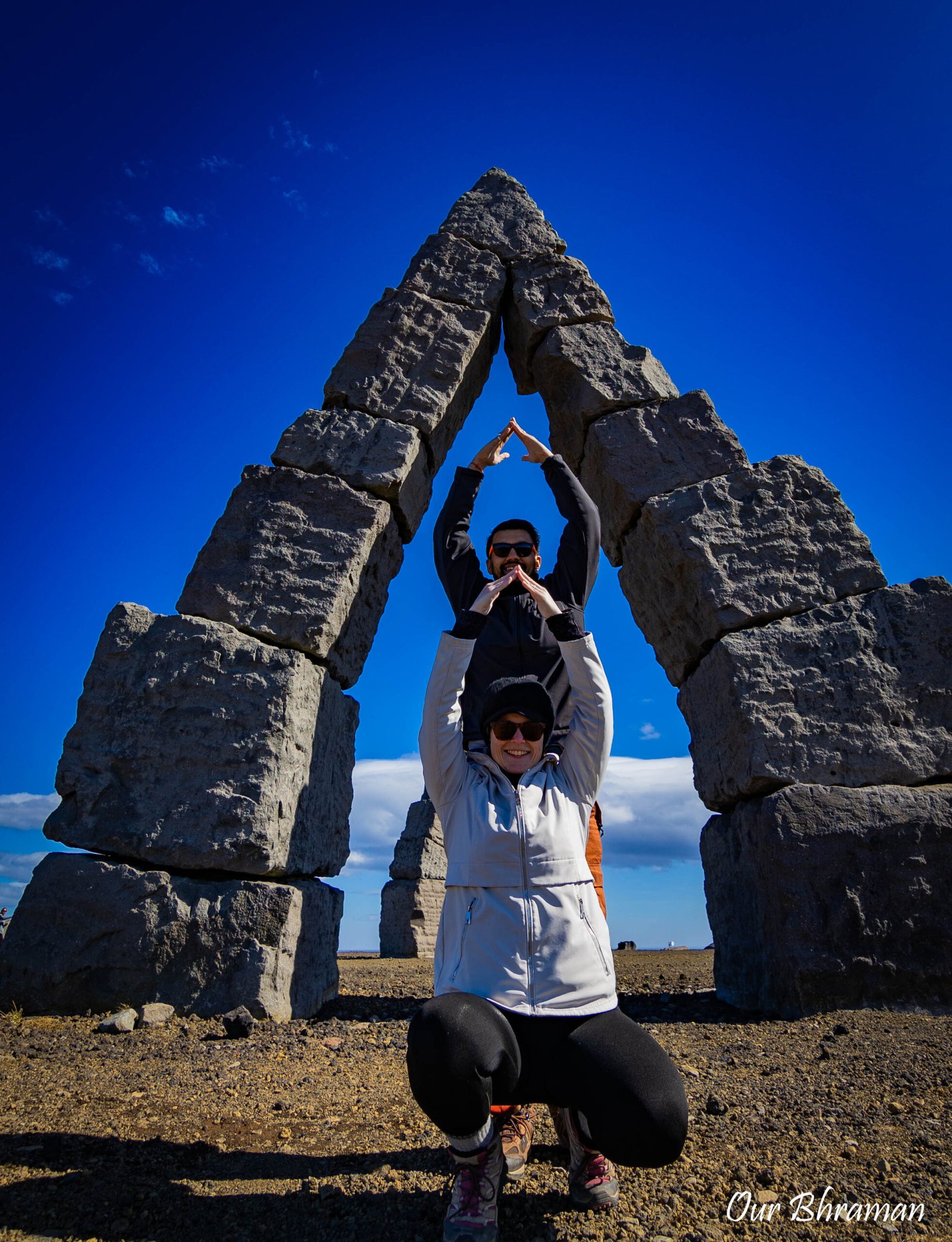
What makes Arctic Henge particularly fascinating is the mythology behind its design.
The monument draws inspiration from Norse mythology, including the dwarfs mentioned in the Völuspá. Its structures were designed around celestial concepts and the movement of the sun, creating a modern interpretation of an ancient Norse calendar.
Even the approach to the monument has a connection to Norse mythology. The path and bridge leading toward the Henge are known as Bifröst, referencing the mythical rainbow bridge connecting Midgard and Asgard.
Although Arctic Henge itself is a modern creation, these references give the monument a strong connection to Iceland’s cultural and mythological heritage.
 As we walked around the monument, we noticed what appeared to be food tucked beneath one of the stone structures. We weren’t sure whether it had simply been left there by another visitor or whether it had some personal or spiritual meaning.
We didn’t want to assume it was part of an ancient ritual or an official Arctic Henge tradition. But given the site’s connection to Norse mythology and modern spiritual ideas, the little discovery certainly added another layer of mystery to the experience.
The monument itself also incorporates ideas of spiritual reflection and connection with the stones, which made us wonder about the different ways visitors might experience this unusual place.
Standing among the stones in the quiet northern landscape, it was easy to see why someone might find the setting meaningful—even though the monument is modern rather than an ancient Norse site.
 A Monument Still Evolving
 A Monument Still Evolving
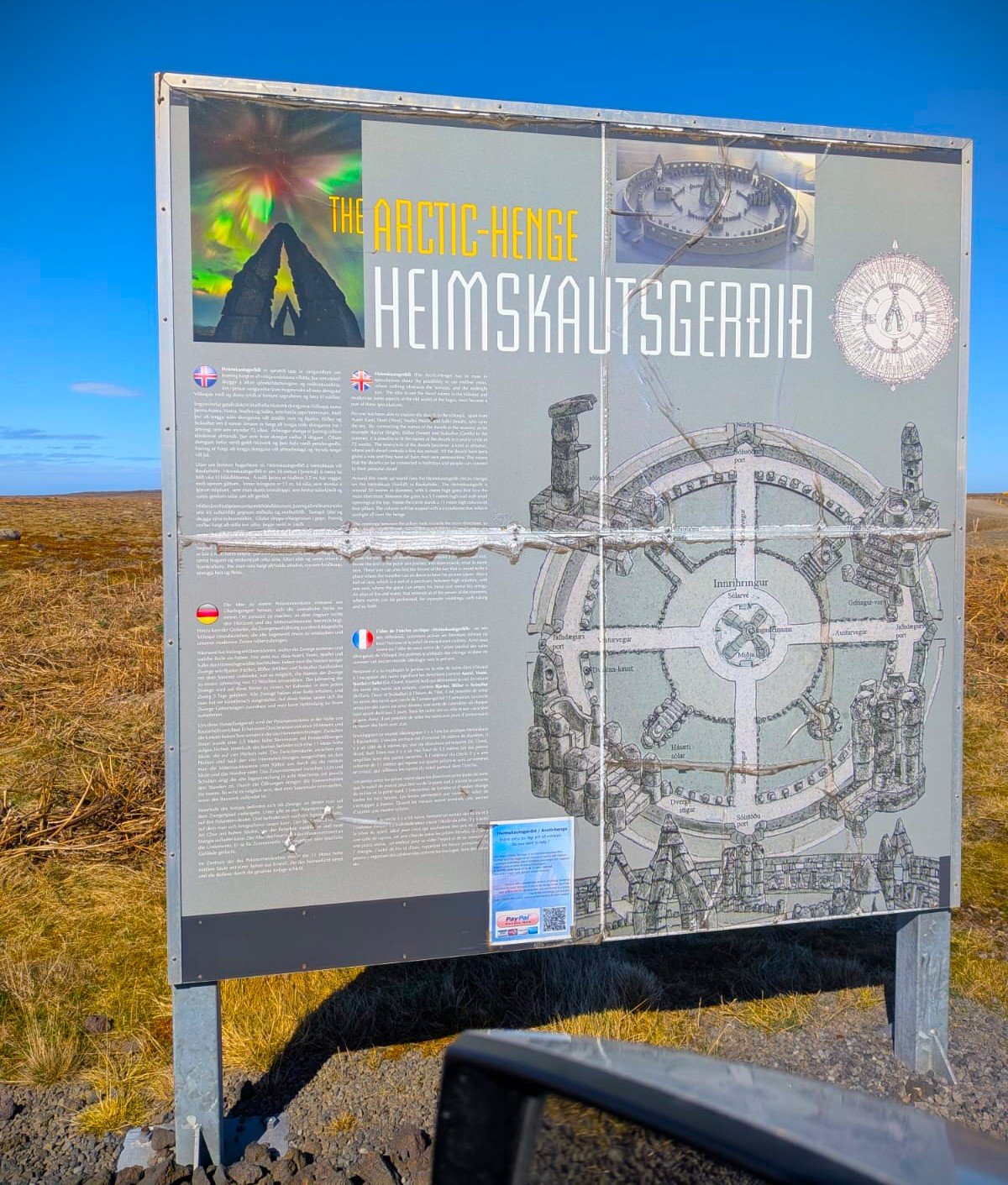
Arctic Henge has been envisioned as more than just the structures we see today. The larger concept includes elements such as the Throne of the Sun, Hall of Rays, and an Altar of Fire and Water, intended to add further astronomical, ceremonial, and spiritual dimensions to the site.
This makes Arctic Henge feel less like a finished historical monument and more like a modern project that continues to develop its interpretation of Norse mythology and the cosmos.
Is Arctic Henge Worth the Drive?
This was probably the question we asked ourselves the most on the drive back.
Arctic Henge is remote, and there aren’t many major attractions immediately surrounding it. For us, however, the journey itself became part of the adventure. We had come this far north, we had the time, and we wanted to experience something completely different from the usual Iceland itinerary.
And with our usual attitude, the answer was simple:
Why not?
Would we recommend adding Arctic Henge to every Iceland itinerary? Probably not.
 If you’re traveling on a tight schedule, there are other destinations in Iceland that may deserve priority. But if you’re already exploring Northeast Iceland, enjoy unusual architecture and mythology, or simply want to visit somewhere far from the typical tourist route, Arctic Henge is worth considering.
For us, it wasn’t about checking off another famous attraction. It was about taking the road less traveled and seeing where it led. And standing there, almost completely alone beneath the vast Icelandic sky, we were glad we made the detour.
On our drive back from the Arctic Henge, we stumbled upon a quiet little moment that turned out to be surprisingly mesmerizing. Off to the side of the road, we noticed a group of birds flying into the wind—and getting pushed right back by the strong gusts. But instead of struggling, it honestly looked like they were enjoying it.
Along the Road Surprise
They hovered in place, their wings stretched wide, as if they were riding invisible waves of air. We stood there for a while, simply watching them. It felt like a little aerial show, as if they were playing in the wind before gently landing on the nearby water.
It was such a simple scene, but in that stillness, it reminded us that nature has its own kind of joy—even on the windiest days.
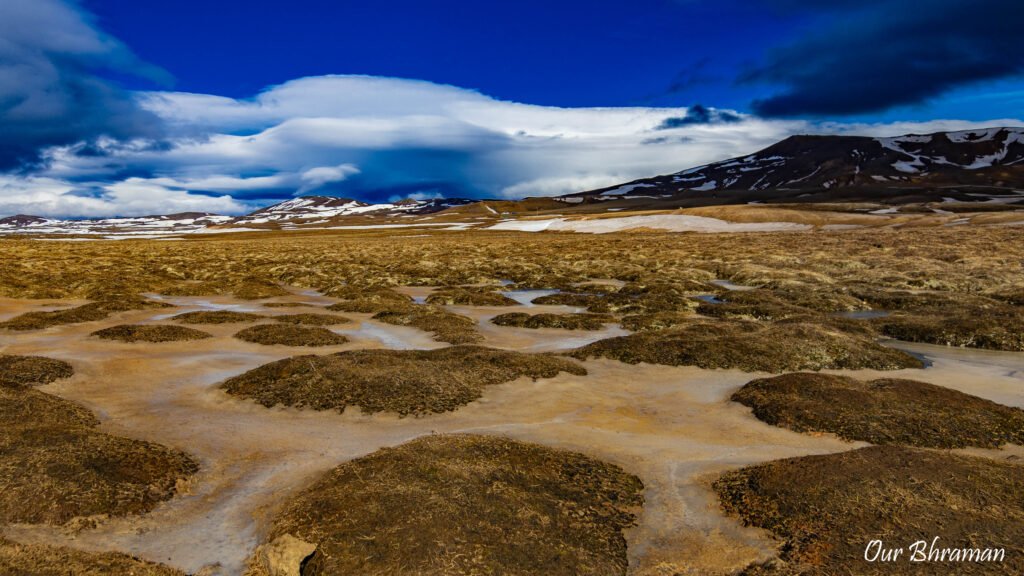
Visiting Leirhnjúkur honestly felt like stepping onto another planet. As we arrived, the landscape suddenly shifted — dark, jagged lava fields stretched out in every direction, with steam vents hissing from the ground and the faint smell of sulfur in the air. The earth looked scorched and cracked, yet strangely beautiful, with bursts of deep red, rusty orange, and soft gray clay underfoot. It really felt like we had landed on Mars.
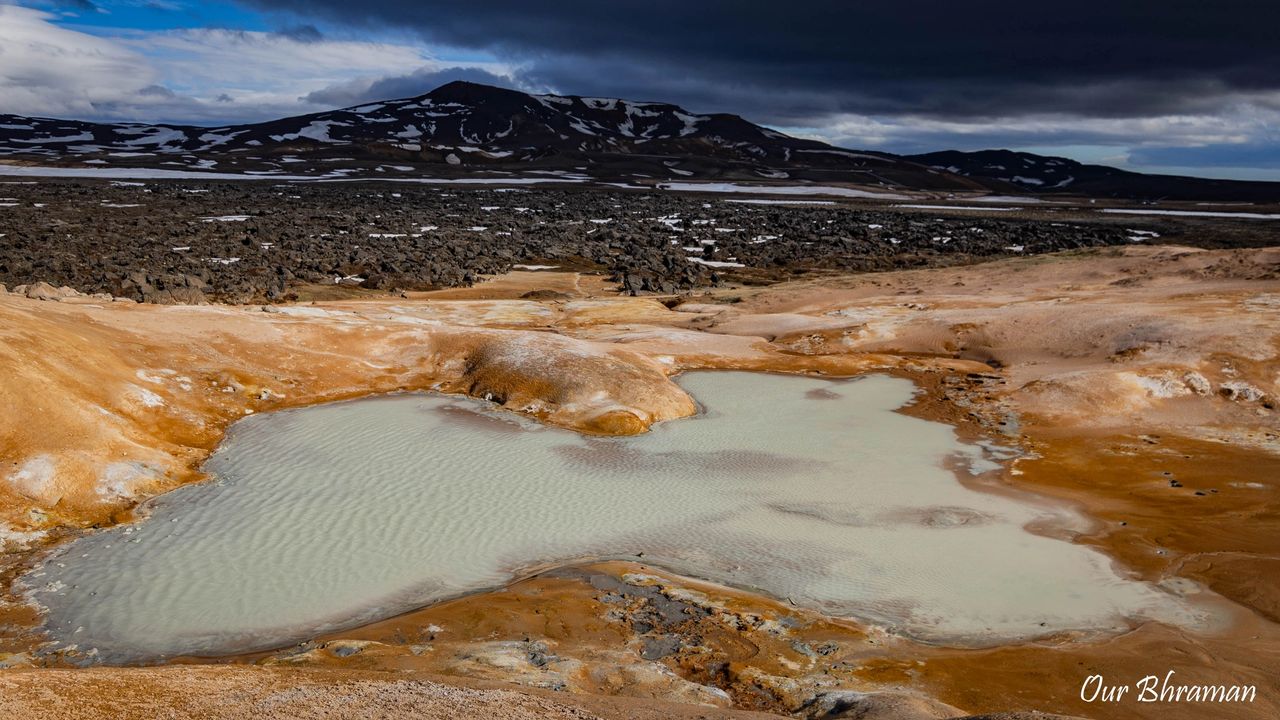
Leirhnjúkur is part of the Krafla caldera, and even though its last eruption was in 1984, the area still feels very much alive. You can feel the ground breathe through fumaroles and bubbling pools, and spot bright aquamarine hot springs tucked into the craters — glowing against the otherwise muted tones of the lava field.
We hiked up the small hill known as “Clay Hill,” which rises about 50 feet above the lava field. The ground was warm beneath our feet, and the soft, porous terrain gave the walk a surreal feeling. It was so quiet — except for the occasional hiss of steam or the crunch of gravel, everything felt still, like the land itself was holding its breath.
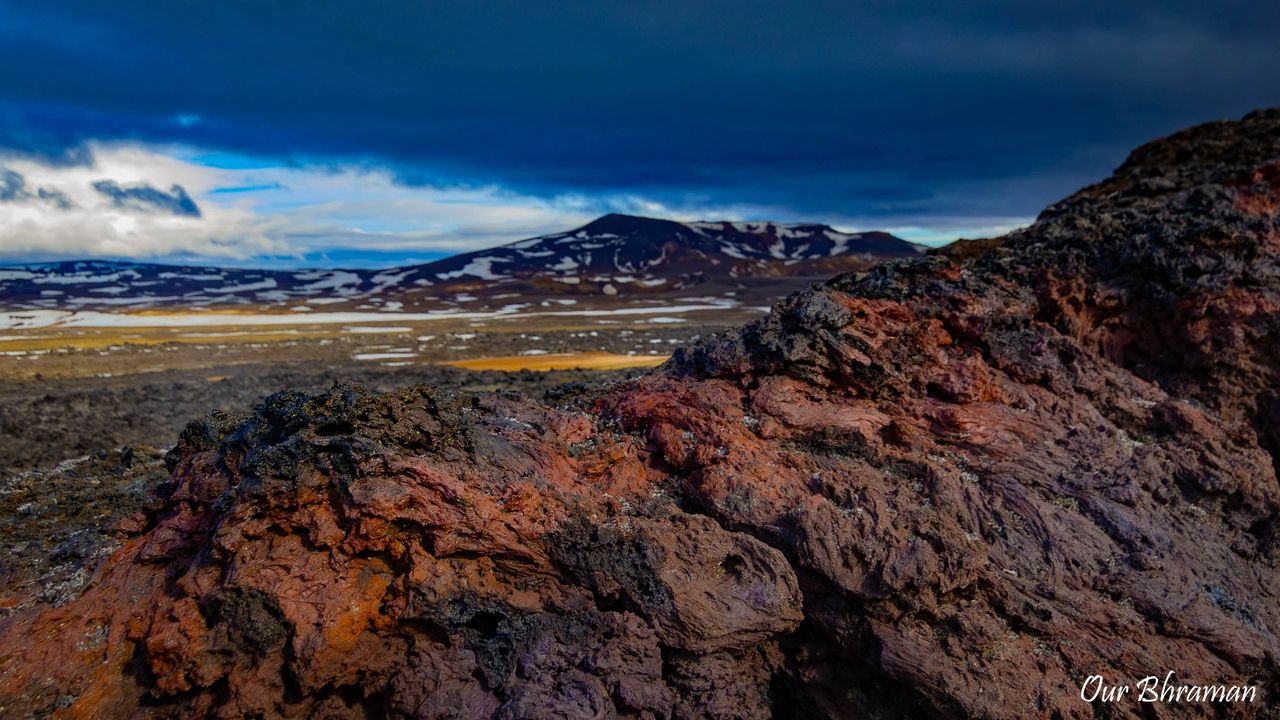
We were mainly looking for the Víti crater but ended up hiking much farther into the lava field than we needed to. After walking for about 30 minutes with no crater in sight, we started to wonder if we were even in the right place. Eventually, we gave up the search and turned back to the car.
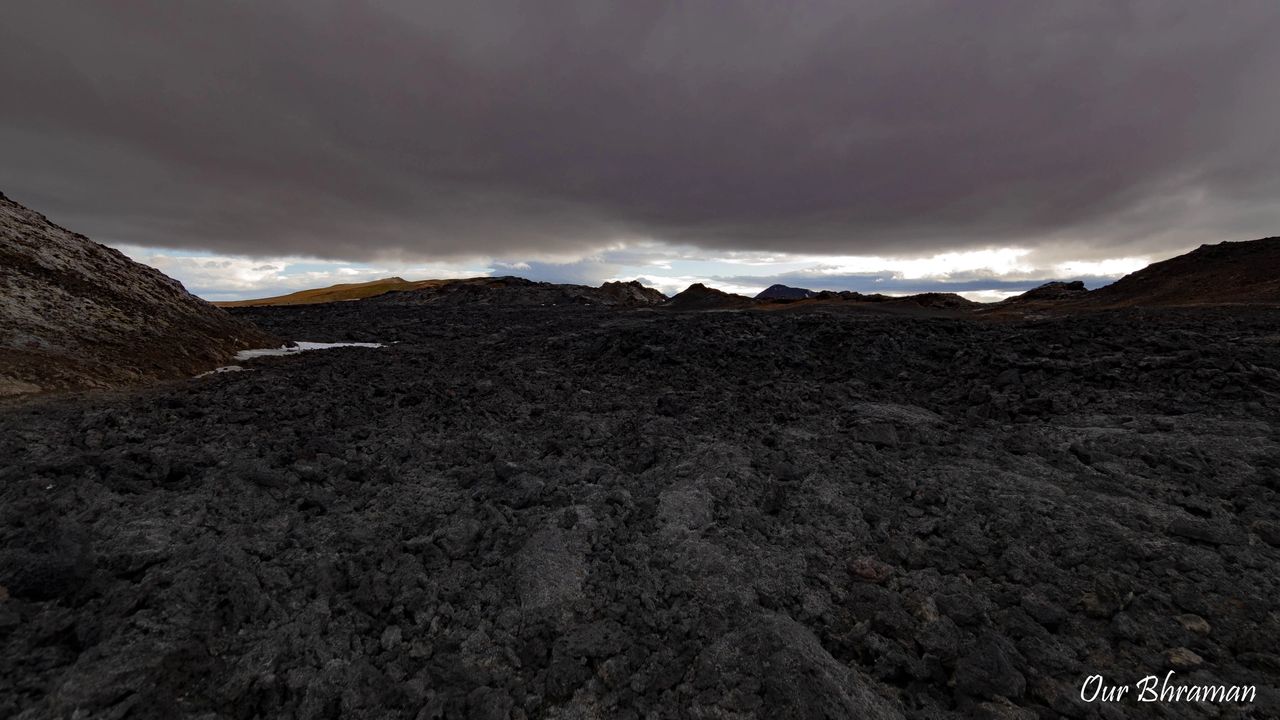
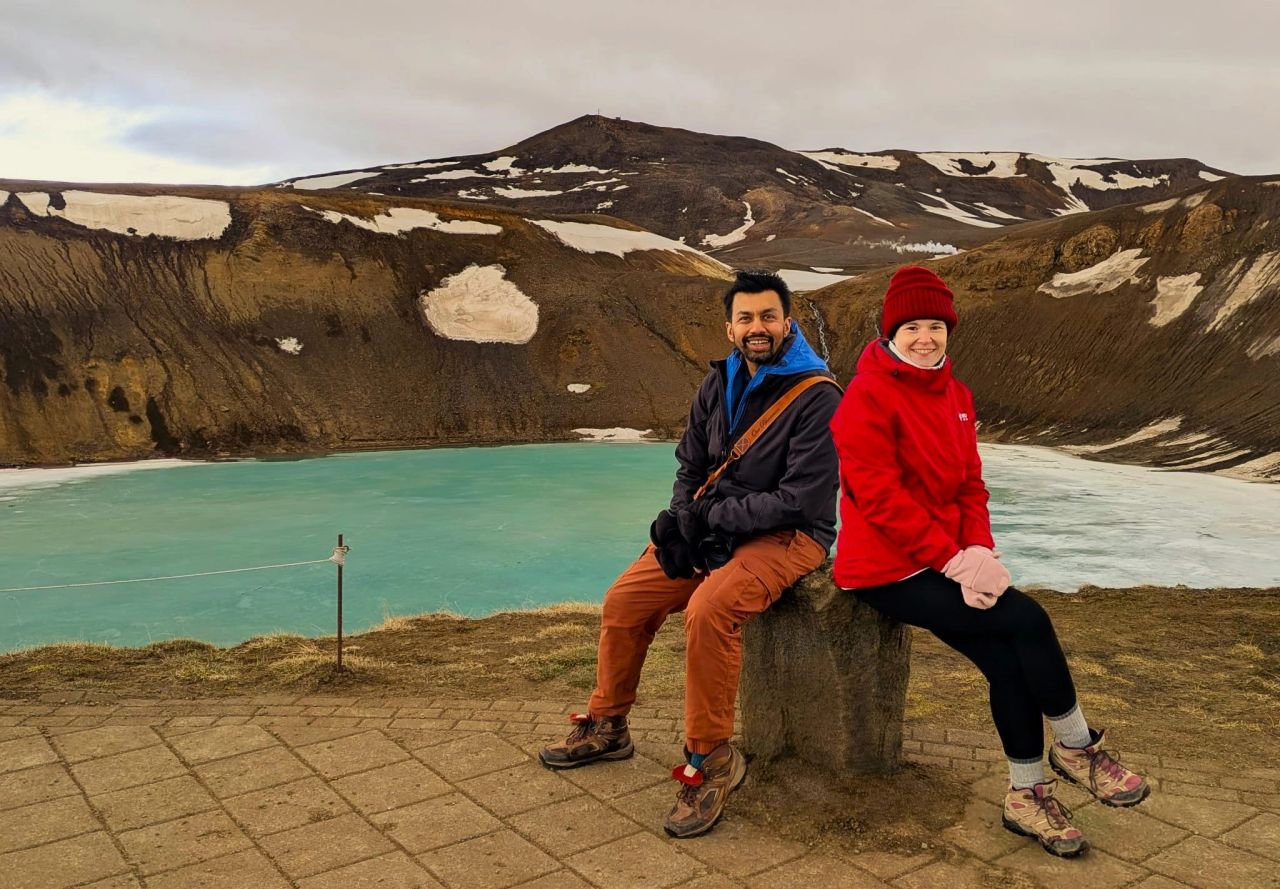
We decided to drive just five more minutes down the road, and there it was: the crater, sitting calmly right next to a parking lot. Both Kayla and I burst out laughing. It was such a perfect travel moment — hiking all over the place, searching hard, only to find out what we were looking for was never there to begin with! The crater itself was absolutely beautiful, but the search was definitely the most memorable part.
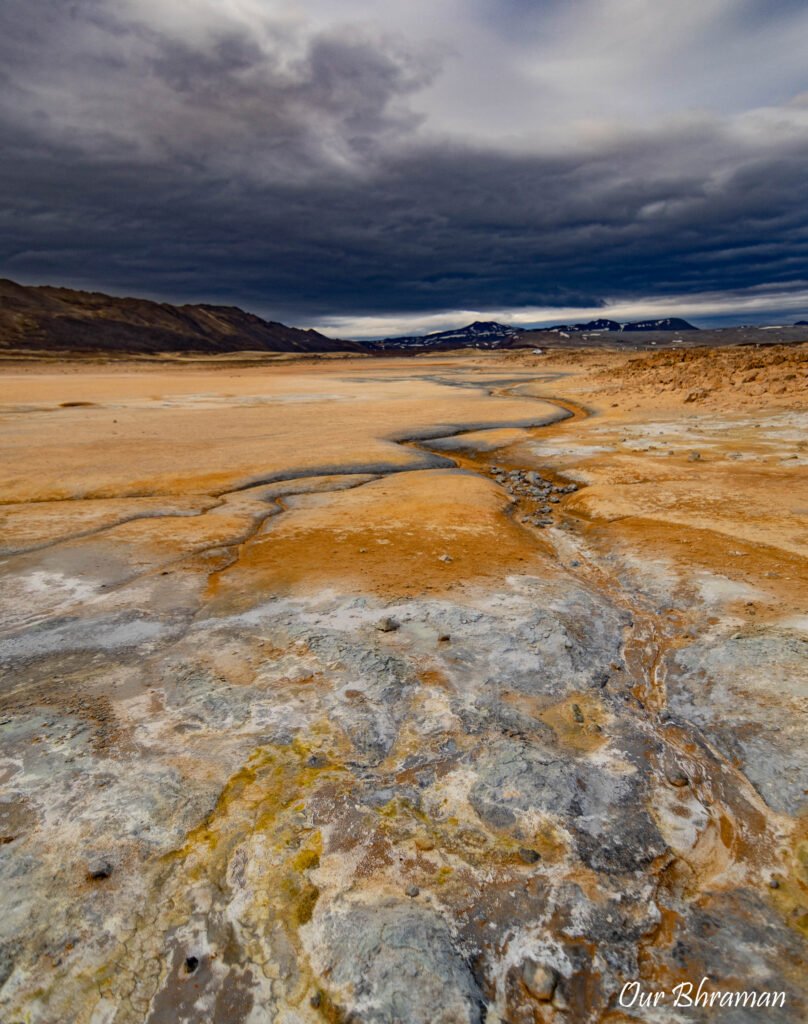
After spending couple of hours we headed to the Námaskarð Geothermal Area was easy and surprisingly well organized. The parking lot is just off Route 1, and while it’s unpaved, it’s spacious enough for cars and even small tour buses. We found a spot without any trouble, which was nice after a long stretch of driving through the remote landscape.
There’s a small entrance fee — ISK 1,000 (around $6 USD) for a regular car — collected right at the entrance of the parking lot. We parked, stepped out, and were immediately greeted by the smell of sulfur and the hiss of steam rising in the distance. It’s all thanks to the hydrogen sulfide in the air, which sounds intense, but we got used to it pretty quickly. After a few minutes, it faded into the background, and our focus shifted to the incredible landscape around us.
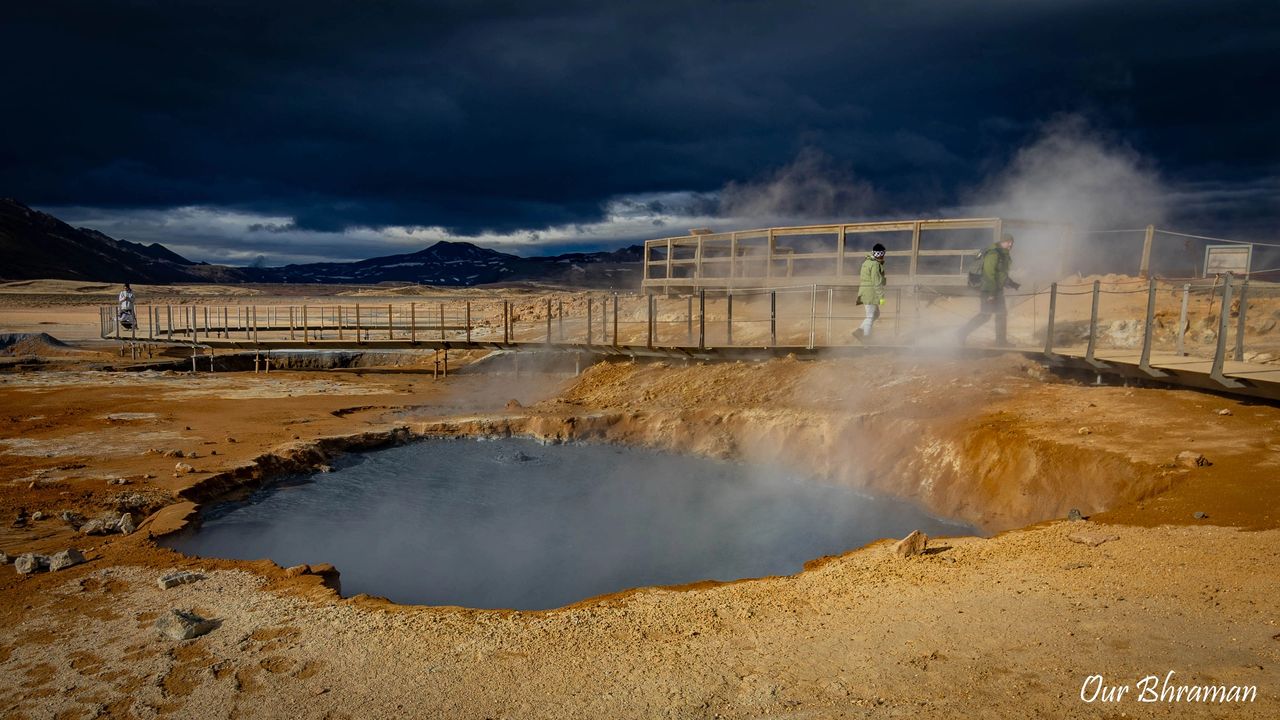
The place looked like something out of a sci-fi movie. The ground was scattered with fumaroles — little steam vents in the earth that hissed and roared like they were alive.
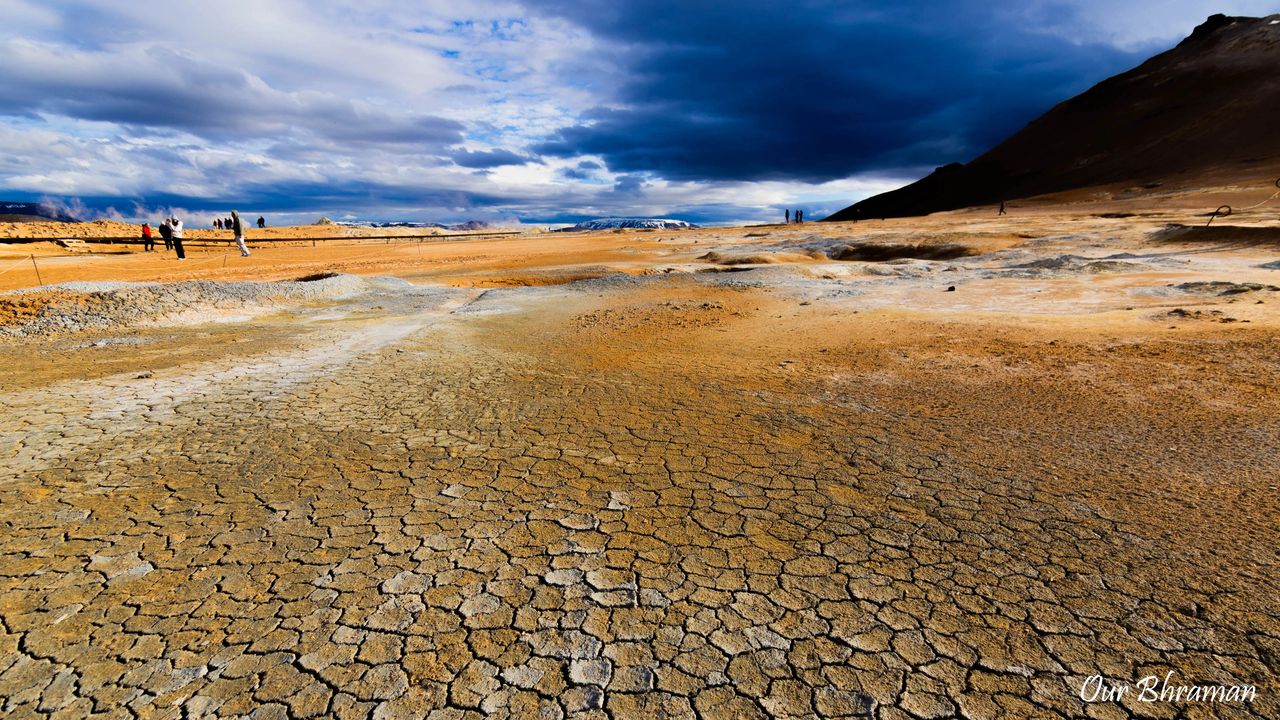
Some shot out steam so hot it could boil water (literally — it can reach 100°C or more). Just walking near them, you could feel the heat rising off the earth.
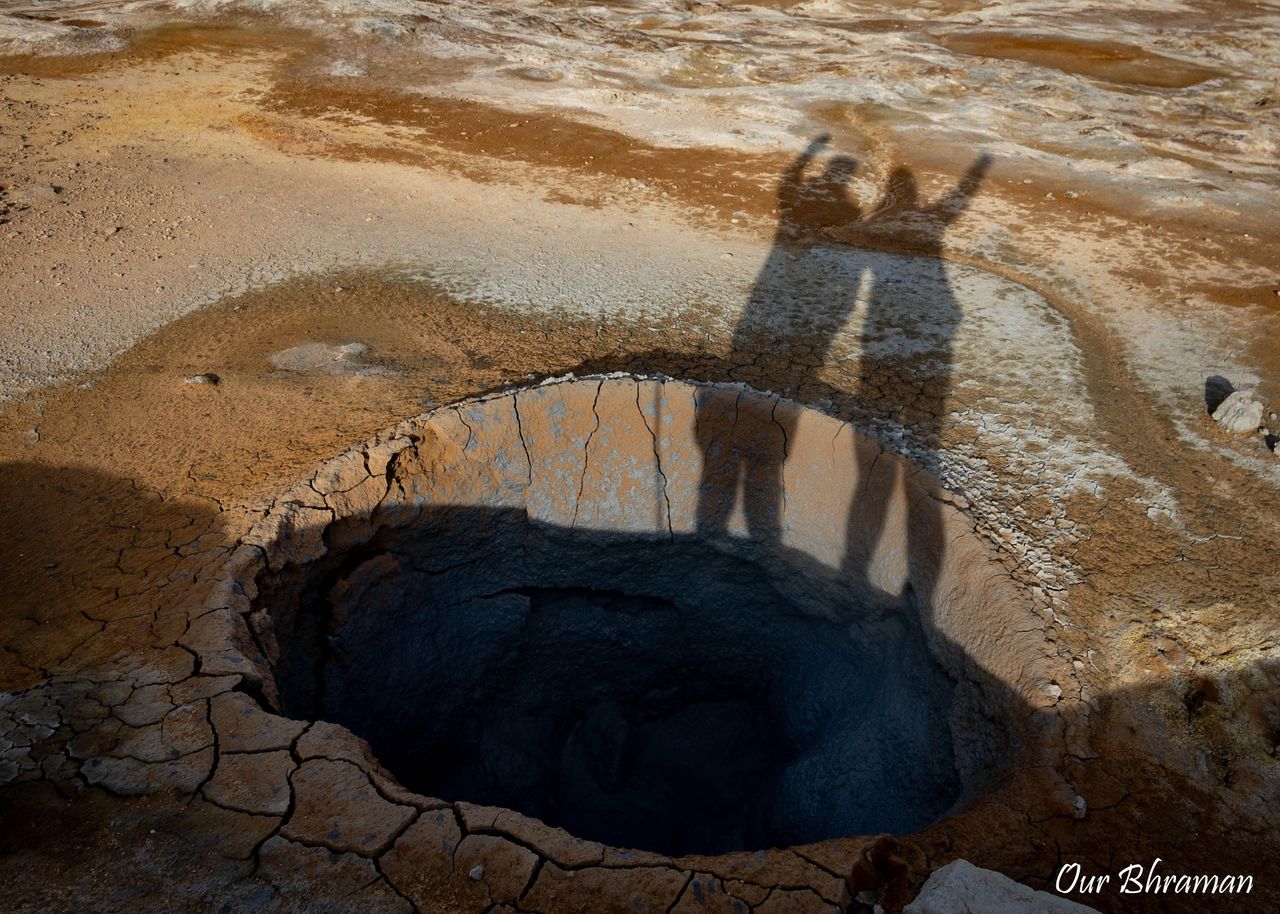
Then there were the boiling mud pools — thick, grayish puddles that gurgled and bubbled like cauldrons. We found ourselves just standing there, watching them move in weird, hypnotic patterns. It was both mesmerizing and slightly eerie, like the earth was breathing or talking to us in some ancient language.
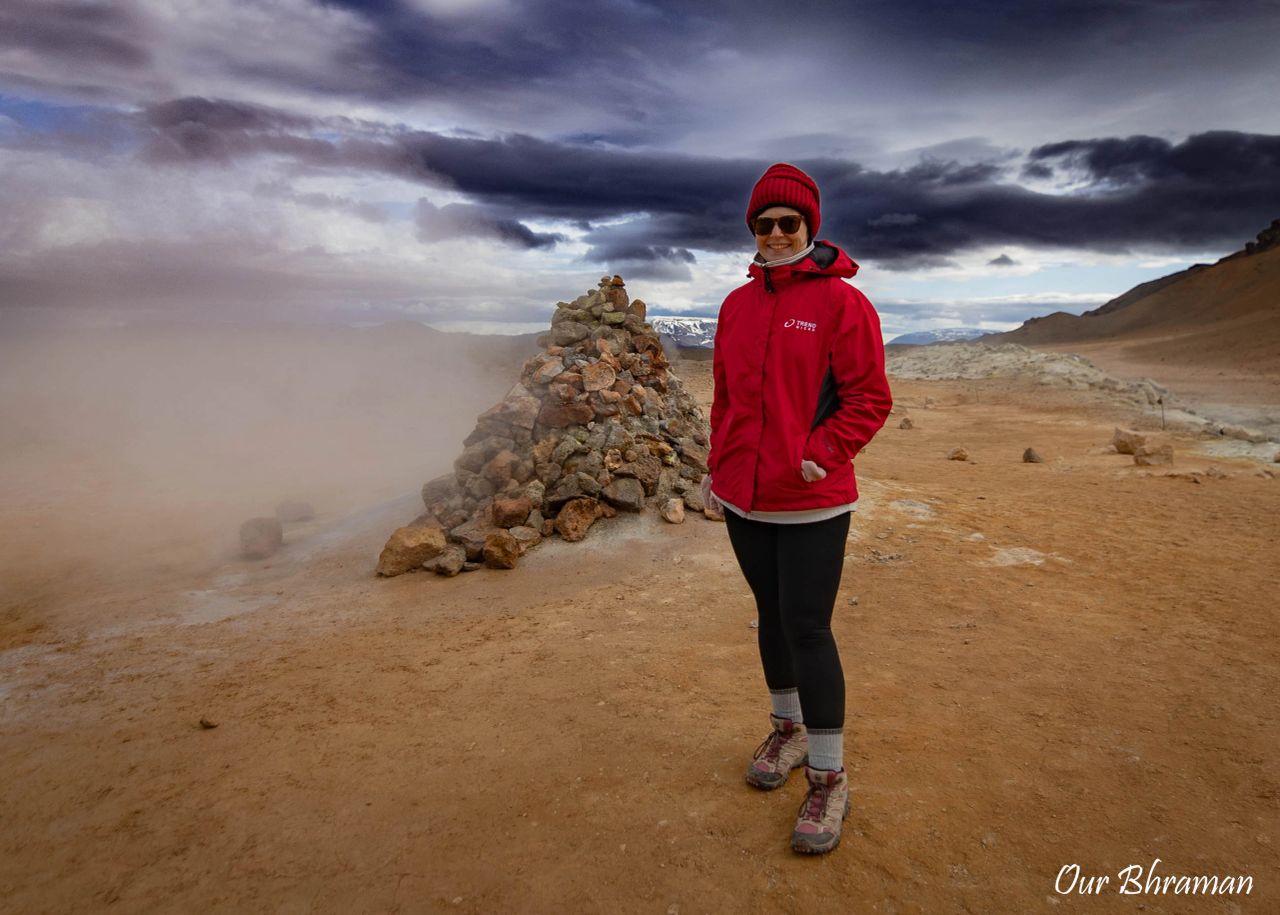
There were warning signs everywhere, and for good reason. As fascinating as everything was, it was also a good reminder that this place is very much alive and unpredictable.
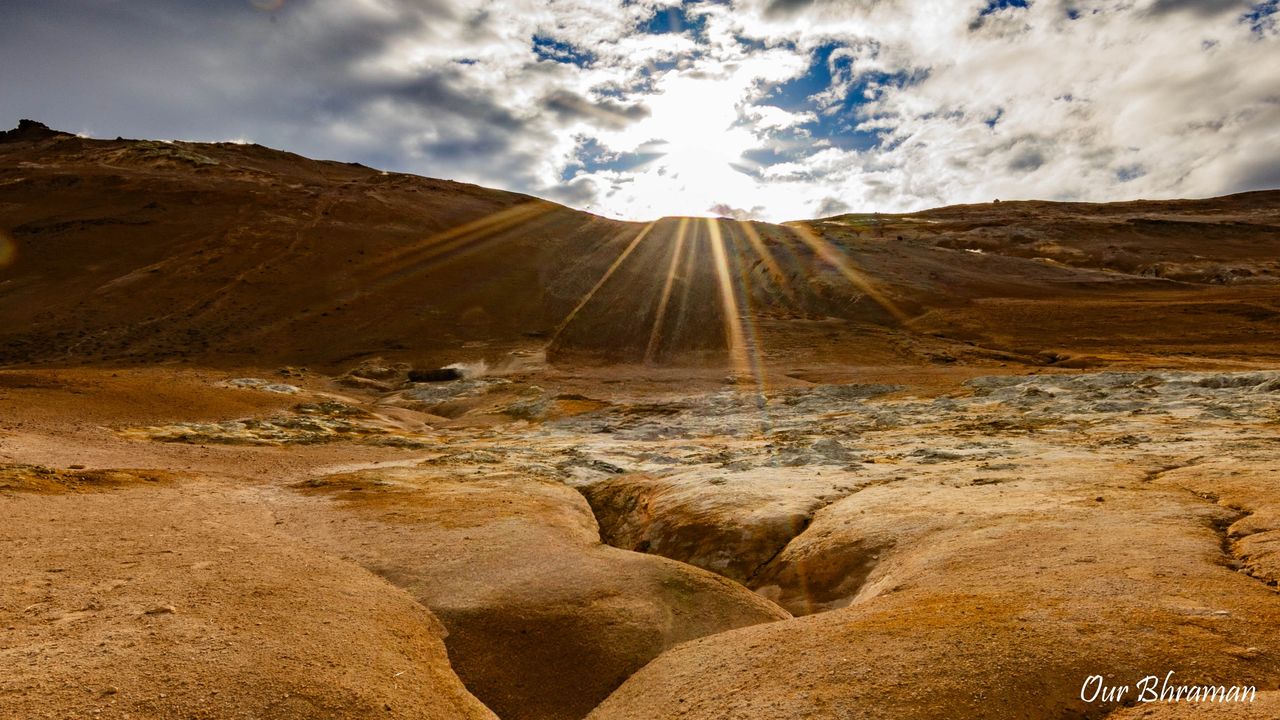
We kept to the paths, stayed aware of where we stepped, and just soaked it all in — the sights, the sounds, even the smell.
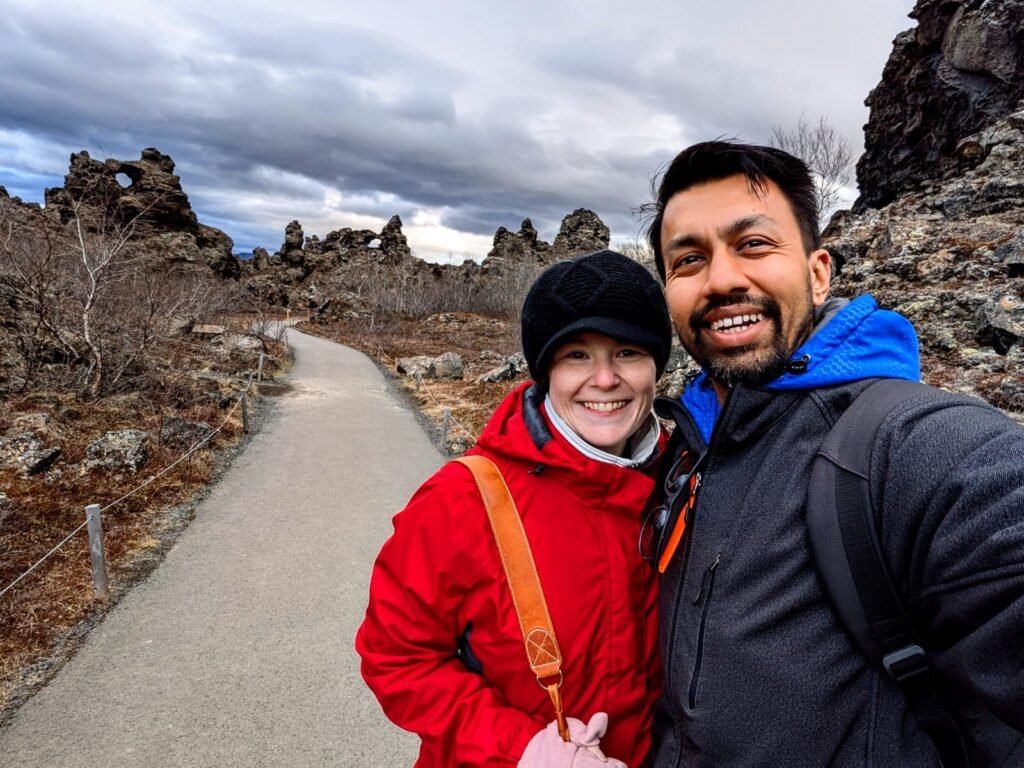
After spending more than hour in this area we headed to the Dimmuborgir this place was like walking into a dark fairytale. Nicknamed the “Dark Fortress,” this ancient lava field is filled with towering rock formations, deep caves, and winding paths that feel like something out of a fantasy novel.
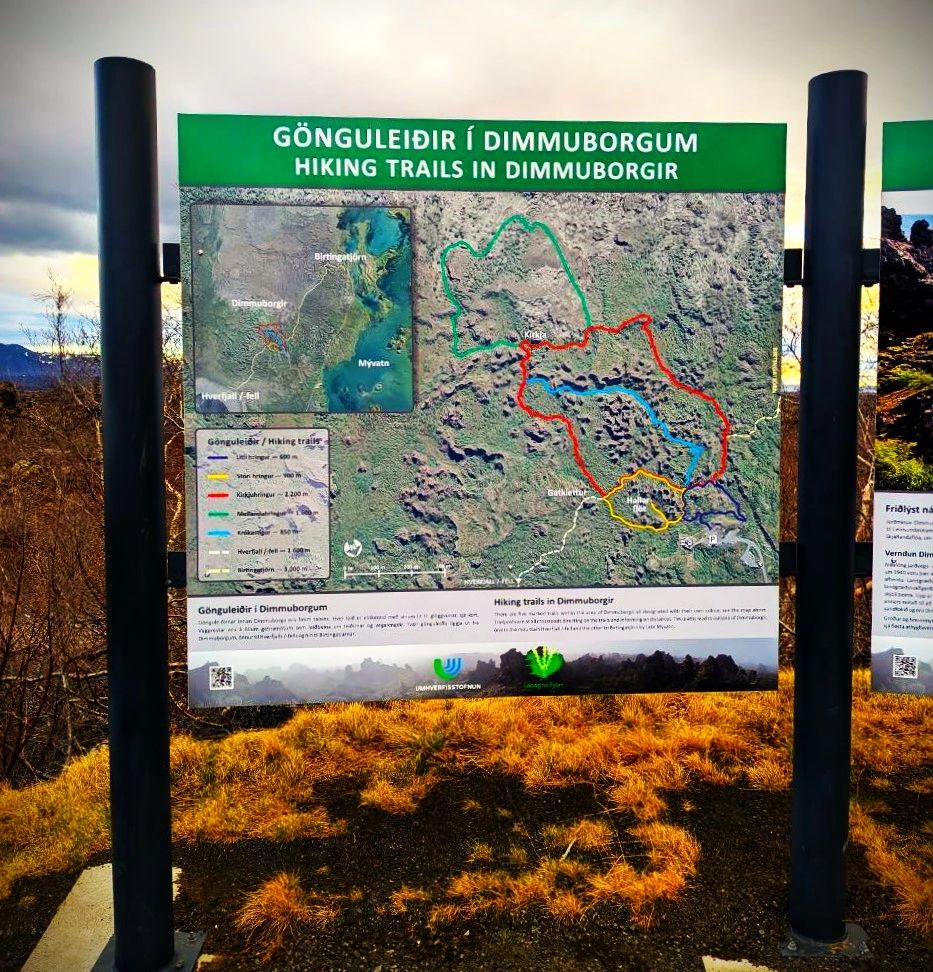
The area was formed over 2,300 years ago during a volcanic eruption, and the lava flowed over a lake, creating steam that carved out these strange, twisted shapes. Nature’s version of a haunted castle — only much, much older. We had a rough idea of what we wanted to see, but the trail map at the entrance helped a lot. The paths are color-coded — red, yellow, blue, and green — depending on how far you want to hike and how much time you have. We ended up following a mix of the red and blue trails, which took us through the most interesting lava formations.
While hiking the red trail in Dimmuborgir, we came across a massive lava arch rising dramatically from the rugged lava field — one of the most striking natural features of the area.
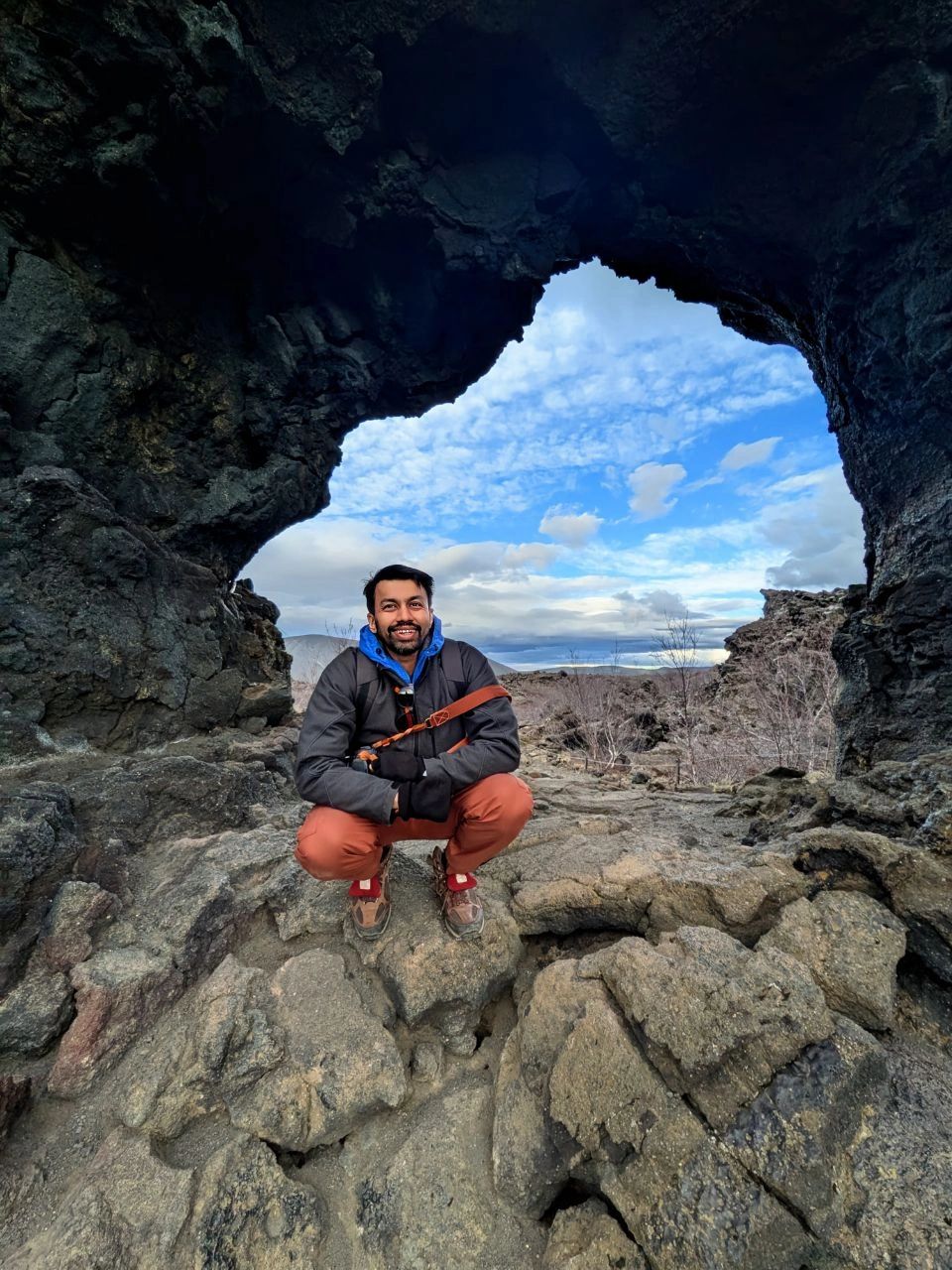
While hiking the red trail in Dimmuborgir, we came across the quirky Santa Chair structure, tucked among the lava formations. It’s part of Icelandic folklore tied to the Yule Lads — mischievous troll-like figures from local Christmas legends. The chair, set near their imagined cave home, made the trail feel magical and playful — a fun surprise in the middle of this otherworldly lava field.
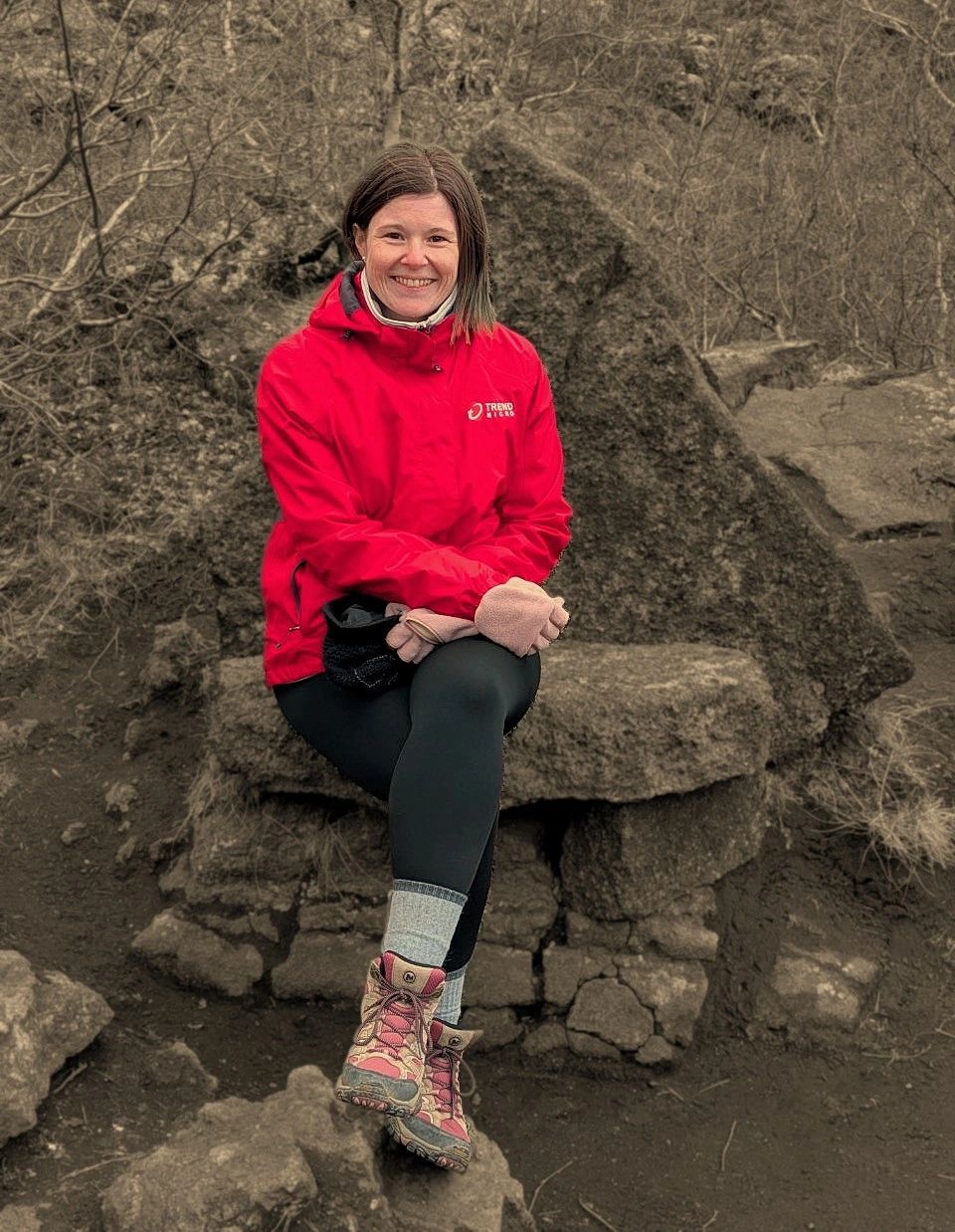
Located in the Hallarflöt area of the trail, this part of Dimmuborgir brings Icelandic Christmas folklore to life. Here you’ll find Jólasveinahellirinn, the cave home of the legendary Yule Lads — troll-like figures who are Iceland’s mischievous version of Santa Claus. While they were once known for scaring misbehaving children, today they’ve softened into playful gift-givers. Inside the cave, we discovered imaginative lava beds, quirky props, and even a Santa Chair perfect for fun photo ops. The whole setup feels like stepping into the trolls’ strange and cozy home, and we couldn’t help but imagine how magical this place must feel during the winter holiday season. The whole experience was a perfect mix of Icelandic natural beauty and local legends, with enough space to explore without feeling rushed. Dimmuborgir is more than just a hike — it’s a place that sparks your imagination, and makes you feel like you’re walking through centuries of stories hidden in the rocks.
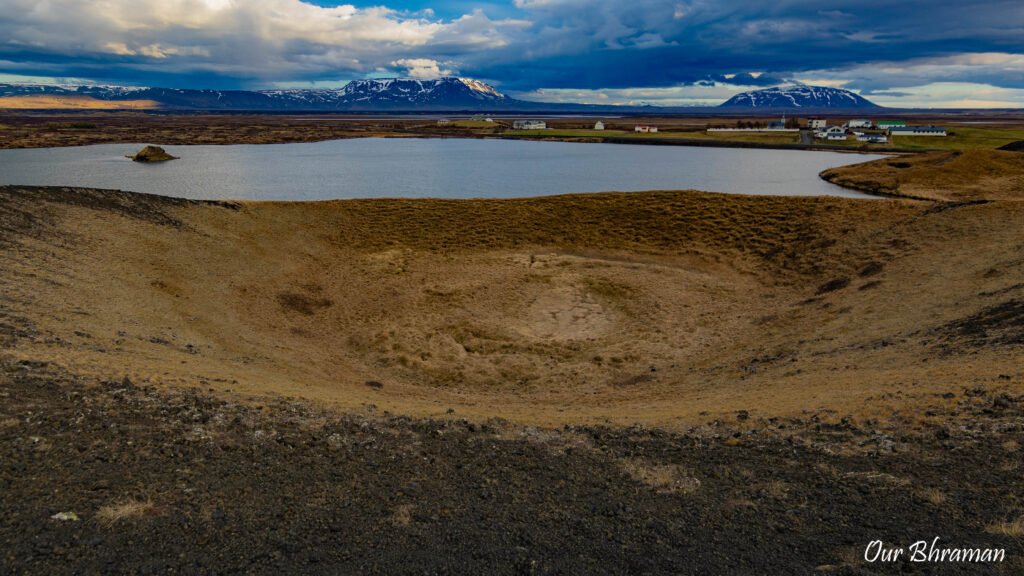
Our last stop of the day, conveniently located right next to our hotel, was the Skútustaðagígar pseudo craters. We had originally planned to start our day with a visit here, but due to strong winds in the morning, we decided to postpone it until later. Luckily, the weather improved by evening, and it turned out to be a great decision. The calmer conditions made for a peaceful walk around the craters, with beautiful views of Lake Mývatn in the soft evening light — a perfect way to end the day.
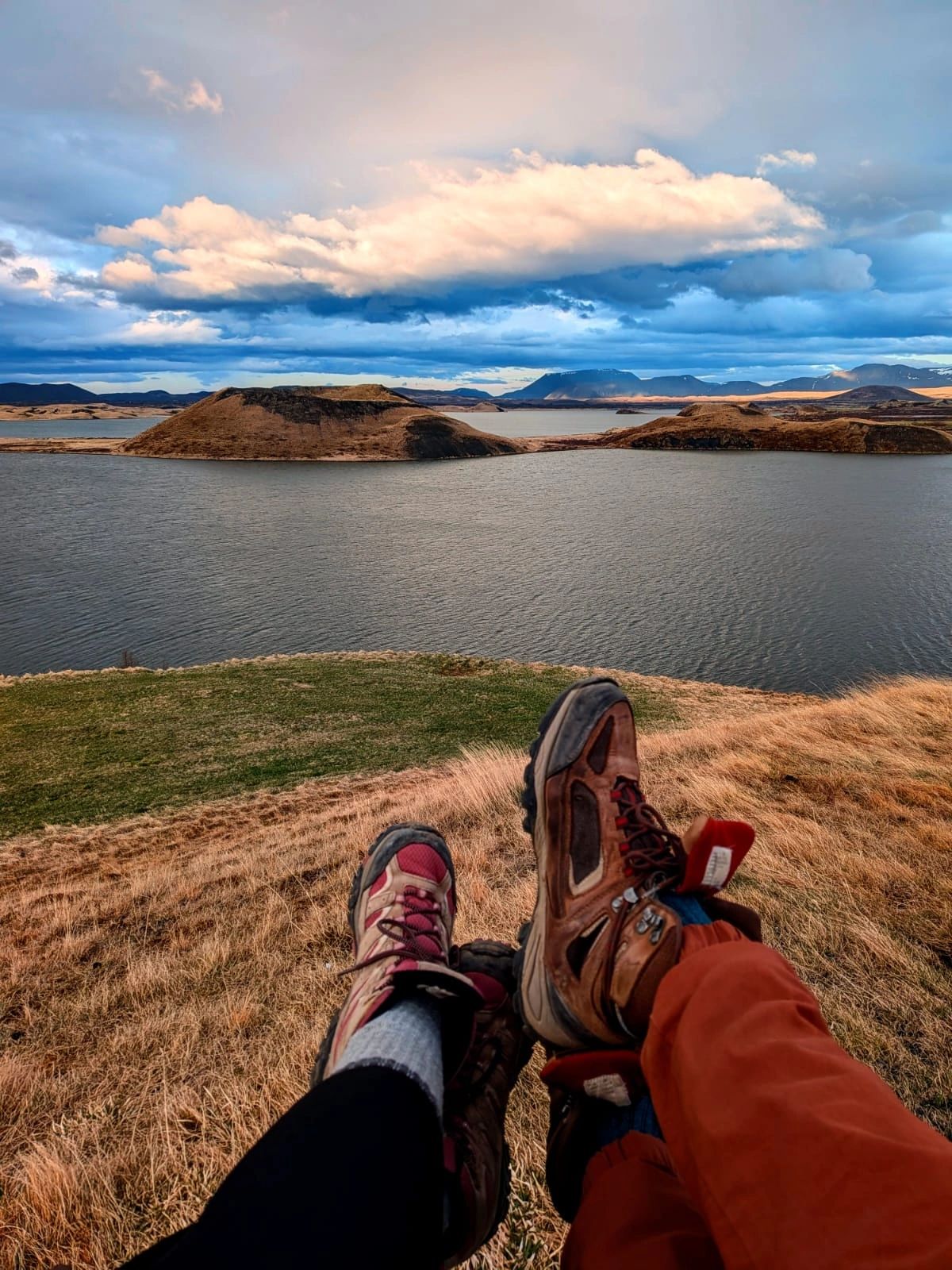
Visiting the Skútustaðagígar pseudo craters was one of those moments where nature quietly amazes you. At first glance, they just looked like grassy mounds and small craters scattered near Lake Mývatn. But once we learned how they were formed — not by volcanic eruptions, but by steam explosions caused when hot lava flowed over wet ground — we saw them in a whole new light. These craters aren’t true volcanic cones, but rather the result of lava pressurizing the earth, trapping steam until it burst through the surface over 2,000 years ago. It’s wild to think how something so calm and beautiful today came from such a violent event.
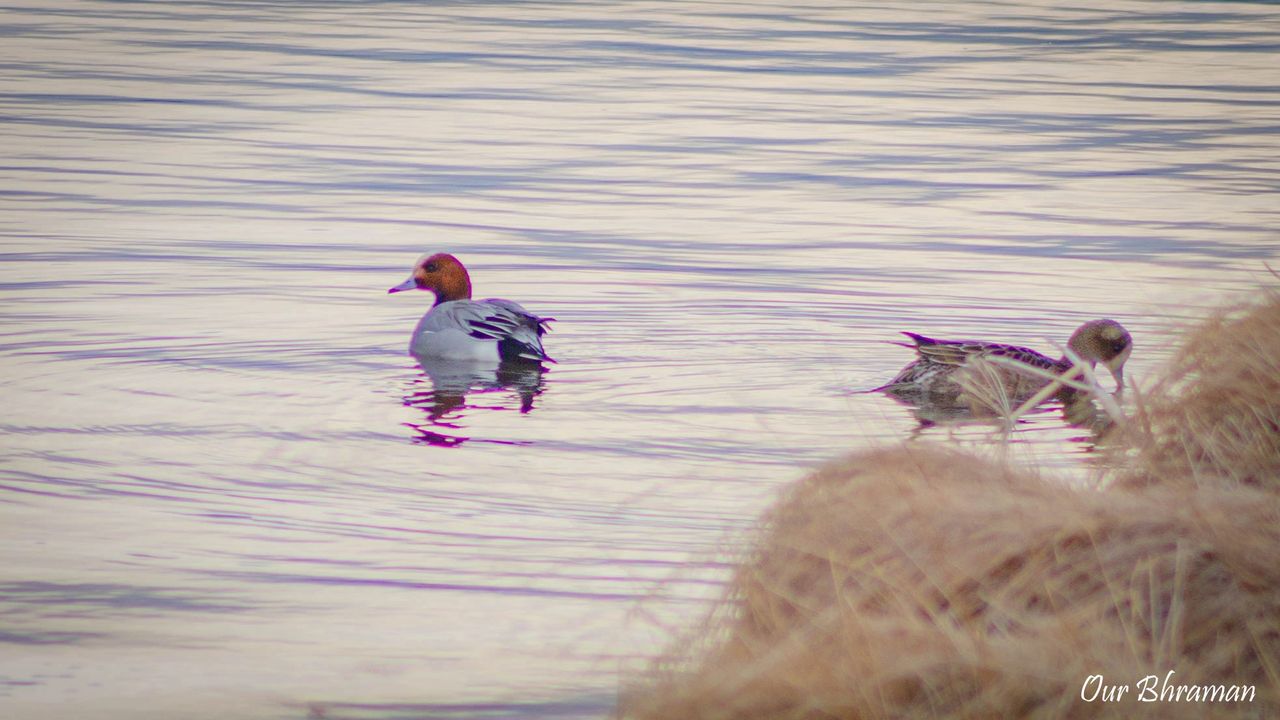
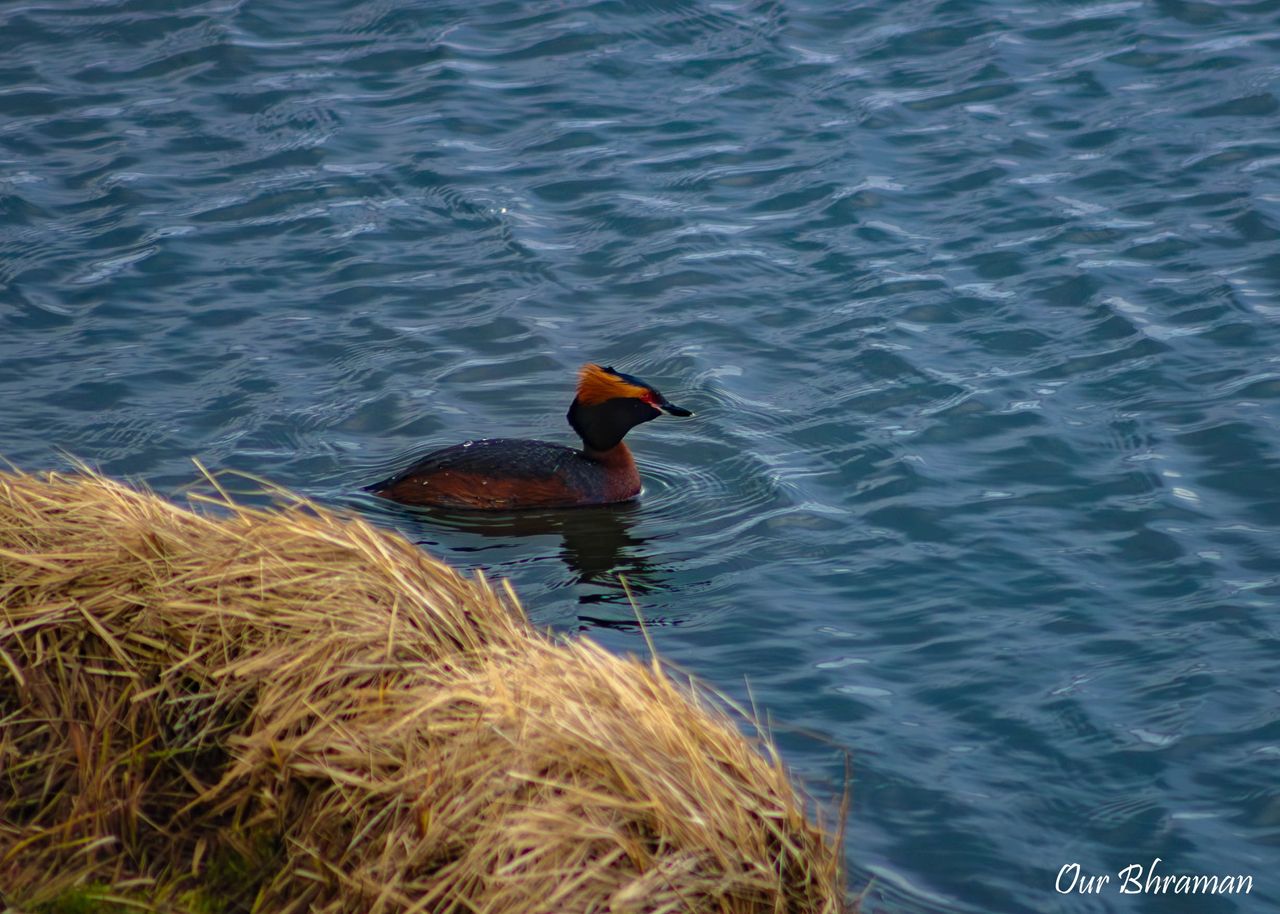
We visited later in the day, and I’m glad we waited. The wind had settled down, and the lighting was just right to really take in the scenery. The walking paths gave us a gentle loop around the area, with peaceful views of the lake and surrounding lava fields. What made it even more special was the abundance of birdlife — we spotted several waterfowl and even caught a glimpse of what might have been a Merlin darting through the sky. The mix of geological wonder and wildlife made it feel like a living classroom, and yet so relaxing at the same time.
With this relax hike, we head back to hotel to conclude the day.