The Story Behind Park Güell
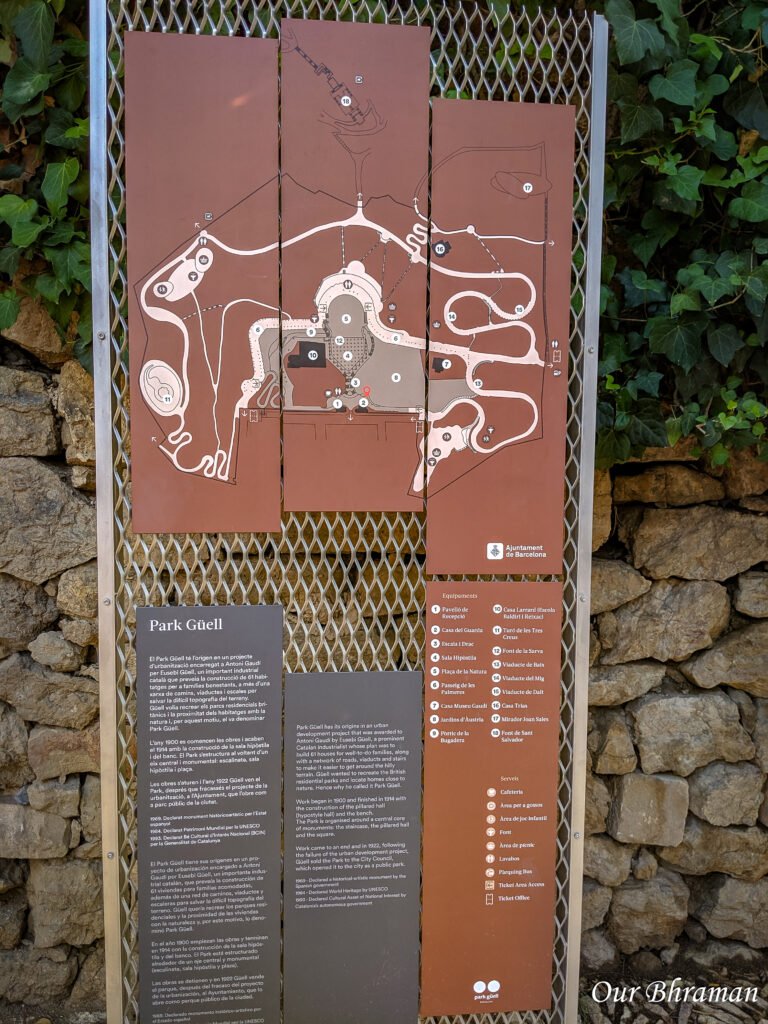
Park Güell was originally imagined as something very different from the public park we know today. In 1900, businessman Eusebi Güell commissioned Antoni Gaudí to create an exclusive residential development on the hillside, inspired partly by the English garden-city concept. The plan called for around 60 homes, connected by paths, stairways, and viaducts while preserving the natural landscape.
 The ambitious project never became the community Güell had envisioned. Only two houses were built, and the development was abandoned in 1914. Over time, the property became a public garden, and Barcelona City Council purchased it in 1922 and opened it as a municipal park in 1926.
Knowing this history made our visit more interesting. What looks today like a whimsical park filled with mosaics, unusual structures, and winding paths was actually Gaudí’s attempt to combine architecture, nature, and an entire residential community into one hillside landscape. Park Güell was later recognized as part of the Works of Antoni Gaudí UNESCO World Heritage Site.
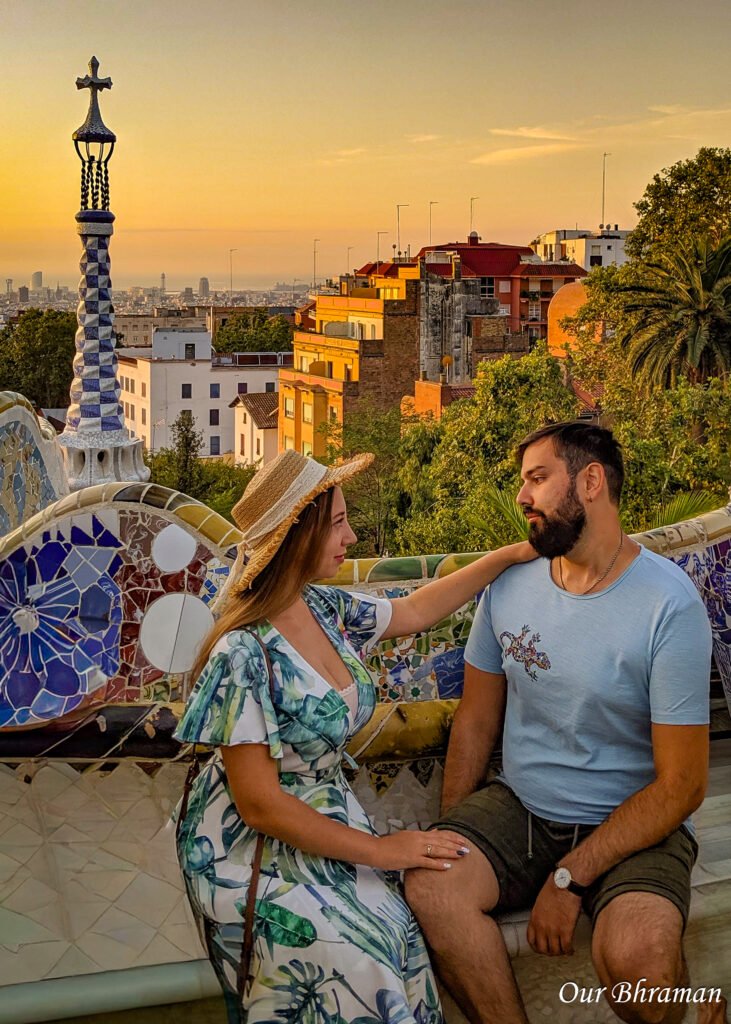
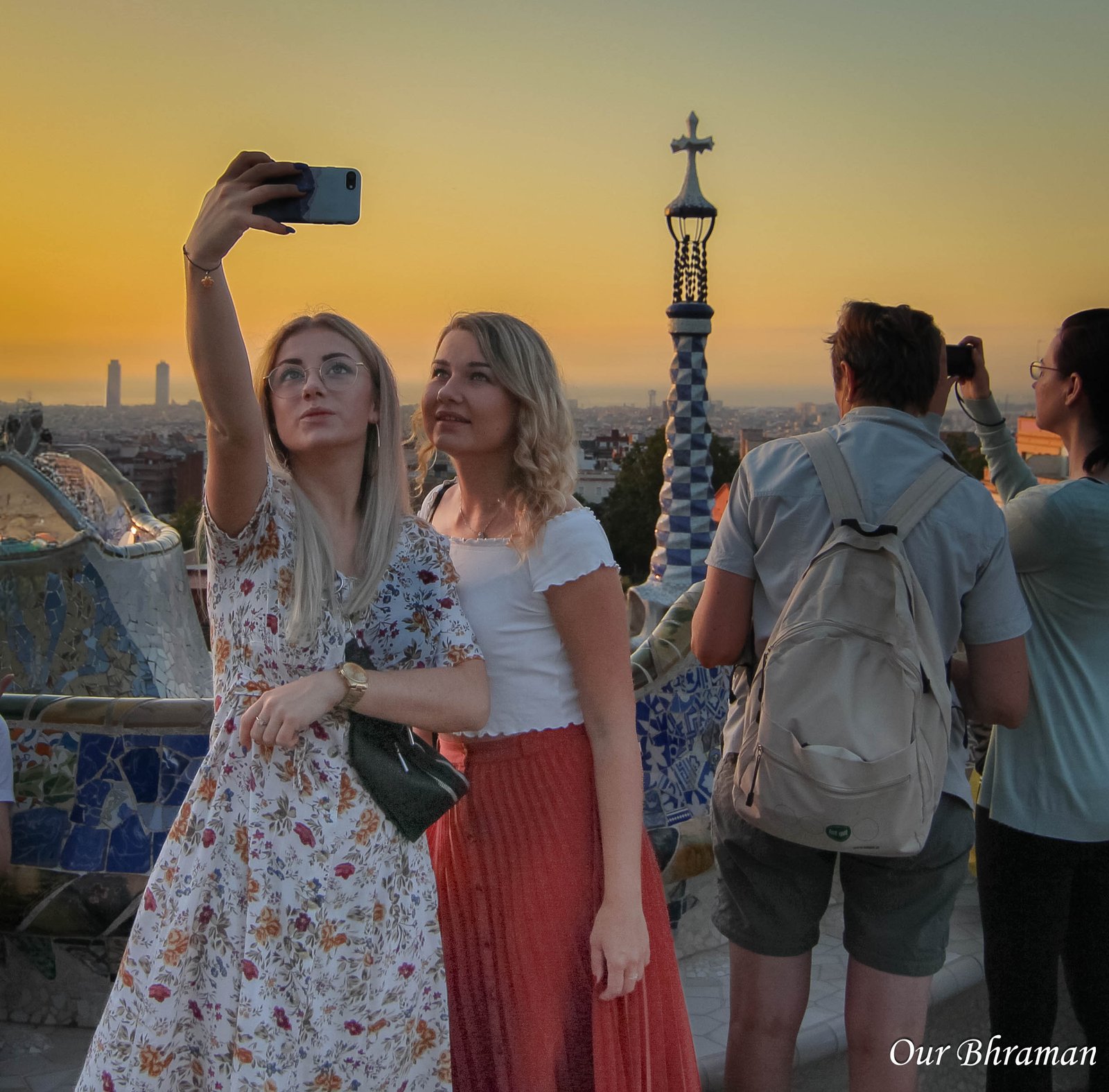
Park Güell is not only a place for architecture and sightseeing—it is also a popular backdrop for personal memories. During our visit, we noticed several people arriving with their own personal photographers, carefully finding the right spot and waiting for the perfect moment. Then, to add a little drama to our morning, we happened to witness someone proposing at the park. With Gaudí’s colorful architecture, the views of Barcelona, and a surprise proposal unfolding in front of us, it felt like we were watching a little story of our own while exploring the park.
For photographers, there is plenty to work with beyond the famous postcard views—mosaics, unusual shapes, stone structures, sweeping city views, and the changing morning light all offer different perspectives.
Exploring the Highlights of Park Güell
Park Güell is much more than a colorful park. What we see today was originally planned by Antoni Gaudí and Eusebi Güell as a residential community, with roads, walkways, viaducts, gardens, and shared spaces built into the hillside.
As we explored the park, several places stood out to us:
 The Entrance and Porter’s Lodge
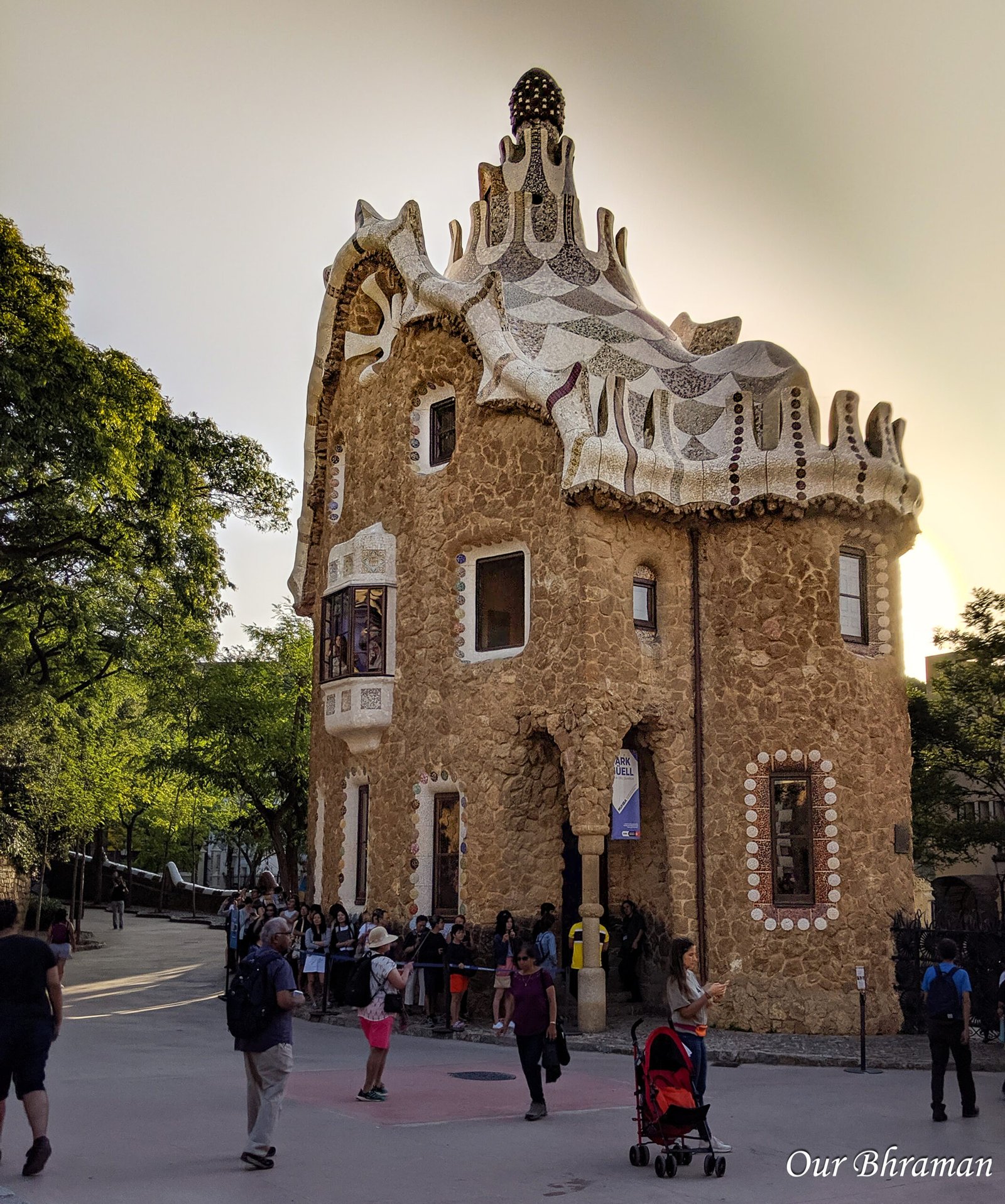 The Entrance and Porter’s Lodge
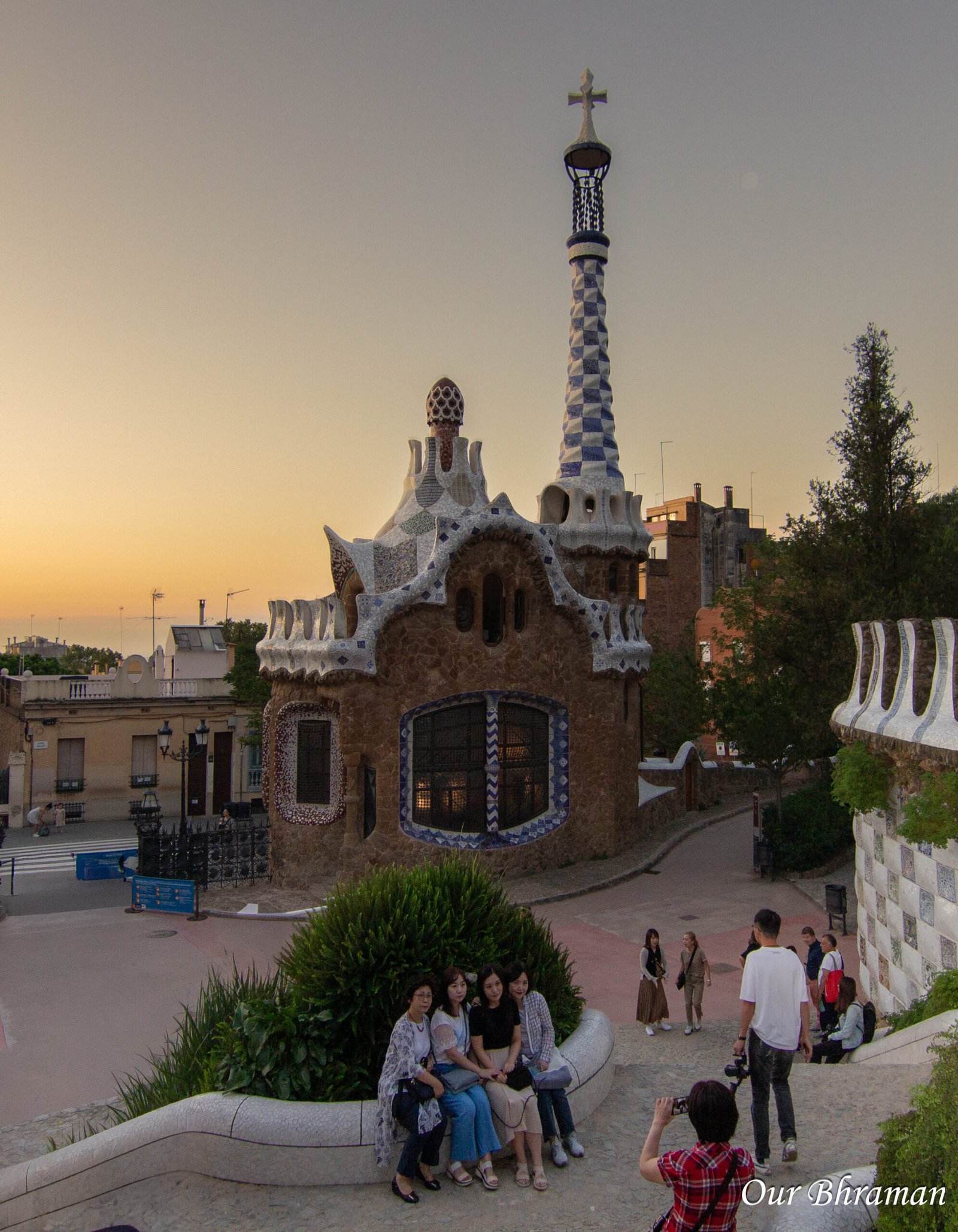
The main entrance on Carrer d’Olot immediately gives you a glimpse of Gaudí’s imagination. The entrance is framed by two small buildings with unusual shapes and colorful trencadís — mosaics made from broken pieces of ceramic tile.
 The Dragon Stairway
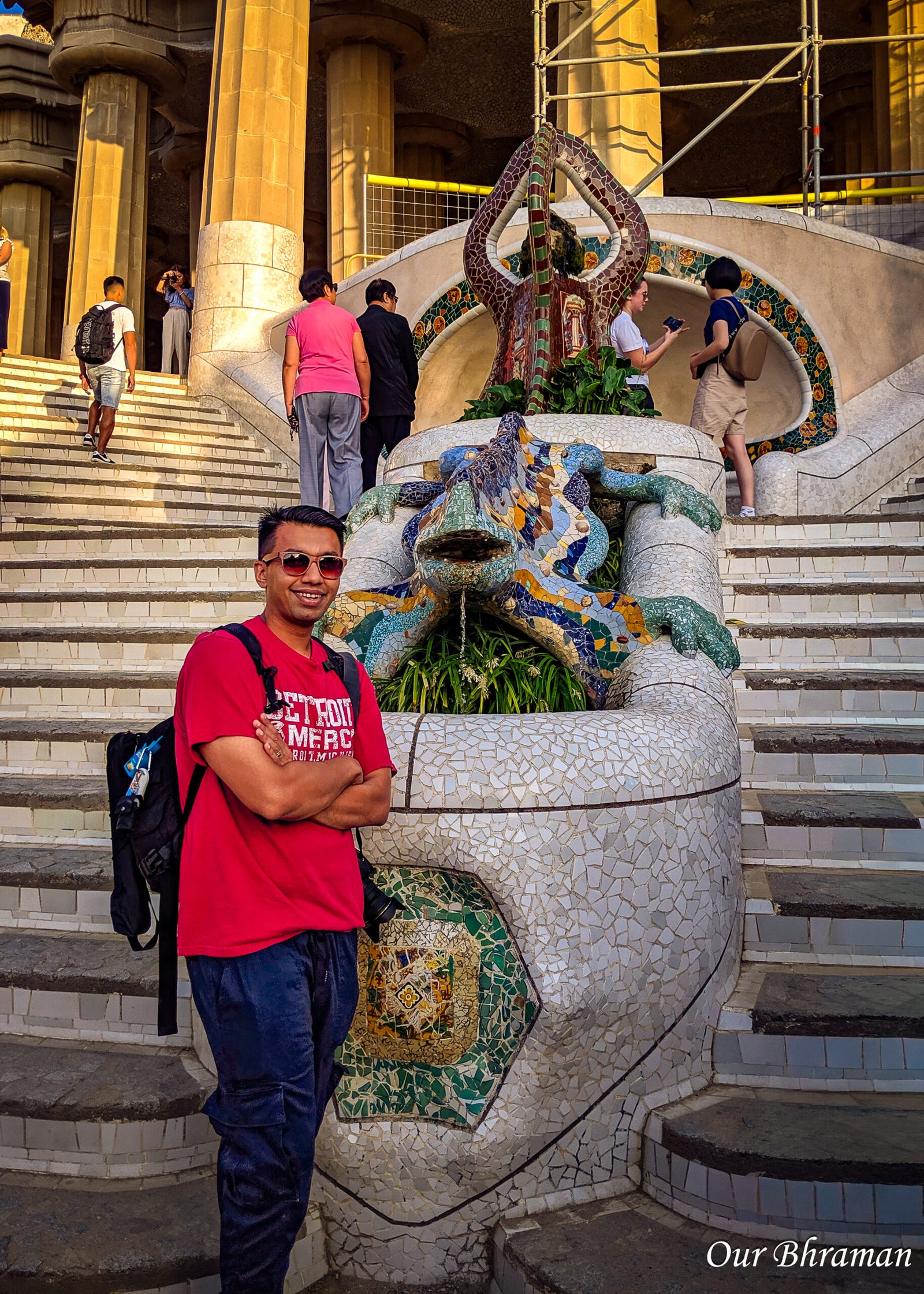 The Dragon Stairway
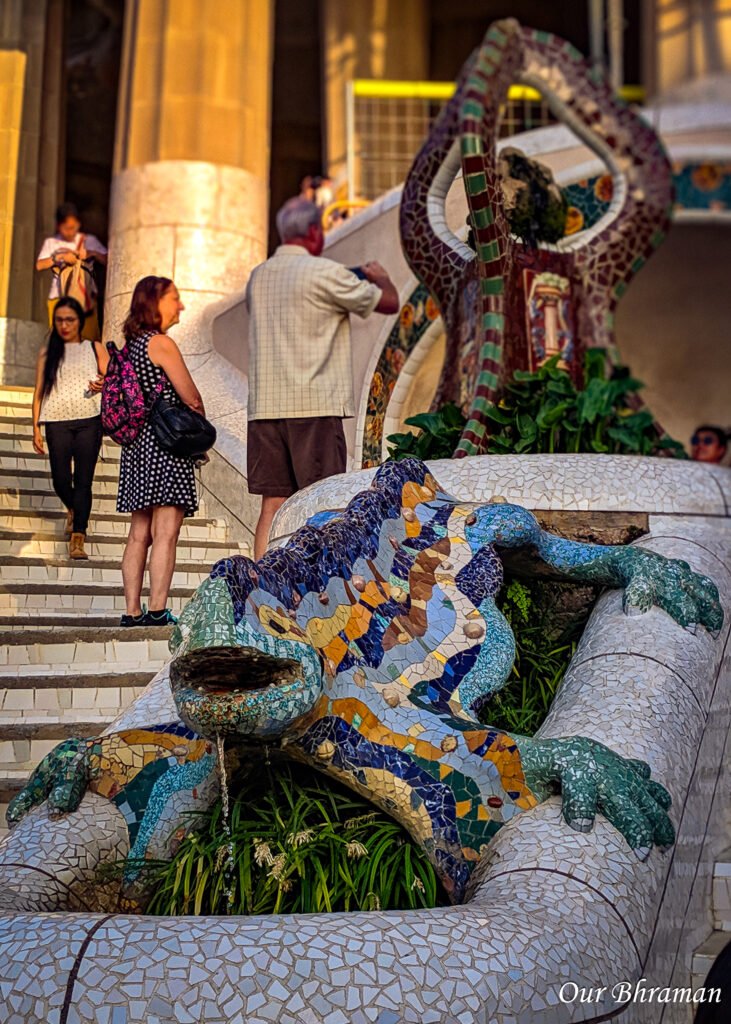
One of the most recognizable parts of Park Güell is the monumental staircase. The colorful dragon, or El Drac, sits along the staircase and has become one of the park’s most famous symbols. The staircase leads toward the Hypostyle Room and the central areas of the park.
 The Hypostyle Room
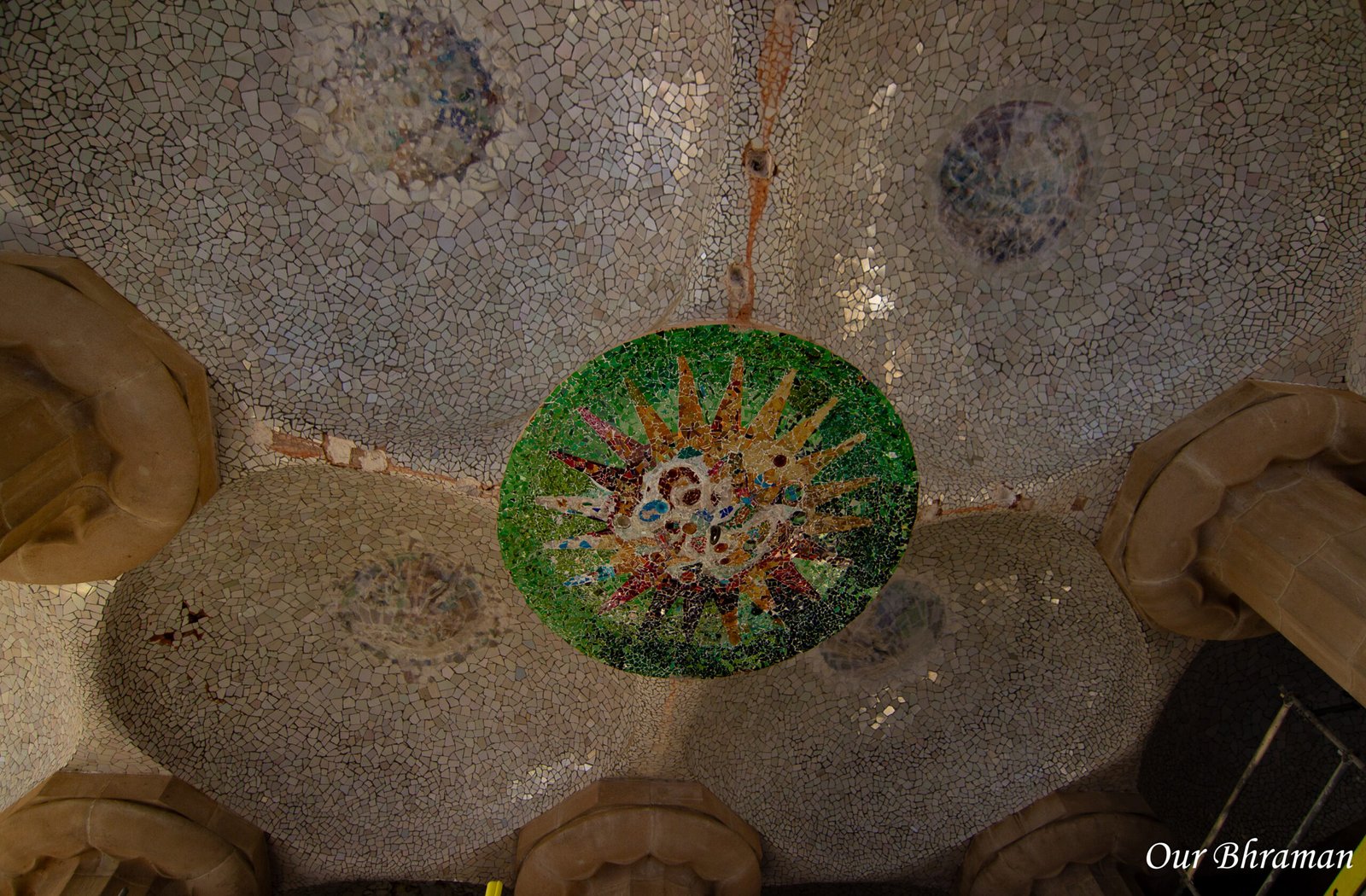 The Hypostyle Room
At the top of the staircase is the Hypostyle Room, originally designed as a covered marketplace for the planned residential community. It contains 86 columns, with a ceiling decorated with colorful mosaic details. Standing among the columns, it is easy to see how Gaudí combined structure, art, and nature into something that feels completely different from a conventional marketplace.
 The Viaducts and Pathways
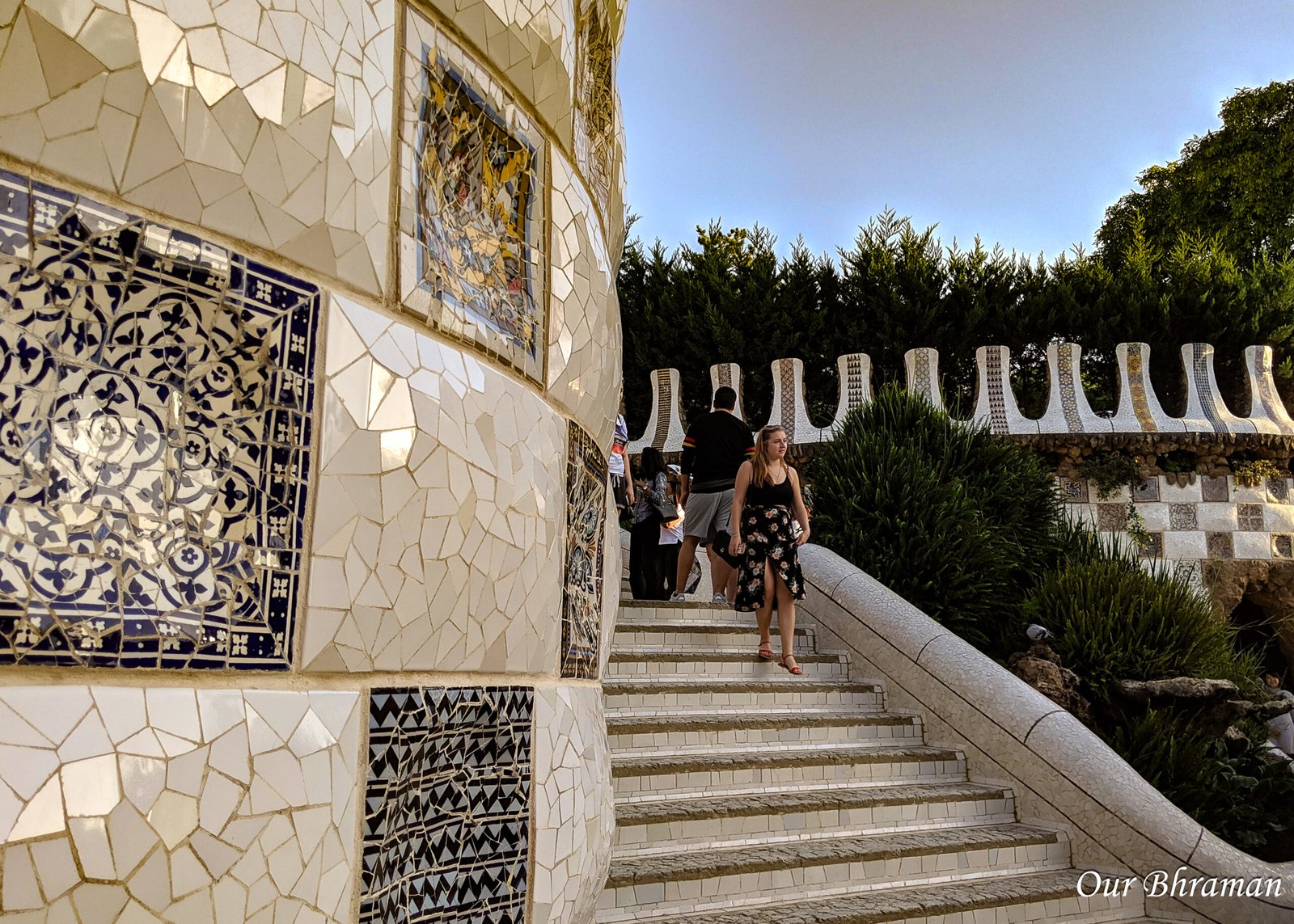 The Viaducts and Pathways
One of the things we enjoyed about Park Güell was how naturally the architecture blends into the hillside. Gaudí designed three major viaducts — the Lower, Middle, and High Viaducts — to connect different parts of the planned community while working with the natural slope of the land. Their stone columns and curved forms almost look like natural rock formations.
 The Laundry Room Portico
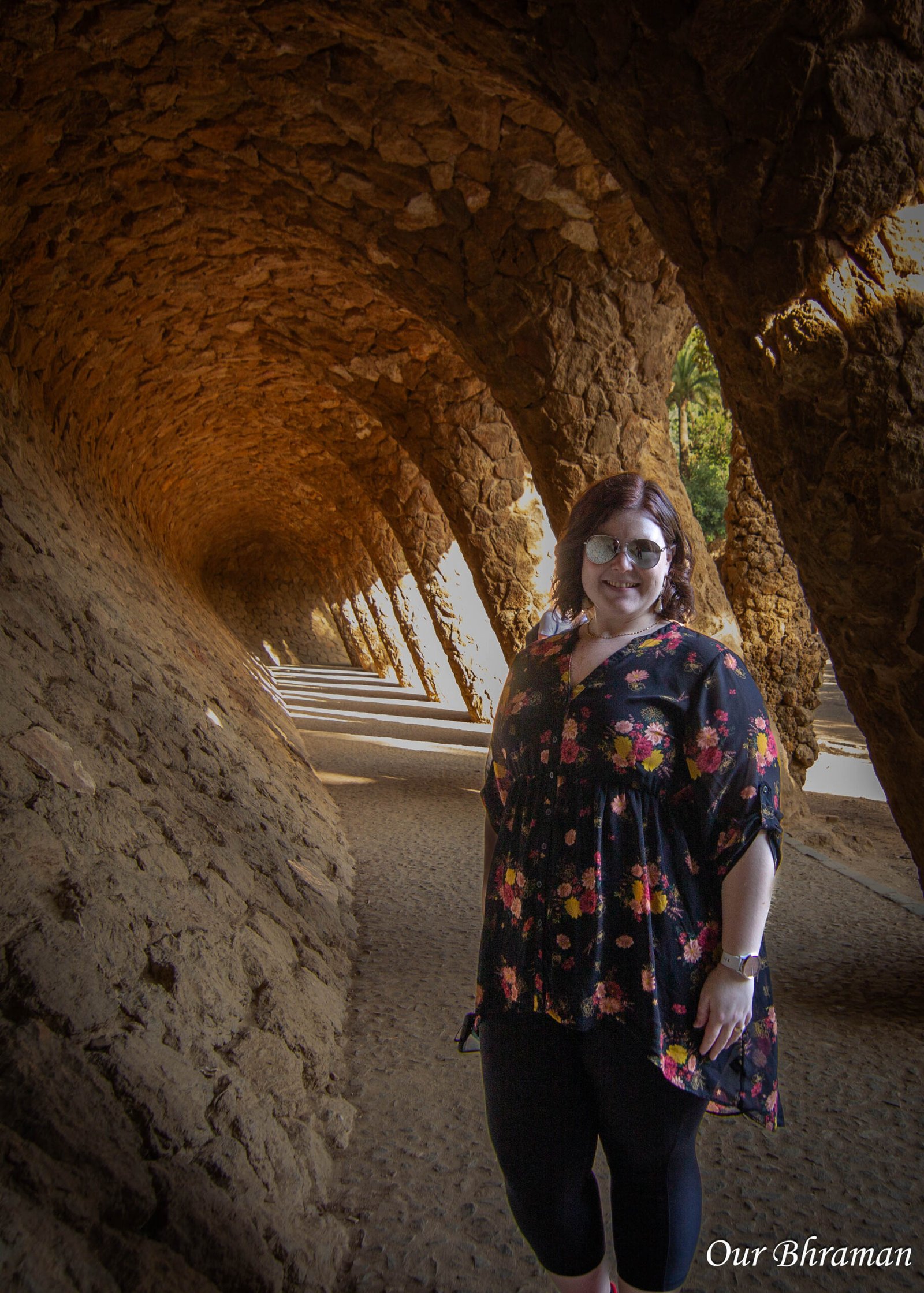 The Laundry Room Portico
The Laundry Room Portico is another unusual example of Gaudí’s organic style. Its stone structure curves like a wave, with columns that blend into the surrounding landscape. One of the columns is shaped as a sculpted washerwoman, giving the space its name.
 Austria Gardens
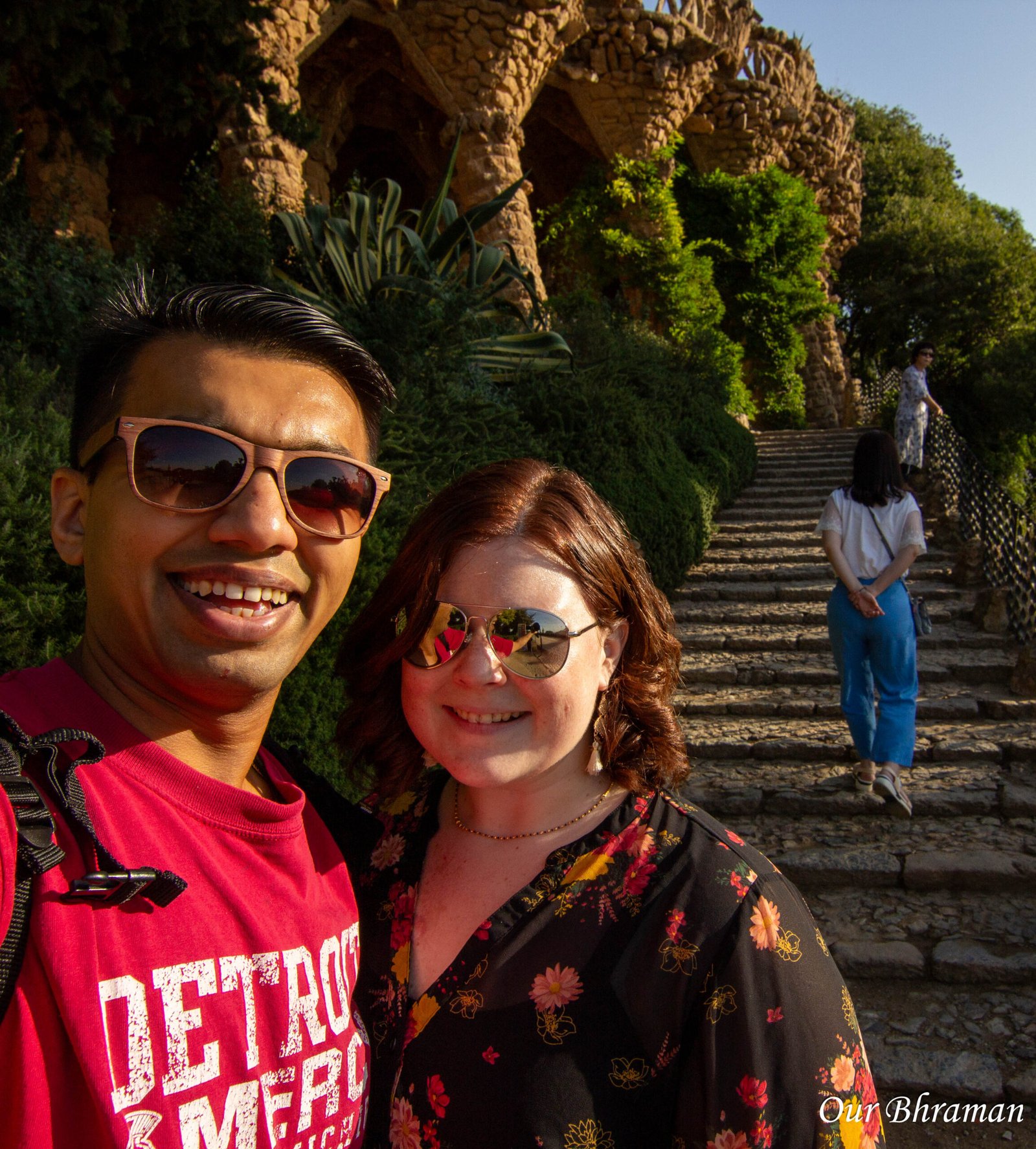 Austria Gardens
The Austria Gardens occupy an area that was originally intended for residential building plots. Today, it provides a quieter and greener part of the park, offering a nice contrast to the colorful architecture of the Monumental Zone.
Gaudí House Museum
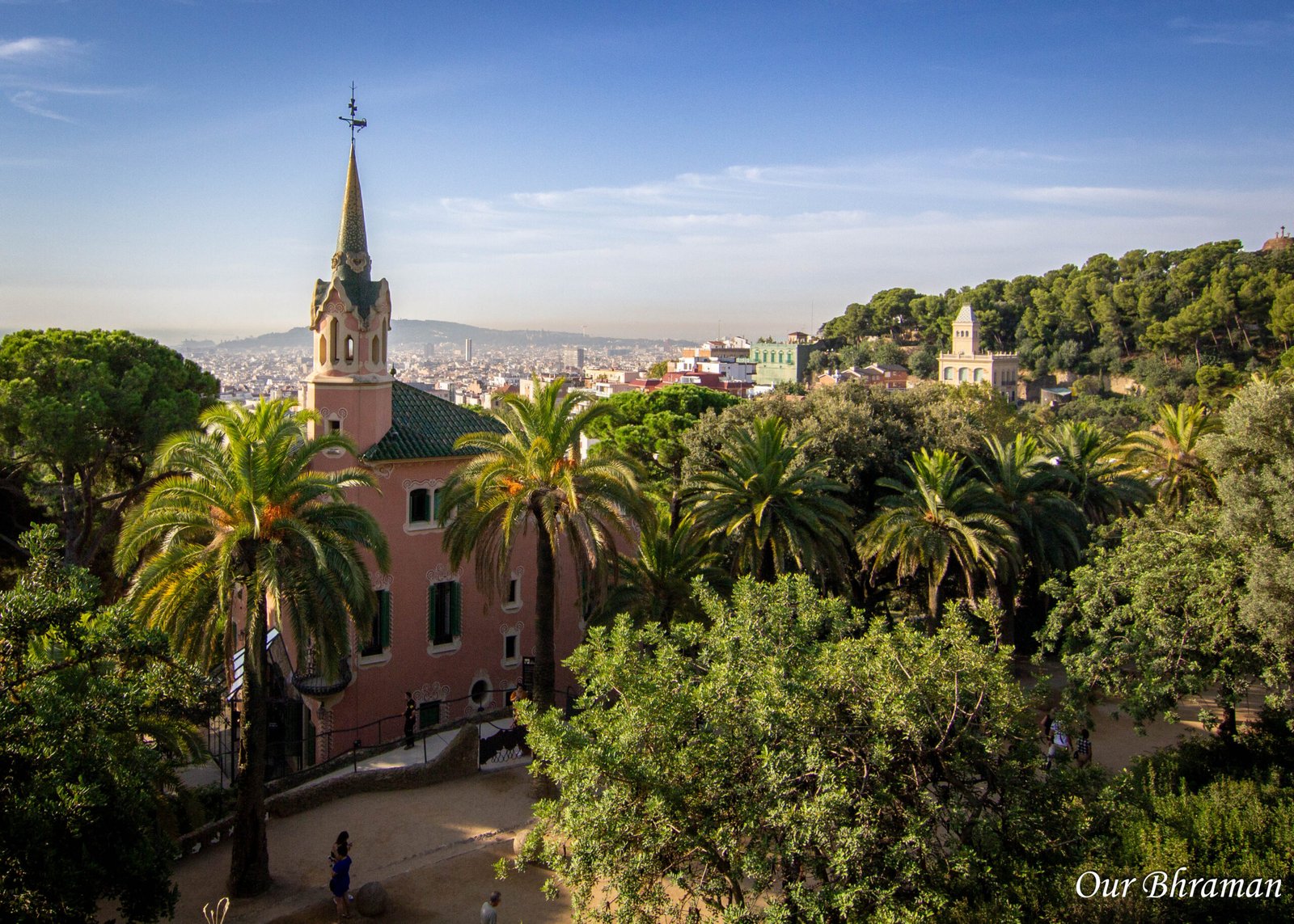 Gaudí House Museum
Surrounded by lush greenery and palm trees with Barcelona stretching out beyond. The pink-colored house is a beautiful example of the residential architecture that was originally planned for Park Güell.
Interestingly, although the house is closely associated with Gaudí, it was designed by his friend and collaborator Francesc Berenguer i Mestres. In 1906, Gaudí’s father acquired the house, and Antoni Gaudí lived here with his father and niece until 1925. Today, it houses the Gaudí House Museum and provides a glimpse into the architect’s life beyond his more famous works.
Hill of the Three Crosses
For those willing to continue uphill, the Hill of the Three Crosses sits at the highest point of Park Güell, about 182 meters above sea level. From here, you can enjoy another perspective of Barcelona and the surrounding landscape.
What made Park Güell memorable for us was not just one particular structure. It was the way Gaudí connected architecture, nature, color, and the hillside into one continuous experience. Around almost every corner, there was something unusual to notice — from colorful mosaics and stone pathways to unexpected views of Barcelona.
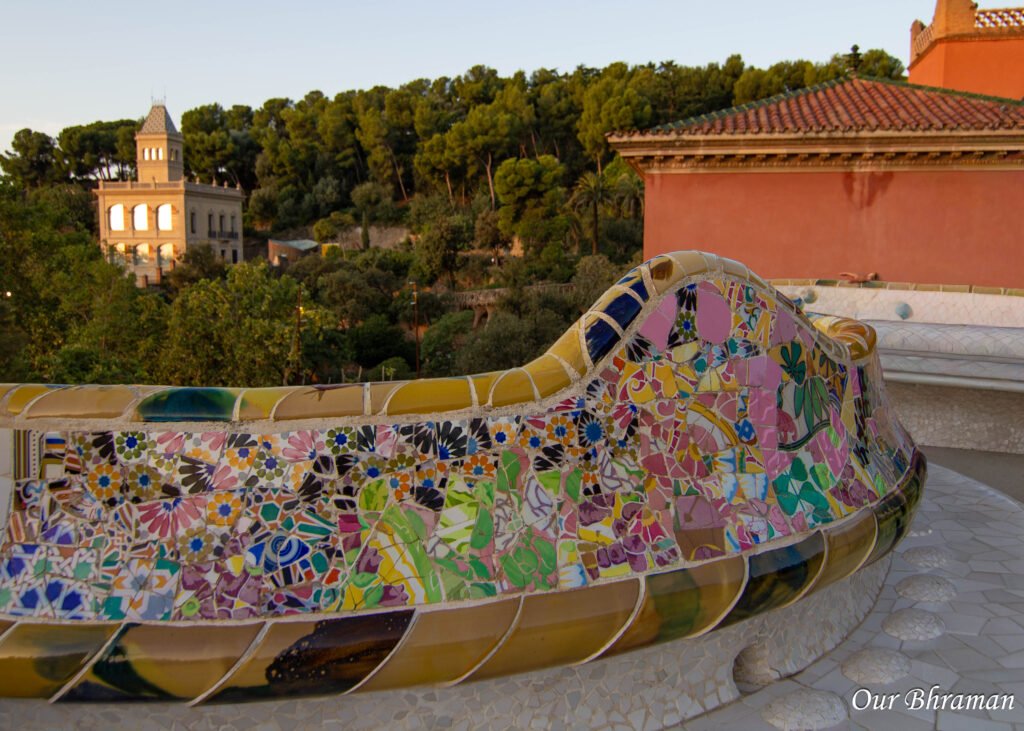
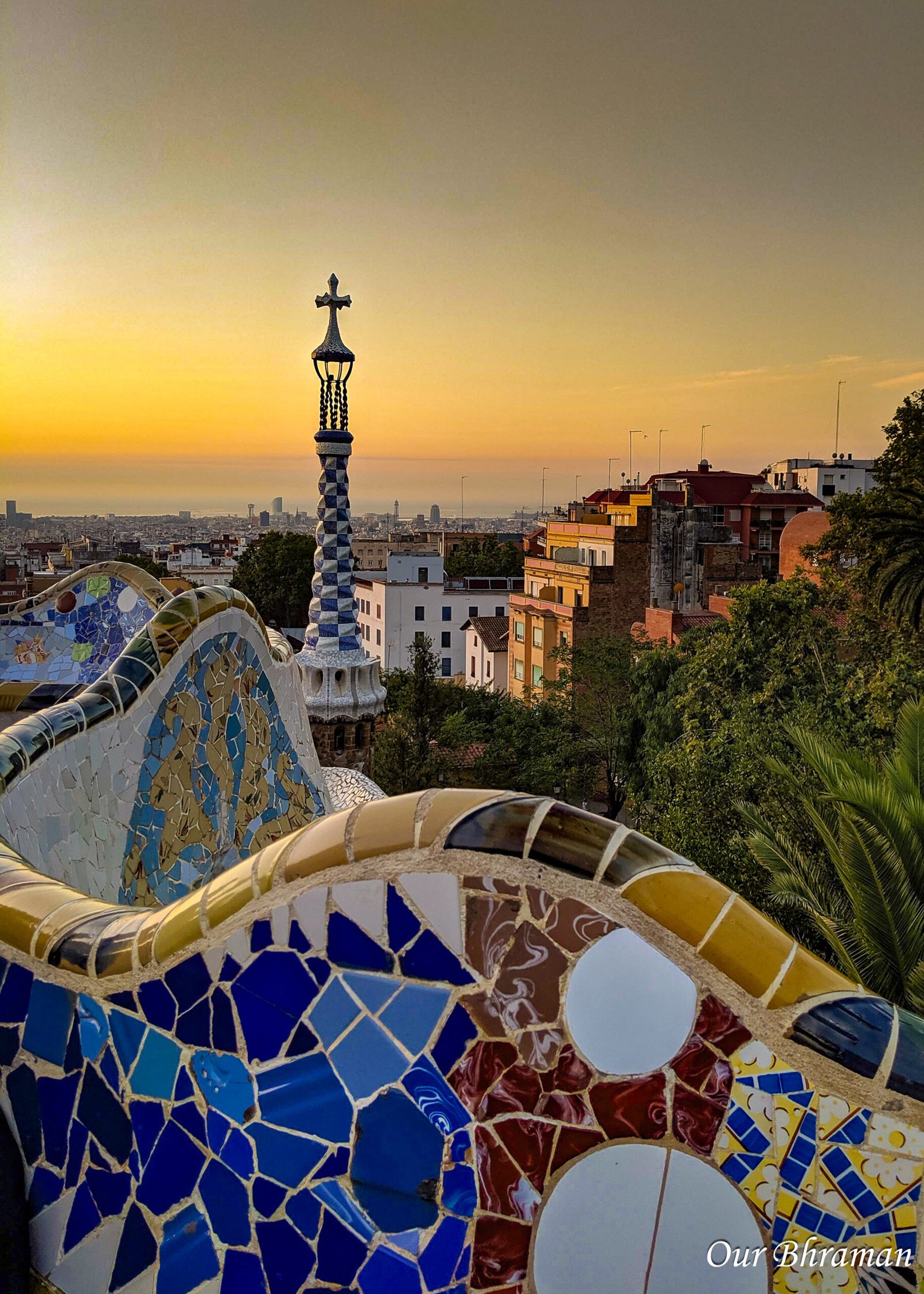
The Greek Theatre, now known as Plaça de la Natura (Nature Square), is one of the most recognizable parts of Park Güell. The large open terrace was originally designed for outdoor performances and is surrounded by Gaudí’s famous serpentine bench.
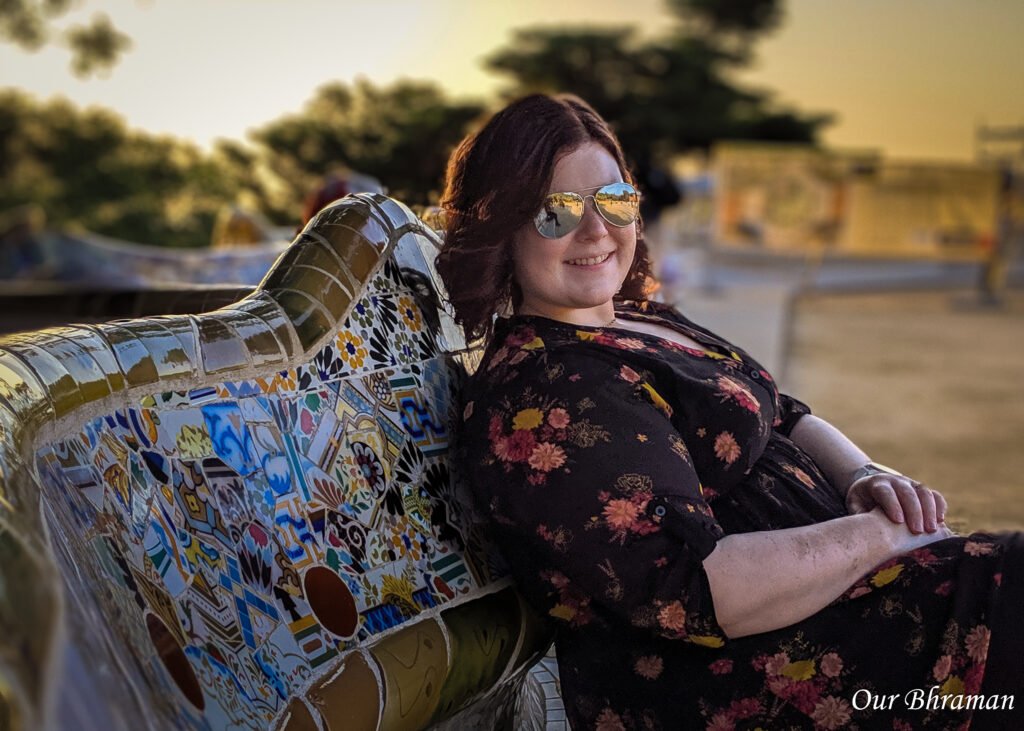
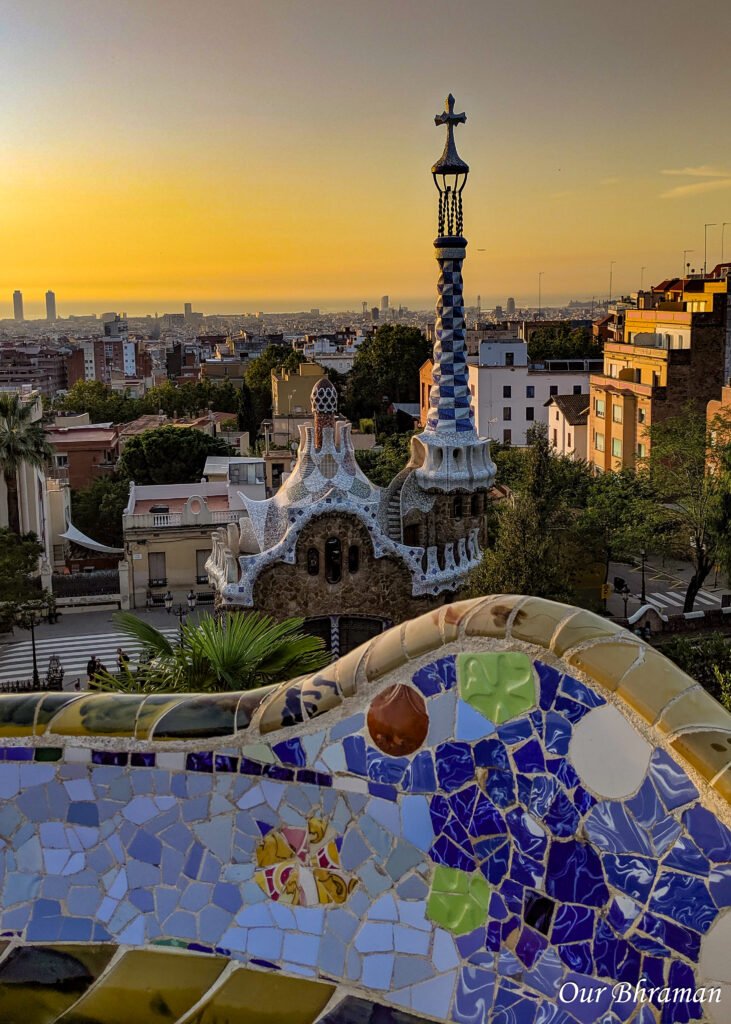
The bench is covered with colorful broken-tile mosaics known as trencadís, creating one of the most distinctive examples of Gaudí’s use of color and recycled materials. The bench is not only beautiful to look at but also follows the natural curve of the terrace, making it a perfect place to sit and take in the views.
For us, this was also one of the best photography spots in the park. Looking back toward the Porter’s Lodge Pavilions, the colorful mosaics create a great foreground, while the Barcelona skyline stretches beyond. On a clear day, you can even spot the Sagrada Família in the distance—another famous Gaudí masterpiece.