

Hallgrímskirkja — Starting Our Reykjavík Adventure
Our first stop of the day was Hallgrímskirkja—or, as the locals call it, Hallgrímskirkja (yes, it’s a mouthful, and no, I still can’t say it without tripping over the name). Standing tall above Reykjavík, this is easily one of the city’s most recognizable landmarks, so it felt like the perfect place to begin our day exploring the capital.
 First Impressions — Outside the Church
 First Impressions — Outside the Church
After parking the car, we decided not to rush inside. Instead, we wandered around the church first, taking in the massive structure from different angles. The architecture immediately grabbed our attention. Its tall, sweeping concrete columns and unusual shape don’t look like a typical church. They feel much more connected to Iceland’s dramatic landscape.
The inspiration makes perfect sense once you know the story. The design by Icelandic architect Guðjón Samúelsson was influenced by the country’s natural formations, including the dramatic basalt columns found around Iceland. Looking at Hallgrímskirkja, it almost feels as if someone took those rugged volcanic formations and transformed them into a building.
 Leifur Eiríksson — A Piece of History in Front of the Church
 Leifur Eiríksson — A Piece of History in Front of the Church
Standing directly in front of Hallgrímskirkja is the statue of Leifur Eiríksson, the Icelandic explorer traditionally credited with reaching North America centuries before Christopher Columbus.
The statue itself has an interesting connection between Iceland and the United States. It was presented to Iceland by the United States in 1930 to commemorate the 1,000th anniversary of Iceland’s Alþingi. So before we even stepped inside the church, we had already encountered a fascinating piece of Icelandic history.
 Walking Around Hallgrímskirkja
 Walking Around Hallgrímskirkja
We spent some time simply walking around the church, looking at it from different angles and taking photographs. From close up, the enormous columns and geometric details are impressive, but stepping farther away gives you a better sense of just how dominant the church is over the surrounding city.
This is definitely a place where it pays to walk around rather than take one quick photograph from the front. Every angle seemed to give us a slightly different composition, especially with Reykjavík’s colorful buildings and surrounding landscape adding context.
How Hallgrímskirkja Came to Be
Hallgrímskirkja wasn’t built overnight. Construction began in 1945, and the church was finally consecrated in 1986. Its unusual architecture was intentionally created to reflect Iceland’s natural environment rather than hide it.
The towering form is often associated with Iceland’s basalt landscapes, and once we knew that, the building made much more sense. It felt like we were looking at architecture shaped by the same forces that created the waterfalls, lava fields, mountains, and cliffs we’d been exploring throughout our trip.
Stepping Inside — A Completely Different Feeling
After spending some time outside, we finally walked through the doors—and the atmosphere changed immediately.
The enormous exterior gives the impression that the inside might be equally dramatic, but instead we found a space that felt surprisingly simple, bright, and peaceful. Tall white arches stretched upward, sunlight filtered through the windows, and the clean interior gave the church a sense of calm.
After days of driving through Iceland’s wild landscapes, there was something refreshing about simply standing still for a moment.

And Then We Heard the Music…
But the biggest surprise came when we noticed that someone was actually playing the church’s enormous pipe organ.
The organ is nearly 15 meters high and has 5,275 pipes, so even before hearing it, it is an impressive sight. But hearing it being played while we were standing inside made the experience completely different.
The sound filled the enormous space around us. We weren’t expecting a musical performance when we walked through the doors, so it felt like one of those lucky travel moments you simply can’t plan.
For a few minutes, we just stood there listening.
The combination of the towering white architecture, sunlight, and powerful organ music made the whole place feel almost cinematic. It was as if Iceland had suddenly provided its own soundtrack to our Reykjavík adventure.
One Last Walk Before Leaving
After roughly half an hour exploring both inside and outside, we stepped back onto the streets of Reykjavík. Rather than heading straight to our next major attraction, we decided to slow down and wander through the surrounding neighborhood.
That casual walk eventually brought us to one of Reykjavík’s most photographed streets—Rainbow Street.
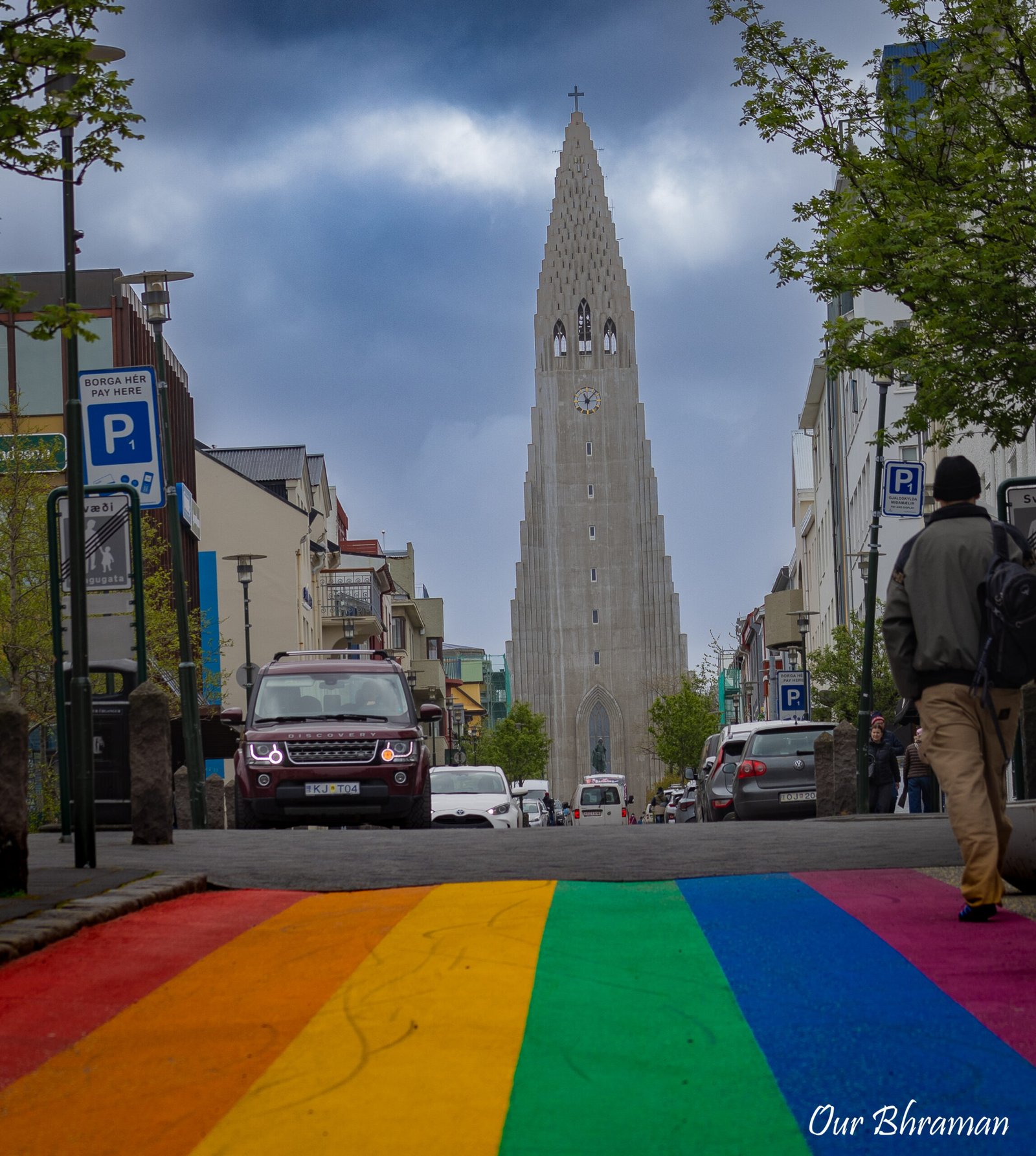 With its colorful stripes leading directly toward Hallgrímskirkja, it felt like the perfect final view of the church. We had started our visit standing beneath this enormous landmark, learning about its architecture and history, and now we were looking back at it from the middle of the city.
Sometimes, the best way to experience a landmark isn’t to rush through it. It’s to walk around, look up, listen, and give yourself enough time for an unexpected moment to happen.
For us, that moment was the sound of the organ echoing through Hallgrímskirkja.

Reykjavík’s Rainbow Street — More Than Just a Colorful Road
Reykjavík’s famous Rainbow Street, known as Skólavörðustígur, is more than just one of the city’s most photographed streets. The street runs downhill from Hallgrímskirkja toward the heart of Reykjavík, making the colorful pavement almost feel like a path leading visitors directly into the city.
The rainbow colors were added in 2015 as part of Reykjavík’s annual Pride celebrations. What began as a temporary celebration of diversity and LGBTQ+ visibility quickly became one of the city’s most recognizable landmarks. The colorful street has remained a permanent part of Reykjavík’s character and is now enjoyed by locals and visitors throughout the year.
 Postcard Image
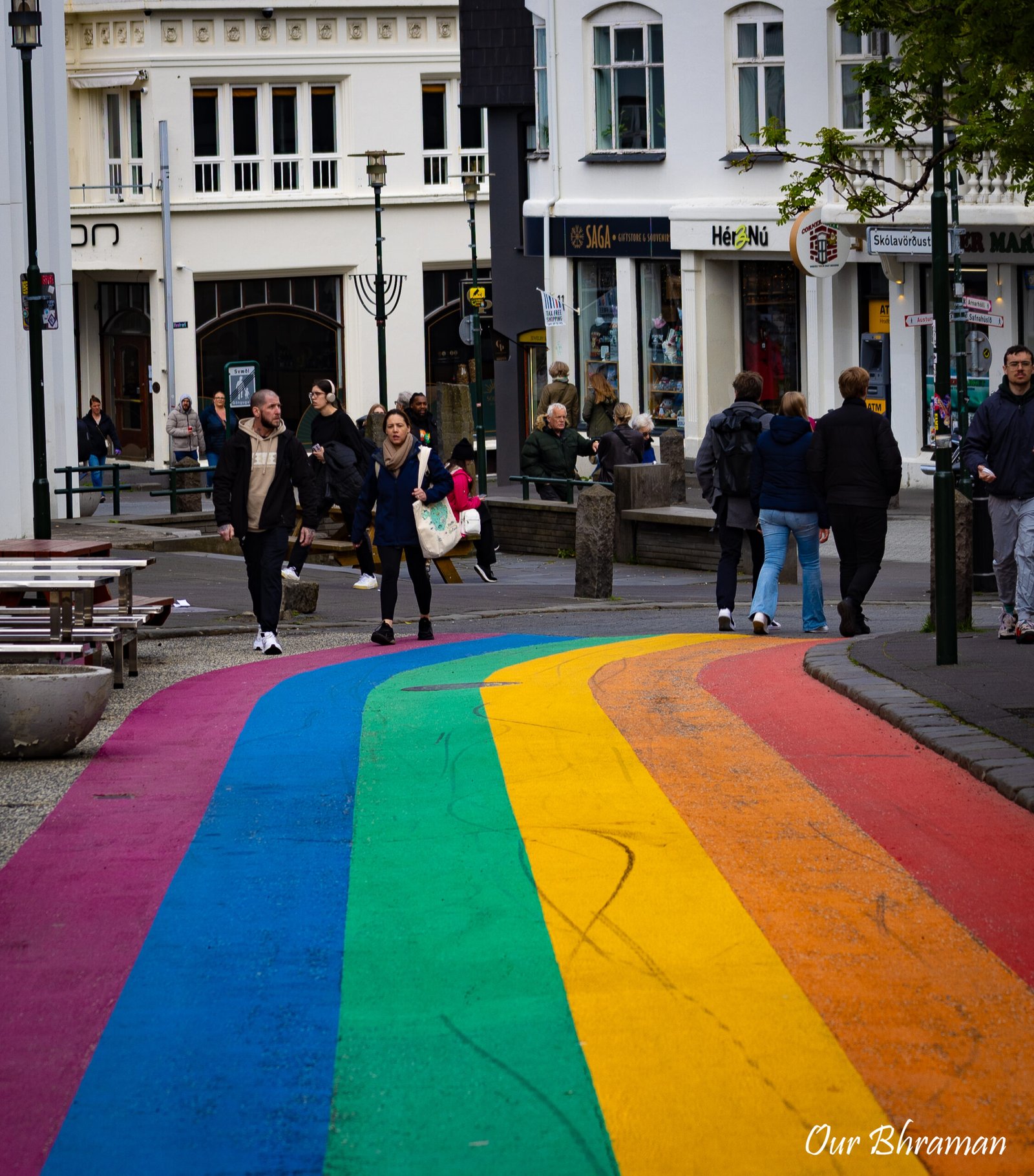 Postcard Image
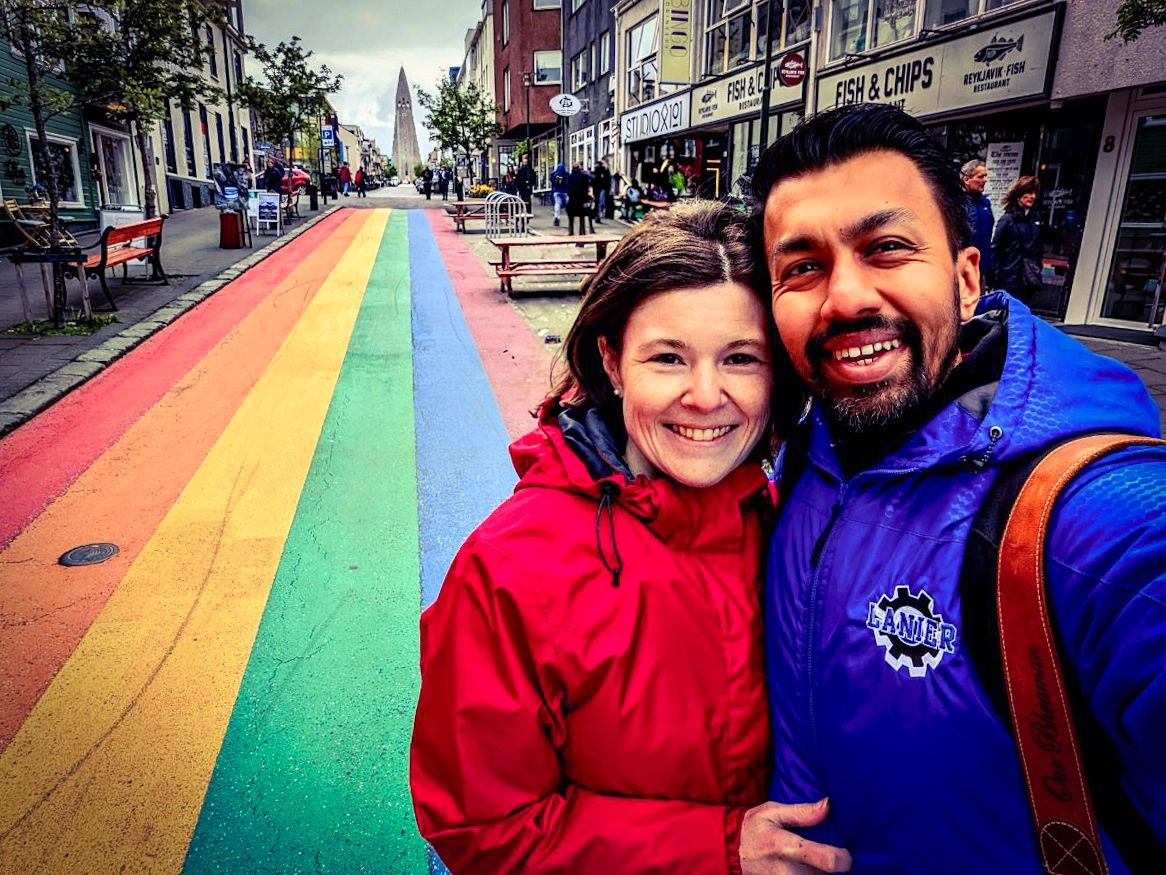
When we turned onto Reykjavík’s Rainbow Street, it felt like we’d stepped right into a postcard. The bold stripes stretched out ahead of us, drawing our eyes straight to the towering Hallgrímskirkja in the distance. The air smelled faintly of fresh coffee drifting from nearby cafés, and the street buzzed with a mix of locals and travelers snapping photos, laughing, and just soaking in the good vibes.
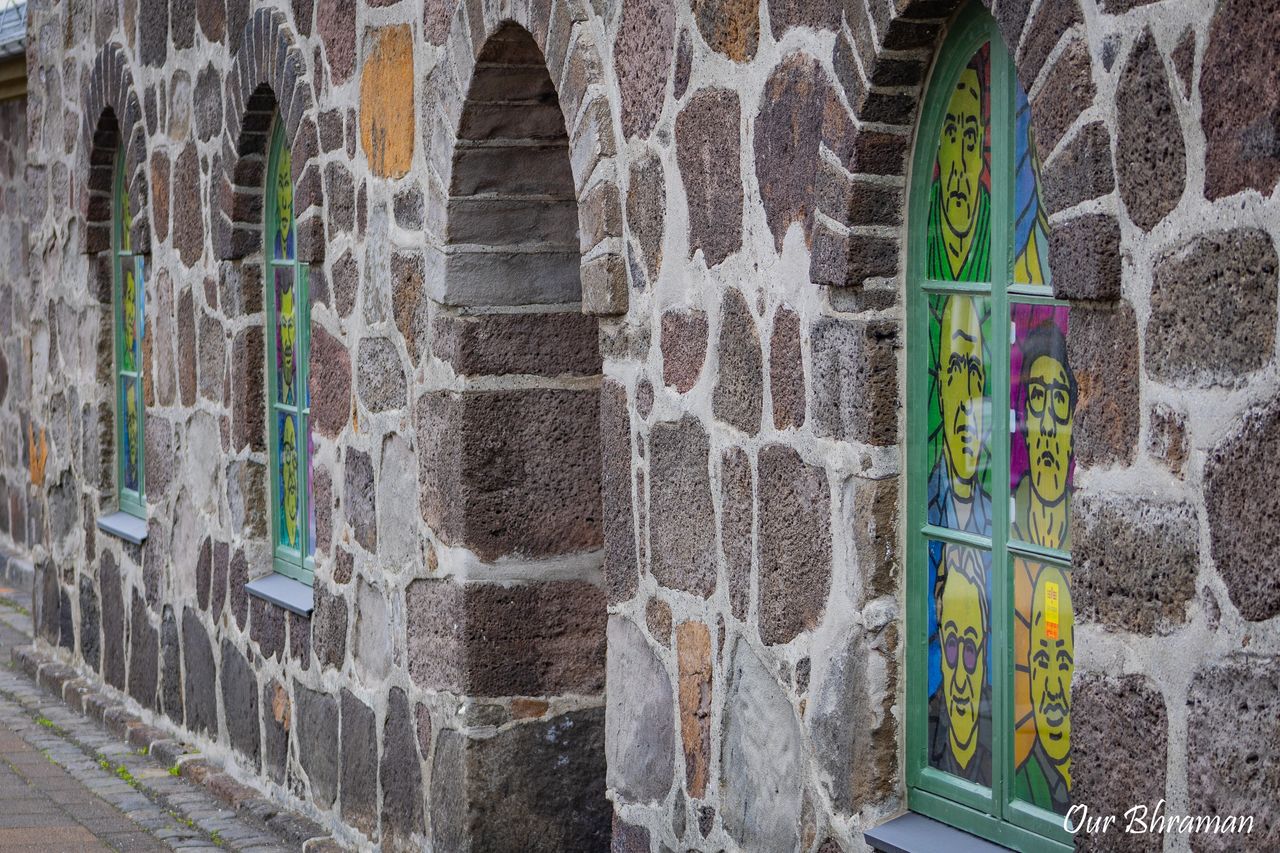
Iurie Fine Art
We ended up wandering into a photography gallery called Iurie Fine Art, and it felt like stepping back through every breathtaking moment of our trip. The walls were alive with Iceland itself — the sparkle of waterfalls, the sweep of bright rainbows, the emerald glow of the Northern Lights, the fiery orange of erupting volcanoes, the surreal turquoise of crater lakes, and the raw force of bursting geysers. Each photograph by Iurie Belegurschi was like a window into the country’s soul, capturing the same beauty we’d been lucky enough to witness with our own eyes over the past ten days. It was as if our journey had been gathered and framed all around us.

Outside View
After spending enough time wondering around the street we head to our next stop was Harpa Concert Hall — and it completely lived up to the hype. Standing right on the edge of the harbor, its shimmering glass façade seemed to breathe with the city, reflecting the shifting blues of the sea and sky in a mesmerizing dance of colors. Stepping inside felt almost like walking into a geometric glacier — sleek, cool, and yet somehow welcoming. We paused often, just to gaze out through the massive windows at the harbor and Mount Esja beyond, soaking in a view that felt as carefully crafted as the building itself.
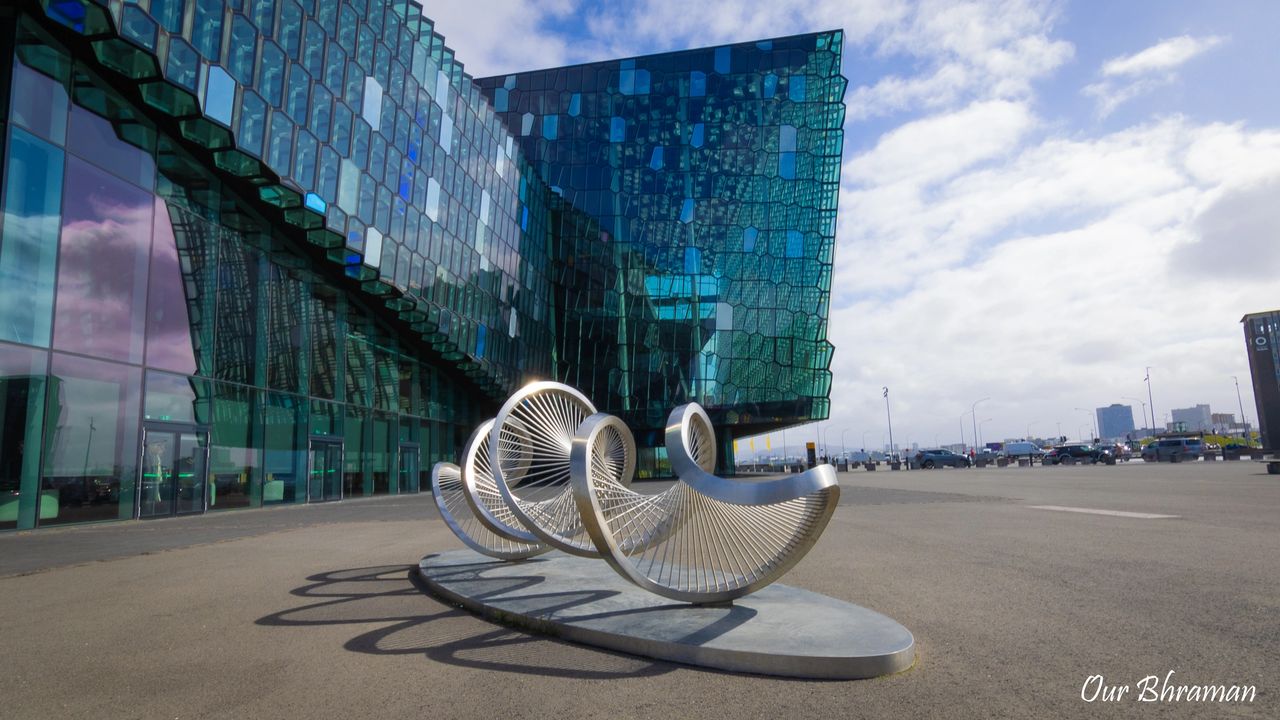
As we explored, we learned a few details that made us appreciate Harpa even more. Designed by Danish-Icelandic artist Ólafur Elíasson in collaboration with Henning Larsen Architects and Batteríið Architects, Harpa’s façade was inspired by Iceland’s natural basalt columns.
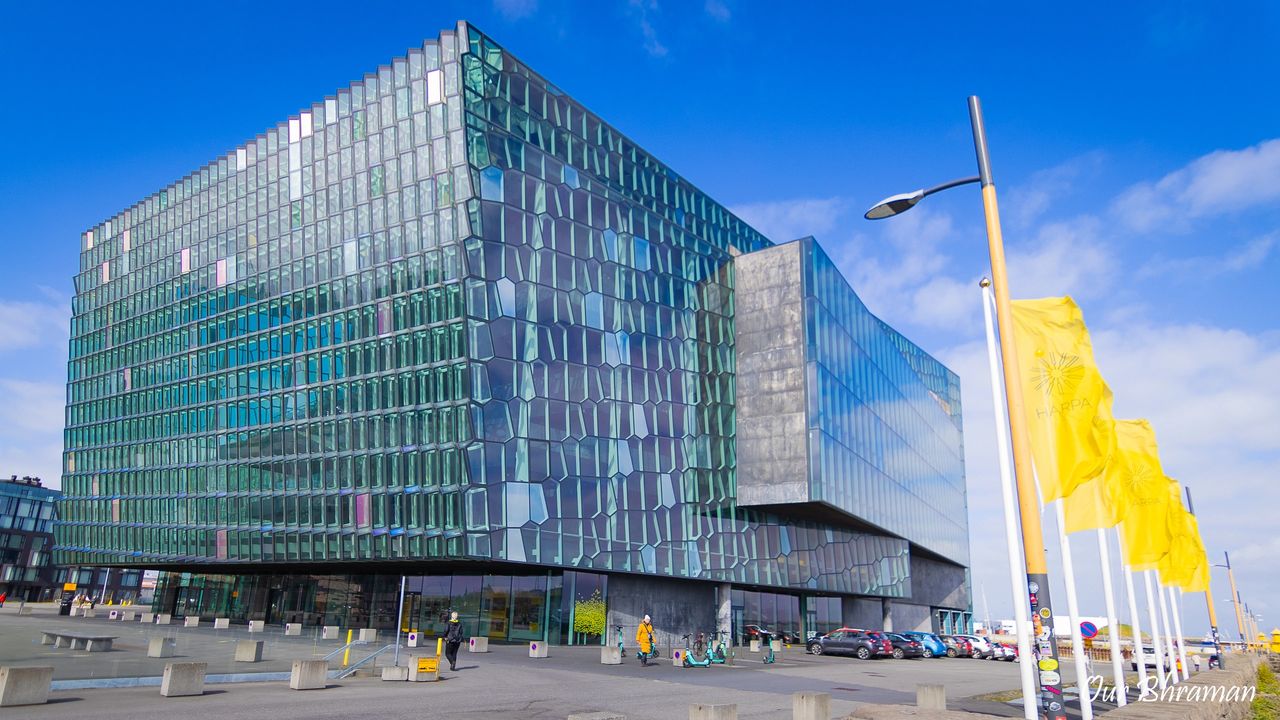
Its lattice of geometric glass panels doesn’t just look striking — it interacts with the light, sometimes mirroring the calm harbor, other times bursting into a kaleidoscope of colors depending on the weather and time of day.
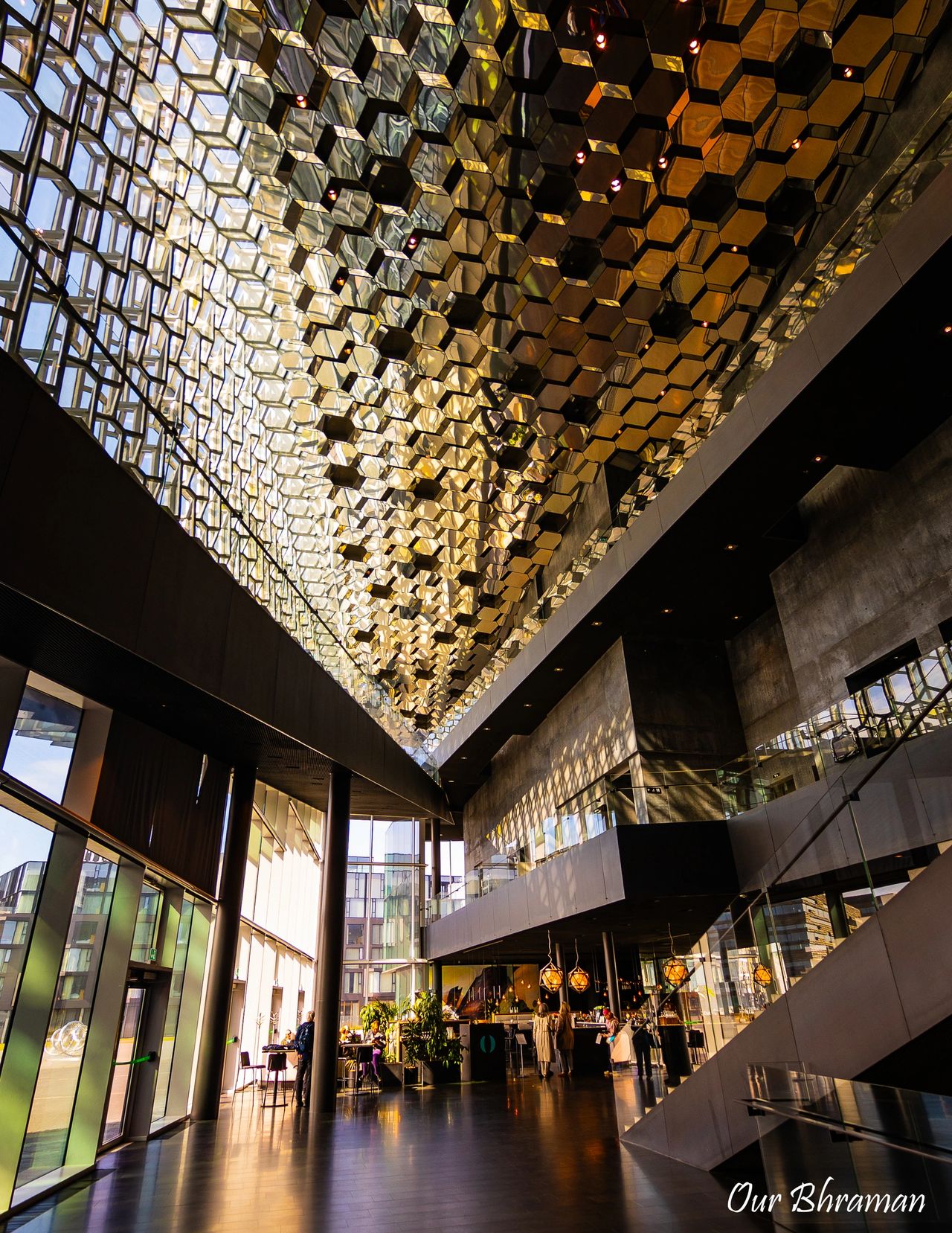
Inside View
It is the blend of materials — warm wood, sturdy concrete, and endless glass — struck a perfect balance between modern elegance and Icelandic warmth. Expansive atriums, graceful spiral staircases, and panoramic views made the space feel alive, constantly drawing your eyes outward to the city and the nature surrounding it.
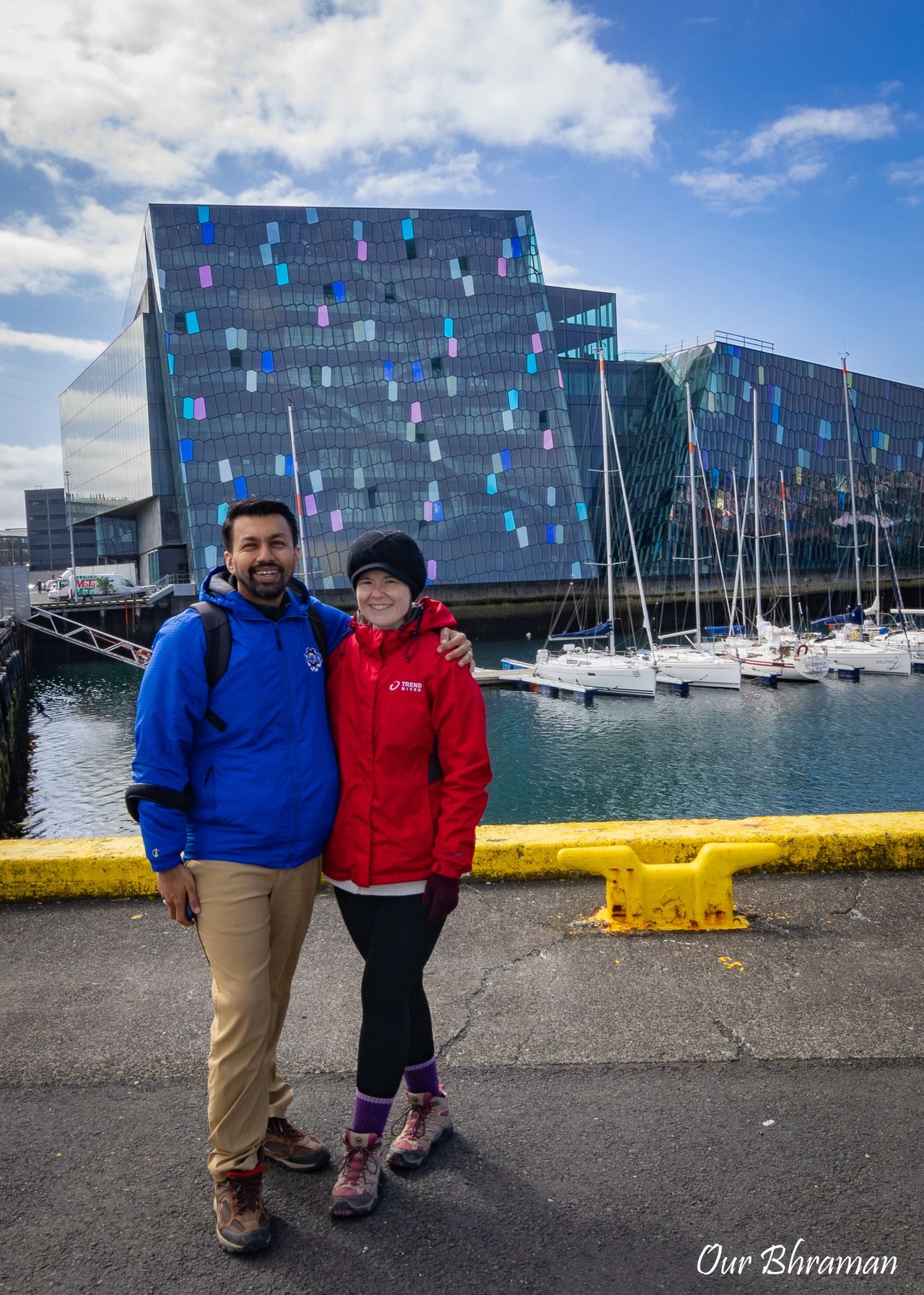
Standing there, it was impossible not to feel that Harpa is more than just a concert hall. It’s a living testament to Iceland’s creativity, resilience, and deep connection to its environment — a place that lingers in your memory not only for how it looks, but for how it makes you feel.
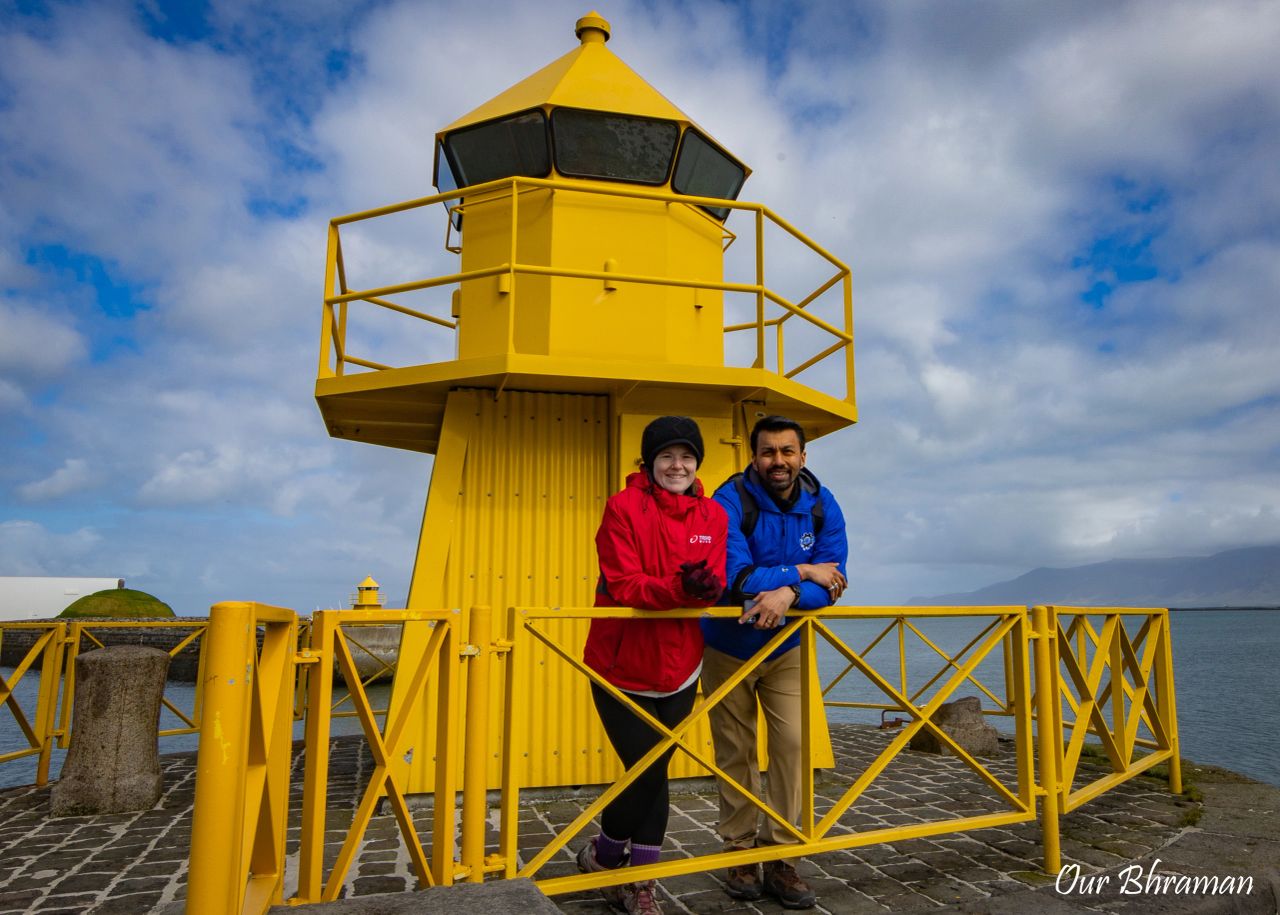

From Harpa Concert Hall, we decided to walk along the waterfront toward the Sun Voyager. The path was alive with the sparkle of sunlight on the bay, a soft breeze carrying the salty scent of the sea, and the hum of city life in the background. It was the kind of walk where you can slow down, watch the mix of cyclists and cars navigating the streets, and feel both the pulse of the city and the calm of the water at the same time.
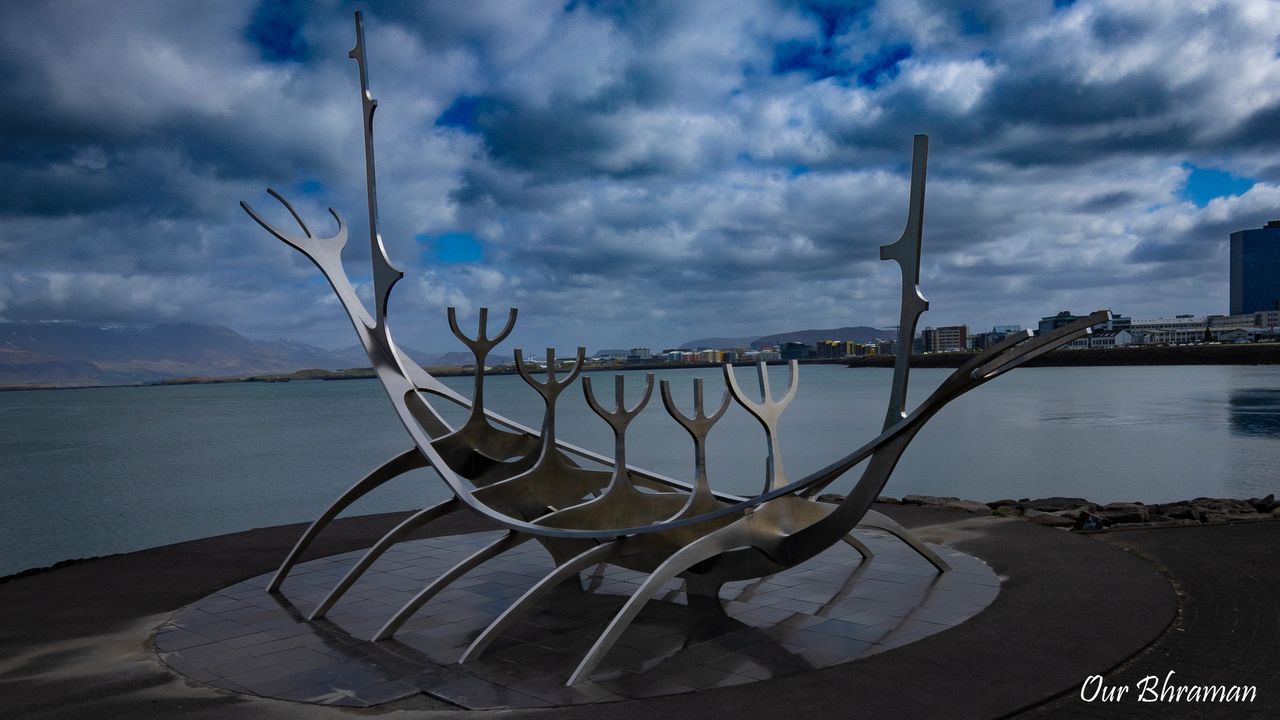
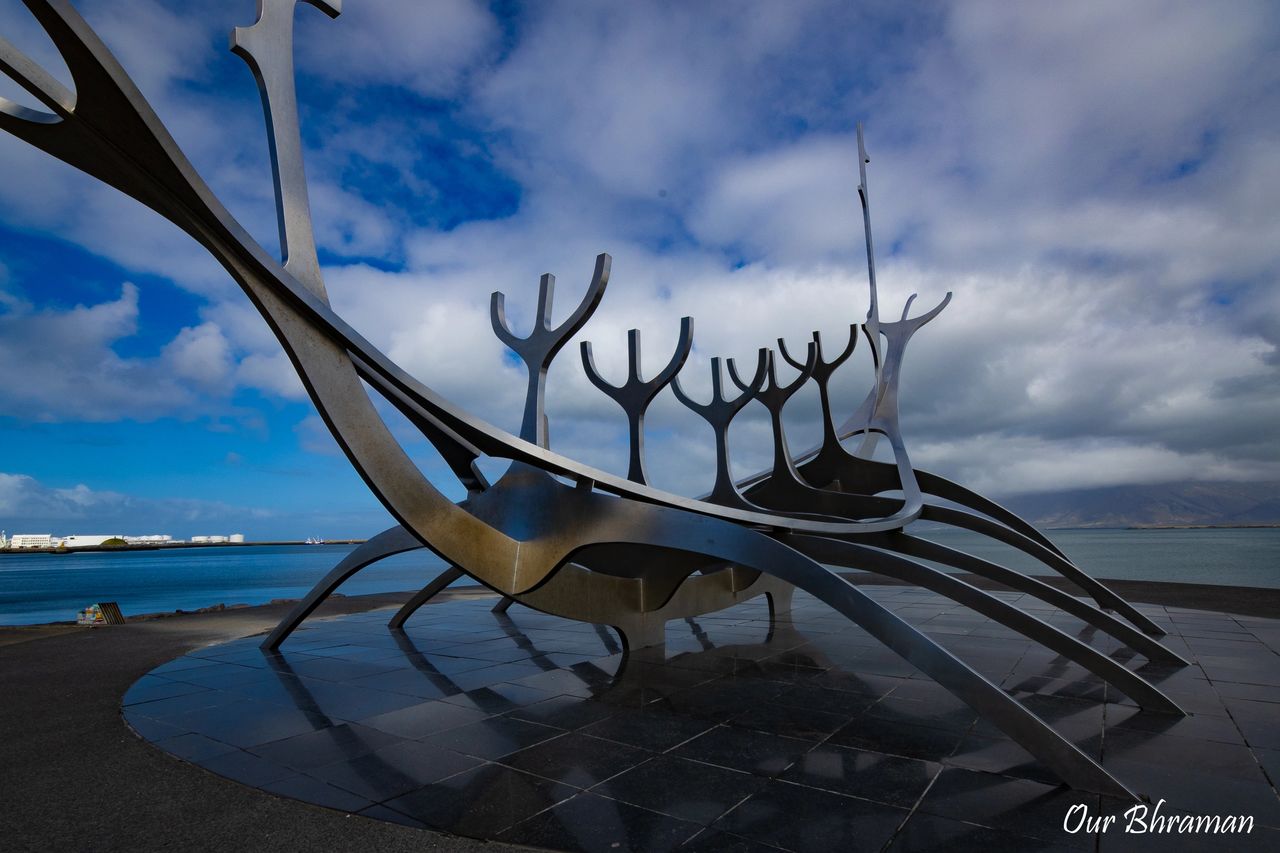
When we reached the Sun Voyager, it rose before us like a dream frozen in steel — a striking sculpture that seemed ready to set sail into the horizon. Created by artist Jón Gunnar Árnason, it’s often mistaken for a Viking ship, but it’s actually meant to be a “dream boat” and an ode to the sun, symbolizing hope, freedom, and exploration. Standing there with Mount Esja in the distance and the sun gleaming off the polished metal, we couldn’t help but reflect on how perfectly it captured Iceland’s adventurous spirit. With the place being less crowded that day, we had the rare luxury of lingering as long as we wanted, framing shots from every angle and capturing photographs without a rush — just us, the art, and the endless Icelandic sky.
Our last stop in Reykjavík was to make our way back to the car we had parked behind the church that morning. Rather than rushing, we took the opportunity to wander a bit more through the city streets, letting ourselves get lost in its charm one last time — the mix of colorful houses, street art, and the gentle buzz of everyday life.