Our visit to Barcelona in April 2019 brought us to one of the city’s most recognizable landmarks—the Sagrada Família. We had done a little research before visiting, especially about the best time to go. We decided on the afternoon, hoping to see the sunlight coming through the famous stained-glass windows.
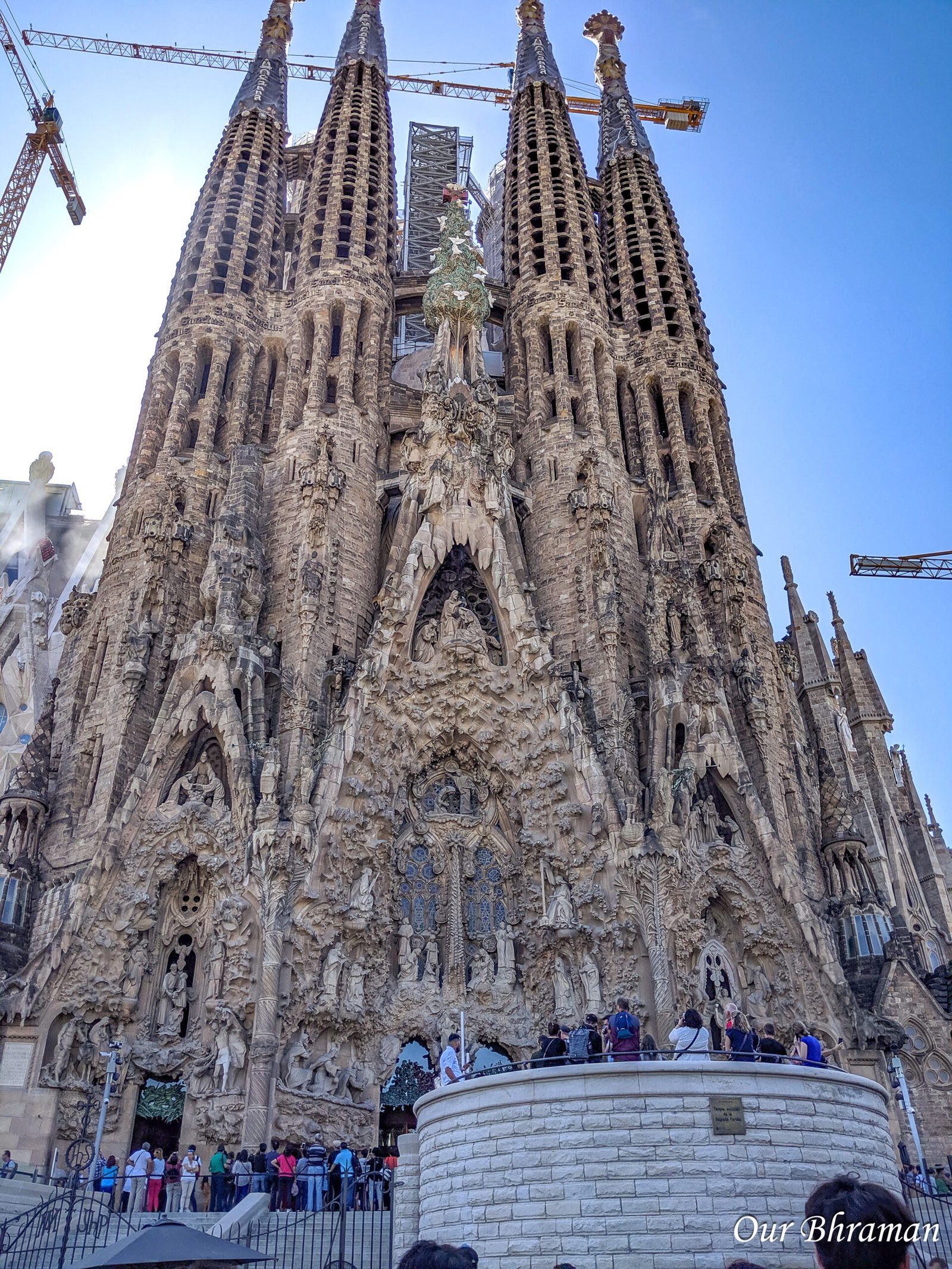
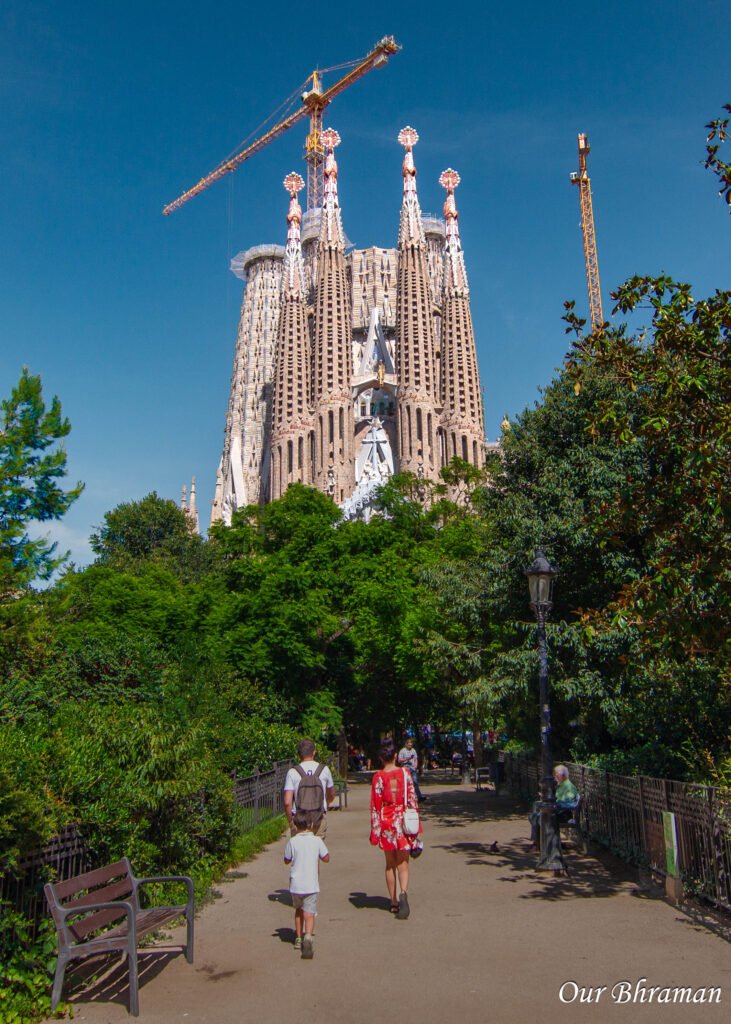
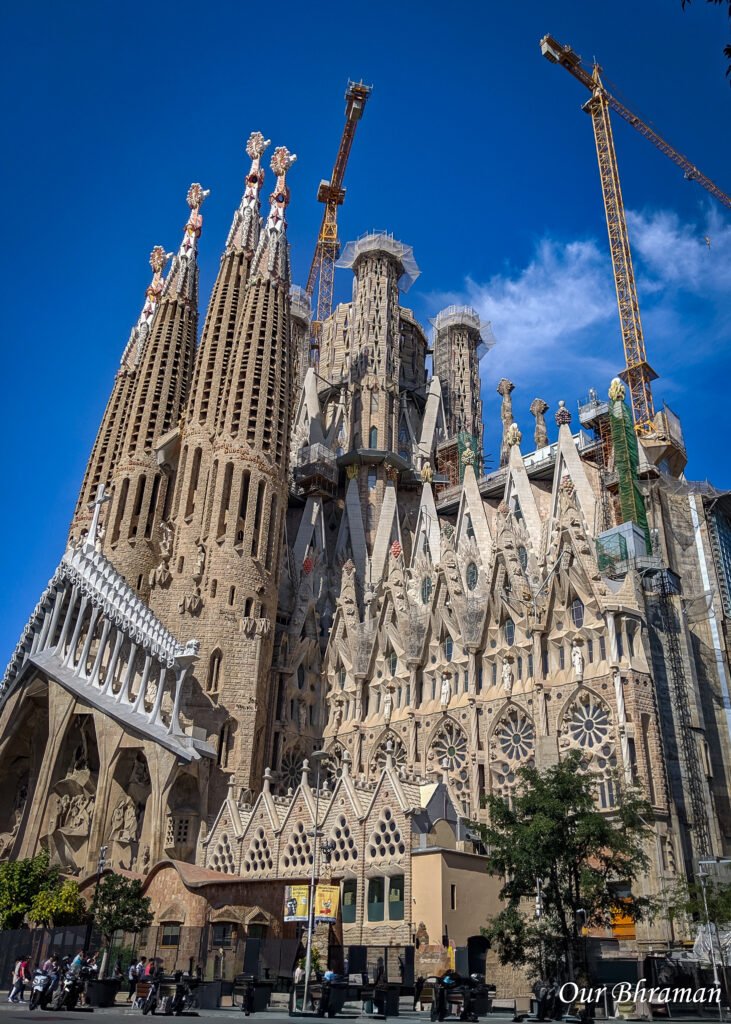
From the outside, our first impression was almost unexpected. Instead of seeing a finished church, we saw cranes, construction work and a building that clearly still had a long way to go. It felt more like a work in progress than a completed monument.
And in a way, that is exactly what it was.
A Church Built Across Generations
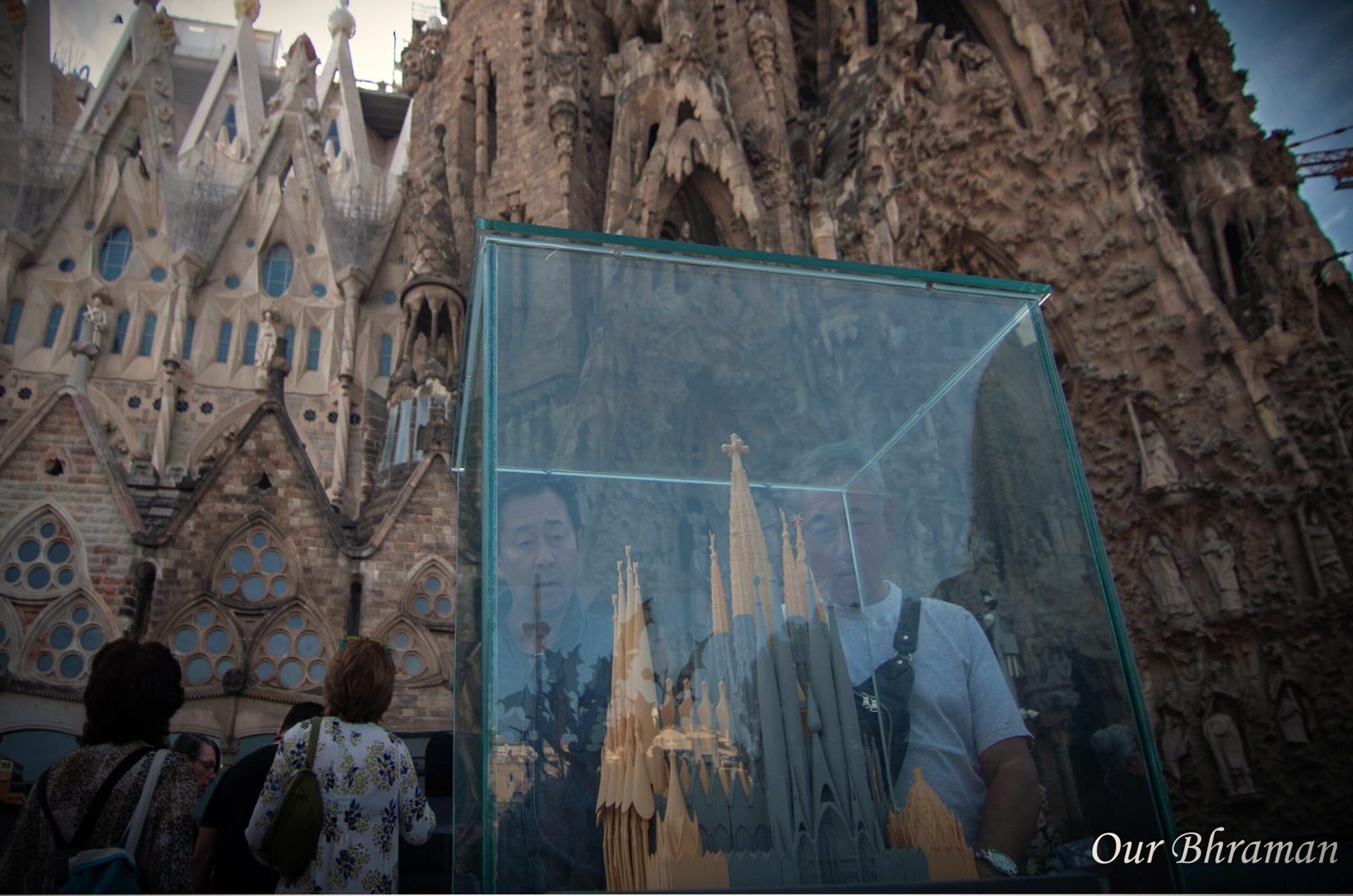
Construction of the Sagrada Família began in 1882, and Antoni Gaudí took over the project in 1883. He eventually devoted much of the later part of his life to the basilica. Gaudí died in 1926, leaving the enormous project unfinished. Construction continued through the generations, using his surviving plans, models and ideas as a guide.
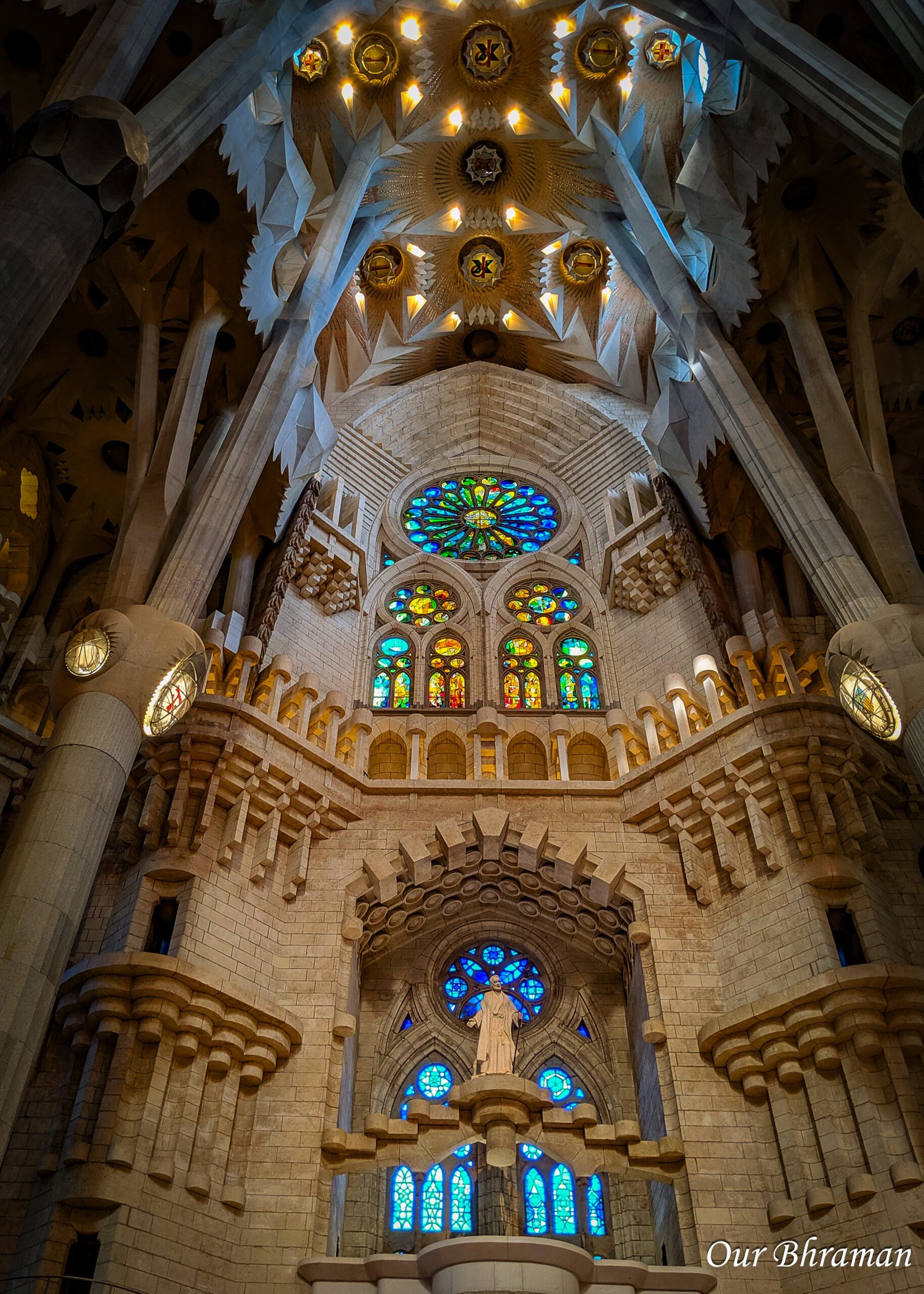
The architecture is difficult to describe as simply a church. The exterior is covered with sculptures, towers, unusual shapes and details inspired by nature. Inside, the columns branch upward like the trunks of trees, creating the feeling of standing inside a giant stone forest.
 Sagrada Família Tickets and Timed Entry
 Sagrada Família Tickets and Timed Entry
Sagrada Família tickets are €26 per person for basic admission, including the museum and audioguide. Tickets with access to one of the towers are €36, while guided-tour options cost more. Entry is timed, so you must select a specific date and time when booking and arrive for your assigned slot; you cannot simply arrive at any time during the day. We recommend booking ahead, especially during busy travel periods.
Our Sagrada Família Guide
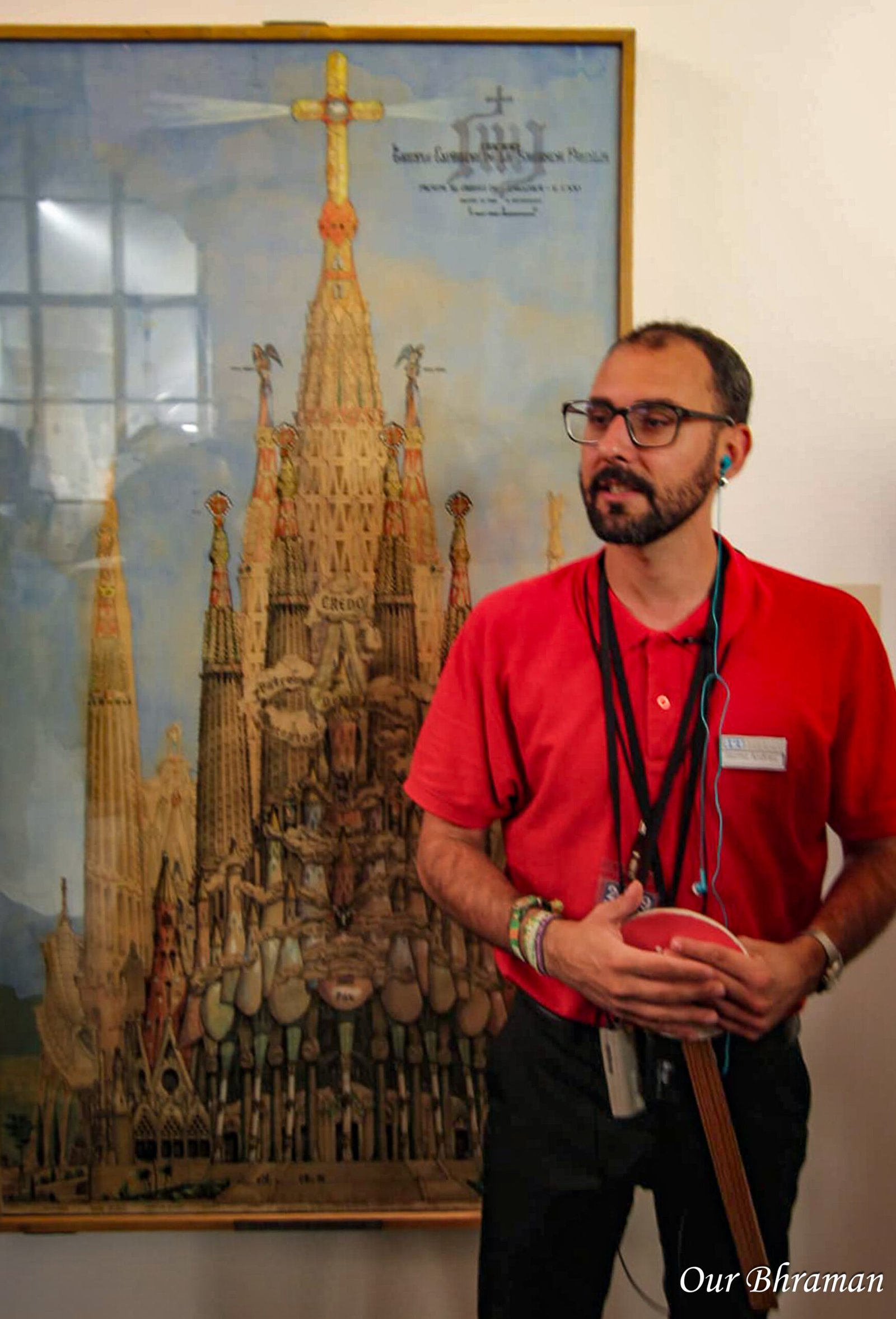
Our guided visit gave us a much better understanding of what we were looking at inside the Sagrada Família. Our guide used drawings and explanations to show us how Gaudí imagined the basilica and the ideas behind its unusual shapes and structure. A guide can add context that is easy to miss when simply walking through on your own. The official Sagrada Família also describes its guided visits as a way to understand the meaning behind details that visitors might otherwise overlook.
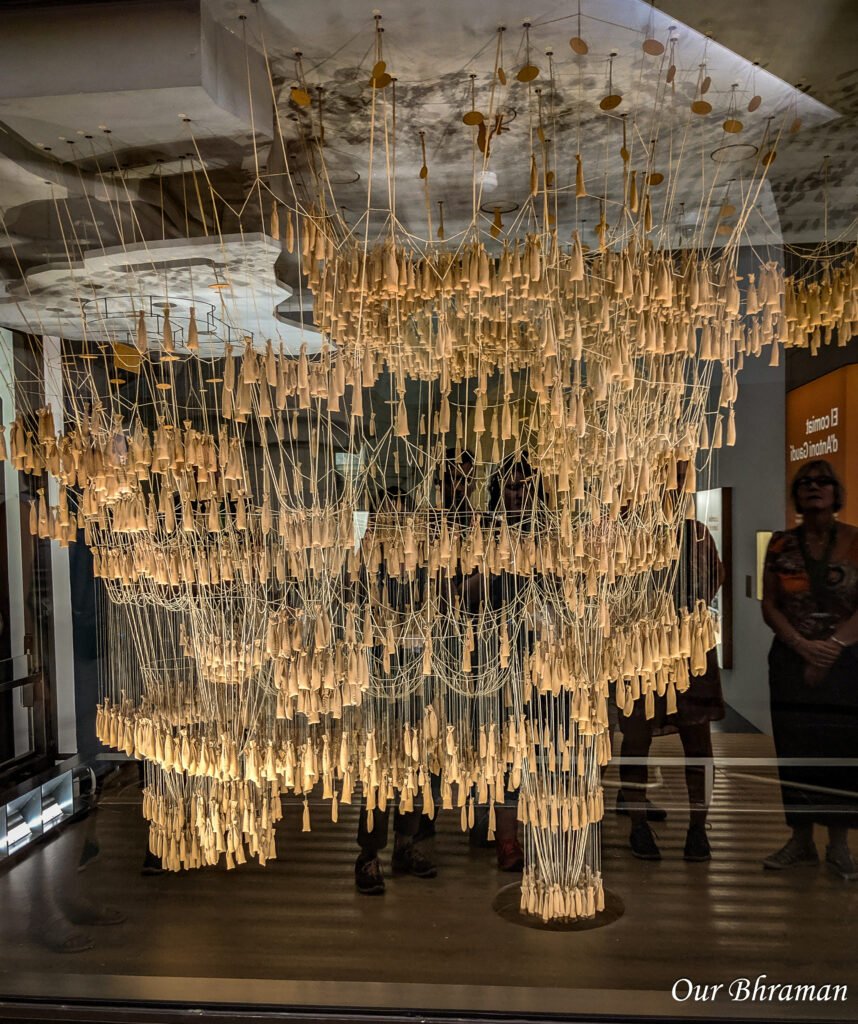
 One of the things we learned during our visit was that the incredible structure of the Sagrada Família began with something surprisingly simple—chains and gravity. Gaudí used hanging chains with weights to create a physical model of how forces naturally move through a structure. He then flipped the model upside down to help develop the shapes and columns we see inside the basilica today.
What fascinated us most was realizing that Gaudí was solving these complex structural problems long before computers and modern design software existed. By moving one point of a chain, the entire model would naturally change, creating a new geometry. Standing inside the basilica after learning this gave us a completely different appreciation for what we were seeing. The columns, curves, and shapes were no longer just beautiful architectural details—they were the result of experimentation, observation, and a willingness to let nature and gravity help solve the problem.
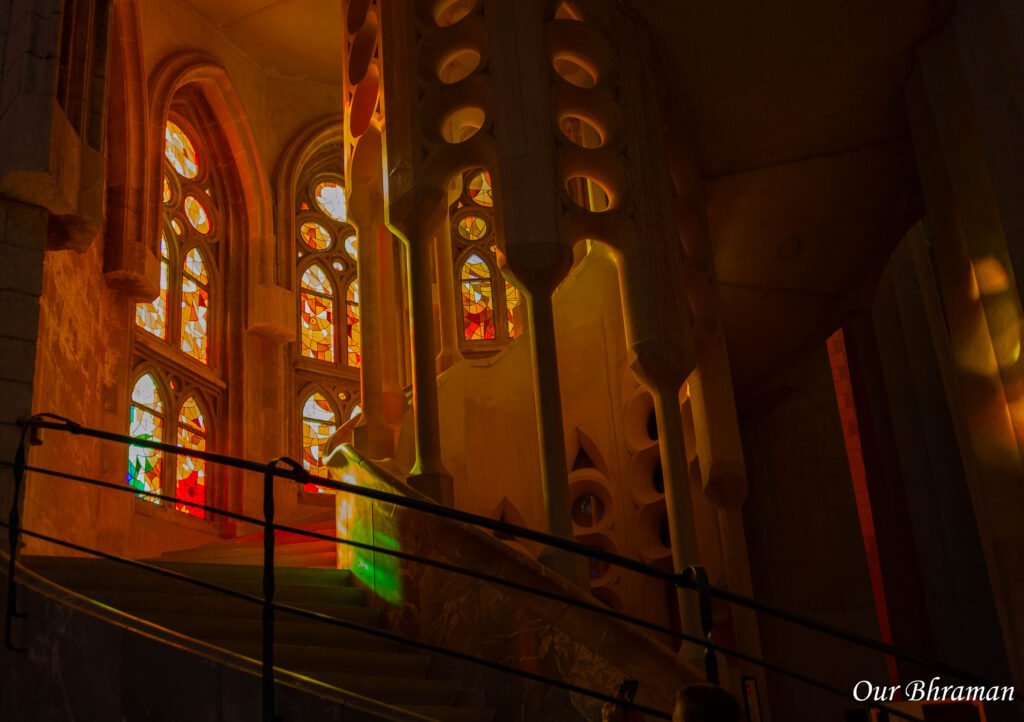
But for us, the architecture wasn’t the only thing that caught our attention. It was the light. Once we walked inside, we were happy that we had done our homework.
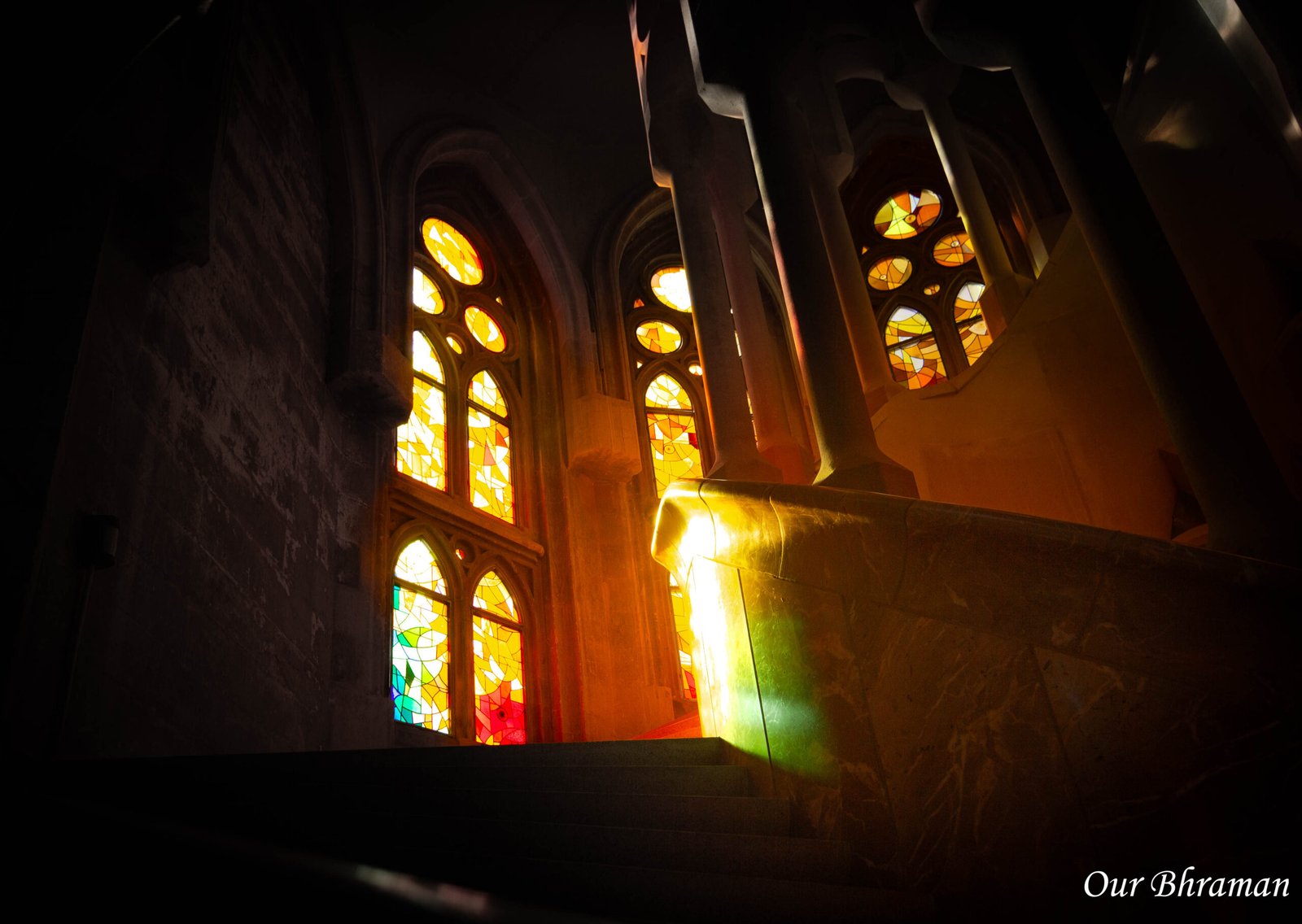
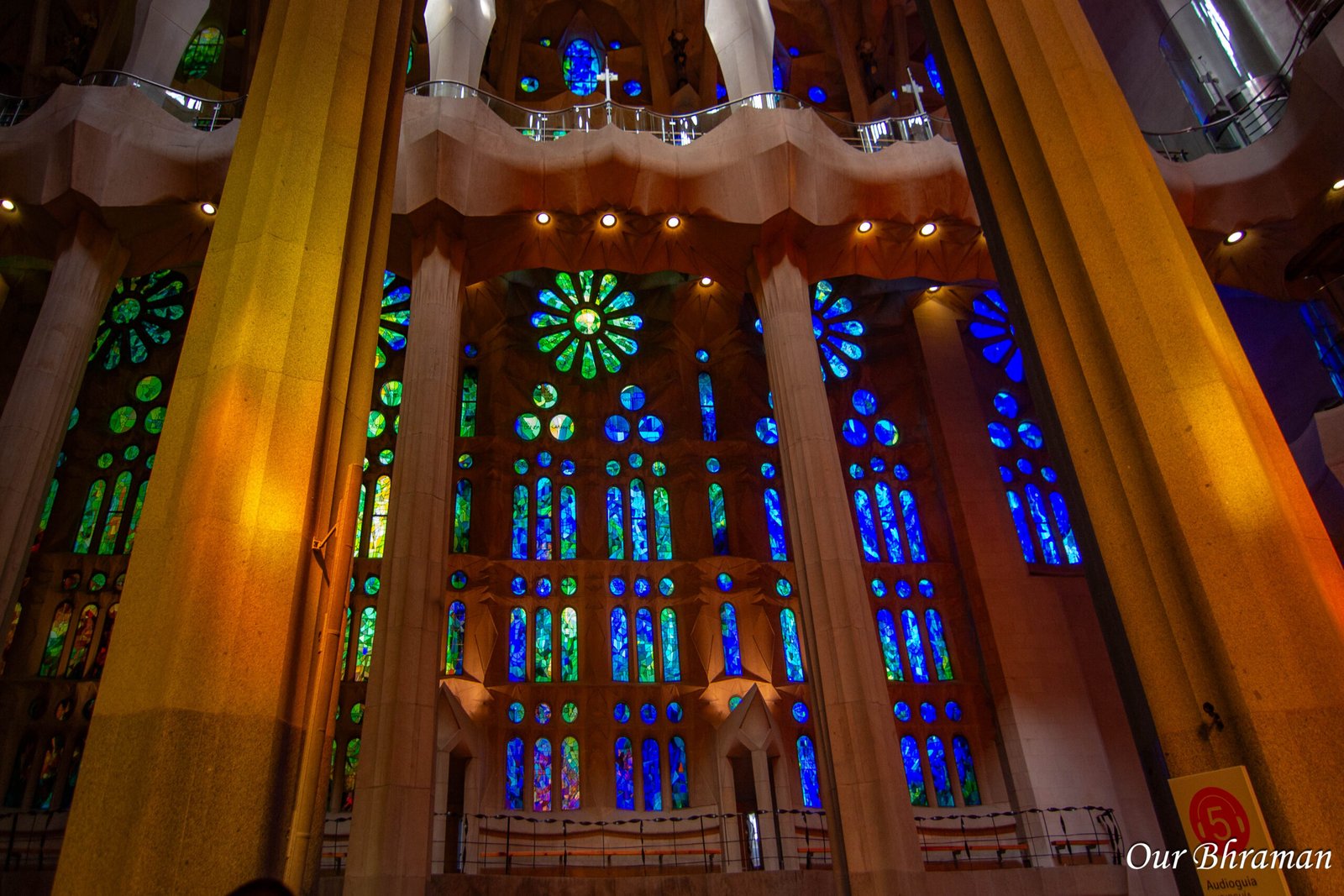
The sunlight coming through the stained-glass windows filled the interior with blue, green, yellow, orange and red. The colors weren’t simply sitting in the windows—they were being projected onto the surrounding architecture, changing the way the space looked as we moved through it.
We weren’t the only ones noticing it. All around us, people were slowly walking through the church, looking upward, stopping to admire the details and trying to capture what they were seeing with their cameras. 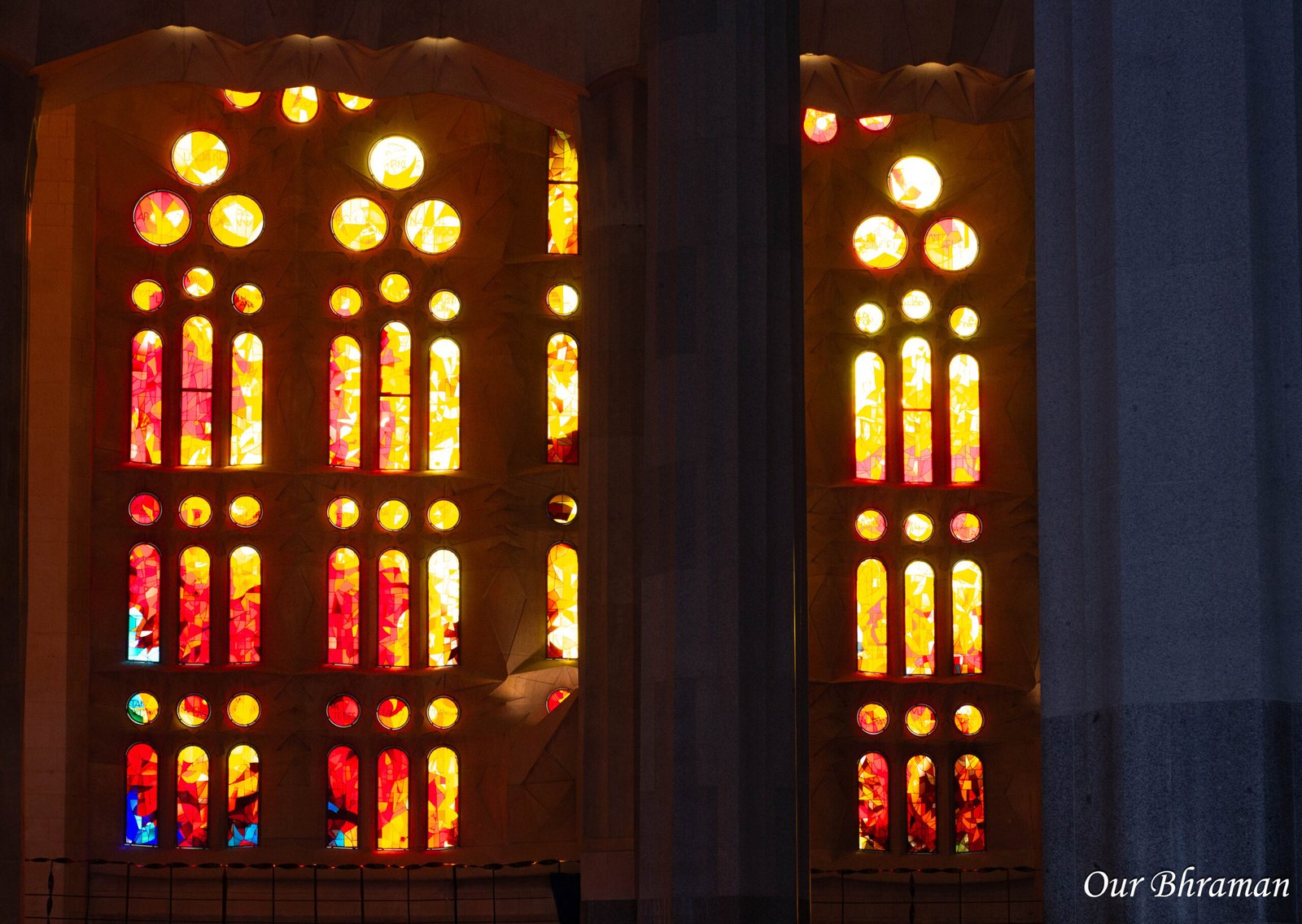 It was interesting watching everyone experience the same space in their own way.
For us, there was something especially fascinating about seeing the reflection of the colored glass on the walls and columns. You could look at the windows themselves, but then turn around and see how the sunlight had transformed another part of the building.
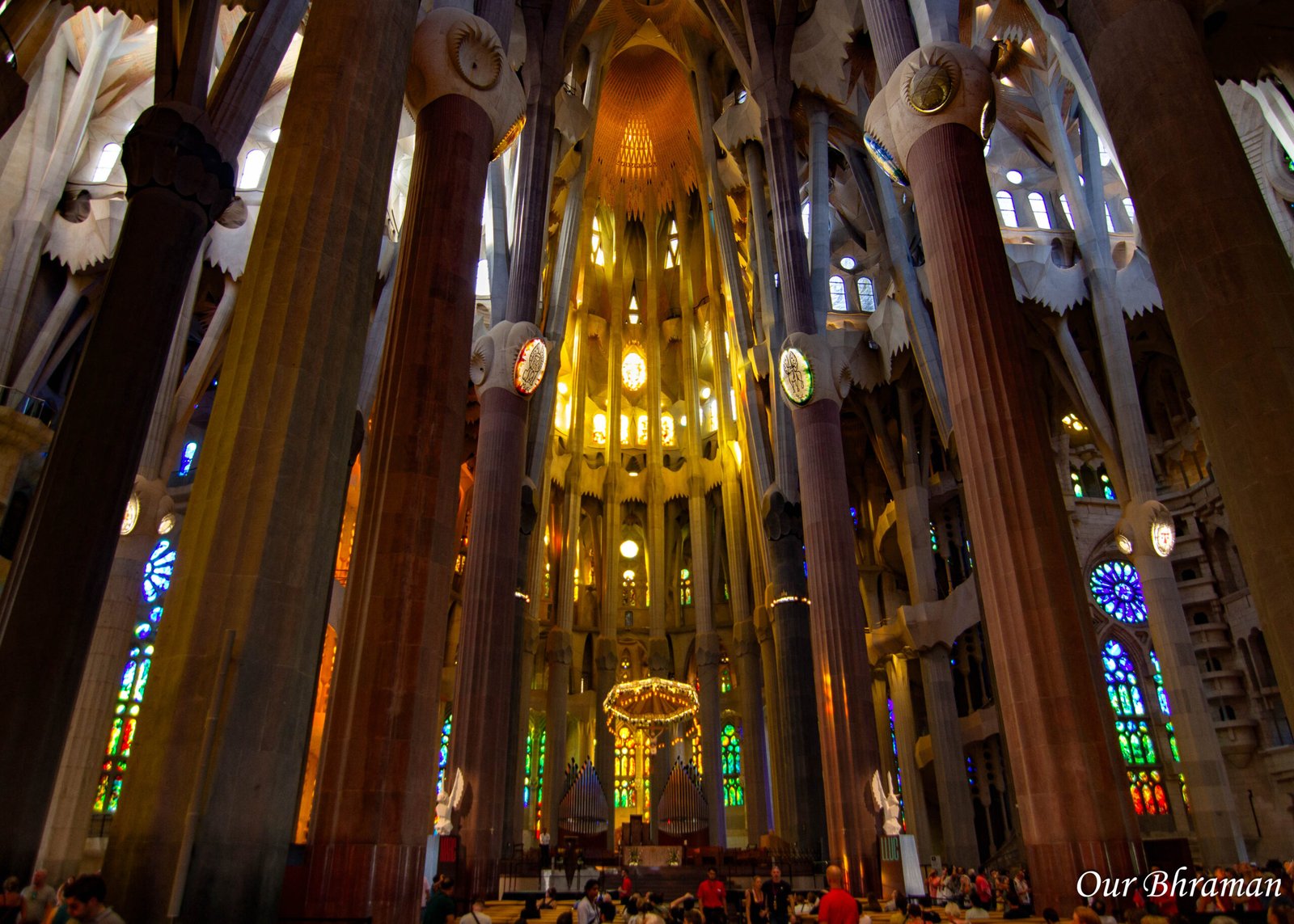
The Sagrada Família was not simply using stained glass as decoration. Light had become part of the architecture. The eastern Nativity side uses cooler colors, while the western Passion side uses warmer tones that work with the changing sunlight.
That was one of the things we appreciated most about our visit—we had planned around the light, and it actually made a difference.
Looking Up at Gaudí’s Architecture
The more time we spent inside, the more we noticed how different the building felt from a traditional church.
The enormous columns rise and branch above us like trees, while the ceiling seems to disappear into a geometric forest. Outside, every section of the façades tells another story through sculptures and intricate details.
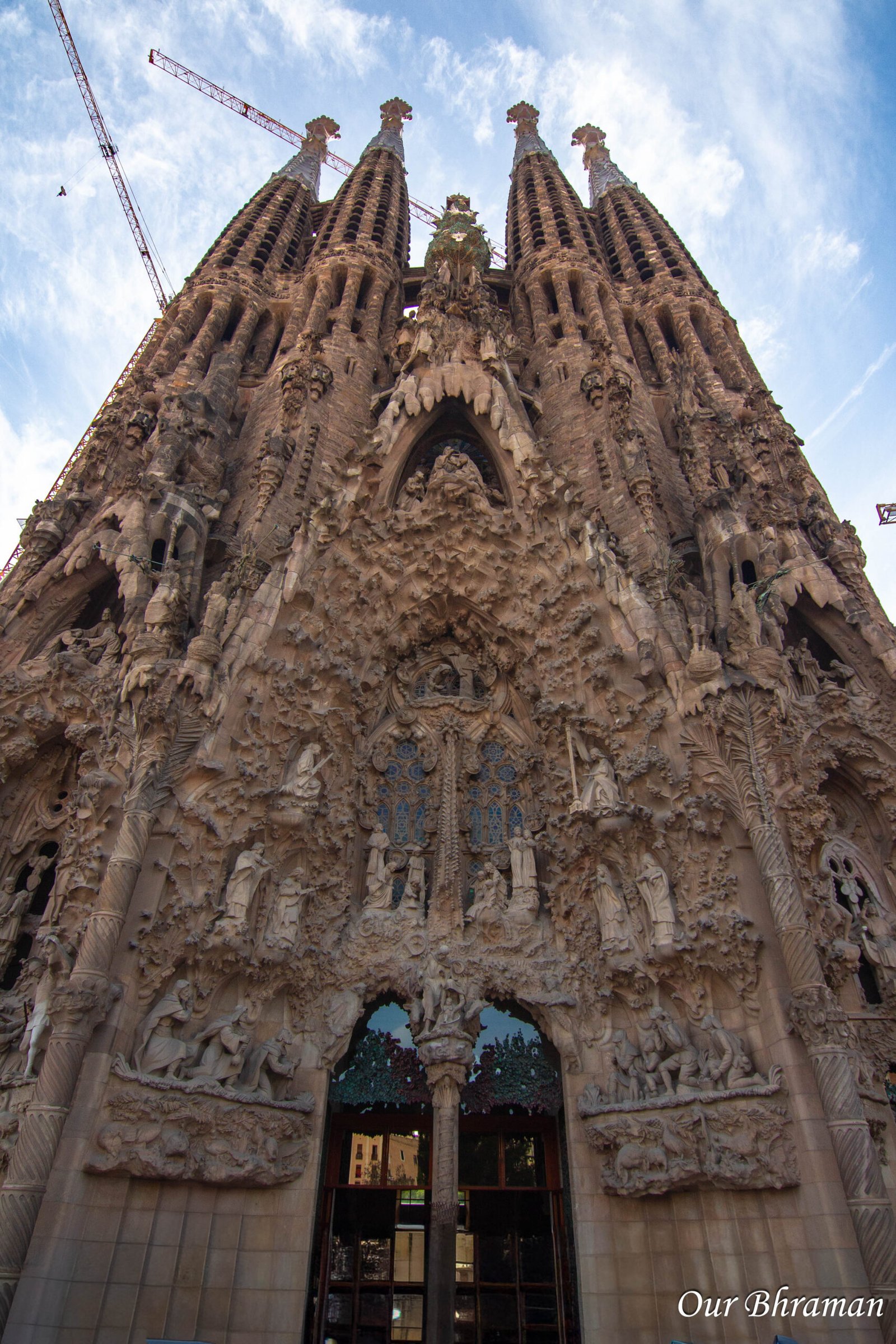
The Nativity façade, which Gaudí personally worked on, is especially detailed. It is filled with figures, animals, plants and scenes connected to the birth of Christ.
Then there is the Passion façade, which has a much more stark and dramatic appearance. The contrast between the two façades makes it clear that Gaudí wasn’t simply designing a building—he was using architecture and sculpture to tell a story.
And everywhere we looked, there was another detail to discover.
 Looking Up Through a Mirror
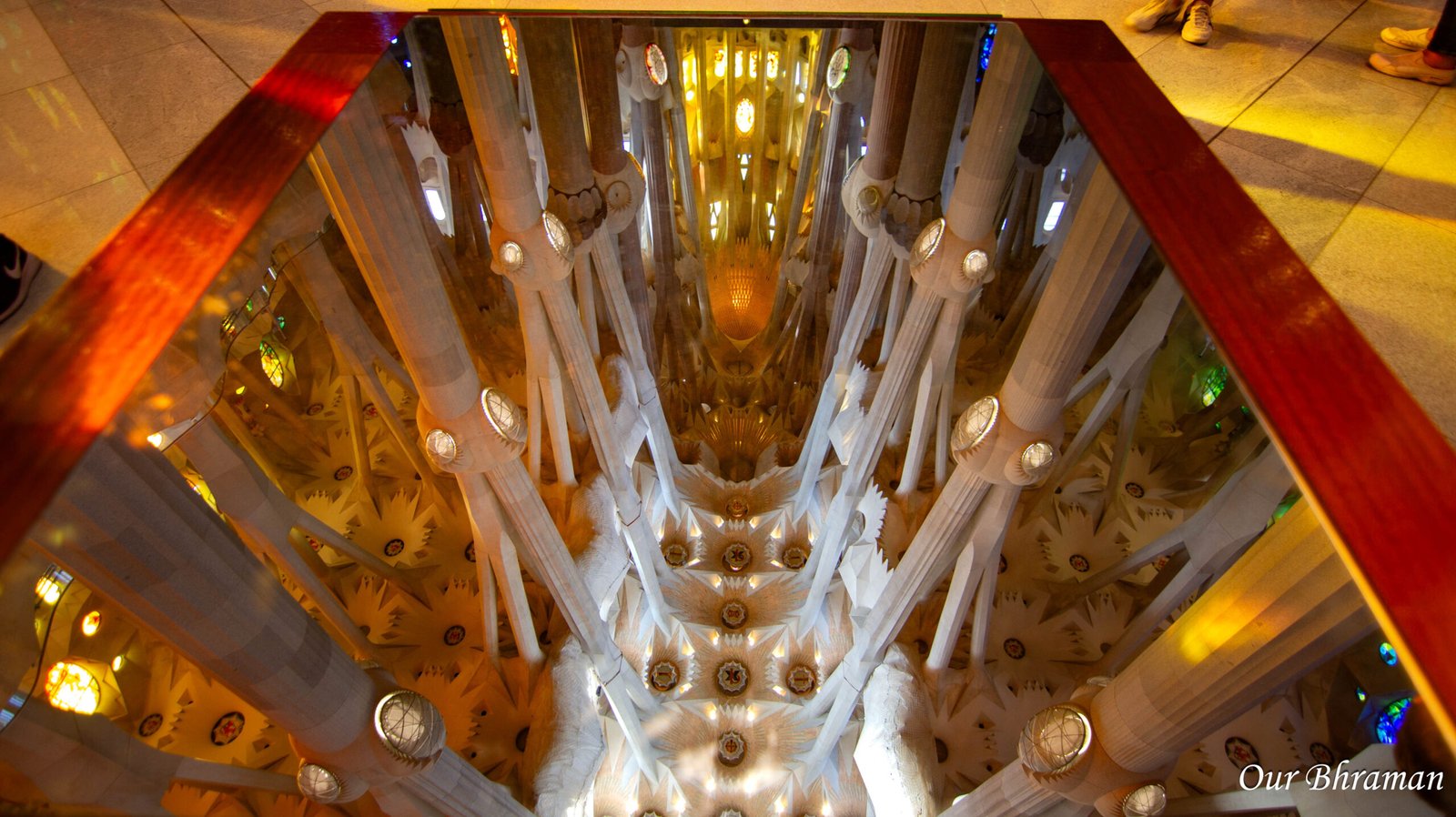 Looking Up Through a Mirror
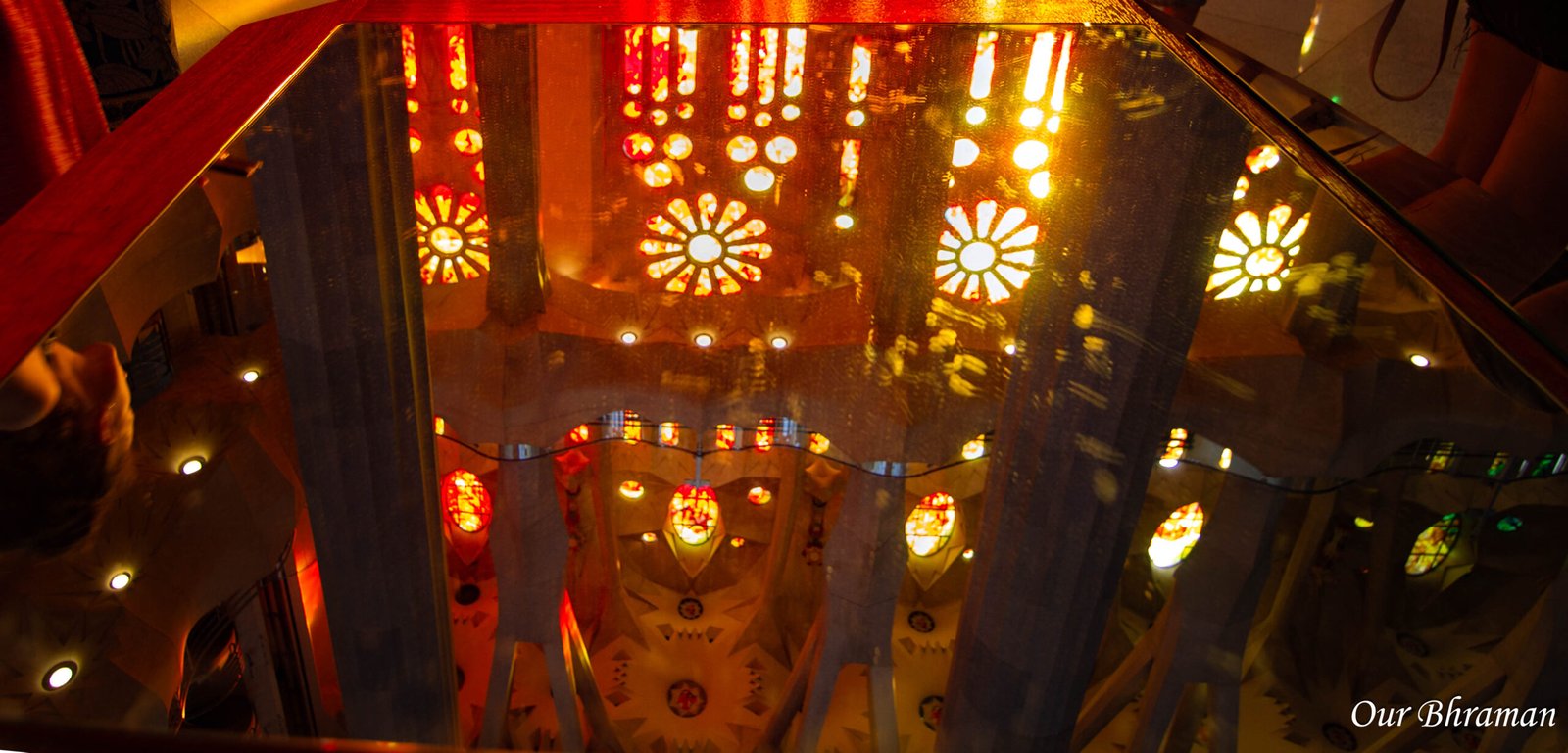
Inside the Sagrada Família, a large mirror offers an unusual way to experience Gaudí’s architecture. Instead of looking up directly, the mirror allows you to see the soaring columns and intricate ceiling reflected below. From this angle, the structure seems to stretch endlessly toward the center, revealing details that can be difficult to appreciate from the ground. It is a simple but clever way to pause and take in the incredible geometry of the ceiling from a completely different perspective.
 A Place Everyone Was Trying to See
 A Place Everyone Was Trying to See
One thing we remember from that visit was how many people were inside.
People were constantly moving through the space, looking up, pointing things out to each other and trying to capture the architecture with their cameras. We were doing exactly the same thing.
There was something enjoyable about being surrounded by so many people who were all doing essentially the same thing—trying to take in a building that was almost impossible to fully take in at once.
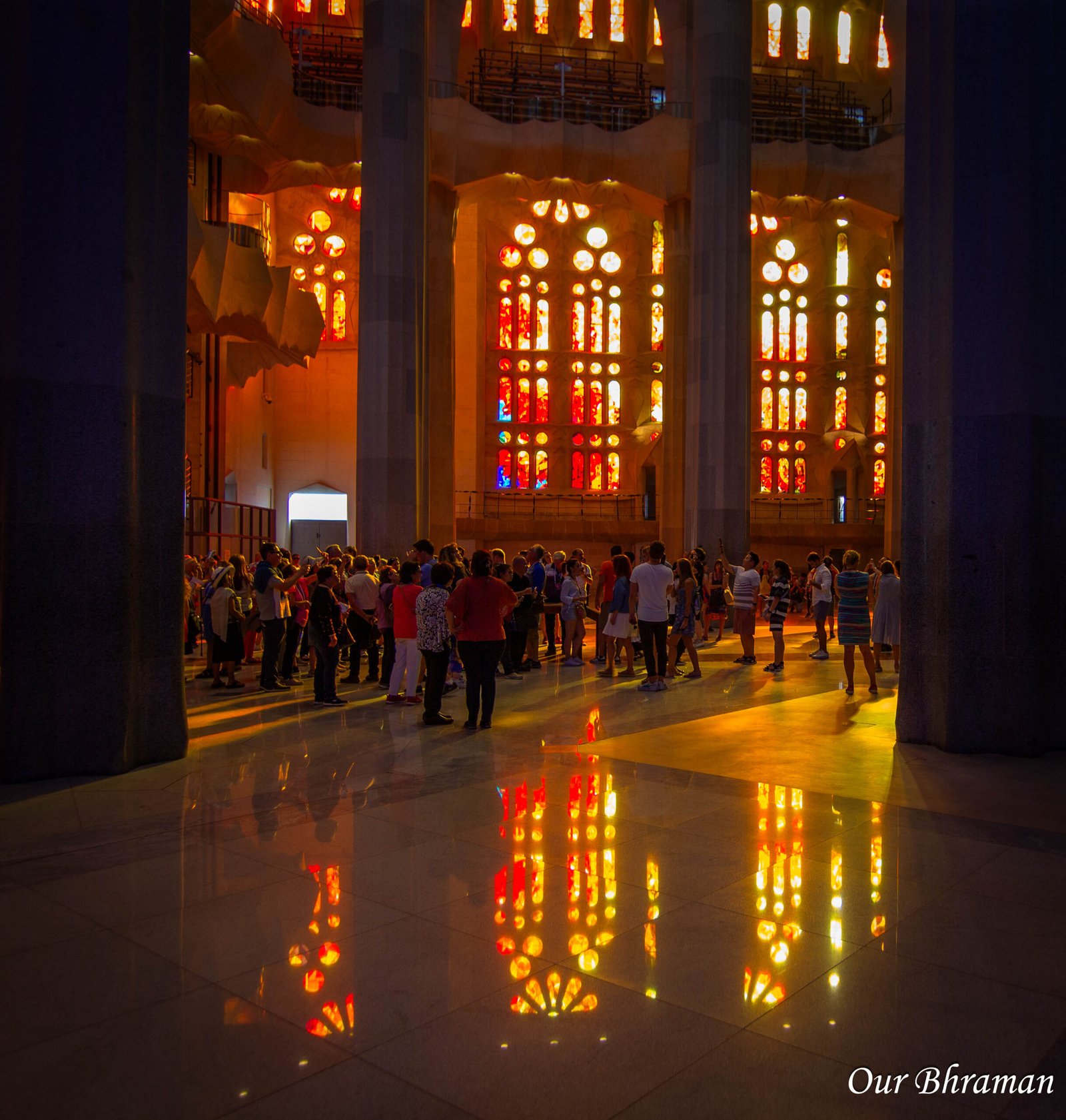
Even with a camera in hand, we found ourselves stopping to simply look. Sometimes the photograph captures one detail, while your eyes keep discovering everything around it.
The Cranes Were Part of Our Memory
Our 2019 photographs of the Sagrada Família now feel a little different. Back then, the cranes were impossible to miss, and the basilica looked like a magnificent work in progress. Seven years later, much has changed—the Tower of Jesus Christ reached its final height of 172.5 meters in 2026, marking an important milestone in the basilica’s construction.
Yet the Sagrada Família is still not completely finished, with work continuing on the Glory façade. Looking back at our old photographs, we realized we weren’t just photographing a famous building—we were capturing a moment in its long journey toward completion.
Entering and Leaving the Sagrada Família
Our visit began at the Nativity façade, where the general visitor entrance is located on Carrer de la Marina. After exploring the interior, the route eventually brings you out toward the Passion façade, giving you a chance to experience two very different sides of the basilica. The contrast is striking—the richly detailed Nativity façade feels very different from the more dramatic and angular Passion façade, making the walk around the building feel like part of the visit itself.
 Our Takeaway
 Our Takeaway
We arrived expecting to see one of Barcelona’s most famous landmarks. Instead, we found something that felt unfinished, constantly changing and very much alive.
Outside, the cranes reminded us that the work was still going on. Inside, the afternoon sunlight reminded us why Gaudí’s vision was so different.
And perhaps the most memorable part was simply being one of many people walking through that enormous space—all of us looking up, looking around, and trying to make sense of what we were seeing through our own eyes and cameras.
Looking back from 2026, our 2019 photographs have another meaning. The cranes that seemed like an unavoidable part of our visit have become a reminder of where the Sagrada Família was in its long story.
We saw it unfinished. We saw it changing. And years later, we can look back and see how much of Gaudí’s vision has finally reached the sky.