Walking Among Giants: A Journey Through Sequoia National Park
Sequoia National Park is a place where nature truly lives up to its larger-than-life reputation. Located in California’s southern Sierra Nevada, the park is home to some of the largest trees on Earth, including the famous General Sherman Tree. Towering giant sequoias fill the forest, their massive trunks and enormous canopies creating a landscape that feels almost otherworldly. Beyond the trees, the park offers rugged mountain scenery, deep canyons, meadows, waterfalls, and breathtaking views of the Sierra Nevada. Whether you’re wandering beneath ancient giants or exploring the mountain landscapes beyond the forest, Sequoia National Park is an unforgettable reminder of just how extraordinary the natural world can be.
“The groves of giant sequoias are nature's great cathedrals.”
— John Muir
Getting to Sequoia National Park
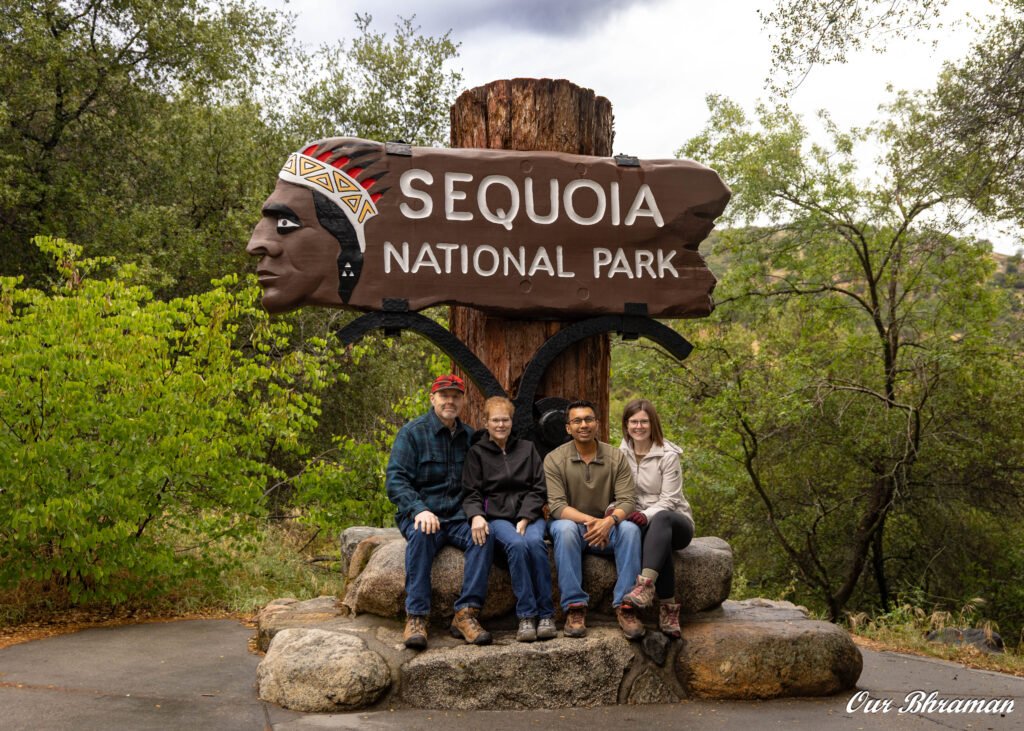
Our Sequoia National Park adventure started at Los Angeles International Airport (LAX), but this trip was a little more special than our usual adventures because Kayla’s parents joined us for the journey. The four of us flew into Los Angeles, picked up our rental car, and traded the busy streets of LA for the open road as we made our way north toward California’s Sierra Nevada.
From LAX, the drive to Sequoia National Park takes roughly 4–5 hours, depending on traffic and which entrance you choose. We headed north and east through the California landscape, gradually leaving the city behind as the scenery transformed into rolling hills, farmland, and eventually the rugged mountains of the Sierra Nevada. The journey itself became part of the adventure, especially having family along to share the experience.
Traveling with Kayla’s parents made this trip feel less like simply checking another national park off our list and more like creating a shared family adventure. From the long drive out of Los Angeles to standing beneath some of the largest trees on Earth, having them with us made the experience even more memorable. Sometimes the best part of exploring a new place isn’t just where you go, but who gets to experience it with you.



A Winter Welcome to Sequoia National Park
During our drive towards Sequoia National Park, we were quickly realizing Mother Nature may have other plans for us. A winter storm warning was in effect, with forecasts calling for 6–8 inches of snow overnight and the possibility that travel through parts of the park could be impacted by snow and ice. With the weather moving in, we decided there was no time to waste—we would try to see as much of Sequoia as possible on our first day, just in case the roads became inaccessible the following morning.
Our first stop was the Foothills Visitor Center, where we gathered information about the storm, road conditions, potential closures, and the all-important tire-chain requirements. The rangers gave us a better idea of what we might encounter farther up the mountain, and we decided to continue as far as conditions would safely allow.
We headed up Generals Highway, watching the landscape transform as we climbed higher into the mountains. Snow and ice began appearing along the roadway, and eventually we reached about mile marker 16, where conditions became too icy for us to continue. Tire chains were also required, and since we didn’t have them, we made the decision to turn around.
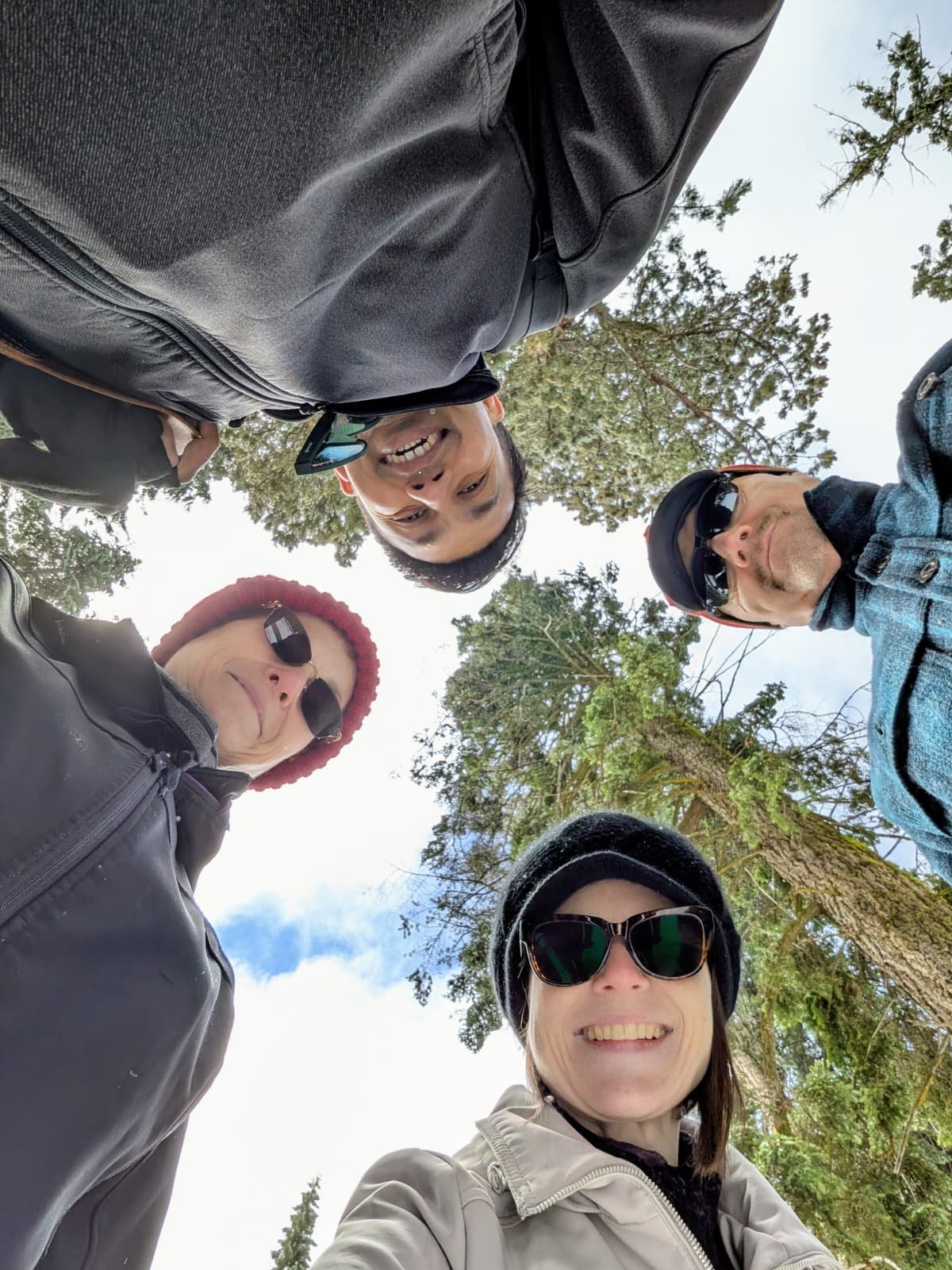
Although we couldn’t make it as far into the park as we had hoped, we were still able to catch our first glimpse of the giant sequoias—and seeing those massive trees surrounded by winter scenery was pretty incredible. With sleet and snow beginning to fall, we took advantage of the moment for an impromptu photoshoot. There was something special about standing beneath these enormous trees while winter slowly settled around us.
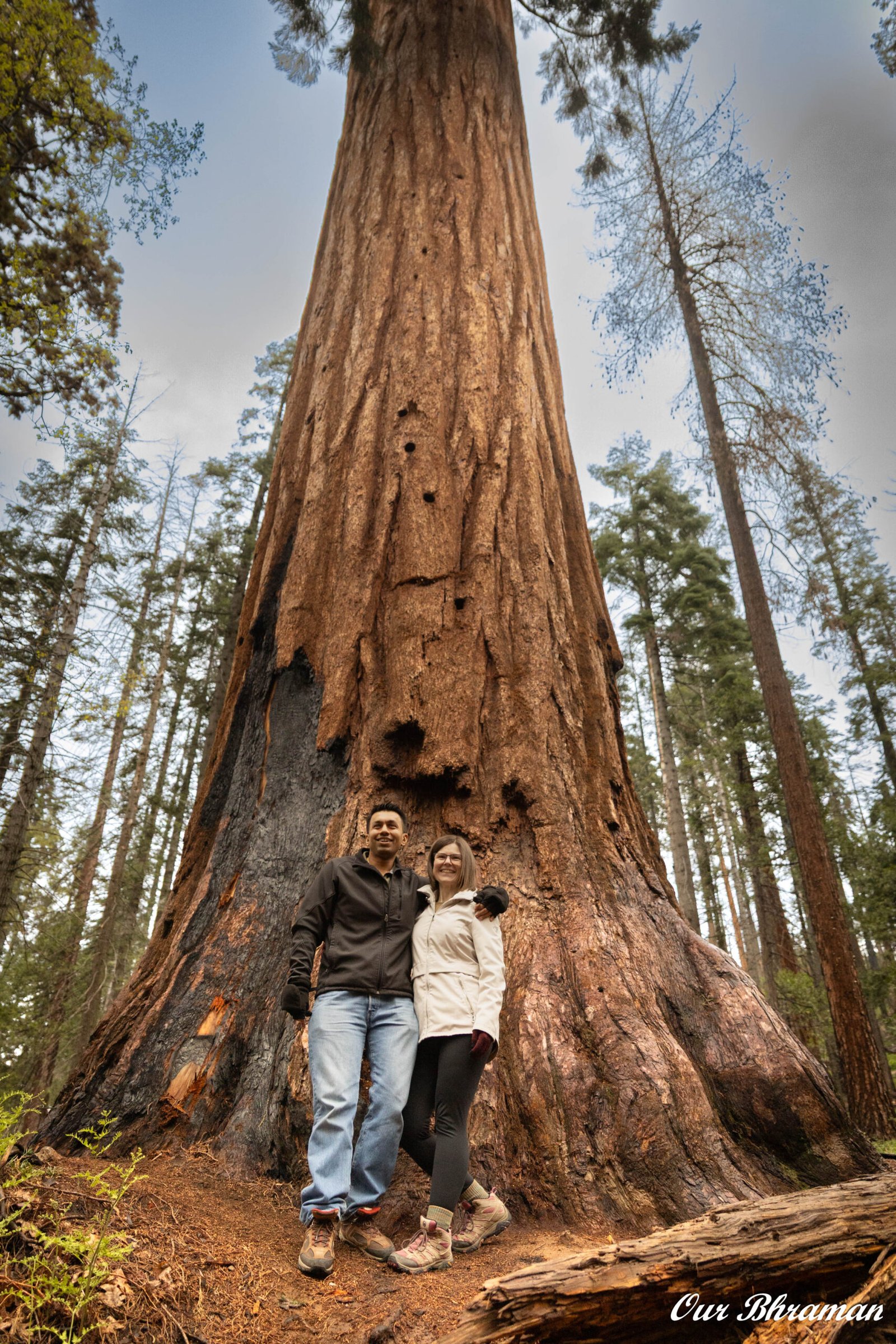
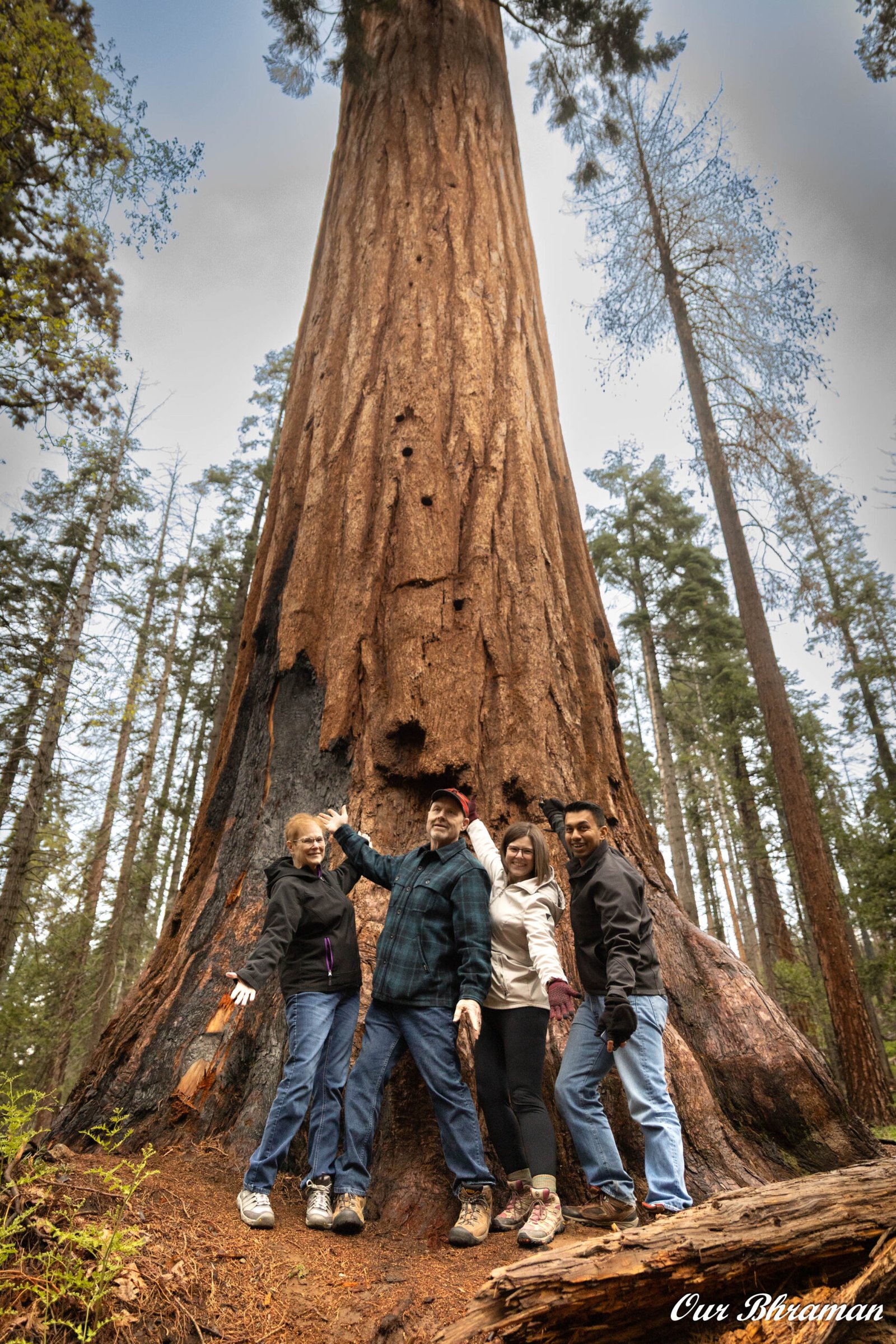
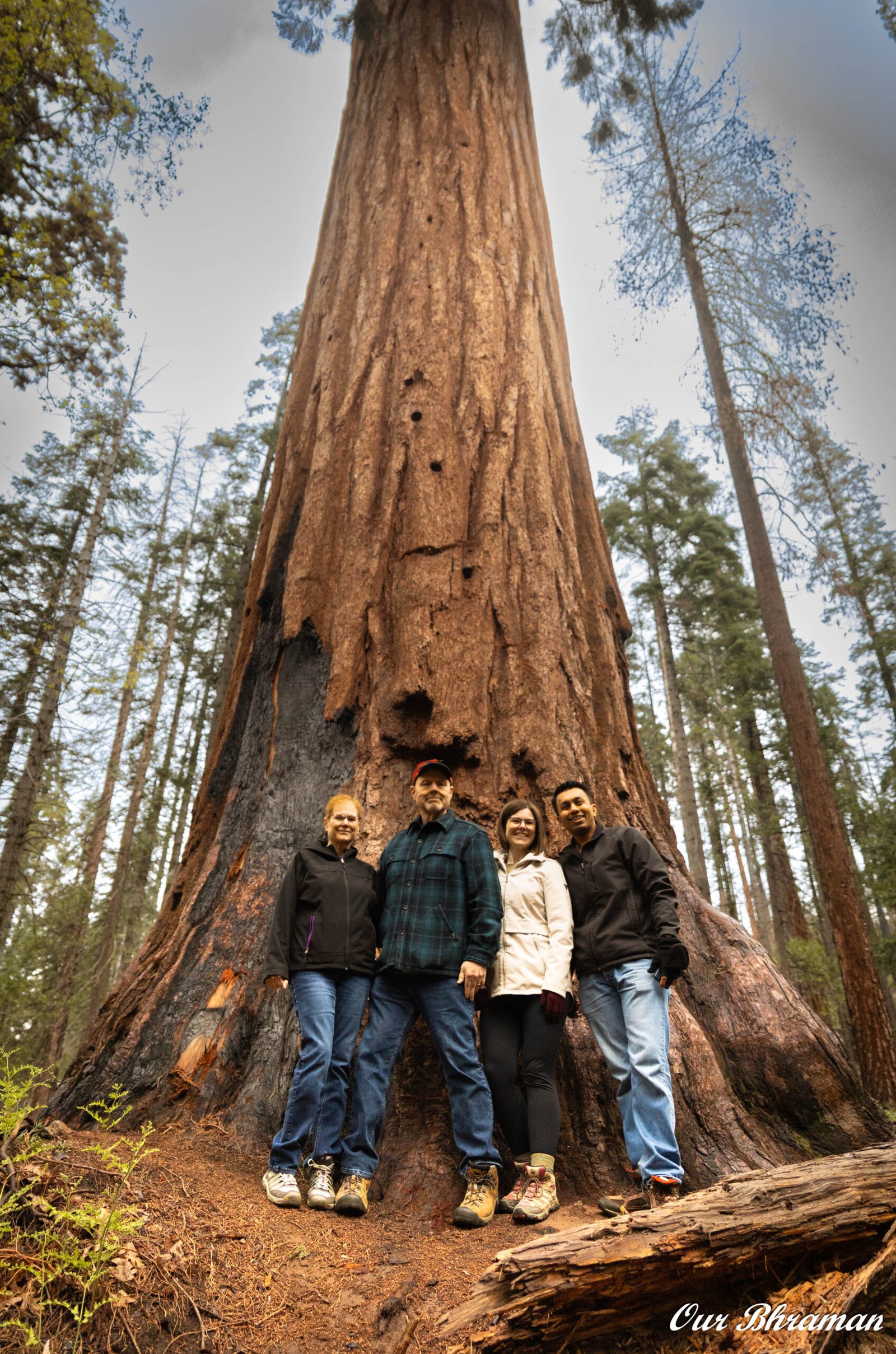
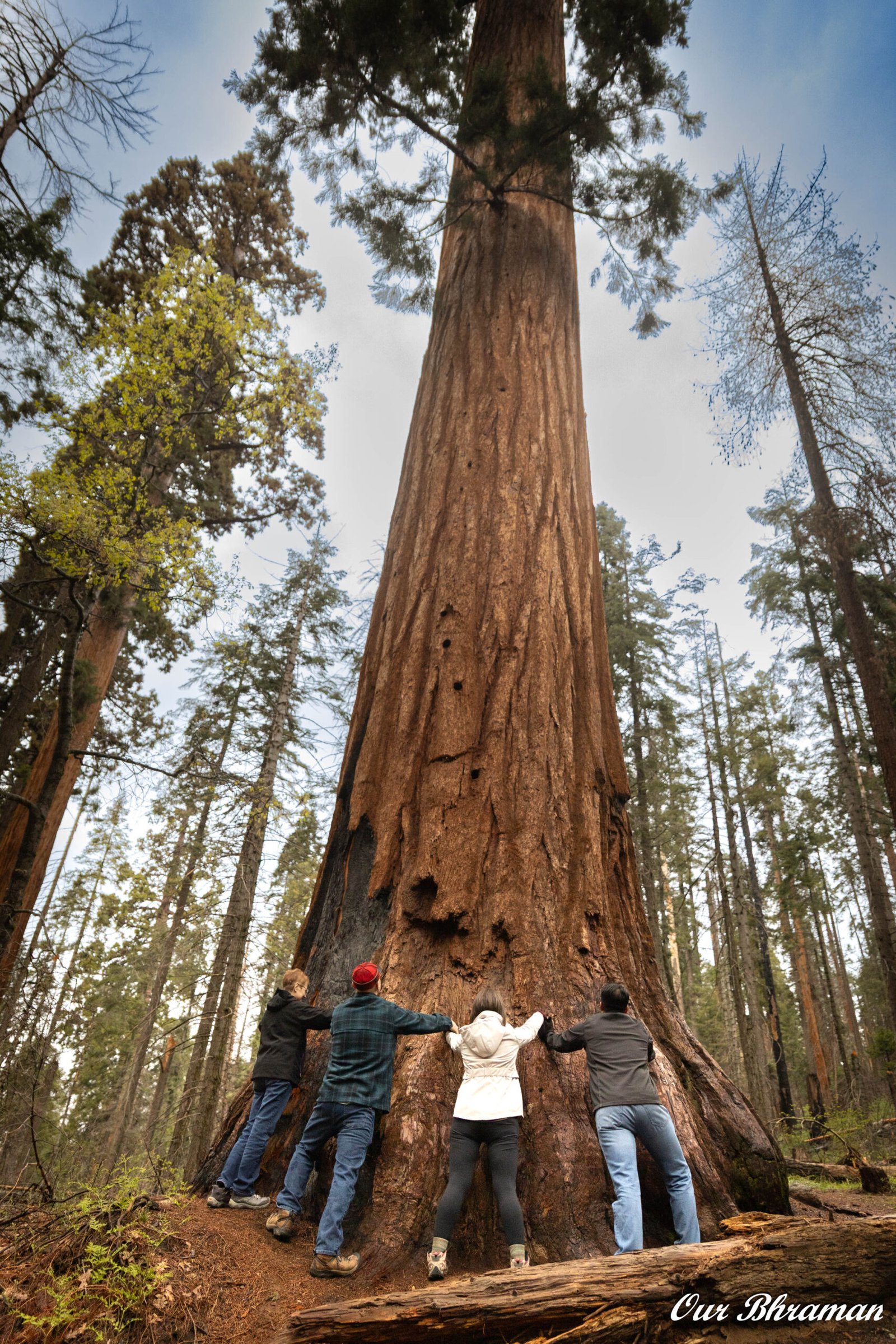
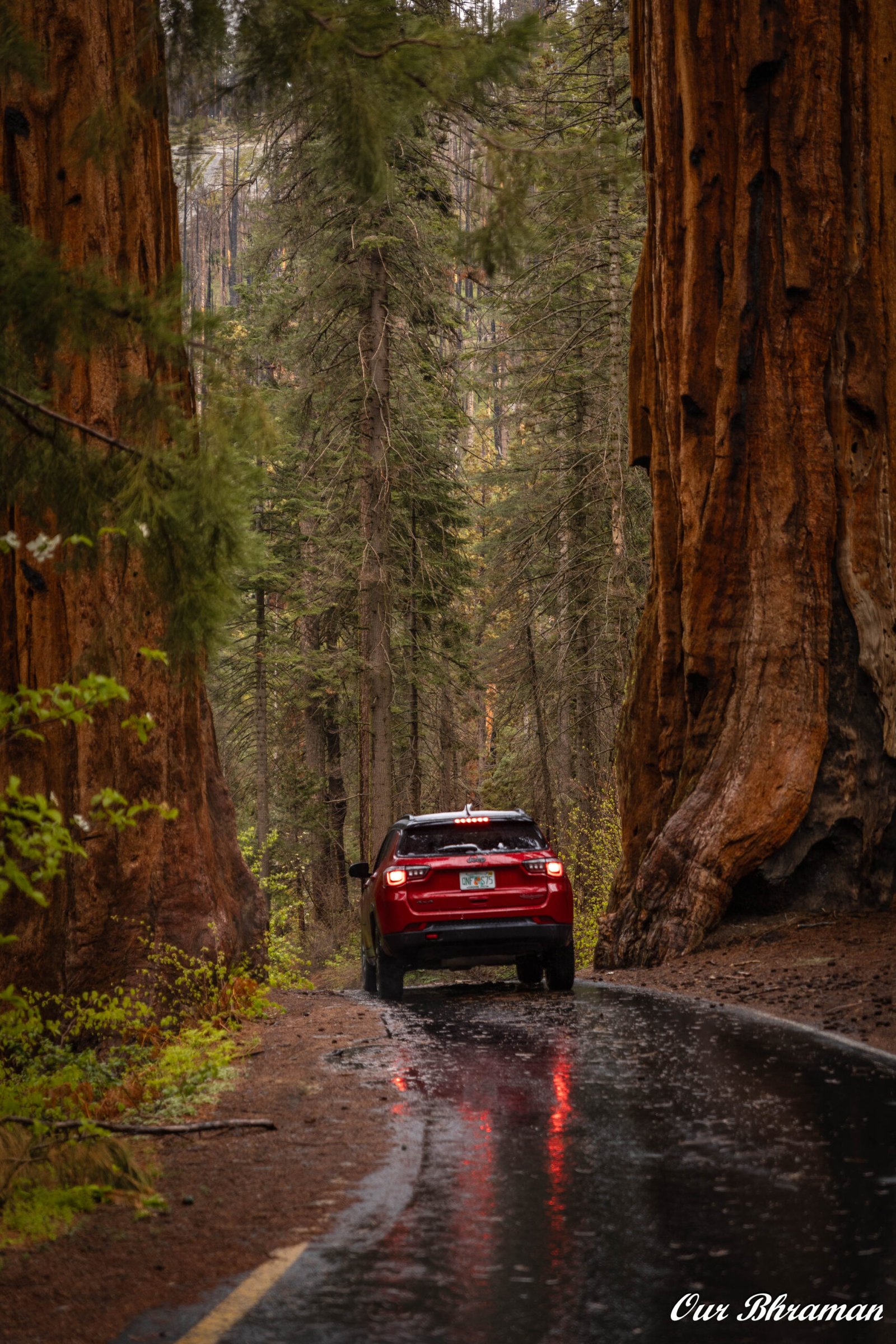
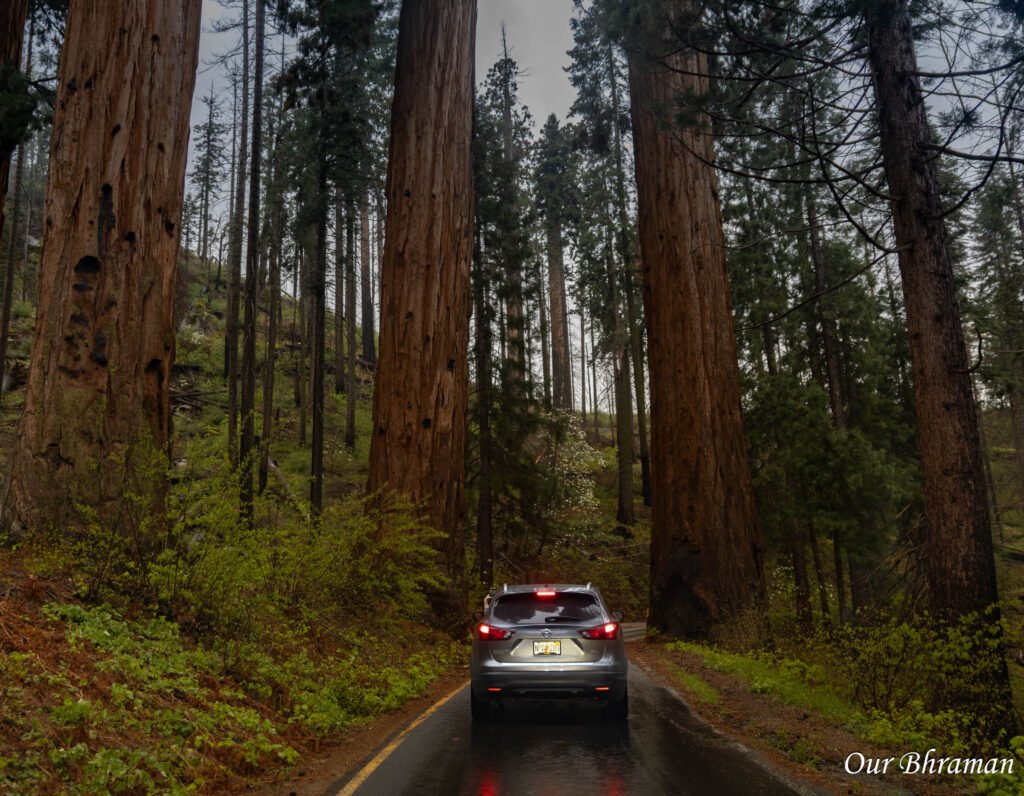
Eventually, it was time to head back down the mountain. And that’s when the adventure got a little more exciting than planned. Somehow, Pranav had failed to disclose the current state of our fuel tank. As we started our descent down the winding mountain roads, the low-fuel warning light came on. With no gas station waiting around the next corner and a long stretch of mountain road between us and civilization, we did what any reasonable group of travelers would do—we kept praying we would make it down the mountain.
Fortunately, our prayers were answered. We slowly made our way down the winding roads, watching the fuel gauge and hoping we would reach a gas station before the car decided it had had enough. After a little unnecessary adrenaline, we finally made it back down safely.
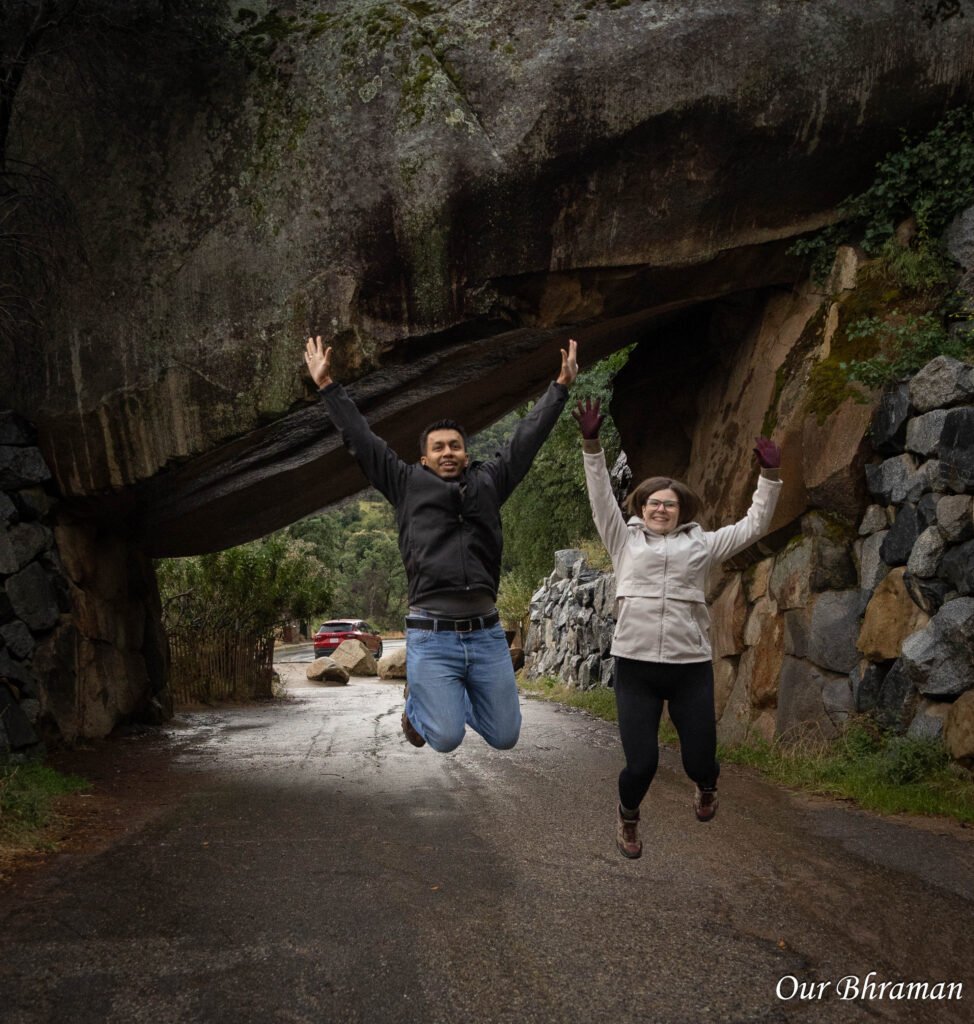
Before leaving the area, we made one more stop at Tunnel Rock, a unique roadside landmark and an easy place to stretch our legs and take in a little more of the park.
Tunnel Rock
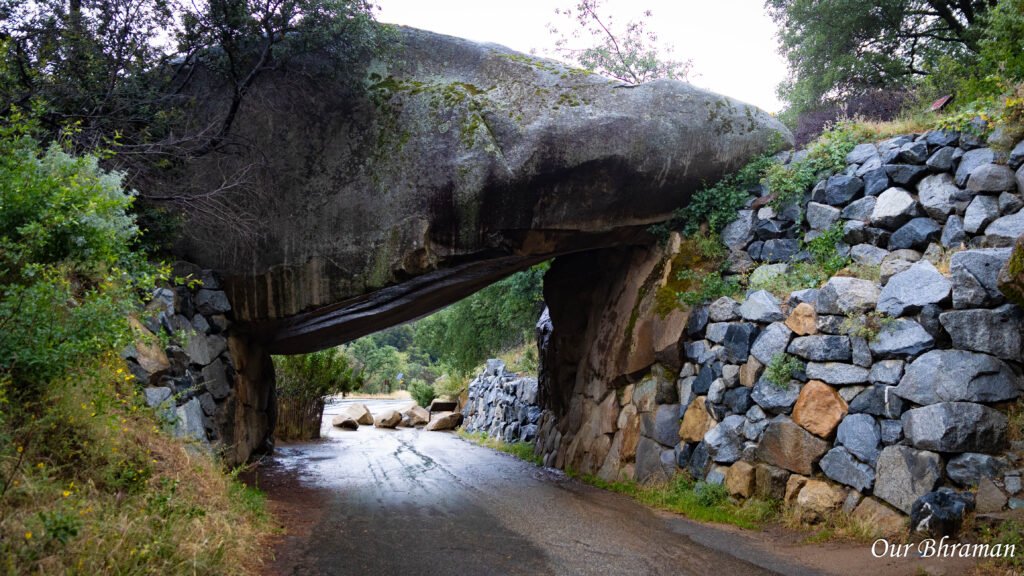
Tunnel Rock is one of Sequoia National Park’s more unusual roadside landmarks. Carved from a massive granite boulder, the tunnel was created in 1938 to allow vehicles to pass directly through the rock. It was part of the original roadway into the park, although modern vehicles eventually became too large for the narrow passage.
Today, visitors can walk through the short tunnel and climb around the surrounding granite formations for a closer look. With the snow and sleet beginning to fall during our visit, the granite was surrounded by a wintery landscape that made the stop even more memorable.
Tunnel Rock was a fun final stop before continuing down the mountain. It was a quick visit, but definitely one of those unexpected roadside discoveries that makes a road trip through a national park even more fun.
The ending to a long day
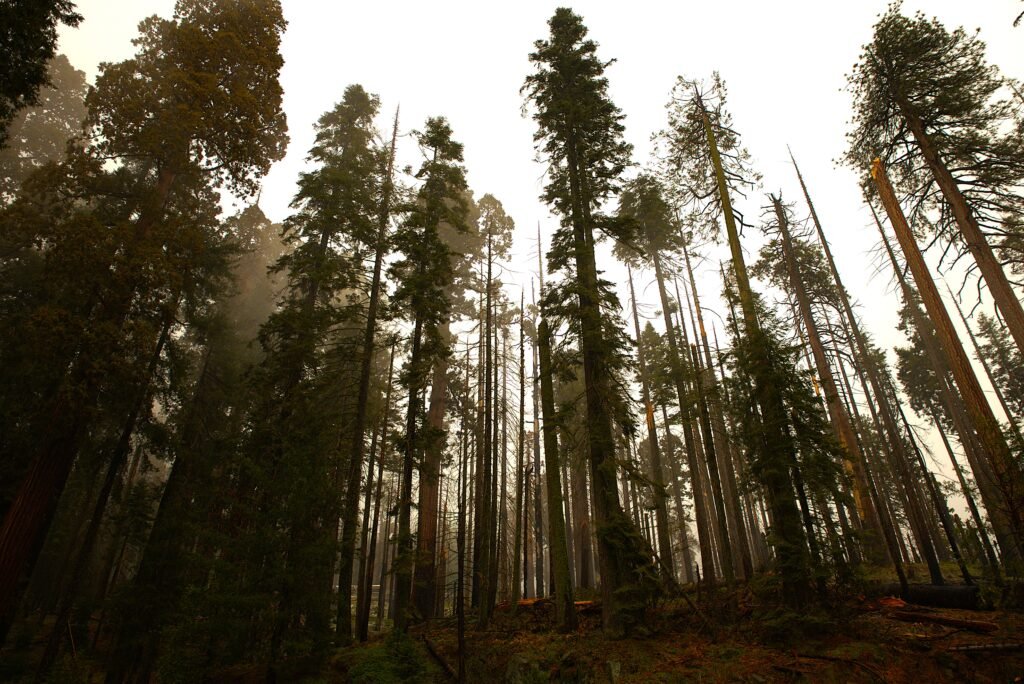
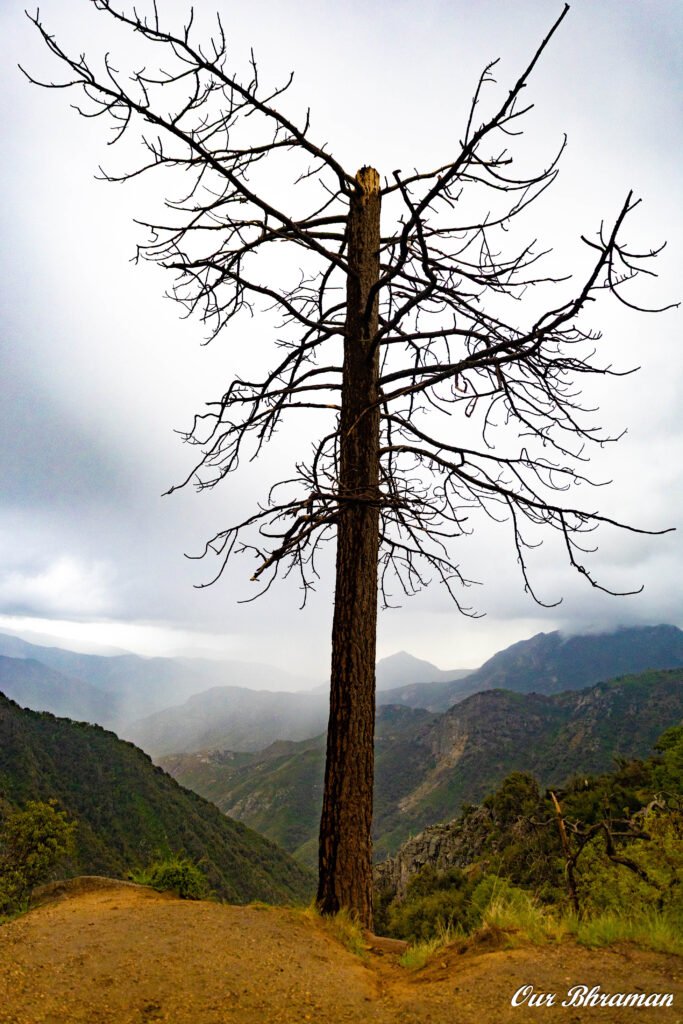
As we continued toward our hotel for the night we couldn’t help but be in awe of the landscape before us.
After our unexpected winter adventure, we finally made our way to the hotel, checked in, and settled in for the night. There was no fancy dinner or elaborate plans—just a simple PB&J sandwich, some rest, and a lot of anticipation for what tomorrow might bring.
We had started the day flying into Los Angeles and ended it surrounded by mountains, snow, giant sequoias, and just a little fuel-induced anxiety. And the best part? There’s more to come.
Travel Tips
 Fill up before you go. There are no gas stations along the way.
 Bring snacks and water.
 Allow extra time. The drive itself is an attraction. Winding roads make for a challenging drive, especially if you add in snow and sleet.
 Dress in layers. Mountain weather can change quickly, and temperatures vary.
 Don’t rush the drive. Enjoy the journey, not just the destination.
Day 2: Chains, Ice, & Our First Giant Sequoias
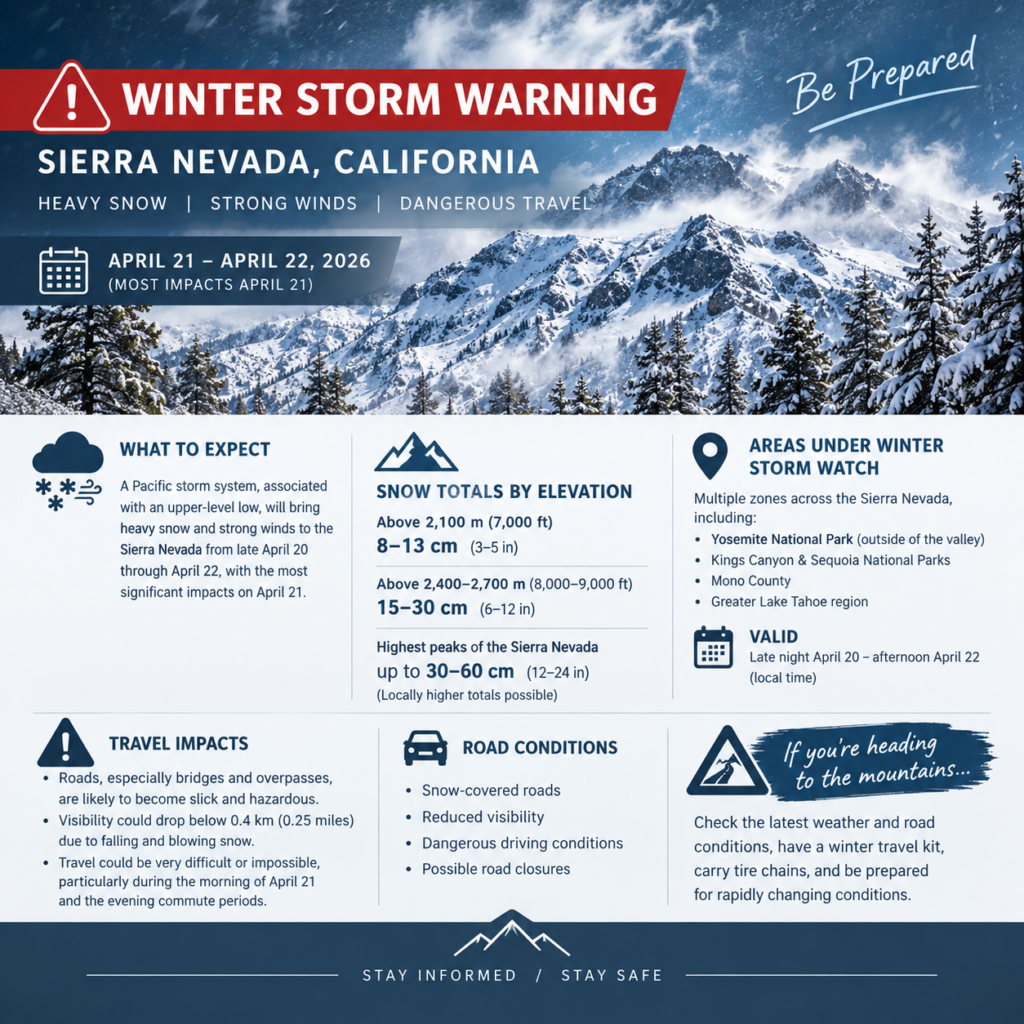
After arriving in Sequoia National Park the day before, we woke up on Day 2 with one goal in mind: make our way through the park and hopefully reach Kings Canyon National Park. There was just one problem—we were staring down a winter storm warning predicting 6–8 inches of snow overnight. For two people who had never driven through a mountain winter storm before, that forecast was enough to make us a little nervous. We knew the Generals Highway could become challenging quickly, and we had been warned that tire chains would be required if conditions worsened.
And, of course, we had never used tire chains.
That left us with a decision. We could rent chains and potentially have to make the entire trip back around to return them to the same location, or we could simply buy a set and not have to worry about returning them. Since we had no idea what conditions we were going to encounter, we decided that buying them was the easier option—and, honestly, probably the safer choice for our peace of mind.
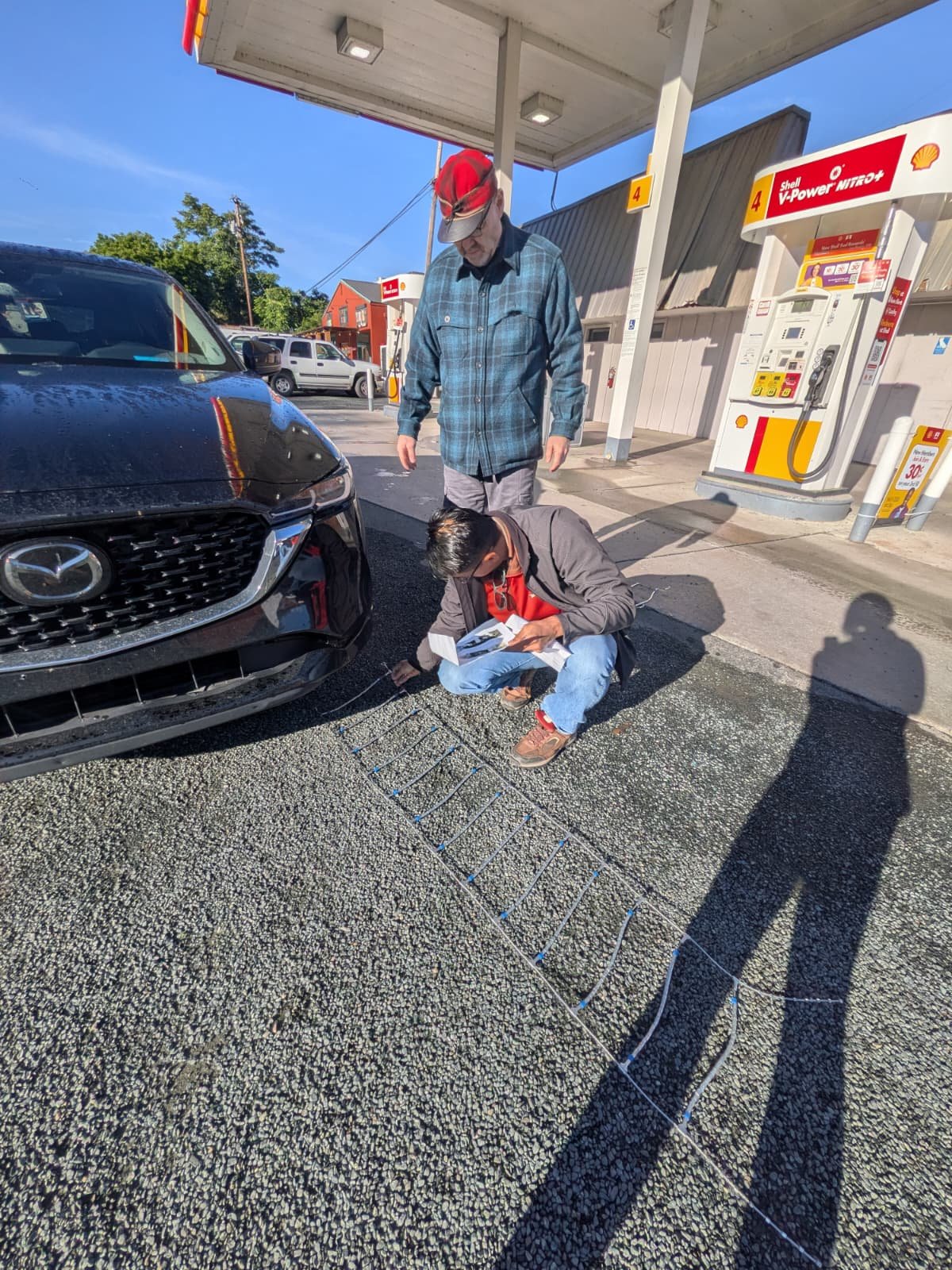
Before heading into the mountains, we figured we should at least learn how to put them on.
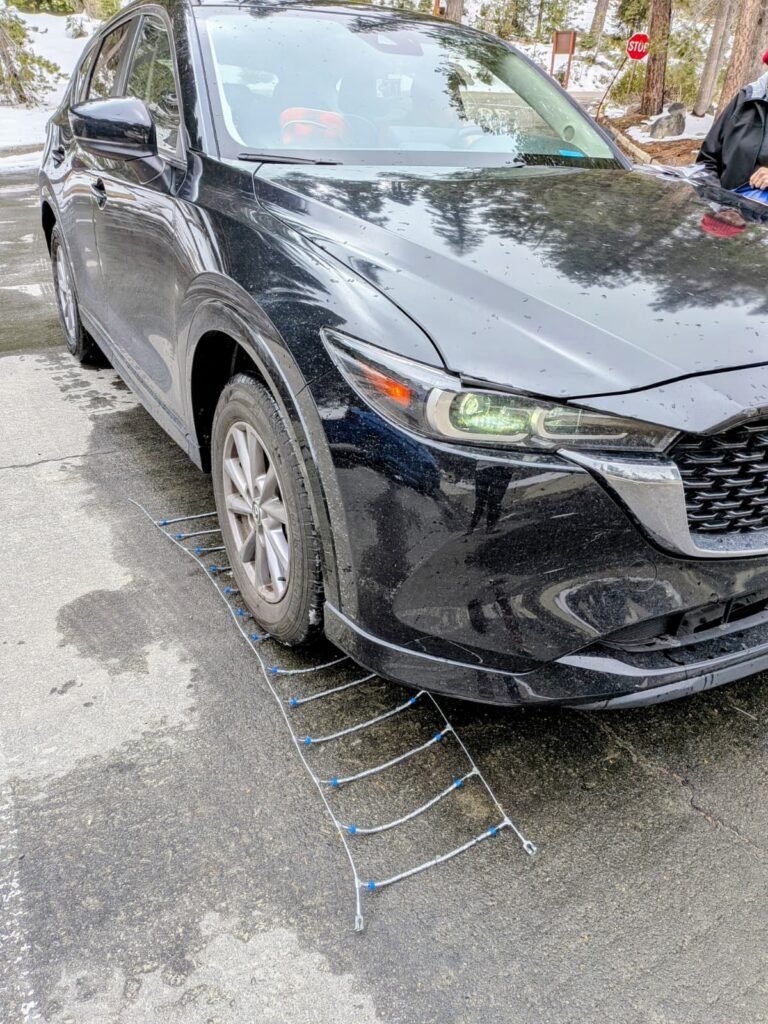
So there we were, in a relatively warm gas station parking lot, laying out tire chains and attempting a practice installation. There was no snow. No ice. No freezing wind. Just us, our chains, and a whole lot of figuring it out. We definitely got a few looks from people passing by, and more than one person kindly reminded us that you don’t actually put the chains on until you hit ice or snow. Apparently, the sight of two people practicing tire chains in a dry parking lot made it pretty obvious that we were newbies.
But we didn’t care. We figured we’d rather look silly in a parking lot than be sitting on an icy mountain road trying to figure them out for the first time.
Once we were satisfied that we had at least a general idea of what we were doing, we packed everything up and continued our journey along Generals Highway, climbing higher and higher into the Sierra Nevada.

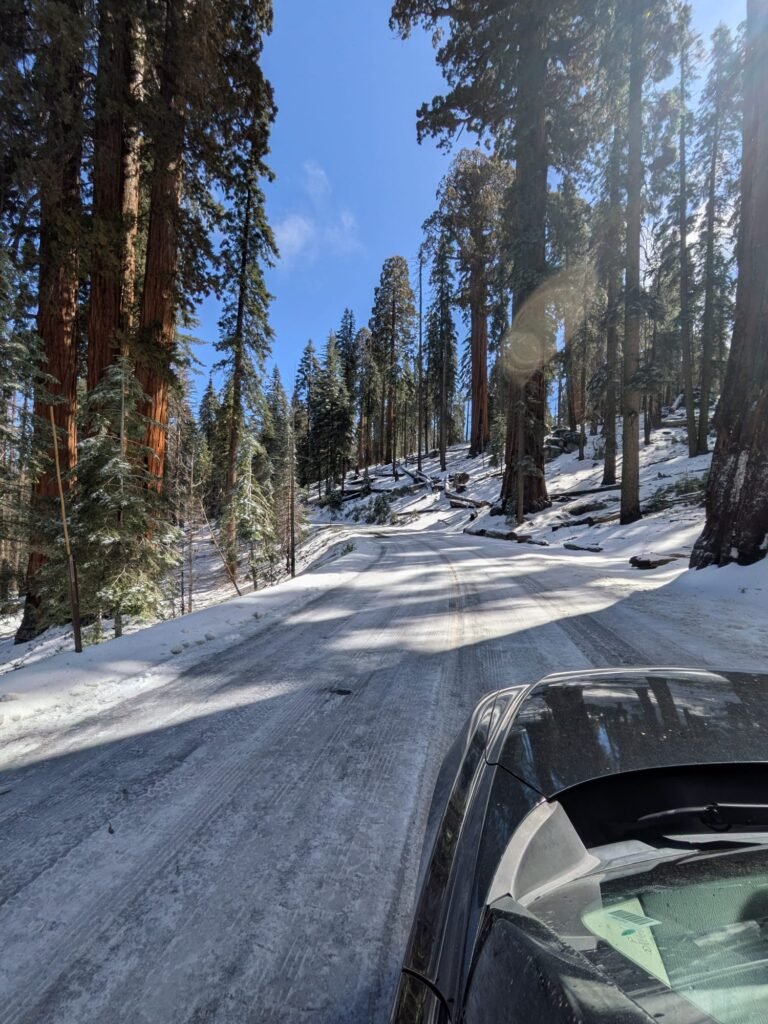
As we gained elevation, the scenery began to change. The temperature dropped, the roads became increasingly icy, and it quickly became clear that although the storm forecast may have been a little overdramatic, winter had definitely arrived. There wasn’t anywhere near the predicted 6–8 inches of snow on the road, but what we did encounter was almost worse for driving—a layer of ice covering sections of the highway.
By mile marker 16, we knew it was time. The tire chains came out.
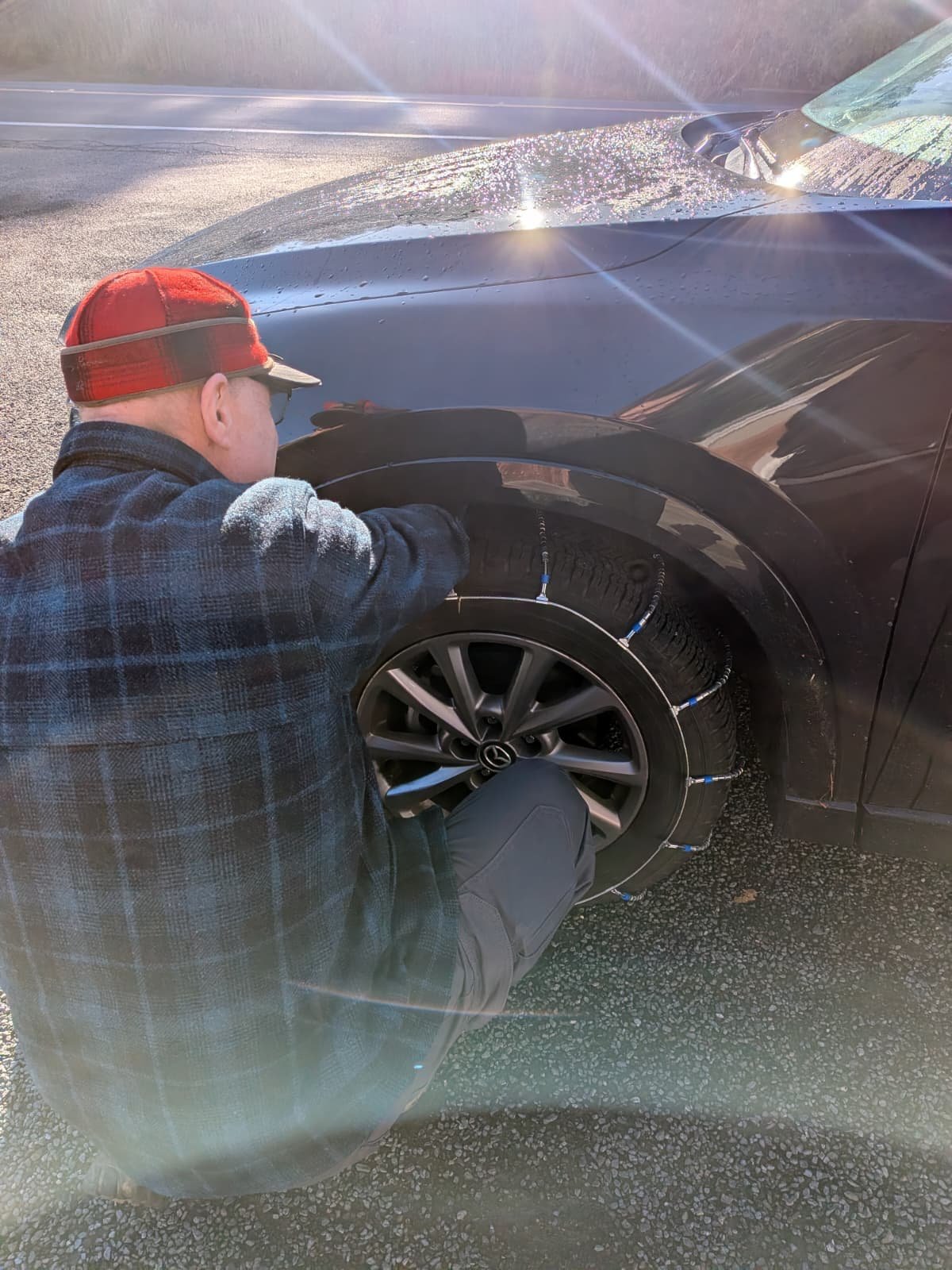
This was when our parking-lot practice suddenly became very real. The temperature had dropped significantly, and now we were trying to install chains while standing on sheets of ice. Every step was a challenge, and keeping your balance while trying to work around a tire was not exactly easy. Thankfully, Kayla’s dad was there to help us tighten everything down and get the chains securely fastened to the wheels. We weren’t the only ones, either. There were several other vehicles along the road doing exactly the same thing.
Once those chains were finally secured, we were incredibly thankful we had bought them.
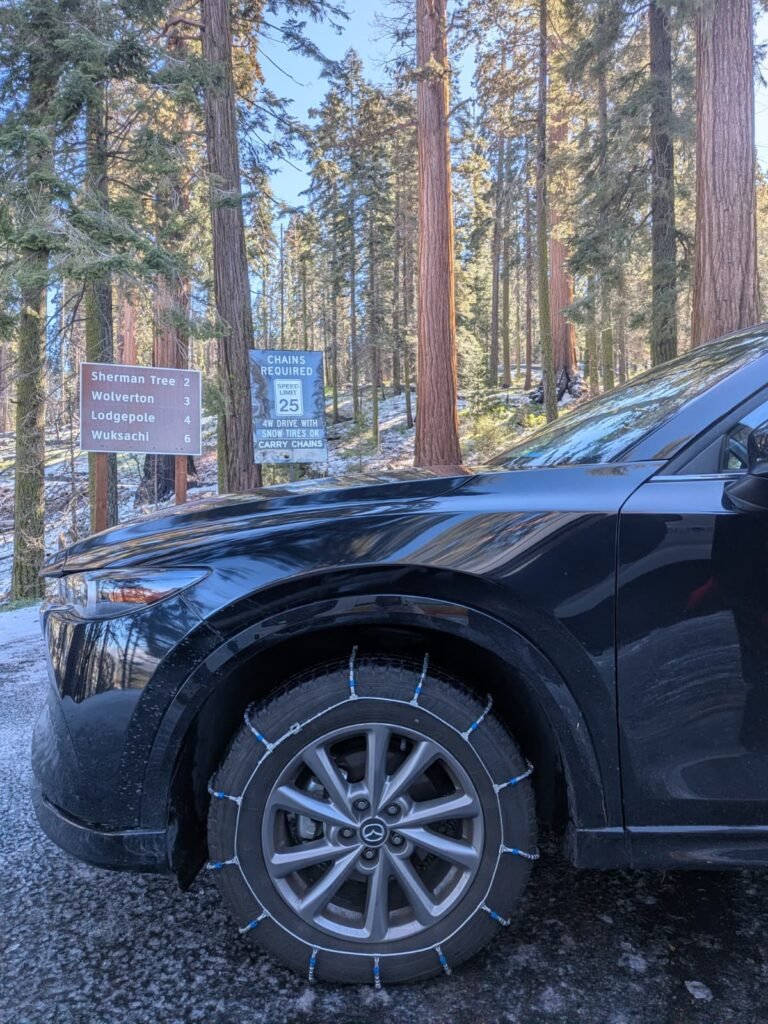
The road beyond that point was essentially an ice skating rink. Without the chains, it would have been a completely different—and much more stressful—drive. With them, we were able to continue carefully making our way higher into the park. Our little practice session at the gas station suddenly seemed like a pretty smart idea.
Giant Forest Museum
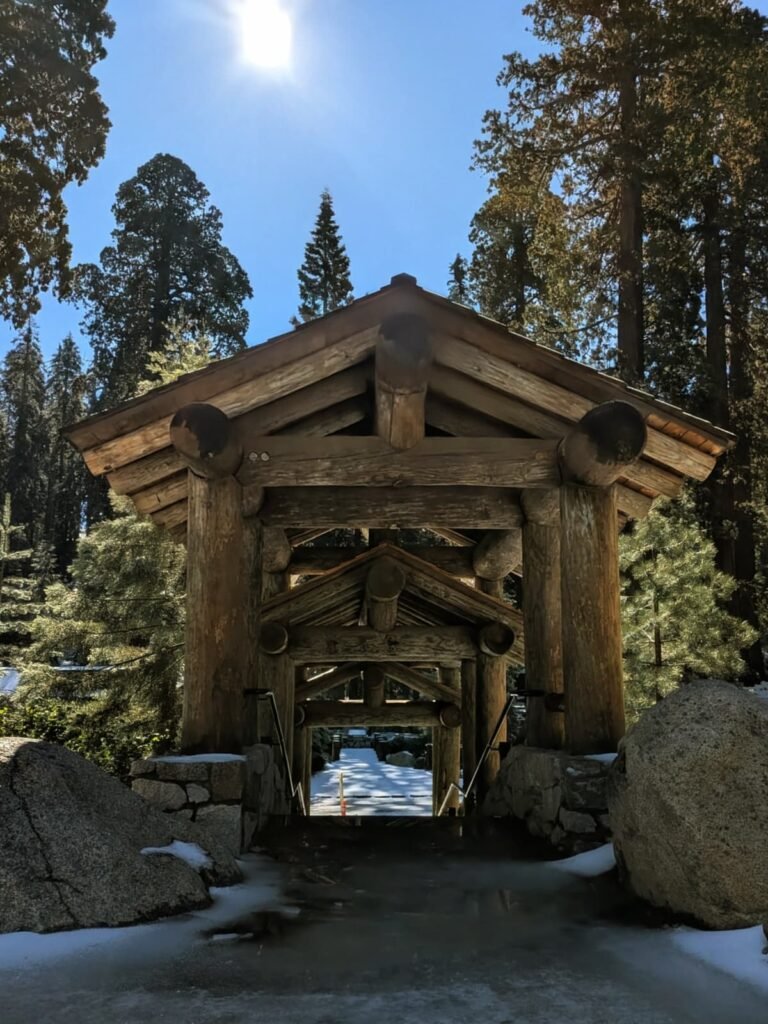
Eventually, we reached the Giant Forest Museum, and after the cold and the chaos of getting the chains on, stepping inside felt like a luxury. We were more than happy to have an excuse to warm up for a little while.
The Giant Forest Museum sits at the edge of Giant Forest and serves as an introduction to one of the most remarkable ecosystems in Sequoia National Park. Inside, exhibits explain the natural history of the giant sequoias, including how these enormous trees grow, reproduce, survive wildfire, and interact with the surrounding forest. It was a great place to slow down and learn a little more about what we were actually seeing outside.
And what we were seeing was something we had never experienced before.
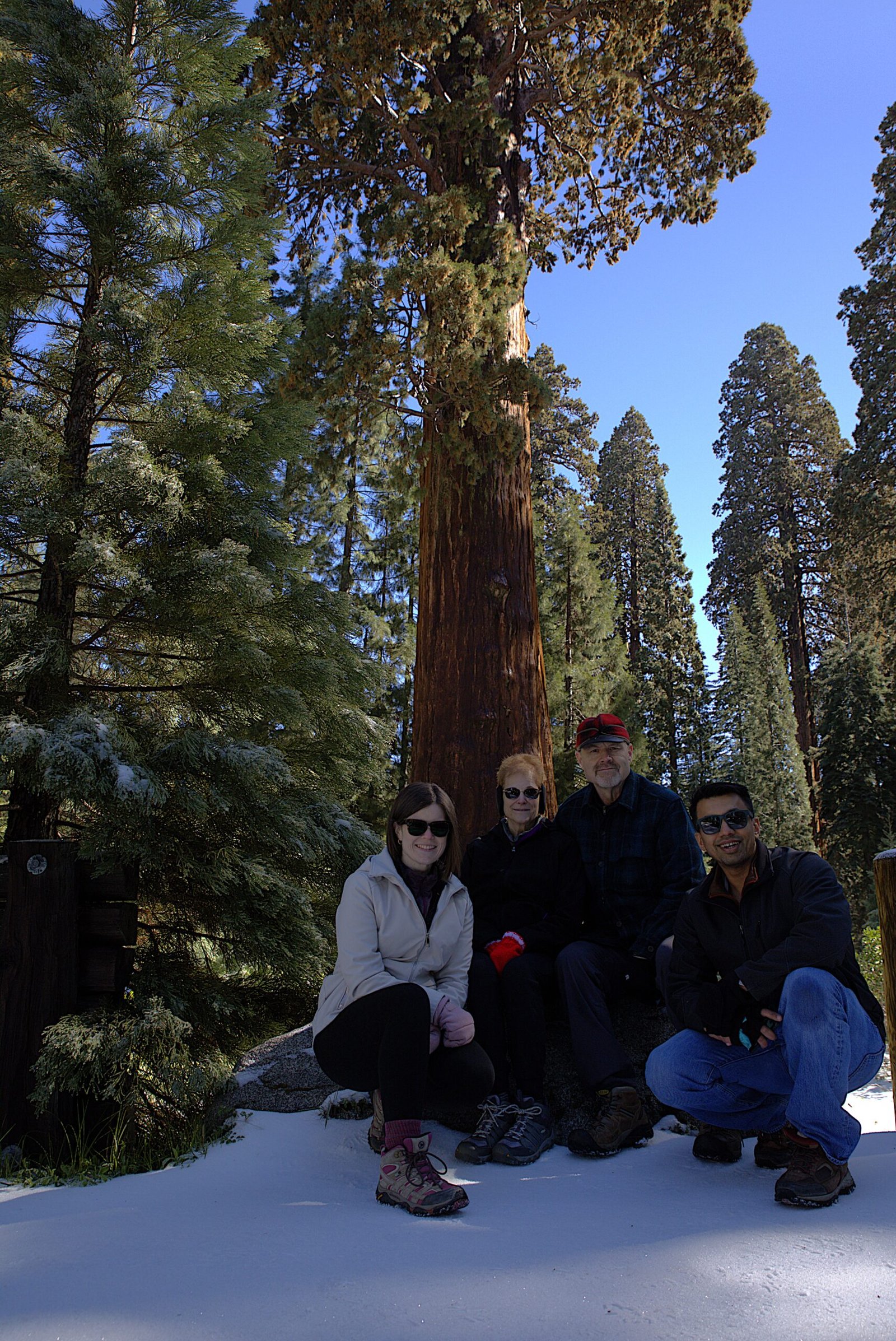
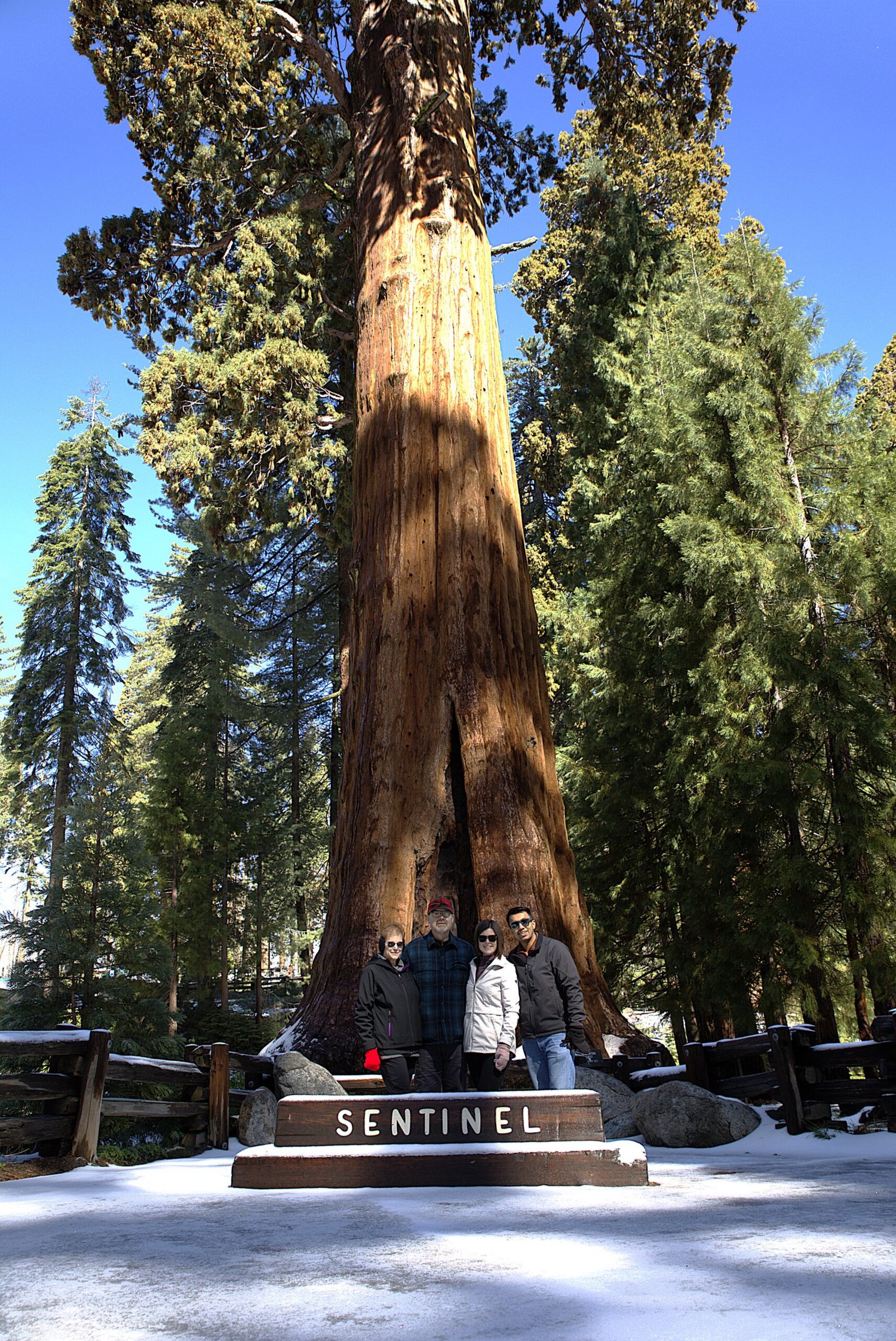
Not far from the museum stands the Sentinel Tree, a massive giant sequoia that gives visitors an immediate sense of just how enormous these trees really are. The Sentinel is one of the first giant sequoias many visitors encounter in Giant Forest, and standing next to it was our first true up-close look at these incredible giants.
Pictures simply don’t do them justice.
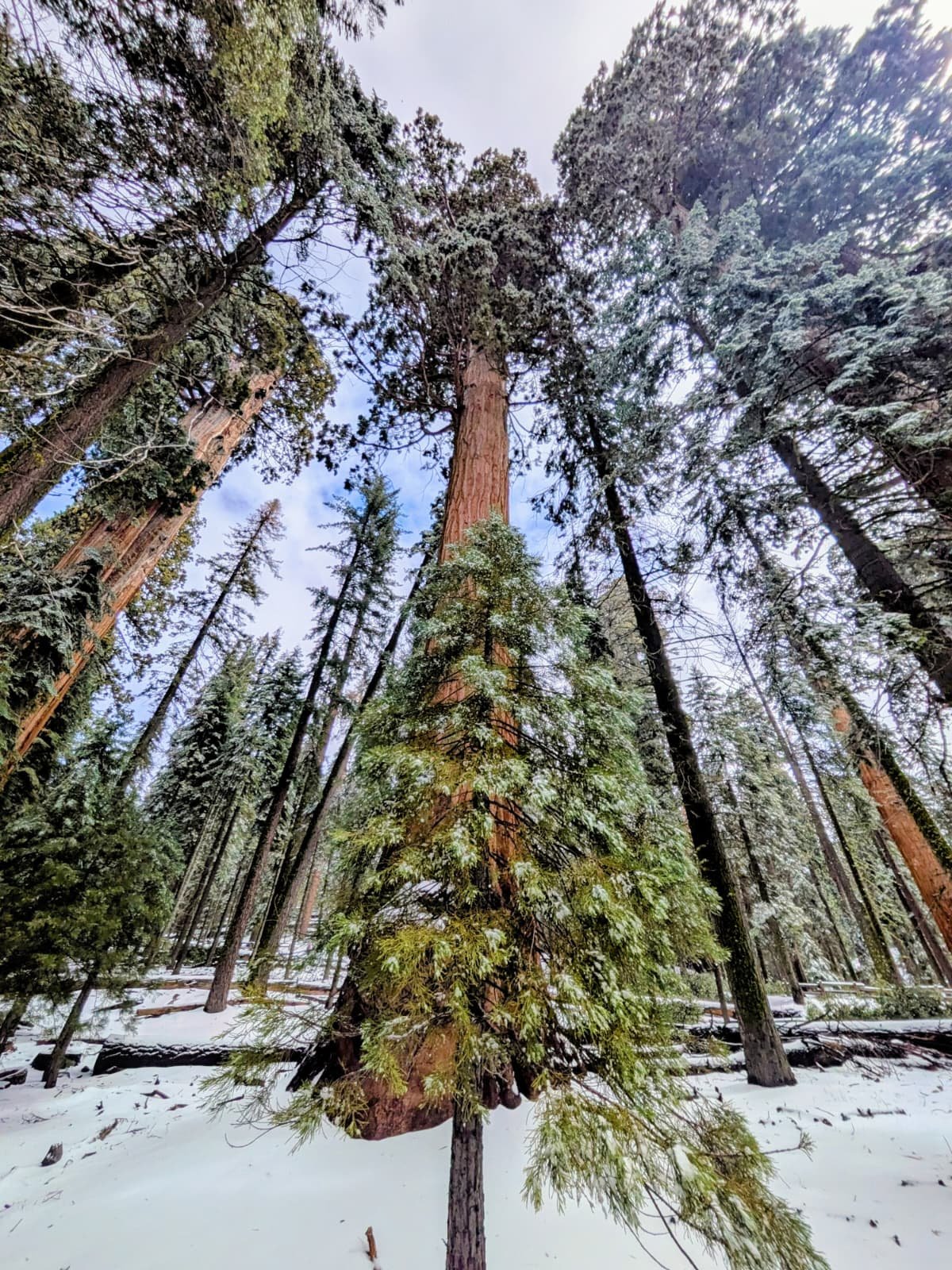
We had seen photos of giant sequoias before, but photographs have a way of flattening their scale. Standing at the base of the Sentinel Tree, looking straight up through its enormous trunk and branches, was completely different. The tree seemed almost unreal—massive, ancient, and completely dwarfing everything around us.
Sherman Tree Trail
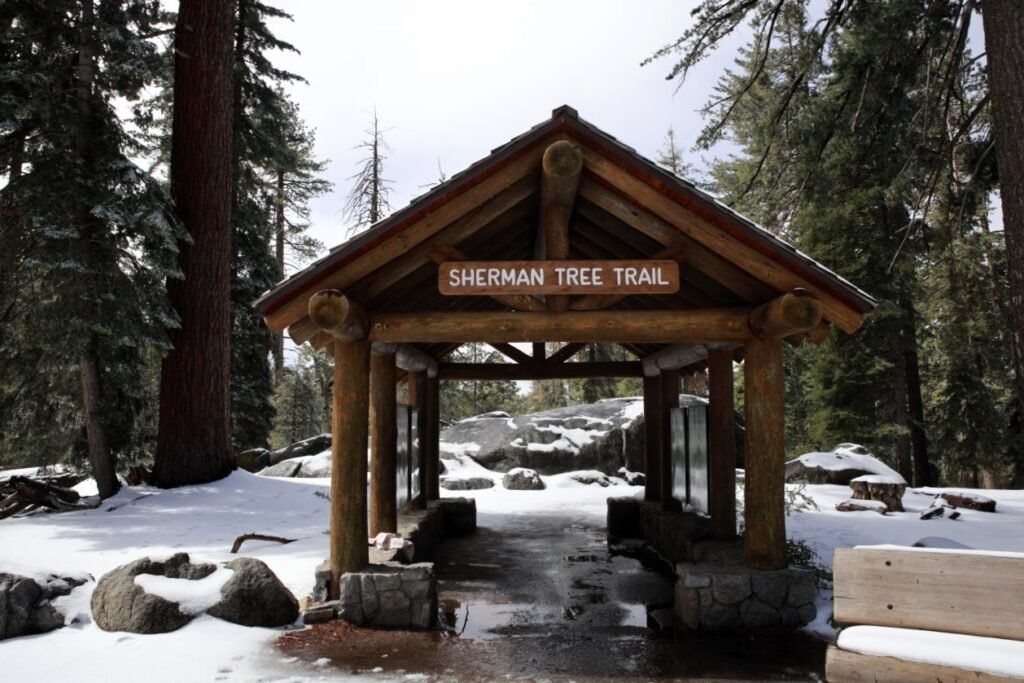
After warming up at the Giant Forest Museum and taking in our first close-up view of the giant sequoias, we continued deeper into Giant Forest. Our next stop was the General Sherman Tree, reached by the Sherman Tree Trail. The short trail leads downhill through the grove toward the famous tree, with towering sequoias surrounding you almost immediately. But visiting General Sherman in winter is a little different than the typical summer experience. Snow transforms the Giant Forest into a completely different world, and the journey to the tree becomes part of the adventure.
What to Expect on the Trail
Under normal conditions, the main General Sherman Trail is approximately 0.5 miles each way. The paved trail descends from the main parking area toward the tree, passing through the Giant Forest along the way. There are a few stairs, benches, and interpretive displays that provide information about the sequoias and their ecosystem.
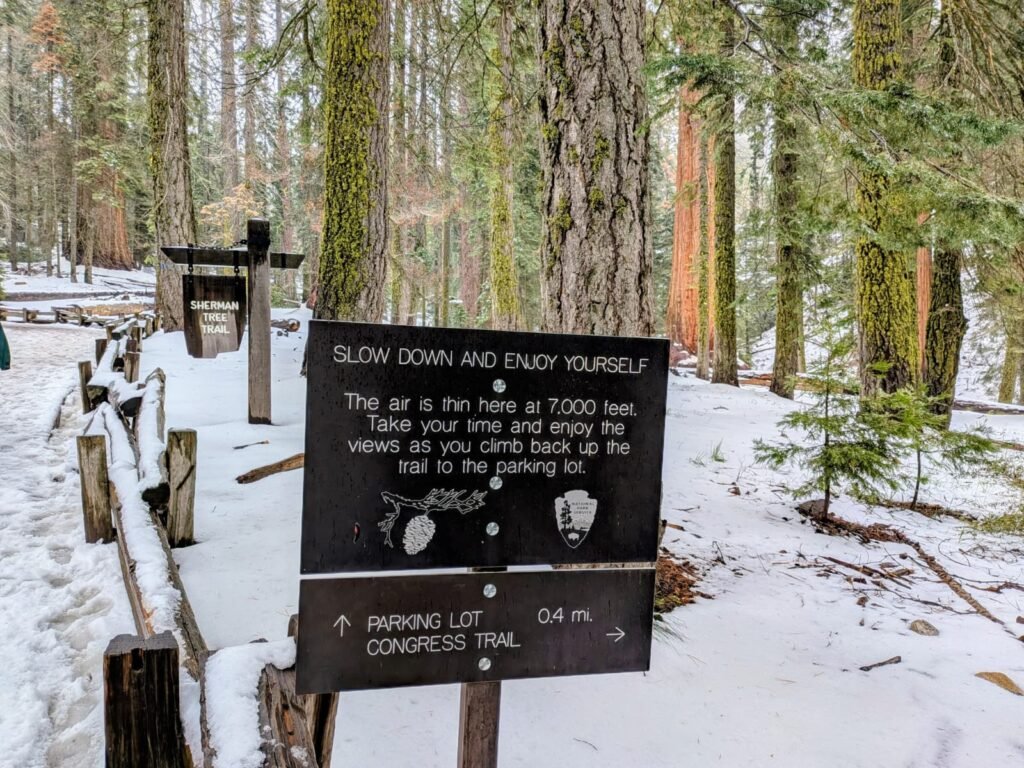
The important thing to remember is that the walk back is uphill. What feels like an easy stroll on the way down becomes a steady climb on the return.
At roughly 7,000 feet in elevation, the combination of altitude and the uphill return can make the hike feel more strenuous than the distance suggests. Take your time, especially if you’re not accustomed to hiking at elevation.
Once you reach General Sherman, there are viewing areas around the tree where you can take in its enormous trunk and surrounding grove. A protective fence surrounds the base, so be sure to stay on the designated trail and avoid walking over the shallow root system.
But Winter Changes Everything
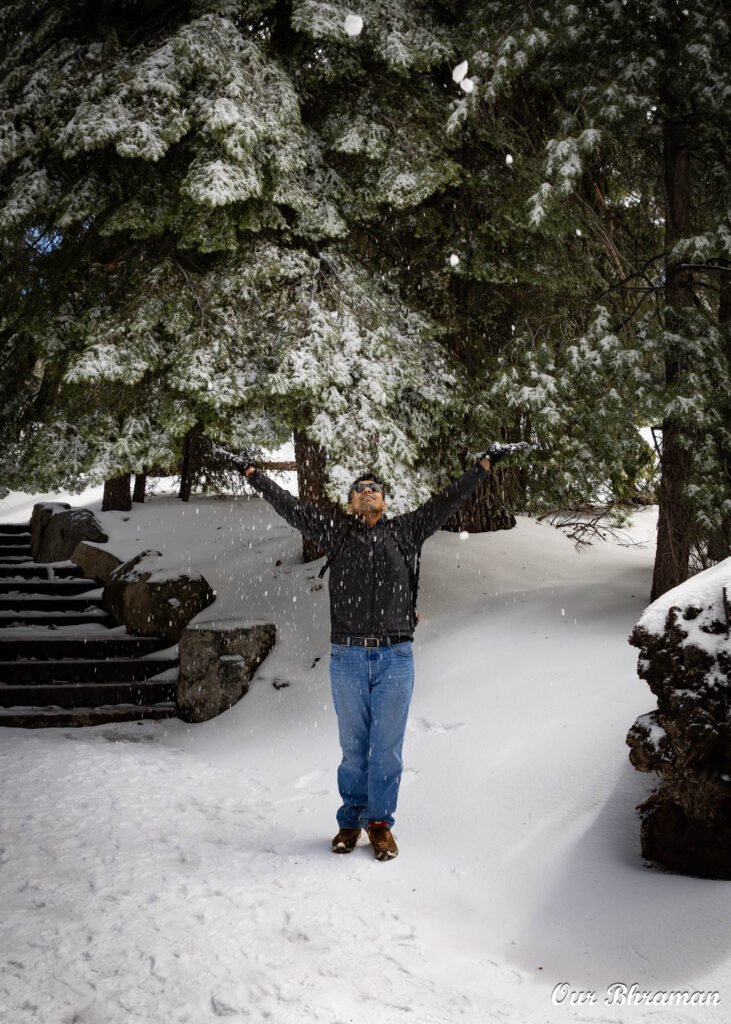
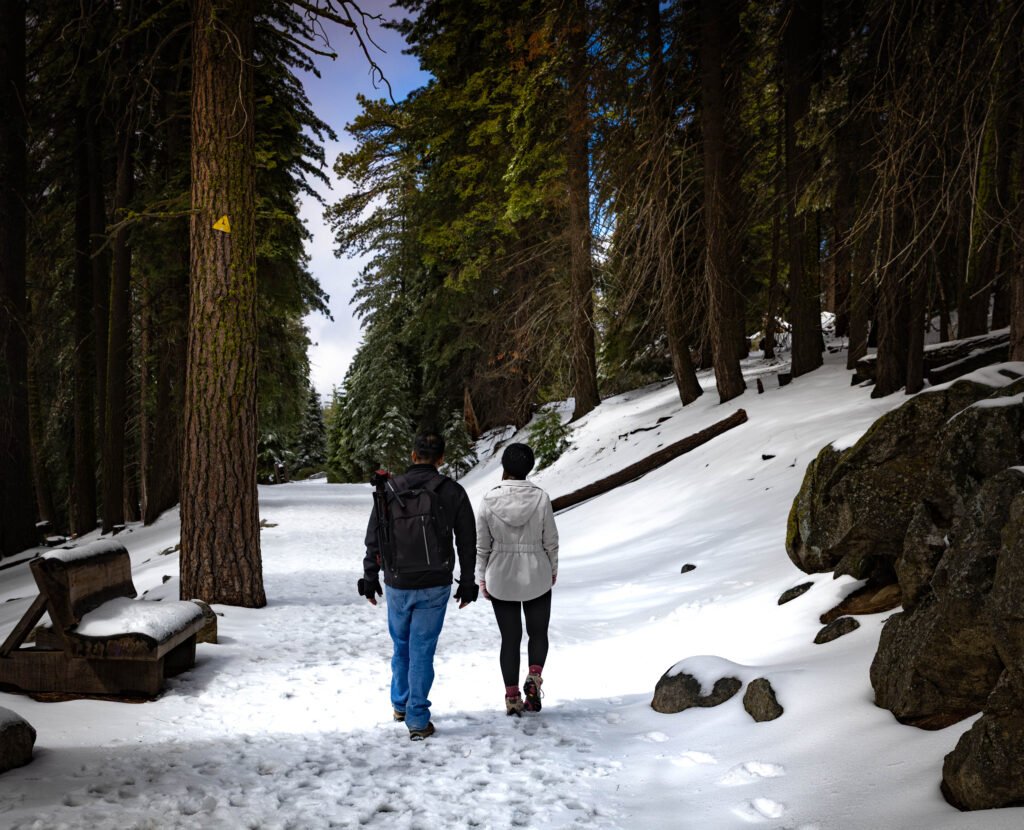
Our visit was during a winter storm, and this is where the General Sherman experience becomes especially memorable. Snow can occur in the Giant Forest from October through June, depending on the season. In winter, you may be walking on packed snow, ice, slush, or a combination of all three. Good waterproof boots, warm layers, and traction are far more important than simply having a pair of comfortable walking shoes.
Walking Through a Winter Wonderland
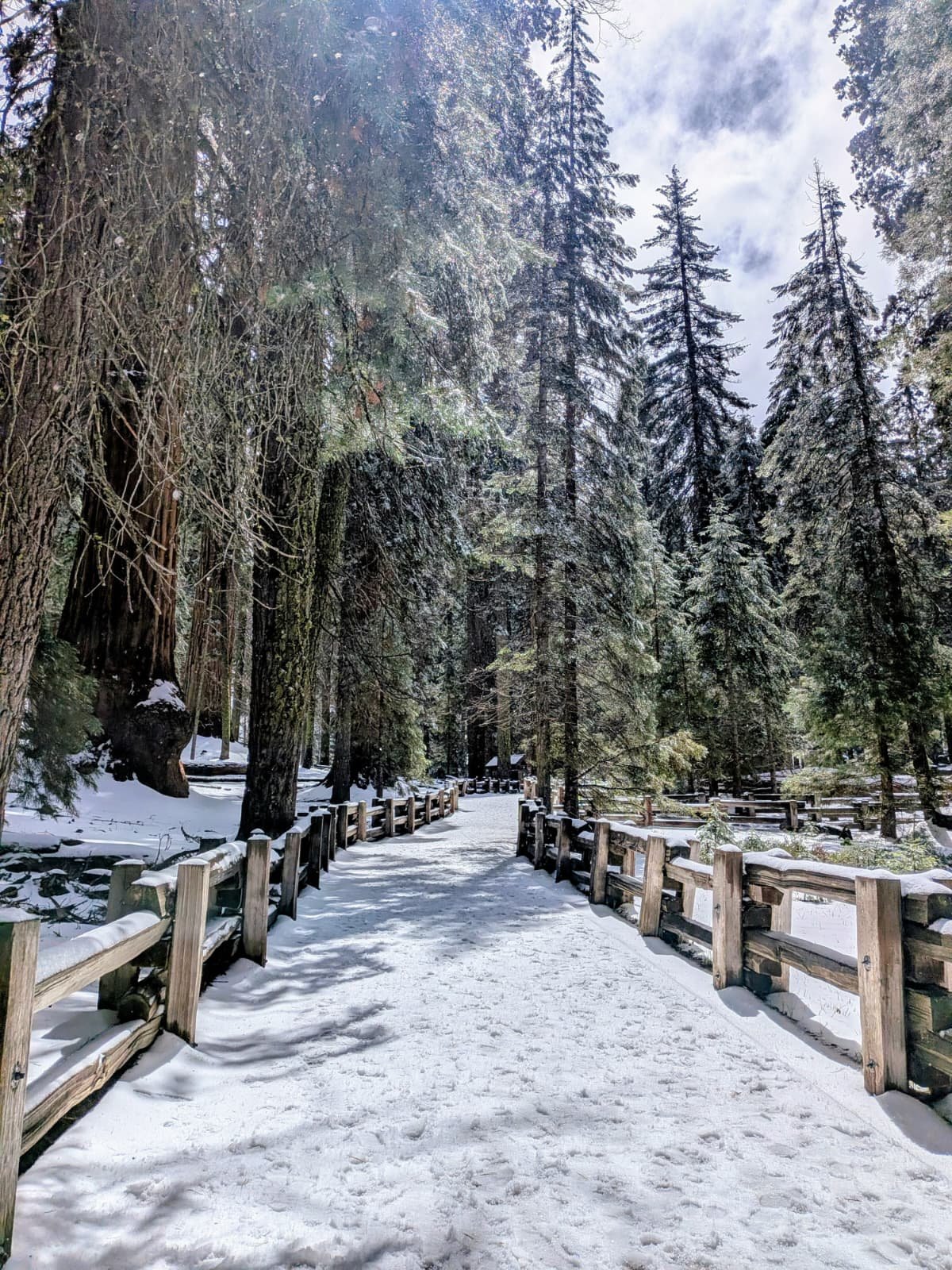
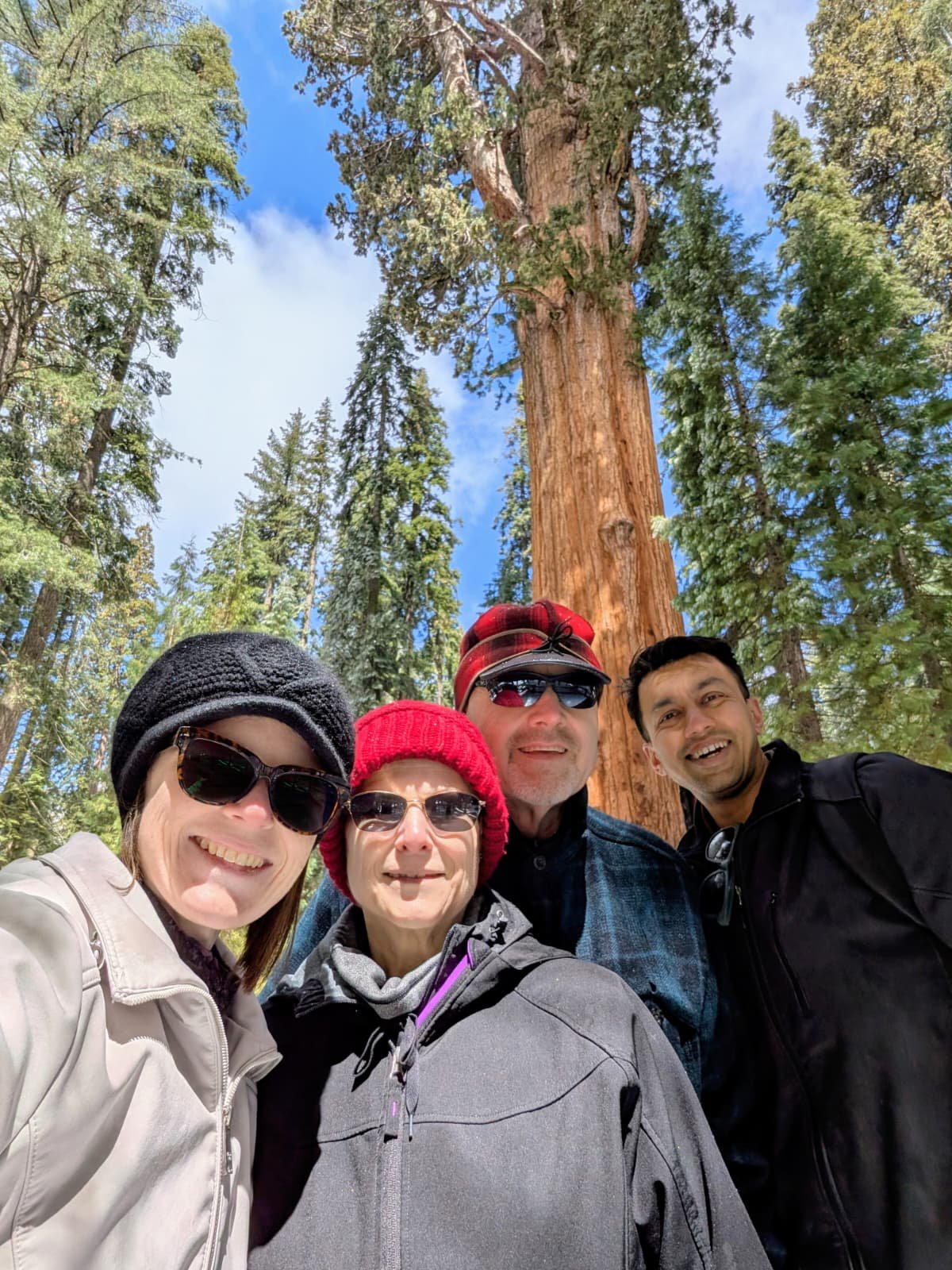
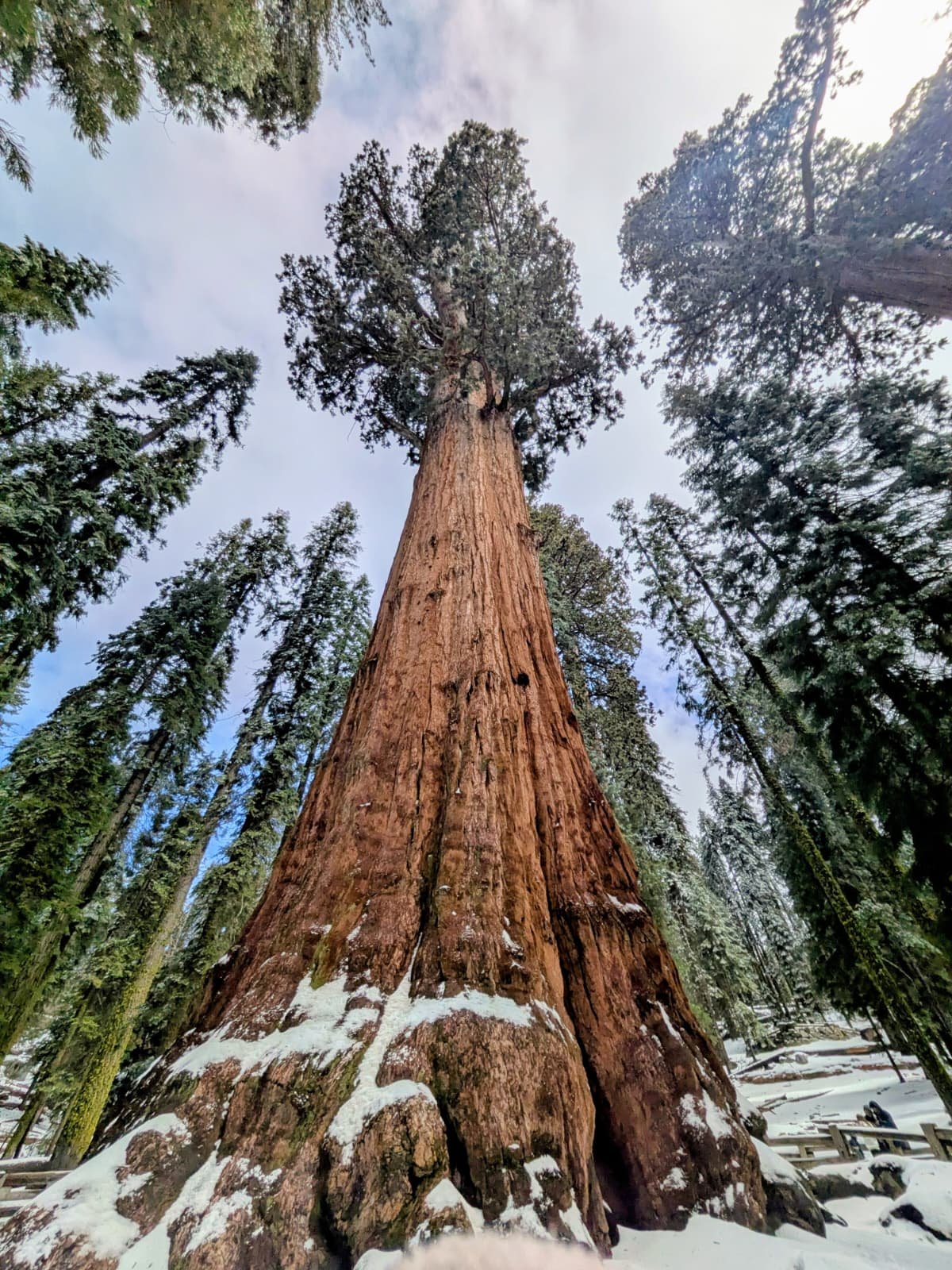
For us, the snow was what made this stop so special. The towering sequoias were dusted with snow, their massive trunks disappearing upward into a white canopy. Snow covered the forest floor, muffling the sounds around us and creating an almost surreal sense of quiet. It felt less like walking through a national park and more like stepping into a winter wonderland.
There is something especially dramatic about seeing these ancient giants surrounded by snow. The contrast between the reddish-brown bark, white snow, and towering green canopy creates some incredible photography opportunities.
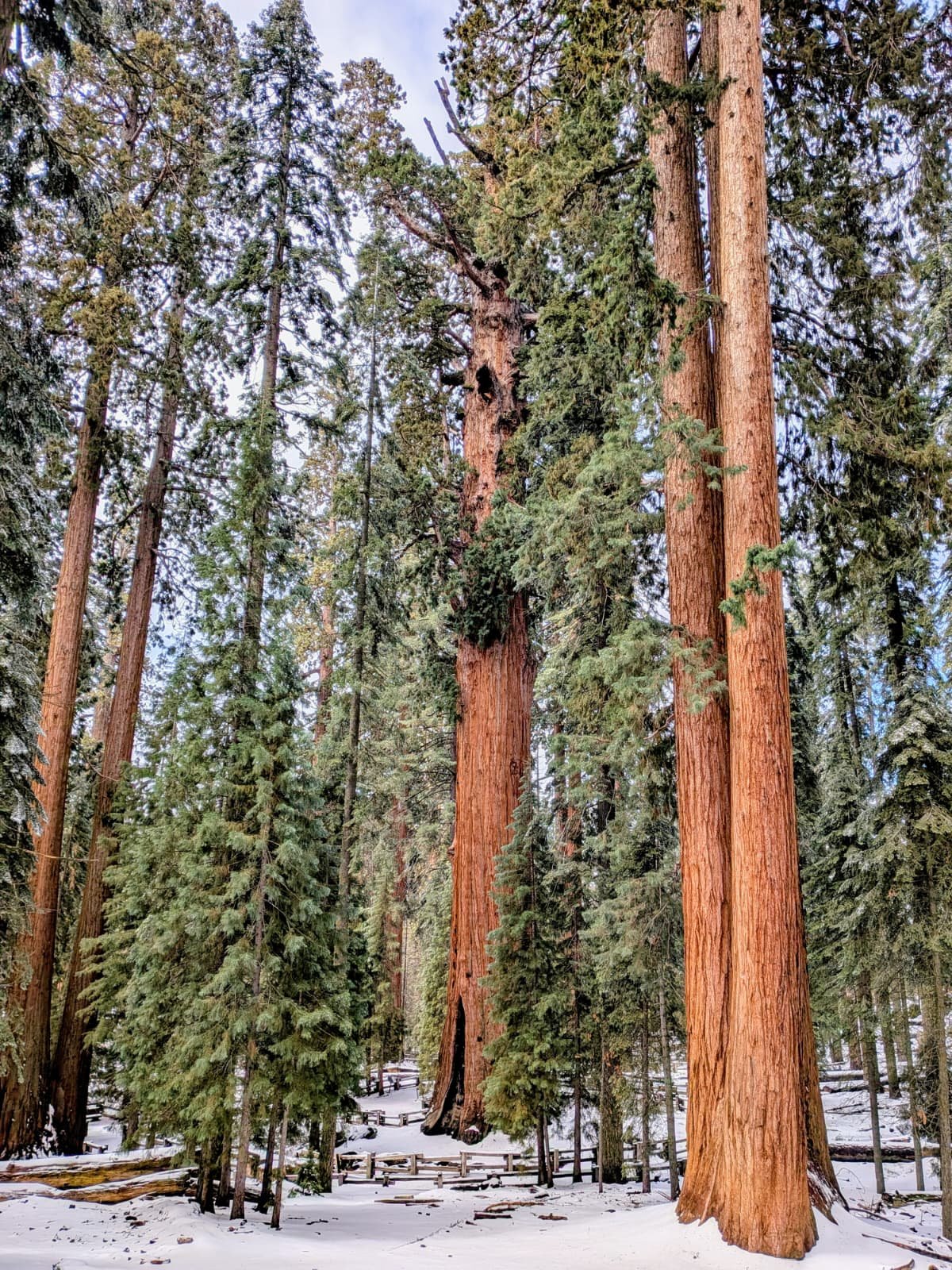
And don’t just focus your camera on General Sherman. Look up. Look down. Look between the trees. Some of the best photographs come from showing the scale of the forest rather than trying to capture one tree by itself.
The General Sherman Tree
Standing among the giant sequoias is an experience that is difficult to put into words. These trees are enormous in every direction, and General Sherman takes that scale to another level.
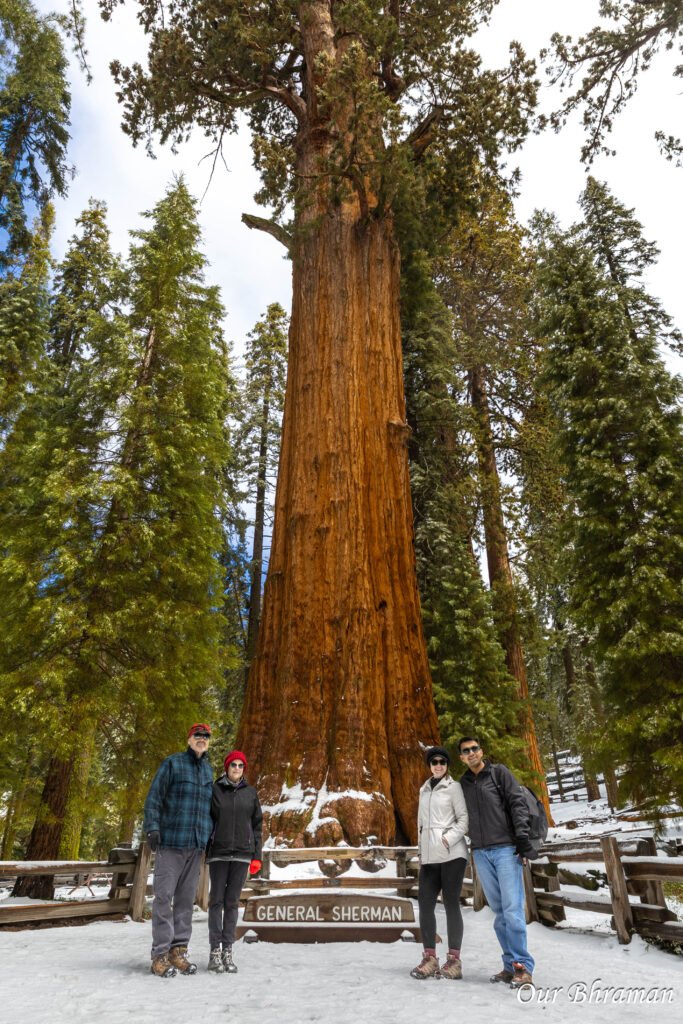
The tree stands at the northern end of the Giant Forest and contains more volume of wood than any other known living single-stem tree. It is approximately 275 feet tall, with a circumference of more than 100 feet at its base. Rather than simply looking up at one enormous tree, the trail gives you a chance to appreciate the surrounding grove and just how massive these sequoias are.
And then you reach General Sherman—and somehow, the surrounding giants suddenly seem a little less giant.
Congress Trail
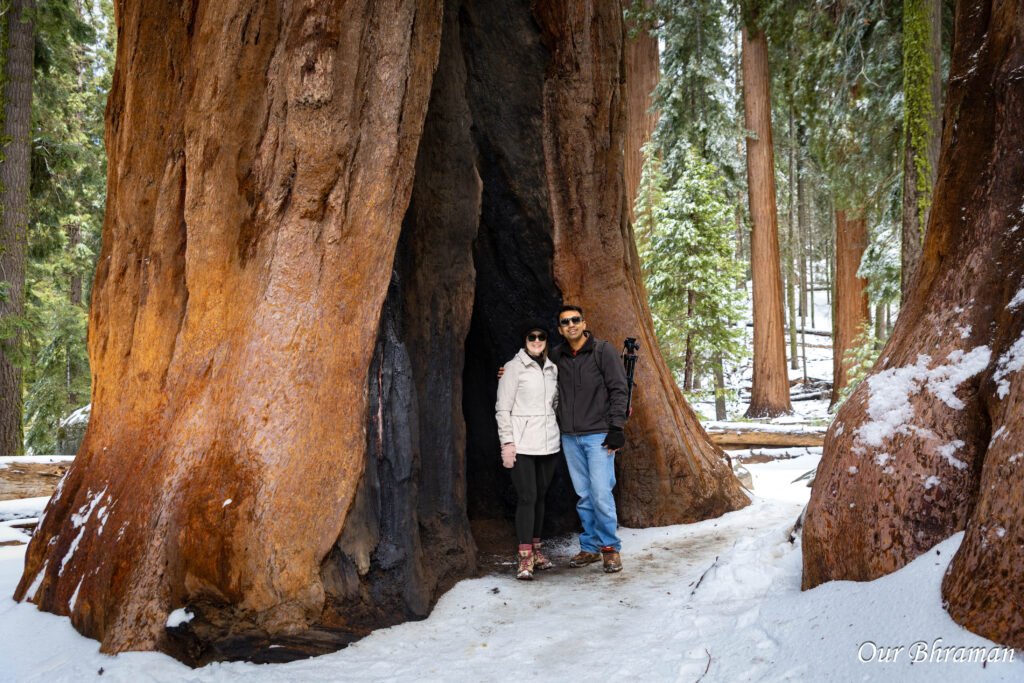
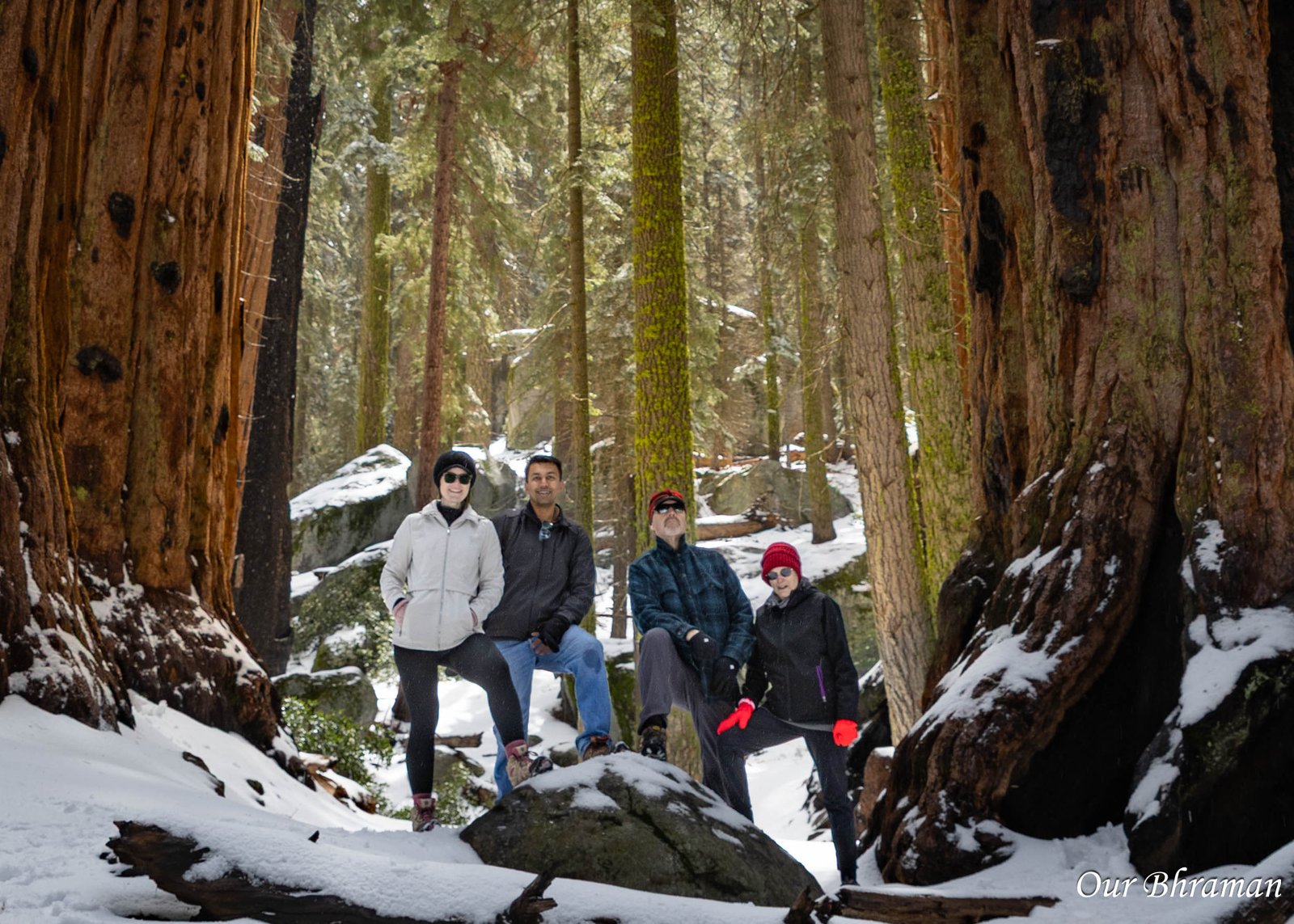
Our visit to General Sherman was only the beginning. After standing beneath this incredible giant, we continued deeper into the grove on the Congress Trail, where the forest became even more immersive. Instead of simply visiting one famous tree, we found ourselves surrounded by enormous sequoias in every direction—trees with names like the President, the Senate, the House, and Chief Sequoyah.
With snow covering the forest floor and towering sequoias rising above us, it truly felt like we had stepped into another world. And that was exactly the kind of adventure we had come to Sequoia National Park to find.
The trail was covered in snow, and the massive sequoias stood quietly around us. Their reddish trunks contrasted against the white landscape, while fresh snow clung to branches overhead. Every direction we looked seemed to reveal another giant. It was quiet. It was peaceful. And it felt completely surreal. Walking through the Congress Trail in those conditions felt less like hiking a trail and more like wandering through a living winter wonderland.
A Forest Shaped by Fire
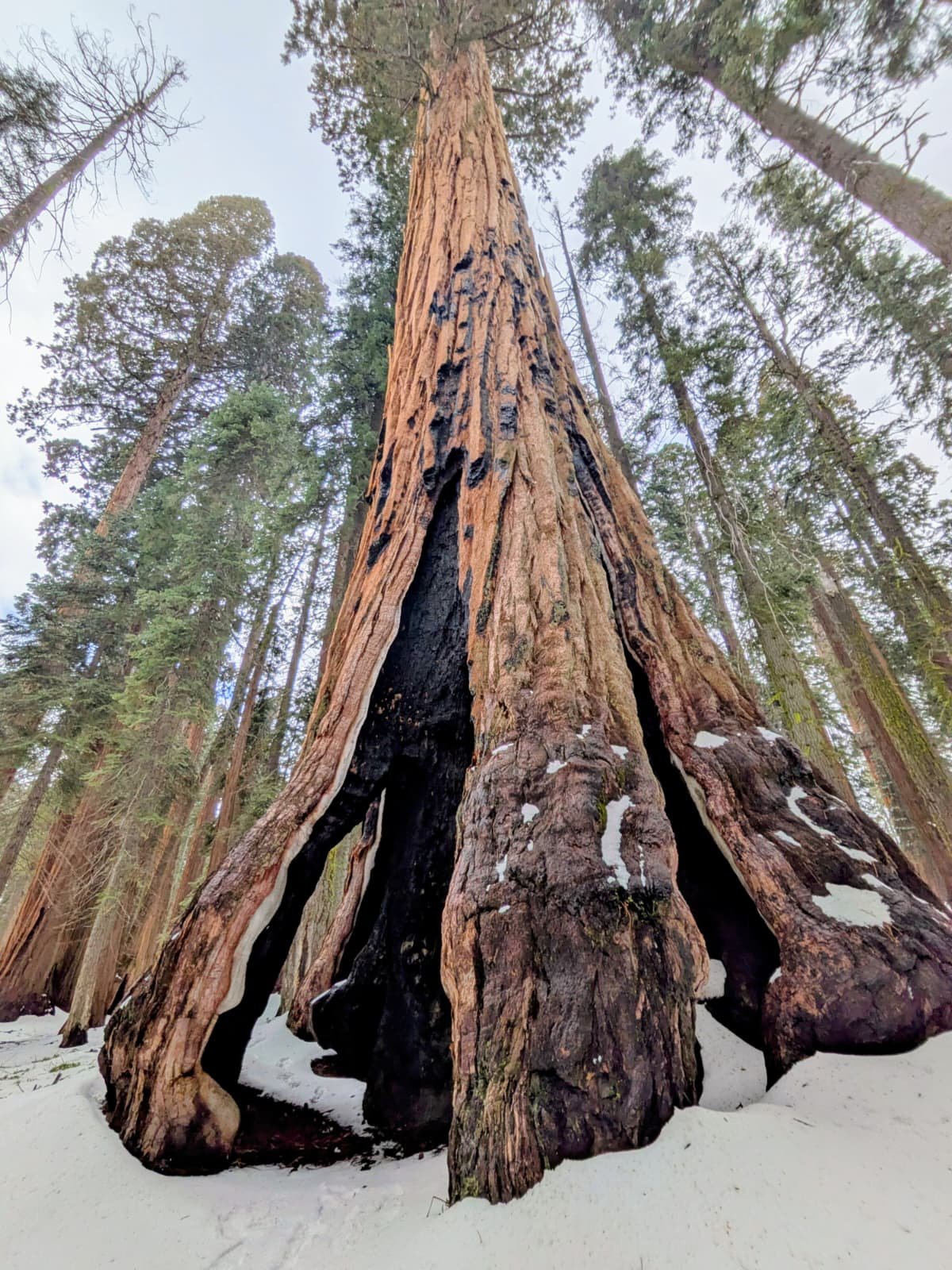
As we continued along the Congress Trail, we began noticing that every tree seemed to have its own story. Some were enormous and perfectly intact, with massive trunks stretching toward the sky. Others were twisted, scarred, or split open, revealing the effects of years of weather, age, and fire. We came across several sequoias that had been severely damaged by fire. Their trunks were blackened and hollow, with enormous sections burned away. From the outside, some looked as though they should have fallen years ago. But they were still standing. Still reaching toward the sky. Still part of the forest.
There was something incredibly humbling about seeing these trees up close. A hollow trunk might look fragile, but giant sequoias are remarkably adapted to fire. Their thick, insulating bark can protect living tissue from the heat, and fire plays an important role in the natural life cycle of the sequoia forest.
Standing beneath these scarred giants in the middle of a snowy forest made the contrast even more striking. The blackened wood against the white snow told a story of destruction and renewal all at once. Some trees had lost enormous portions of their trunks, yet somehow remained standing tall. Others had fallen completely, becoming part of the forest floor and creating space for new life. As we walked past them, we couldn’t help but think about how long these trees had endured. Fire. Snow. Wind. Drought. Storms. And the passage of centuries. Yet some of them were still standing.
The Congress Trail became more than a walk through a grove of enormous trees. It became a reminder that strength doesn’t always mean coming through something unchanged. Sometimes it means continuing to stand despite everything you’ve been through.
And surrounded by these giants, we felt pretty small—but also incredibly lucky to witness their stories.
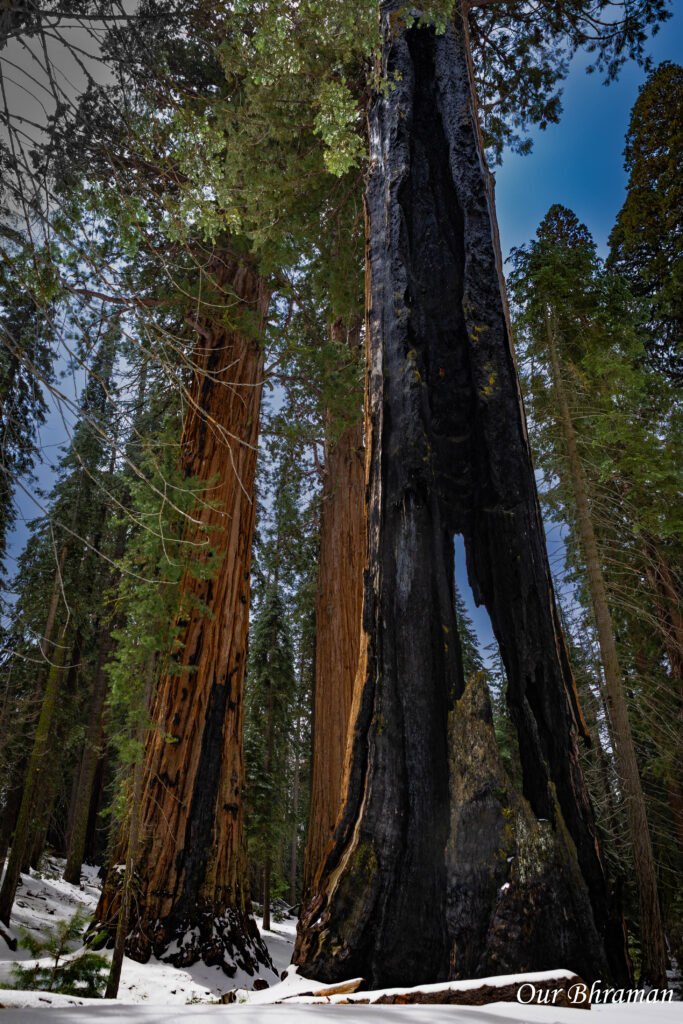
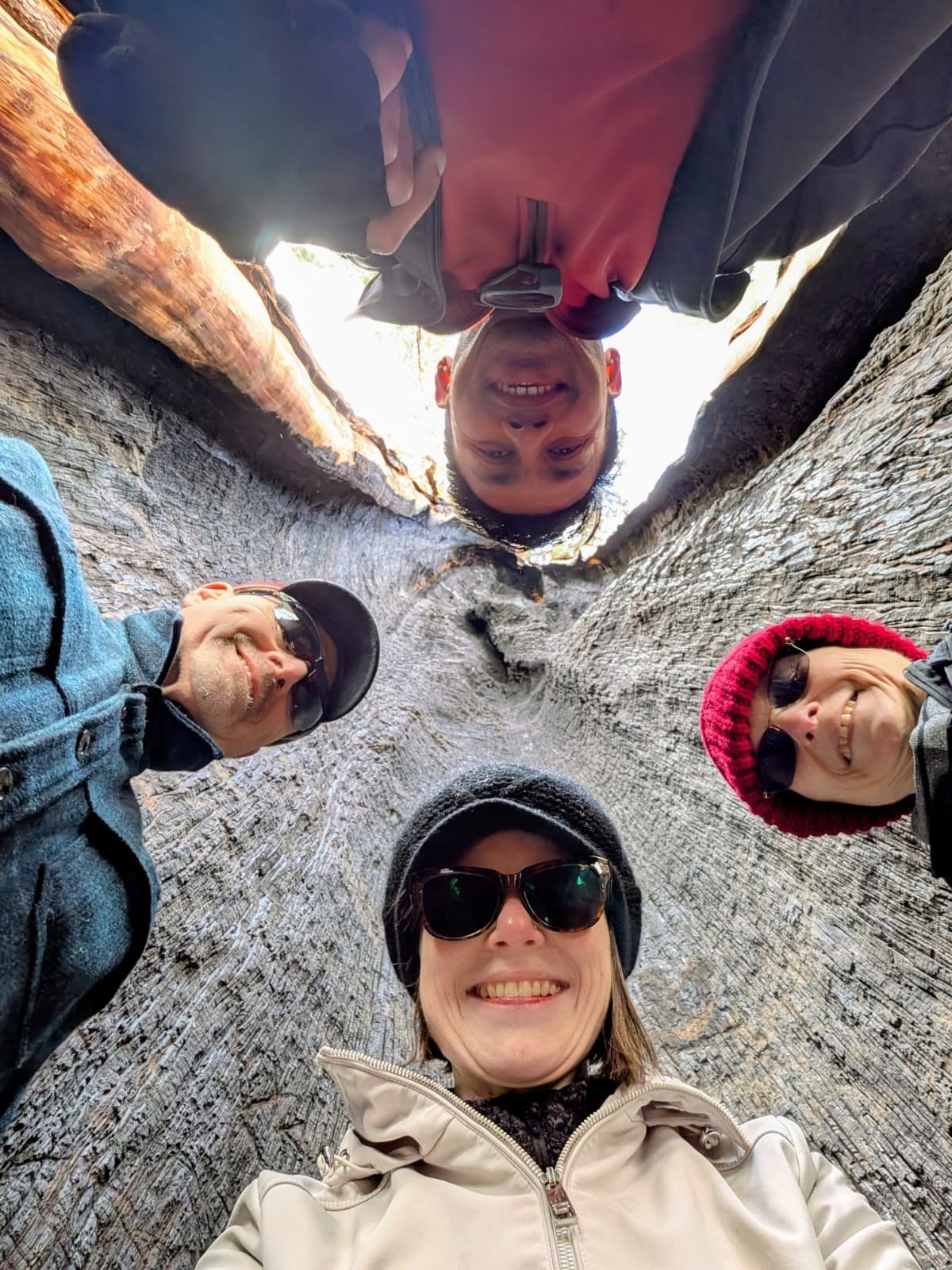
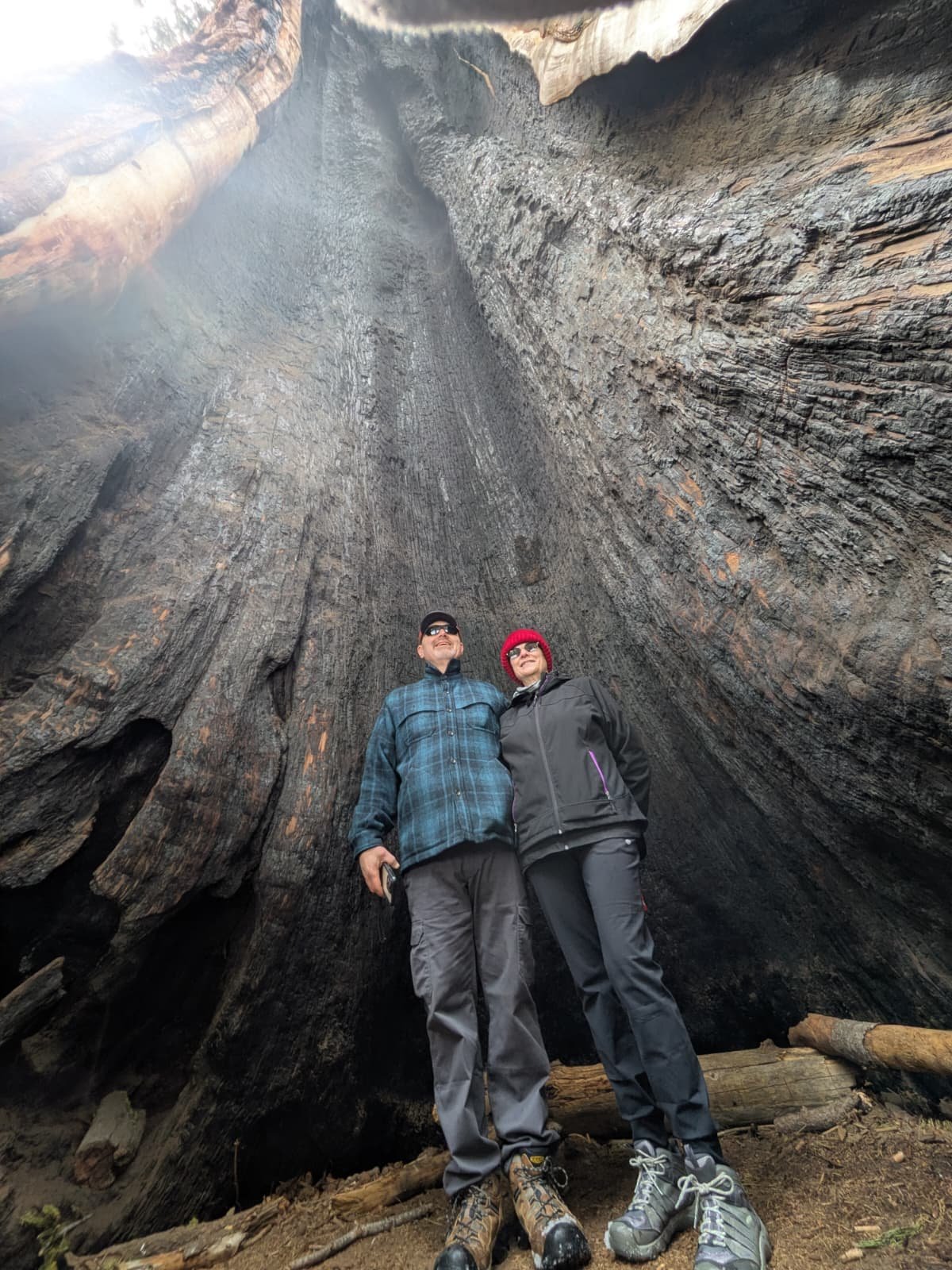
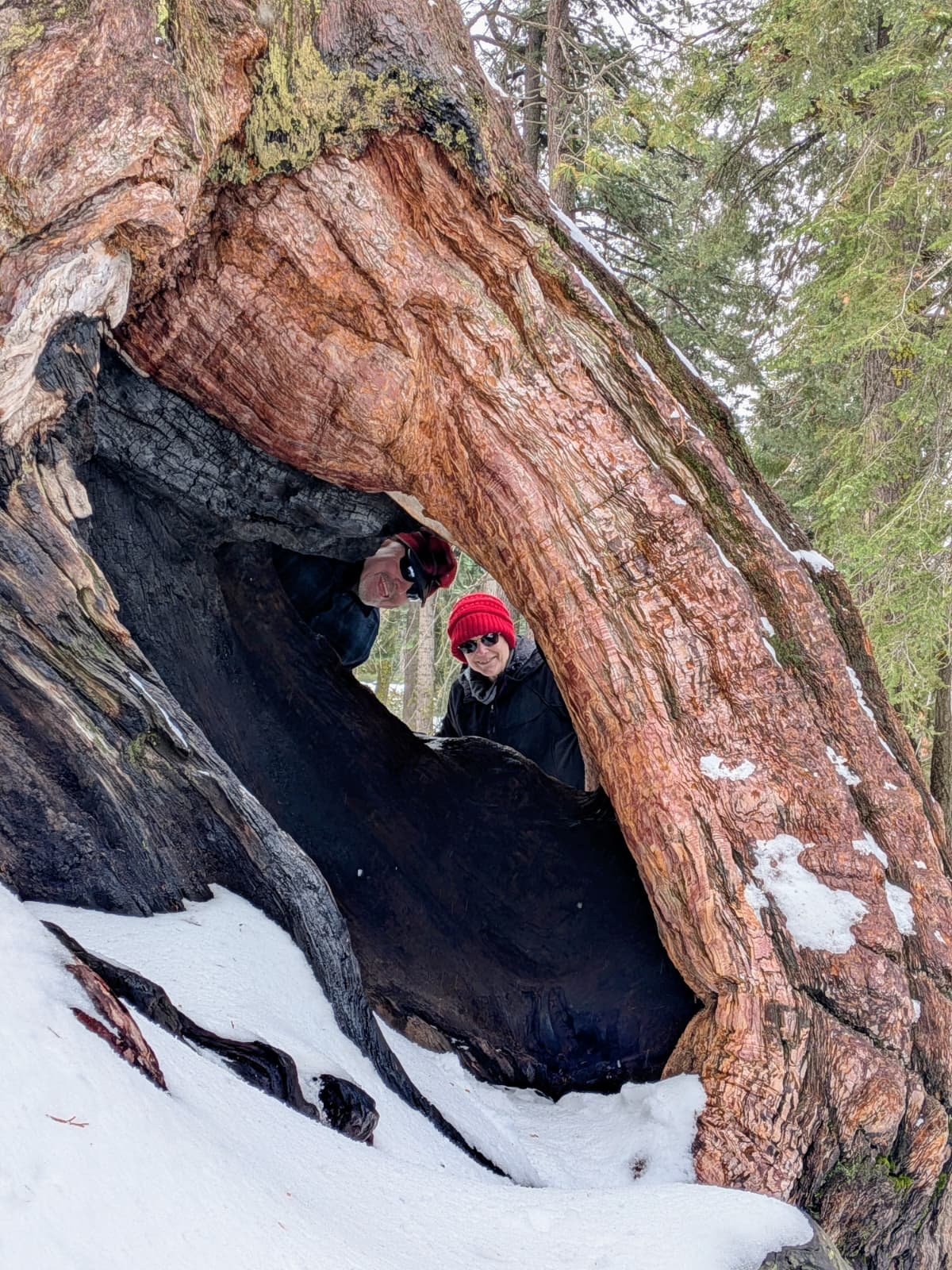
As we continued through the forest, we were mesmerized by the size of these trees and the unique beauty.
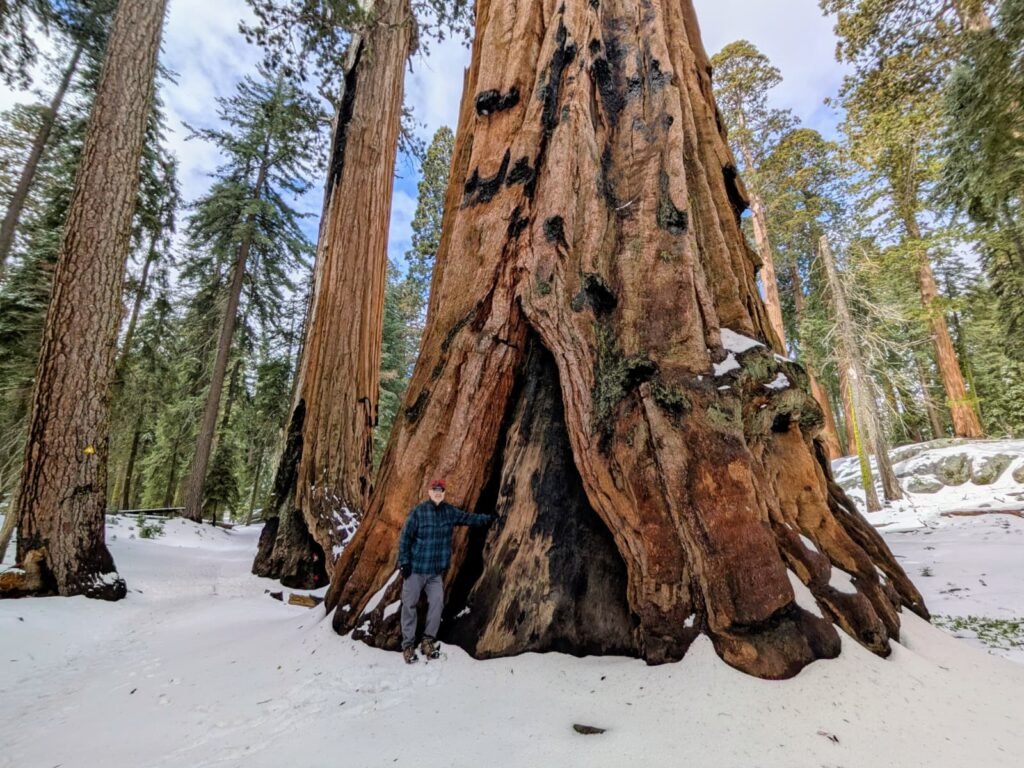
The Giants Along the Congress Trail
One of the things we loved most about the Congress Trail was that it wasn’t simply a hike from Point A to Point B. Along the way, we encountered a collection of remarkable sequoias, each with its own personality, history, and story to tell.
Some were enormous and perfectly intact. Others had been scarred by fire, hollowed out, or shaped by the elements. Yet even the damaged trees seemed to command the same presence as the giants still standing tall.
Here are some of the memorable trees and features we encountered along the way:
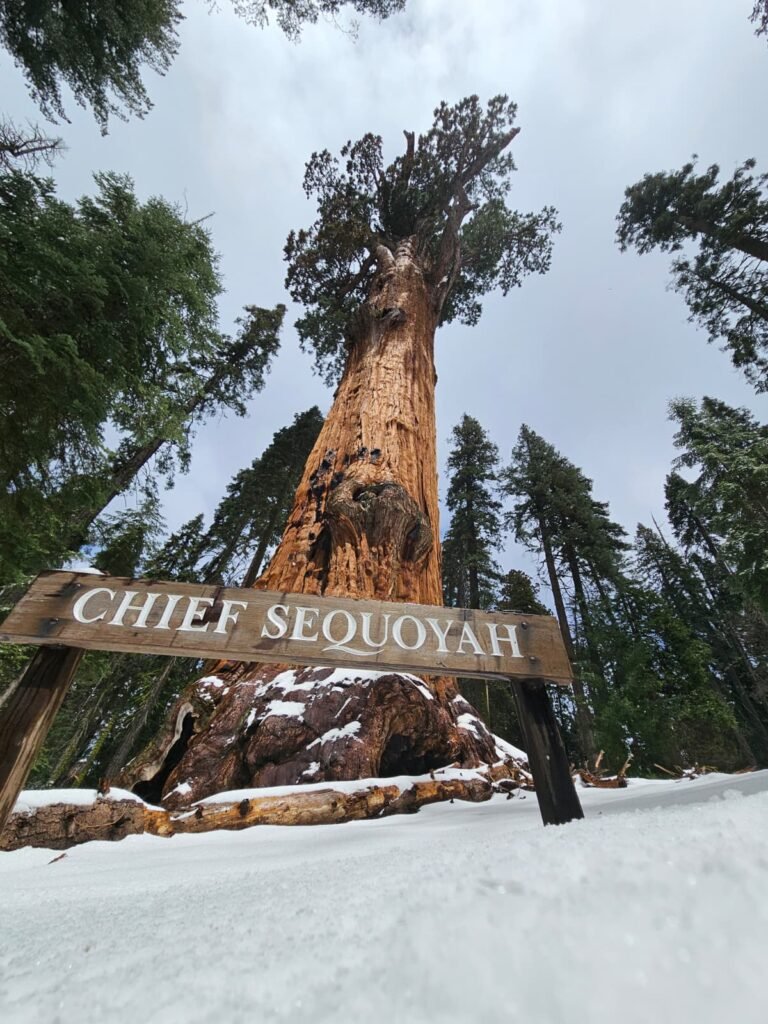
Chief Sequoyah
Our first memorable giant was Chief Sequoyah, named in honor of Sequoyah, the Cherokee scholar who created the Cherokee writing system.
The tree itself is an impressive example of the sheer scale of the sequoias found throughout the Giant Forest. Standing next to it gives you that familiar feeling we experienced again and again on this trail—looking up and realizing that the tree seems to just keep going.
With snow surrounding its massive trunk, Chief Sequoyah looked especially impressive during our winter hike.
It was a fitting introduction to the giants that awaited us farther along the trail.
The President
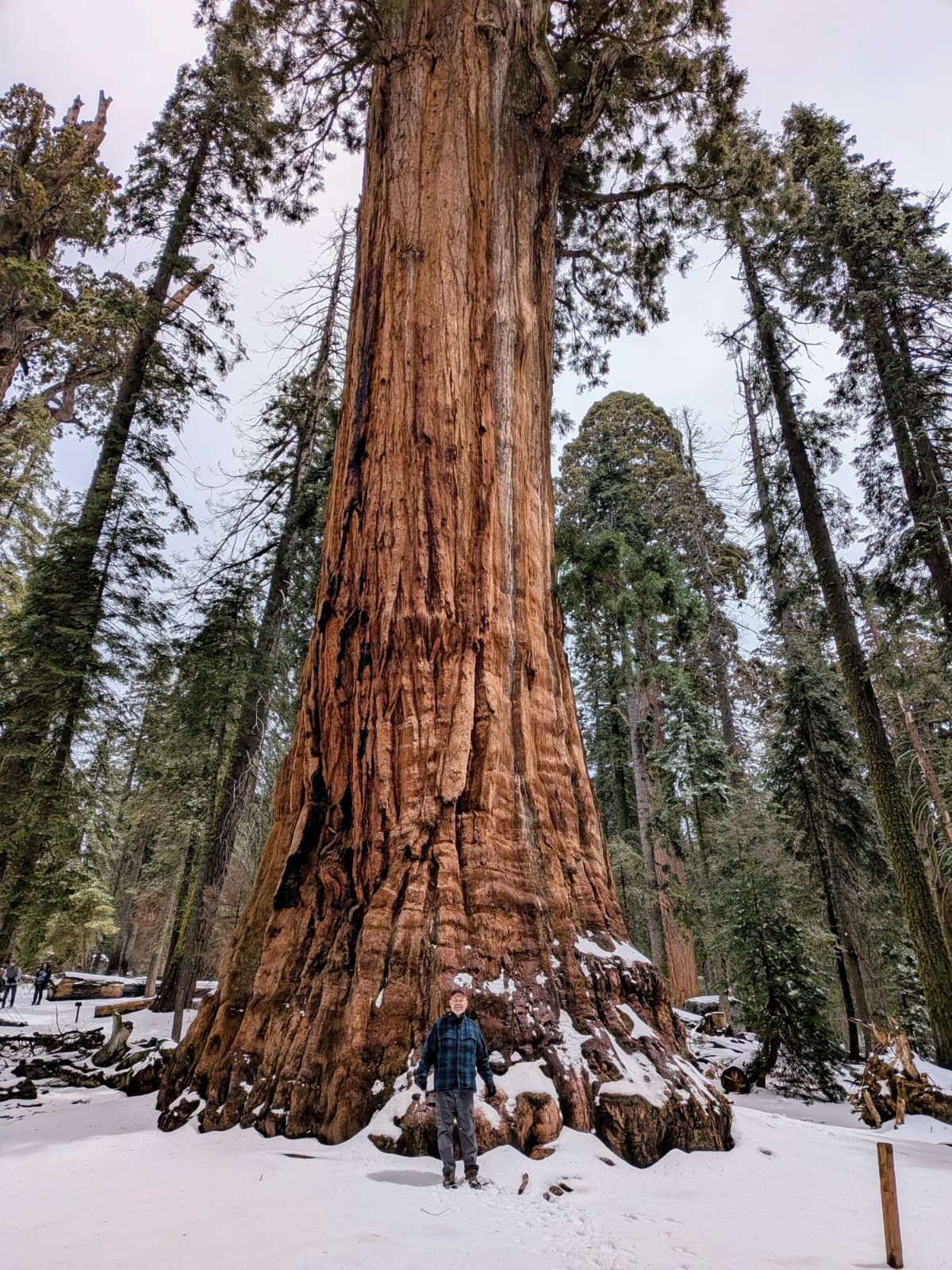
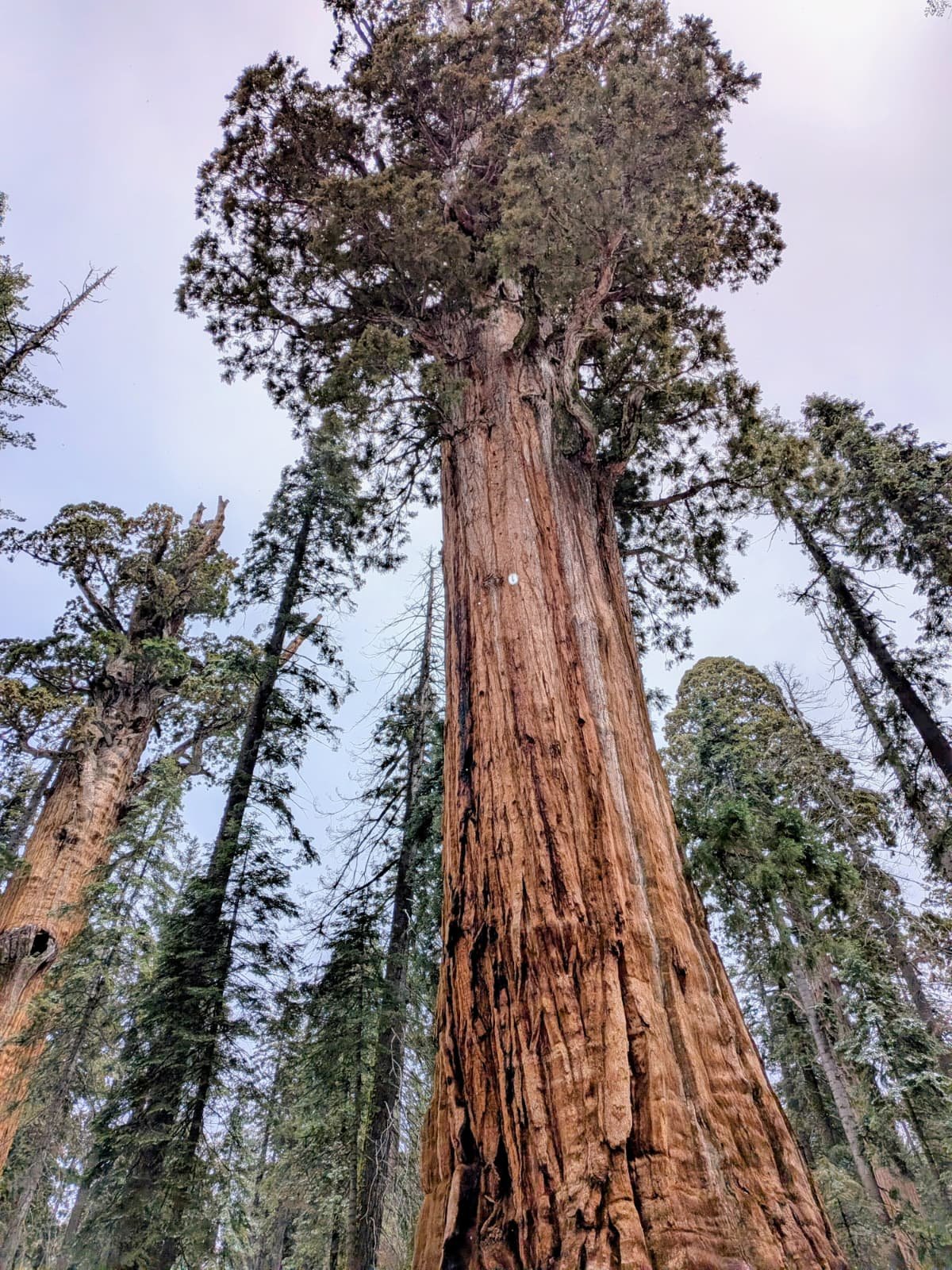
Next came The President, one of the most famous sequoias in the Congress Grove. And the name certainly fits.
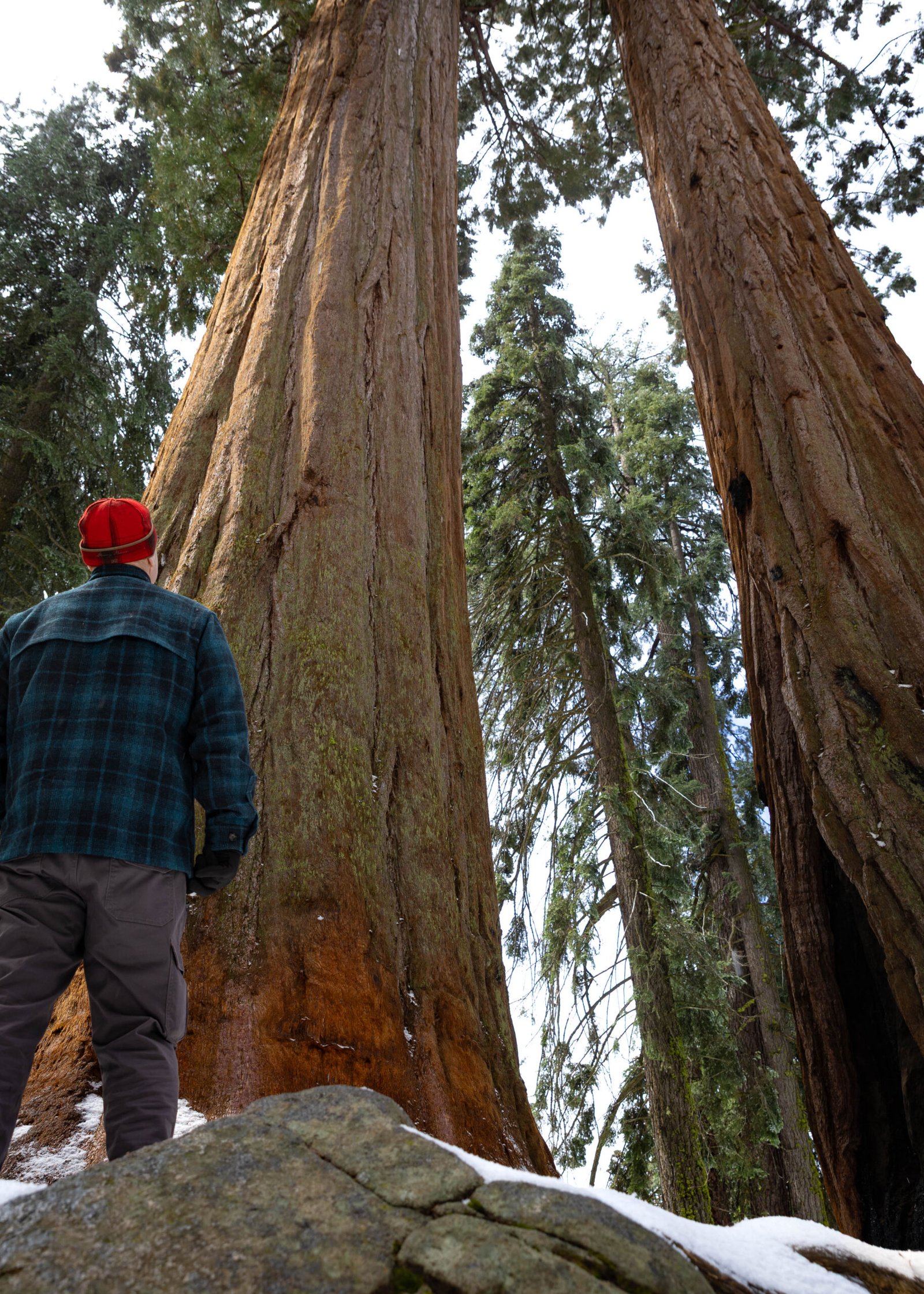
The President is an enormous, ancient sequoia estimated to be more than 3,000 years old. Unlike General Sherman, which is famous primarily for its enormous volume, The President is particularly notable for its impressive height, massive trunk, and extensive crown.
Looking up through the branches, it was difficult to capture the entire tree in one photograph. The snow-covered forest made it even more dramatic. The massive reddish trunk disappeared into a canopy dusted with white, making the tree seem almost larger than life.
The Senate
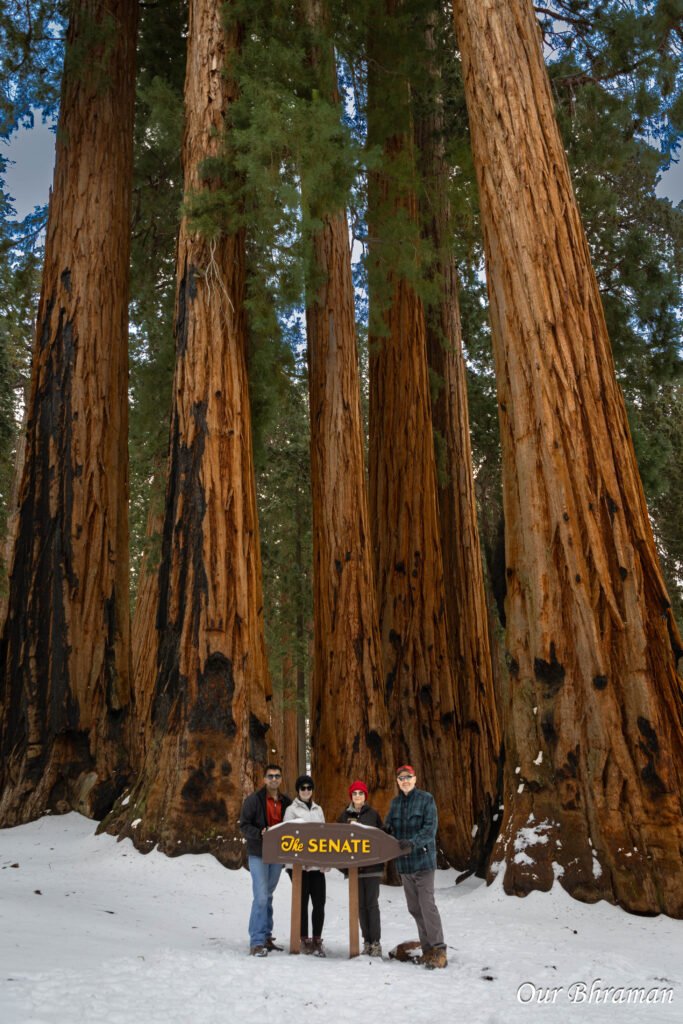
From The President, we continued into The Senate, a remarkable group of giant sequoias growing together. Rather than being a single tree, The Senate is a collection of enormous sequoias clustered in the grove. This was one of those places where we really started to appreciate just how extraordinary the Congress Grove is. One giant sequoia would already be impressive—but standing among several of them at once completely changes your perspective. You stop looking at individual trees and start realizing that the entire forest is filled with giants.
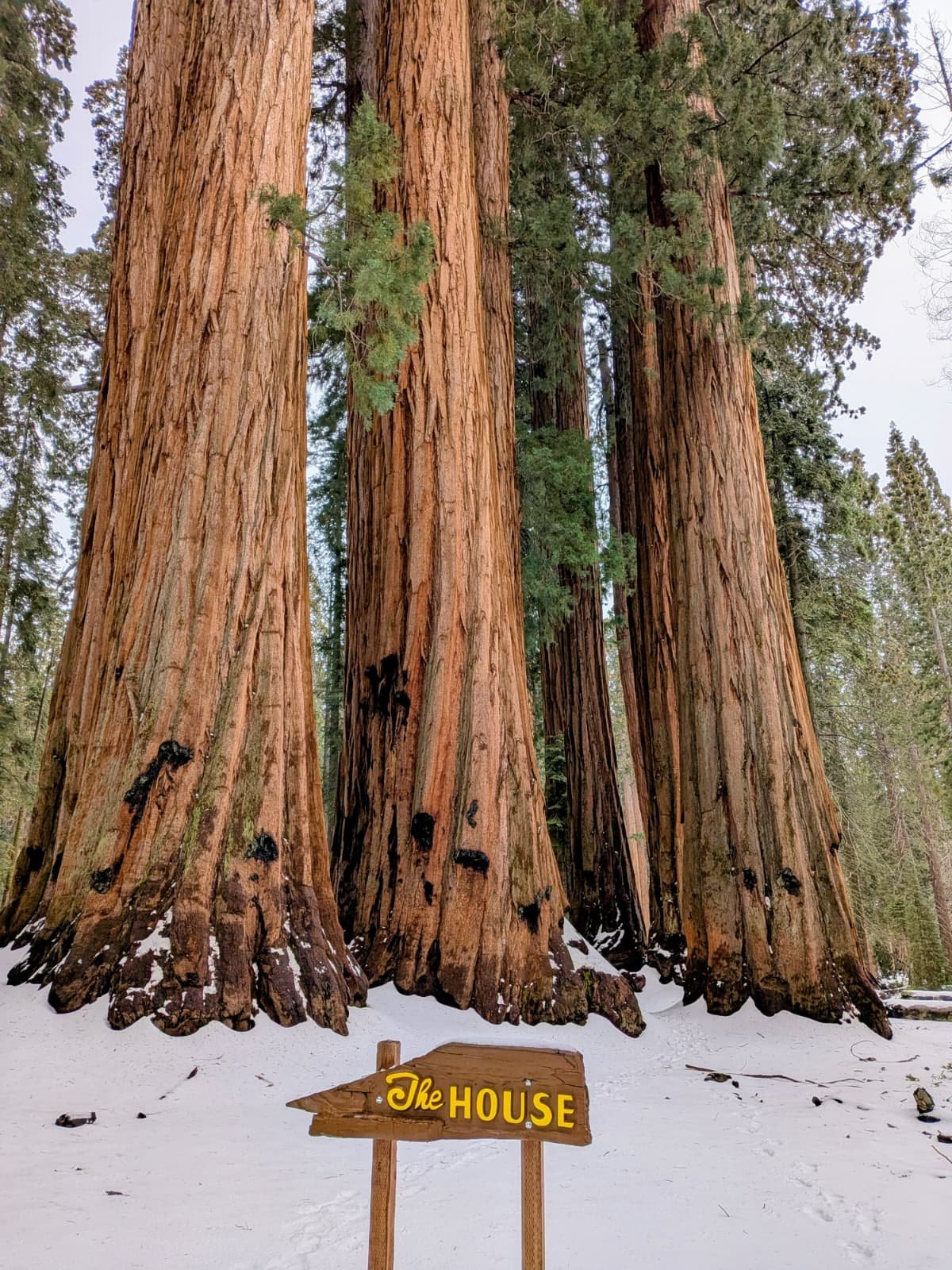
The House
Just when we thought the Senate was impressive, we continued on to The House. Like The Senate, The House refers to a group of giant sequoias growing together. Walking between these enormous trunks felt almost like wandering through the pillars of a massive natural cathedral. The snow made the experience even more surreal. Everything around us was white and quiet, while the enormous sequoias towered overhead. We found ourselves constantly stopping—not because we were tired, but because there was always another tree worth looking at.
McKinley Tree
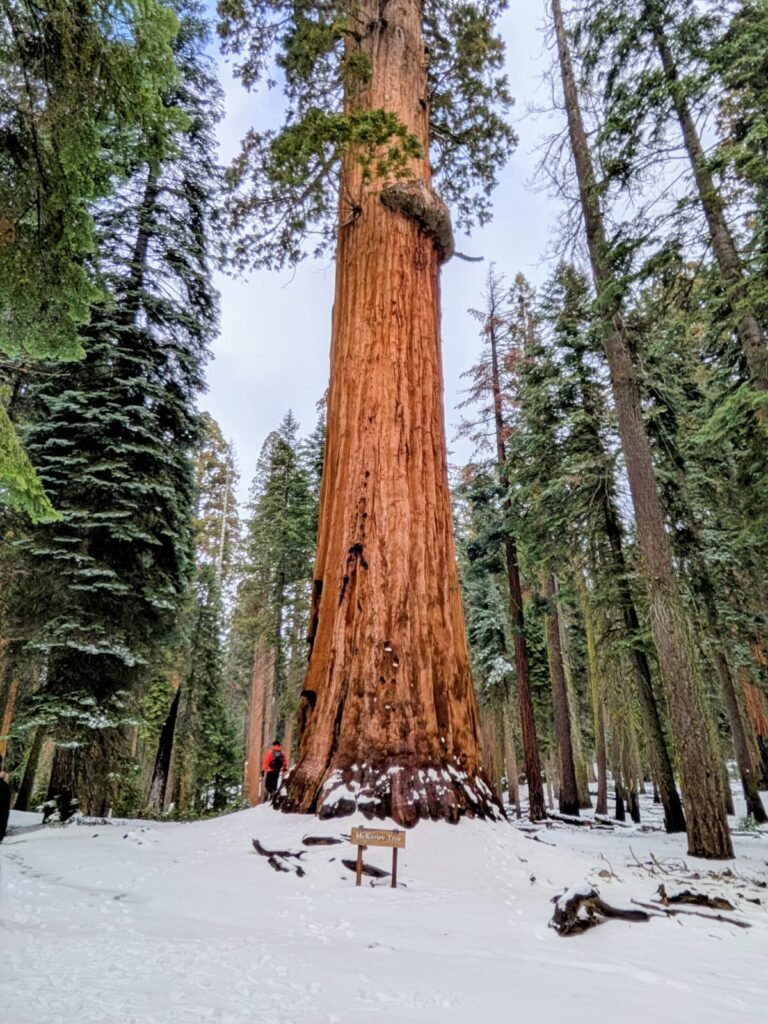
Further along the trail, we came across the McKinley Tree, another impressive sequoia within the Congress Grove. Named after President William McKinley, the tree is a reminder of how many of these giants have been given names connected to historical figures, groups, and notable characteristics.
By this point in our hike, we had stopped trying to keep track of which tree was supposed to be the biggest or oldest. They were all huge. They were all fascinating. And each one looked completely different.
Some had massive, intact trunks. Others were twisted and scarred from fire. Some were hollowed out but continued standing, seemingly defying gravity and time.
The Log Tunnel
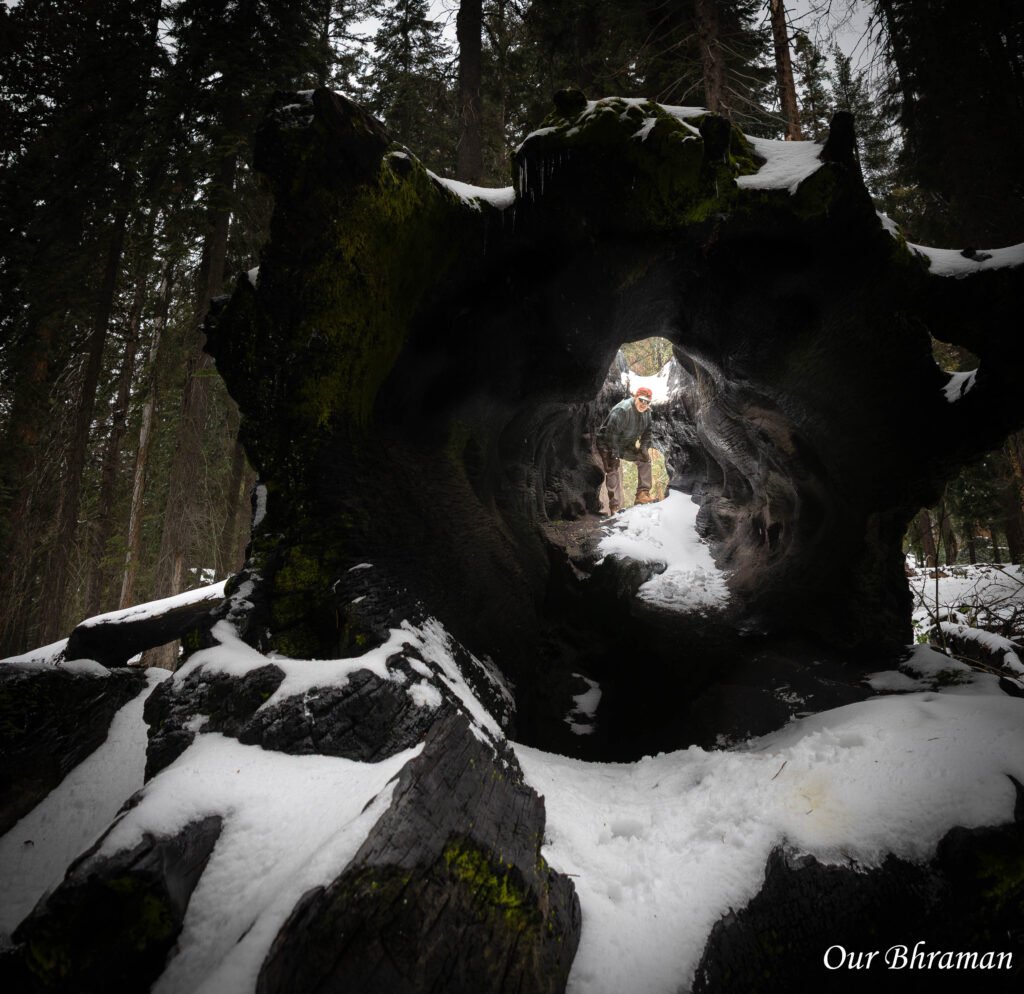
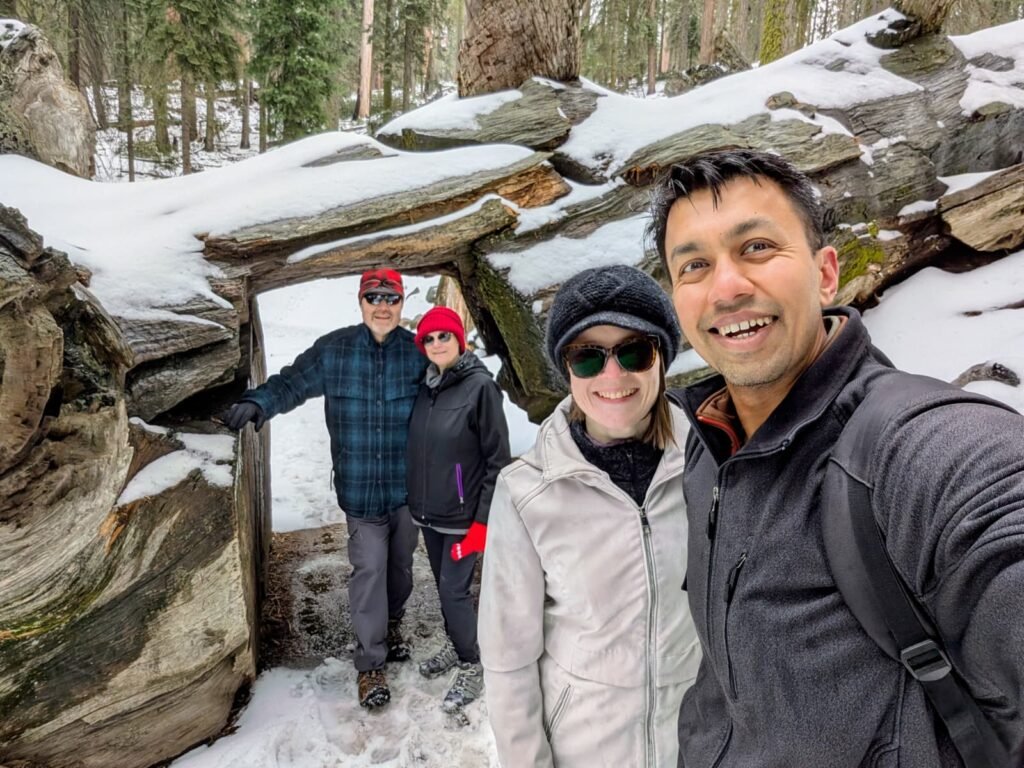
Then came one of the more unexpected features of the trail—the Log Tunnel. Unlike the towering living trees we had been admiring throughout the hike, this one was a reminder that even fallen sequoias continue to be part of the forest. The Log Tunnel is a pedestrian walkway cut directly through the hollowed-out trunk of a fallen sequoia. Instead of simply walking around the massive fallen trunk, visitors can actually walk through it.
Depending on conditions, water can trickle through or around the log, adding another little detail to the experience.
After spending so much of the hike looking up at trees hundreds of feet tall, walking through one was a fun change of perspective. And it was another reminder of just how enormous these trees really are.
A Forest Full of Stories
By the time we finished the Congress Trail, we realized that the most memorable part wasn’t any single tree. It was the variety.
We saw living giants stretching toward the sky, trees scarred by fire but still standing, fallen sequoias that had become part of the landscape, and massive trunks that seemed impossible to comprehend until you stood directly beside them. Every tree seemed to tell a different story. And walking through all of them—with snow covering the ground and more snow falling around us—made the experience feel like we had stepped into another world. This wasn’t just a hike through a forest. It was a walk through thousands of years of history, resilience, and nature’s incredible ability to endure.
The Climb Back
Eventually, it was time to turn around and make our way back. We retraced our steps toward the General Sherman Tree Trail, returning to the same path where our adventure had begun. When we started earlier, the trail had been an easy descent—mostly downhill, with the excitement of knowing we were heading deeper into the forest and toward the giants.
Now came the part we had conveniently forgotten about. We had to climb back up. That easy downward walk we had barely thought twice about on the way in suddenly felt very different in reverse. The incline seemed steeper, the snow seemed deeper, and our legs were definitely letting us know that we’d already put in some miles.
Despite the freezing temperatures, snow-covered trail, and winter storm surrounding us, we were suddenly HOT. The steady uphill climb had us working hard enough that the cold was no longer the problem. Layers started coming off, jackets were being unzipped, and before long, we were working up a sweat in the middle of a winter wonderland.
It was the perfect ending to our day in the Giant Forest. We had started the day bundled up and bracing ourselves against the cold, only to finish the hike climbing uphill through the snow and wondering how quickly we could shed a few layers. Tired, sweaty, cold, and completely amazed by what we’d just experienced, we finally made it back to the top.
Looking back, the Congress Trail was so much more than a hike. It was a journey through a forest of giants—past ancient trees, fire-scarred trunks, towering sequoias, and fallen giants that had become part of the landscape. And doing it all with snow falling around us made the experience unforgettable.
Sometimes the best adventures aren’t the easiest ones. Sometimes they’re the ones that leave you a little exhausted, a little sweaty, and incredibly grateful that you decided to keep going.
On to the next destination
Now, it was time to grab a snack and start our journey towards King Canyon. Thankfully, we spent enough time here that the snowplows had cleared the roads and the sun was out and starting to melt the ice. We were able to take off our tire chains and speed up our journey now.