General Sherman & Congress Trail in Winter
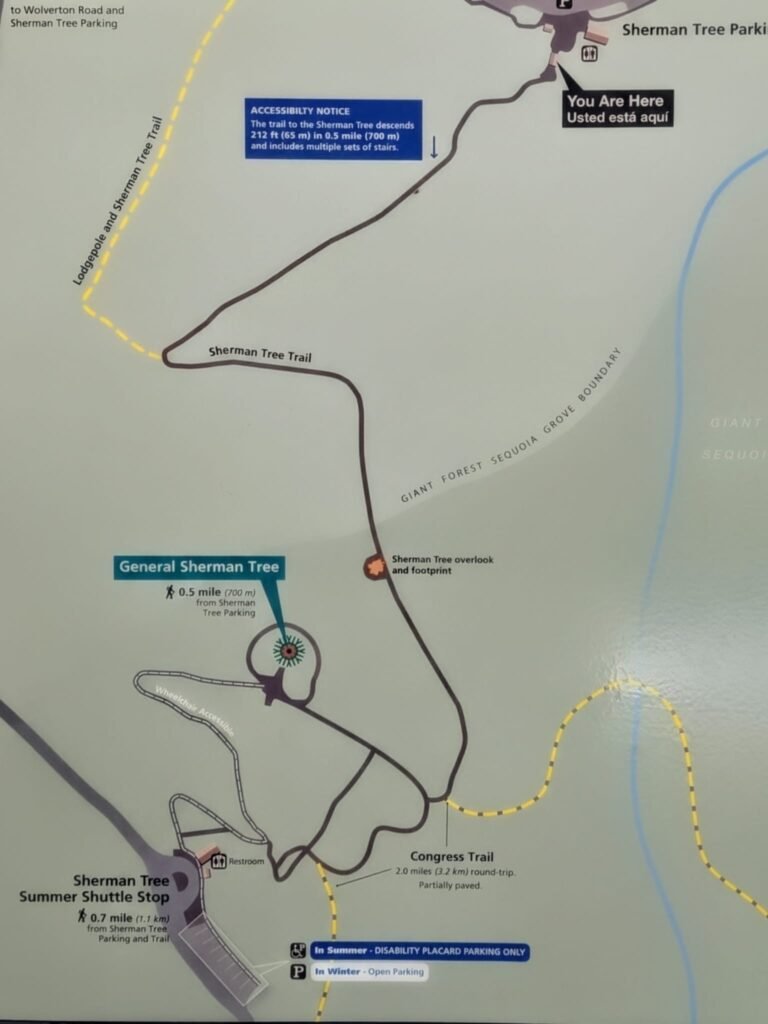
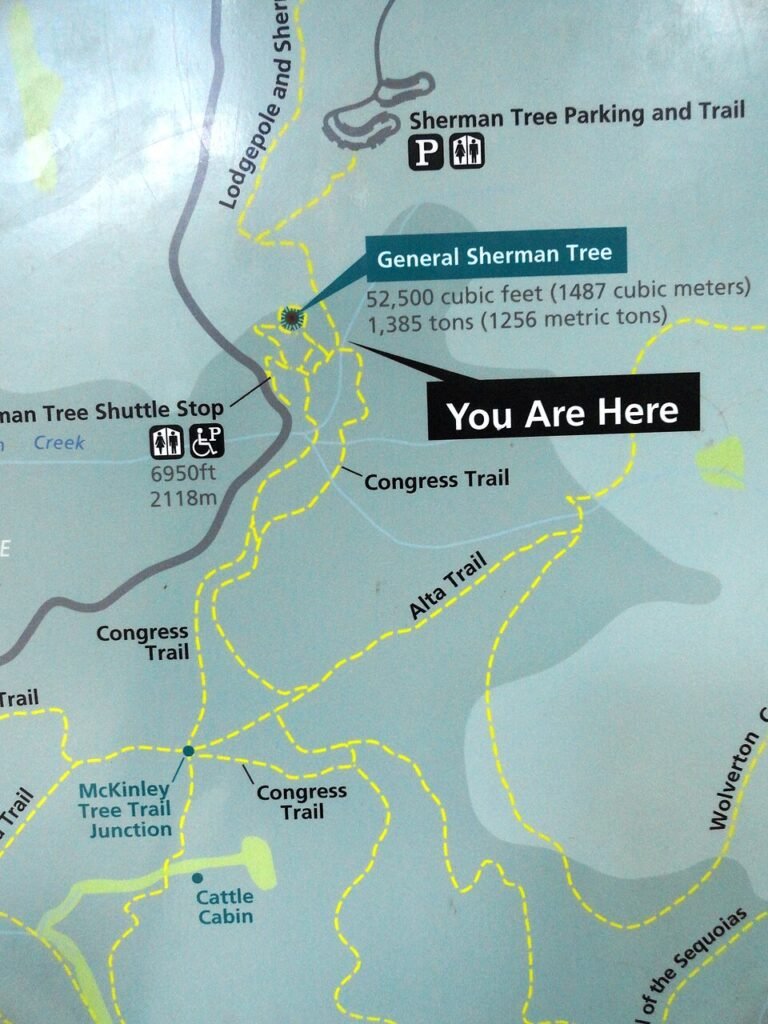
The General Sherman Tree Trailhead is located in the heart of Sequoia National Park’s Giant Forest, with the main parking area accessed from Wolverton Road off Generals Highway. From the parking lot, the trail begins with a relatively easy walk downhill through the towering sequoias toward General Sherman Tree.
Travel Tip
Check road conditions before you go.
Sequoia’s mountain roads can change quickly during winter storms. Snow, ice, and temporary closures can affect your plans, so check the park’s current conditions before heading into the Giant Forest.
Arrive early.
Winter daylight hours are shorter, and weather can move in quickly. Getting an early start gives you more time to explore and leaves some flexibility if conditions deteriorate.
Fill up before heading into the mountains.
There are limited services inside the park, so don’t count on finding fuel, food, or other supplies when you need them. We recommend starting with a full tank and bringing snacks and water.
Expect slower travel.
Even if the road is technically open, snow and ice can make driving considerably slower. Give yourself extra time and don’t plan your itinerary too tightly.
Download maps ahead of time.
Cell service can be unreliable throughout the park. Having offline maps and your route saved ahead of time is helpful, especially when winter conditions make navigation more complicated.
Trail Info
| Trail Detail | Stats |
|---|---|
| Location | Giant Forest, Sequoia National Park |
| Trailhead | Main Sherman Tree Parking Area, off Wolverton Road |
| General Sherman Trail | ~0.5 mile one way |
| Congress Trail | 2.7-mile loop |
| Total Distance | ~3.2 miles round trip |
| Elevation | ~7,000 ft |
| Elevation Gain | ~200 ft on the return to the main parking lot |
| Difficulty | Moderate |
| Trail Surface | Paved |
| Winter Conditions | Snow and ice possible; traction may be needed |
| Dogs | Not permitted on the trail |
| Typical Time | Allow 2–3 hours, longer with snow and photography |
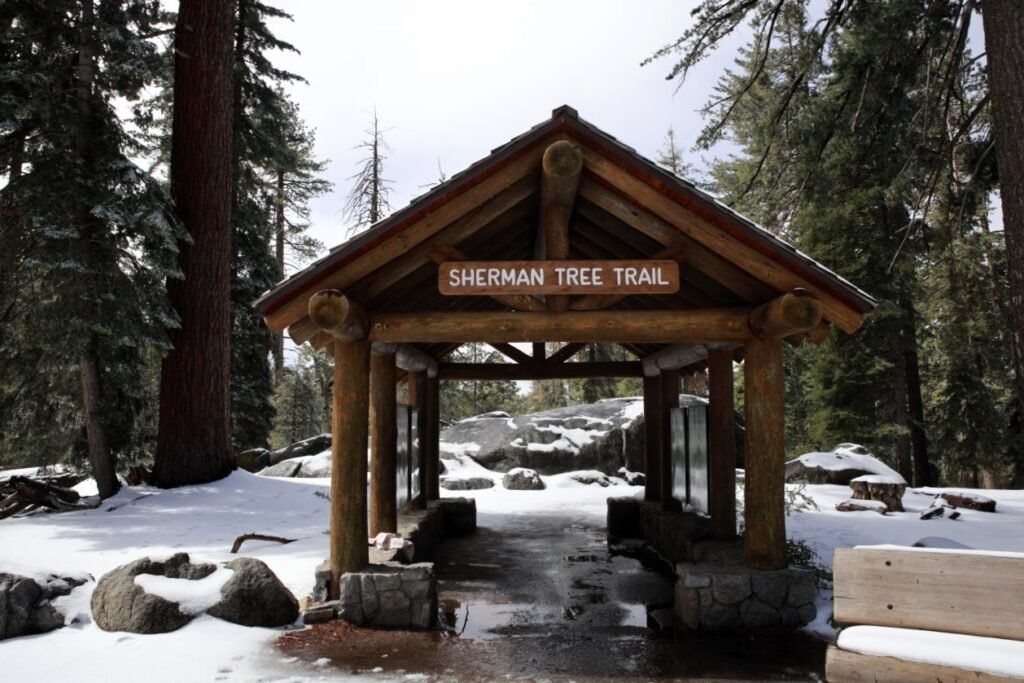
Sherman Tree Trail
Hiking Tips
Don’t underestimate the elevation.
The Giant Forest sits around 7,000 feet above sea level. A trail that sounds easy on paper can feel more strenuous at elevation, particularly when you’re hiking through snow.
Remember the return trip.
The General Sherman Trail begins with a downhill walk from the main parking area. It’s easy to enjoy that descent without thinking about it—but you’ll have to climb it on the way back!
Wear traction in winter.
Snow-covered trails can hide patches of ice. Waterproof hiking boots with good tread are important, and microspikes or similar traction devices can make a huge difference.
Dress in layers.
Temperatures can be downright cold when you start, especially in the morning. But once you begin climbing, you’ll warm up quickly. We went from bundled up against the cold to working up a sweat on the uphill return.
Take your time.
This isn’t a trail to rush. Stop frequently, look up, and take in the scale of the trees. The entire point is to experience the forest.
Bring water and snacks.
Even a relatively short hike can take longer than expected when you’re stopping for photographs and navigating snow.
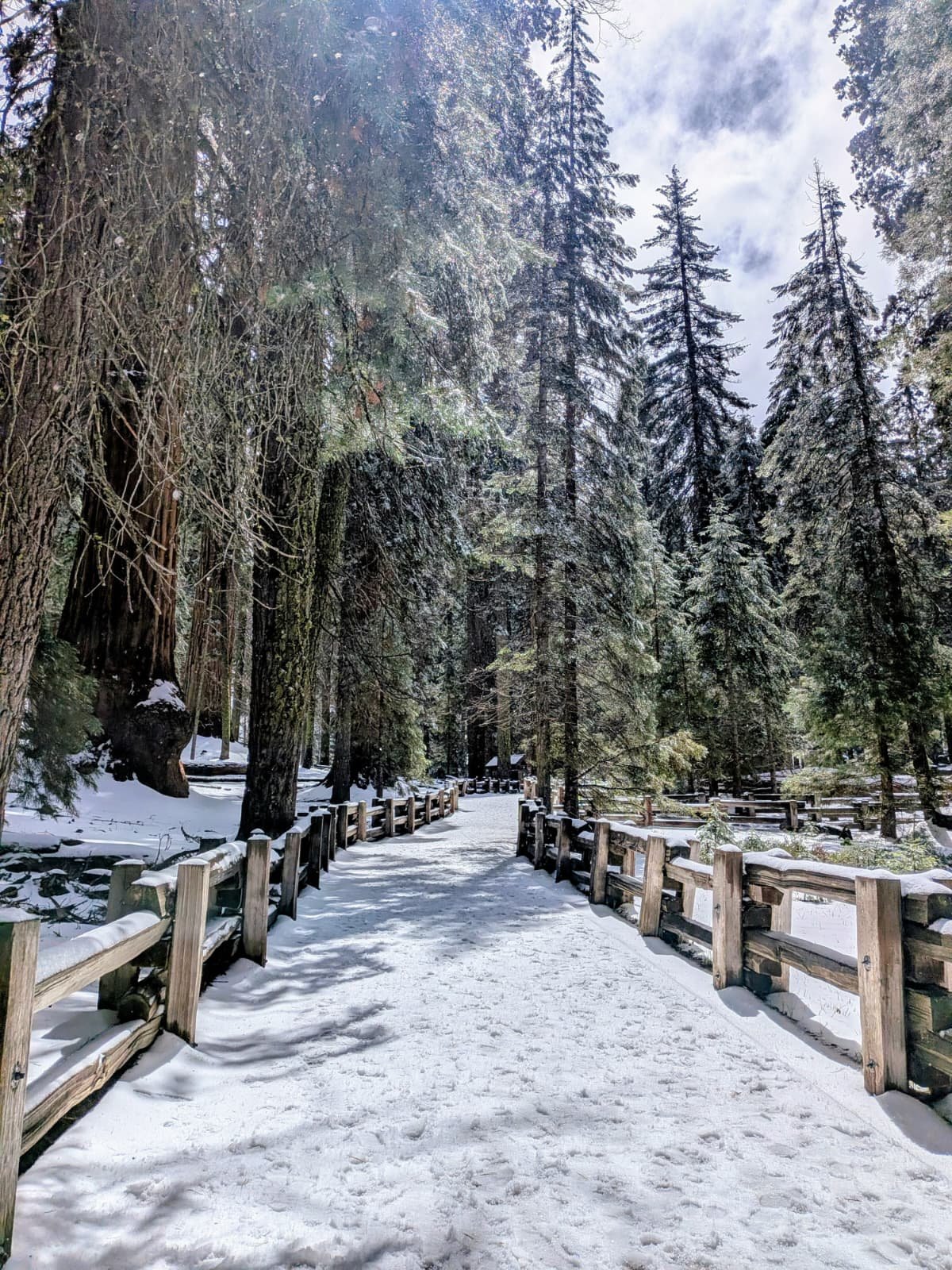
On our visit, however, winter had transformed the trail. Snow covered the ground, the trees were dusted in white, and the forest looked like something straight out of a winter postcard. We bundled up, grabbed our cameras, and started down the trail, excited to finally see one of the most famous trees in the world.
At the time, we didn’t give much thought to the fact that we were walking downhill. We would think about it later. Much later. That gentle descent would eventually become the uphill climb back to the parking lot after our adventure along the Congress Trail—and by then, we’d already logged plenty of miles walking through the snow.
What to Expect on the Trail
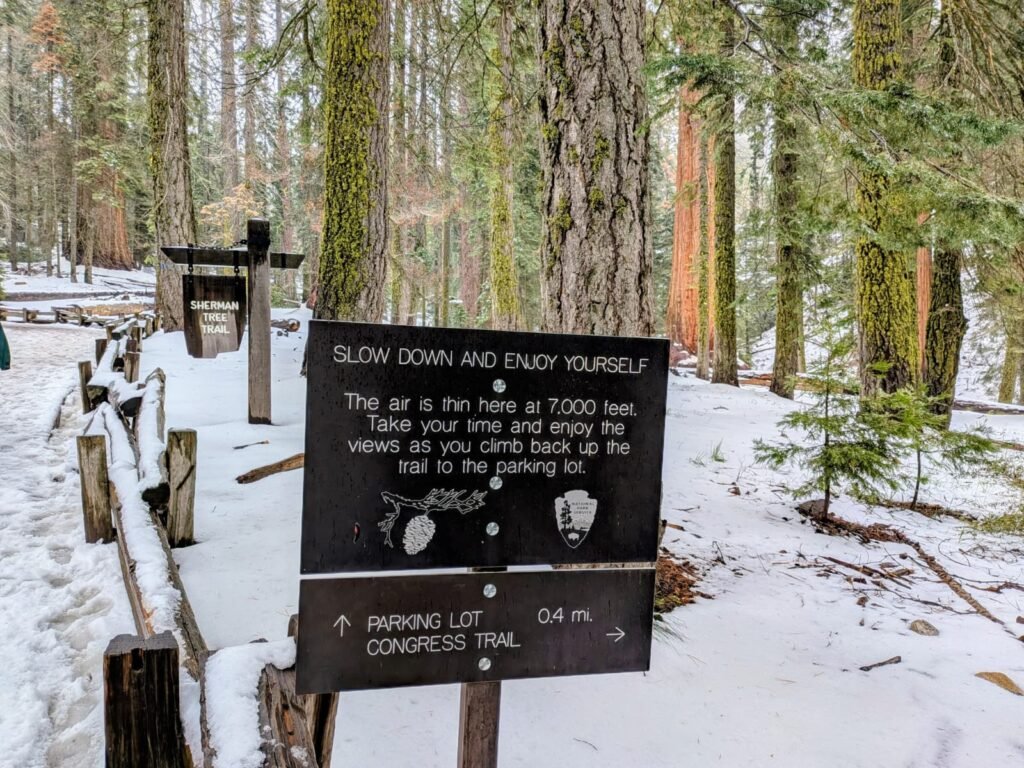
Under normal conditions, the main General Sherman Trail is approximately 0.5 miles each way. The paved trail descends from the main parking area toward the tree, passing through the Giant Forest along the way. There are a few stairs, benches, and interpretive displays that provide information about the sequoias and their ecosystem.
The important thing to remember is that the walk back is uphill. What feels like an easy stroll on the way down becomes a steady climb on the return.
At roughly 7,000 feet in elevation, the combination of altitude and the uphill return can make the hike feel more strenuous than the distance suggests. Take your time, especially if you’re not accustomed to hiking at elevation.
Once you reach General Sherman, there are viewing areas around the tree where you can take in its enormous trunk and surrounding grove. A protective fence surrounds the base, so be sure to stay on the designated trail and avoid walking over the shallow root system.
But Winter Changes Everything
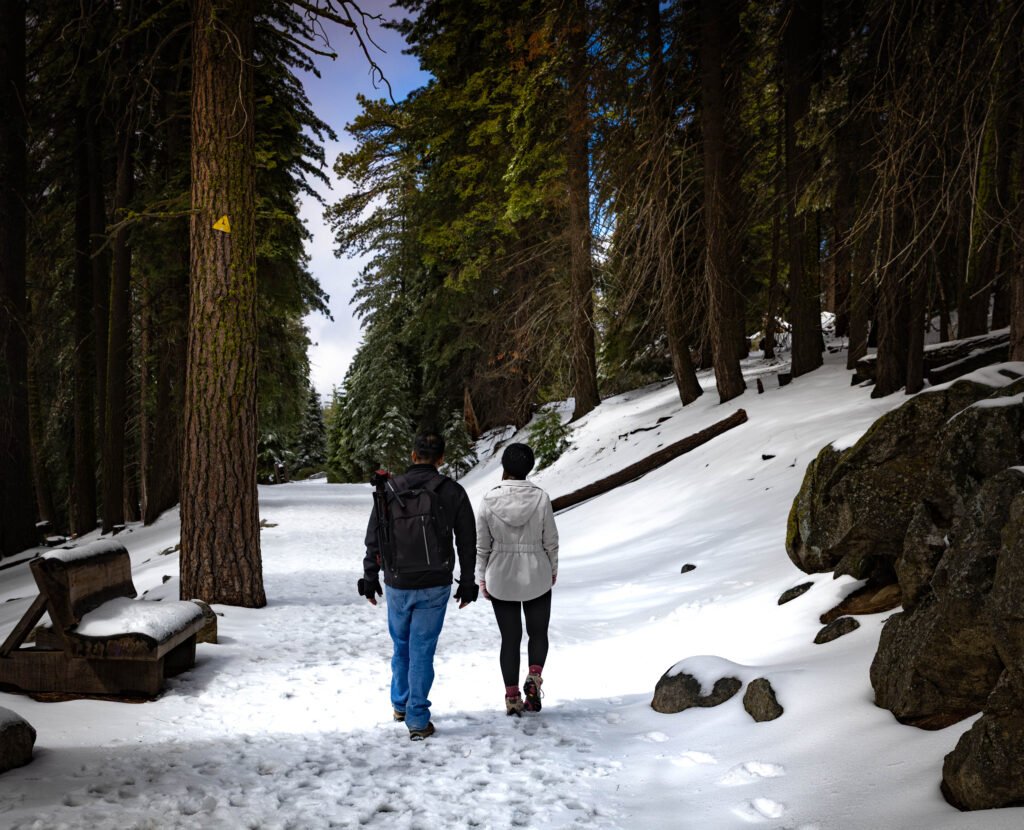
Our visit was during a winter storm, and this is where the General Sherman experience becomes especially memorable. Snow can occur in the Giant Forest from October through June, depending on the season. In winter, you may be walking on packed snow, ice, slush, or a combination of all three. Good waterproof boots, warm layers, and traction are far more important than simply having a pair of comfortable walking shoes.
Walking Through a Winter Wonderland
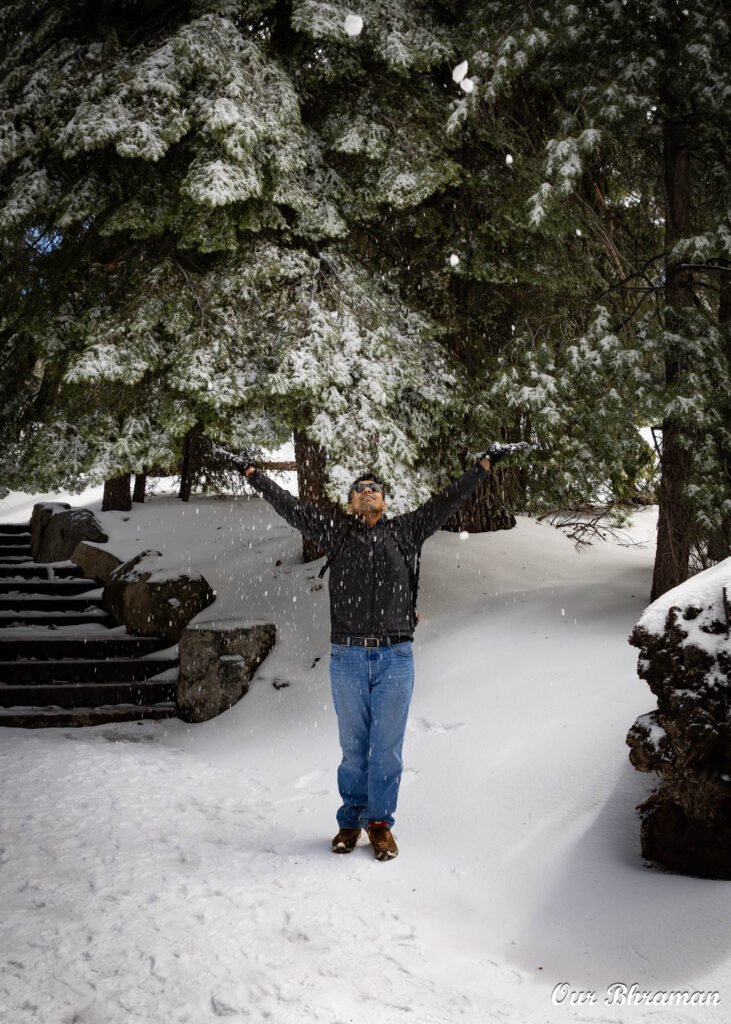
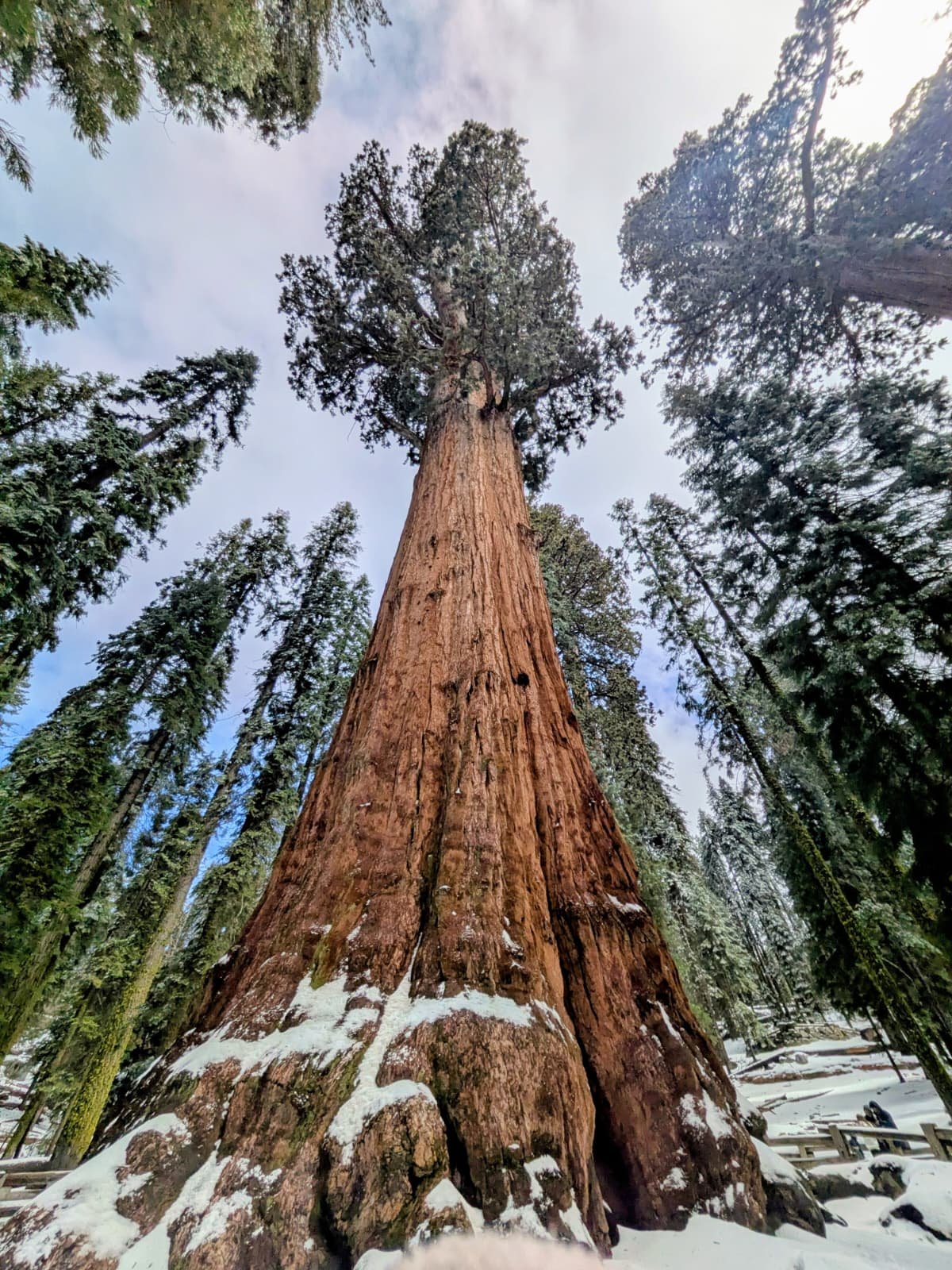
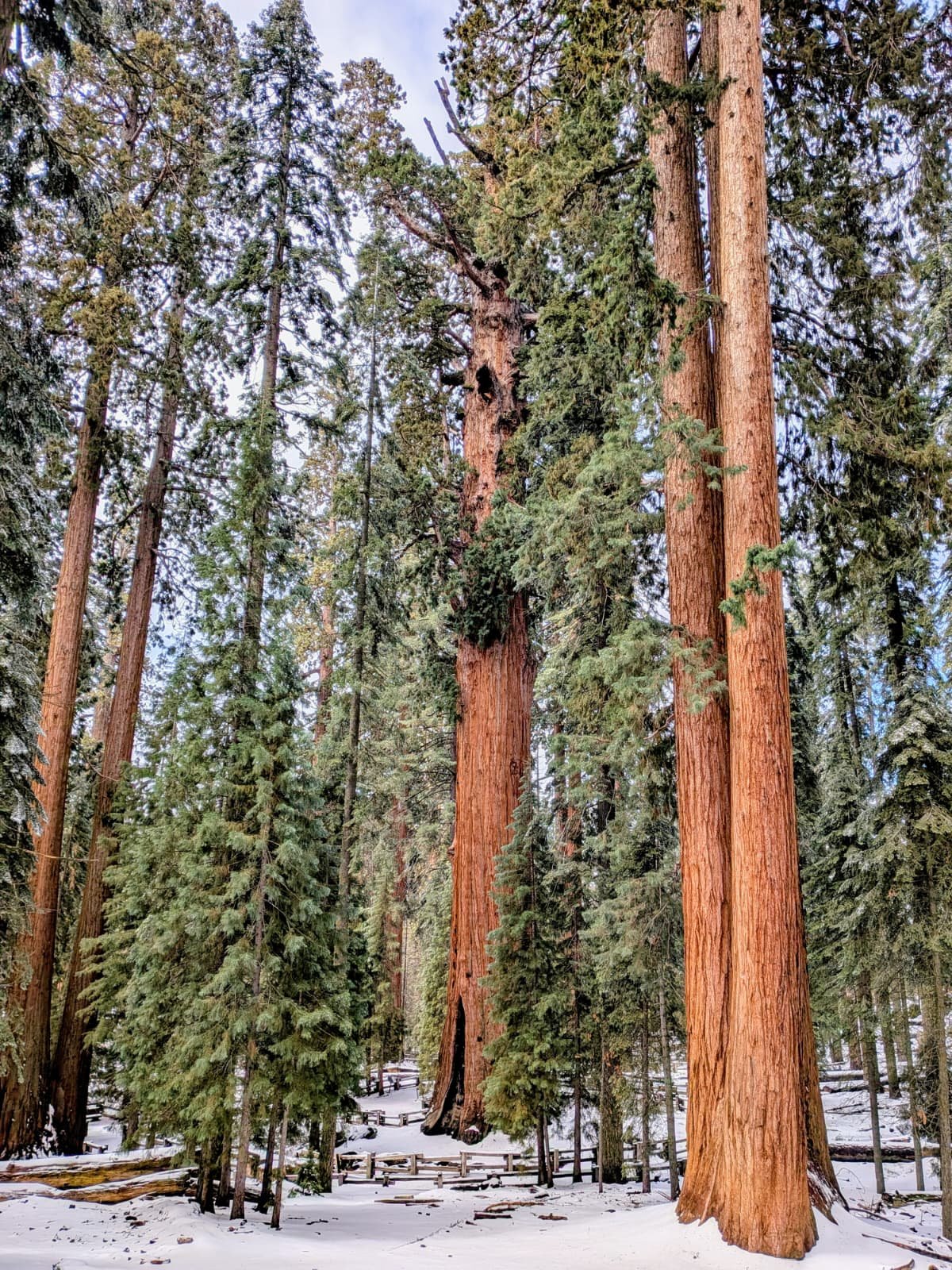
For us, the snow was what made this stop so special. The towering sequoias were dusted with snow, their massive trunks disappearing upward into a white canopy. Snow covered the forest floor, muffling the sounds around us and creating an almost surreal sense of quiet. It felt less like walking through a national park and more like stepping into a winter wonderland.
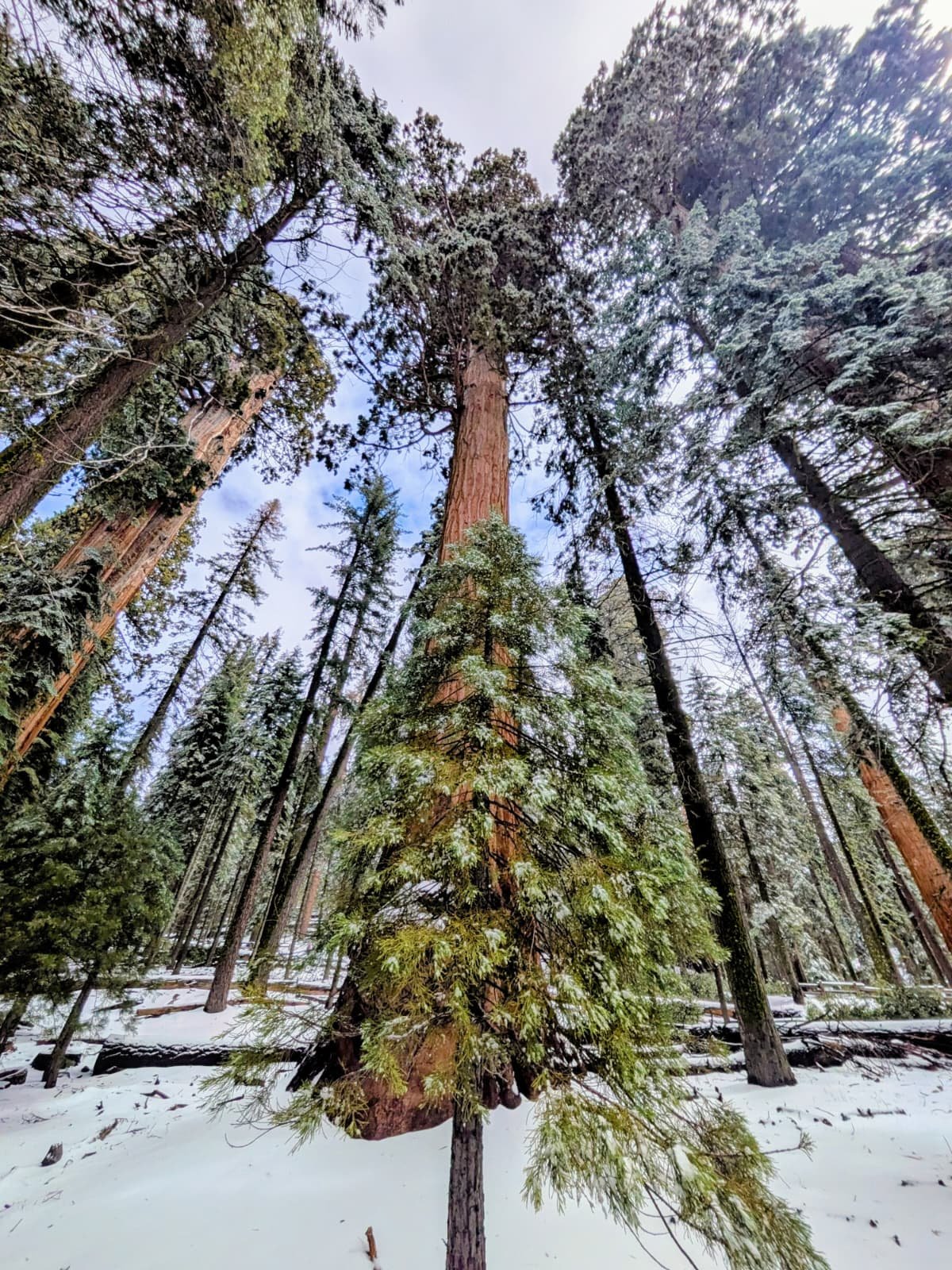
There is something especially dramatic about seeing these ancient giants surrounded by snow. The contrast between the reddish-brown bark, white snow, and towering green canopy creates some incredible photography opportunities.
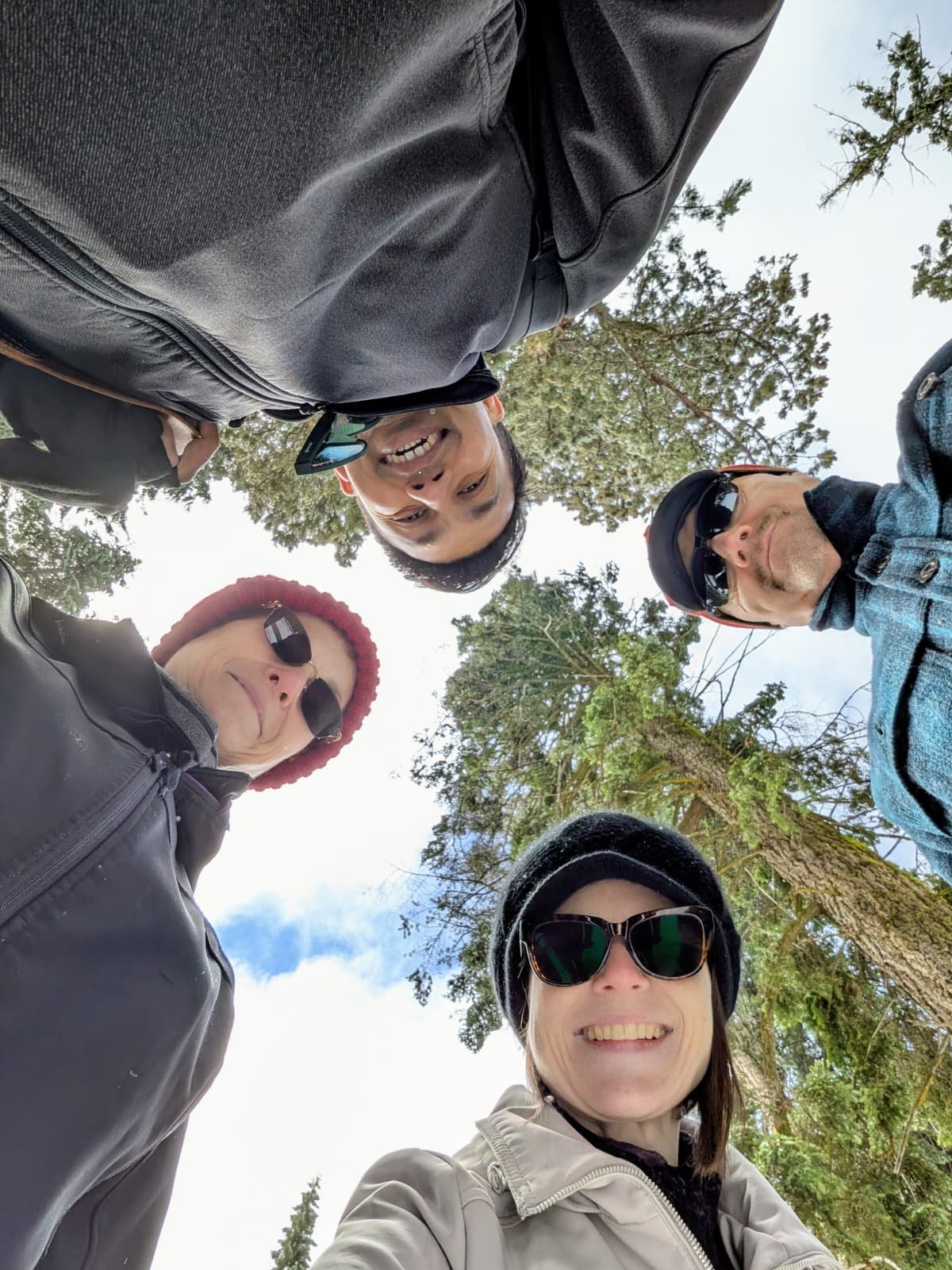
And don’t just focus your camera on General Sherman. Look up. Look down. Look between the trees. Some of the best photographs come from showing the scale of the forest rather than trying to capture one tree by itself.
The General Sherman Tree
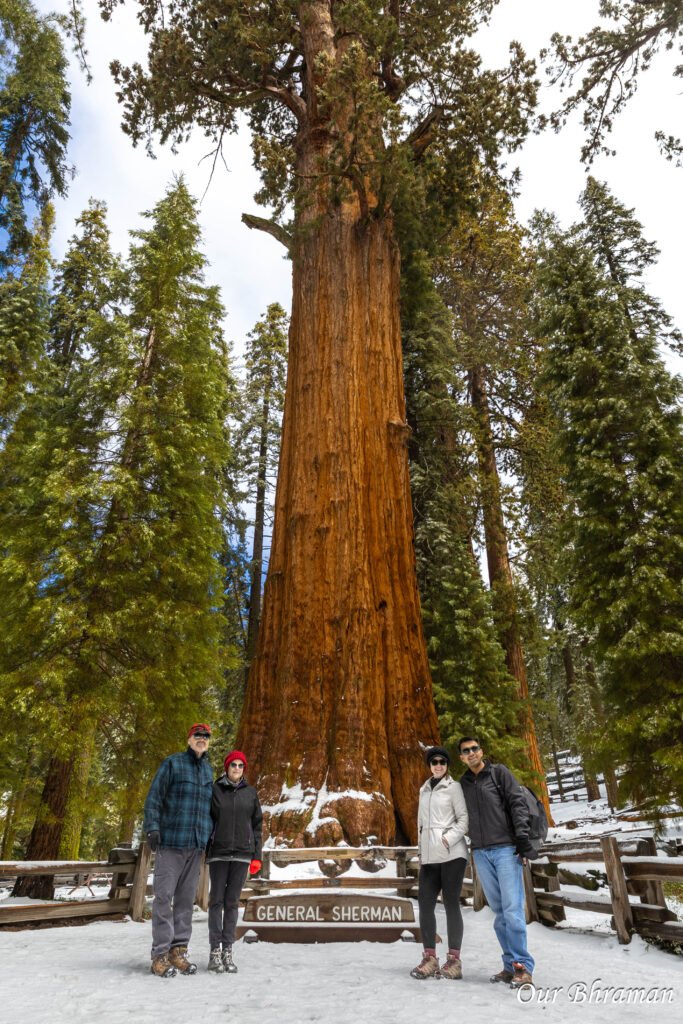
Standing among the giant sequoias is an experience that is difficult to put into words. These trees are enormous in every direction, and General Sherman takes that scale to another level.
The tree stands at the northern end of the Giant Forest and contains more volume of wood than any other known living single-stem tree. It is approximately 275 feet tall, with a circumference of more than 100 feet at its base. Rather than simply looking up at one enormous tree, the trail gives you a chance to appreciate the surrounding grove and just how massive these sequoias are.
And then you reach General Sherman—and somehow, the surrounding giants suddenly seem a little less giant.
Congress Trail
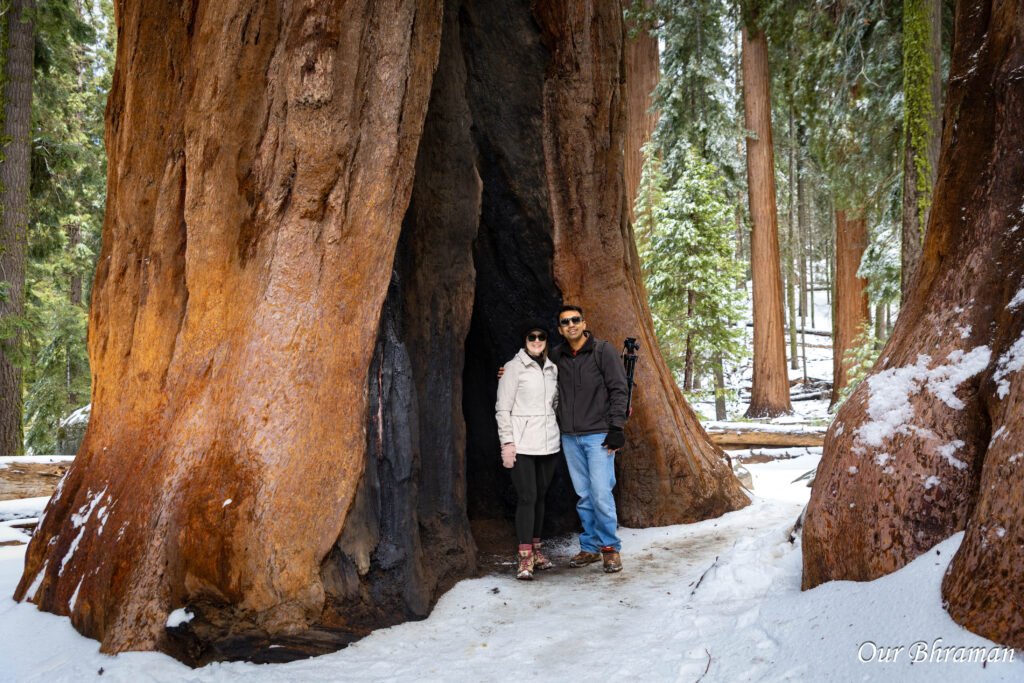
Our visit to General Sherman was only the beginning. After standing beneath this incredible giant, we continued deeper into the grove on the Congress Trail, where the forest became even more immersive. Instead of simply visiting one famous tree, we found ourselves surrounded by enormous sequoias in every direction—trees with names like the President, the Senate, the House, and Chief Sequoyah.
With snow covering the forest floor and towering sequoias rising above us, it truly felt like we had stepped into another world. And that was exactly the kind of adventure we had come to Sequoia National Park to find.
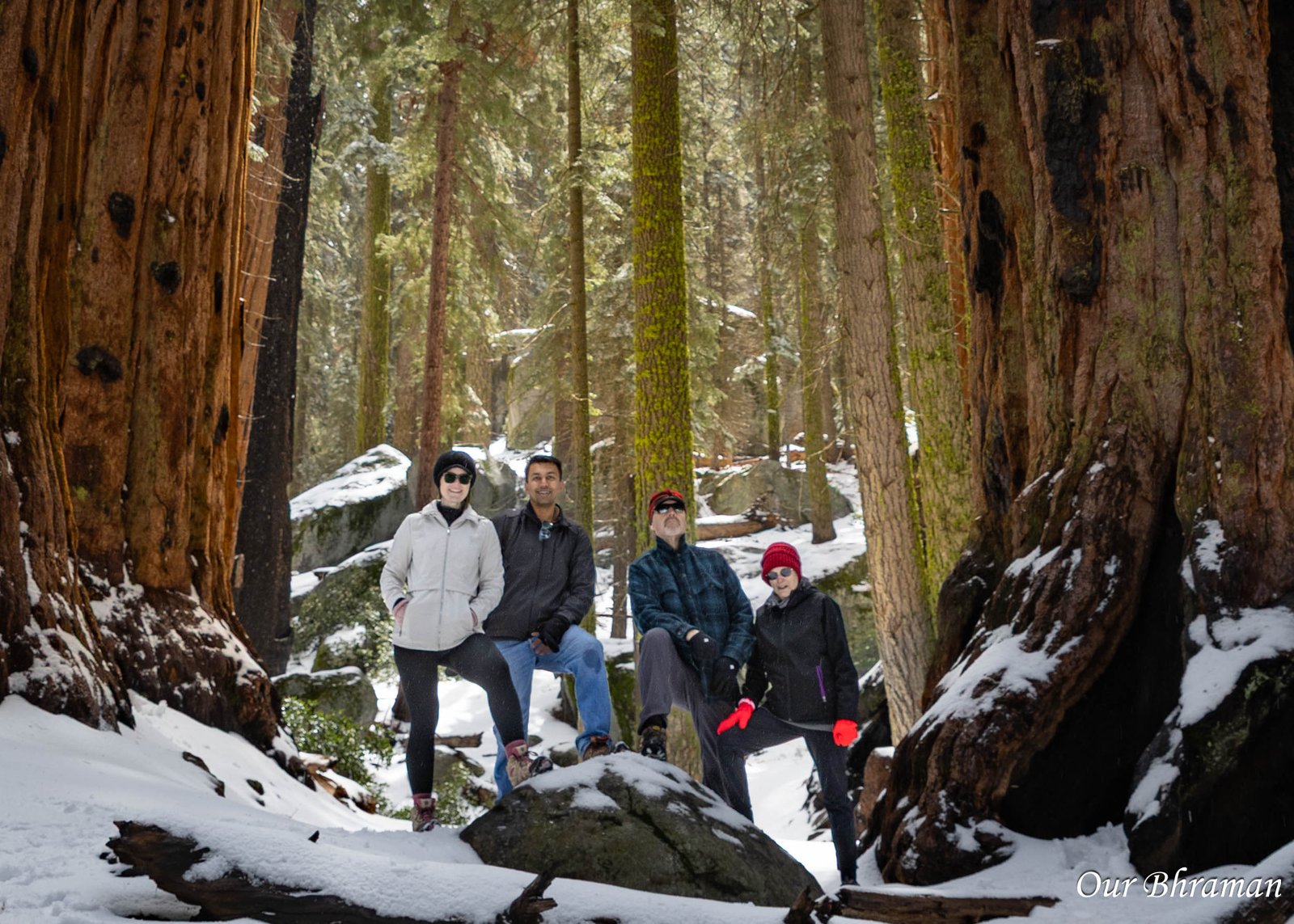
The trail was covered in snow, and the massive sequoias stood quietly around us. Their reddish trunks contrasted against the white landscape, while fresh snow clung to branches overhead. Every direction we looked seemed to reveal another giant. It was quiet. It was peaceful. And it felt completely surreal. Walking through the Congress Trail in those conditions felt less like hiking a trail and more like wandering through a living winter wonderland.
hiking Tip
Winter note: Snow can substantially change the experience. The NPS notes that the Congress Trail can be snow-covered in winter and may be more suitable for snowshoeing depending on conditions.Lorem ipsum dolor sit amet, consectetur adipiscing elit. Ut elit tellus, luctus nec ullamcorper mattis, pulvinar dapibus leo.
A Forest Shaped by Fire
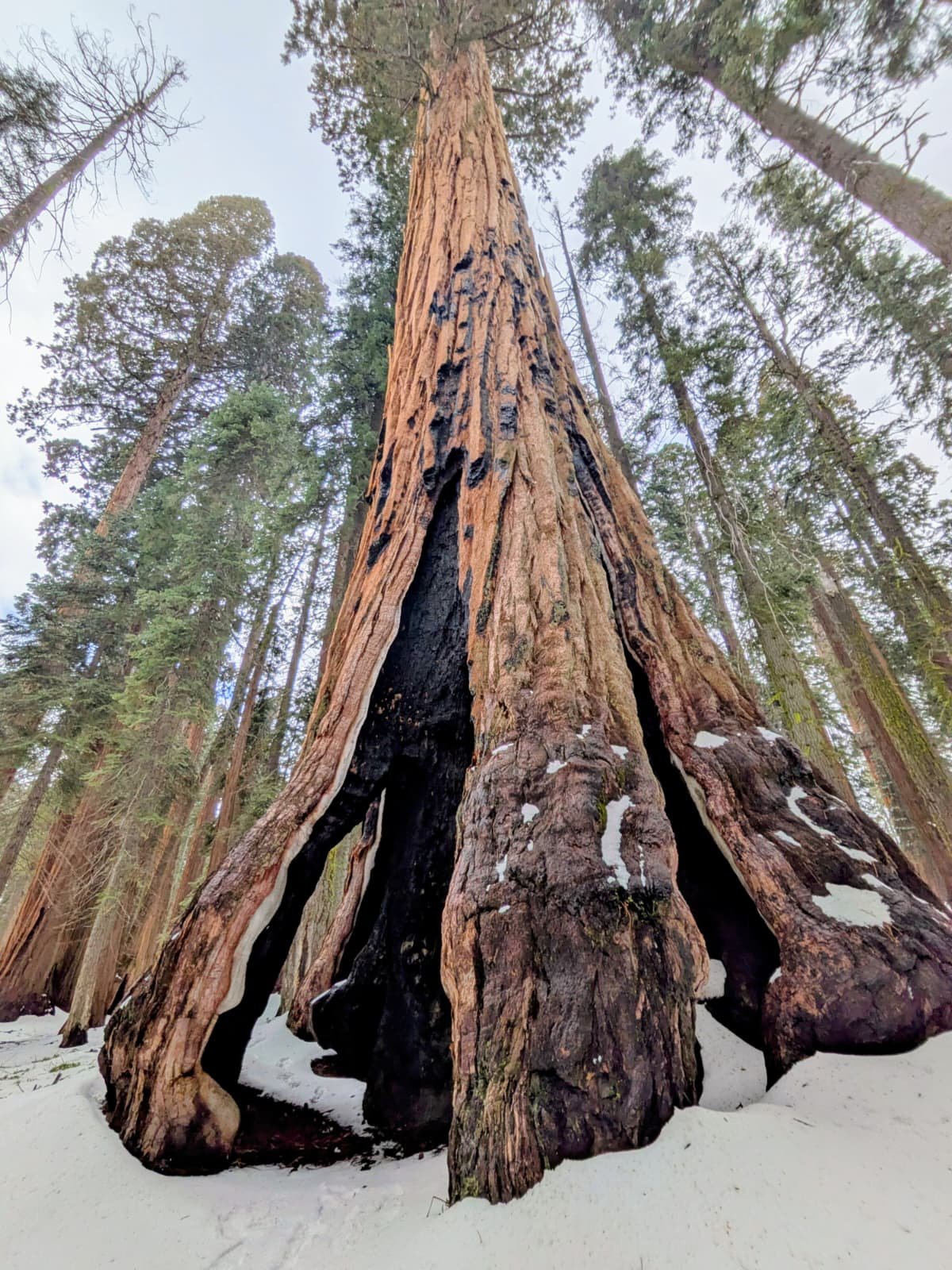
As we continued along the Congress Trail, we began noticing that every tree seemed to have its own story. Some were enormous and perfectly intact, with massive trunks stretching toward the sky. Others were twisted, scarred, or split open, revealing the effects of years of weather, age, and fire. We came across several sequoias that had been severely damaged by fire. Their trunks were blackened and hollow, with enormous sections burned away. From the outside, some looked as though they should have fallen years ago. But they were still standing. Still reaching toward the sky. Still part of the forest.
There was something incredibly humbling about seeing these trees up close. A hollow trunk might look fragile, but giant sequoias are remarkably adapted to fire. Their thick, insulating bark can protect living tissue from the heat, and fire plays an important role in the natural life cycle of the sequoia forest.
Standing beneath these scarred giants in the middle of a snowy forest made the contrast even more striking. The blackened wood against the white snow told a story of destruction and renewal all at once. Some trees had lost enormous portions of their trunks, yet somehow remained standing tall. Others had fallen completely, becoming part of the forest floor and creating space for new life. As we walked past them, we couldn’t help but think about how long these trees had endured. Fire. Snow. Wind. Drought. Storms. And the passage of centuries. Yet some of them were still standing.
The Congress Trail became more than a walk through a grove of enormous trees. It became a reminder that strength doesn’t always mean coming through something unchanged. Sometimes it means continuing to stand despite everything you’ve been through.
And surrounded by these giants, we felt pretty small—but also incredibly lucky to witness their stories.
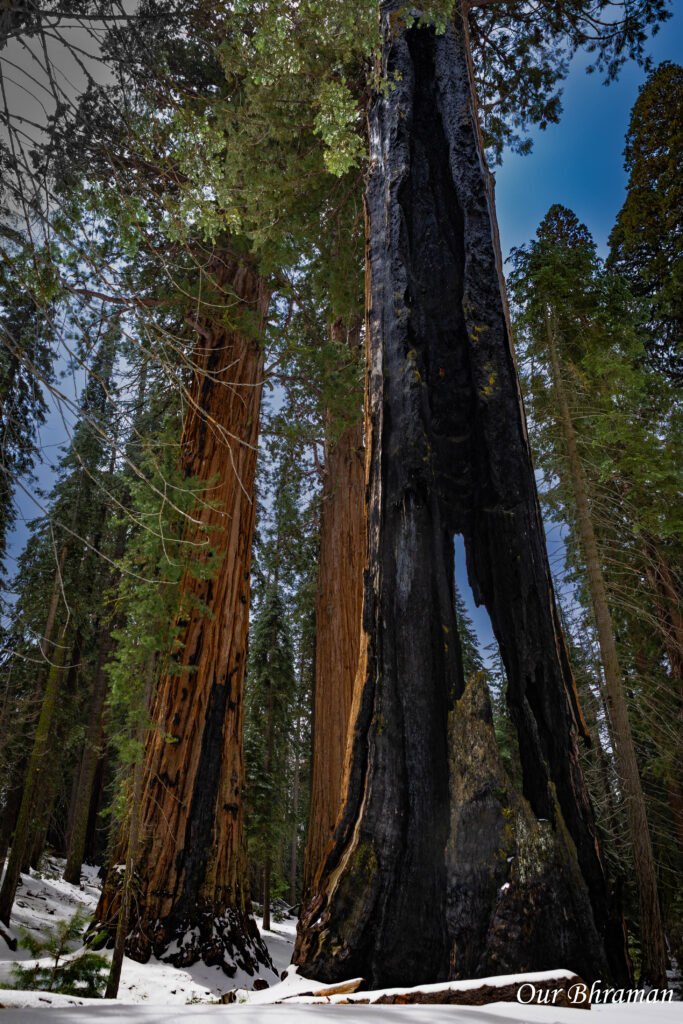
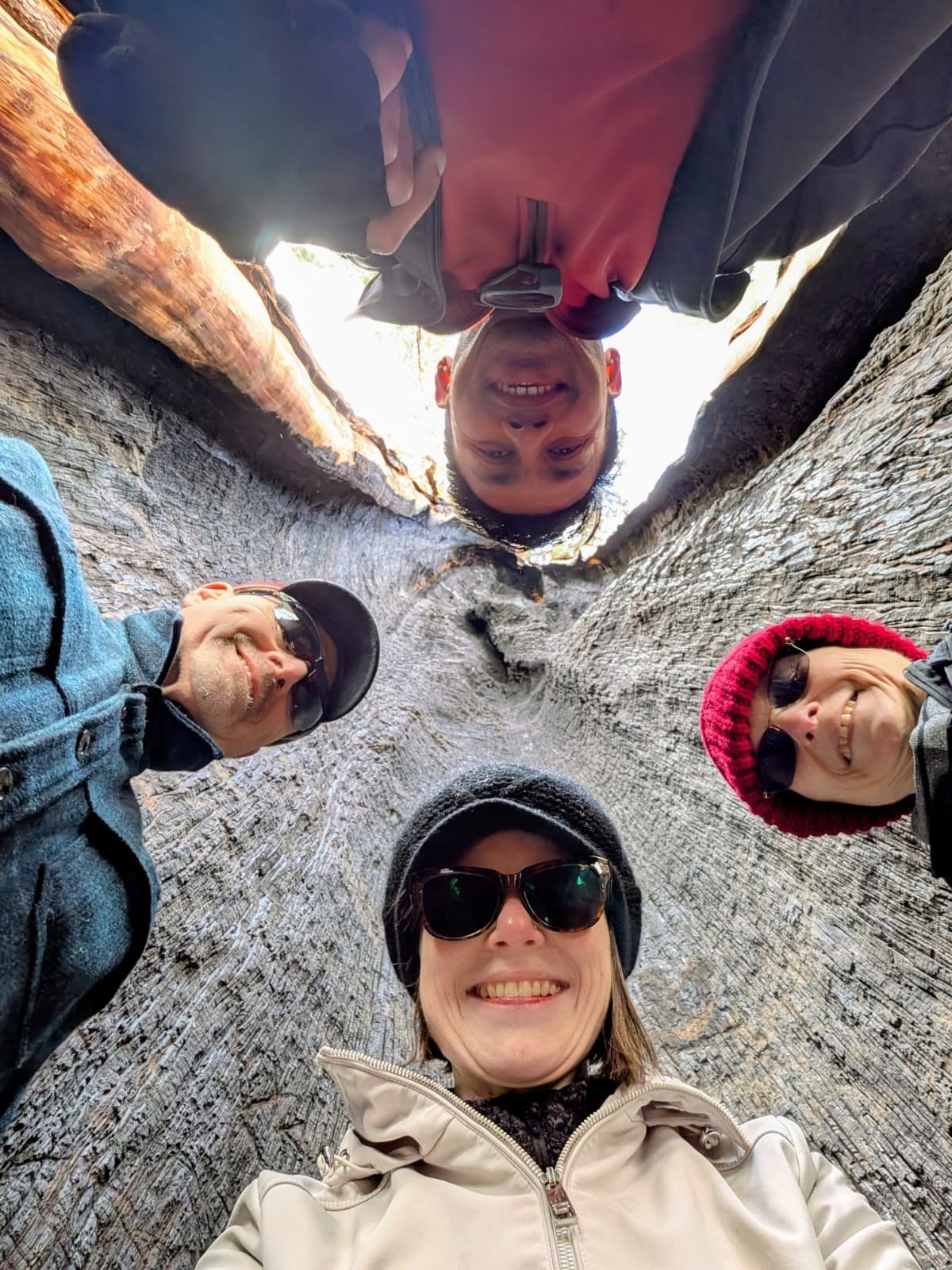
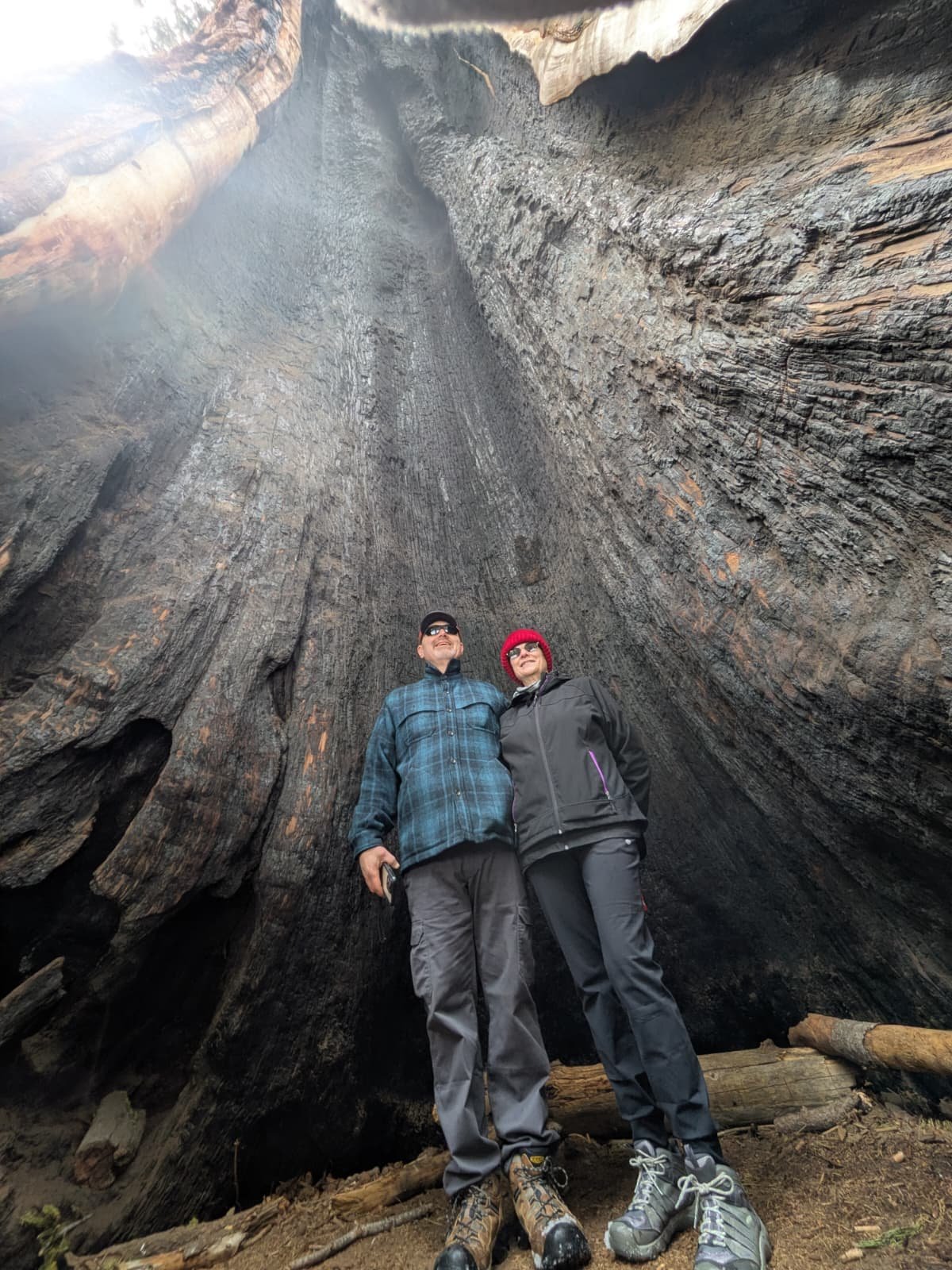
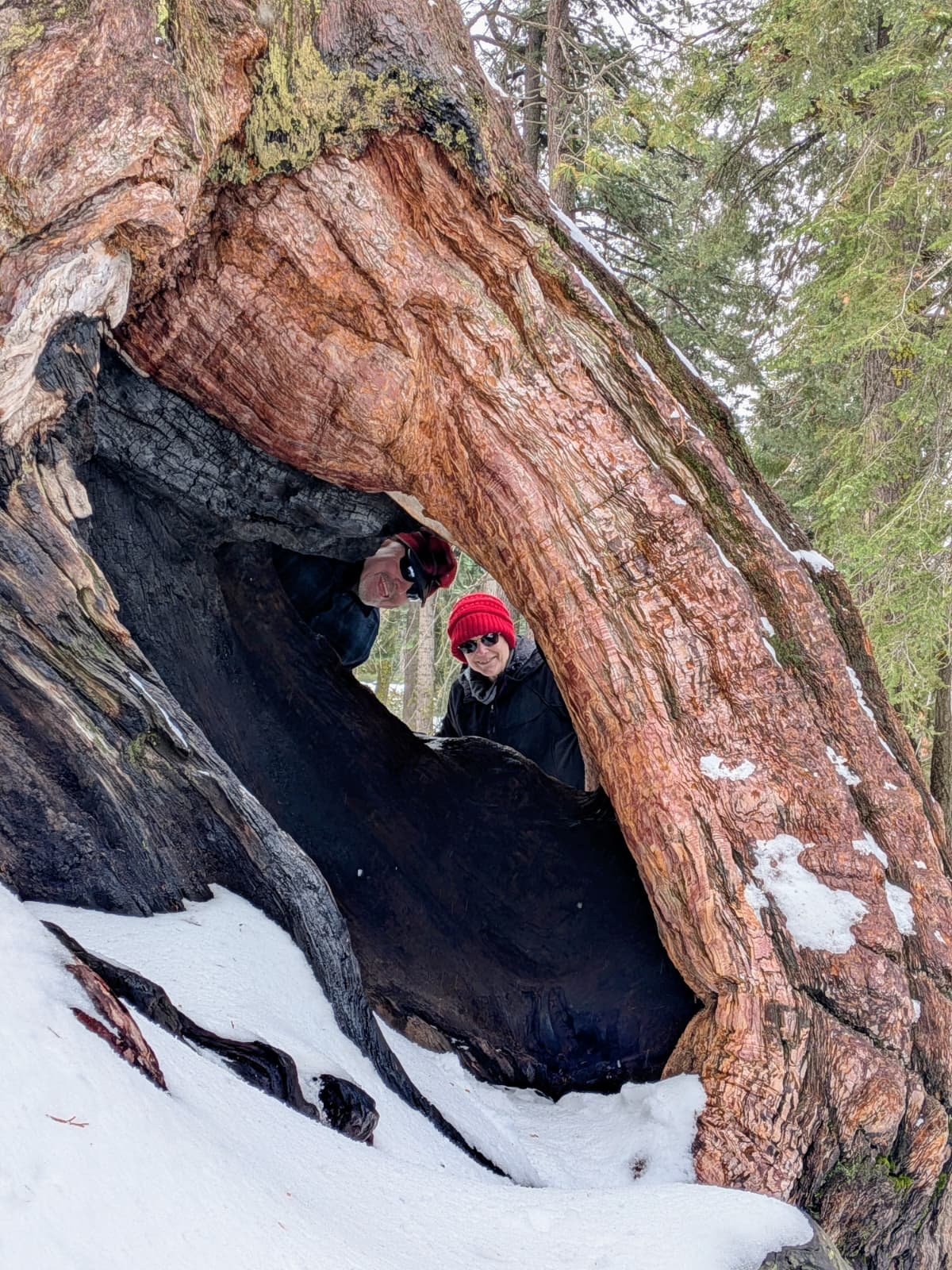
As we continued through the forest, we were mesmerized by the size of these trees and the unique beauty.
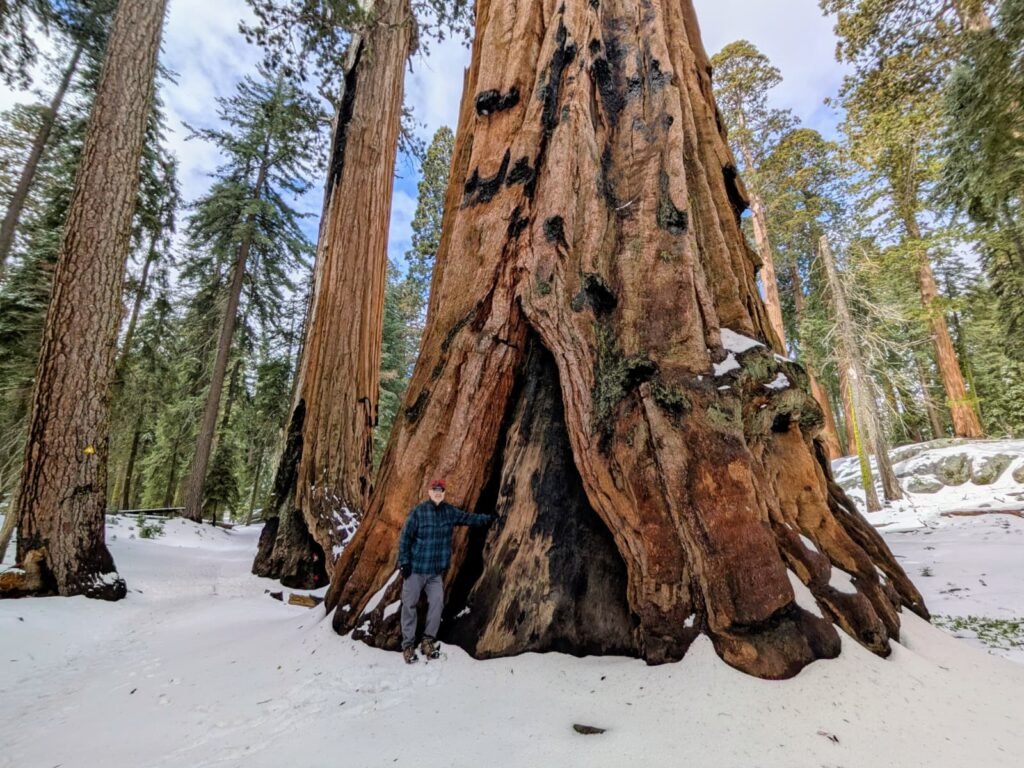
The Giants Along the Congress Trail
One of the things we loved most about the Congress Trail was that it wasn’t simply a hike from Point A to Point B. Along the way, we encountered a collection of remarkable sequoias, each with its own personality, history, and story to tell.
Some were enormous and perfectly intact. Others had been scarred by fire, hollowed out, or shaped by the elements. Yet even the damaged trees seemed to command the same presence as the giants still standing tall.
Here are some of the memorable trees and features we encountered along the way:
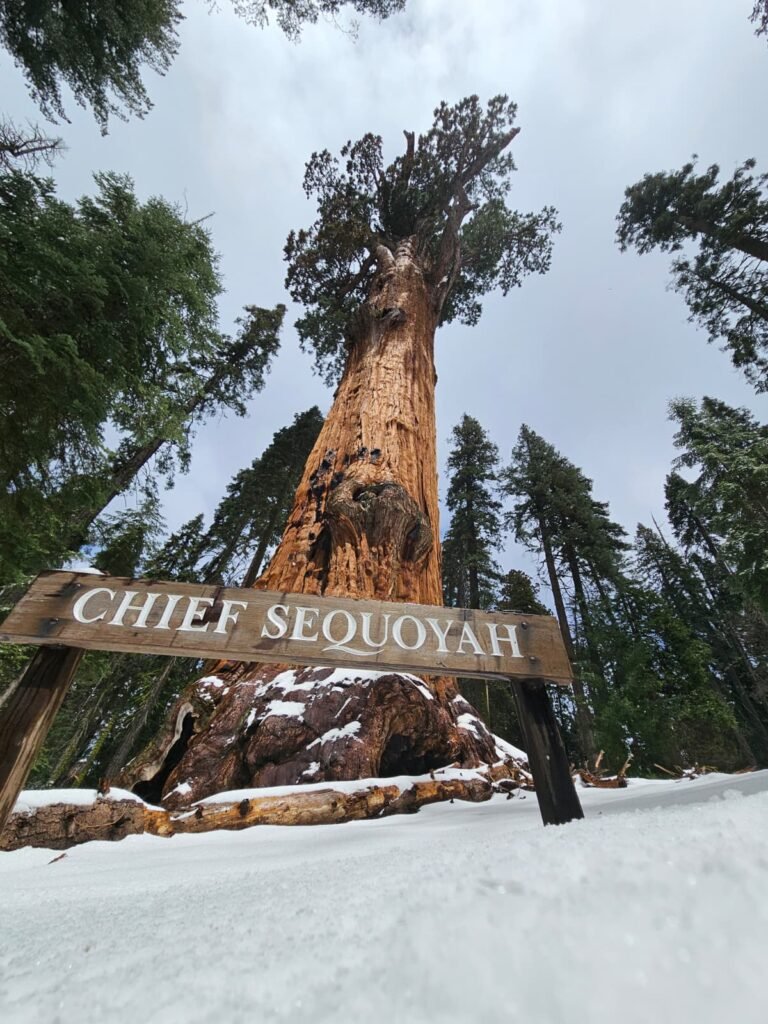
Chief Sequoyah
Our first memorable giant was Chief Sequoyah, named in honor of Sequoyah, the Cherokee scholar who created the Cherokee writing system.
The tree itself is an impressive example of the sheer scale of the sequoias found throughout the Giant Forest. Standing next to it gives you that familiar feeling we experienced again and again on this trail—looking up and realizing that the tree seems to just keep going.
With snow surrounding its massive trunk, Chief Sequoyah looked especially impressive during our winter hike.
It was a fitting introduction to the giants that awaited us farther along the trail.
The President
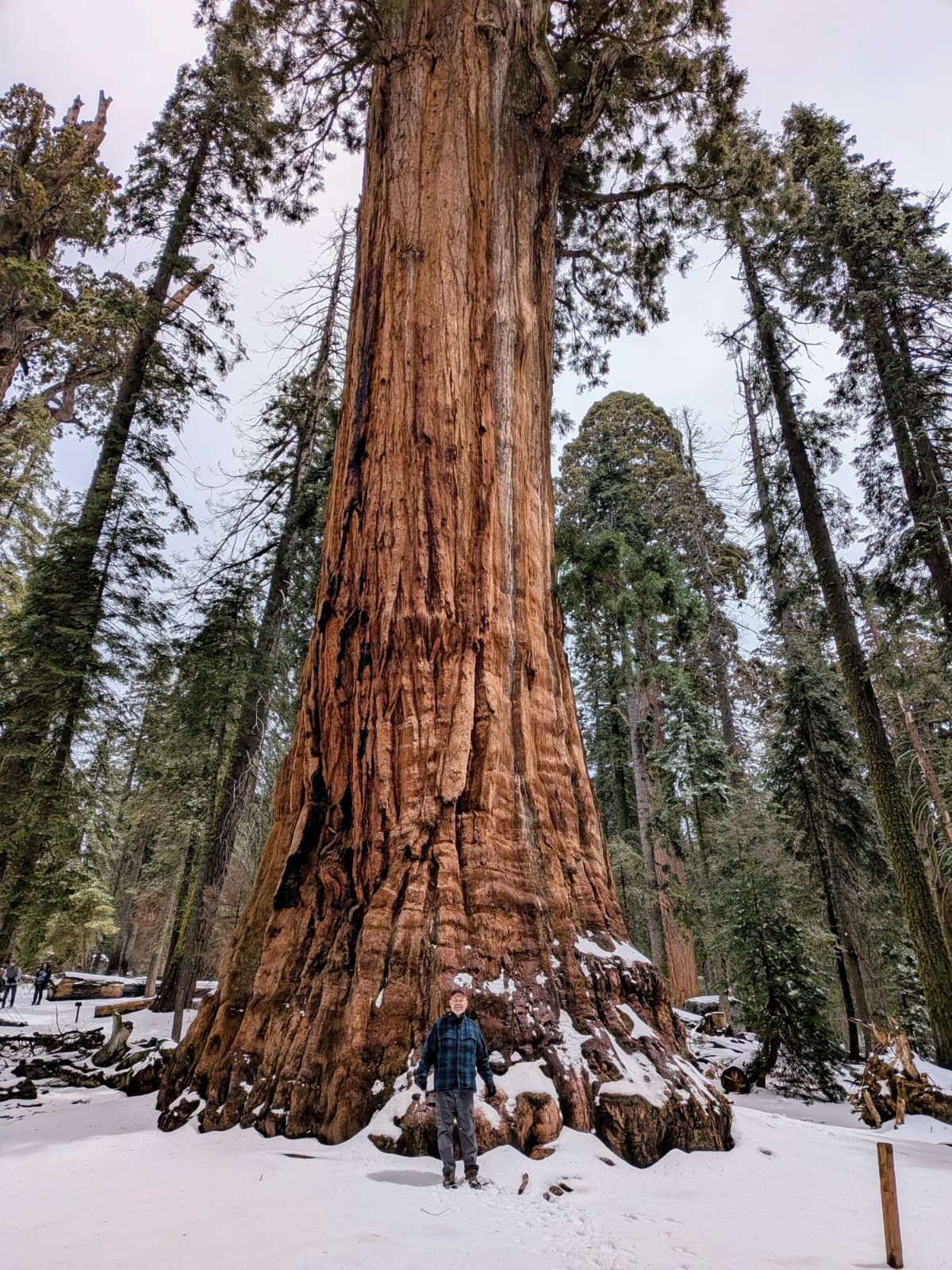
Next came The President, one of the most famous sequoias in the Congress Grove. And the name certainly fits.
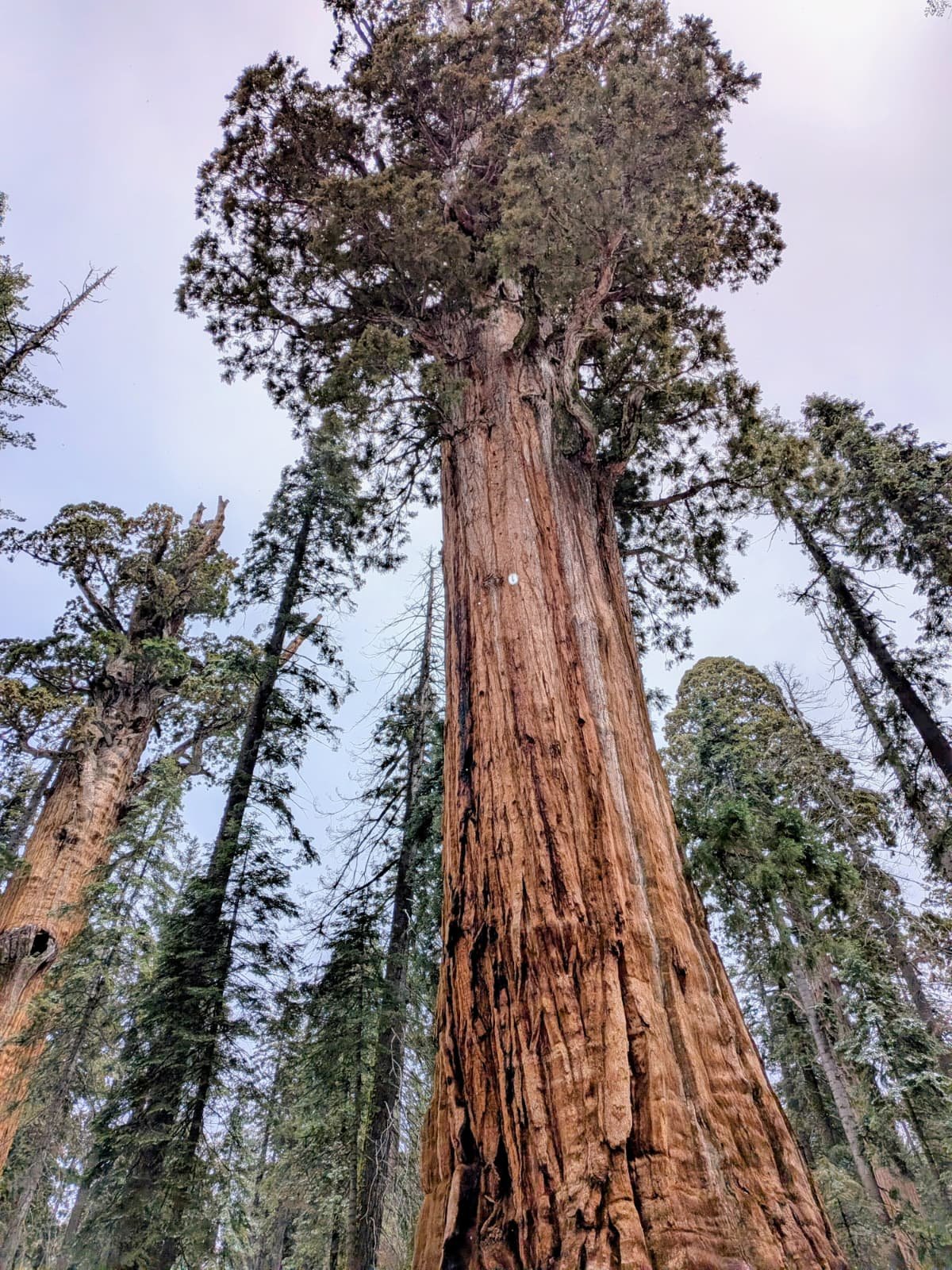
The President is an enormous, ancient sequoia estimated to be more than 3,000 years old. Unlike General Sherman, which is famous primarily for its enormous volume, The President is particularly notable for its impressive height, massive trunk, and extensive crown.
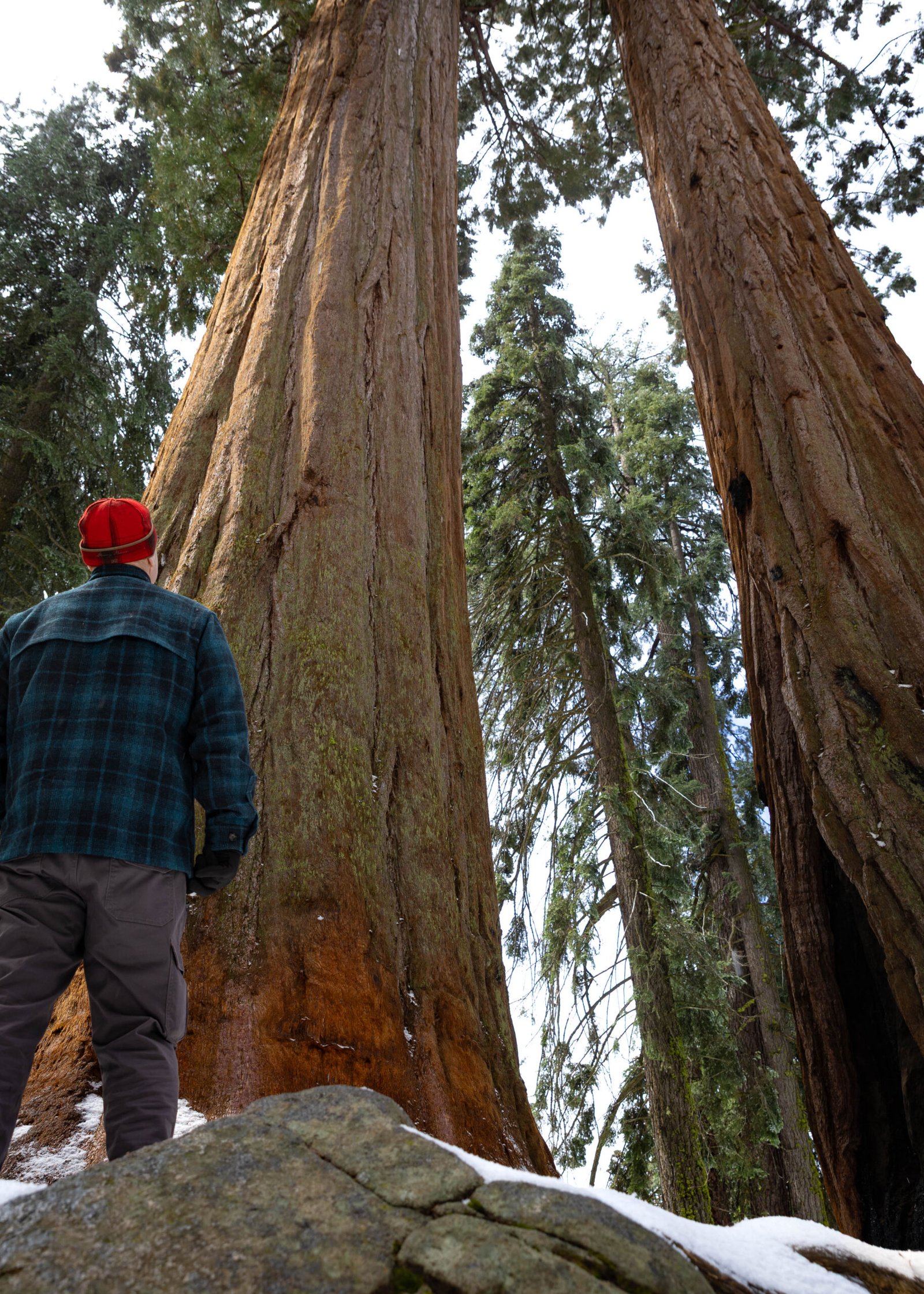
Looking up through the branches, it was difficult to capture the entire tree in one photograph. The snow-covered forest made it even more dramatic. The massive reddish trunk disappeared into a canopy dusted with white, making the tree seem almost larger than life.
The Senate
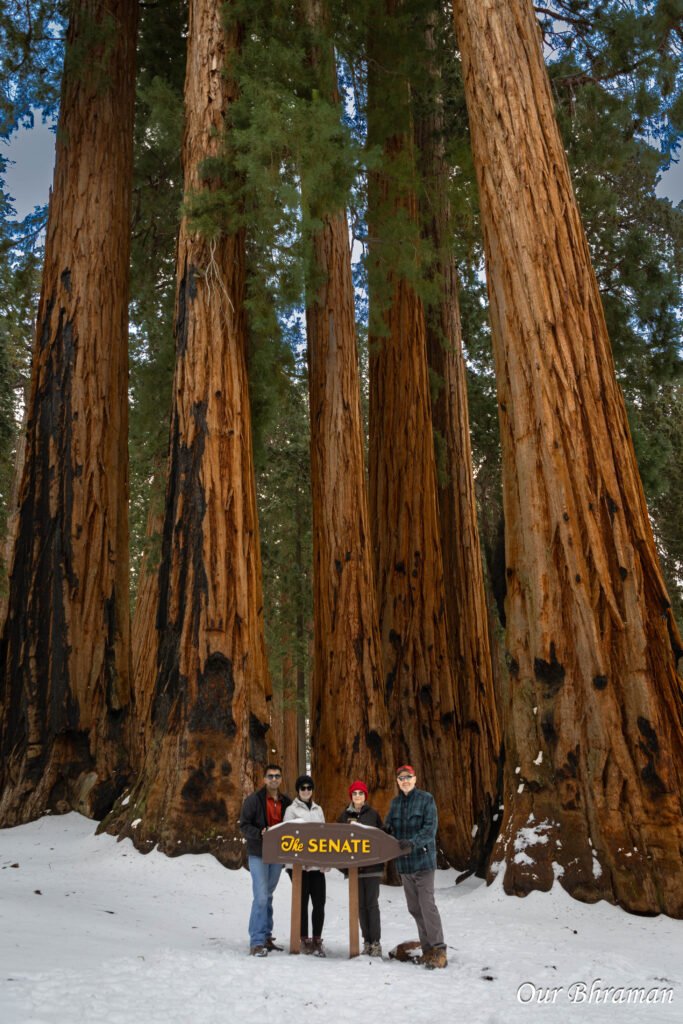
From The President, we continued into The Senate, a remarkable group of giant sequoias growing together. Rather than being a single tree, The Senate is a collection of enormous sequoias clustered in the grove. This was one of those places where we really started to appreciate just how extraordinary the Congress Grove is. One giant sequoia would already be impressive—but standing among several of them at once completely changes your perspective. You stop looking at individual trees and start realizing that the entire forest is filled with giants.
The House
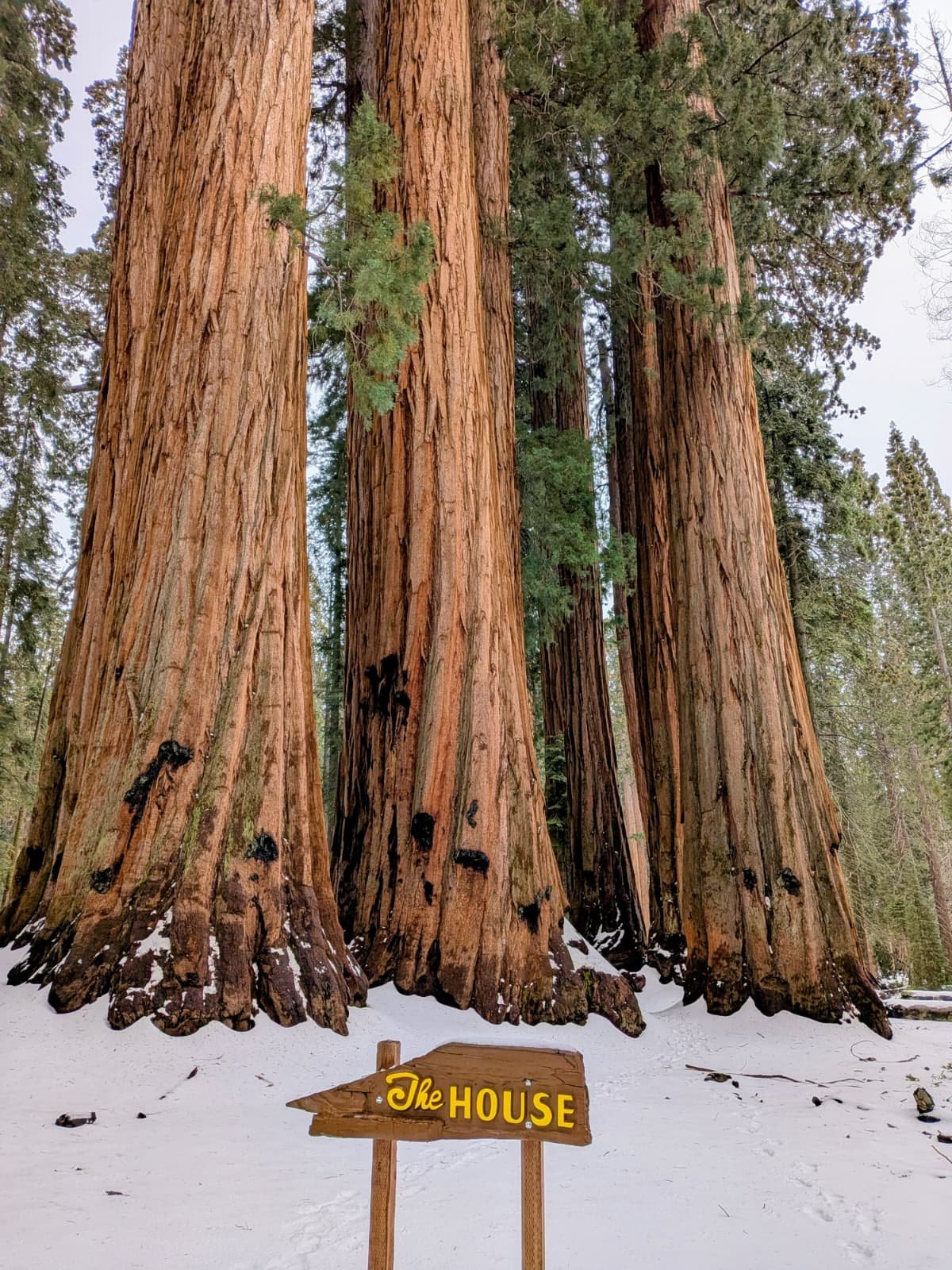
Just when we thought the Senate was impressive, we continued on to The House. Like The Senate, The House refers to a group of giant sequoias growing together. Walking between these enormous trunks felt almost like wandering through the pillars of a massive natural cathedral. The snow made the experience even more surreal. Everything around us was white and quiet, while the enormous sequoias towered overhead. We found ourselves constantly stopping—not because we were tired, but because there was always another tree worth looking at.
McKinley Tree
Further along the trail, we came across the McKinley Tree, another impressive sequoia within the Congress Grove. Named after President William McKinley, the tree is a reminder of how many of these giants have been given names connected to historical figures, groups, and notable characteristics.
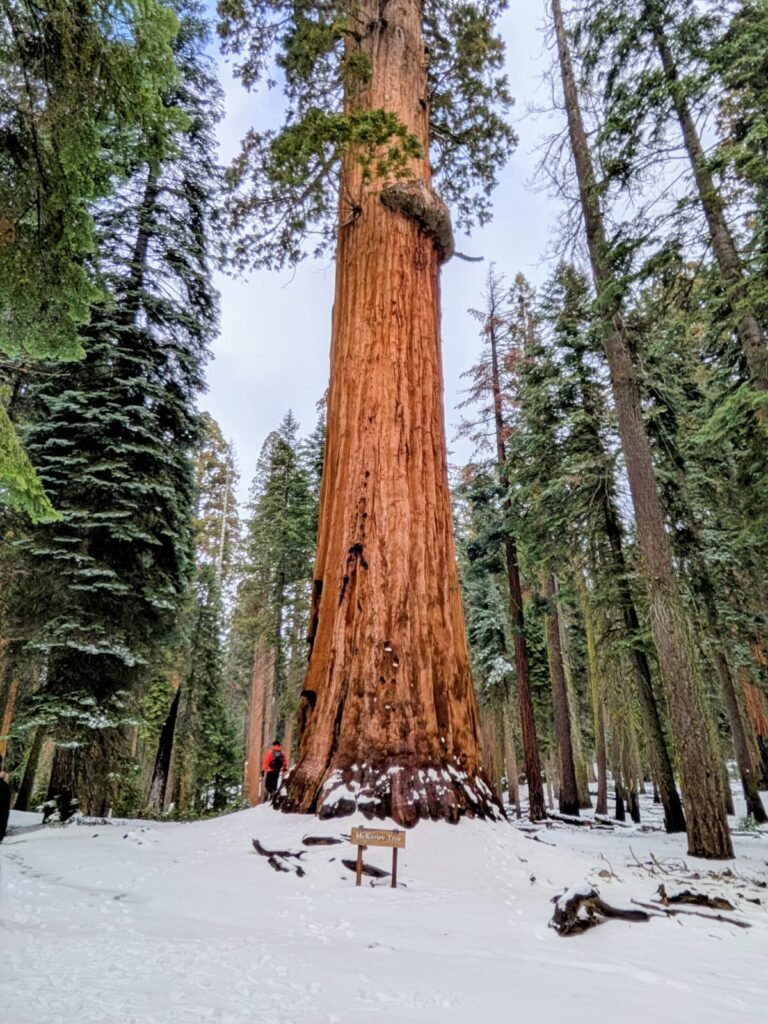
By this point in our hike, we had stopped trying to keep track of which tree was supposed to be the biggest or oldest. They were all huge. They were all fascinating. And each one looked completely different.
Some had massive, intact trunks. Others were twisted and scarred from fire. Some were hollowed out but continued standing, seemingly defying gravity and time.
The Log Tunnel
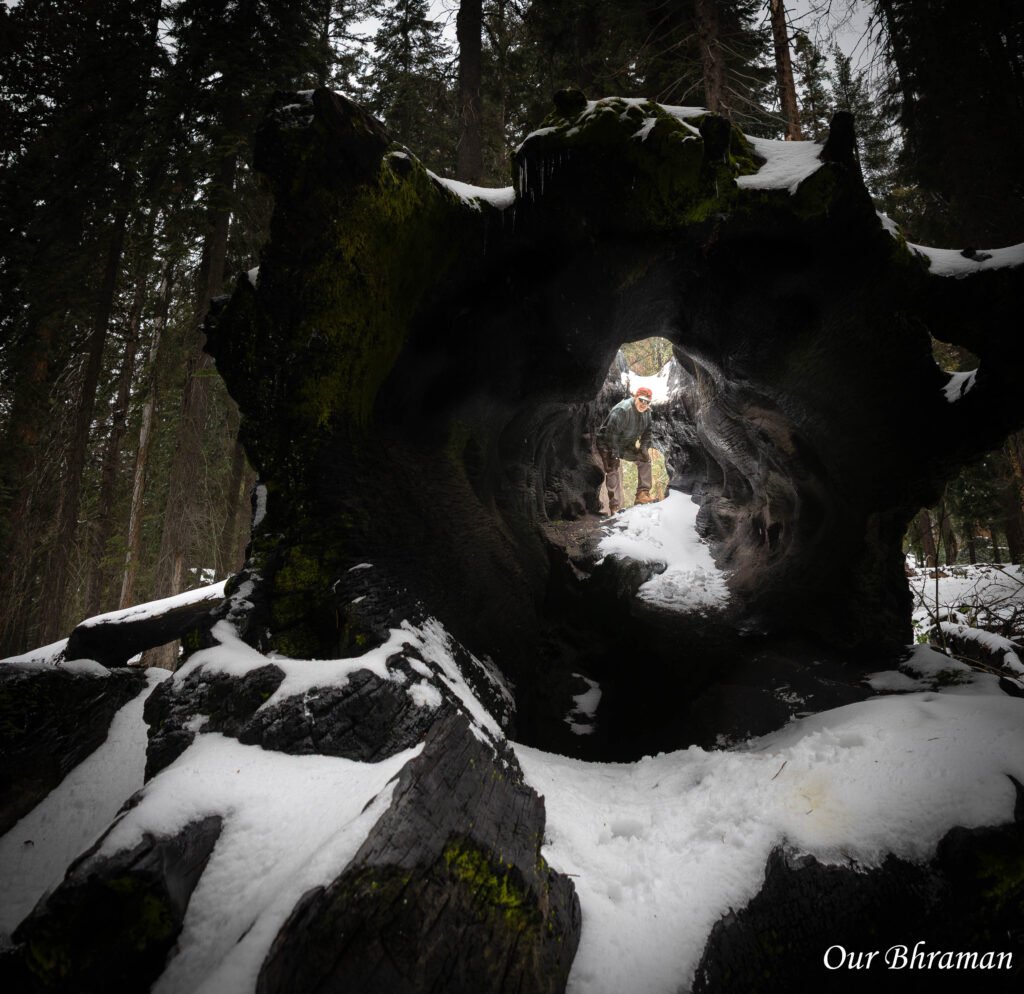
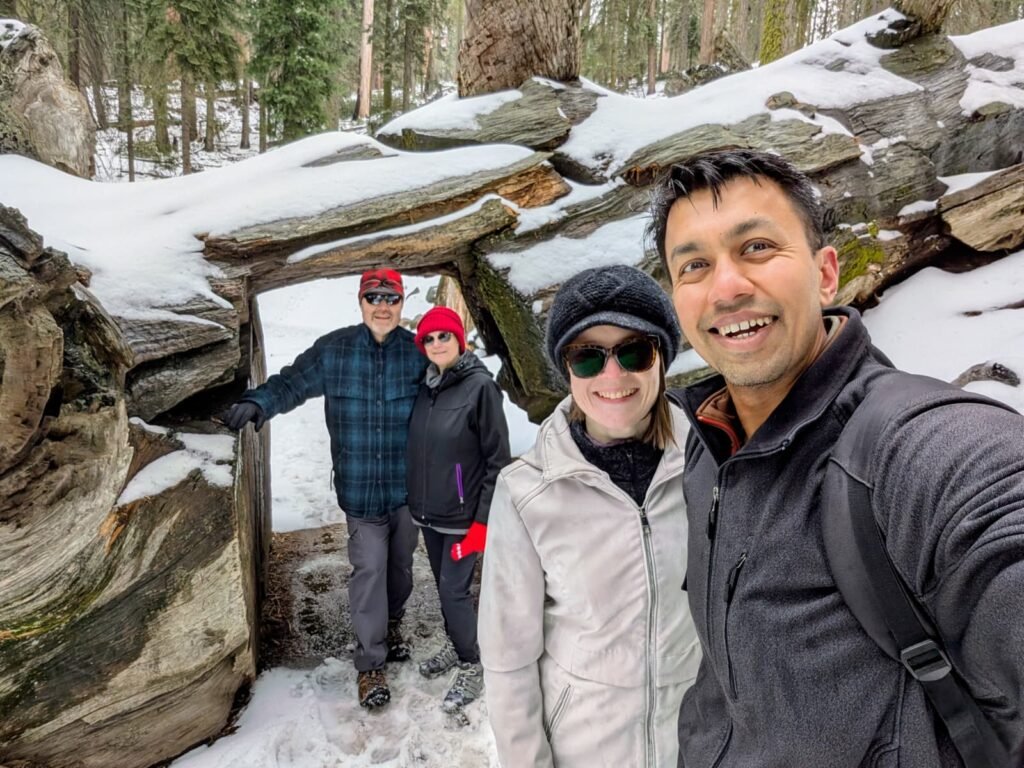
Then came one of the more unexpected features of the trail—the Log Tunnel. Unlike the towering living trees we had been admiring throughout the hike, this one was a reminder that even fallen sequoias continue to be part of the forest. The Log Tunnel is a pedestrian walkway cut directly through the hollowed-out trunk of a fallen sequoia. Instead of simply walking around the massive fallen trunk, visitors can actually walk through it.
Depending on conditions, water can trickle through or around the log, adding another little detail to the experience.
After spending so much of the hike looking up at trees hundreds of feet tall, walking through one was a fun change of perspective. And it was another reminder of just how enormous these trees really are.
A Forest Full of Stories
By the time we finished the Congress Trail, we realized that the most memorable part wasn’t any single tree. It was the variety.
We saw living giants stretching toward the sky, trees scarred by fire but still standing, fallen sequoias that had become part of the landscape, and massive trunks that seemed impossible to comprehend until you stood directly beside them. Every tree seemed to tell a different story. And walking through all of them—with snow covering the ground and more snow falling around us—made the experience feel like we had stepped into another world. This wasn’t just a hike through a forest. It was a walk through thousands of years of history, resilience, and nature’s incredible ability to endure.
The Climb Back
Eventually, it was time to turn around and make our way back. We retraced our steps toward the General Sherman Tree Trail, returning to the same path where our adventure had begun. When we started earlier, the trail had been an easy descent—mostly downhill, with the excitement of knowing we were heading deeper into the forest and toward the giants.
Now came the part we had conveniently forgotten about. We had to climb back up. That easy downward walk we had barely thought twice about on the way in suddenly felt very different in reverse. The incline seemed steeper, the snow seemed deeper, and our legs were definitely letting us know that we’d already put in some miles.
Despite the freezing temperatures, snow-covered trail, and winter storm surrounding us, we were suddenly HOT. The steady uphill climb had us working hard enough that the cold was no longer the problem. Layers started coming off, jackets were being unzipped, and before long, we were working up a sweat in the middle of a winter wonderland.
It was the perfect ending to our day in the Giant Forest. We had started the day bundled up and bracing ourselves against the cold, only to finish the hike climbing uphill through the snow and wondering how quickly we could shed a few layers. Tired, sweaty, cold, and completely amazed by what we’d just experienced, we finally made it back to the top.
Looking back, the Congress Trail was so much more than a hike. It was a journey through a forest of giants—past ancient trees, fire-scarred trunks, towering sequoias, and fallen giants that had become part of the landscape. And doing it all with snow falling around us made the experience unforgettable.
Sometimes the best adventures aren’t the easiest ones. Sometimes they’re the ones that leave you a little exhausted, a little sweaty, and incredibly grateful that you decided to keep going.
Photography Tips
Bring a wide-angle lens.
This is one of those places where a wide lens really helps. The sequoias are so tall that fitting an entire tree into the frame can be challenging.
Try vertical compositions.
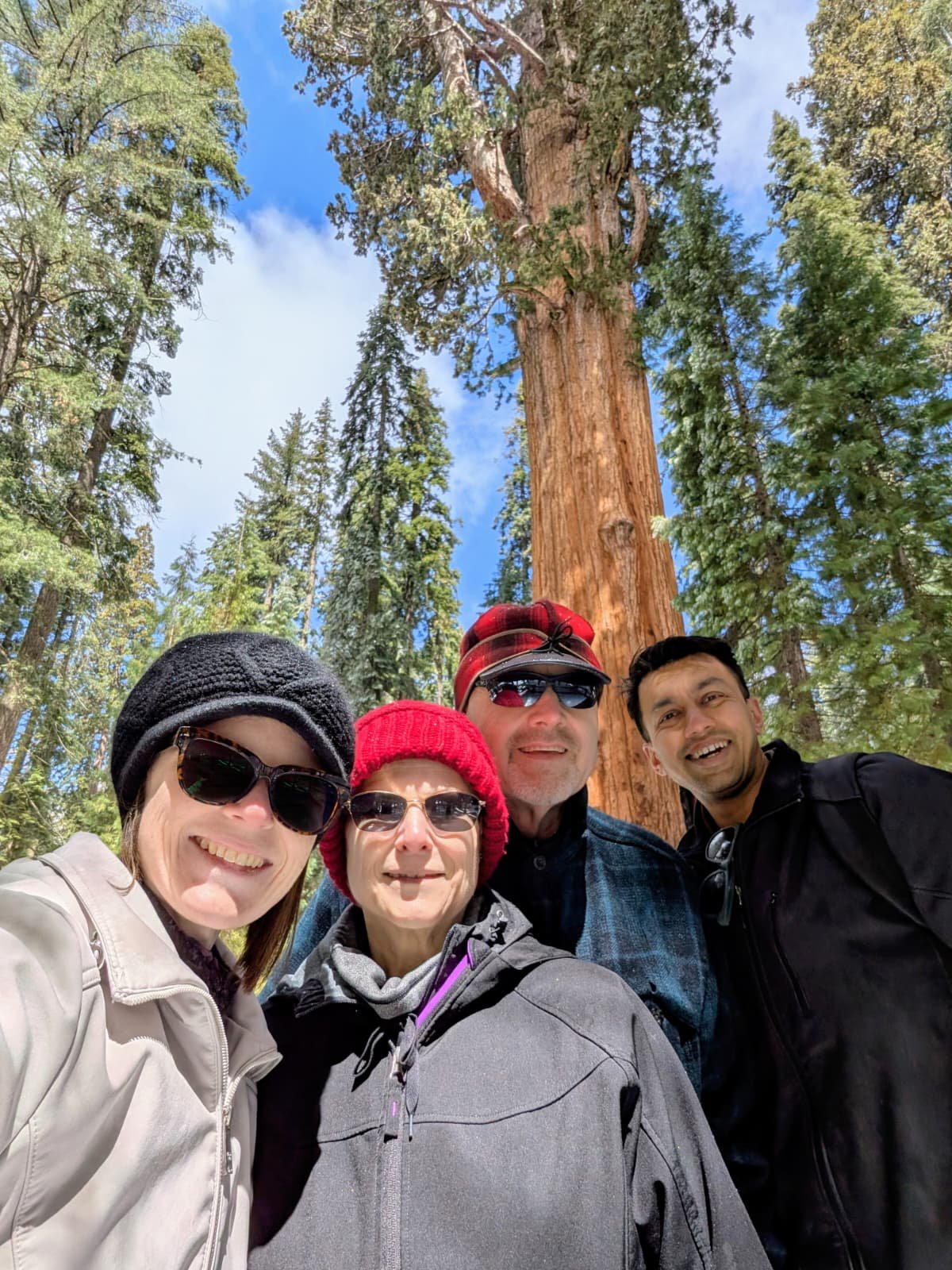
Turn your camera vertically and position someone near the base of the tree. This helps communicate just how enormous the sequoia is.
Use people for scale.
This was one of our favorite ways to photograph the giants. A person standing beside the trunk gives viewers an immediate sense of scale that a tree by itself simply can’t convey.
Look for leading lines.
Snow-covered trails, fallen logs, and rows of trees can naturally lead the viewer’s eye through your photograph. Use the trail to draw attention toward a massive sequoia in the distance.
Photograph the details, too.
Don’t spend the entire hike photographing giant trunks. Look for burned bark, twisted branches, tree hollows, exposed roots, snow-covered branches, and patterns in the bark. Some of the most interesting photographs come from the details.
Winter gives you a completely different palette.
Fresh snow creates a beautiful contrast against the warm reddish-brown bark of the sequoias. Overcast skies can also provide soft, even light that works beautifully for forest photography.
Protect your camera from the elements.
Snow and moisture are unavoidable during a winter visit. Keep a microfiber cloth handy and consider a rain cover or camera protection if conditions are actively snowy.
Bring extra batteries.
Cold temperatures can drain camera batteries faster than normal. Keep a spare battery somewhere warm, such as an inside jacket pocket.
Don’t forget to look up.
Some of our favorite moments weren’t necessarily photographs of a particular named tree. They were the views looking straight up through the enormous trunks and branches into the snowy canopy.
Most Importantly…
Don’t rush from tree to tree. The General Sherman Tree may be the headline attraction, but the real magic is walking through the Giant Forest itself. Take the time to wander, stop for photographs, admire the trees that have survived fire, and appreciate the fallen giants that have become part of the ecosystem.
For us, walking through this forest covered in snow was one of those rare travel experiences where the scenery was so incredible that we kept finding ourselves saying: “Just look at that one!” And then we’d turn the corner and find another.