The Stories Behind the Monuments
Washington, D.C. has a way of making history feel almost impossible to escape—and that is part of what makes exploring the city so much fun.
You can walk a few blocks and move from the story of a Founding Father to the sacrifices of an entire generation of soldiers, then turn a corner and find yourself standing in the middle of the Civil Rights Movement.
During our quick National Mall and Tidal Basin walking adventure, we covered roughly four miles and passed an incredible number of monuments and memorials. The goal was to see as much as possible in a short amount of time, but along the way, we discovered something else:
There is a lot of history hiding in the details.
Here are a few of the things that caught our attention along the route.
1. The Jefferson Memorial Was Inspired by the Pantheon
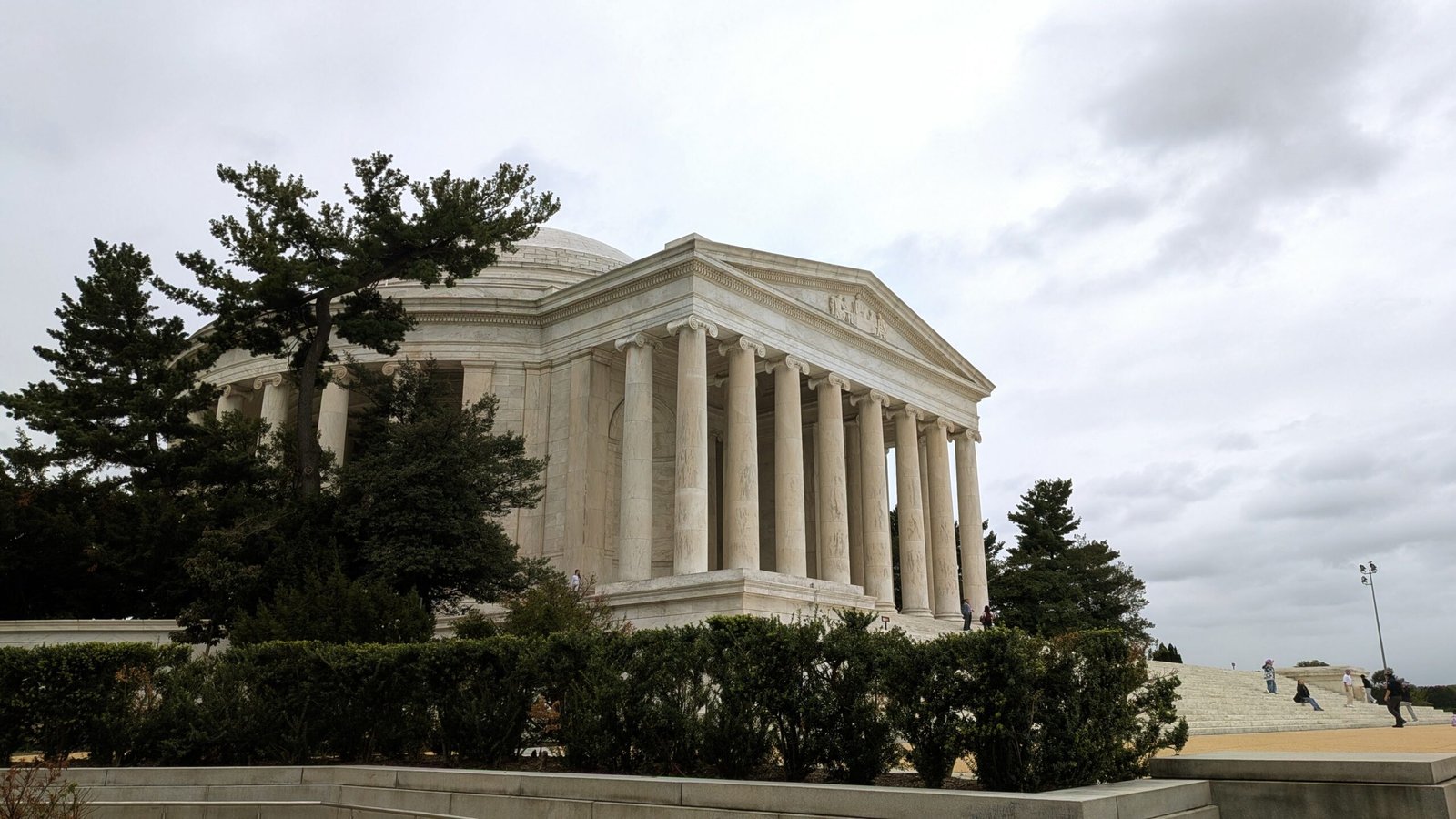
Our adventure began at the Thomas Jefferson Memorial, and it is hard not to notice the building itself before anything else.
The massive columns and domed roof give the memorial a distinctly classical appearance. That was intentional. Its design was inspired in part by the Pantheon in Rome, reflecting Jefferson’s own appreciation for classical architecture.
Inside, a towering statue of Jefferson stands beneath the dome, surrounded by excerpts from his writings.
One of the most recognizable passages comes from the Declaration of Independence:
The words are part of a larger passage about equality, rights, liberty, and government.
Another inscription around the rotunda reads:
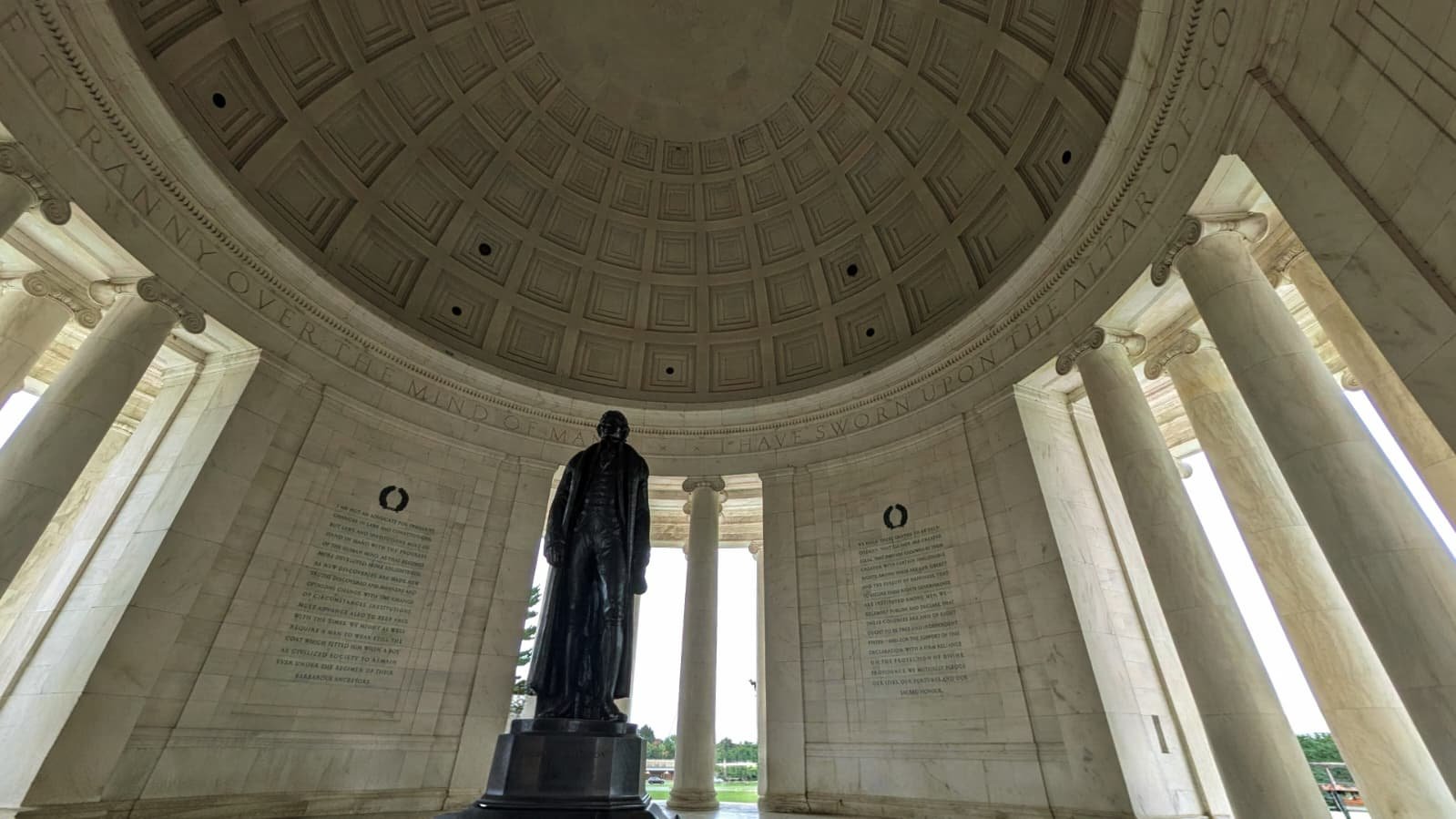
It is one of those moments when the architecture, the words, and the history all come together.
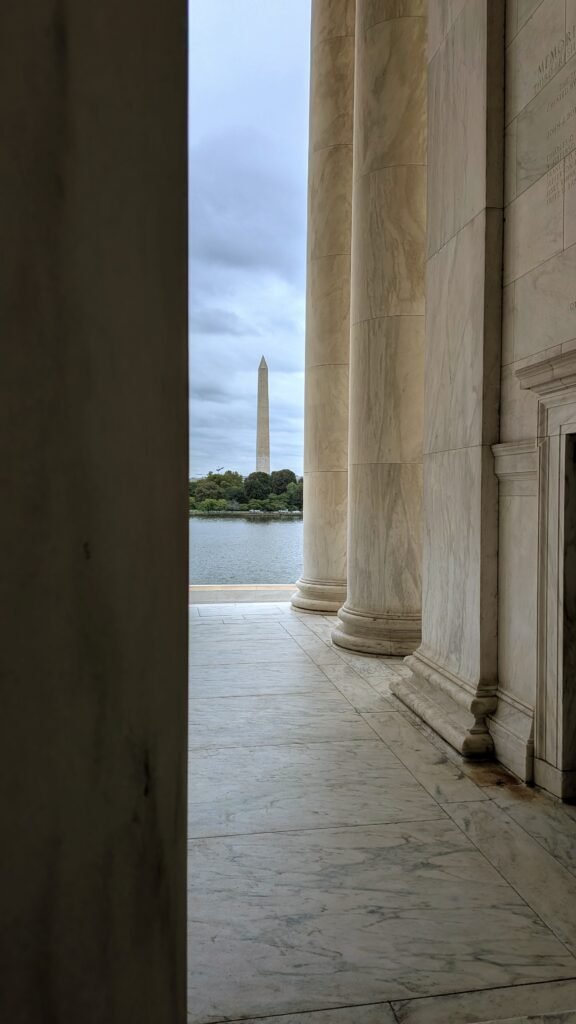
And from the memorial, there is another iconic view waiting outside—the Washington Monument standing across the Tidal Basin.
2. The Washington Monument Has a Built-In Construction Line
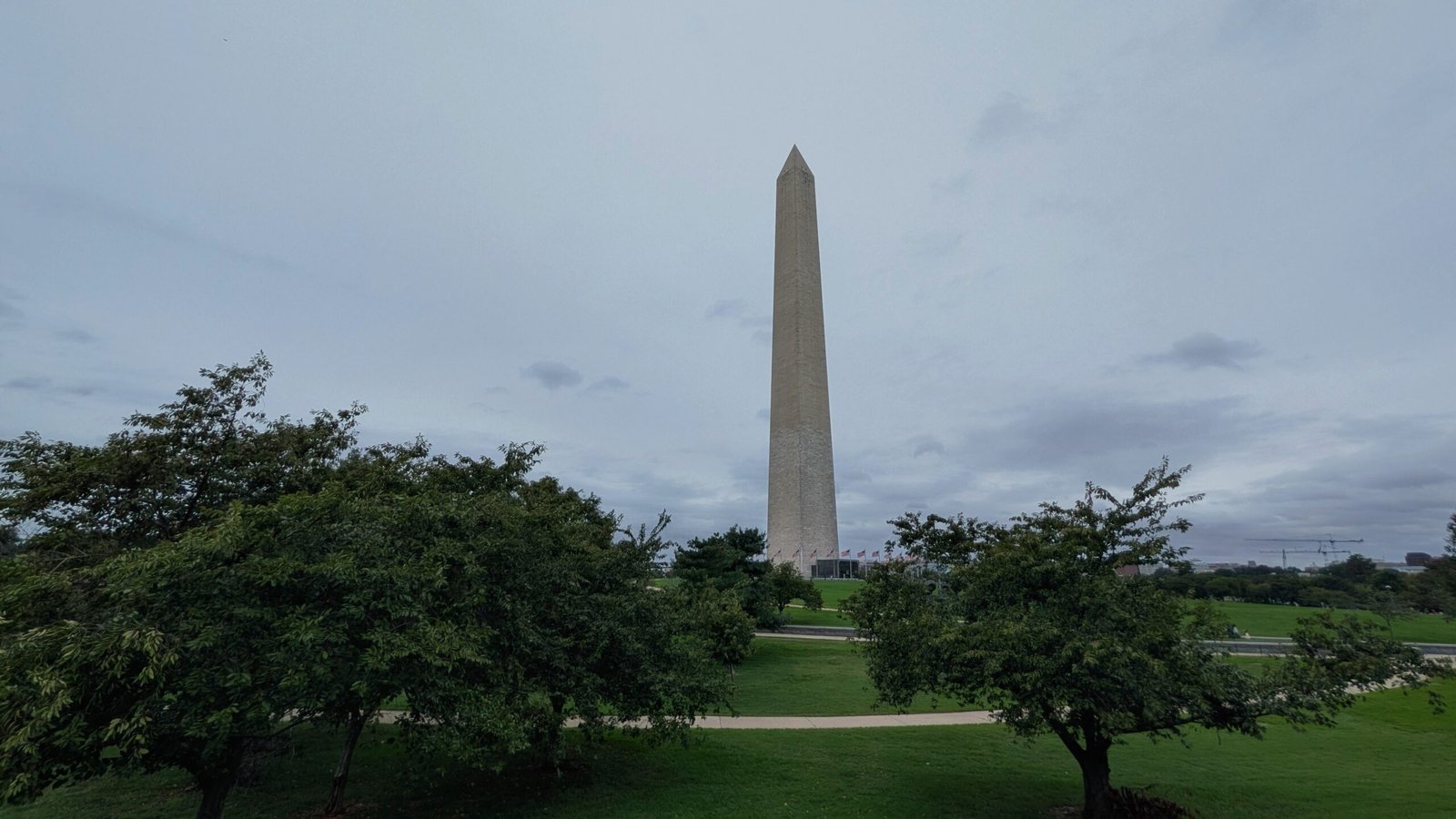
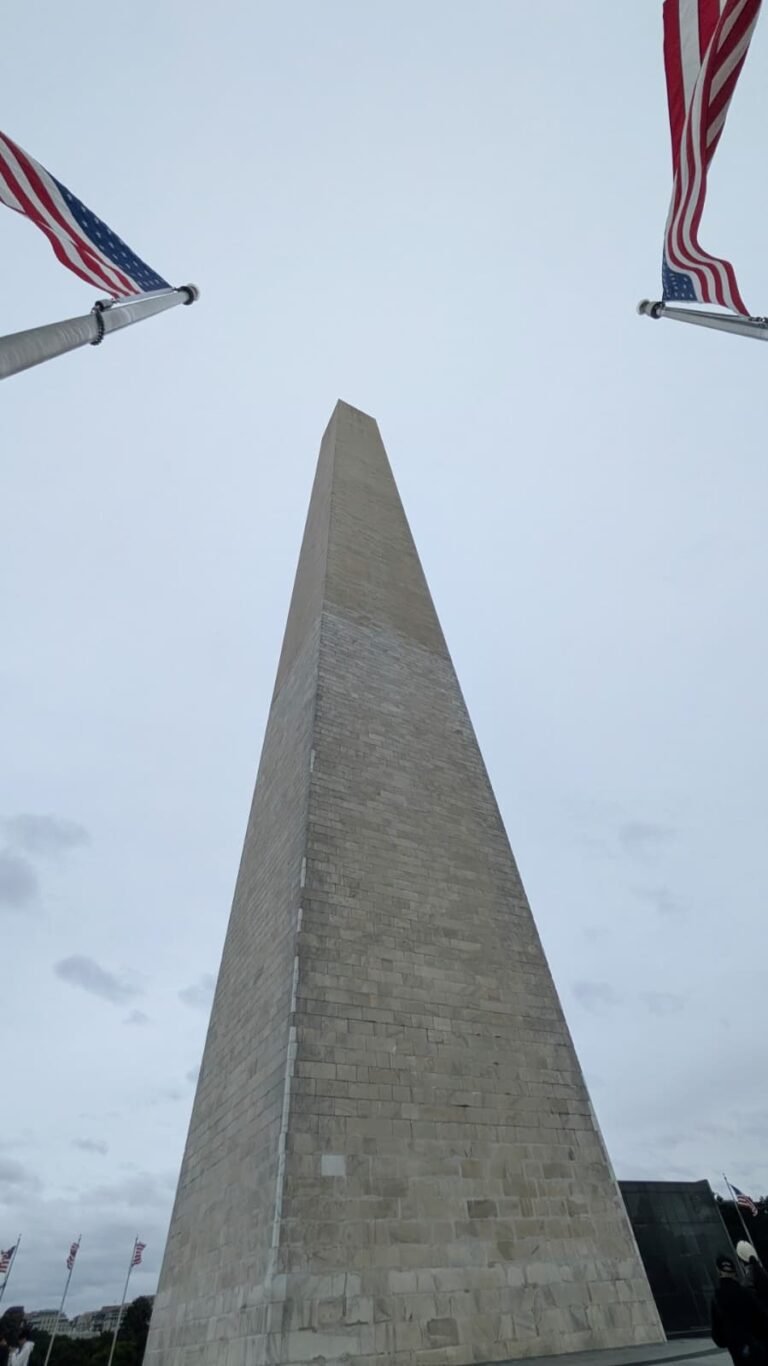
From Jefferson, the route led toward the Washington Monument, and at 555 feet, it is pretty difficult to miss.
The monument honors George Washington, the nation’s first president, but the building itself tells an interesting story.
Construction began in 1848 and was eventually interrupted for years because of funding problems and the Civil War. When construction resumed, a different source of marble was used.
The result? Look closely and you can actually see a change in the color of the stone roughly one-third of the way up.
It is one of those details that is easy to miss when you’re busy taking the obligatory monument photo. But once you know to look for it, the Washington Monument suddenly becomes more than a giant white obelisk.
It becomes a timeline you can see.
And standing beneath it, Washington’s own words seem particularly fitting:
A quick reminder that even the most famous monuments can have small details—and stories—worth stopping to notice.
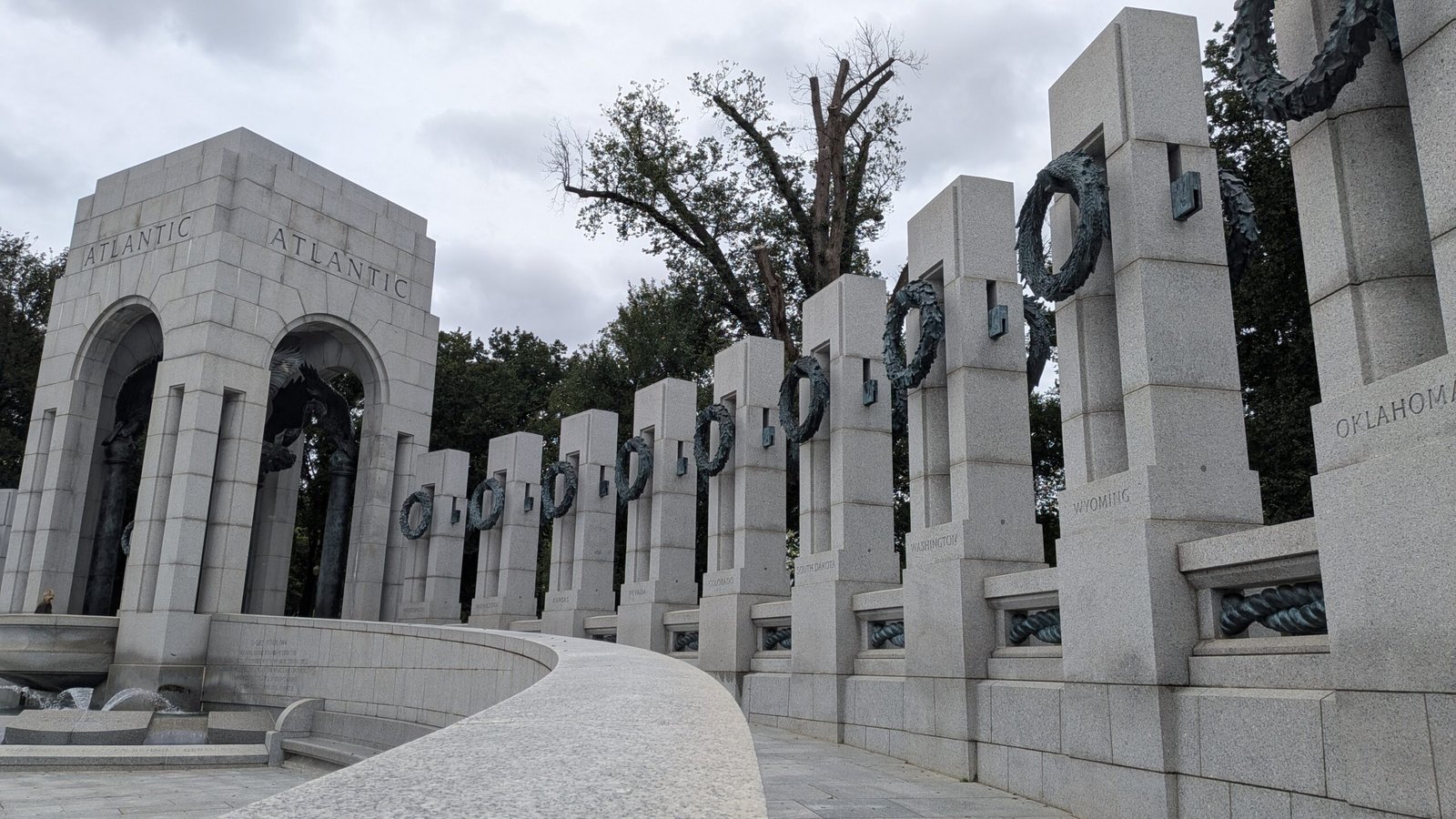
3. The World War II Memorial Represents More Than Just Those Who Fought
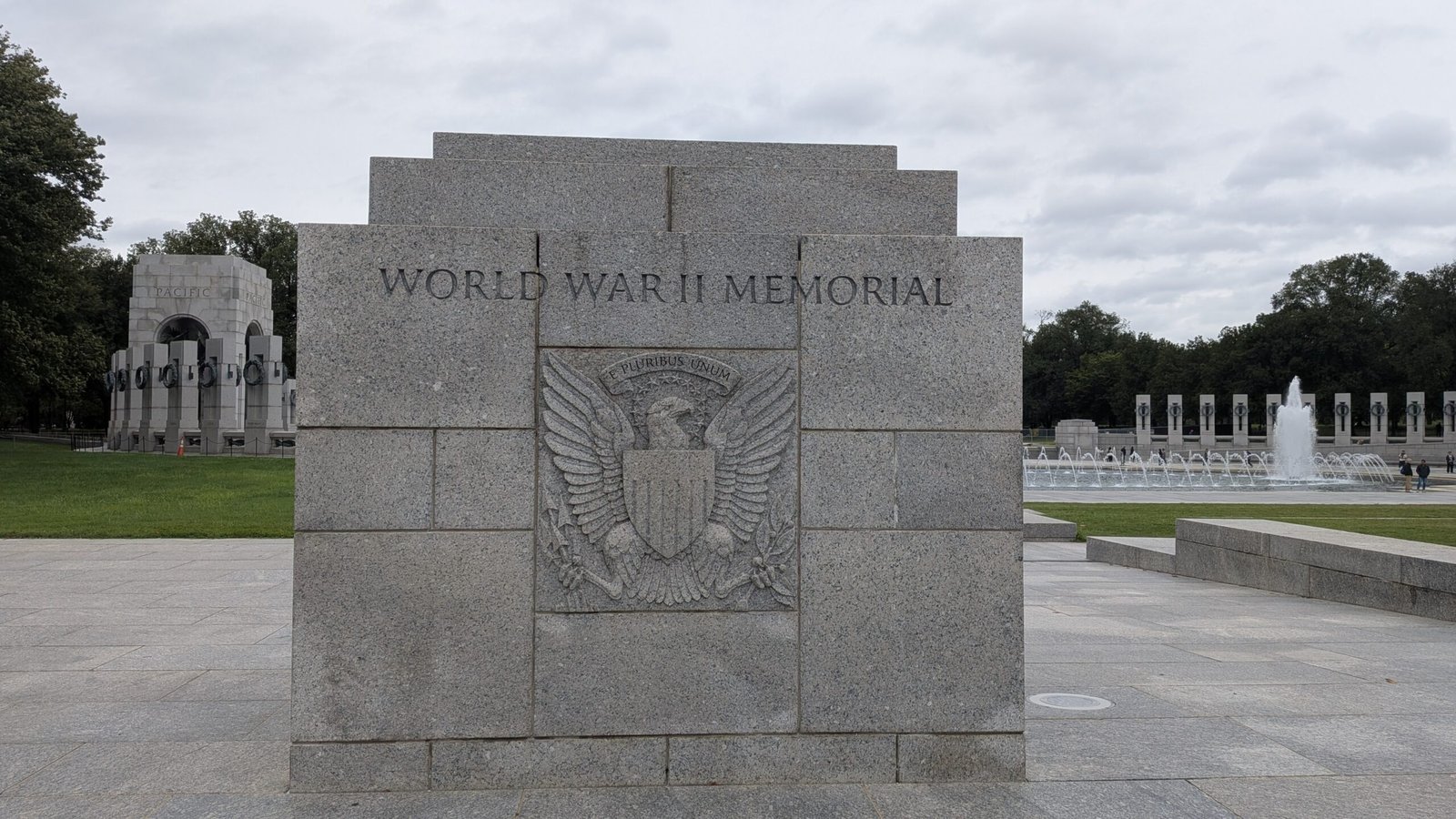
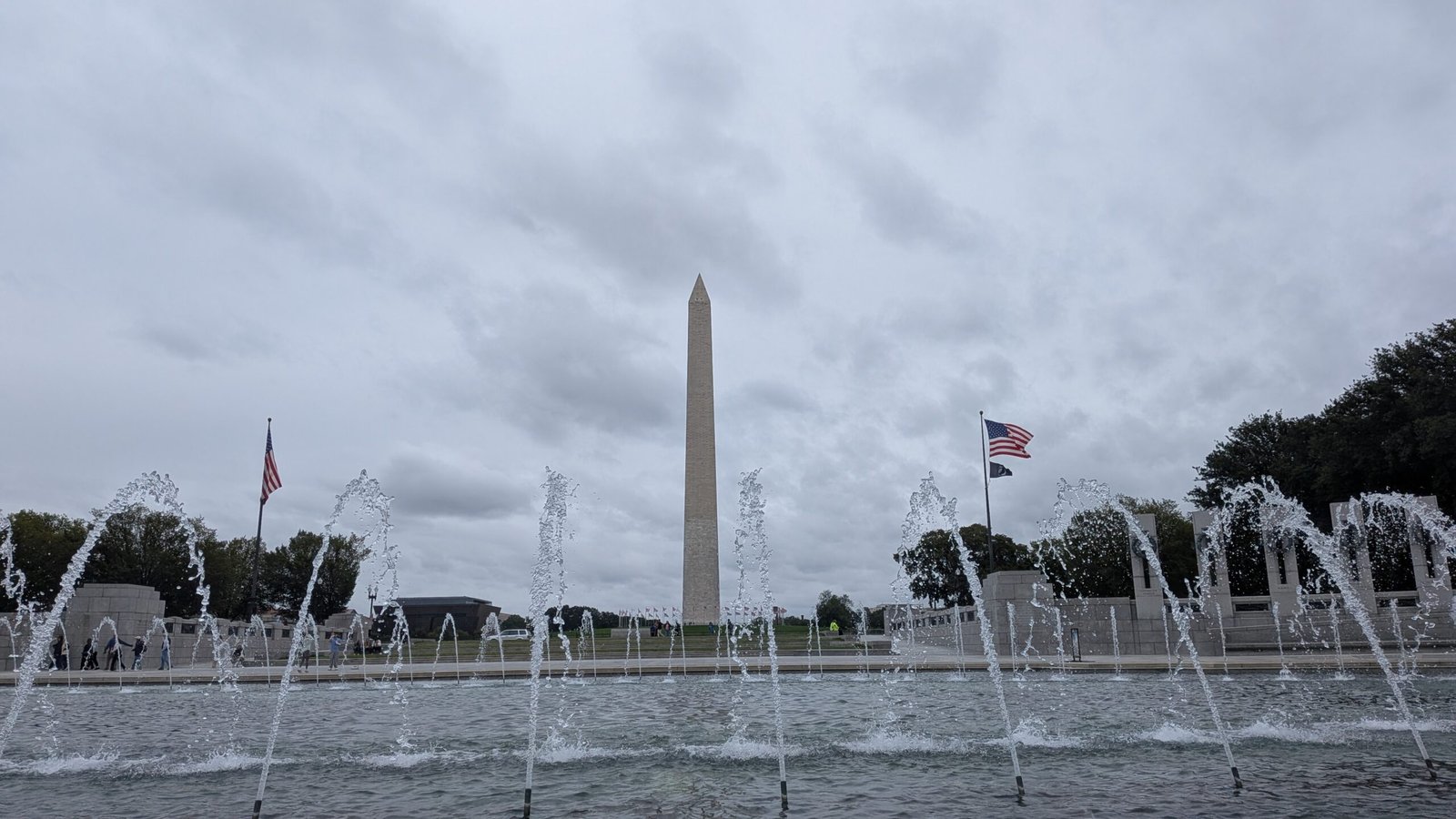
The World War II Memorial sits prominently between the Washington Monument and Lincoln Memorial.
It honors the 16 million Americans who served in the U.S. armed forces during World War II, as well as the millions who supported the war effort from home.
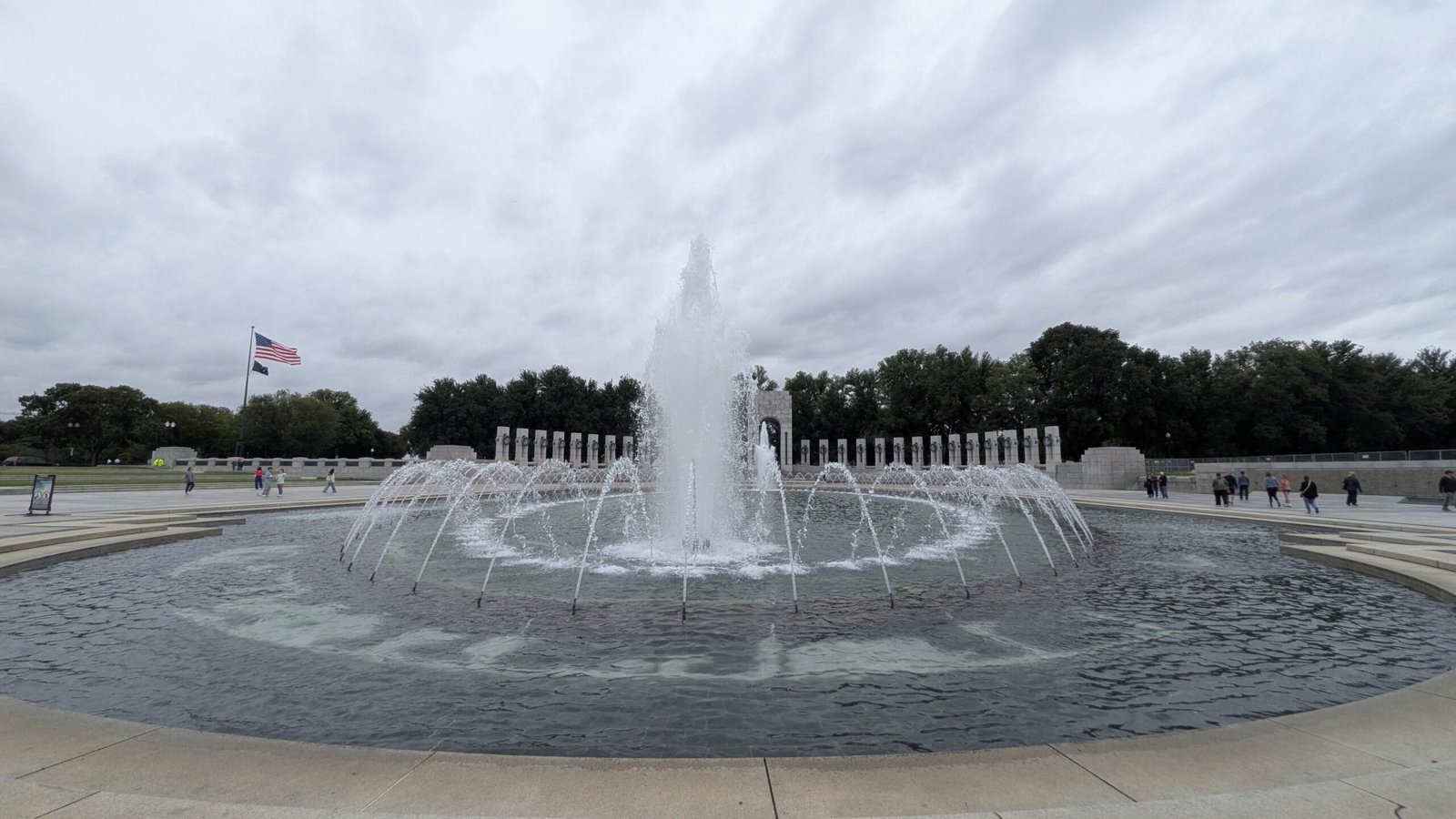
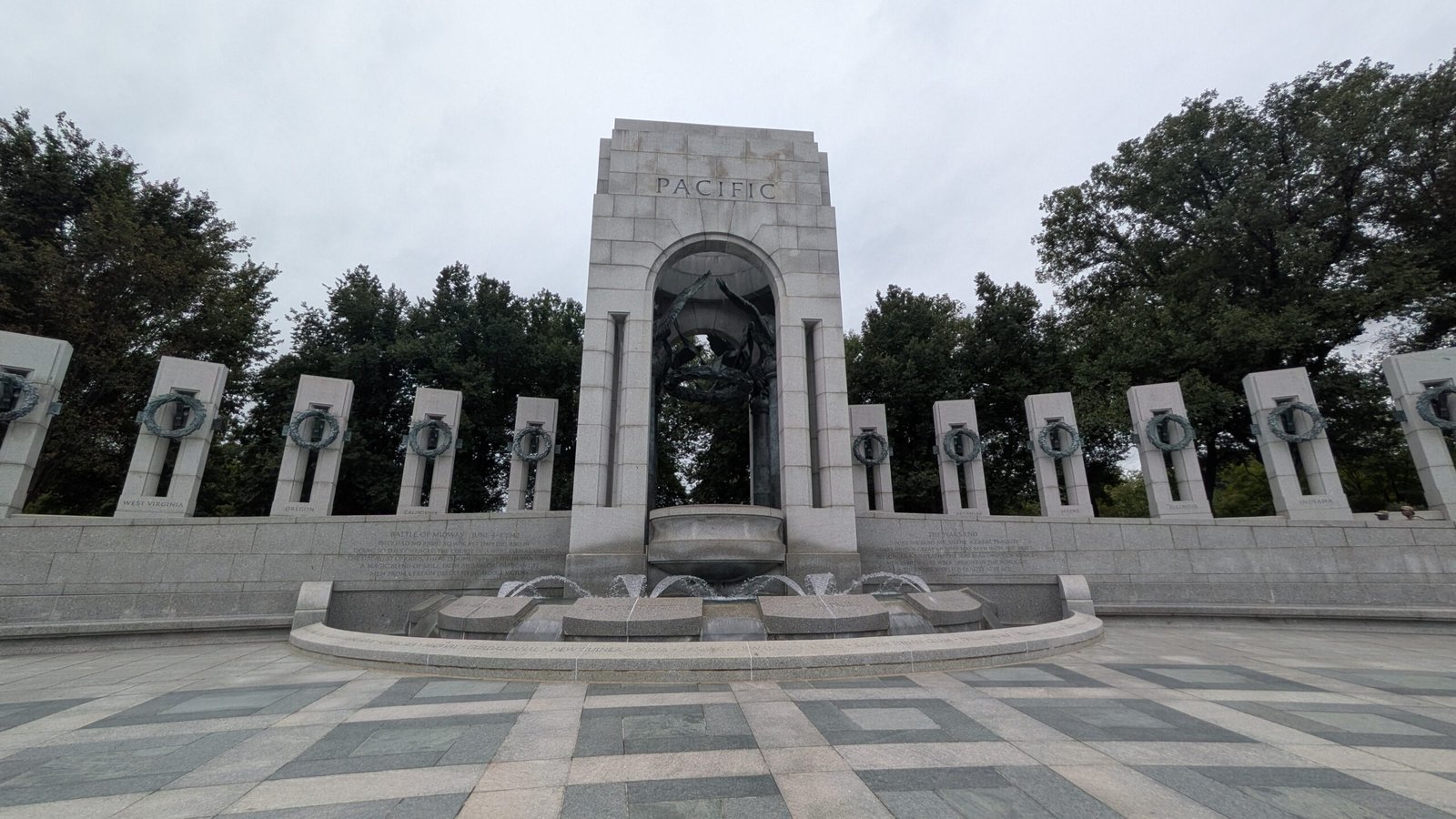
The memorial contains 56 pillars, representing the states, territories, and District of Columbia at the time. Two enormous arches represent the Atlantic and Pacific theaters.
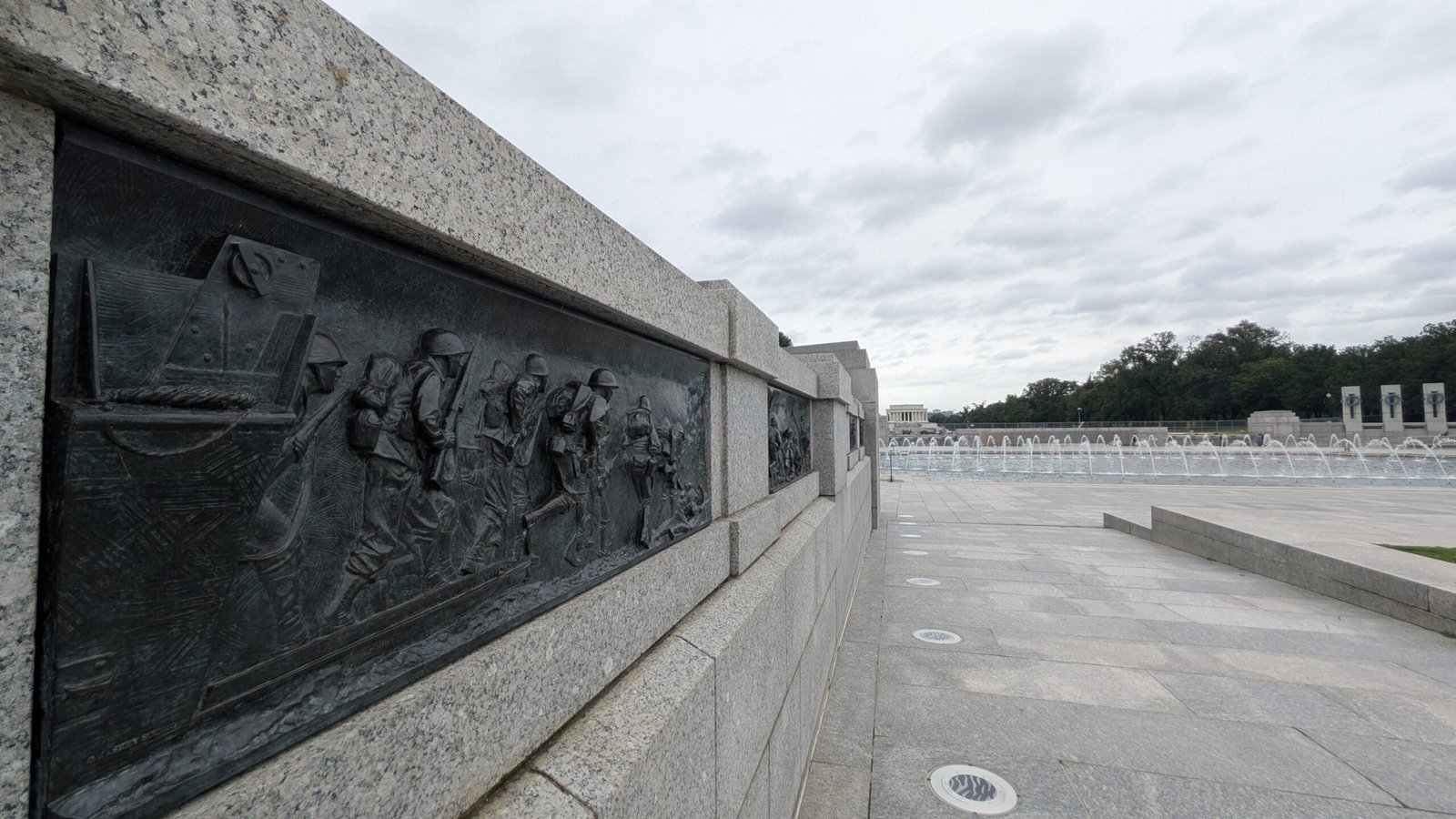
There is also a large fountain at the center, surrounded by bronze and stone elements that help tell the story of the war.
A phrase associated with the wartime generation captures the spirit of the era:
What makes this memorial especially interesting is that it doesn’t focus only on the battlefield. It recognizes the enormous effort that took place across the country.
In other words, World War II wasn’t just a story about soldiers overseas.
It was a story about an entire country mobilizing for war.
4. A Temporary Monument Turned Into a Personal Discovery
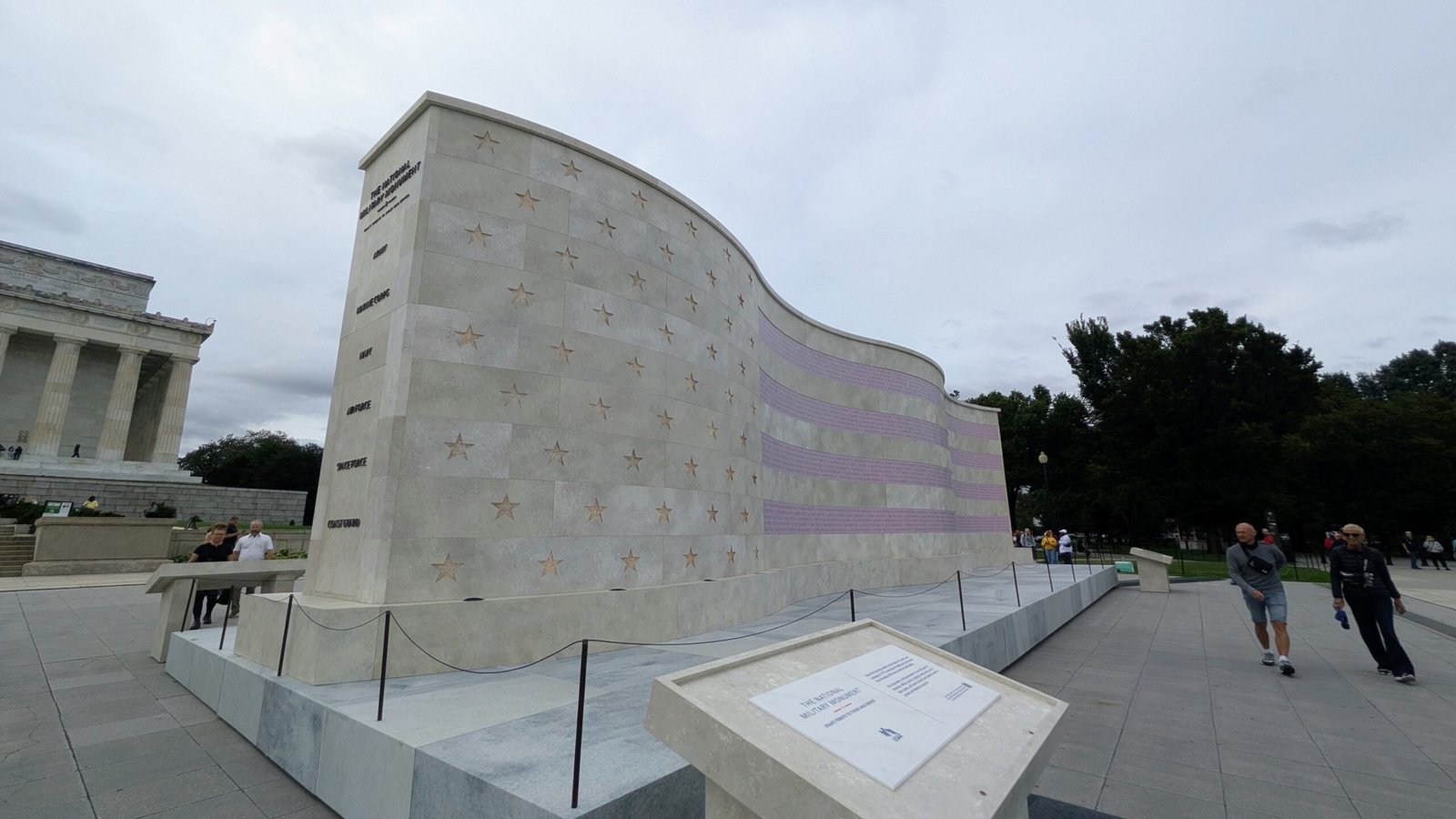
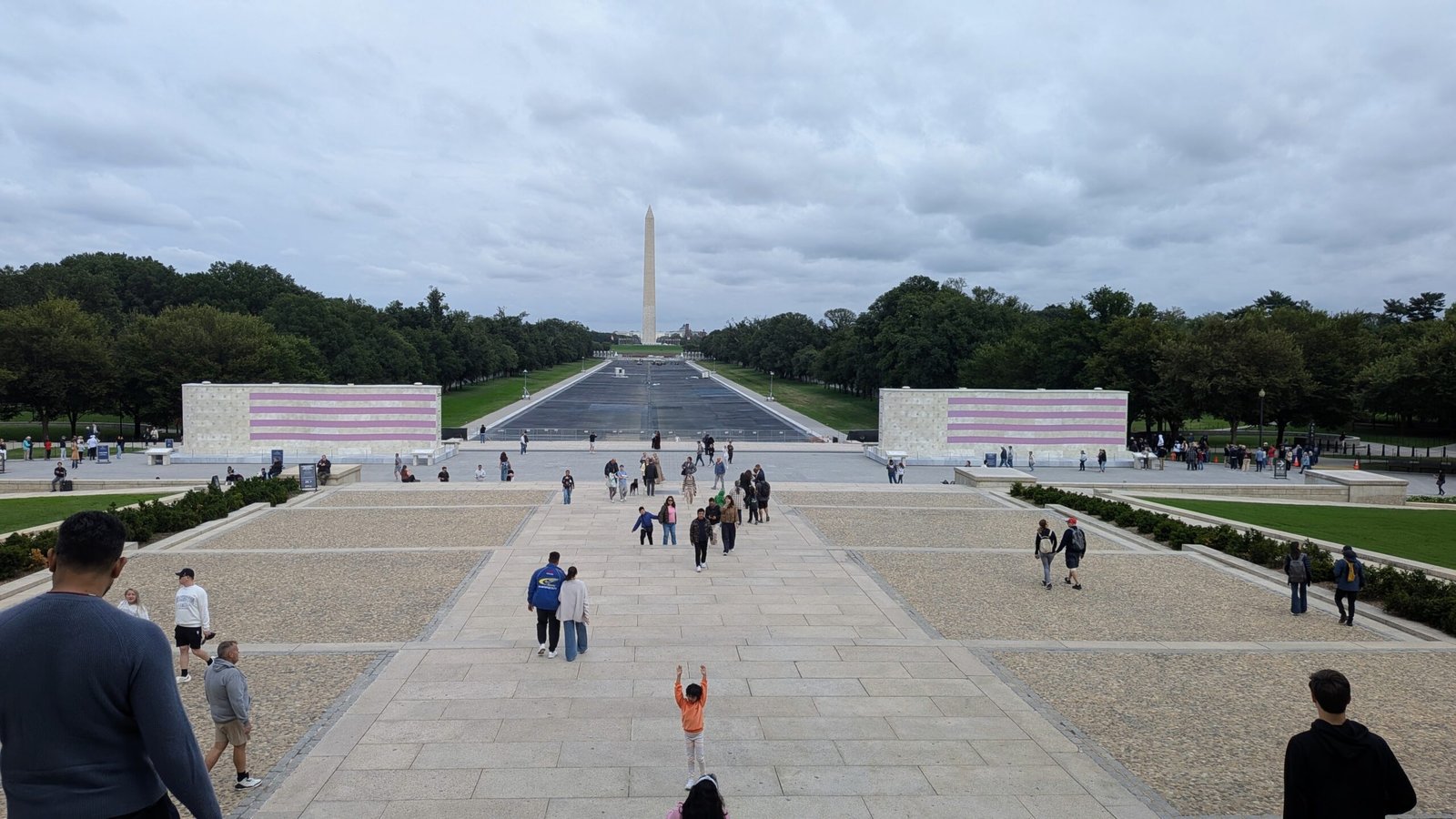
One of the most unexpected stops along the route was the National Military Monument, a temporary installation being displayed in Washington, D.C. from July 28 through November 12, 2026. The monument honors more than 41 million Americans who have served in the U.S. military across the nation’s history. The centerpiece is a massive American flag created using hundreds of screens, with service members’ names appearing across the display. But the most memorable part wasn’t something we knew to look for before arriving.
The installation includes an interactive search that allows visitors to look up a service member’s name. With several members of her family having served, Kayla decided to search for her great-grandfather, who served during World War II. And then his name appeared. Suddenly, this wasn’t just another stop on a sightseeing route. Among millions of names was someone from our own family history. It was one of those travel moments you can’t schedule or plan for.
And it brought a line often associated with remembering those who served into a very personal perspective:
but also by the men it honors.”

5. The Lincoln Memorial Has More Than the Famous Statue
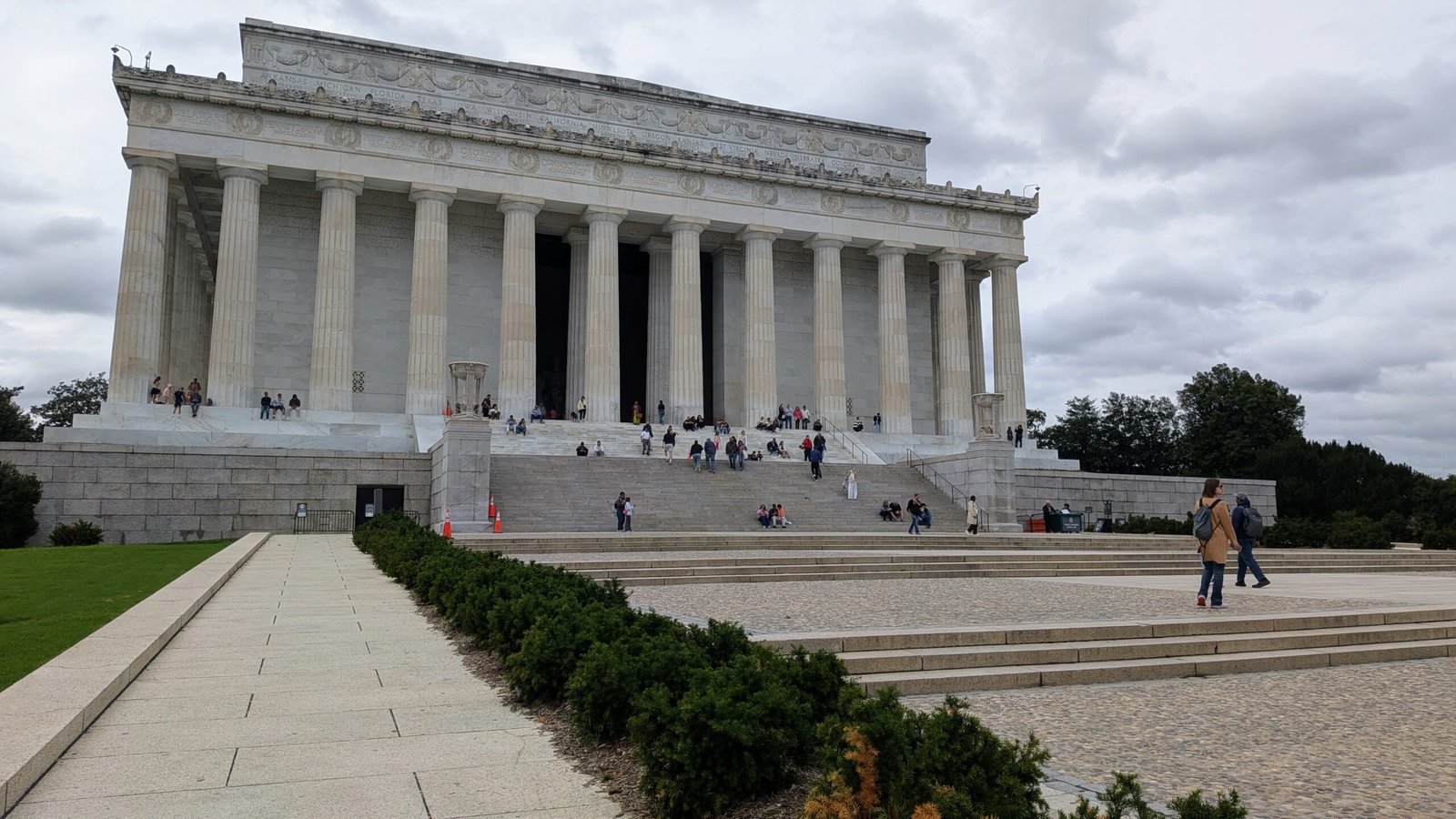
By the time we reached the Lincoln Memorial, the famous seated statue was exactly what you would expect.
What is easy to overlook, however, is what surrounds it. Inside the memorial are the words of two of Abraham Lincoln’s most important speeches: the Gettysburg Address and his Second Inaugural Address. And, of course, there is the line almost everyone recognizes:
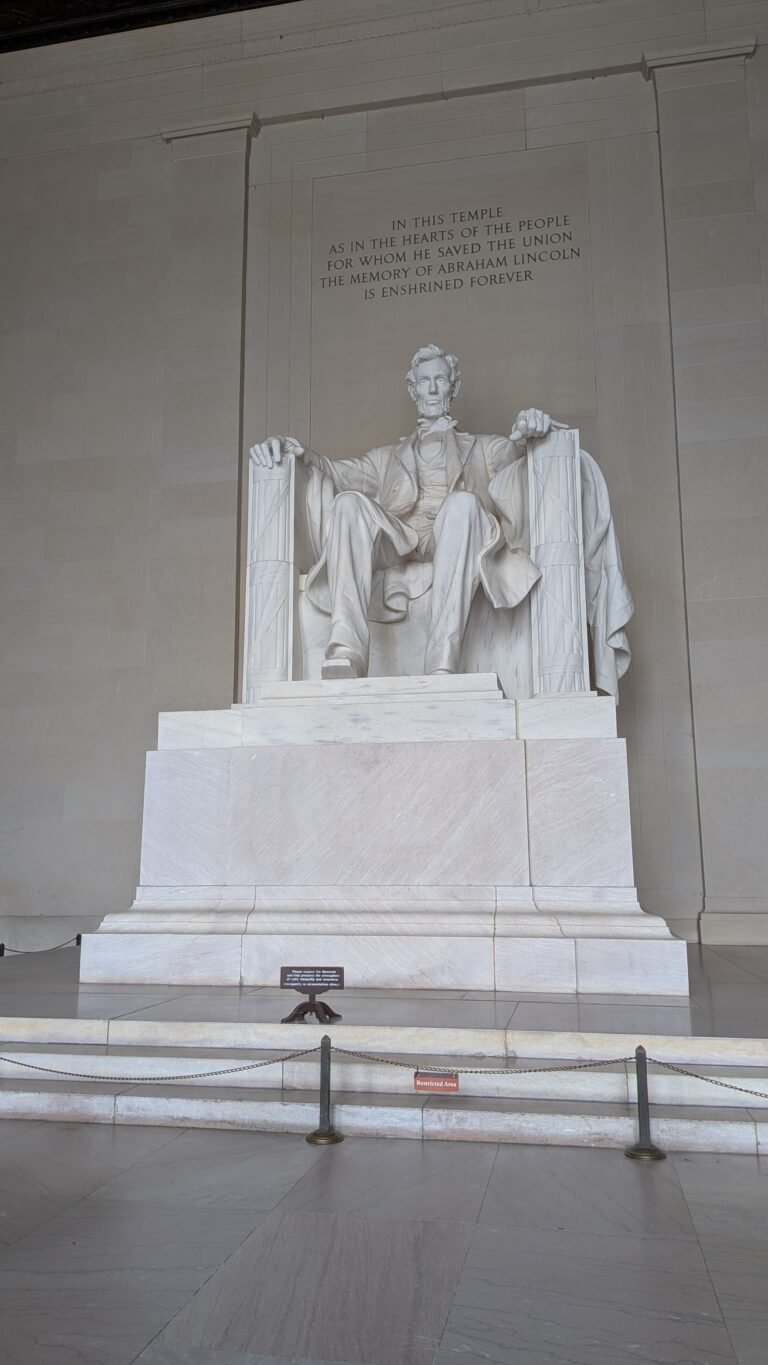
Just a few words, and suddenly you’re transported back to 1863.
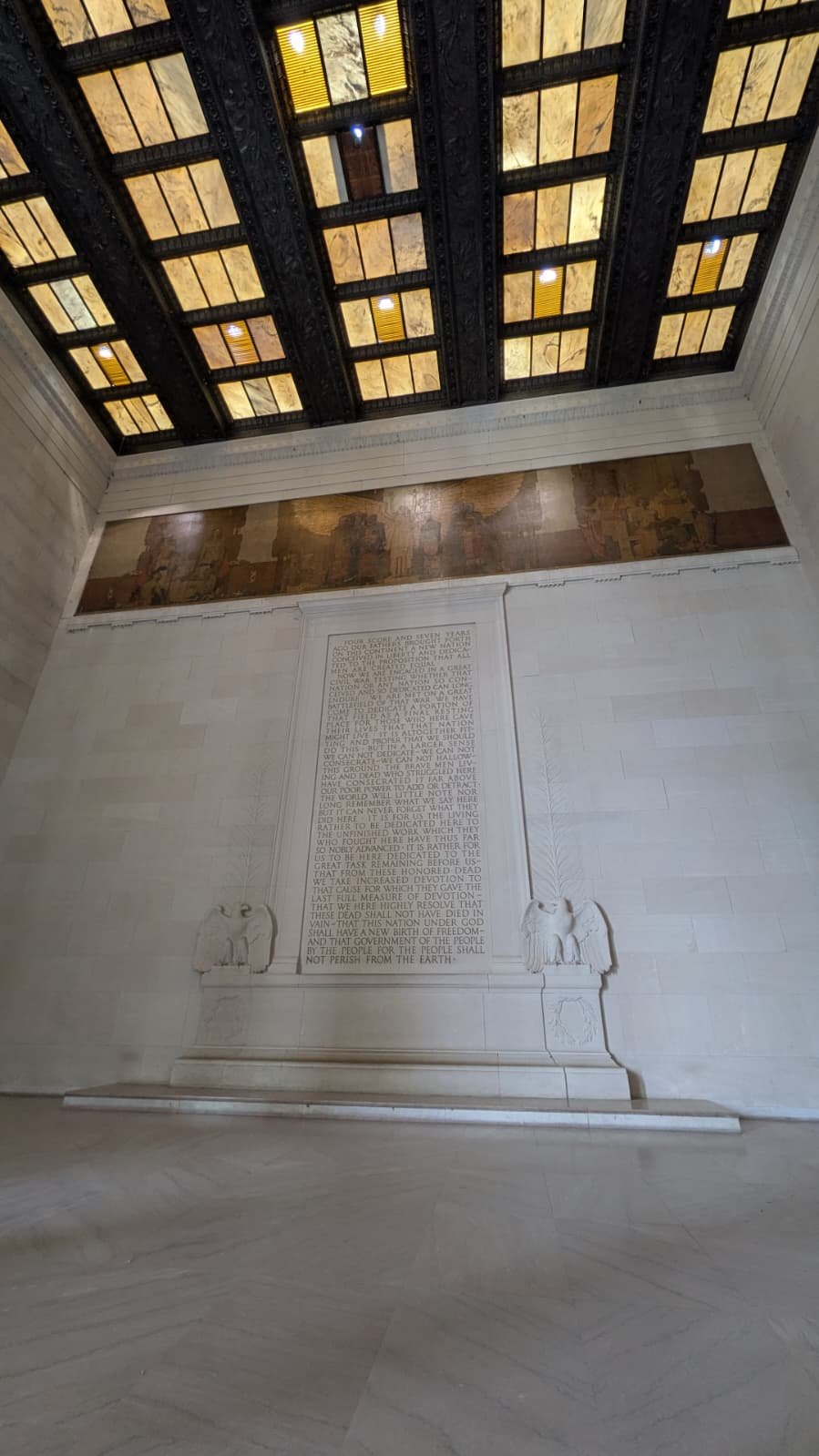
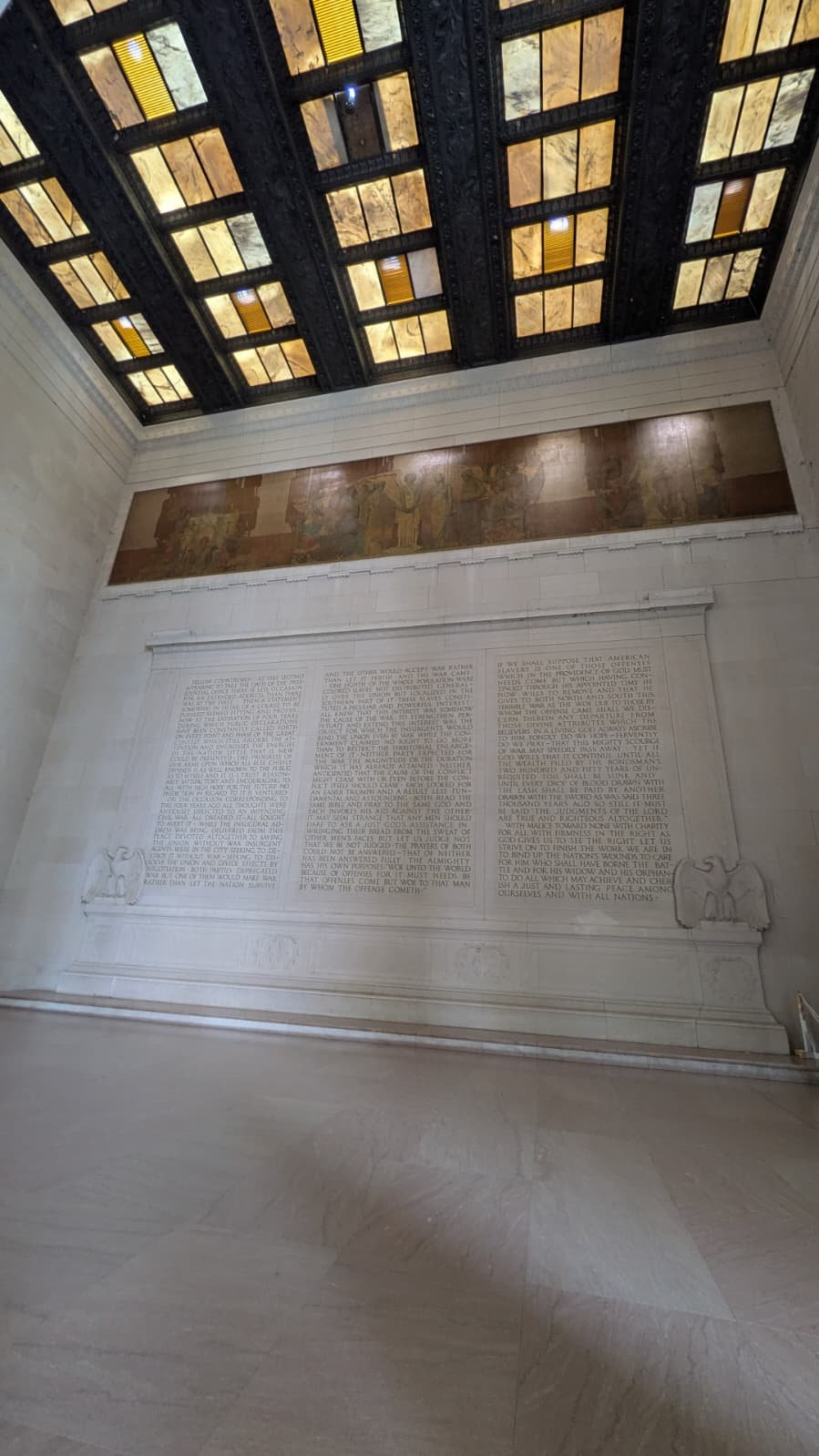
Then there is the view from the steps.
The Reflecting Pool stretches toward the Washington Monument, creating one of the most recognizable views in the country.
It’s the kind of place where you can spend five minutes—or much longer—depending on how much time you have.
6. The Korean War Memorial Looks Like the Soldiers Are Moving
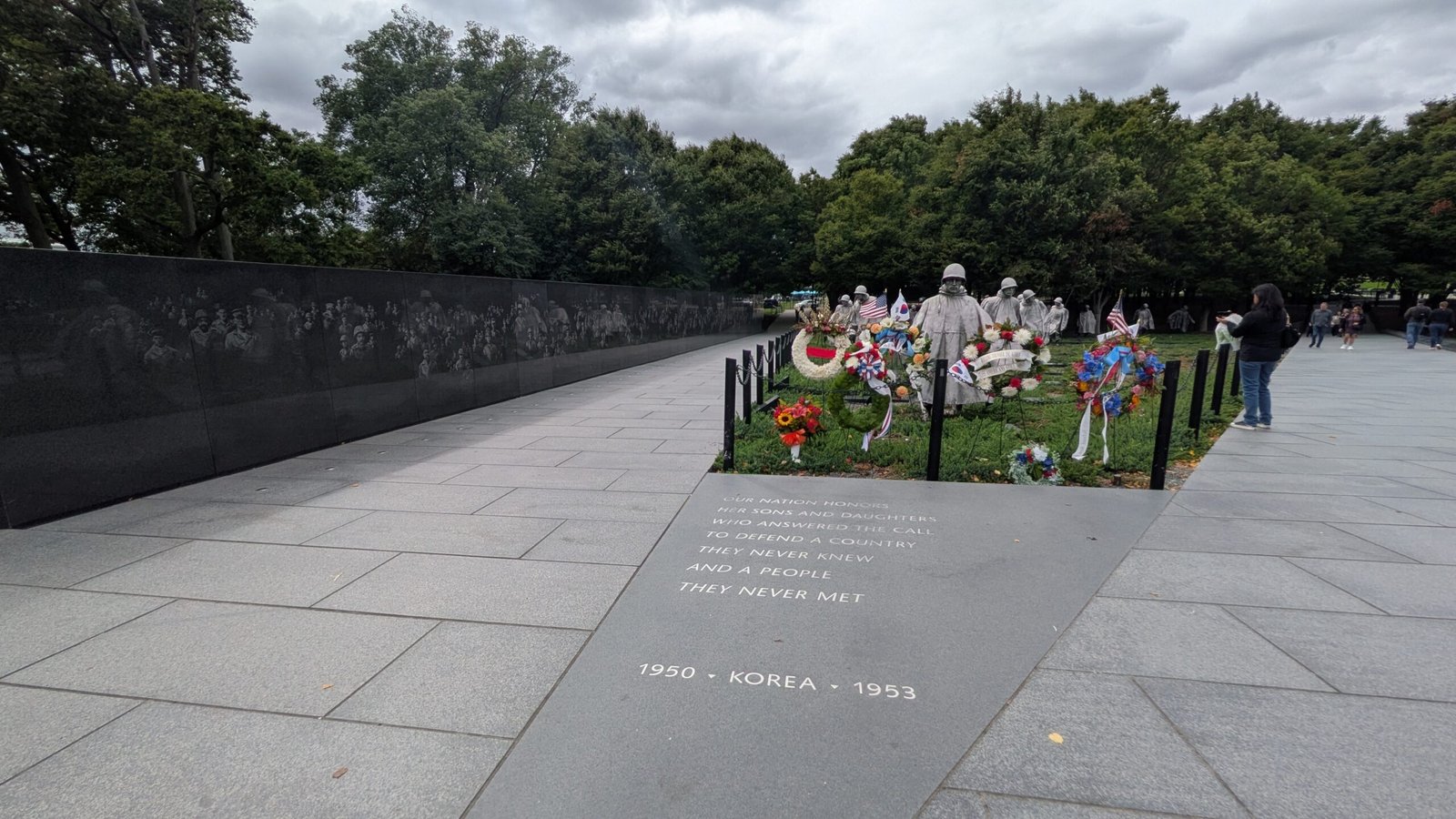
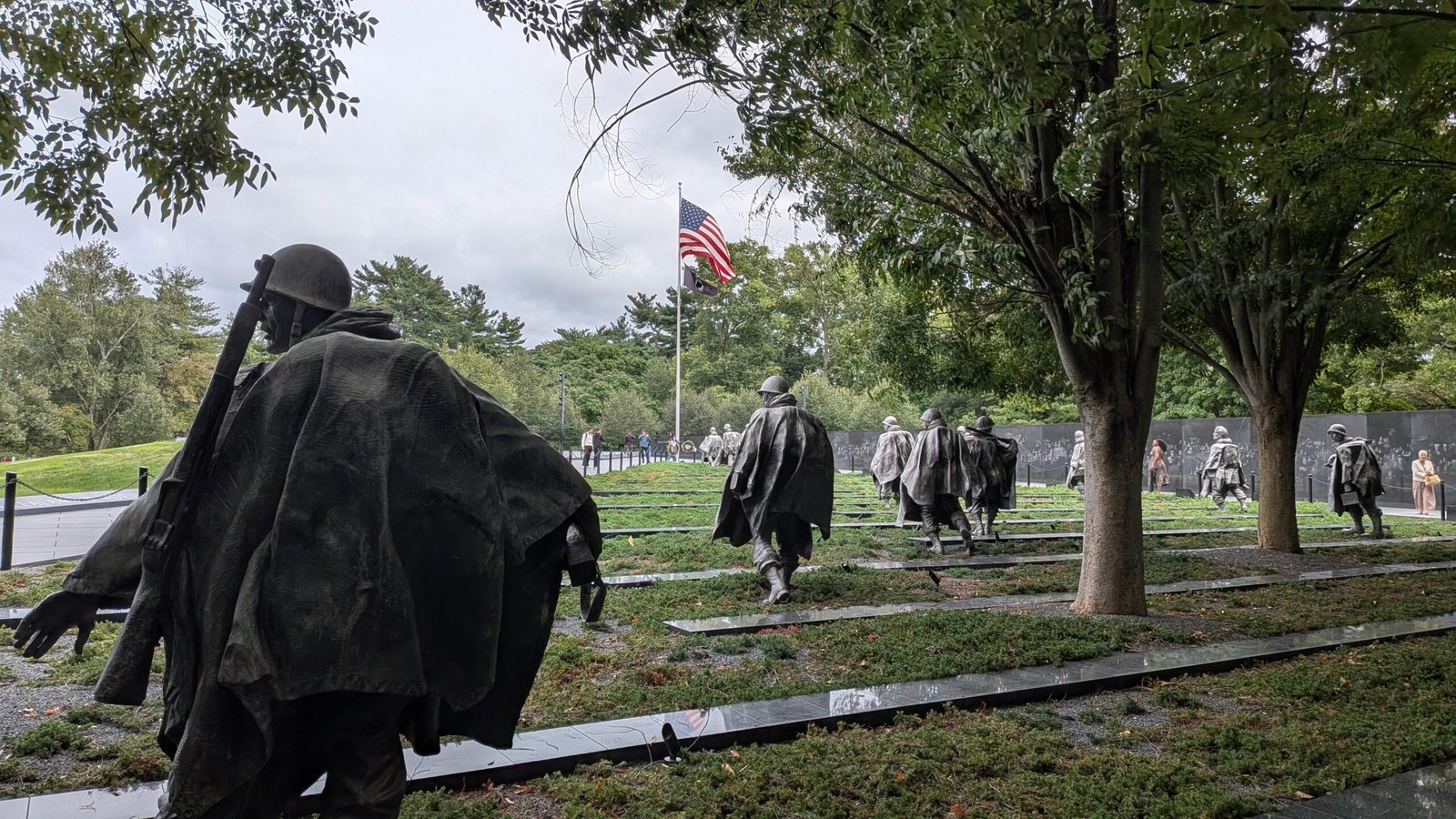
From the Lincoln Memorial, the route continued toward the Korean War Veterans Memorial. This memorial feels completely different from the grand columns and classical architecture of some of the earlier stops. Nineteen stainless-steel soldiers appear to be moving through a Korean landscape, carrying equipment and wearing military gear. The figures are remarkably detailed, and their expressions make them feel almost startlingly real. Nearby, a polished granite wall contains etched images of service members.
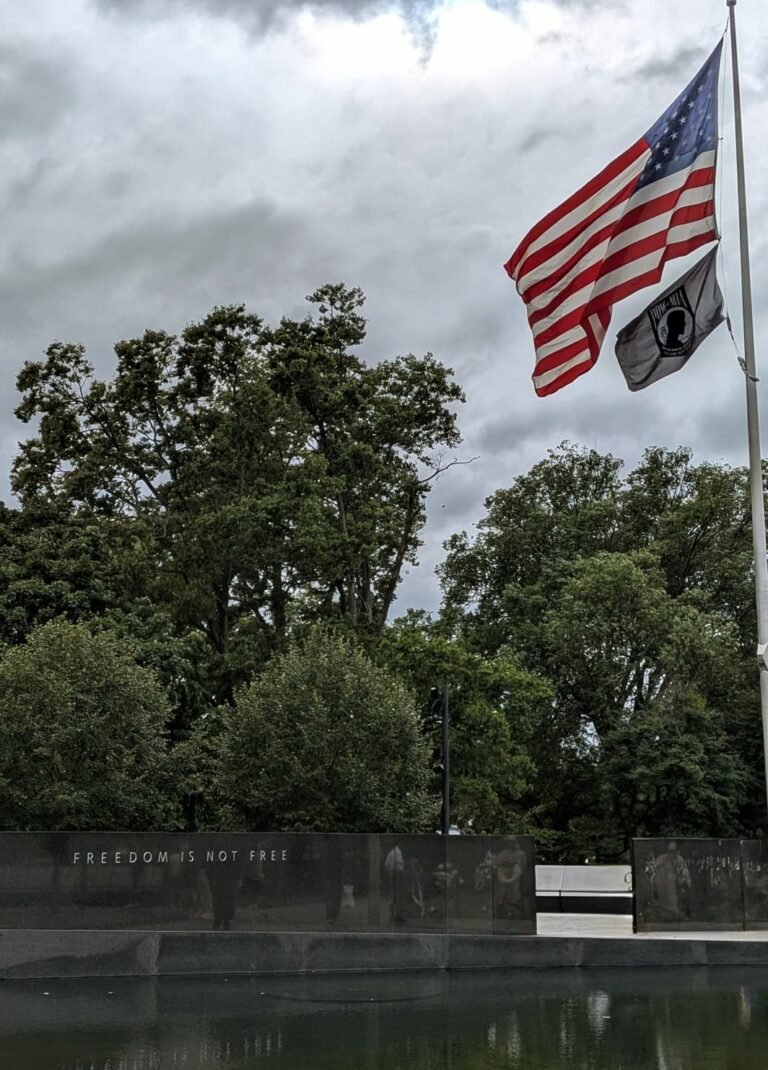
One of the memorial’s most memorable inscriptions reads:
It is remarkably simple—and fittingly powerful. The memorial honors those who served during the Korean War, a conflict that is sometimes called the “Forgotten War.” Standing among the statues, it becomes easier to understand why the designers chose to make the figures look as though they are still moving.
The war may have ended decades ago, but the memorial intentionally makes the experience feel immediate.
7. The “Stone of Hope” Has a Story Behind It
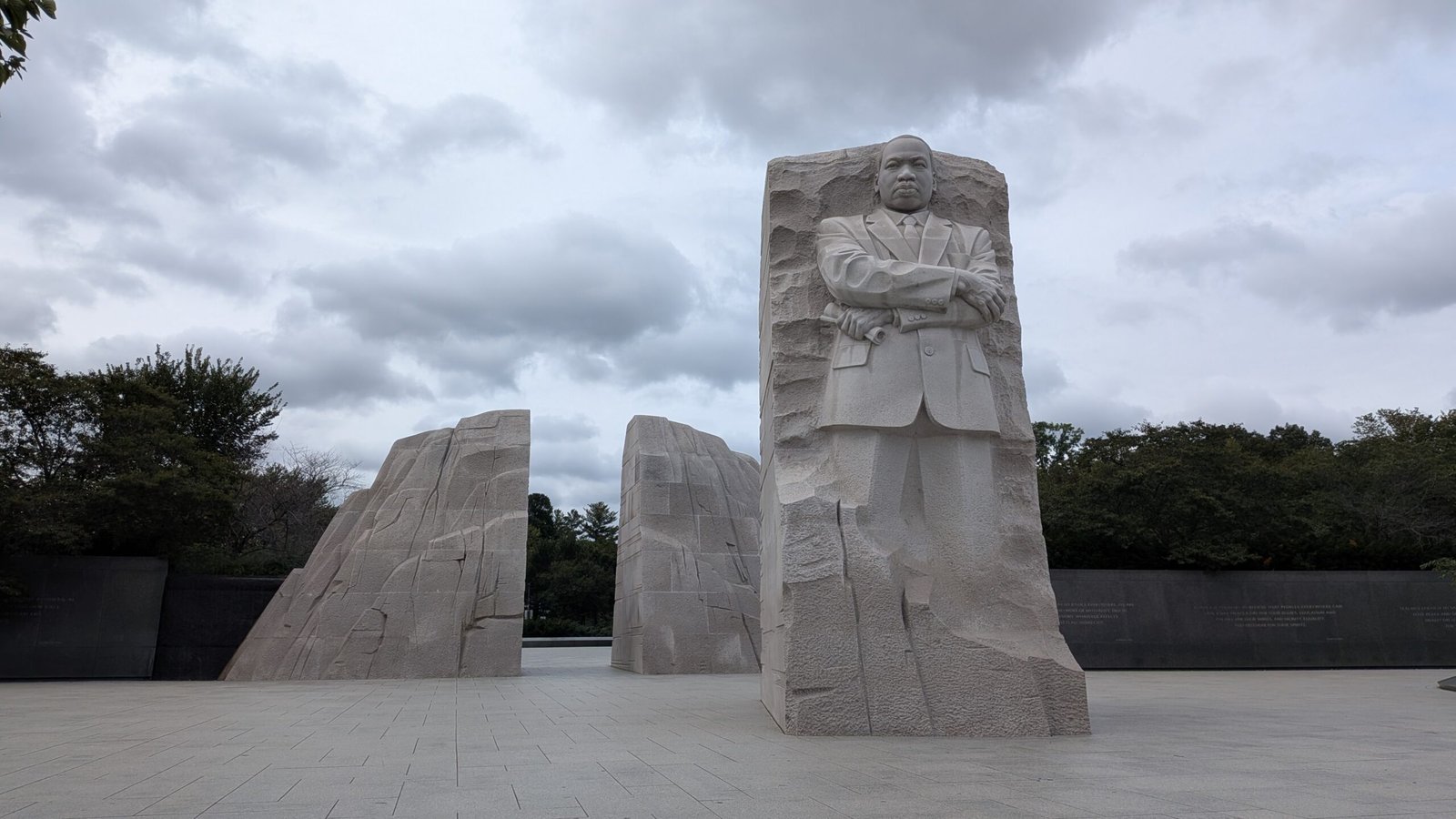
Next came the Martin Luther King Jr. Memorial along the Tidal Basin. The centerpiece is a towering sculpture of Dr. King emerging from the Stone of Hope. The idea comes from a line in his famous “I Have a Dream” speech:
That single sentence explains much of the memorial’s design. Surrounding the sculpture are quotations from King’s speeches and writings, emphasizing themes of equality, justice, freedom, and service. Another line that has become inseparable from King’s legacy is:
The memorial gives visitors a chance to look beyond those four famous words and discover the larger body of ideas and speeches behind them. And once again, the setting adds something extra.
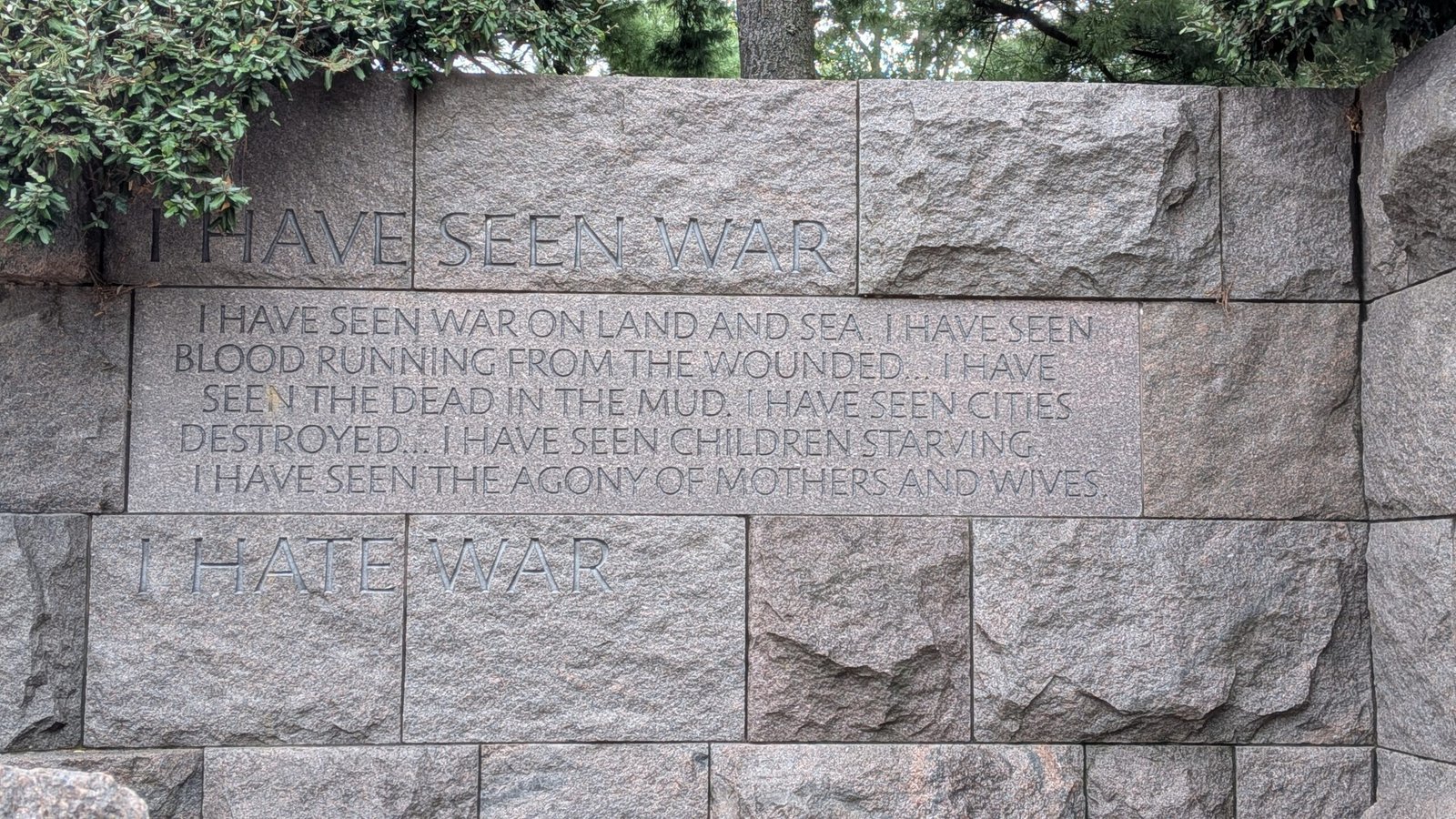
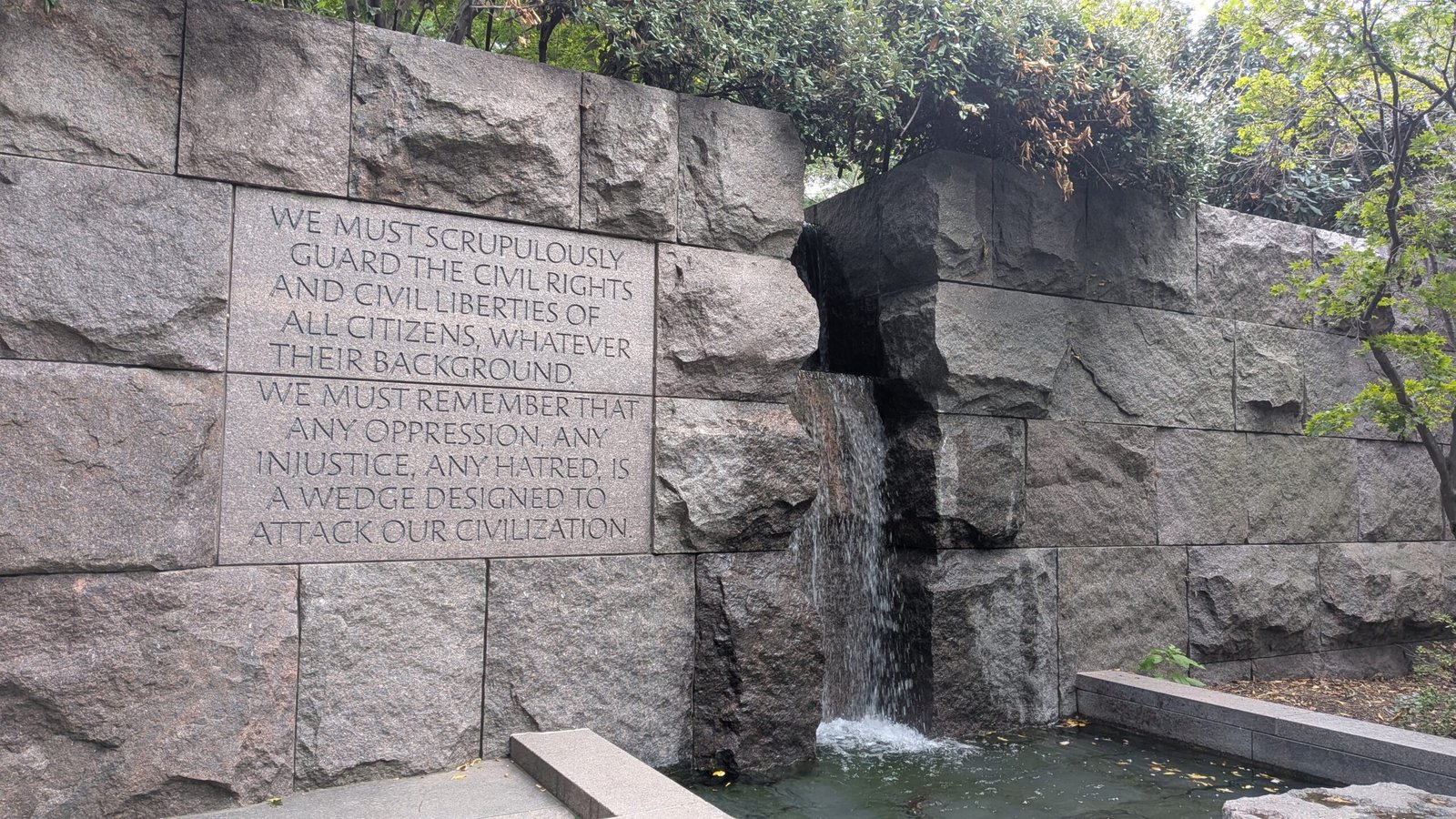
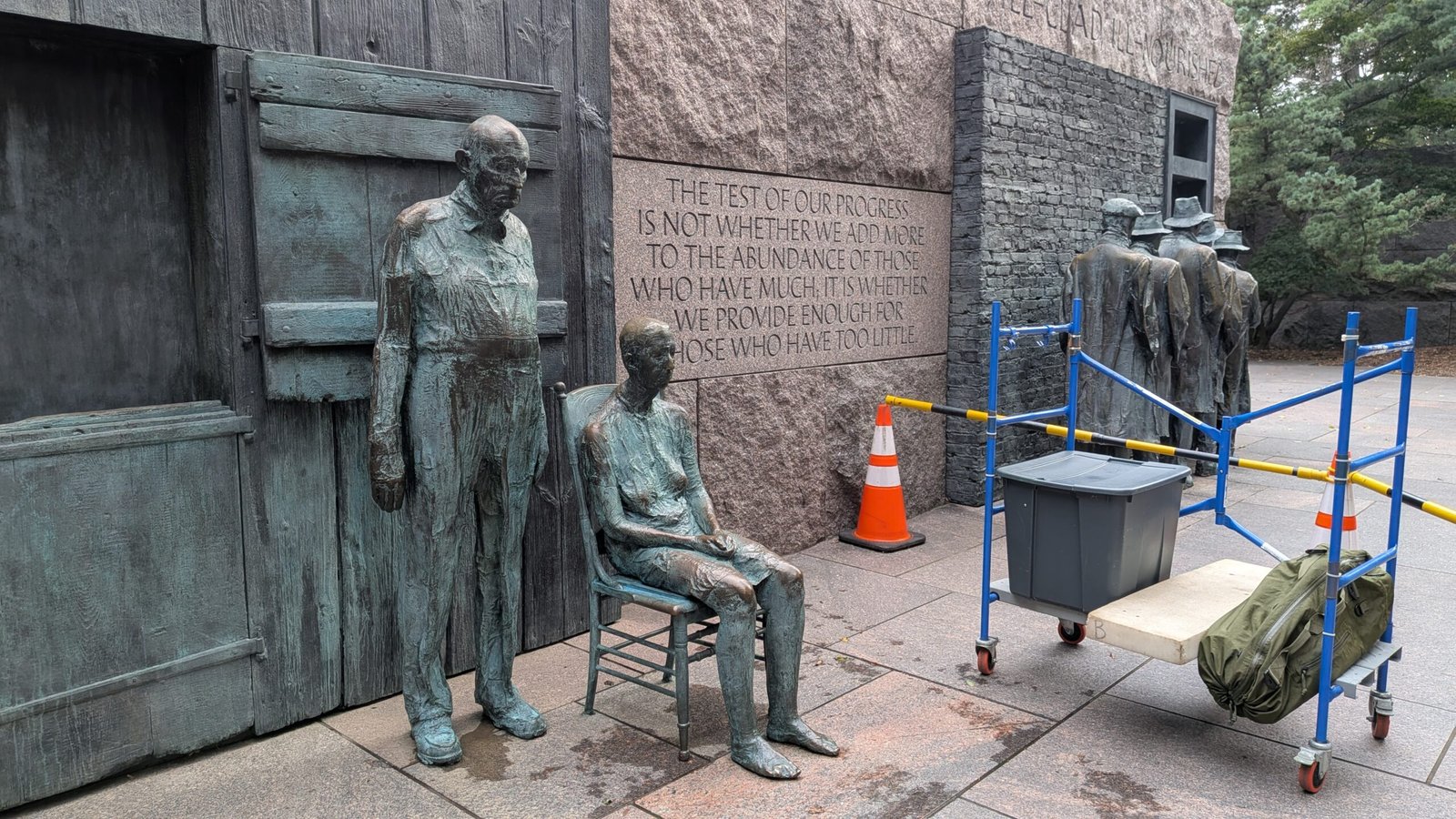
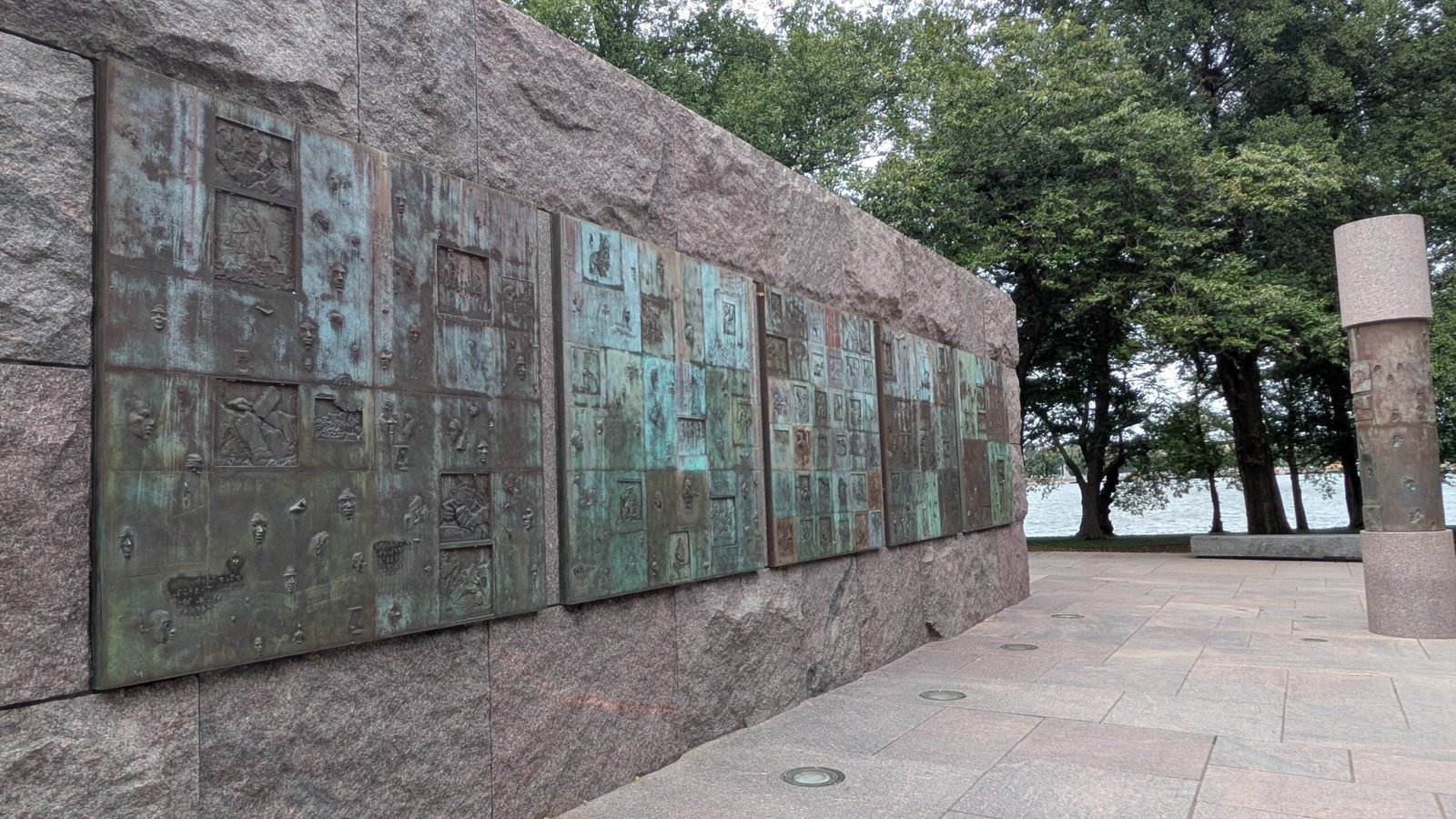
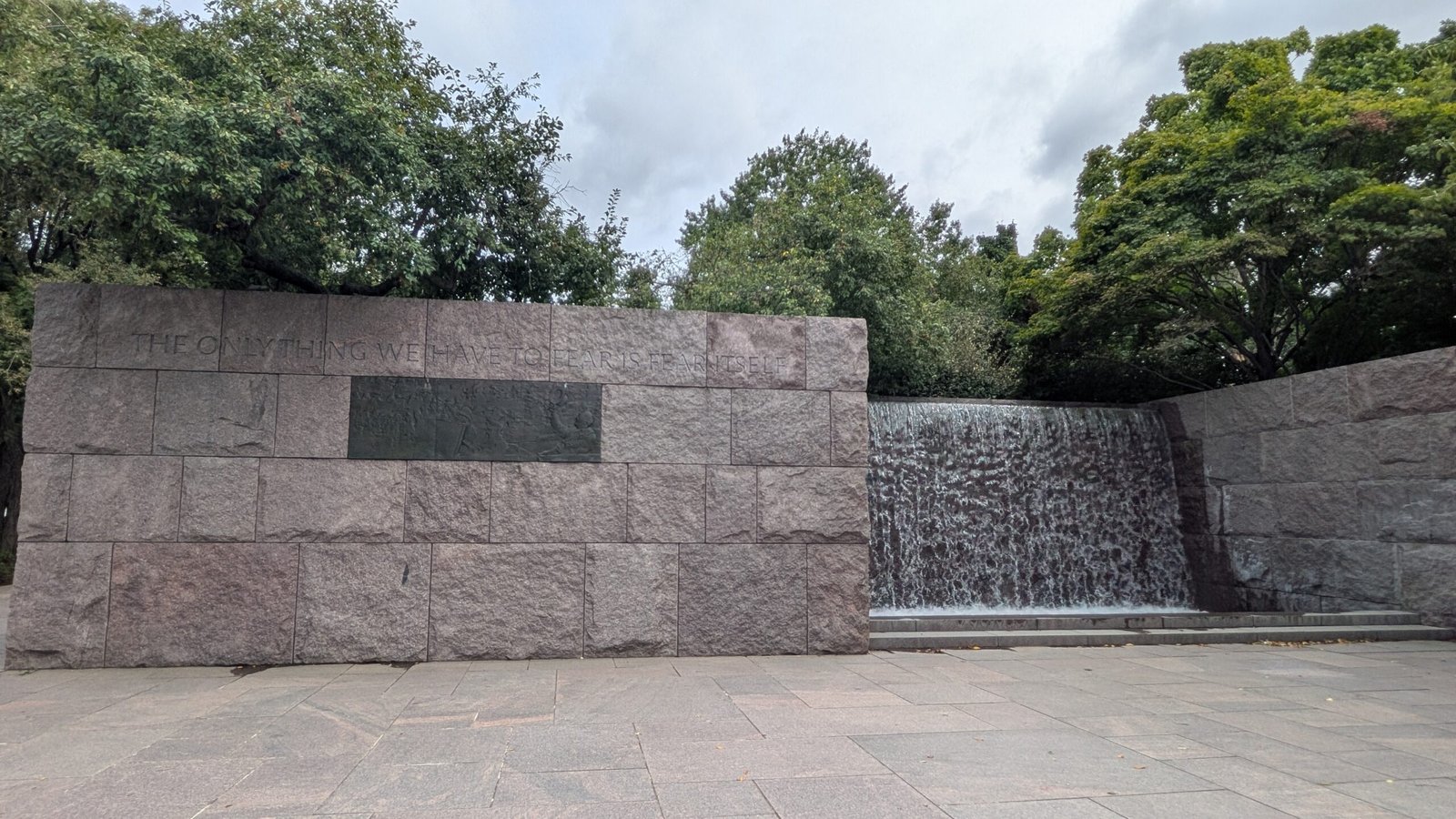
8. The FDR Memorial Is Really a Walk Through a Presidency
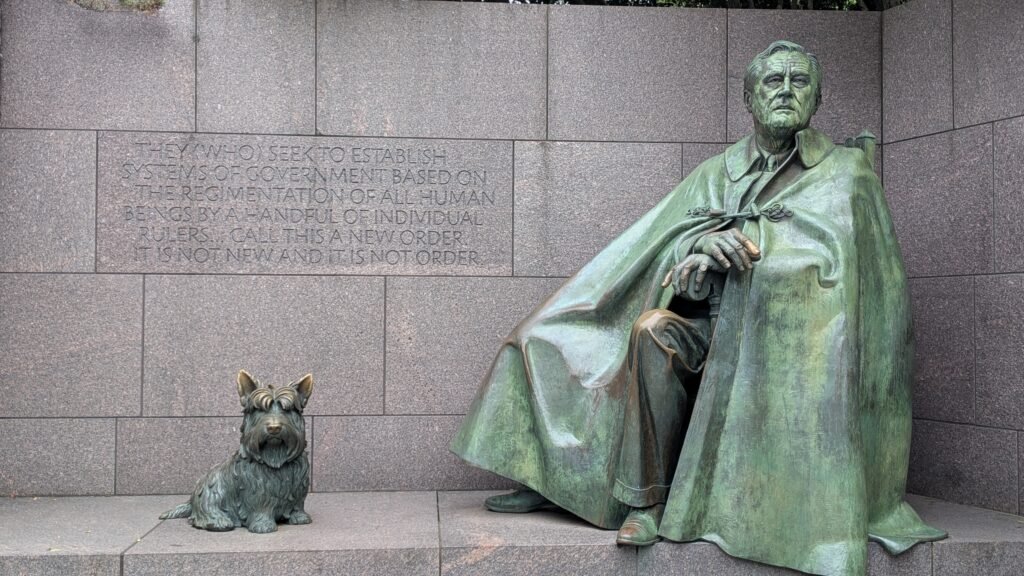
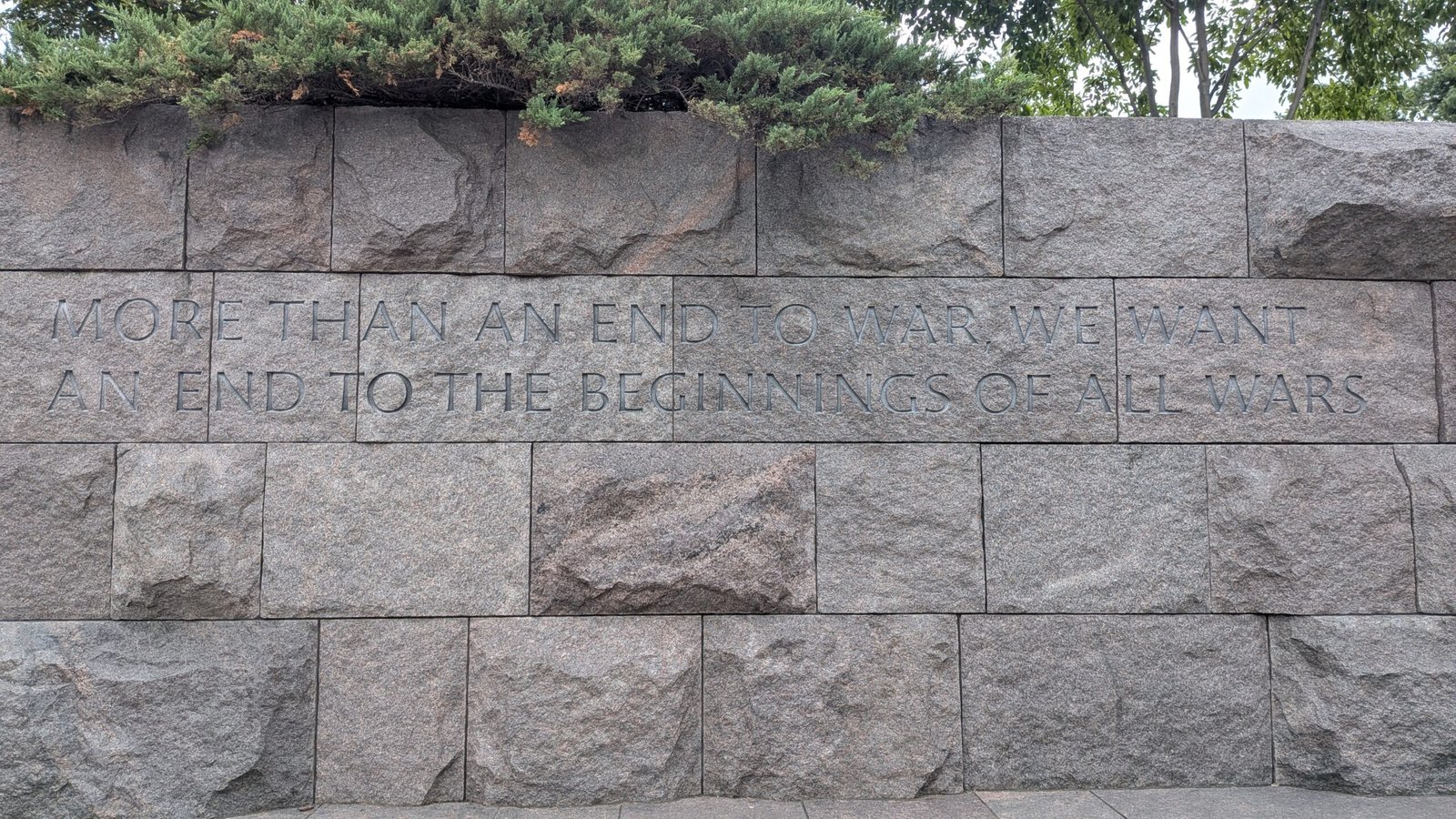
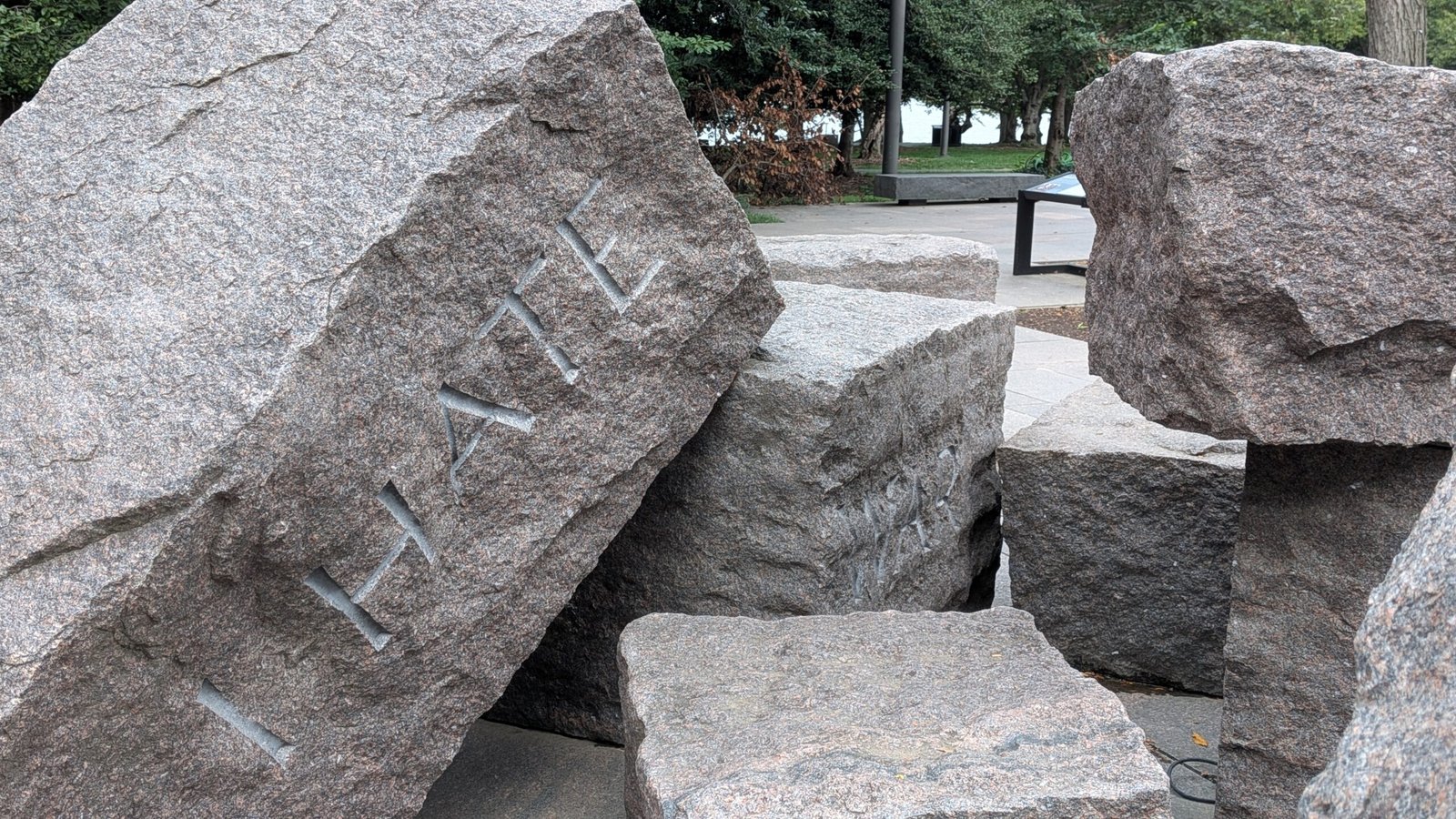
Continuing around the Tidal Basin brought us to the Franklin Delano Roosevelt Memorial.
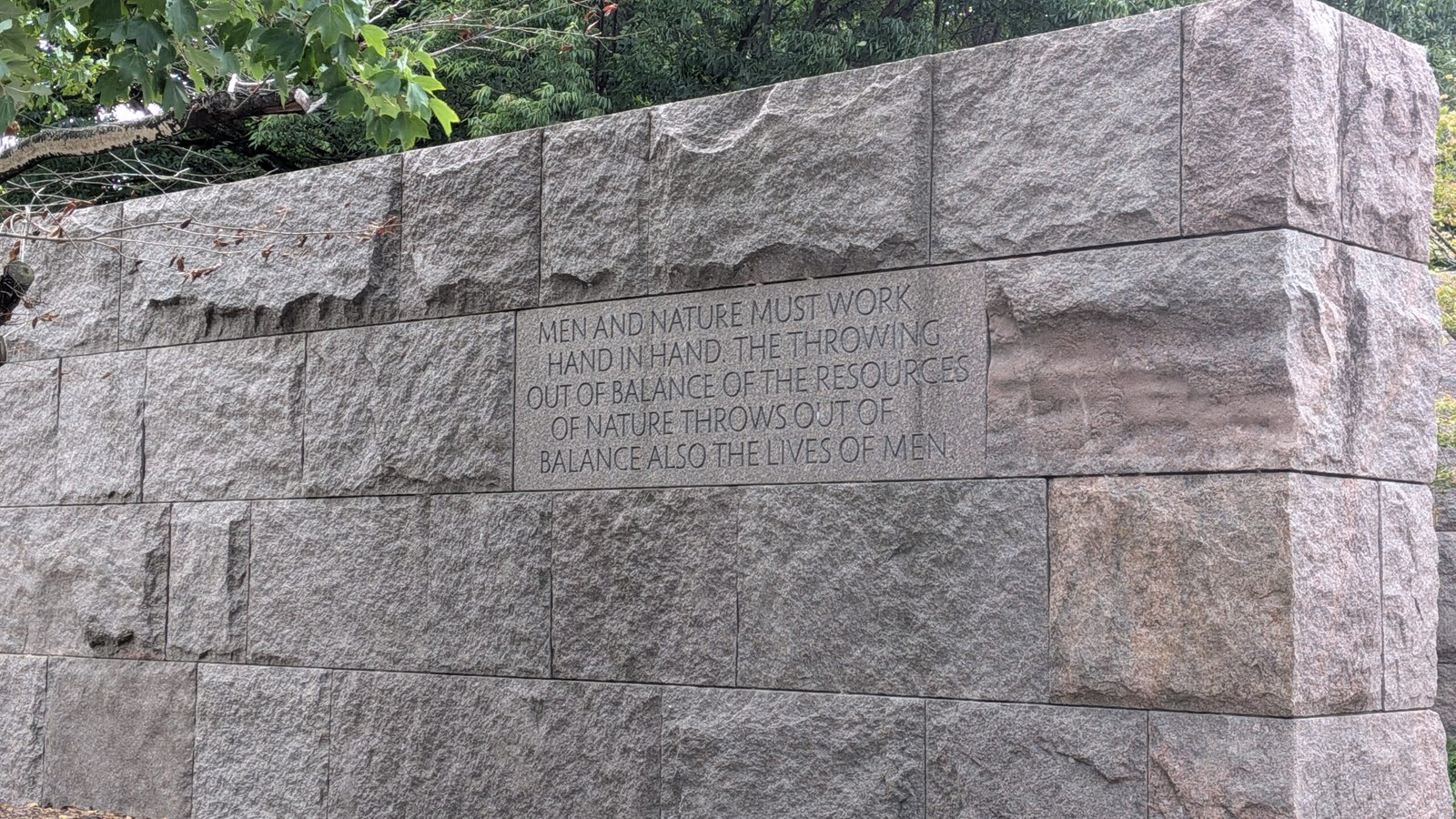
Unlike a traditional memorial centered around one statue, the FDR Memorial is designed as a journey through Roosevelt’s presidency.
Waterfalls, sculptures, stone walls, and quotations create different sections representing major events and challenges of the era, including the Great Depression and World War II.
One of the inscriptions comes from Roosevelt’s first inaugural address:
It’s a sentence many people recognize, but seeing it incorporated into a memorial surrounded by scenes from one of the country’s most difficult periods gives it a different feeling. The memorial also addresses Roosevelt’s disability and his use of a wheelchair—something that had largely been hidden from the public during his presidency. Walking through it feels less like visiting one monument and more like moving through a historical timeline. And that was becoming a theme of the day.
Every time we thought we were simply walking to the next landmark, there seemed to be another story waiting along the way.
9. Eleanor Roosevelt Has a Remarkable Connection to Human Rights
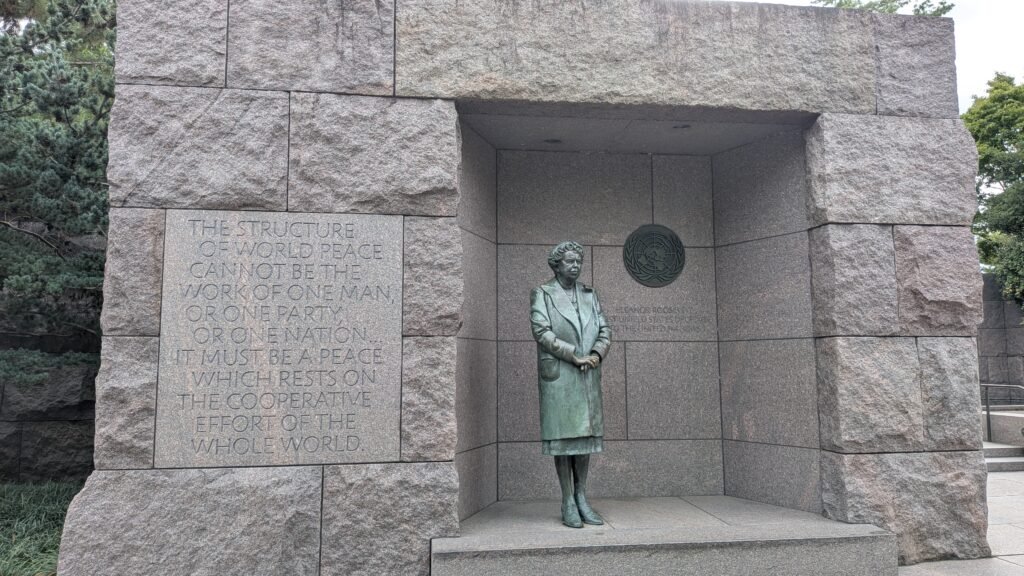
Just beyond the FDR Memorial is the Eleanor Roosevelt Memorial.
It is smaller and quieter than many of the monuments around the Tidal Basin, but it represents an important part of American and international history.
Eleanor Roosevelt played a major role in the development of the Universal Declaration of Human Rights following World War II and served as chair of the United Nations committee that helped draft it. One of her most memorable observations about human rights began:
She went on to emphasize that human rights begin in the small, everyday places close to home. That idea makes the memorial feel surprisingly personal despite its connection to an enormous international document. The memorial includes a bronze statue of Eleanor Roosevelt beside a stone featuring a quotation from the declaration. It is an easy landmark to overlook when you’re focused on the bigger monuments nearby. But that’s exactly why it was worth including in the loop.
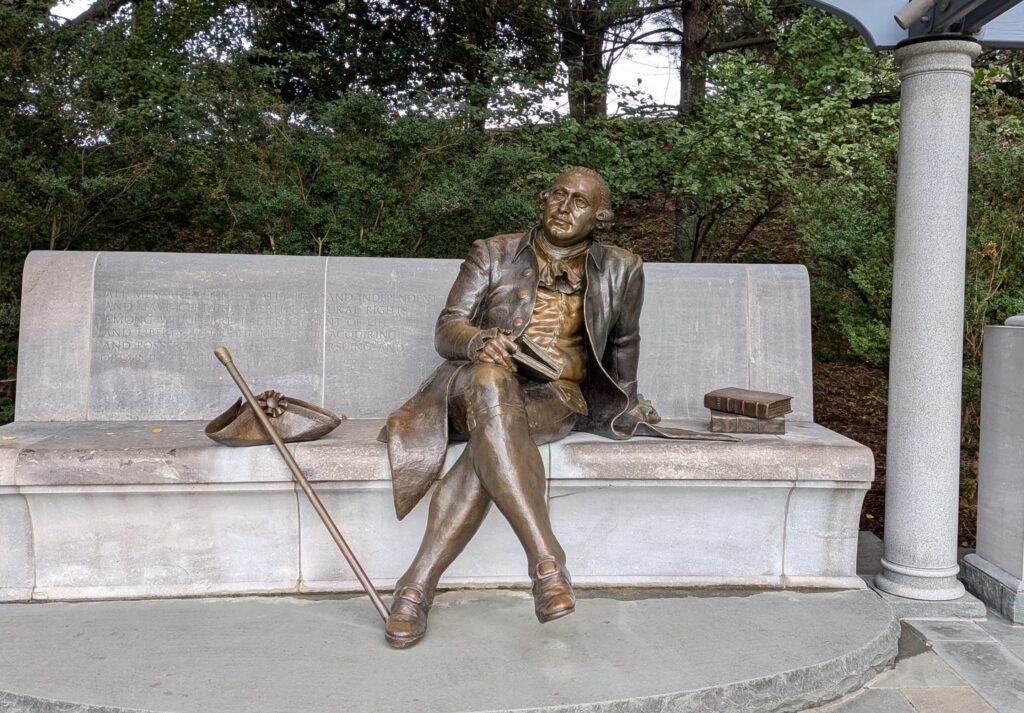
10. George Mason Helped Shape the Ideas Behind the Bill of Rights
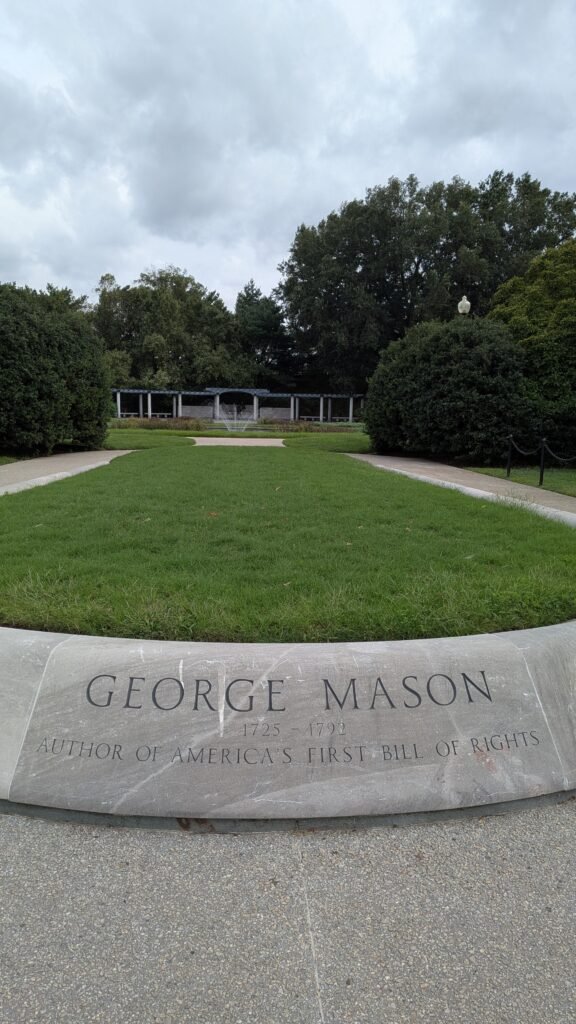
George Mason may not have the same immediate name recognition as Washington, Jefferson, or Lincoln, but his influence on early American ideas about individual rights was significant.
Mason was the principal author of the Virginia Declaration of Rights, adopted in 1776. That document influenced the development of ideas that would eventually become the U.S. Bill of Rights.
One of the most recognizable principles from the Virginia Declaration states:
Standing at the memorial, it was interesting to realize how many of the ideas encountered throughout the day can be traced back to people whose names aren’t necessarily the first ones that come to mind.
More Than Just a Walk
By the time we completed the loop, we had walked roughly four miles and seen an impressive collection of American landmarks.
But looking back, the most interesting part wasn’t simply checking monuments off a list. It was discovering the stories tucked inside them.
The Jefferson Memorial introduced ideas about liberty and government. The Washington Monument revealed its own construction history. The World War II Memorial showed how an entire nation contributed to a global conflict. The National Military Monument unexpectedly connected that national story to our own family when Kayla found her great-grandfather’s name.
The Lincoln Memorial, Korean War Veterans Memorial, and Martin Luther King Jr. Memorial each told very different stories about leadership, sacrifice, conflict, equality, and the American experience. Then the FDR Memorial, Eleanor Roosevelt Memorial, and George Mason Memorial added even more layers to the story.
And that may be the best thing about exploring Washington, D.C. You can come for the photographs. You can come for the famous landmarks. You can come because you simply have a few hours to spare. But if you slow down enough to look a little closer, you’ll find that every monument has another story hiding behind the picture. And sometimes, if you’re lucky, one of those stories might even connect back to your own. Because history isn’t always something you read in a book. Sometimes, you can simply walk right into it.