Rajasthan had been on our bucket list for years. We had imagined its majestic forts, golden deserts, serene lakes, and vibrant culture countless times before finally setting foot there. But what truly makes Rajasthan special isn’t just its landscapes — it’s the pride, history, and personality woven into every city. And no matter where you go, you hear and feel one beautiful phrase: “Padharo Mhare Desh” — welcome to my land. It’s not just a greeting; it’s an emotion.
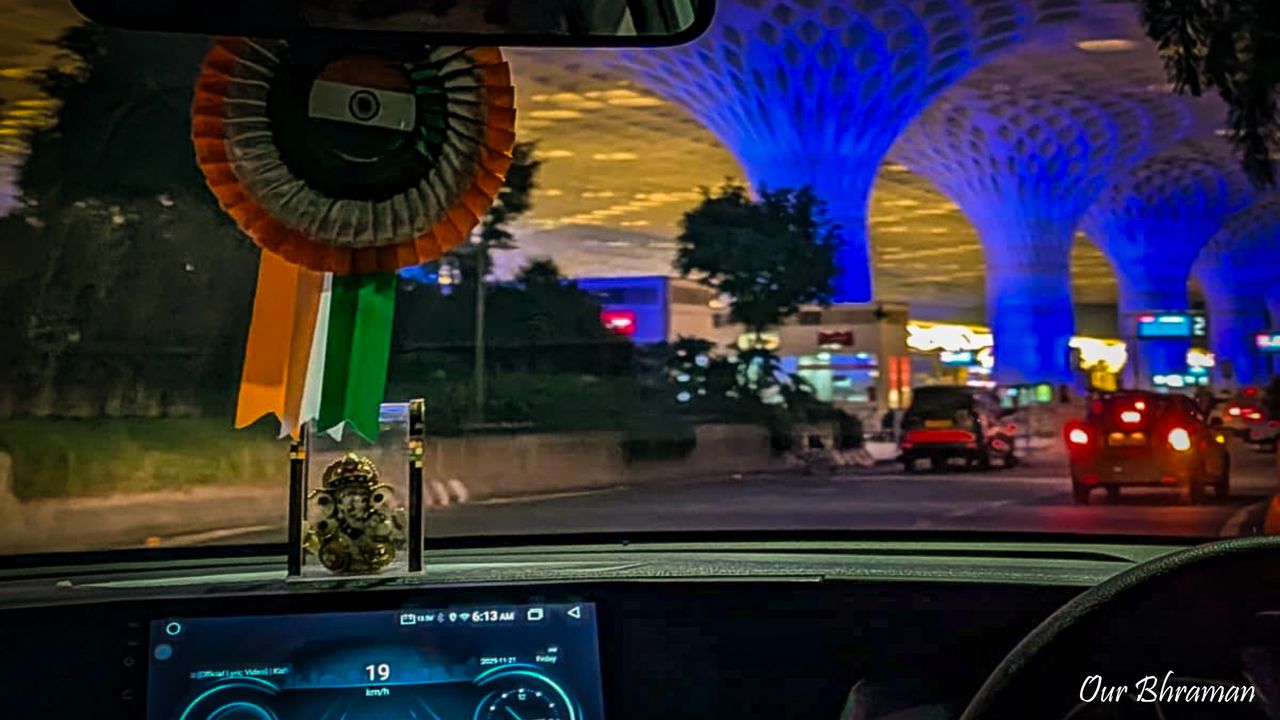
Our journey began before sunrise at Chhatrapati Shivaji Maharaj International Airport. With the sky still dark outside, the terminal looked even more dramatic. The towering pillars — inspired by the peacock, India’s national bird — stretch upward and bloom into a honeycomb-patterned ceiling. Soft blue and golden lighting highlighted the structure, giving it a calm yet grand feel. The intricate jali details and colorful glass elements added a cultural richness that made the space feel more like an art gallery than an airport. It was the perfect beginning — modern, artistic, and proudly Indian.
Our flight to Jaisalmer was under two hours. It was our first time flying with IndiGo, and despite mixed reviews we had heard, the experience was smooth and punctual. Sometimes, the best travel memories begin by letting go of expectations.
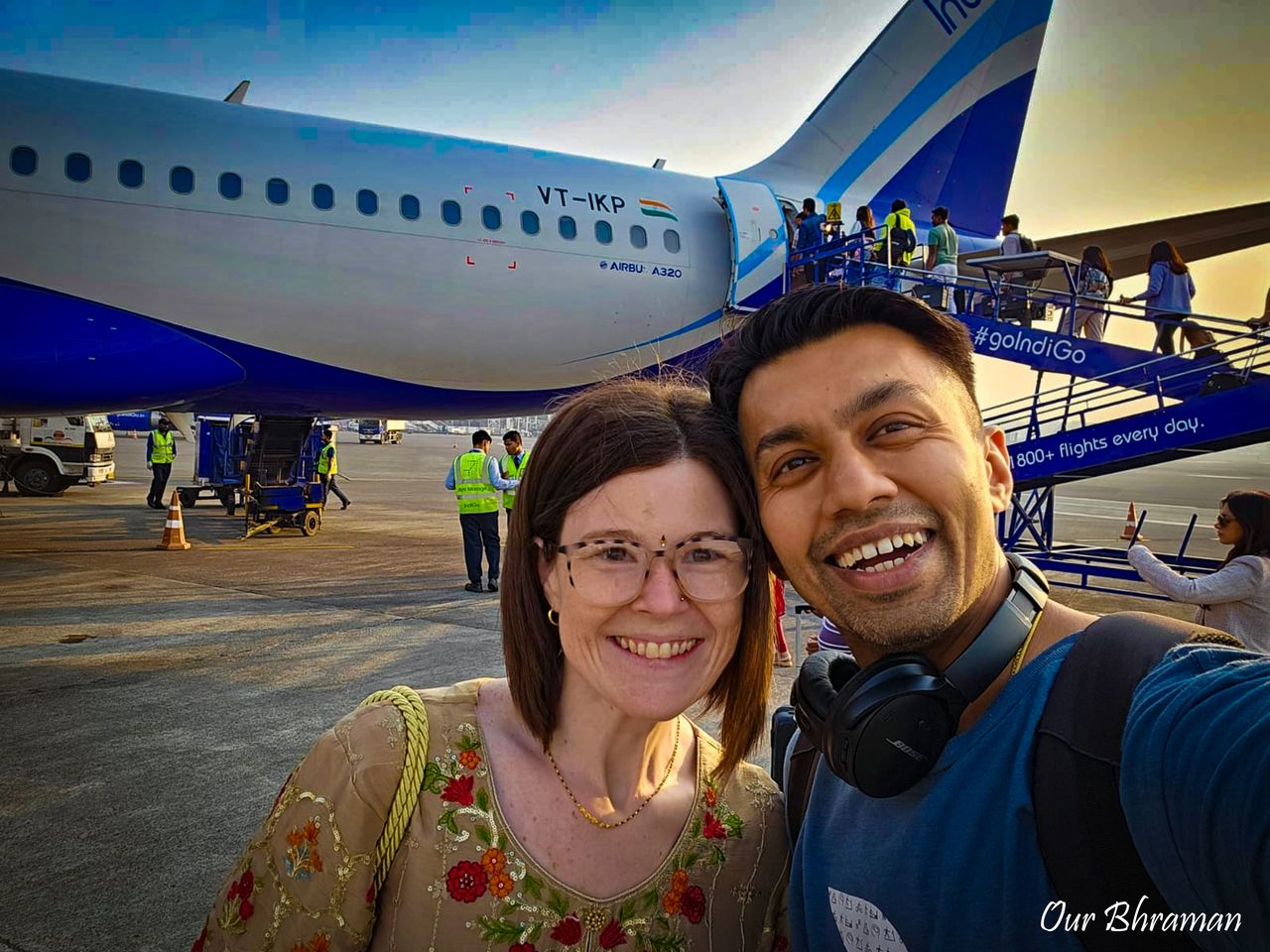
Landing in Jaisalmer felt different. The airport shares space with an Indian Air Force base, and knowing its location near the India–Pakistan border added a quiet sense of importance to our arrival. As we stepped out, the desert air greeted us — dry, bright, and full of promise.We soon met our driver, who would be with us for the next ten days, guiding us through Rajasthan’s forts, cities, and hidden gems. After a short drive, we checked into Hotel Antra Inn. The welcome was warm, and the stay comfortable — just what we needed after an early start.
Even though it was winter, the midday desert sun was surprisingly strong. Instead of rushing out, we decided to slow down and soak in the moment. From the hotel’s rooftop terrace, we caught our first glimpse of Jaisalmer Fort rising from the golden city like a sandcastle from another era. In the distance, chhatris dotted the horizon, completing the picture. Standing there, watching the fort glow in the afternoon light, we knew one thing — we had to return at sunrise to see it in softer tones.
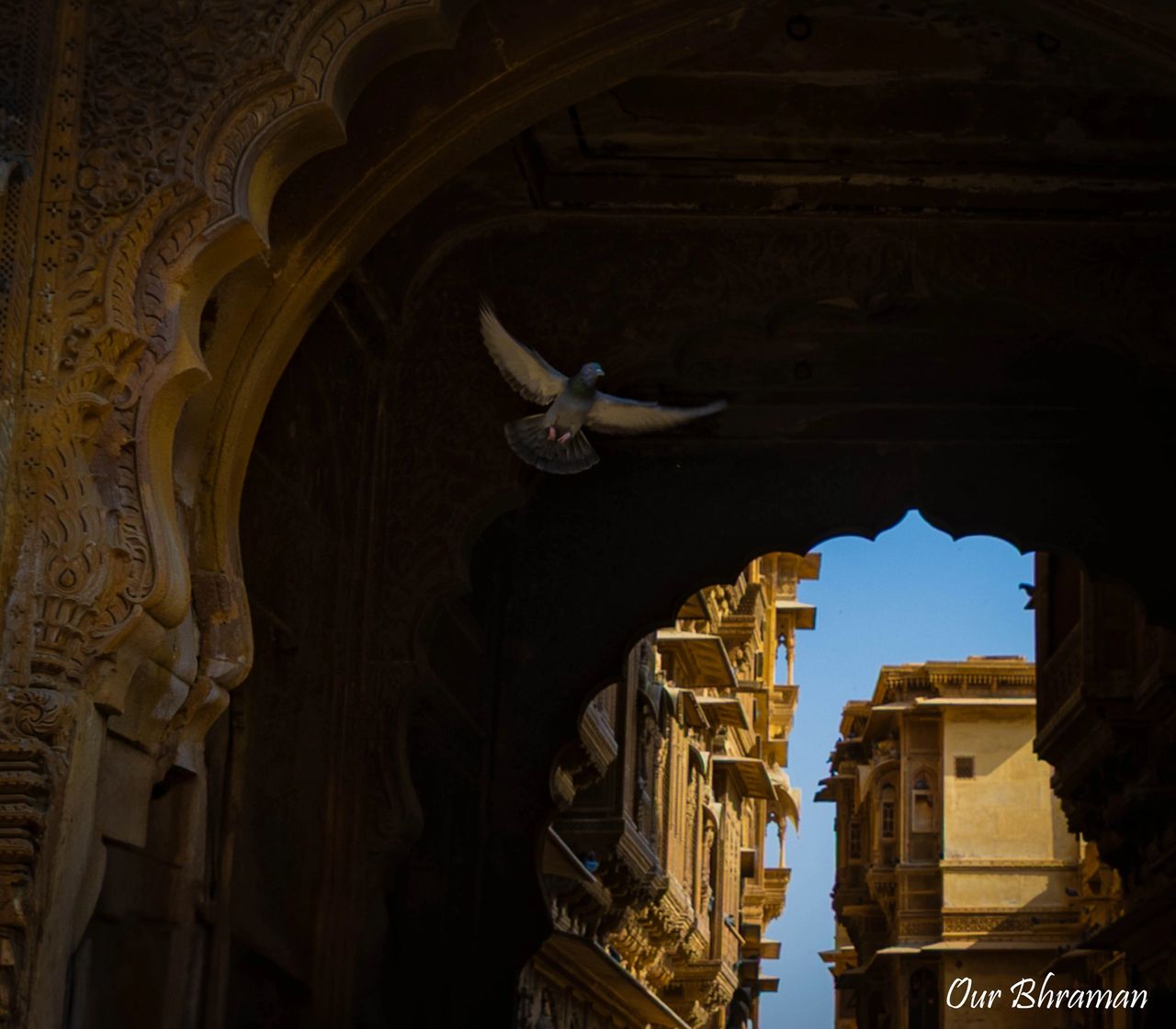
Our first stop in the Golden City was Patwon Ki Haveli — and standing before it, we immediately understood why it is one of Jaisalmer’s most treasured landmarks. Visiting Patwon Ki Haveli was not just about admiring beautiful architecture — it was about understanding the stories behind it. The entry fee is very reasonable, around ₹50 for Indian visitors and about ₹200 for international tourists. There is also a small additional fee if you plan to carry a camera inside. At the entrance, local guides are available and usually charge between ₹100 to ₹300 depending on group size and duration. We found hiring a guide absolutely worth it. Without one, you might simply walk through appreciating the carvings and design — but with a guide, the haveli comes alive. From the history of the wealthy Patwa merchant family to the meaning behind the intricate jali work and balconies, every detail suddenly has a story.
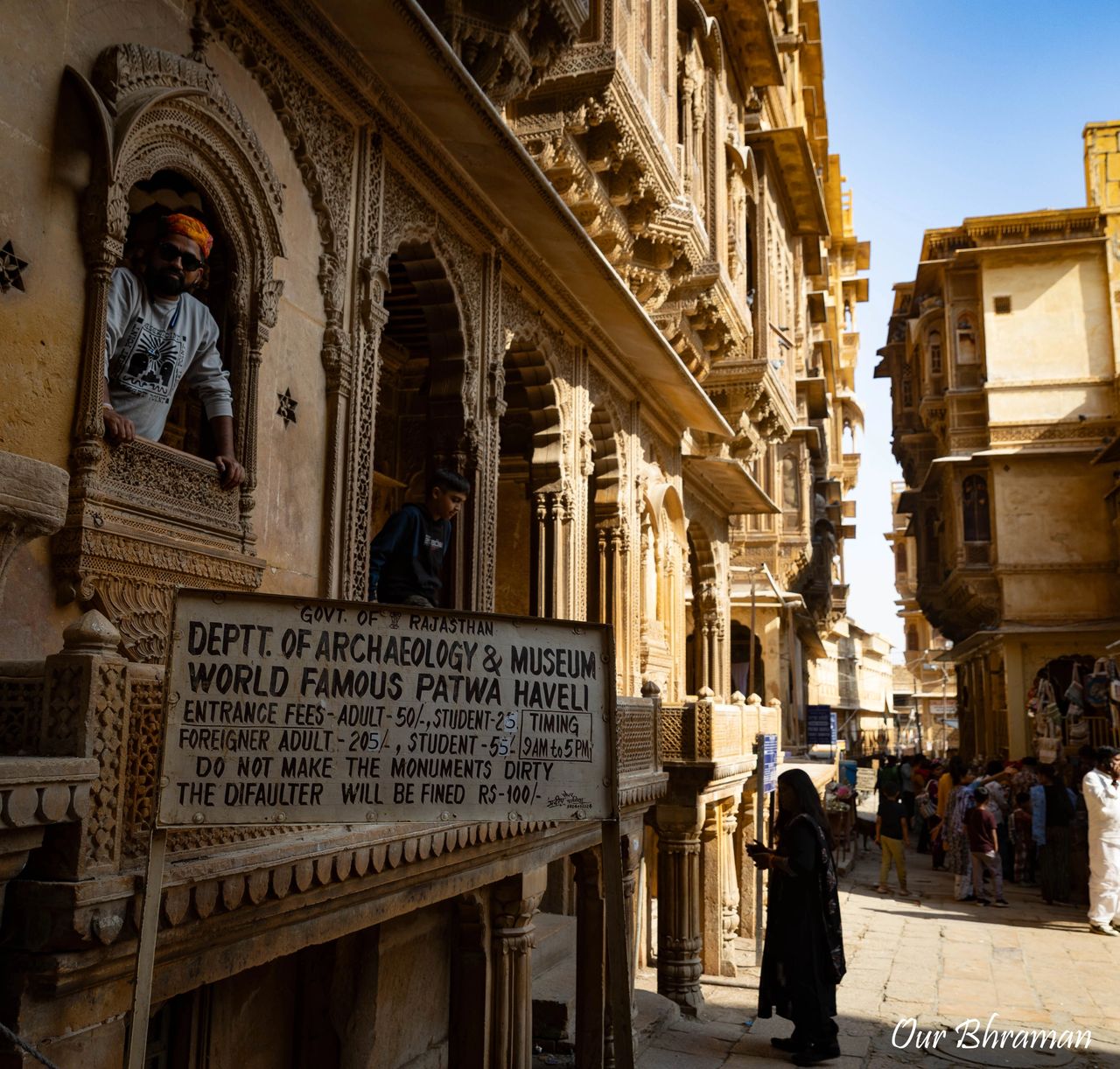
As our guide explained, this is not just one haveli but a complex of five havelis built side by side. Construction began around 1805 by Guman Chand Patwa, a wealthy Jain trader, and was later completed by his five sons — each haveli belonging to one son. That is how the complex earned its name, “Patwon Ki Haveli,” meaning the haveli of the Patwas. The Patwa family were among the richest traders in Jaisalmer at the time, dealing in gold, silver, fine textiles, brocade, and precious stones.
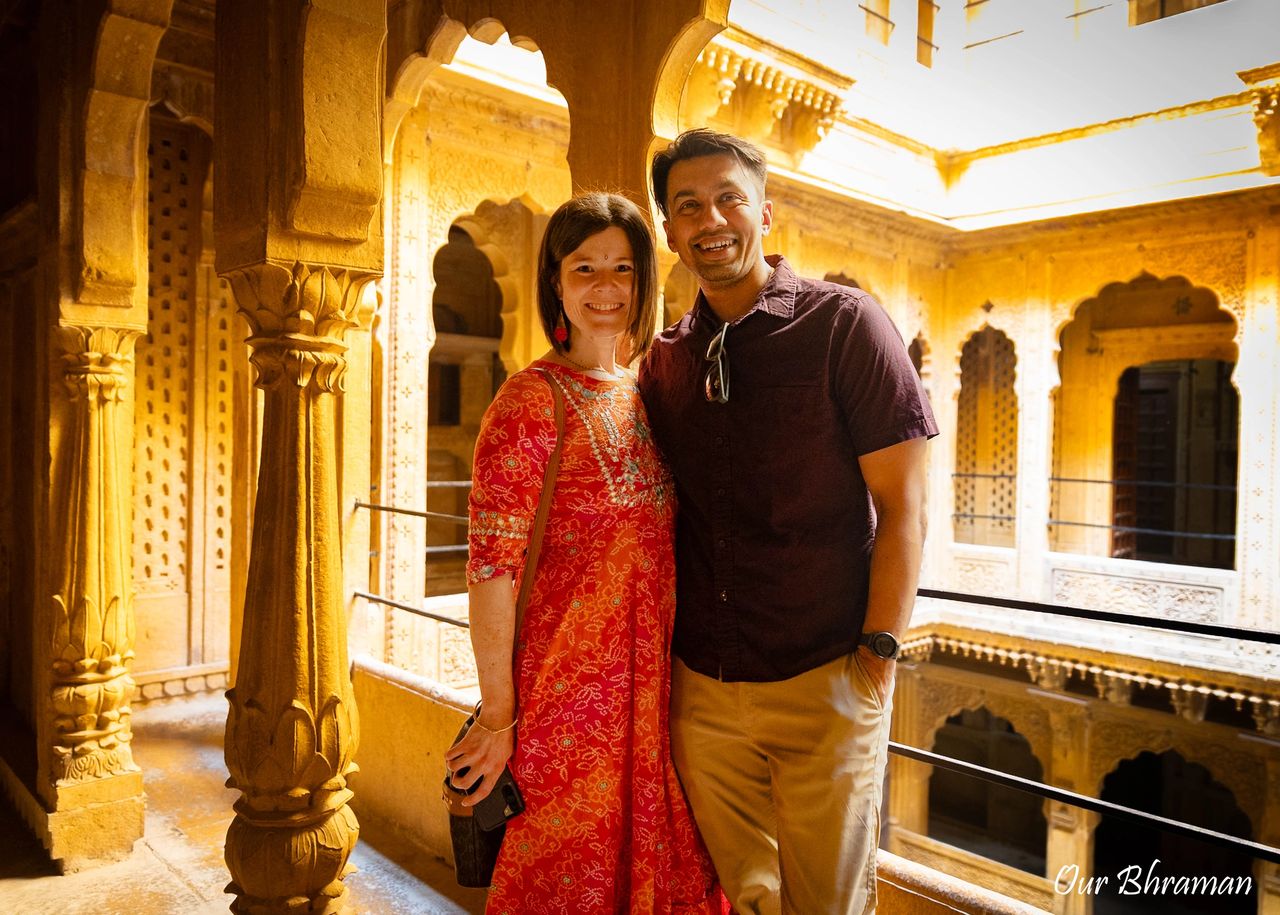
In the 19th century, Jaisalmer was an important stop along ancient trade routes connecting India with Central Asia and beyond. The Patwa family built their wealth through these thriving trade networks. Our guide shared that the elaborate carvings and grand architecture were not just for comfort but also a symbol of status, meant to reflect the family’s prosperity and social standing in the community.
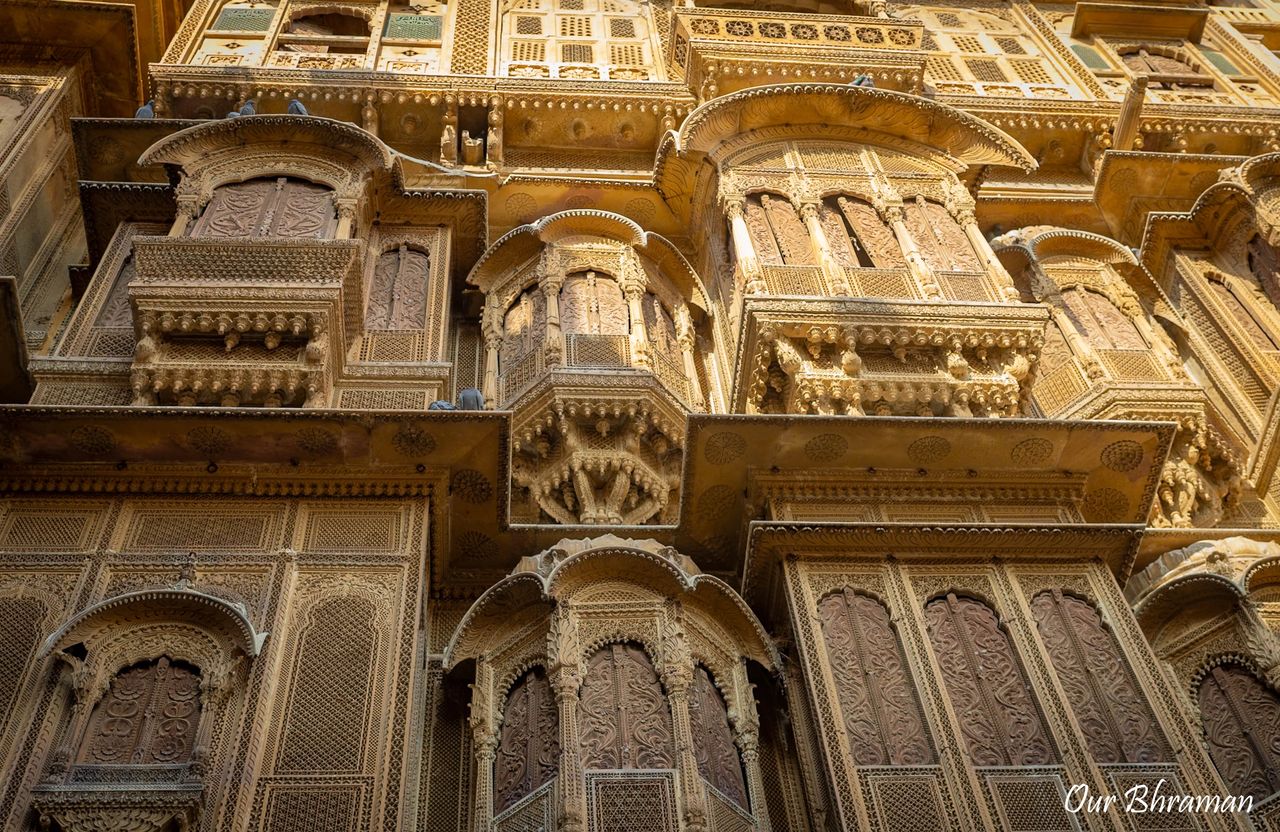
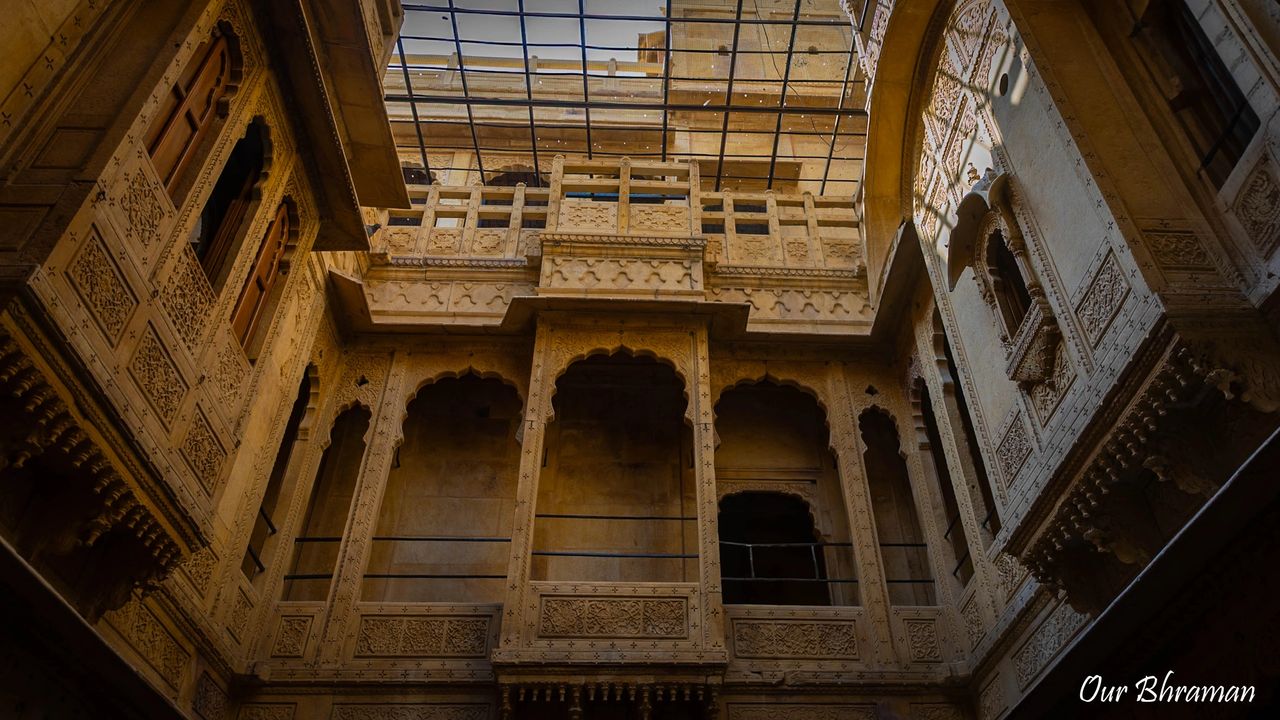
Our guide drew our attention to the intricate carvings on the golden sandstone façade — finely detailed jharokhas (balconies), delicate jali screens, and beautifully sculpted arches. These were not just decorative but also practical, allowing airflow while maintaining privacy. Inside, narrow corridors, mirror work, painted walls, and ornate ceilings reflect the richness of 19th-century merchant life. Today, parts of the haveli are preserved as a museum, displaying artifacts, traditional items, and furniture that offer a glimpse into the lifestyle of that era.
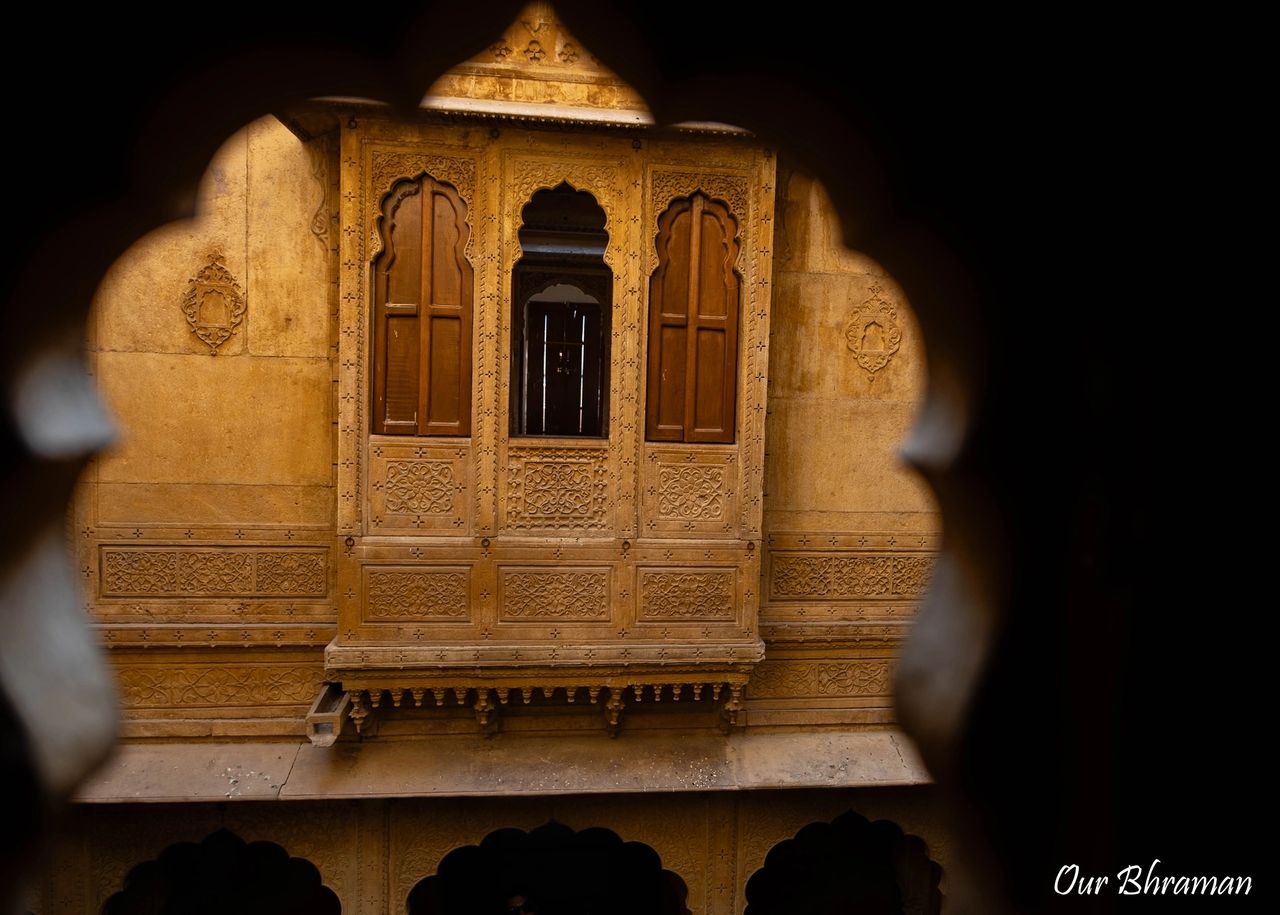
Walking through the haveli, you can feel how thoughtfully it was designed for the desert climate. Thick golden sandstone walls absorb heat slowly. Narrow corridors funnel breezes. Central courtyards act as natural air‑wells, pulling hot air upward and letting cooler air settle below. Even the layout — a maze of shaded rooms and interconnected spaces — helps regulate temperature. It’s a masterclass in passive cooling, perfected centuries before modern technology. He pointed out the intricate carvings covering the façade — delicate floral patterns, detailed geometric designs, and auspicious symbols commonly seen in Jain and traditional Rajasthani architecture. According to him, these were not just decorative elements. Many of the motifs were carefully chosen because they were believed to bring prosperity, protection, and good fortune to the merchant family who once lived within these walls.
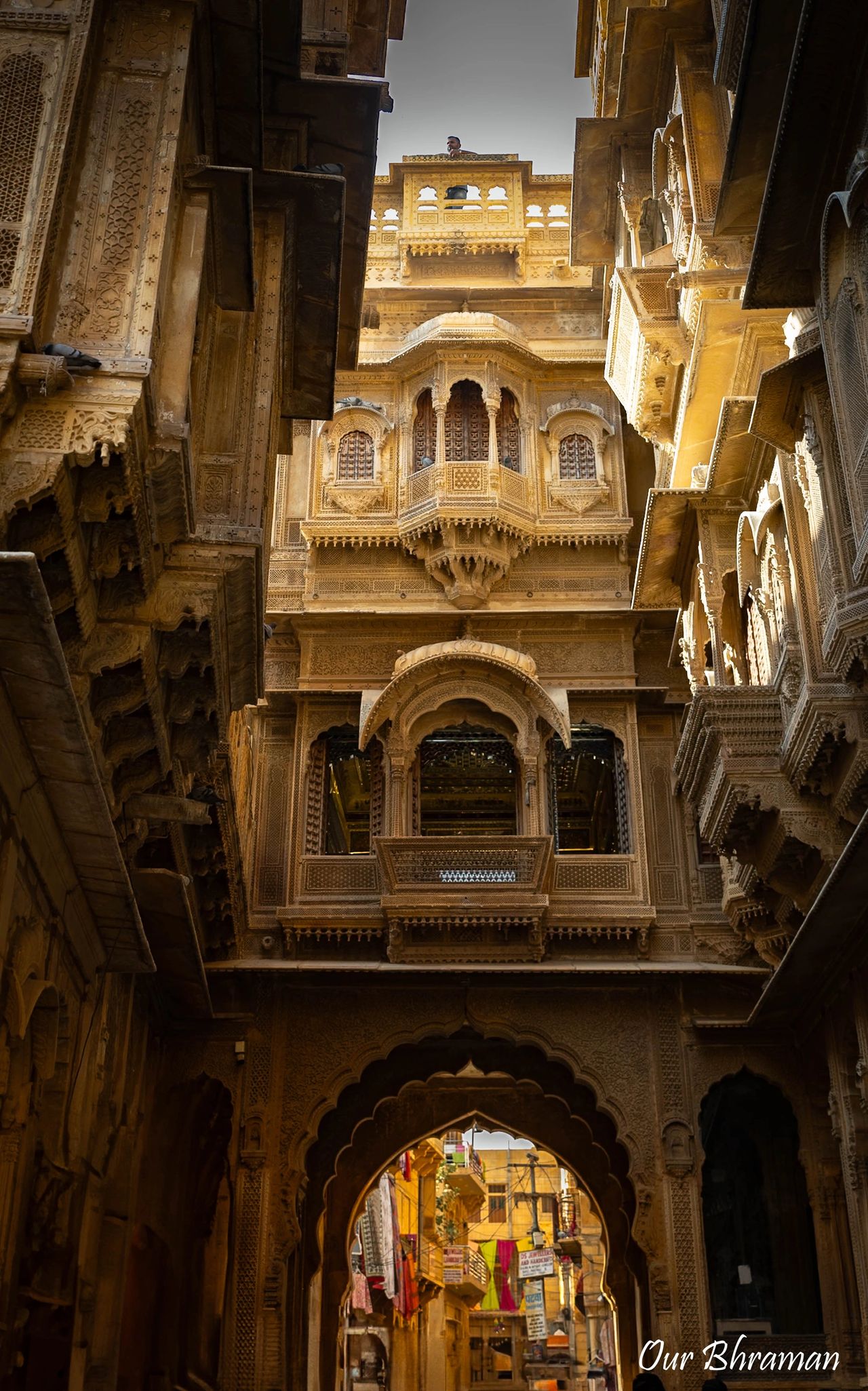
One of the most memorable moments was heading up to the rooftop. Away from the busy courtyards and the steady flow of visitors, the upper level offers a quieter space and stunning views of the surrounding golden city. From there, you can see the maze of sandstone buildings and even catch glimpses of Jaisalmer’s skyline.
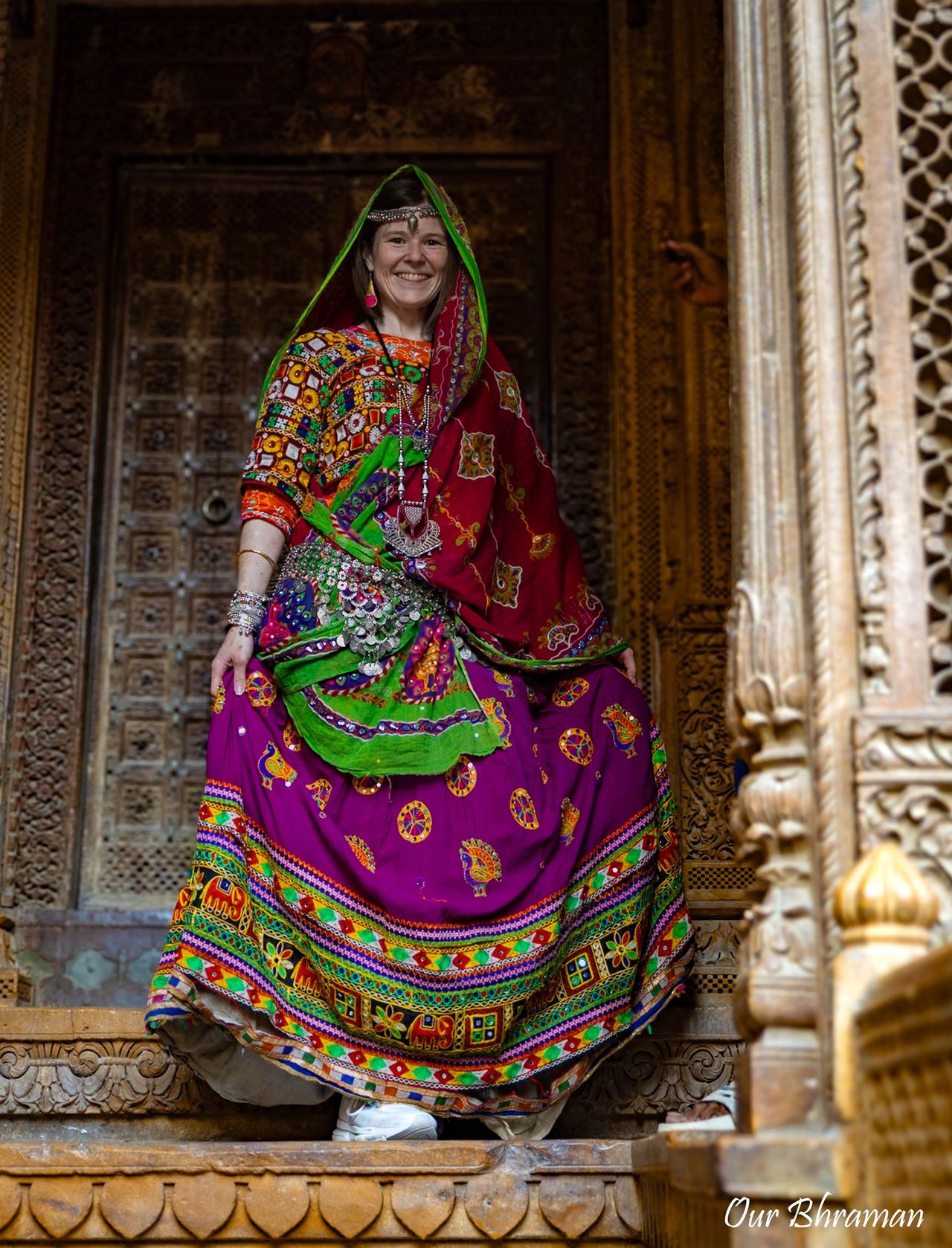
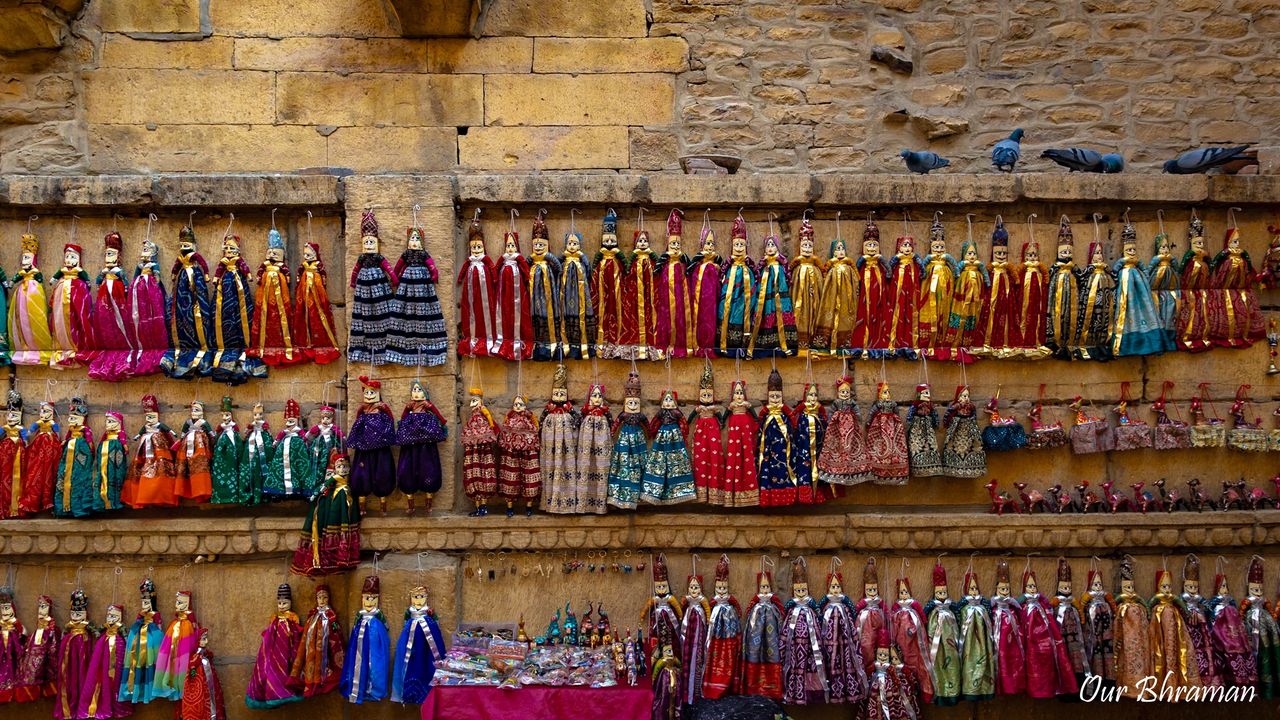
Outside the haveli, the atmosphere feels lively and colorful. Roadside vendors sell traditional Rajasthani puppets, souvenirs, handicrafts, and small keepsakes that add charm to the experience. It’s a great place to pick up handcrafted items and support local artisans. This spot is also popular for dressing up in traditional Rajasthani attire — complete with turbans and vibrant dresses — and taking photographs against the beautifully carved architecture of the haveli. The detailed sandstone backdrop makes every picture look royal and timeless.
After spending a couple of hours exploring Patwon Ki Haveli, we decided to head to the main attraction of the city — Jaisalmer Fort. As we walked through the streets, the fort stood tall above the town, glowing in the sunlight. We had been looking at it from a distance since morning, and now it was finally time to step inside and see it up close.
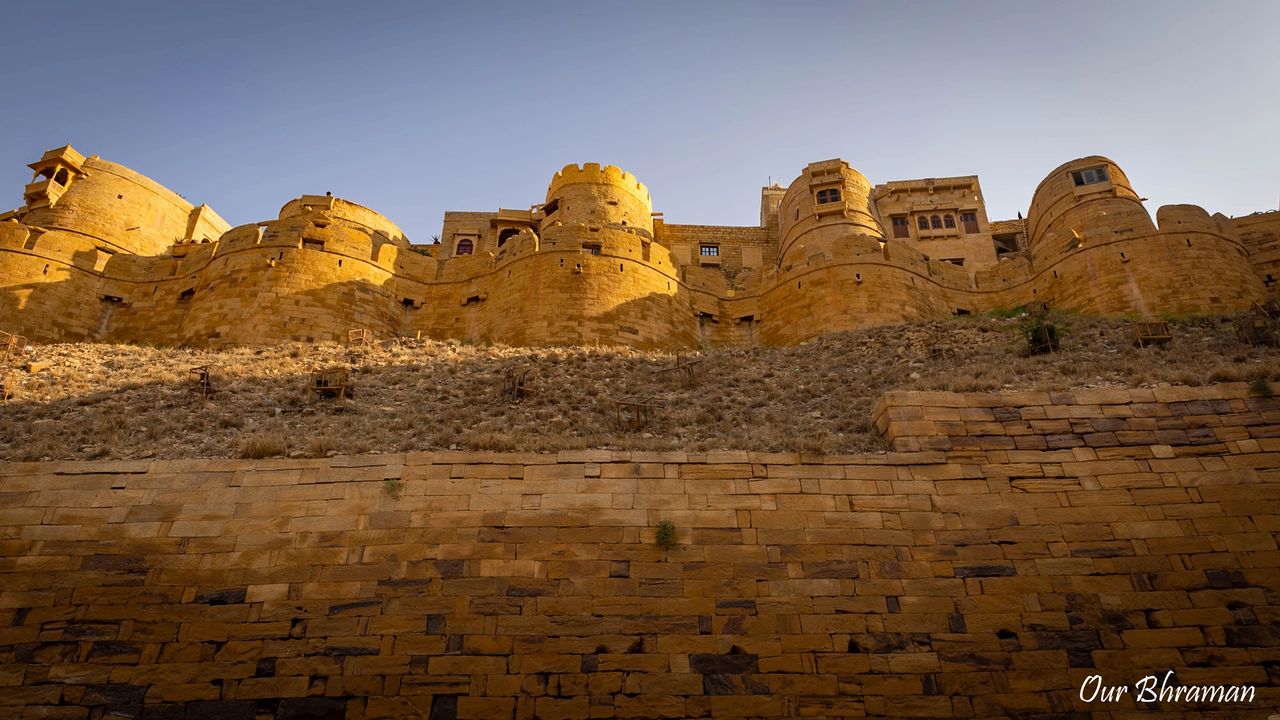
Walking toward Jaisalmer Fort, we could already understand why it dominates the skyline of the Golden City. Rising from the Thar Desert in warm yellow sandstone, the fort almost blends into the landscape — our guide told us this was intentional. The same stone that gives it its glowing hue also helped camouflage it against the desert terrain centuries ago. Also known as Sonar Qila (“Golden Fort”), it is one of the few living forts in the world, still housing shops, temples, and residences within its ancient walls. It remains a powerful symbol of Rajput valor and desert architecture.
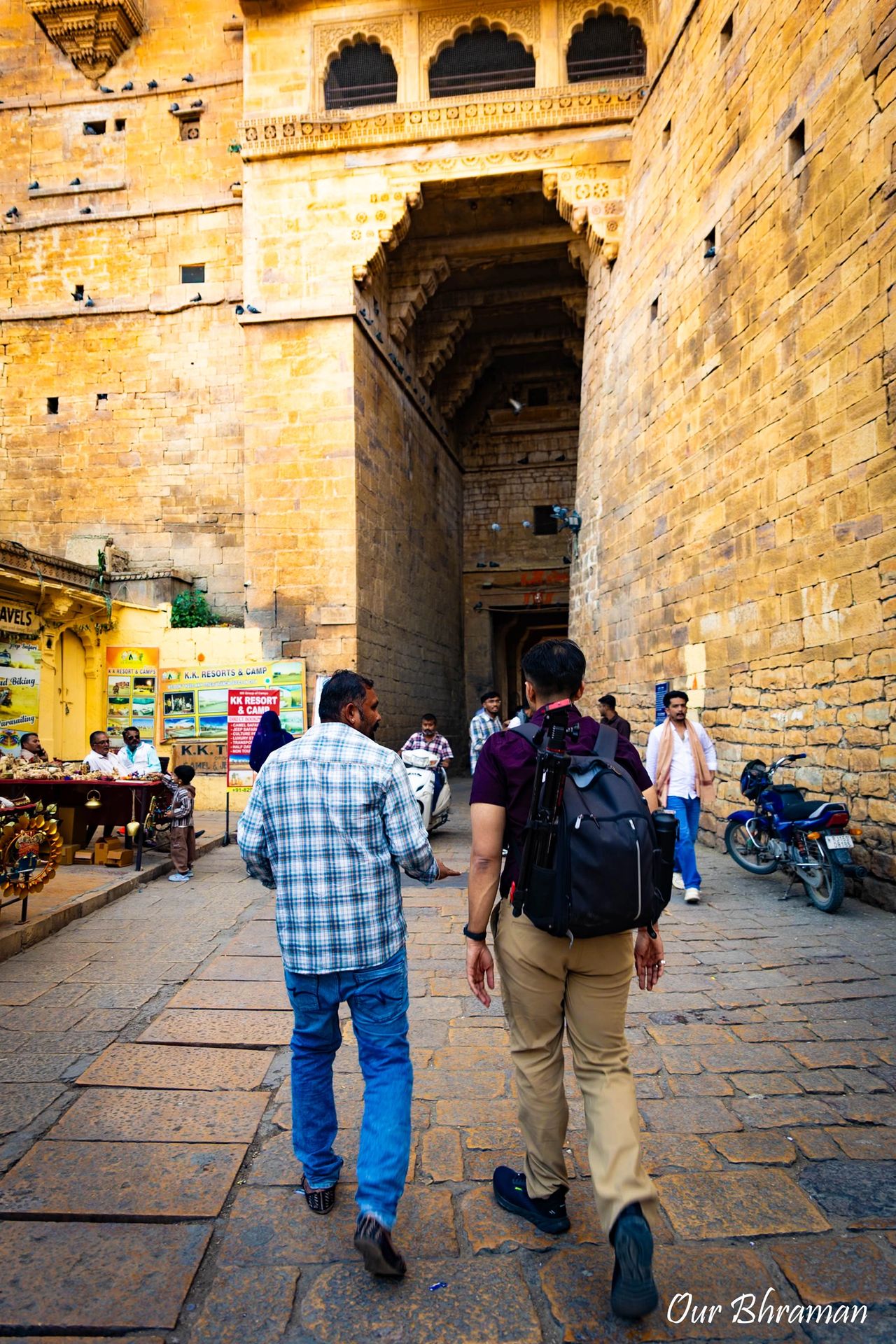
As we stepped inside, our guide began explaining how the fort mainly follows Rajput architectural principles. “Strength first, then beauty,” he said. The thick defensive walls, massive gateways, and multiple bastions form a triple-ring fortification system built for protection. Yet, despite its military design, the fort never compromises on artistry. Intricate carvings, projecting jharokhas (balconies), decorative gateways, and finely carved façades reflect the creative brilliance of the Bhatti Rajputs who ruled here.
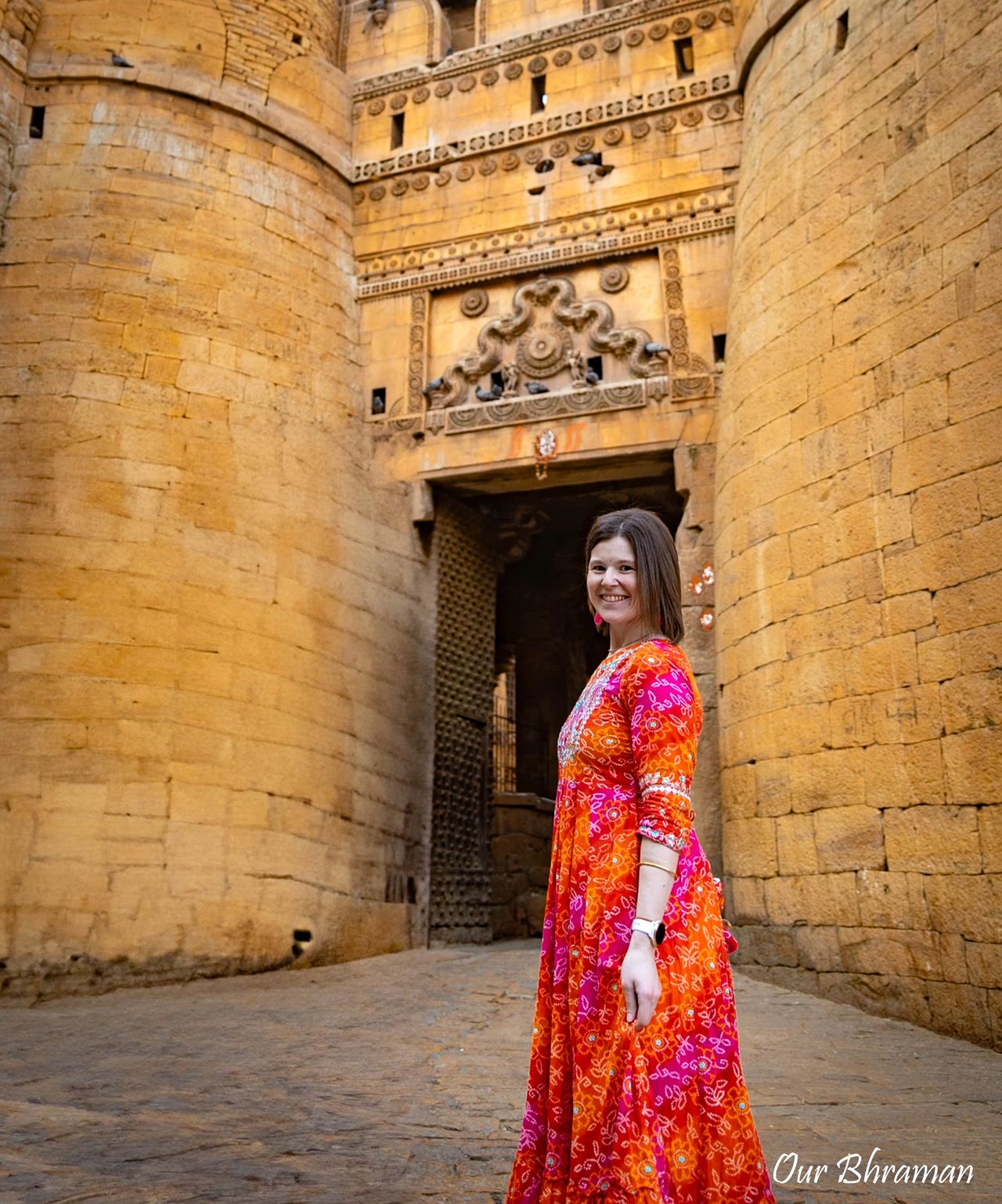
He also pointed out the subtle blend of Islamic and Persian influences visible throughout the complex — cusped arches, domes, cupolas, and geometric floral patterns carved into sandstone. These elements, shaped by centuries of trade and cultural exchange, reveal how desert kingdoms were never isolated but deeply connected to global routes. The delicate jali screens were not just decorative; they allowed light and airflow while casting beautiful shadow patterns across the interiors.
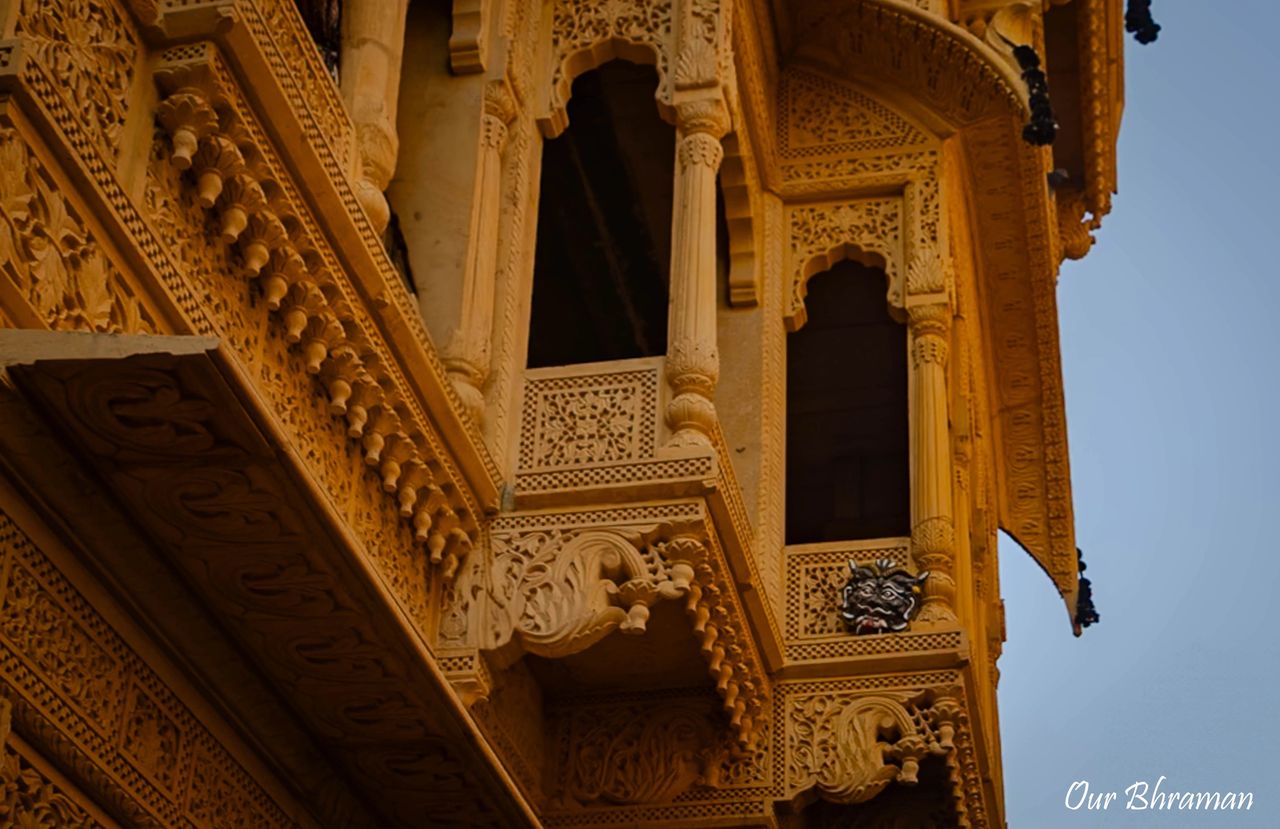
At the heart of the fort stands the grand Maharawal Palace, a seven-story structure that once served as the residence of Jaisalmer’s rulers. As we looked up at its carved balconies and layered design, our guide explained how each level reflected power, hierarchy, and craftsmanship. Inside, the Rang Mahal still holds traces of colorful frescoes and mirror work, offering a glimpse into royal life balanced between authority and refinement.
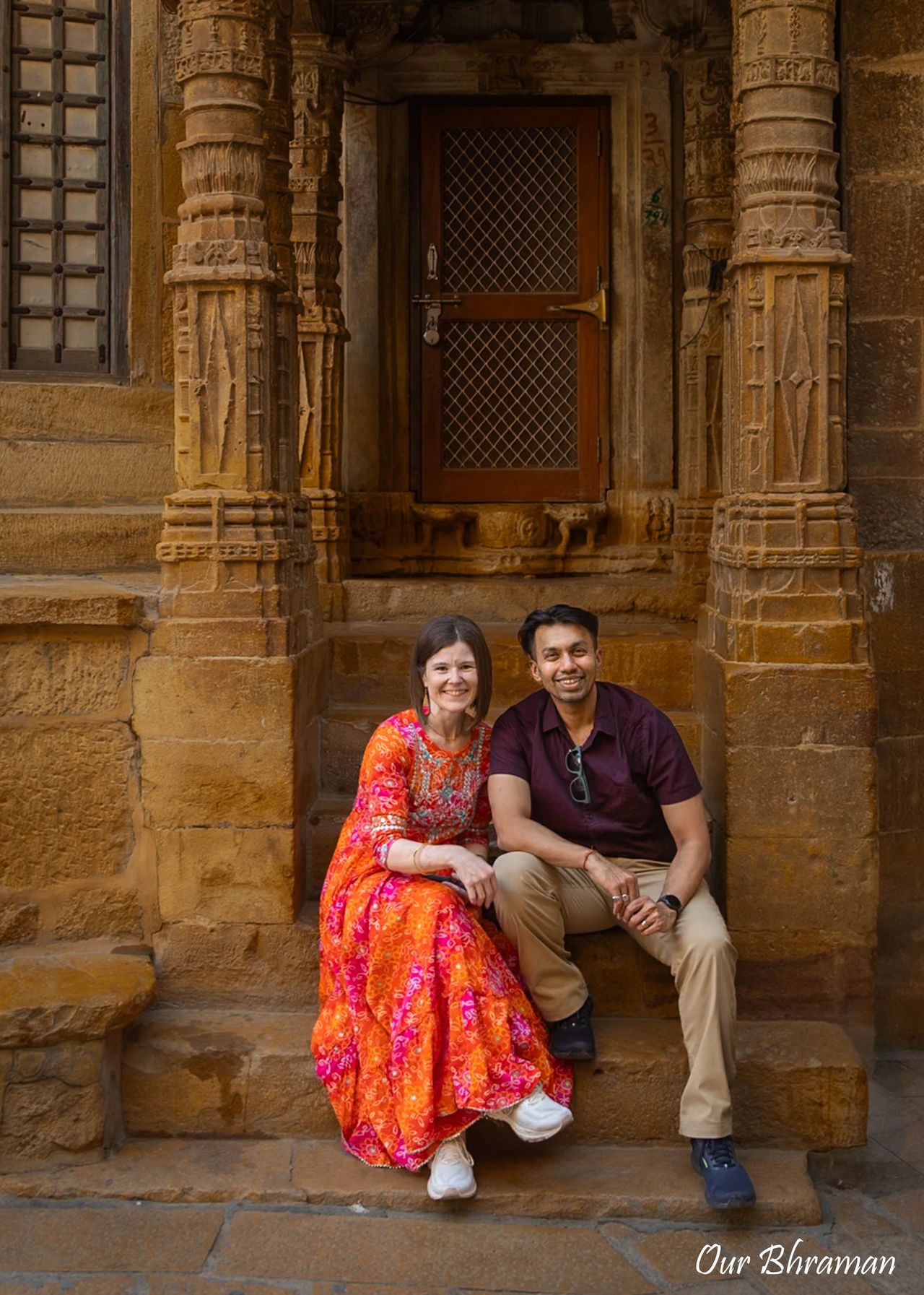
The fort is also home to seven remarkable Jain temples built between the 12th and 16th centuries. Stepping inside one of them felt like entering a stone masterpiece — the carvings were so delicate they seemed almost lace-like. Our guide shared how religion deeply influenced the architectural vocabulary, blending devotion with intricate artistry.
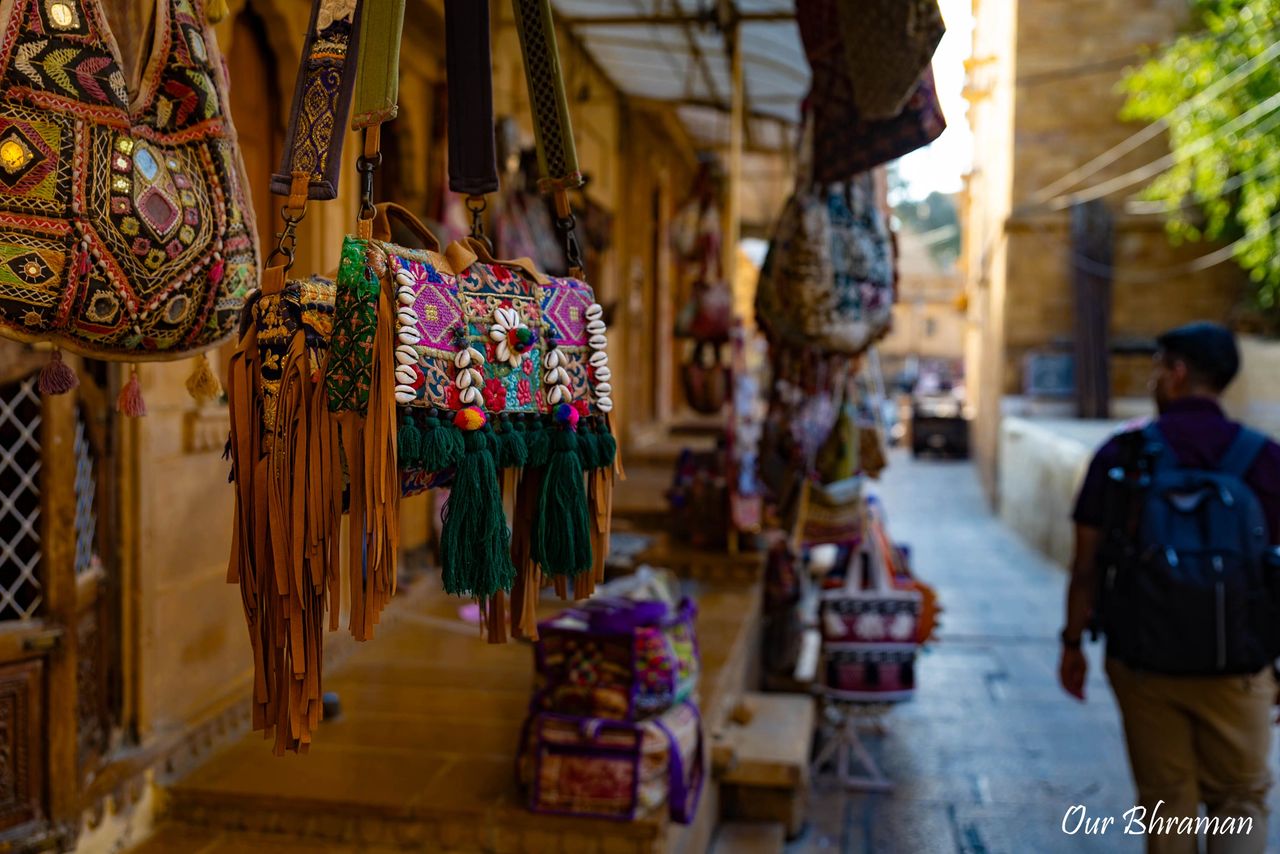
But what truly personalized our experience was not just the monuments — it was the life within the walls. As we wandered deeper into the narrow lanes, we discovered that the fort is a thriving marketplace preserving Rajasthan’s living heritage. Small family-run shops line the pathways, each doorway opening into a world of craft and culture. Camel leather stores caught our attention first. Inside, artisans displayed beautifully crafted bags, belts, shoes, wallets, and even decorative saddles. Our guide explained how traditional vegetable tanning methods are still used, avoiding heavy industrial chemicals and keeping centuries-old craftsmanship alive.
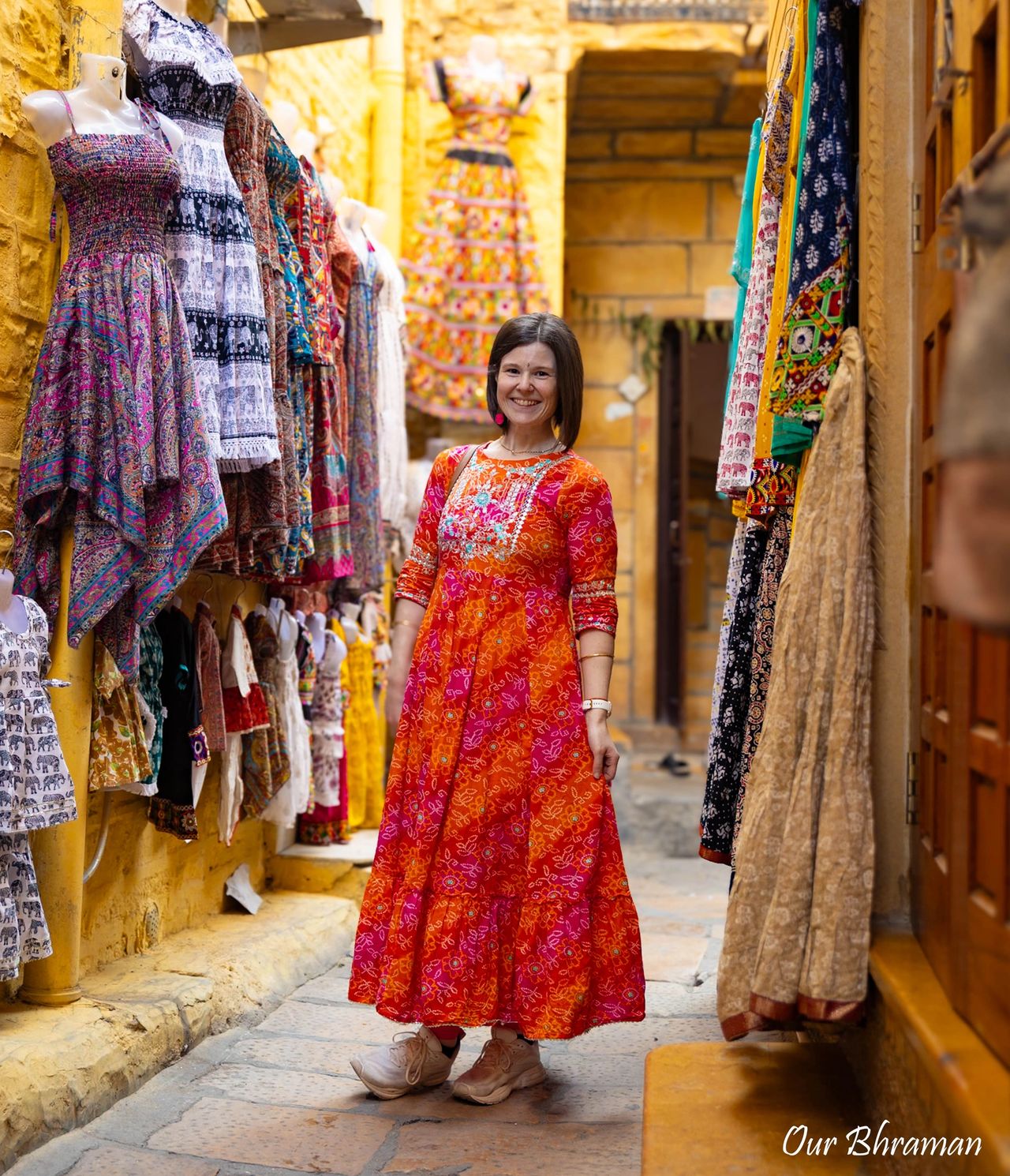
Textile shops shimmered with color — hand-embroidered sarees, lehengas, dupattas, shawls, and vibrant Bandhani tie-dye fabrics filled the shelves. Mirrors, beadwork, and intricate thread embroidery reflected generations of Rajasthani artistry. Jewelry stores dazzled us with handcrafted silver and gold ornaments set with semi-precious stones. Our guide shared that jewelry-making traditions here trace back to royal courts, where craftsmanship was both livelihood and legacy. Handicraft shops displayed wooden carvings, brass lamps, pottery, embroidered wall hangings, miniature paintings, and the famous Rajasthani puppets — Kathputlis — each telling a story of folklore and desert life. Some stores even sold rare fossil stones found in the surrounding Thar Desert, preserved as unique natural décor pieces.
Between shopping stops, we paused at small cafés and stalls offering local snacks, sweets, and spiced treats. Though the fort is known primarily for its crafts, tasting traditional Rajasthani flavors added another layer to our journey — history experienced not just through sight, but through taste.
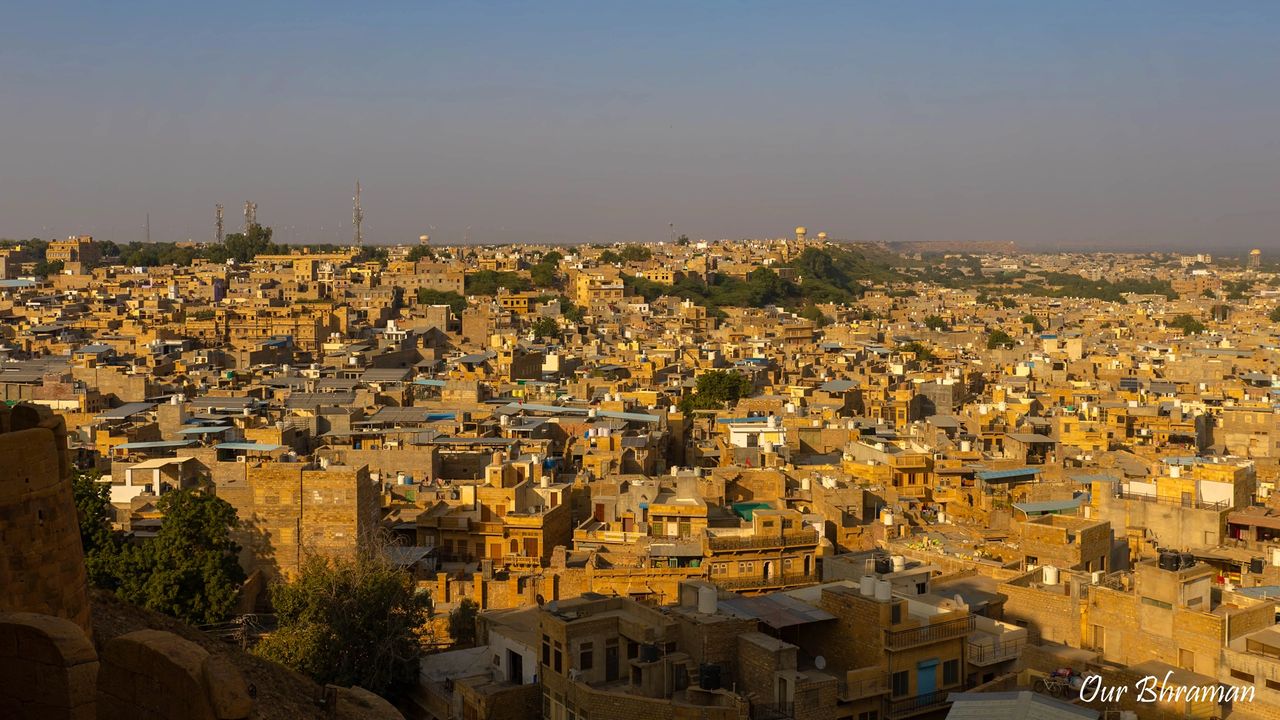
One of the highlights of our visit was reaching Cannon Point, named after the historic cannon positioned there. From this strategic viewpoint, we enjoyed sweeping views over the eastern and southern parts of Jaisalmer, including the serene Gadisar Lake. The panoramic scenery made it a perfect photo stop — no wonder it attracts photographers and travelers alike.
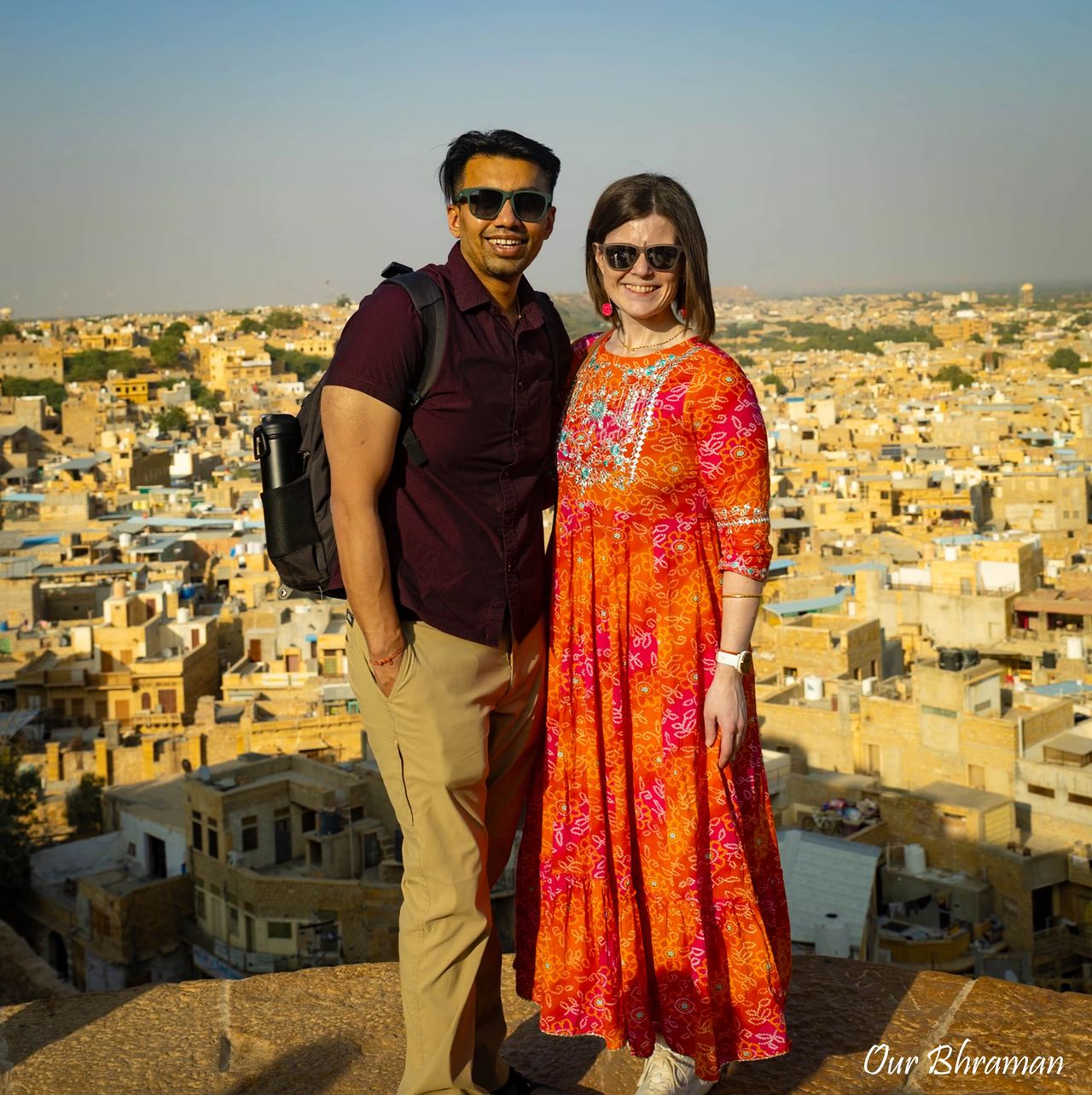
As we continued exploring, it didn’t feel like we were visiting a monument frozen in time — it felt alive. Children played in courtyards, shopkeepers greeted visitors warmly, temple bells rang softly in the background, and everyday life unfolded within centuries-old sandstone walls.
Our guide also spoke about the challenges of preserving a living fort. Modern plumbing systems and growing tourism have put pressure on the ancient foundations, especially due to water seepage. Conservation work is ongoing, yet maintaining a heritage site that is also a functioning city requires careful balance.
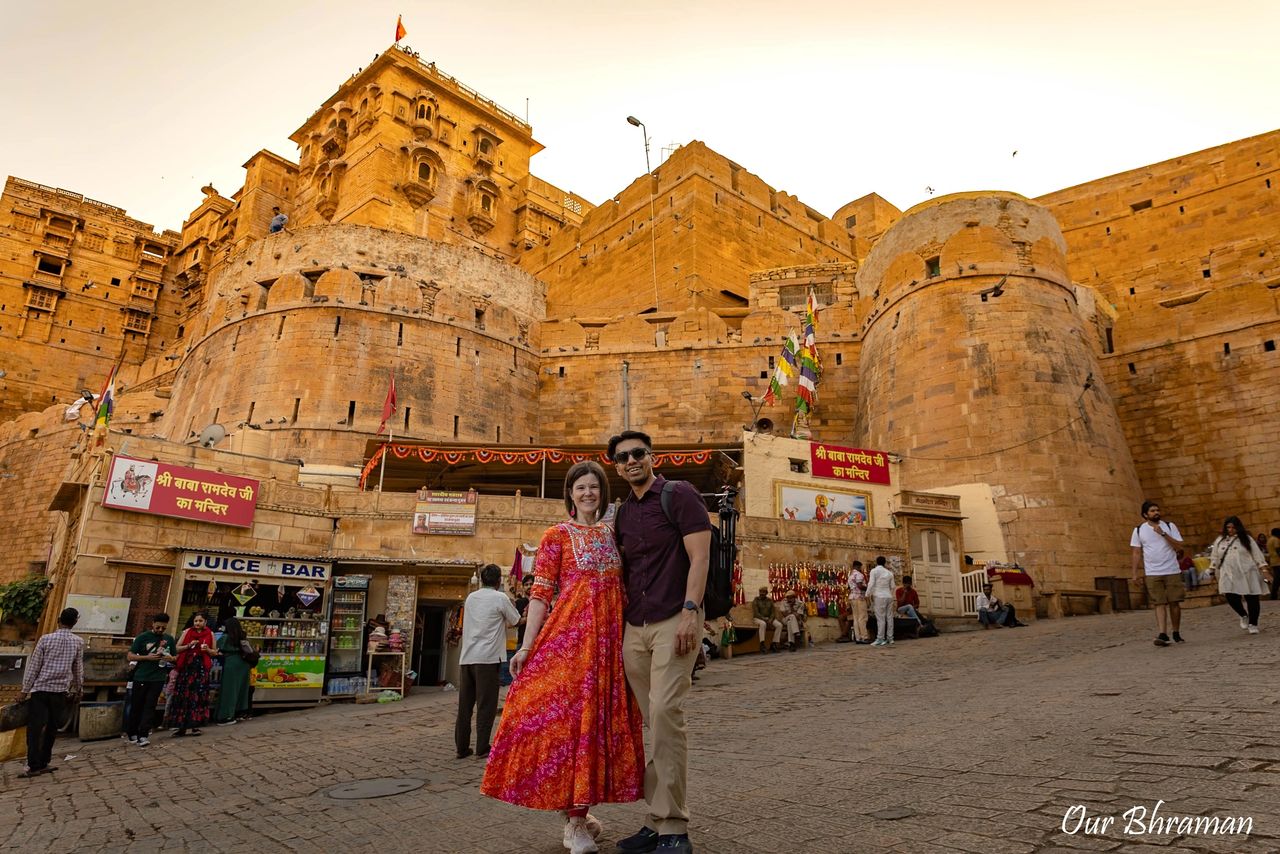
Standing along the fort walls and looking out over the golden city, we realized that Jaisalmer Fort is more than architecture. It is resilience, artistry, commerce, faith, community life, and cultural continuity — all carved into glowing sandstone that continues to stand strong against time and desert winds.
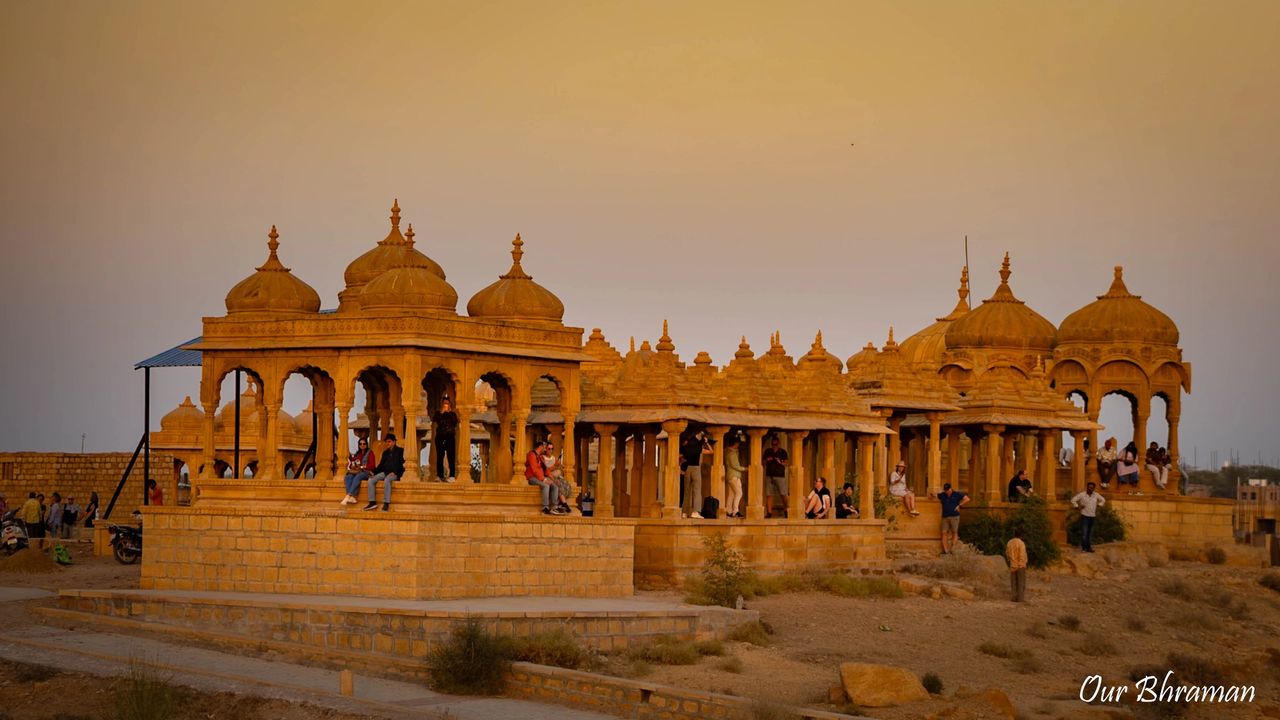
As the golden sun began its slow descent over the Thar Desert, we made our way to Bada Bagh — one of the most breathtaking sunset points in Jaisalmer. Just a short drive from the city, this peaceful site feels worlds away from the bustling fort and markets. The desert wind grows softer here, and the silence carries the weight of centuries. Bada Bagh, meaning “Big Garden,” is not a typical garden filled with flowers. Instead, it is a royal cenotaph complex — a collection of beautifully carved chhatris built in memory of the Maharajas of Jaisalmer. As we walked uphill toward the sandstone structures, our guide explained that these cenotaphs were constructed to honor generations of Bhatti Rajput rulers.
The first chhatri was built in memory of Maharawal Jai Singh II in the 16th century, a ruler remembered for bringing prosperity and greenery to the desert kingdom. His son, Lunkaran, constructed the initial cenotaph near a dam and developed a garden around it — transforming the space into a royal memorial ground. Over time, more cenotaphs were added, turning Bada Bagh into a timeless tribute to the dynasty. Arriving just before sunset was magical. The yellow sandstone glowed deeper with each passing minute, shifting from warm honey tones to rich amber hues. The symmetry of the cenotaphs against the vast open sky created a scene that felt almost surreal.
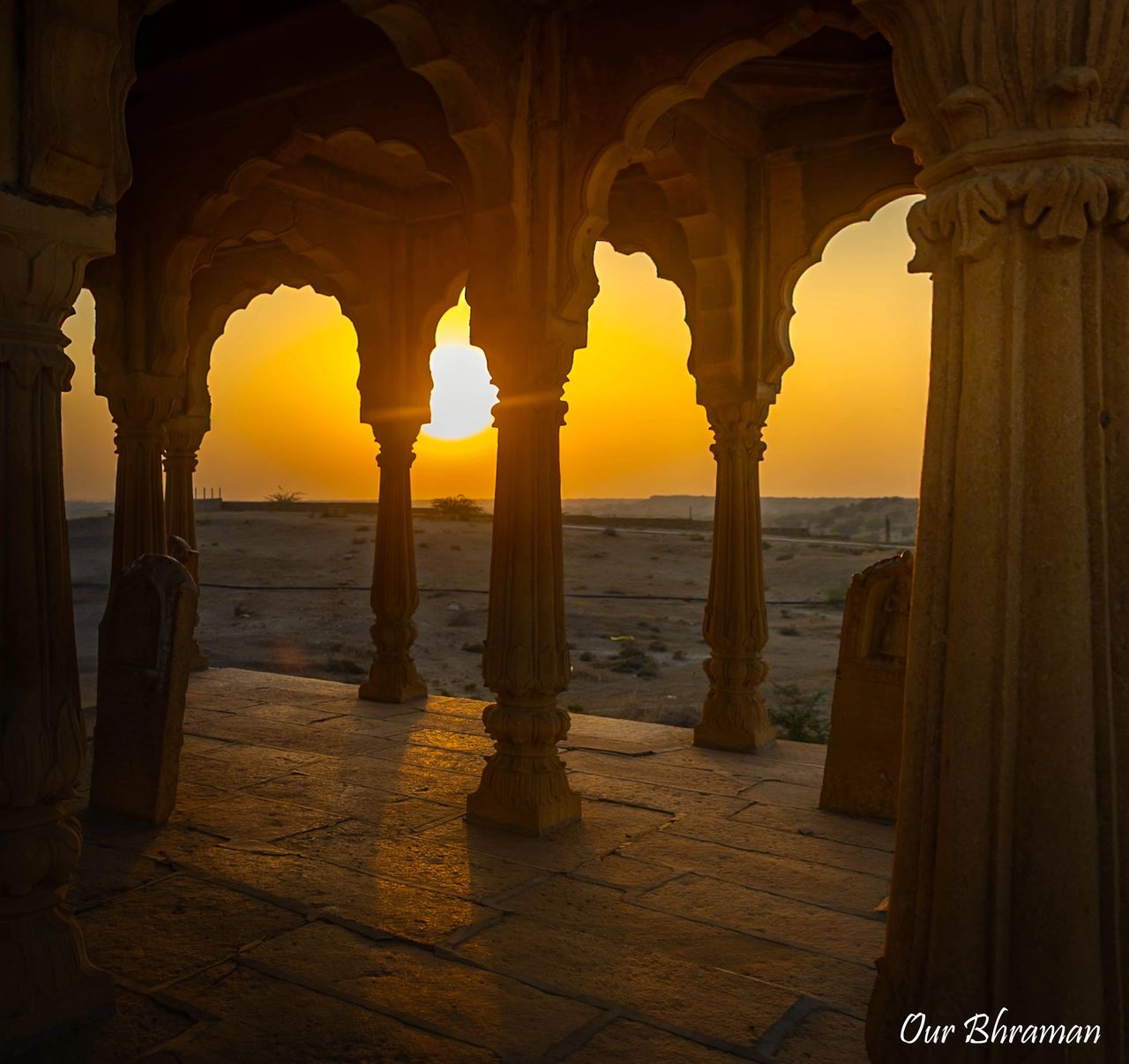
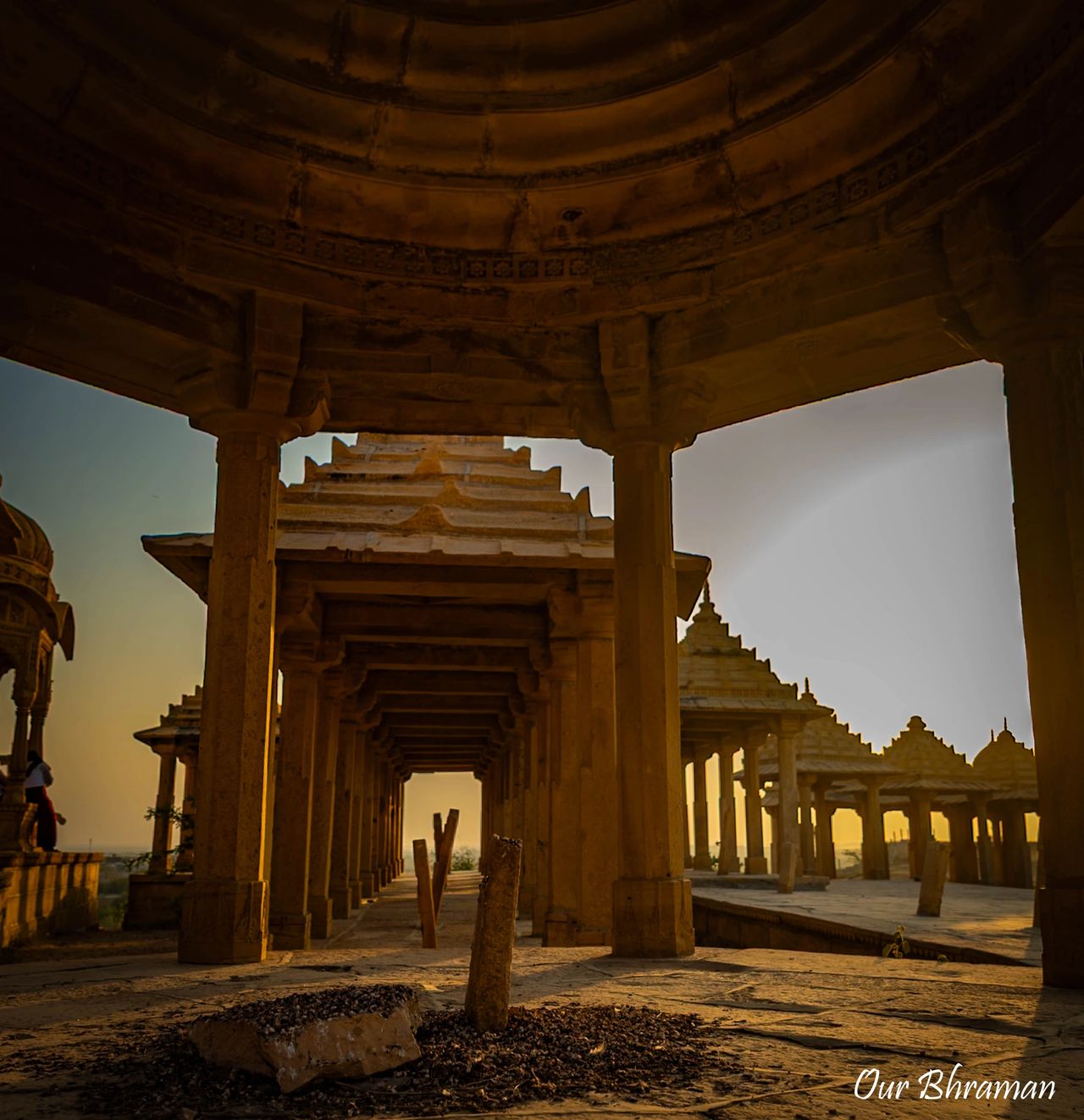
Each chhatri reflects classic Rajasthani architectural style. Intricately carved pillars support domed canopies, and every cenotaph features a beautifully detailed ceiling — floral motifs, geometric patterns, and delicate stonework that showcase remarkable craftsmanship. Some memorials include equestrian statues of the rulers, symbolizing valor and leadership. Our guide pointed out the subtle blend of Hindu and Islamic architectural influences — visible in the arches, domes, and decorative carvings — revealing the cultural harmony that shaped Rajasthan’s artistic heritage.
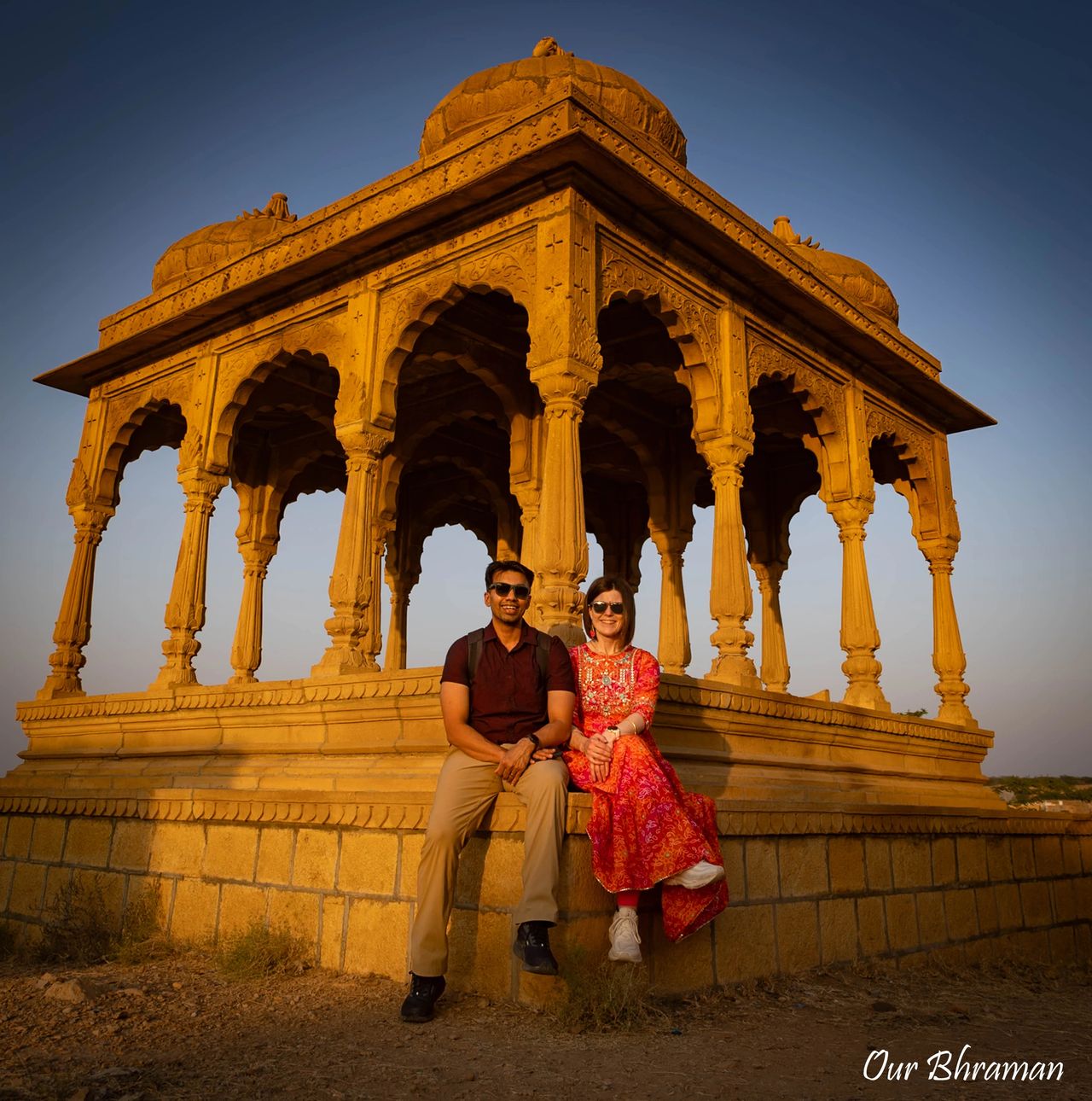
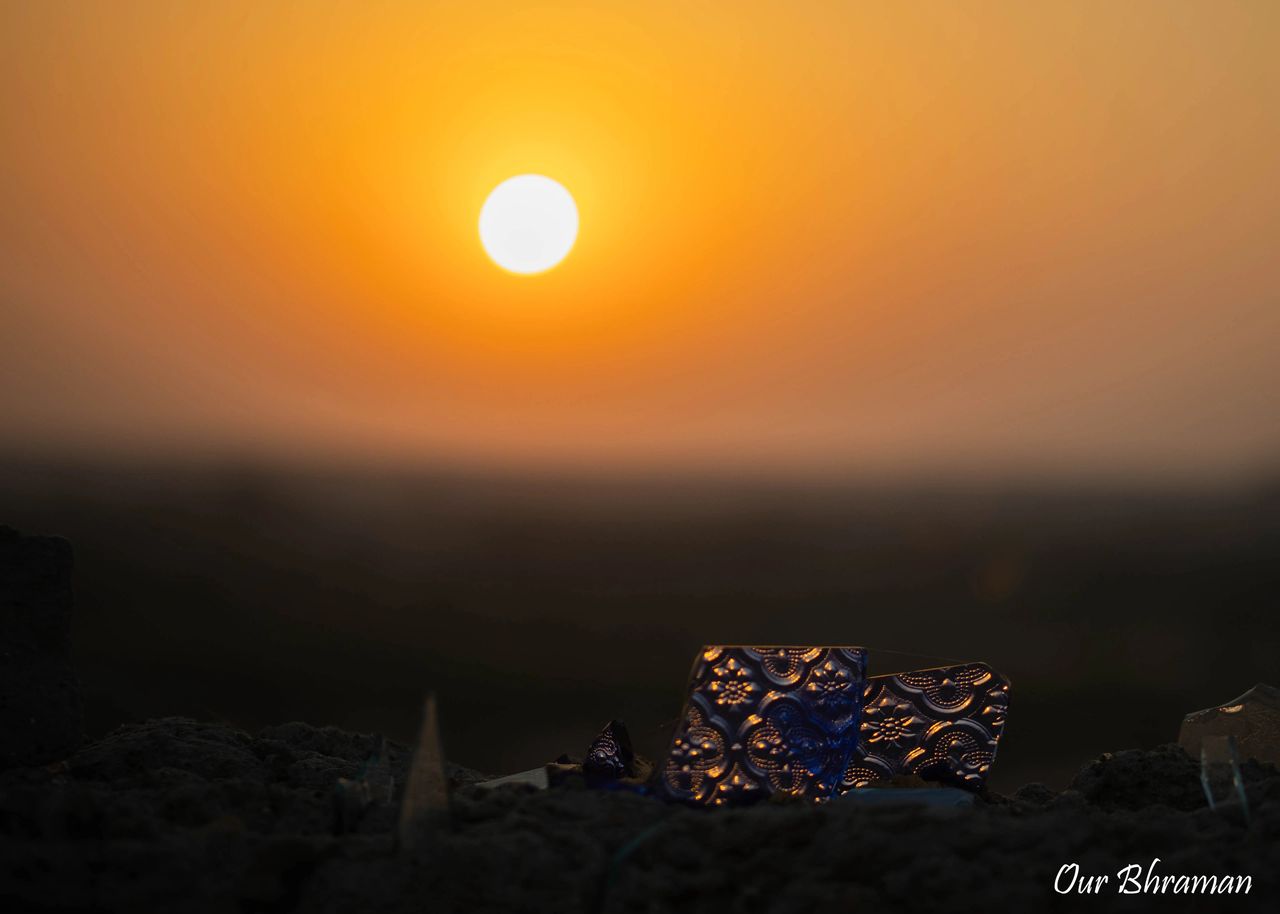
As the sun dipped lower, long shadows stretched across the desert ground. The silhouettes of the domes stood dramatically against the orange sky. Unlike crowded sunset spots, Bada Bagh offered calmness — just the whisper of wind and the soft glow of fading light.
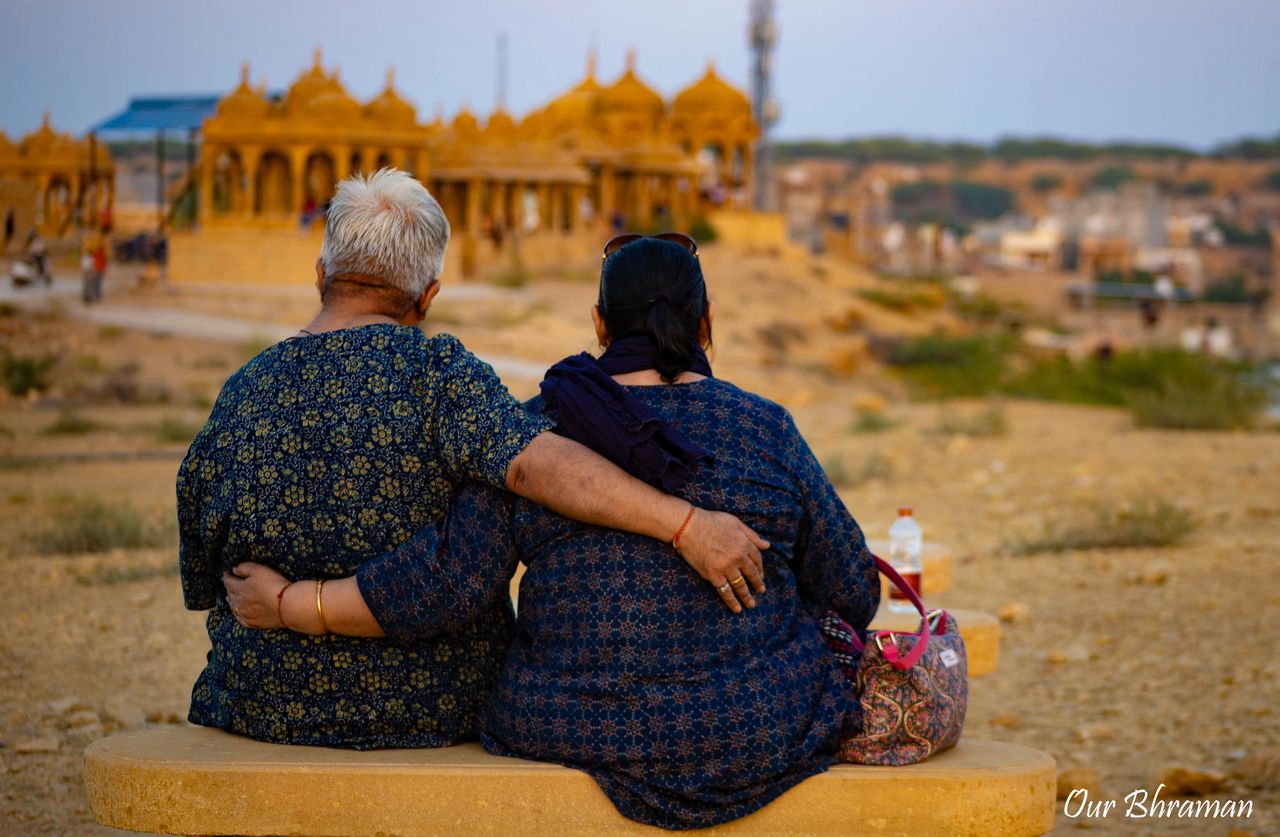
Standing among the cenotaphs, watching the sky change colors from gold to pink to deep purple, it felt less like visiting a historical site and more like witnessing a royal farewell performed by nature itself. The stillness invites reflection — on legacy, memory, and the passage of time.
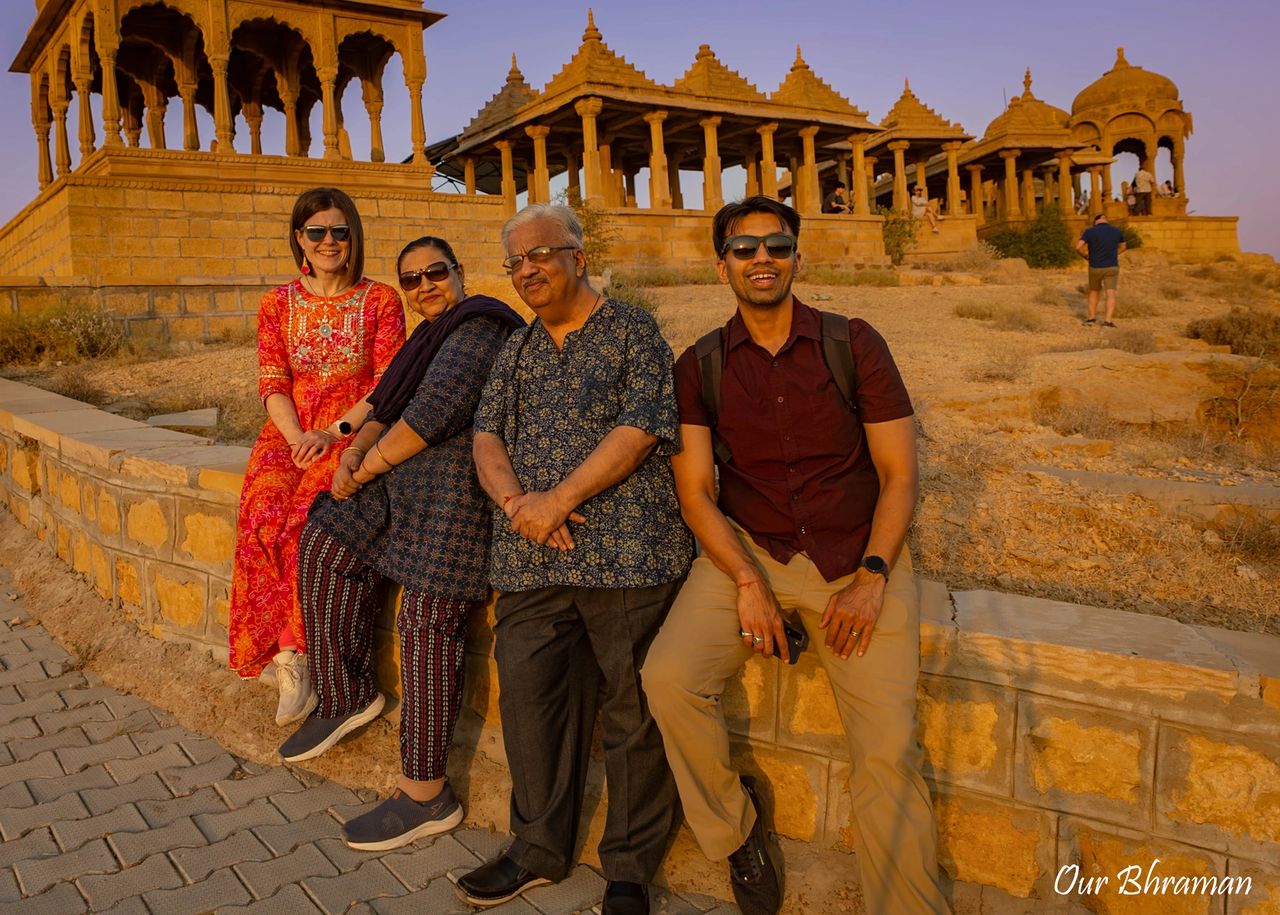
If you’re visiting Jaisalmer, Bada Bagh at sunset is not just a sightseeing stop — it’s an experience. It combines history, architectural beauty, royal stories, and desert serenity in one unforgettable moment. As we left in the twilight, the chhatris slowly fading into silhouettes, we understood why this remains one of the most enchanting sunset spots in the Golden City.
As evening settled over the Golden City, we headed toward Gadisar Lake, hoping to end our day beside its calm waters. The lake carries centuries of history. It was originally built in the 12th century by Rawal Jaisal, the founder of Jaisalmer. Later, in the 14th century, Maharawal Gadsi Singh rebuilt and expanded it — giving the lake the name it holds today. In a desert region like Jaisalmer, this was not just a scenic attraction; it was a lifeline. Gadisar Lake served as a crucial rainwater harvesting reservoir and supplied water to the entire city before modern pipelines existed. It stands as a powerful example of the advanced planning of early desert settlements.
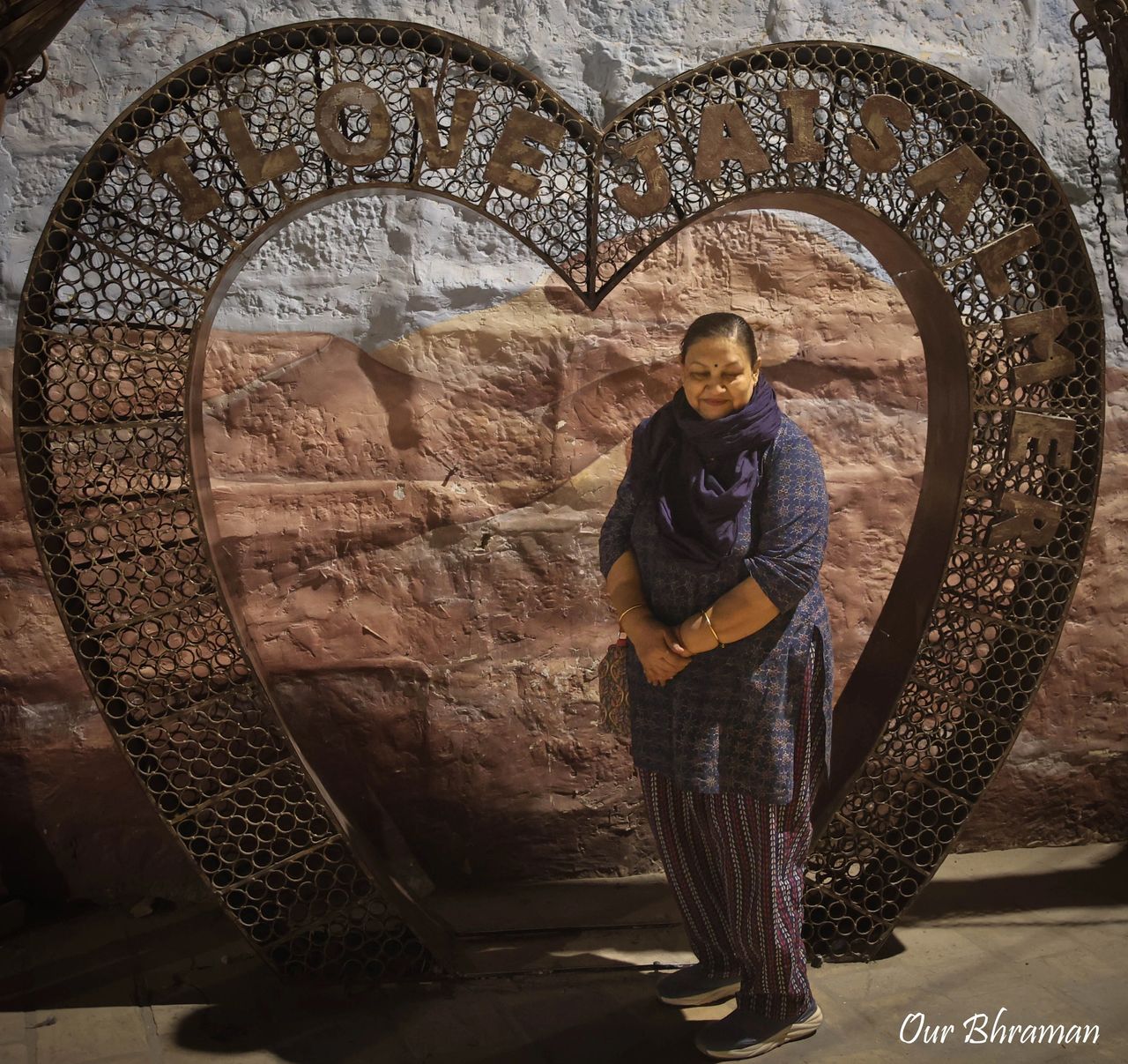
When our driver dropped us off on the main road, we quickly realized that reaching the lake required a fair walk. The pathway from the road to the lakeside adds a few extra minutes, but the gradual approach only builds anticipation. Small stalls line the way, selling snacks, souvenirs, and local trinkets, making the walk lively and engaging.
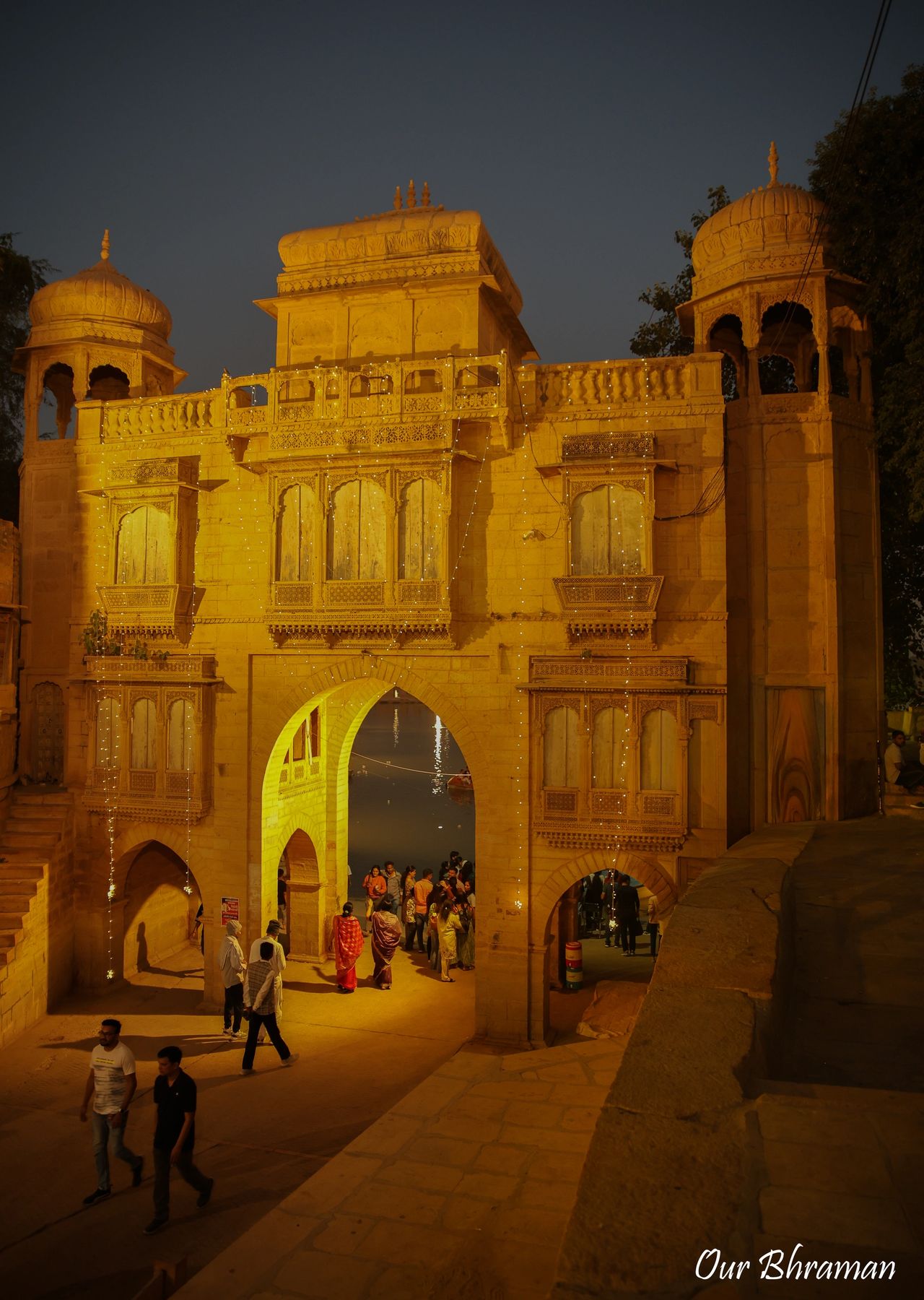
At the end of this bustling path stands Tilon Ki Pol, the beautiful yellow-sandstone gateway that leads to Gadisar Lake. Local guides love sharing the story behind it — the arch was built by a famous courtesan named Tilon. When the royal family objected to passing under a gate funded by a courtesan, she cleverly added a small Vishnu shrine on top, making it too sacred to demolish.Today, every visitor passes through this historic arch to reach the lake. It’s a perfect photo spot, and you’ll often hear local musicians nearby, filling the air with traditional Rajasthani tunes as you step toward the water.
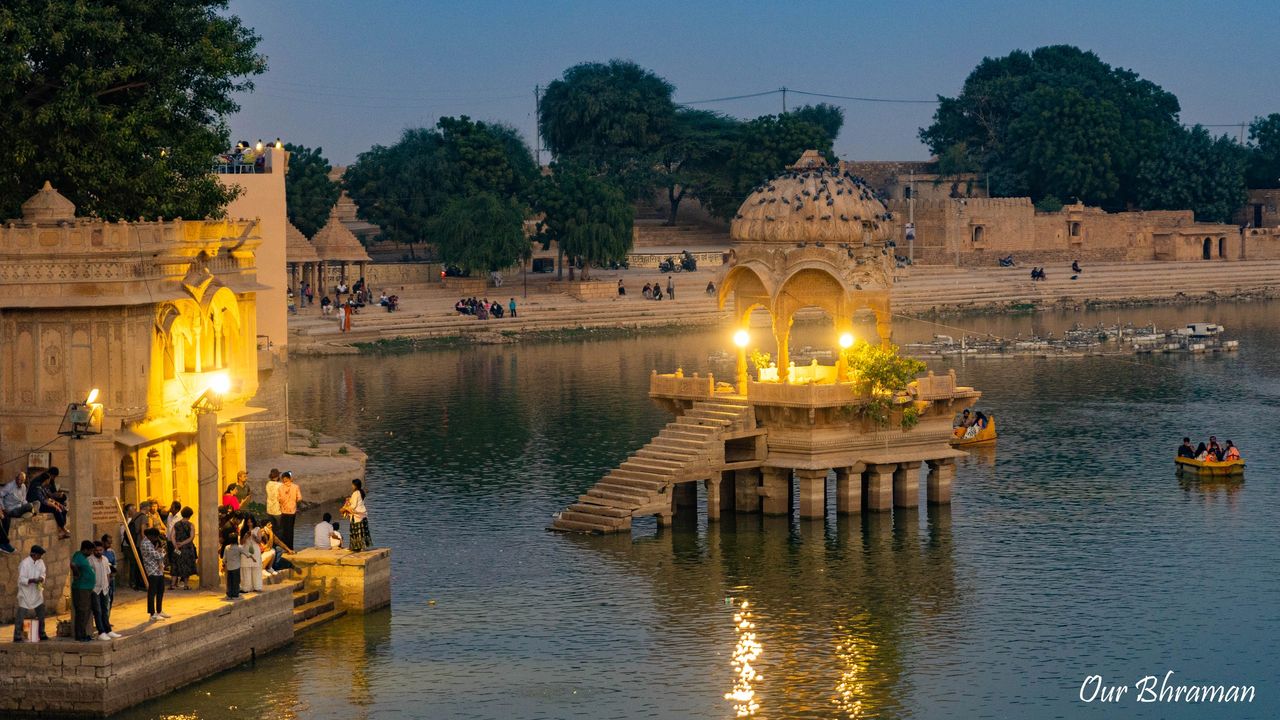
As we finally reached the lake, the atmosphere surprised us. It was bustling with visitors — families, couples, photographers, and tour groups — all gathered to enjoy the evening. Multiple boats floated across the water, paddleboats and rowboats moving steadily while motorized boats cruised smoothly. The lake felt full of life, laughter, and movement, reflecting the energy of Jaisalmer itself. Surrounded by temples, shrines, ghats, chhatris, and intricately carved sandstone gateways, the lake looked magical as daylight faded. Historically, this space was also a social and religious hub, especially during festivals — and even today, that sense of gathering and community remains strong.
Unfortunately, by the time we reached the ticket counter, boating hours were already over for the day. Gadisar Lake offers several boating options — paddleboats for a relaxed ride, traditional rowboats for a peaceful experience, and motorized boats for a quicker, convenient round of the lake. Watching the boats already returning to shore, we wished we had arrived a little earlier. Since boating was not possible, we decided to stay for the famous light show. The 30-minute laser show, usually starting around 7:00 PM, highlights the lake’s history and splendor through colorful lights and music. We waited with excitement, surrounded by the hum of visitors.
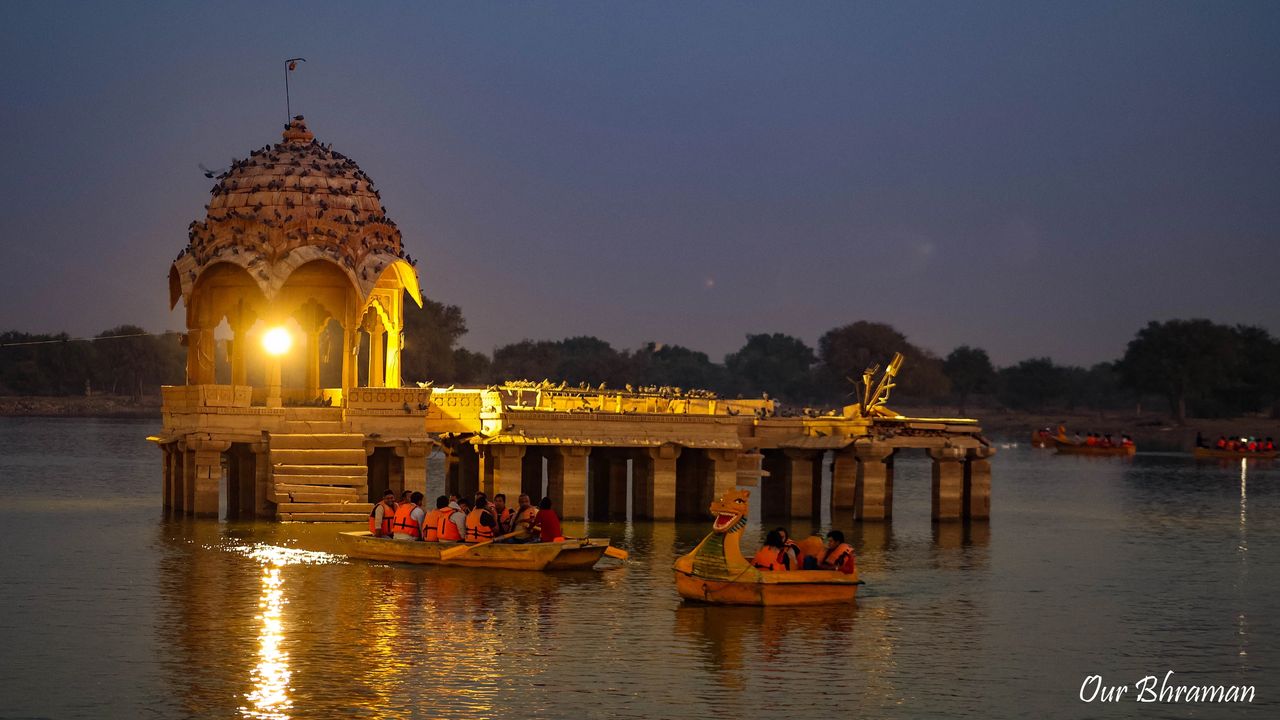
But travel doesn’t always go as planned. Due to technical difficulties that evening, the light show was cancelled. For a brief moment, disappointment crept in. Yet as we stood near the water, watching the illuminated temples reflect in the rippling lake and listening to the lively yet calming atmosphere around us, we realized something important — sometimes the simplest moments are enough. We concluded our day with a quick dinner at the hotel and planned to wake up early in the morning to return to Geiser Lake for sunrise.
Day 2 – Jaisalmer: Experience desert camping stars, dune and local culture.
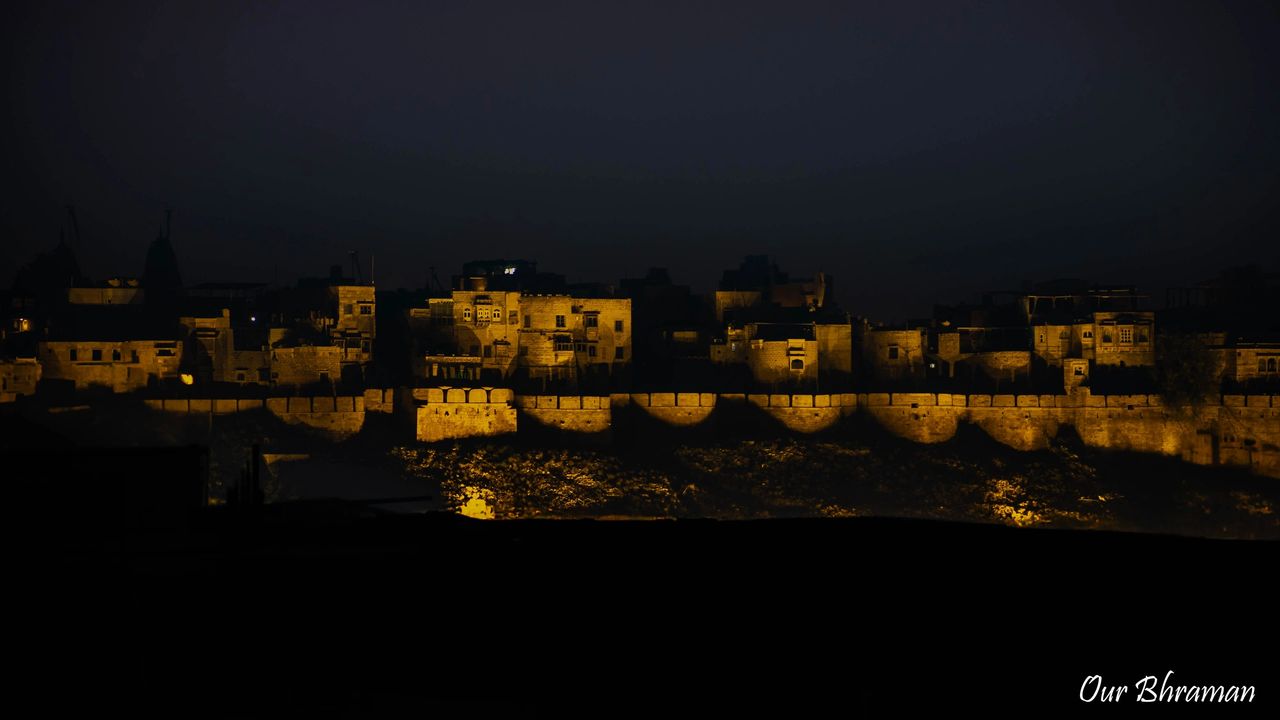
The next morning, we woke up early and decided to check if we could access the hotel terrace. Luckily, we found it open — a small surprise that gave us the perfect opportunity to admire the city from a quiet vantage point. From there, we were treated to a breathtaking view of Jaisalmer Fort, glowing softly in the early hours. It was quite cold, but sometimes a little discomfort leads to unforgettable moments — and this was certainly one of them.
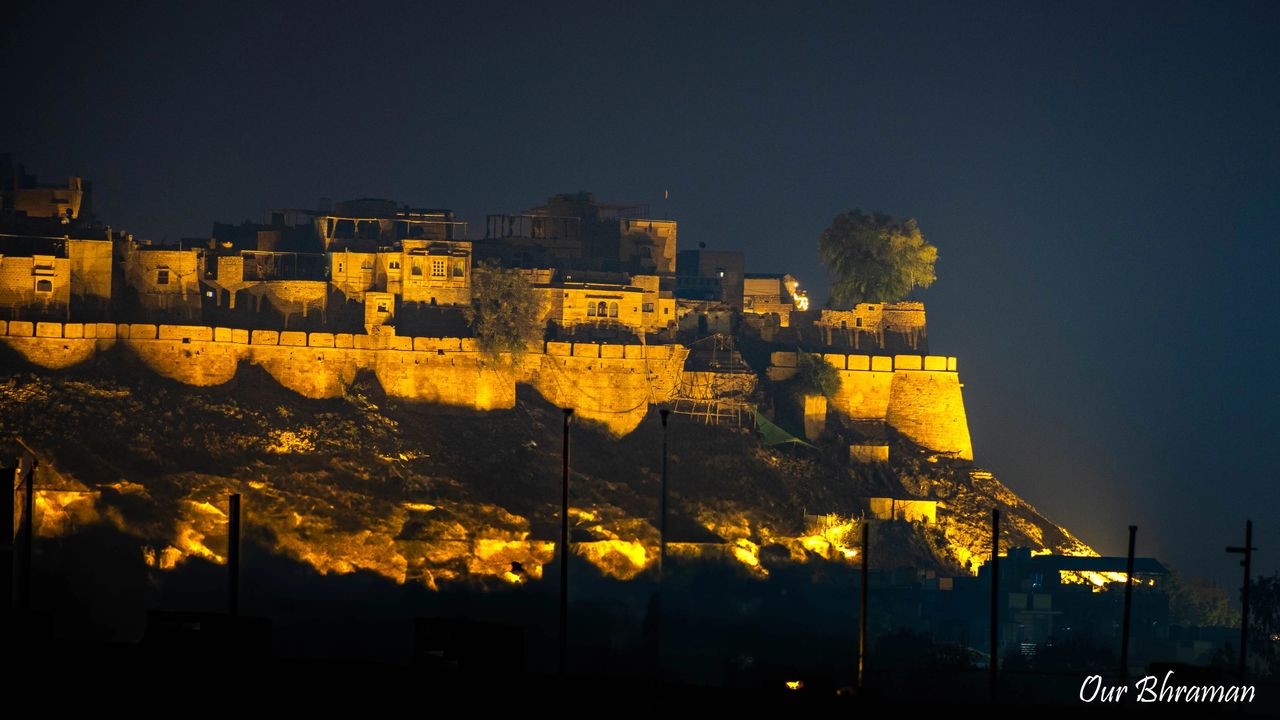
Perched high above the city, the fort commands sweeping panoramic views of Jaisalmer below. Its golden sandstone architecture looks even more magical under illumination. Hundreds of warm, yellow lights are thoughtfully placed along its ramparts, palaces, Jain temples, and narrow stone-paved lanes, casting a radiant glow across the massive structure. The lighting accentuates the intricate sandstone carvings, delicate jharokhas (balconies), and historic havelis within the fort, making the entire scene feel timeless and almost surreal.
After spending about 15–20 minutes on the rooftop that morning, wrapped in the chill of the desert air, we decided to take a rickshaw to Gadisar Lake to catch the sunrise. The contrast from the previous evening was almost surreal. Just hours earlier, the area had been buzzing with thousands of visitors, filled with chatter and movement. Now, it felt like an entirely different world — only a handful of people quietly walking along the ghats, the vibrant energy replaced by a deep, calming stillness.
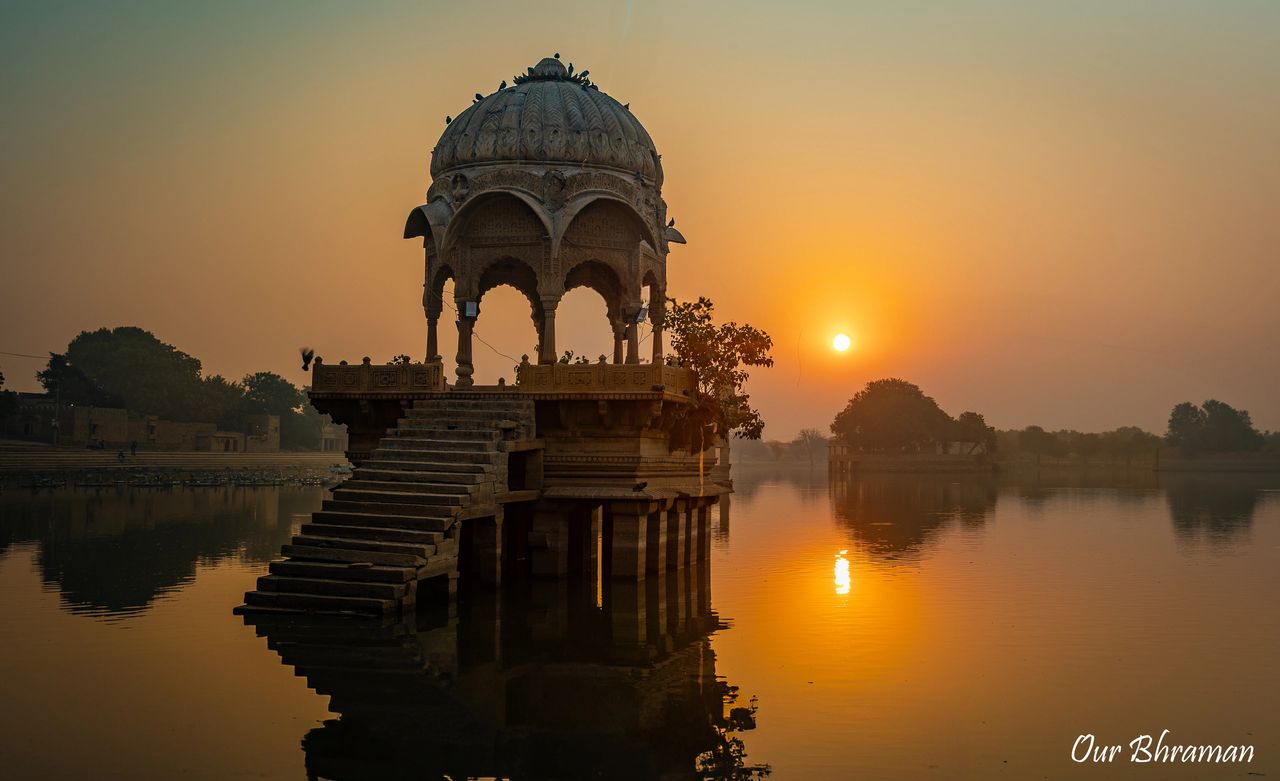
As we stood by the water, soft morning chants from a nearby temple floated through the air, instantly lifting the atmosphere to something spiritual and grounding. The first rays of sunlight slowly touched the yellow sandstone temples and chhatris surrounding the lake, bathing them in a warm golden glow.
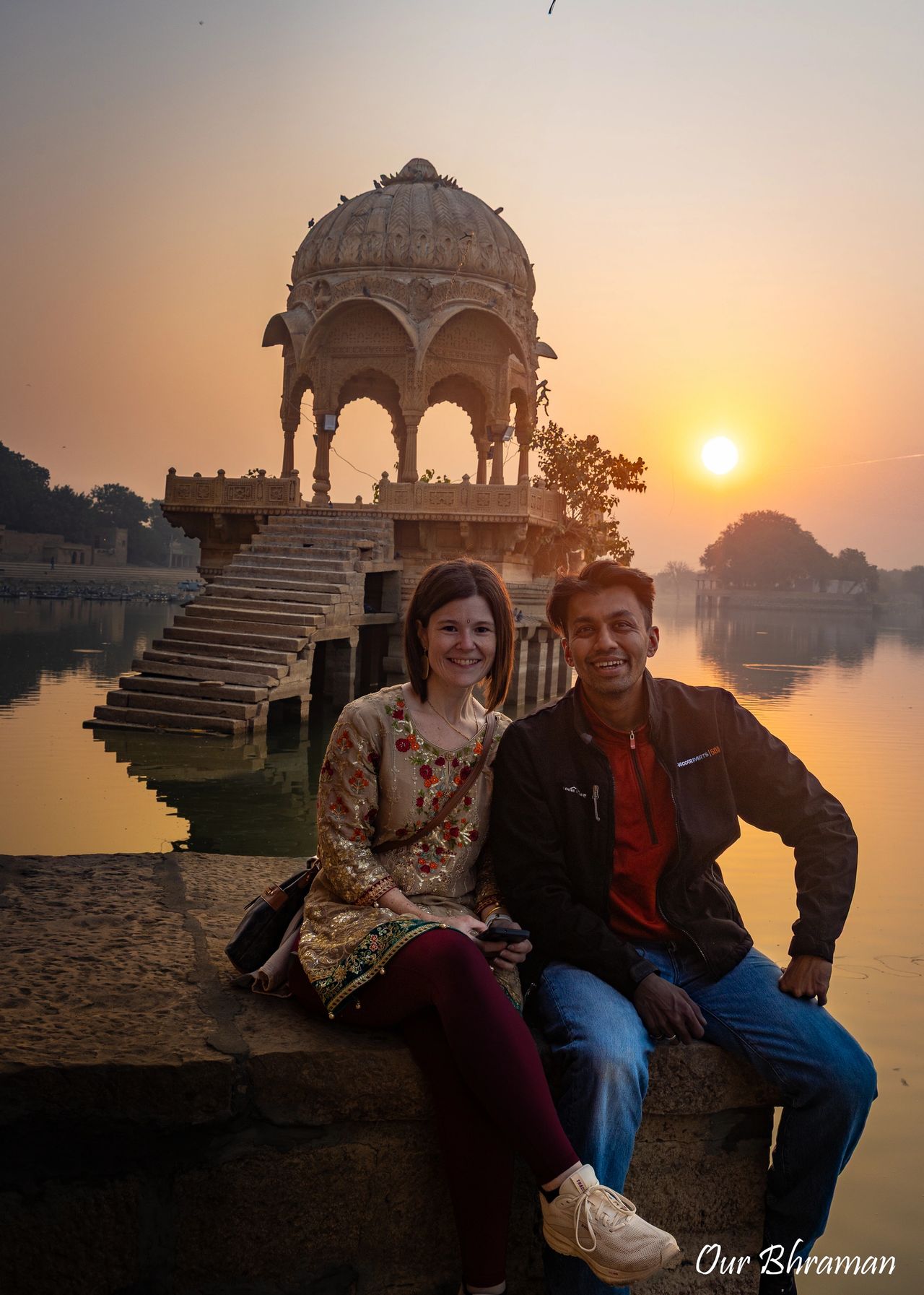
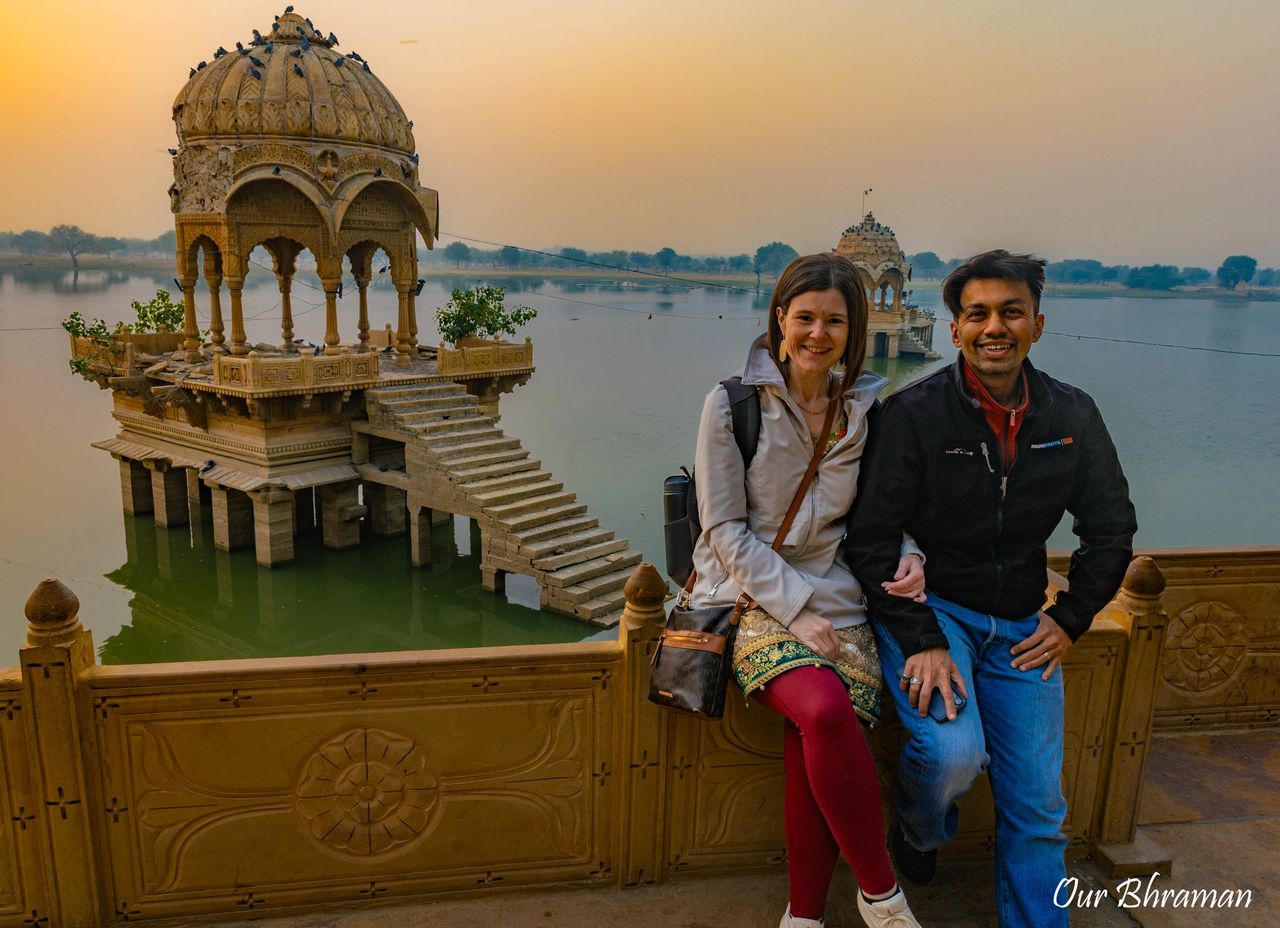
Within minutes, the still water began to mirror the architecture and faint city skyline so perfectly that it felt like looking at a painting come alive.
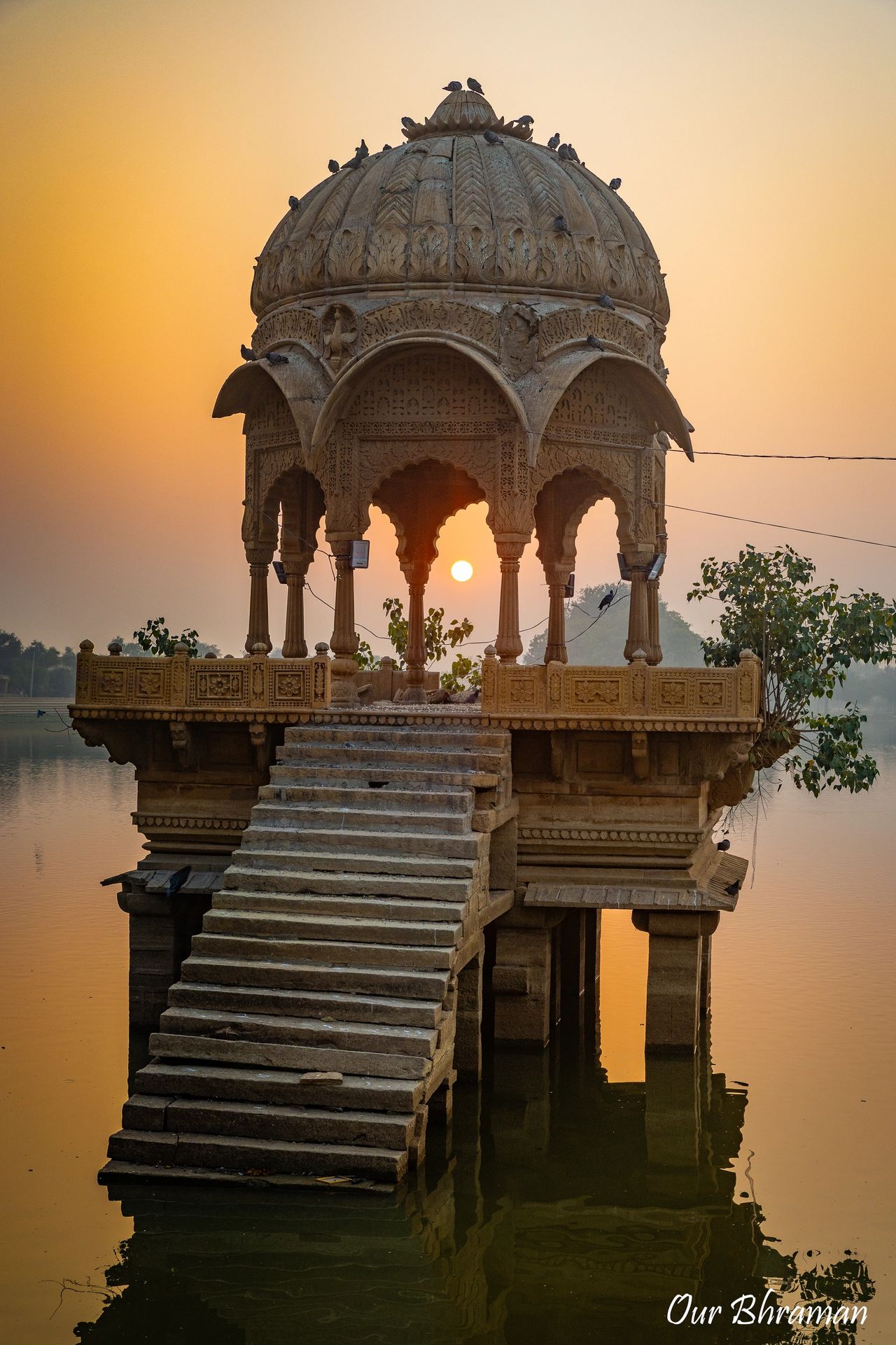
Birds skimmed gently across the surface, adding movement to the otherwise tranquil scene. In that quiet moment, with cool air on our faces and golden light spreading across the lake, it didn’t just feel picturesque — it felt personal. A peaceful pause. A complete contrast to the lively night before
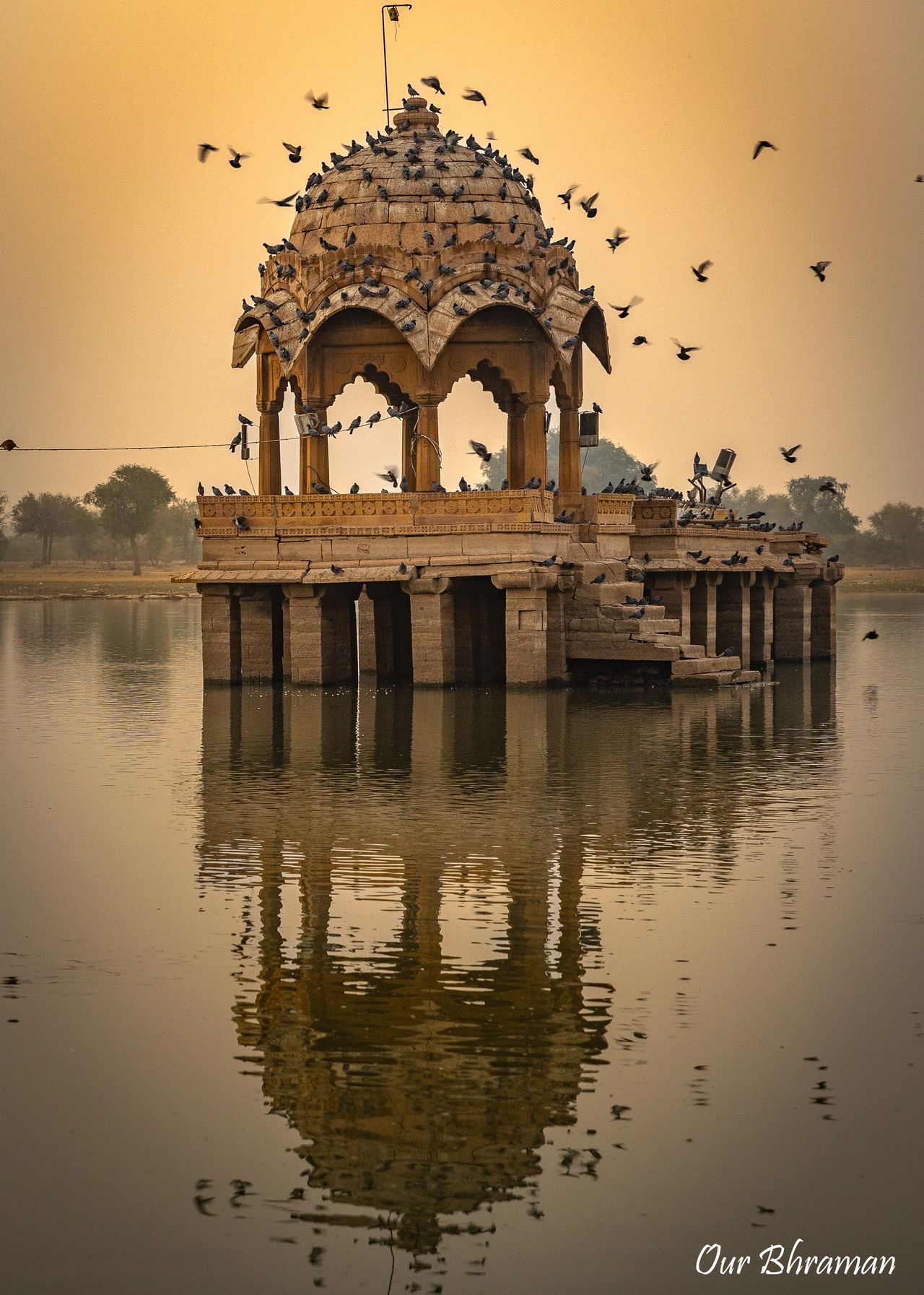
After spending about 30–45 minutes at Gadisar Lake, we headed back to the hotel. We enjoyed our complimentary breakfast with Mom and Dad, checked out, and then left for our next destination for the day Bada Bagh. This place often referred to as “Bada Chhatri” by visitors. When we arrived, parts of the area were temporarily closed because a commercial shoot was taking place — a reminder of how popular and visually striking this spot is. It’s one of the most photographed locations in Jaisalmer. One of the most famous movies associated this place is Hum Dil De Chuke Sanam, starring Aishwarya Rai and Salman Khan.
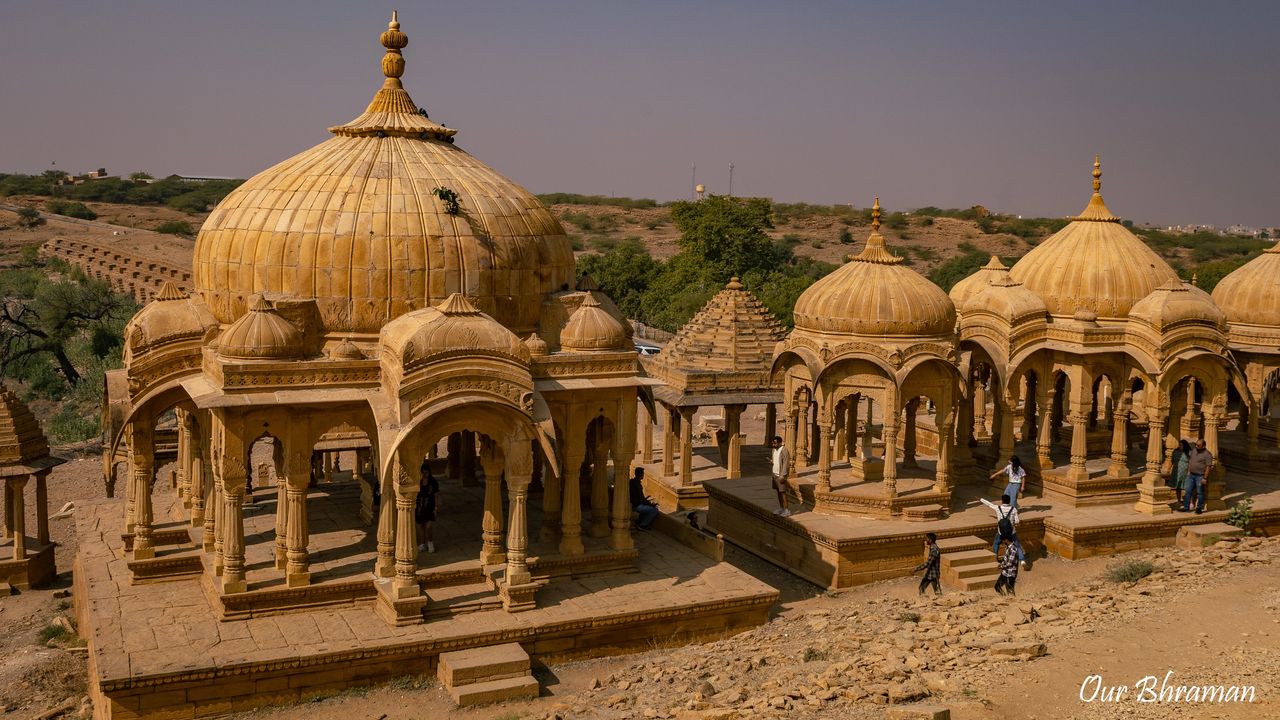
Bada Bagh is a historic garden complex that houses a series of royal cenotaphs (chhatris) built in memory of the rulers of Jaisalmer. Construction began in the 16th century under Maharawal Jait Singh and continued for generations, with each cenotaph dedicated to a king and sometimes members of the royal family. The beautifully carved yellow sandstone chhatris stand against the desert landscape, creating a dramatic and serene setting.
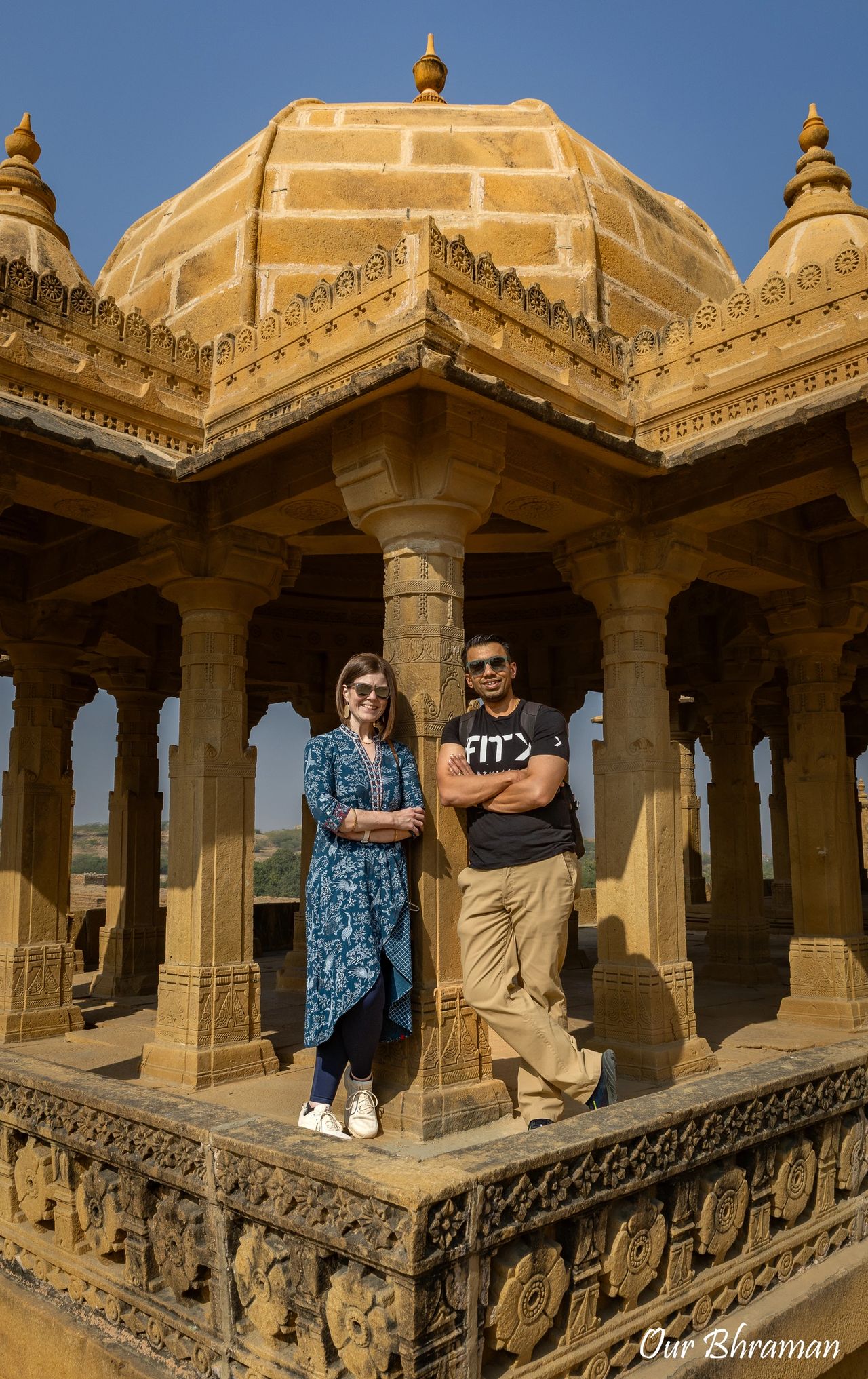
Historically, the site reflects the royal legacy of Jaisalmer and the architectural style of Rajput rulers. The elevated platform offers panoramic views of the surrounding desert and windmills in the distance, making it especially stunning during sunrise or sunset. Its cultural significance, royal heritage, and photogenic beauty make Bada Bagh a must-visit landmark in Jaisalmer.
After exploring the Bada Bagh, we continued our drive toward our desert camp for the night. On the way, we decided to make a quick stop at Kuldhara, famously known as the “Ghost Town” of Rajasthan. At first glance, Kuldhara looks like a cluster of crumbling sandstone houses scattered across the desert. But behind these silent ruins lies one of the most intriguing stories in Rajasthan’s history.
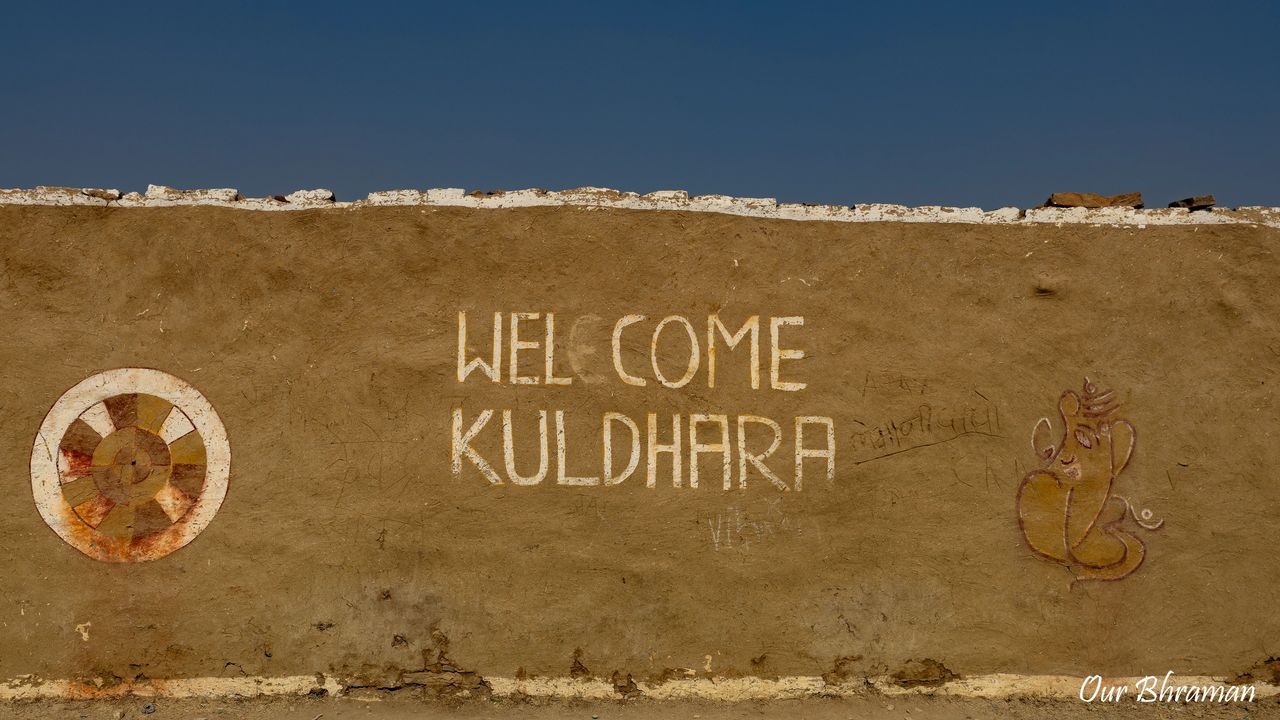
Kuldhara was once a prosperous village established in the 13th century by the Paliwal Brahmins — a community known for their advanced knowledge of water conservation and agriculture in the harsh desert climate. For centuries, the village thrived. However, according to local legend, everything changed in the early 19th century when the powerful minister Salim Singh imposed heavy taxes on the villagers and is said to have expressed an inappropriate interest in a village girl. Unable to bear the oppression, the residents of Kuldhara — along with several nearby villages — are believed to have abandoned the settlement overnight. As the story goes, before leaving, they cursed the land, declaring that no one would ever be able to settle there again. Whether legend or reality, the village has remained uninhabited ever since. Walking through the empty lanes, broken sandstone walls, and roofless homes felt surreal — quiet, still, and filled with a strange sense of history frozen in time.
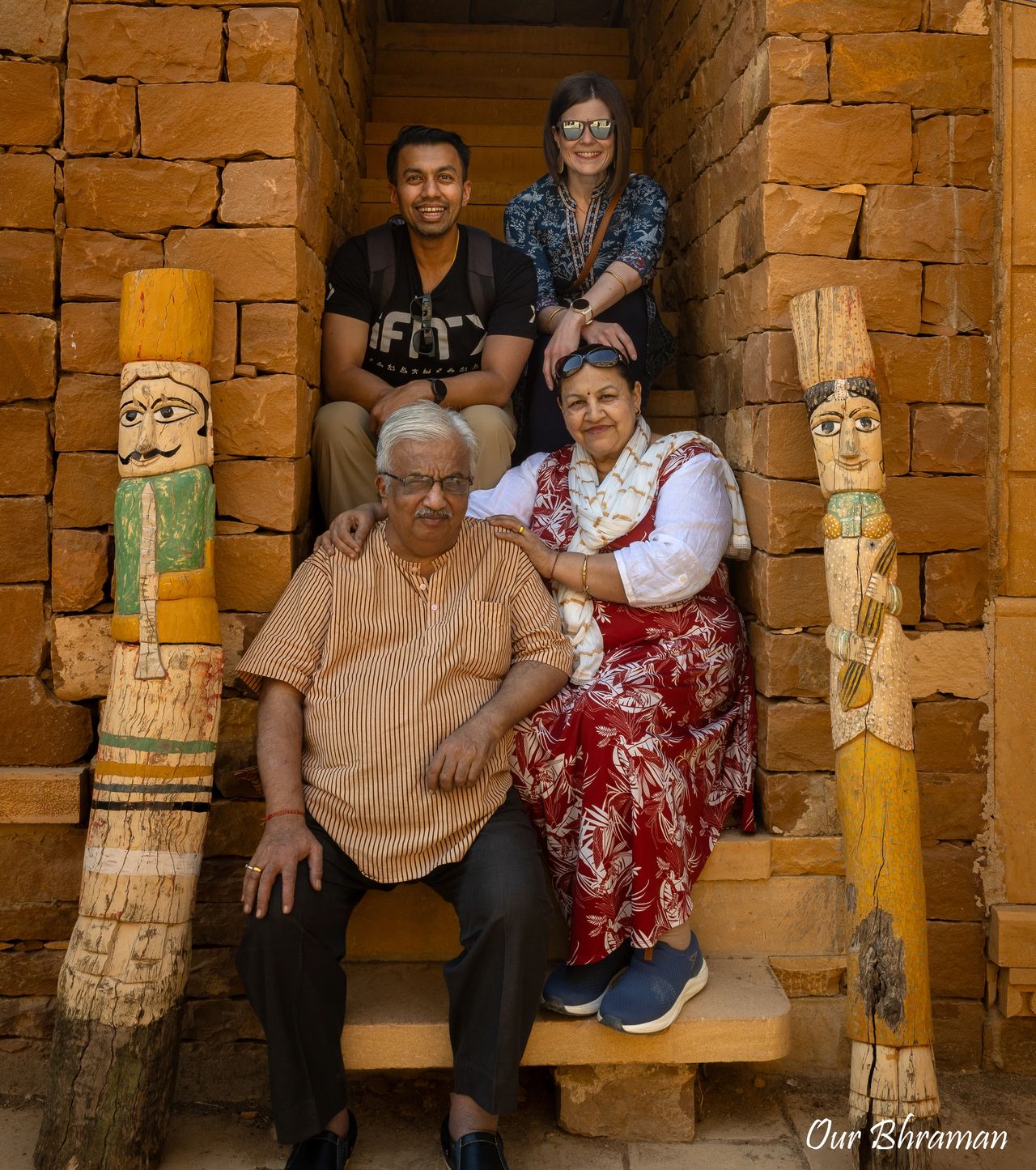
From there, we headed to Khaba Fort, perched on a hill overlooking another abandoned Paliwal settlement. The fort is often linked with ghost stories because of its deserted setting, and some locals claim to hear unusual sounds after sunset, adding to its mystery.
For us, though, what stood out most was how peaceful and less visited it felt. With very few people around, we explored at our own pace — walking along old stone pathways, climbing up to the ramparts, and taking in panoramic views of the deserted village below and the vast desert beyond. The simple sandstone architecture, small museum inside the fort, and hilltop setting make it a unique and special stop.
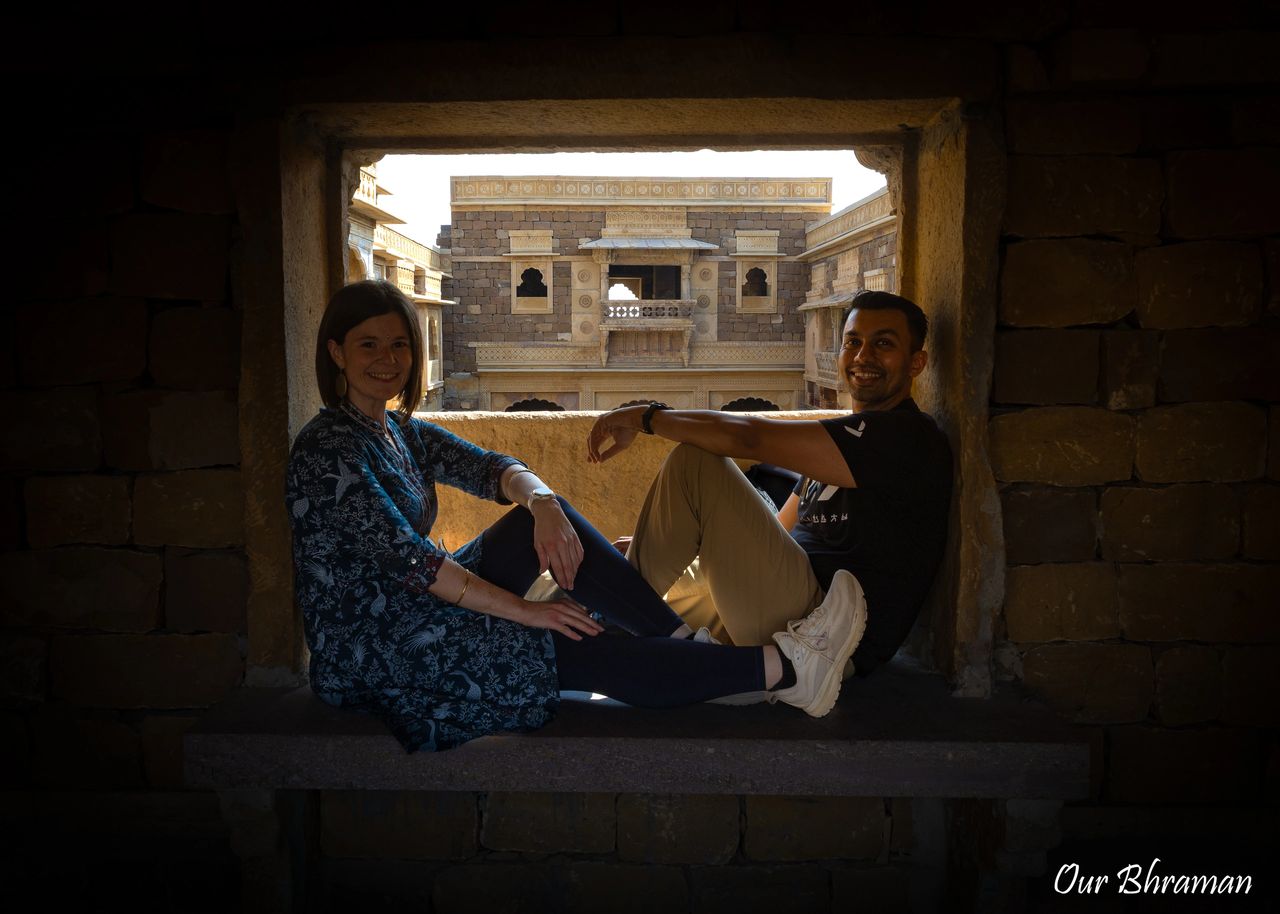
After spending about 30 minutes exploring this place, we continued our journey toward our evening stay at Sam Sand Dunes in the heart of the Thar Desert. Carrying with us the silence and stories of Rajasthan’s abandoned villages, we were now heading toward a completely different side of desert life — one filled with movement, music, and celebration.
If you’re looking to trade city noise for the calm openness of the desert, this experience is truly special. When booking with a desert camp in Sam, most stays include the desert safari and cultural evening as part of the package, which makes everything smooth and convenient. However, you can also arrange these activities on arrival and often negotiate pricing directly.
Upon check-in, we were welcomed with a refreshing glass of freshly squeezed lemon juice — a thoughtful touch in the desert heat — before being escorted to our tent. The tents were comfortable and well-prepared, offering a nice balance between rustic charm and modern convenience.
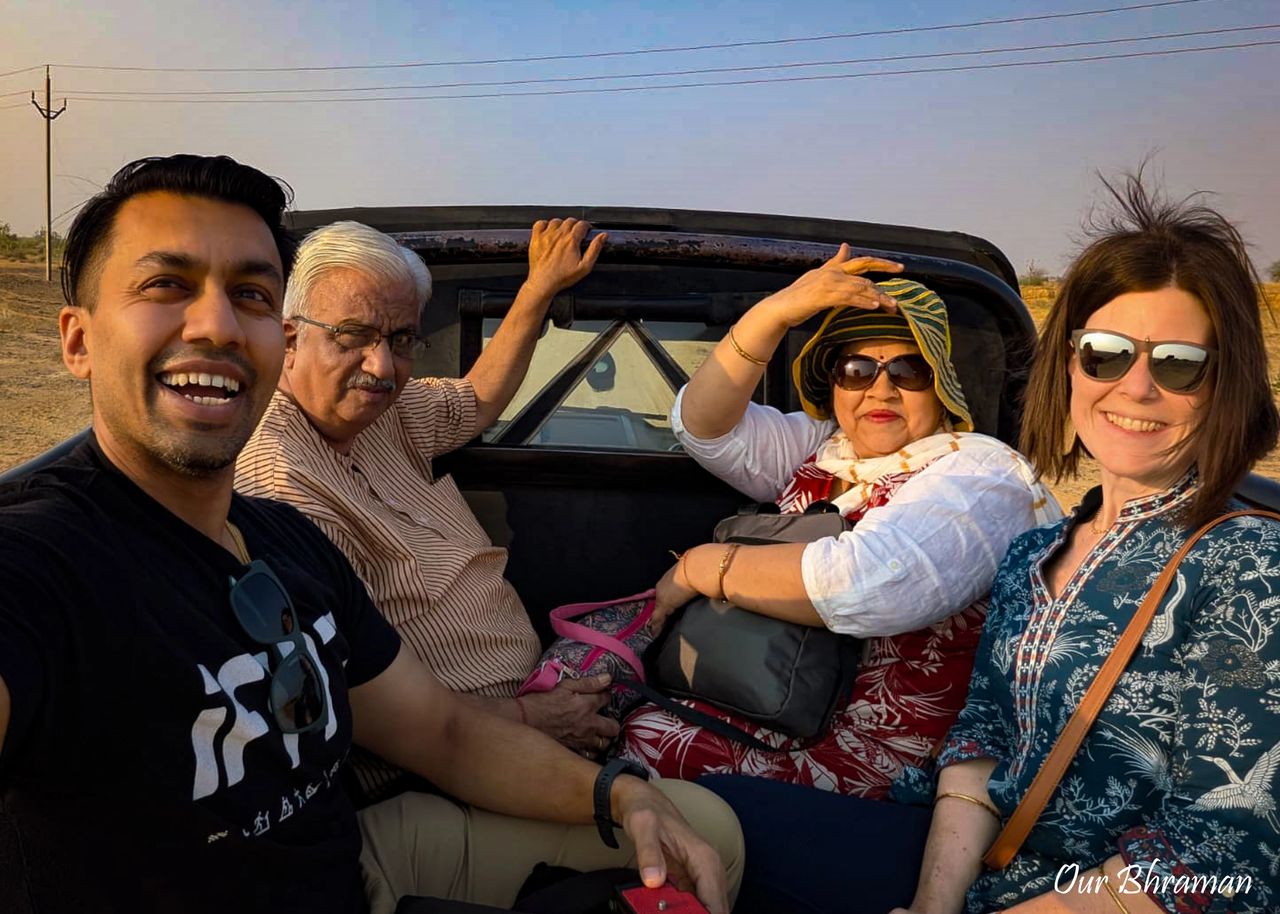
Our jeep safari began right from the camp, making the experience smooth and well-organized. Around 4 PM, a jeep arrived to take us toward the dunes. After a short drive, we first dropped Mom and Dad at the camel safari cart ride point, where they chose a slower, more relaxed journey toward the sunset viewpoint — a plan we would join after finishing our adventure. From there, the driver took us further into the open stretches of the Thar Desert. Within minutes, we were deep in the dunes, surrounded by endless golden sand.

The jeep ride across the rolling sands was pure adrenaline. We climbed up and down multiple dunes, sometimes at surprisingly steep angles that made everyone gasp and laugh at the same time. The powerful 4×4 roared across the terrain, scaling high ridges before dipping dramatically into golden valleys of sand. You can choose to sit down and hold on tight, or stand up in the open jeep for a head‑on view of the dunes ahead. Standing up adds an entirely different level of thrill — the wind rushing past your face as the vehicle rises and drops over wave after wave of sand is unforgettable.
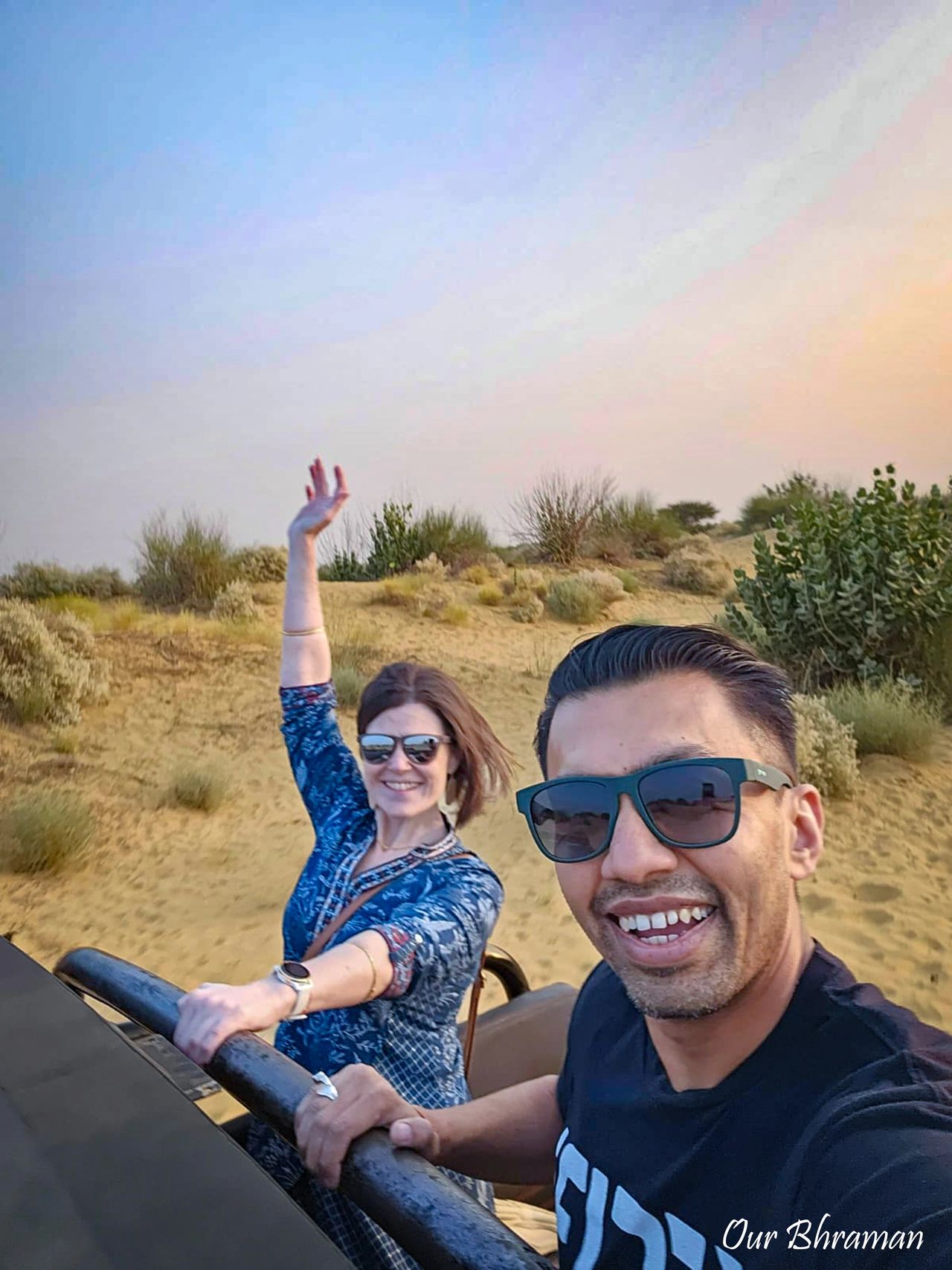
From the top of each dune, the panoramic views stretched endlessly, making every bump worth it. It’s easy to see why jeep safaris are a favorite for families and groups looking to add adventure to their desert stay. One important lesson we quickly learned: keep your phone and camera secure. With all the bouncing and loose sand, it’s surprisingly easy to drop something — and once it disappears into the dunes, recovering it can be very difficult.
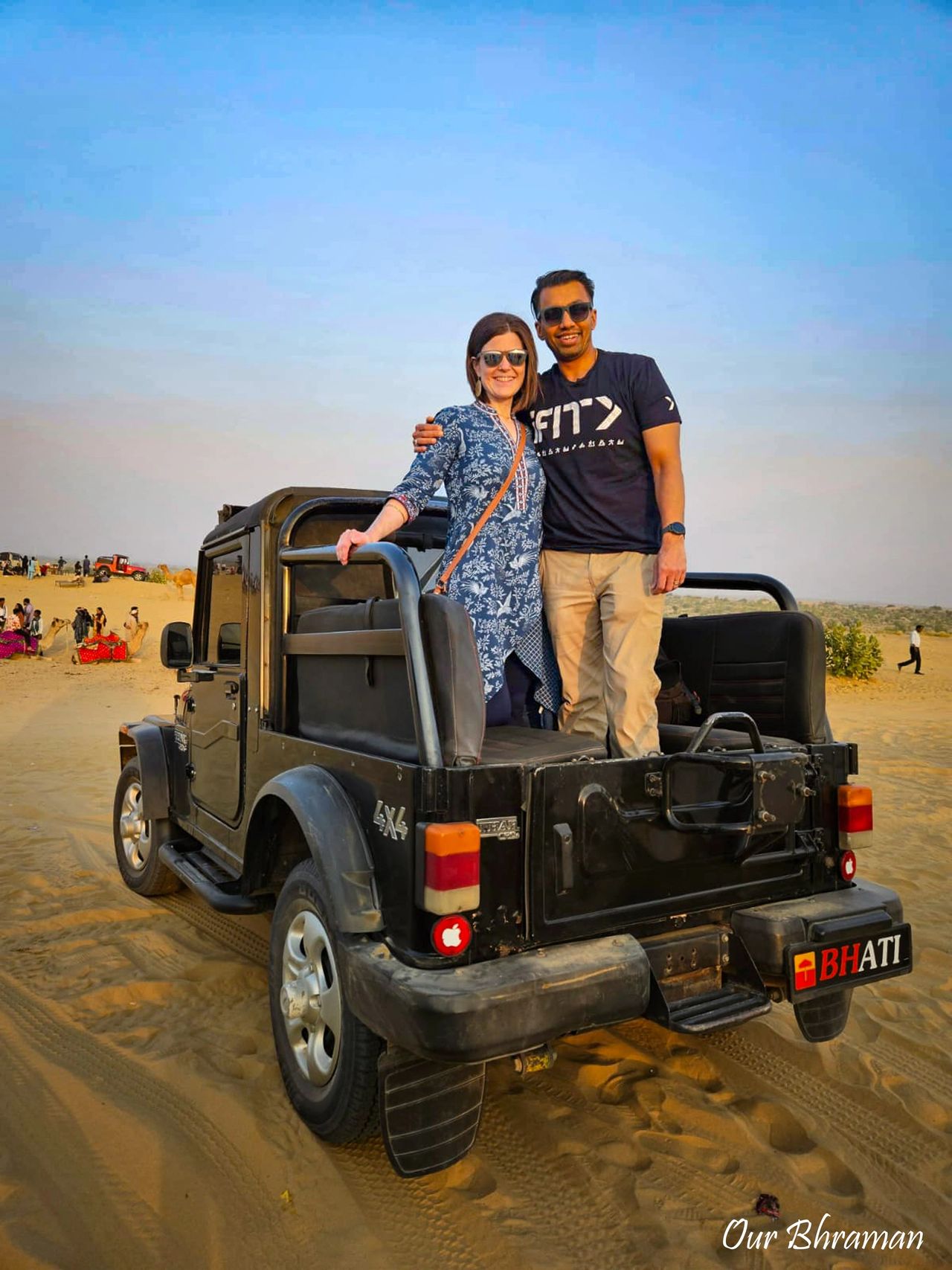
After the thrill of dune bashing, we were dropped off for our camel safari. For a first-time rider, the feeling is unique — you sit quite high, and when the camel rises to its feet, the forward and backward motion can catch you off guard.
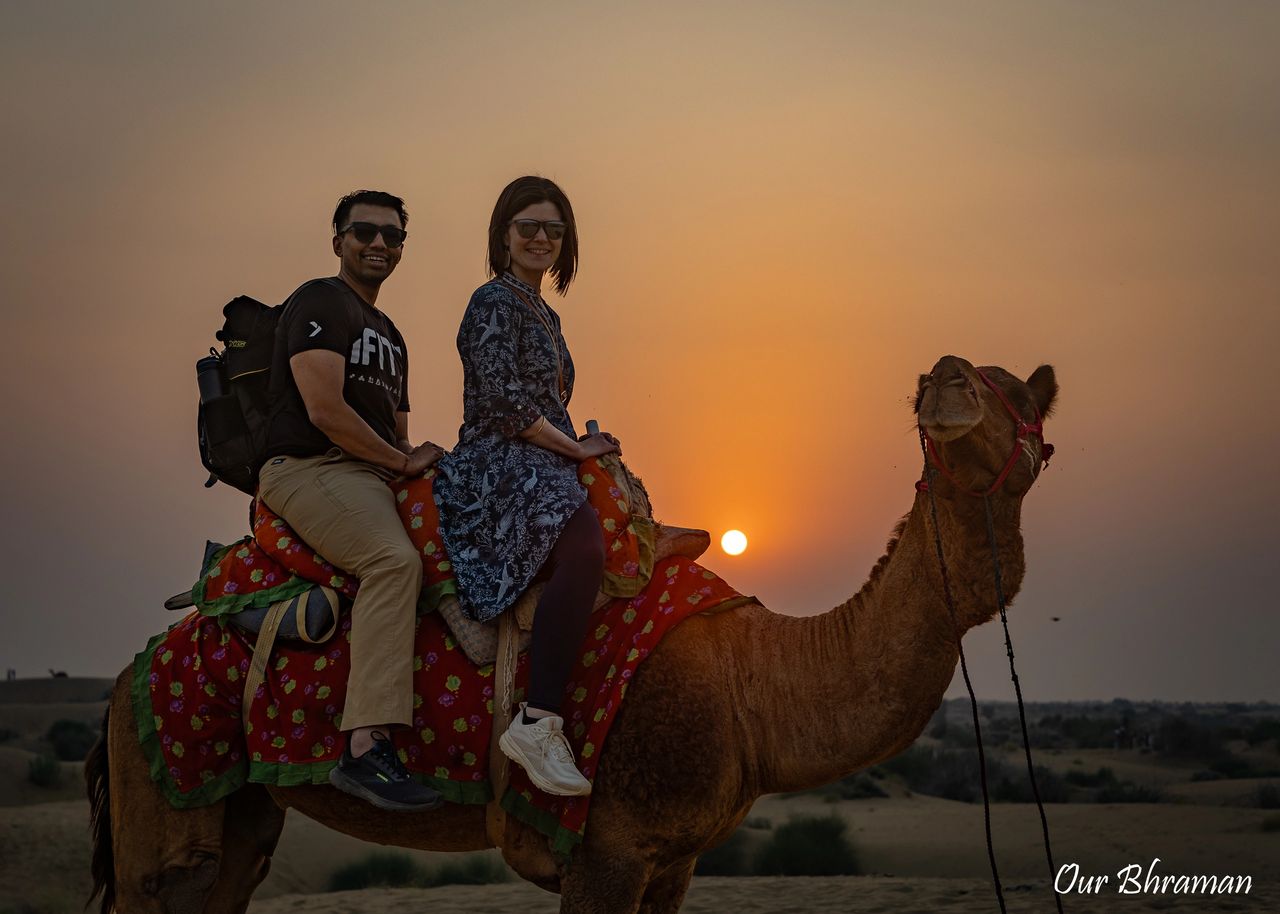
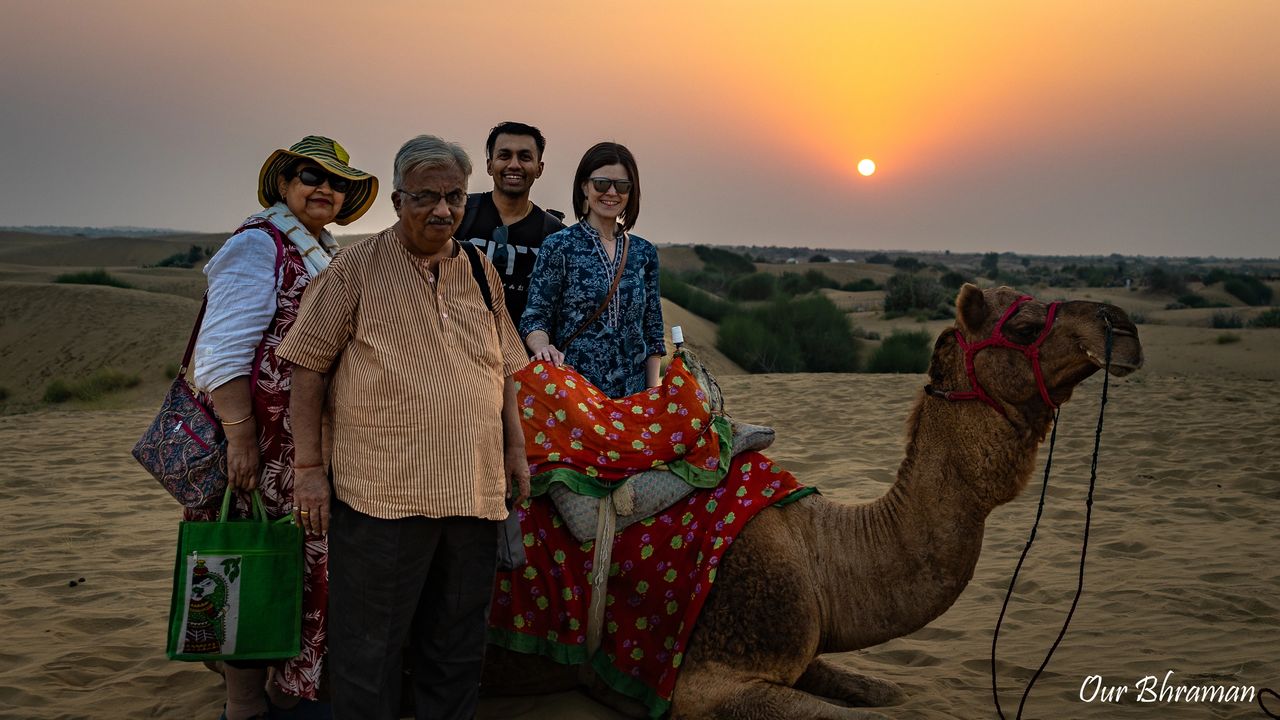
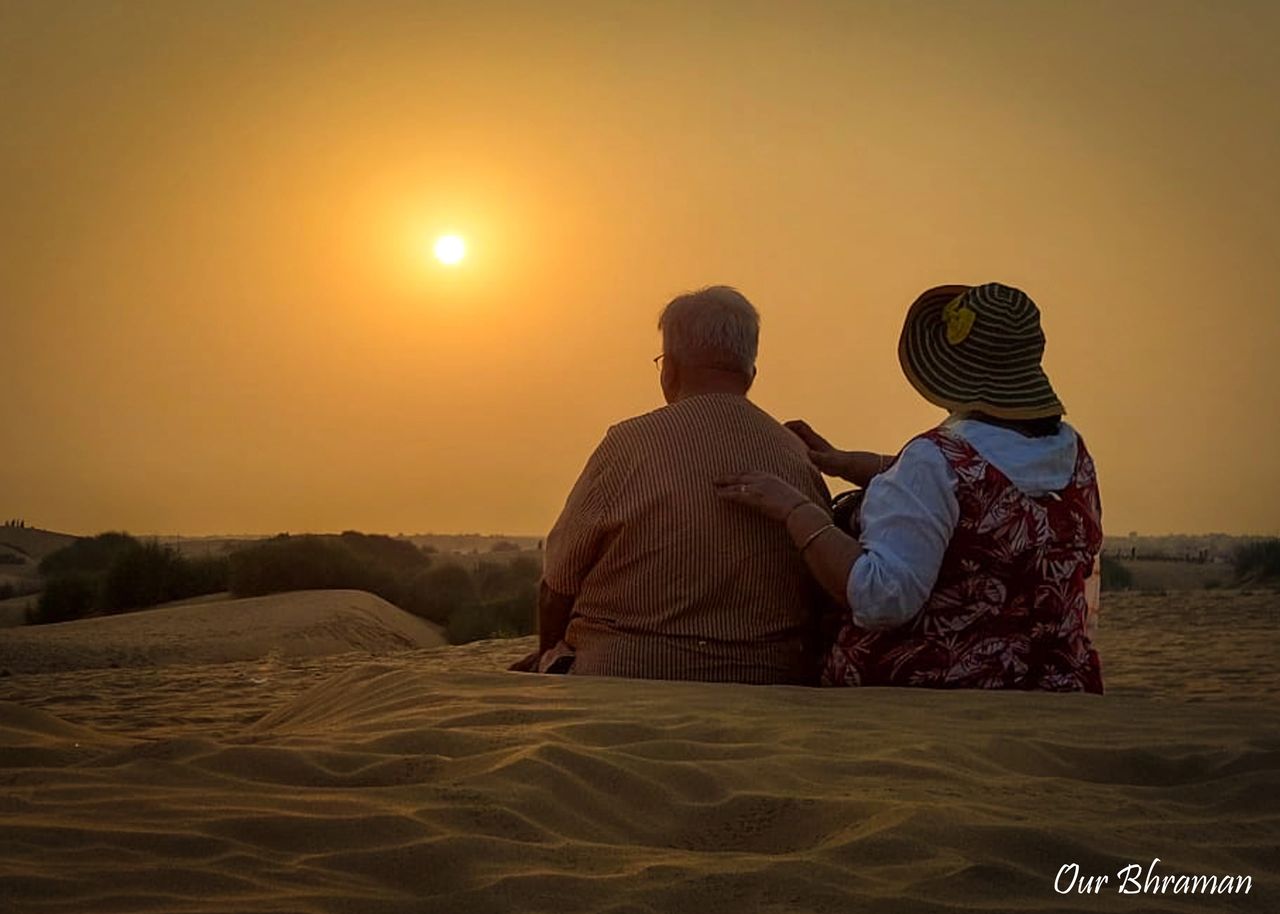
But within a few minutes, you settle into the rhythm. The gentle swaying becomes peaceful, almost meditative. We chose to walk farther from the busier sunset spots, and watching the sun dip below the dunes in a quieter area felt almost sacred. The sky transformed into shades of gold, orange, and soft pink, while the vast desert remained silent and still.
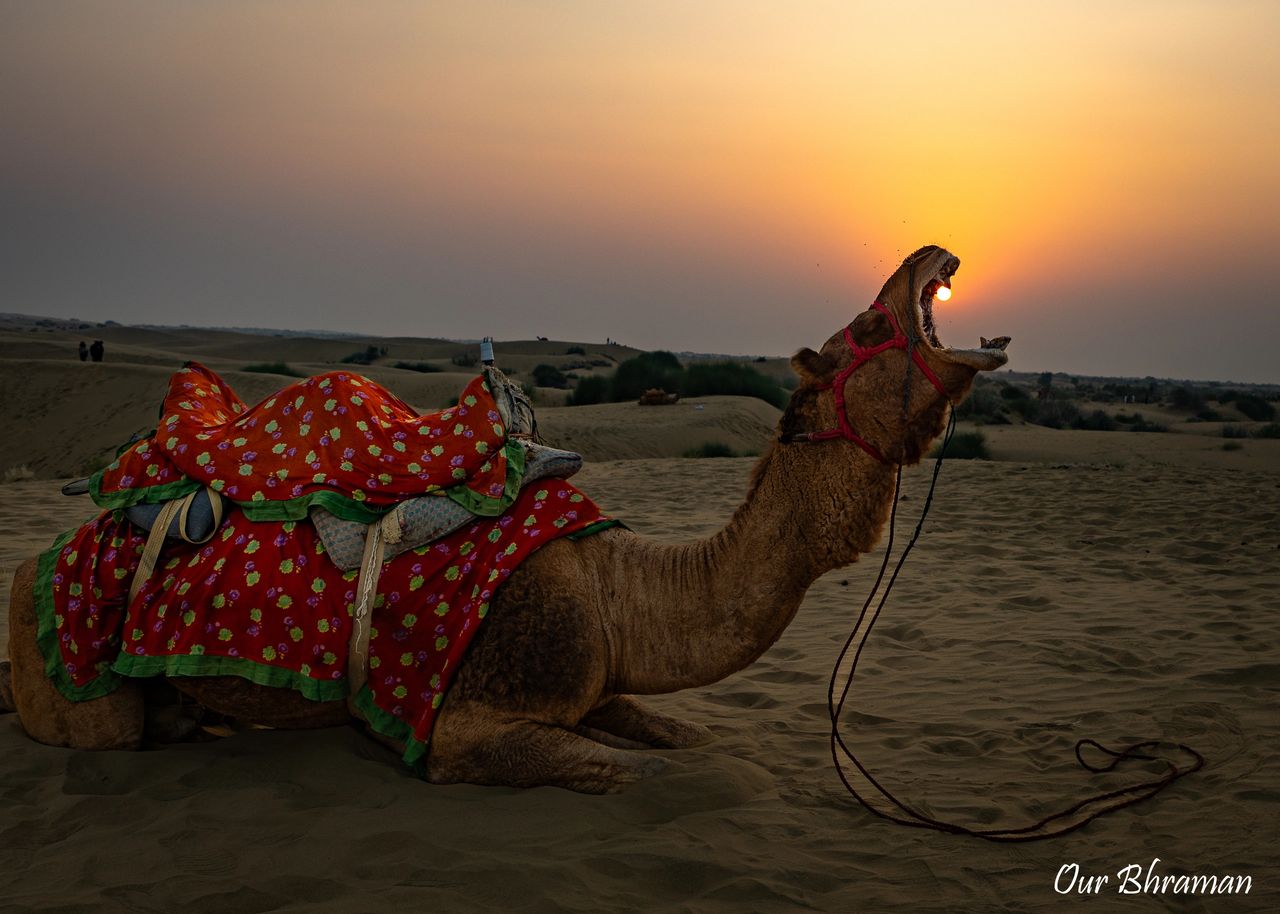
One of the most charming parts of our desert safari in the Thar Desert was seeing how beautifully the camels were decorated. They were adorned with vibrant embroidered saddles, colorful fabrics, tassels, and small bells that jingled gently as they walked across the dunes. The bright reds, yellows, and blues stood out strikingly against the golden sand, creating a picture-perfect Rajasthani scene. What impressed us most was how calm and accustomed the camels were to people — patiently kneeling for riders, standing still for photos, and comfortably surrounded by visitors. For first-time riders like us, their steady and cooperative nature made the experience much easier, turning what could have felt intimidating into a memorable and enjoyable highlight of the desert adventure.
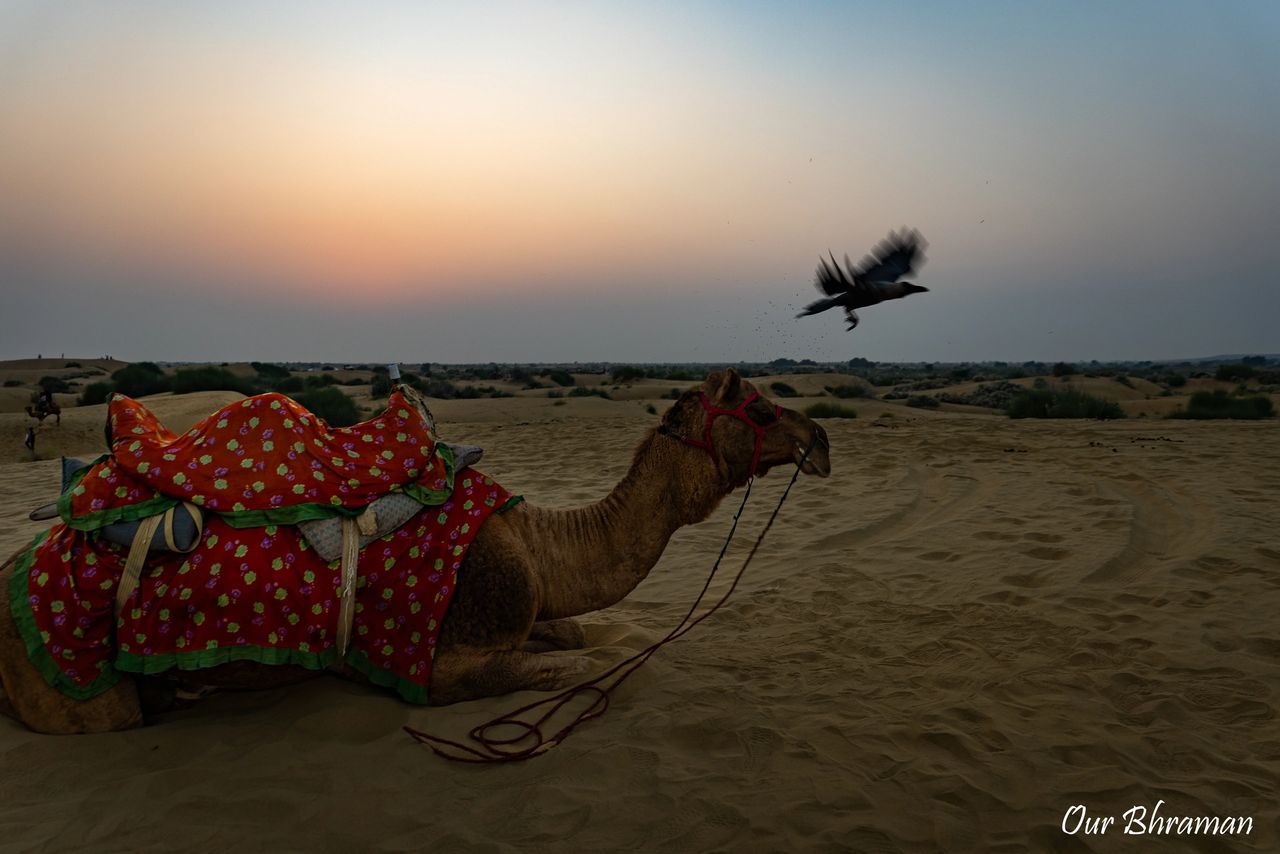
As the sun begins to dip, the golden dunes slowly shift in color — from bright yellow to deep amber, then to shades of orange, pink, and even soft purple. The changing light creates dramatic shadows on the rippled sand, highlighting every curve and ridge of the dunes.
Returning to camp after sunset felt comforting. We were welcomed traditionally with a tika ceremony and warm towels to freshen up. After hours in the sand, even simple comforts felt luxurious. Tea and snacks were served as guests gathered around, sharing stories from their adventures.
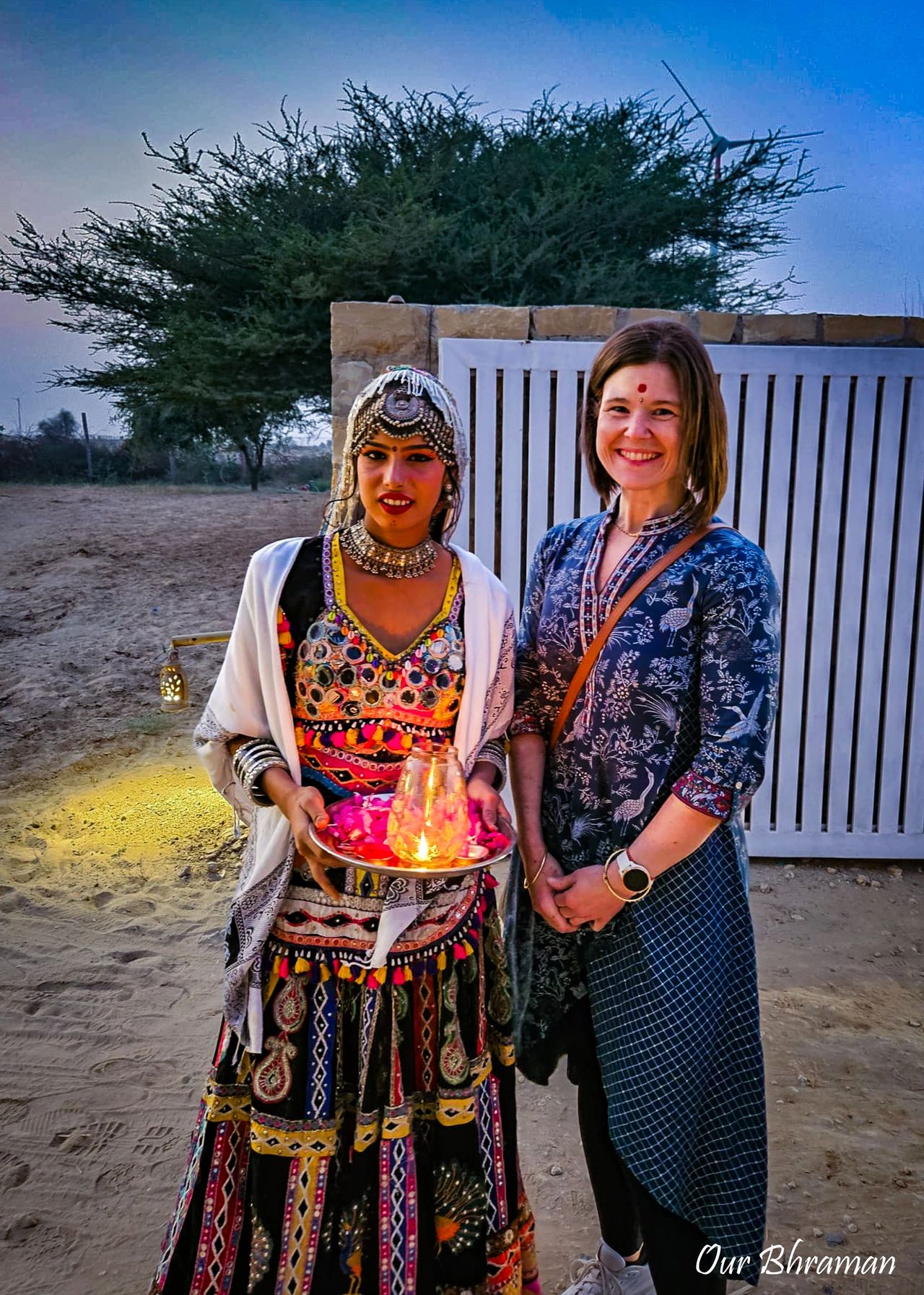
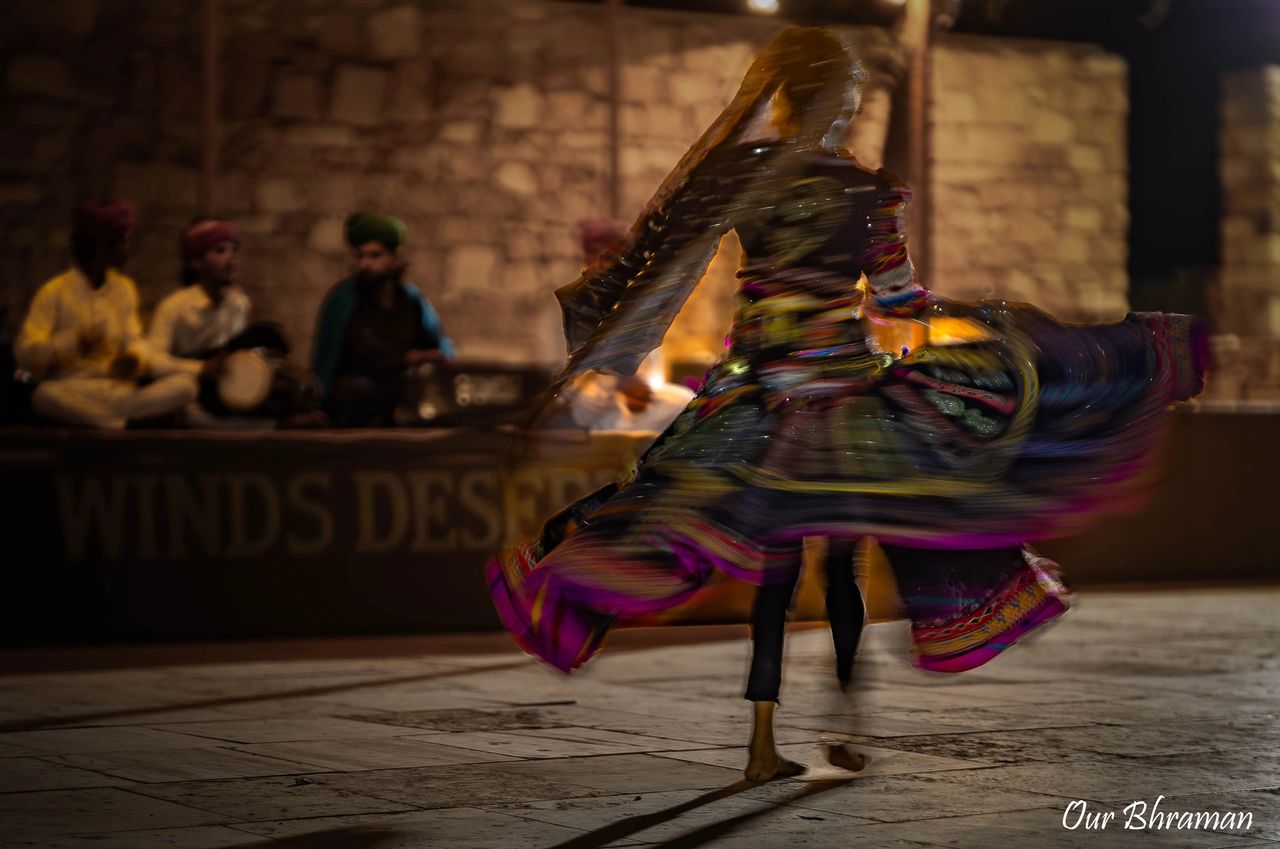
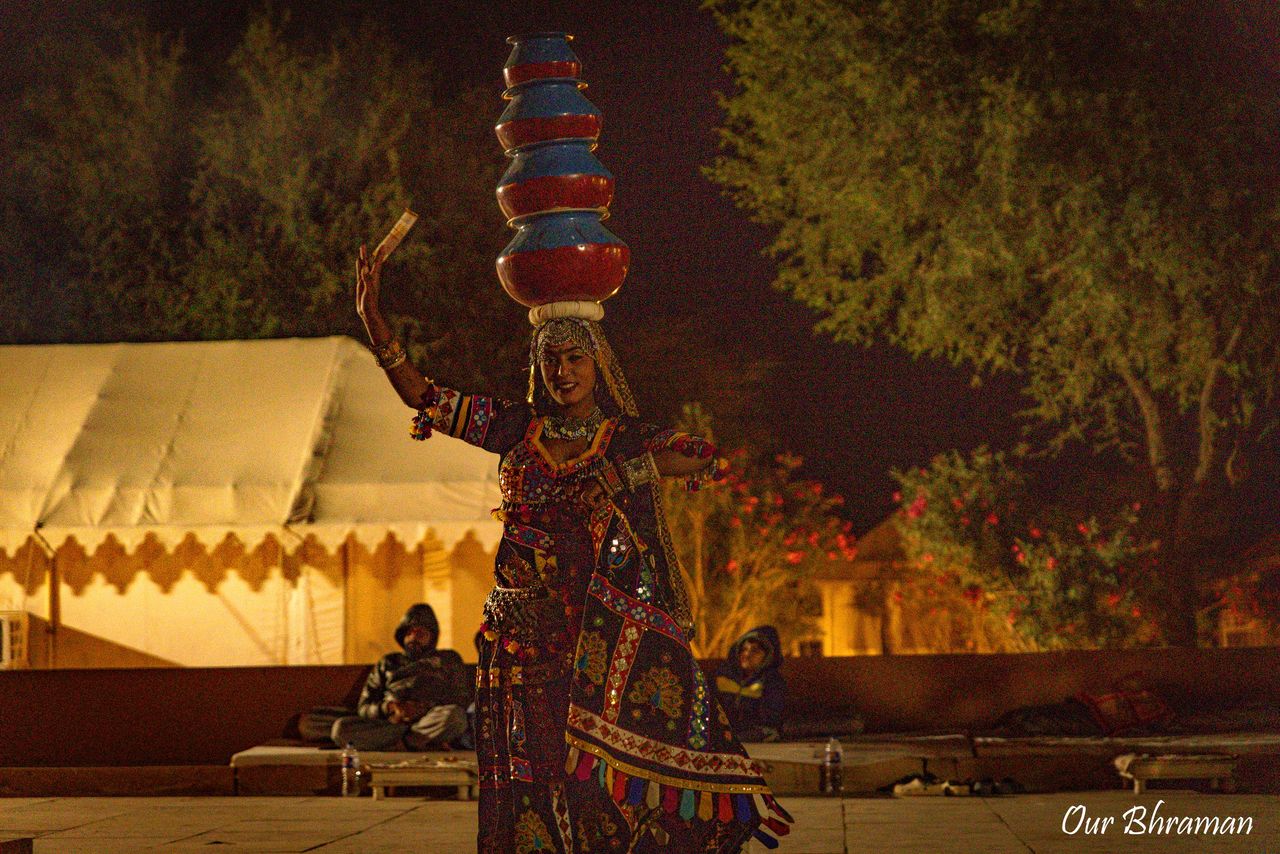
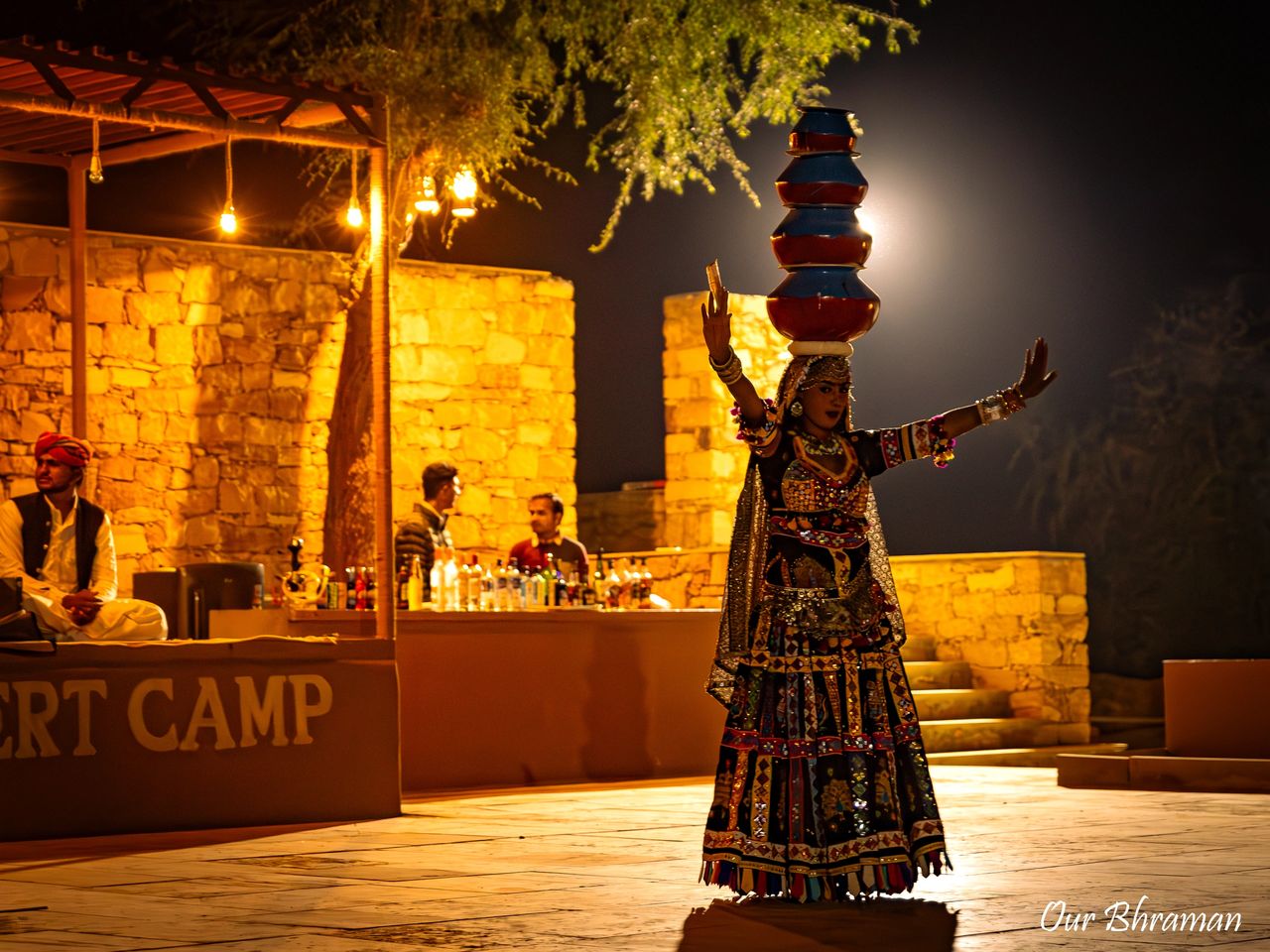
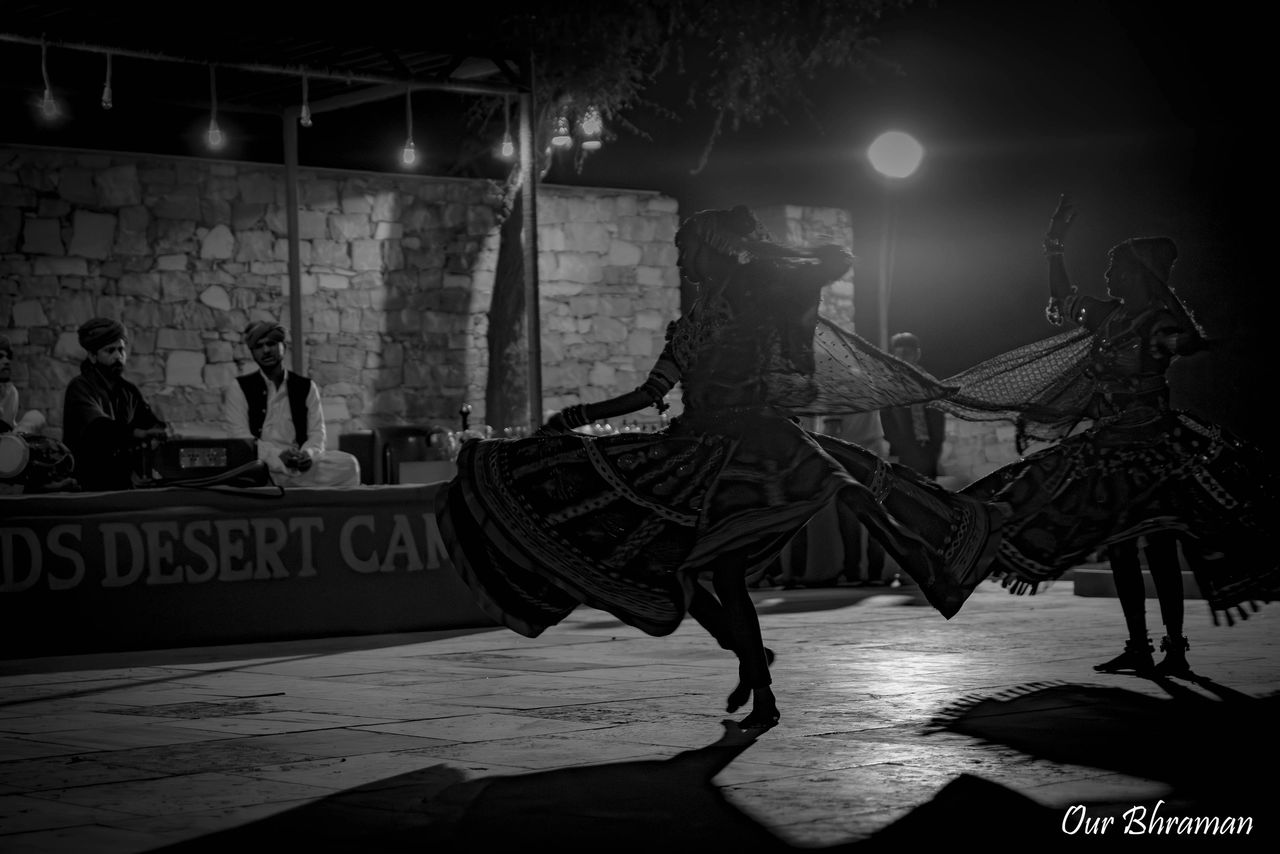
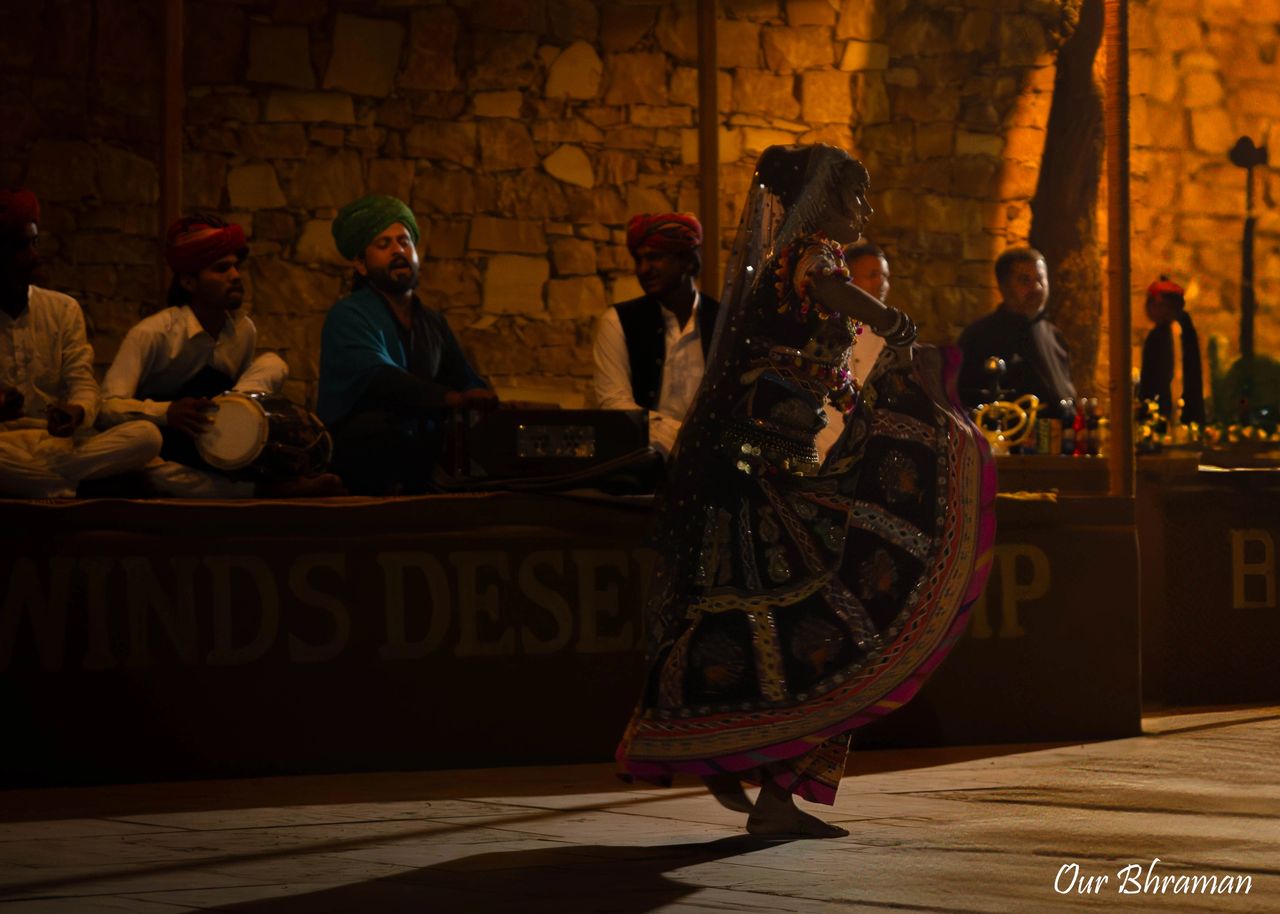
As night fell, the camp transformed into a vibrant cultural arena. A bonfire flickered at the center, and the evening’s performances began. The cultural program featured traditional Rajasthani folk dances such as Kalbelia, known for its graceful, snake-like movements, and Ghoomar, characterized by elegant spinning formations. The dancers wore stunning traditional attire — brightly colored ghagras (long flowing skirts), intricately embroidered cholis, and odhnis draped gracefully over their heads. Their outfits were decorated with mirror work and heavy silver jewelry that shimmered under the lights as they twirled.
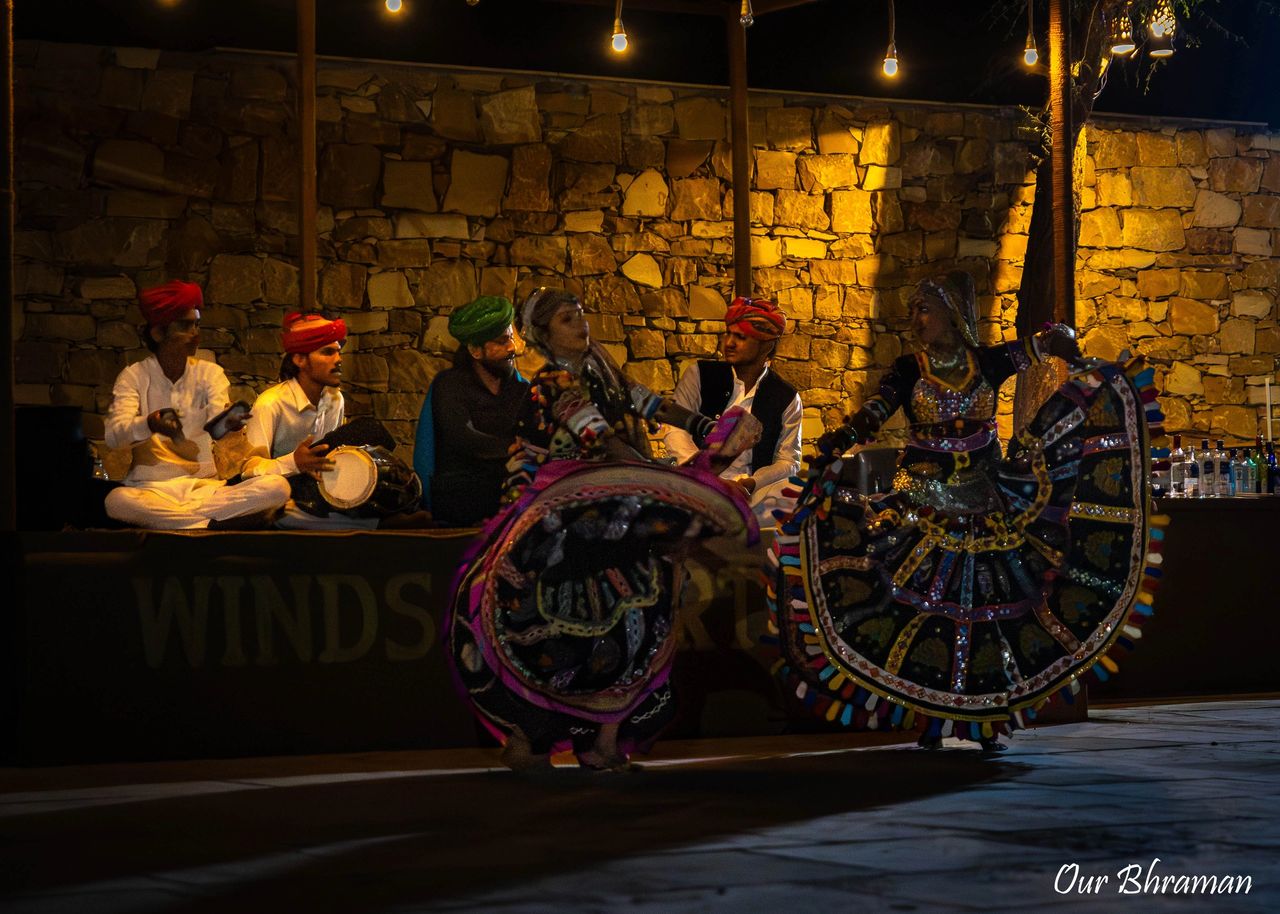
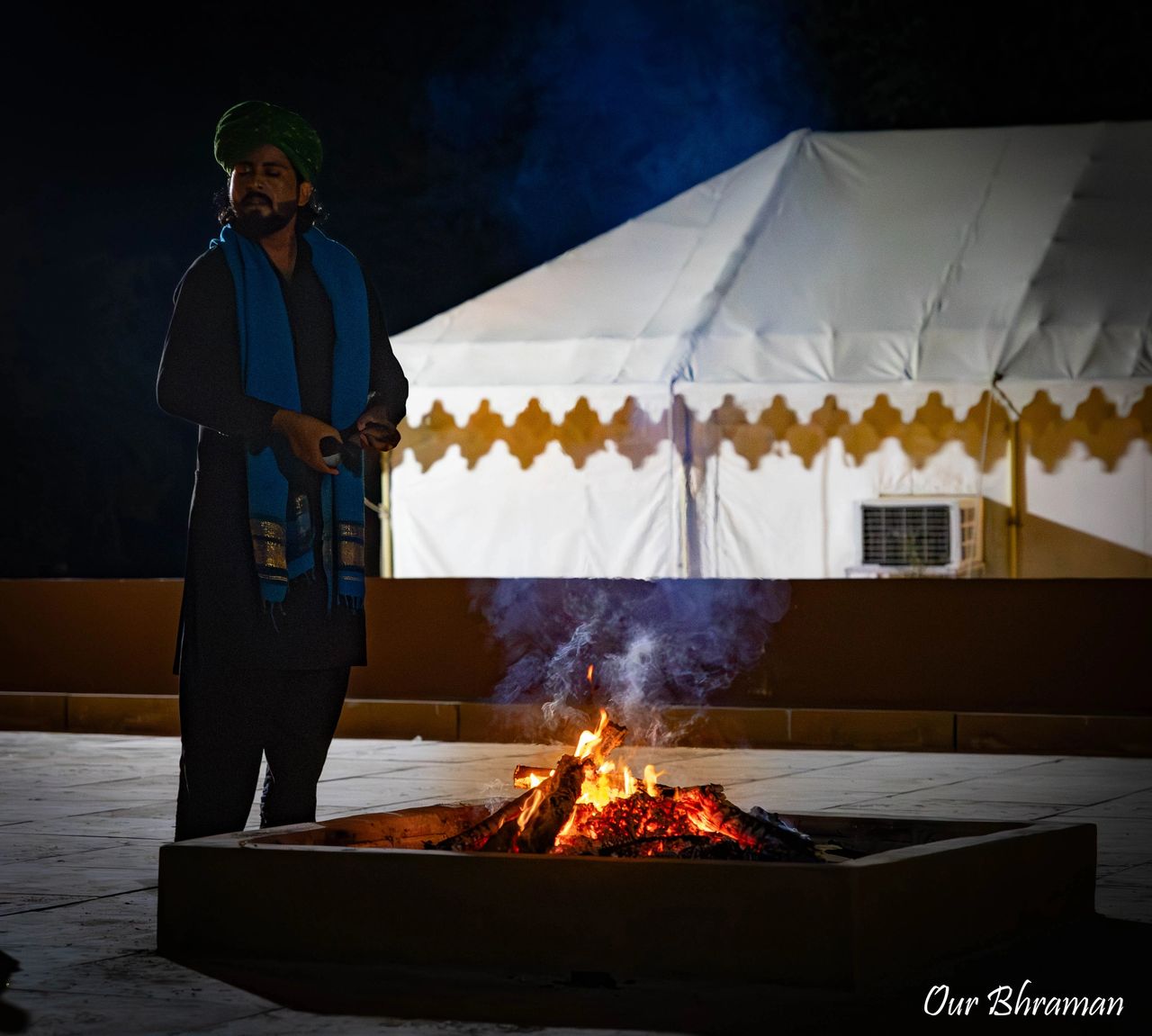
The male musicians, dressed in turbans and traditional dhotis or kurtas, played instruments like the dholak and harmonium, filling the desert air with energetic rhythms. What made the evening especially lively was how the performers engaged the audience. They encouraged clapping along with the beats, invited guests to join them in simple dance steps, and even balanced multiple pots during performances while interacting playfully with the crowd. That engagement kept the atmosphere joyful and interactive rather than just a staged show.
We enjoyed hot appetizers during the performances before moving to a generous buffet dinner featuring traditional Rajasthani cuisine. Eating under the open sky, with music still echoing softly in the background, felt authentic and memorable. Later that night, after the music faded and most guests returned to their tents, we walked a short distance away from the camp lights. Even a brief stroll into the darker dunes made a remarkable difference.
Above us, the sky was overflowing with stars something rarely visible in city life. In that quiet, pitch-black desert, surrounded by endless sand and infinite stars, time seemed to slow down. It was more than just a night in the desert. It was a blend of adventure, culture, connection, and stillness — a memory that will stay with us long after our footprints disappear from the dunes.