Day-1 Sunny San Diego: Where the Coast Meets Culture
Our Southern California adventure began in San Diego, a city where the ocean breeze, vibrant culture, and laid-back vibe set the perfect tone for the journey ahead.
On our first day, we arrived in the late afternoon and checked into our hotel. Without wasting much time, our first stop was the much-talked-about Sunset Cliffs Natural Park. Known for its dramatic ocean views and breathtaking sunsets, it felt like the perfect place to begin our West Coast journey. As the name suggests, it’s famous for its stunning sunset views over the Pacific Ocean, with rugged cliffs that seem to drop straight into the sea. It sounded like the perfect way to end our first day—and kick off the week.
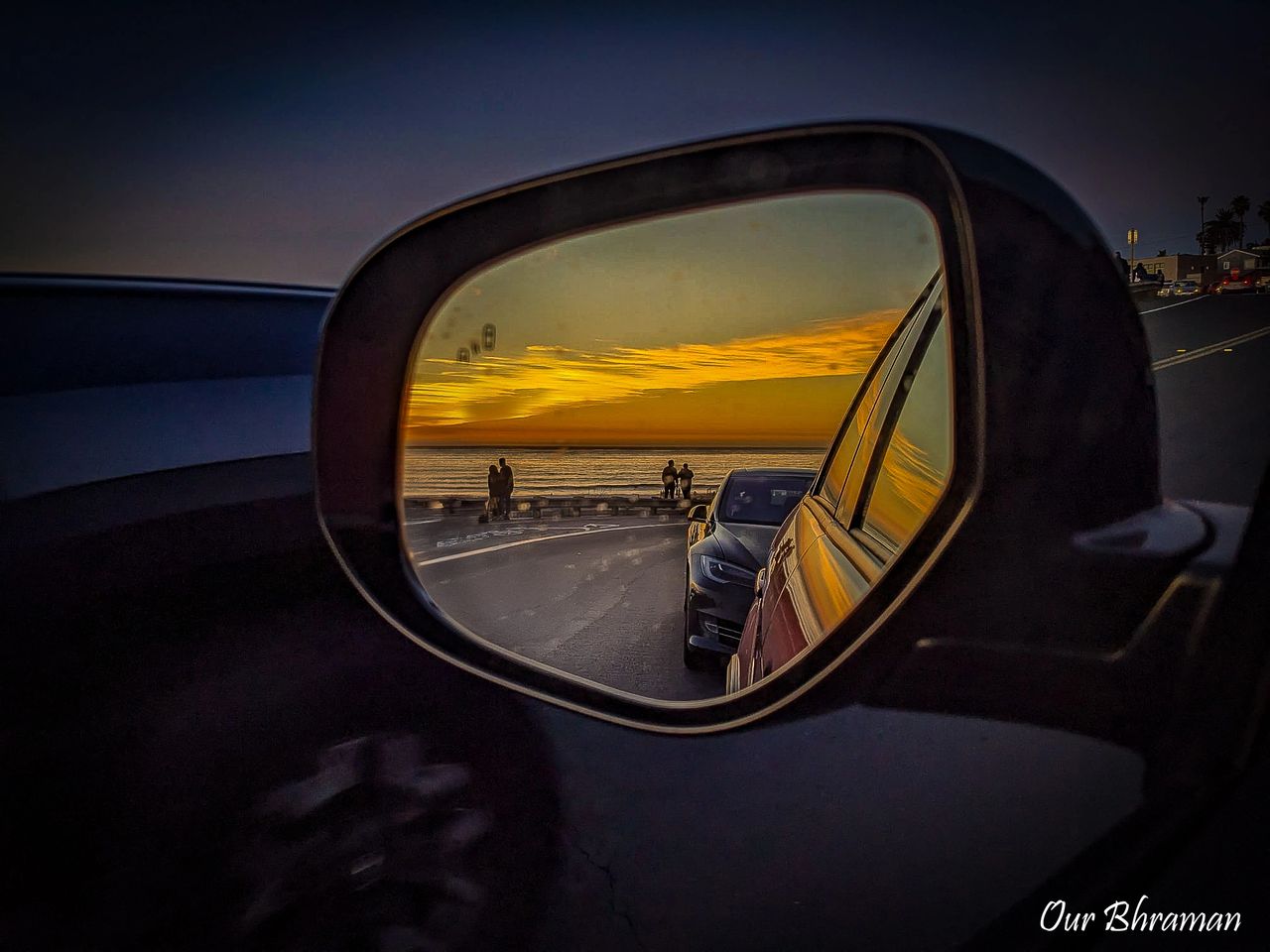
But let me tell you—getting there is one thing, finding parking is a whole different story. We thought we were being smart by arriving about an hour before sunset on a weekday, assuming it wouldn’t be too crowded. We were wrong. Apparently, every day is a popular day here. We drove in circles for what felt like forever, winding through the narrow coastal streets. Each turn gave us hope—“Maybe here?”—only to end in disappointment. At one point, we almost gave up and considered watching the sunset from the car.
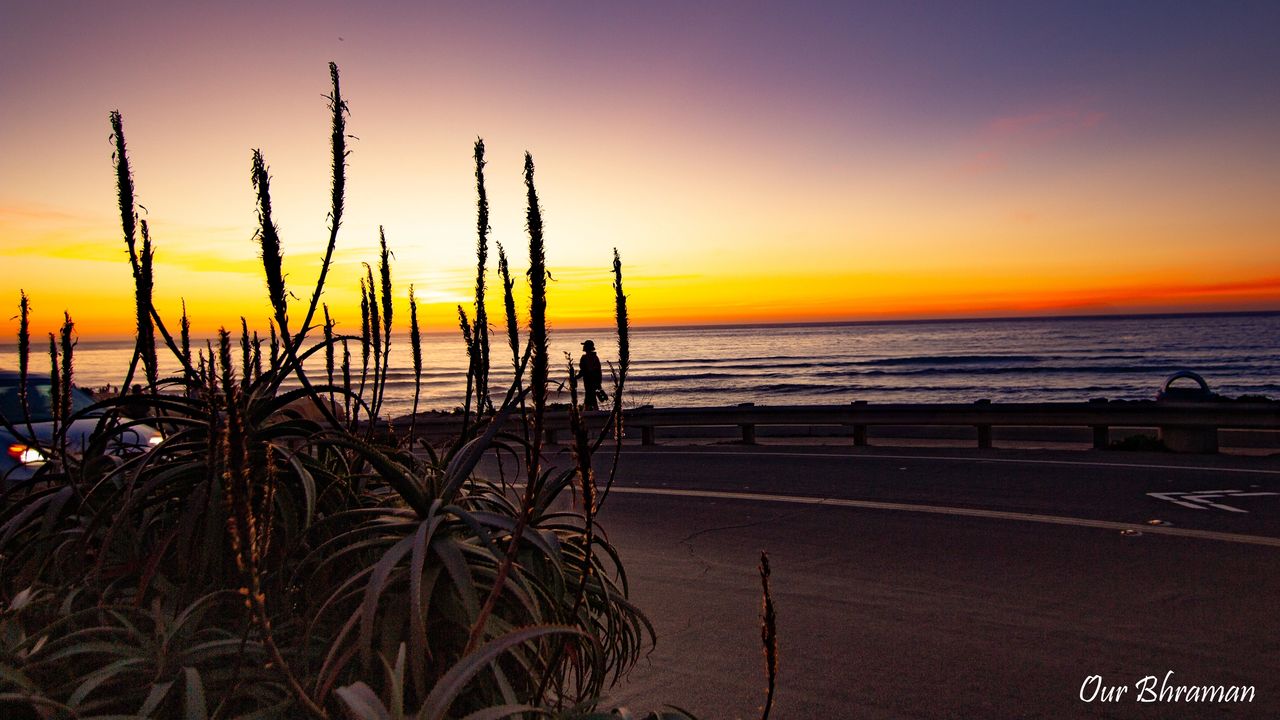
Then, finally, someone pulled out of a spot near one of the trail entrances. It felt like winning the lottery. We parked, grabbed our things, and hurried toward the cliffs. And as soon as we got to the edge of the cliffs, all the stress from finding parking just disappeared. The sky looked beautiful, with soft colors like orange, pink, and purple blending into the ocean. It felt like a scene from a movie. People were sitting on the rocks, some couples holding hands, and everything felt peaceful—like time had stopped for a little while.
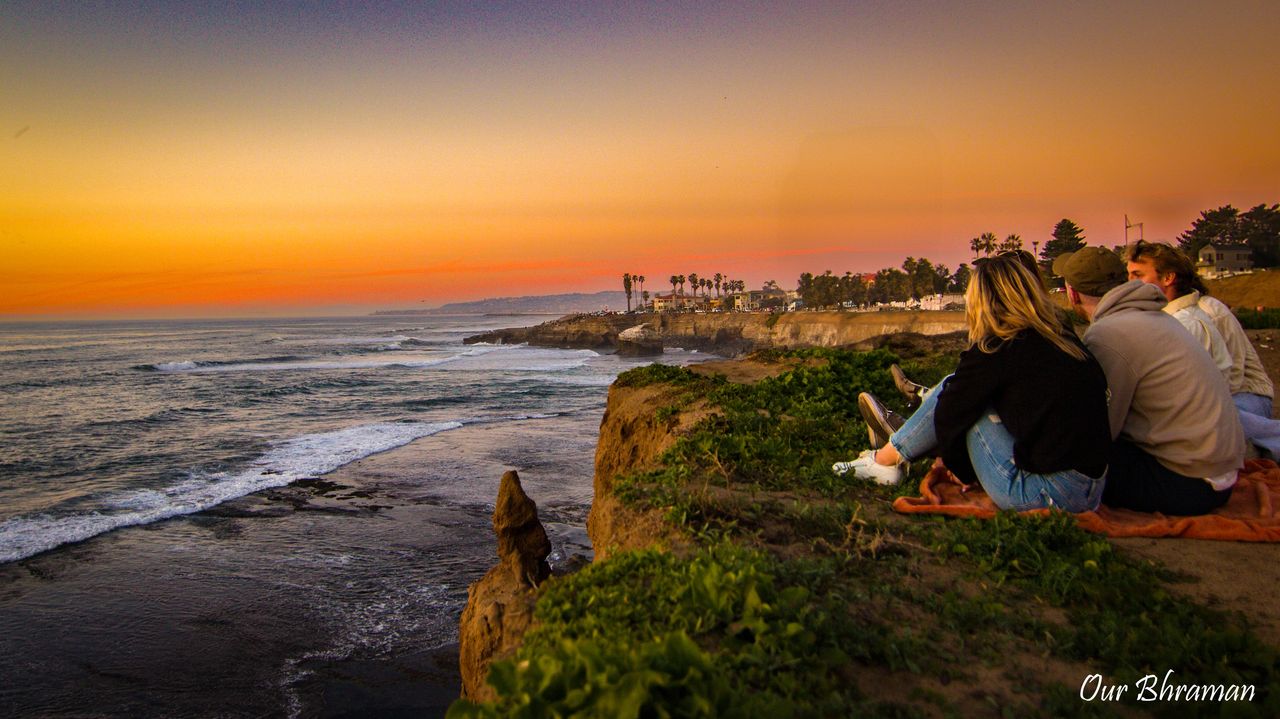
We stayed until the last sliver of sun disappeared into the horizon. Looking back, we realized we could’ve come earlier, maybe even brought a picnic like the locals do. There’s a whole vibe here laid back but full of quiet reverence for the beauty of nature.
It’s amazing, really. Even with so many people around, you still feel like you can connect with the sunset in complete solitude—if you want to.
Day-2 Sunny San Diego: Where the Coast Meets Culture
The next morning, we set out for a special treat—seal viewing at La Jolla.
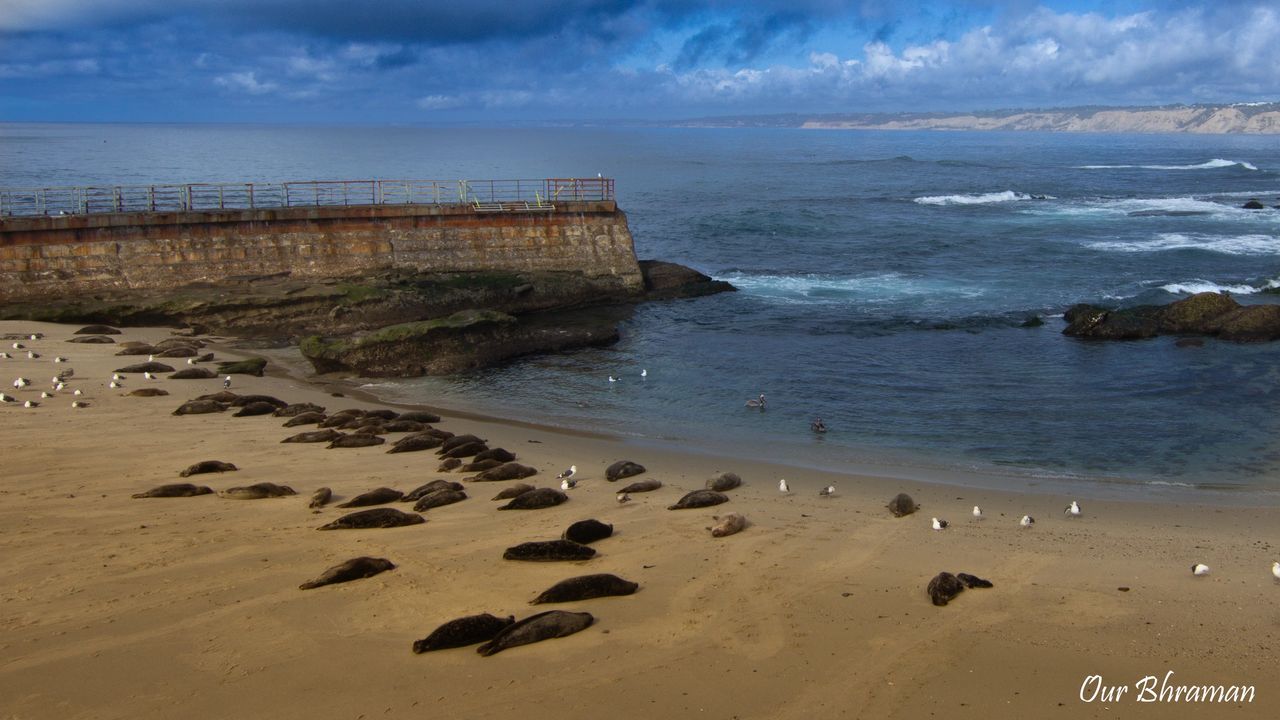
We began our coastal walk at Children’s Pool, where the salty air mixed with the faint, fishy scent of the ocean. The moment we looked down, we saw harbor seals scattered across the sand, their smooth, silvery bodies glistening under the sun. Some snoozed without a care, while others flopped playfully toward the waves, disappearing into the surf with an elegant glide. Standing on the sea wall, I could hear the crash of the waves behind them—it felt like nature’s soundtrack for this little sanctuary.
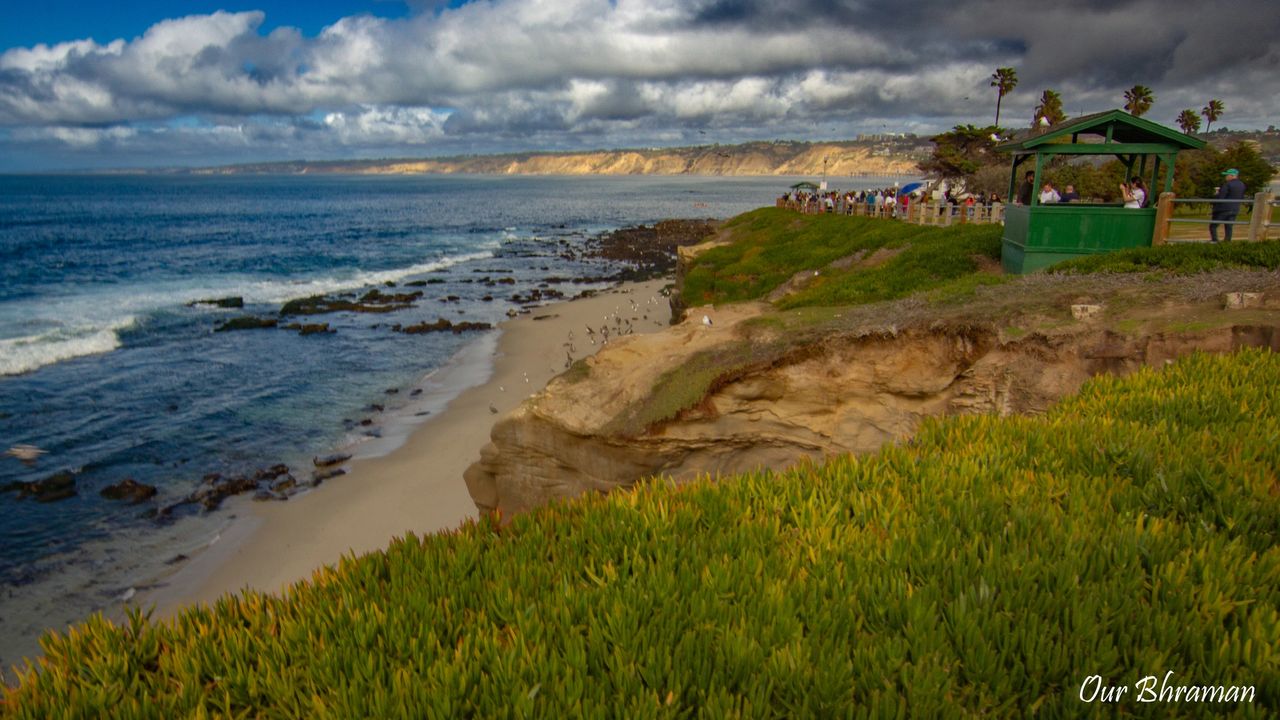
Just a few steps north, we stumbled onto Shell Beach. The tide was low, revealing shimmering tidepools filled with sea stars and tiny crabs scuttling about. A couple of sea lions had claimed the nearby rocks, their wet fur catching the afternoon light like polished bronze. The sound here was quieter, just the gentle bubbling of water against the tidepools, making it easy to pause and soak in the moment.
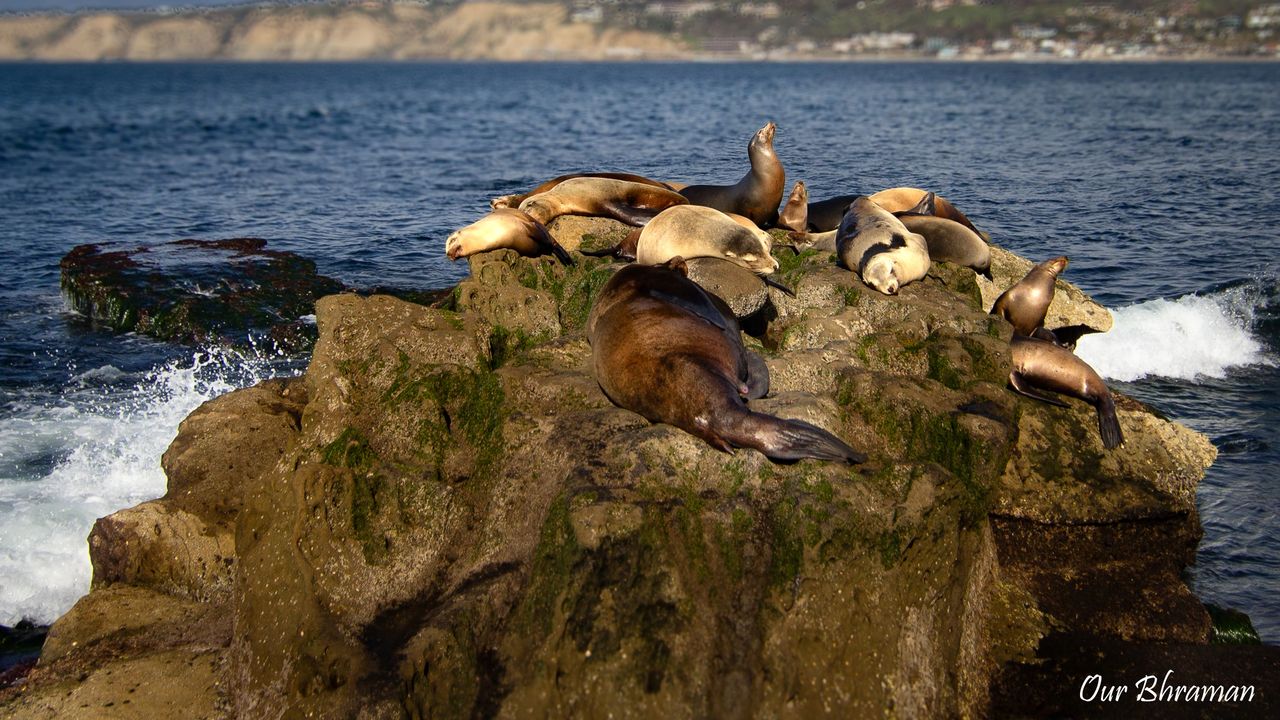
As we walked further, the path curved along the bluffs above Boomer Beach. The ocean here was fierce, pounding the shore with white spray. From the overlook, we spotted sea lions draped across the offshore rocks, barking and jostling for space. Their deep, guttural calls cut through the roar of the waves, reminding us who truly ruled this stretch of coast.
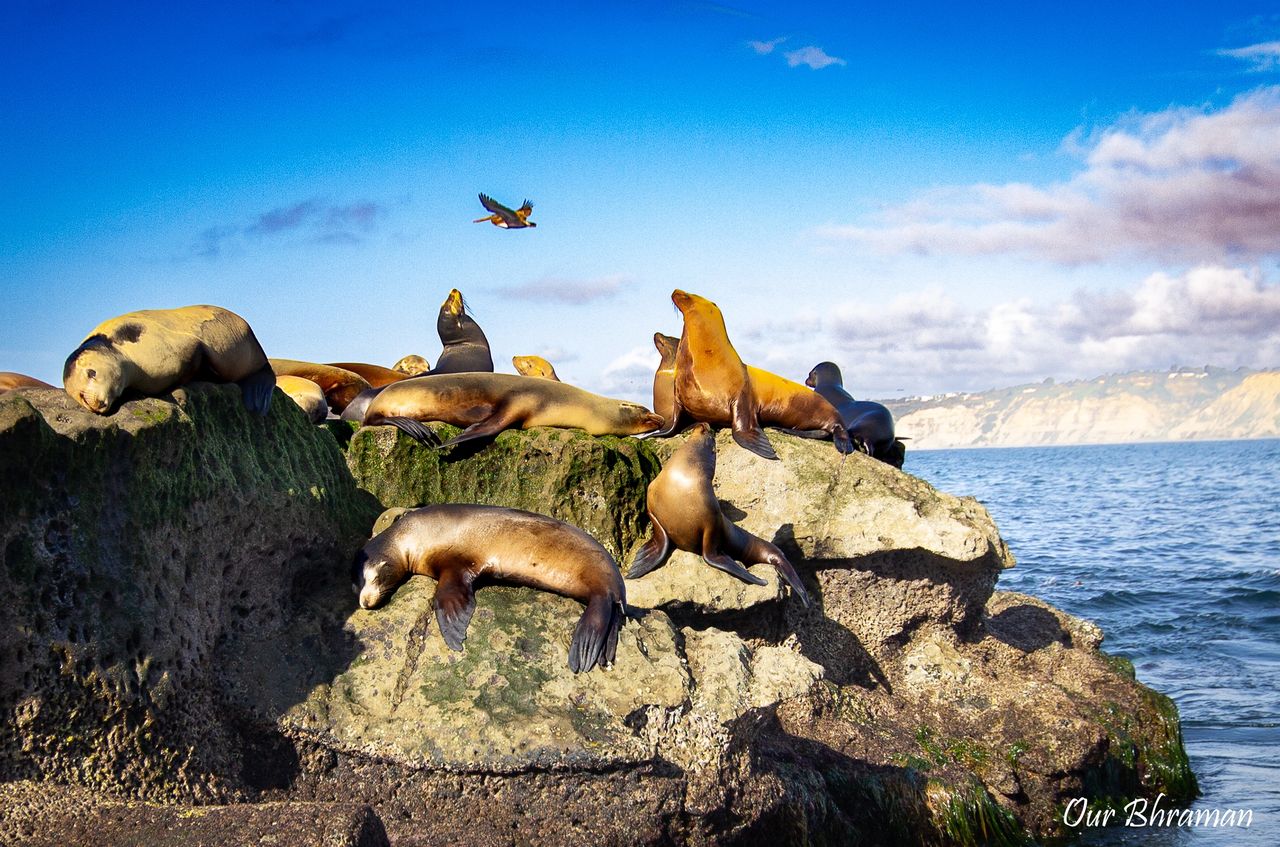
The trail then opened up into Ellen Browning Scripps Park, a green carpet of grass with picnicking families and couples soaking in the view. Offshore, Seal Rock was alive with activity—dozens of sea lions piled together, barking loudly, sliding in and out of the water, and scrambling right back up again. The noise, the motion, and the sheer energy of it all made us laugh—it was chaotic and wonderful at the same time.
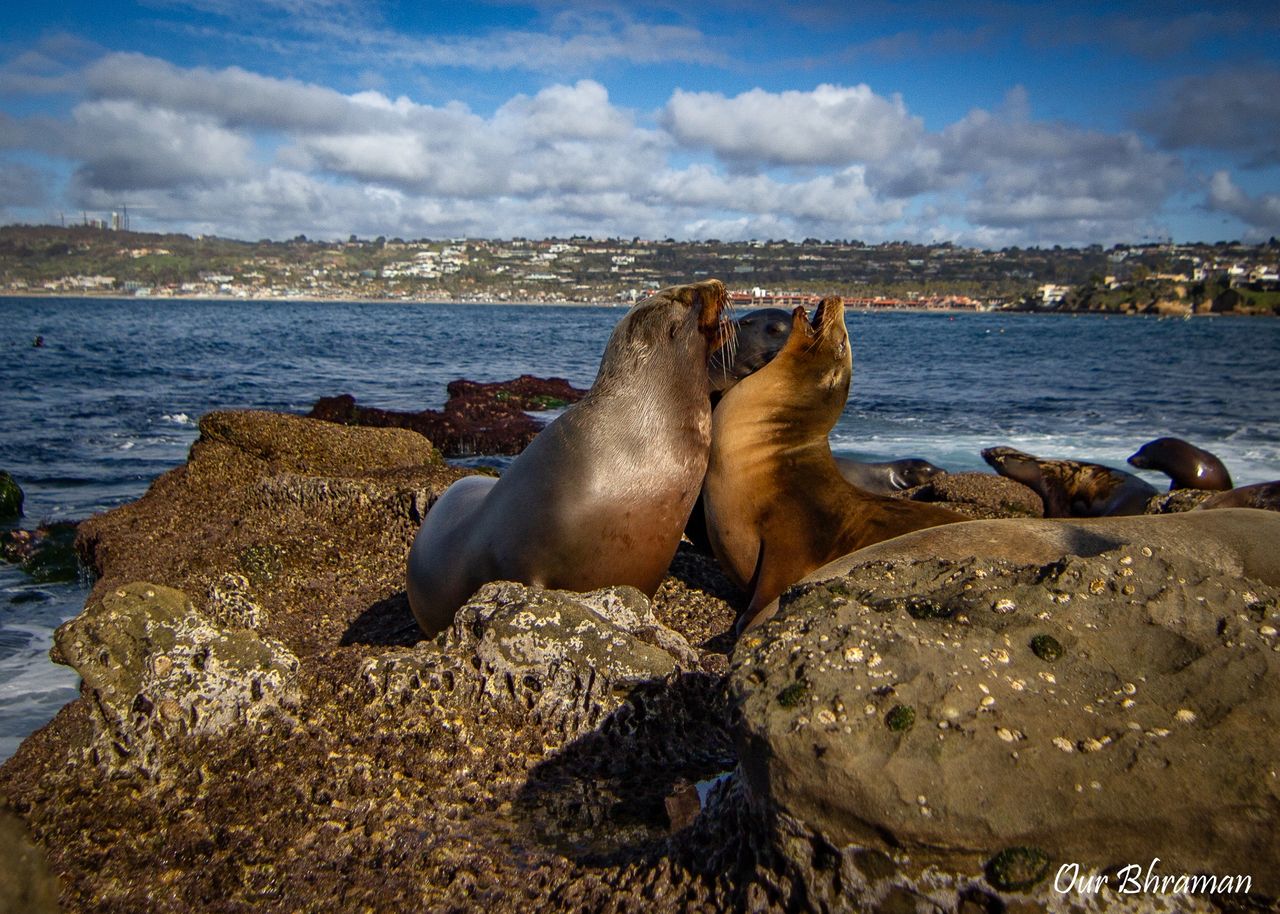
Finally, we reached La Jolla Cove, where the scene felt almost magical. The golden light of the late afternoon spilled across the cliffs, and the water sparkled in shades of emerald and turquoise. Sea lions were everywhere—some lounging lazily on sun-warmed rocks, others darting gracefully through the waves. A group of snorkelers floated nearby, and for a moment it looked like the sea lions were putting on a private performance just for them. Their playful splashes and curious dives made it impossible not to smile.
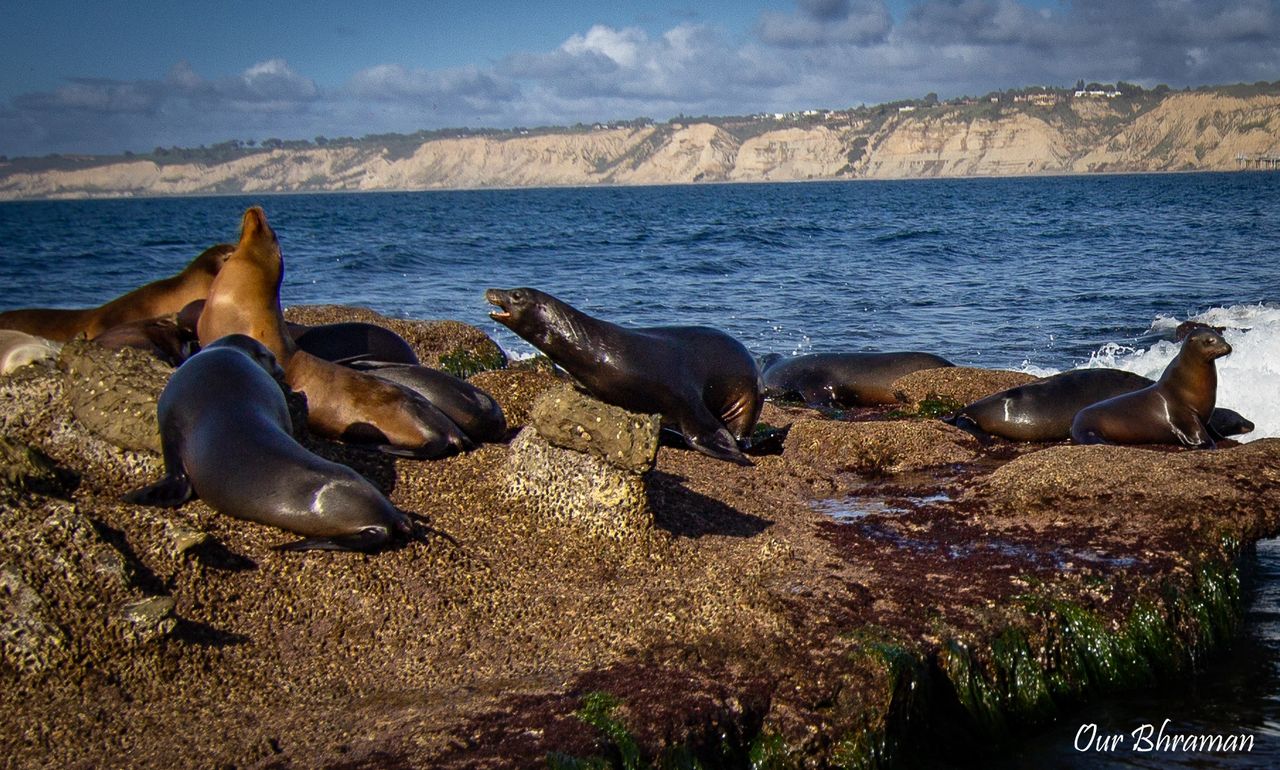
Though the entire walk was less than a mile, we spent well over an hour, stopping constantly to watch, photograph, and simply breathe in the coastal beauty. From the calm, sleepy harbor seals at Children’s Pool to the noisy, boisterous sea lions at the Cove, this little stretch of La Jolla felt like a living storybook of the Pacific.
After spending the afternoon watching the seals and sea lions along the cliffs of La Jolla Cove, we decided to change the scenery and make the short 30-minute drive south to Imperial Beach. The vibe immediately felt different—less touristy, more relaxed, almost like a secret coastal escape.
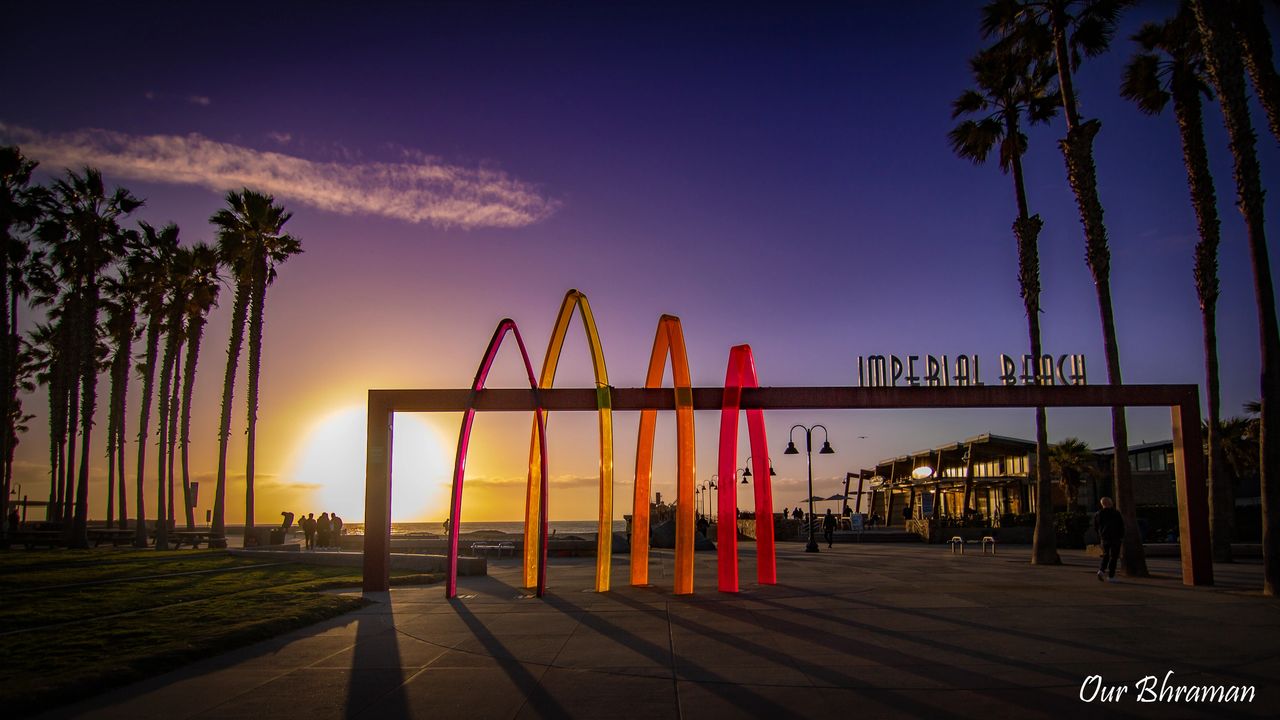
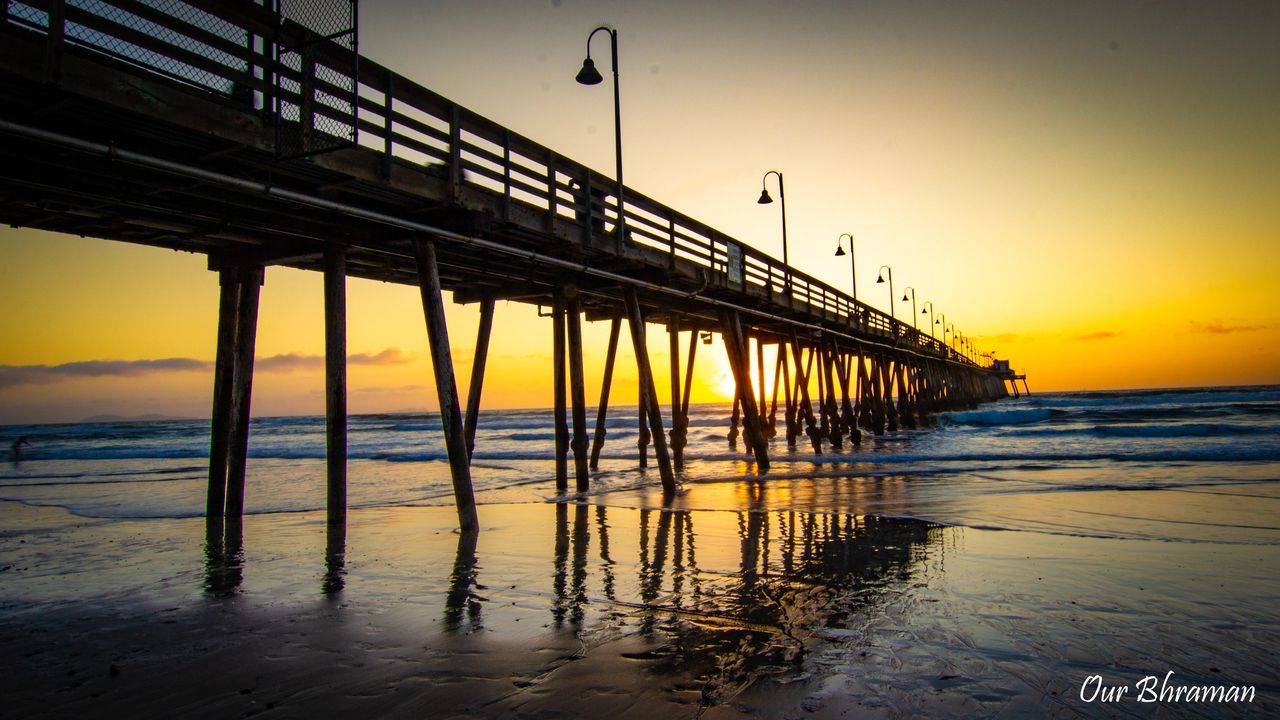
As we arrived in the late afternoon, the warm glow of the sun stretched across the wide sandy beach. The Imperial Beach Pier, with its long wooden planks stretching nearly 1,500 feet into the Pacific, called us straight toward the horizon. Walking along the pier, the cool ocean breeze brushed against my face, carrying with it the scent of saltwater and fresh sea air. Beneath us, the waves crashed rhythmically against the wooden pilings, their steady roar blending with the distant laughter of families playing on the beach.
The pier was alive with color and character—local fishermen casting their lines with patience, surfers paddling out to chase the last waves of the day, and seabirds circling gracefully overhead. We paused at one of the benches, just to sit and watch the dance of it all. From here, the views of the coastline seemed endless, with Mexico to the south and Coronado’s silhouette rising gracefully to the north.
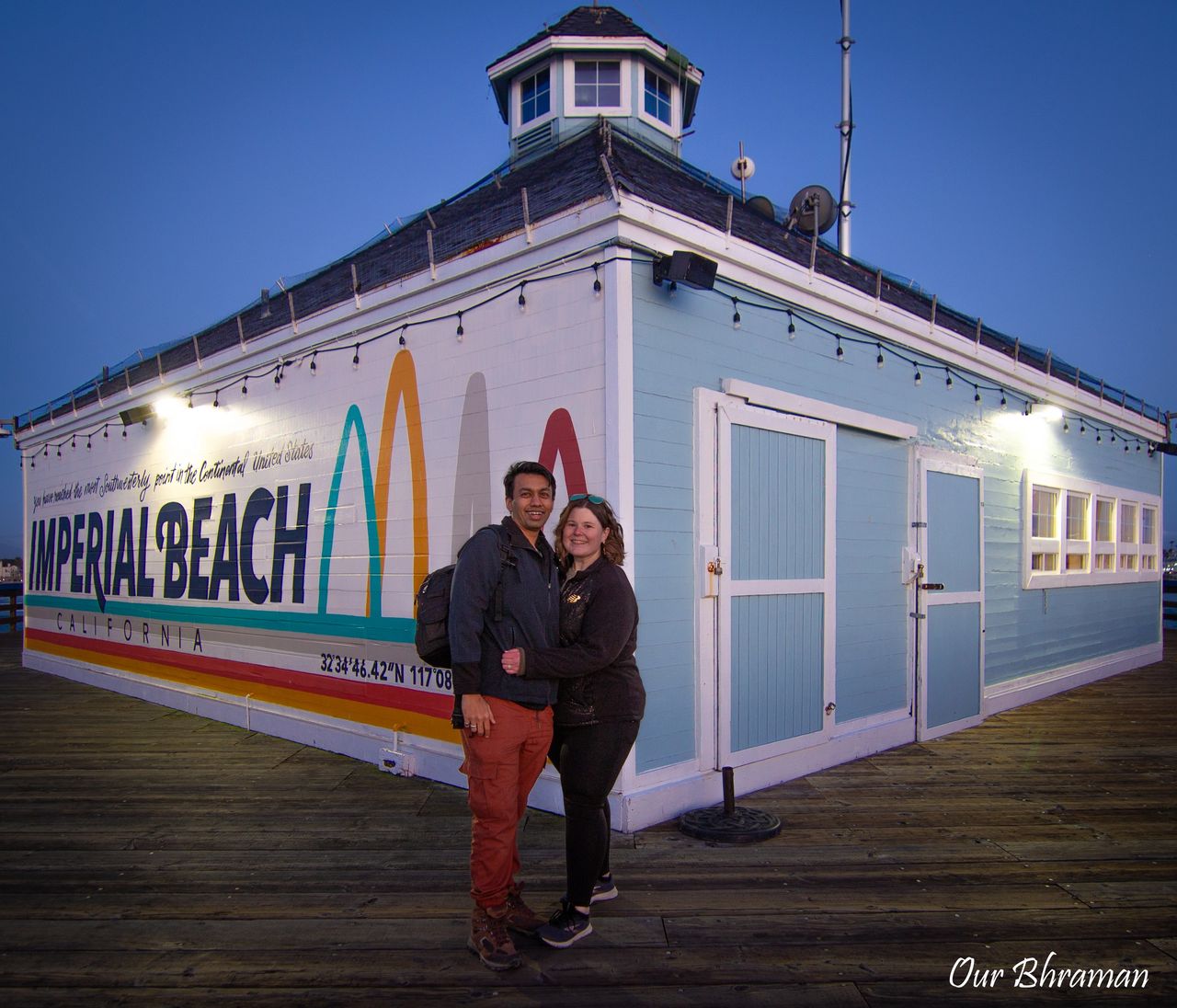
As the sun began to lower, the entire sky transformed into a canvas of fiery oranges, soft pinks, and deep purples. The water mirrored the colors, glowing as if the ocean itself was on fire.
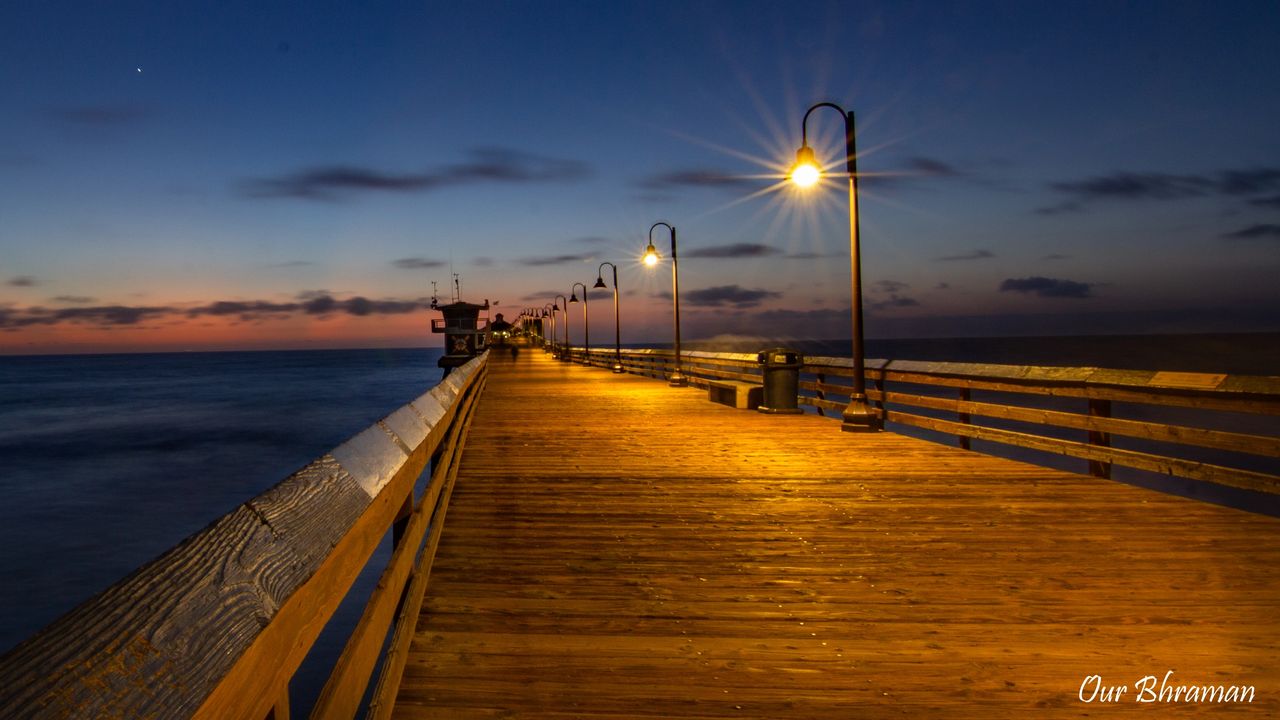
It was one of those sunsets where you find yourself taking picture after picture, only to realize no camera can truly capture what you’re feeling in the moment. Still, I was glad I brought mine—the wide-angle shots of the pier against the sunset were unforgettable.
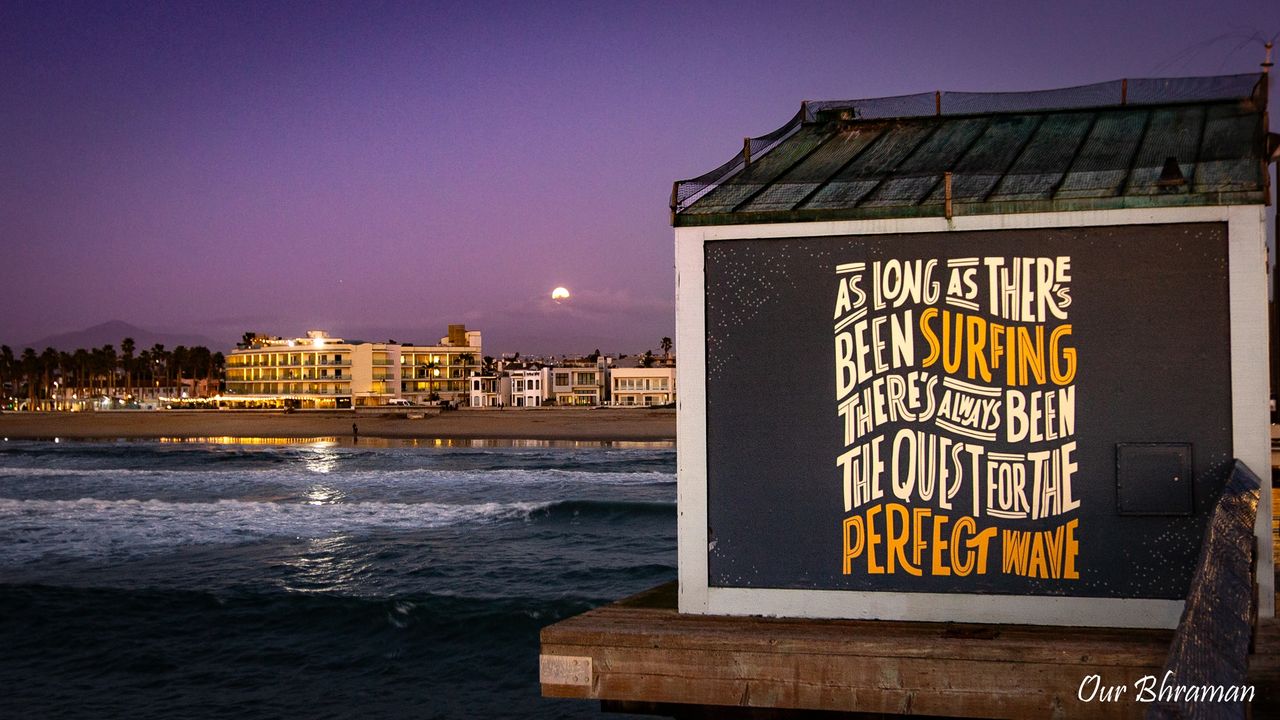
When the last sliver of sun dipped below the horizon, the pier lights flickered on, casting a soft golden glow across the planks. Couples strolled hand in hand, kids ate ice cream along the boardwalk, and a gentle calm settled over the beach. It felt both vibrant and peaceful, the perfect balance after a day of exploring.
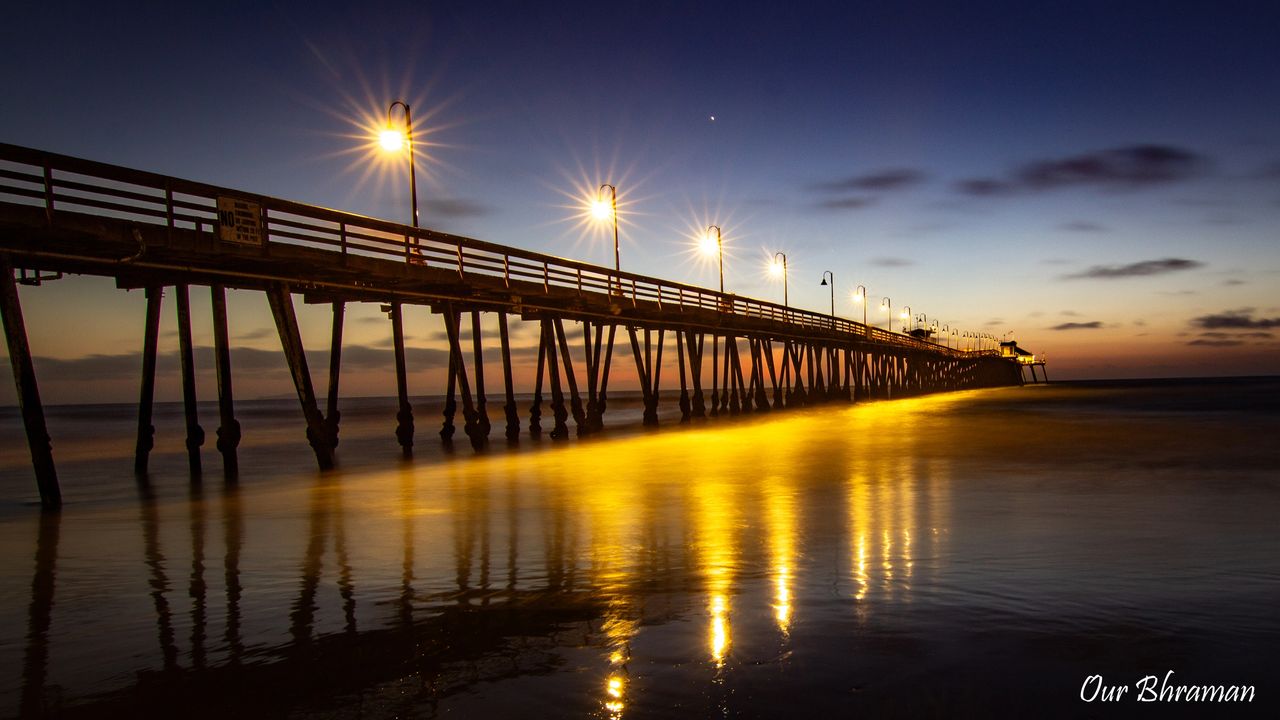
We lingered until the evening sky turned deep blue, breathing in the ocean air and listening to the waves in the dark.
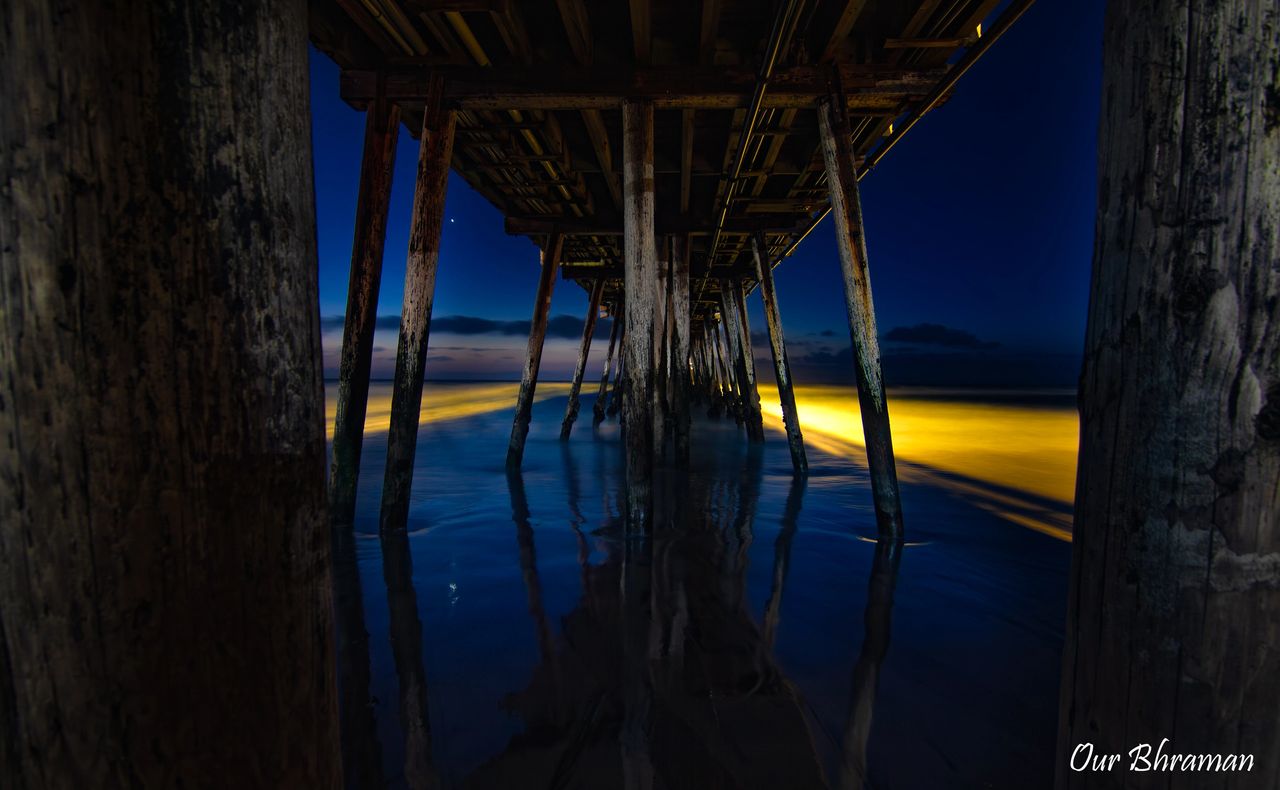
Visiting Imperial Beach after La Jolla made for a perfect pairing—wildlife and rugged beauty in the afternoon, followed by a romantic, laid-back evening by the pier. It wasn’t just a walk, it was an experience that felt timeless, and one I know I’ll always remember.
After our peaceful evening at Imperial Beach, we weren’t quite ready to call it a night. On our way back, we decided to stop at one of San Diego’s famous landmarks—the “Kissing Sailor” statue, also known as Unconditional Surrender, near the USS Midway Museum.
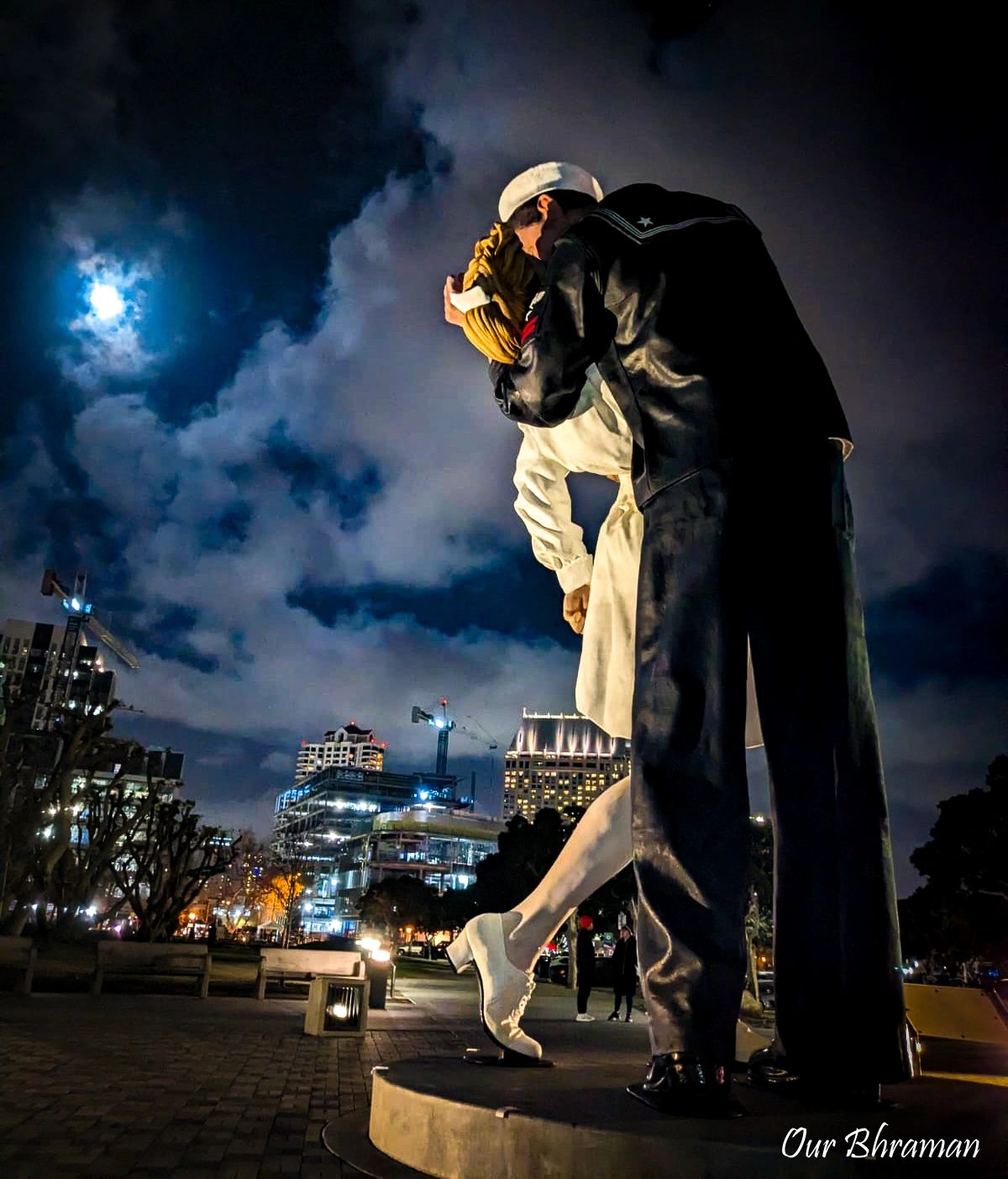
Visiting at night turned out to be the perfect choice. The crowds were gone, and with only a handful of people around, the whole place felt calm and almost cinematic. Standing beneath the towering statue, the scale really hit us—what looked playful and romantic from a distance became massive and powerful up close. The sailor’s crisp uniform and the nurse’s tilted posture seemed frozen in time, capturing that iconic moment of celebration at the end of World War II.
Reading about the history made the scene even more meaningful. Knowing it was inspired by a real-life photograph taken in Times Square on V-J Day gave the statue an emotional weight—suddenly it wasn’t just a piece of art, but a symbol of joy, relief, and hope after a long and difficult war.
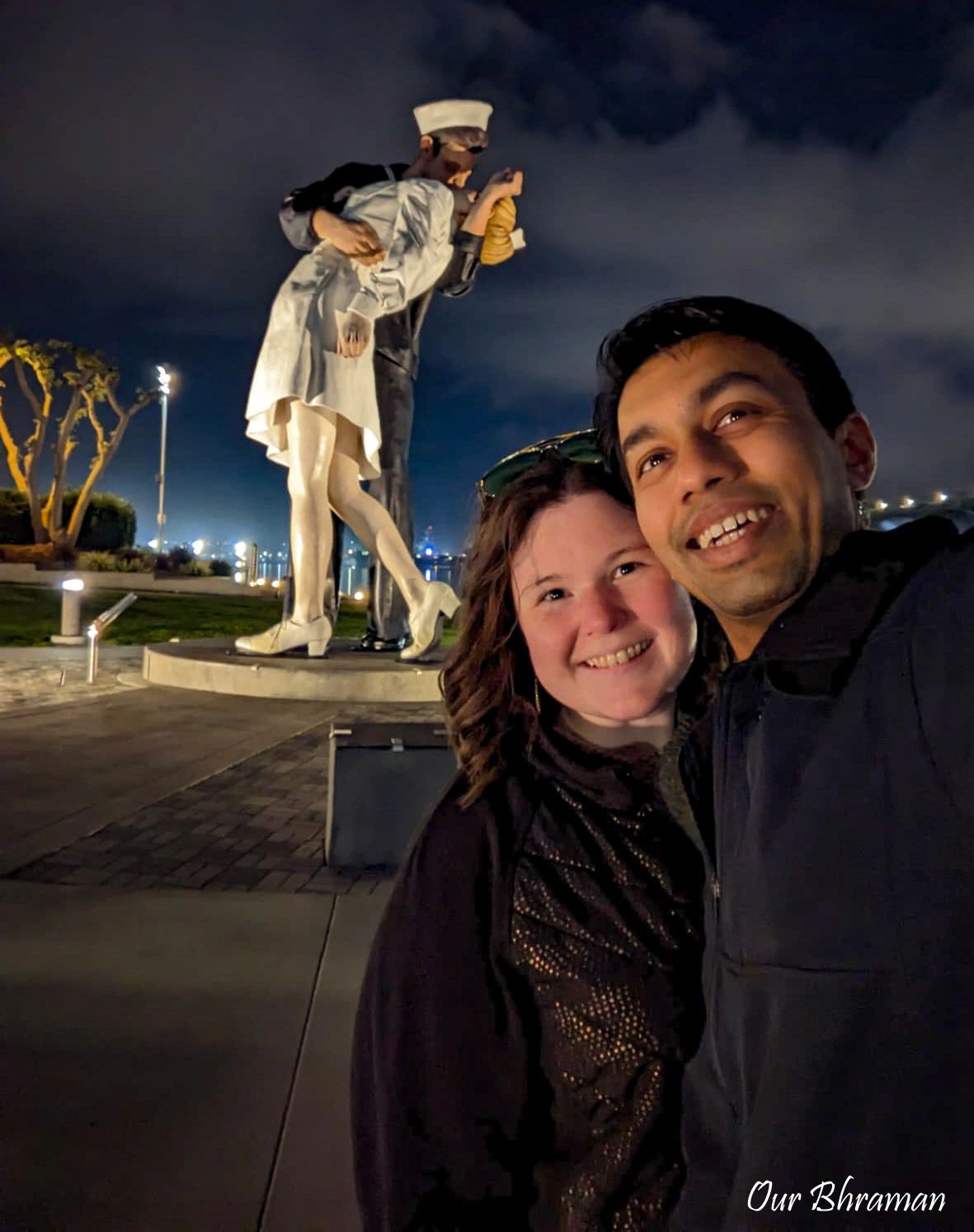
We walked around slowly, taking in the details under the soft glow of the nearby lights, with the USS Midway looming behind us. It was easy to imagine the celebrations that moment represented.
That night, we decided to make a quick stop at Harbor Island Drive, not really knowing what to expect. It turned out to be one of the best surprises. We drove around until we came across a walking trail by the water. It greeted us with a view of the San Diego skyline. The city lights sparkled across the bay, their reflections dancing on the calm water, while the skyline itself glowed beautifully against the dark night sky.
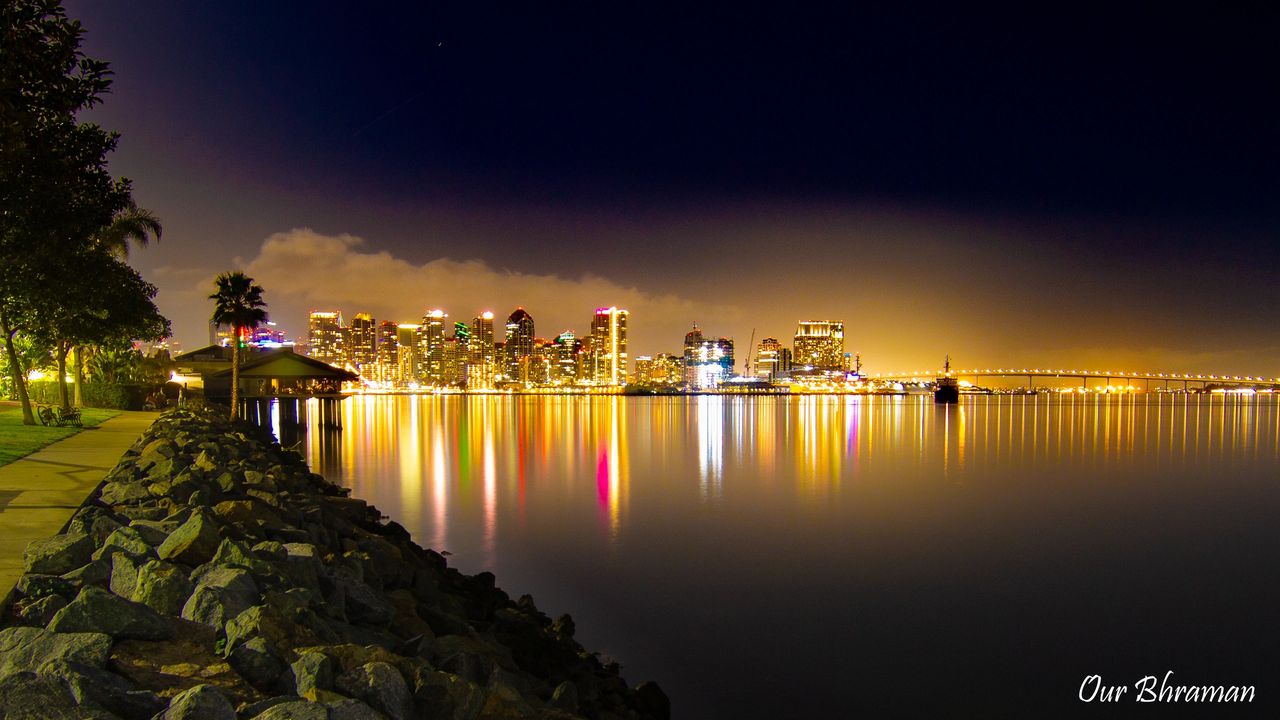
It was quiet and peaceful, with just the sound of the water and the occasional plane gliding into the nearby airport. Even though we didn’t stay long, the view felt special—like a secret snapshot of the city just for us. I’m so glad we took the time to stop, because that moment ended up being one of the highlights of the night.
Day-3 Twistedi trees, giant boulders, endless skies — desert done right.
The next morning, we started our drive from San Diego to Joshua Tree National Park. The trip was about three hours, covering a little over 160 miles. The road was smooth and easy to follow, mostly along the I-15 and I-10 highways. As we left the city, the scenery slowly changed—first busy streets and suburbs, then rolling hills, and finally wide stretches of desert. The closer we got to Joshua Tree, the drier and rockier the terrain became, with scattered shrubs and, eventually, the park’s famous Joshua trees appearing along the roadside.
On our way to Joshua Tree National Park, we stopped by the Amtrak Palm Springs Station in the morning. The station itself is simple and quiet, but what makes it special is what surrounds it. Right next to the station rise the famous wind farms of Palm Springs—hundreds of tall white turbines spread across the desert, turning slowly against the backdrop of rugged mountains. Seeing them up close felt surreal, like standing at the meeting point of nature and technology.
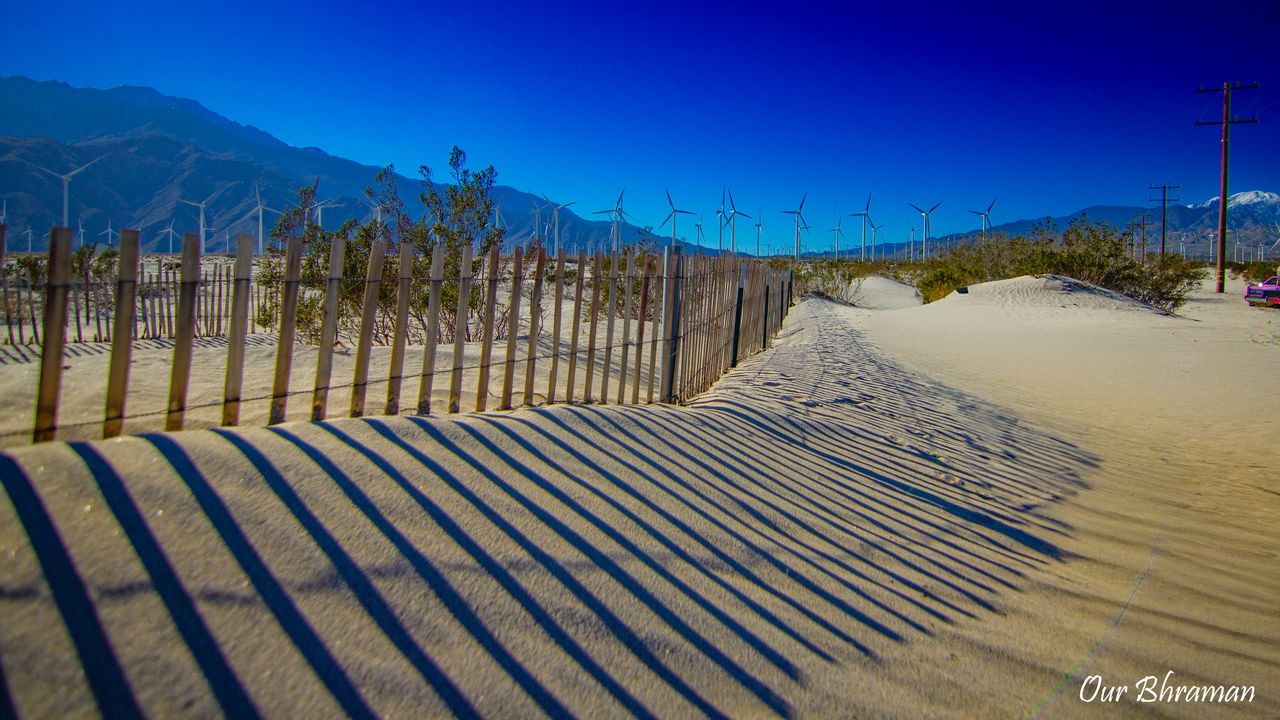
In the soft morning light, the desert looked both calm and dramatic. The sand around the station shimmered pale and white, while the constant motion of the turbines gave the whole scene a sense of energy and progress. It’s a place where you can pause, take in the vast open views, and reflect on how the desert landscape has been transformed into a symbol of clean energy. Even though it isn’t a major tourist stop, I’d recommend pulling over if you’re passing by. People usually come here to snap photos of the windmills, stretch their legs, and enjoy the contrast between the still desert and the ever-turning blades. For us, it became an unexpected highlight—one of those quiet, in-between moments on a road trip that ends up staying with you.
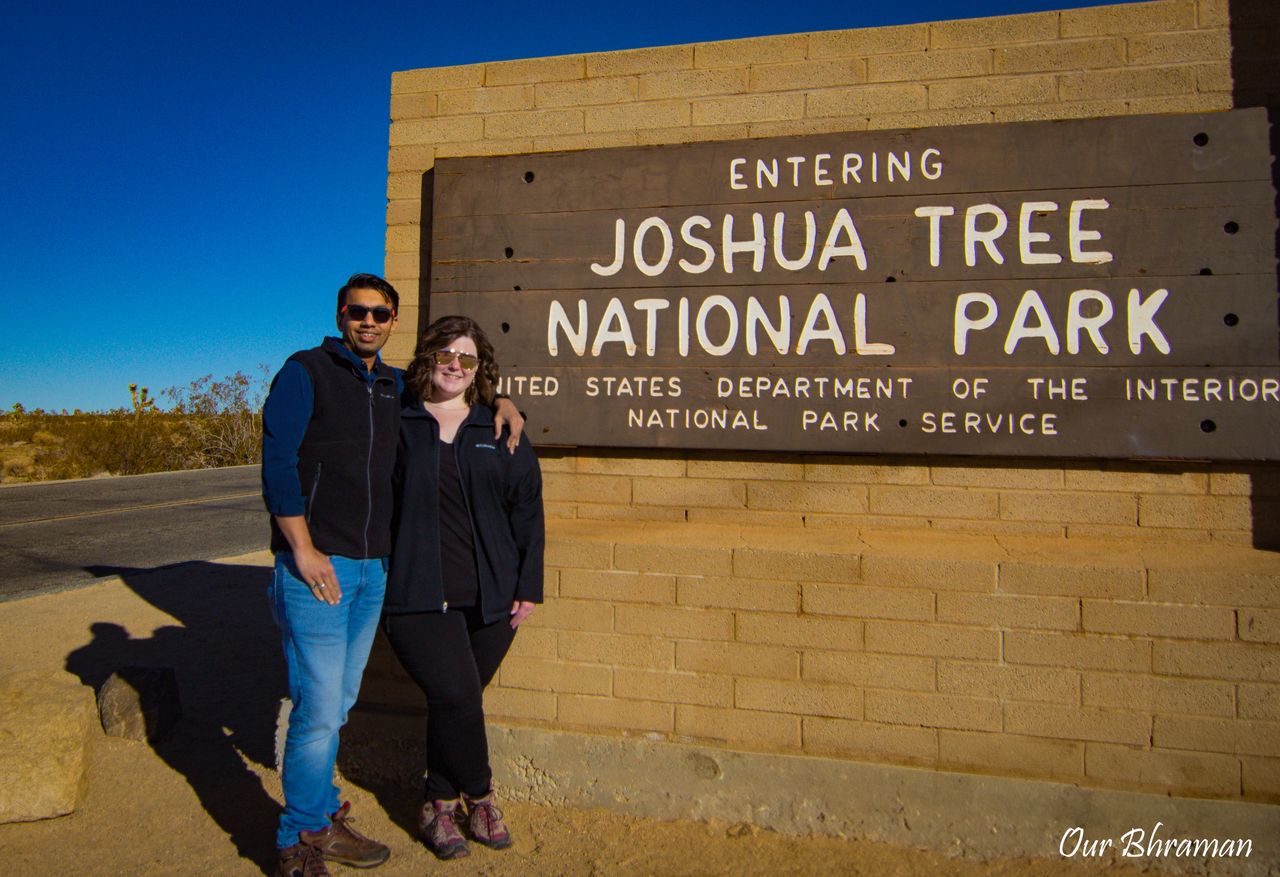
Our first stop was at the west entrance of Joshua Tree National Park, where we couldn’t resist pulling over to take a photo in front of the iconic park sign. It’s become a little tradition for us—a simple way to mark the places we’ve been and add another checkbox to our growing list of national parks.
With our beautiful America the Beautiful pass in hand, we drove through the gate and made our way to the visitor center. Stopping there turned out to be a great decision. The rangers were helpful in pointing out trails worth exploring, especially the ones that shine at sunset. It gave us a chance to get oriented, pick up a map, and learn a bit more about the park’s unique landscape before diving into the adventure.
Our first stop inside the park was Cap Rock, one of Joshua Tree’s well-known formations. It’s located right in the central part of the park, near the intersection of Park Boulevard and Keys View Road, which makes it easy to find. True to its name, the formation has a giant flat rock balanced on top of a pile of boulders—almost like someone placed a cap there on purpose.
Cap Rock isn’t just a quick photo stop. There’s a short nature trail that loops around the formation, giving you a chance to admire the desert plants up close and take in different views of the rocks. The area also has a picnic spot, making it a nice place to pause and soak in the scenery. For climbers, the boulders here offer plenty of opportunities to scramble or test their skills.
It was the perfect way for us to start exploring Joshua Tree—accessible, scenic, and a great introduction to the park’s dramatic landscapes.
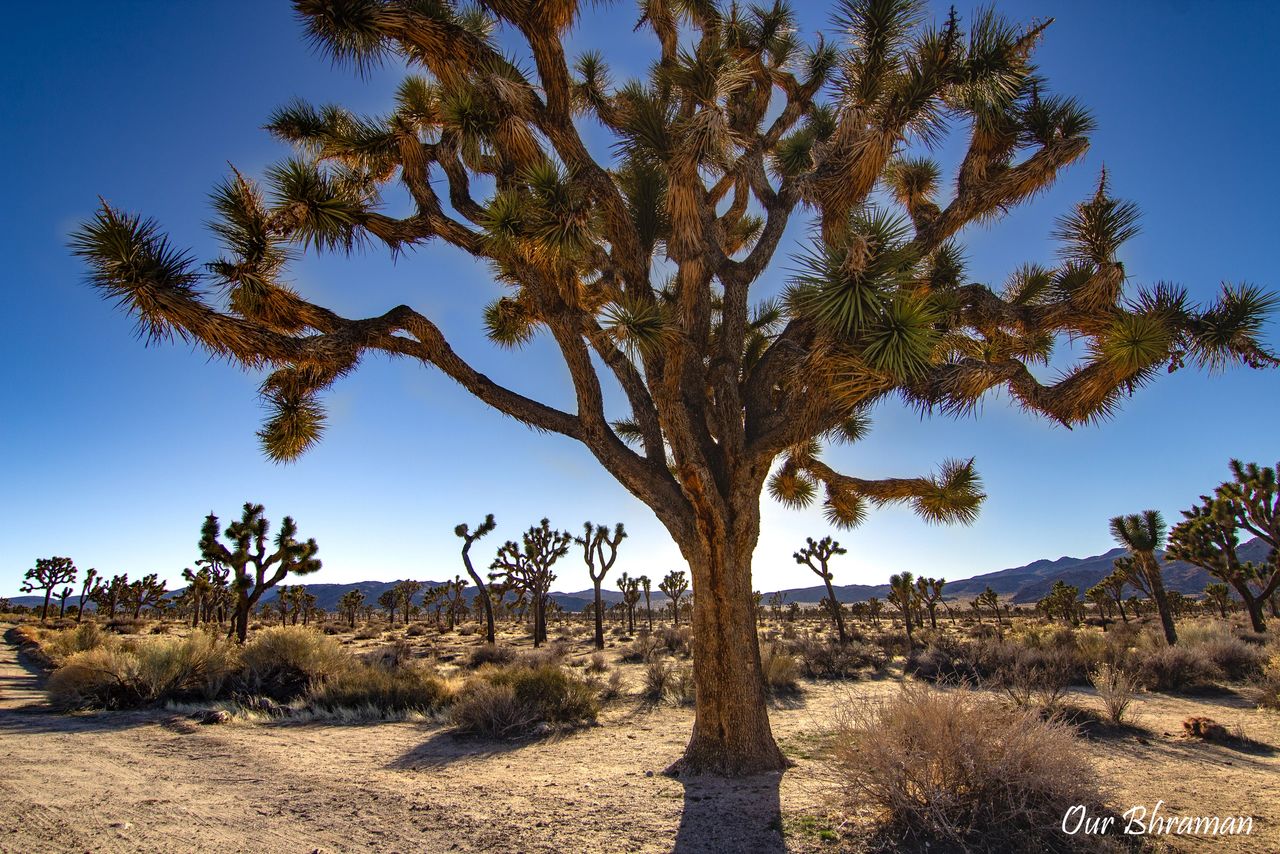
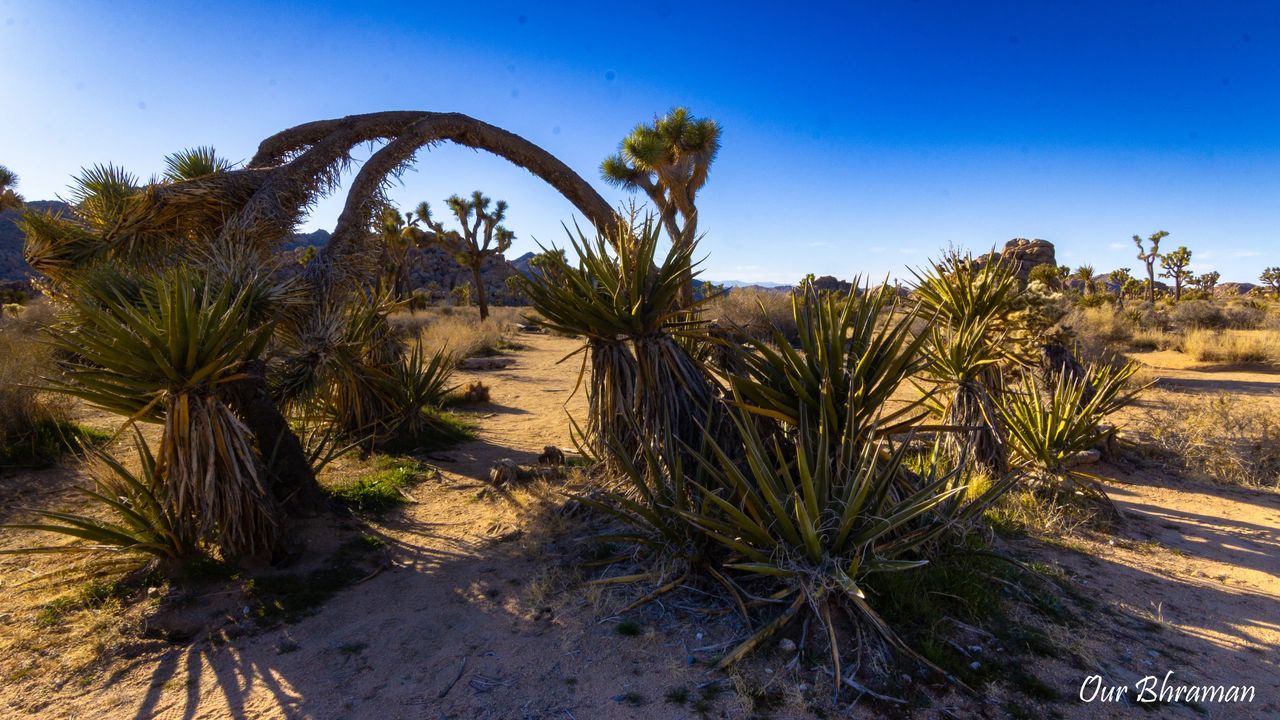
Our next stop was the Hidden Valley hike, and right away it felt like we were walking into one of Joshua Tree’s signature landscapes. The park is famous for its enormous boulders and its iconic Joshua trees, and Hidden Valley gives you a little bit of both in one compact trail.
The loop itself is short—just about a mile long with a slight climb of around 100 feet. It begins near the Hidden Valley Picnic Area and circles through the valley, where the rocks form a natural enclosure. There’s even a fun bit of history tied to it. Hidden Valley was rumored to have been used as a hideout by cattle rustlers years ago, and as we walked, we came across interpretive signs that explained the plants, wildlife, and stories of the area. It added an extra layer of connection to the trail.
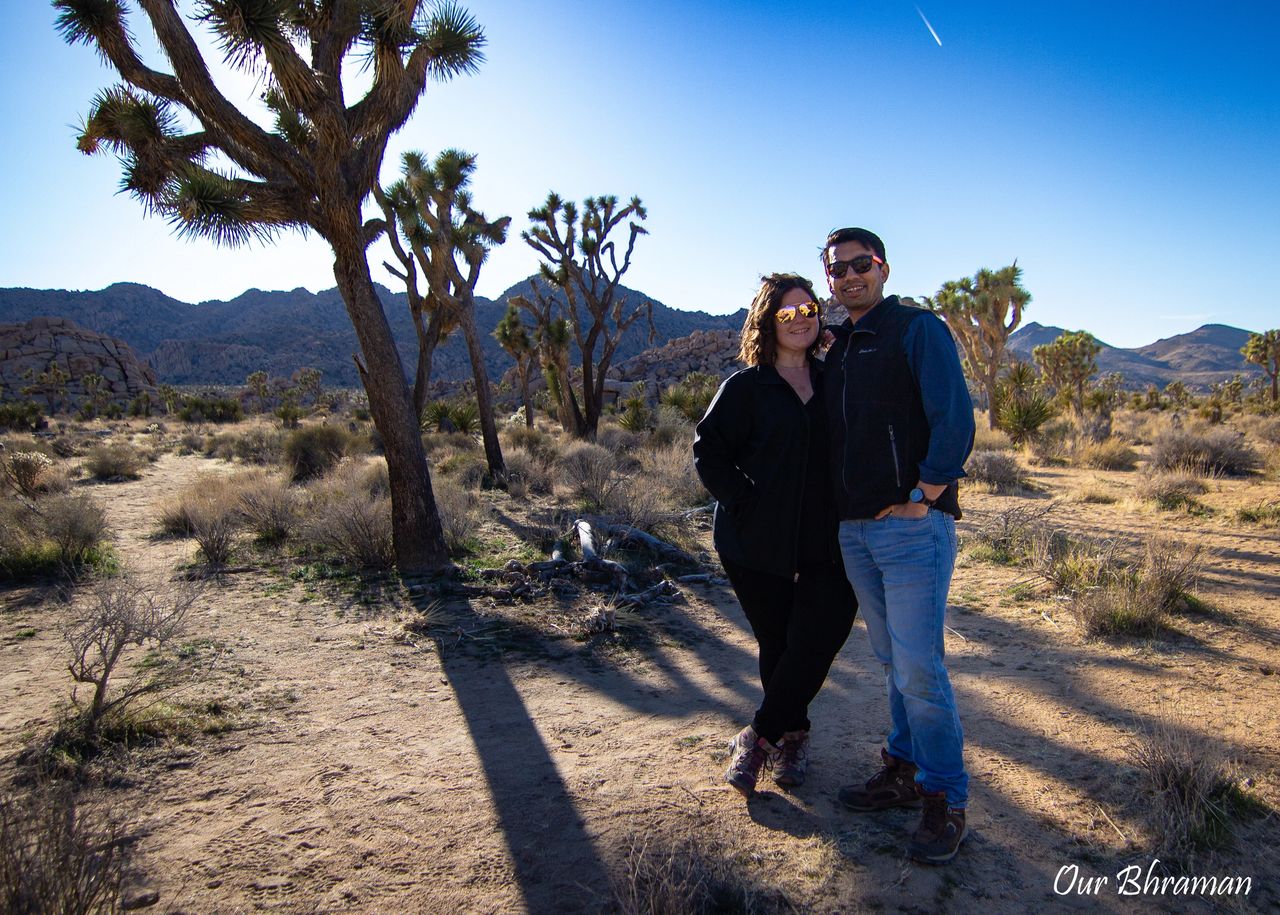
One thing we noticed, though, is that the trail doesn’t have much shade, and there’s no cell service inside the valley. Since we visited in the middle of the day, the sun was pretty intense, and it made the walk feel hotter than expected. Looking back, I think we would have enjoyed it more if we had explored earlier in the morning or closer to evening, when the light is softer and the temperatures are cooler. It may not have been the most comfortable time for us to explore, but it was definitely a worthwhile stop.
Our next stop for the day was the Cholla Cactus Garden, and this one had been circled on our map ever since the ranger at the visitor center recommended it as one of the best spots in the park for sunset. We timed our drive so that we’d arrive just as the light began to soften and let me say—it did not disappoint.
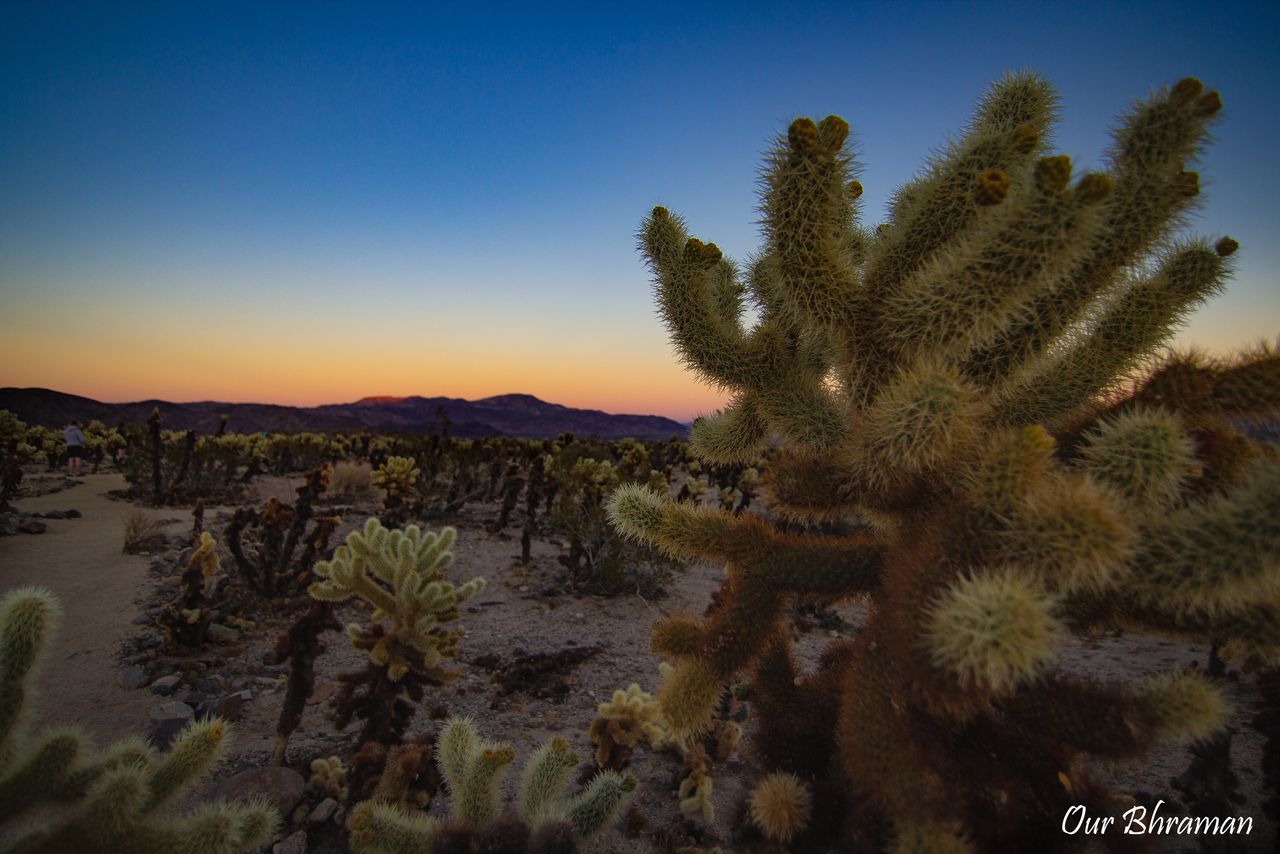
The garden sits in the transition zone between the Colorado Desert and the Mojave Desert, which makes it a unique pocket of landscape inside Joshua Tree National Park. Here, thousands of teddy bear cholla cacti grow in dense clusters, covering the valley floor in every direction. From a distance, they look almost fuzzy and soft—hence the name “teddy bear.” But once you get closer, you realize those spines are anything but friendly. They are sharp, barbed, and notorious for sticking to clothes, shoes, and skin if you get too close. We made sure to keep to the path and watch our step carefully.
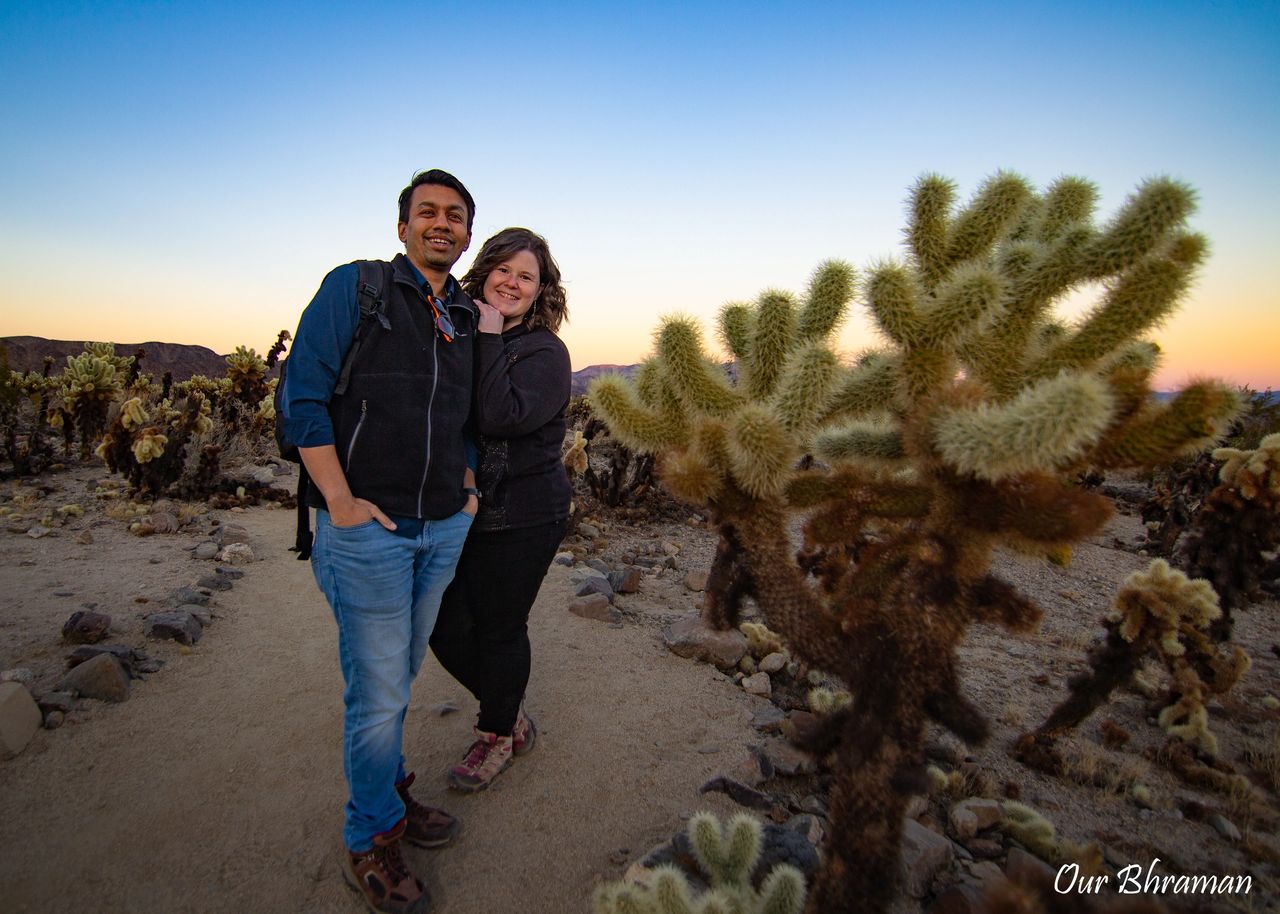
What fascinated me most was how this area is almost a natural “monoculture.” While Joshua trees dominate the higher elevations, and creosote bushes spread across other parts of the desert, here it’s almost entirely cholla. The soil, elevation, and microclimate come together in just the right way to let them thrive. Reading the interpretive signs, I learned that the spines help the cactus collect moisture from the air and protect it from desert animals. It made me appreciate how tough and well-adapted these plants really are.
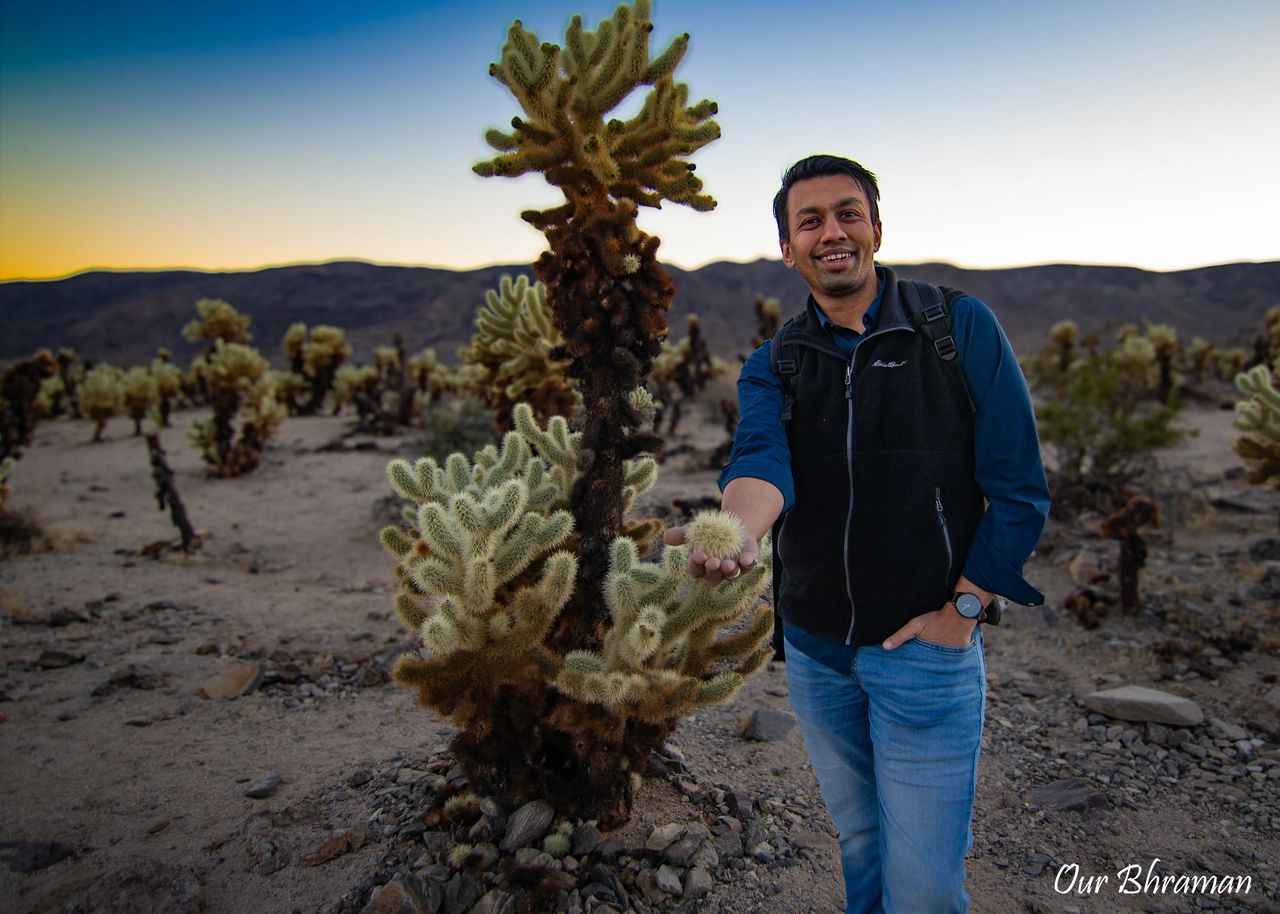
As the sun dipped lower, the garden truly transformed. The cholla seemed to glow from within, their spines catching the golden light and lighting up like lanterns scattered across the desert. It was one of the most magical moments of the day. The silence around us, broken only by the occasional crunch of footsteps on the sandy trail, made it feel like we had stepped into another world.
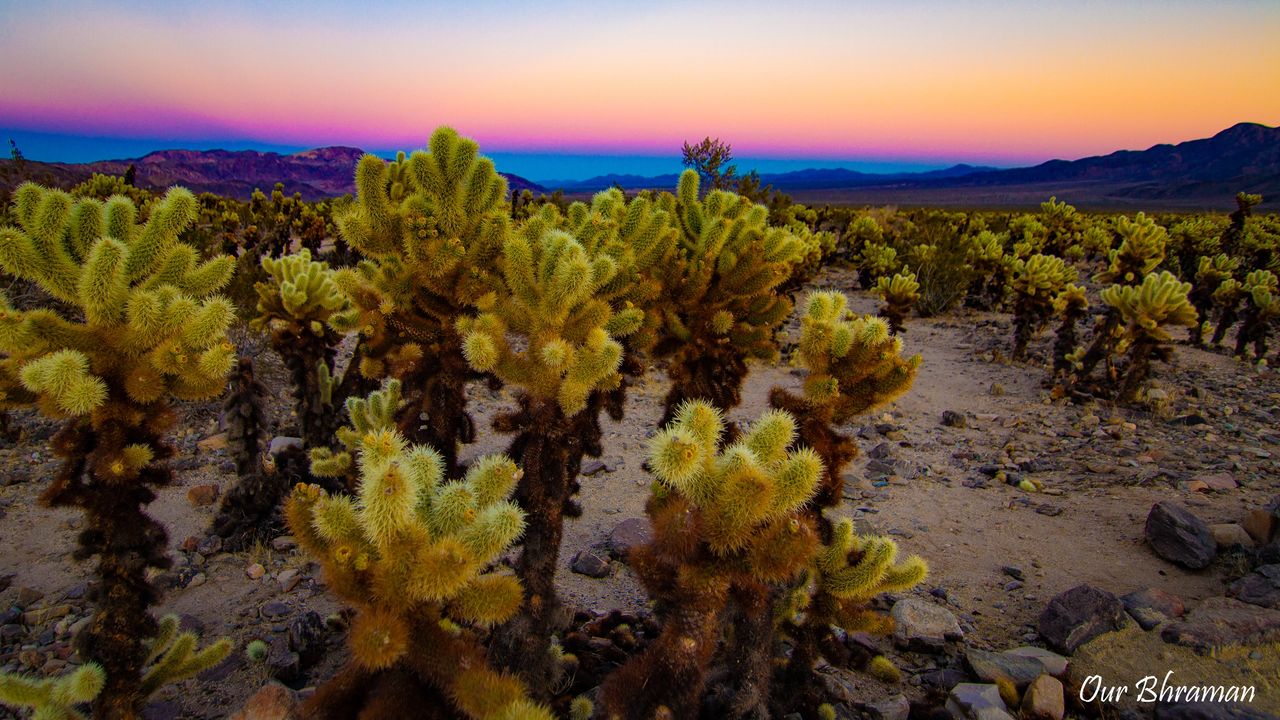
Walking back to the car, I felt grateful we had saved this stop for sunset. The Cholla Cactus Garden isn’t just a place to see plants—it’s a reminder of how harsh and beautiful the desert can be at the same time.
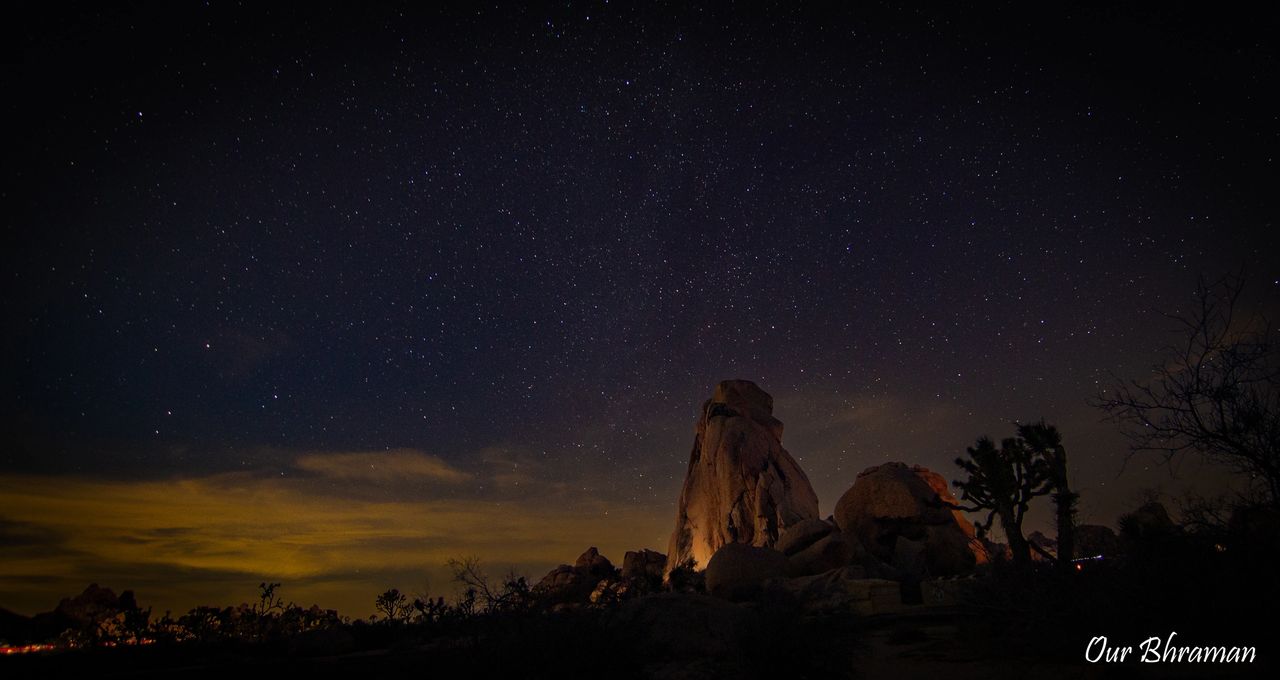
After this, we planned to head back to the hotel to check in for the night. But Joshua Tree is a designated International Dark Sky Park, and the idea of seeing a sky full of stars was just too tempting to walk away from. Out here, far from the glow of city lights, the desert reveals one of the clearest night skies you can imagine.
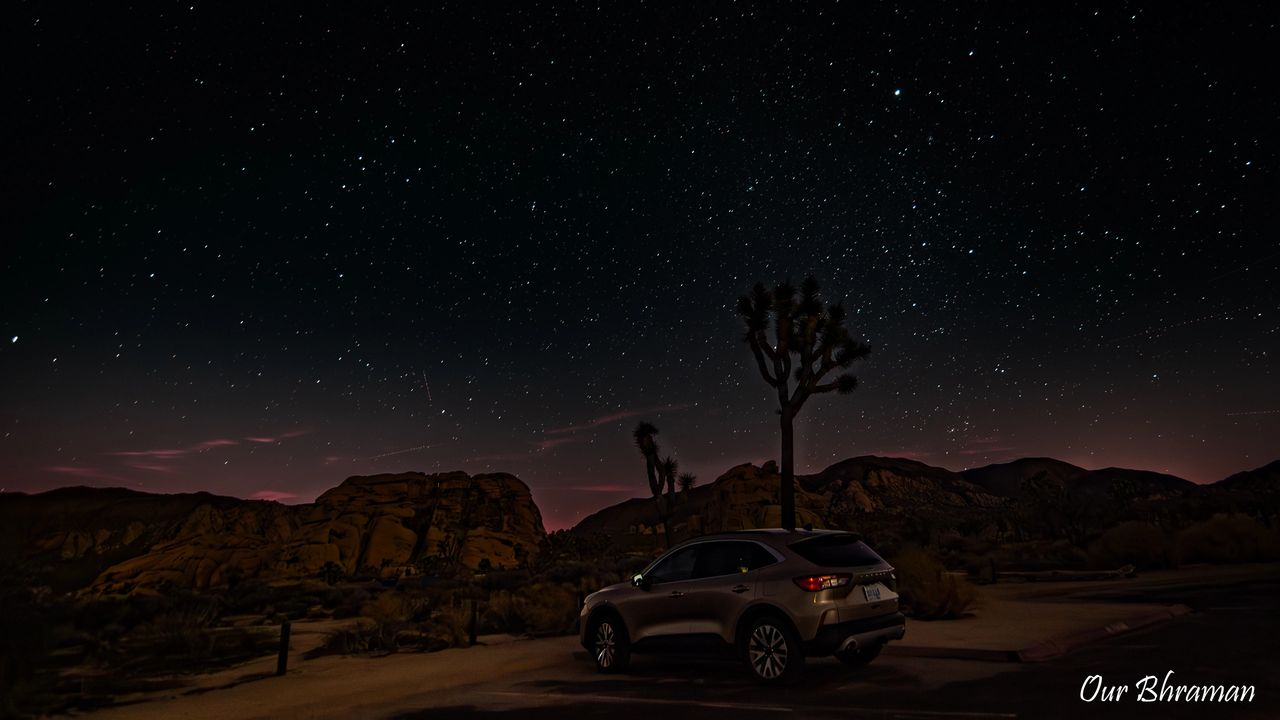
As the sun disappeared and true darkness settled in, the sky slowly came alive—first with a few faint stars, then hundreds, and before long it felt like thousands scattered across the horizon.
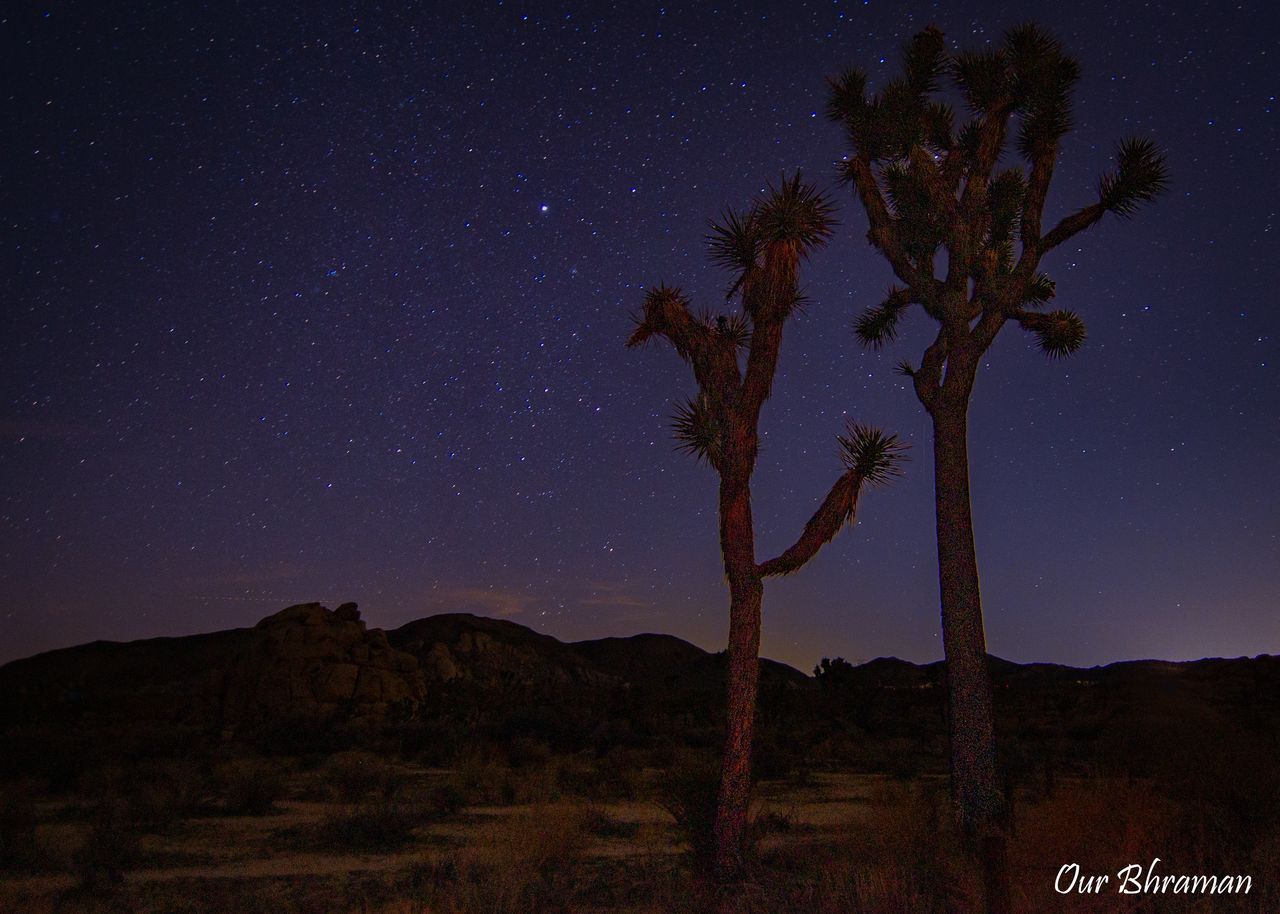
We ended up staying for a couple more hours, moving between different spots in the park to capture night photos of the stars, the Joshua trees, and the rugged desert landscape. More than just photographs, it became a memory—a reminder of how small we are under that endless desert sky, and how rare it is to experience true darkness and silence in today’s world.
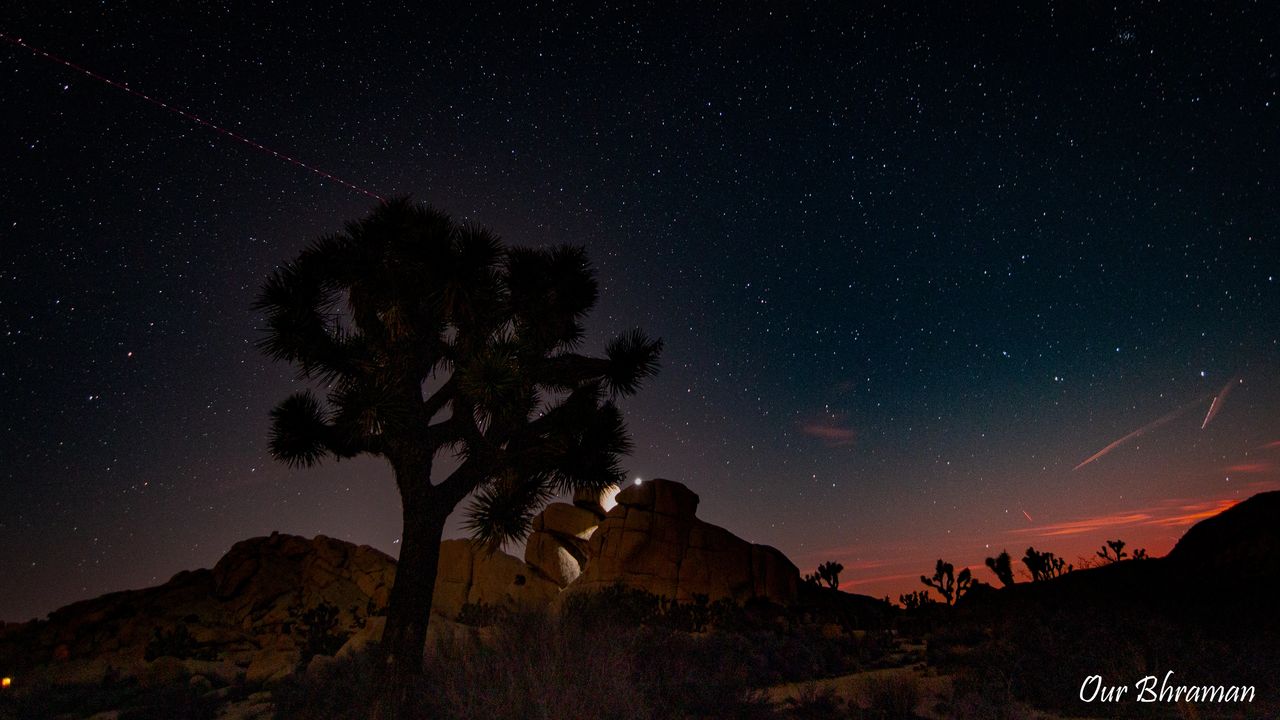
After that, we headed to our hotel, about 30 minutes outside the park—Best Western in Twentynine Palms. Honestly, it was a good place to stay clean rooms, comfy beds, and close enough to the park to make it convenient. Still, every time we checked in, a little part of us wished we had camped under those star-flooded skies instead. But let’s be real… the pull of a hot shower, a cozy bed, and a complimentary breakfast with waffles does win by just a bit. Comfort 1, camping 0… for now. Hahaha!
Day-4 Finding calm among the chaos of rocks and Joshua trees.
Our first stop of the day was Keys View, one of the most famous overlooks in Joshua Tree National Park. Sitting at an elevation of about 5,185 feet (1,580 meters), this spot gives you sweeping views across the Coachella Valley, stretching all the way to the Salton Sea, the San Andreas Fault, and even, on a clear day, the San Jacinto and San Gorgonio mountains. Some days, you can even spot the mountains in Mexico from here.
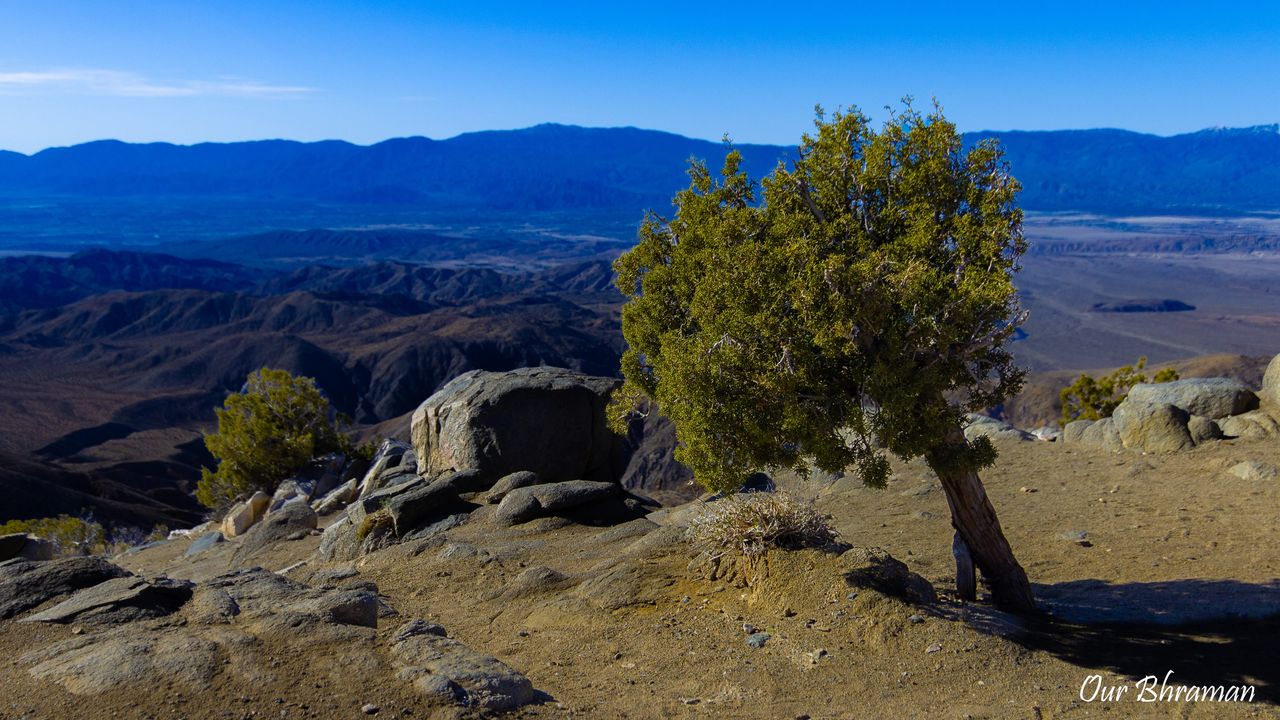
When we arrived, the weather was a complete surprise. The desert below was calm, but up on the summit it was icy cold and incredibly windy. The kind of wind that makes your jacket flap like a flag and your tripod nearly impossible to keep standing. I tried to set mine up a couple of times, but it was a losing battle—one strong gust and the whole thing nearly toppled over. So instead of the perfect long-exposure shots I had in mind, I ended up holding onto my camera tight and snapping quick photos between shivers.
The wind also meant that there weren’t many people around. Unlike some of the busier stops in Joshua Tree, Keys View felt quiet and raw, almost like the elements had chased everyone else away. It gave the overlook a special kind of solitude—you could just stand there, bundled up, staring out at the endless layers of mountains and valleys without much distraction.
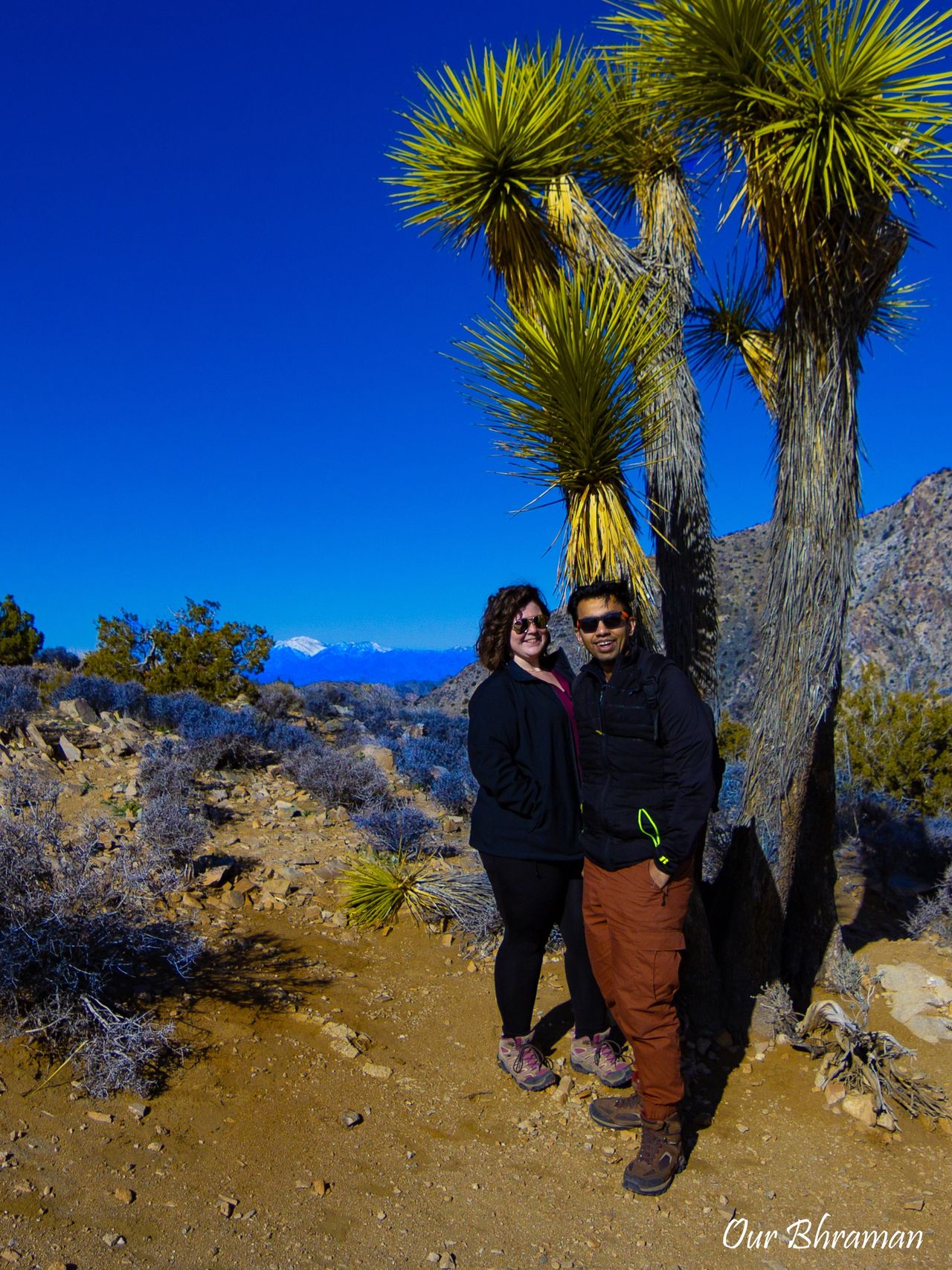
Even with the chill, there was something unforgettable about starting the day at Keys View. After Keys View, our next stop was something a little quirkier—Skull Rock. True to its name, this massive rock actually looks like a skull if you catch it from the right angle. It’s one of those places where you can’t help but stop, snap a dozen photos, and laugh about how nature managed to carve out something that looks straight out of a cartoon.
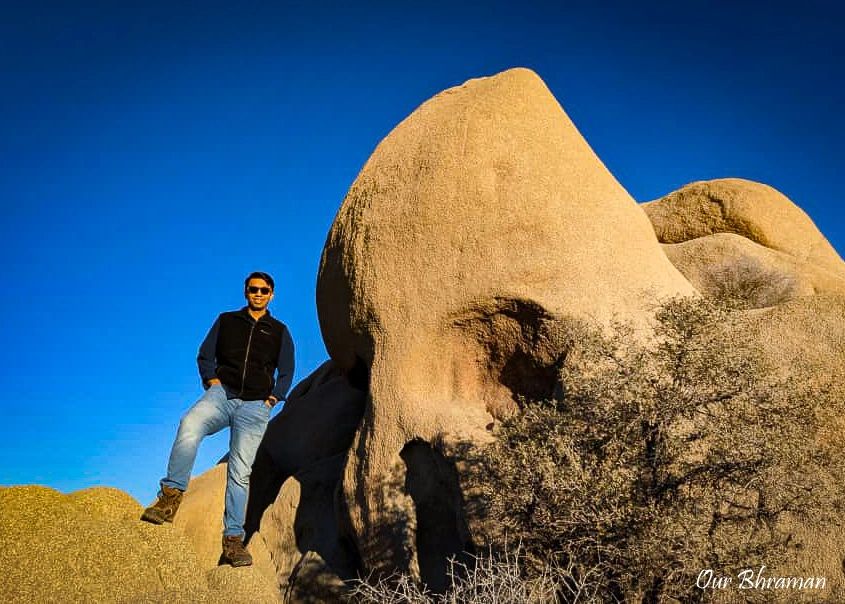
What makes it even better is that you don’t have to hike far to see it—it’s right off Park Boulevard. In fact, we spotted it from the road before even pulling into the area. But of course, we couldn’t resist exploring beyond just the rock itself. The area around Skull Rock is filled with giant boulders, perfect for a little scrambling and climbing (though we quickly learned it’s easier going up than coming down!).
For those with more time, there are a couple of trails starting right here. The Skull Rock Trail is about 1.7 miles and loops around the area, eventually connecting with the Jumbo Rocks Campground. There’s also the Discovery Trail, a short 0.7-mile loop, which links Skull Rock with the Split Rock Trail. We didn’t hike the full loop this time, but even wandering a short stretch gave us a taste of how unique this part of the park really is.
Skull Rock may not be as vast or dramatic as some of the other landscapes in Joshua Tree, but it has its own charm—a fun mix of quirky geology, playful climbing, and easy trails that make it a perfect stop on any park itinerary.
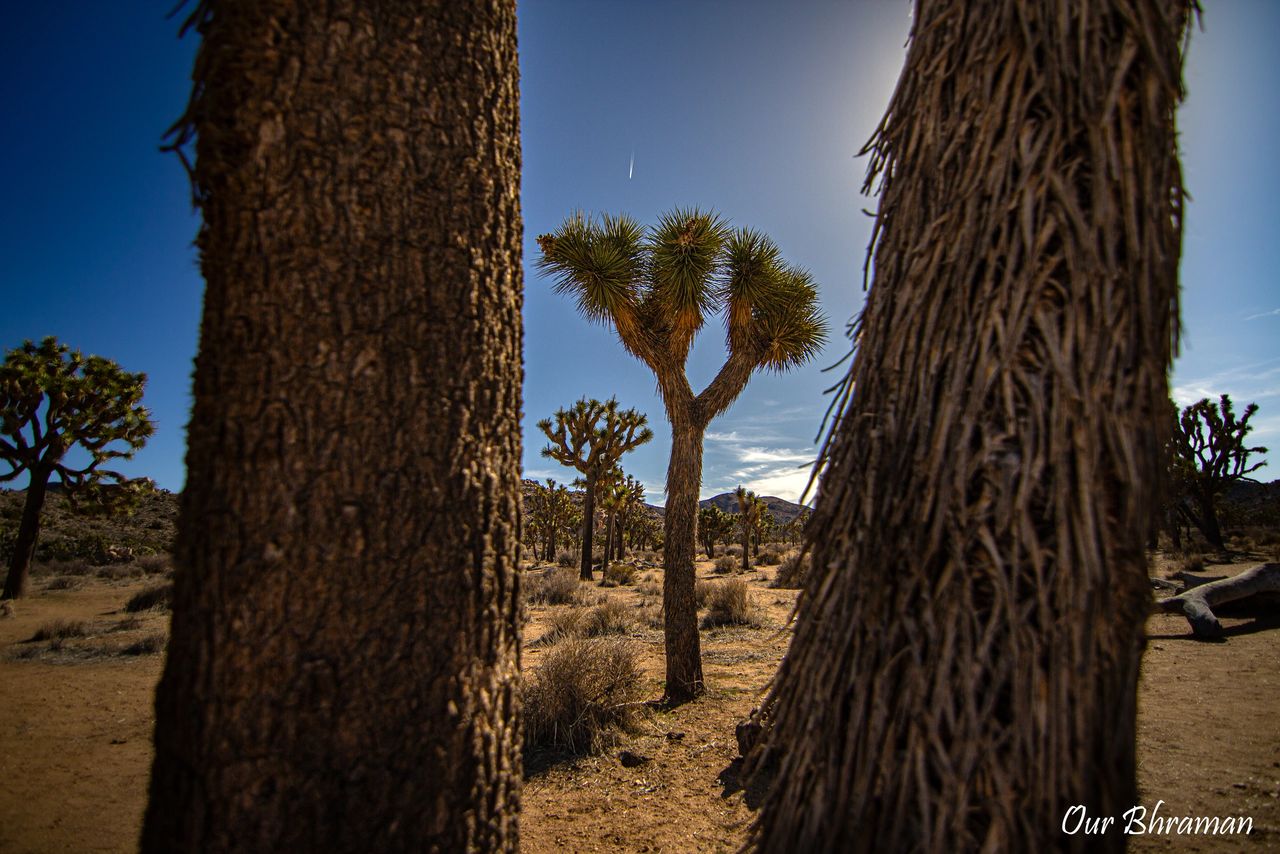
Joshua Tree National Park offers an endless list of sights—viewpoints, scenic drives, and hiking trails that could easily fill several days. It’s the kind of place where every turn reveals something new, from massive rock formations to quiet stretches of desert.
One of the things that stood out to us was how well the park caters to all age groups and experience levels. Whether you’re looking for short, family-friendly walks or more challenging hikes that wind through rocky terrain, there’s something for everyone. Trails like Hidden Valley and Skull Rock are easy to explore, while others, like Ryan Mountain or Barker Dam, invite a bit more adventure.
Since there’s so much to see, we decided to focus our visit on a few highlights: Cap Rock, Hidden Valley, the Cholla Cactus Garden, Skull Rock, and Keys View—ending the day with a night sky experience under a blanket of stars. Each stop gave us a different glimpse into the park’s magic, from golden sunsets over the rocks to the quiet stillness of the desert after dark.
After exploring Joshua Tree, we began our long drive toward Death Valley National Park, covering roughly 250 miles. The trip takes about 4 to 5 hours, depending on stops and traffic. We followed Highway 62 west, then connected to Interstate 15 north, passing through small desert towns like Yucca Valley and Barstow before continuing toward Death Valley Junction.
The drive itself was a journey through changing desert scenery—rugged hills gradually giving way to vast, open plains. Along the way, we saw stretches of sun-baked land, scattered windmills, and the occasional lonely gas station standing against the endless horizon. It was a long ride that showed showing California’s desert landscape.
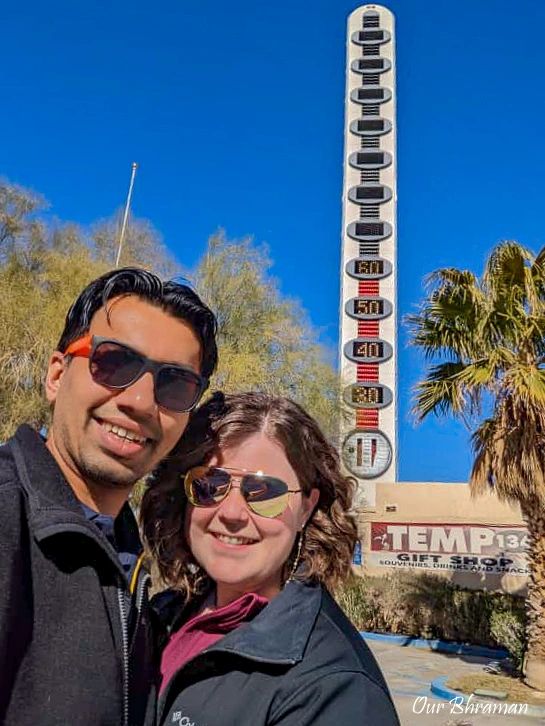
Along the way, we stopped in Baker, California, a small desert town famous for two things: its record high temperature of 134°F and the World’s Largest Thermometer, a 134-foot-tall landmark that commemorates that scorching feat. It’s one of those quirky roadside stops that makes the desert drive memorable.
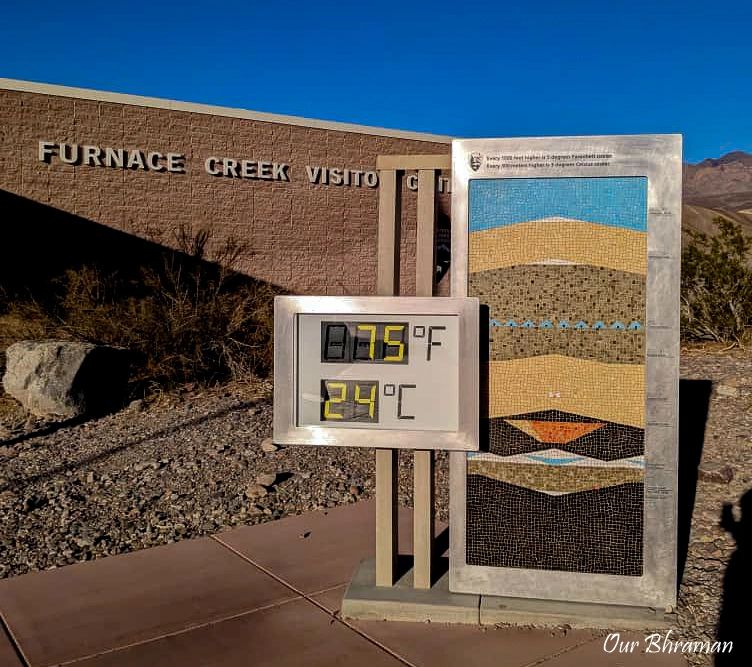
As we entered Death Valley National Park, our first stop was the Furnace Creek Visitor Center—the perfect place to start your visit. The rangers there are incredibly knowledgeable, and the center offers maps, exhibits, and a well-stocked store to help you prepare for exploring one of the hottest places on Earth. Luckily, we visited in February, when the weather was pleasantly moderate—comfortable enough to explore without the intense desert heat that Death Valley is known for.
Our first stop in Death Valley was Dante’s View, a mountain peak that’s easily accessible by car and offers one of the most breathtaking panoramic views of the entire valley. Almost right after the park’s pay station, we took the turn-off for Dante’s View, following Furnace Creek Wash Road for about 13 miles—roughly a 25-minute drive. The road winds and curves as it climbs, with a few tight switchbacks near the end that make the ascent feel like part of the adventure.
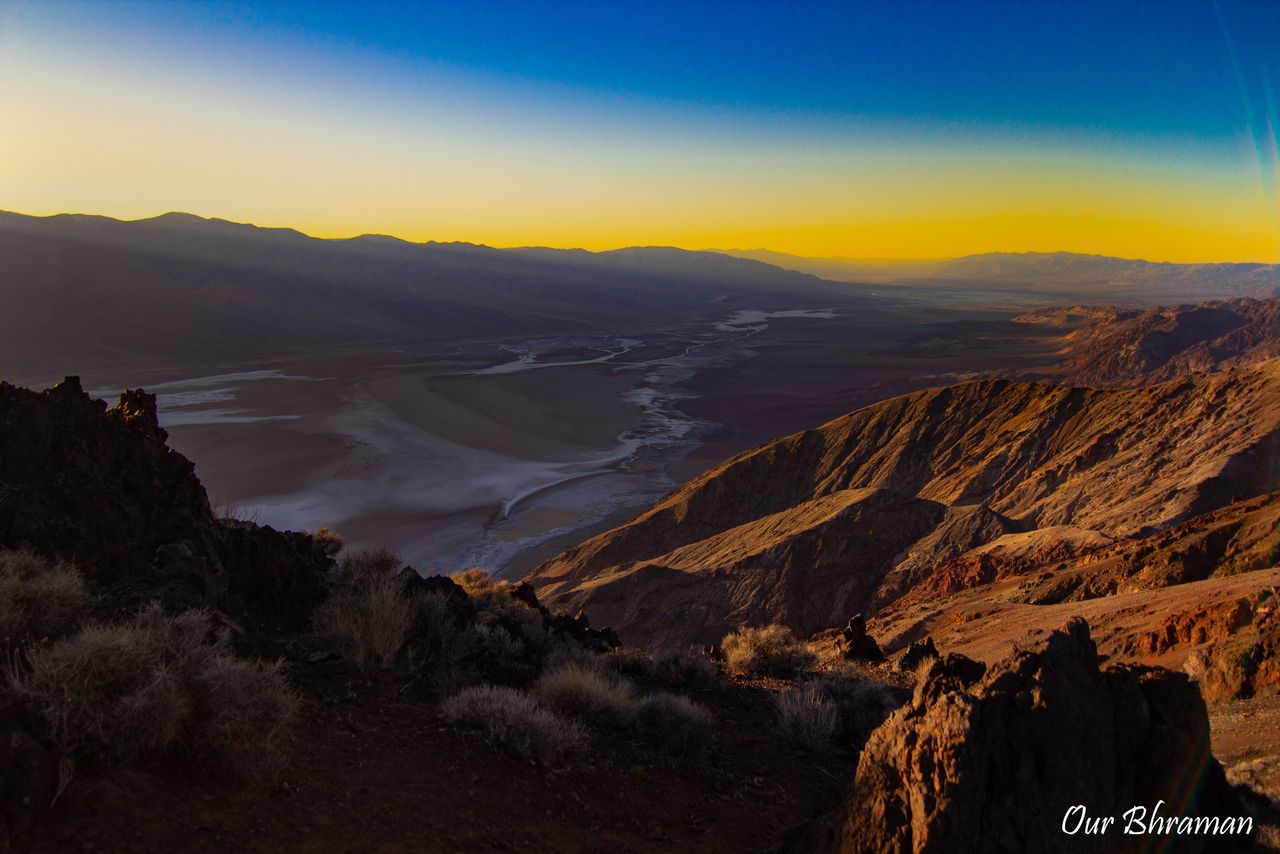
When we finally reached the top, we saw the heart of Death Valley—miles of open desert framed by rugged mountains. Down below lay Badwater Basin, the lowest point in North America, shimmering faintly in the distance. From that height, we could even see the thin ribbon of road leading into the basin, which we planned to drive the next day.
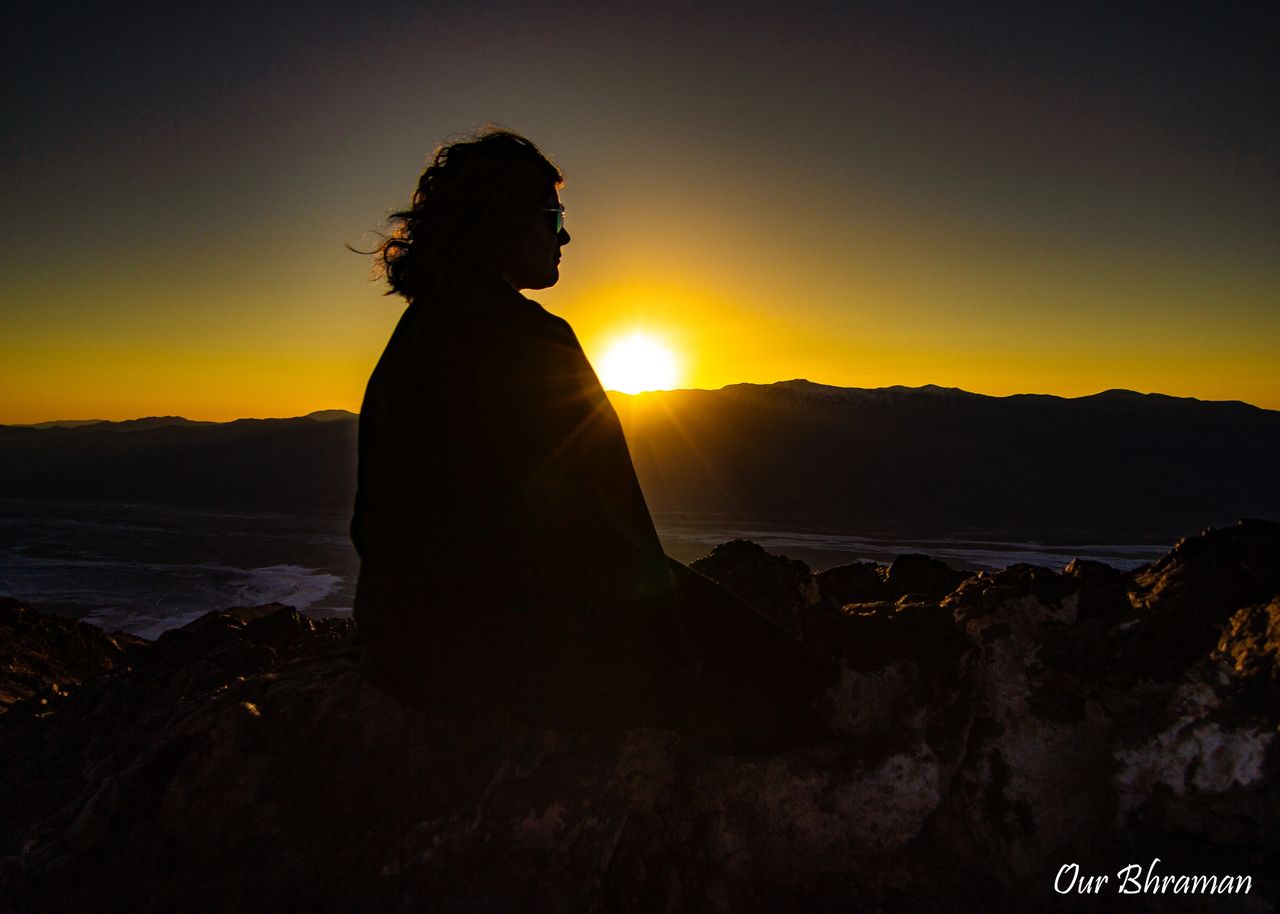
Even from the parking lot, the view is stunning, but we couldn’t resist walking along the short trails that run in both directions from the overlook. Each offered a slightly different perspective of the vast valley below. Standing at 5,575 feet above Badwater Basin, Dante’s View truly felt like standing on the edge of the world. It’s no wonder this spot is a favorite among photographers and one of the most popular places to watch the sunrise or sunset in Death Valley.
After spending less than an hour exploring Dante’s View, we head back down the winding road toward our hotel in Amargosa Valley, Nevada, about an hour away. The descent offered a final glimpse of the glowing desert as the sun began to fade behind the mountains.
It had already been a full day of travel and sightseeing, so we decided to take it easy for the evening and rest up for the next day’s adventure. With a long day of hiking and exploring ahead, we couldn’t wait to experience another side of Death Valley—especially its famous stargazing, which we had saved for the following night. The thought of standing under one of the darkest, clearest skies in the country was the perfect motivation to call it an early night.
Day-5 Place with golden dunes, endless salt flats, and star-filled skies
We began our morning at the Mesquite Flat Sand Dunes in Death Valley just as the sun started to rise. The first light poured across the sand, turning everything into soft gold. Long shadows stretched across the dunes, and the whole place felt still and sacred. It was so quiet you could actually hear the wind brushing across the sand — the kind of silence that makes you slow your steps and breathe a little deeper.
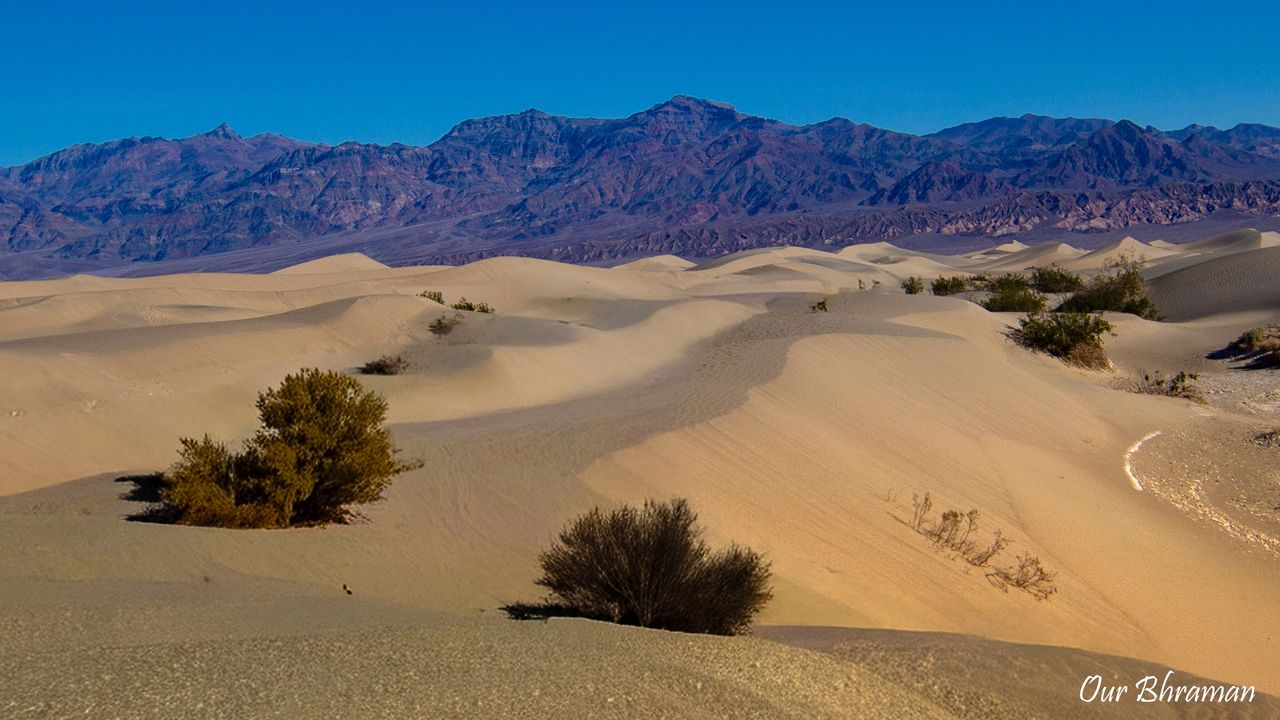
There are no marked trails here. You just wander. We chose to walk toward the quieter, untouched dunes, where the sand looked smooth and glowing. Each step sank deeper than expected — climbing wasn’t easy — but that made reaching the ridges even more satisfying. The wind had carved delicate ripples into the surface, like waves frozen in time.
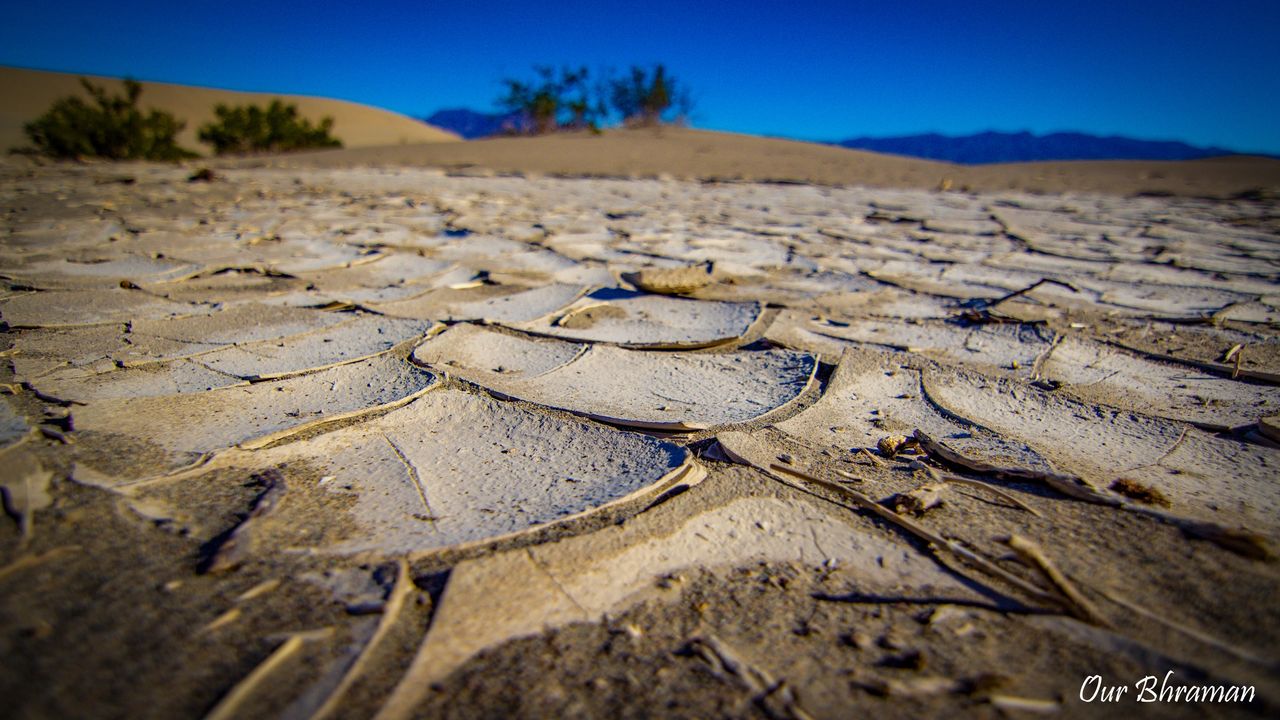
At one point, we stumbled upon cracked mud patterns breaking up the endless gold. It felt like nature had sketched cartoons across the desert floor — an unexpected detail that made the moment even more memorable.
What made the experience even more special was learning that this dune field holds three different types of dunes — linear, crescent, and rare star-shaped formations. They sit perfectly between two mountain ranges near Stovepipe Wells, almost as if the mountains are quietly guarding them. The strong desert winds shape the sand into beautiful curves and ridges, but the mountains prevent the dunes from blowing away entirely. It’s nature’s balance — power and protection working together.
From the higher ridges, the view stretched endlessly — rolling waves of sand framed by rugged mountains in the distance. In that moment, it didn’t feel like a harsh desert. It felt peaceful.
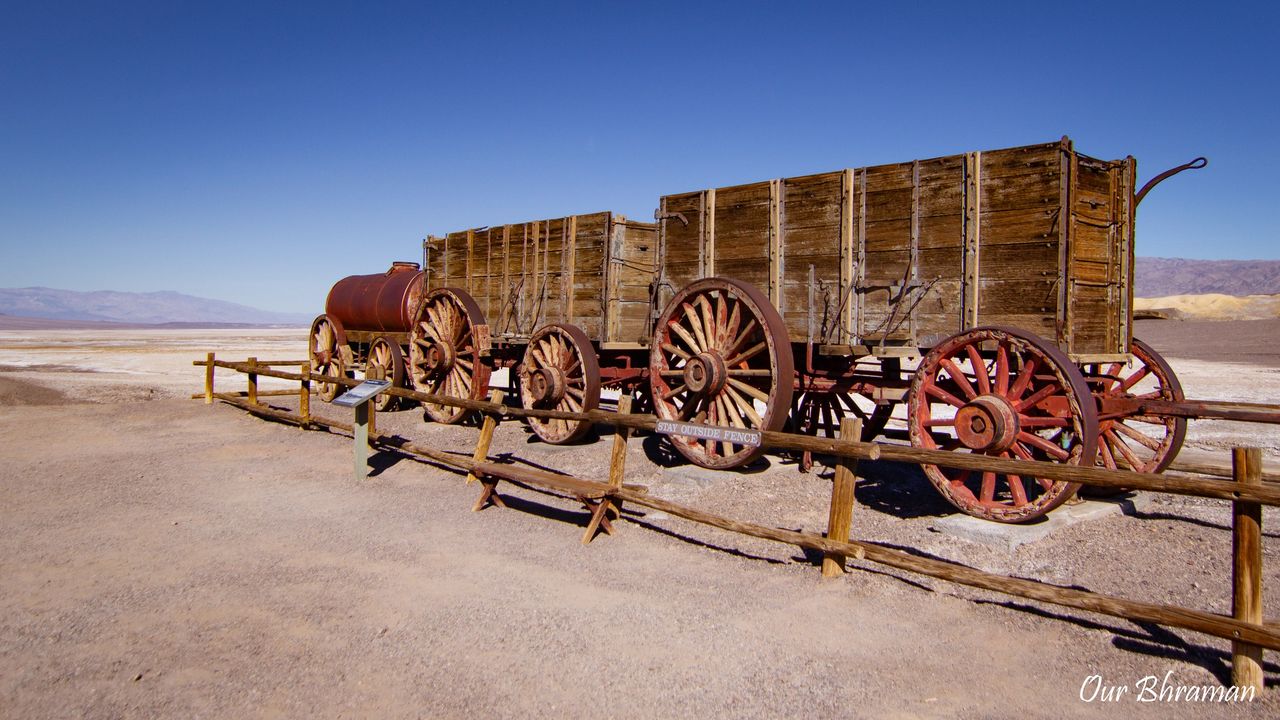
After this our next destination was Harmony Borax Works. If Mesquite Flat was about nature’s silence, this stop was about human grit.
The short walk — barely a quarter mile — was easy and paved, but it carried so much history. As we strolled through the site, it was hard to imagine that this peaceful stretch of desert was once buzzing with activity. Long before tourism, before paved roads, this was industry in one of the harshest places on earth. The remains of the old borax processing plant still stand — adobe ruins and scattered foundations where borate ore was once boiled and refined. You could almost picture the heat of the furnaces mixing with the relentless desert sun. It must have been brutal.
One of the most striking sights was the display of the famous 20-mule team wagons. Standing beside them makes you realize just how enormous they were. These massive wagons hauled tons of borax nearly 165 miles to the nearest railhead — pulled by 20 mules across rough desert terrain. No engines. No highways. Just determination, animals, and raw endurance. Reading the interpretive panels added another layer. The site wasn’t just machinery and logistics — it was people. Workers, including Chinese laborers, endured extreme heat and isolation to make the operation possible. Harmony Borax Works didn’t last very long, but it helped put Death Valley on the map and paved the way for settlement around Furnace Creek — and eventually tourism. After spending more than 30 mins in this place we headed to our next destination of Artists Palette.
We started with Artist’s Drive, a 9-mile one-way scenic loop that immediately feels different from the open flats. The road winds through tight, colorful canyons, the Black Mountains rising dramatically around you. Every curve reveals a new mix of textures and tones, and it almost feels like you’re driving through a natural art gallery.
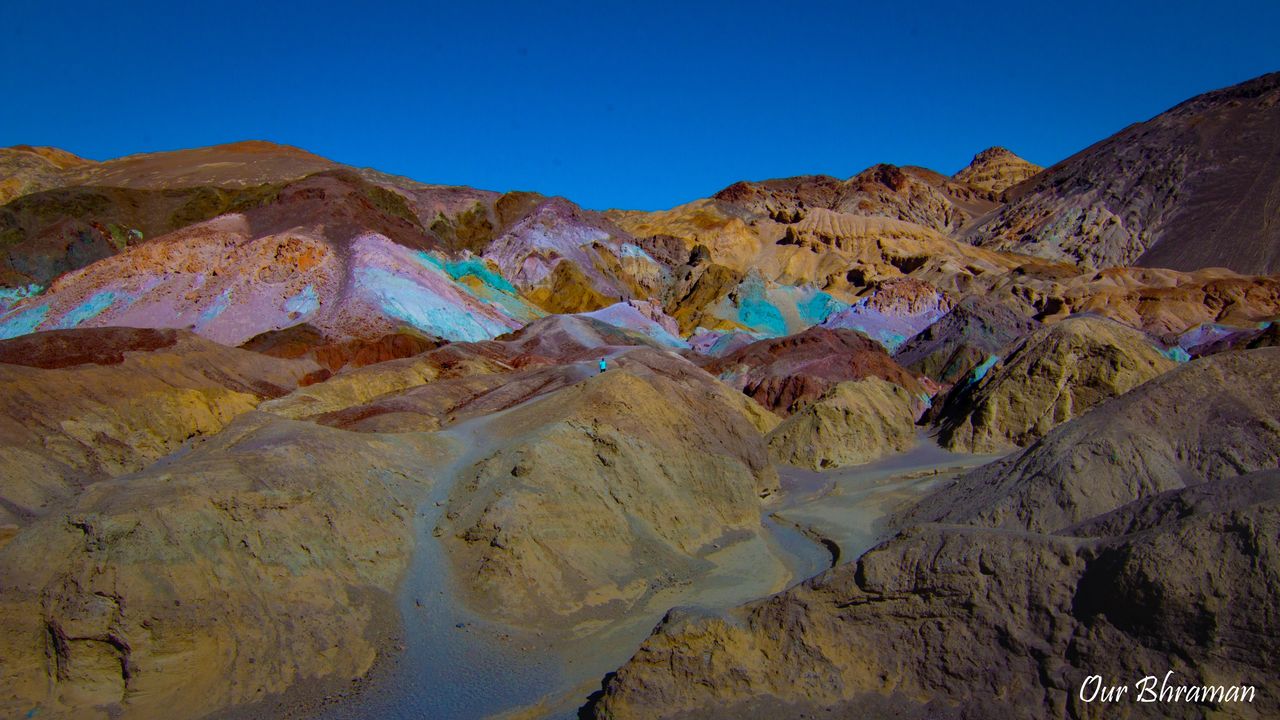
When we reached Artist’s Palette, the hills truly lived up to their name. The landscape looked hand-painted — streaks of red, pink, soft yellow, pale green, hints of blue, even shades of purple layered across the rock faces. It didn’t feel real at first. More like something from a painting than something shaped by wind, time, and geology. What makes it even more fascinating is realizing that those colors aren’t paint at all — they’re the result of mineral oxidation over millions of years. Iron compounds create the reds, pinks, and yellows, while manganese produces deeper purples and blues. Decomposed volcanic ash and other minerals contribute greens and softer tones. Standing there, it truly feels like chemistry is written across the hillsides.
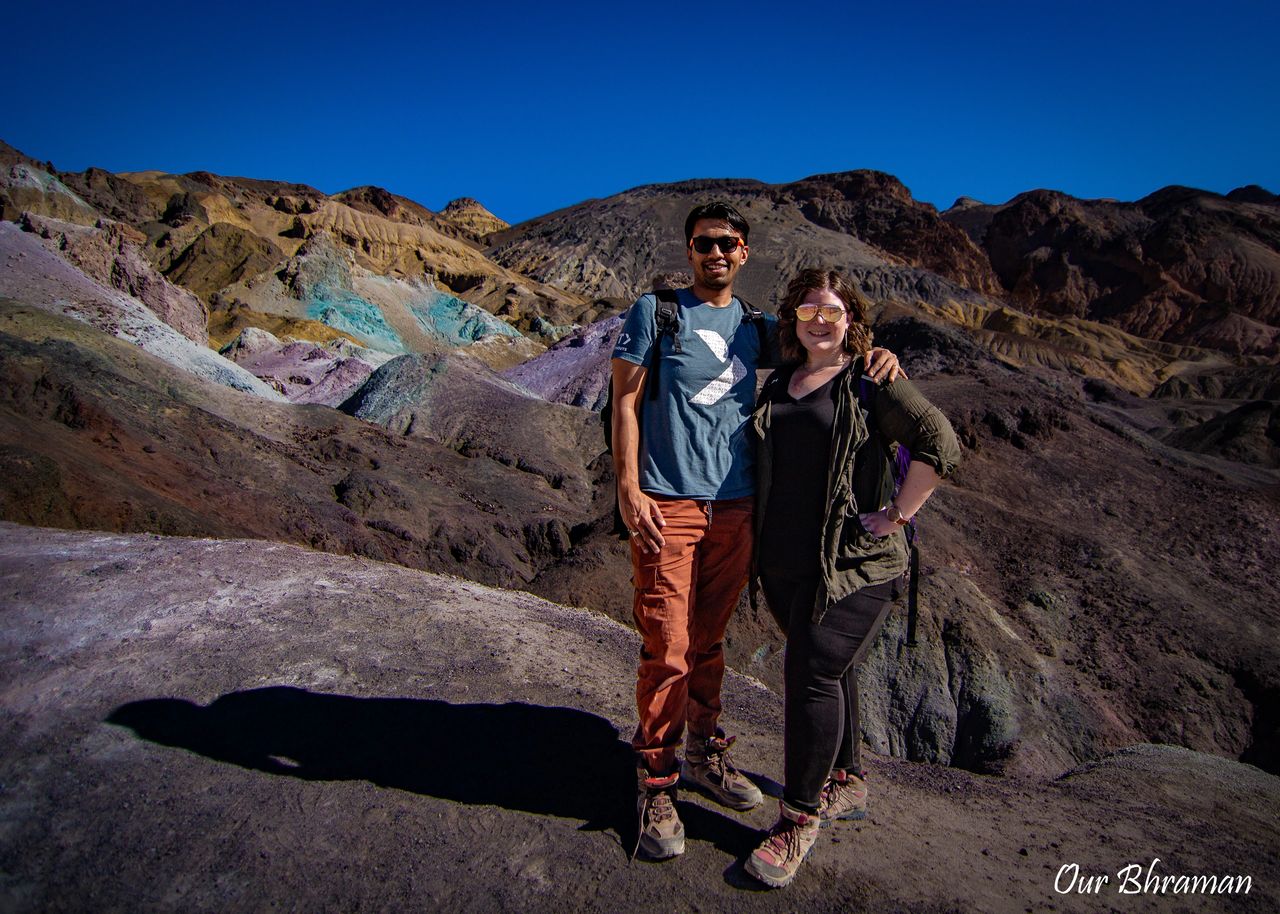
One thing we loved about Artist’s Palette is that you don’t have to hike far to feel completely immersed in it. From the parking lot, we took just a short walk down into the colorful hills and suddenly found ourselves surrounded by layers of red, green, purple, and gold — it truly felt like stepping into a painting.
The ground was soft and uneven in places, but there’s no official trail, which made it even better. We could move at our own pace, choosing where to step and which patterns to get closer to. A few spots required light scrambling, but nothing too challenging. It felt more like exploring than hiking.
After spending about 20–30 minutes wandering through the hills and capturing multiple photos, we made our way back to the car and headed toward our next destination of the day.
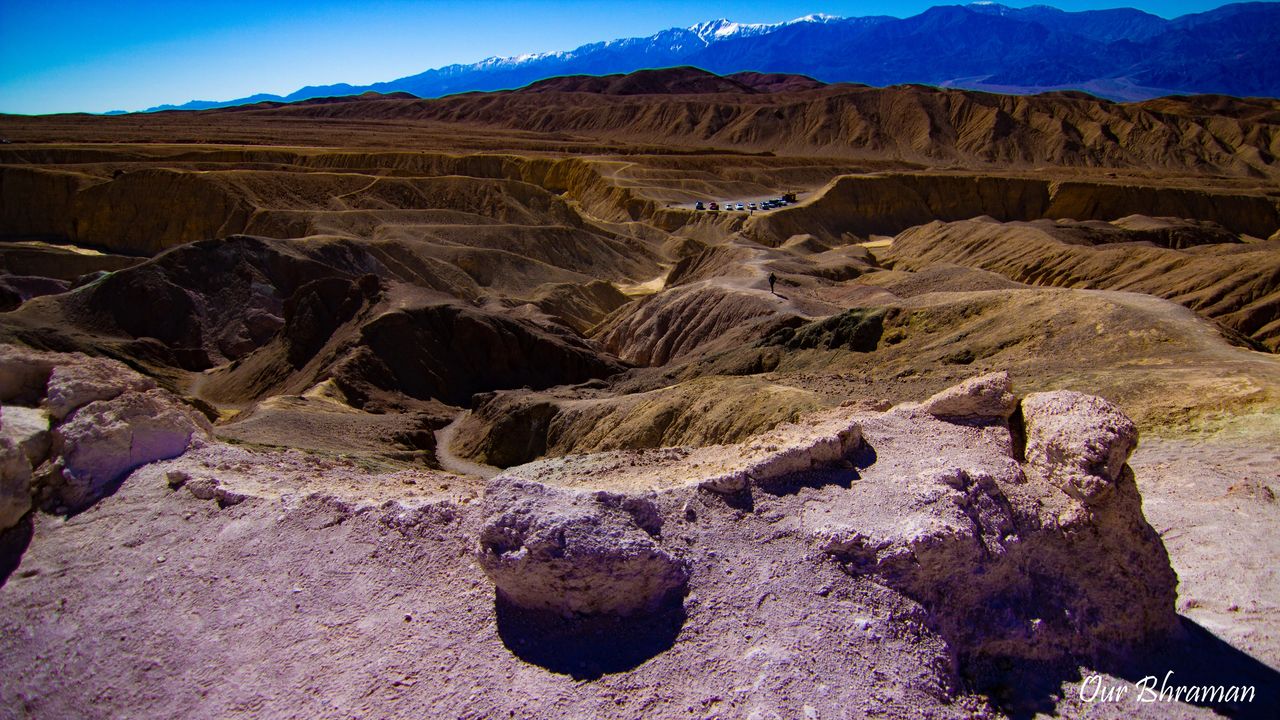
After the colors and creativity of Artist’s Palette, arriving at Devil’s Golf Course felt like stepping onto another planet. The first thing we noticed was the texture. The ground wasn’t flat or smooth — it was jagged, sharp, and wildly uneven. Massive chunks of crystallized salt stretched in every direction, forming chaotic ridges and spikes. It honestly looked impossible to walk on comfortably — which makes the name make perfect sense. Someone once joked that only the devil could play golf here, and standing there, we understood why.
Scientifically, it’s fascinating. Thousands of years ago, an ancient lake once covered this part of Death Valley. When the water evaporated, it left behind thick layers of salt. Over time, rare rains dissolved parts of the surface, and intense desert heat re-crystallized the minerals again and again. Wind and evaporation slowly sculpted the salt into the sharp, broken formations we see today. Unlike the smoother salt flats at Badwater Basin, this area is rough and dramatic — shaped by cycles of flooding and extreme evaporation.
We carefully stepped out onto the salt, staying close to the edge since the surface is extremely sharp and unstable. Proper shoes are definitely a must here. In the stillness, we paused — and if you listen closely, you can sometimes hear faint crackling sounds as the salt expands in the heat. It adds to the surreal feeling.
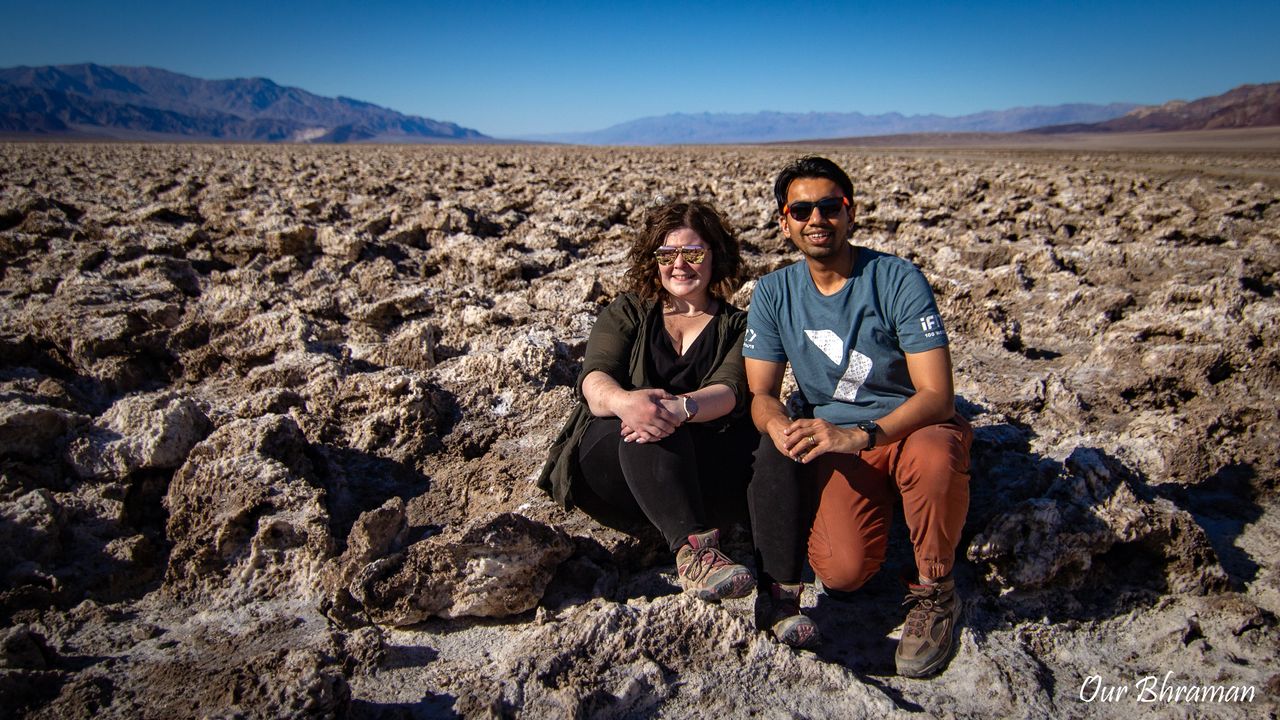
We didn’t spend too long — maybe 15 minutes walking cautiously, taking photos, and just absorbing how wild the landscape looked against the surrounding mountains. But even though it’s a short stop, it leaves a strong impression. After the softness of the dunes and the painted hills of Artist’s Palette, Devil’s Golf Course showed us the harsh, unforgiving side of Death Valley.
Our next stop was the Natural Bridge. Located off Badwater Road, about a 20-minute drive south of Furnace Creek, the trailhead is easy to spot with a posted sign and small parking area. From there, the hike is about 1-mile round trip, rated easy, and it’s pretty flat to walk on. The walk itself feels different from the wide-open desert stops earlier in the day. Instead of vast views, we were surrounded by canyon walls rising on both sides. The path gently winds through a gravel wash, with towering rock formations guiding the way. It’s mostly flat with a gradual incline — nothing too strenuous — but sturdy shoes help because of the loose rocks.
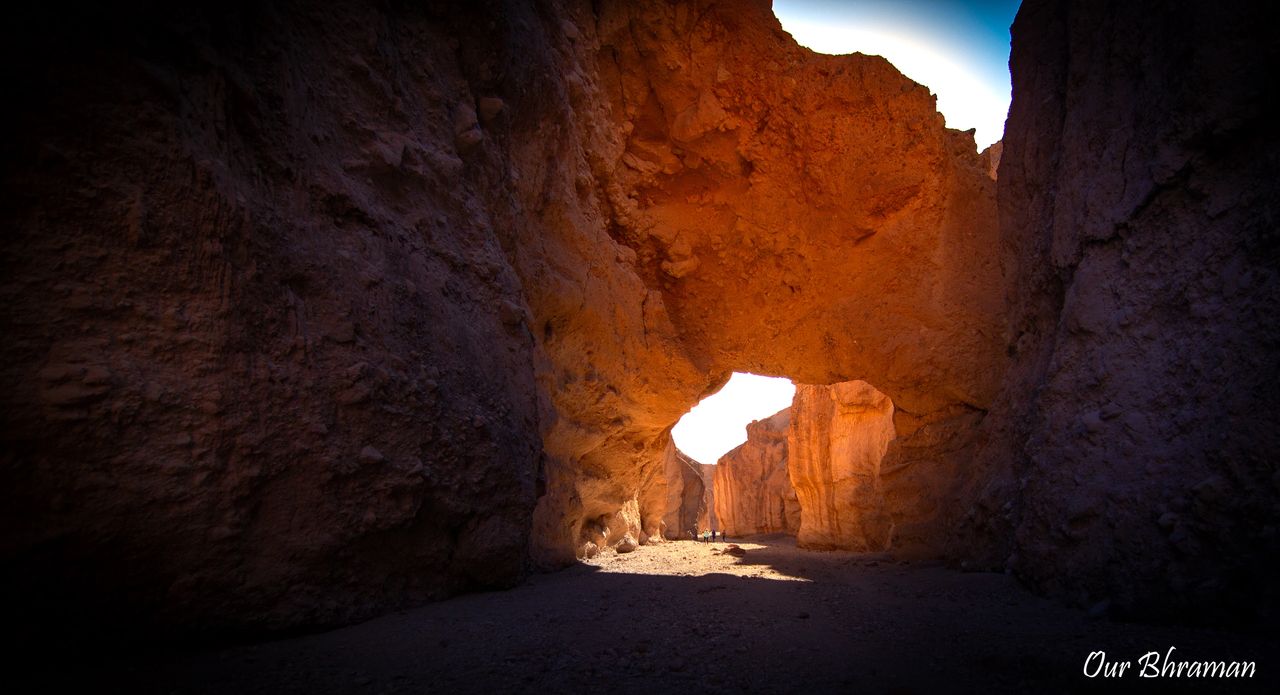
As we approached the natural bridge, the canyon suddenly narrowed and framed the arch beautifully overhead. The rock formation curves gracefully across the canyon, shaped over thousands of years by flash floods carving through the stone. Standing beneath it, you can really appreciate how powerful water can be — especially in a place that now feels so dry and still. We took our time here, enjoying the shade and quiet before turning back. The entire hike took us around 30–45 minutes at a relaxed pace, including photo stops.
Although the Natural Bridge trail is considered easy, we understood why the park advises avoiding it after 10 a.m. in summer. The canyon has very little shade, and the heat gets trapped between the rock walls. Even when we visited in the spring around 4 p.m., it was still hot and sweaty during the hike. It definitely made us appreciate how intense this trail must feel in peak summer.
It was amazing how dramatically the temperature shifted by the time we reached our final stop of the day — Badwater Basin. After a long, sweaty afternoon of exploring, the air felt noticeably cooler as sunset approached. The farther we walked from the parking area — past the wooden boardwalk and deeper into the salt flats — the more we began to feel a gentle breeze. That refreshing wind across the open expanse was exactly what we needed after the heat earlier in the day.
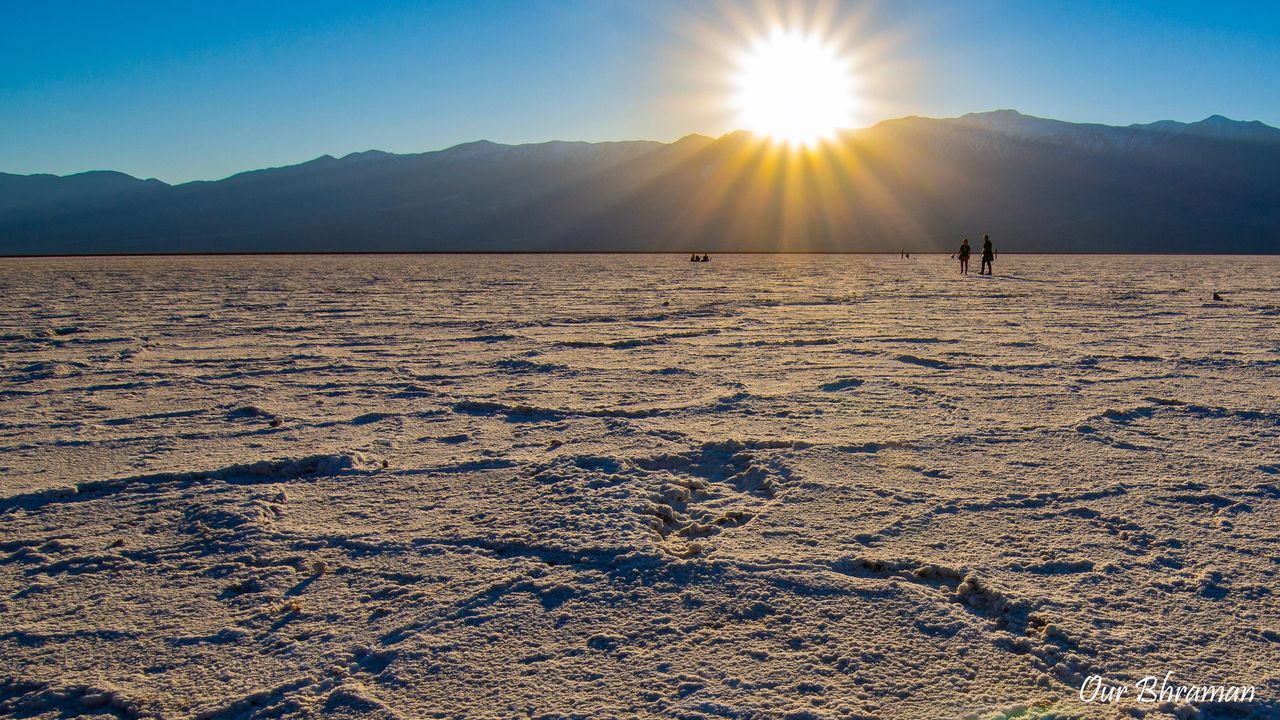
Badwater Basin sits 282 feet below sea level, making it the lowest point in North America. It gets its name from the extremely salty, undrinkable water found in the small spring near the parking area. When rain falls on distant mountain peaks, it flows down and settles in this endorheic basin — a closed system with no outlet. As the intense desert heat evaporates the water, minerals are left behind, gradually forming thick salt crusts. With evaporation rates averaging around 150 inches per year, even a large lake wouldn’t last long here; it would quickly disappear under the desert sun.
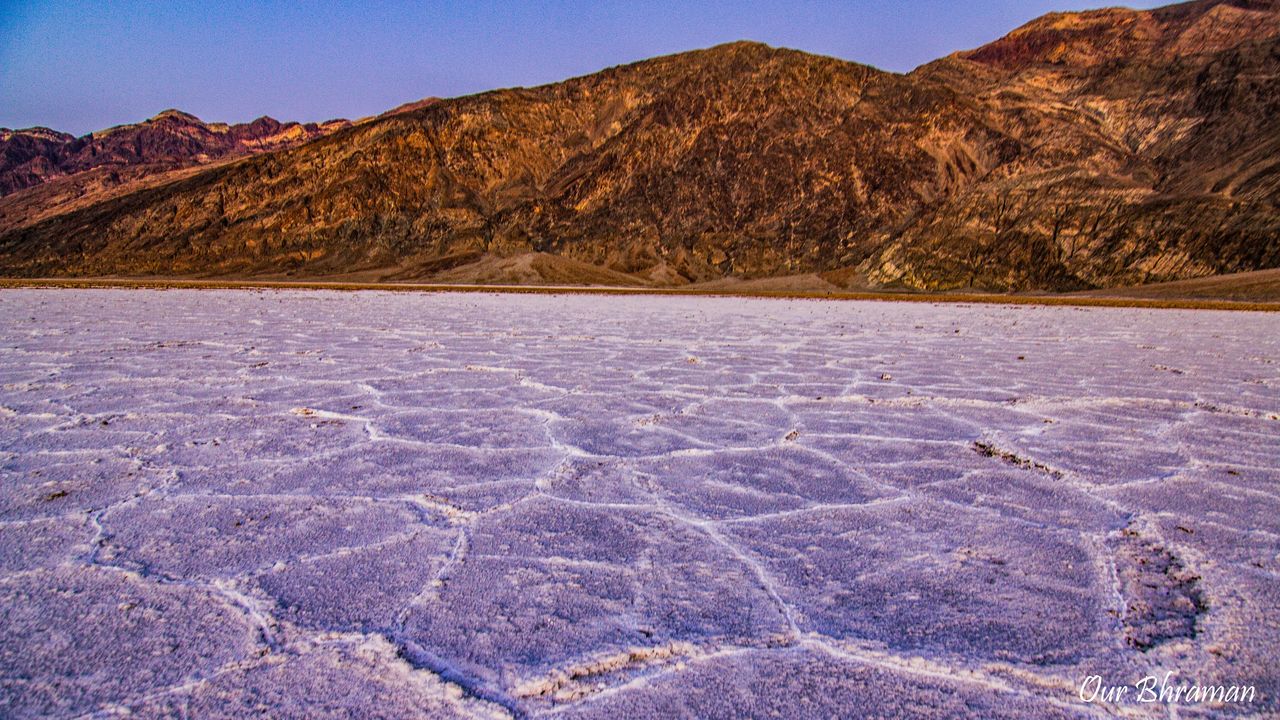
At the beginning of the salt flat, we passed the familiar Badwater Basin sign and an informational board explaining the area’s history. Many visitors stop right there to walk around and take photos. However, near the entrance, the ground looks mostly flat and packed down. The unique hexagonal salt polygons aren’t very visible in this high‑traffic zone, as years of footsteps have naturally worn them down.
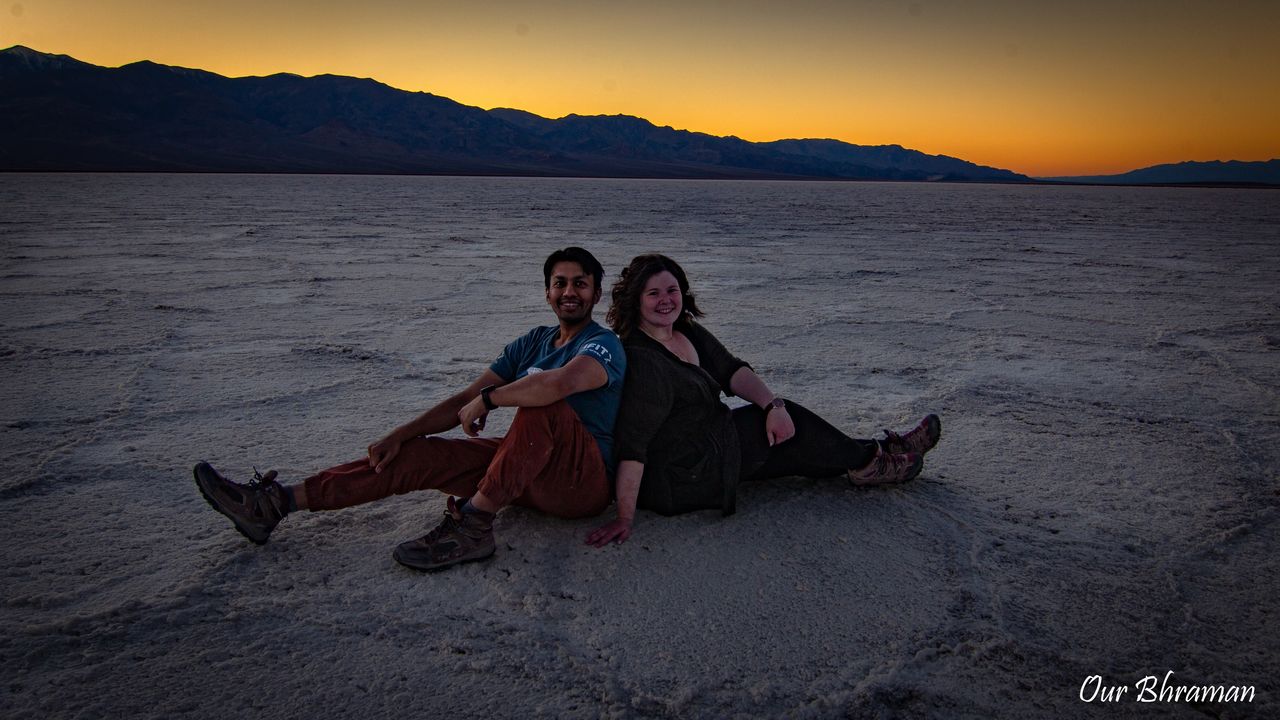
To see the famous geometric patterns clearly, we had to walk farther — about 1.5 to 2 miles round trip. As we moved deeper into the flats, footprints faded away and the salt formations became more defined. The farther we went, the more pristine the landscape felt. The repeating hexagon shapes stretched across the white surface like a natural mosaic, formed by cycles of evaporation and temperature changes. Despite the harsh environment, the nearby spring supports pickleweed, insects, and even the rare Badwater snail found nowhere else.
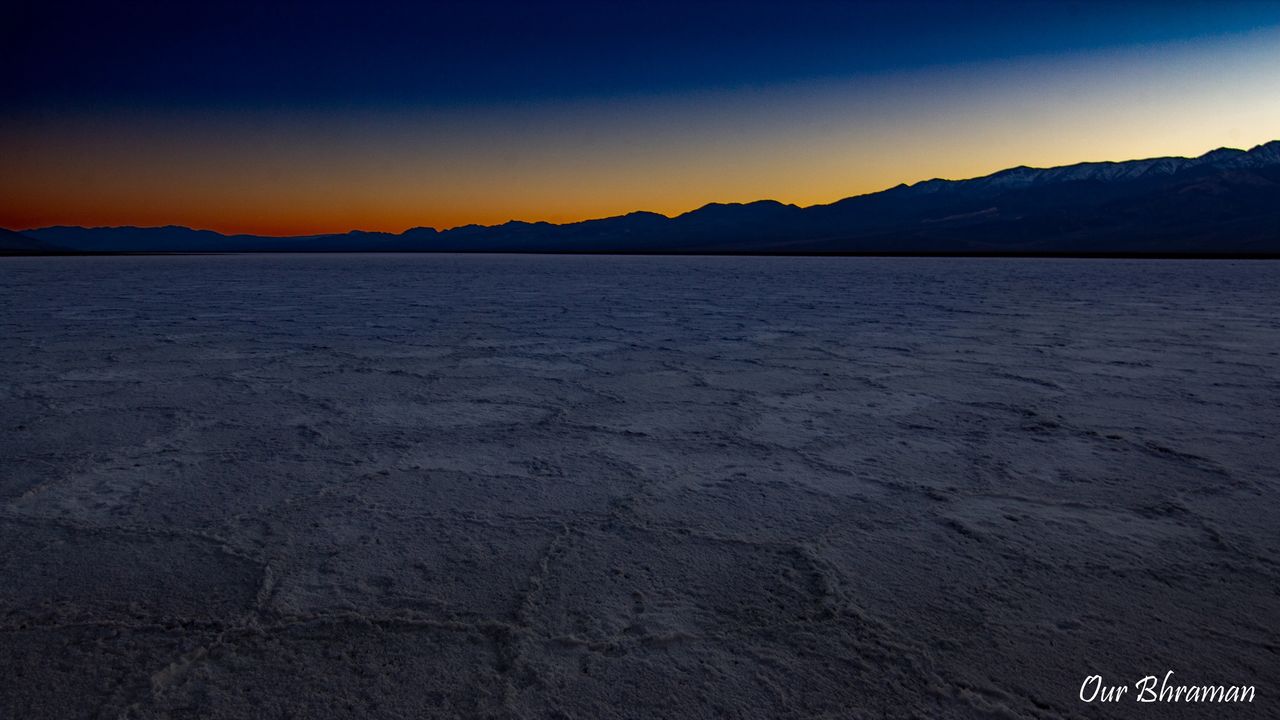
Standing there during sunset, surrounded by endless white patterns glowing softly in the fading light and feeling that cool breeze, it truly felt like the perfect ending to a long and unforgettable day in Death Valley.
By the time we walked back to the parking lot at Badwater Basin, the first stars had started appearing in the sky. At first there were only a few, faint and scattered — but within minutes, more and more began popping into view. We could already feel the excitement building. We knew we were in a designated Dark Sky park, and with a clear night ahead, we couldn’t wait to see what was coming.
For our final stop, we drove to Zabriskie Point, one of the most popular stargazing spots in the park. From the parking lot, it’s just a short 0.3-mile round-trip walk up a wide, paved trail. By the time we reached the top, it was fully dark — and there were no artificial lights in sight. At first, it felt like there was “nothing” to see, which is actually perfect for true dark-sky viewing. We walked carefully, keeping our phone lights pointed down toward the ground so we wouldn’t disturb the natural darkness around us. At the top, a circular stone barrier lines the viewpoint, keeping visitors safely away from the edge. From there, we simply stood still and looked up.
And that’s when the sky came alive.
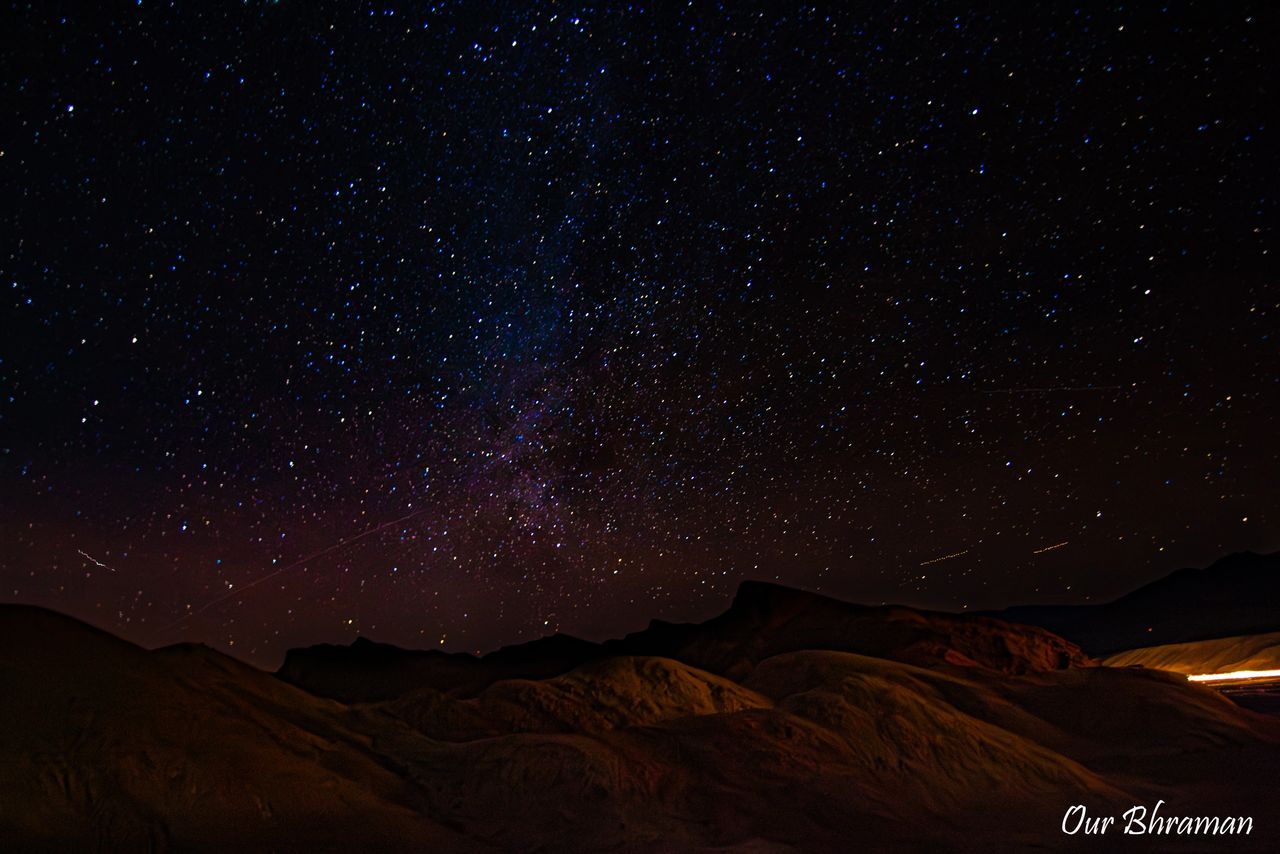
Millions of stars stretched across the vast desert sky — far brighter and denser than anything we see back in the city. As someone who lives among constant light pollution, I’m always amazed by how powerful and humbling a true night sky feels. After a full day of heat, hiking, colors, salt flats, and history, ending under a blanket of stars at Zabriskie Point felt like the perfect and peaceful closing moment of our Death Valley journey.
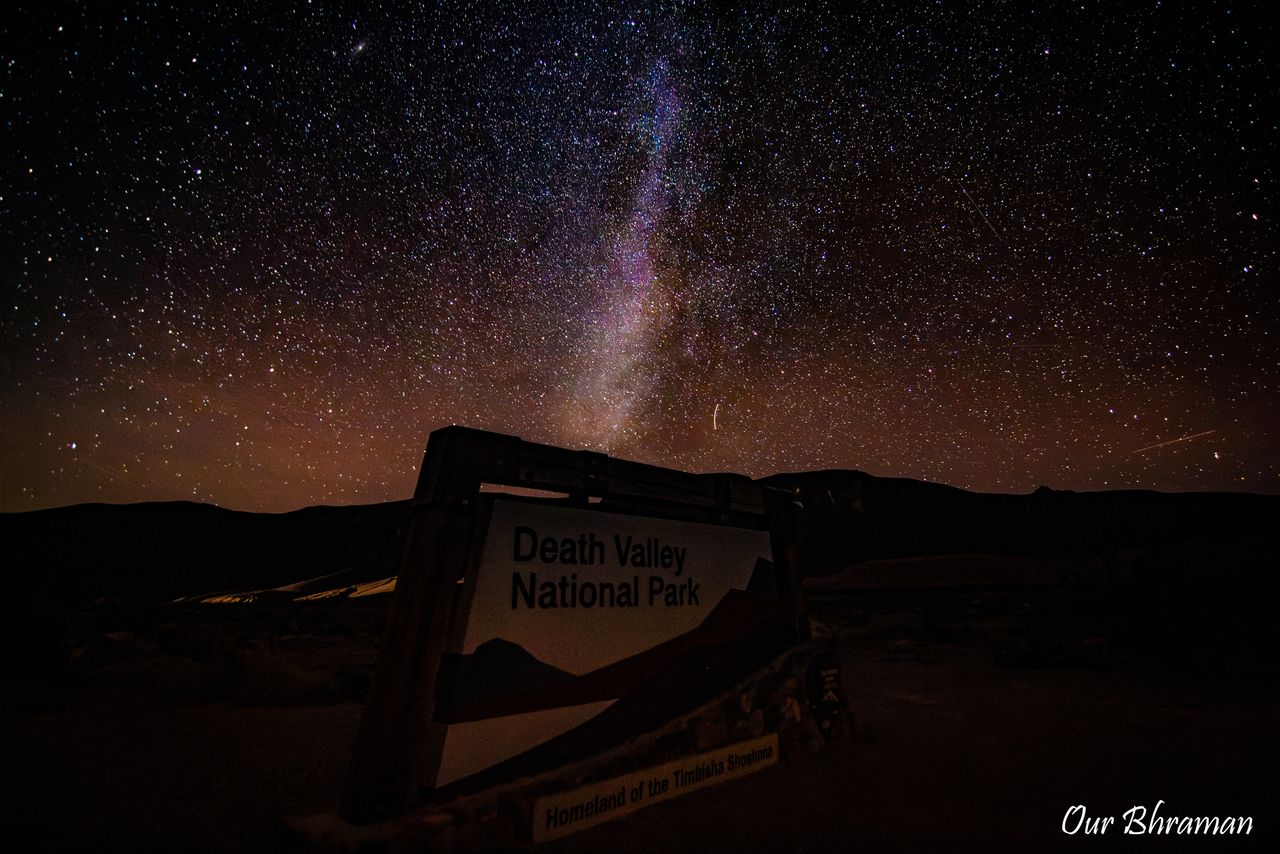
And just when we thought the magic was done for the day, Death Valley gave us one unforgettable final gift. As we were driving out, we stopped near the park sign for one last photo — and that’s when we saw it. The Milky Way stretched clearly across the sky above us. Seeing the Milky Way rising over the Death Valley sign felt surreal, almost like nature had planned a perfect farewell.
Day-6 Channel Islands National Park — trading desert heat for ocean breeze
The next morning started early for us. We had more than a four-hour drive ahead, heading west toward Ventura to reach Channel Islands National Park. After the desert landscapes of Death Valley, we were excited for something completely different — ocean air, island cliffs, and coastal wilderness. Channel Islands National Park is unlike most national parks. It’s a remote and largely undeveloped chain of five islands off the California coast, often called the “Galápagos of North America” because of the unique wildlife found nowhere else on Earth.
Planning is very important when visiting Channel Islands National Park, since it’s made up of five separate islands and transportation requires advance coordination. With limited time and boat schedules to consider, you need to decide which island fits your trip best before arriving. Unlike most national parks, you can’t just drive there. While the visitor centers in Ventura and Santa Barbara are easily accessible, the islands themselves can only be reached by concessionaire boats like Island Packers or by private boat. Reservations, departure times, and weather conditions all play an important role. Here’s a quick look at the five islands that make up Channel Islands National Park:
Anacapa Island – The smallest island, perfect for a half-day visit with dramatic cliffs, a lighthouse, short trails, and plenty of seabirds.
Santa Cruz Island – The largest and most diverse, known for sea caves, kayaking, beaches, long hikes, and the island fox.
Santa Rosa Island – Rugged and remote, ideal for backcountry hiking and known for fossil discoveries.
San Miguel Island – Wild and isolated, home to large colonies of elephant seals and sea lions, with limited access.
Santa Barbara Island – Small and peaceful, famous for seasonal wildflowers and fewer crowds.
For this trip, we chose to spend the day on Anacapa Island. We were incredibly excited for our day trip to Channel Islands National Park, but sometimes nature gently reminds us of who is truly in charge. A couple of hours before our scheduled departure, we received an email from Island Packers informing us that trips were canceled due to high winds and rough sea conditions. At first, we stayed hopeful that the weather might improve — after all, the ocean can be unpredictable — but as the winds continued, we knew safety always comes first.
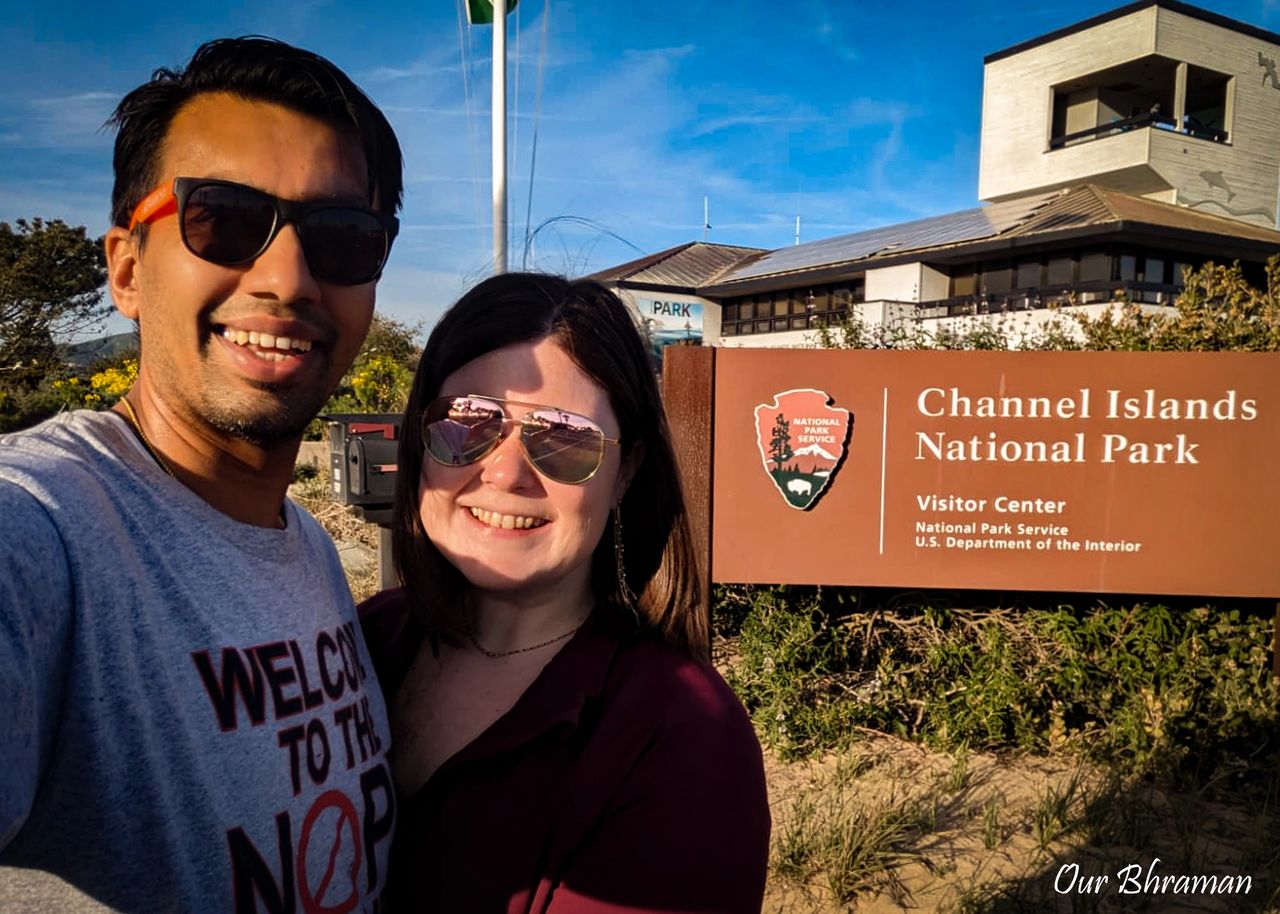
Instead of feeling disappointed, we chose to make the most of what the day offered us. We visited the park’s mainland visitor center in Ventura, where we spent time learning more about the islands — their wildlife, unique ecosystems, and ongoing conservation efforts. It gave us a deeper appreciation for how remote and fragile these islands truly are. In a way, it built even more anticipation for a future visit. For the evening, we shifted gears and headed to Ventura Beach as our Plan B — which turned out to be its own beautiful experience. The same winds that canceled our boat created dramatic waves rolling powerfully onto shore. Standing there, watching the rough sea up close during sunset, felt humbling and peaceful at the same time.
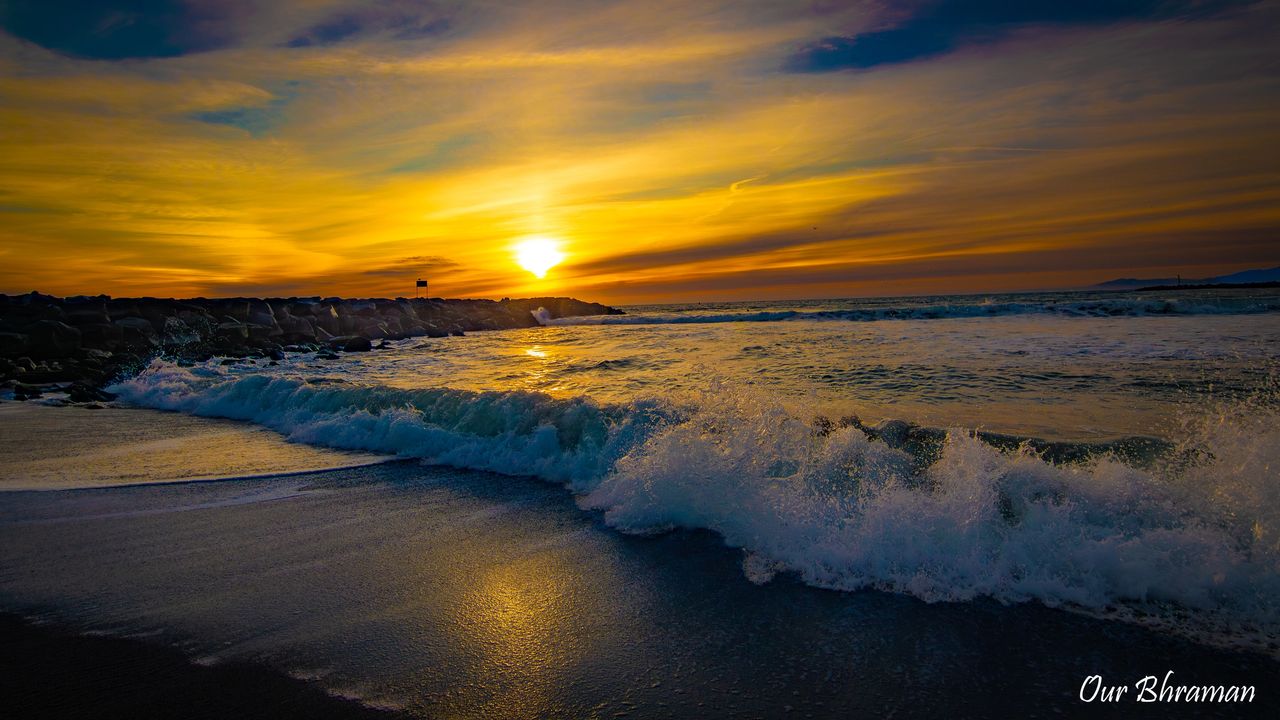
Travel has a way of teaching flexibility and gratitude. Not everything goes according to plan, especially when it comes to nature. But we left feeling thankful — thankful for safety, for the chance to witness the ocean’s raw strength, and for one last golden California sunset before our flight home the next day. It reminded us never to take any moment, any landscape, or any opportunity for granted