For this trip, we drove from Seattle to Jasper, with a stopover to spend a night in a Canadian town called Kamloops. Initially, Kamloops was just a planned resting point to break up the long drive, but little did we know it would become one of the highlights of our journey. Nestled in the scenic Thompson Valley region of British Columbia, Kamloops is far more than a pit stop—it’s a beautiful, vibrant city with thriving community. Strolling through the streets, we were pleasantly surprised by the warm, welcoming vibe and the blend of nature, art, and culture that made this unexpected discovery so memorable. Unfortunately, we were not able to spend much time outside strolling through the city, as we had a few more hours of driving ahead the next day to reach our destination in Jasper
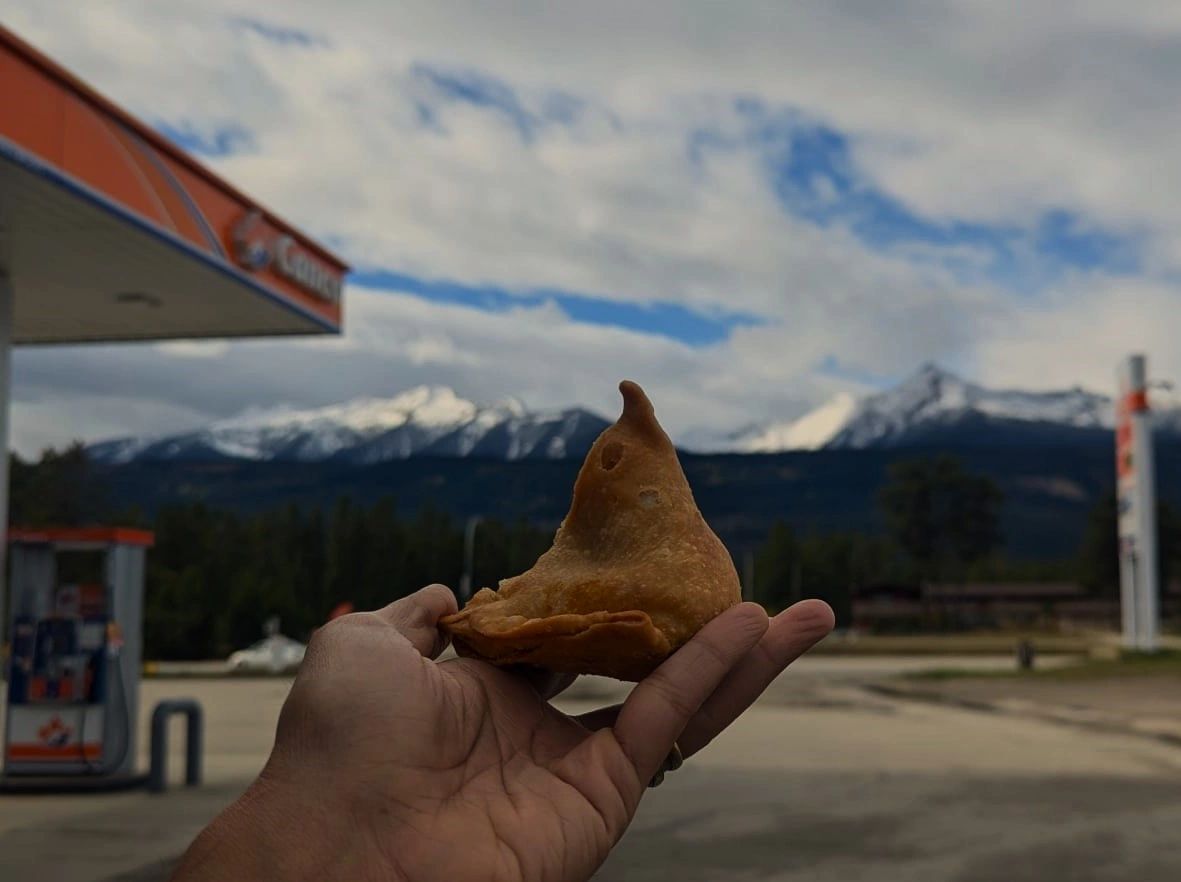
Day-1 of our adventure in the Canadian national parks began at Jasper National Park and Icefields Parkway. Tips from fellow travelers/online research guided us to fill up on gas before getting onto the remote stretches of the Icefields Parkway, as there aren’t many gas stations along the way. We decided to stop at a gas station about 50 miles from Jasper, and to my surprise, it was not just a gas station but also a combined food court offering Indian cuisine.
I must admit, I’m usually not one for impulse purchases. However, the aroma of hot samosas wafting through the air on that chilly day was simply irresistible. Despite my initial hesitation, I couldn’t resist treating myself—and it was the perfect pick-me-up for the rest of our journey!
After our quick stop for gas and delicious samosas, we continued our drive and made it to the town of Jasper. Upon arrival, we were met with the sobering sight of the devastation caused by a recent fire in the area. Charred trees and scorched landscapes served as a stark reminder of nature’s vulnerability, casting a somber tone over what is normally a lush and scenic environment.
However, this experience also added a unique perspective—one that reminded us not to take nature and its beauty for granted. Witnessing the aftermath of the fire was humbling, emphasizing the importance of appreciating and preserving the world around us, as it can change in an instant. Despite the damage, the surrounding wilderness was already showing signs of renewal, offering a hopeful glimpse into nature’s remarkable ability to heal.
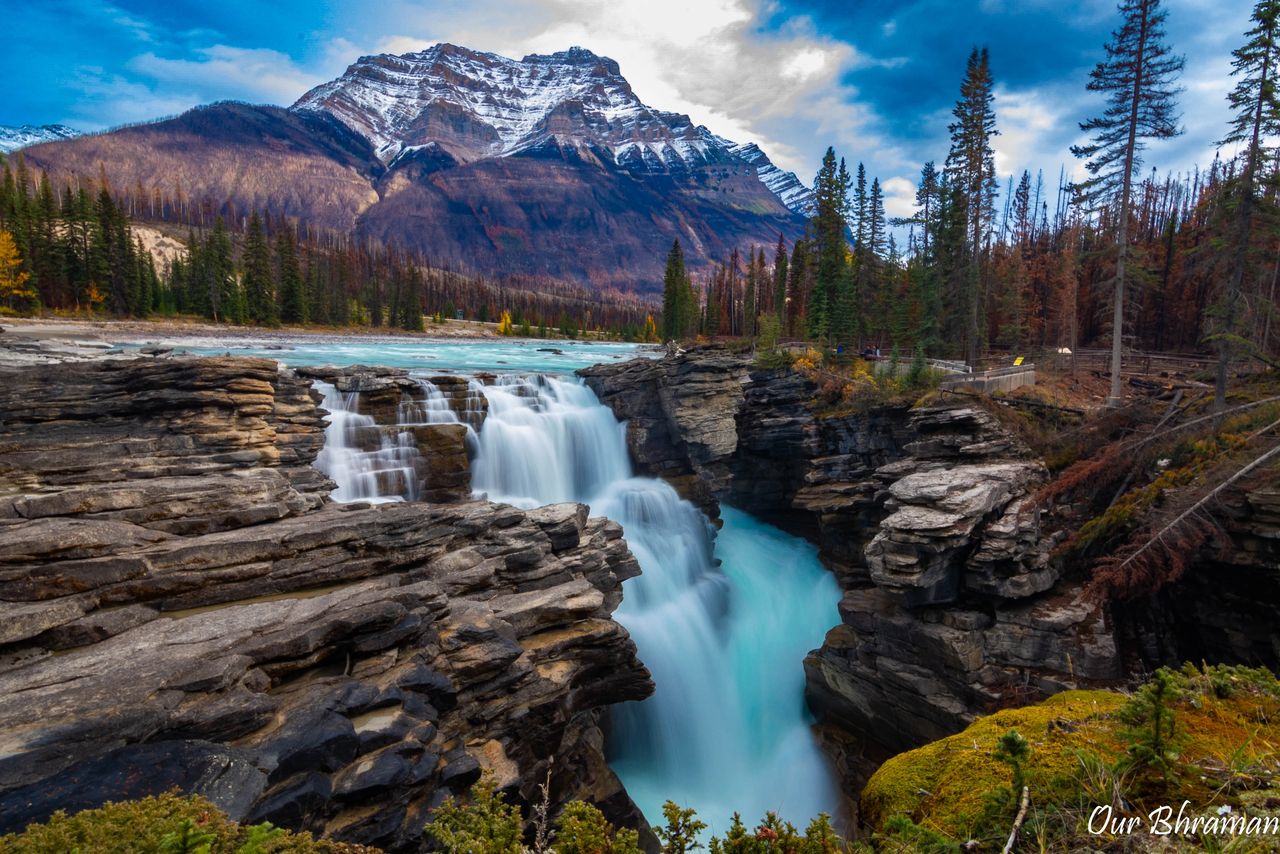
After quick visit to the town of the Jasper our next stop was trip at Athabasca Falls, one of the must-see attractions in Jasper National Park. Located about 20 miles south of Jasper town, Athabasca Falls has a drop of about 75 feet. While it may not be the tallest waterfall, it is certainly dramatic and majestic in its own right. The sheer volume of water rushing over the edge is impressive, creating a powerful roar, especially during the thaw in late spring.
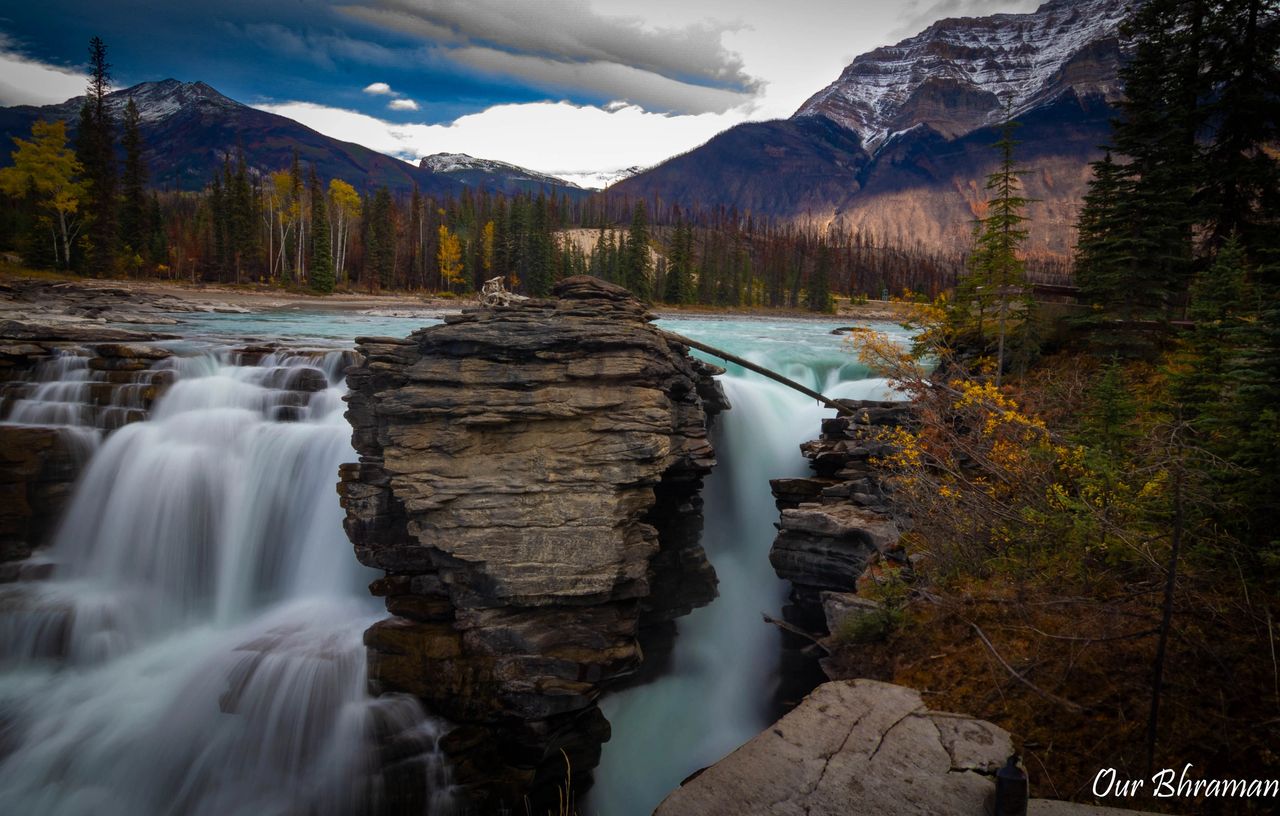
The hike to Athabasca Falls is relatively easy and offers a huge payoff in terms of stunning views—my favorite type of hike! The trail is a 1 km (0.6 mile) out-and-back route that takes about 15 minutes to complete. The short distance makes it accessible for everyone, and the breathtaking scenery at the falls is well worth the effort. Whether you’re capturing photos or simply soaking in the beauty of nature, this quick hike is a fantastic addition to your visit. However, it’s essential to stay safe and not venture too close for a photo; the ground and rocks can be treacherous and slippery. A fall into the frigid waters and rocky canyon would be dangerous.
The Icefields Parkway in Canada, also known as Highway 93, is renowned for its stunning scenery and unique attractions. We made several stops along the way to capture the breathtaking views and take advantage of some fantastic photo opportunities. Each viewpoint offered something special, from the vibrant turquoise lakes to the towering mountain peaks.
Our next stop on this road was Sunwapta Falls. This class 6 waterfall is located south of the Jasper town site and has a drop of approximately 18 metres (60 feet). The Sunwapta Falls are fed by the Athabasca Glacier. From the viewpoint parking lot, you can see the upper falls, then hike about 60 feet down to the lower fall where you can watch all that waterpower spill into the Sunwapta River.
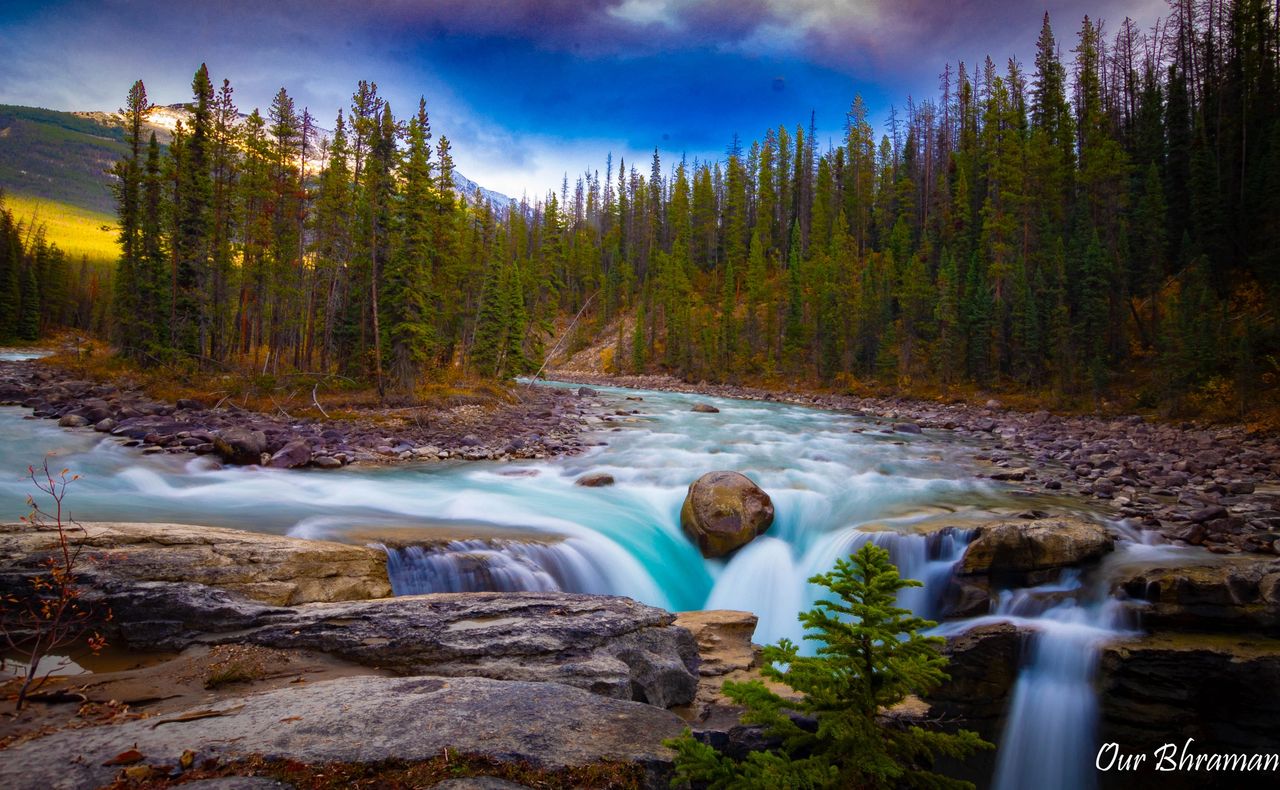
While driving on the road we came across waterfall known as Tangle Creek Falls. This is a fantastic, impossible-to-miss waterfall located just off the Icefields Parkway, nestled between Banff and Jasper. One of the best things to do along this scenic route is to make short stops to take in the myriad gorgeous views, and Tangle Creek Falls is definitely a spot worthy of such a pause.
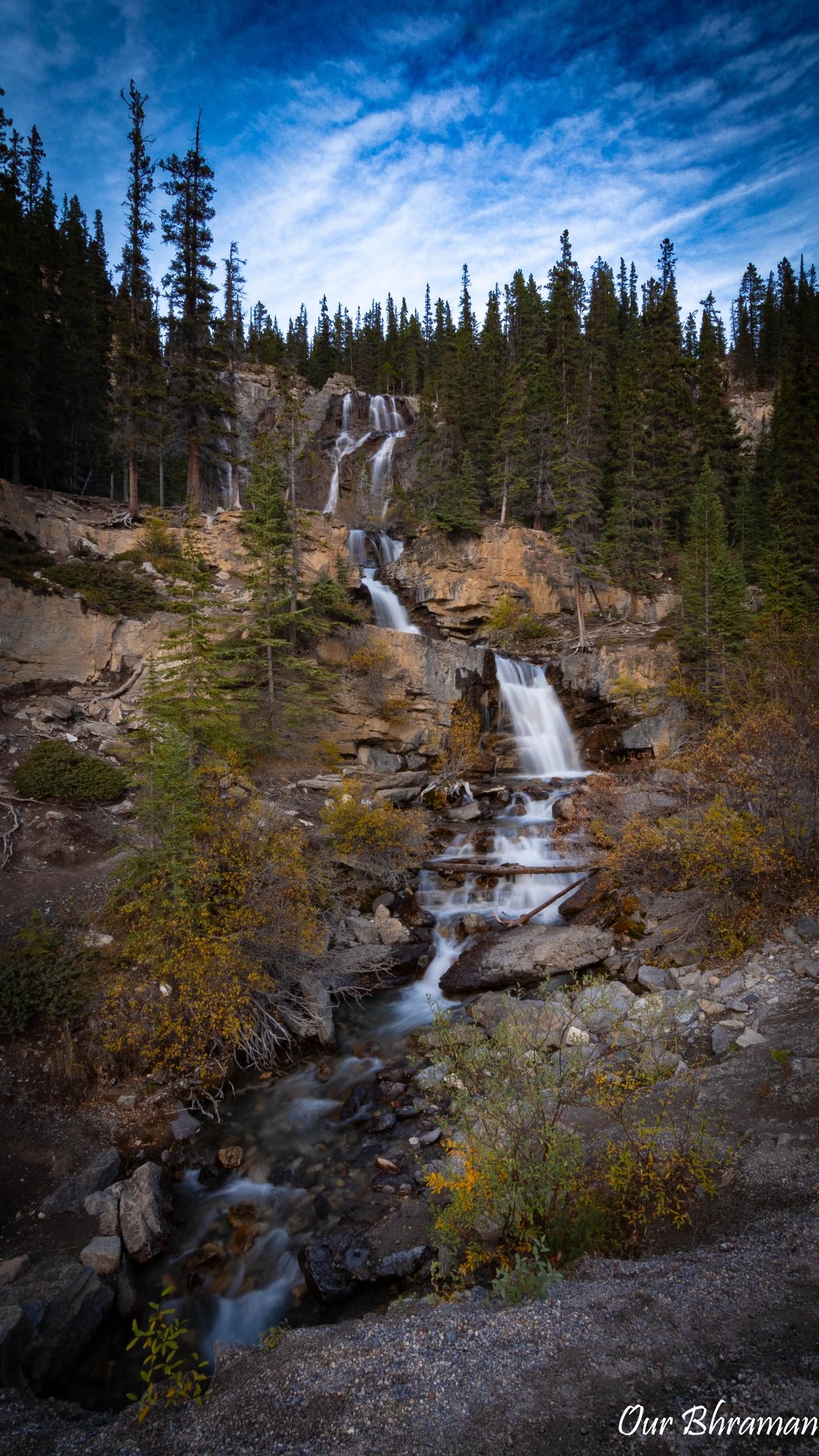
As we approached, we were greeted by the sight of this lovely multi-tiered waterfall, just north of the Columbia Icefield. It made for a perfect stop before our planned walk to the Athabasca Glacier. The beauty of Tangle Creek Falls is that it can be seen directly from the highway, meaning you don’t need to hike or walk to enjoy a great view. This convenience makes it an ideal stop that won’t take up much time in your Icefields Parkway itinerary.
Although it’s easy to simply enjoy the waterfall from below, we were tempted by the idea of following a trail up its side to explore some of its many cascading layers. However, with time running short, we decided to take in the falls from below, soaking in the scenery and capturing some photos before heading out to the Athabasca Glacier.
After this our next stop on the was Toe of the Athabasca Glacier. Hiking to the Toe of the Athabasca Glacier was an unforgettable experience, not just for the breathtaking views but also for the challenge of battling the cold and windy weather. With temperatures hovering near freezing, the less-than-2 km hike felt like a walk inside a refrigerator the entire time!
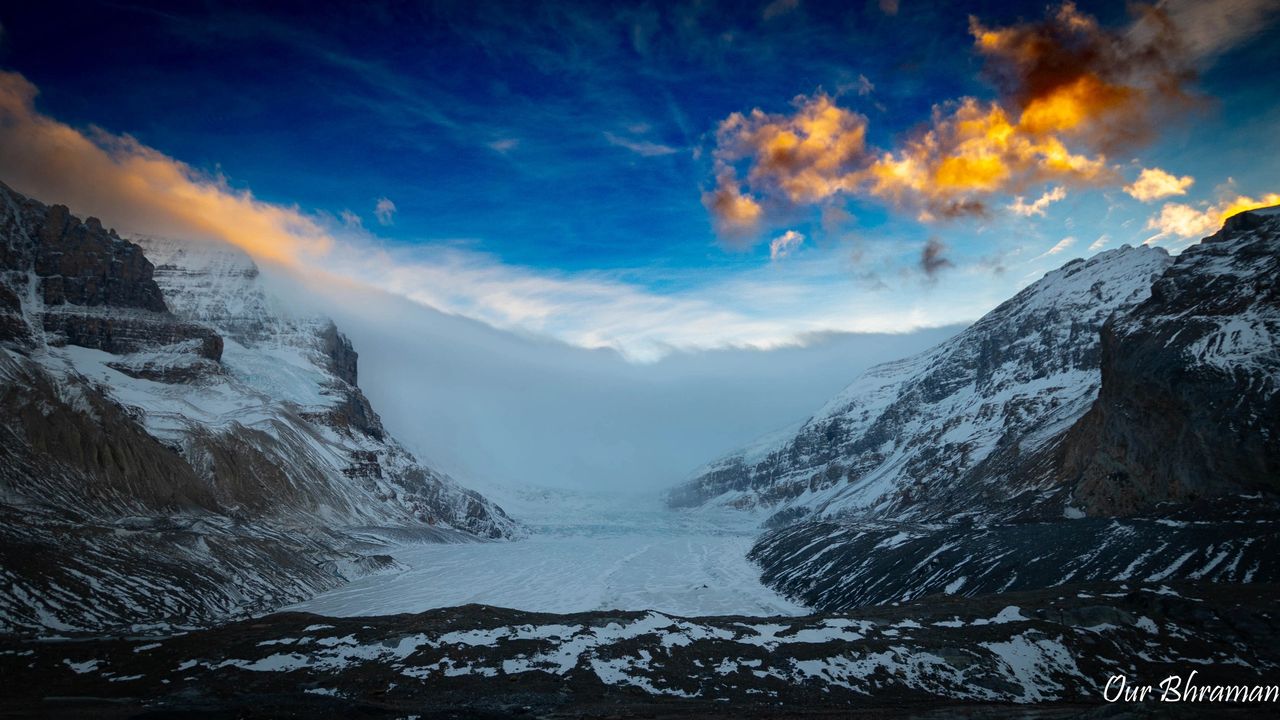
As we navigated the winding path through the valley, we encountered interpretive signs that educated us about the glacier’s formation and the pressing issue of climate change. It was eye-opening to learn how these majestic ice masses are retreating over time, reminding us of the urgency of environmental awareness.
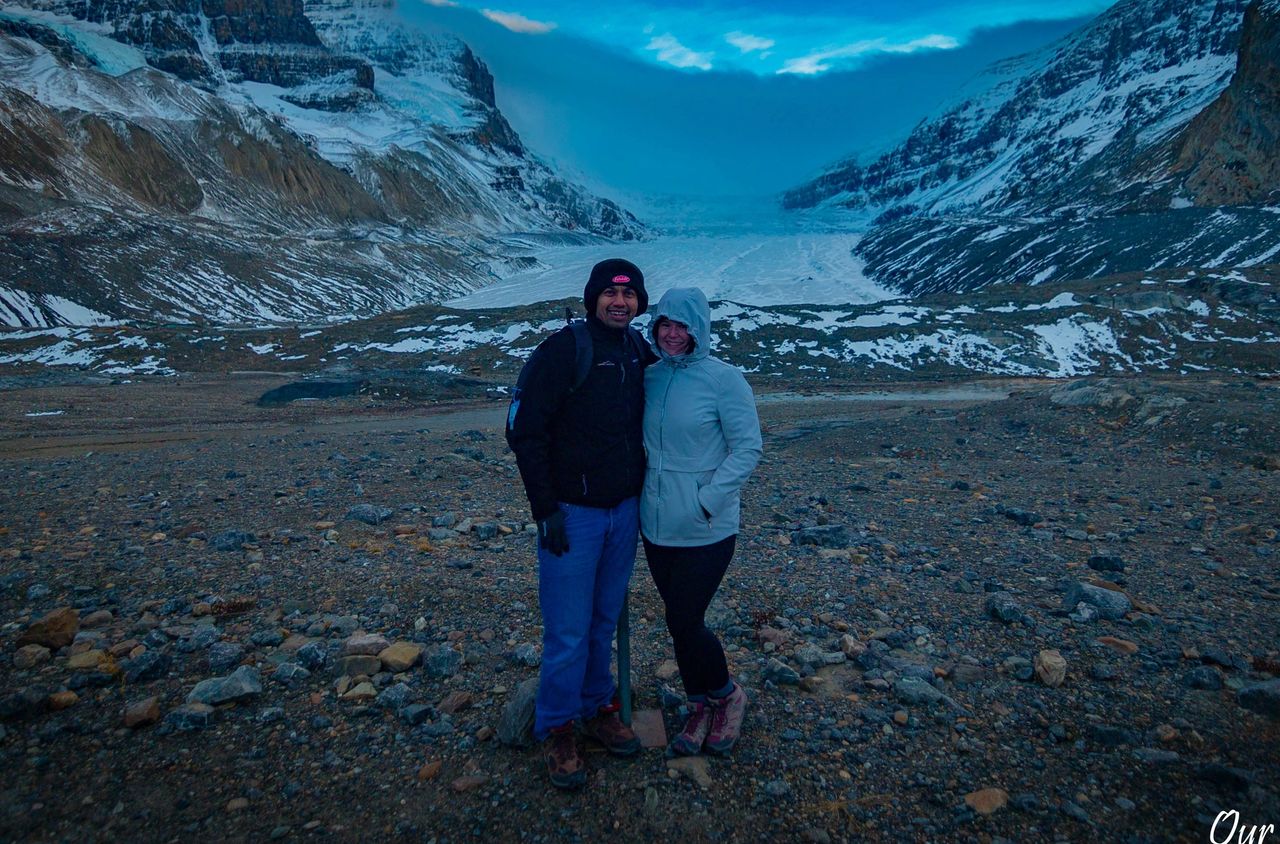
One of the highlights was crossing the bridge over the meltwater stream. Standing there, I marveled at the glacially smoothed limestone surfaces beneath us—evidence of a time when the ice extended much further. It was a moment that connected me to the ancient history of this landscape.
Continuing uphill, the trail curved around the toe of the glacier, offering several stops filled with fascinating information about its history. I was amazed to see how the glacier has changed over the years, documented for all to witness
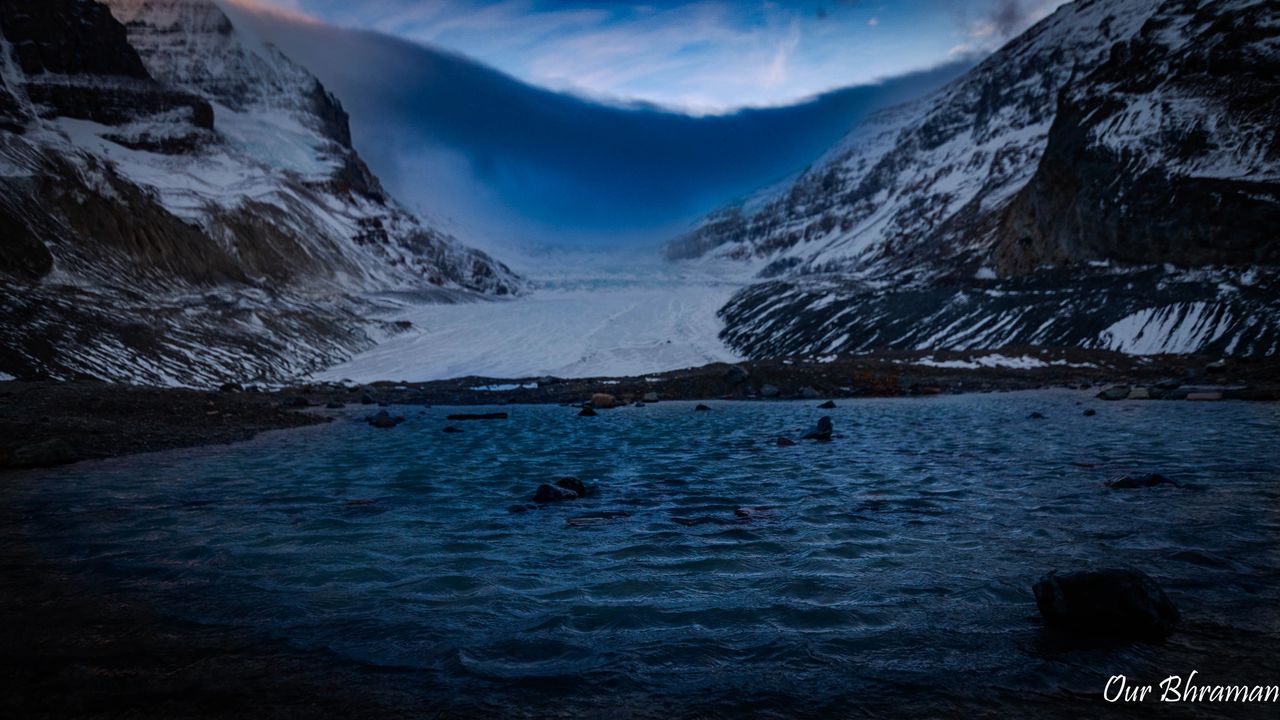
As we reached the top of a rock bench, the view of the glacier’s edge was absolutely stunning. The sheer size and shimmering beauty of the ice took my breath away, even in the brisk wind. We spent a few minutes there, soaking in the dramatic scenery and reflecting on the power of nature while capturing its beauty on camera.
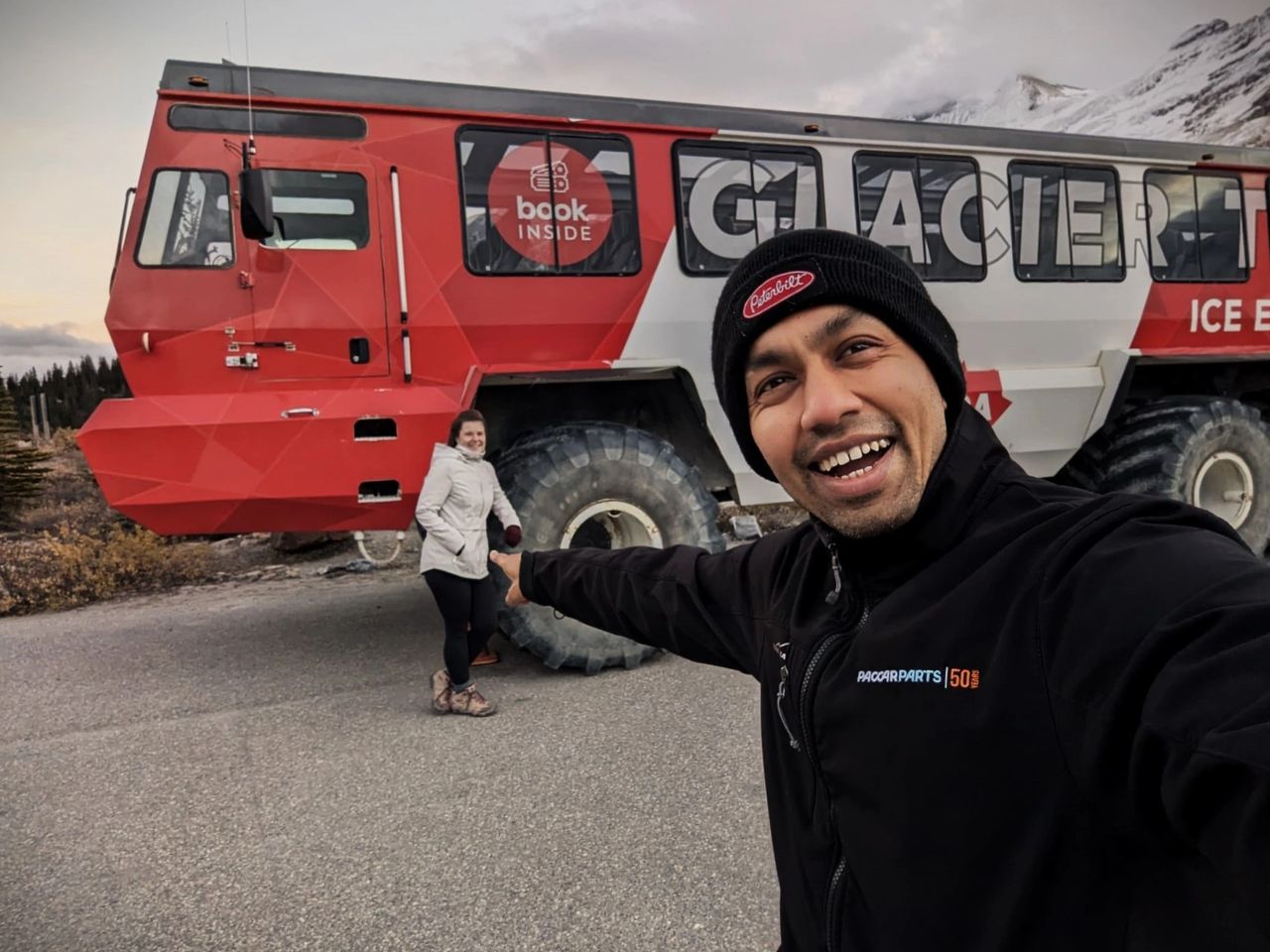
After our hike, we decided to visit the parking area for the Glacier Discovery Centre to snap a picture in front of one of those massive ice explorer vehicles. Unfortunately, we arrived a bit late in the day and didn’t have time to visit the visitor center. It was a bit of a letdown, but it just gives me something to look forward to on my next trip.
Even the sight of trains and trucks on this road, with the majestic mountains and sparkling lakes in the backdrop, adds a dramatic effect to the scenery. The Icefields Parkway is not just a route; it’s a cinematic experience that leaves you in awe at every turn.
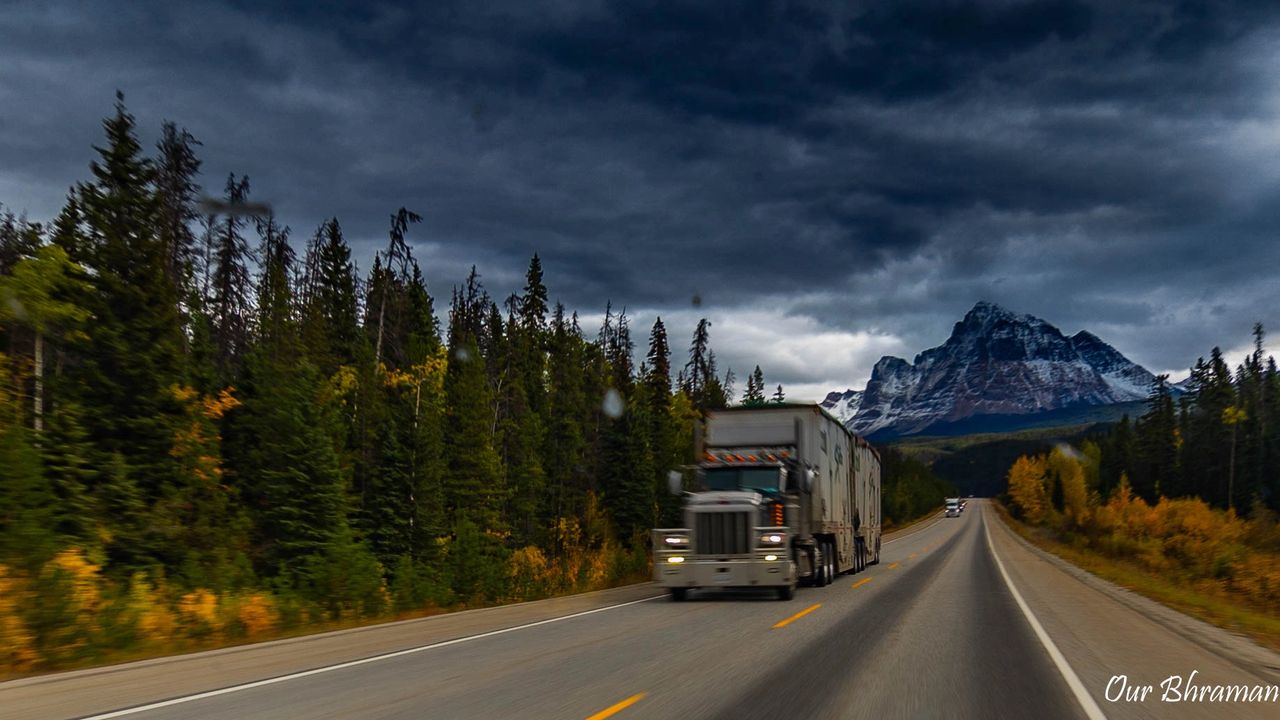
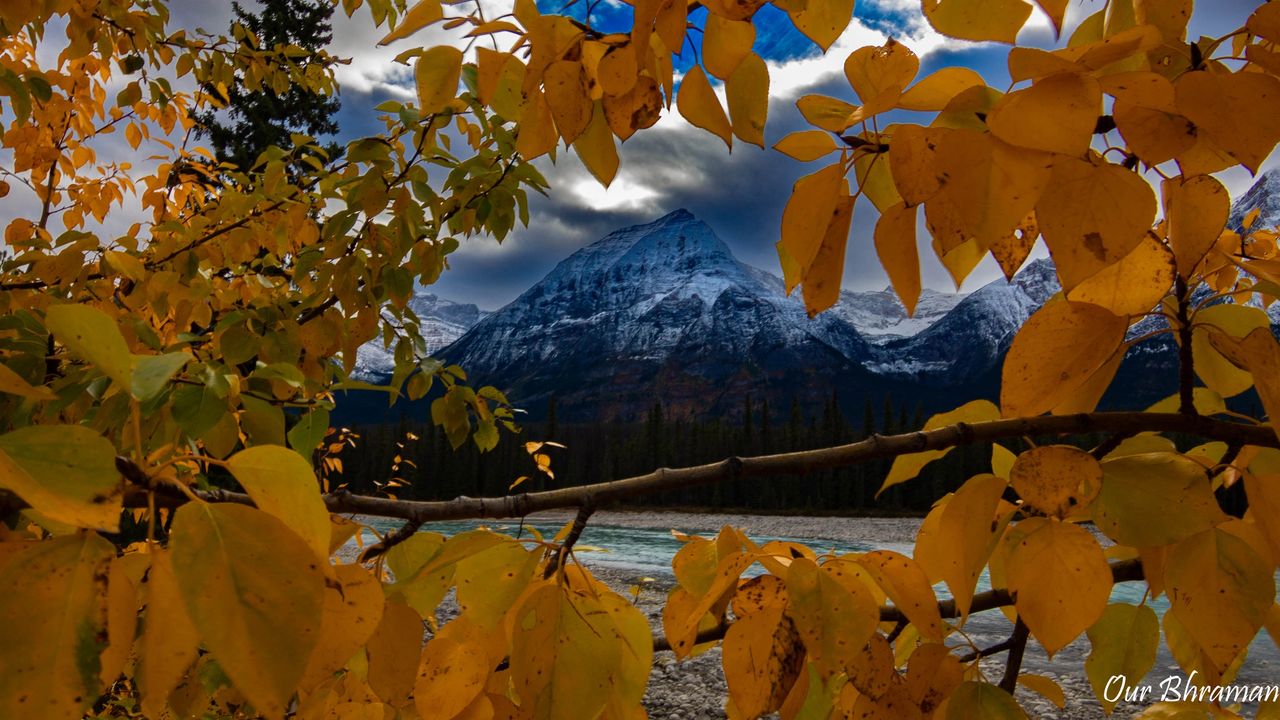
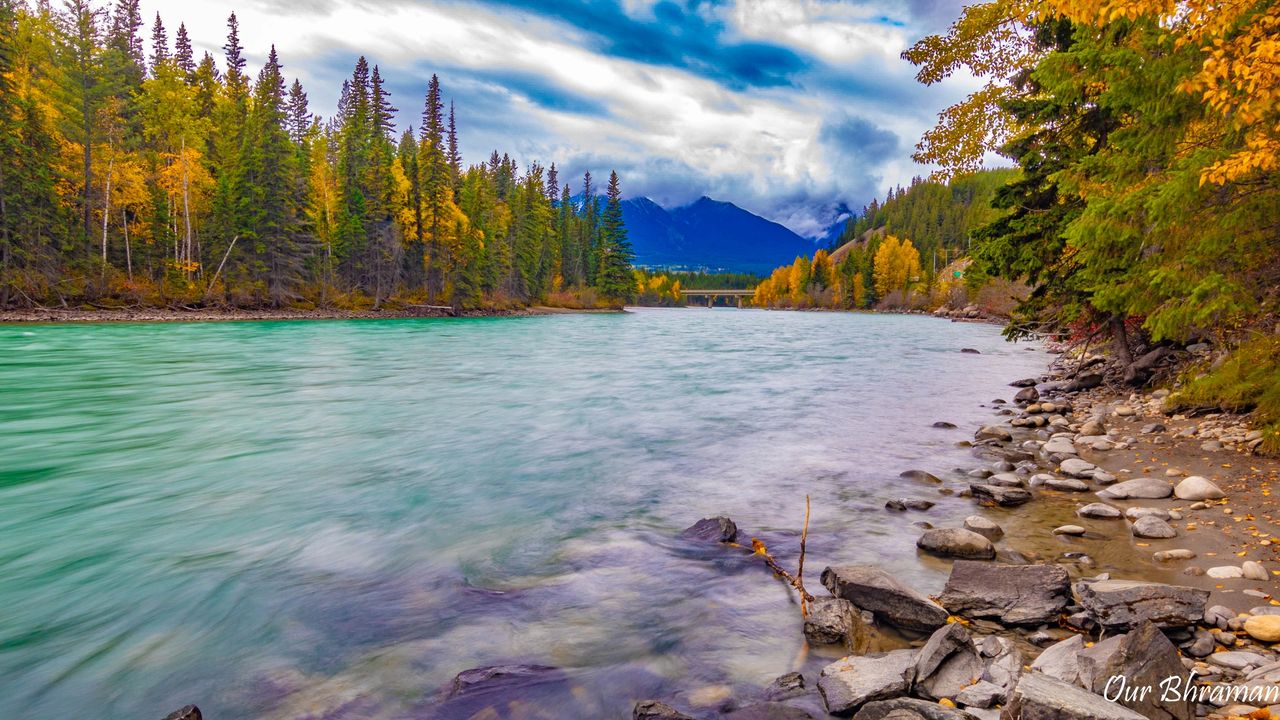
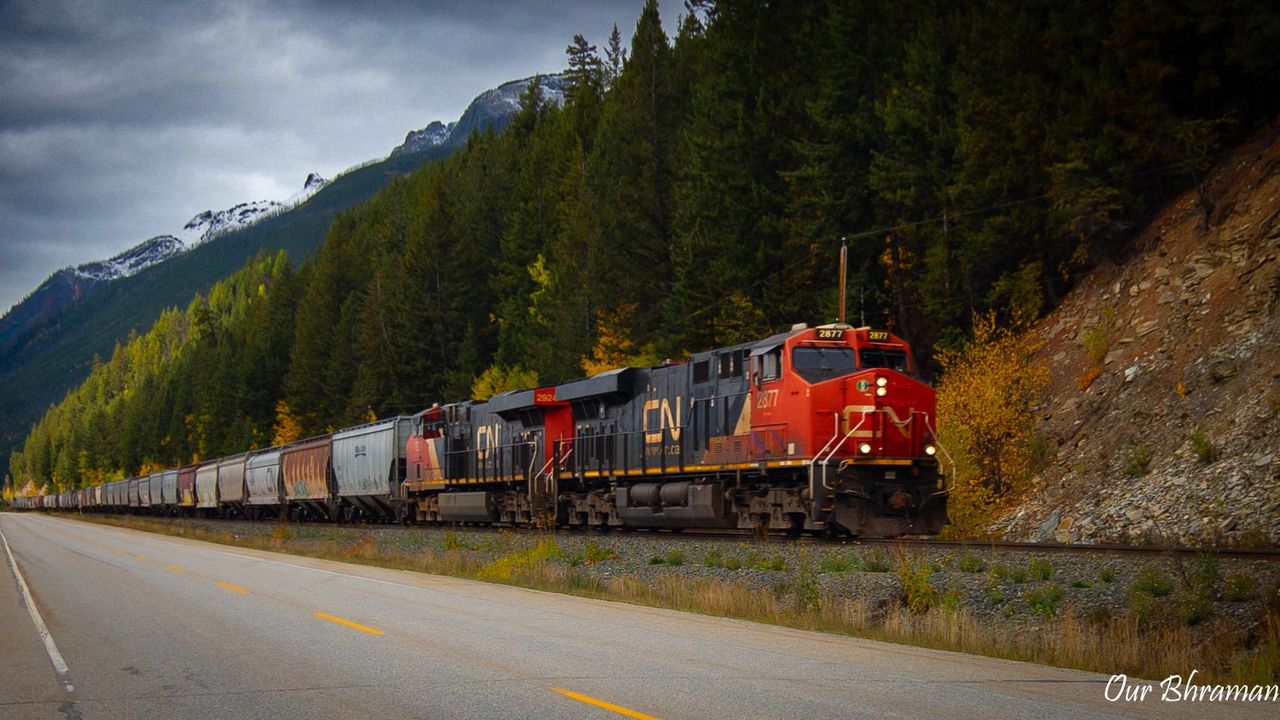
After visiting a couple of stunning spots along the Icefields Parkway, we began our drive to our hotel in Lake Louise Village, the Lake Louise Inn. It was a welcome sight after a long day of hiking, driving, and exploring. The inn offered a cozy atmosphere and comfortable accommodations, making it the perfect place to unwind.
Day-2 The next day began with an early start; we woke up at 3:30 AM to prepare for our shuttle from Lake Louise to Moraine Lake. We felt incredibly fortunate to have secured tickets for the Alpine Start shuttle, as it’s now the only way to access Moraine Lake since the new regulations were introduced in 2022. Stepping out into the crisp morning air was a shock to the system, as the temperature was quite cold. However, as soon as we boarded the warm, cozy bus for the 15-minute ride, a sense of comfort washed over us. The excitement of the day ahead kept our spirits high despite the early hour.
Once we arrived at the Moraine Lake parking lot, it was amusing to see where everyone was heading. In the darkness of early morning, reading the trail signs was quite the challenge! We ended up following a group of fellow adventurers, which led us to the Rockpile Trail—aptly named the “Twenty Dollar View” because it’s the same scene featured on the former Canadian twenty-dollar bill.
As we hiked up the trail, we couldn’t help but consider it one of the best views in the world. It’s the most popular trail among visitors at Moraine Lake, and for good reason. Starting from the parking lot, the Rockpile Trail is easy to find on your left-hand side if you’re facing the lake. The short walk up to the top of the Rockpile is manageable, with the trail switch backing along the backside of the rocky moraine. It took us only about five to ten minutes to reach the summit, and several stone and log steps made it accessible for most hikers.
We reached the viewpoint around 5:45 AM, still about an hour and a half before sunrise. The weather was quite chilly, making it a bit uncomfortable to be out so early in the day. However, we hunkered down in eager anticipation, searching for the perfect spot to capture some stunning photos.
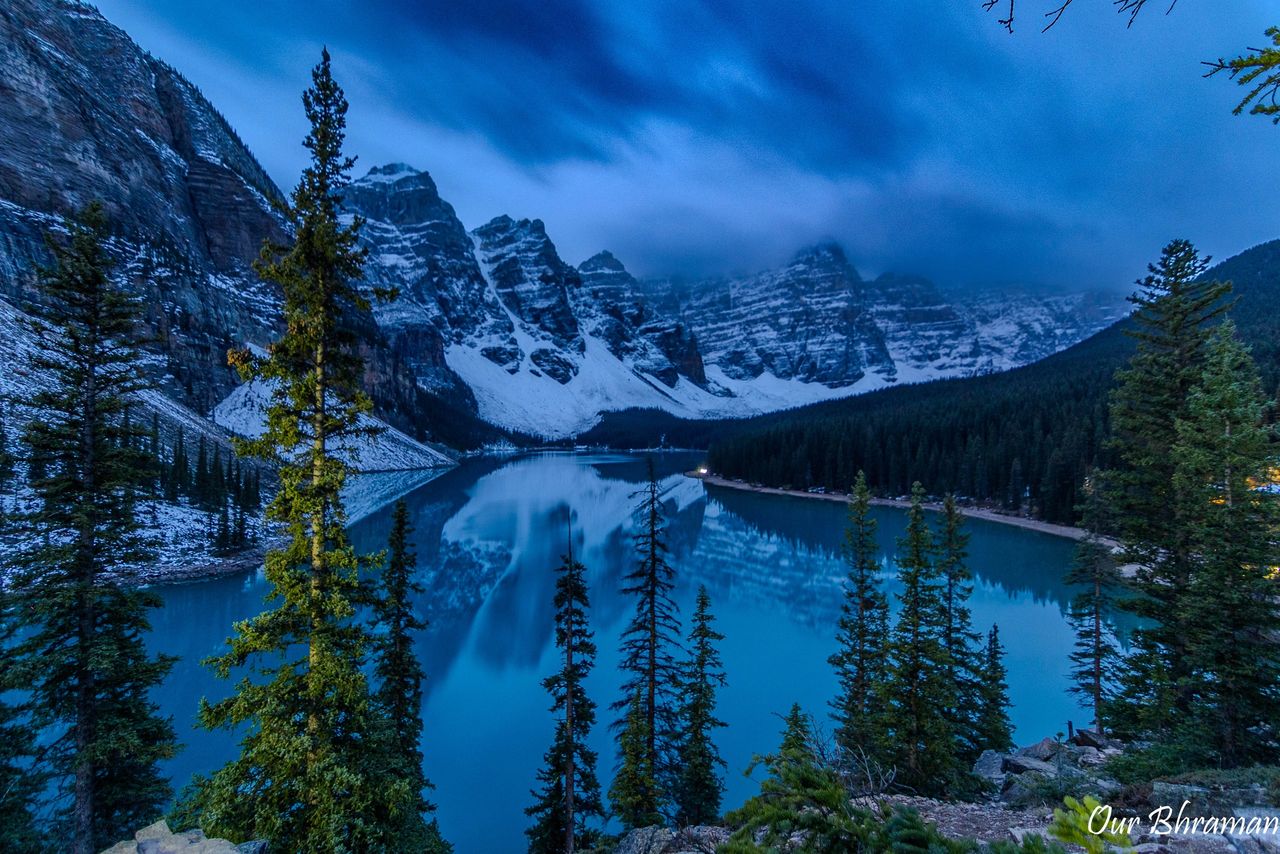
As the first light began to creep over the horizon, our excitement grew. The wait was well worth it; when the sunrise finally happened, it felt like magic. The deep blue waters of Moraine Lake gradually came into view, beautifully framed by the breathtaking Ten Peaks—ten towering, snow-capped mountains that left us in awe.
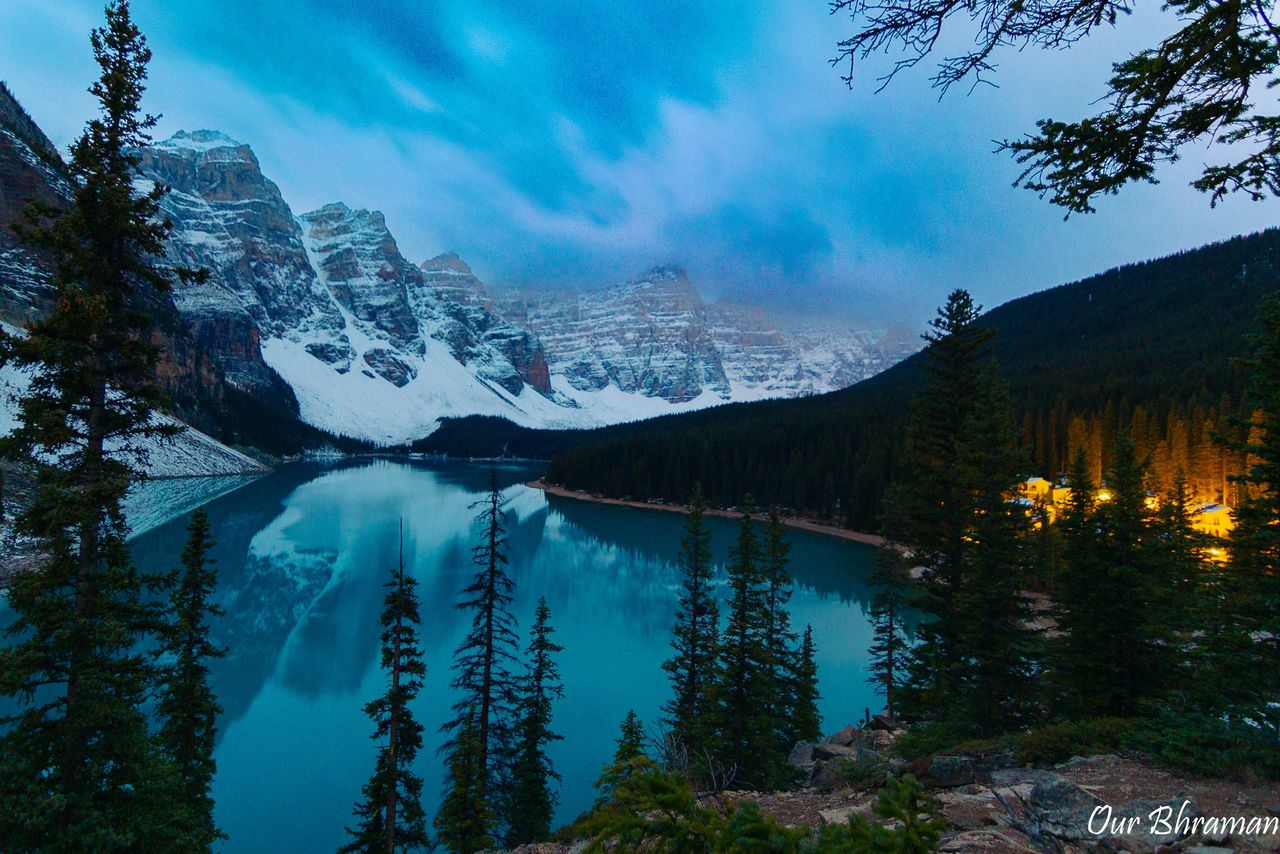
Watching the sun rise over this incredible landscape was an unforgettable experience. The colors shifted and danced across the sky, reflecting off the lake and enhancing the beauty of the scene before us. We snapped photo after photo, trying to capture the essence of this moment, feeling grateful for the opportunity to witness such natural splendor. It was a perfect start to our day, reminding us of the beauty that awaits when you rise early and venture into the wild.
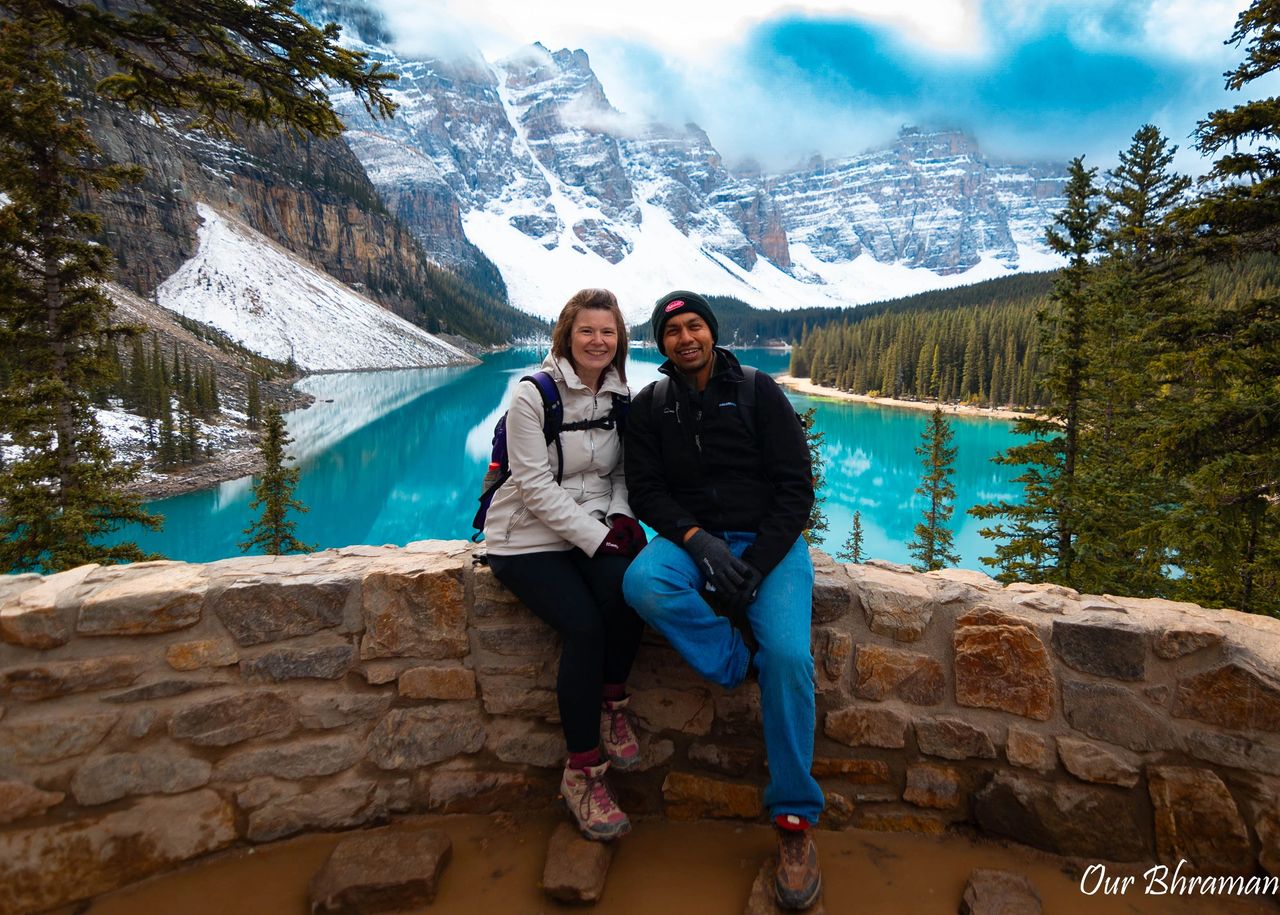
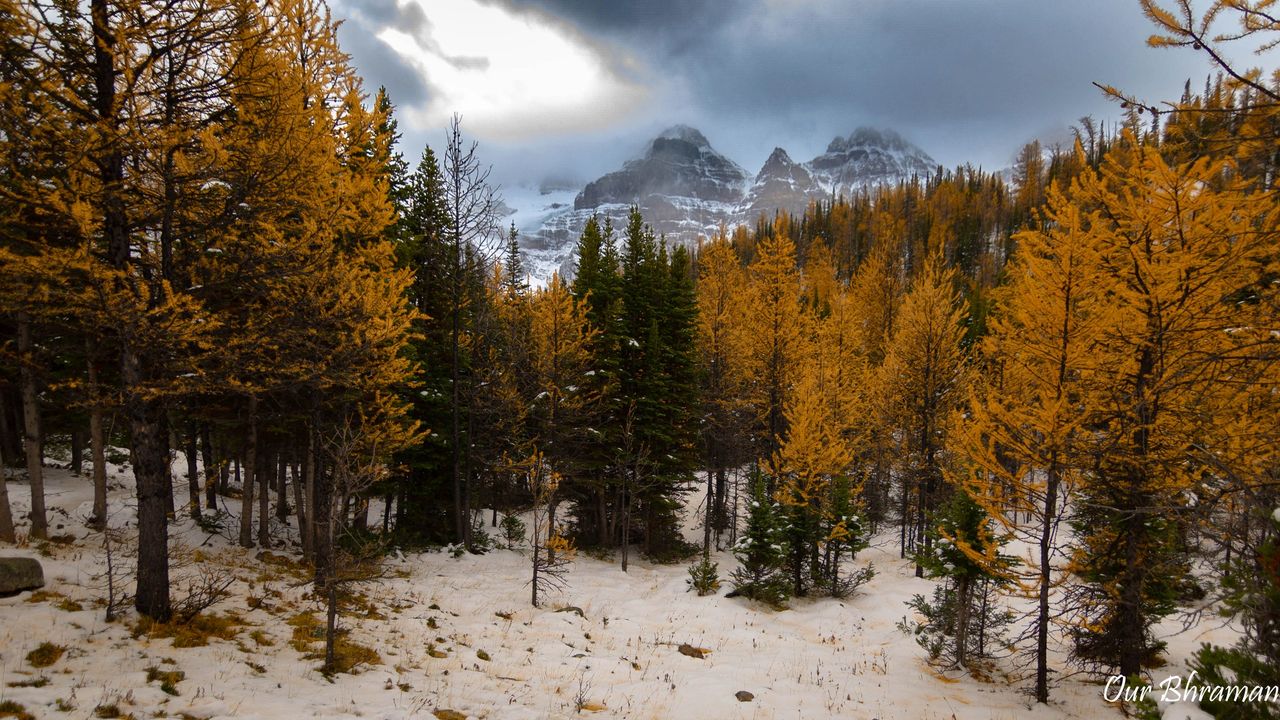
After sunrise we decided to move on to next hike for the day. Larch Valley Hike, at Moraine Lake. Our experience of the hike was elevated as we visited during larch season, when the alpine larch trees turn a brilliant golden yellow before shedding their needles for winter.
The hike to Larch Valley was both challenging and rewarding. Starting from the shore of Moraine Lake, the trail quickly ascends through switchbacks, offering breathtaking views as you climb higher. Although the steep incline can be tough at points, every step is worth it. As we reached the valley, we were greeted by a surreal landscape—a golden forest of larches set against the backdrop of snow-capped peaks in the Valley of the Ten Peaks.
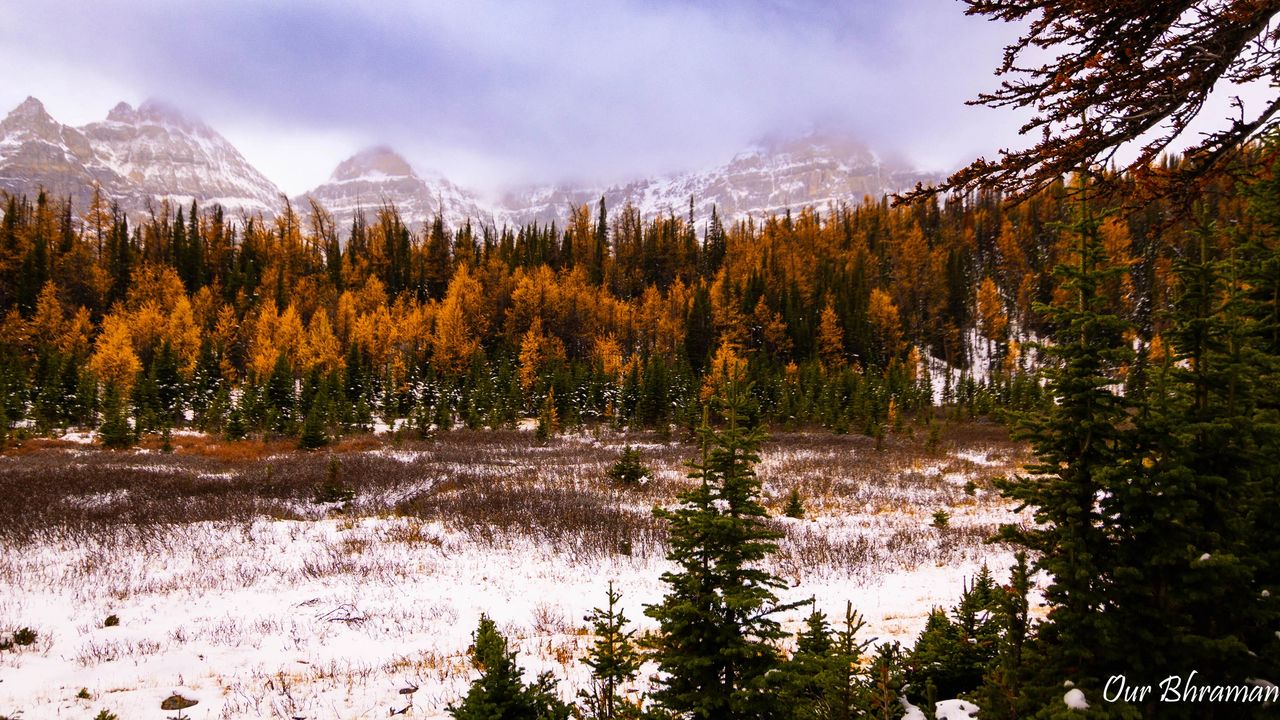
Walking through the vibrant yellow canopy felt like stepping into another world. The crisp mountain air, combined with the striking fall colors and the peaceful surroundings, made this hike truly unforgettable. While parts of the trail were quiet and reflective, other moments were filled with awe as we paused to take in panoramic views of the valley and Moraine Lake below.
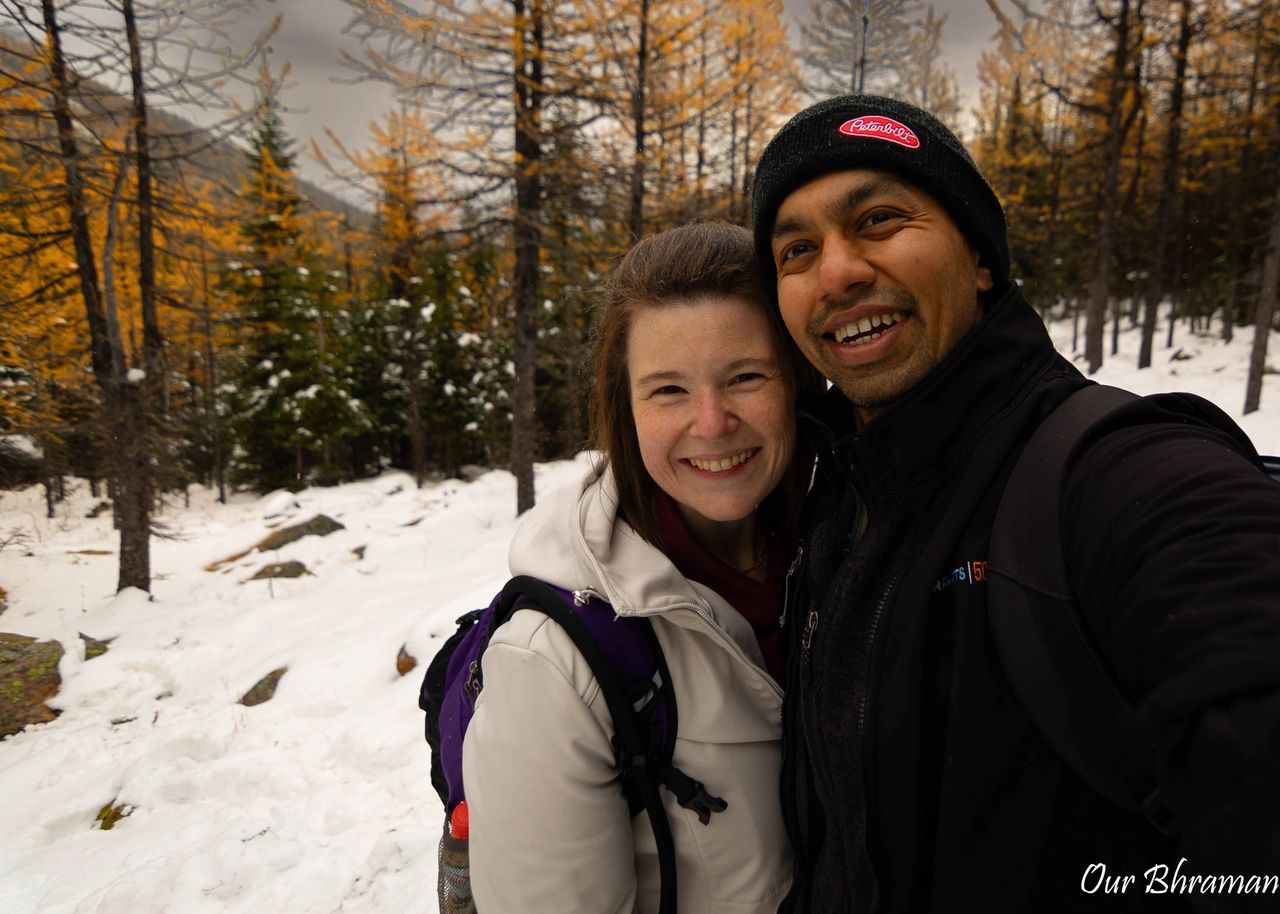
The hike to Larch Valley is a must-do, especially during the fall season, when the larch trees are at their peak. It was a perfect way to connect with nature, leaving us with lasting memories of one of the most beautiful places in the Rockies.
After a couple of hours of hiking, we decided to catch a return bus to the Lake Louise parking area around 2 in the afternoon. Exhausted from the trek, we initially thought about heading back to the hotel for a quick nap before tackling the Lake Louise hike. However, by the time we reached the car, we reconsidered. Parking at Lake Louise is a premium, and once you secure a spot, it’s hard to give it up and hope to find another one later. So, instead of leaving, we decided to rest in the car. As we sat there recovering from the exertion, we somehow managed to doze off for about 20-30 minutes. That unexpected nap gave us just the second wind we needed to push through and continue exploring.
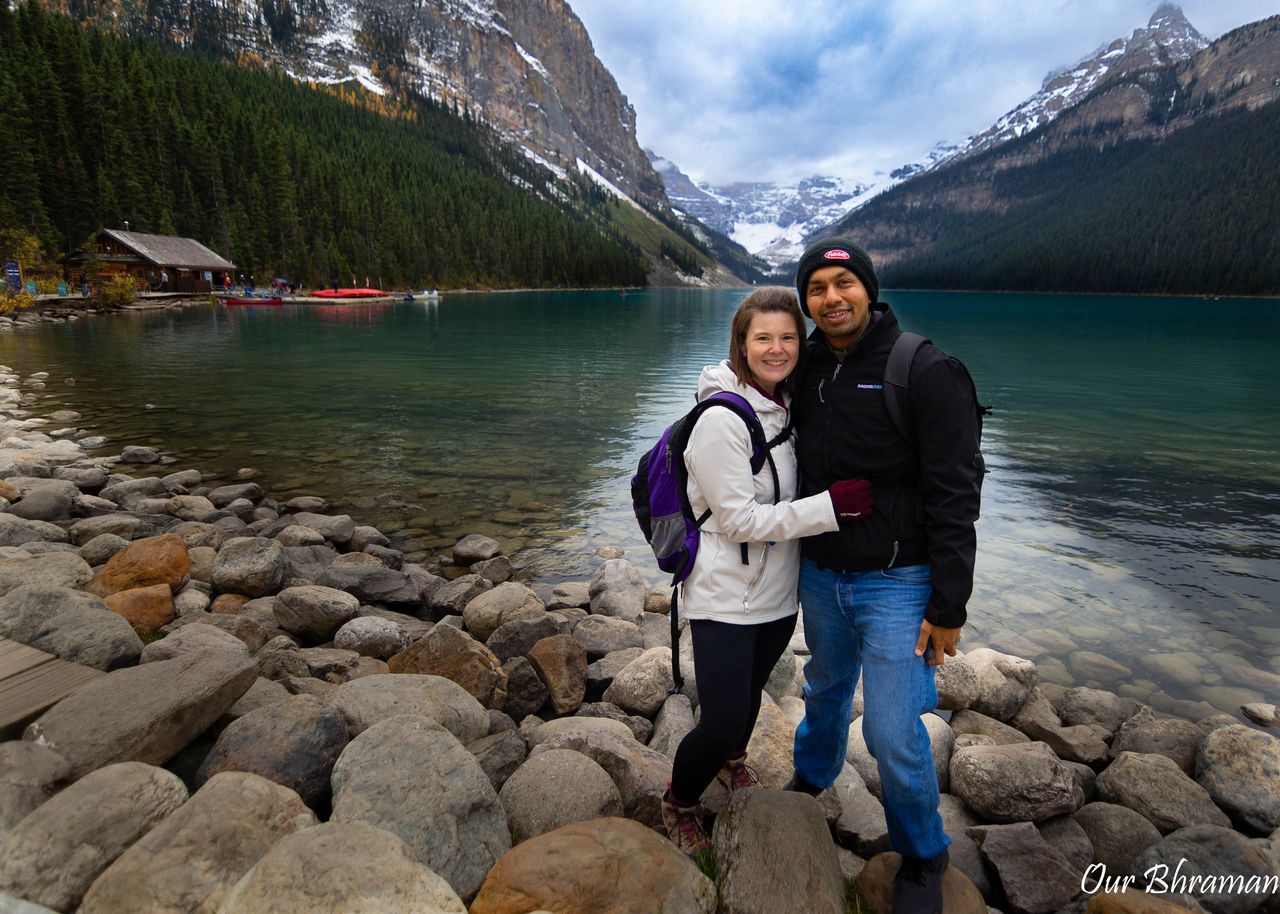
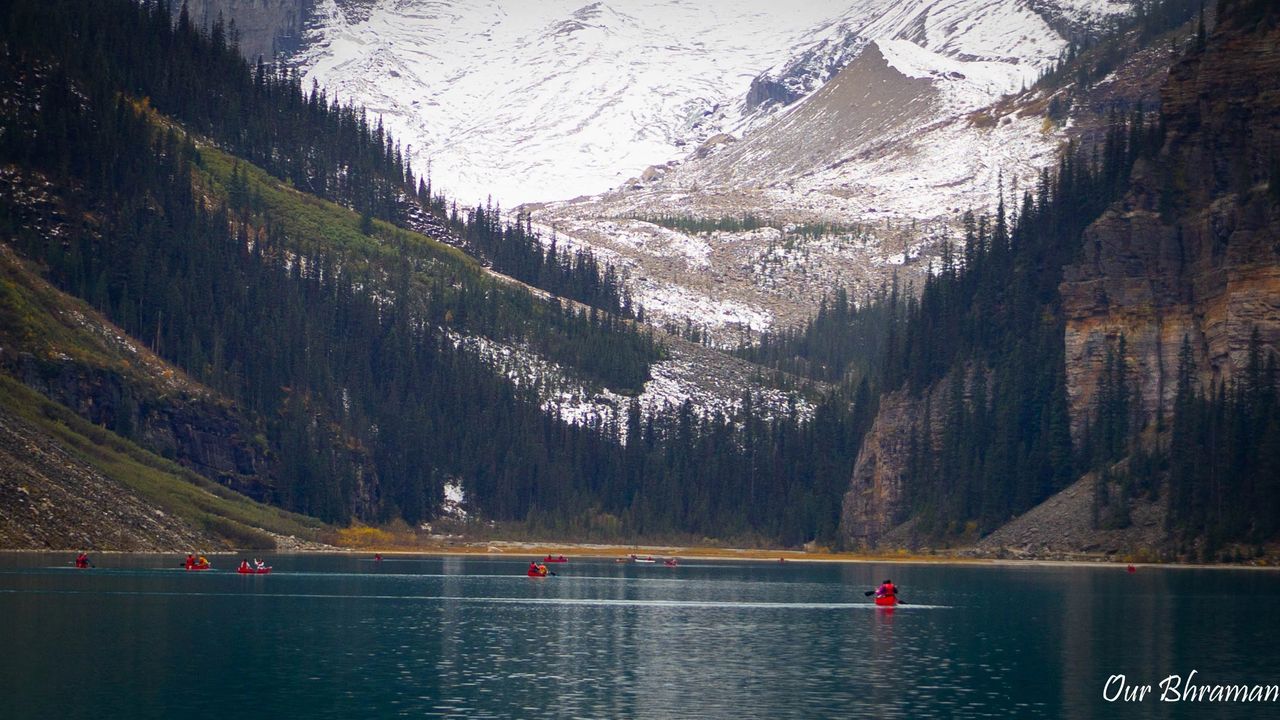
We decided to explore simple hike to walk through the lake Louise lakeshore. Framed by towering peaks and glaciers, the lake’s calm, turquoise waters seem almost unreal in their beauty, reflecting the surrounding mountains like a giant mirror. A well-maintained, flat trail runs along the shoreline, providing easy access to stunning views at every turn. The Victoria Glacier at the far end of the lake adds a majestic backdrop, making it a favorite spot for photographers and nature lovers alike.
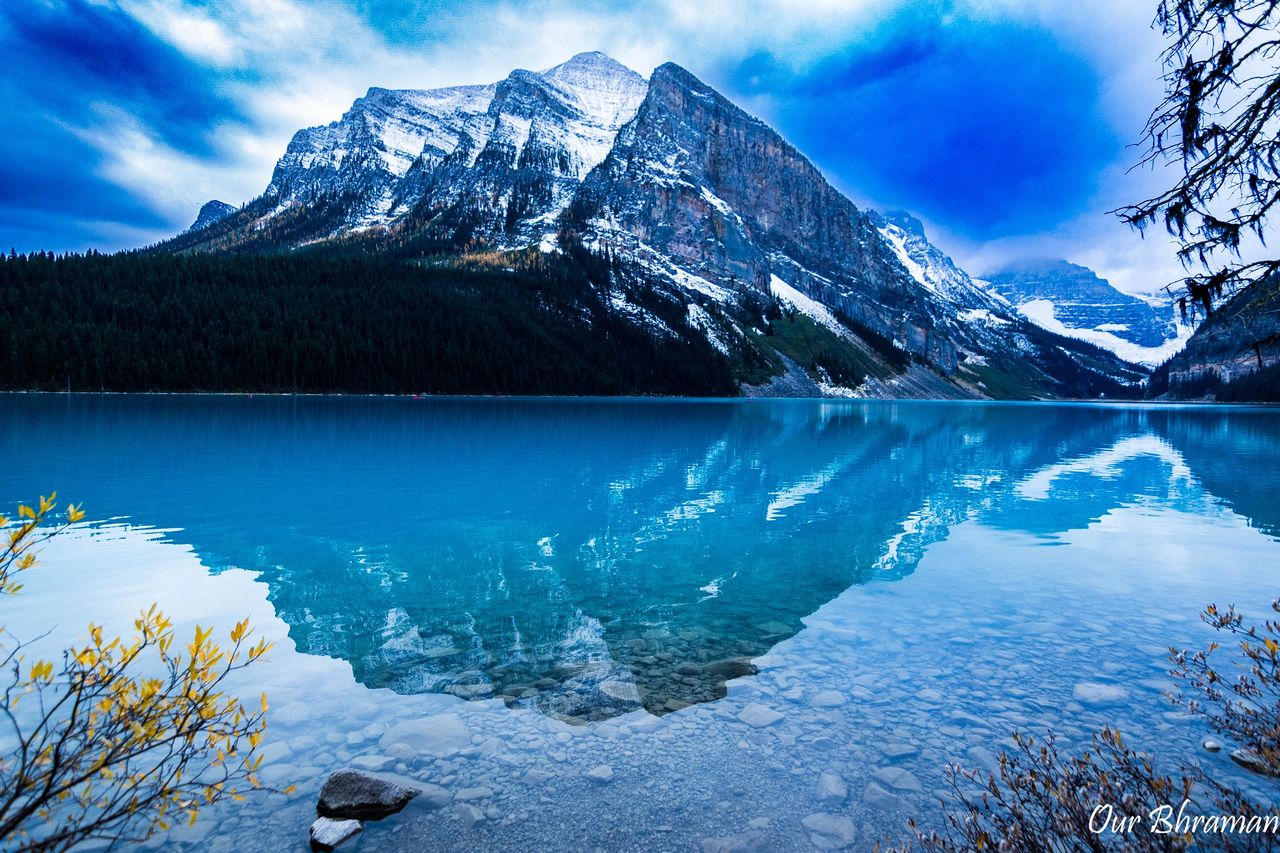
The walk along the lakeshore is peaceful, with the sound of gentle waves lapping against the shore and the occasional chatter of hikers. As you stroll, you pass by the Fairmont Chateau Lake Louise, a grand hotel that overlooks the lake, adding to the charm and history of the area. Whether you’re there for a leisurely walk, a paddle in a canoe, or simply to sit and take in the view, the lakeshore offers a perfect way to unwind and connect with nature.
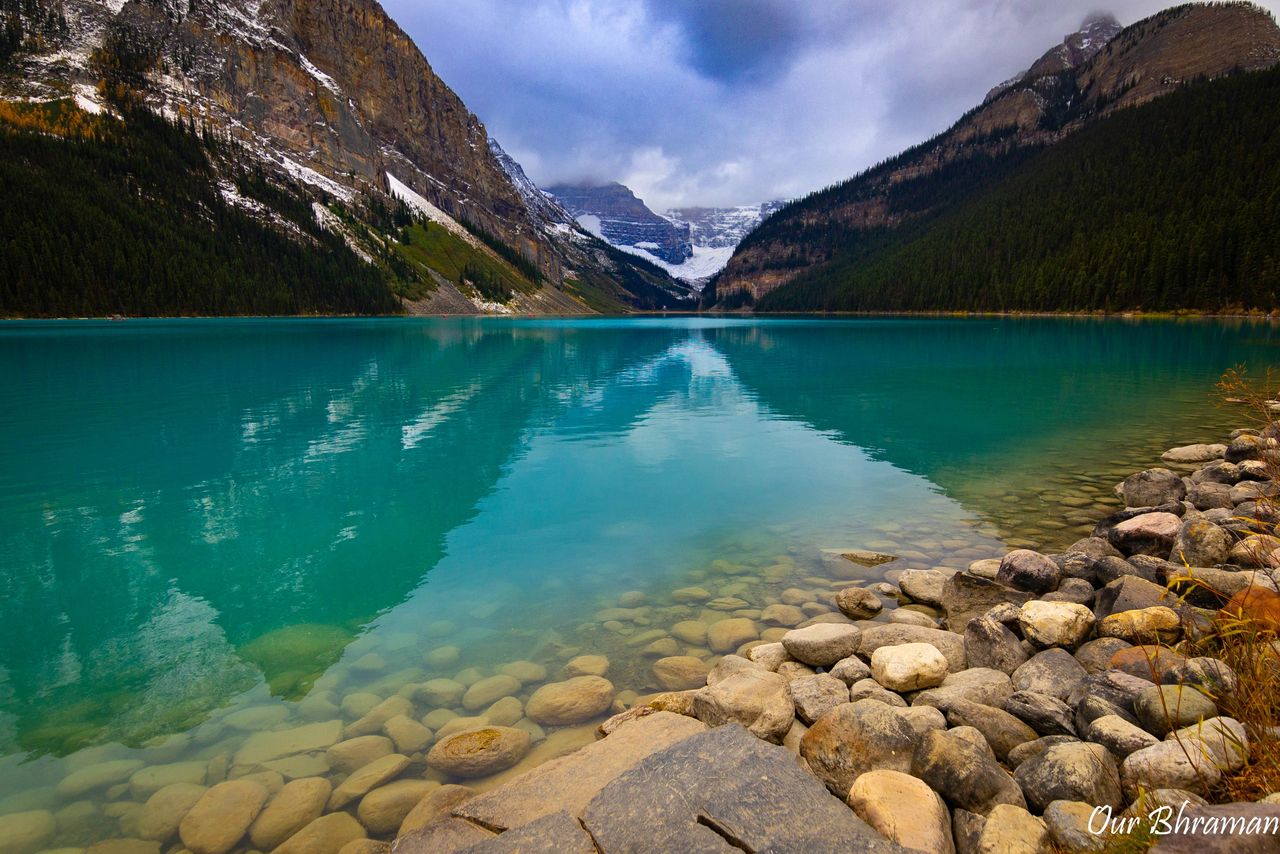
After the hike, we spent some time sitting on a bench along the shore of Lake Louise, slowing down to soak in the breathtaking views and the tranquil beauty of nature. The still, turquoise waters, surrounded by towering peaks and the distant Victoria Glacier, offered the perfect setting to reflect on the day’s adventures. It felt good to pause and just breathe, letting the calm of the lake wash over us after such a long and active day.
Our day had started as early as 3:30 AM and covered more than 15 miles of hiking with 2,000 feet of elevation gain, so this moment of rest was well-earned. As the sun began to dip behind the mountains, we reluctantly made our way back to the hotel, feeling both exhausted and fulfilled. It was the perfect conclusion to an unforgettable day in the heart of the Rockies.
Day-3
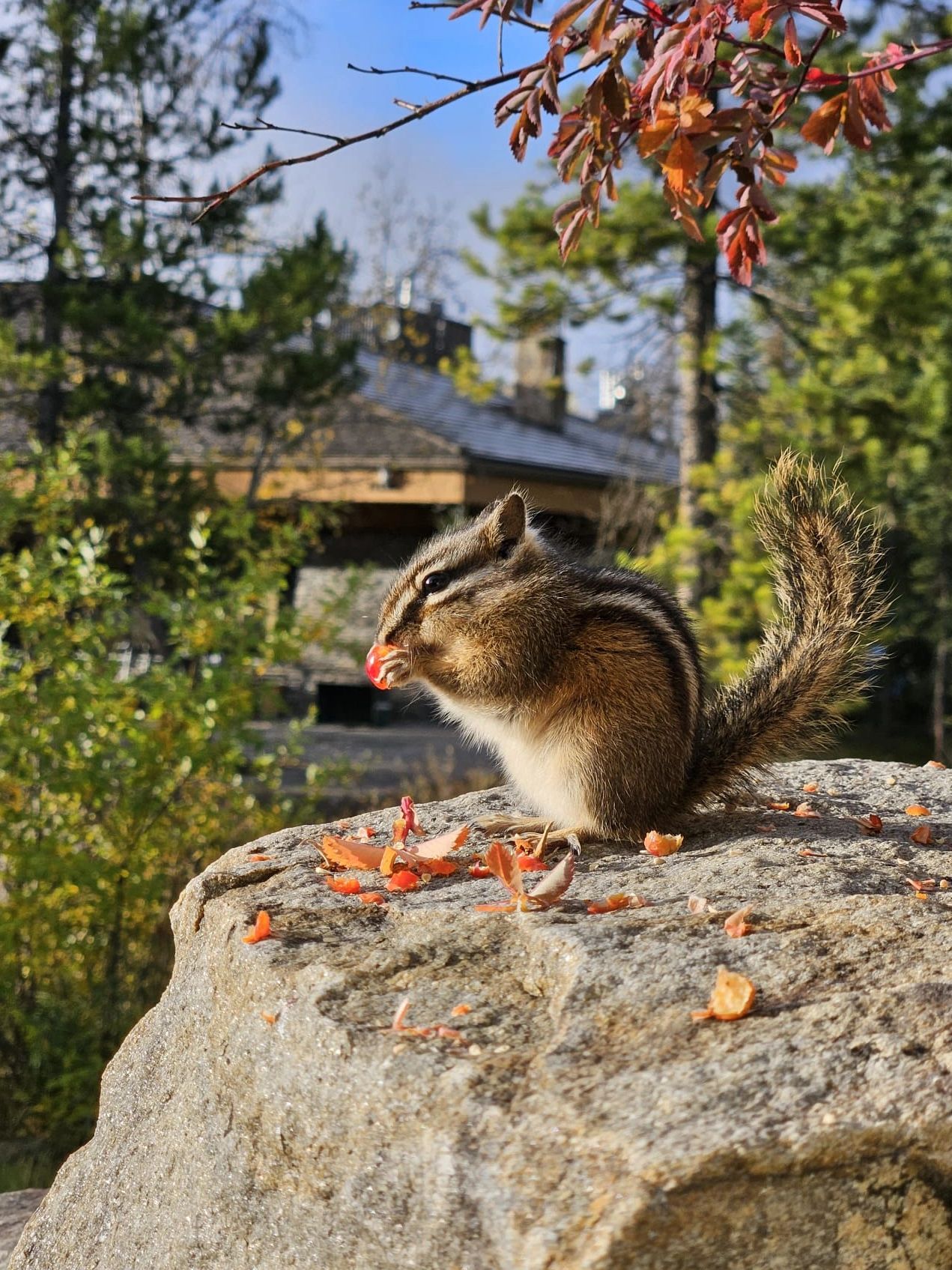
This day, we decided to take our foot off the pedal and start our day late, around 8 AM. We visited the Lake Louise Visitor Centre, which sits inside Samson Mall in the small village of Lake Louise, making it both an information hub and a convenient stop for travelers. Beyond maps, trail tips, and wildlife updates, the visitor center provides insight into the unique geological history of the area, including how glaciers like the Victoria Glacier helped shape the surrounding landscape. We were greeted by a very curious member of wildlife, as you can see in the picture.
Today we plan to track all the points we missed on 1st day on icefield parkway. Our first spot was peyto lake. The Peyto Lake Hike offers one of the most rewarding views with minimal effort. Its known for its distinct wolf-head shape and surreal turquoise color, Peyto Lake is a natural is sure a natural wonder. The short but scenic hike starts from the parking lot and follows a well-paved trail through a dense forest of evergreens, gradually ascending to a viewing platform.
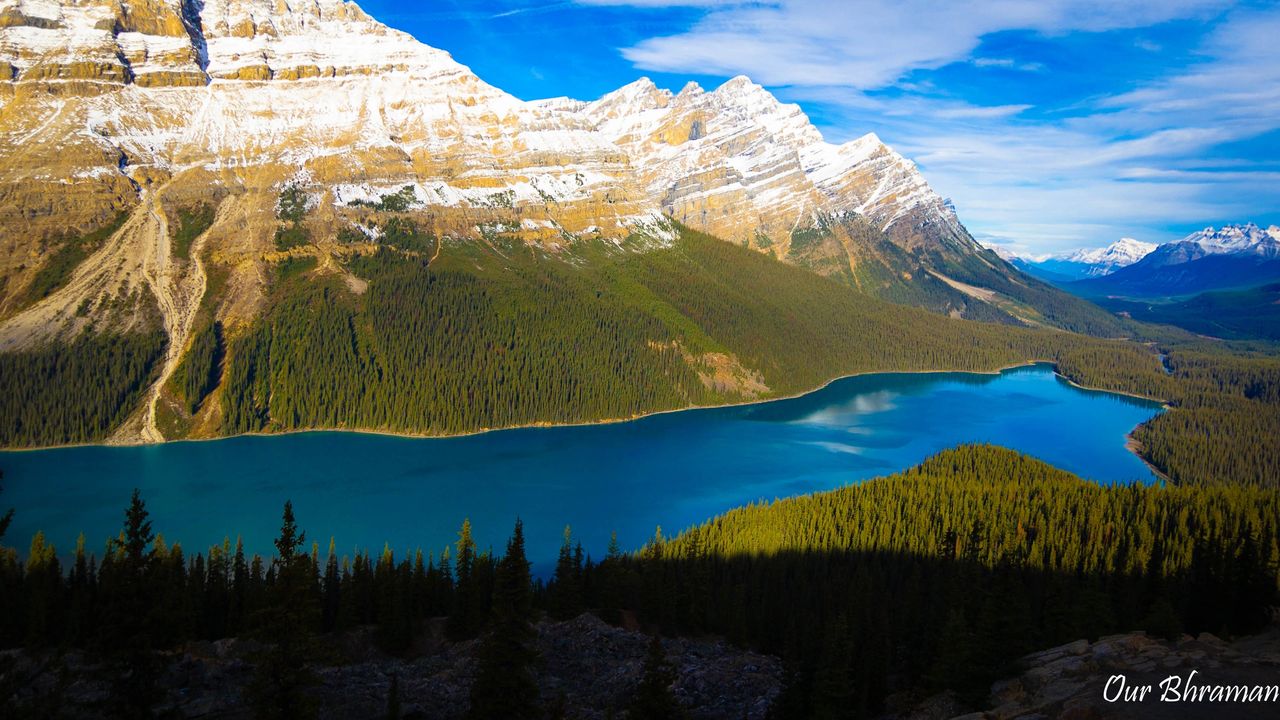
Though the hike is relatively easy, the elevation gain is enough to get your heart pumping. After about 20-30 minutes of walking, we reached the overlook, where the view of Peyto Lake suddenly opened up before us. The lake’s brilliant blue color, a result of glacial rock flour suspended in the water, contrasted beautifully with the surrounding dark green forest and jagged mountain peaks.
We took our time at the viewpoint, soaking in the stunning scenery and snapping photos from different angles. This hike (1 miles) round trip from the parking lot to the viewing platform and back. The trail has a moderate elevation gain of around (260 feet), this was good warm hike to start a day.
second stop for the day was Bow Lake viewpoint. This spot is easily accessible, with a short walk from the parking area to the lakeshore. Despite its easy access, Bow Lake is just as strikingly blue! Its waters are fed by the Bow Glacier in the Wapta Icefield, which spans both Banff and Yoho National Parks. The glacial silt and sediment in the lake beautifully reflect light, creating stunning teal and emerald hues that shift with the time of day. Crowfoot Mountain stands prominently in the center of Bow Lake, adding to the lake’s dramatic scenery.
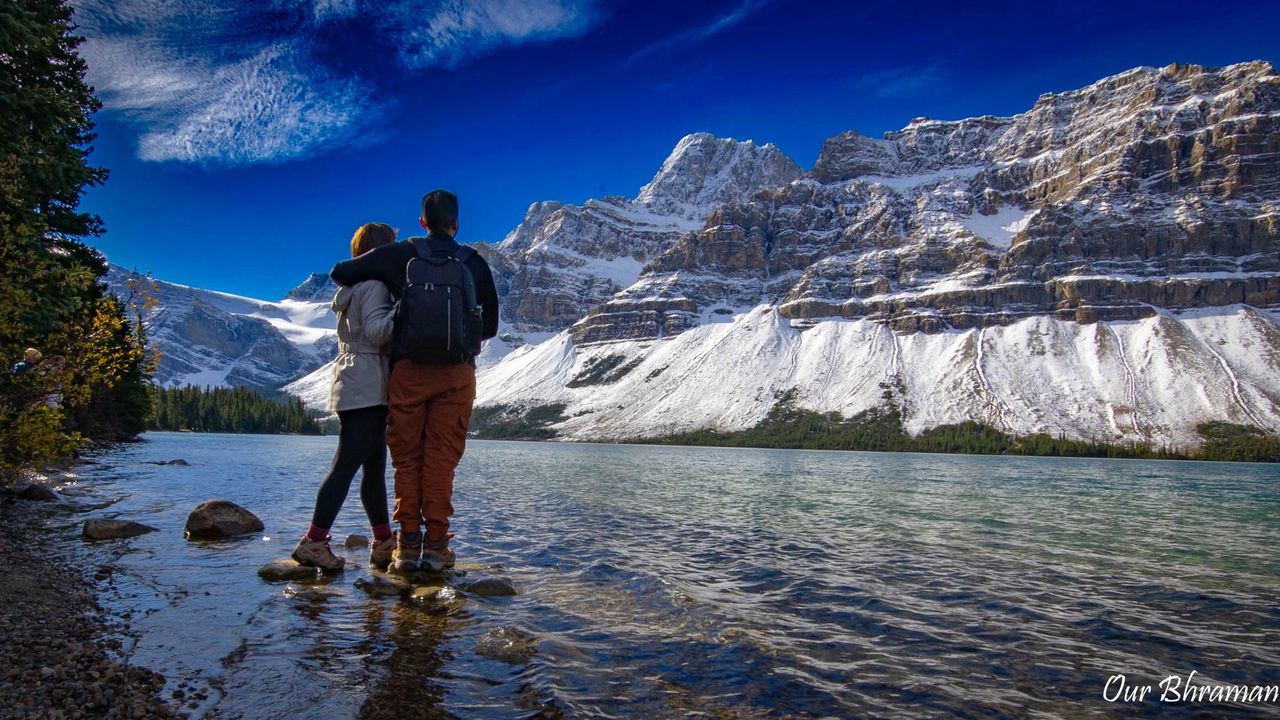
Bow Lake is a lesser-known but rewarding stop along the Icefields Parkway—a perfect spot for a quick and memorable break. Whether you’re stopping briefly or spending time exploring the trails around the lake, the peaceful ambiance and breathtaking scenery make it a must-visit. Don’t miss this stunning spot!”
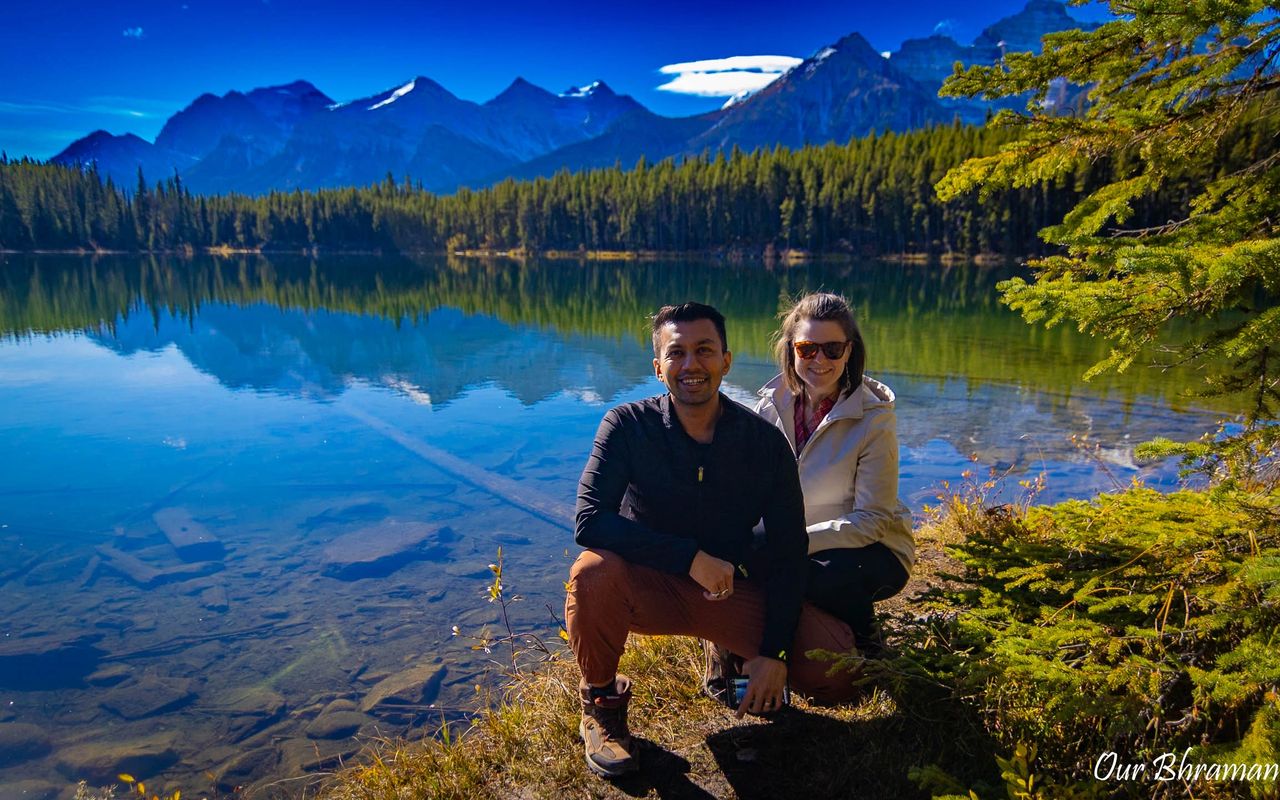
After exploring Peyto and Bow Lakes, we made our third stop of the day at a quieter, hidden Herbert Lake. This spot is easy to find, with clear signage along the road and plenty of parking. It features a dedicated day-use area and several cozy spots right by the lake, perfect for sitting back and soaking in the peaceful surroundings. Unlike the busier lakes, this area is often overlooked by tourists, making it a tranquil retreat. On a sunny day, the lake reveals its own stunning views, making it a picture-perfect stop that’s well worth the visit.
Our fourth stop of the day was the Lower and upper Spiral Tunnels Viewpoint in Yoho National Park, a fascinating spot where visitors can observe an engineering marvel from the early 20th century: the Spiral Tunnels of the Canadian Pacific Railway. These tunnels were built to reduce the steep grade of the railway crossing the Rocky Mountains.
Constructed between 1907 and 1909, the tunnels are located along the Big Hill section of the railway near Kicking Horse Pass. They were designed to reduce the steep gradient from 4.5% to 2.2%, making the track safer and more manageable for trains. The tunnels are spirals carved into the mountains, allowing trains to gain elevation gradually by looping within the mountain.
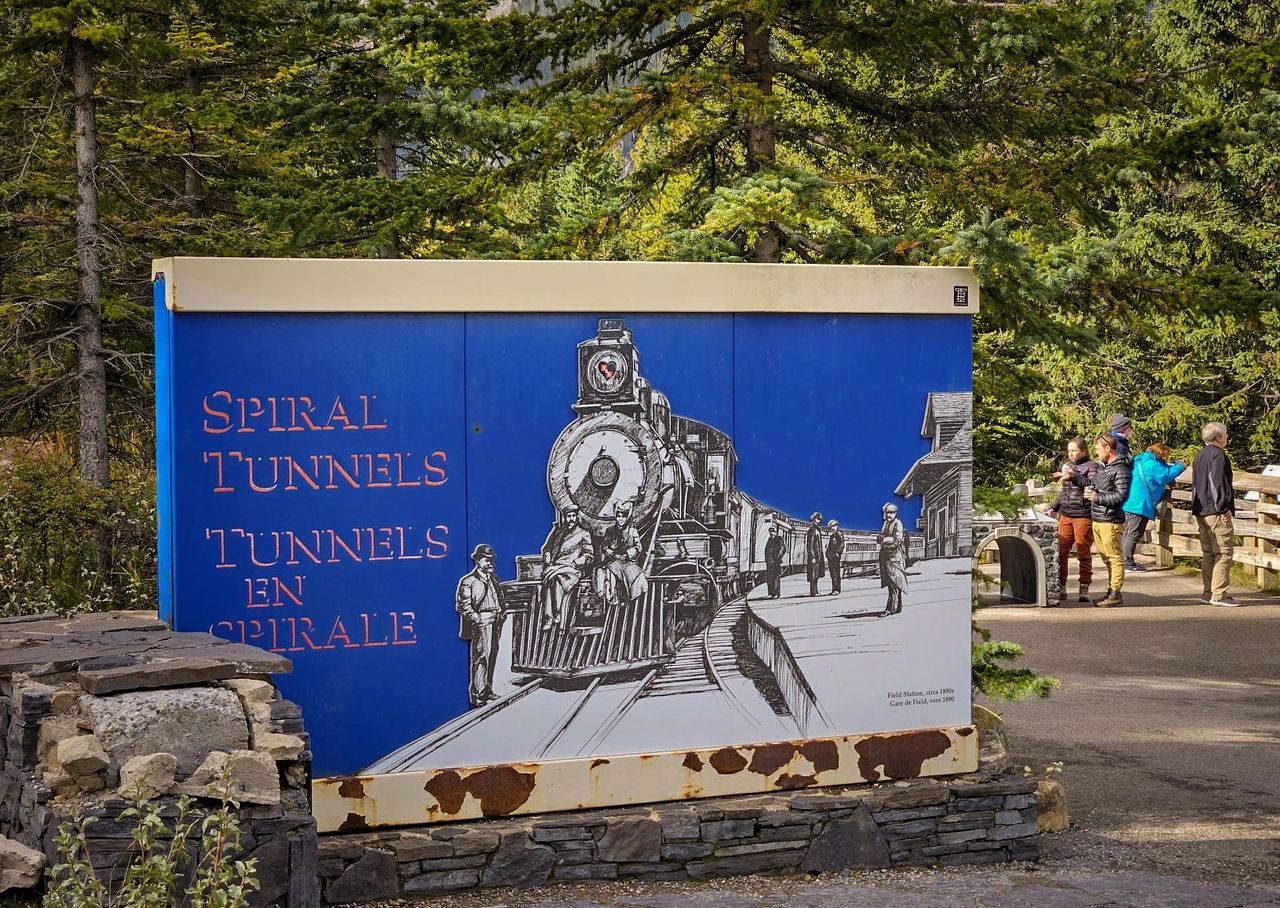
We passed a train on the way here, so we knew we just had to wait. High trees blocked most of the view of the train, but we could just see the front twisting through them, while the back was still entering the tunnel. It was incredible! We saw more with our eyes than the photo shows. After spending 15-20 mins at the lower and upper tunnel spots we started driving to the destination of the day Takkakaw Falls (second-highest waterfalls in Canada after Della Falls on Vancouver Island). On the way, we came across a very photogenic lookout point. It was hard to resist capturing the stunning combination of the water, mountain, bridge, and fall colors in a single frame. We parked the car on the side of the road to explore the spot for a couple of minutes before getting back on our journey
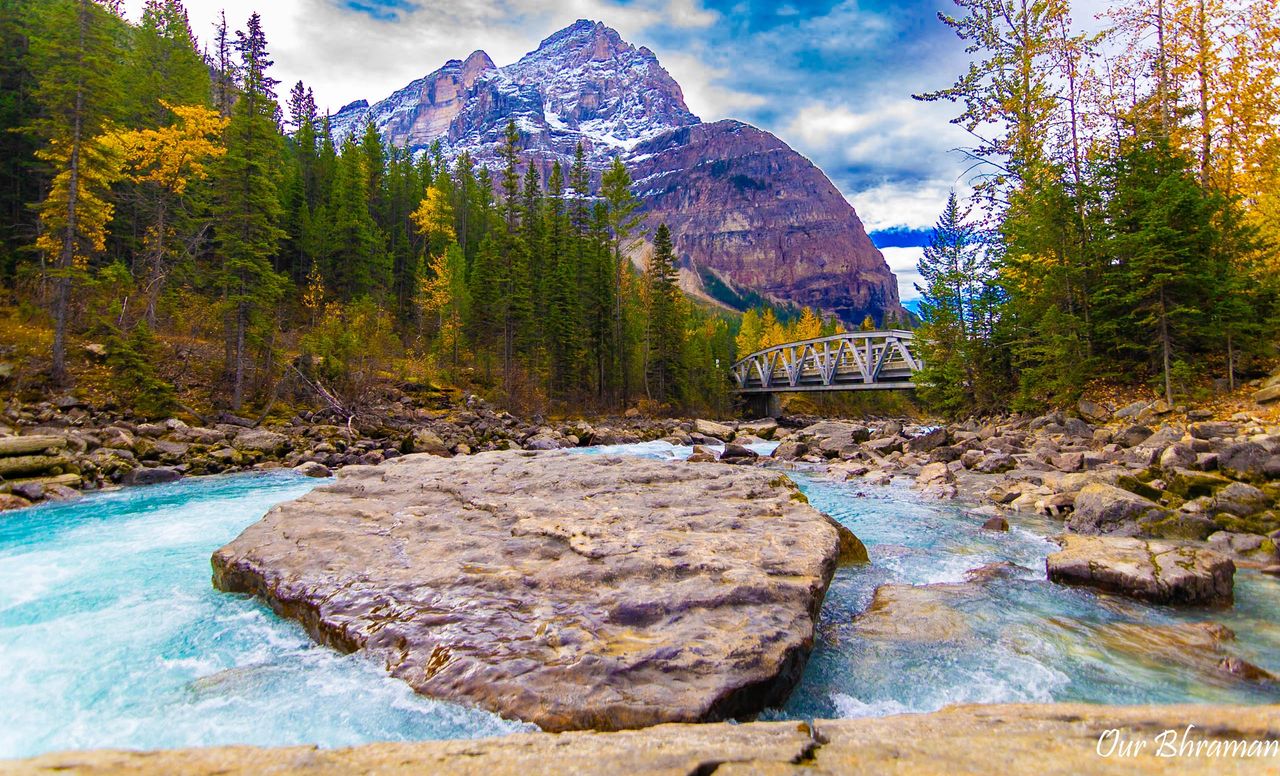
Did you know? In the Cree language, Takakkaw means “wonderful,” and it’s easy to see why this incredible waterfall earns that name. Standing an impressive 384 meters tall, Takakkaw Falls is one of the highest waterfalls in Canada. It has two distinct drops, with the lower waterfall being the most striking, plunging approximately 254 meters before crashing into the rocks at the base. The views are spectacular, and you can even see the falls through the trees from the parking lot.
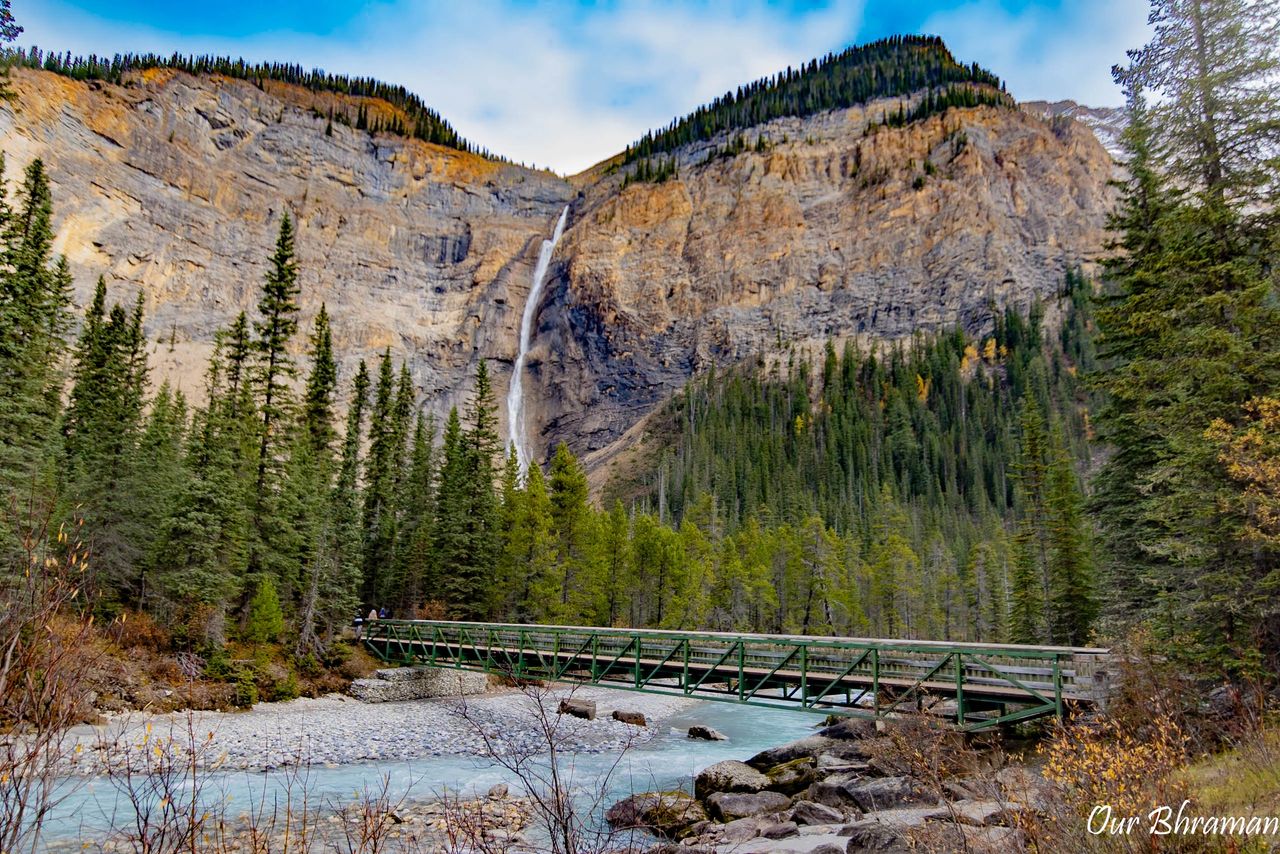
The hike to reach Takakkaw Falls is not difficult; the total distance from the parking lot to the base of the falls is only 1.3 kilometers, with multiple lookout points along the way. We started our visit with a quick lunch and snapped a few pictures before continuing toward the falls. Instead of staying on the paved path, we decided to take an offbeat route to get closer to the falls and discover unique vantage points.
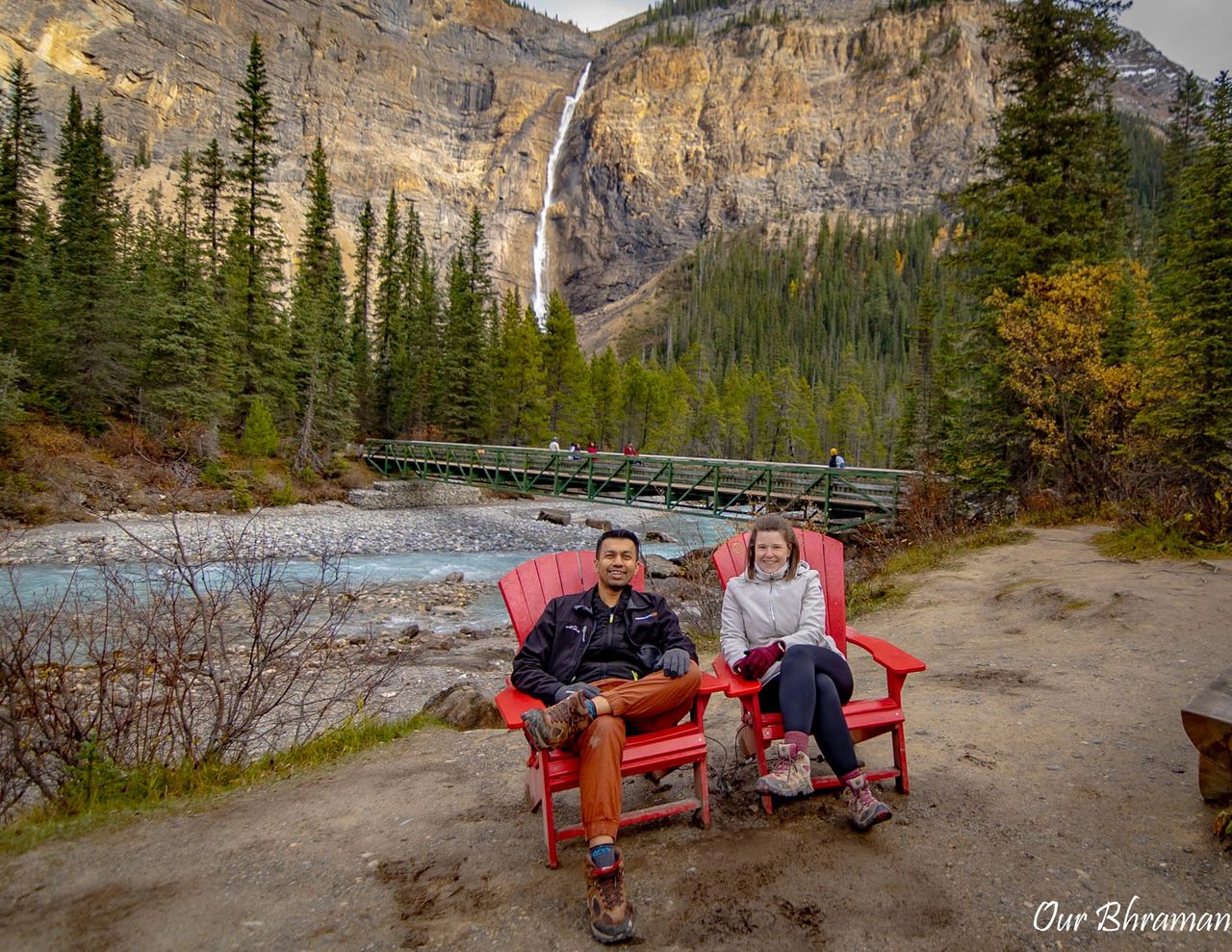
The trail begins on a wide, paved path, making it accessible for most visitors. Along the way, you pass outhouses, a large sign detailing other hikes in the area, and several picnic tables with a view of Takakkaw Falls. We ended up having lunch at this spot on the way back from the hike before heading out. Soon, a flat trail leads you to a bridge crossing the icy, cold-looking river. One charming feature of the area is the red chairs, thoughtfully placed for visitors to relax and enjoy the view. We took a couple of pictures to capture the moment. The chairs are perfect for soaking in the sight and sound of the roaring waterfall.
As we approached the waterfalls along the well-maintained trail, the sheer power of the water cascading over the bedrock became apparent. The misty spray enveloped the trail, creating a refreshing experience. You can continue along the path as far as you feel comfortable with the spray—it gets intense!
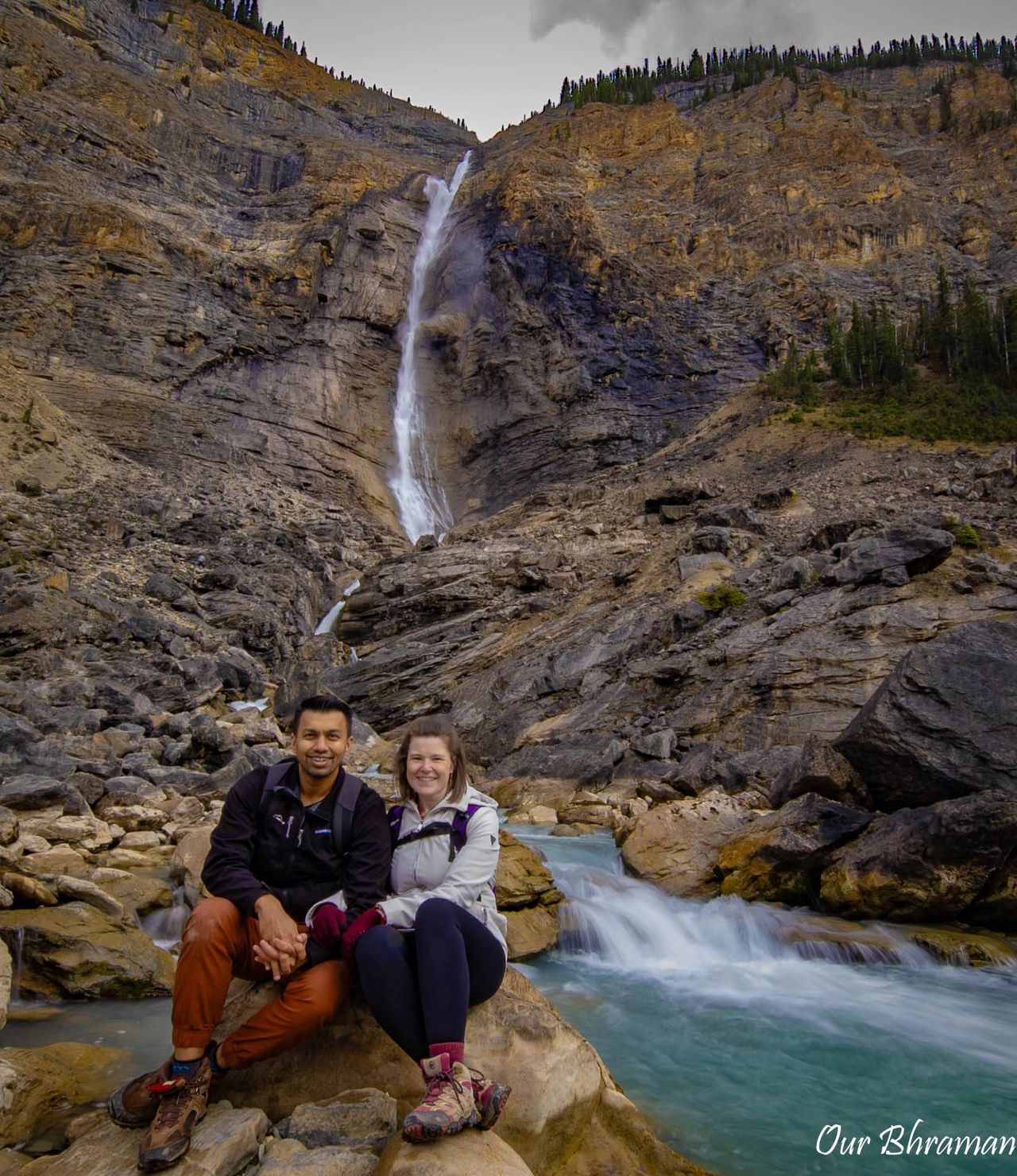
A few things to consider when visiting: Takakkaw Falls is fed by meltwater from the Daly Glacier, which is part of the expansive Waputik Icefield. The best time to visit is mid-June, when warmer temperatures in the Rockies cause the glacier to melt, increasing the falls’ volume. We visited during the first week of October and were fortunate to see a still-impressive flow of water. Our timing turned out to be perfect, as the road to Takakkaw Falls typically closes in mid-October. Just a couple of days after our visit, the road was shut for the season.
Our next stop for the day was Emerald Lake, but first, we took a detour to visit the Natural Bridge on our way in. Located along Emerald Lake Road, the Natural Bridge is a quick and worthwhile stop that showcases the raw power and beauty of nature in Yoho National Park. Be mindful, though—the turn-off can be easy to miss, so keep an eye out for it on your left as you head toward Emerald Lake.
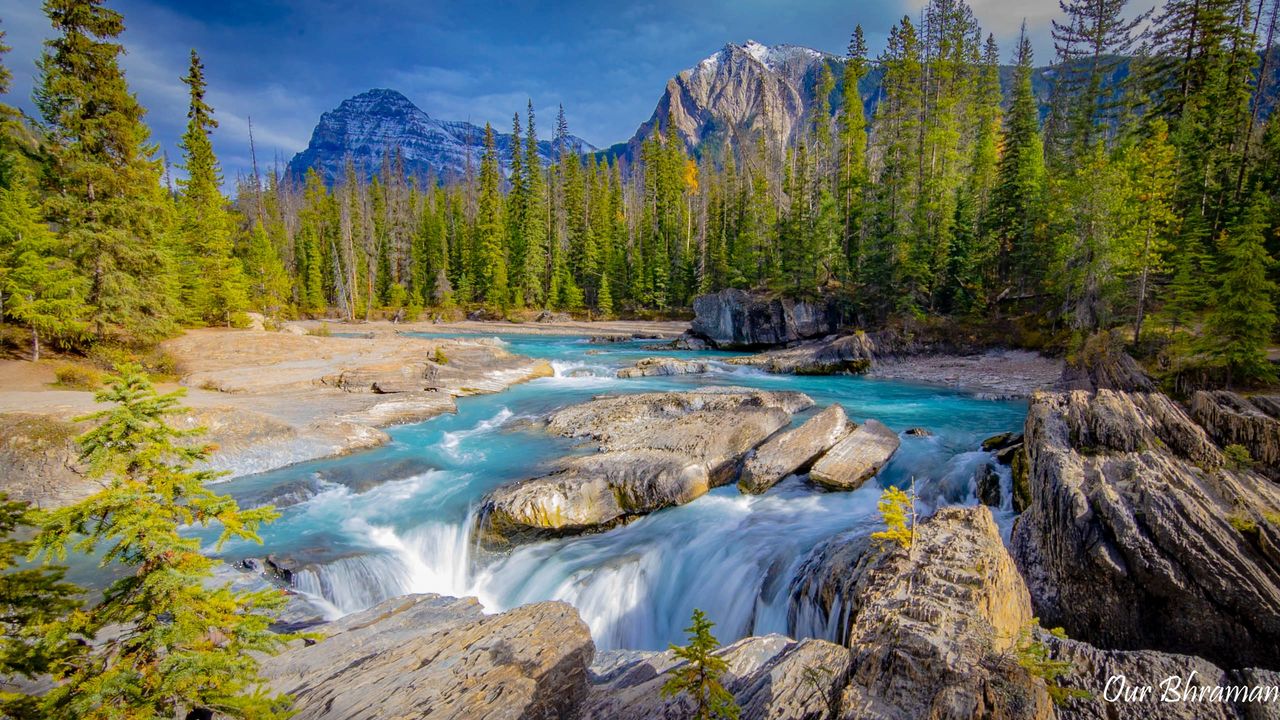
The Natural Bridge is a fascinating geological formation, created over thousands of years by the erosive force of the Kicking Horse River. What was once a standard waterfall slowly transformed as the relentless flow of water began eroding the softer limestone rock beneath it. Over time, a hole formed behind the falls, gradually expanding as the water carved its path.
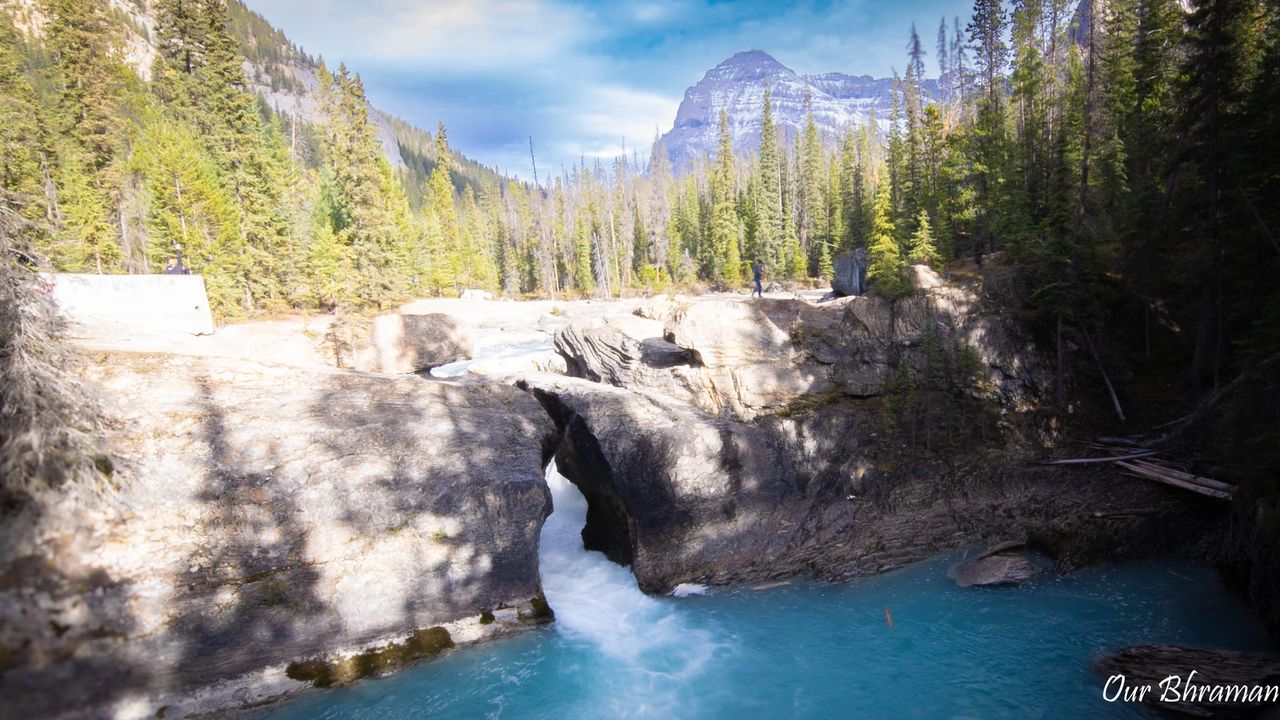
Today, the river no longer cascades as a traditional waterfall but flows through a limestone tunnel, creating the Natural Bridge we see now. This remarkable structure stands as a testament to the slow yet persistent power of nature, making it a unique and captivating feature of the park.
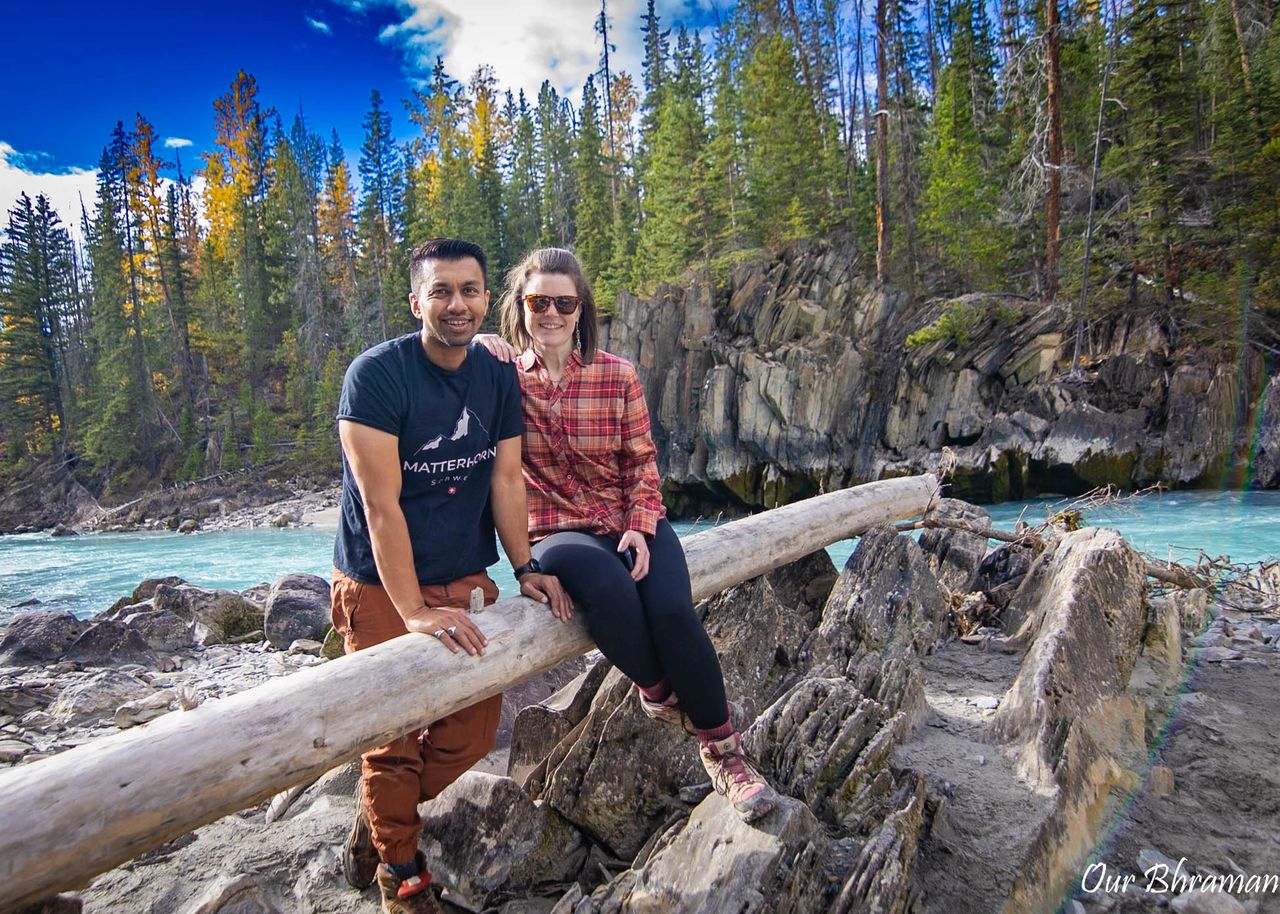
The rushing waters of the Kicking Horse River, framed by rugged limestone, create a picturesque scene perfect for photography. The Natural Bridge is easily accessible, with a short walk from the parking lot to the viewing platforms. For the more adventurous, you can carefully walk on the rocks along the river to explore the area further and get a closer look at this natural wonder.
After spending 30 minutes at the Natural Bridge, we decided to move on to the picturesque Emerald Lake. Emerald Lake is one of the finest lakes in the Canadian Rockies and a truly resplendent destination in British Columbia. It’s the largest lake in Yoho National Park, one of the most stunning lakes in BC, and is surrounded by the President Mountain Range.
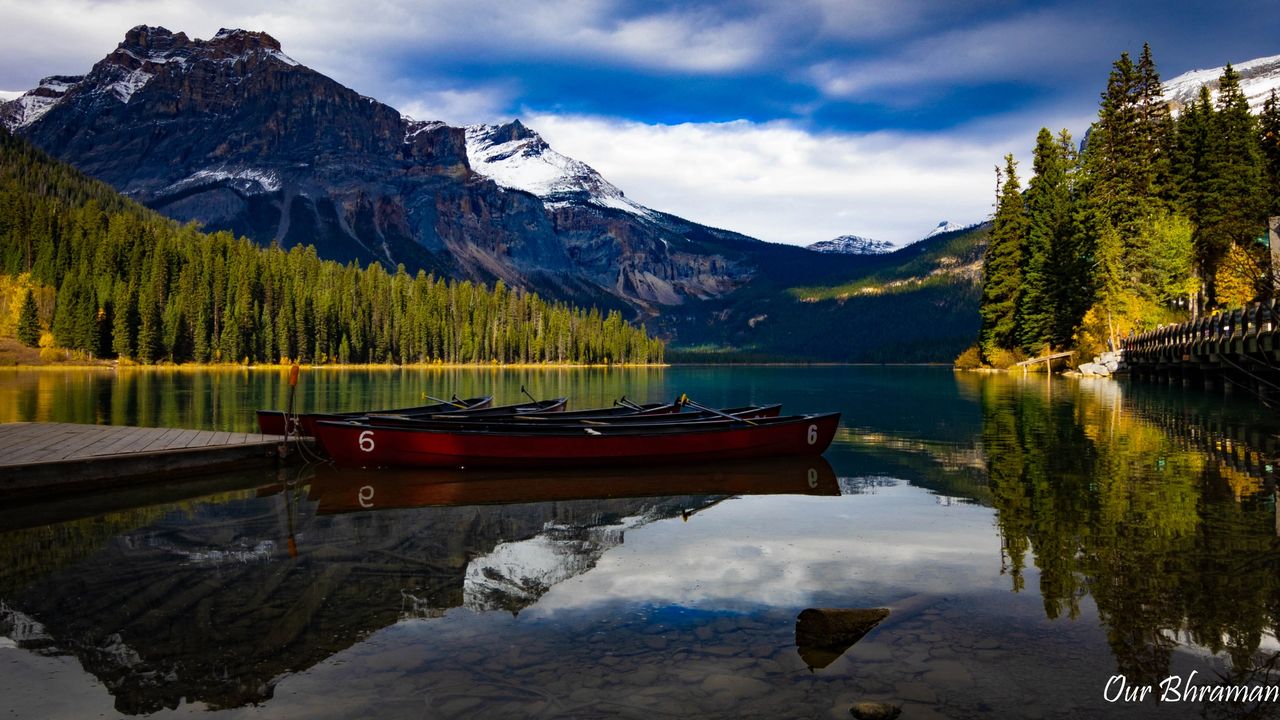
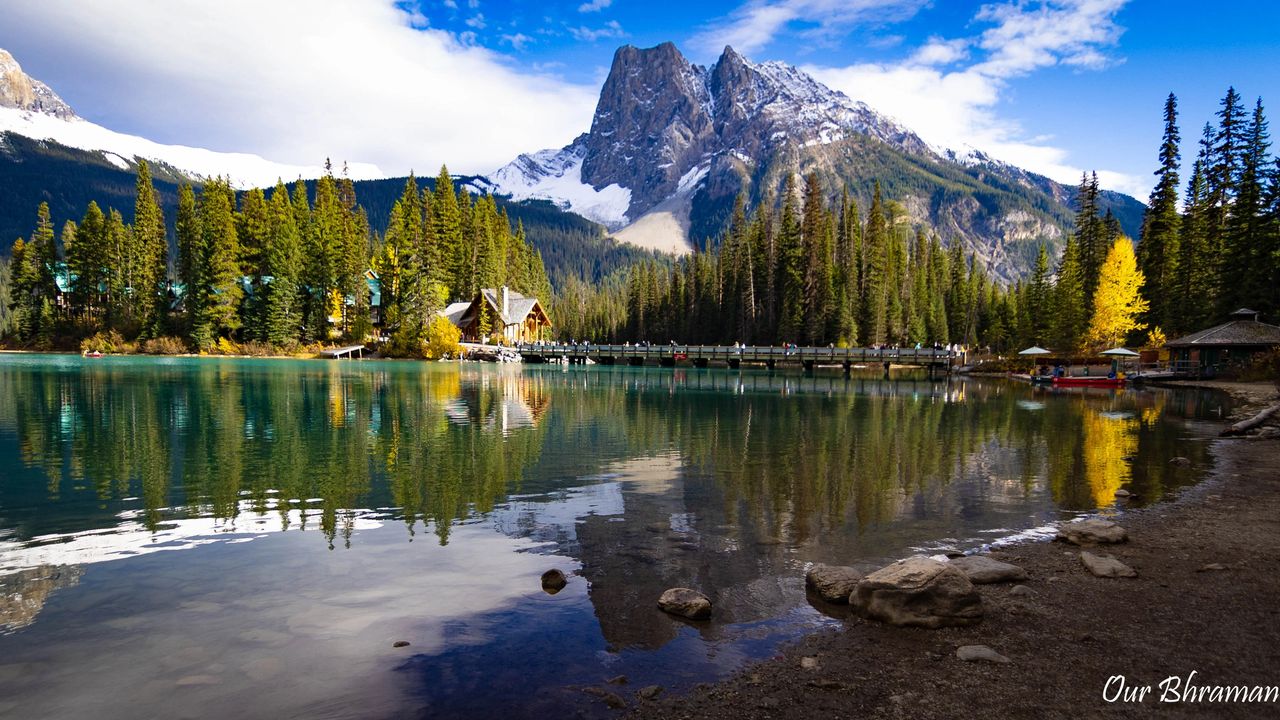
It’s easy to see how Emerald Lake got its name, the glacial waters refract light, creating a vibrant display of emerald, green. The color alone is breathtaking, but the surrounding landscape leaves you utterly speechless. The President Range mountains envelop the lake, forming a natural amphitheater of towering peaks and forested shores. It’s no wonder this is our favorite lake in the Canadian Rockies!
The lake’s remarkable color comes from the melting glaciers above it. As the glaciers melt, they deposit fine particles of rock, known as rock flour, into the lake. These particles cause the water to refract sunlight, producing the lake’s dazzling emerald hue. The most vivid colors can be seen on sunny summer days in July and August.
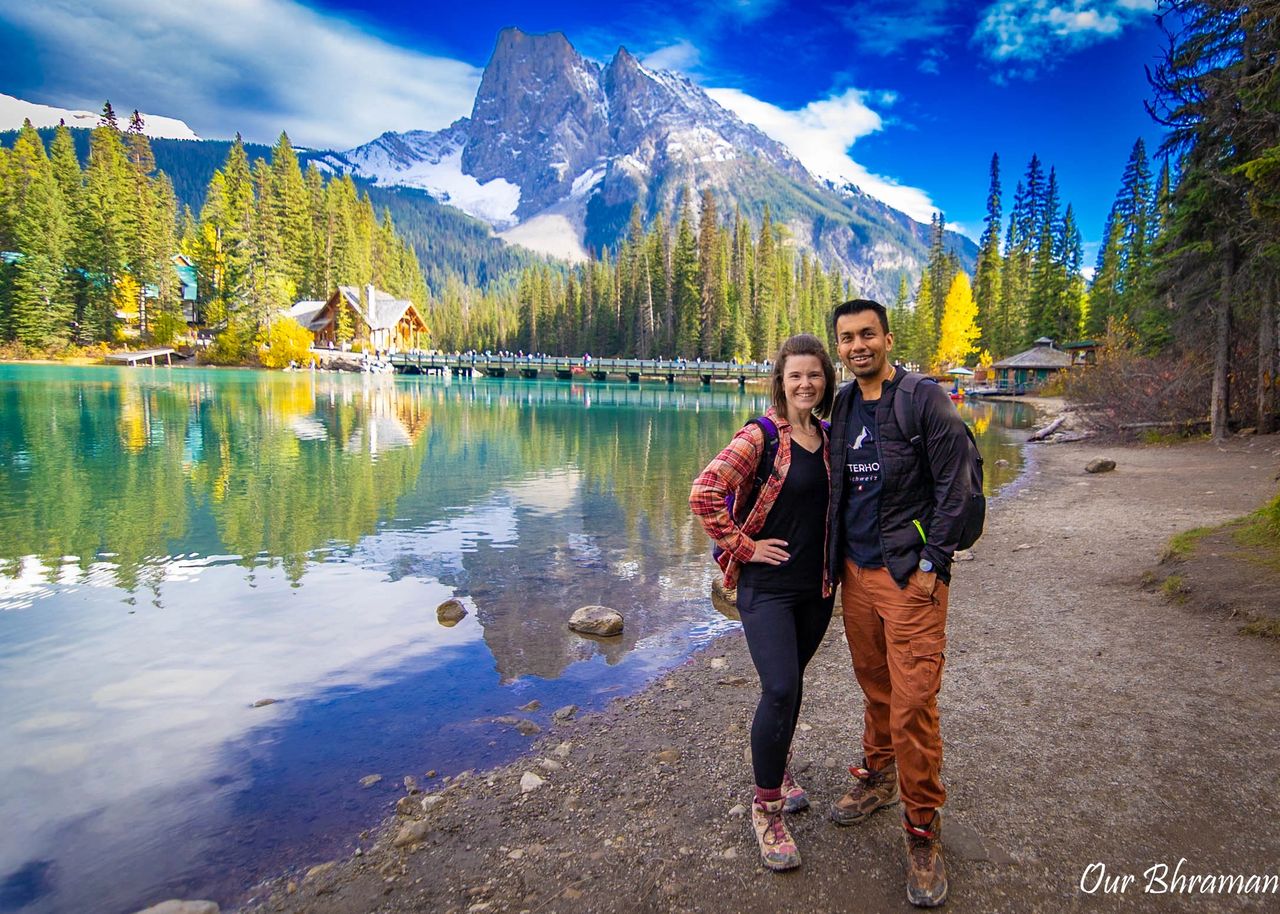
During the summer, the one public parking lot at Emerald Lake fills up quickly. Luckily, we arrived late in the day and managed to find an open parking spot. While it’s not as crowded as the nearby Lake Louise, parking can still be an issue around midday.
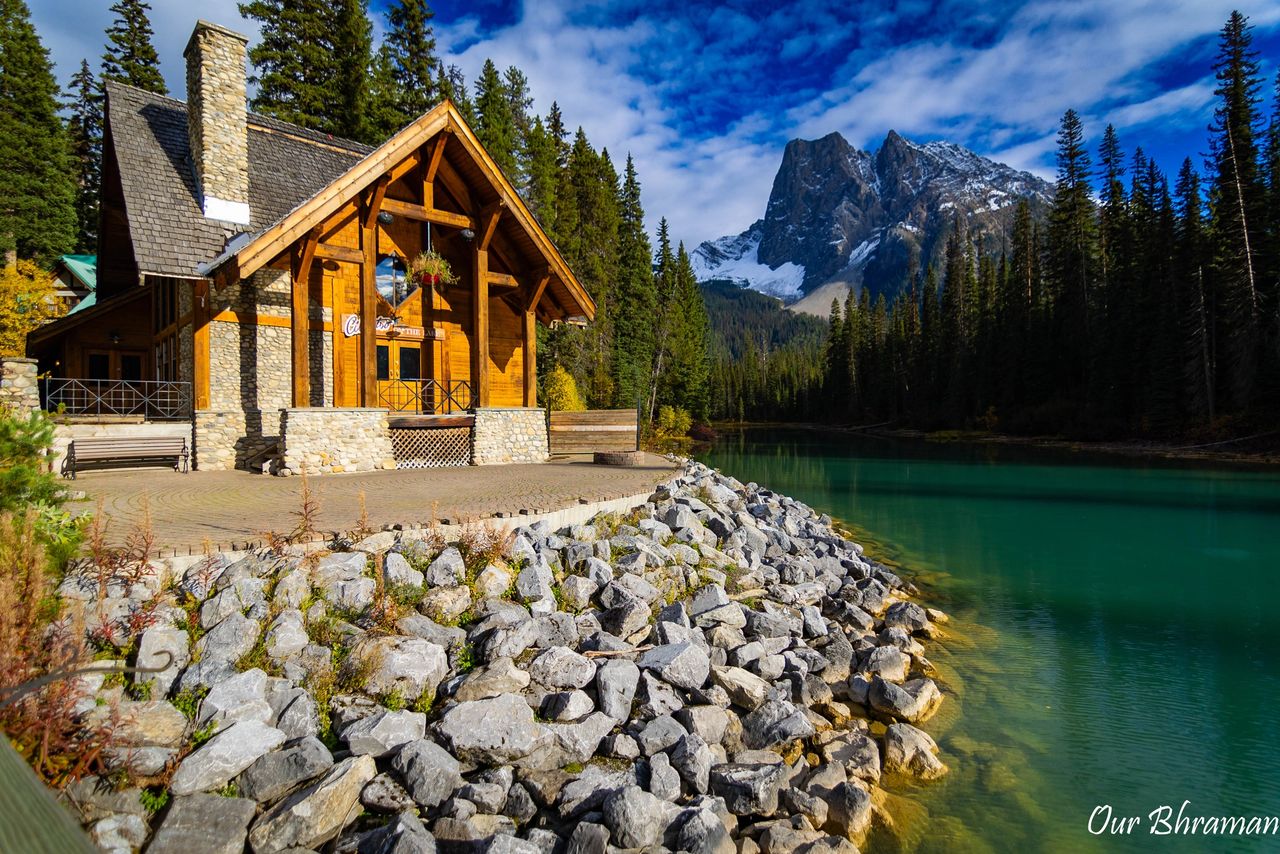
There are many ways to enjoy Emerald Lake, but the two most popular activities are a leisurely hike along the shoreline or a gentle canoe ride across its surface. We decided to do a portion of the 5.2 km (3.2 mi) hiking trail that circles the lake. This trail allows you to escape the busy parking area and the crowded bridge, giving you the chance to explore the serene beauty of the lake at your own pace.
After spending more than hour hiking, photographing and relaxing at the emerald lake we headed to our next destination of the day ” Lower Fall Hike of Johnston Canyon “
The Johnston Canyon hike to the Lower Falls is a 2.3 km round trip with approximately 105 meters of elevation gain. The hike to the Upper Falls is 5.5 km round trip. Both hikes are relatively easy and follow a well-maintained trail suitable for all fitness levels. After a long day covering several hikes, we found ourselves running out of daylight. With our energy waning, we decided to opt for the shorter, quick, and easy hike to the Lower Falls.
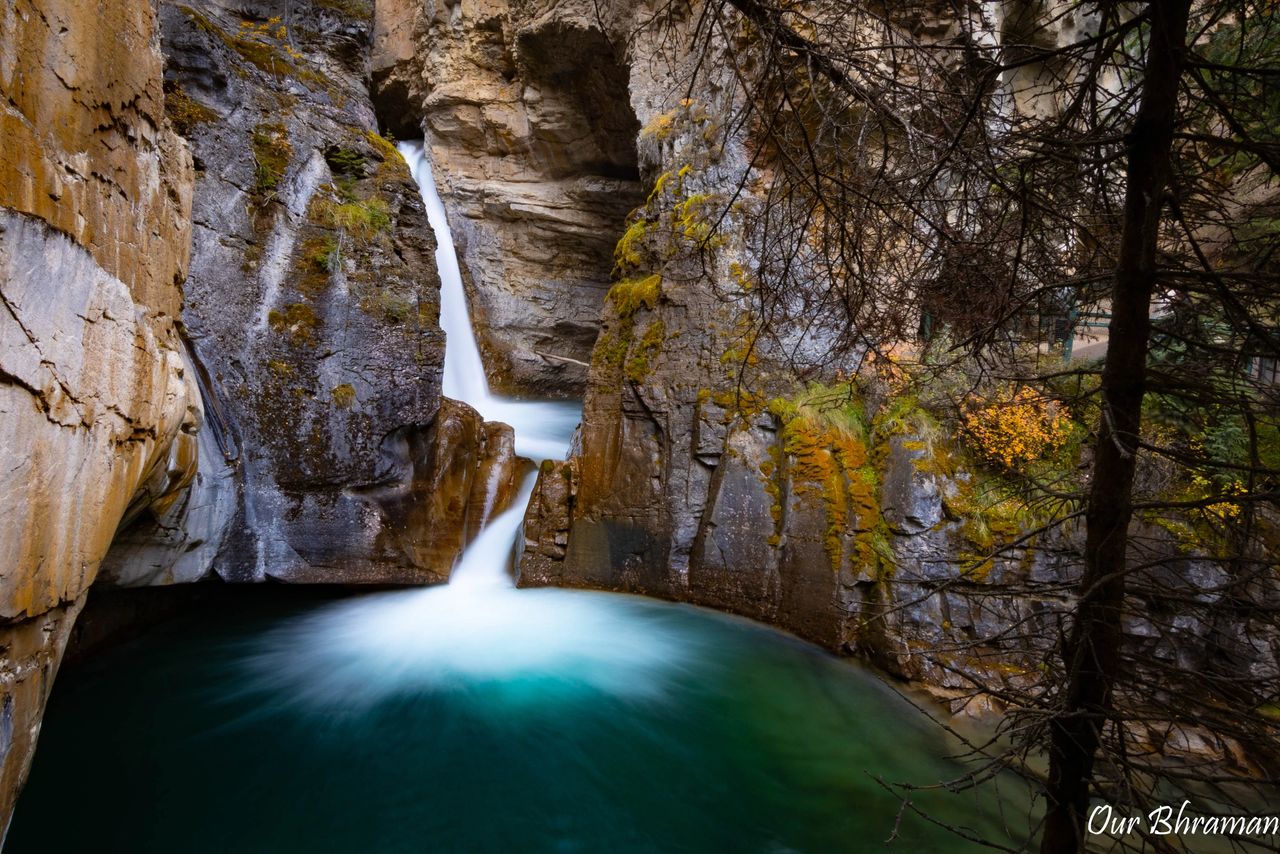
Johnston Canyon is very busy during the summer months, but we were fortunate to visit in October, near the end of the day. This timing allowed us to enjoy the trail with very few other people around. The absence of crowds meant we could linger longer at the falls, taking in the scenery without feeling rushed.
The hike to the Lower Falls follows a well-maintained path that winds through a lush forest. The sound of rushing water guides you deeper into the canyon, creating an immersive natural experience. A series of elevated steel catwalks, suspended along the canyon walls, offer thrilling perspectives as you walk above the roaring Johnston Creek. The views from the catwalks are incredible, showcasing the dramatic beauty of the canyon below.
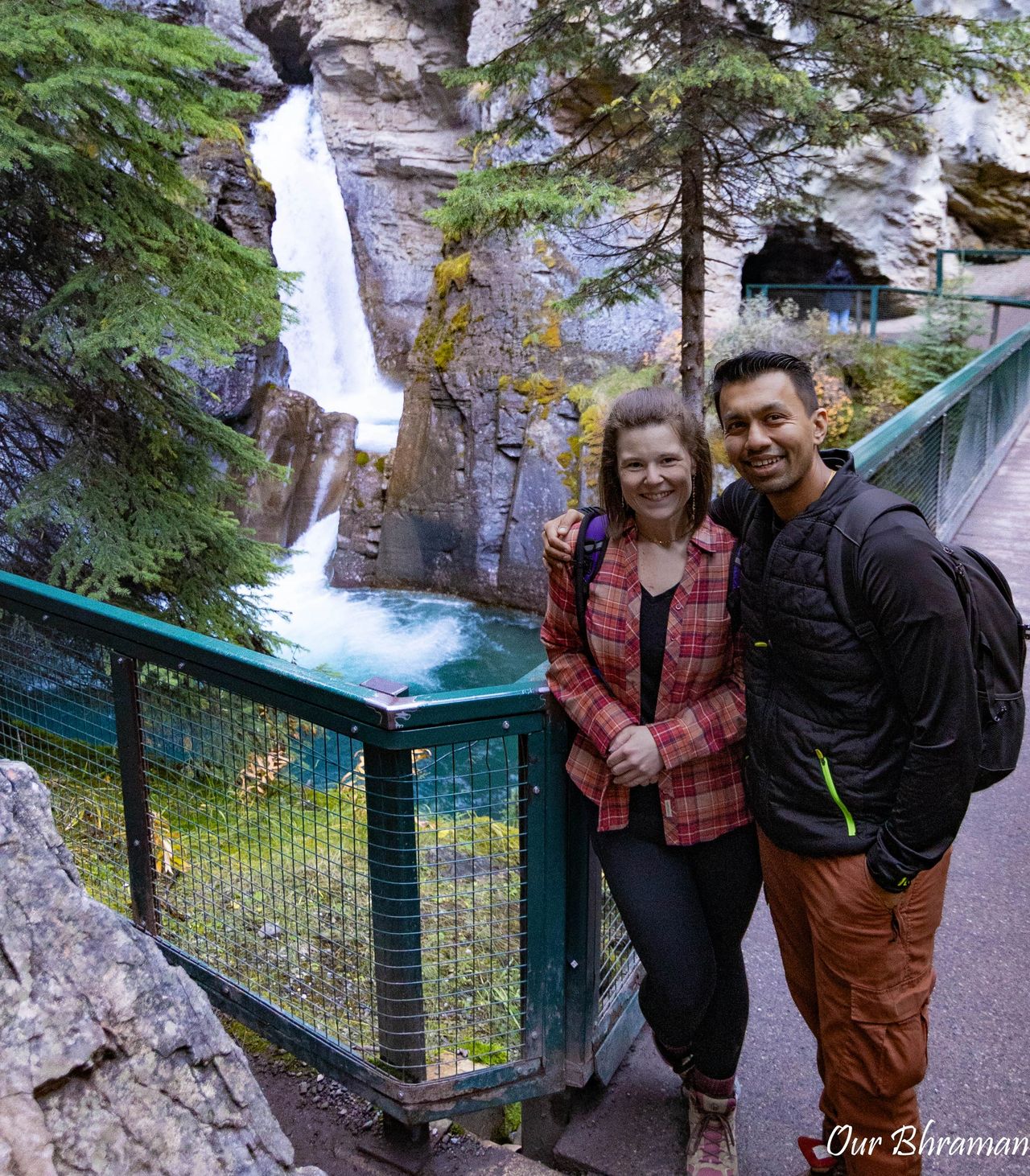
As you near the Lower Falls, the anticipation builds with the sound of water echoing louder through the canyon. At the viewing platform, you’re greeted by the sight of water plunging into a pool below, surrounded by towering limestone walls.
Interactive Viewing: For those seeking a closer look, a small tunnel carved into the rock allows you to step right up to the falls. This spot offers an up-close view and a refreshing mist from the cascading water. Be sure to have your camera ready but also prepared to protect it from the spray!
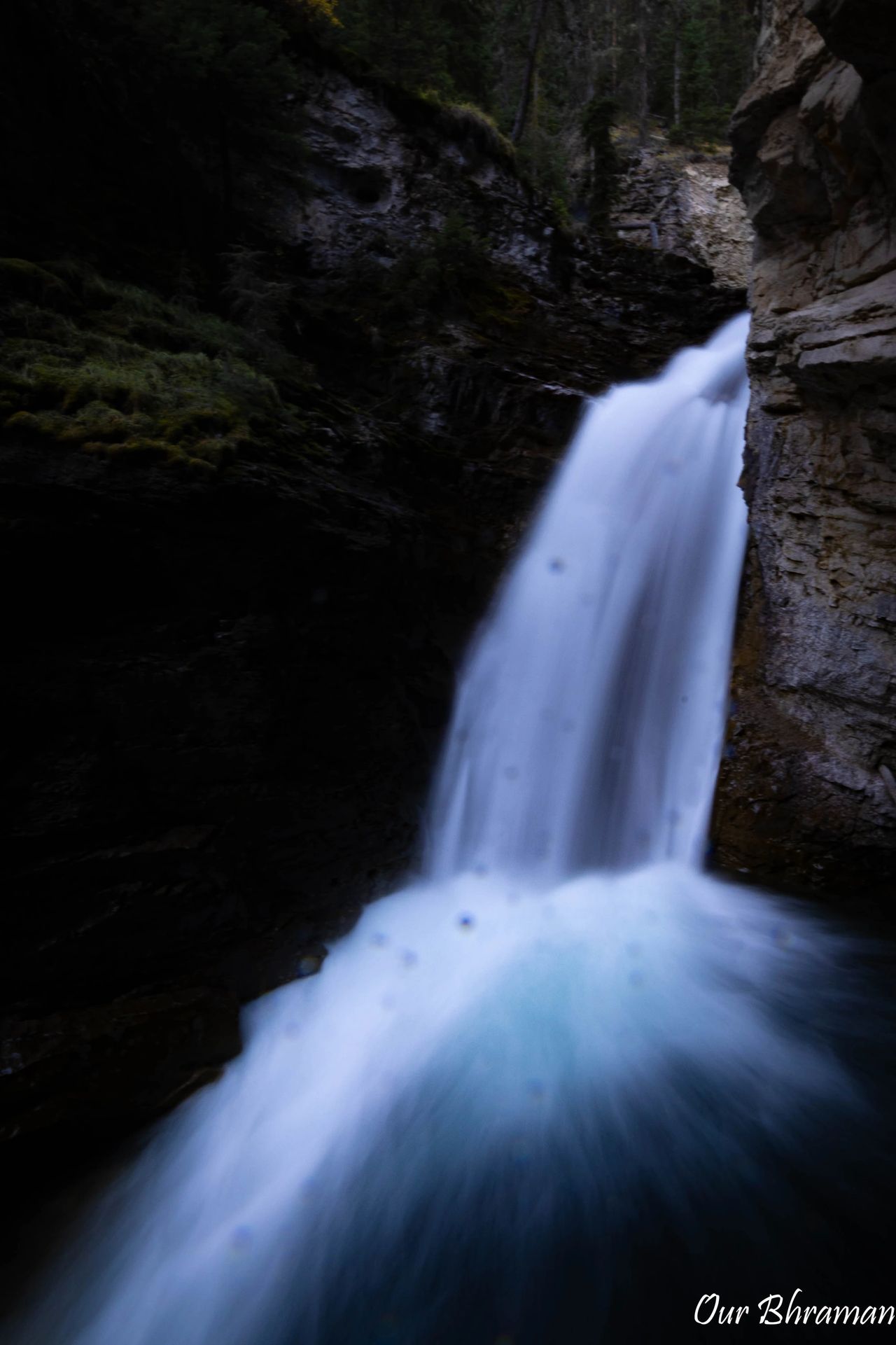
The setting is truly magical, with the white cascade of the waterfall, the emerald pool, and the rugged limestone walls creating a postcard-perfect scene.
By the time we returned from the hike to the parking lot, it was quite dark, with only a few cars remaining. We felt a sense of accomplishment after exploring so many beautiful places and were ready to call it a day. However, the desire to explore the night sky and possibly capture the Northern Lights, if they were visible, pulled us back onto the road after dinner. After spending couple of hours in lake Louise and taking multiple test shots, we were blessed to get to see the magic of northern light. The Northern Lights, or Aurora Borealis, are one of nature’s most mesmerizing phenomena—a celestial dance of color and light that has captured the human imagination for centuries. Watching this natural wonder unfold is a magical experience that transcends words and photographs, leaving us in awe of the universe’s beauty and mystery.
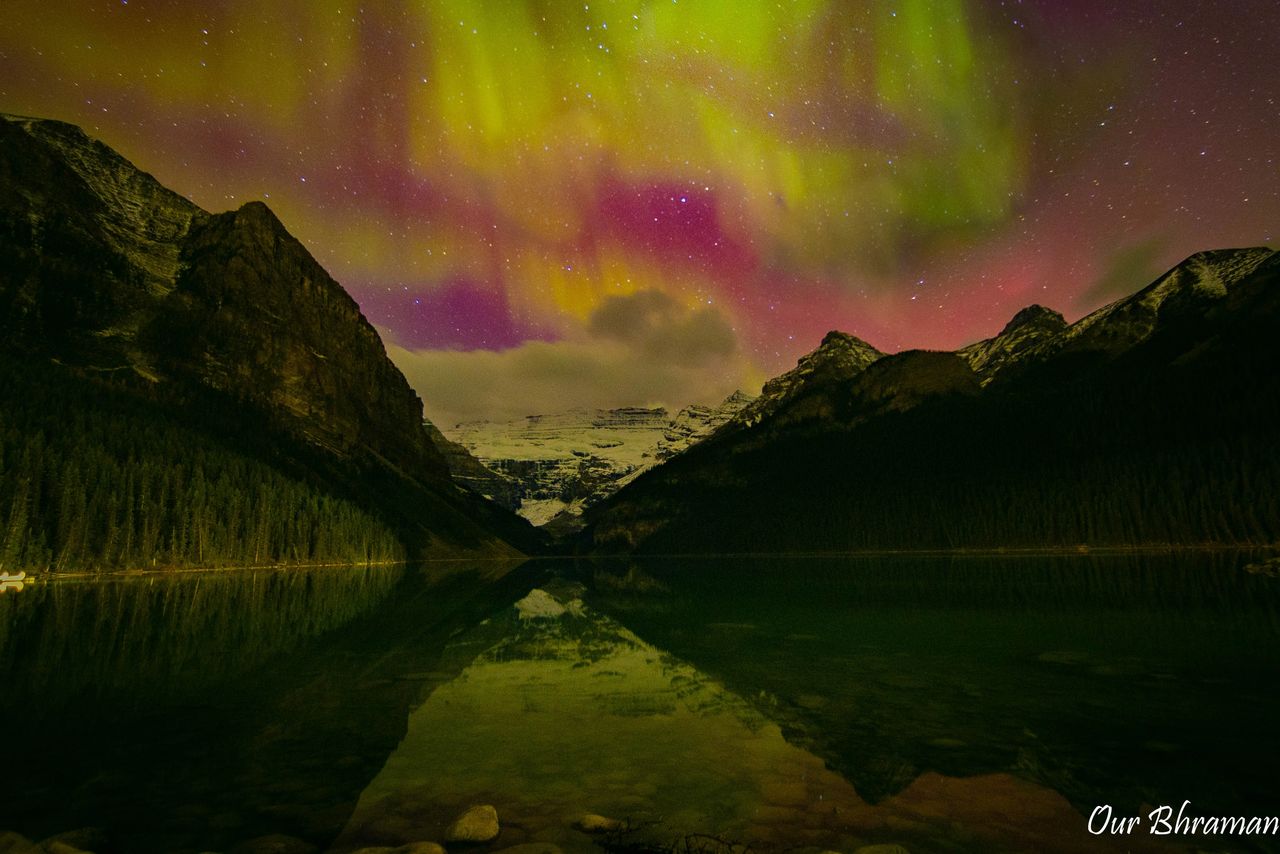
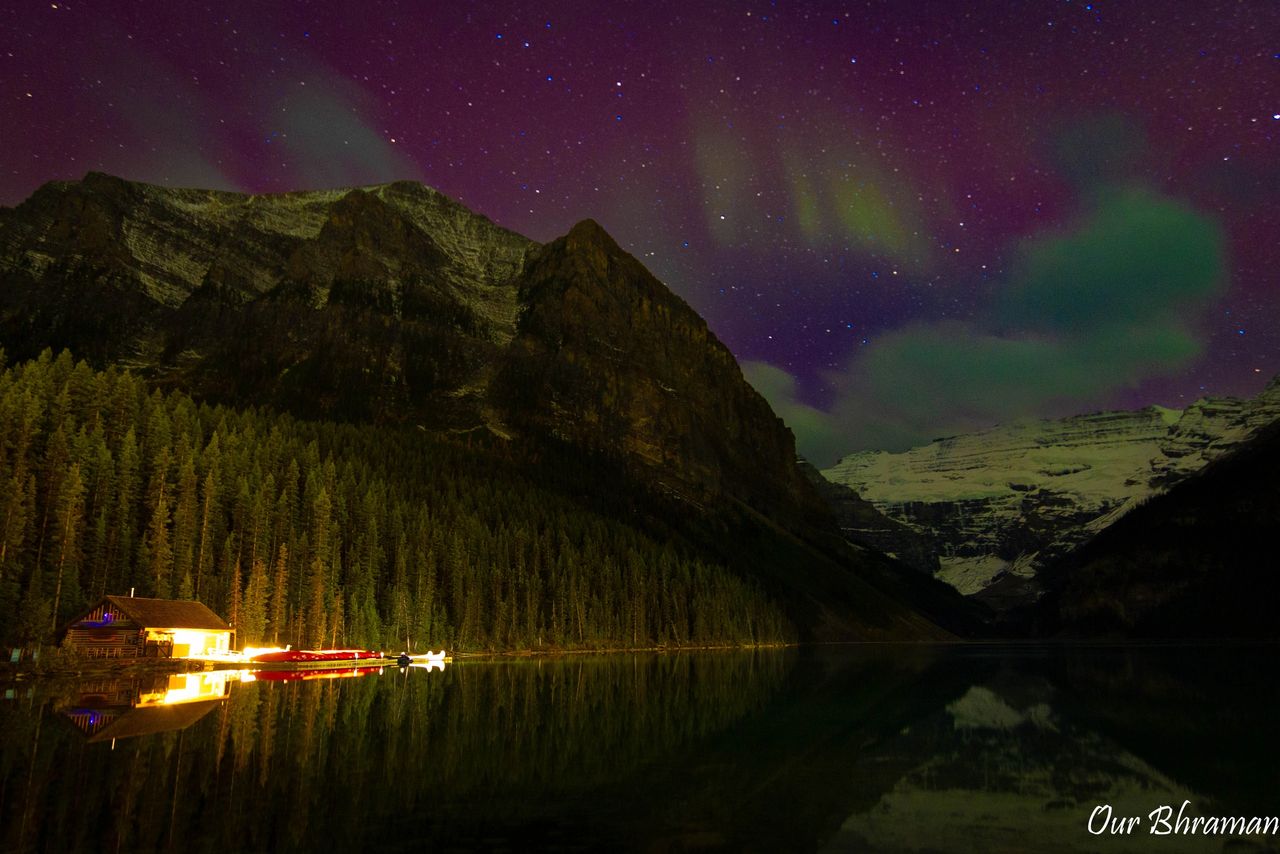
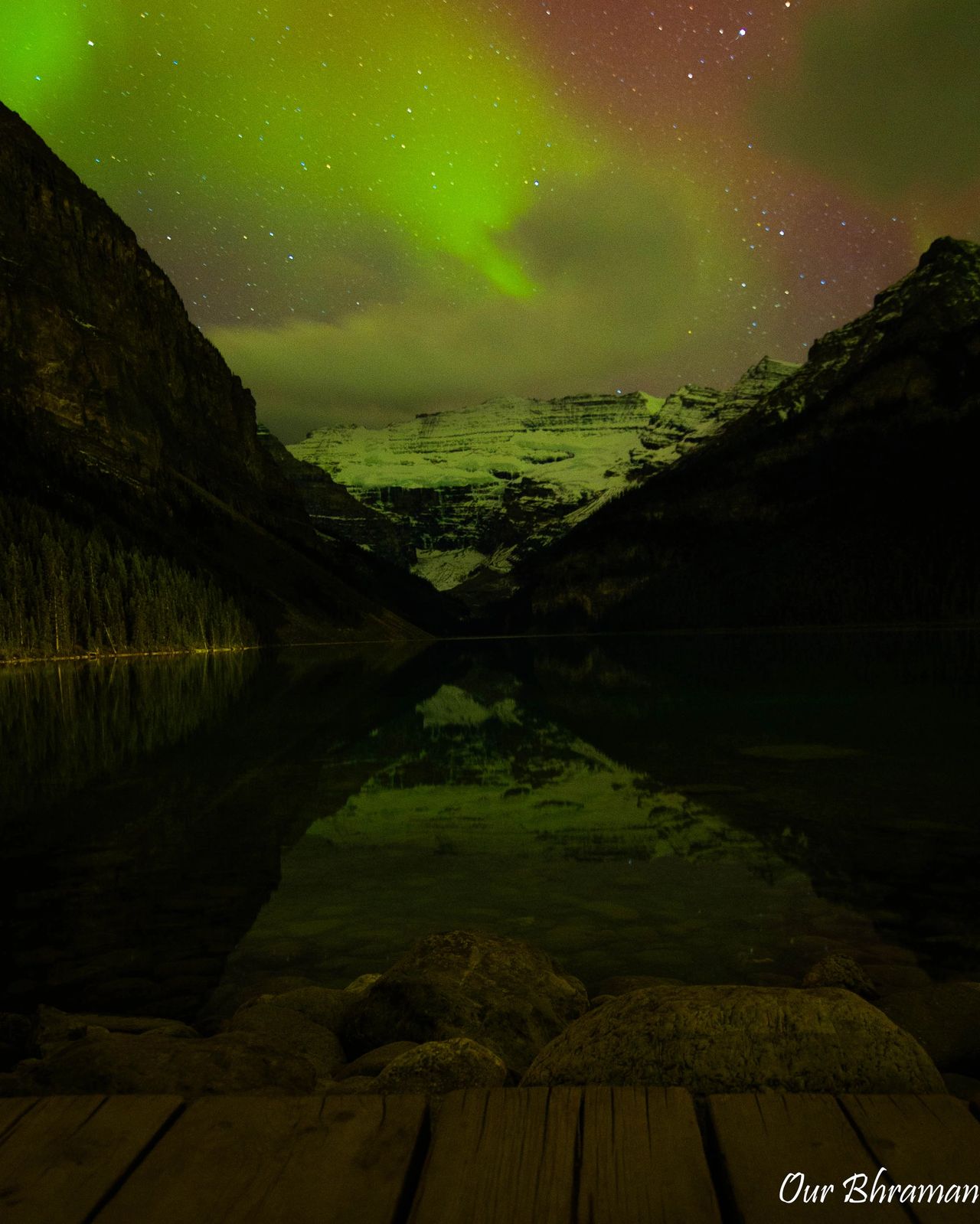
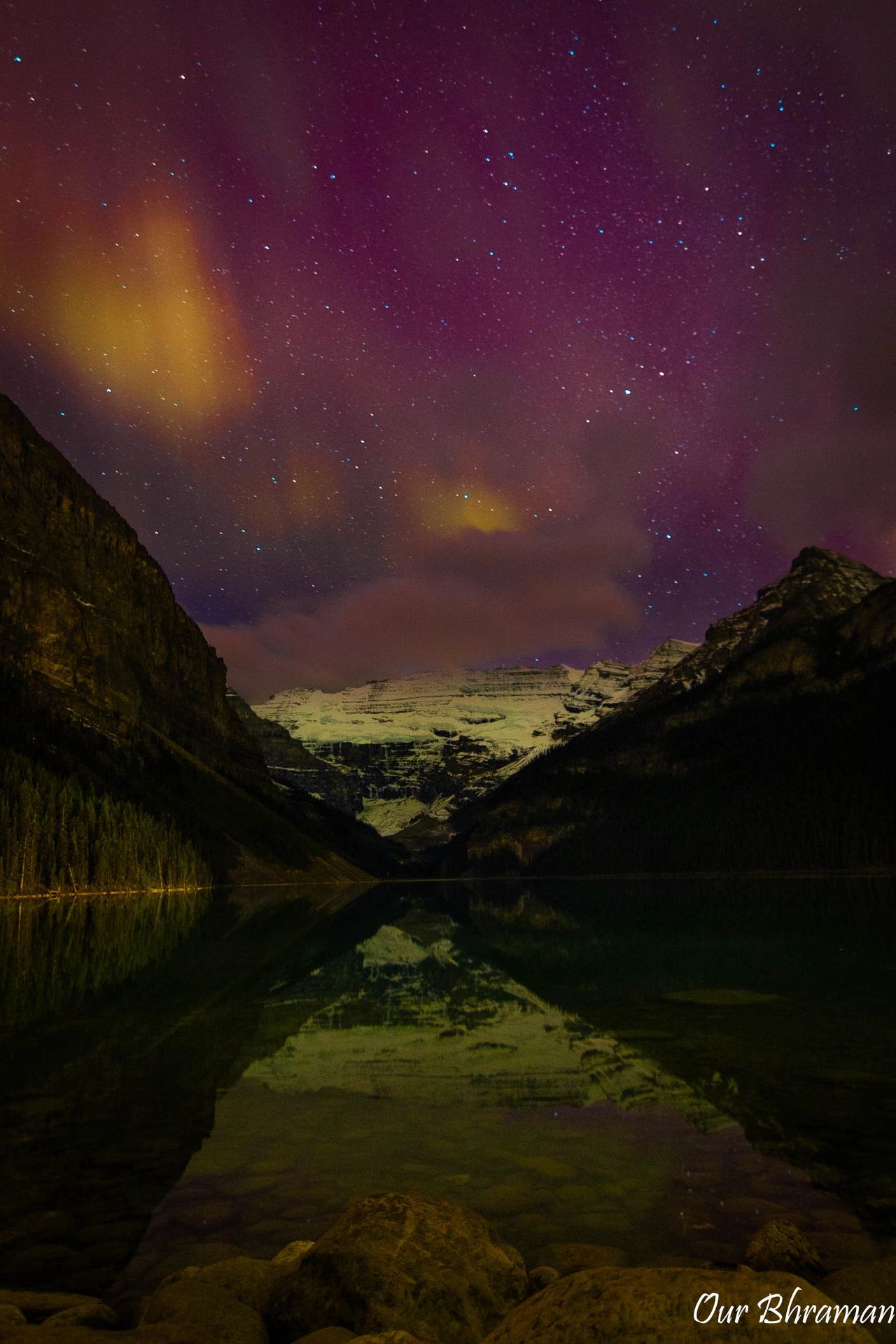
Seeing the Northern Lights isn’t just about witnessing a natural phenomenon—it’s about feeling a connection to something vast and profound. Although this was our second time experiencing these lights, and we were frozen outside in below-zero temperatures, the adrenaline and excitement never lost their magic. It’s a powerful reminder that there are forces in the universe beyond our control—beautiful, unpredictable, and waiting to be discovered under the vast, star-filled skies.
Day-4
On Day 4 of our trip, we set out to drive towards Waterton National Park, getting closer to the U.S. border. But before leaving Banff, we decided to check off a few attractions we hadn’t yet explored in the town. One of the highlights was the Cascade of Time Gardens, a charming spot right in the heart of Banff. The gardens, also known as Cascade Gardens or Banff Gardens, are an absolute must-see for anyone visiting the town. Whether you’re a nature lover, a plant enthusiast, or just someone who wants to enjoy the fresh mountain air, the gardens offer the perfect escape.
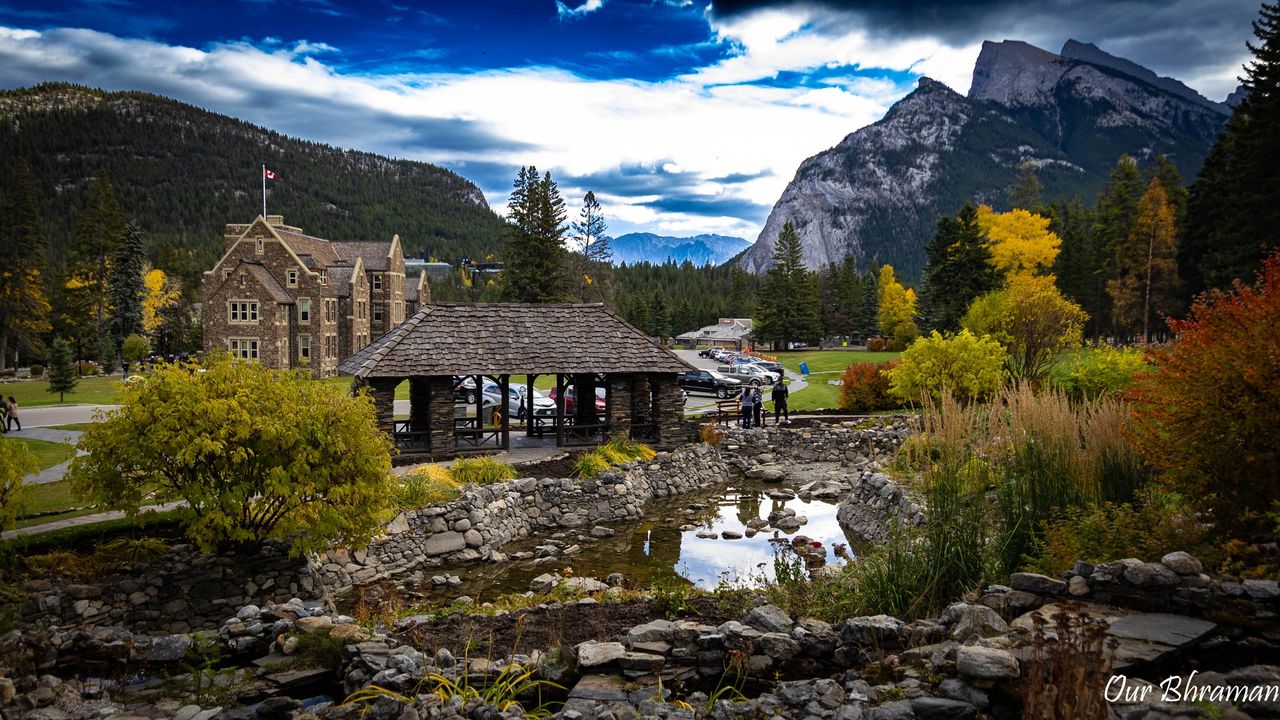
The history of Cascade Gardens adds a layer of intrigue to the experience. Completed in 1935, the gardens were built on the site of a hotel that tragically burned down in 1930. Since then, they’ve become a stunning year-round attraction, with the grand administration building—constructed in 1937—standing proudly as the largest of its kind in Canada’s national parks. It’s a symbol of the development of Canada’s first national park and an architectural gem in its own right.
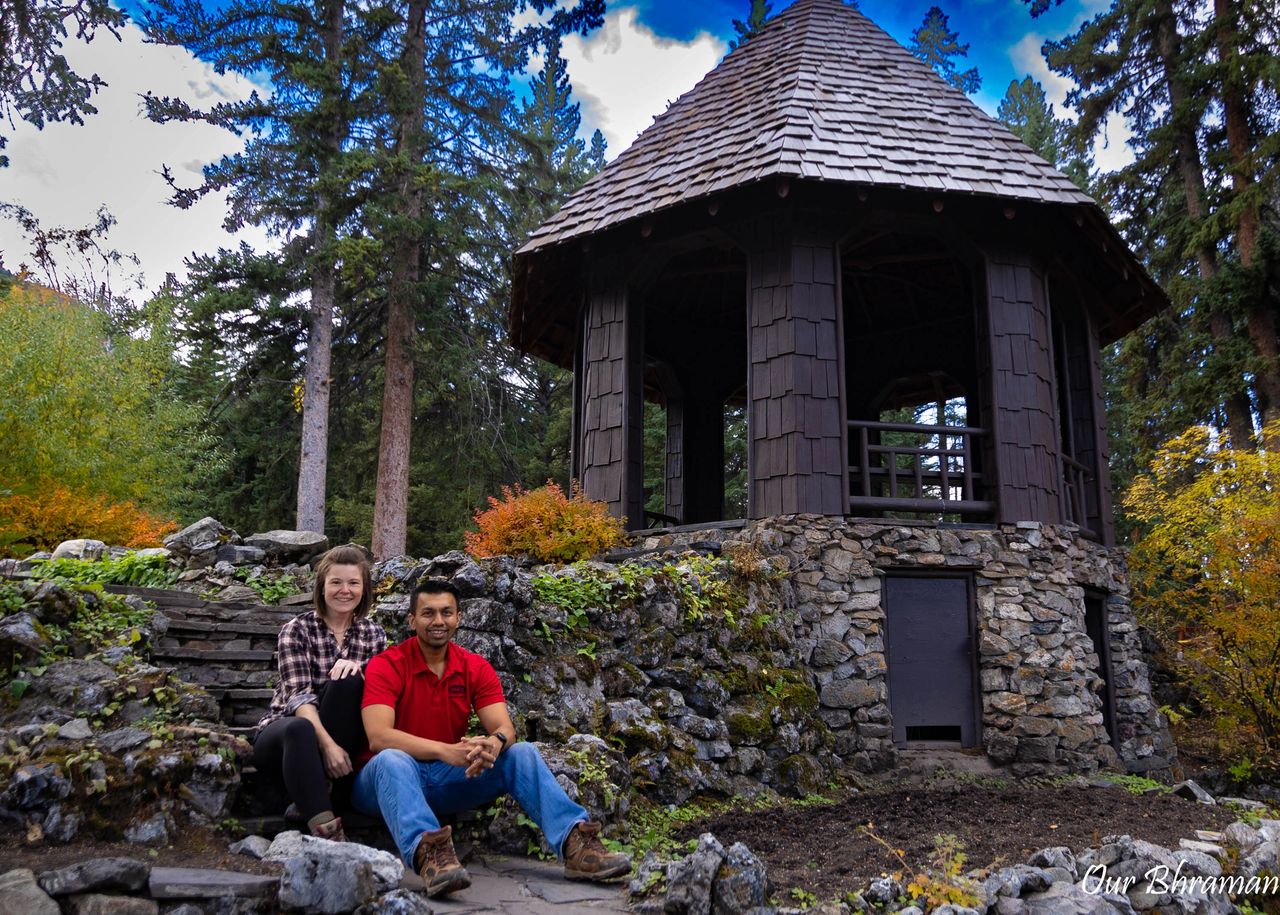
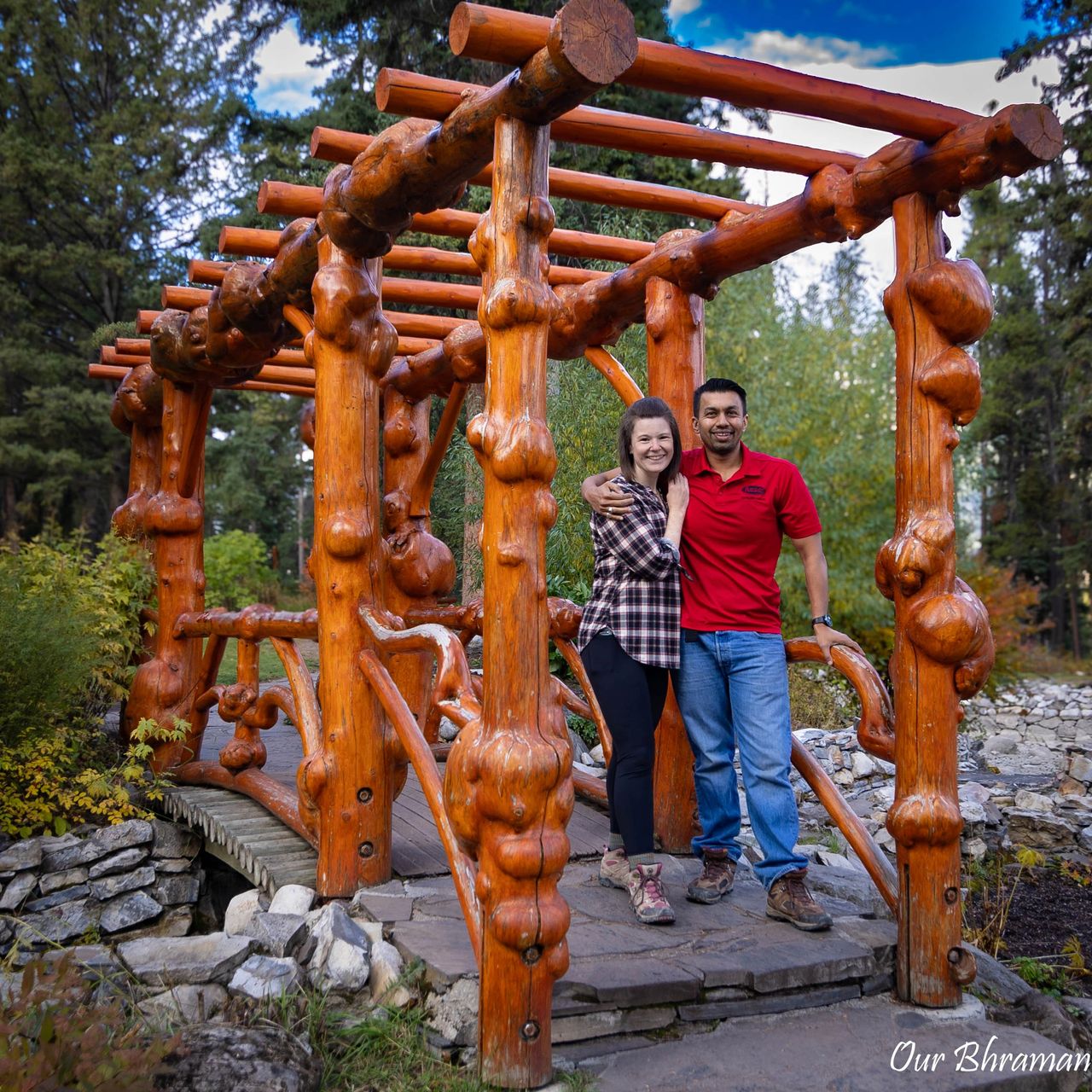
As we wandered through the gardens, we marveled at the carefully curated plant displays and the serene ponds, waterfalls, and winding paths. The views, particularly with the golden foliage of fall surrounding us, felt like something straight out of a postcard. We made sure to stop and capture some photos with Cascade Mountain looming majestically in the background—an iconic shot that perfectly frames the beauty of the place.
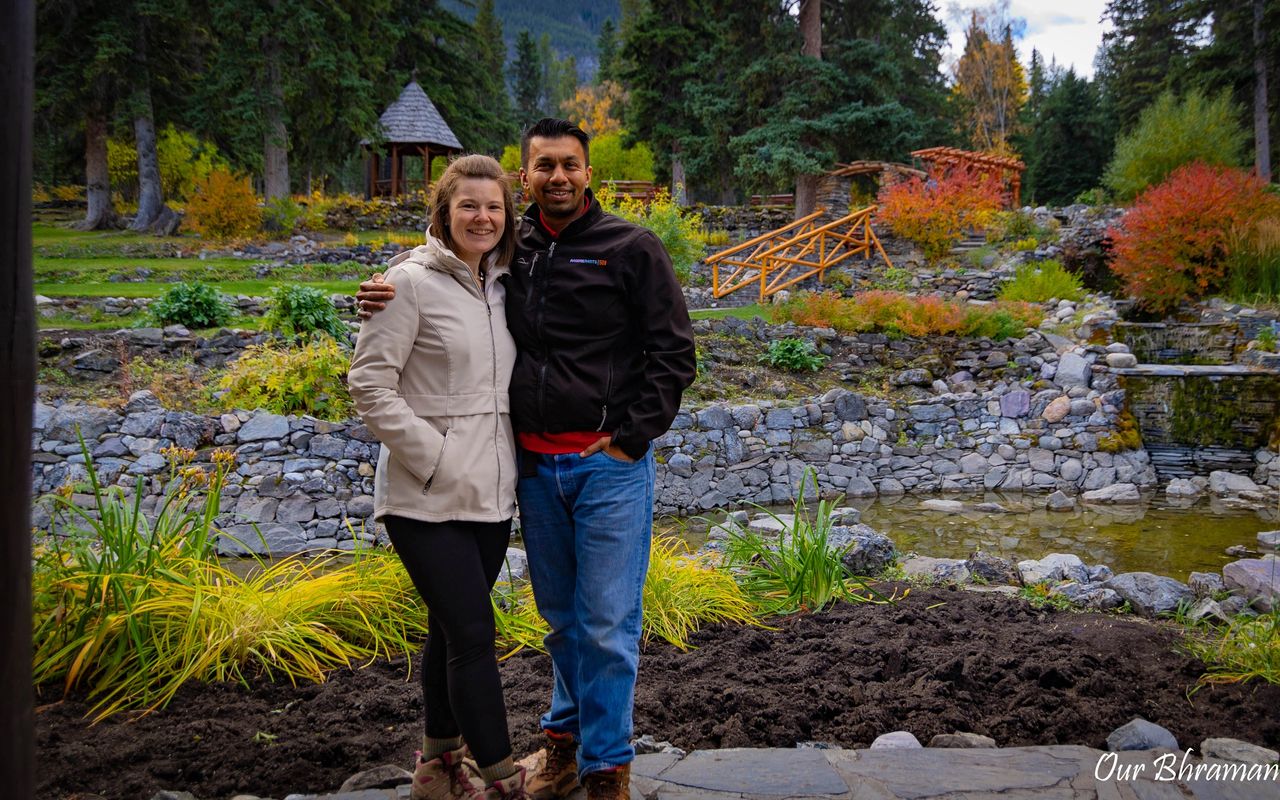
Though the Cascade Gardens are relatively small and didn’t require much time to explore, we thoroughly enjoyed our 30-45 minute visit. The terrain, though not overly difficult, was a bit uneven, so we were glad we had our hiking shoes on.
As we continued our exploration of Banff, we couldn’t pass up the opportunity to stop by one of the town’s most iconic landmarks: the Banff sign. Located right at the junction of Banff Avenue and Mountain Avenue, this striking wooden and stone installation serves as the perfect welcome to the heart of Banff National Park. The rustic design, blending seamlessly with the natural beauty of the Canadian Rockies, immediately captured our attention.
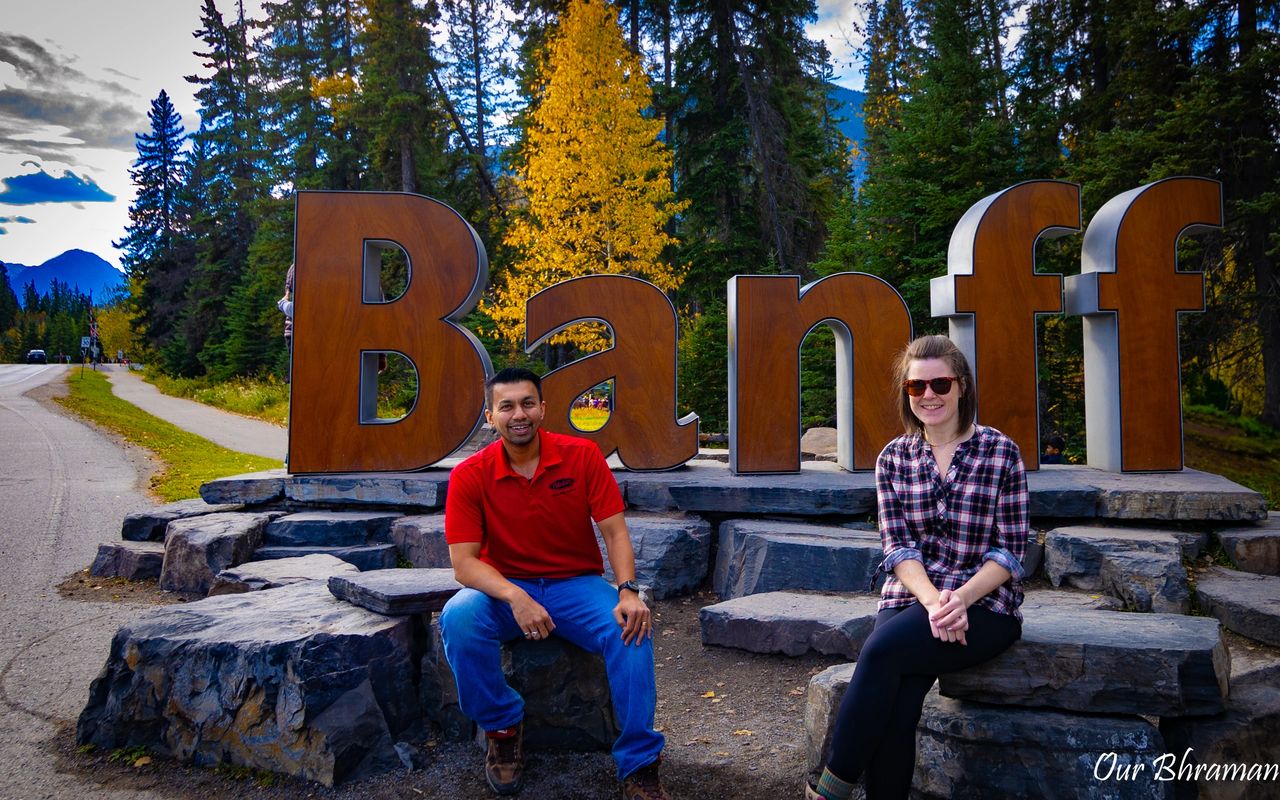
Standing in front of the sign, I couldn’t help but admire the wide, bold letters spelling out “BANFF,” set against a breathtaking backdrop of towering mountains, lush forests, and endless blue skies. It was the kind of scene that instantly made you feel like you were in a postcard. Of course, we couldn’t resist snapping a few photos here—it’s arguably one of the most Instagrammable spots in the area! Whether you’re passing through or just want a great picture to remember your time in Banff, this sign is the perfect spot to mark your visit.
Just west of Banff, we arrived at the peaceful Vermilion Lakes, a group of three calm lakes fed by the Bow River. This place felt like the perfect example of the Canadian Rockies. The lakes offer beautiful views of Mount Rundle, which stands tall over Banff. Vermilion Lakes is popular with photographers, especially at sunrise and sunset when the light shines on the water, creating a magical scene.
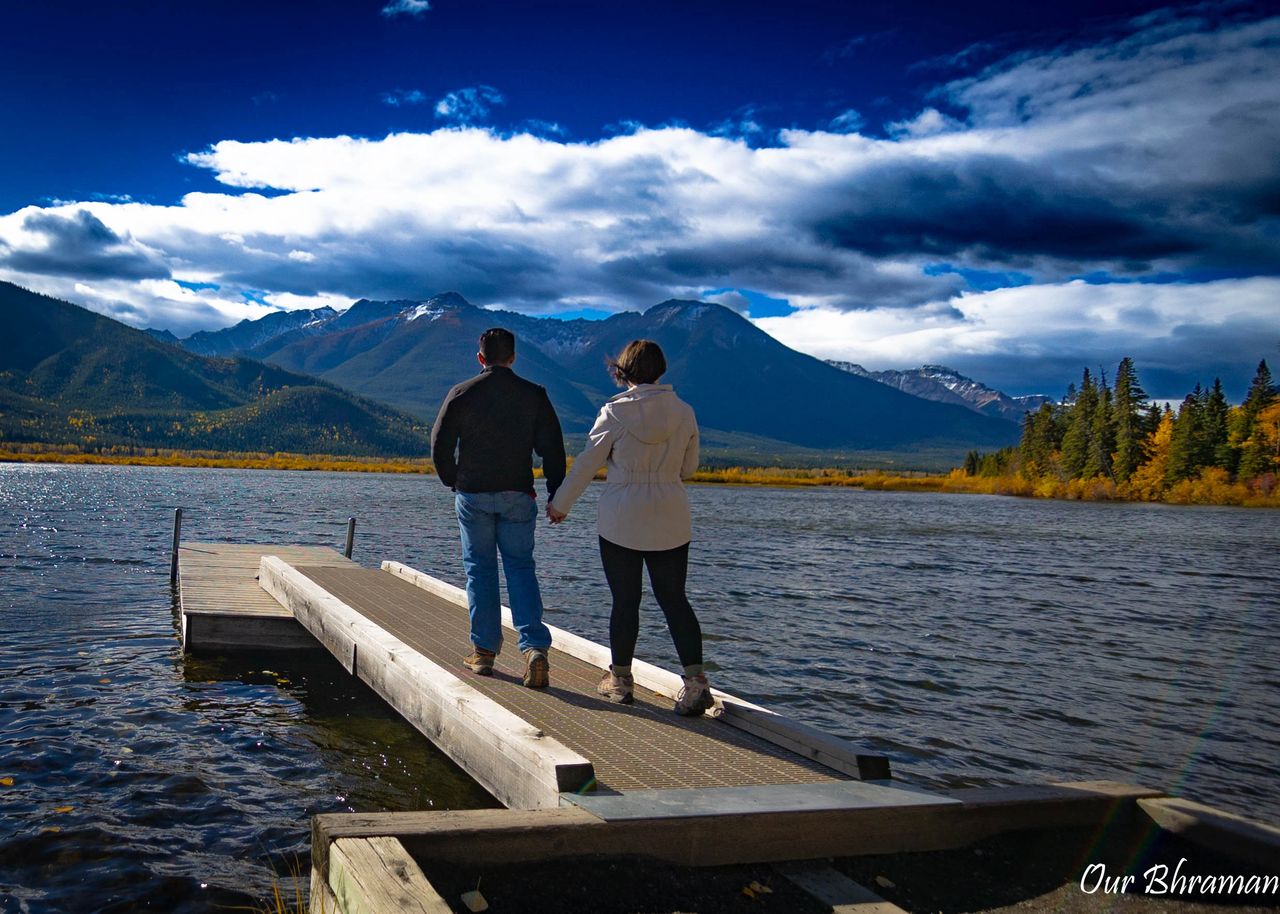
We visited in the afternoon, and the beauty of the lakes was still amazing. We took a short walk around the lakes, enjoying the calm atmosphere and hoping to spot some wildlife. Many people come here hoping to see elk, deer, or even a bald eagle by the water. Sadly, we didn’t see any animals, but the peaceful surroundings and stunning views made up for it. It was a great place to relax and enjoy the natural beauty of the Canadian Rockies.
This marked our final day in Canada and the last chapter of an unforgettable journey through the Canadian Rockies. Our adventures across Banff, Jasper, Yoho, and the surrounding national parks were nothing short of extraordinary, with each day revealing turquoise lakes, towering mountain peaks, scenic drives, and remarkable wildlife encounters. As we began the journey home, we carried far more than photographs and souvenirs. We left with a deeper appreciation for the beauty, scale, and tranquility of these incredible landscapes, along with memories that will stay with us long after the mountains disappeared from view. The Canadian Rockies gave us countless moments of wonder, making this a trip we will cherish for years to come.