Day-7 Our next day began with an early breakfast as we set out toward our next destination—Chittorgarh Fort. The drive from Udaipur to Chittorgarh is roughly 115 km and takes about 2 to 2.5 hours, but it didn’t feel long at all. The journey itself was part of the experience, with changing landscapes, open roads, and glimpses of rural Rajasthan along the way.
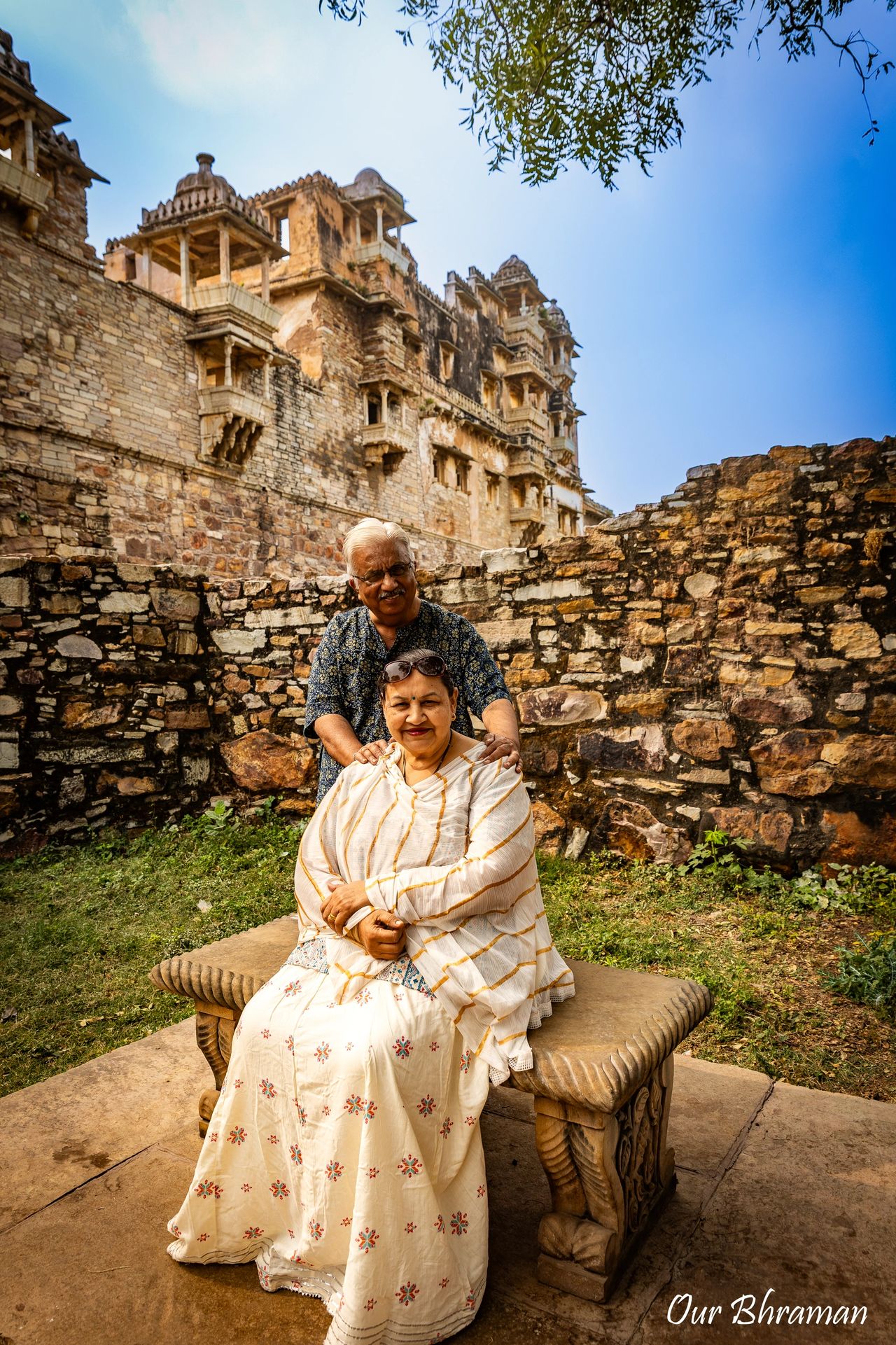
As we explored the vast grounds of Chittorgarh Fort, our guide began sharing the powerful history behind this place, adding a deeper meaning to everything we were seeing. Dating back to the 7th century, the fort was originally established by the Maurya dynasty and later became the stronghold of the Guhila (Sisodia) Rajputs of Mewar. Over the centuries, it witnessed some of the most intense battles in Indian history.
In 1303, Alauddin Khilji laid siege to the fort, followed by Bahadur Shah of Gujarat in 1535, and later Emperor Akbar in 1567. Each of these attacks led to acts of Jauhar—where women chose self-immolation to protect their honor—and Saka, where Rajput warriors fought bravely until their last breath. Hearing these stories while standing inside the fort made the experience feel heavy yet deeply meaningful. It wasn’t just about ruins anymore—it was about sacrifice, courage, and an unbreakable spirit that still lingers in the air.
Since the fort is so expansive, the best way to explore it is by driving from one point to another, stopping at key locations along the way. We started our journey from one of the most significant sections:
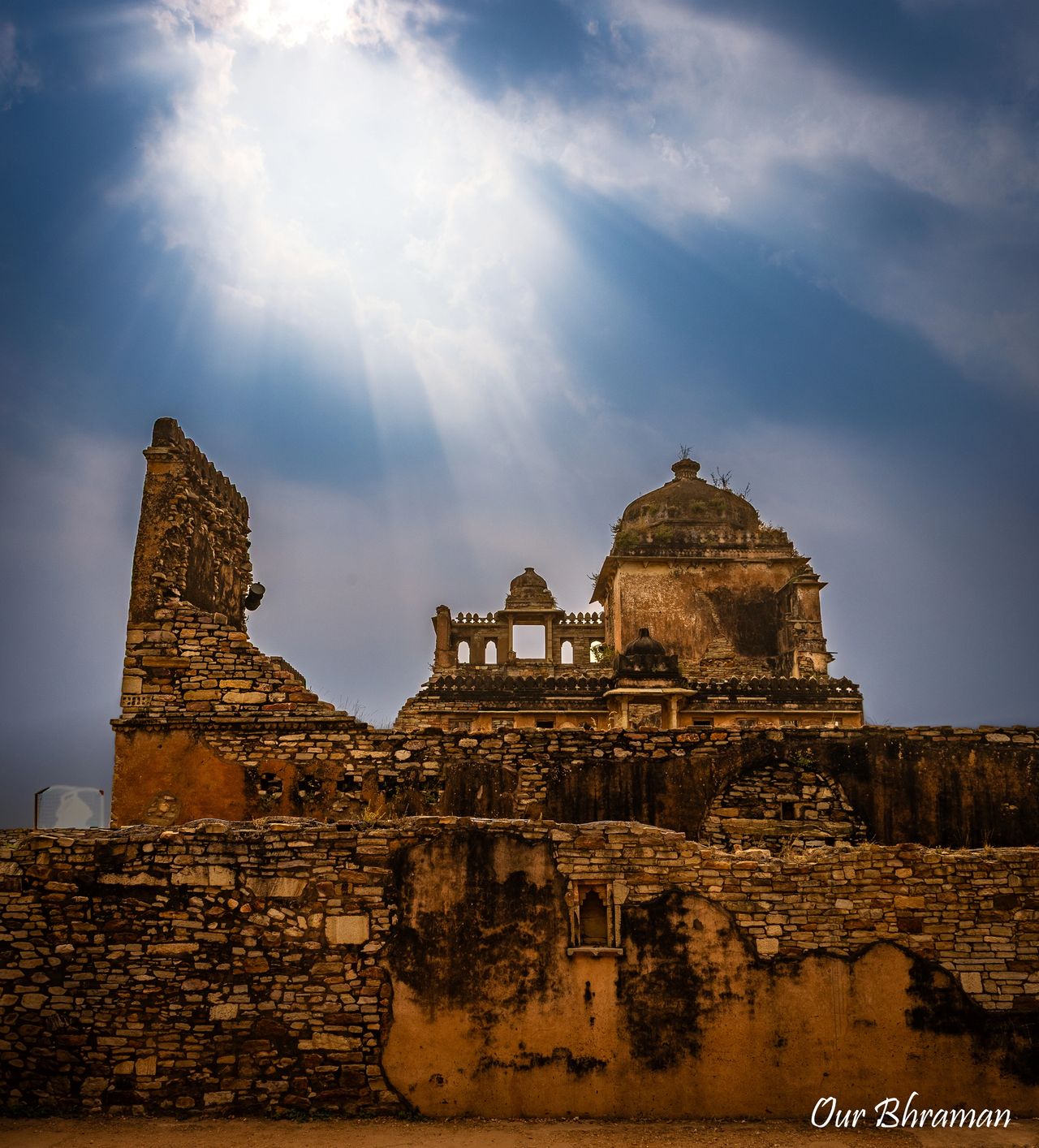
Rana Kumbha Palace
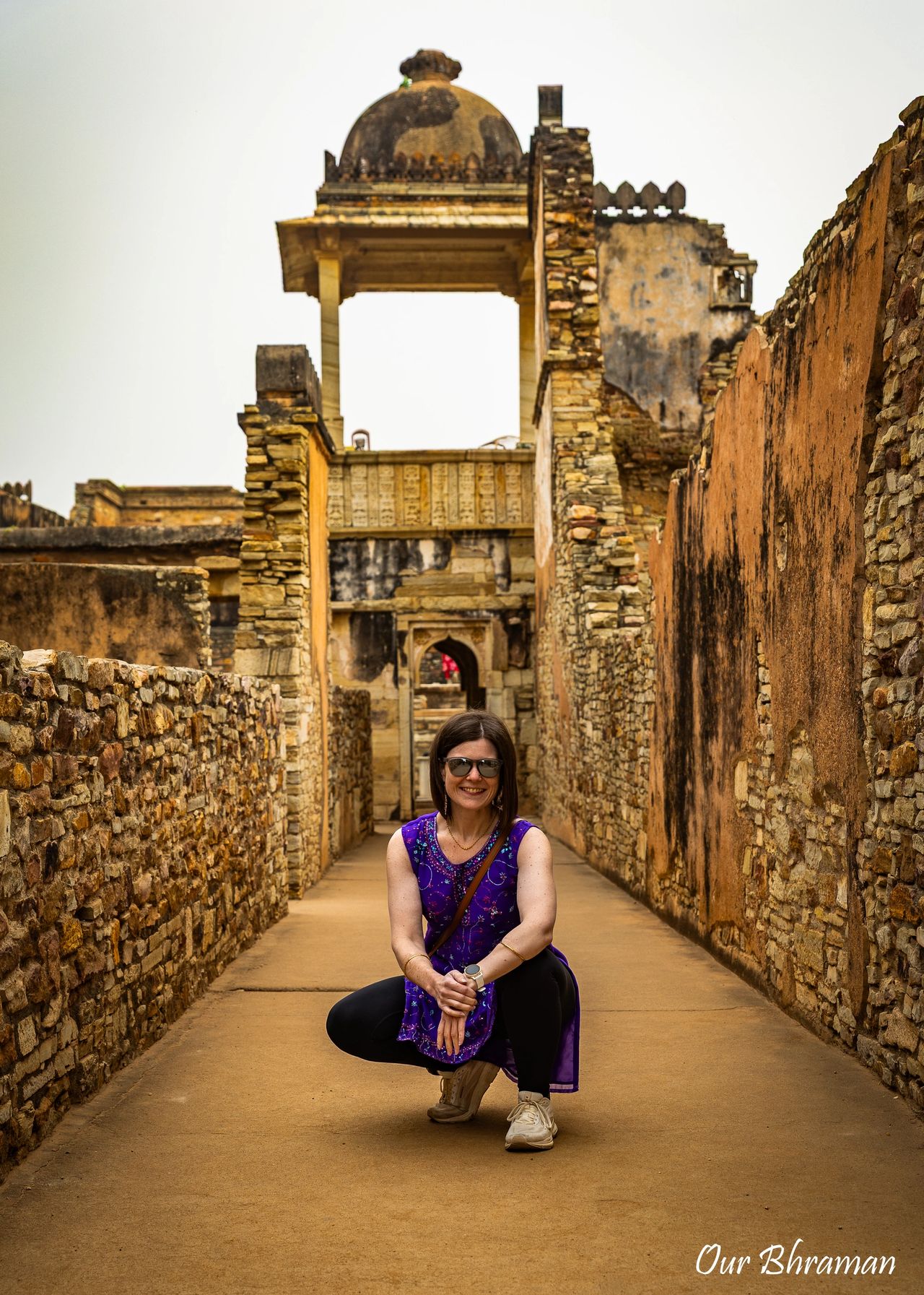
Our first stop was the historic Rana Kumbha Palace, one of the oldest structures within Chittorgarh Fort. Walking through its ruins, it was hard not to feel the weight of its past. Our guide pointed out the underground cellars, believed to be the site where Rani Padmini committed Jauhar. The space felt quiet, but the stories connected to it made it one of the most powerful places we visited.
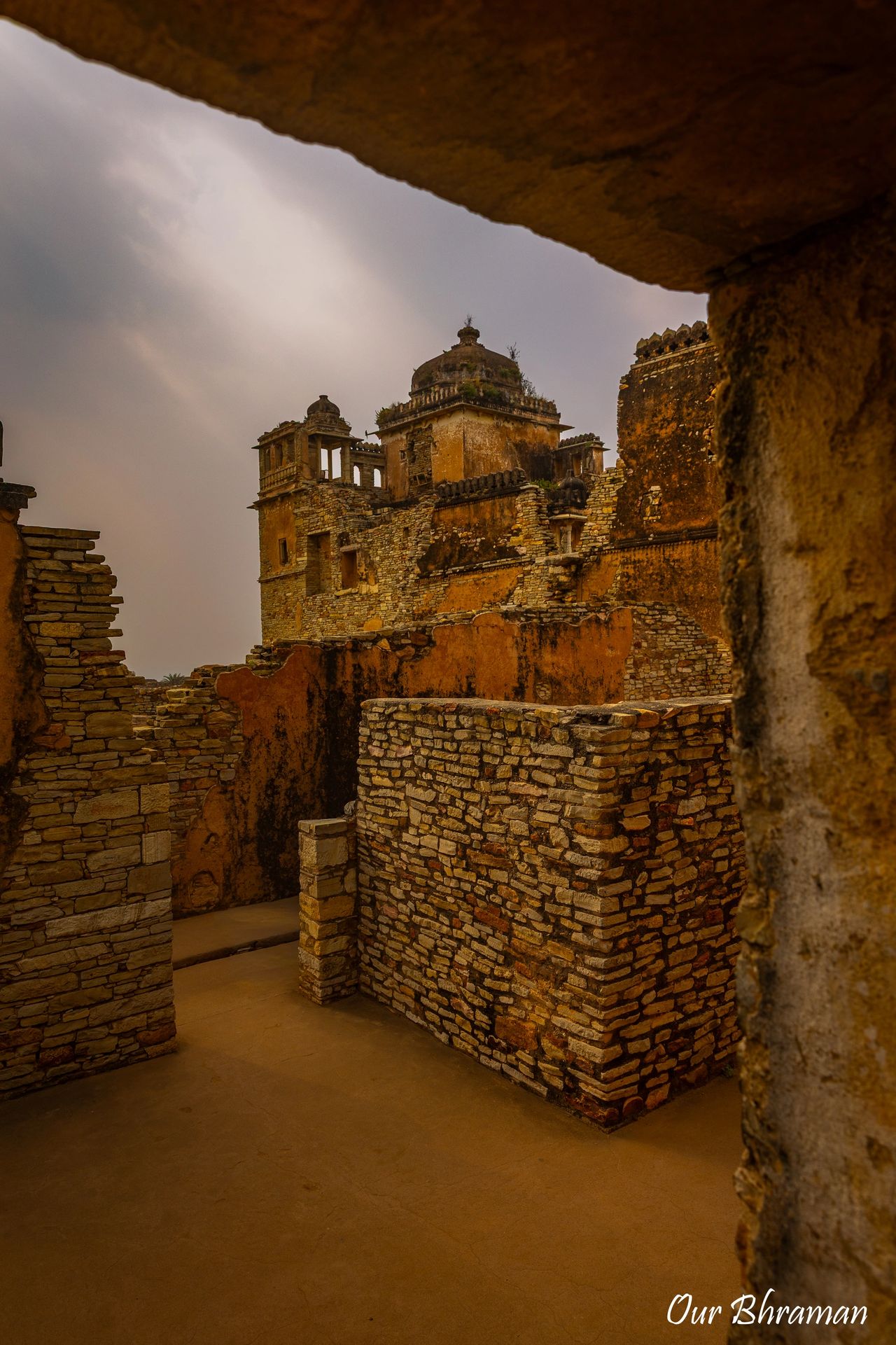
As we wandered further, we noticed how vast the palace once must have been—open courtyards, broken walls, and scattered sections that still hint at its original grandeur. There are remains of temples within the complex, small shrines, and areas that were once used for royal living. At certain spots, you can climb up slightly elevated sections and get views of the surrounding fort, which helps you understand how central this palace once was.
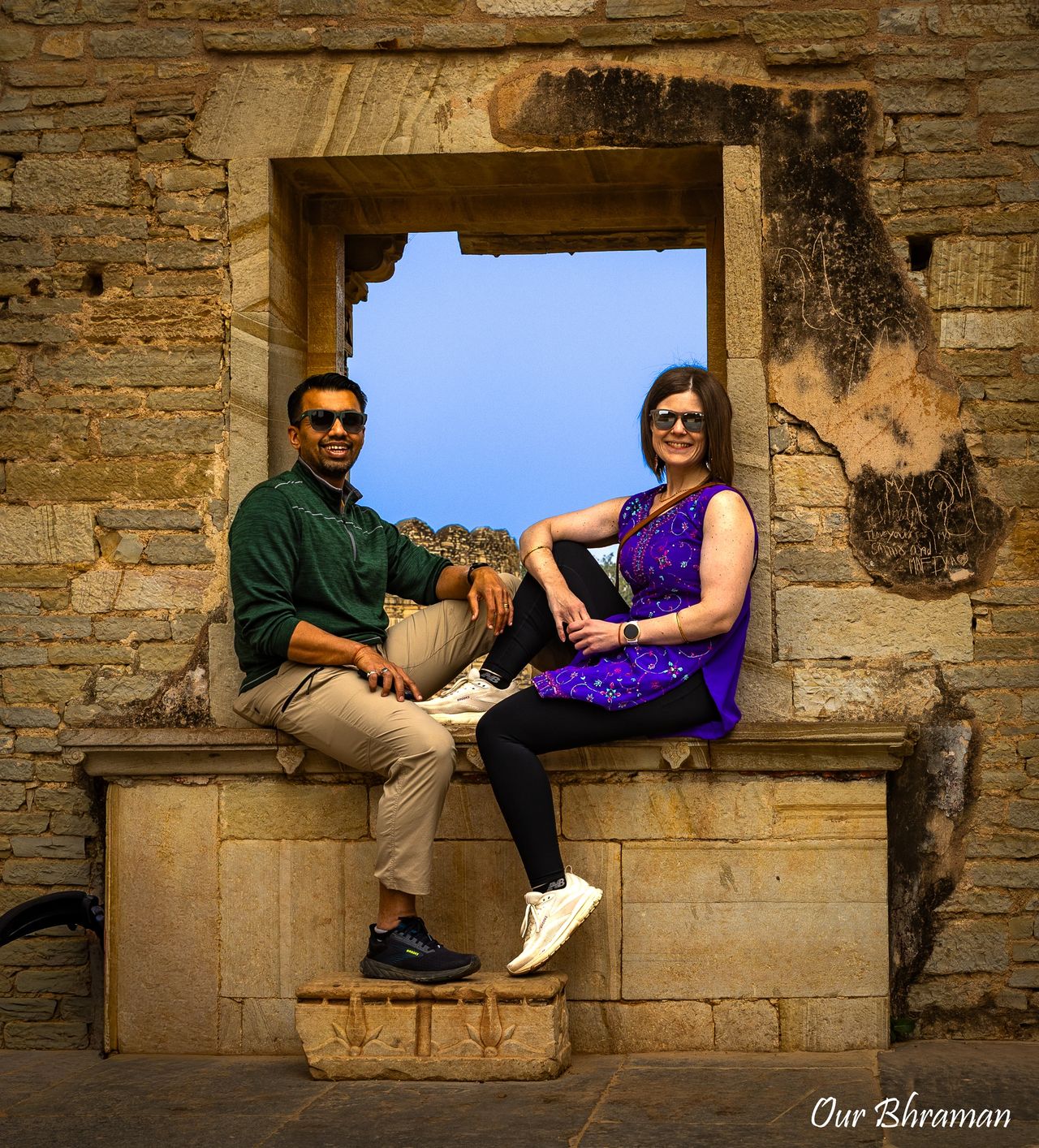
What stood out to us was how raw and untouched everything felt. Unlike more restored palaces, this place still carries a sense of age and authenticity. You’ll see intricate stonework in parts, faded carvings, and narrow passages that make you pause and imagine what life might have been like here centuries ago. It’s not just a quick photo stop—this is a place where you naturally slow down, take a moment, and truly absorb the history around you.
Vijay Stambh (Victory Tower)
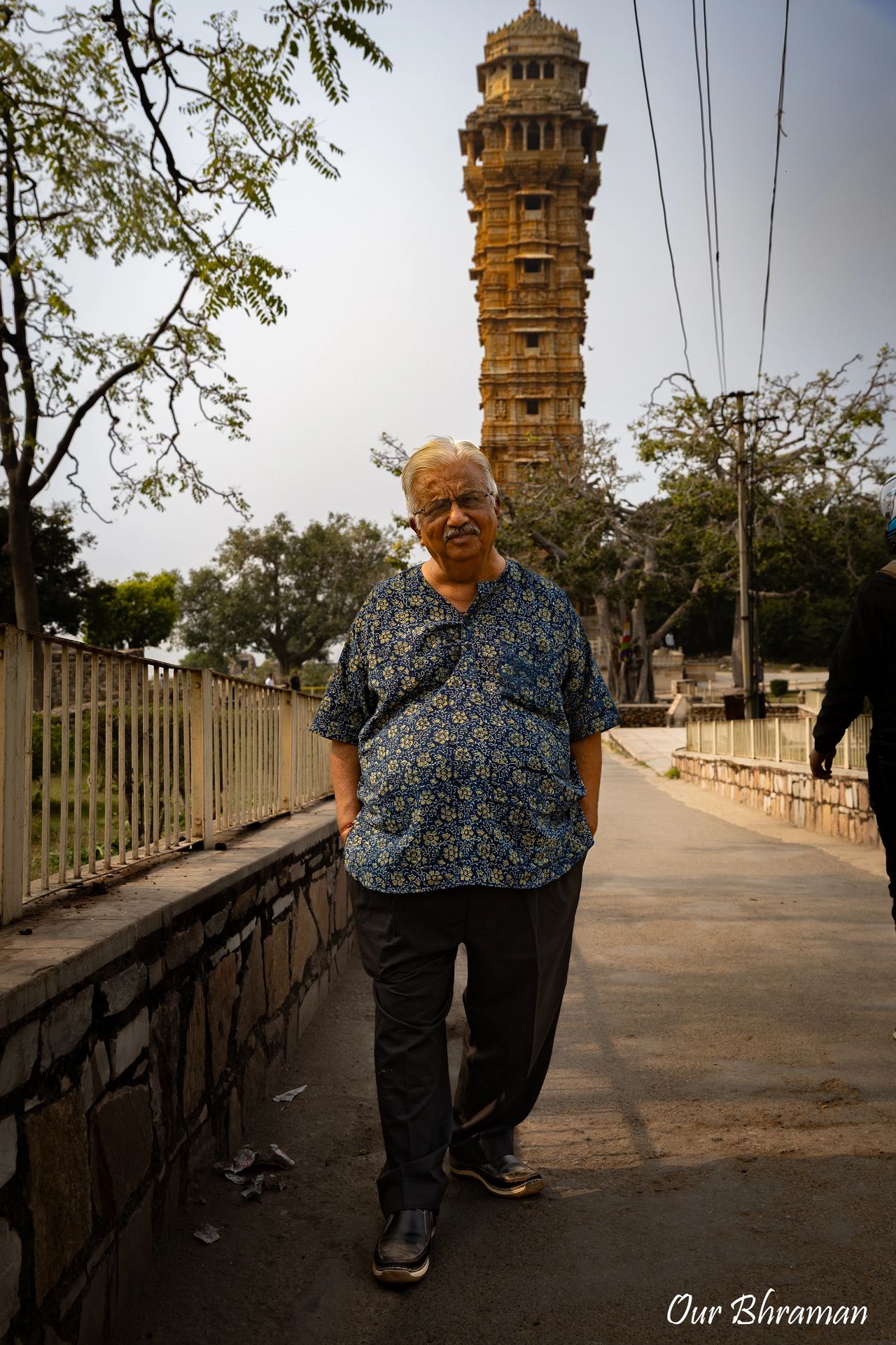
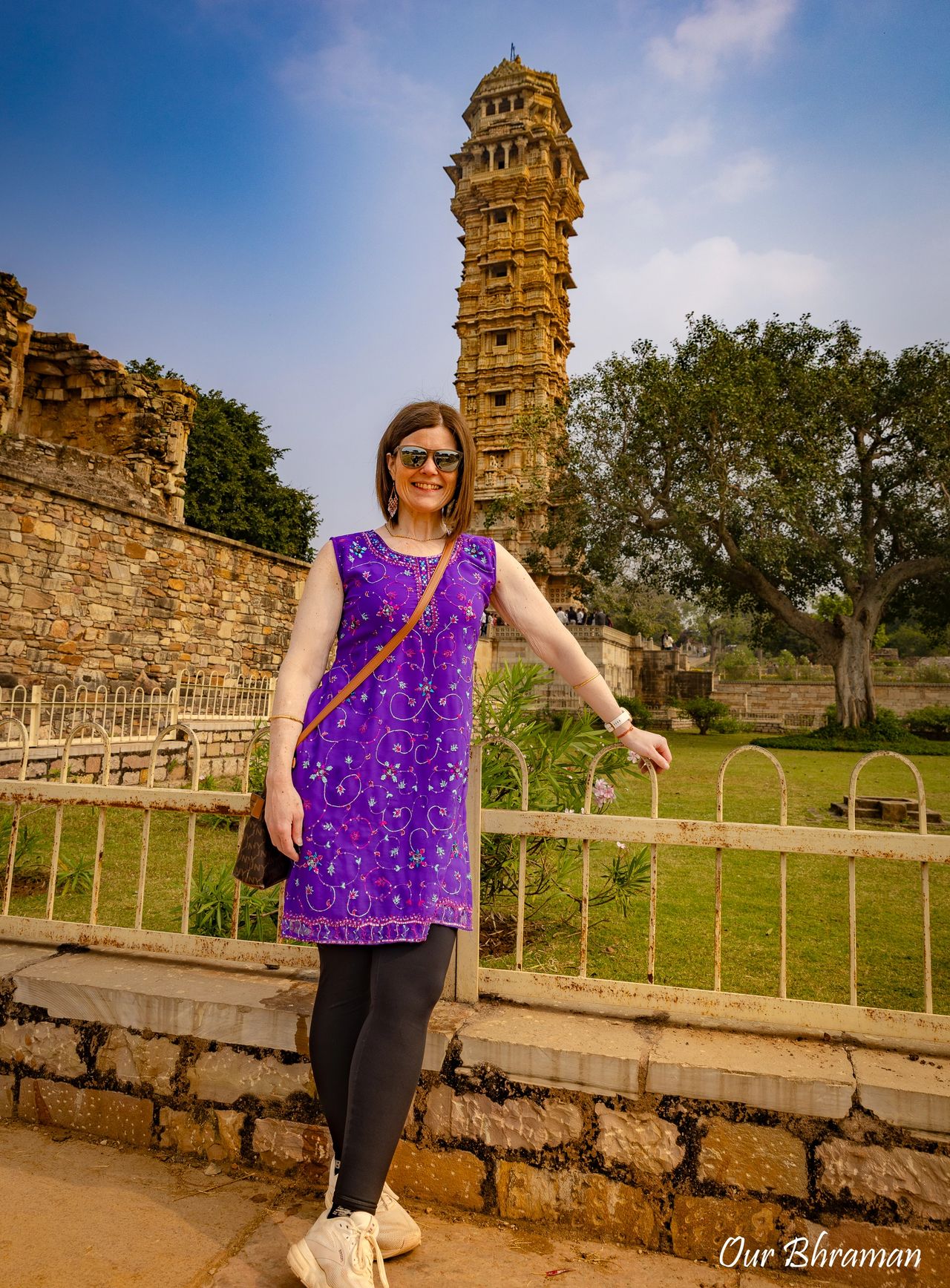
From there, we made our way to the towering Vijay Stambh, one of the most iconic landmarks of the fort. Built by Rana Kumbha in 1448 to celebrate his victory over Mahmud Khilji, this nine-story structure stands tall as a symbol of triumph. The detailed carvings and sheer height make it impossible to miss, and from the top, you get breathtaking panoramic views of the entire fort.
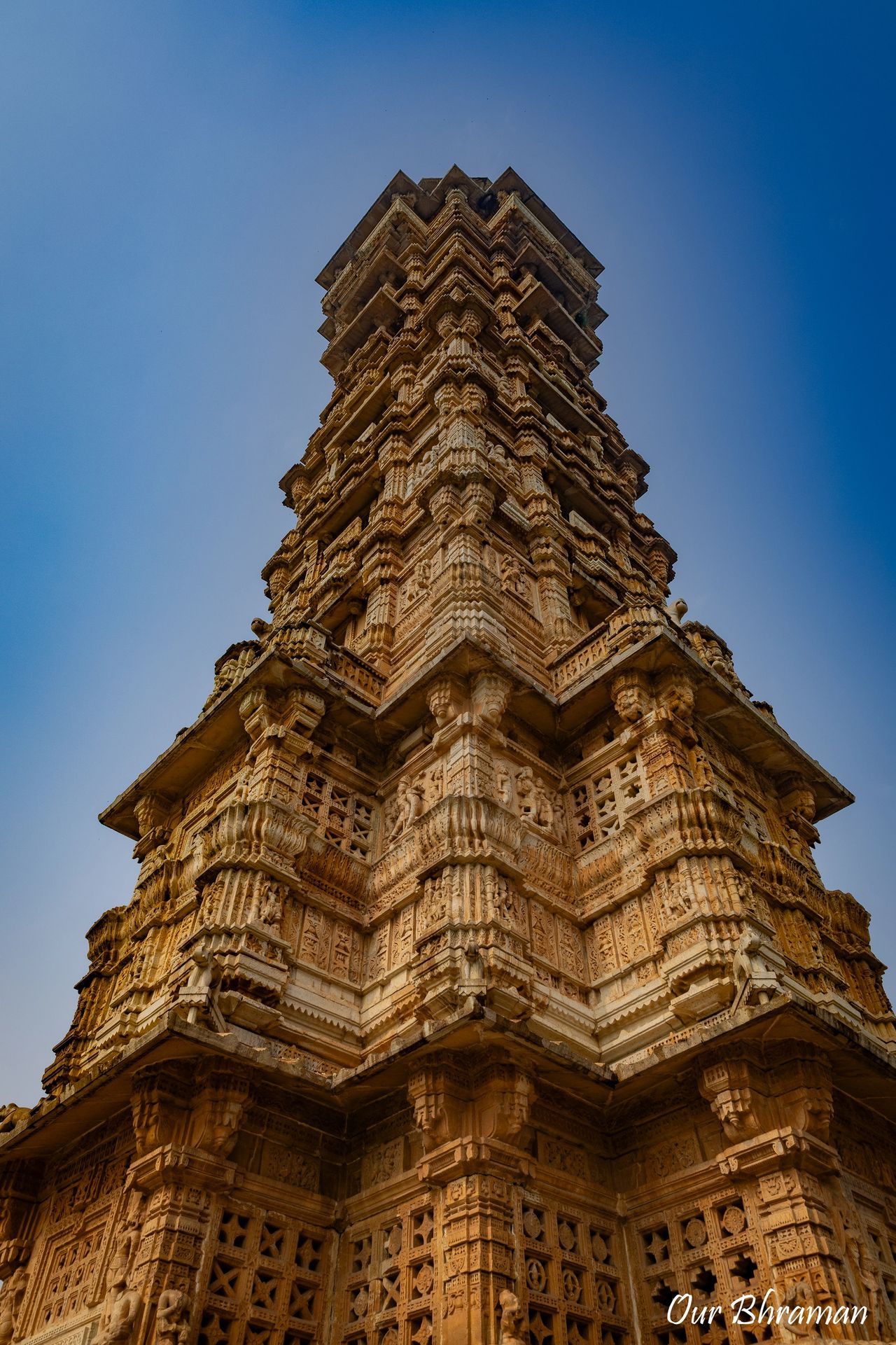
As we stood near Vijay Stambh, it wasn’t just the height of the tower that impressed us, but the incredible detail carved into every surface. The exterior is covered with inscriptions in Sanskrit, praising Rana Kumbha and celebrating his victory. As we looked closer, we could see intricate carvings of deities, celestial figures, and scenes from Hindu epics woven into the stone. It felt less like a monument and more like a story carved in layers—each detail reflecting the cultural and spiritual beliefs of that time.
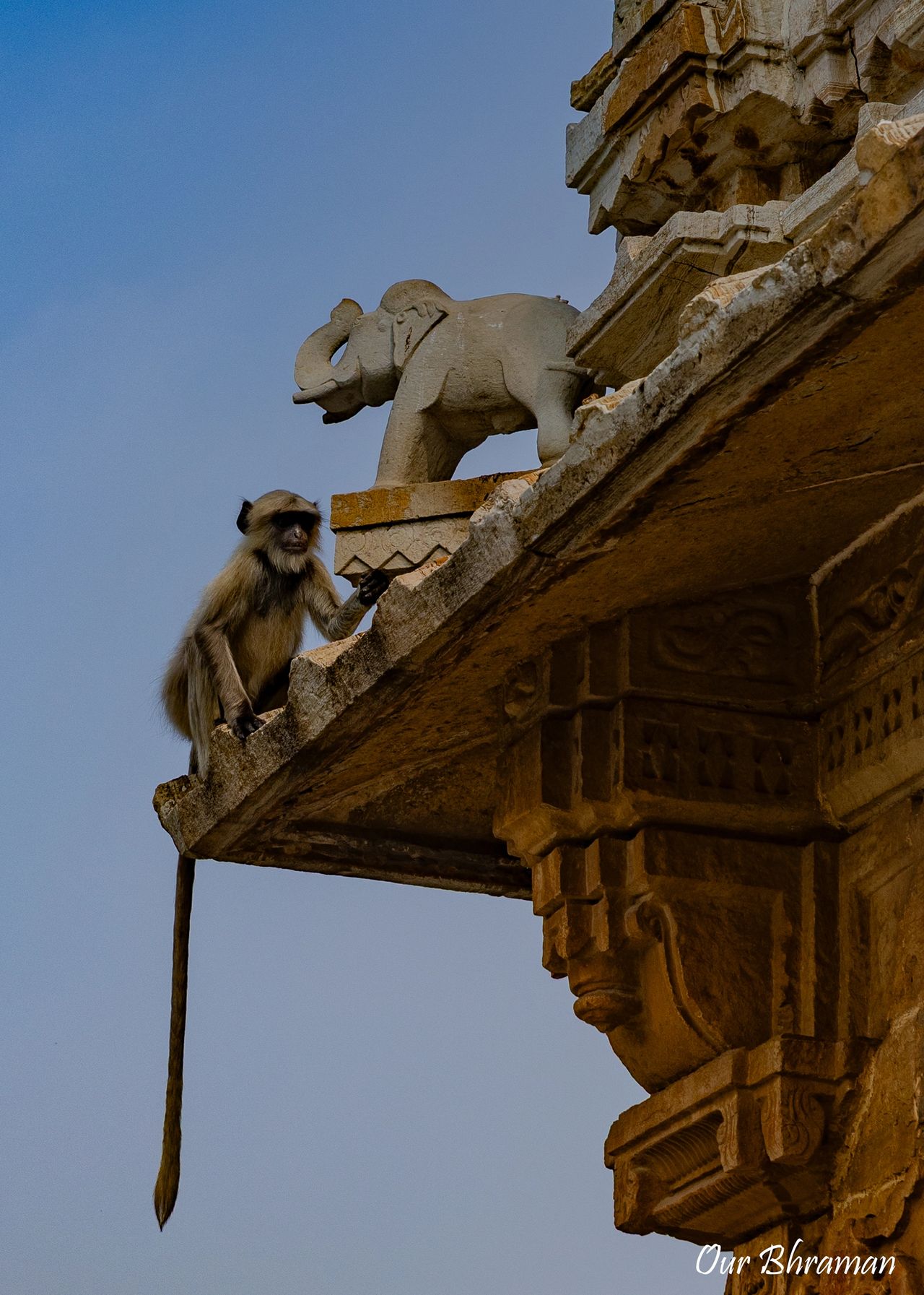
As we stood admiring Vijay Stambh, a group of monkeys suddenly climbed effortlessly up the tower, moving across the intricate carvings as if they had done it a hundred times before. It was such an unexpected sight—this historic monument, rich with centuries of history, now shared with these playful residents. Watching them leap from ledge to ledge added a raw, unfiltered moment to the experience, reminding us that places like this aren’t just preserved history—they’re still very much alive.
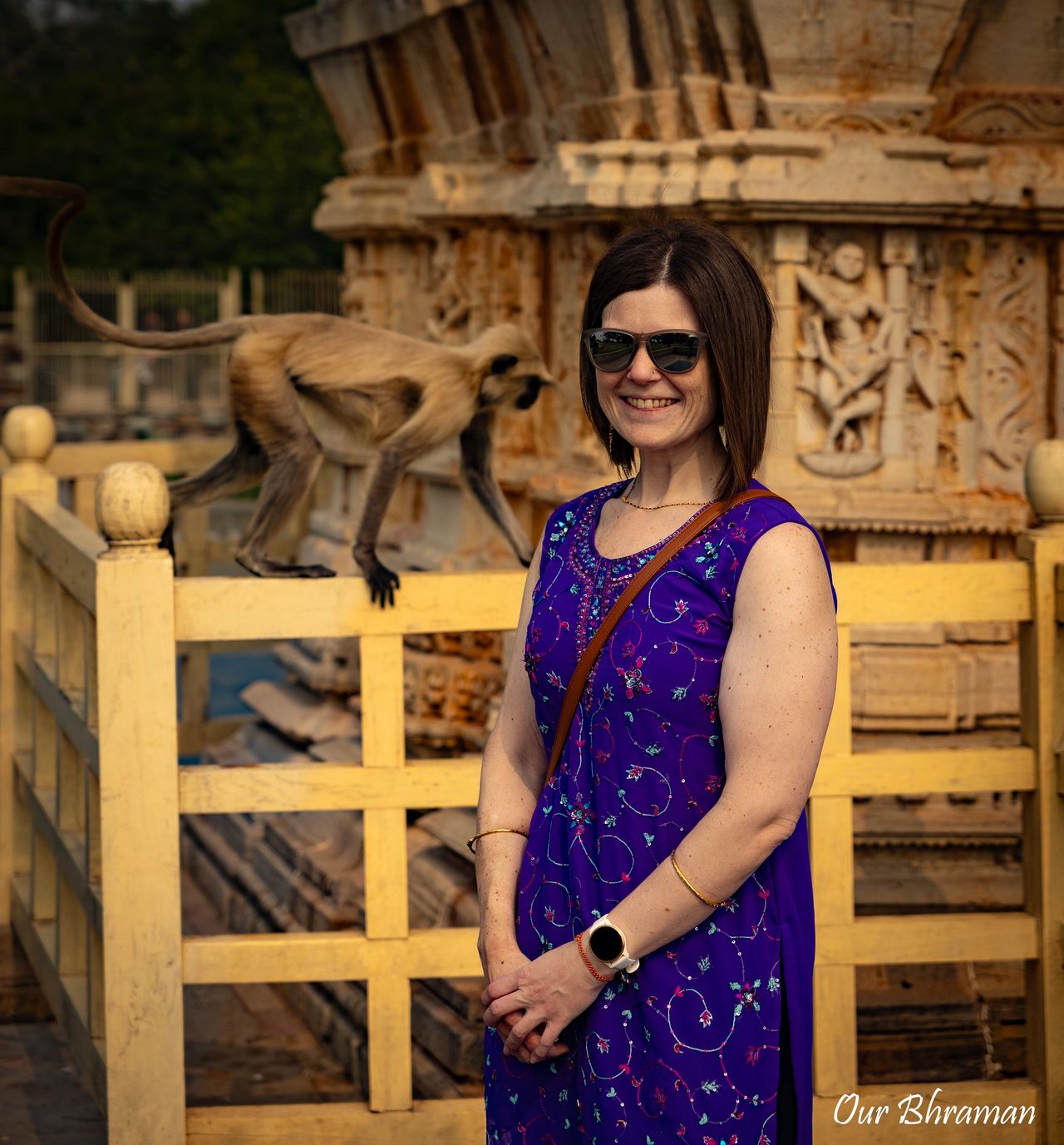
What made this stop even more interesting for us was everything around it. Just nearby, we came across small temples with beautifully carved pillars and quiet prayer spaces that added a spiritual contrast to the grandeur of the tower. The surrounding open areas and garden spaces gave us a chance to slow down for a bit, take in the views, and really absorb the atmosphere.
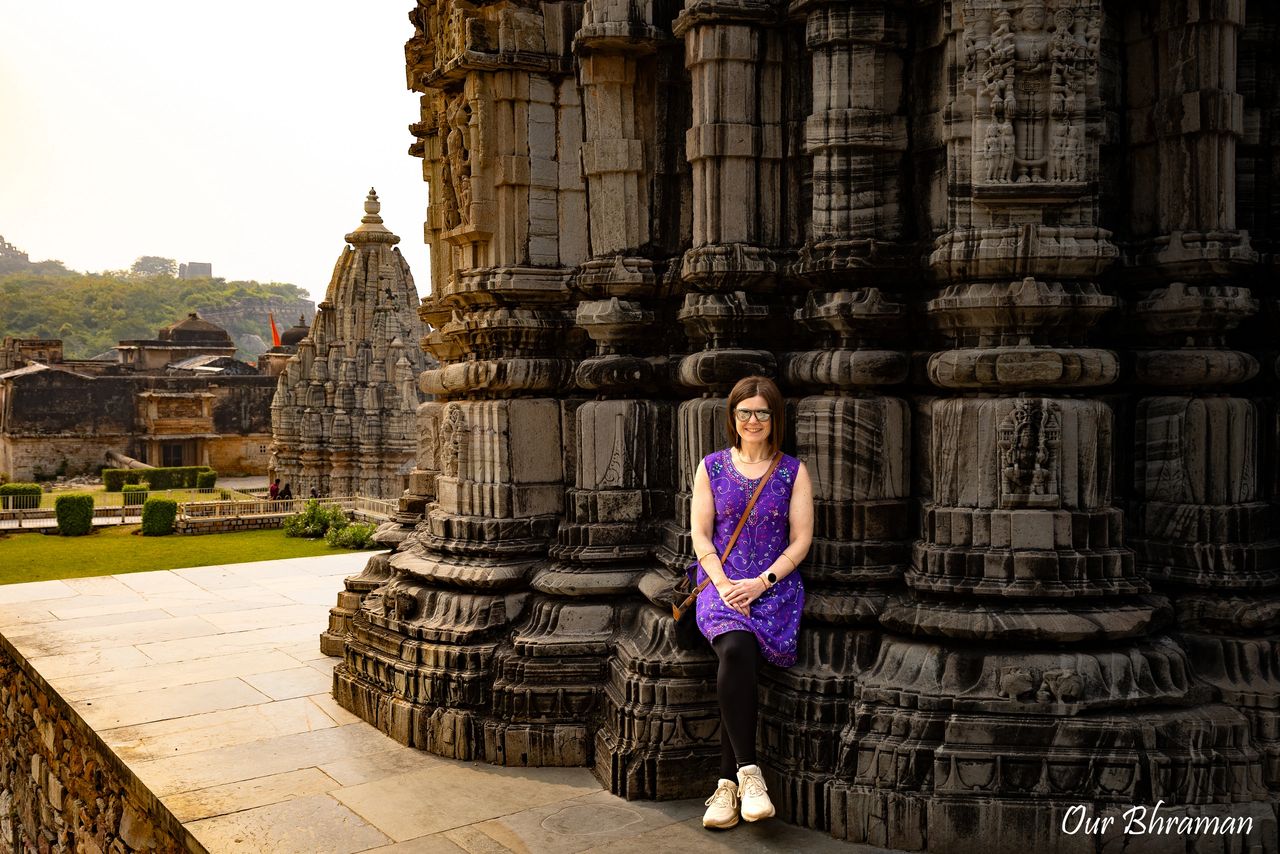
Near the base, beautifully carved temple structures caught our attention. The intricate stonework—filled with detailed carvings of deities, patterns, and mythological figures—felt almost alive, telling stories from centuries ago. Sitting along the temple walls, we could really appreciate the craftsmanship up close. Every pillar, every curve, seemed thoughtfully designed, reflecting the deep spiritual and artistic roots of the time.
Just a short walk away, the landscape opened up to reveal peaceful water reservoirs built along the rocky edges of the fort. The still water, reflecting the surrounding stone walls and temples, created a calm contrast to the otherwise rugged terrain. It’s easy to see how these water bodies were once essential for life inside the fort, but today they add a quiet, almost meditative charm to the experience.
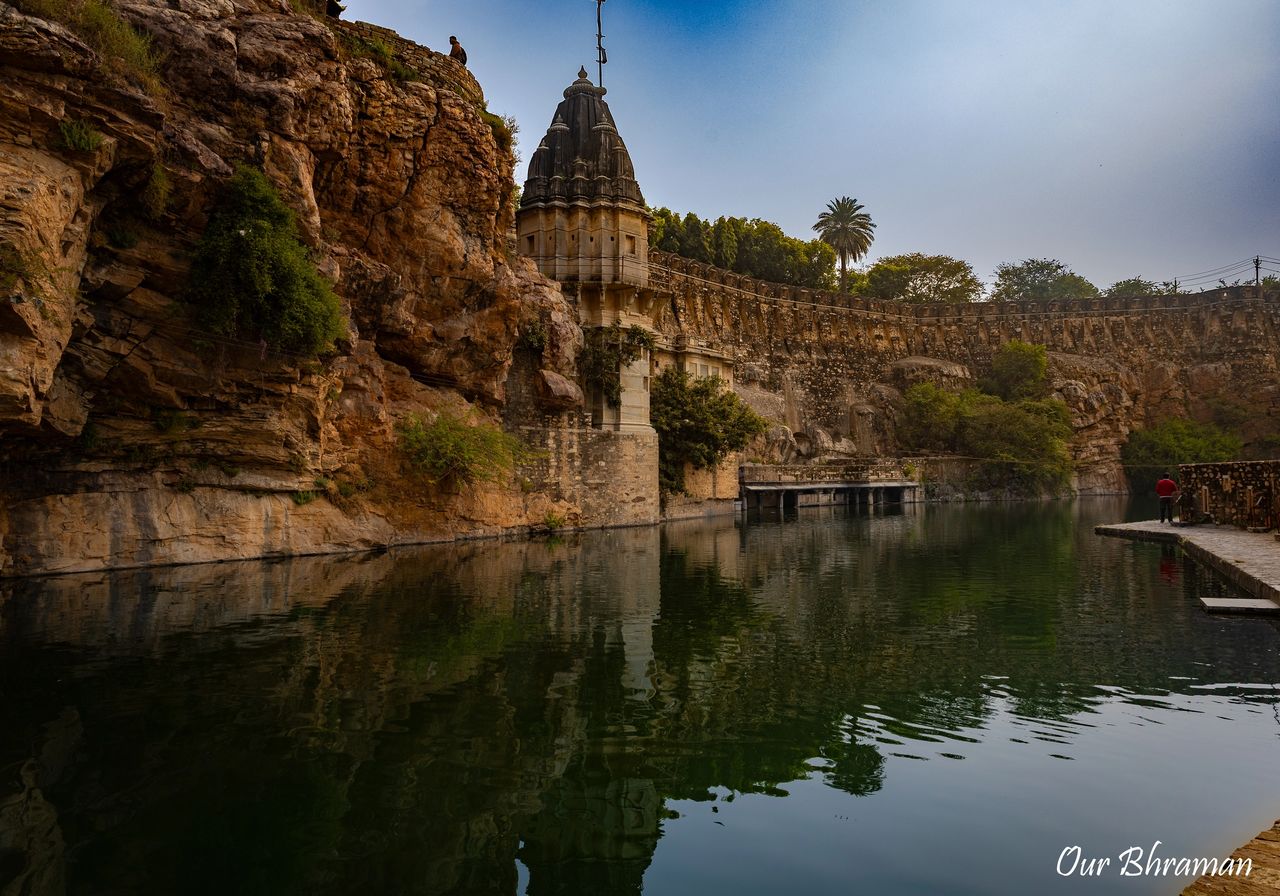
As we explored further, we noticed how the fort is layered with structures—temples, pathways, old walls, and small garden areas—each revealing a different aspect of life during the Mewar era. In the distance, more temple spires rose above the landscape, giving a sense of how spiritually significant this area once was.
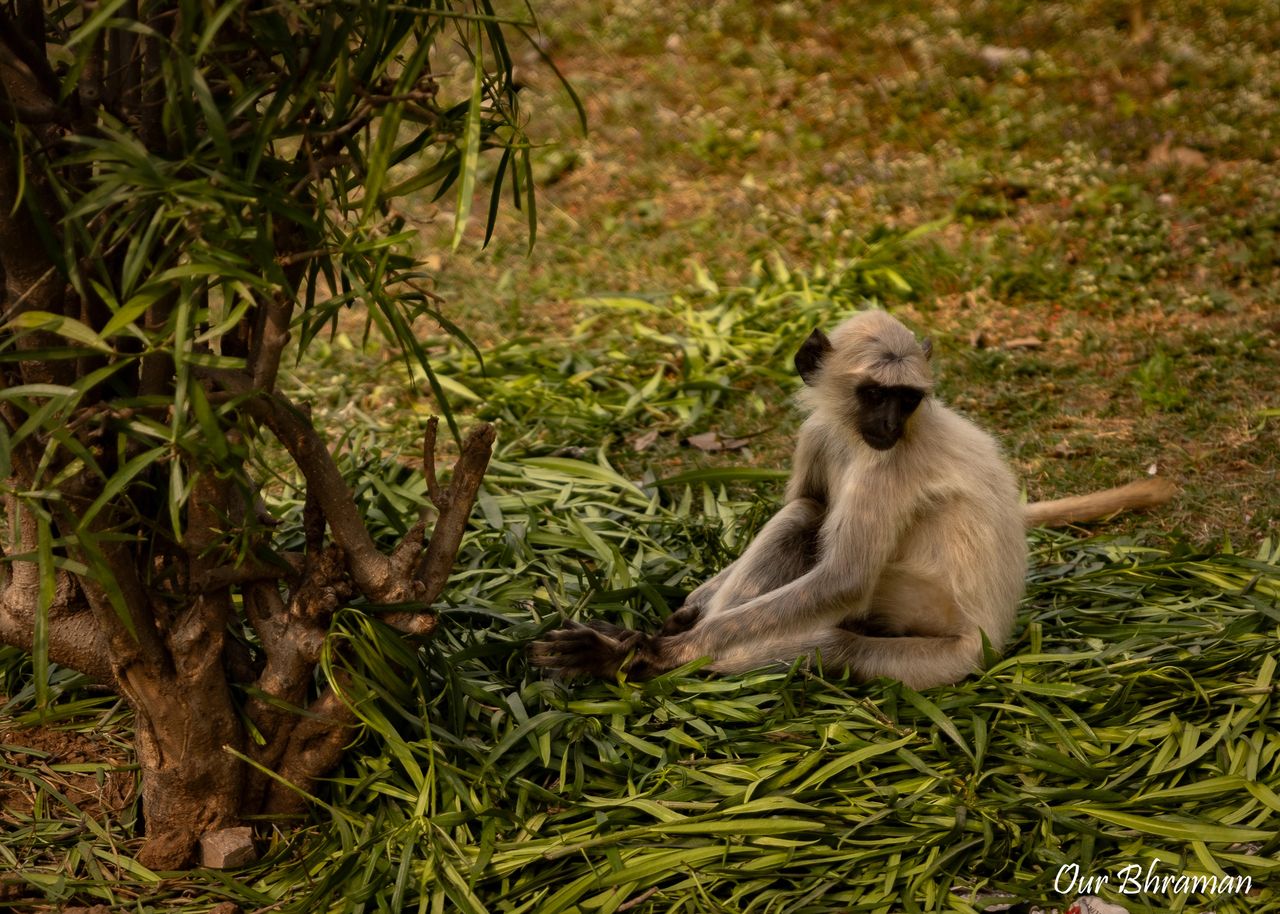
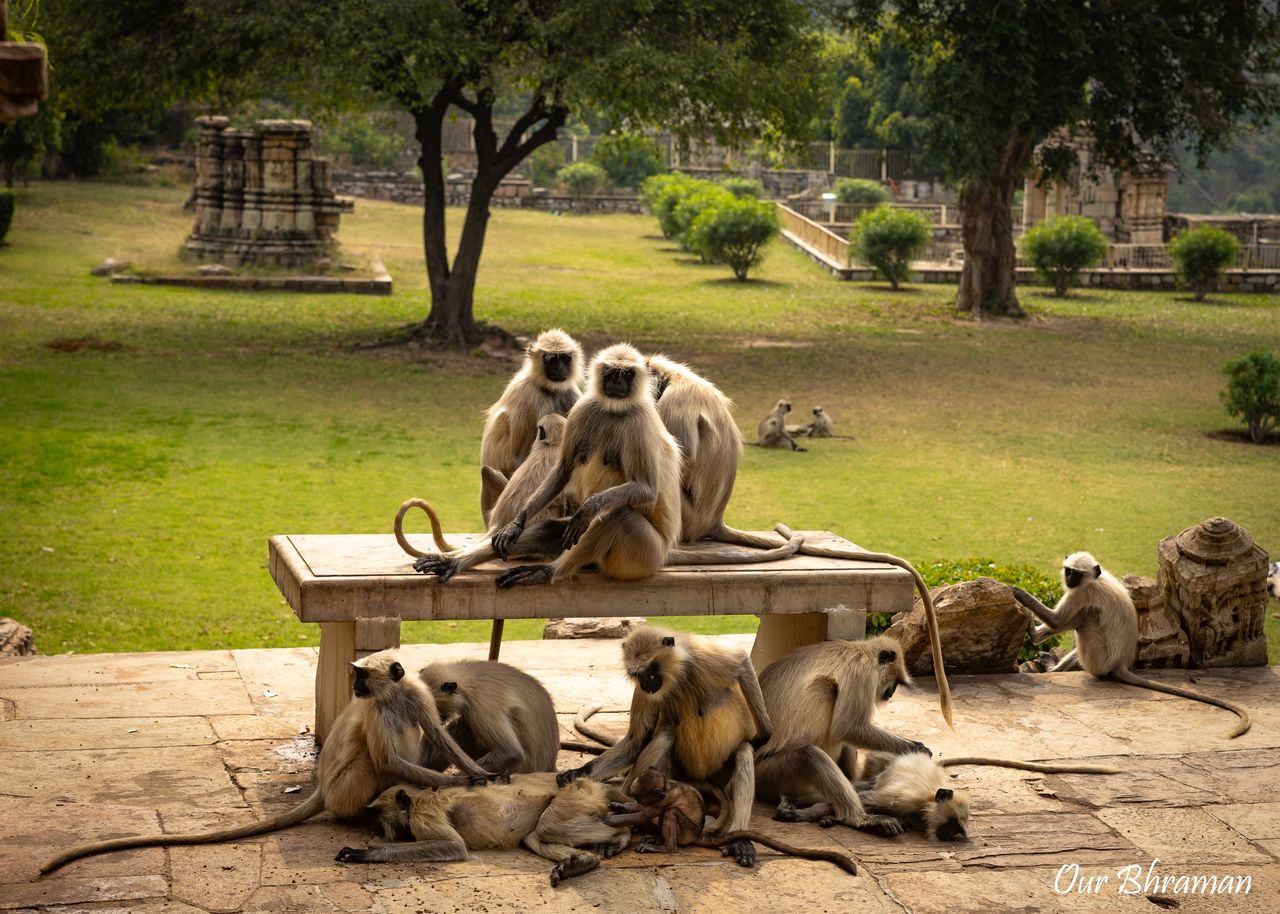
And then, of course, there were the monkeys—everywhere. We spotted them casually climbing temple walls, sitting along pathways, and even perching on higher structures as if they owned the place. At first, it was fascinating to watch them move so freely through such historic surroundings. But we quickly realized it’s best to keep a safe distance, as they can be unpredictable and are known to grab food or small items if given the chance.
Standing there, surrounded by centuries-old temples, quiet water bodies, and the towering presence of Vijay Stambh above us, it felt like more than just a sightseeing stop. It was an experience of layers—history, nature, architecture, and everyday life all blending into one unforgettable moment.
Padmini Palace
Next, we drove to the beautiful Rani Padmini Palace, surrounded by water and set in a peaceful, almost isolated part of the fort. At first glance, the setting feels calm and picturesque, with the palace reflected softly in the water around it. But behind that serenity lies one of the most dramatic and defining stories in the history of Chittorgarh Fort.
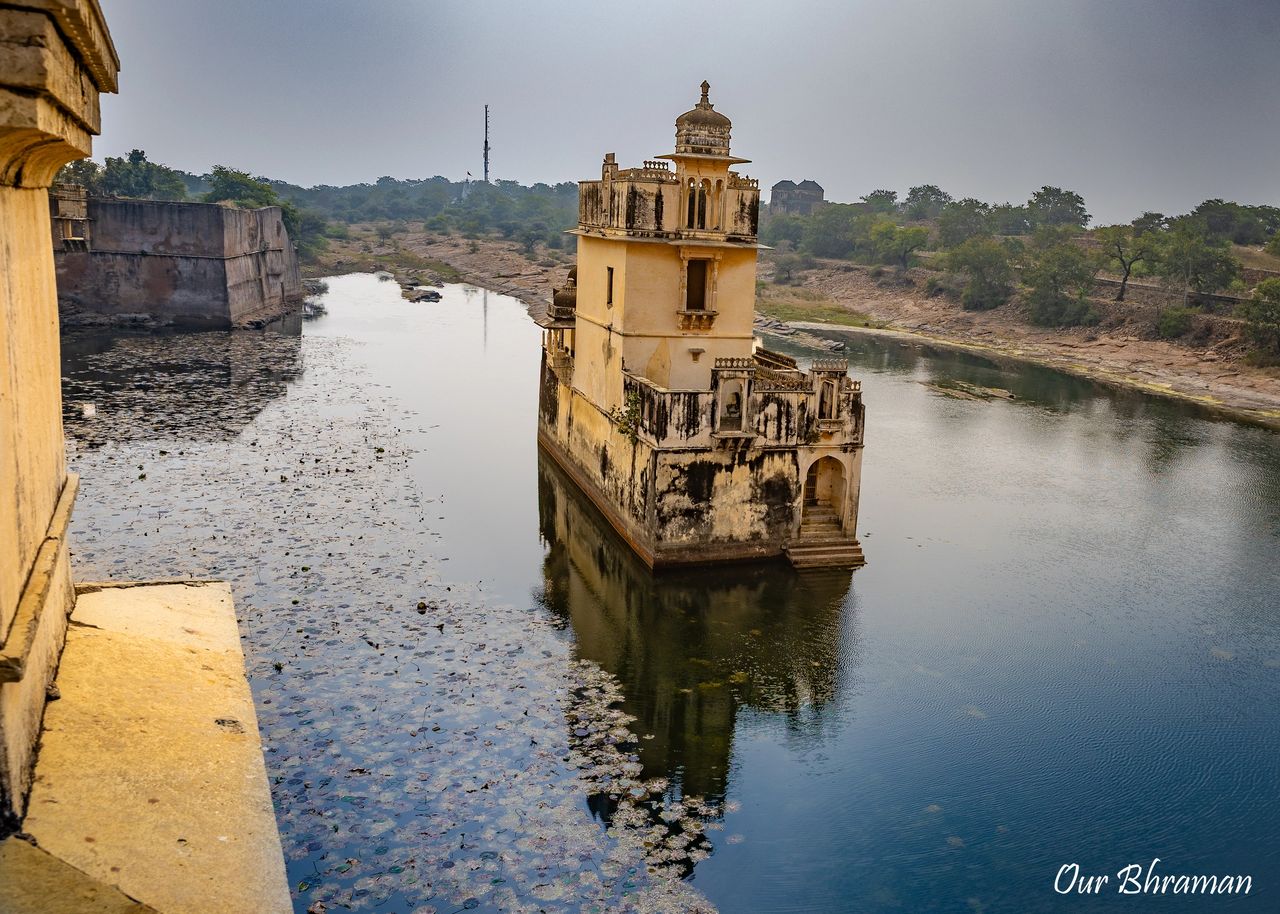
This palace is closely associated with the legend of Rani Padmini and the 1303 siege led by Alauddin Khilji. As the story goes, Khilji, having heard of Padmini’s beauty, demanded to see her. To protect her honor, it is believed that he was only allowed to view her reflection in a mirror from a distance, rather than seeing her directly. This moment—said to have taken place here—ultimately triggered the chain of events that led to the siege of Chittorgarh.
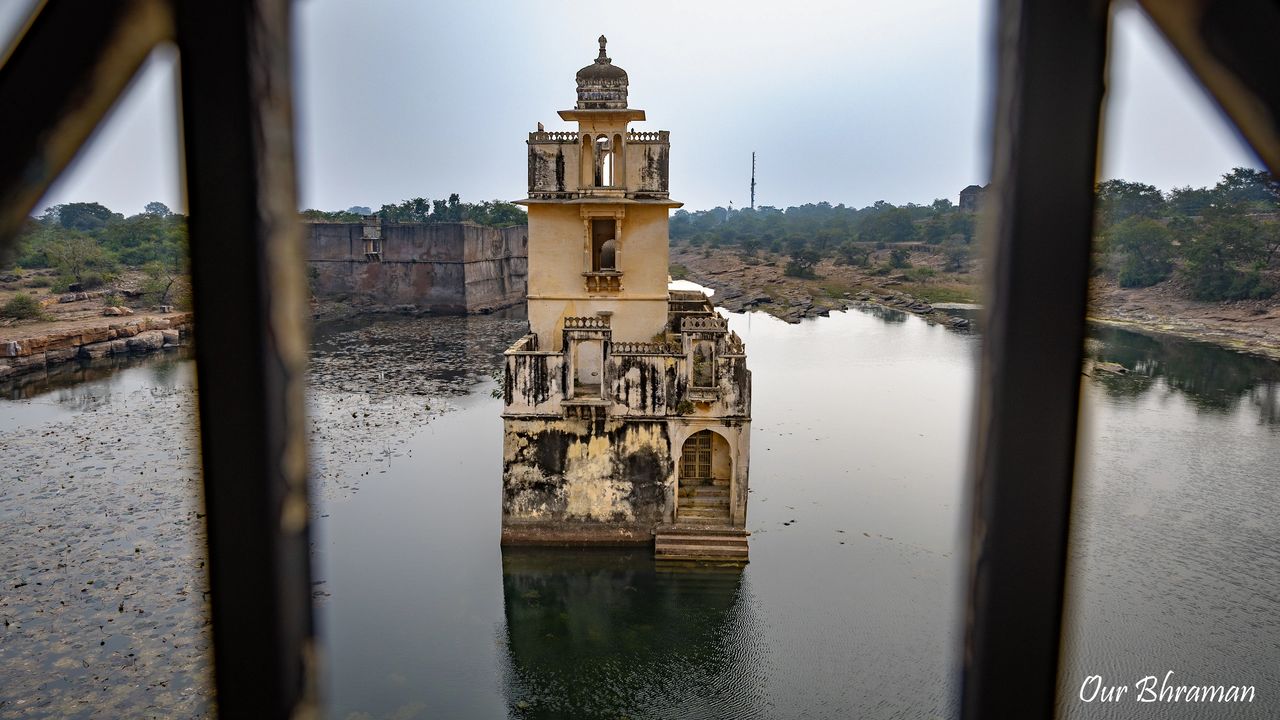
Standing there, looking across the water toward the structure, it was hard not to imagine how that moment might have unfolded. The layout itself—with water acting as a natural barrier—reflects both beauty and defense, a space designed with privacy and protection in mind. It wasn’t just a residence, but part of the royal women’s quarters where seclusion and security were essential. What makes this place even more powerful is what followed. The siege that came after led to one of the most tragic and defining events in Rajput history—Jauhar, where the women of the fort, led by Rani Padmini, chose self-sacrifice over capture. Knowing this, the calmness of the palace feels almost deceptive, as if the walls silently hold stories of courage, sacrifice, and honor.
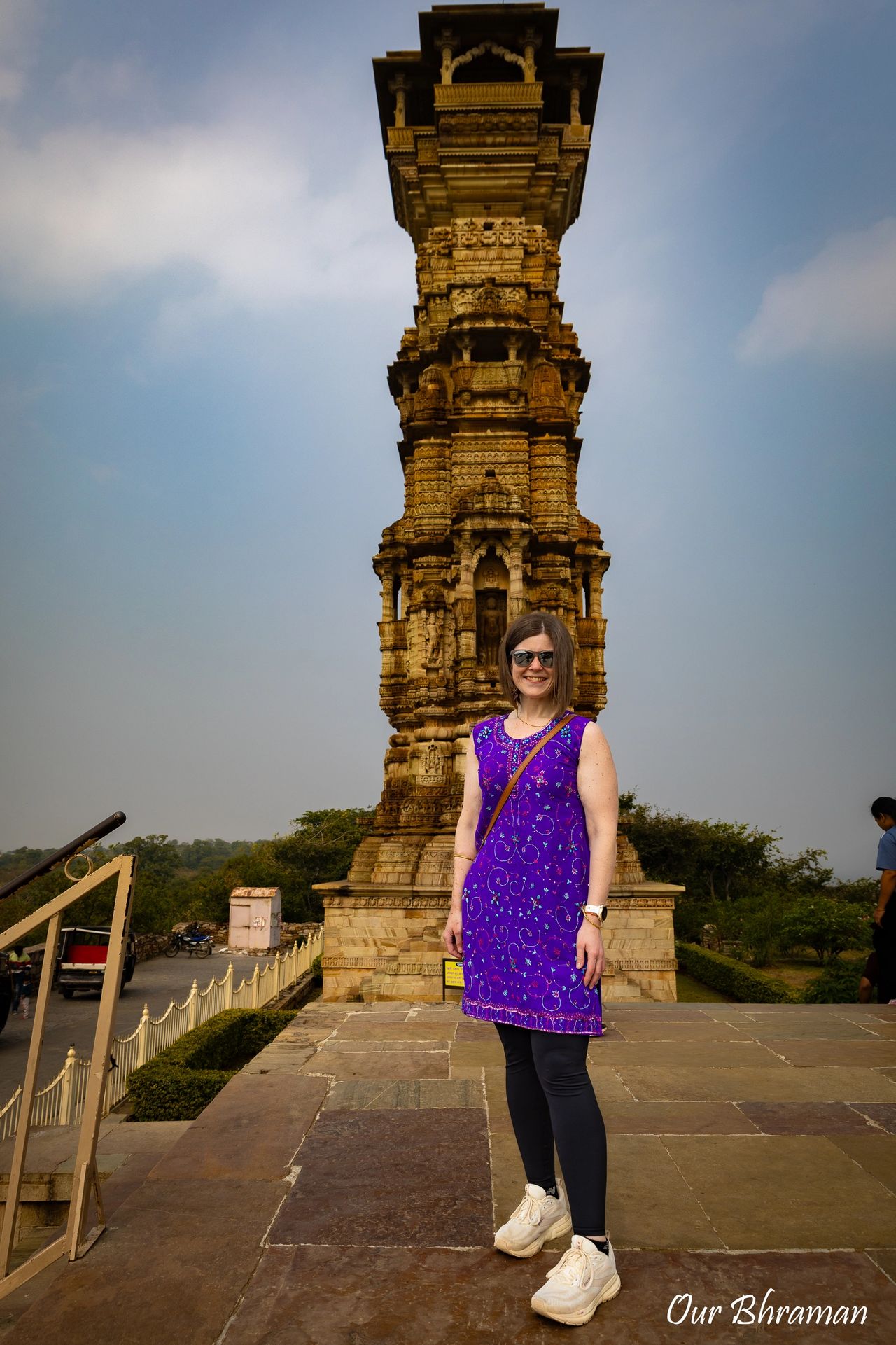
Just a short distance from here stands the elegant Kirti Stambh (Tower of Fame), a striking contrast to the story of Padmini Palace. While the palace speaks of sacrifice, Kirti Stambh represents devotion and spiritual legacy. Built in the 12th century and dedicated to the first Jain Tirthankara, Adinath, this intricately carved tower highlights the religious and cultural diversity that once thrived within the fort. Its detailed carvings and quieter presence offer a different perspective—one of faith, art, and continuity amidst the fort’s turbulent history.
Chittorgarh Museum (Fateh Prakash Palace)
Our final stop was the museum inside Fateh Prakash Palace. This space brought everything together, showcasing sculptures, paintings, weapons, and artifacts from the Rajput era. After seeing the fort itself, walking through the museum helped us better understand the stories, people, and history behind everything we had experienced.
By the time we finished exploring Chittorgarh Fort, we had spent a good half a day of walking, driving, and taking in the different sections of this vast historic site. With its size and layout, having our driver drop us off at each major point made the experience much easier and more enjoyable, allowing us to focus on exploring rather than navigating long distances in the heat.
From Chittorgarh Fort, we headed toward Jaipur to check in to our hotel. It turned out to be a long drive—stretching over five hours—but it gave us time to unwind, reflect on the day, and even make a quick plan to explore Jaipur later that evening. By the time we arrived, the exhaustion of the journey had caught up with everyone. Mom and Dad decided to rest for the night, while we chose to keep the momentum going. We gave our driver the evening off and decided to explore the city at our own pace.
To make it more fun and local, we hopped into a rickshaw and made our way toward our first stop—Hawa Mahal. One quick tip we learned: it’s always helpful to ask your hotel for a rough fare estimate beforehand—it makes negotiating with rickshaw drivers much easier and helps ensure you’re paying a fair price.
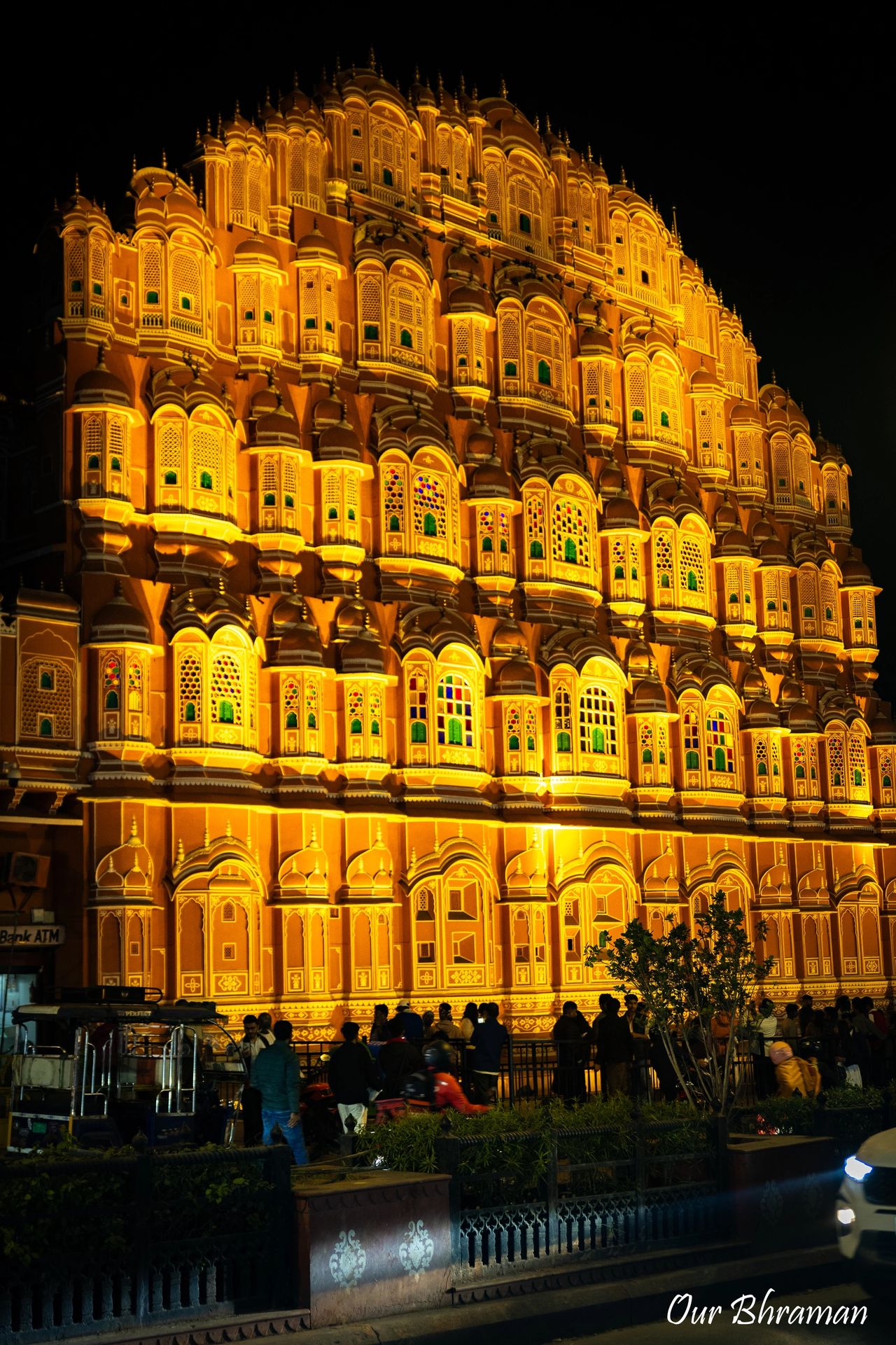
As we arrived at Hawa Mahal, the entire scene felt alive in a completely different way than we had imagined. Lit up against the night sky, the iconic pink façade glowed in warm golden light, with carefully placed spotlights bringing out every tiny detail of its honeycomb design. The shadows created by the hundreds of small windows added depth and texture, making the structure look even more intricate and almost surreal at night. It was one of those views that instantly makes you stop and just take it all in.
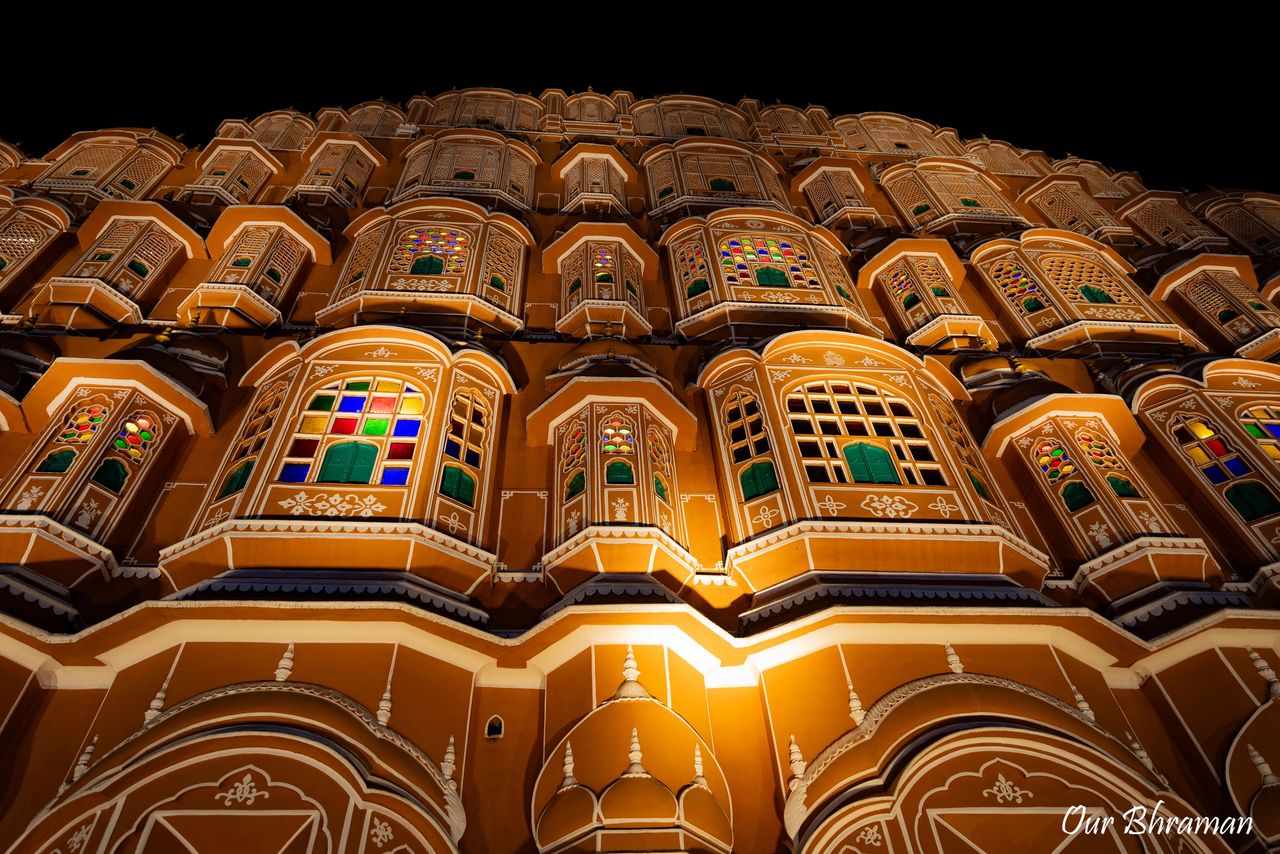
What makes Hawa Mahal truly special, though, goes beyond how it looks. Built in 1799 by Maharaja Sawai Pratap Singh, its design is a beautiful blend of Rajput and Mughal architecture, with delicate jharokhas (windows), domed canopies, and floral patterns carved into red and pink sandstone. Those 900+ small windows weren’t just for aesthetics—they served a purpose. Designed to allow cool air to pass through, the structure naturally stays ventilated, creating a refreshing breeze inside even during hot days. Standing there, surrounded by the lights, the movement of people, and the constant buzz of the street, it felt like the perfect mix of thoughtful design and timeless beauty—something that continues to function just as brilliantly today as it did centuries ago.
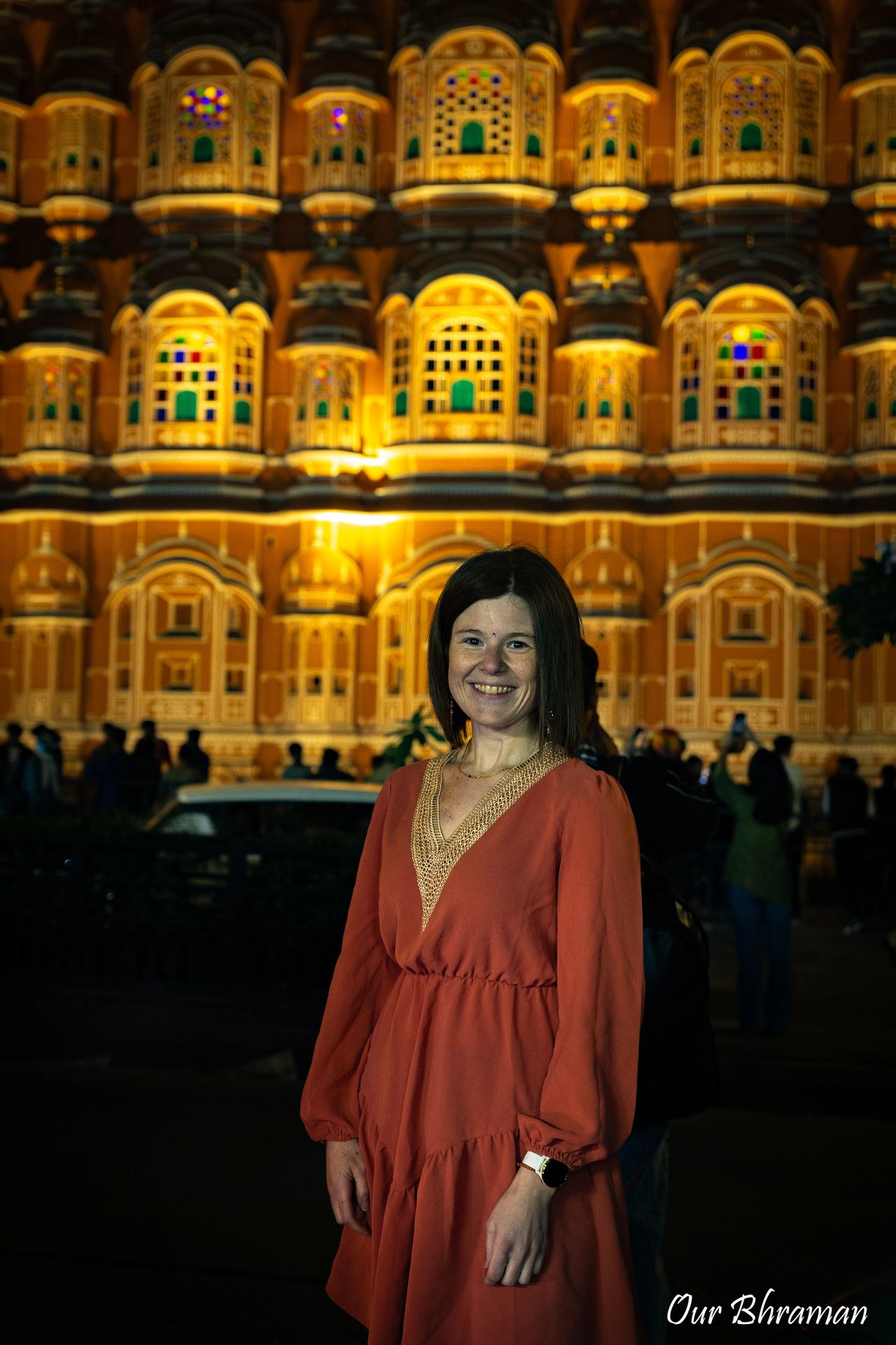
All around us, the streets were full of life—rickshaws weaving through traffic, vendors calling out, and people pausing to capture the moment. It wasn’t just about seeing a monument; it felt like experiencing the energy and rhythm of Jaipur itself. After visiting Hawa Mahal, we made our way to Bapu Bazaar—and the energy here felt completely different. The streets were buzzing, shops lined up on both sides, and every corner seemed filled with color, textures, and movement. It’s one of those places where you don’t really plan to spend much time, but somehow hours just slip by.
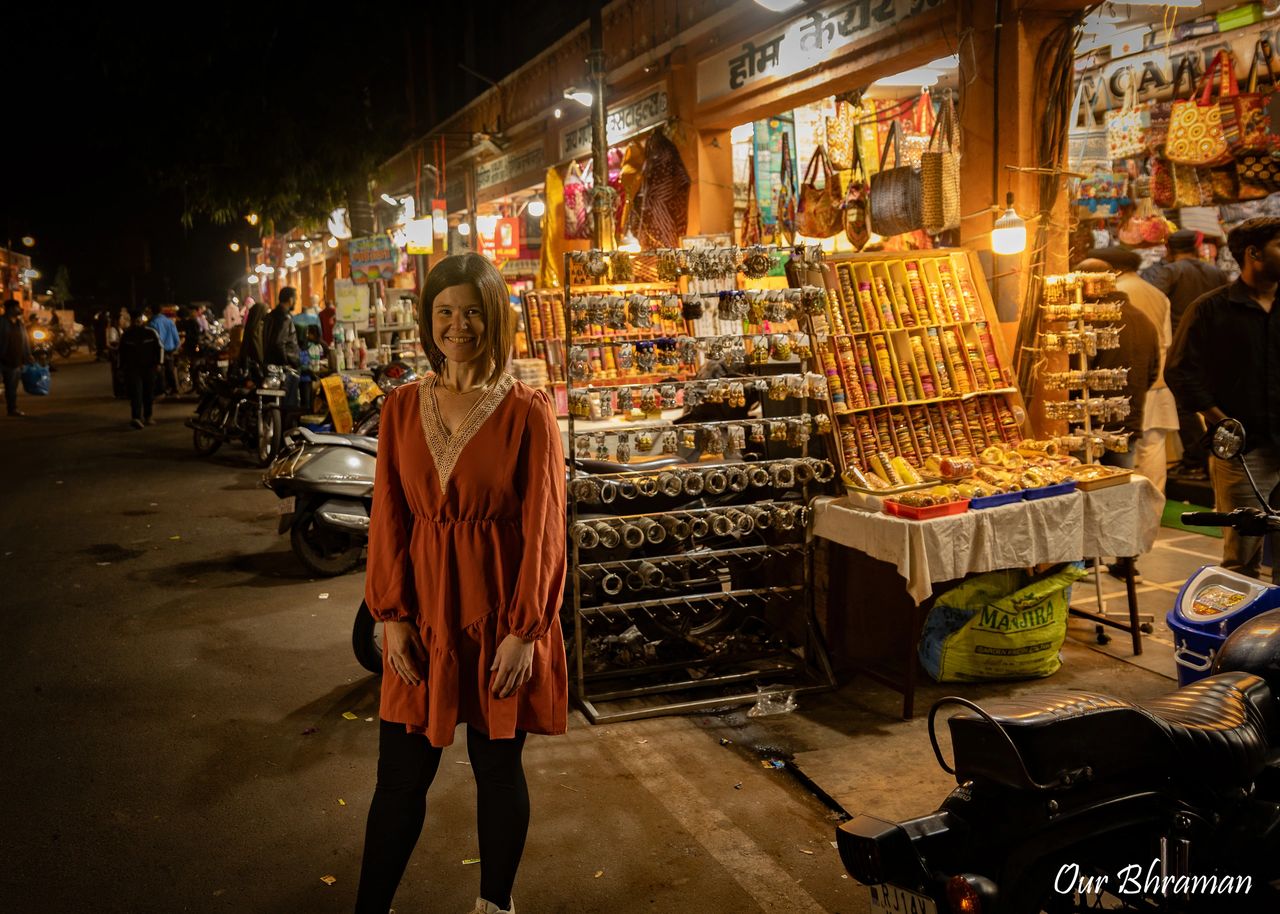
You’ll find almost everything here—dress materials, sarees, bed sheets, mojris, chappals, jewelry, and countless little souvenirs. What surprised us was how reasonable the prices were, even with so many tourists around. Bargaining is definitely part of the experience, and if you’re comfortable with it, you can get some really good deals. The shopkeepers were friendly and patient, which made the whole experience feel less overwhelming and more enjoyable.
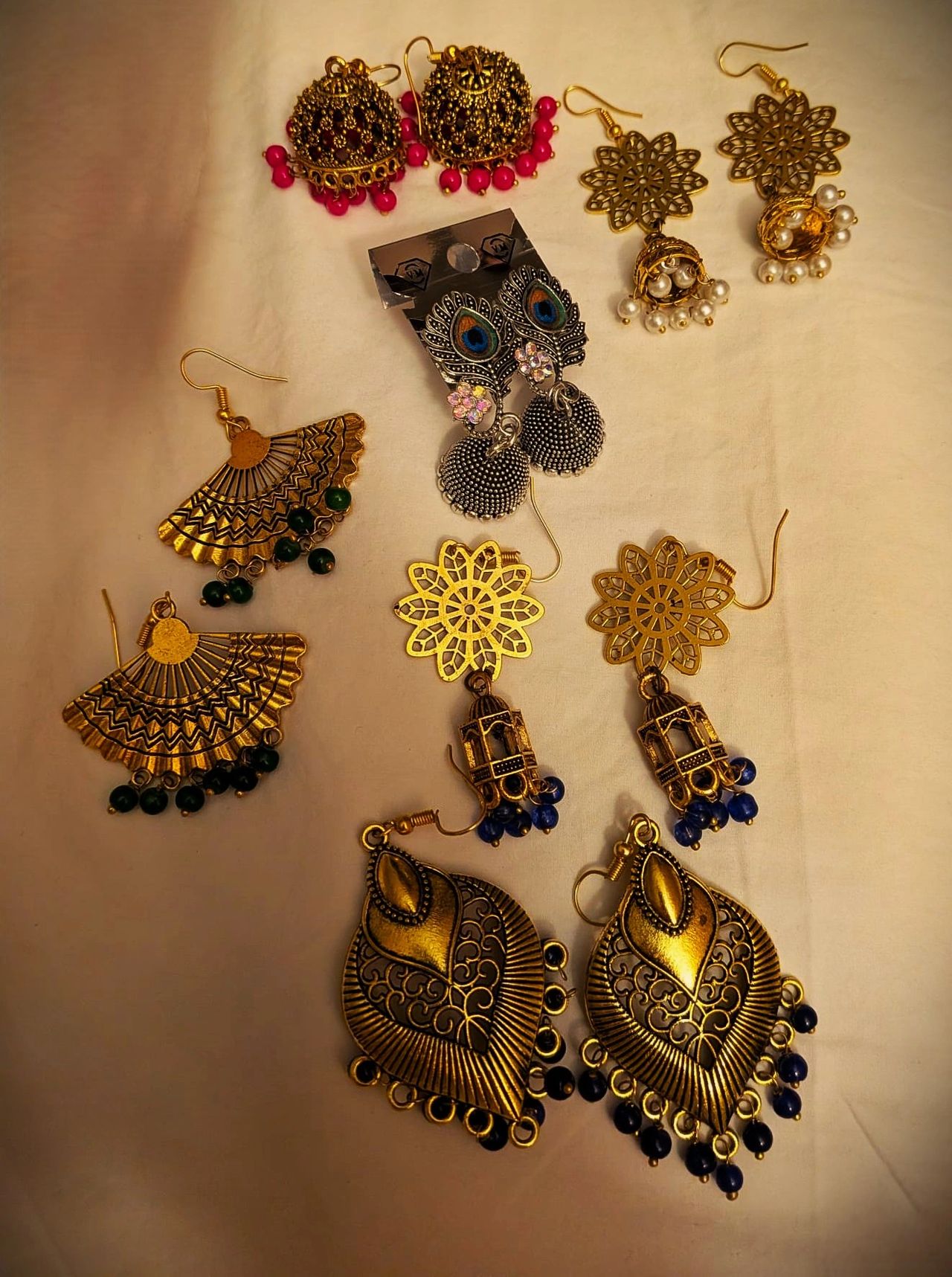
We’re not big on shopping, but somehow, we still got pulled into it. Kayla ended up browsing through a small roadside stall and found a pair of earrings she loved—for a surprisingly low price. That’s the charm of a place like this—you go in just to look and end up leaving with something memorable. If you’re visiting Jaipur, this is definitely a spot worth exploring in the evening, not just for shopping, but for the lively atmosphere that makes the city feel so vibrant.

After spending time at Bapu Bazaar, we decided to walk over to the exterior of Albert Hall Museum. It was about a 10-minute walk, and at night, it felt surprisingly spacious—with wide footpaths and steady but not overwhelming traffic. The walk itself was pleasant, giving us a chance to take in the city’s evening vibe before reaching our next stop.
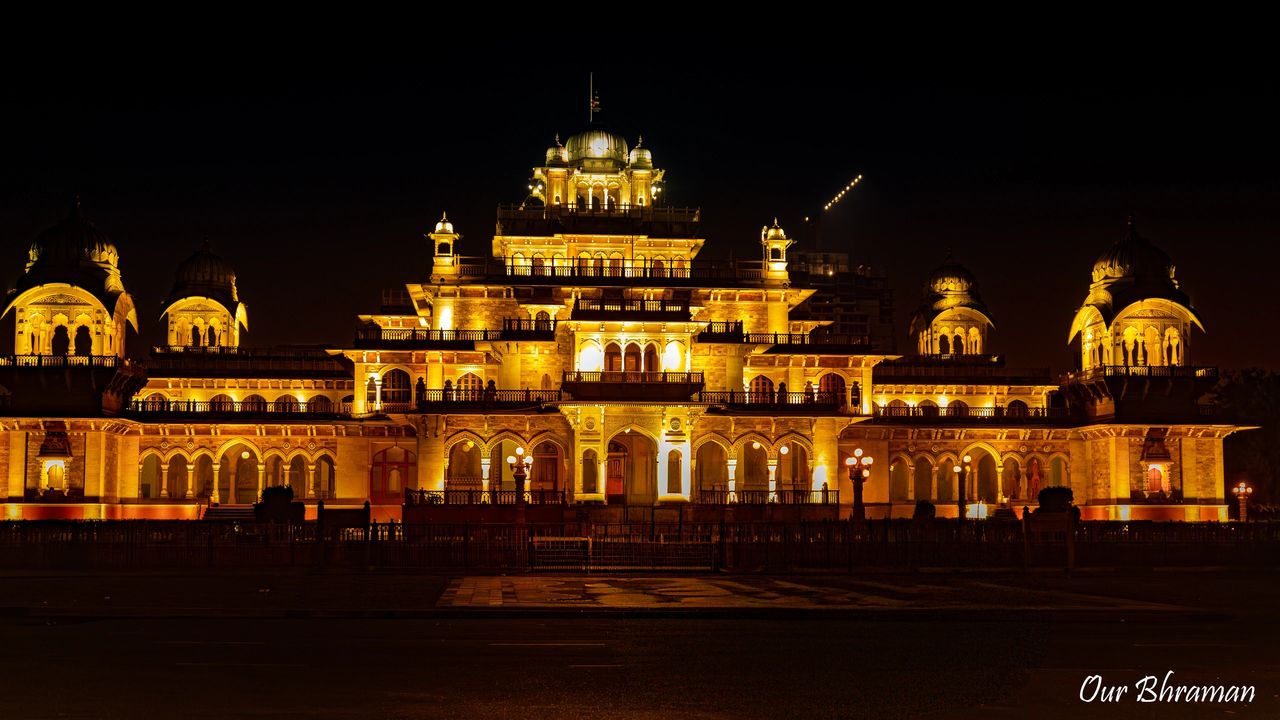
The exterior of the museum is a beautiful example of Indo-Saracenic architecture, blending Rajput, Mughal, and European influences into one striking structure. Built in 1887 and designed by Samuel Swinton Jacob, the building is crafted from sandstone and marble, giving it that signature Jaipur look. The domes, chhatris, intricately carved arches, and jharokhas come together in a way that feels both grand and detailed at the same time.
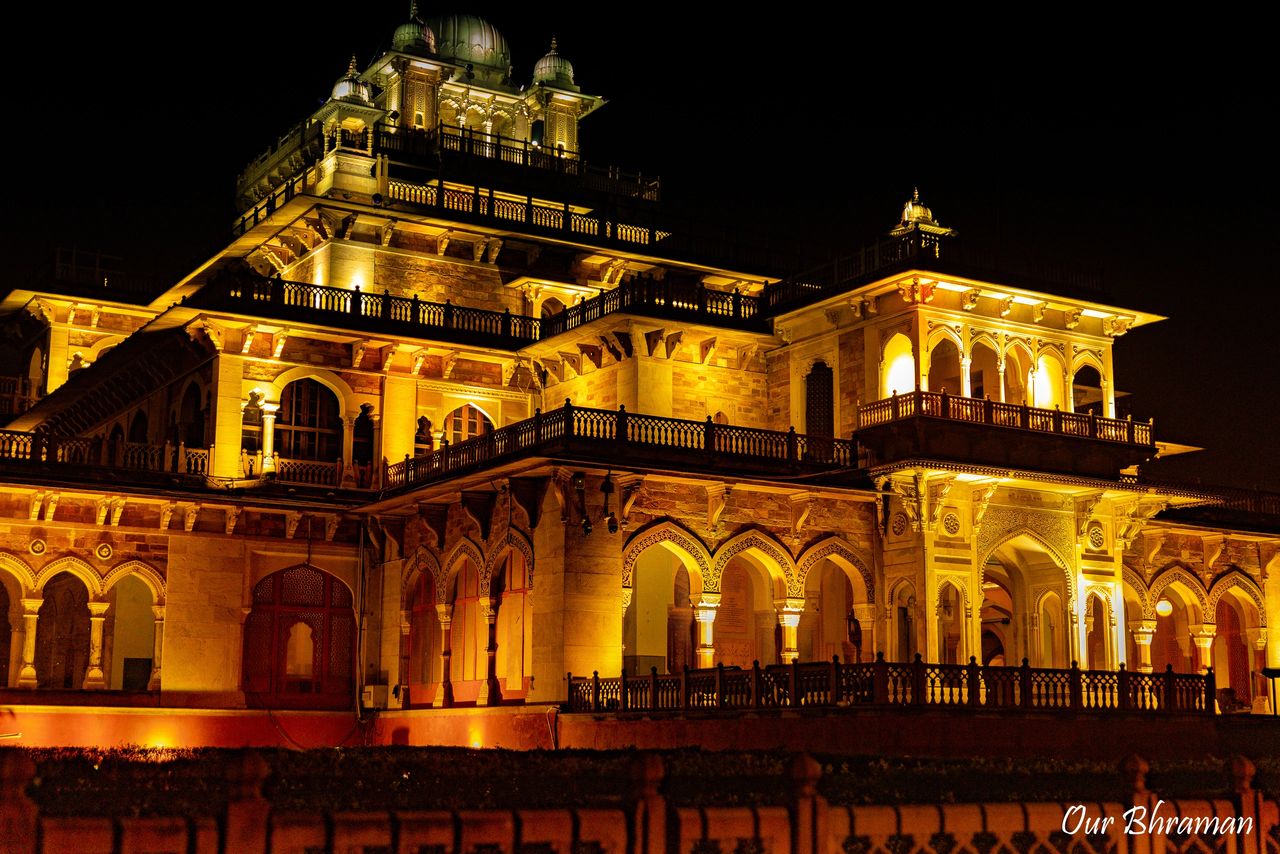
What made the experience even more special for us was seeing it at night. The building is illuminated until around 10 PM, and under those warm amber lights, the entire structure takes on a completely different character. The soft golden glow highlights every carving and curve, making it feel almost magical—like the building is quietly telling its story after dark. We found ourselves taking photos nonstop, trying to capture every angle, and it was almost funny how we kept going without realizing the lights were about to switch off. When they finally did, it felt like a little moment had ended—but also incredibly satisfying, like we had just experienced the museum at its absolute best.
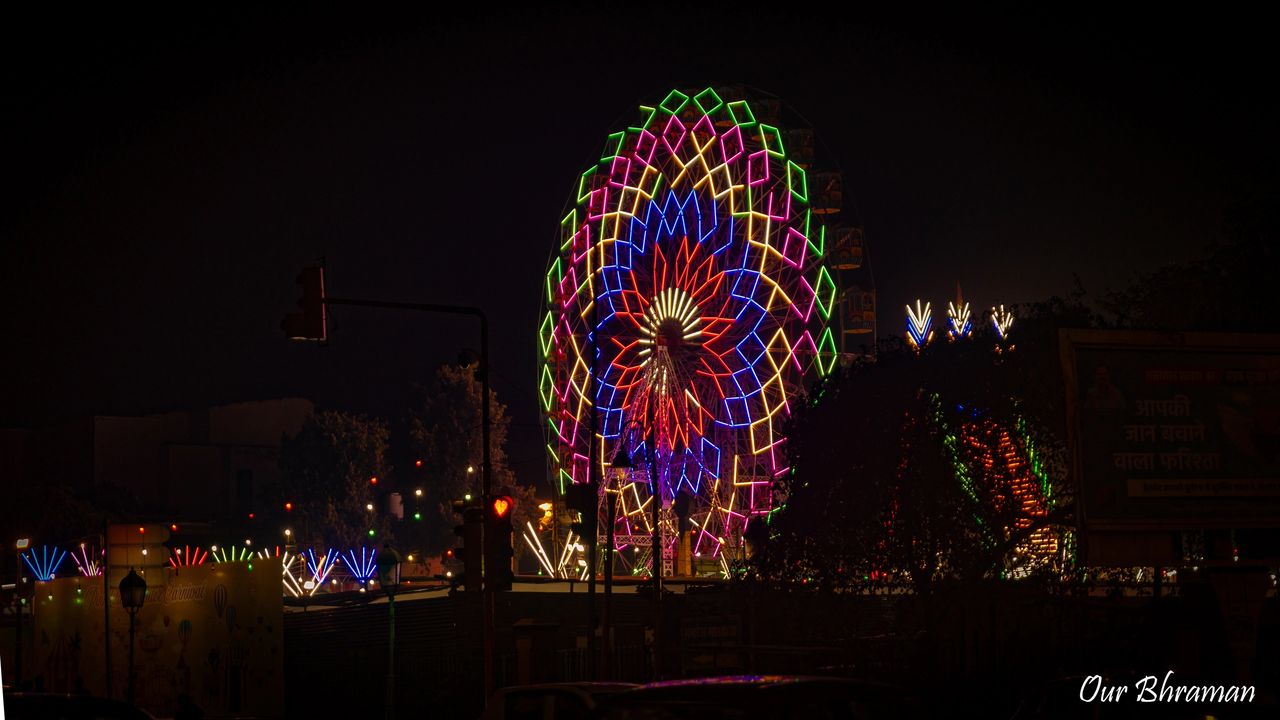
That was our last stop for the day. By then, we were starting to feel hungry, and the night air had turned noticeably cooler. With the city slowly settling into its evening rhythm, it felt like the perfect moment to wrap up and head out for dinner, carrying with us the memories of a long but incredibly fulfilling day in Jaipur.
Day 8
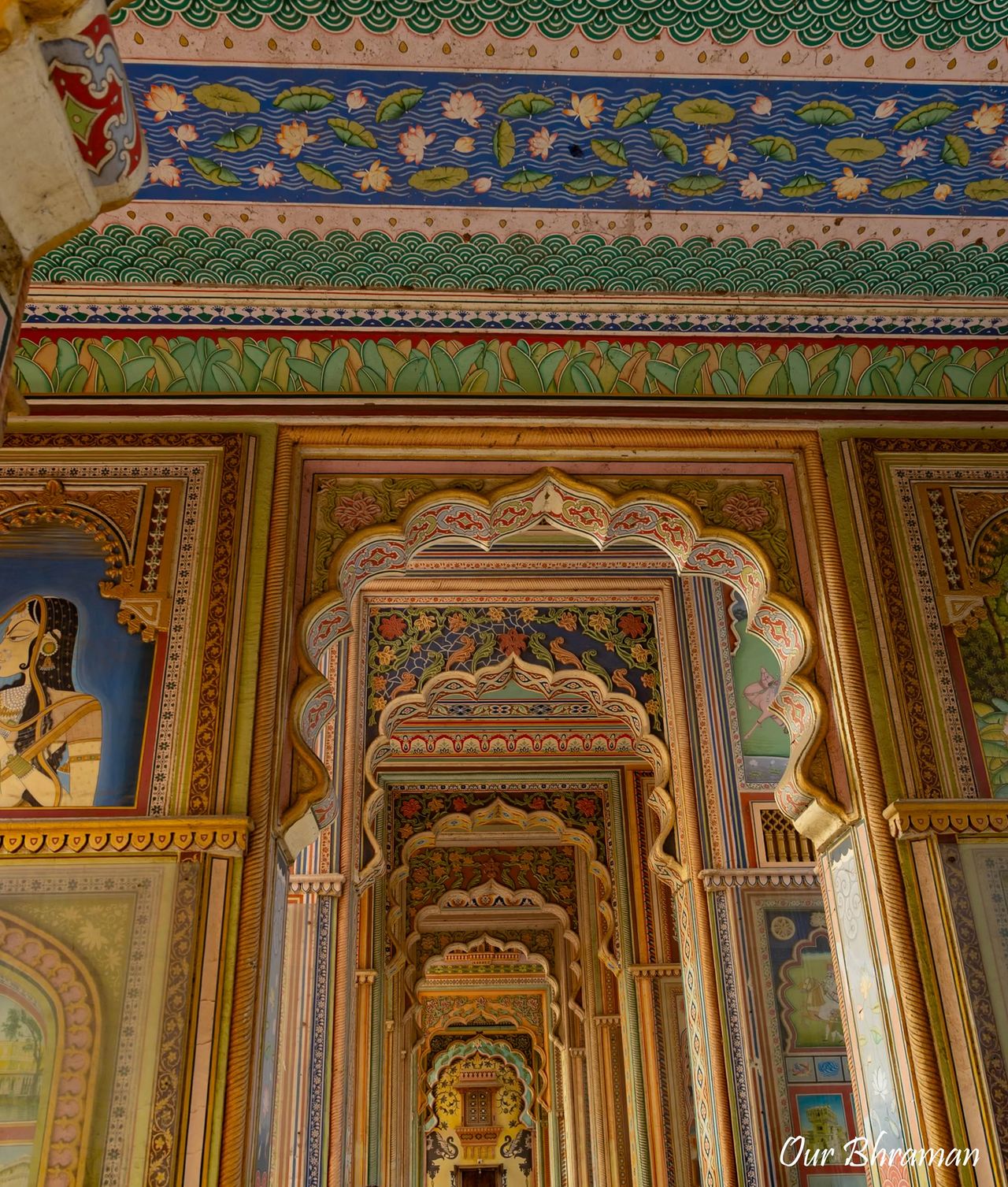
The next morning, we began our day with an early visit to Patrika Gate, widely regarded as one of Jaipur’s most Instagrammable landmarks. Its vibrant colors and intricate murals offer a stunning glimpse into the royal and cultural essence of Rajasthan, making it a must-see for both tourists and photography enthusiasts.
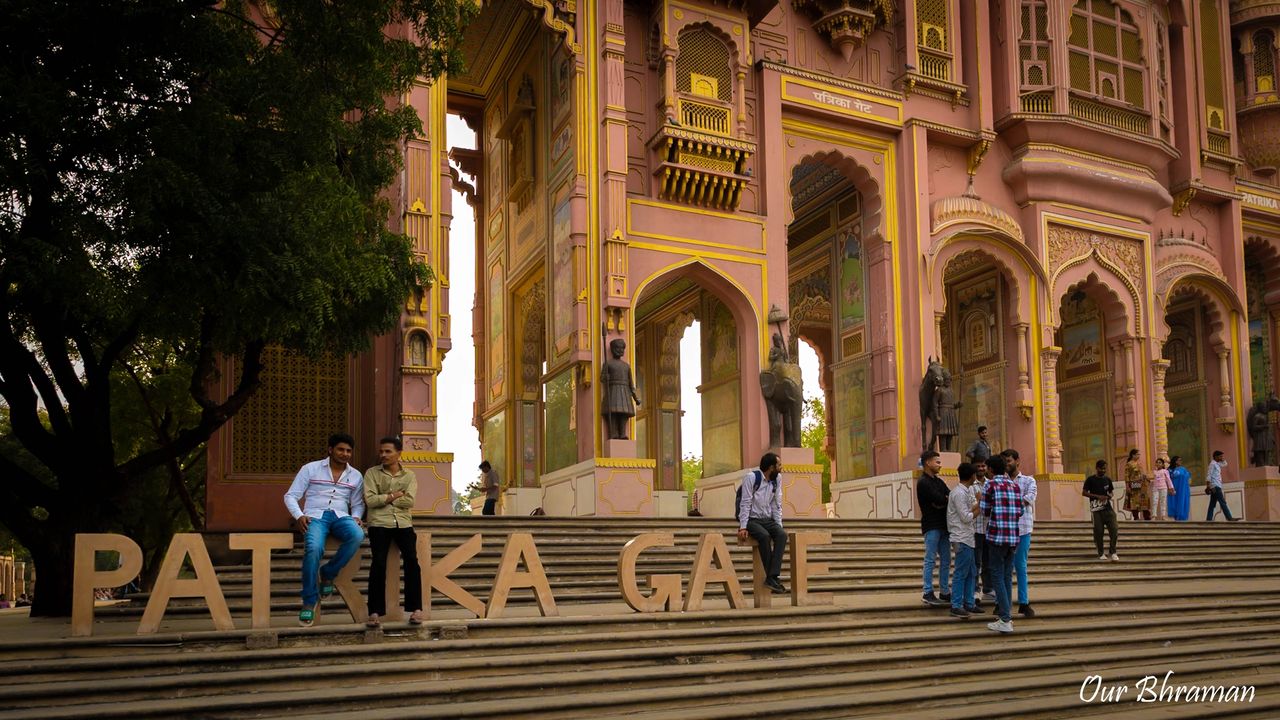
Patrika Gate, constructed in 2016 by the Patrika Group, a prominent Indian media company, is a modern tribute to the architectural and cultural history of Rajasthan. Built on the site of one of the original seven gates of Jaipur’s walled city, it beautifully blends historical inspiration with contemporary design. Each of the nine arches and pillars is uniquely painted to represent different regions of Rajasthan, depicting festivals, folk dances, royal events, and scenes from daily life. Decorated with intricate carvings, frescoes, and murals that reflect the state’s royal heritage and traditions, the gate is painted in Jaipur’s signature pink, perfectly aligning with the Pink City’s iconic architectural aesthetic. Its vibrant colors and attention to detail make Patrika Gate one of Jaipur’s most Instagrammable landmarks, offering visitors a captivating glimpse into the cultural soul of Rajasthan.
After spending 20-30 minutes, we returned to our hotel for breakfast and then set off for our next destination: Khatu Shyam Temple, a little over a two-hour drive from Jaipur. The calm journey gave us time to ease into the day, especially after the packed schedule from the night before.
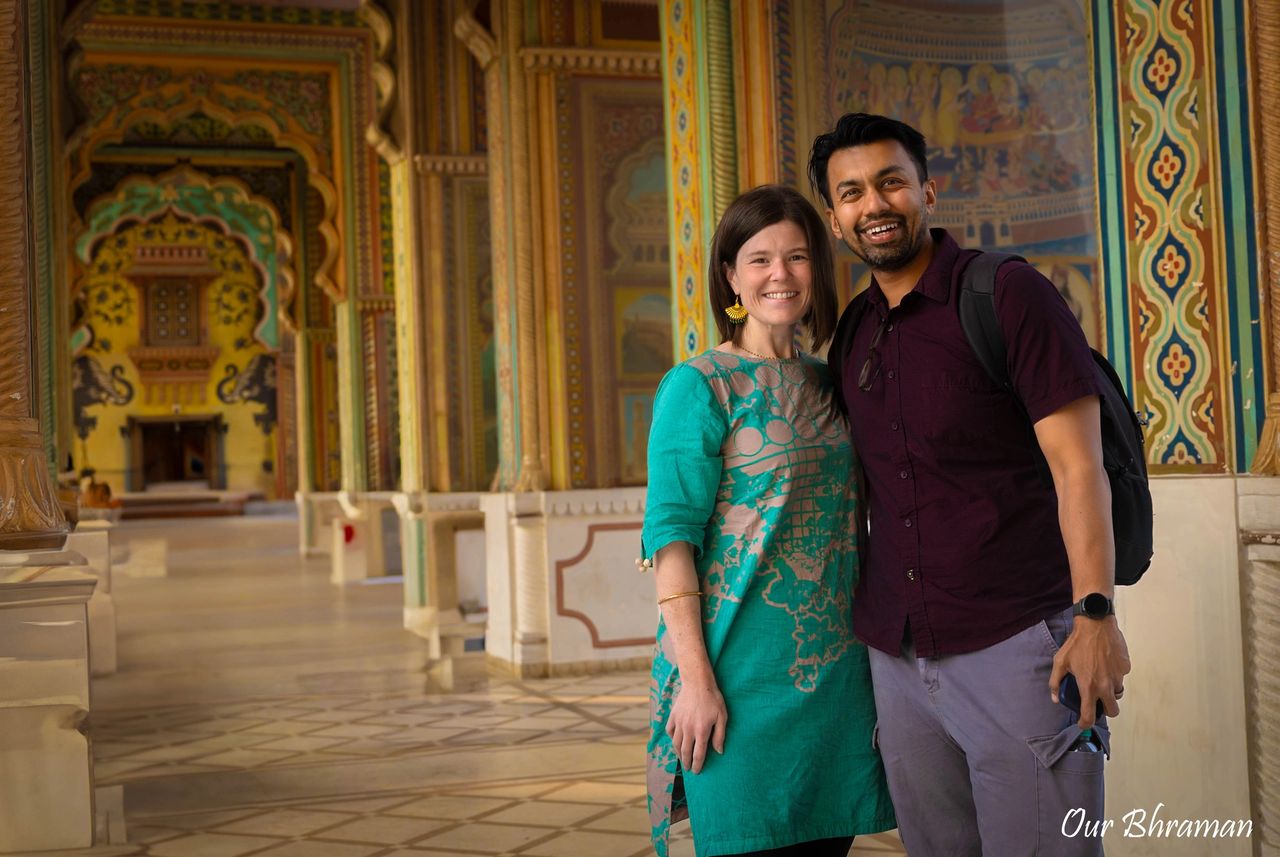
Located in the Sikar district of Rajasthan, Shri Khatu Shyam Mandir is one of the most revered temples in India. Dedicated to Barbarika—the grandson of Bhima from the Mahabharata, worshipped here as Khatu Shyam—the temple draws millions of devotees each year seeking blessings and spiritual solace. As we approached, the atmosphere instantly shifted: the chants, the bustling local vendors, and the steady flow of pilgrims created a palpable sense of devotion. The temple’s architecture is simple yet striking, and even amidst the crowds, the energy and excitement of thousands of pilgrims made the experience unforgettable. Visiting Khatu Shyam Temple is more than just a pilgrimage—it is a beautiful convergence of history, faith, and tradition, offering a profound glimpse into the spiritual side of Rajasthan.
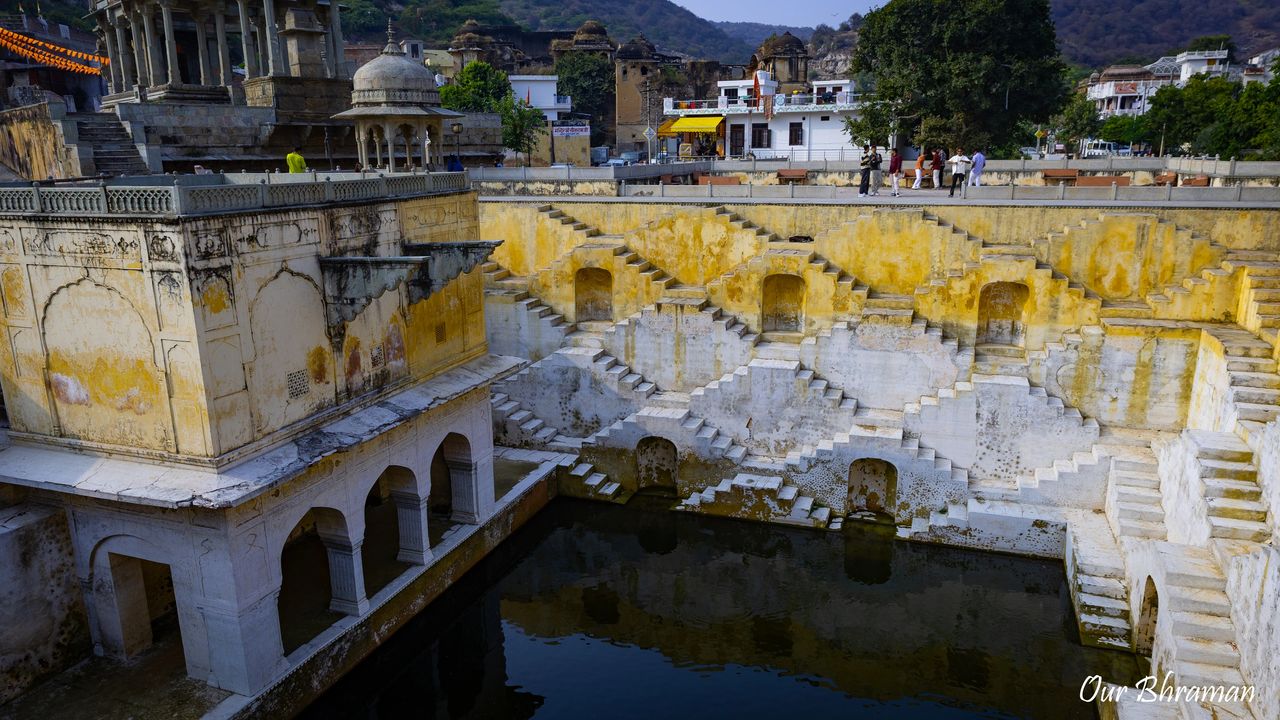
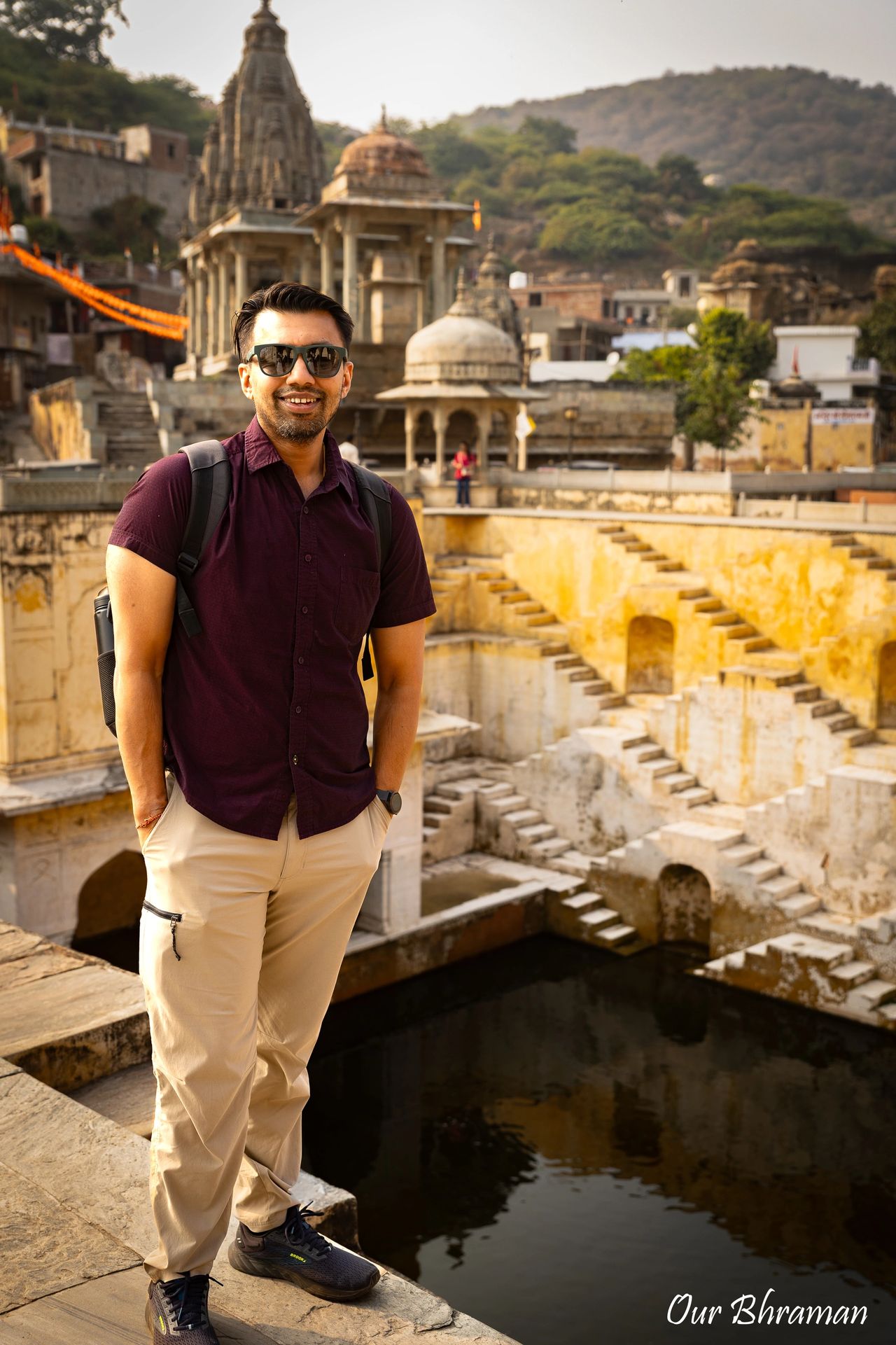
On a way to Amber fort, we stopped at Panna Meena ka Kund—a place that feels both simple and fascinating at the same time. At first glance, it might be a little confusing, especially if you’re not familiar with stepwells, but once you start observing the design, it really stands out. The crisscross pattern of the stairs is what catches your eye immediately, creating a geometric symmetry that almost feels hypnotic. Locals seem completely at ease navigating the steps, while visitors like us just pause to take it all in.
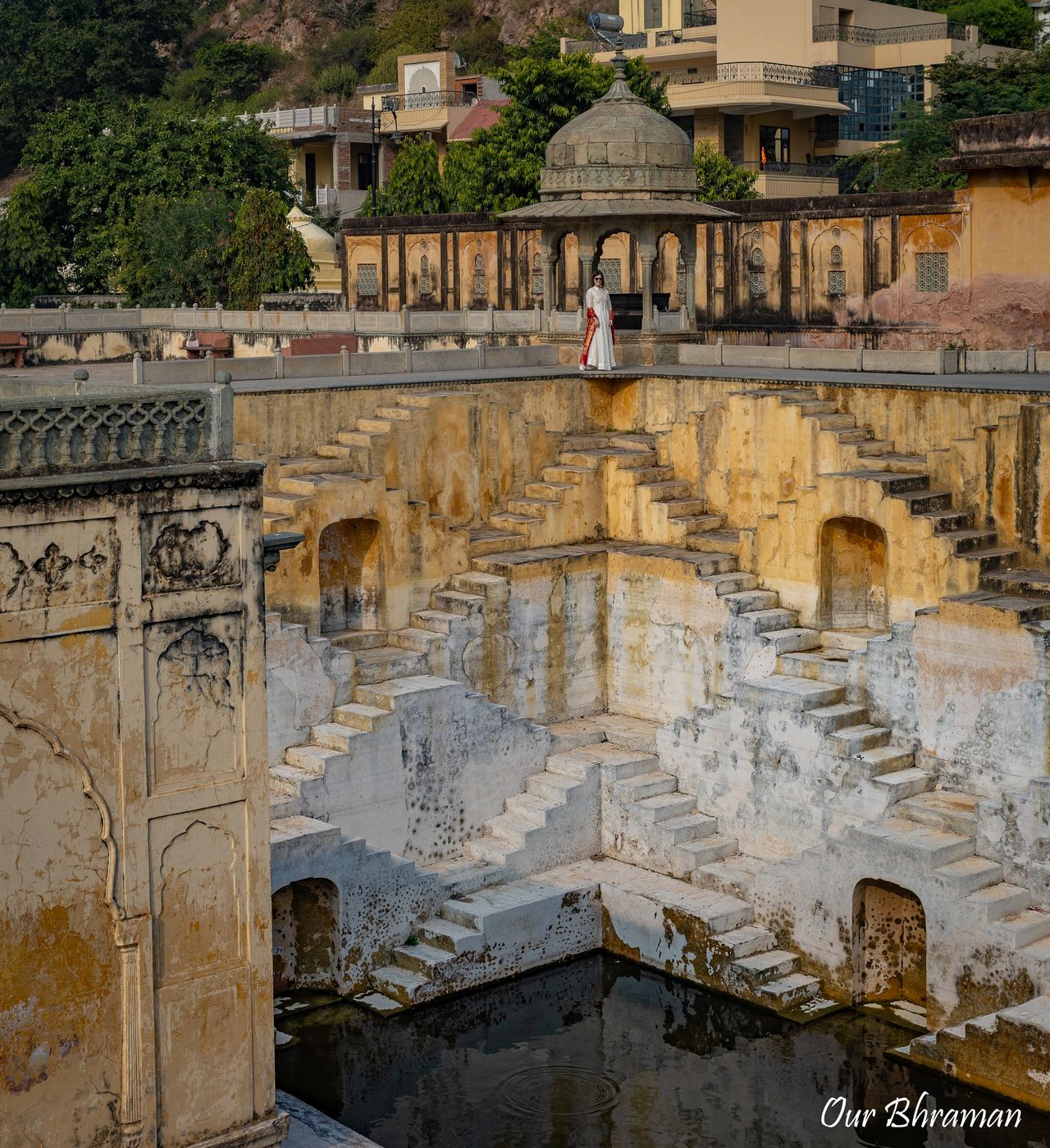
What makes this place unique is how open and peaceful it feels. The steps are built on three sides, leaving enough space to sit, relax, and enjoy the surroundings. At each corner, there are beautiful octagonal chhatris that add to its architectural charm. Beyond its beauty, the kund is also a great example of traditional water management and rainwater harvesting techniques. From the upper terrace, we were even able to catch a glimpse of Amer Fort in the distance. Though the stepwell is no longer in active use, it still draws visitors for its design, history, and that unique, almost timeless atmosphere.
Our next stop was Amber Fort, and we chose to visit in the afternoon. As we approached the fort, the scale of the structure immediately stood out—set against the rugged hills, it felt both grand and timeless. The place was quite busy, with visitors from all over making their way through the gates, adding a lively energy to the entire experience.
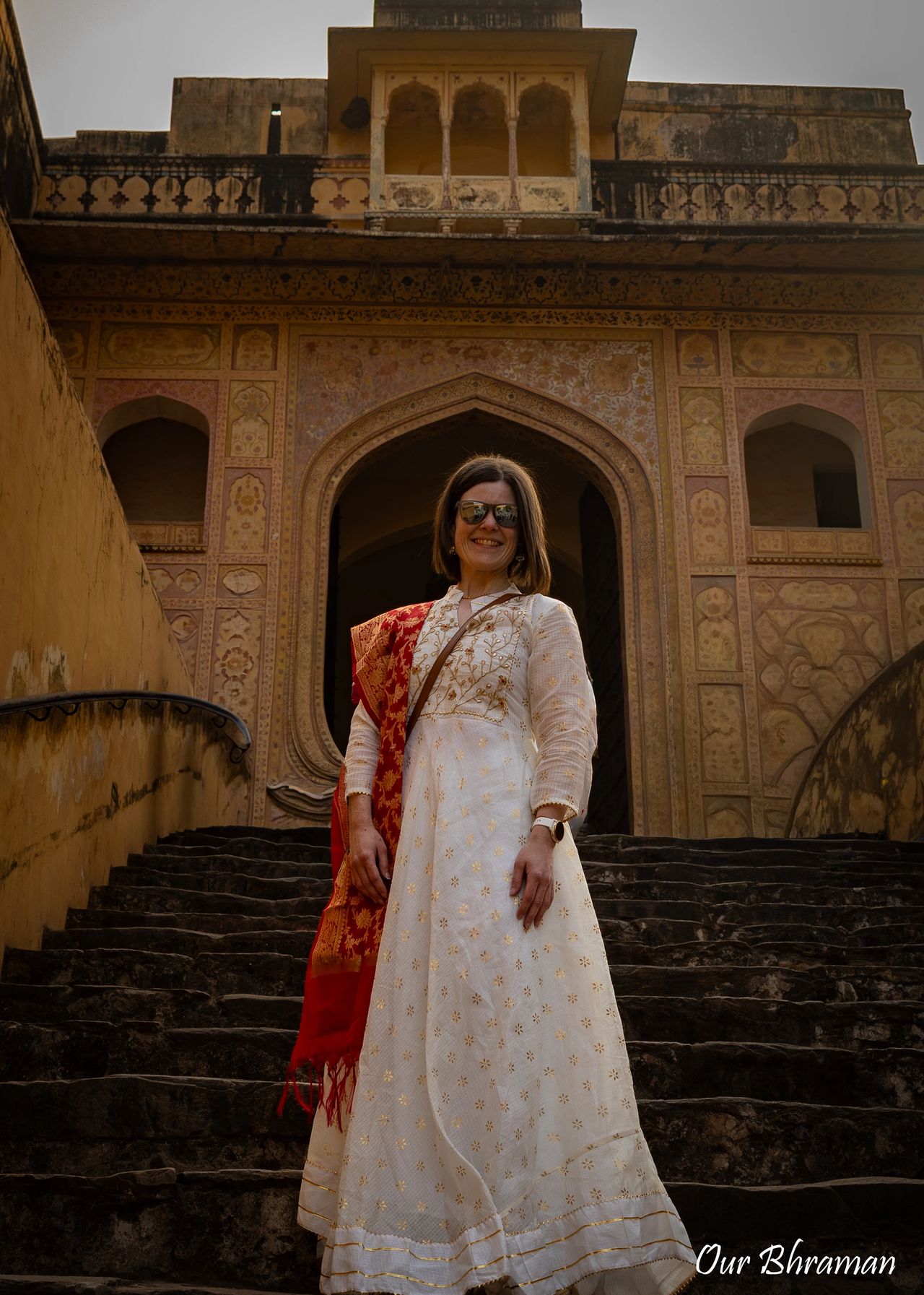
To make the most of our visit, we opted for the audio guide, which turned out to be a great decision. As we moved from one section to another, it helped us understand the history, architecture, and stories behind each part of the fort. Learning about the Rajput rulers, the strategic importance of the fort, and how different sections were used made the experience feel much more meaningful than just walking through another historical site.
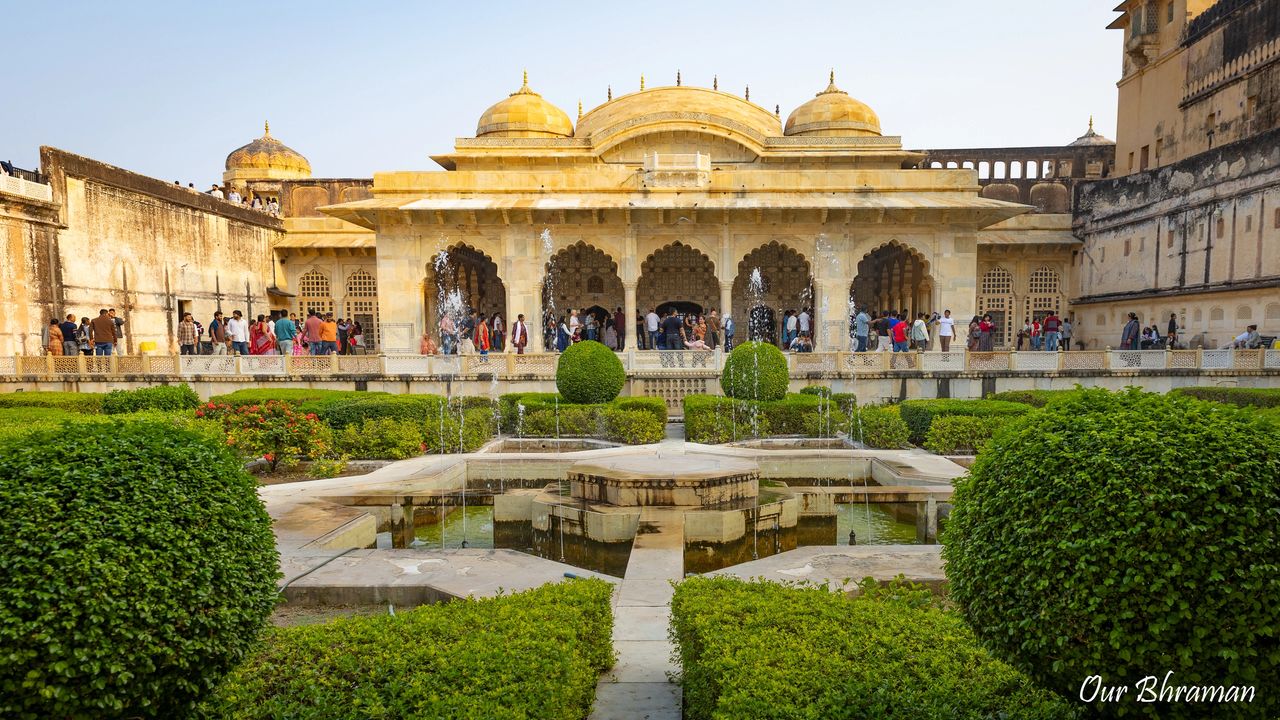
The palace itself is stunning, with intricate carvings, large courtyards, and beautifully designed halls that reflect a blend of Rajput and Mughal architecture. Every corner seemed to offer a new perspective—whether it was a grand gateway, a detailed wall, or a view overlooking the surrounding landscape. Despite the crowd, there were plenty of moments where we could pause and really take it in.
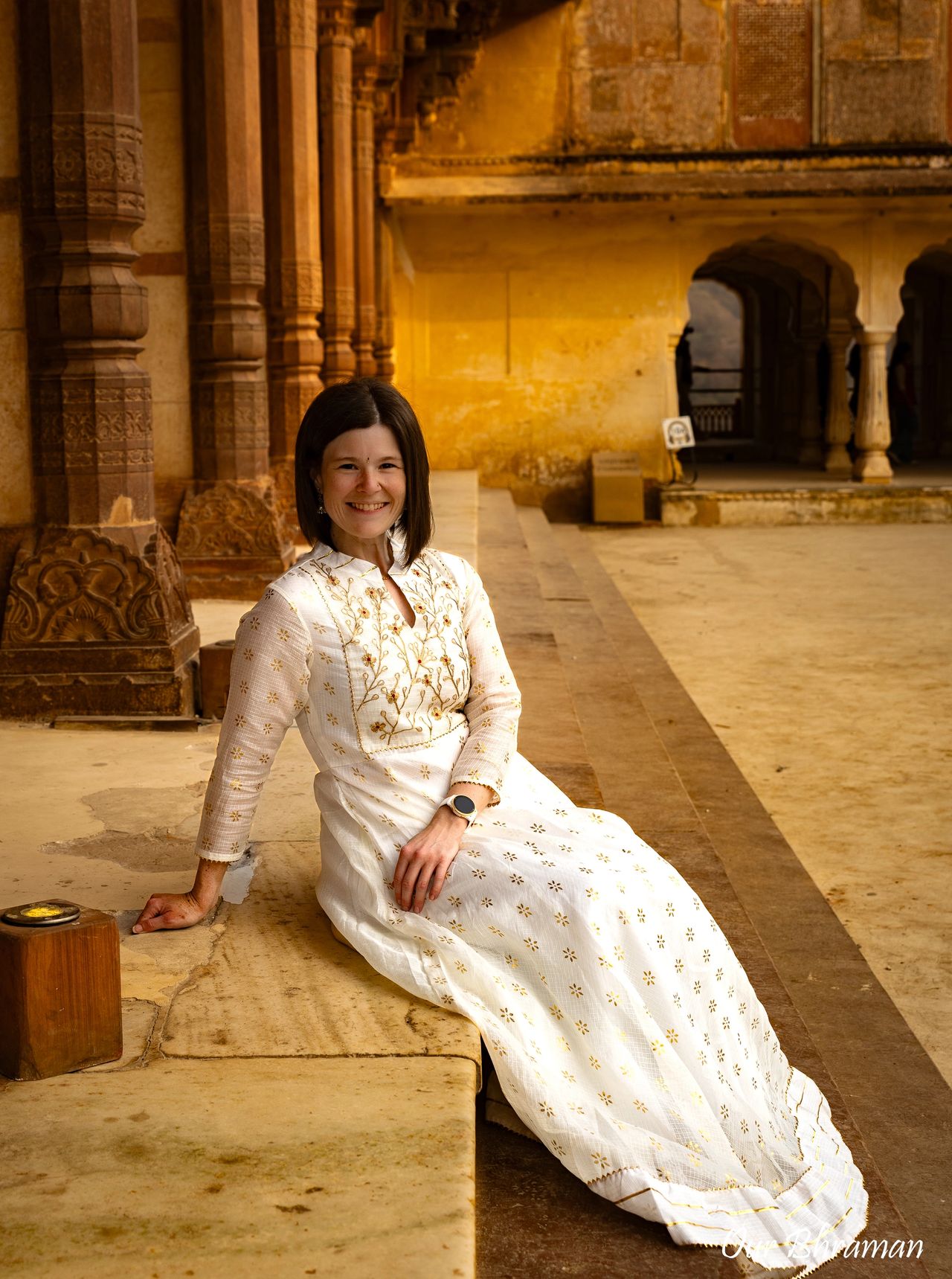
What we loved most was how photogenic the entire place was. From wide open courtyards to narrow passageways and ornate interiors, there were endless opportunities for photos. The afternoon light added a warm tone to the sandstone walls, making everything look even more vibrant. It was one of those places where you naturally slow down, not just to explore, but to capture and remember every detail.
Jaleb Chowk: The Fort’s Grand Entrance
Our exploration began at Jaleb Chowk, the fort’s public courtyard, where victorious Rajput armies once showcased captured treasures to admiring crowds. The courtyard is flanked by the imposing Suraj Pol and Chand Pol, and we couldn’t resist glancing up at the screened balconies, imagining the royal women discreetly observing the spectacle below.
A small side stairway caught our eye, leading up to the Siladevi Temple. Though entry is restricted to Hindus, the silver repousse doors glimmered in the afternoon sun, hinting at the artistry within.
Diwan-i-Am: Hall of Public Audience
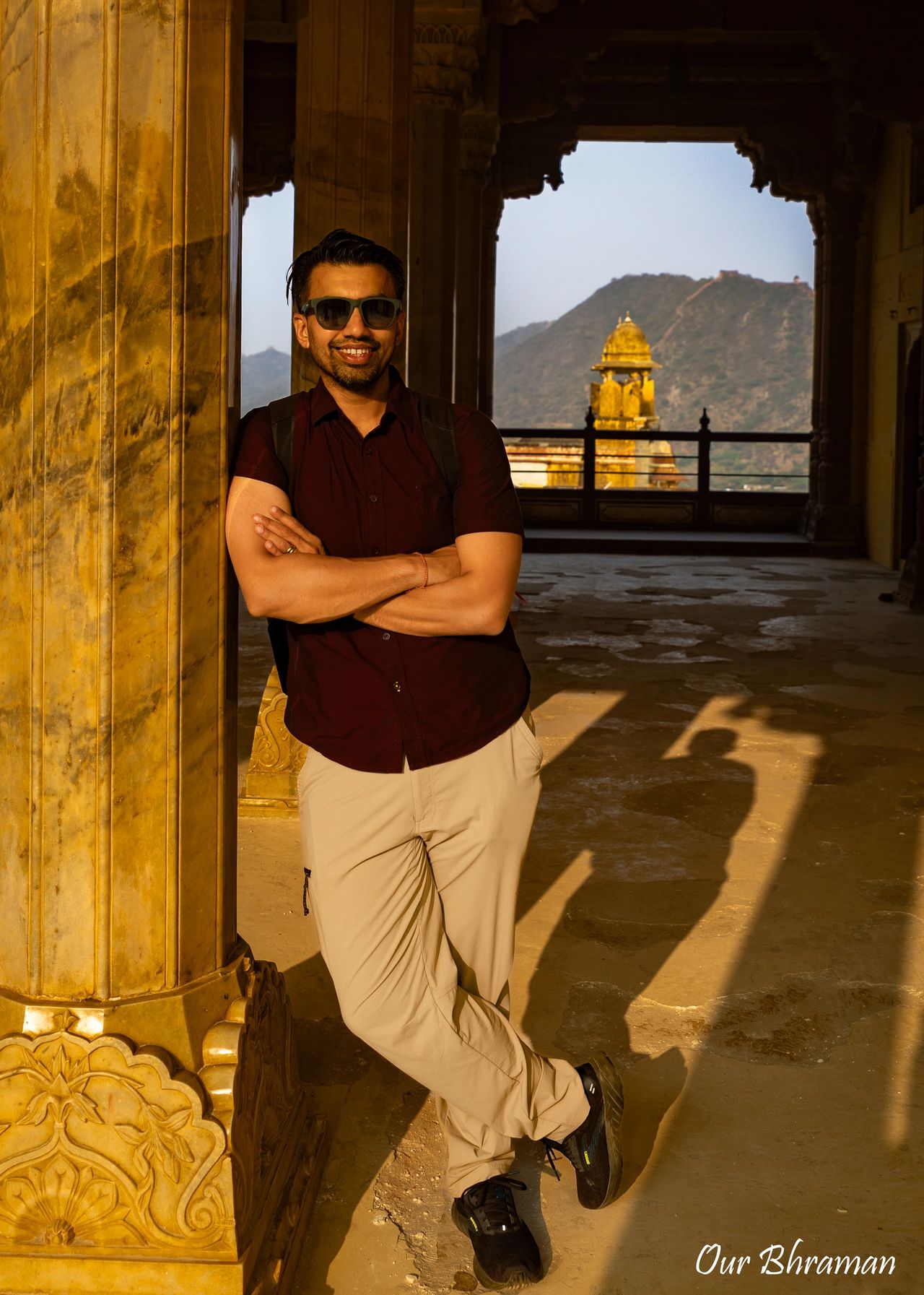
From Jaleb Chowk, we climbed the stairway through Singh Pol (the Lion Gate) into the fort’s second courtyard. Here, the Diwan-i-Am stands, an airy hall supported by rows of elephant-topped columns. Latticed galleries above once allowed members of the royal household to observe audiences without being seen, and walking through this space, it was easy to feel the weight of centuries of royal protocol and ceremony.
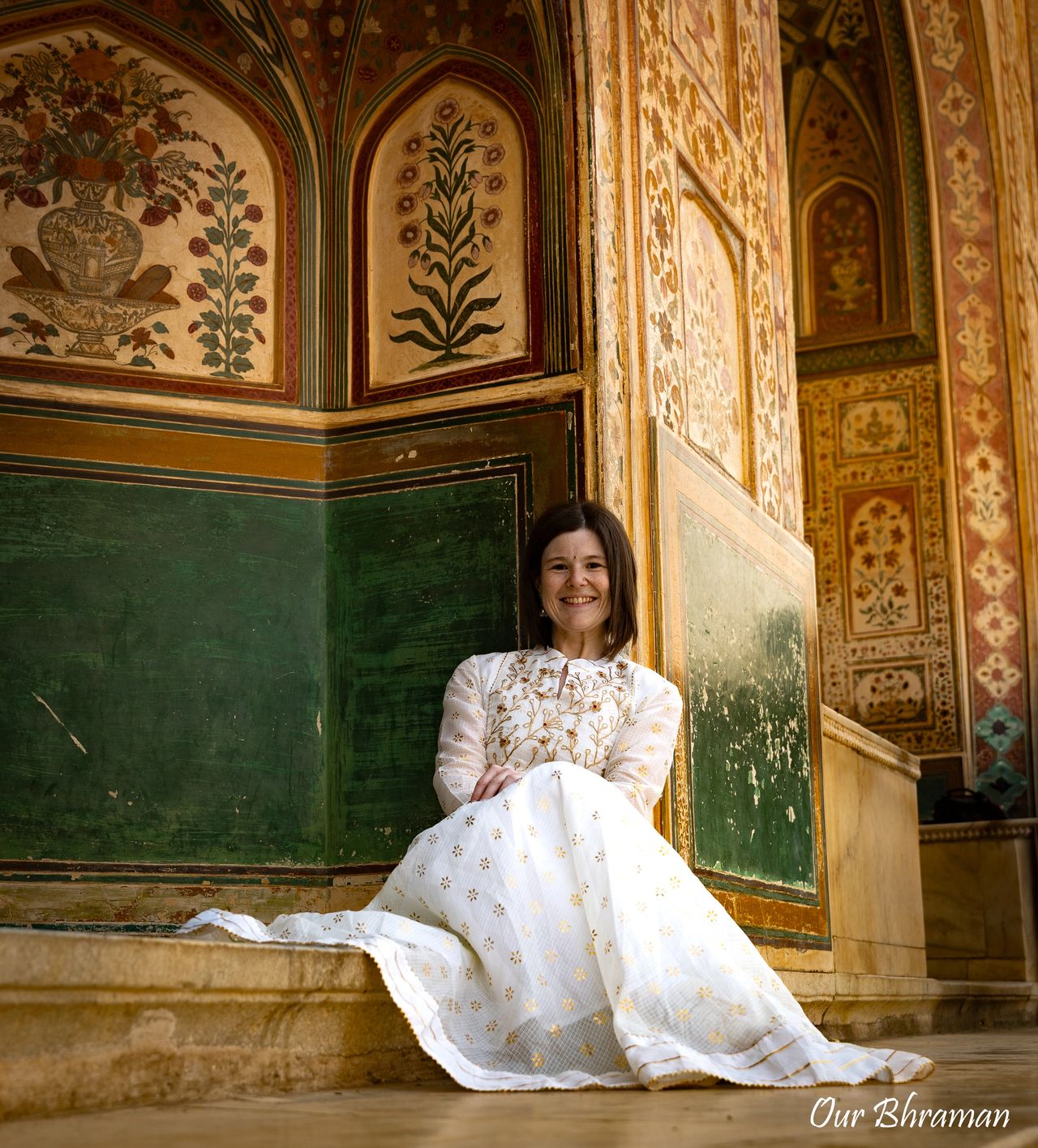
Ganesh Pol: Gateway to Royal Quarters
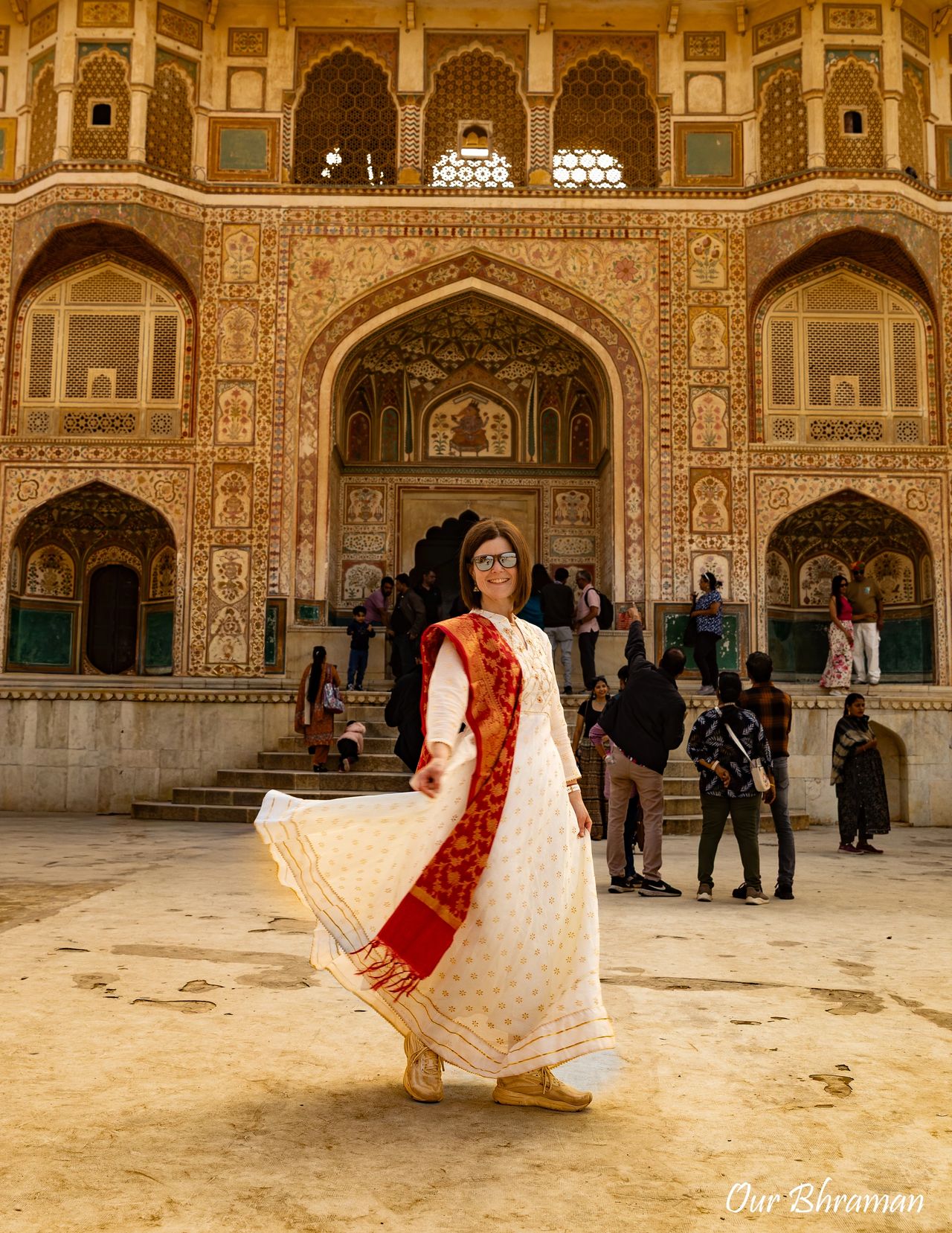
Next, we approached Ganesh Pol, and it instantly felt like stepping into a more exclusive and refined part of the fort. This grand gateway marks the transition into the private quarters of the royals, and the shift in atmosphere is unmistakable. The space feels quieter, more intimate—almost as if it was designed to separate the grandeur of public life from the privacy of royal living.
What truly captured our attention was the explosion of detail across its surface. The frescoes and carvings are a riot of color, blending Hindu and Islamic motifs in a way that feels both harmonious and breathtaking. At the center, the image of Lord Ganesh, the elephant-headed god of wisdom, sits above the arch, giving the gateway its name and spiritual significance. Every inch of the structure reflects a careful balance of art and symbolism, making it one of the most visually striking spots in the entire fort.
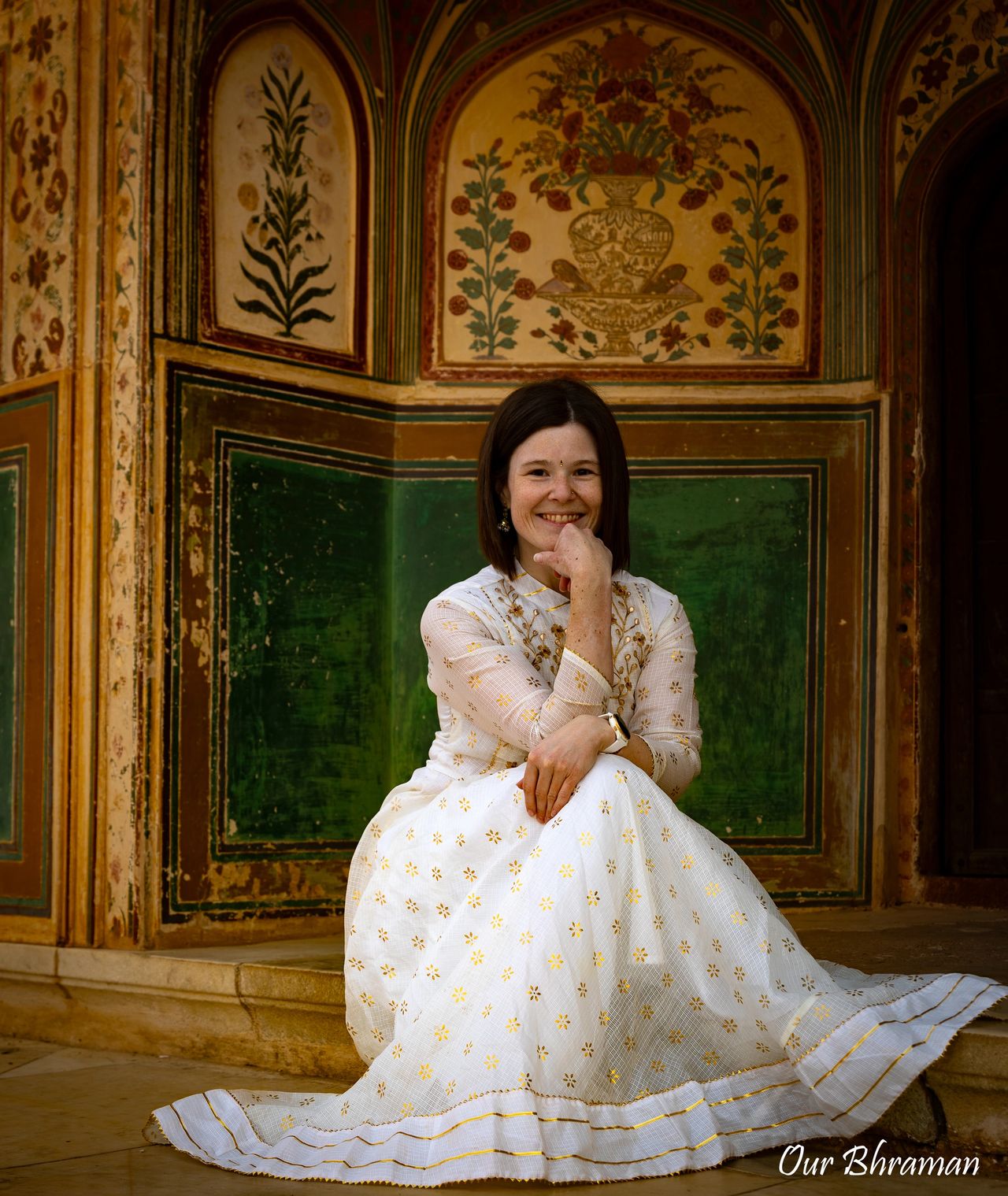
Historically, Ganesh Pol wasn’t just beautiful—it was exclusive. Entry through this gate was reserved only for the king and his family, allowing them to move into their private chambers without being disturbed. Knowing this added a deeper layer to our experience, as we walked through a space once limited to royalty.
Architecturally, Ganesh Pol stands as a perfect example of the fusion between Mughal and Rajput styles. Built in the 17th century, its outer façade is adorned with intricate frescoes and vibrant mosaics, while the upper levels feature a loggia offering privileged views over both the second and third courtyards. From the outside, the delicate latticework—crafted in complex geometric patterns—ensured privacy, making it impossible to see who stood behind the screens.
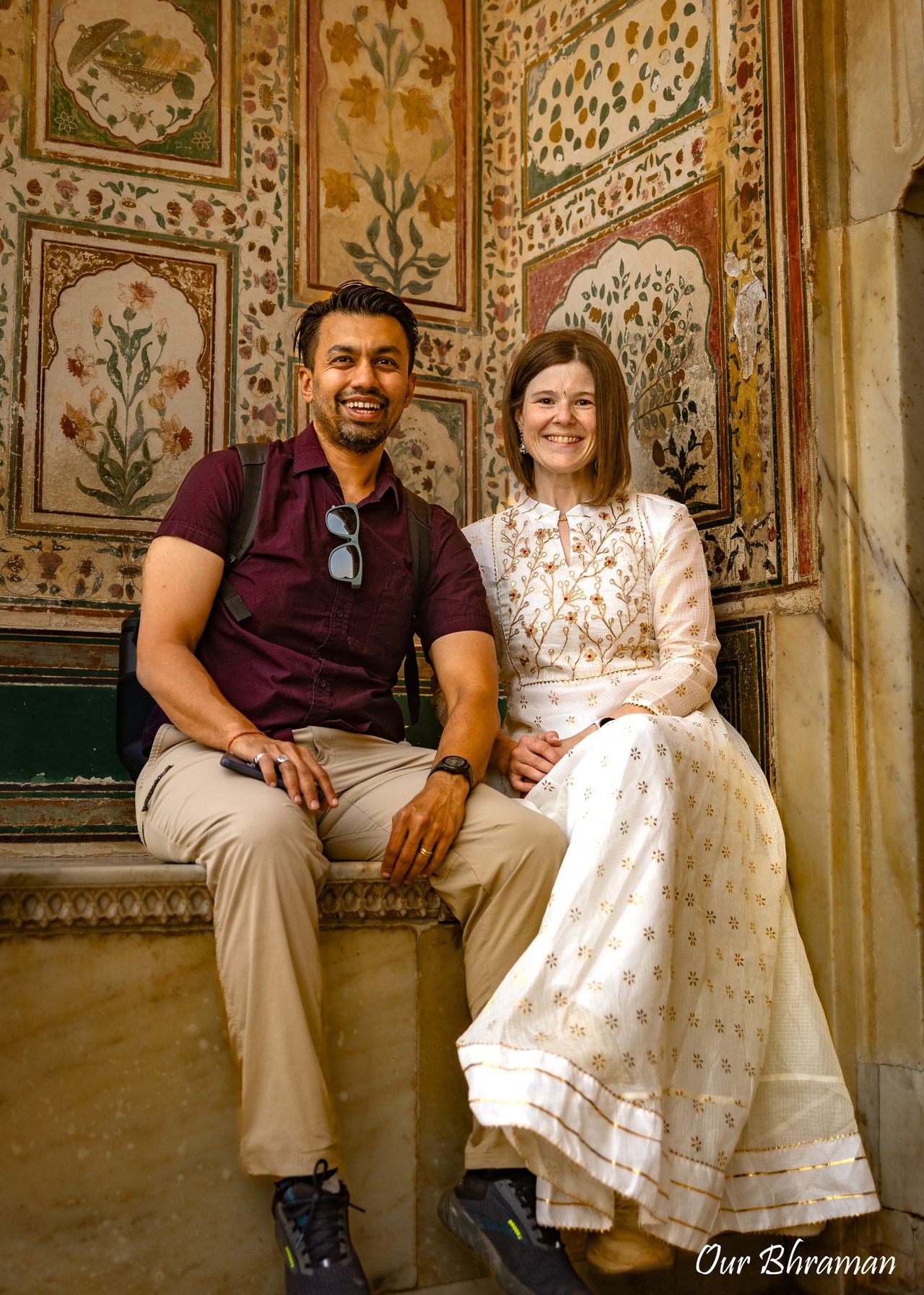
As we passed through the gateway, it opened up into the heart of the fort—the third courtyard. From here, pathways lead toward the serene Mughal-style gardens and iconic spaces like the Sheesh Mahal. We also caught a glimpse of the royal hammam, a maze-like Turkish-style bath tucked away nearby, adding a sense of mystery to the royal quarters.
Ganesh Pol isn’t just a gateway—it’s an experience. It represents power, privacy, artistry, and architectural brilliance all at once, making it one of the most memorable highlights of our visit to Amber Fort.
Jai Mandir and Sukh Niwas: A Hall of Mirrored Wonders
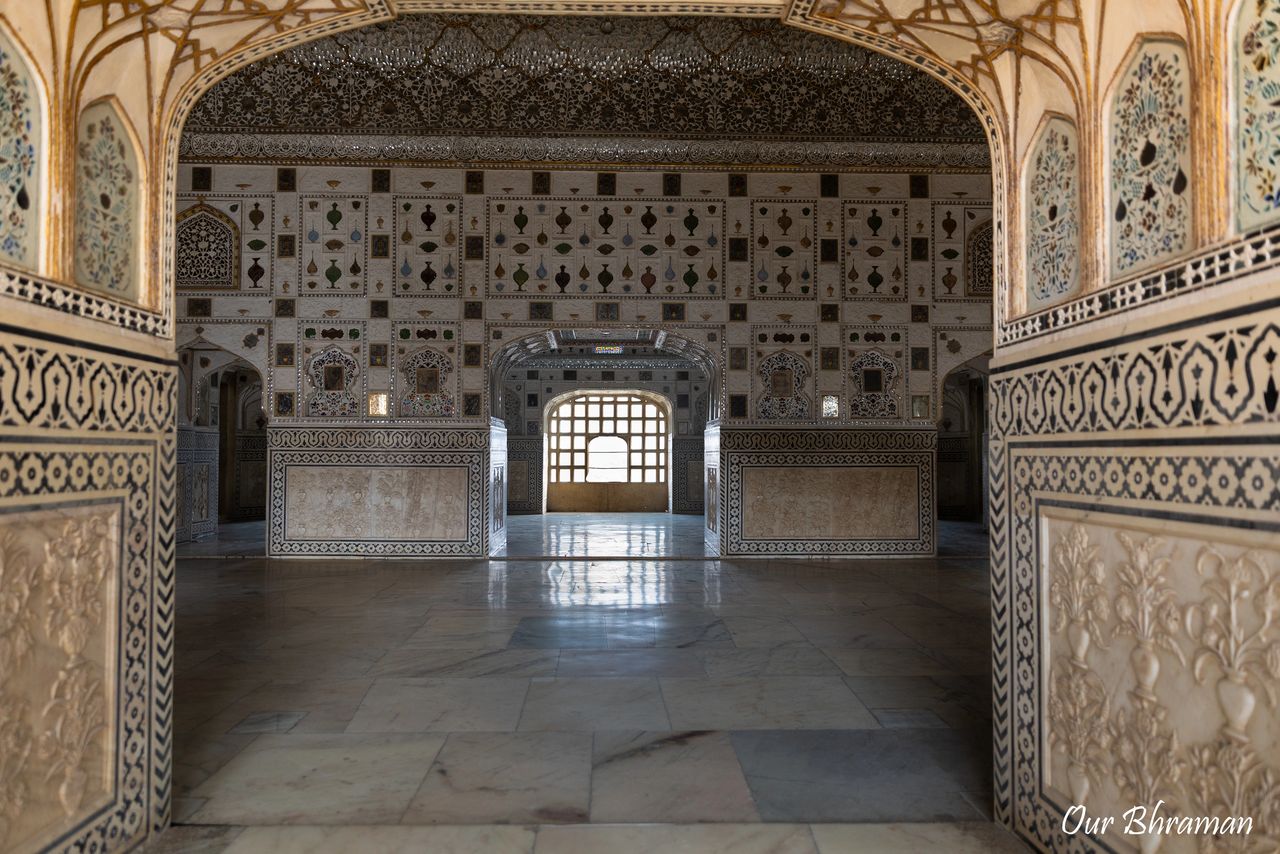
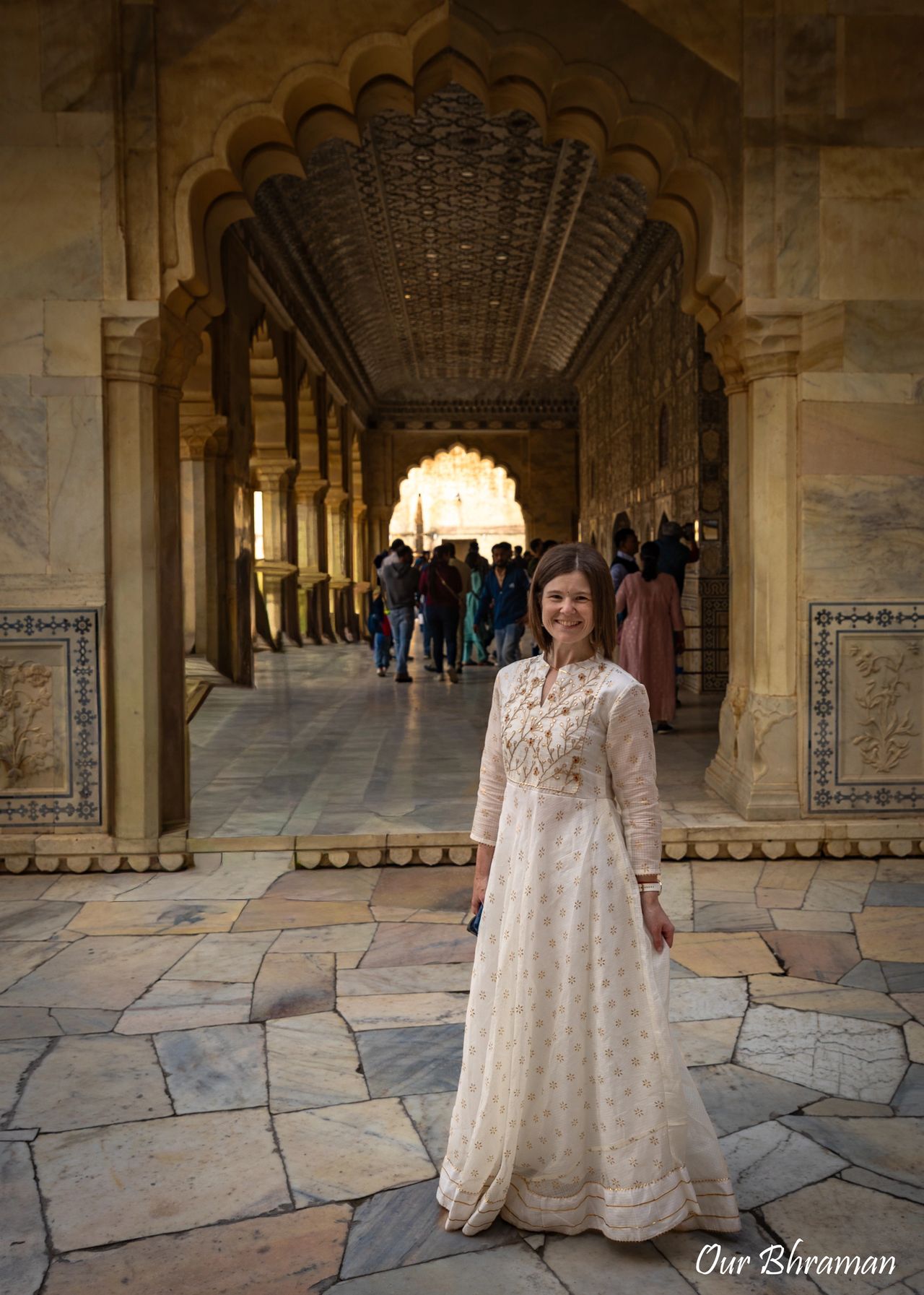
The Jai Mandir (Hall of Victory) left us in awe. Its mirrored mosaics, inlaid panels, and delicate bas-reliefs of flowers and insects created a kaleidoscope effect that dazzled under the sunlight. Across the courtyard, the Sukh Niwas (Hall of Pleasure) impressed us with its floral carvings and ingenious water channel system, once used to cool the surrounding gardens—a testament to the innovative designs of the era.
Zenana Apartments
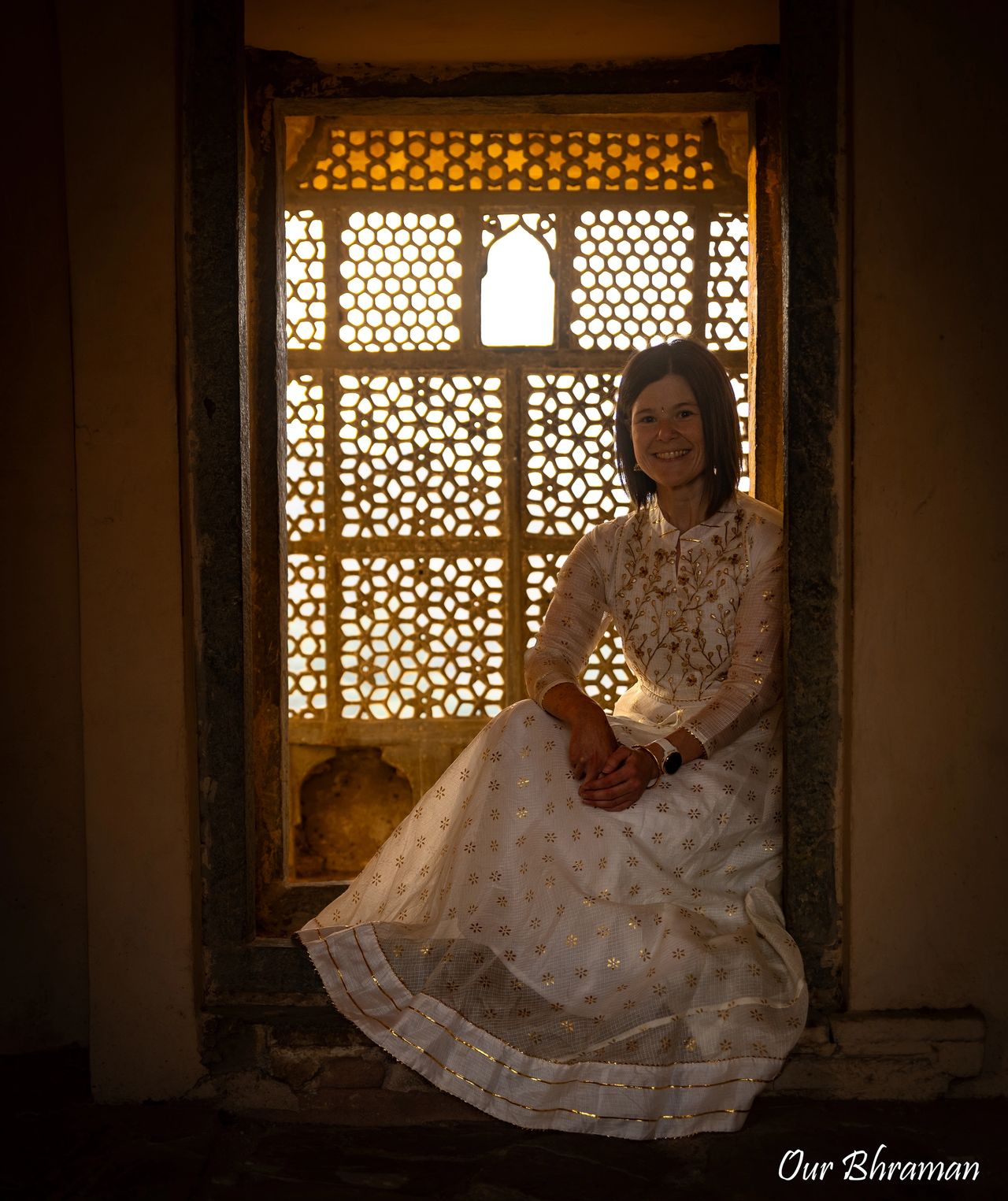
One of the most memorable parts of our visit to Zenana Apartments was how unexpectedly peaceful it felt. While most of Amber Fort was buzzing with visitors, this section turned out to be the least crowded, almost like a hidden retreat within the grand complex. That quietness gave us the rare chance to slow down, explore at our own pace, and truly soak in the atmosphere. The Zenana Apartments were designed as the secluded living quarters for the royal women. Built around a central courtyard, the layout was both functional and discreet—allowing the maharaja to visit his wives without drawing attention. Walking through these corridors, it was fascinating to imagine the structured and private lives that once unfolded here.
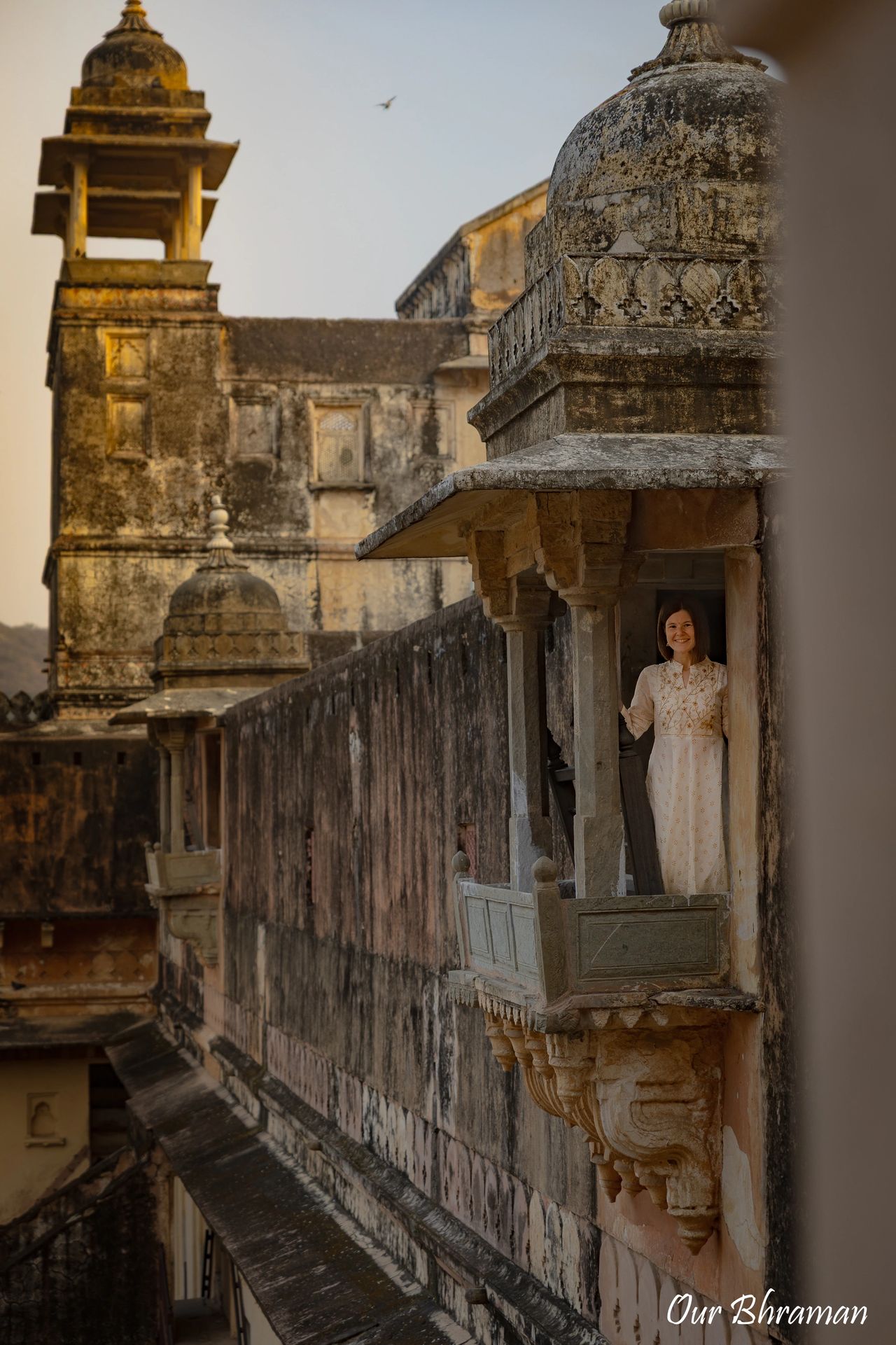
What stood out most were the intricate jali screen windows, crafted from delicate perforated stone. These screens allowed the women to observe life in the courtyards and beyond without being seen—a perfect blend of privacy and connection. The soft light filtering through the patterns created beautiful shadows, adding a unique charm to the space.
Because it was less crowded, we had the freedom to wander through the narrow passageways and discover quiet corners overlooking the fort walls. It also turned out to be one of the best spots for photography. With fewer people around, we could capture uninterrupted shots—whether it was the detailed architecture, the play of light through the jali windows, or stunning backdrops of the fort and surrounding hills.
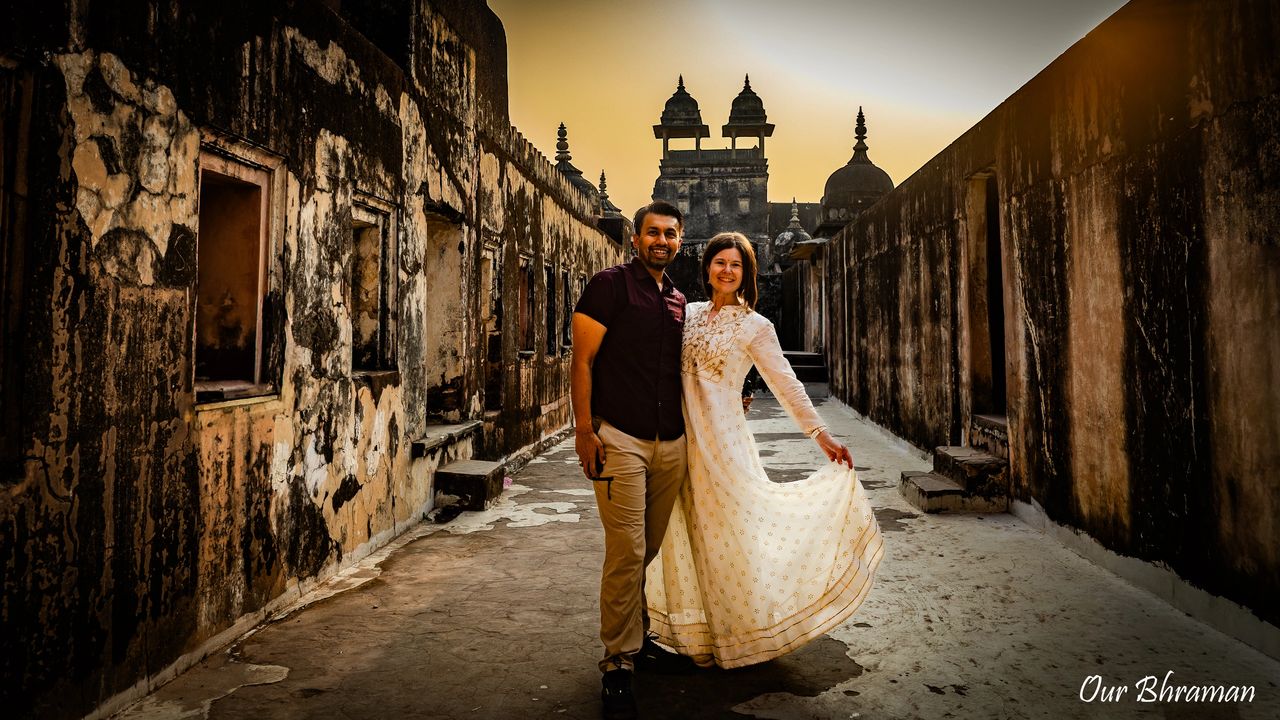
In a place as grand and busy as Amber Fort, the Zenana Apartments offered something rare—a calm, intimate experience that felt personal. It became one of our favorite sections, not just for its history, but for the space it gave us to pause, explore, and capture some of our best moments from the day.
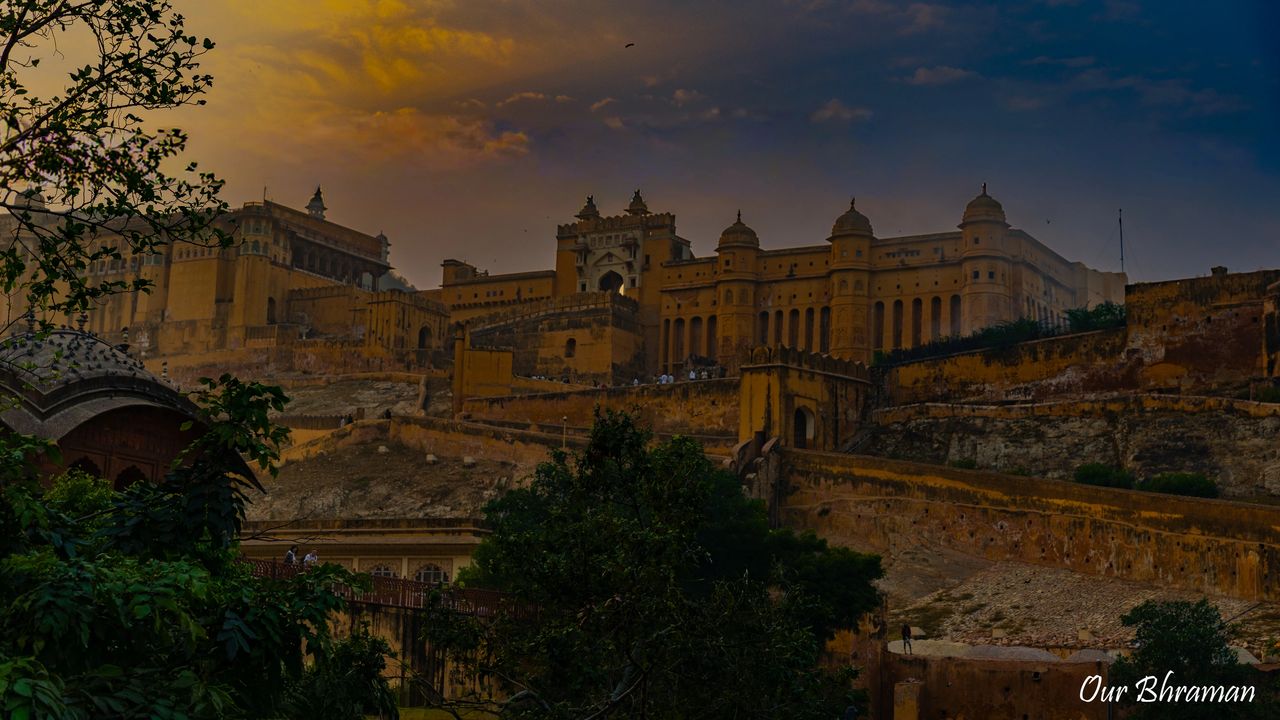
As we neared the end of our time at Amber Fort, the sun began to dip toward the horizon, casting a warm golden glow over the sandstone walls. It felt like the perfect closing moment, and before leaving, we made sure to capture one last picture—our own postcard memory of this incredible place. From there, we headed for a quick stop at Jal Mahal, just a short drive away. Even if you only have 10–15 minutes, it’s absolutely worth it.
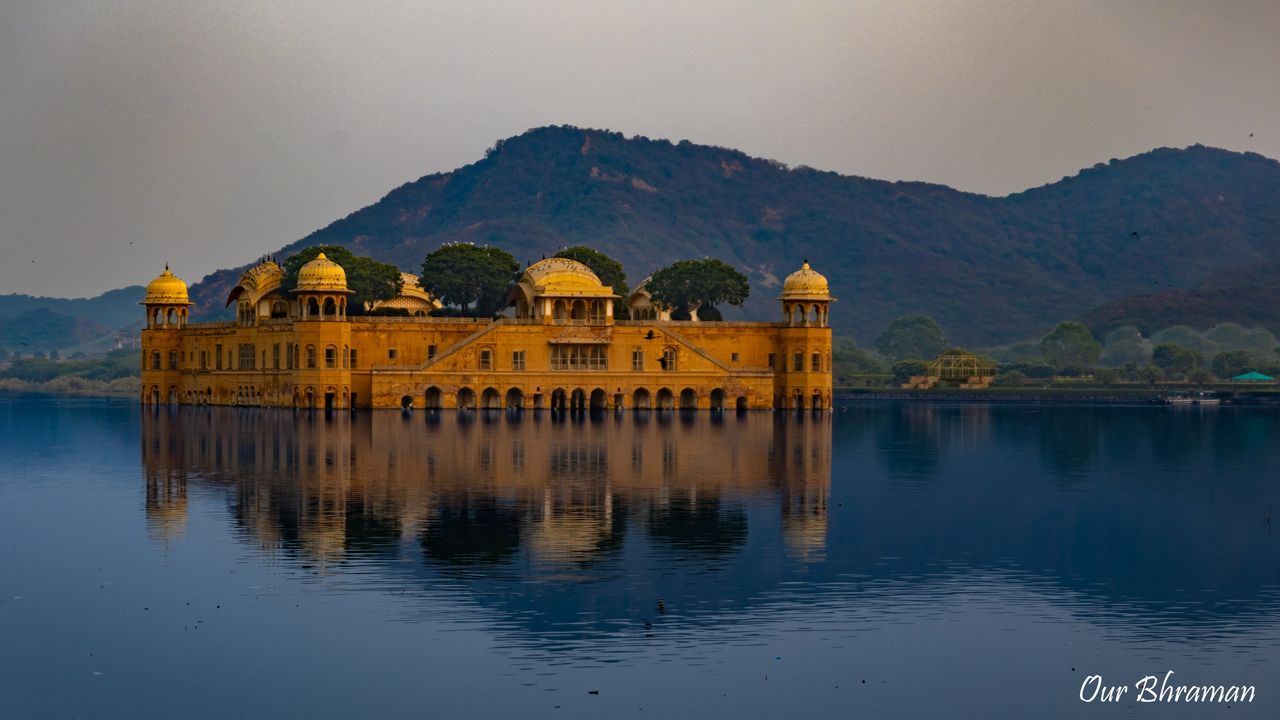
Set right in the middle of Man Sagar Lake, Jal Mahal appeared to float magically on the water, and the afternoon light made it look even more dreamlike. From the promenade, we joined a small crowd of travelers and locals, pausing to admire the palace’s perfect symmetry and shimmering reflections. Some were capturing photographs, others were quietly soaking in the view, and we even spotted a few birds skimming the water—adding life to the serene scene. It felt surprisingly relaxing compared to the busy fort, giving us a chance to slow down, take in the peaceful surroundings, and snap a few of our own photos with the palace and lake as a stunning backdrop.
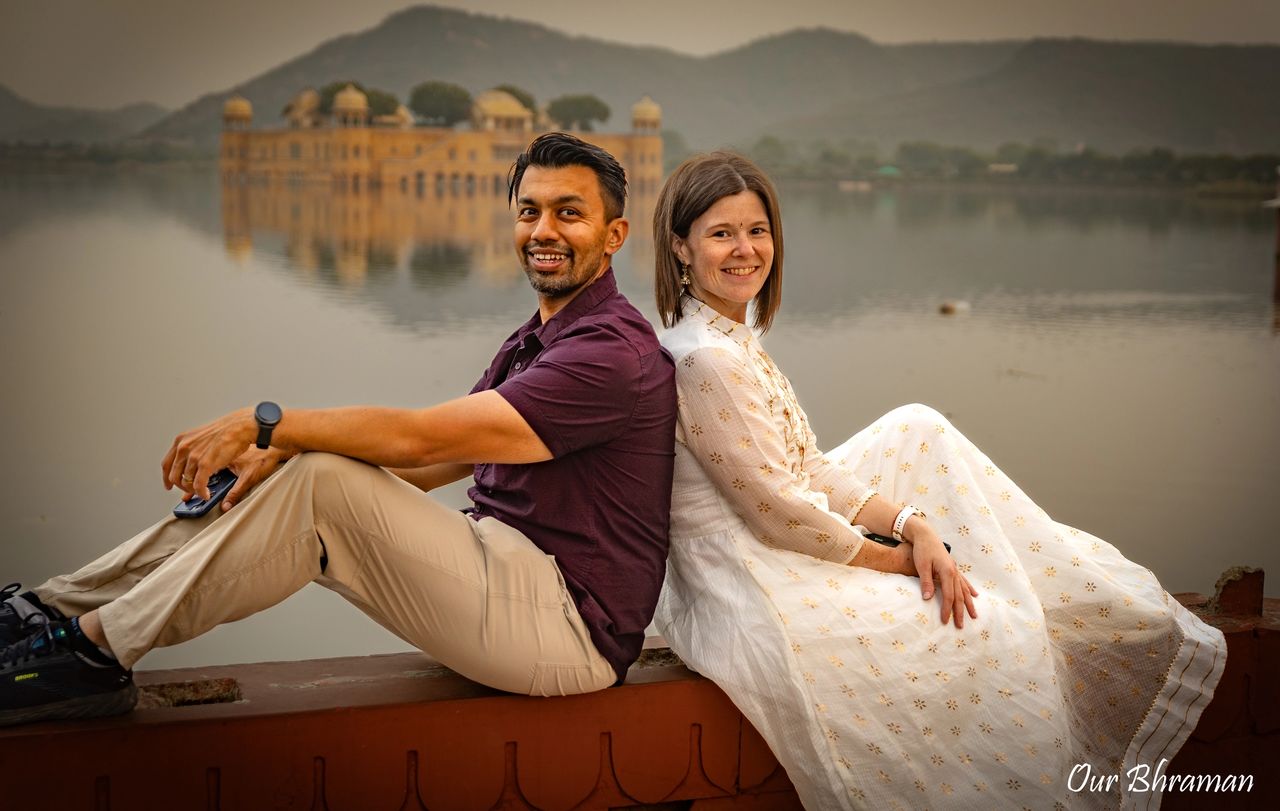
Even though visitors can’t enter the palace, the magic of Jal Mahal lies in simply being there—watching the water glint in the golden light, noticing the intricate architecture, and feeling a sense of calm at the end of a bustling day.
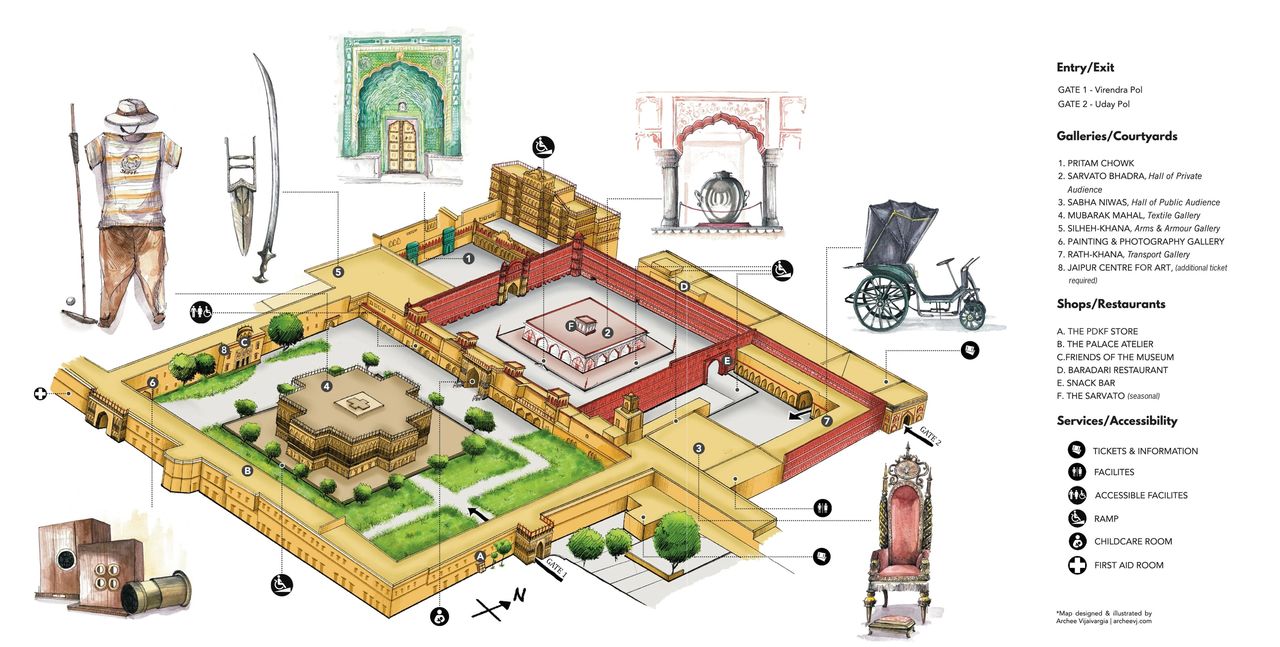
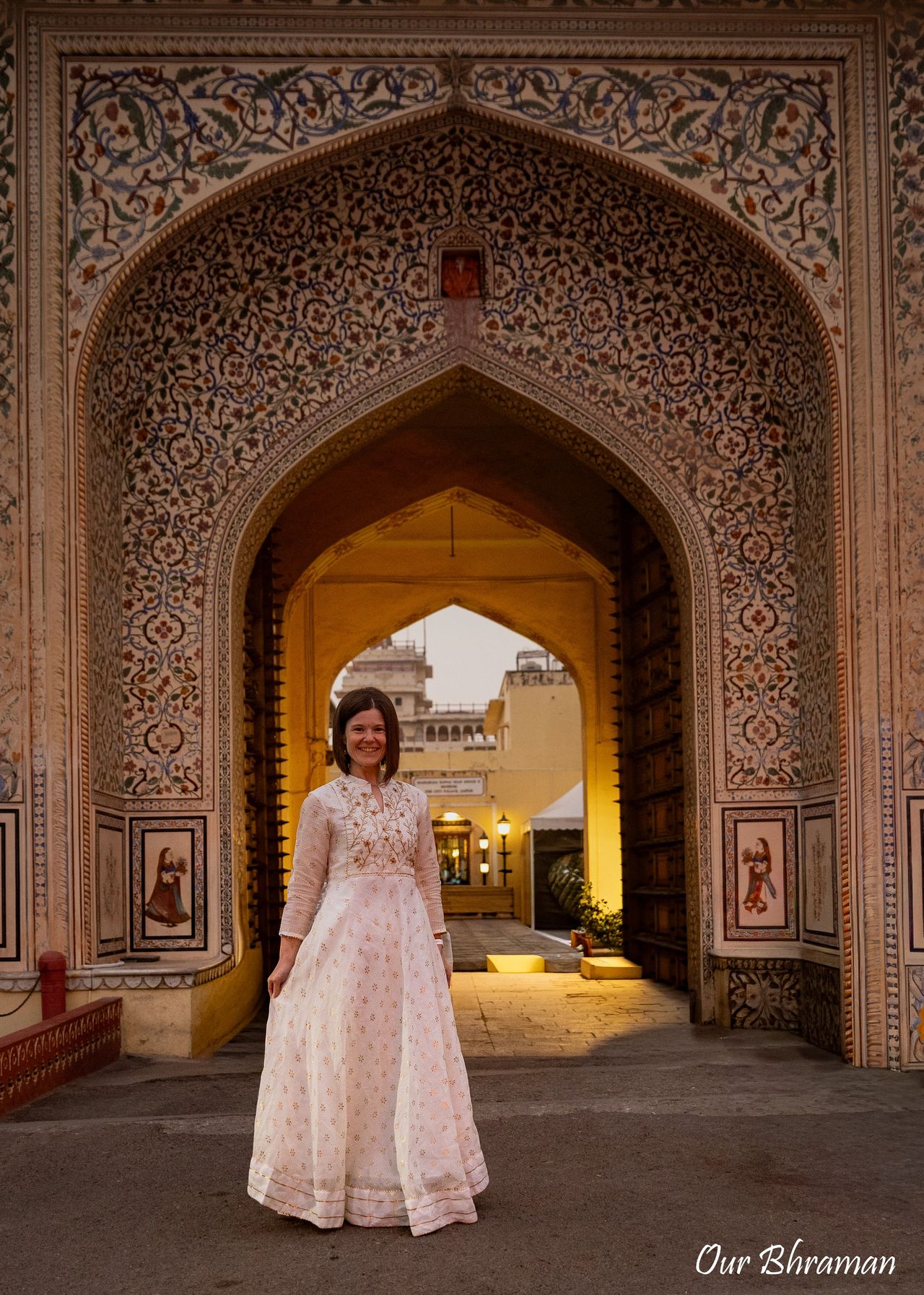
After our quick stop at Jal Mahal, we made our way to the City Palace Museum, entering through Uday Pol where we had parked our car. The entry itself felt grand and welcoming, setting the tone for what lay ahead. As we stepped inside, a striking golden-hued gateway immediately caught our attention—it was one of those moments where you instinctively pause, take it in, and click a photo before moving forward.
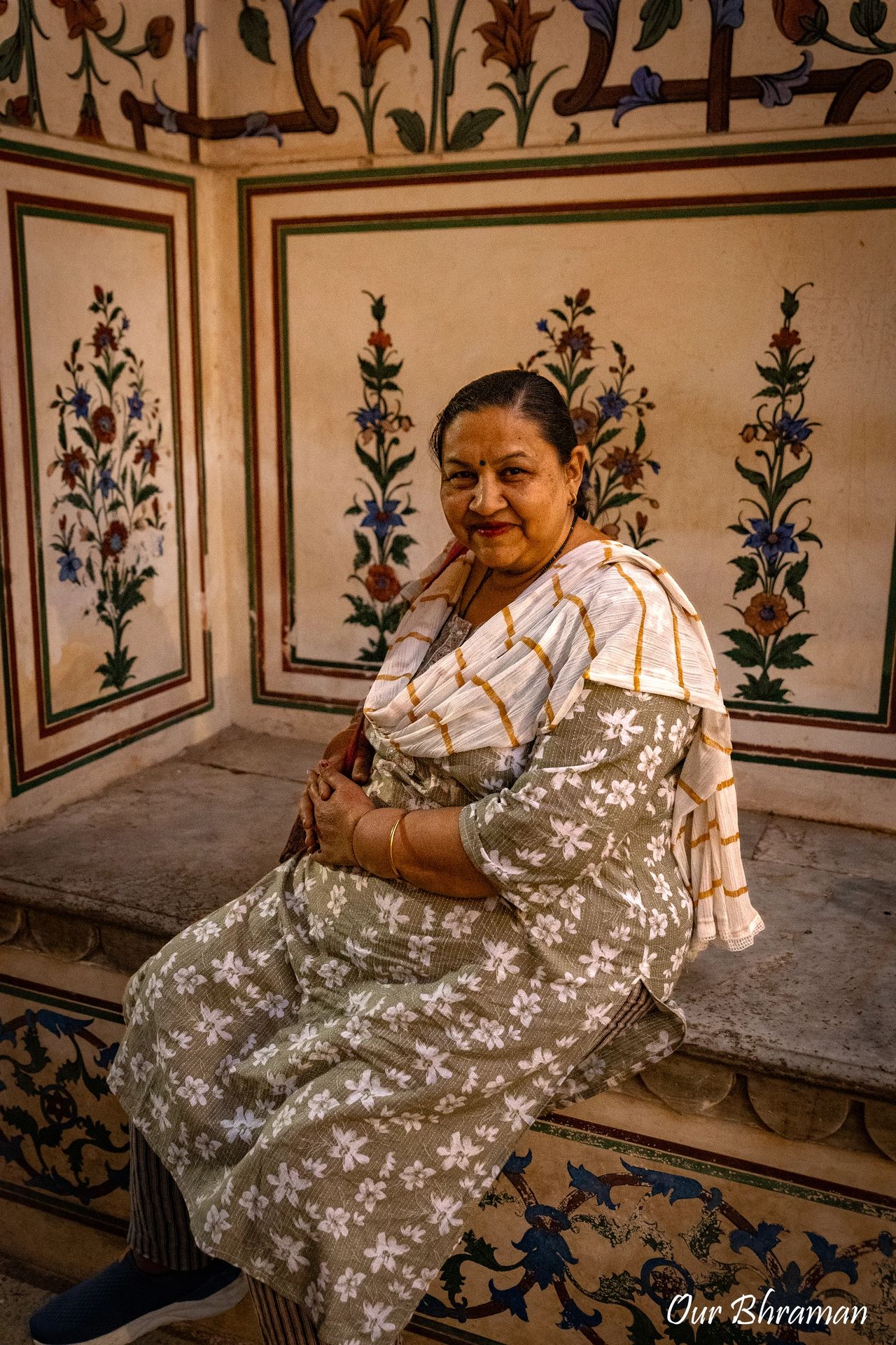
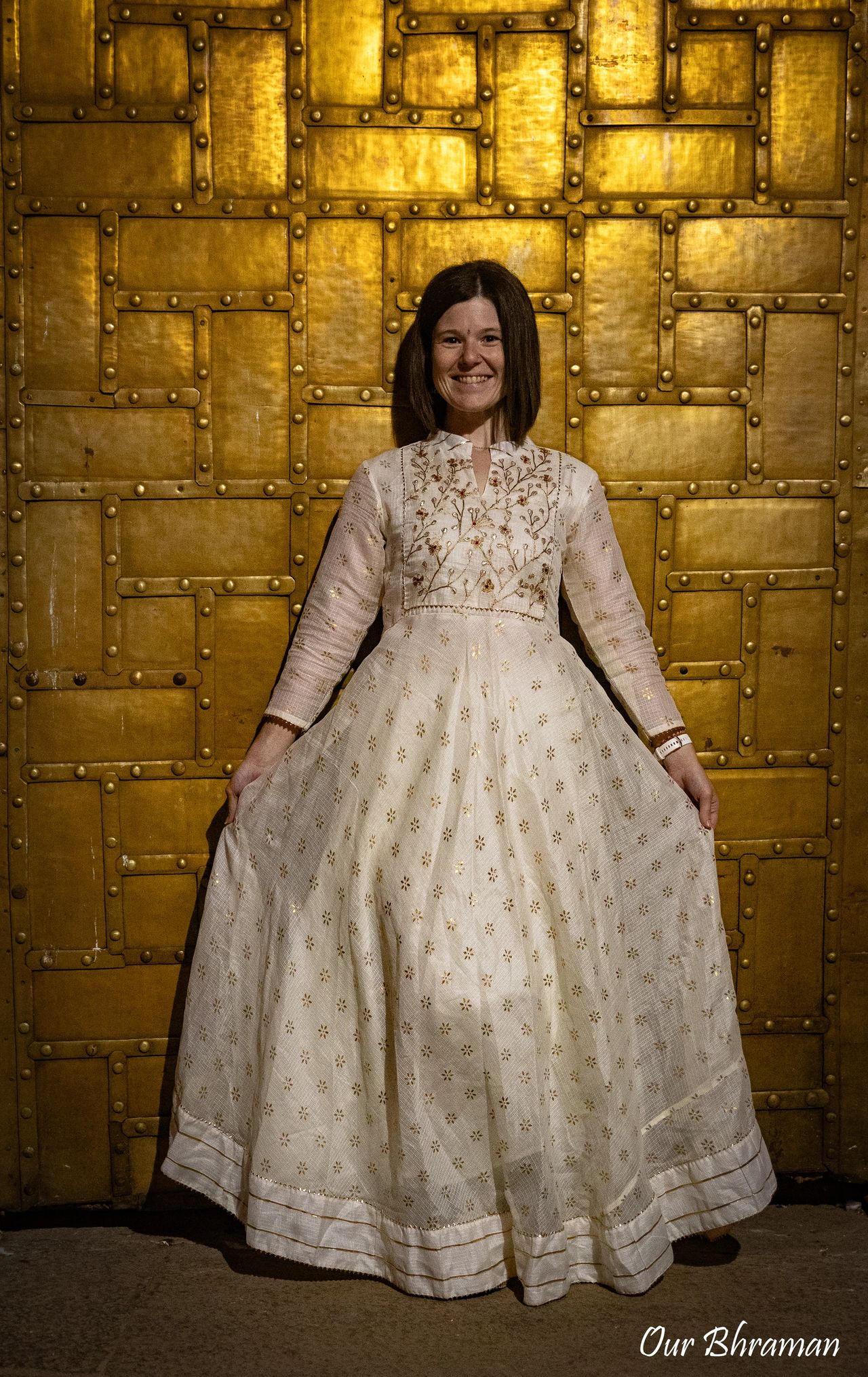
We first walked through the Rath Khana (Transport Gallery), which turned out to be surprisingly fascinating. This section showcases royal modes of transport spanning centuries, used during ceremonies and festivals. What truly stood out to us was the intricately crafted elephant armour, said to be one of the only fully intact pieces of its kind, along with the solid silver palanquin still used during Jaipur’s Teej and Gangaur festivals. Even with limited time, this gallery gave us a glimpse into the grandeur and traditions of royal processions.
Moving ahead, we entered Sabha Niwas, the former Diwan-e-Aam (Hall of Public Audience), where the Maharaja once addressed his people and welcomed dignitaries. The space felt regal yet open, and what caught our eye were the life-size paintings lining the walls and the elegant European chandeliers hanging above, adding a unique blend of local and global influences. Tucked quietly in a corner was a handcrafted carpet made by Jaipur jail prisoners—easy to miss, but definitely worth spotting.
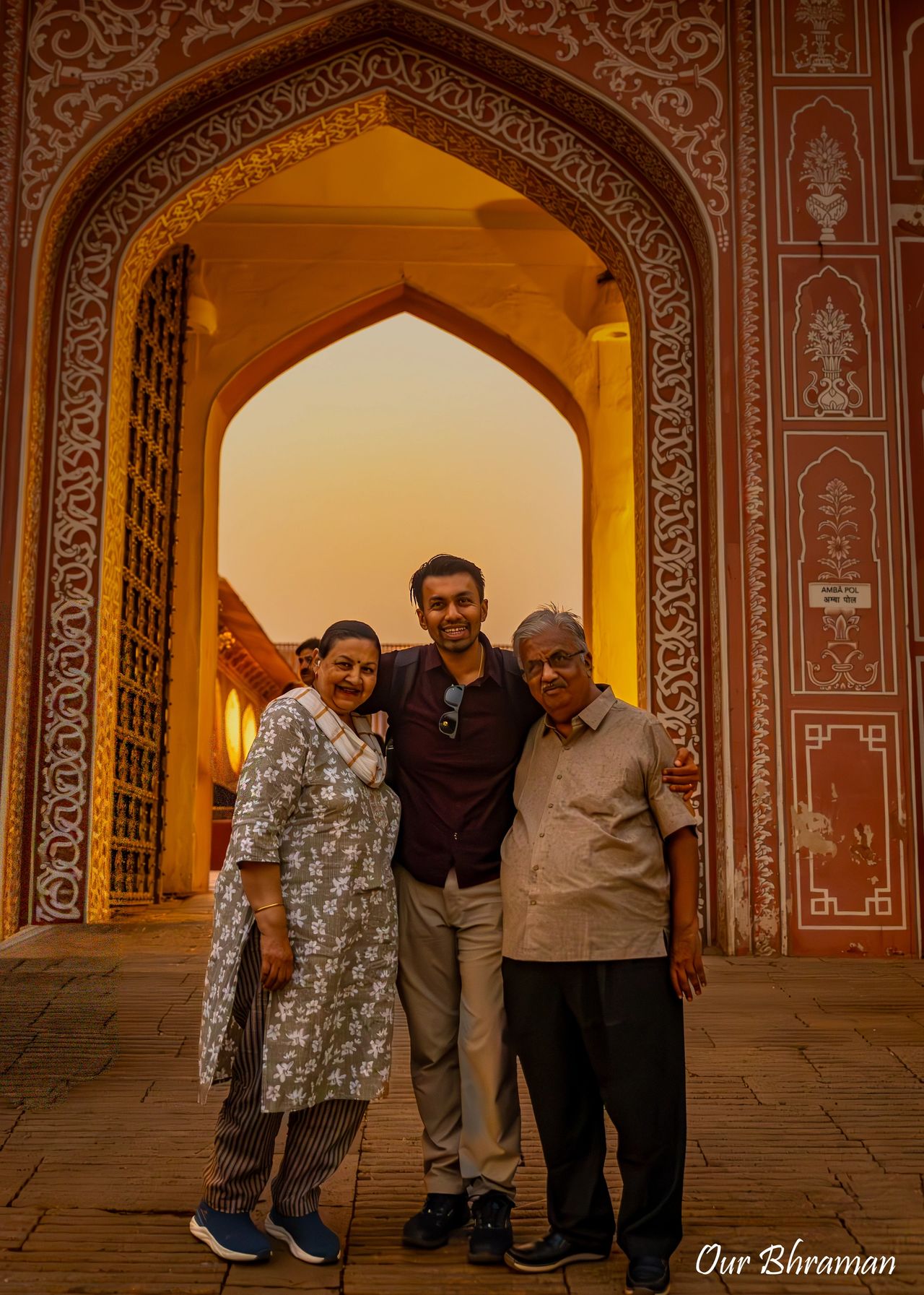
From there, we stepped into Sarvato Bhadra, also known as the Diwan-e-Khas, which felt like the ceremonial heart of the palace. With its open-sided structure, elegant arches, and soft pink tones that reflect Jaipur’s identity as the Pink City, this space immediately stood out as one of the most beautiful sections we explored. Historically, it was used for private audiences and important royal ceremonies, hosting cultural and religious events.
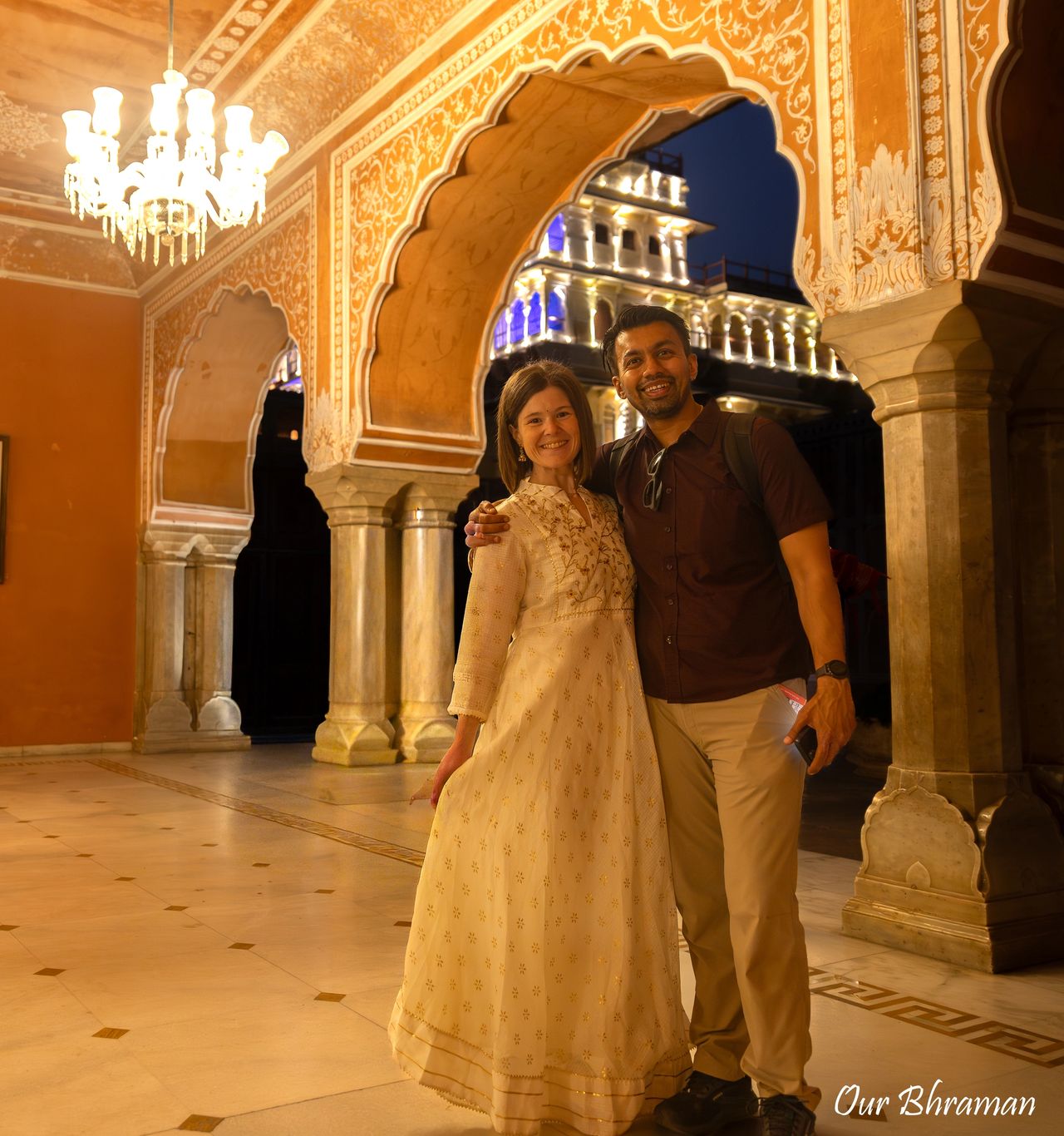
The hall itself, with its marble flooring and hanging chandeliers, exudes a quiet grandeur. While exploring, we also noticed artistic displays and surrounding sections of the palace, adding layers to the experience.
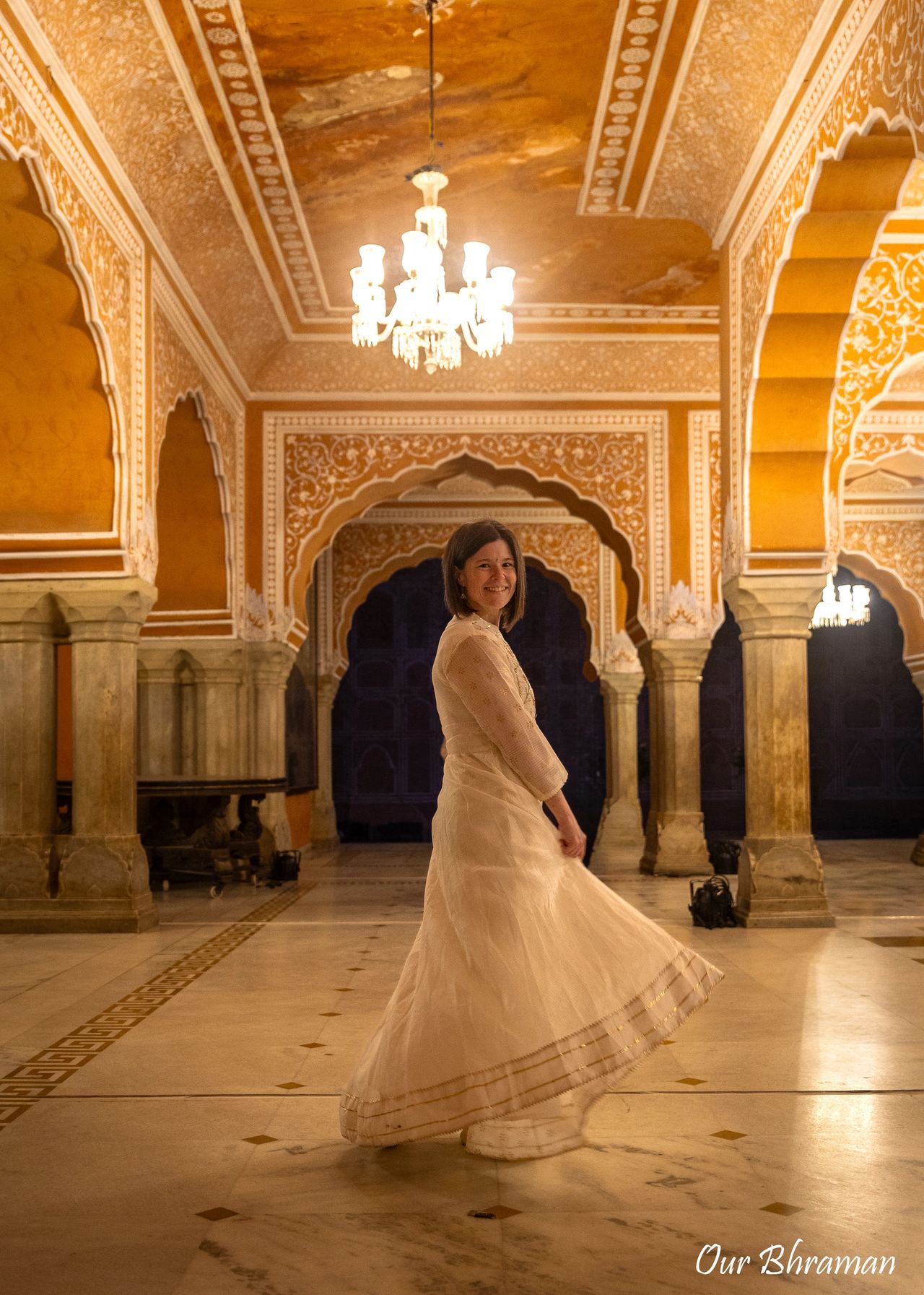
The highlight here was undoubtedly the gigantic silver Gangajalis—so massive that standing next to them, we could hardly believe they were real. Commissioned by Maharaja Sawai Madho Singh II in the early 20th century, these urns were created for his journey to England in 1902.
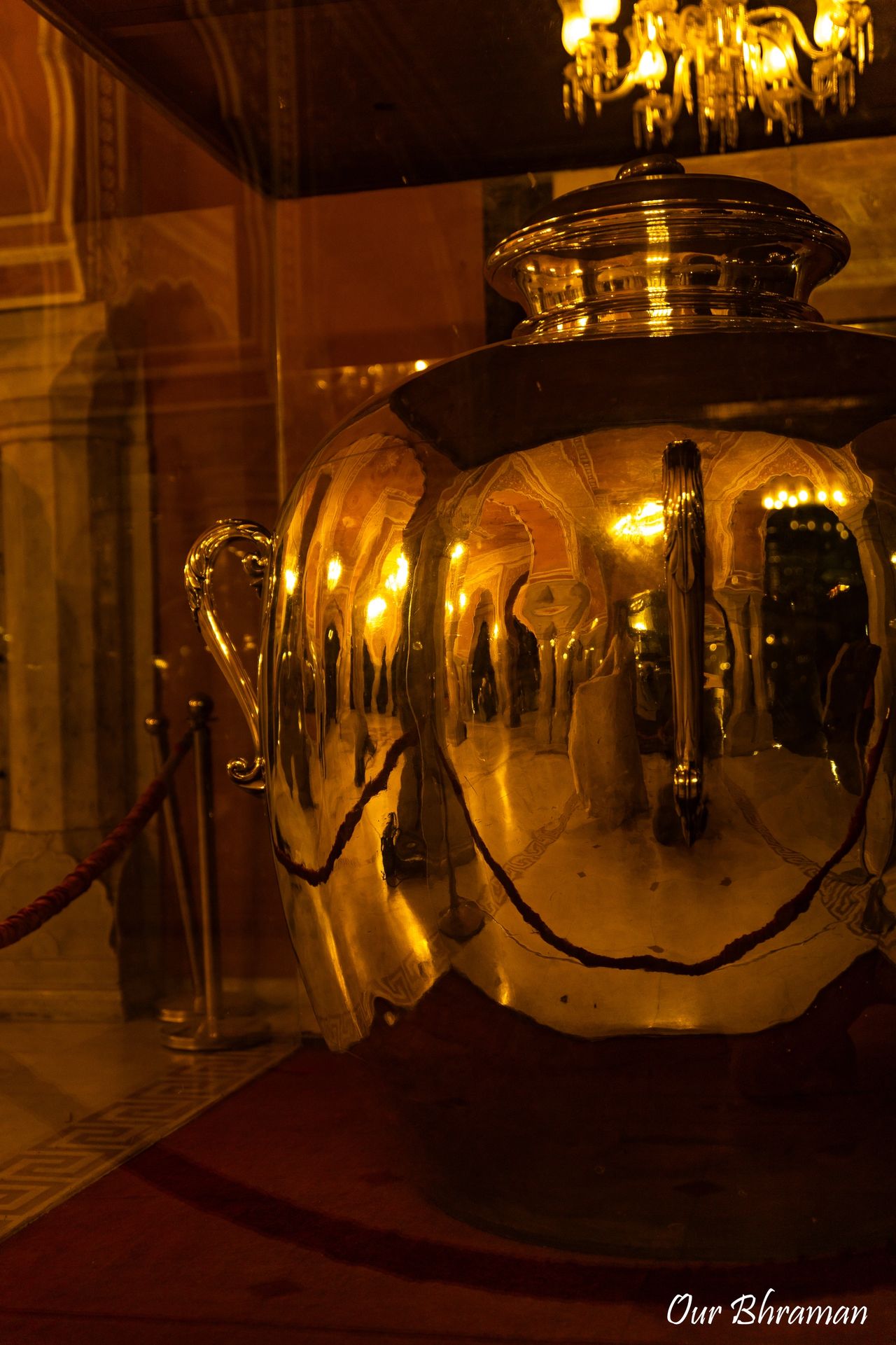
Deeply rooted in tradition, the Maharaja chose to carry sacred water from the Ganges River with him, rather than rely on foreign sources. Each urn holds around 4,000 liters and is crafted entirely from pure silver without joints—an extraordinary example of craftsmanship. Today, they are recognized by the Guinness World Records as the largest silver vessels in the world.
Standing before them, it felt like more than just looking at an artifact—it was a powerful glimpse into a time when faith, tradition, and royal prestige came together in the most remarkable ways.
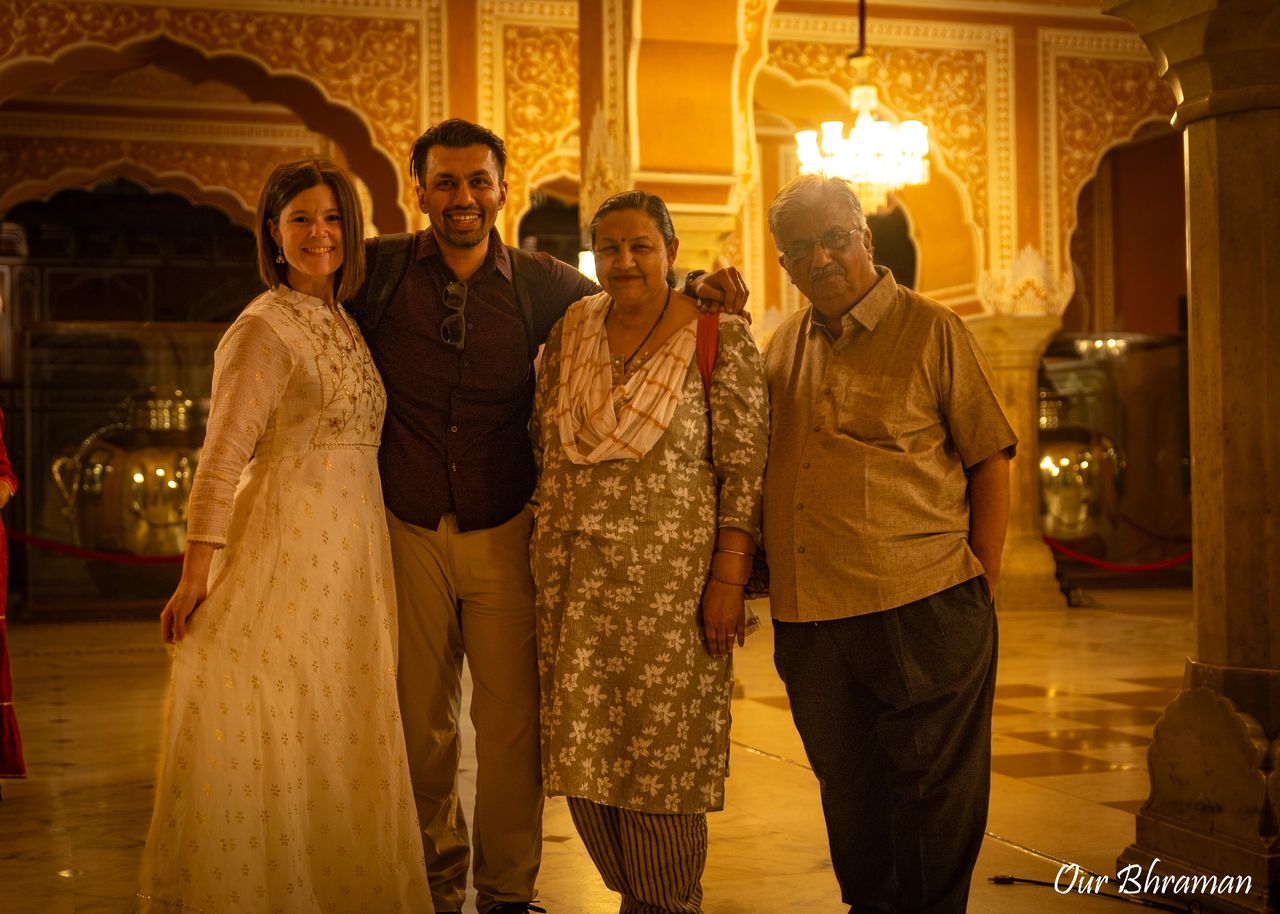
We kept exploring next to Pritam Niwas Chowk, a courtyard defined by four grand gates, each representing a different season and adding to the majesty of the city skyline. The Peacock Gate, with its iconic depictions of Lord Vishnu and his consort, embodies the colors and spirit of autumn, while the Lotus Gate, adorned with blooming lotuses, celebrates the freshness of spring.
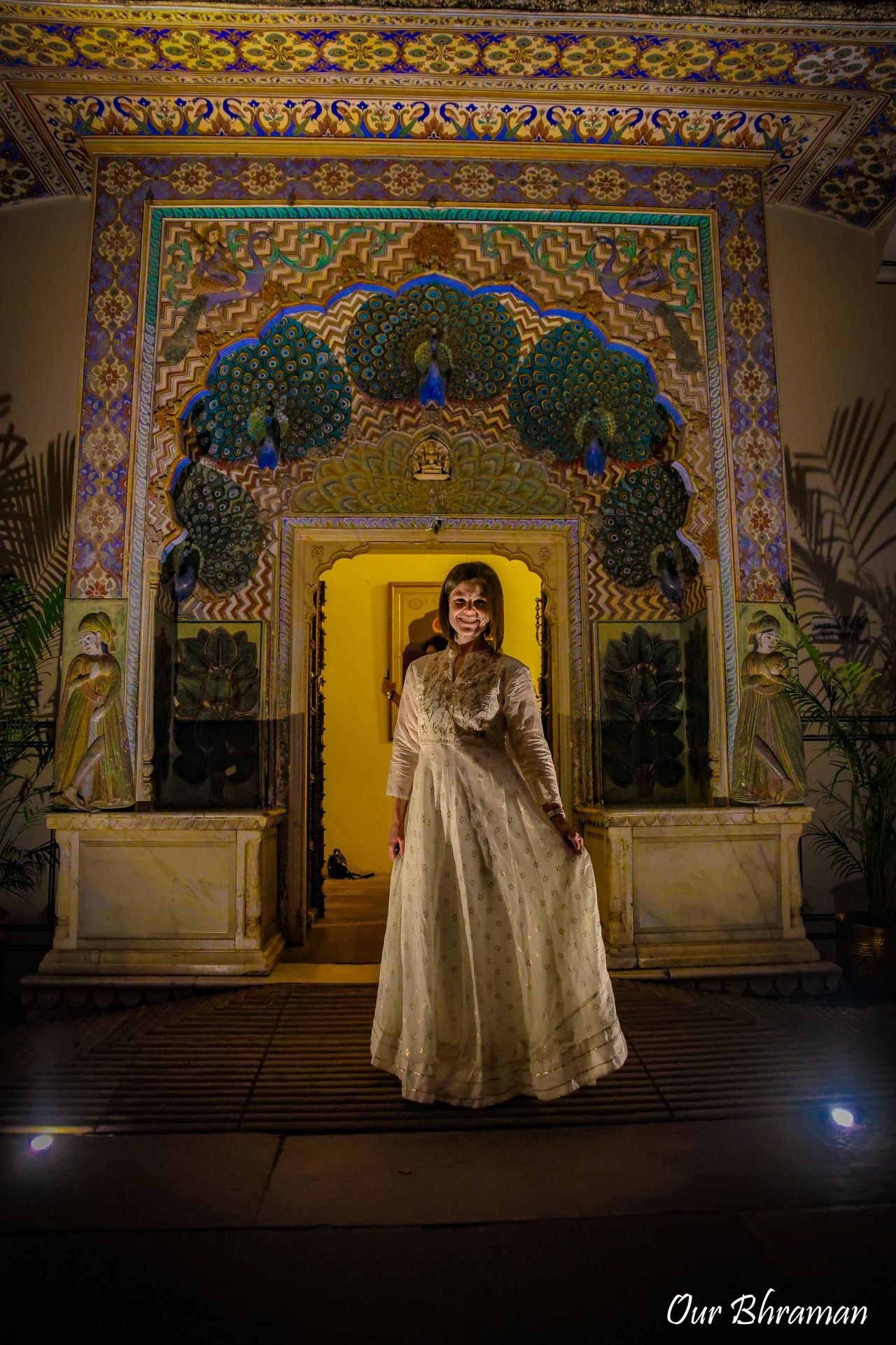
The Rose Gate honors winter with delicate floral motifs, and the Padma Gate, symbolizing summer, bursts with vibrant patterns reflecting Rajasthan’s warmth and energy. Visiting late at night was a magical experience—each gate was softly illuminated, the lights highlighting the intricate carvings and rich colors, making them glow against the night sky. From this courtyard, we could also admire Chandra Mahal, brilliantly lit up, its grandeur mirrored in the gates’ shimmering lights. Wandering through the streets nearby, every wall seemed to tell a story, with delicate flowers and intricate carvings that felt even more enchanting under the night’s glow.
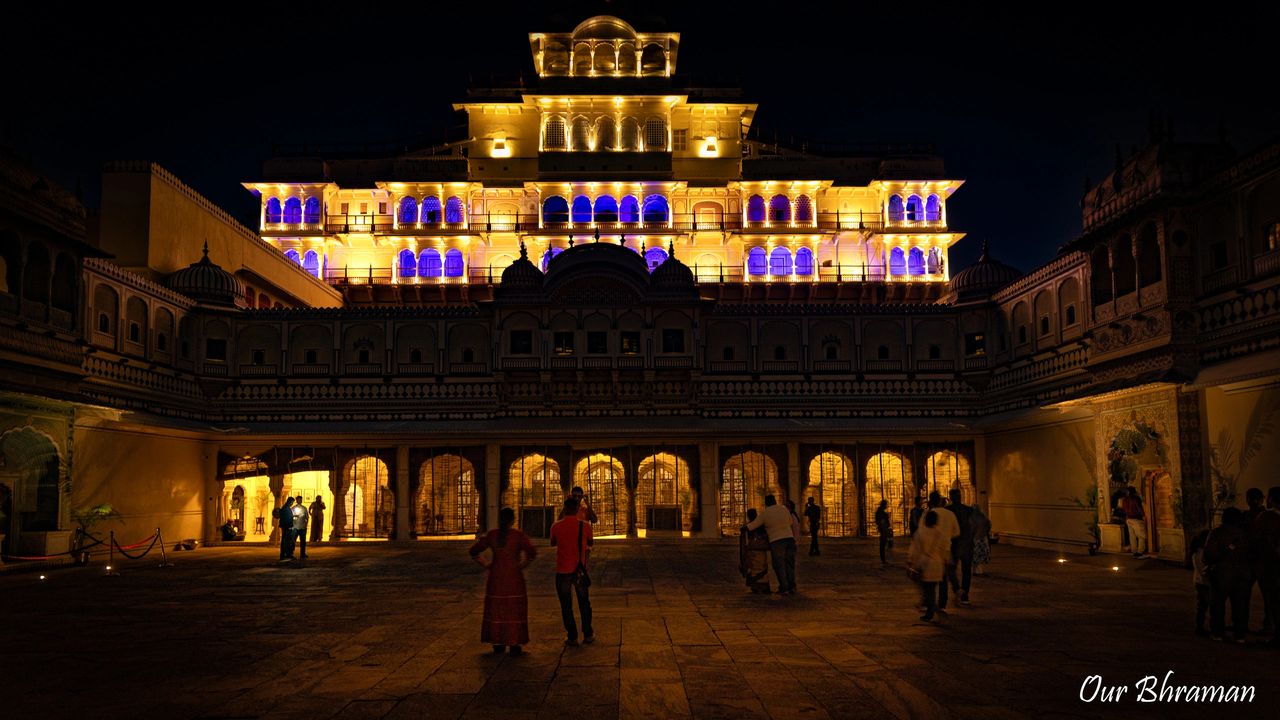
With time running out before closing, we decided to venture to our final stop: Mubarak Mahal and its surrounding area. Originally built by Maharaja Madho Singh II as a palace to receive honored guests, the Mubarak Mahal dates back to the 19th century and beautifully blends Indian and European architectural styles. Today, it houses the Maharaja Sawai Man Singh II Museum, a true treasure showcasing immaculate craftsmanship. Inside, we were captivated by the stunning collection of pashmina shawls, Sanganeri block-printed fabrics, and other royal garments that once adorned the elite members of the royal family, offering a fascinating glimpse into Jaipur’s regal heritage.
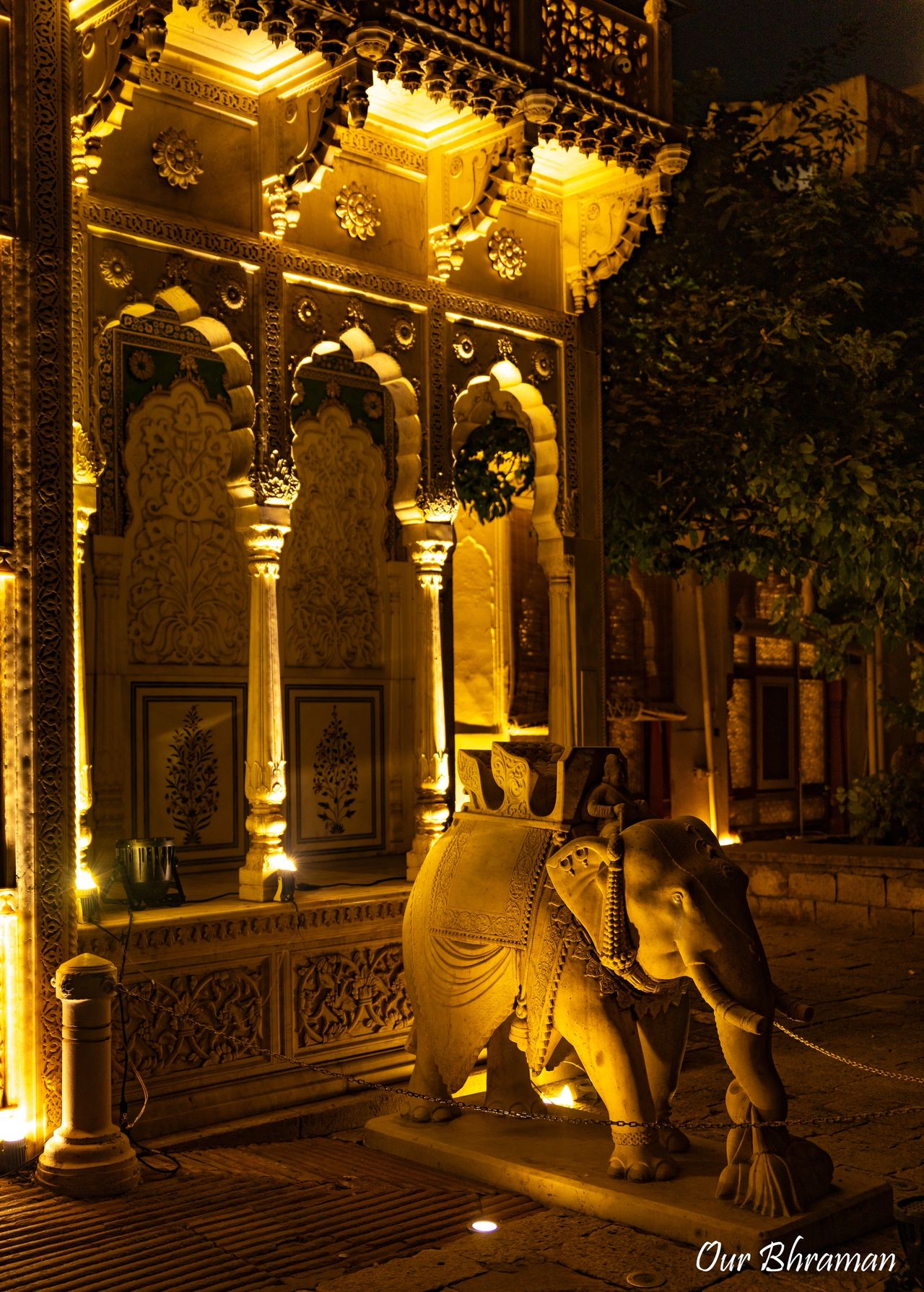
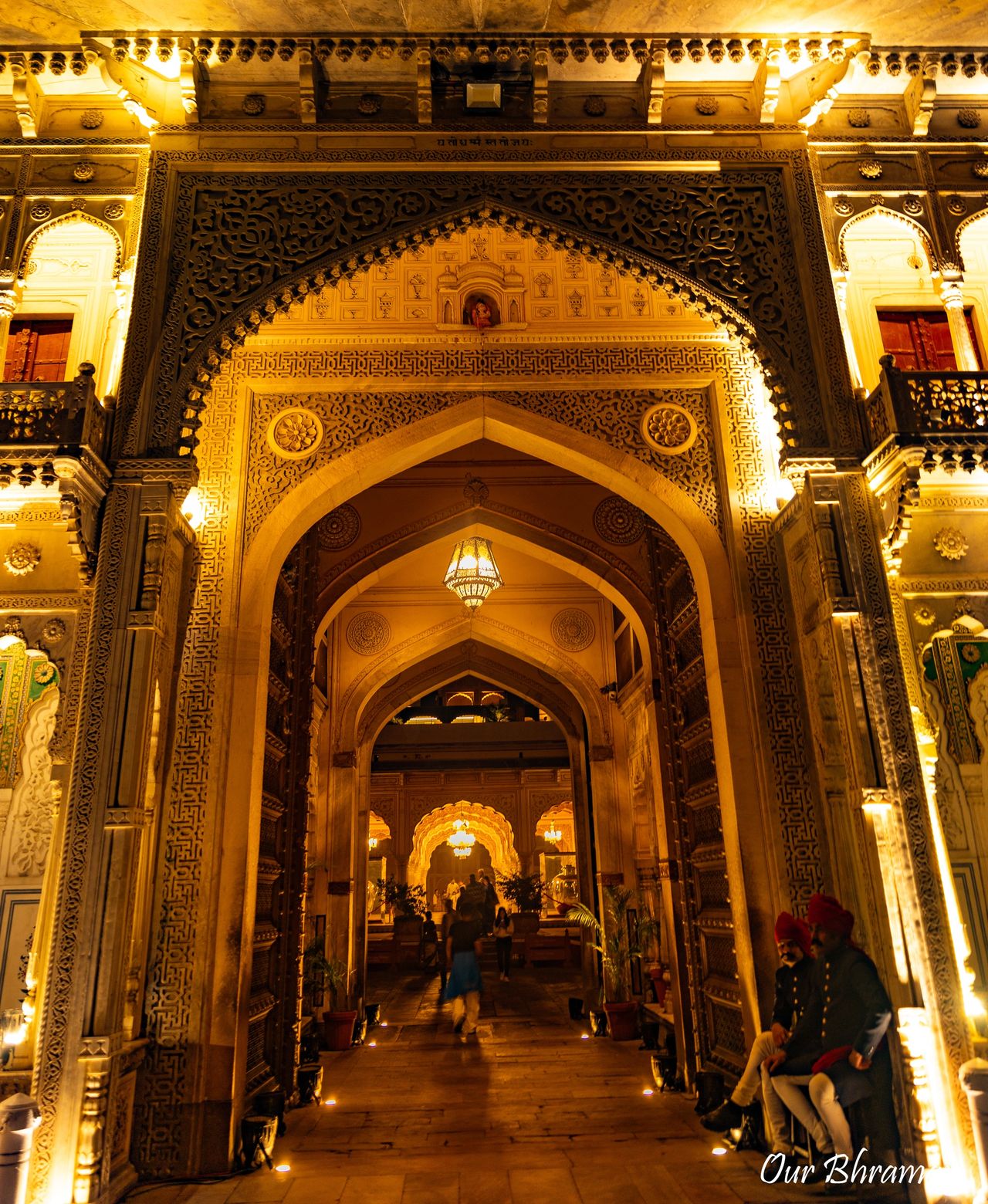
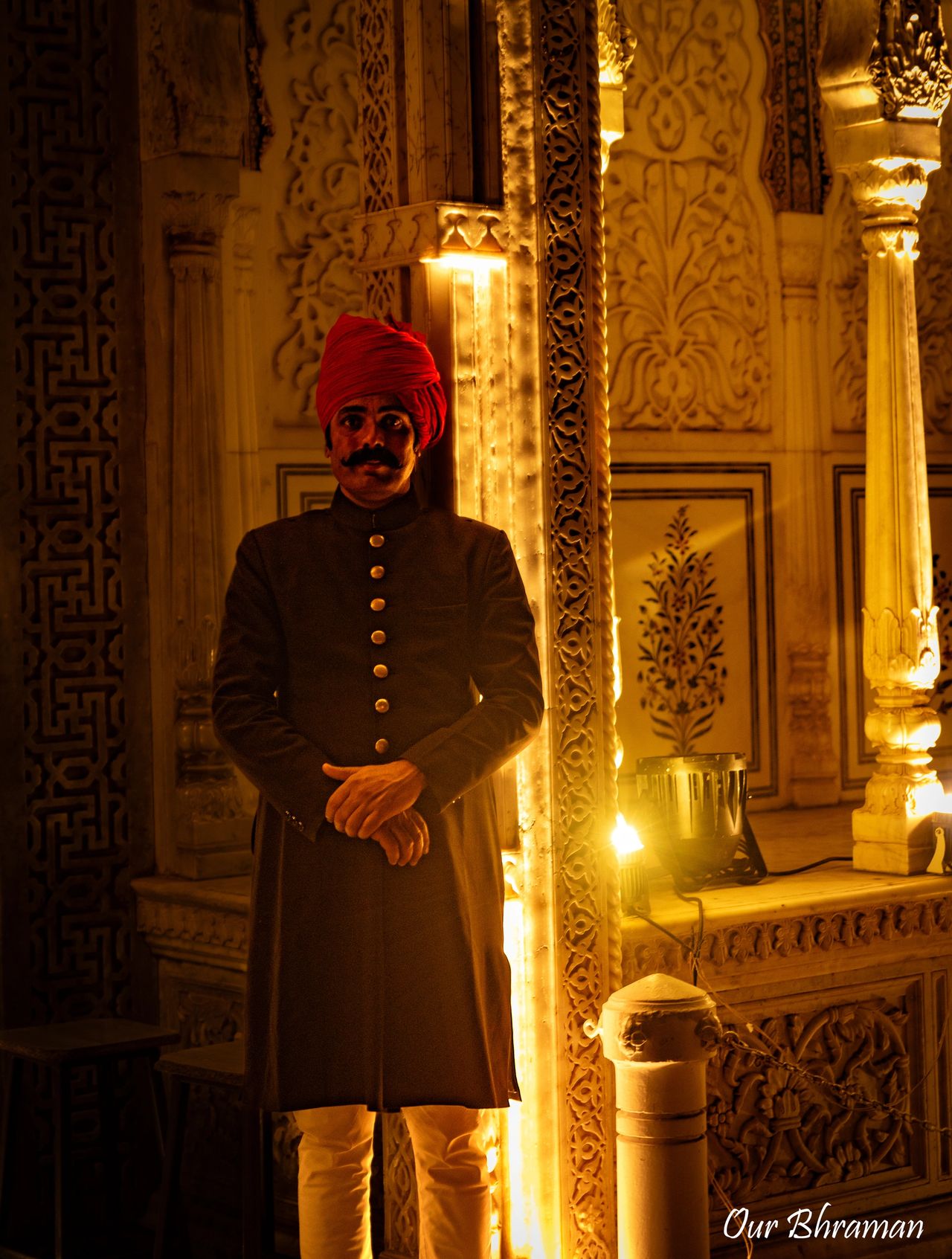
To reach this magnificent spot, we passed through Sarvato Bhadra and a gate adorned with beautifully carved elephants at its entrance. The area is still protected by royal guards, who, to our delight, didn’t mind posing for a quick photo.
Before heading back to our hotel, we made a quick stop at the beautiful Birla Mandir Jaipur. Visiting at night made the experience even more special—the pristine white marble softly glowed under the lights, giving the temple an almost ethereal presence. The peaceful ambiance, combined with its intricate carvings and unique blend of traditional Hindu architecture with modern artistry, created a calming end to our day. The temple’s inclusiveness is reflected in its carvings of not just deities but also great thinkers from different religions. Do note that photography inside the temple is not allowed, which helps preserve its quiet and sacred atmosphere.
After 12+ hours of exploring, immersing ourselves in the perfect blend of history, art, and spirituality that Jaipur has to offer—from grand forts and palaces to serene religious sites—we finally wrapped up the day with a satisfying dinner back at our hotel, feeling both exhausted and deeply fulfilled.