Day-1
After our beautiful wedding in Mumbai, Kayla, I and our families decided to embark on a trip to Delhi, the capital city of India. Excitement filled the air as we landed at Indira Gandhi International Airport, known for its unique views that immediately made us feel like we were truly in the heart of the country.
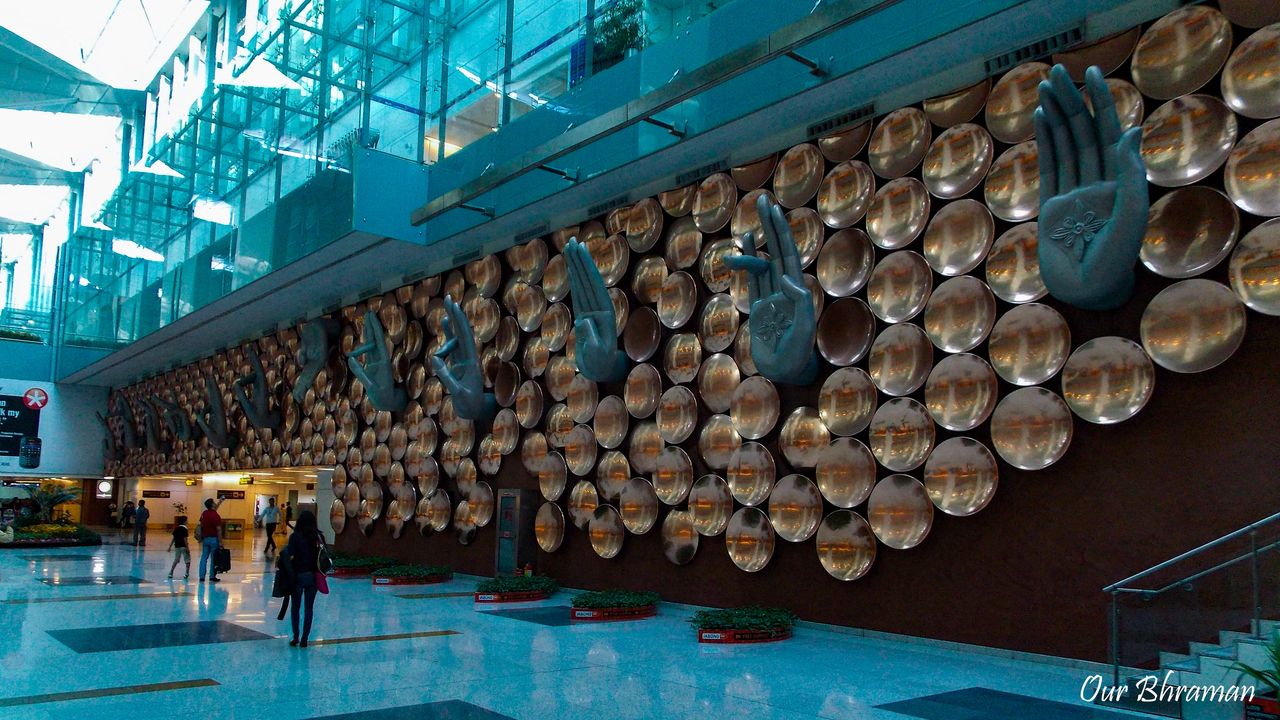
At Delhi Airport (T3), one of the first sights that grabs your attention is the huge wall of copper hands (mudras) near immigration. These aren’t just decorations — they are traditional Indian hand gestures from yoga, dance, and spirituality. Curious about them, we looked up their meanings and discovered:
• Abhaya Mudra: Raised hand → protection & peace
• Varada Mudra: Open palm down → compassion
• Vitarka Mudra: Thumb + finger circle → wisdom
• Dhyana Mudra: Hands in lap → meditation & calm
• Prithvi Mudra: Ring finger + thumb → stability
• Kartari Mukha Mudra: Scissor shape → separates good & evil
• Kapittha Mudra: Fist-like gesture → strength & devotion
• Alapadma Mudra: Lotus shape → purity & beauty
• Tripataka Mudra: Three-part flag → victory
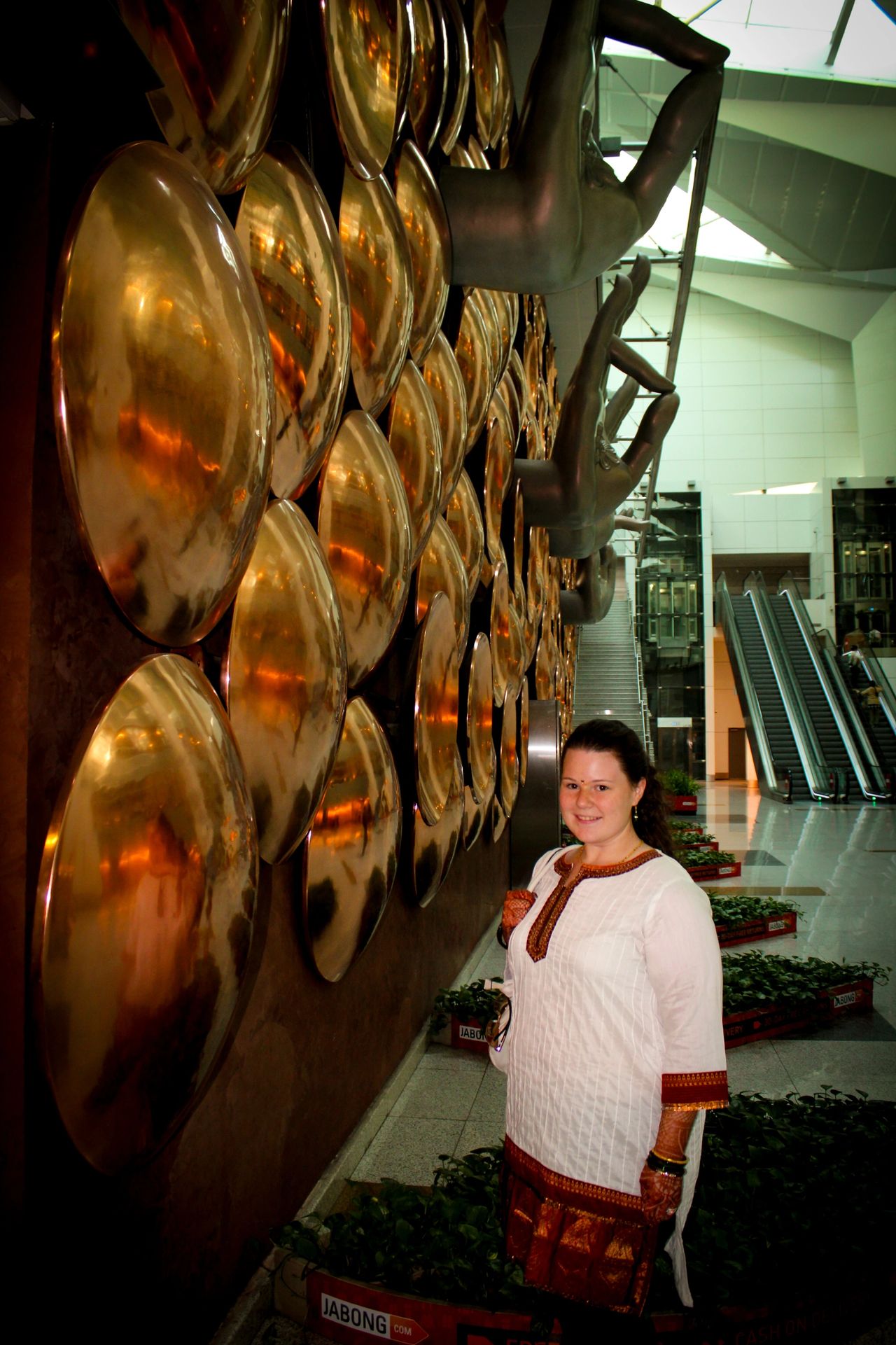
The wall represents India’s philosophy of “Atithi Devo Bhava” — the guest is god, offering every traveler a warm, symbolic welcome. Beyond its meaning, the mudra wall has also become an Instagram favorite. From Bollywood stars to everyday flyers, almost everyone pauses here for a photo before moving on.

Upon arrival in Delhi, we were warmly welcomed by our tour guide and driver — our companion for the days ahead. The very first adventure began right there in the parking lot, as we tried to fit ourselves and our bags into the car. It was a little chaotic, with luggage being shifted, stacked, and finally secured on top of the vehicle. I couldn’t help but smile at the scene — the flurry of movement, the laughter, and the creativity it took to make everything fit. It was one of those small, candid travel moments I just had to capture, because sometimes the journey truly begins before the wheels even start rolling.
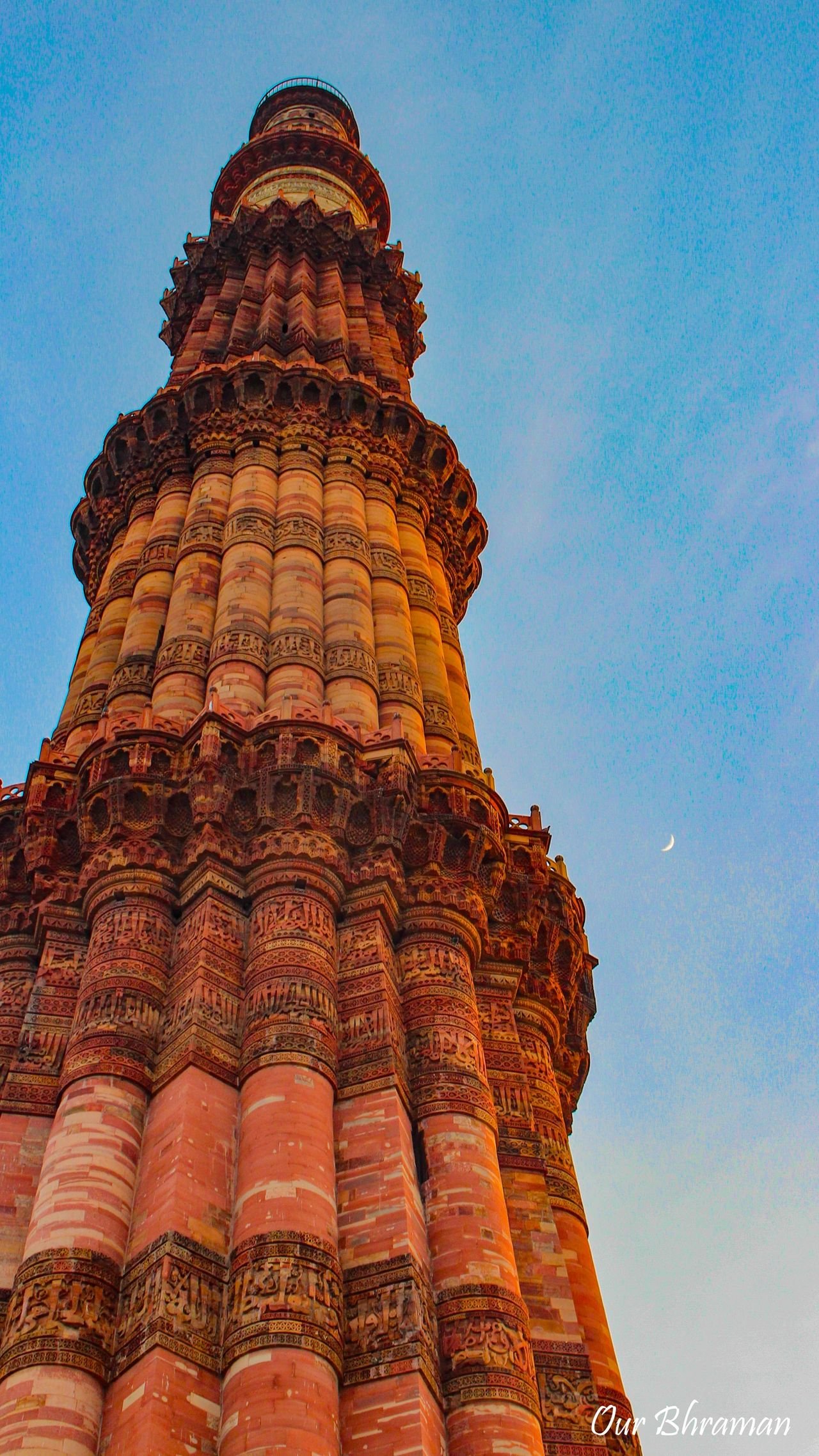
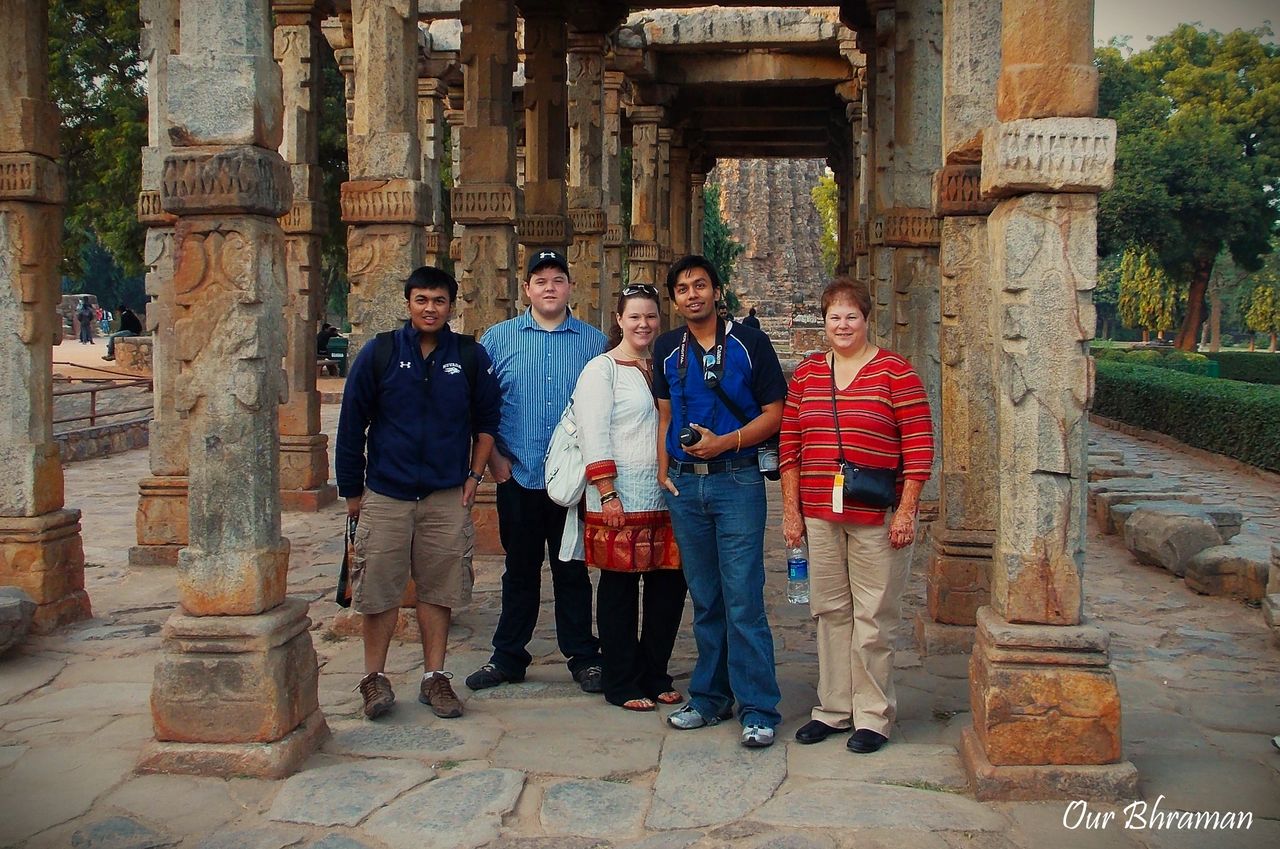
Our first destination was the magnificent Qutub Minar, a UNESCO World Heritage Site and one of Delhi’s most iconic landmarks. As we walked toward the soaring minaret, its sheer height and grandeur seemed to dominate the skyline. Our guide shared fascinating stories about its 12th-century origins, weaving history into every brick and carving.
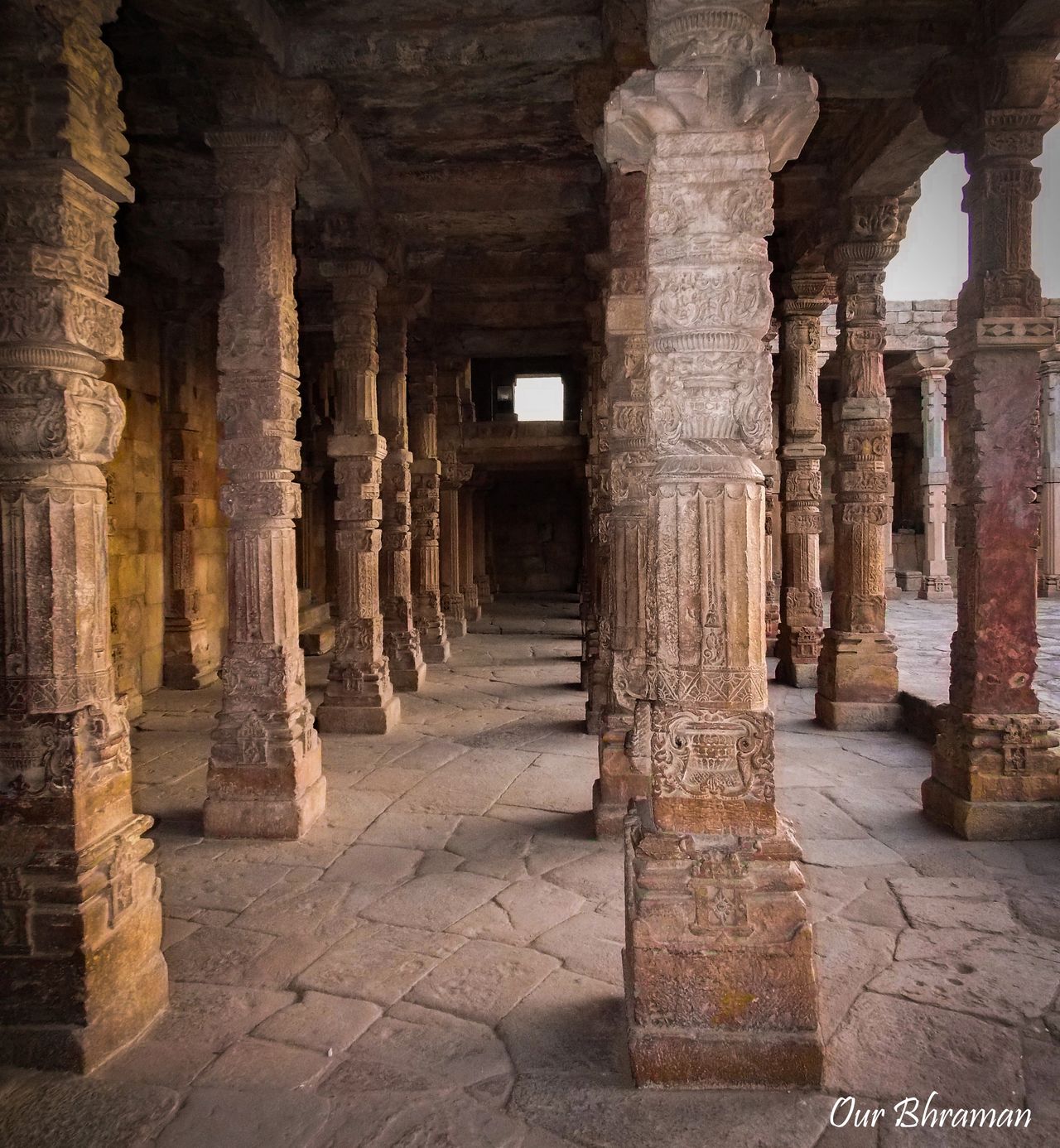
Standing at the base, we were struck by the fine detailing on the red sandstone—verses, patterns, and calligraphy that have survived the passage of time.
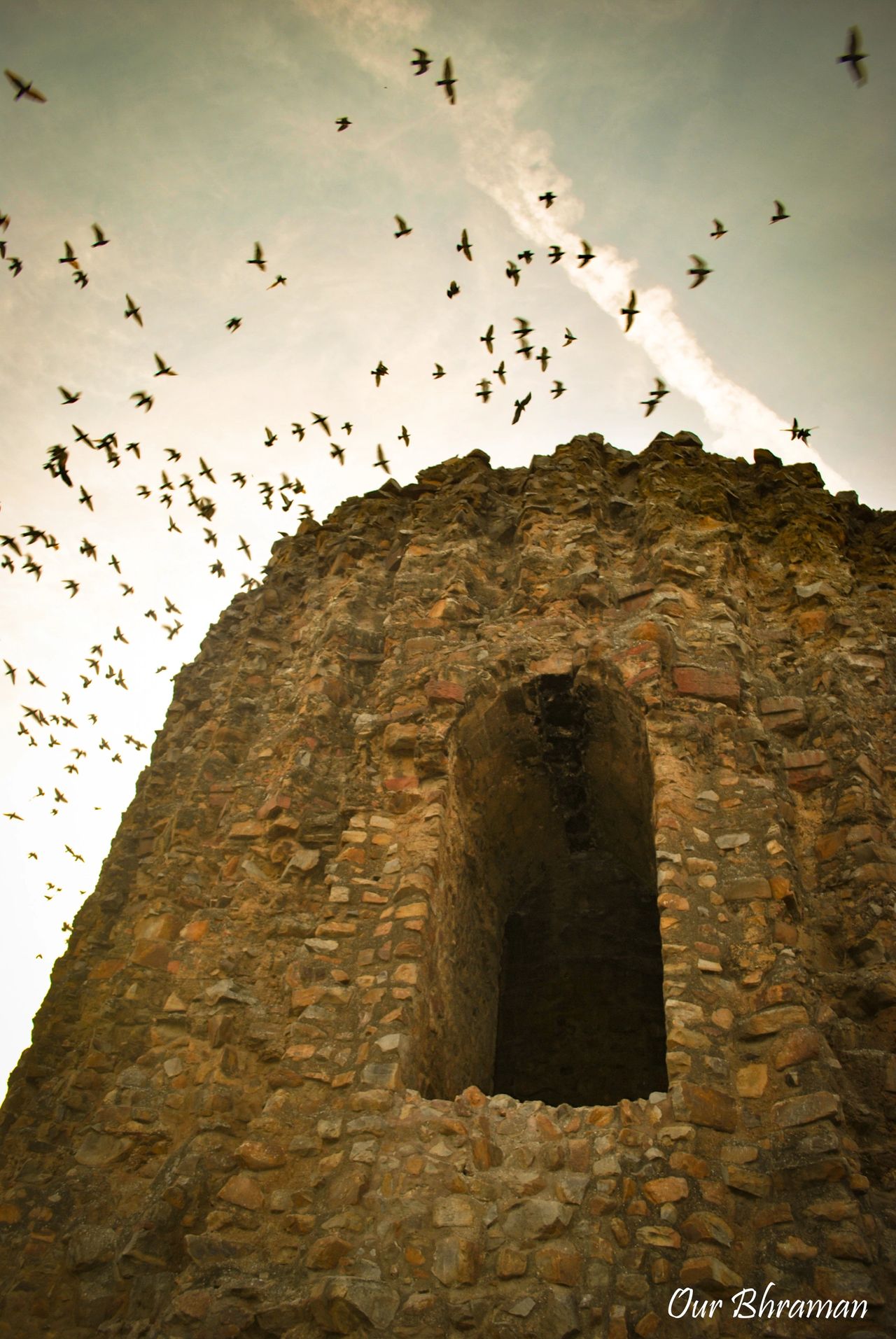
Each layer of the structure felt like a chapter from a different era, blending Indo-Islamic architecture with timeless artistry.
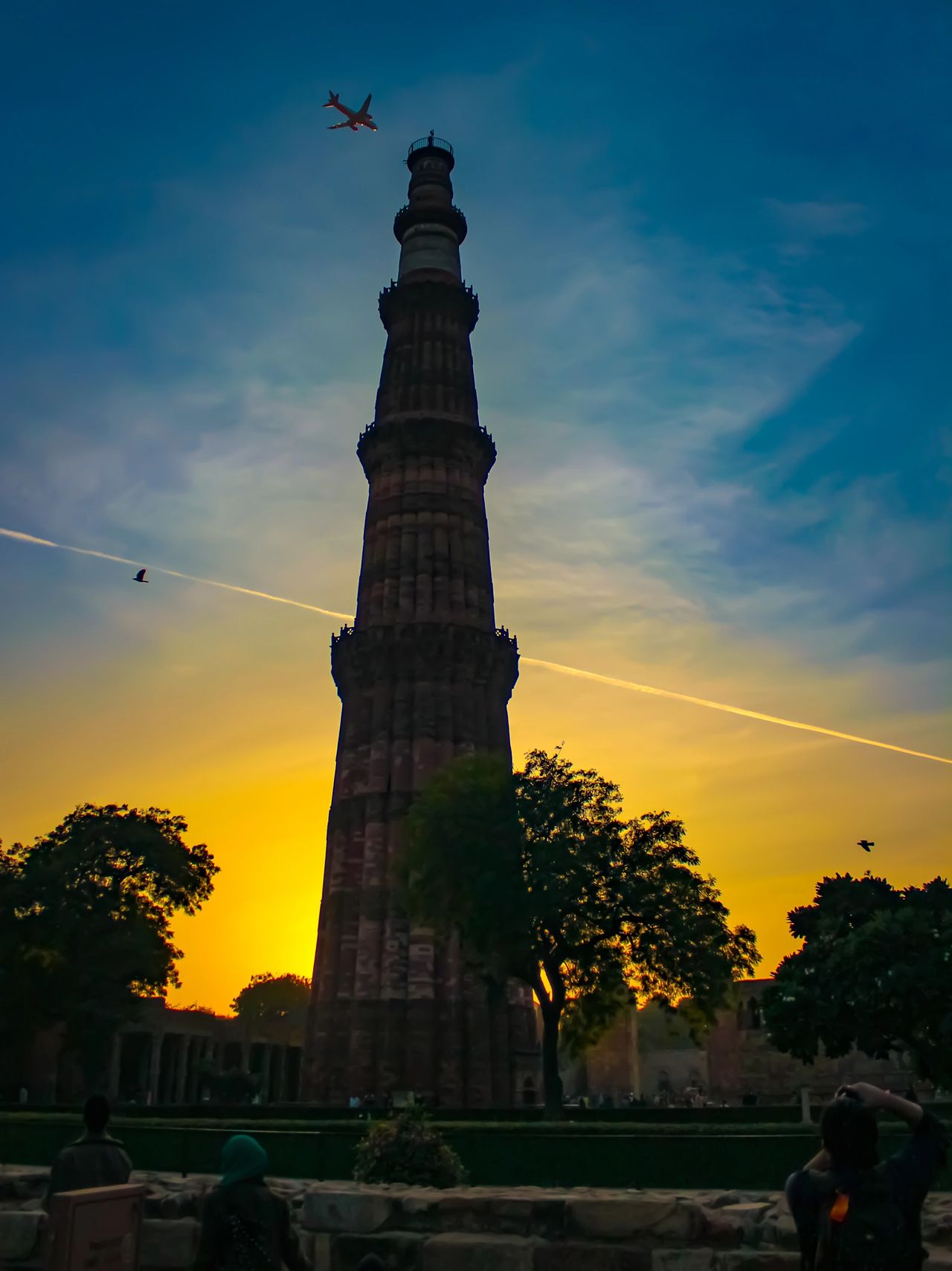
As the evening approached, the monument revealed an even more enchanting side. The setting sun bathed the tower in golden light, and soon after, the floodlights illuminated Qutub Minar against the darkening sky. The atmosphere grew calm, almost mystical, as if the centuries-old monument was whispering stories of empires past. It was a breathtaking way to begin our journey.
After spending a couple of hours exploring the towering Qutub Minar and its ancient ruins, we made our way to the second destination of the day — India Gate, the iconic war memorial standing proudly in the heart of Delhi. By the time we arrived, dusk had settled, and the sight of India Gate glowing under the night sky was nothing short of mesmerizing. As we walked through the surrounding gardens, taking in the peaceful atmosphere amidst the city’s bustle, our guide shared the history and significance of this majestic monument. It was one of those moments where history, beauty, and reflection all came together in perfect harmony.
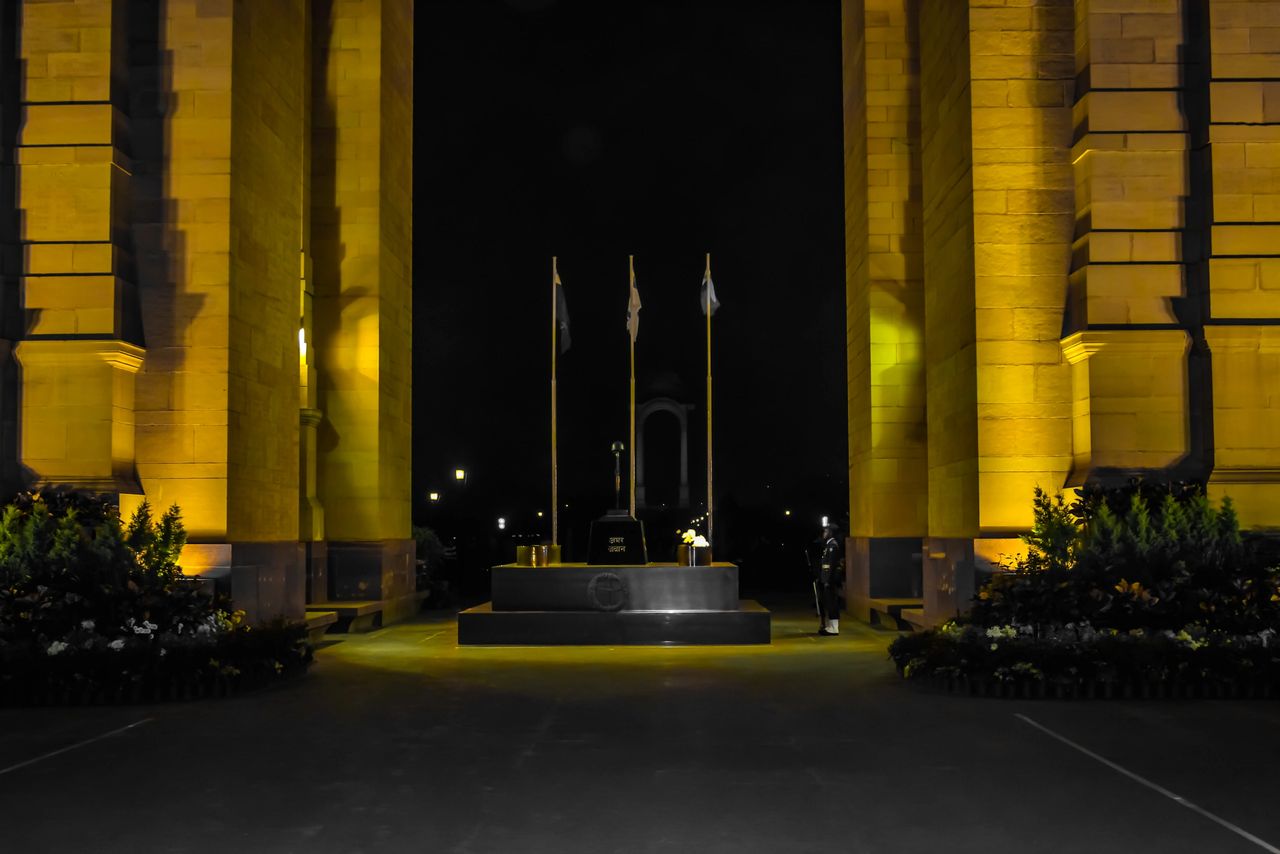
Gate, originally known as the All-India War Memorial, was built in memory of the Indian soldiers who sacrificed their lives during World War I. It stands as a symbol of national pride and unity. The atmosphere around the India Gate was vibrant, with families and couples enjoying the serene surroundings. We took a moment to pay our respects to the brave souls who had fought for our nation’s freedom.
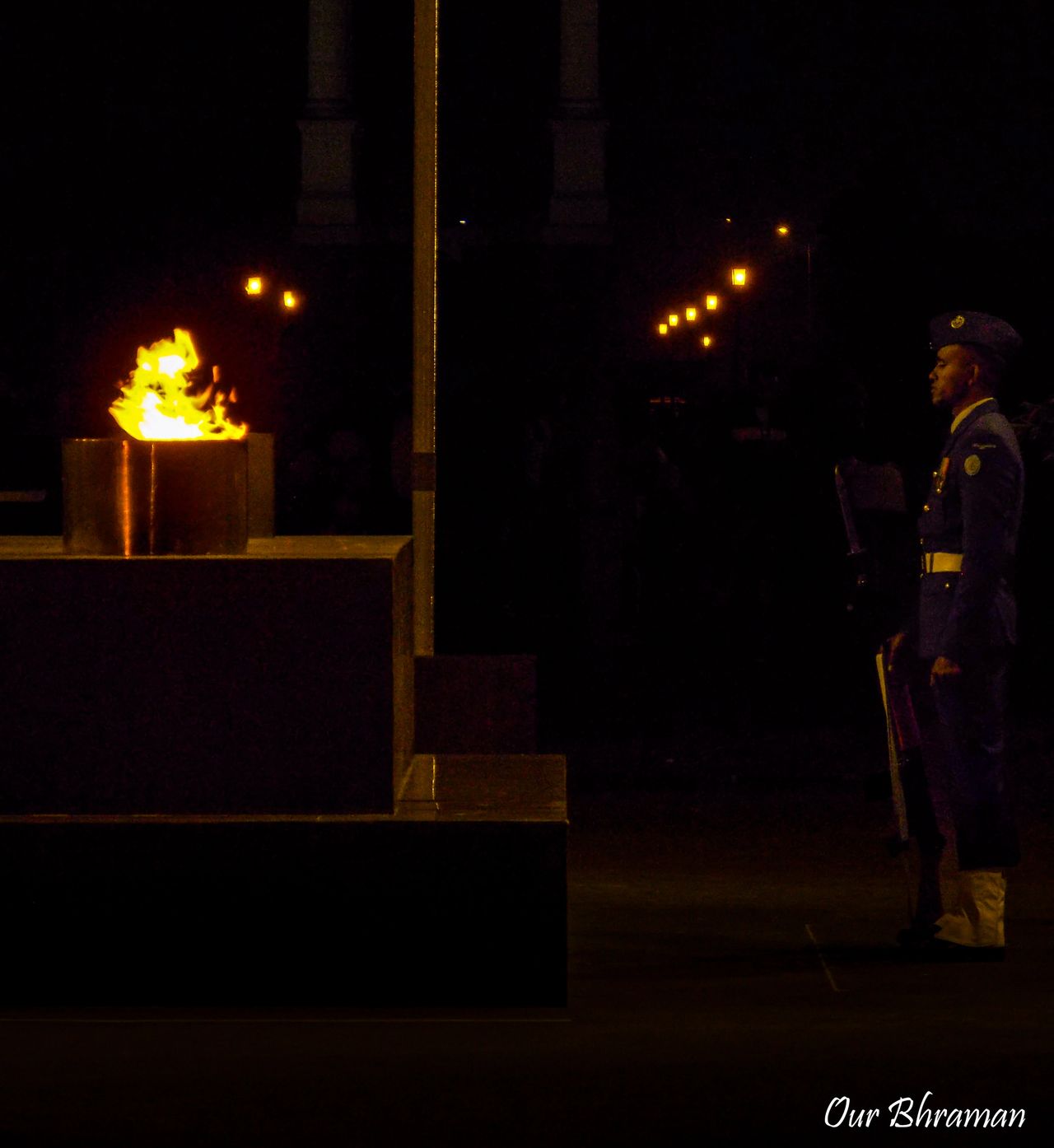
There is no entrance fee or ticket—the monument and its gardens are open around the clock—so you can simply walk up and soak in the atmosphere. What struck me most was how seamlessly India Gate blends history with everyday life. While the eternal flame beneath the arch pays solemn tribute to the soldiers who gave their lives, the surrounding lawns were alive with families picnicking, children playing, and couples enjoying quiet walks. Street food vendors added to the charm, serving everything from spicy chaat to sweet kulfi, giving us a delicious taste of Delhi’s local flavors.
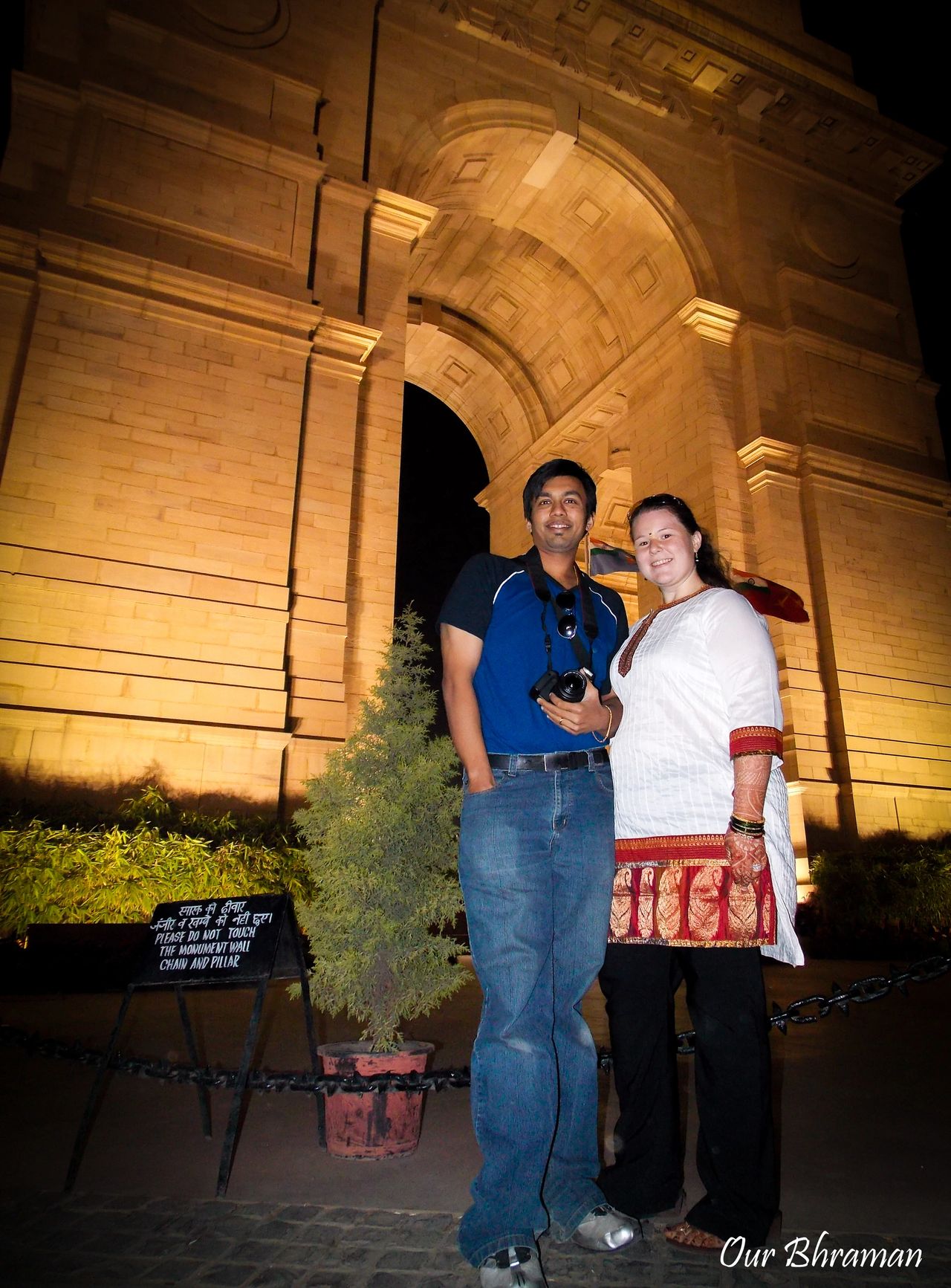
Standing at India Gate that night, we realized it wasn’t just a monument—it was an experience. A place where history, memory, and modern city life all came together. After spending nearly an hour soaking in the atmosphere, our driver took us to a nearby shopping area. Honestly, it was a stop that could have been skipped, yet shopping is such a natural part of traveling in India that it added its own charm. Stalls were filled with colorful fabrics, handicrafts, and souvenirs, and our guest happily picked up a few scarves to take home as mementos of the trip.
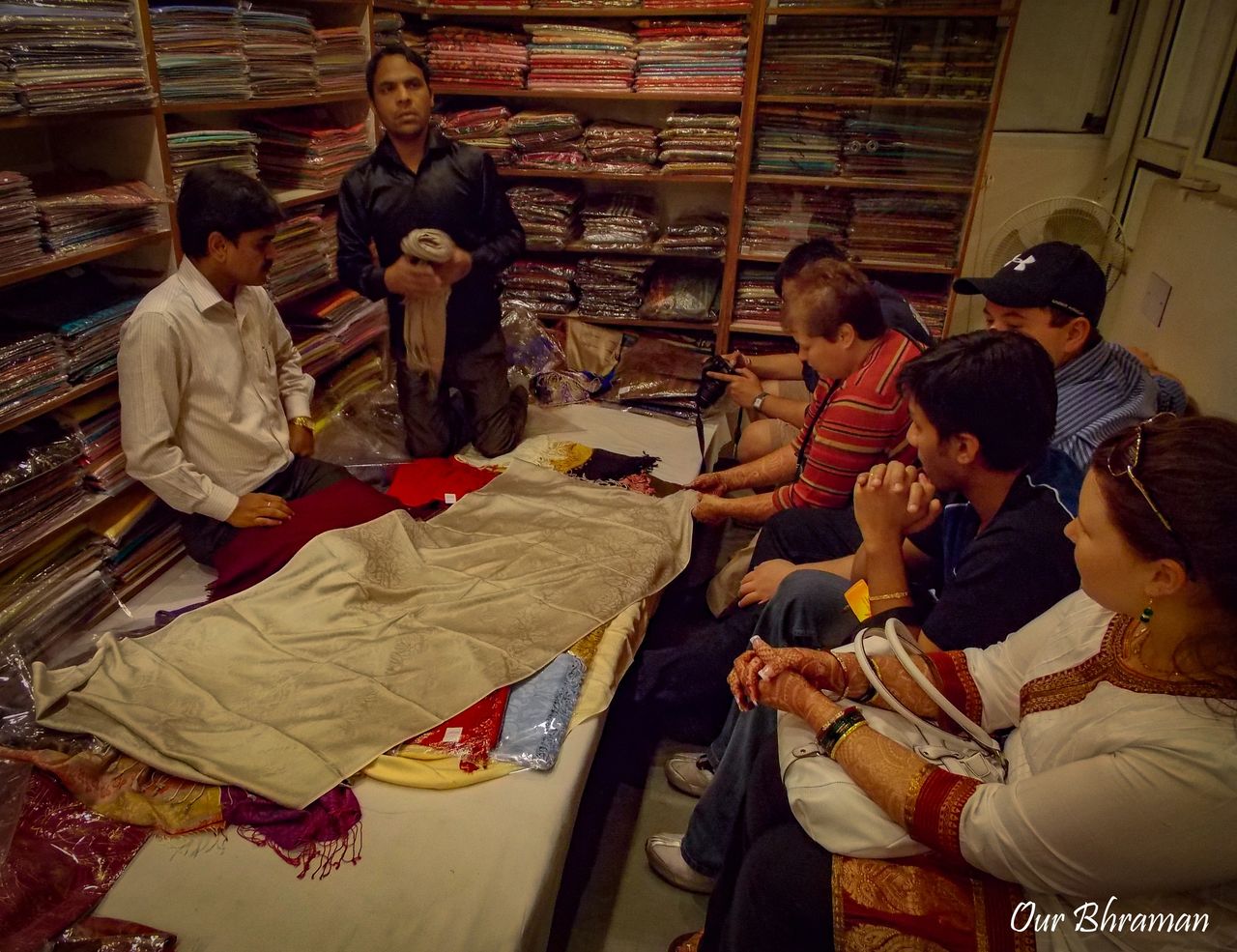
After this, we ended up grabbing dinner at our hotel and called it a day. The next day was packed with activities before my in-laws flew back to the USA.
Day-2
On the second day of our Delhi trip, we set out early in the morning for a one-day excursion to Agra, home to the iconic Taj Mahal, one of the Seven Wonders of the World. The drive from Delhi to Agra was comfortable. Upon arrival, we were greeted by our local guide, whose knowledge and storytelling brought the monument’s rich history to life.
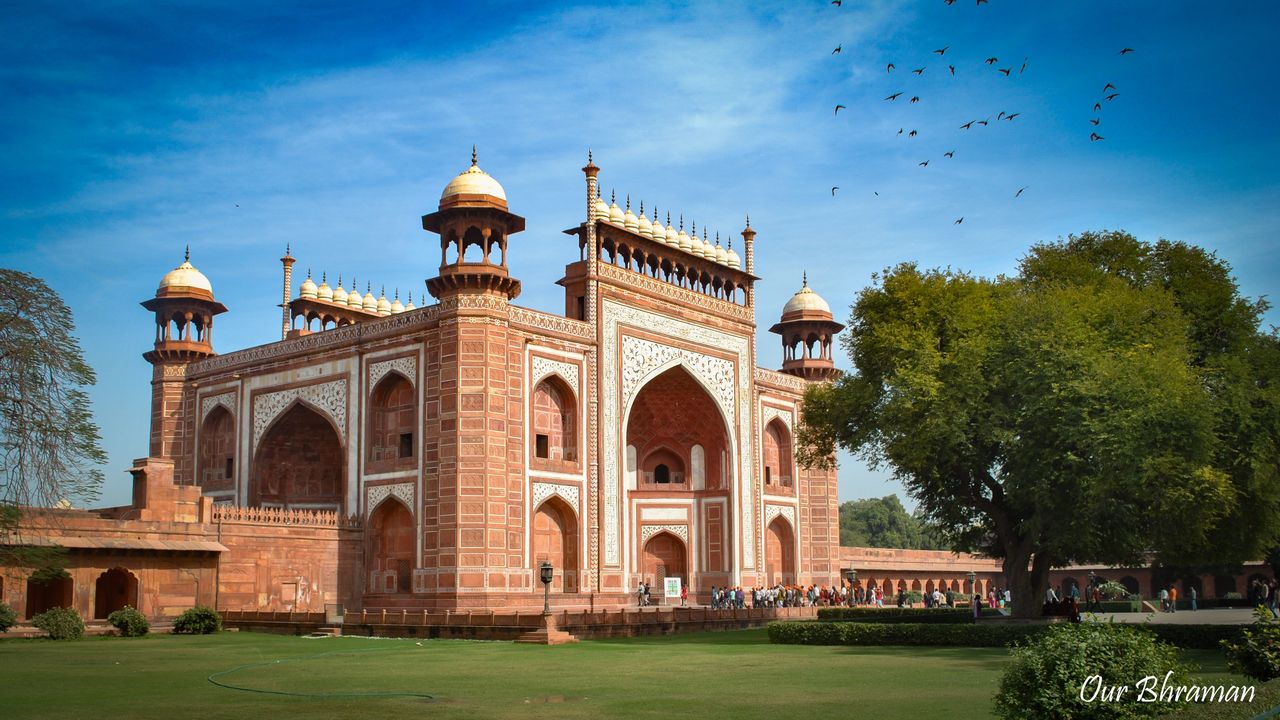
Before entering the Taj Mahal, our guide explained that there are multiple gates to choose from, each offering a slightly different experience. The Western Gate is the most popular—it’s close to the main complex and convenient for groups arriving by car or bus, but as expected, it also attracts the largest crowds. We could already see long queues forming there, with tourists and locals alike waiting to get in. The Eastern Gate, on the other hand, is located near several hotels. It’s a good option if you’re staying nearby, though the walk to the main structure is a little longer. The Southern Gate was once the quietest and most relaxed entrance, set up for pedestrians, but it has been closed for entry due to security reasons.
Our guide took us through western gate and the moment we entered inside gate we were greeted by That’s a beautiful ceiling of the Western Gate (Darwaza-i-Rauza), which is the main entrance to the Taj Mahal complex.
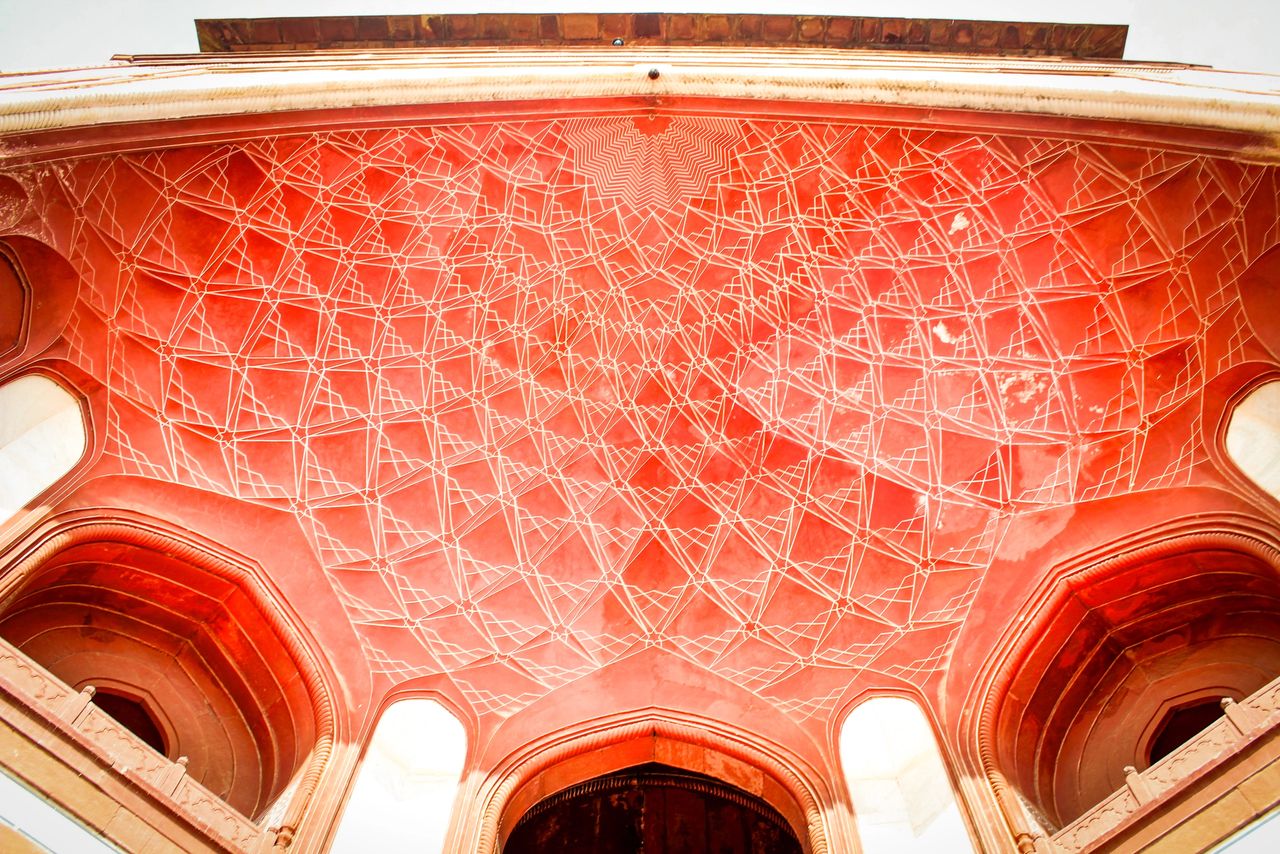
The intricate artwork you see is a fine example of Mughal geometric design, blending symmetry, balance, and detail. The red sandstone surface is decorated with white marble inlay, forming precise interlocking star and polygon patterns that draw your eyes toward the central focal point. This style is not only decorative but also deeply symbolic—geometric patterns in Islamic art often represent infinity, unity, and the perfection of divine creation.
Standing under this ceiling, you can’t help but be awed by the craftsmanship. Every line seems perfectly measured, every angle carefully planned, creating a sense of harmony before you even step into the gardens and catch your first glimpse of the Taj Mahal itself. It’s almost like the gate prepares you, spiritually and visually, for the marvel waiting beyond.
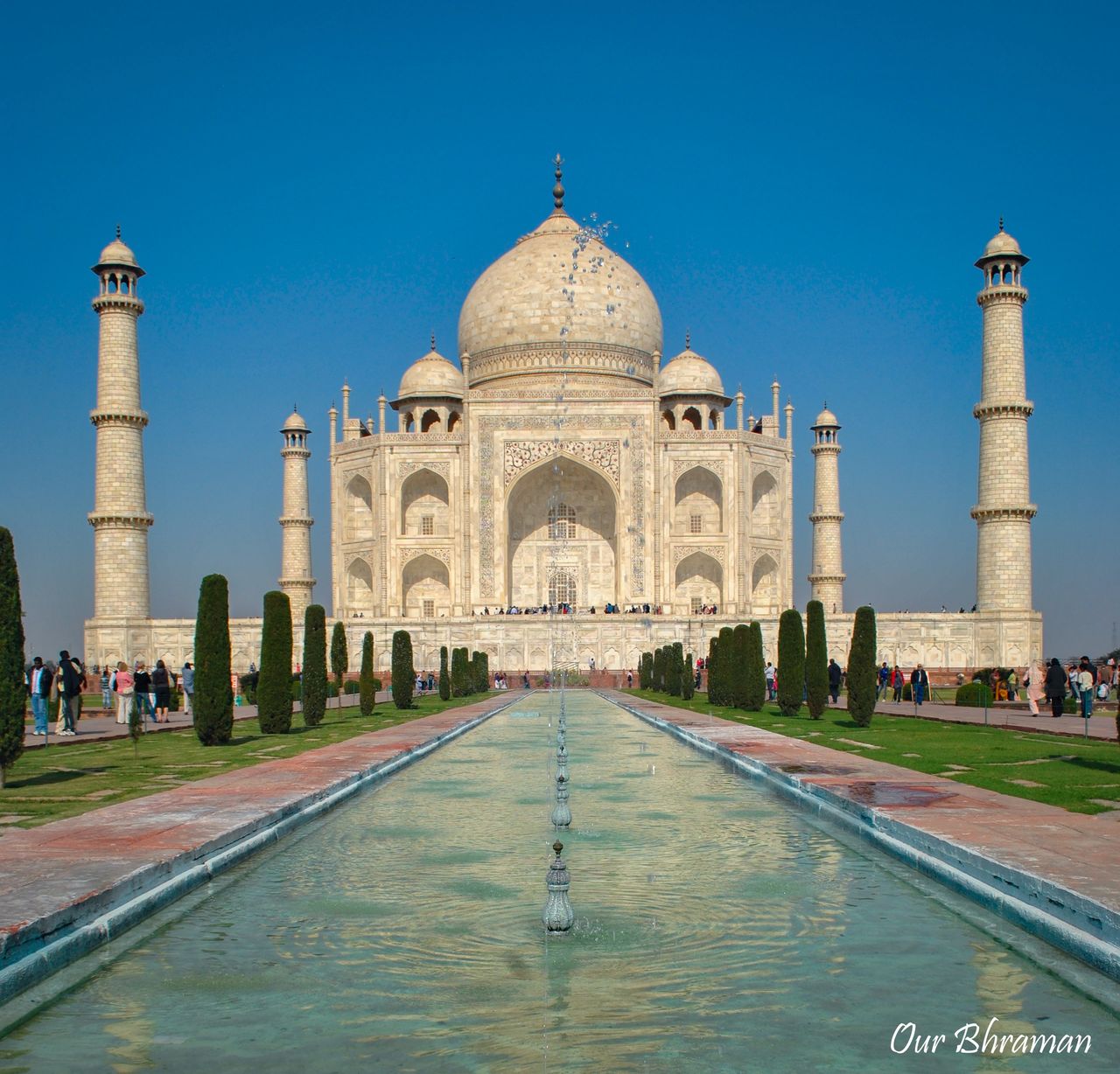
As we approached the Taj Mahal, our guide began weaving the captivating story of its creation. Built in the 17th century by Emperor Shah Jahan, the monument stands as a timeless symbol of love, crafted in memory of his beloved wife, Mumtaz Mahal. Hearing this story while the monument slowly came into view made the experience feel even more powerful—like we were stepping into a tale that had lived for centuries.
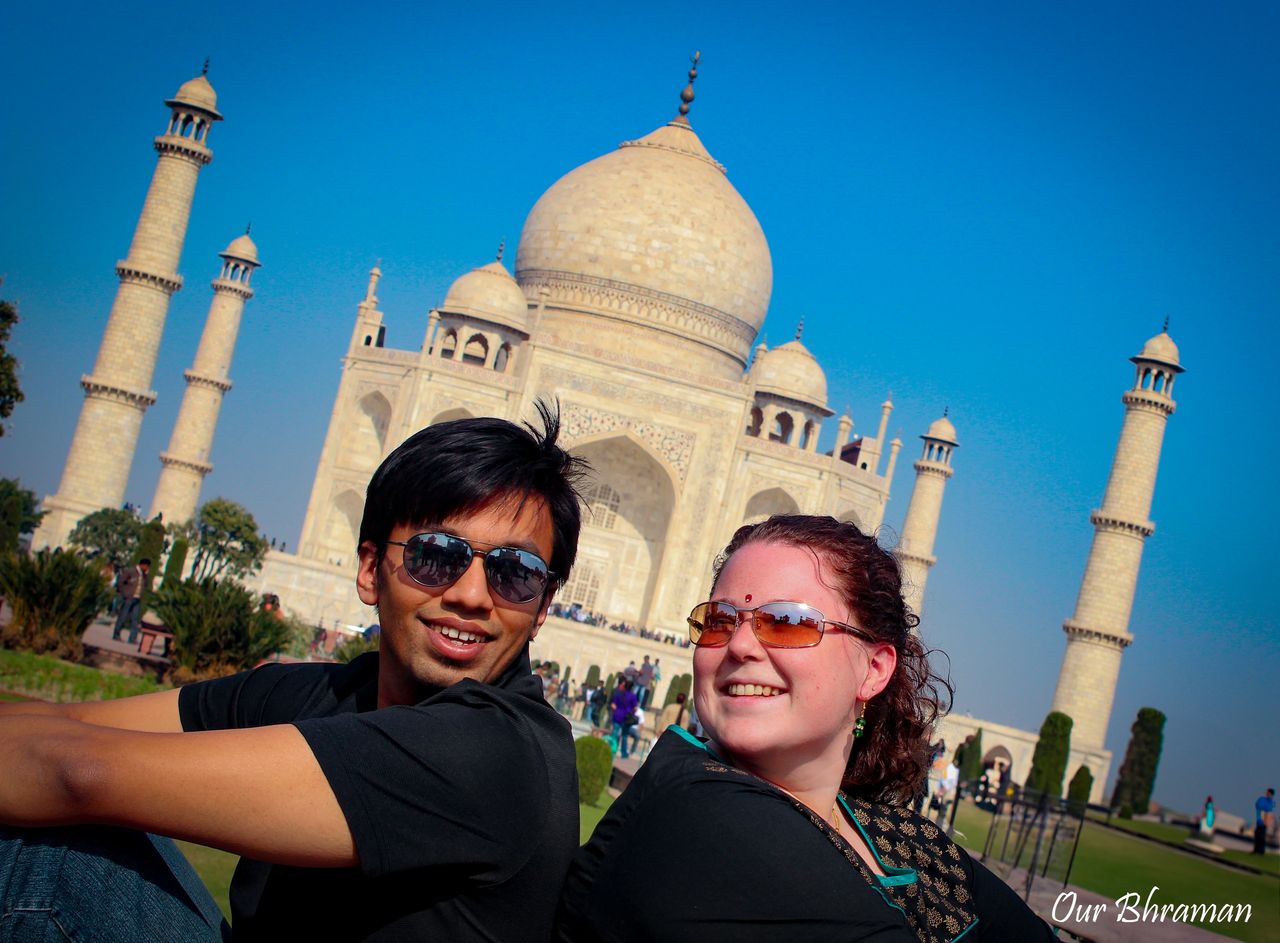
From the gate, we walked slowly along the pathway, each step revealing more of the Taj Mahal’s breathtaking symmetry. Along the way, a few benches and viewing spots were filled with eager tourists waiting their turn for the perfect photo.
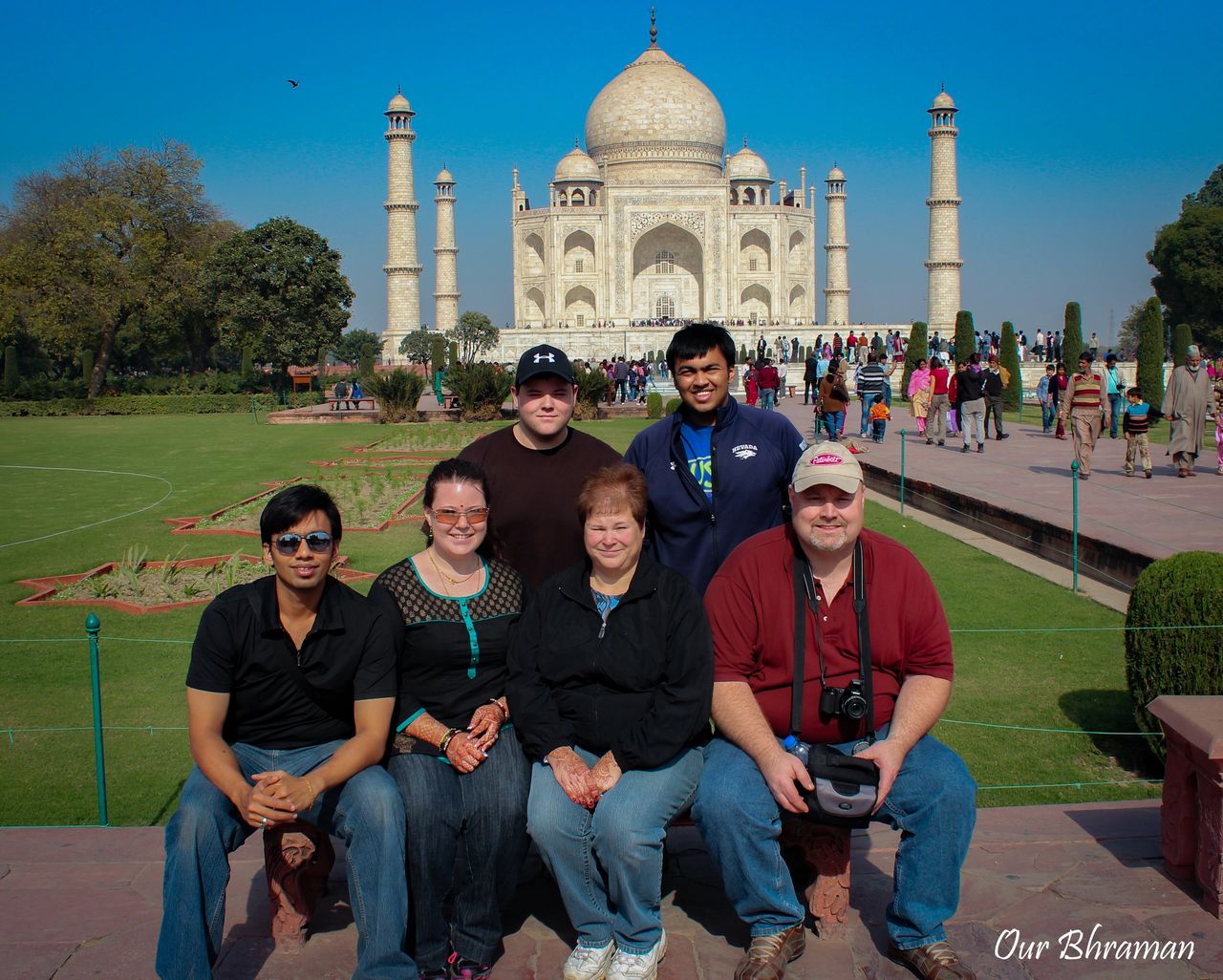
Of course, we joined in—capturing our own shots from different angles, each one offering a new way to admire the monument.
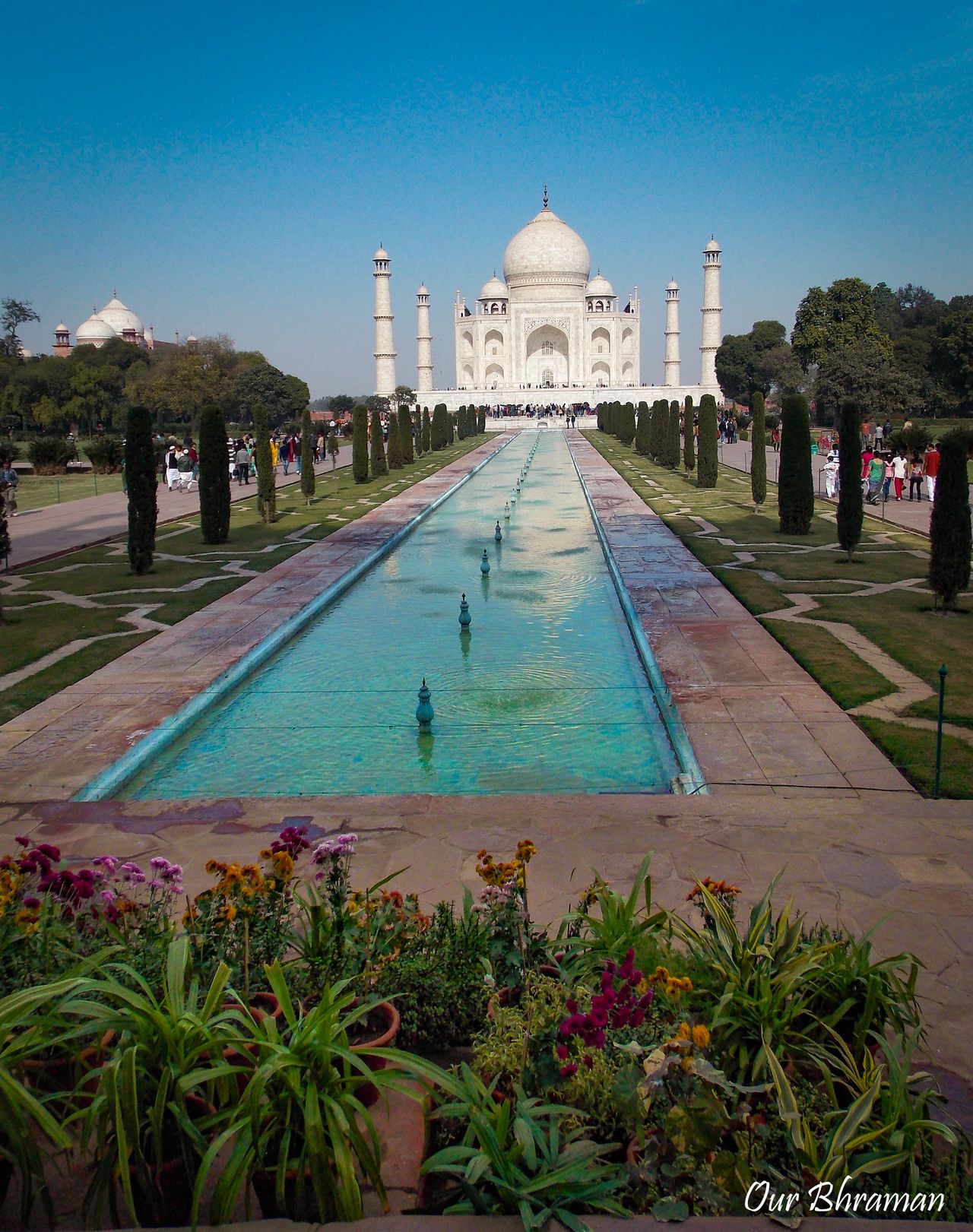
Our guide pointed out the marvels of its design, and the more we learned, the more we admired the genius of its creators. The Taj is a masterpiece of symmetry and precision, with every detail thoughtfully designed. We were fascinated by the clever illusions in its architecture. For instance, as you first approach through the grand gateway, the Taj Mahal looks surprisingly close and enormous. But as you move forward, it actually appears to shrink—a complete reversal of what the eye would expect. The four minarets, which seem perfectly upright, actually tilt slightly outward. It was explained that this not only creates balance but also serves a practical purpose: in case of an earthquake, the towers would fall away from the central tomb, protecting it.
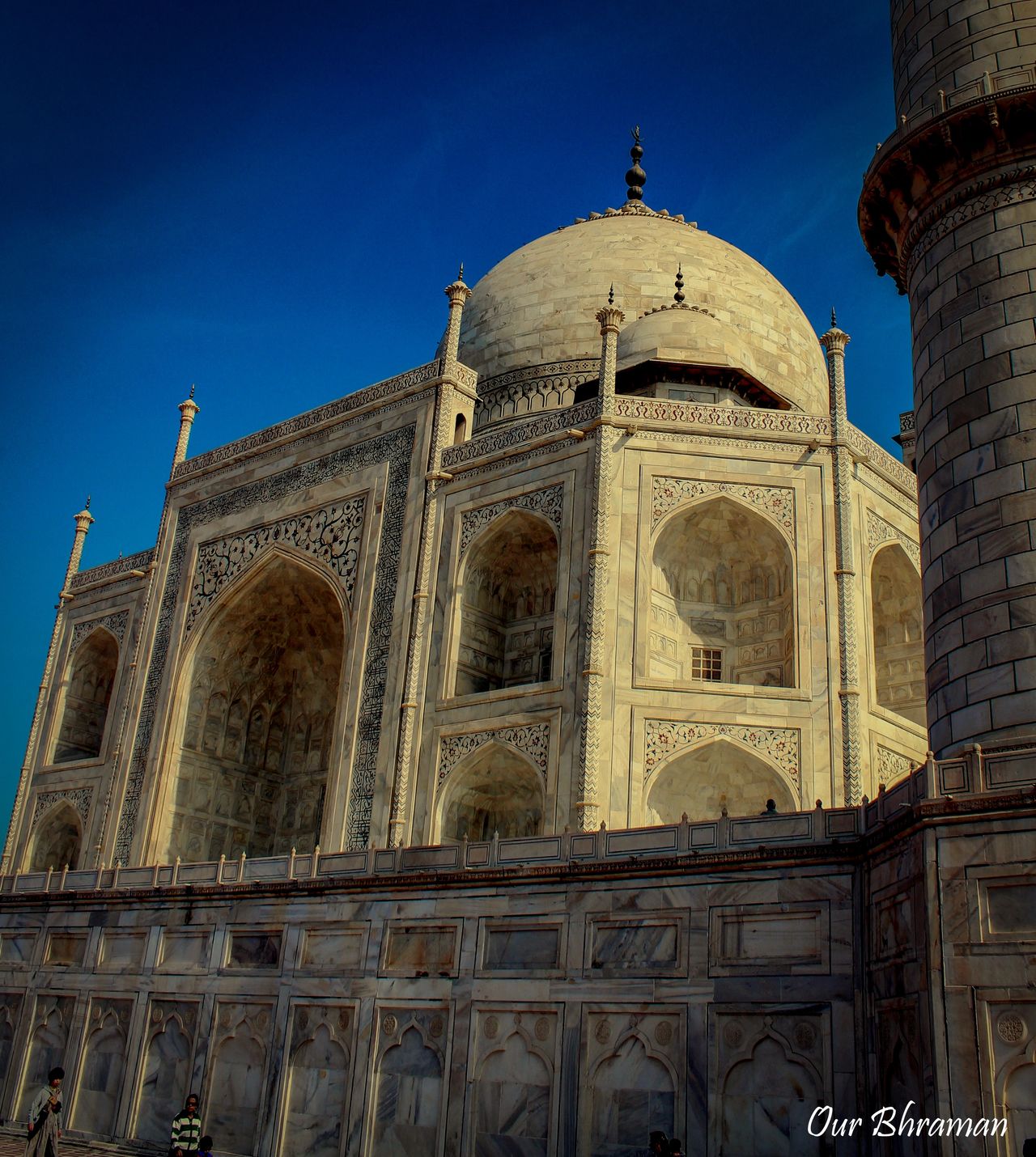
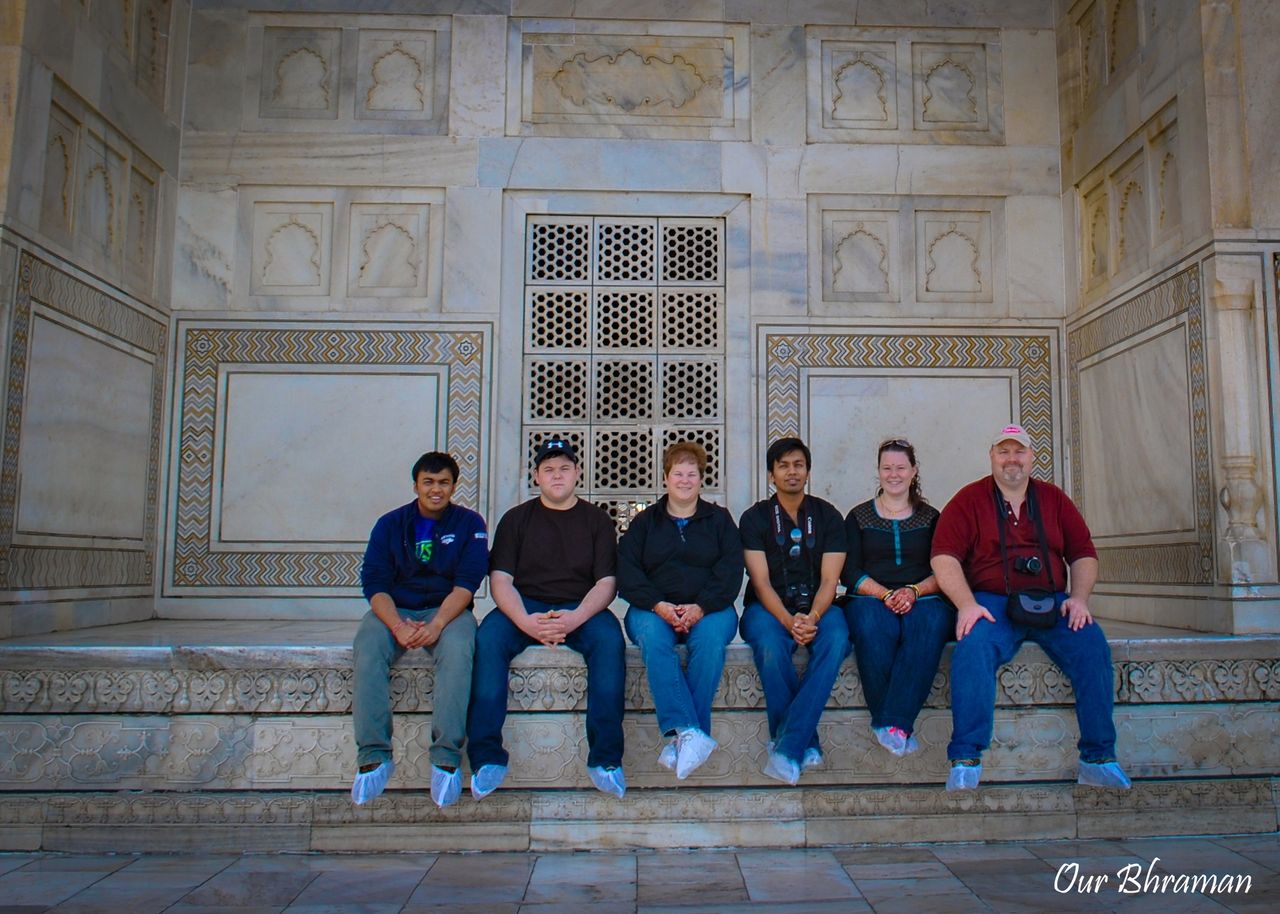
As we drew closer, anticipation grew. With every step, the marble monument seemed to glow brighter, as though it was pulling us toward it. Before reaching the base, we were handed shoe covers. This small gesture felt almost ceremonial—not only protecting the pristine white marble but also symbolizing the respect due to such a sacred space.
Climbing onto the marble platform was like crossing into another world. The Taj Mahal towered above us in all its perfection. The smooth marble under our feet, the delicate floral inlays glimmering at eye level, and the sheer scale of the structure combined to create a moment that felt surreal. Standing there, it was impossible not to be moved. We weren’t just looking at a monument—we were walking on history itself, on stones that had carried the enduring love story of Shah Jahan and Mumtaz Mahal for centuries.
Stepping inside the Taj Mahal, we reached the most sacred and emotional part of the monument—the chamber that holds the tombs of Mumtaz Mahal and Shah Jahan. Photography is not allowed here, which actually made the moment more meaningful. Instead of worrying about pictures, we could fully take in the beauty and silence of the space.
At the center of the chamber are two beautifully carved cenotaphs (false tombs). Mumtaz Mahal’s rests right in the middle, while Shah Jahan’s, placed later, is slightly off to one side. This small break in symmetry feels almost poetic, as though he simply wanted to rest beside her forever.
The cenotaphs are surrounded by an octagonal marble screen (jali) with delicate lattice work. Up close, every inch is decorated with tiny floral inlays made of precious stones like jade, jasper, and lapis lazuli. When light filters through, the designs seem to glow, almost like living flowers.
Our guide explained that these are only the symbolic tombs. The real graves lie directly below, in a sealed underground chamber that visitors cannot enter. Even so, standing there, surrounded by such artistry and devotion, felt unforgettable—like stepping right into a love story carved in stone.
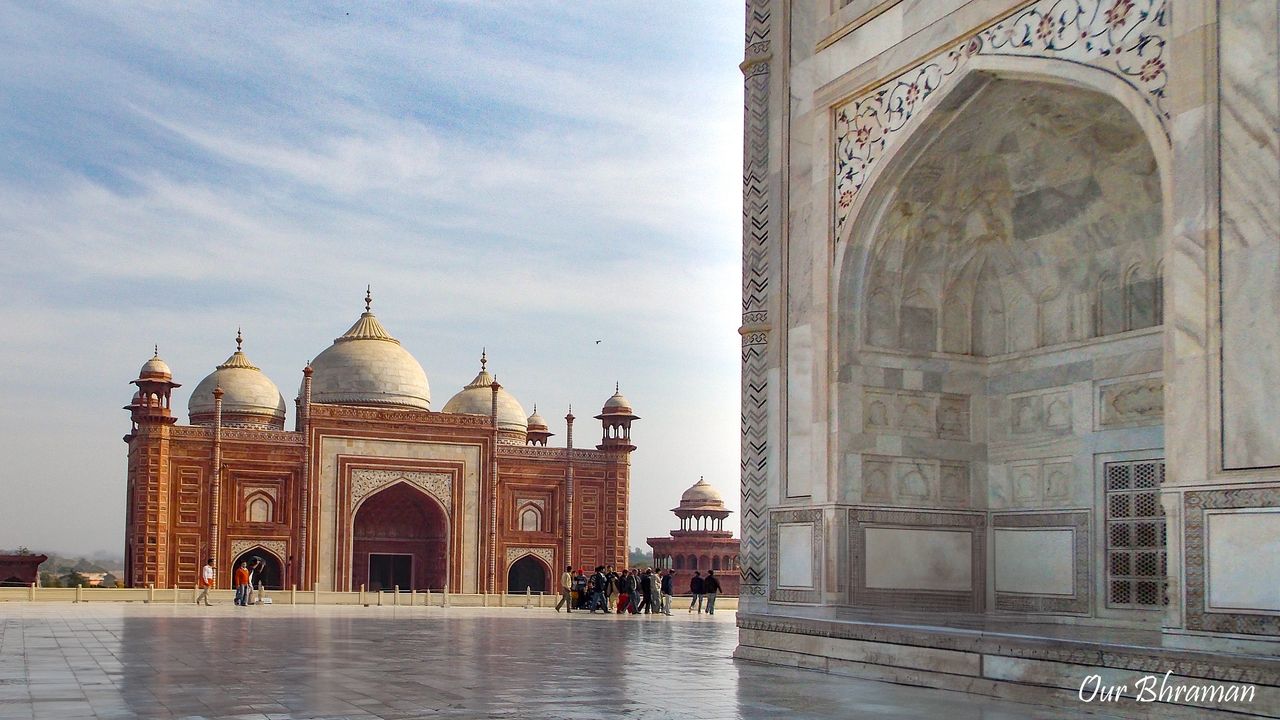
As we walked around the Taj Mahal, our guide pointed out how the white marble mausoleum isn’t meant to stand alone. It’s framed by two grand buildings made of red sandstone, one on each side, that bring balance and harmony to the entire complex.
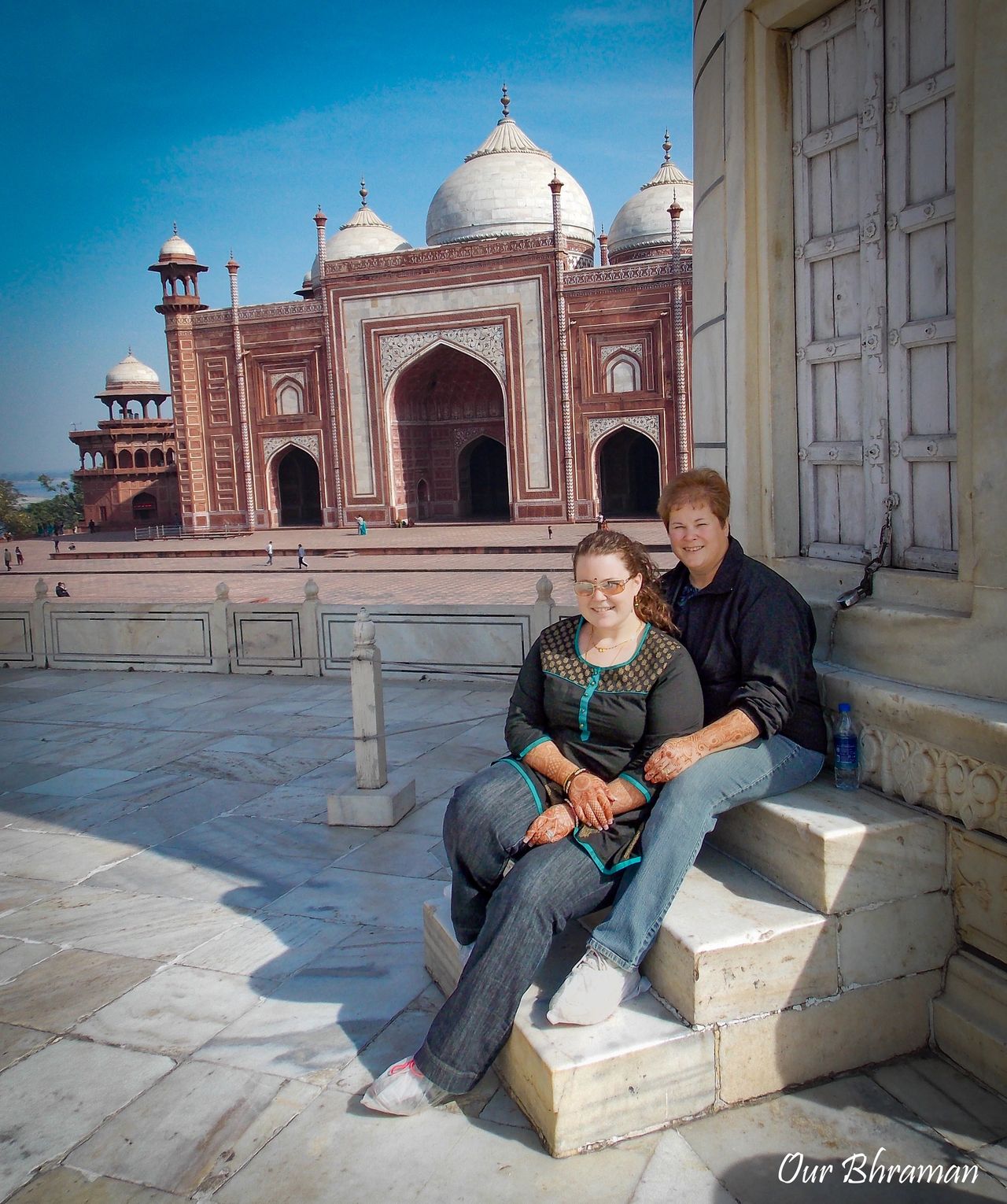
On the west side, he showed us the mosque, built to face Mecca. It’s still an active place of worship, and he explained how, according to Islamic tradition, every mausoleum must be accompanied by a mosque. Standing in front of it, we could see how its deep red stone beautifully contrasted with the glowing marble of the Taj. On the east side, directly opposite, we discovered a nearly identical building known as the Mehmaan Khana, or guest house. Our guide told us it wasn’t meant for worship, but rather for gatherings or festivals, and for hosting visitors who came to pay their respects.
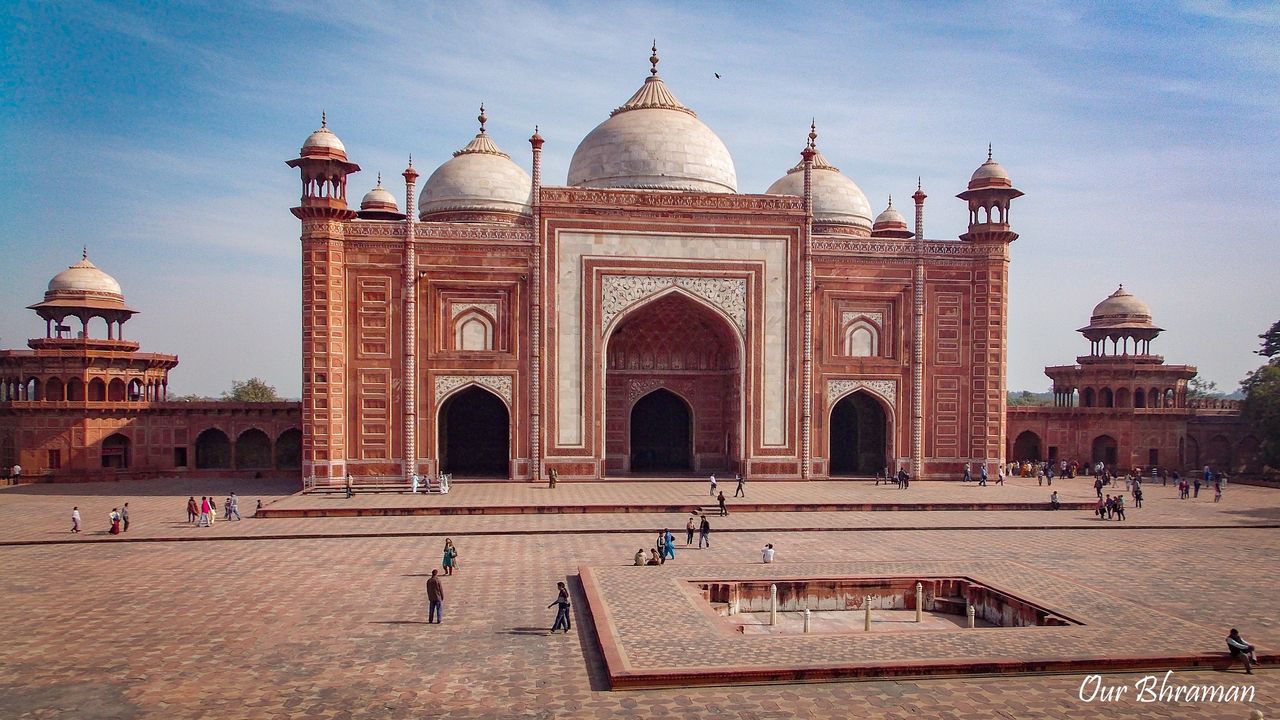
Together, these two structures create a sense of symmetry and balance that makes the Taj Mahal even more breathtaking. The rich red sandstone against the pure white marble almost felt like a painting, shifting in beauty as the afternoon light changed. It was one of those details we might have overlooked on our own, but learning about it added a whole new layer to our experience.
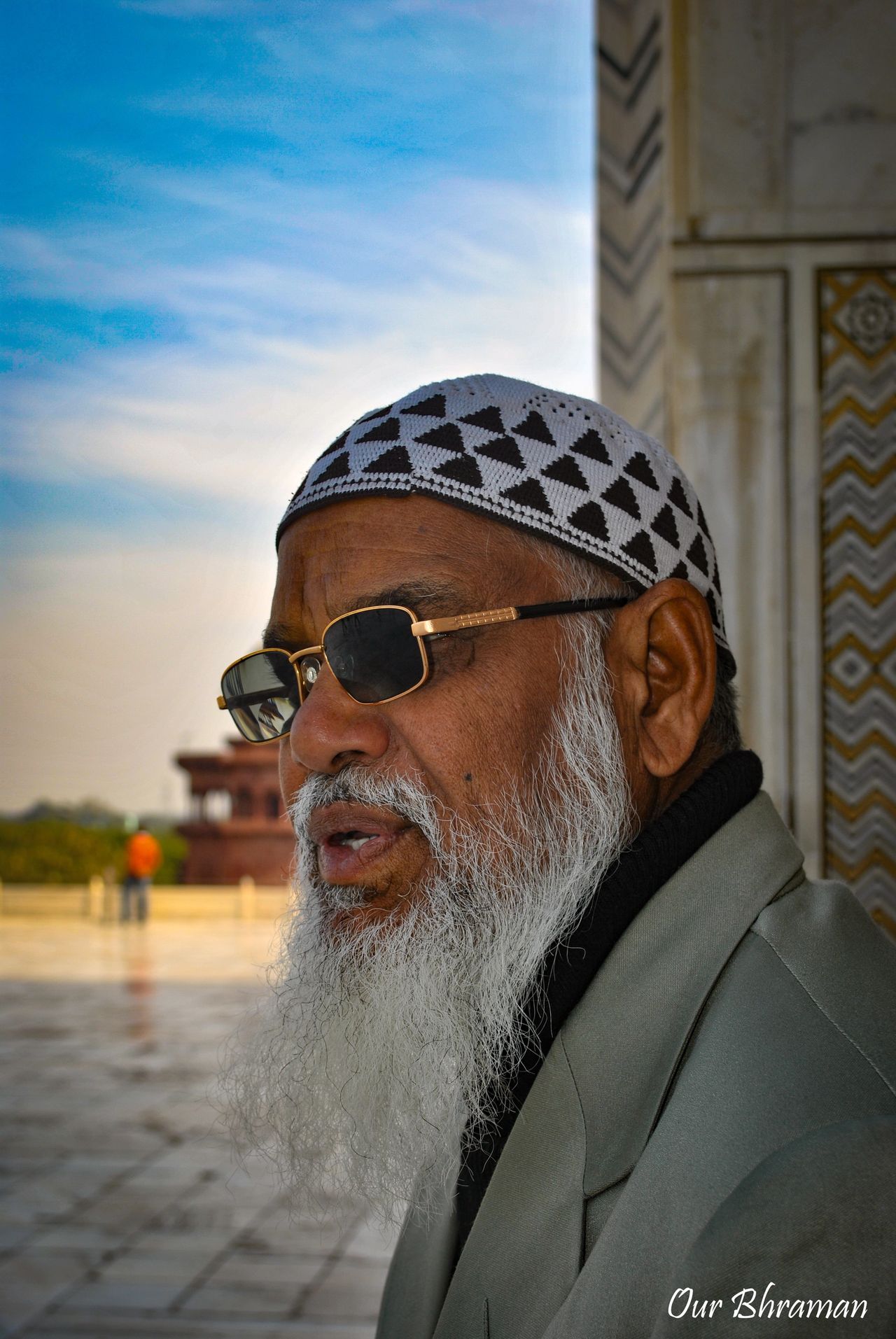
Our guide really made our Taj Mahal visit unforgettable. From the moment we stepped through the main gate, he wasn’t just pointing out facts—he was weaving stories that made the monument come alive. He explained the little details we might have easily missed on our own, like how the minarets lean slightly outward for safety, or how the marble changes color with the light of the day. It felt less like a history lecture and more like walking through the past with someone who knew the Taj personally.
After exploring the Taj, he took us to a nearby mosaic workshop. The place was small but buzzing with quiet concentration—craftsmen sat cross-legged on the floor, carefully shaping tiny pieces of semi-precious stones like jasper, carnelian, and lapis lazuli. With steady hands, they inlaid the stones into marble slabs, recreating the same floral patterns we had just admired on the Taj itself. It was incredible to watch how much patience and precision each piece required—sometimes just a single petal could take hours.
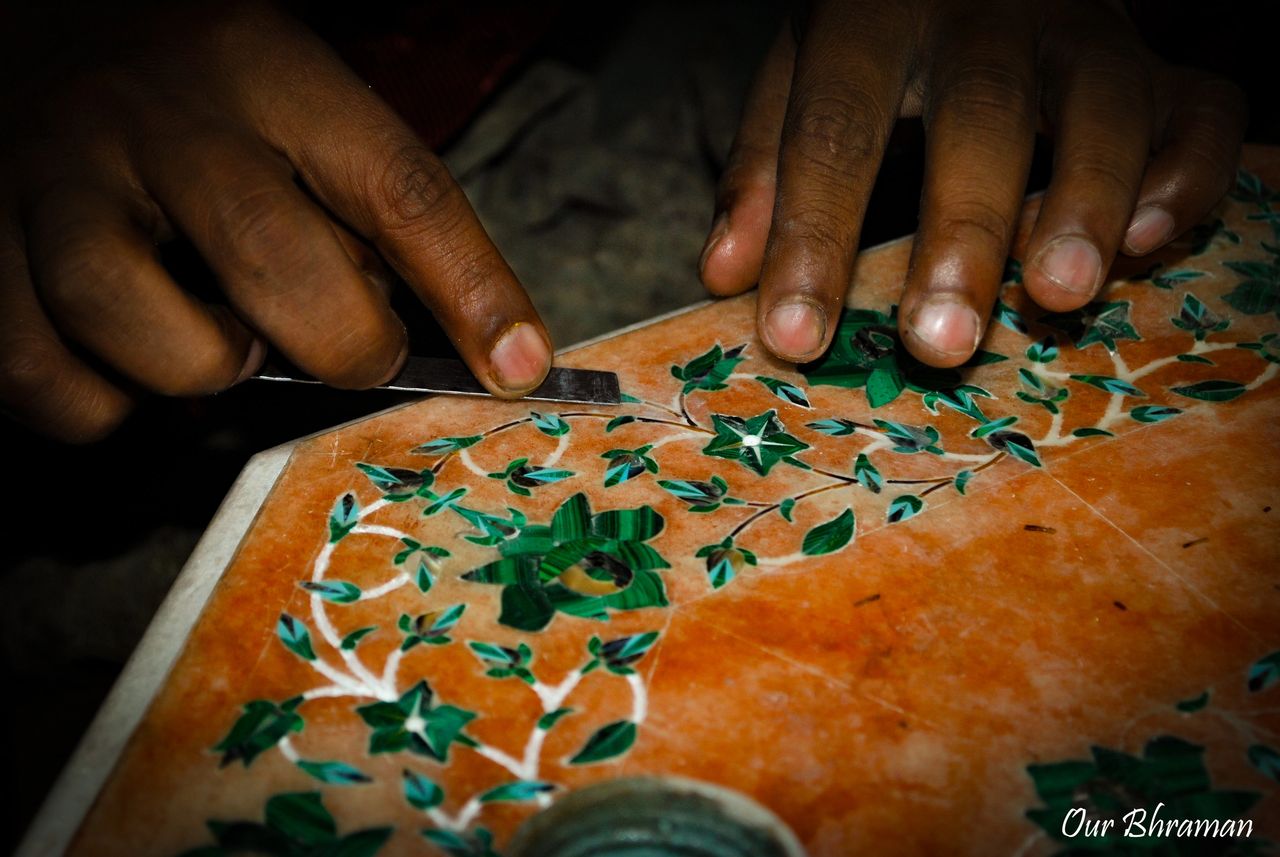
While the artistry was fascinating, the visit did feel a little commercial, with plenty of encouragement to buy something.
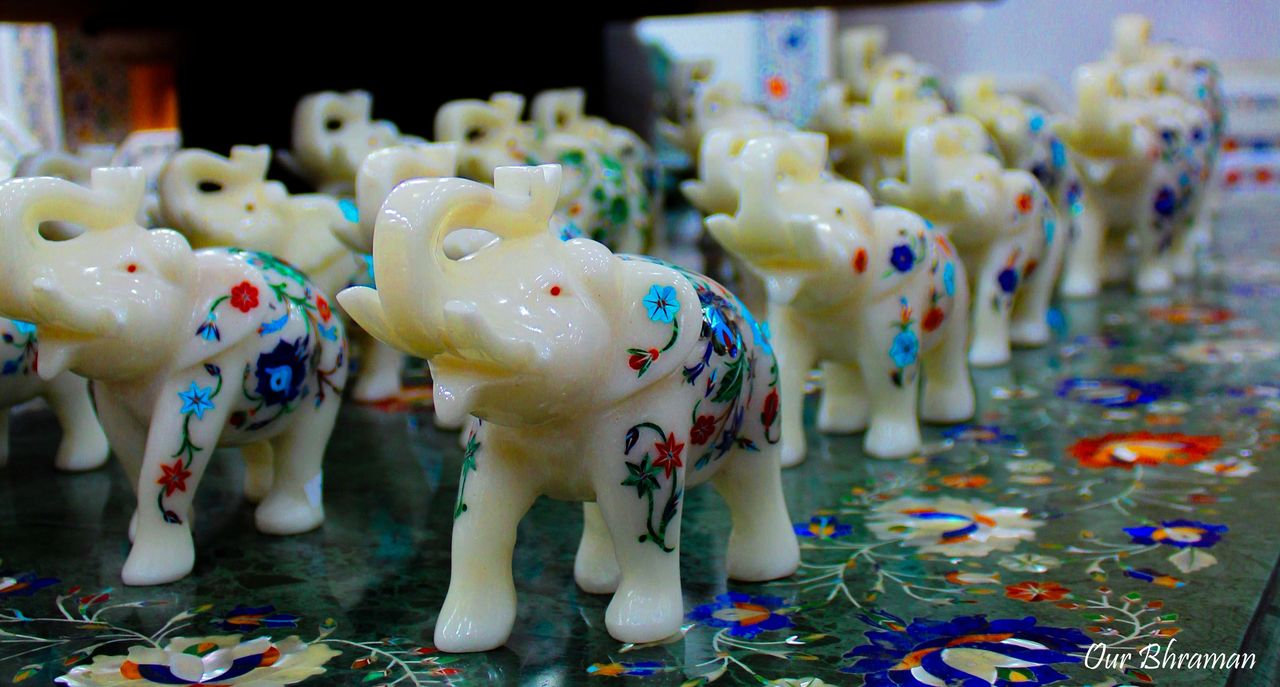
Part of us wished we had spent that extra time strolling through the Taj gardens or simply soaking in its beauty from different angles.
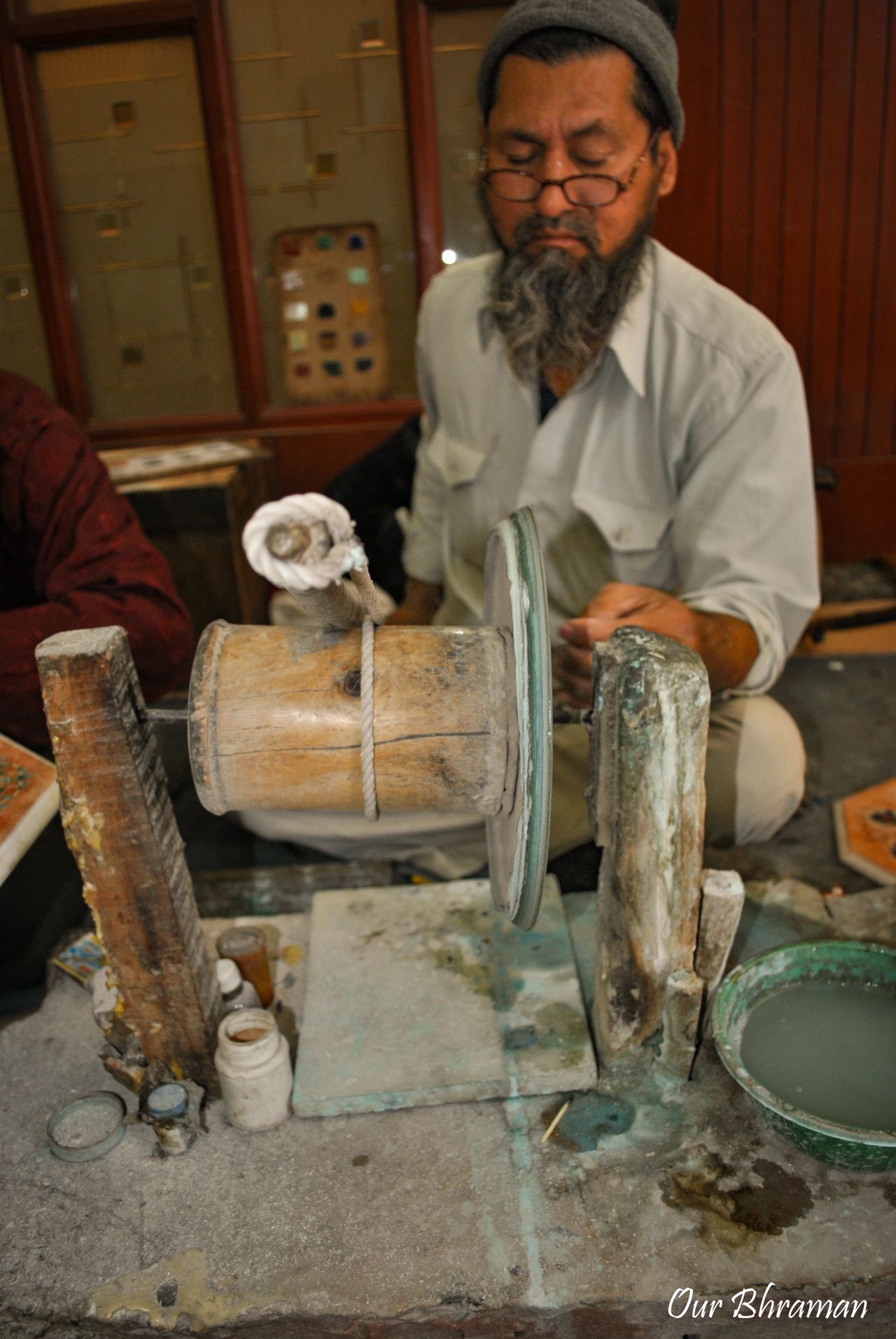
But in the end, seeing the skill behind the craftsmanship gave us a deeper appreciation of the Taj Mahal itself—and reminded us that deciding how much time is “enough” at one of the world’s seven wonders is almost impossible.
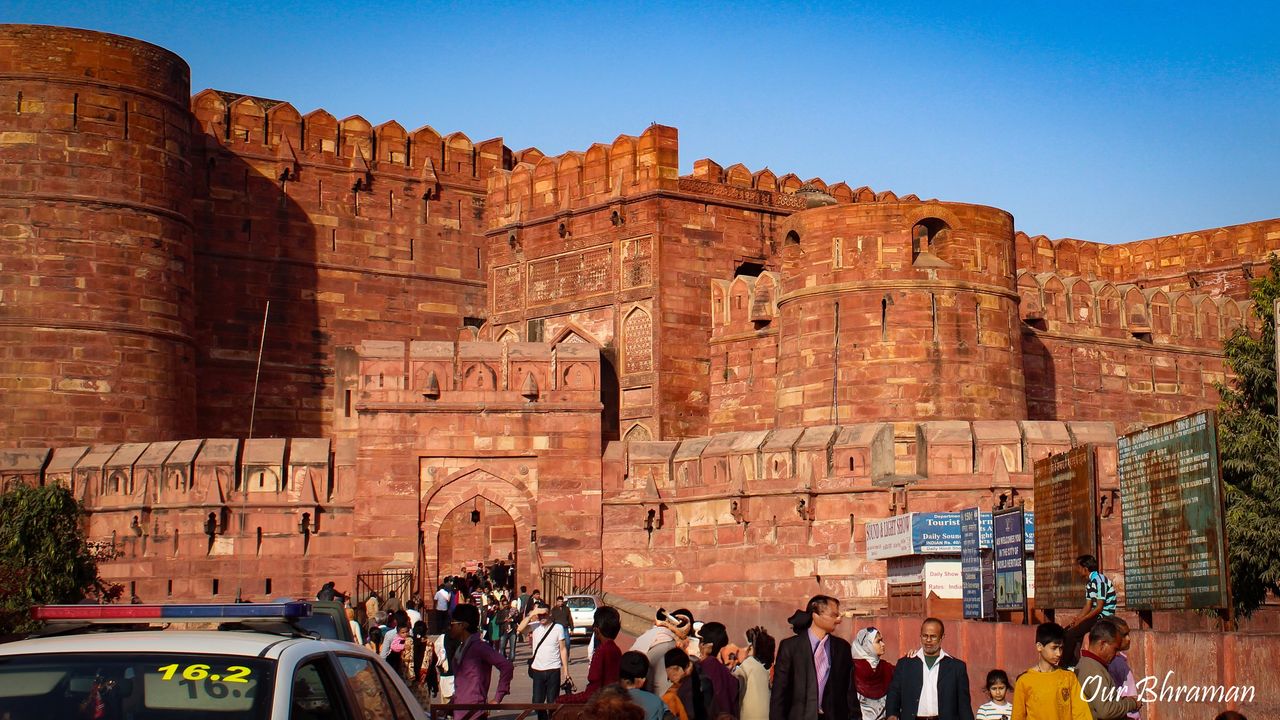
Leaving the serene beauty of the Taj Mahal behind, we made our way to Agra Fort—another UNESCO World Heritage Site that tells a completely different side of Mughal history. Unlike the Taj’s romantic elegance, Agra Fort radiates power and authority, its massive red sandstone walls standing tall as a reminder of the Mughal dynasty’s strength. Unfortunately, we couldn’t explore the inside as we were short on time and needed to head back to Delhi before evening—some members of our group had flights back to the USA. Still, even from the outside, the fort left a powerful impression. It felt like we had only scratched the surface of Agra’s history, and it gave us a reason to return someday to truly dive deeper into its stories.
Day-3
On our last day in Delhi, we embarked on a whirlwind tour of some of the city’s most mesmerizing attractions. The next morning, our journey through Delhi continued as we drove past the grand avenues surrounding India Gate on our way to Akshardham Temple.
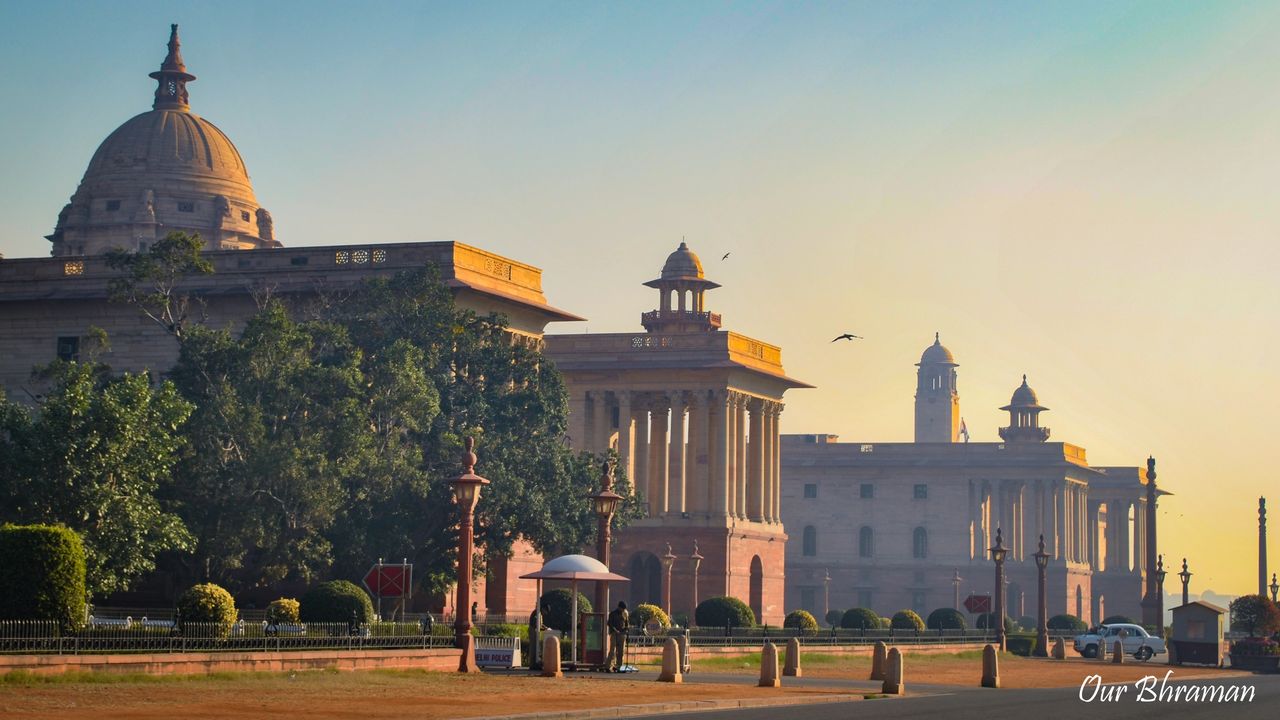
This route turned out to be an experience in itself. Along the way, we passed several important landmarks—the stately Secretariat Buildings, the impressive Parliament House, and the grand Rashtrapati Bhavan, the official residence of the President of India. Each building stood as a reminder of Delhi’s role as both a historic capital and the administrative heart of modern India.
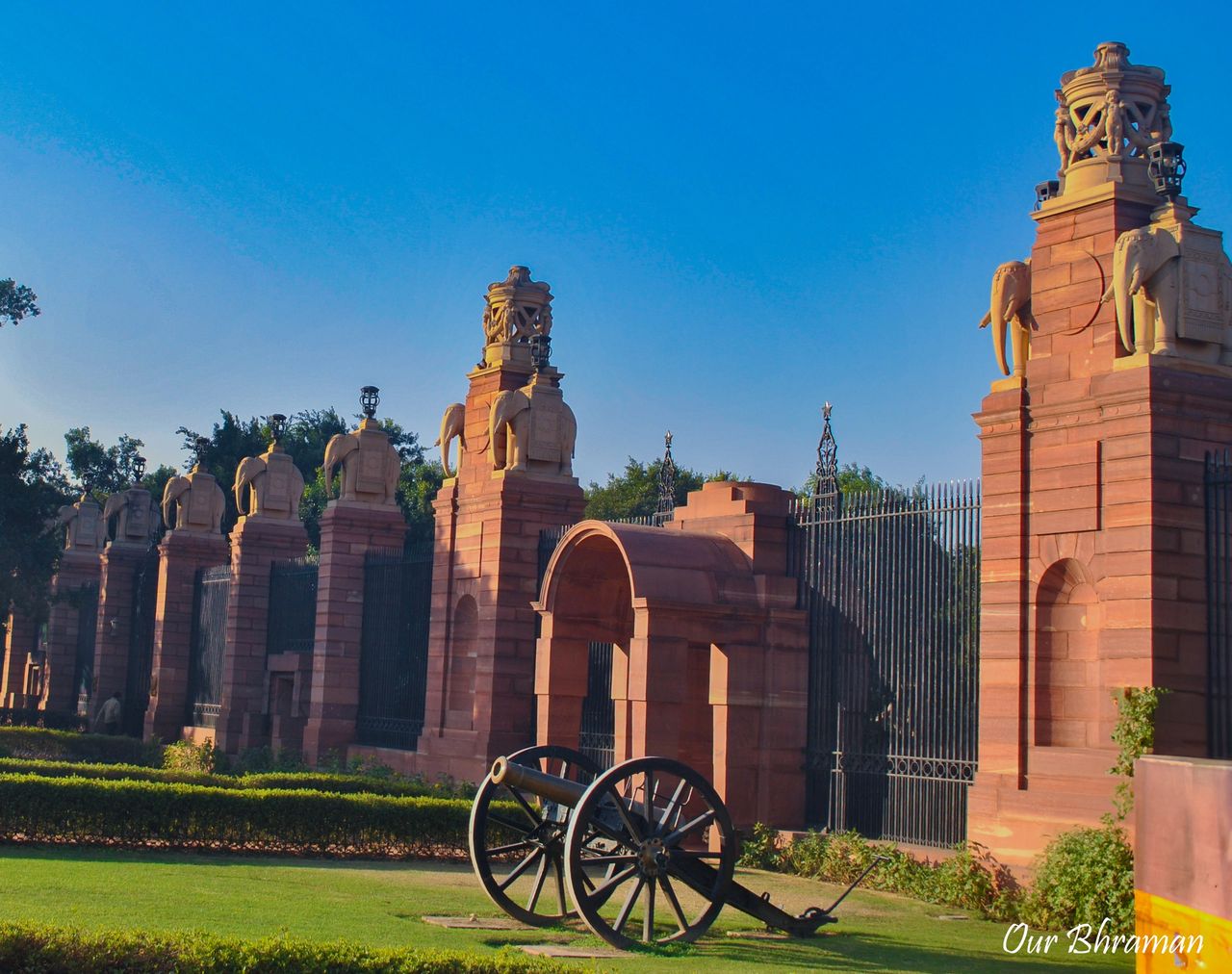
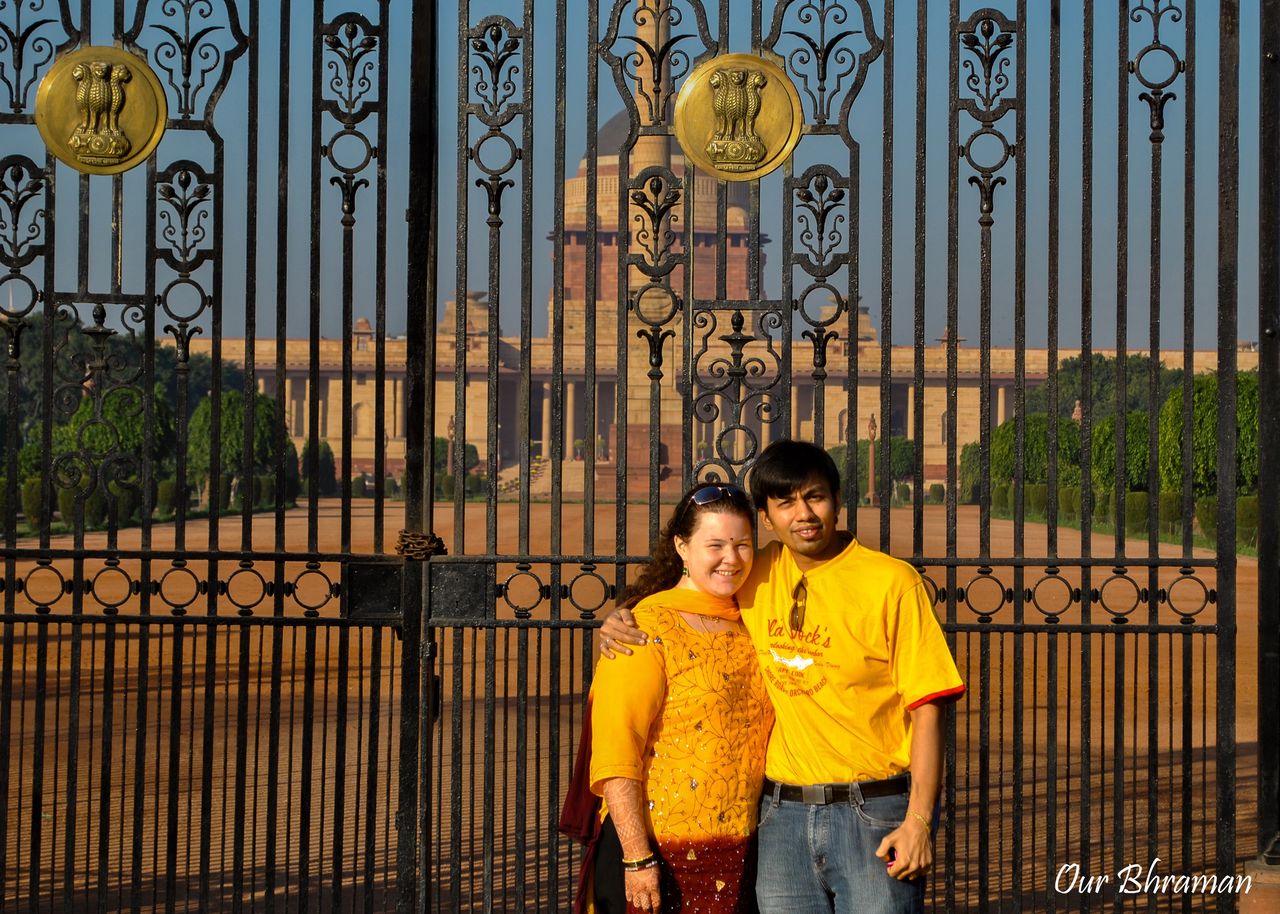
A little further down the road, we made a quick stop in front of the ornate iron gates of Rashtrapati Bhavan, the Presidential Palace. We couldn’t go inside, but just standing at the gates and looking at the massive complex from a distance was worth it. Of course, we took a few pictures here—it felt like a must-do moment while passing through this historic area.
As we drove through the busy streets of Delhi, the majestic Akshardham Temple suddenly appeared on the horizon. Even from the road, its golden domes and intricate carvings stood out, drawing us in with their grandeur. I couldn’t resist snapping a quick picture from the car window — a glimpse that already hinted at the scale and beauty waiting inside. Later, when we stepped through its gates, the temple felt even more breathtaking, with its serene atmosphere, detailed carvings, and peaceful surroundings.
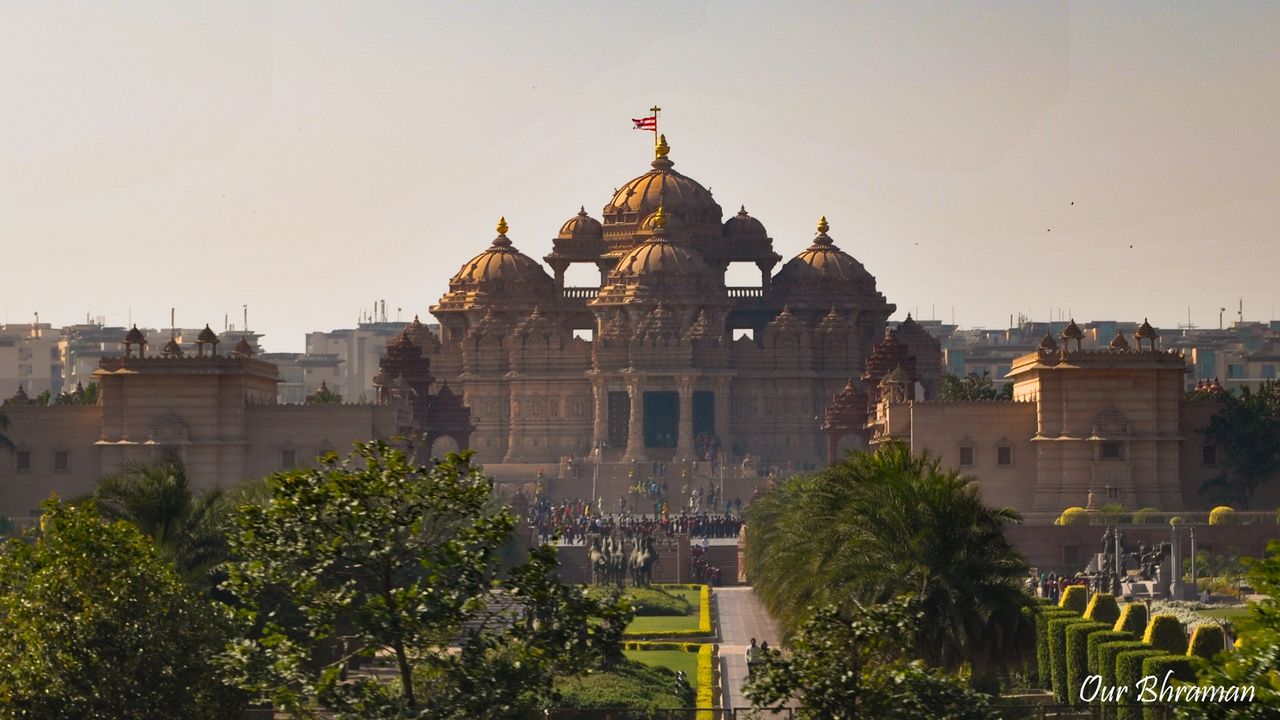
Akshardham Temple, a magnificent Hindu temple complex, the sheer scale of the architecture, with its intricate carvings and beautifully detailed sculptures, makes it feel like a masterpiece frozen in time. Surrounded by peaceful gardens and water features, the atmosphere was serene and uplifting—an escape from the buzz of Delhi.
One thing that really stood out was how well-organized the experience is. Inside the temple grounds, they serve excellent food at very reasonable prices, making it easy to spend the entire day here without needing to leave. And honestly, you should plan on a full-day visit. The cultural exhibitions themselves can take 2–3 hours (including wait time), and with the delicious meals, the calm surroundings it’s an experience that lingers long after you leave.
Of course, photography and cell phones are strictly not allowed inside. At first, that might feel limiting, but once inside, it becomes clear why. Without cameras, you’re free to simply be present soaking in the details, the spirituality, and the grandeur with your own eyes. It’s one of those places where the beauty is meant to be lived, not just captured.
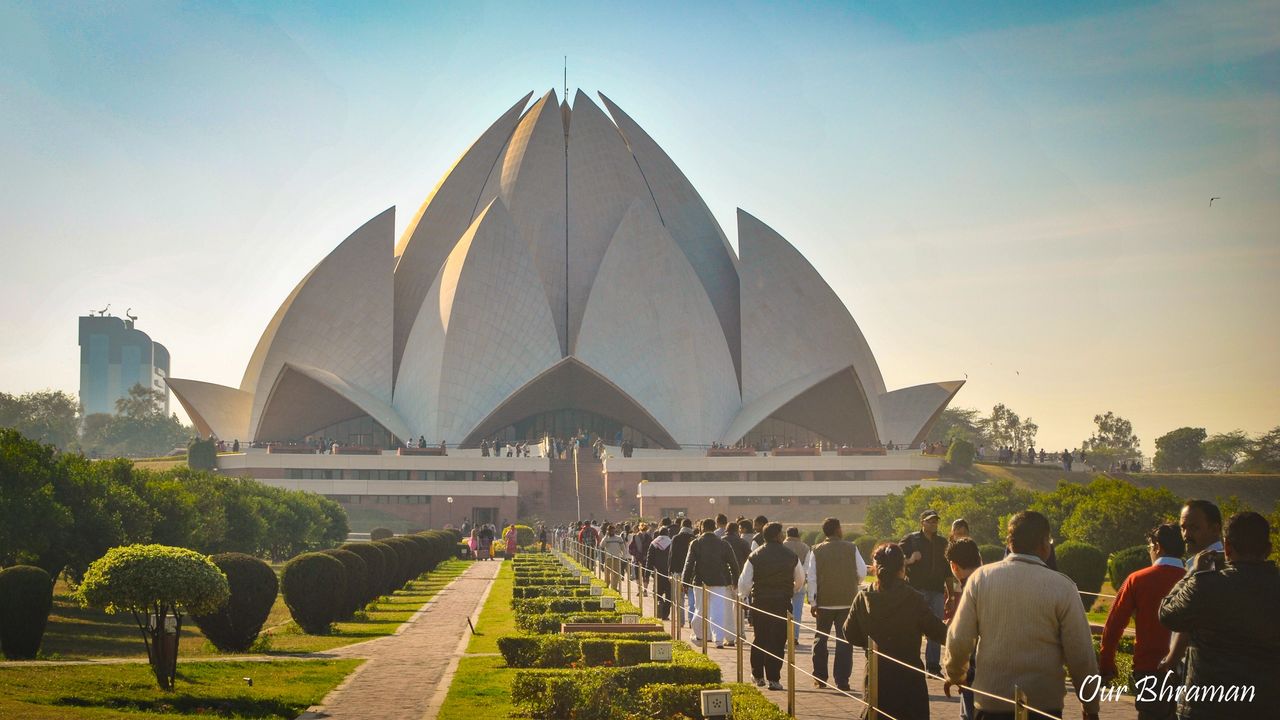
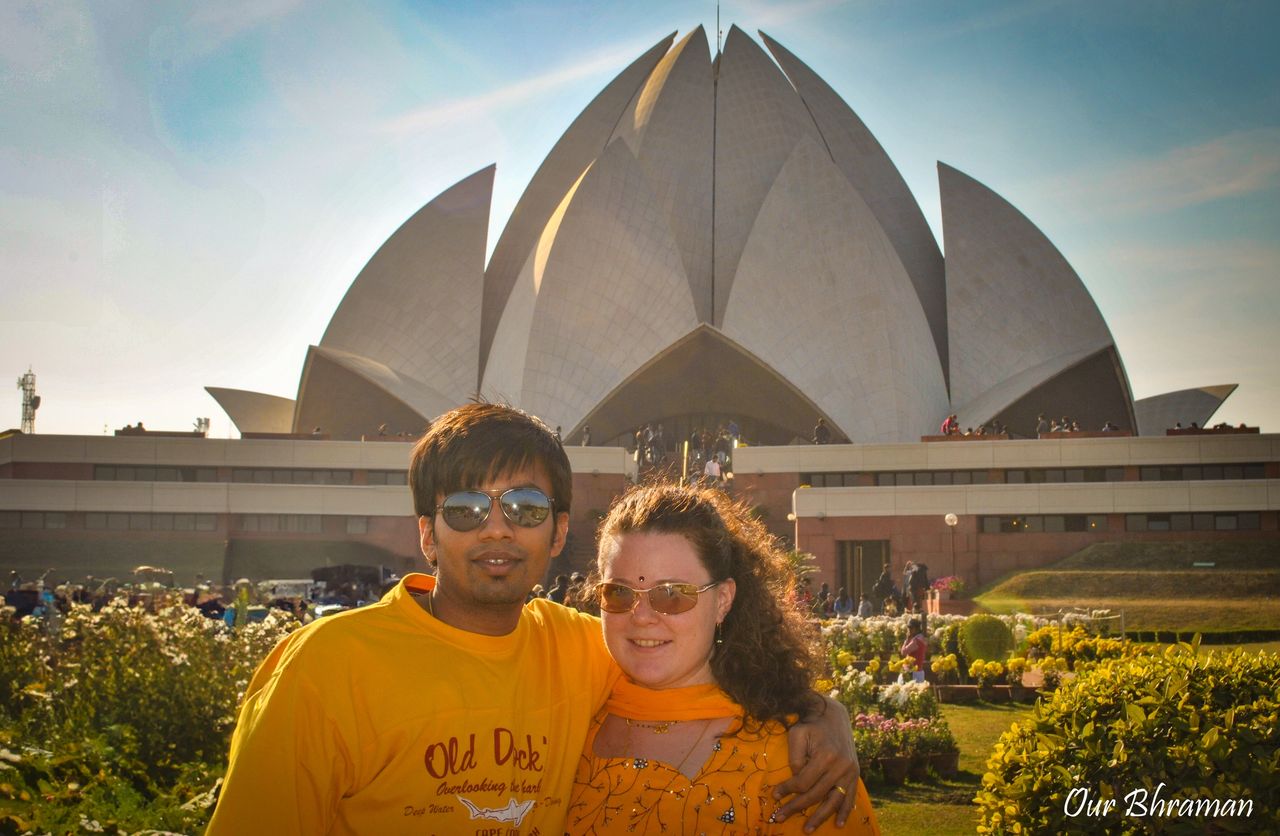
Next, we visited the Bahá’í House of Worship, more commonly known as the Lotus Temple because of its lotus flower-inspired design. The white petals rising toward the sky make it one of Delhi’s most unique landmarks. What makes this temple special is that it is open to people of all faiths, offering a quiet space for prayer, meditation, or simply reflection. Inside, the atmosphere was incredibly peaceful. The tall ceilings and pin-drop silence created a sense of calm that felt very different from the busy streets outside. We spent some time just sitting there, admiring the simplicity and beauty of the space, and letting our minds rest. It was the perfect pause in our day to reflect before continuing our journey through Delhi.
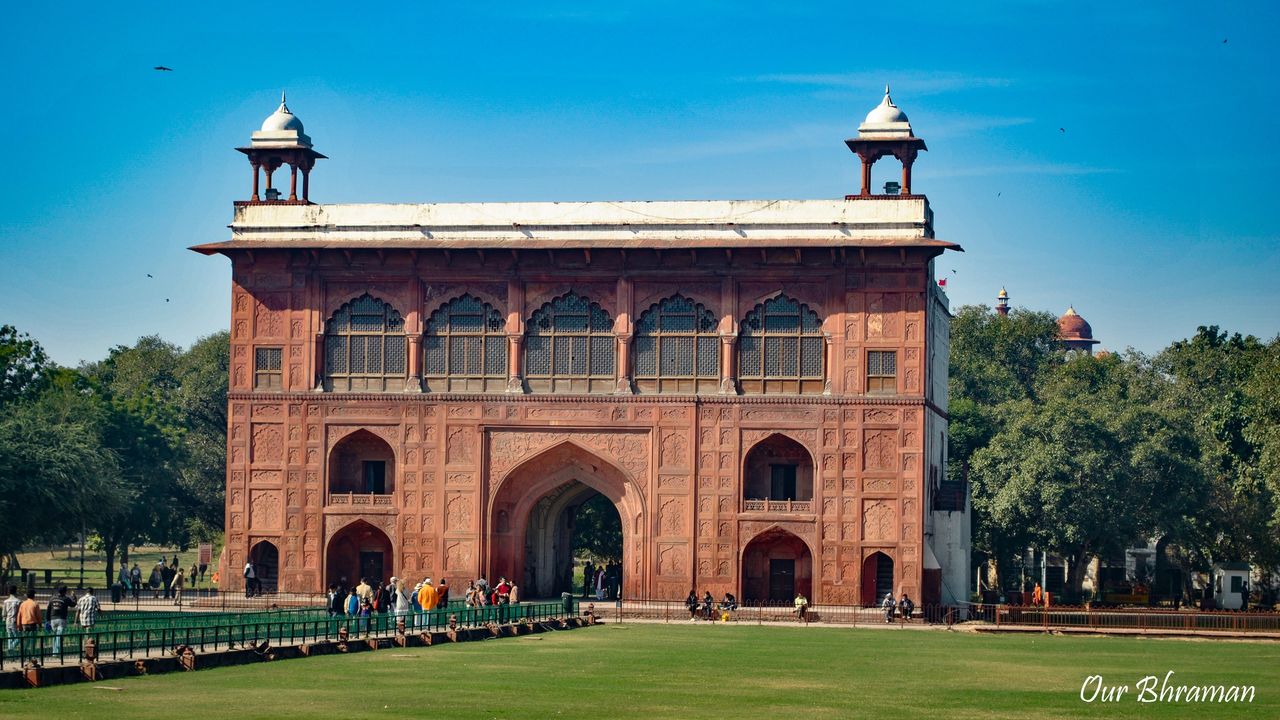
Finally, before flying back to Mumbai, we ended our Delhi exploration with a visit to the Red Fort. Approaching the massive red sandstone walls for the first time was incredible —the scale and strength of the structure instantly set it apart from everything else we had seen on this trip. If the Taj Mahal is a poem in marble, the Red Fort is a declaration in stone. It radiates power, authority, and history.
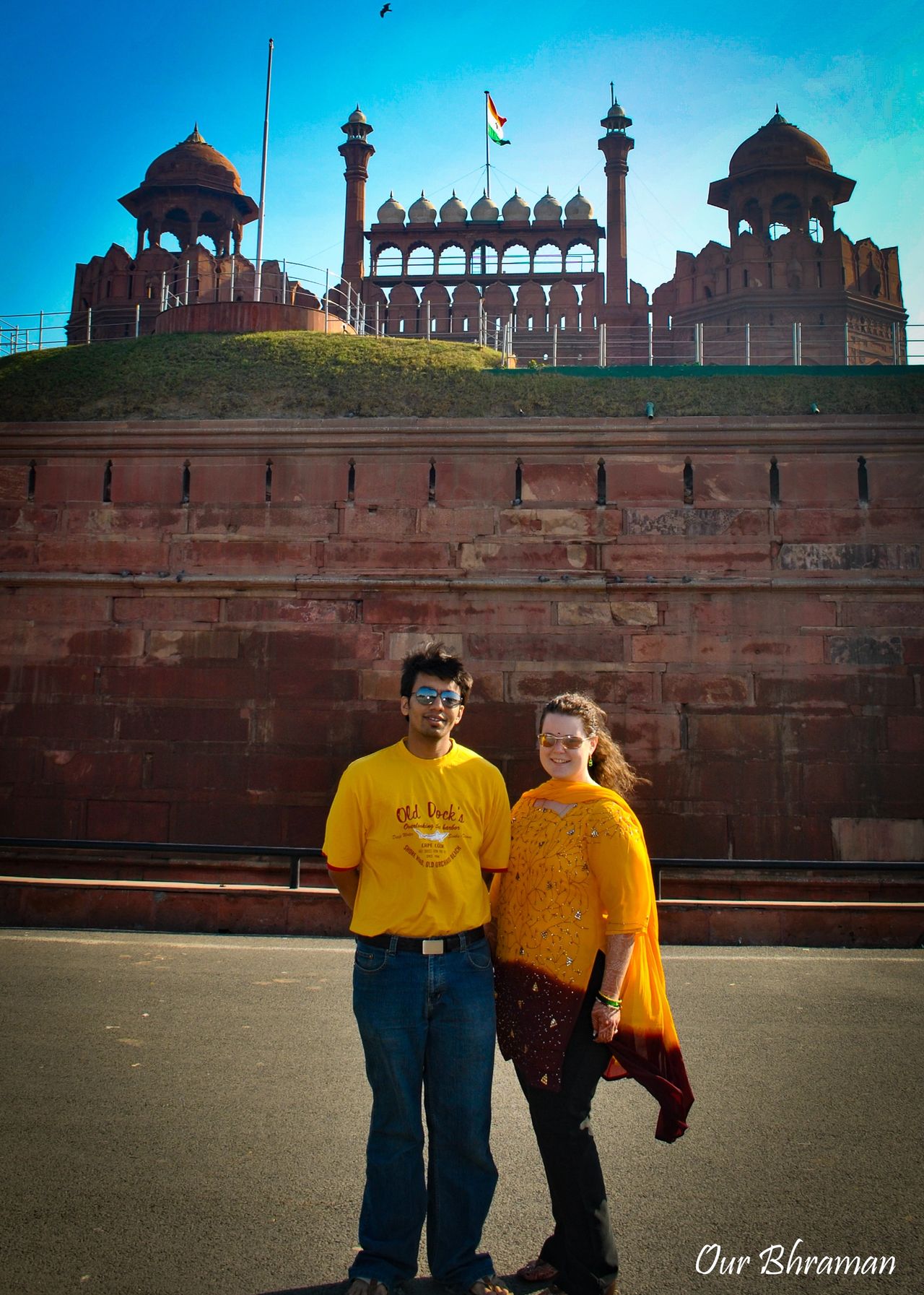
This fort was commissioned by Shah Jahan in 1639, the same emperor who built the Taj Mahal, when he moved the Mughal capital from Agra to Delhi. Completed in 1648, it was originally called Qila-i-Mubarak, or “the Blessed Fort,” as it was meant to be both the residence of the emperor and the political heart of the empire.
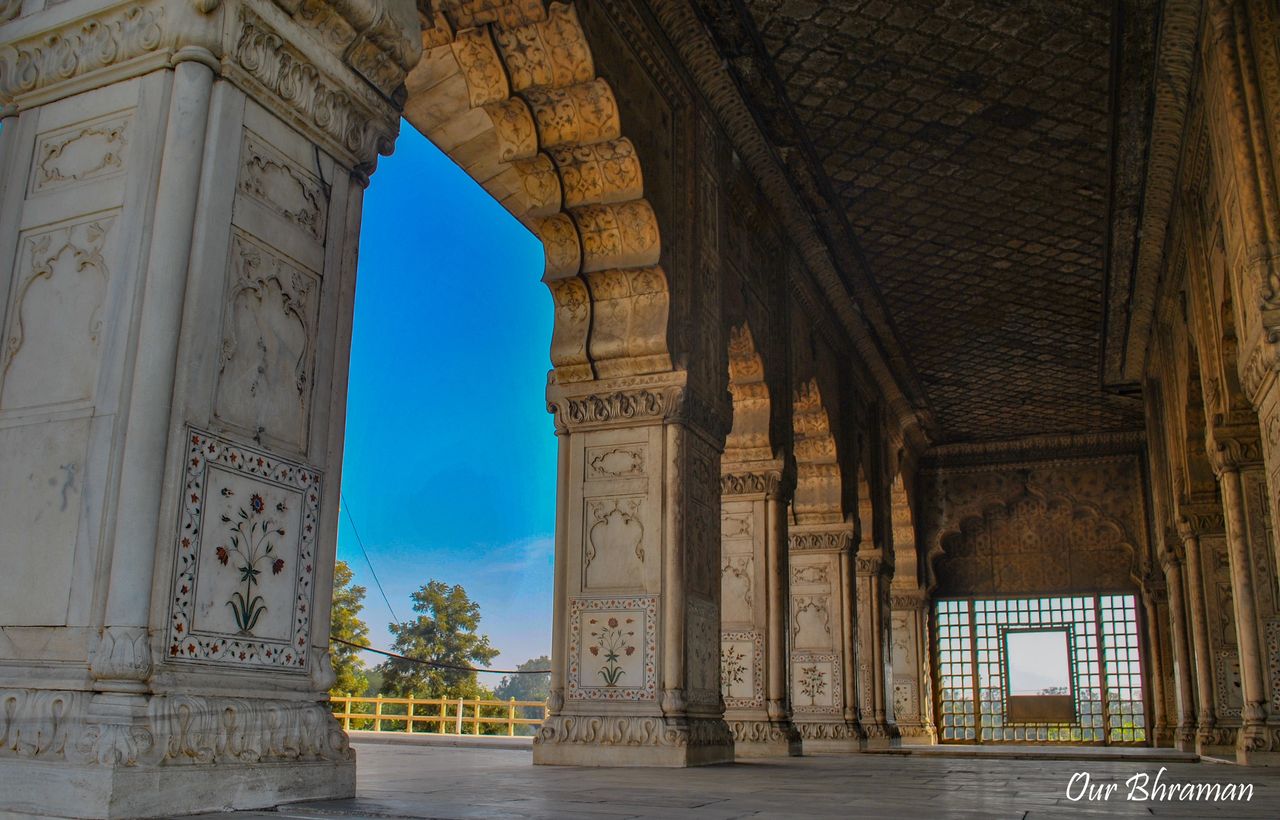
Inside, we wandered through some of its most famous structures. The Diwan-i-Aam (Hall of Public Audience), where the emperor once addressed the common people, still feels like a place of connection between ruler and subject. The Diwan-i-Khas (Hall of Private Audience), more ornate and intimate, must have been where the empire’s most important decisions were made. The Rang Mahal (Palace of Colors), once decorated with bright paintings and a flowing canal to cool the chambers, hinted at the luxurious lifestyle of the royals. And then there was the Moti Masjid (Pearl Mosque), small but exquisite, built for Aurangzeb’s private worship. Each building told a different story, adding to history of the fort.
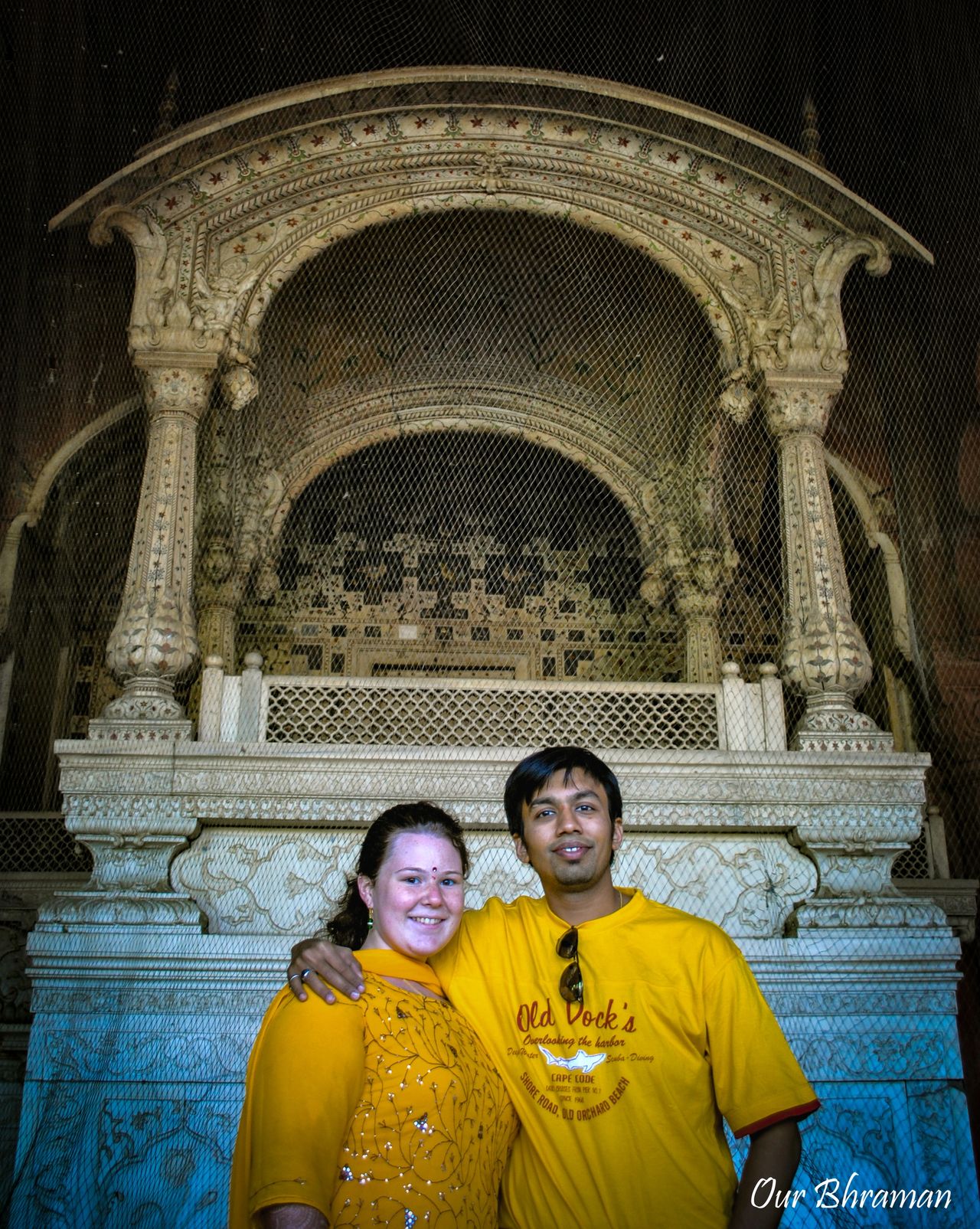
Inside the Red Fort in Delhi, we found ourselves standing in front of the emperor’s throne in the Diwan-i-Khas (Hall of Private Audience). It felt surreal to be so close to a piece of Mughal history. The marble throne canopy, inlaid with semi-precious stones, was once the seat of emperors during private meetings with courtiers and foreign dignitaries. As we looked at the intricate details, it was easy to imagine the grandeur of those times. The hall itself is famous for the inscription, “If there is a paradise on earth, it is this, it is this, it is this.” Standing there, I could truly understand why—there was something timeless and majestic about the space that made history feel alive.
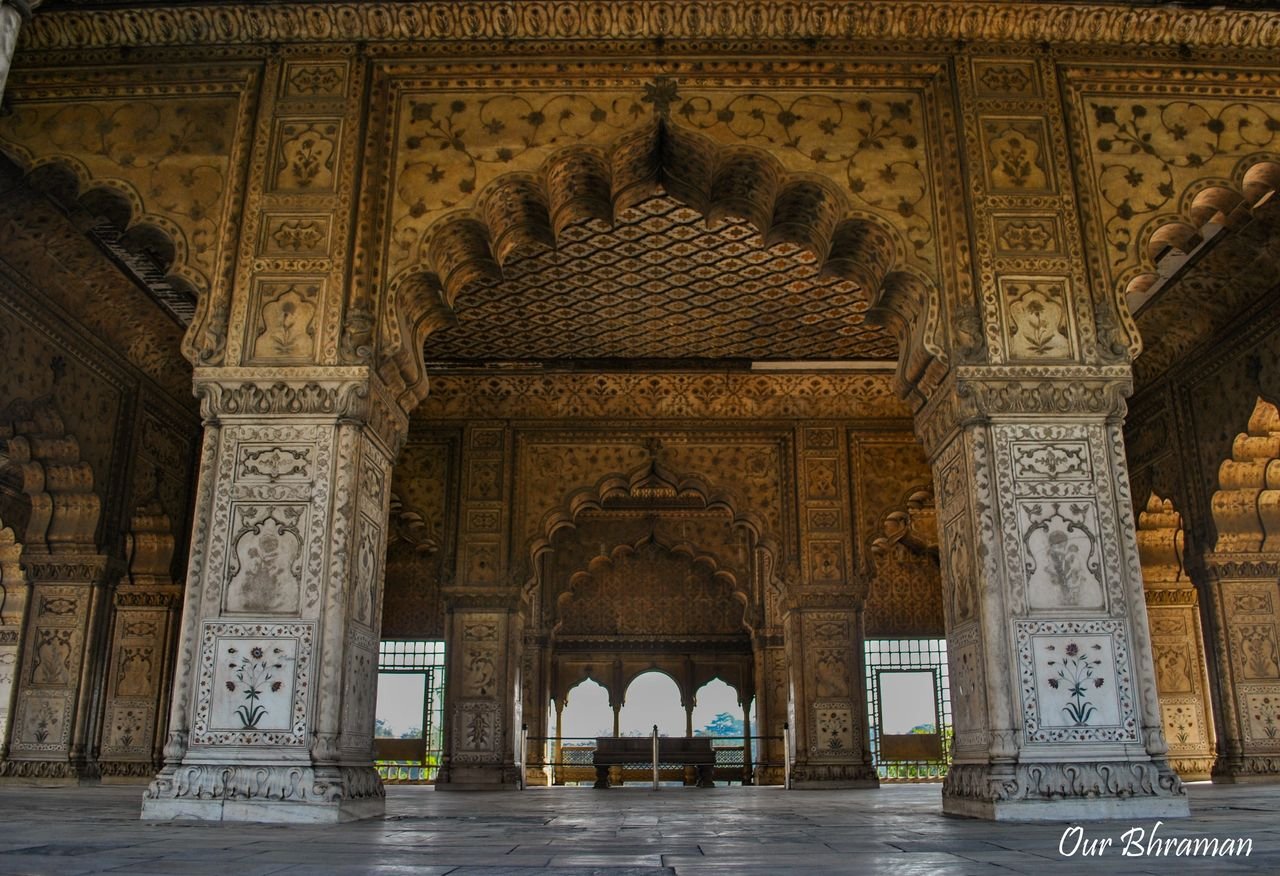
But the Red Fort is more than just Mughal history—it has an emotional weight that ties directly to modern India. Standing in the same space where Jawaharlal Nehru raised the Indian tricolor in 1947, marking the country’s independence, was unforgettable. Even today, every Independence Day celebration begins from these very ramparts, where the Prime Minister addresses the nation. That continuity—spanning from Mughal emperors to modern leaders—gave me goosebumps. It made me realize the fort isn’t just a monument; it’s a living stage of history that continues to shape India’s identity.
After exploring the Red Fort, we made our way to Raj Ghat, the memorial dedicated to Mahatma Gandhi. The atmosphere here was completely different—calm, simple, and deeply reflective. Unlike the grandeur of Mughal palaces and forts, Raj Ghat is marked by simplicity, with a black marble platform at the spot where Gandhi was cremated in 1948.
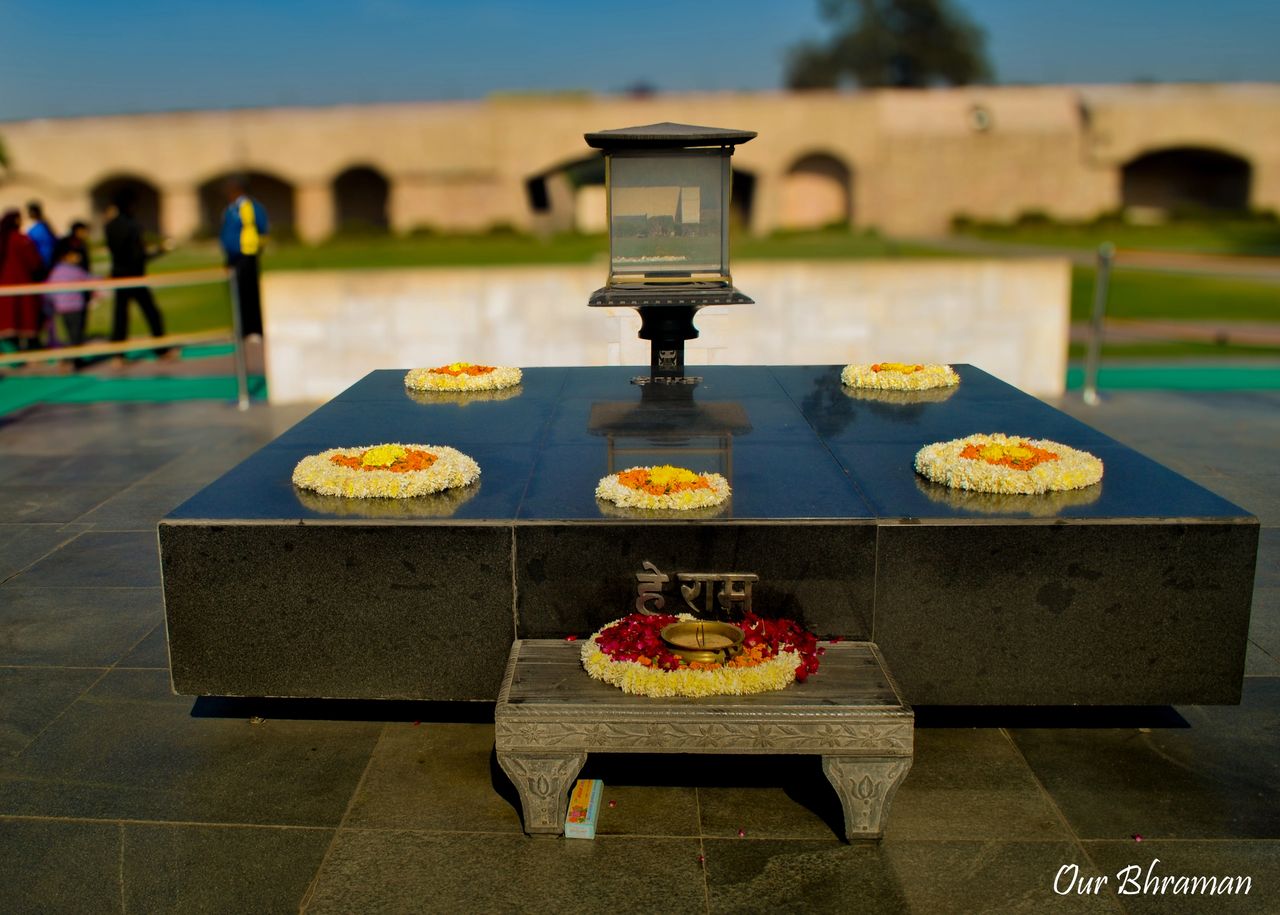
Surrounded by green lawns and quiet pathways, the place felt serene and peaceful. Standing there, we couldn’t help but reflect on the contrast between the royal Mughal legacy we had just seen and the humble yet powerful legacy of the Father of the Nation. It was a quiet but meaningful way to end our Delhi trip.
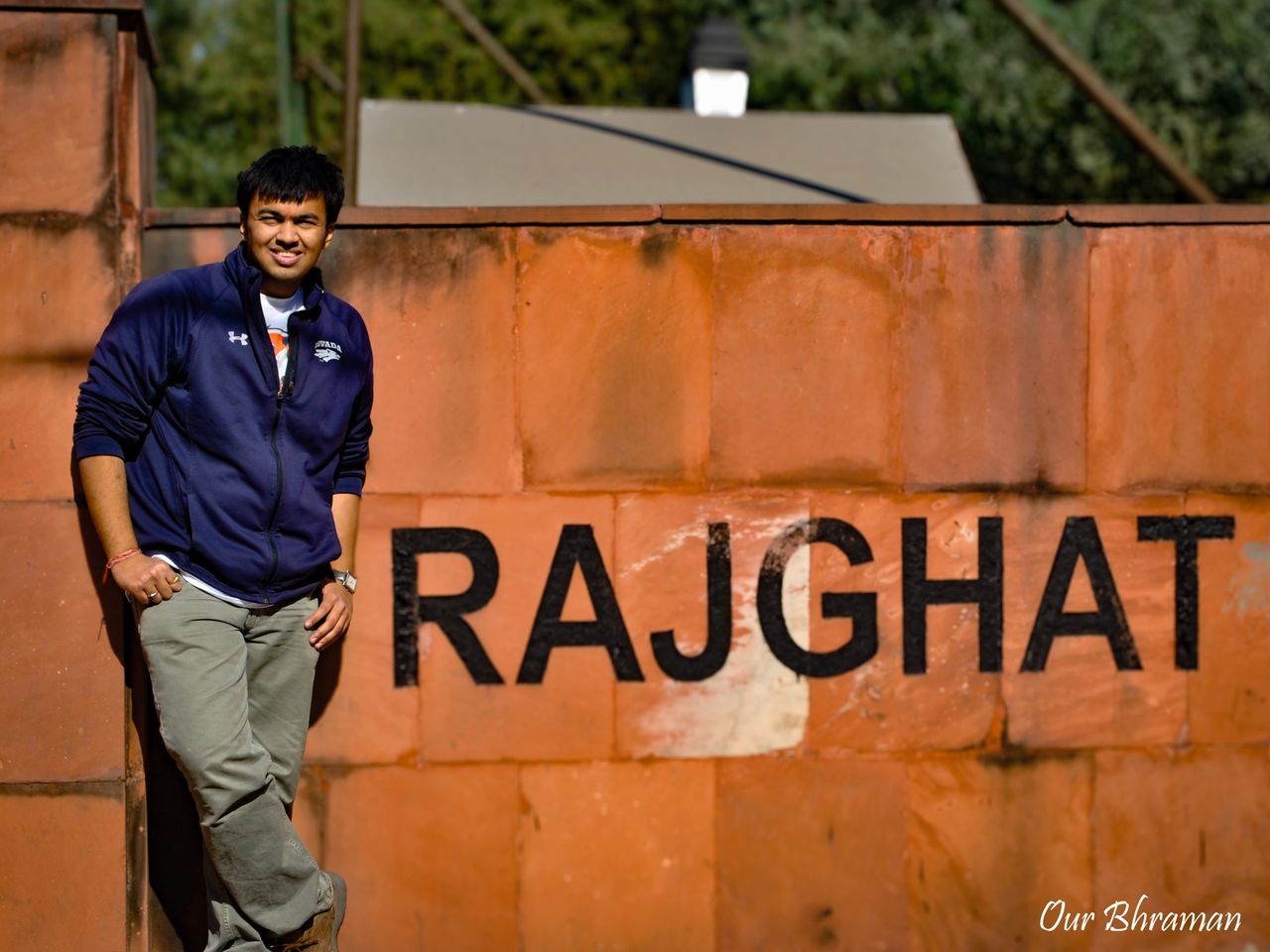
It truly was a fun trip with my in-laws, and I couldn’t be more thankful for my brother Piyush. He made sure our guests were comfortable and, on top of that, captured so many amazing photographic memories for us to hold on to. With all the history, culture, and beauty we experienced in Delhi and Agra, the trip felt full and unforgettable. But eventually, it was time to head back to Mumbai, to enjoy a little more family time before our journey back to the USA.